Russia says it is considering putting a nuclear power plant on the moon with China
Reuters, March 6, 2024, https://www.reuters.com/technology/space/russia-china-are-considering-putting-nuclear-power-unit-moon-ria-2024-03-05/
MOSCOW, March 5 (Reuters) – Russia and China are considering putting a nuclear power plant on the moon from 2033-35, Yuri Borisov, the head of Russia’s space agency Roscosmos said on Tuesday, something he said could one day allow lunar settlements to be built.
Borisov, a former deputy defence minister, said that Russia and China had been jointly working on a lunar programme and that Moscow was able to contribute with its expertise on “nuclear space energy”.
“Today we are seriously considering a project – somewhere at the turn of 2033-2035 – to deliver and install a power unit on the lunar surface together with our Chinese colleagues,” Borisov said.
Solar panels would not be able to provide enough electricity to power future lunar settlements, he said, while nuclear power could.
“This is a very serious challenge…it should be done in automatic mode, without the presence of humans,” he said of the possible plan.
Borisov spoke also of Russian plans to build a nuclear-powered cargo spaceship. He said all the technical questions concerning the project had been solved apart from finding a solution on how to cool the nuclear reactor.
“We are indeed working on a space tugboat. This huge, cyclopean structure that would be able, thanks to a nuclear reactor and a high-power turbines…to transport large cargoes from one orbit to another, collect space debris and engage in many other applications,” Borisov said.
Russian officials have spoken before of ambitious plans to one day mine on the Moon, but the Russian space programme has suffered a series of setbacks in recent years.
Its first moon mission in 47 years failed last year after Russia’s Luna-25 spacecraft spun out of control and crashed.
Moscow has said it will launch further lunar missions and then explore the possibility of a joint Russian-China crewed mission and even a lunar base.
Nuclear: the bill for EDF’s future EPR2 reactors is already skyrocketing

EDF has significantly increased the cost of its program to build six new
EPR2 nuclear reactors, the newspaper Les Echos reported on Monday, citing
new estimates from the company. According to Les Echos, EDF now
estimates the cost of its program to build six new EPR2 nuclear reactors at
67.4 billion euros, compared to 51.7 billion euros in an estimate made
public at the start of 2022, an amount expected to be subject to regular
updates. That’s a jump of 30%.
La Tribune 4th March 2024
Le Figaro 4th March 2024
https://www.lefigaro.fr/flash-eco/le-cout-du-nouveau-nucleaire-francais-s-envole-20240304
The West’s over-involvement in Ukraine
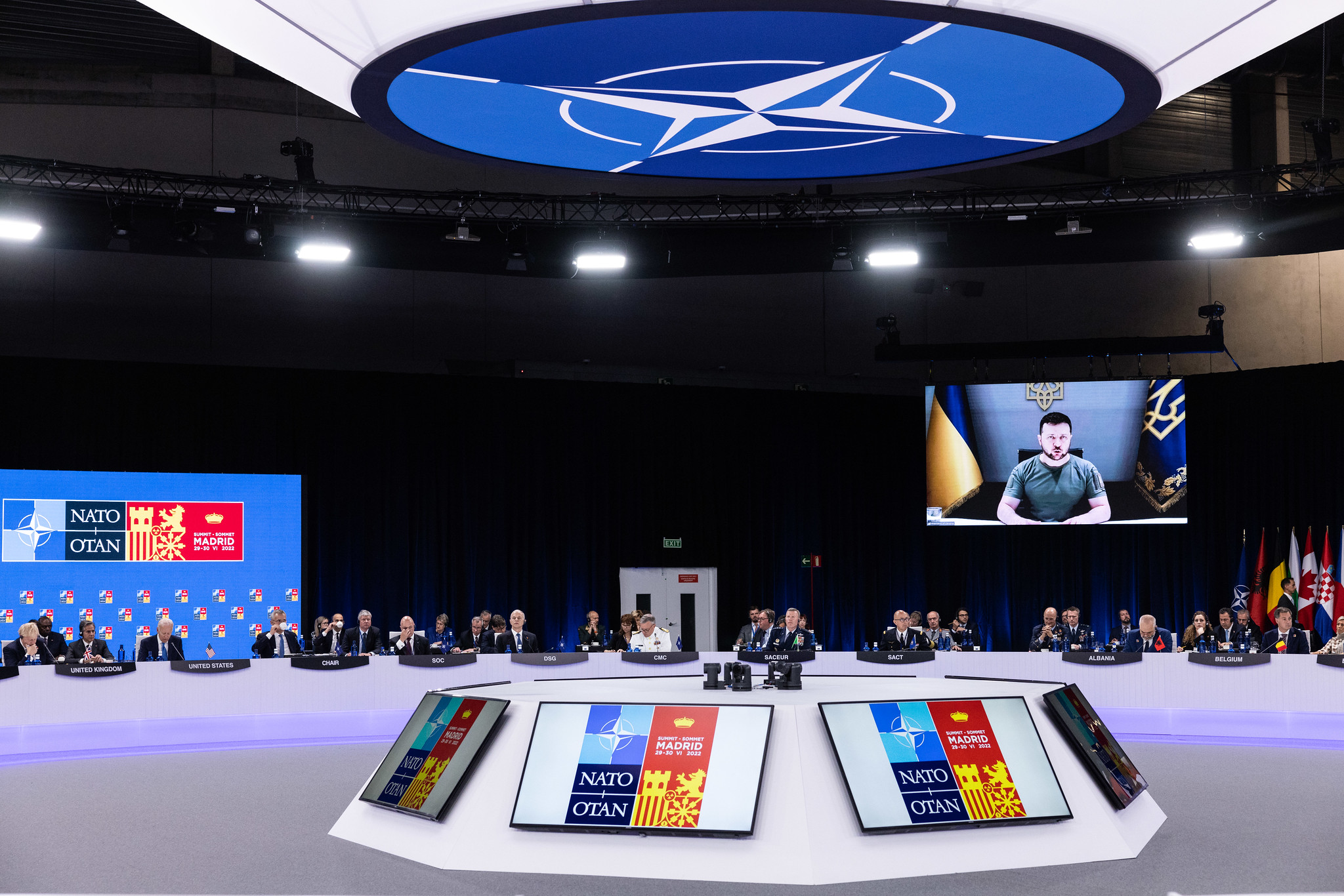
at the same summit those present joined to support sending long-range missiles to the Ukrainians, weapons fully capable of reaching cities, power grids, industrial plants and other targets deep inside Russia. So: No troops, plenty of offensive hardware.
Scholz confirmed what everyone already knows, that NATO officers and trained personnel are in Ukraine operating weapons such as the Patriot and NASAM air defense system, the HIMARS multiple launch rocket system, the British–French Storm Shadow cruise missile (SCALP–EG in France), and many other complex weapons provided to Ukraine.”
Consortium News, PATRICK LAWRENCE: The Russians in Ukraine, March 6, 2024
Recent disclosures provide an incomplete inventory of the West’s covert activities in Ukraine. There is more than we have been told, surely.
You may have read or heard about the freakout that ensued after Emmanuel Macron convened a summit of European leaders in Paris last week. At a press briefing afterward, the French president allowed that NATO may at some point send troops to Ukraine to join the fight against Russian military forces.
The Paris gathering precipitated a significant moment of truth, if we can call it such. Scholz, who is on a knife’s edge politically in part for his government’s support for Ukraine, immediately asserted that Germany would not send its Taurus long-range missiles to Ukraine because German troops would have to go with them, as the Ukrainians could not operate them on their own.
Look at the British, Scholz added indelicately. When they send their Storm Shadow missiles (and I must say I love the names the West’s arsenal minders come up with for these things) British personnel have to go with them.
Yikes! Such indiscretion.
As Stephen Bryen reported in his Weapons and Strategy newsletter, “The British cried foul and accused Scholz of ‘flagrant abuse of intelligence.’” Abuse of intelligence is a new one on me, but never mind. Bryen, who follows these matters closely as a former Defense Department official, continued:
“Scholz confirmed what everyone already knows, that NATO officers and trained personnel are in Ukraine operating weapons such as the Patriot and NASAM air defense system, the HIMARS multiple launch rocket system, the British–French Storm Shadow cruise missile (SCALP–EG in France), and many other complex weapons provided to Ukraine.”
There we have it — or there we have had it, if covertly, for a long time.
Before I go further, let me suggest a couple of thoughts readers can tuck somewhere in the corners of their minds for later consideration.
One, Russia’s intervention in Ukraine two years ago last month was unprovoked. Two, all the Kremlin’s talk about the threat of NATO hard by its southwestern border is nothing more than the distortion and paranoia of “Putin’s Russia,” as we must now refer to the Russian Federation.
It went this way in Paris last week. At the presser following the summit Macron was asked whether Ukraine’s Western backers were considering deploying troops in Ukraine. The French president replied that while European leaders had not reached any kind of agreement, the idea was certainly on the table when they gathered at Elysée Palace.
And then this:
“Nothing should be ruled out. We will do anything we can to prevent Russia from winning this war.”
Instantly came the vigorous objections. The Brits, the Spanish, the Italians, the Poles, the Slovakians, the Hungarians: They all said in so many words, “No way.” Even Jens Stoltenberg, NATO’s war-mongering sec-gen, objected to Macron’s assertion.
No one was more vehement on this point than Olaf Scholz. “What was agreed among ourselves and with each other from the very beginning also applies to the future,” saith the German chancellor, “namely that there will be no ground troops, no soldiers on Ukrainian soil sent there by European countries or NATO states.”
Plenty of Offensive Hardware
O.K., but at the same summit those present joined to support sending long-range missiles to the Ukrainians, weapons fully capable of reaching cities, power grids, industrial plants and other targets deep inside Russia. So: No troops, plenty of offensive hardware.
Last week The New York Times published a long takeout on the Central Intelligence Agency’s presence and programs in Ukraine, which extend back at least a decade and almost certainly much further……………………………………………………………………………………………………………………………..
“If NATO is so much against sending troops to Ukraine,” he asks, “why doesn’t NATO demand that the soldiers already there be sent home?”
Over-Invested in the Conflict
Excellent question. My answer: The Western powers, radically over-invested in Ukraine’s confrontation with Russia, are panicking as the Armed Forces of Ukraine retreat in the face of Russian advances and as support for this folly wanes on both sides of the Atlantic.
If anything, the covert presence of Western personnel in Ukraine may increase.
It is obvious that Ukraine is losing its war against Russia, and at a faster pace than most analysts seem to have anticipated even last autumn. I am reading reports now that the final collapse of the AFU may prove three or so months away. …………………………………………………………………….
The Ukraine crisis is merely the latest phase of the West’s long campaign to surround the Russian Federation up to its borders, destabilize it and finally subvert it. Regime change in Moscow was and remains the final objective.
This is not a war in defense of “Ukrainian democracy” — a phrase that causes one either to laugh or do the other thing. It is the West’s proxy war, start to finish, Ukrainians cynically cast as cannon fodder, expendable stooges.
Russia had no choice when it intervened two years ago, this after eight years’ patience as the Europeans — Germany and France, this is to say — broke every promise they made by way of supporting a settlement. The Americans didn’t break any promises because they never made any — and no one would take them seriously if they had.
I come to the judgment I offered when the war that began in 2014 erupted into open conflict two years ago. The Russian intervention was regrettable but necessary. I took some stick for this view back in 2022. I learn lately it is recorded in some European intelligence files as if it were a major transgression.
It is as true now as then. All we learn in drips and drops about the Western powers’ various covert doings in the sad, failed state they have done much to ruin, confirms this.
https://consortiumnews.com/2024/03/06/patrick-lawrence-the-russians-in-ukraine/?eType=EmailBlastContent&eId=c61faf77-5689-491d-afa5-bc607e7454cf
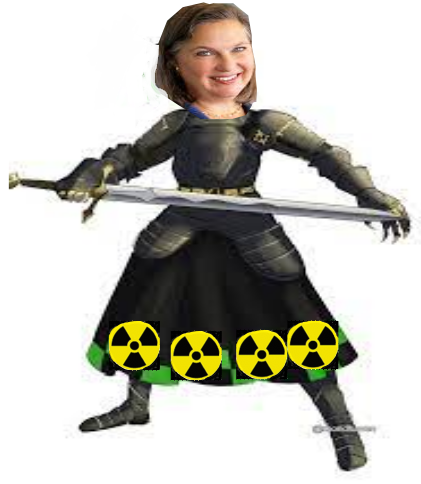
Most Ukraine aid ‘goes right back’ to US – Nuland
https://www.rt.com/news/593111-nuland-us-aid-ukraine/–– 25 Feb 24
The money that Washington allocates for Kiev supports jobs in America, the high-ranking State Department official has said.
Washington spends most of the money allocated as aid for Ukraine on weapons production at home, Acting US Deputy Secretary of State Victoria Nuland said in an interview with CNN this week.
Commenting on the pending aid package which Congress failed to approve before going on winter recess, Nuland said she has “strong confidence” that it will pass, as it addresses America’s own interests.
“We have to remember that the bulk of this money is going right back into the US economy, to make weapons, including good-paying jobs in some forty states across the US,” she stated, adding that support for Ukraine in America “is still strong.”
Lawmakers in the House of Representatives blocked a bill requested by US President Joe Biden for an aid package for Kiev worth $60 billion, most of which is earmarked for weapons, earlier this month. They are expected to restart discussions on the package after they reconvene on February 28.
US Secretary of State Antony Blinken also recently said that roughly 90% of the financial assistance for Ukraine is spent on domestic production of weapons and equipment. At a press conference on December 20, he said additional tranches would “benefit American business, local communities, and strengthen the US defense industrial base.”
According to Germany’s Kiel Institute, which tracks international support for Kiev, Washington allocated nearly €68 billion ($73.7 billion) in aid for Ukraine between January 24, 2022 and January 15, 2024, including roughly €43 billion ($46.6 billion) in military aid.
However, Kiev has been increasingly demanding more aid from its Western backers. Several days ago, Ukrainian President Vladimir Zelensky warned visiting American legislators that Kiev would “lose the war” against Russia without Washington’s assistance, according to US Senate Majority Leader Chuck Schumer.
Russia has criticized the US and other Western states for their military support for Kiev, arguing that it is only dragging out the conflict.
According to a recent survey from the Harris Poll and the Quincy Institute, a growing number of Americans do not support US military aid to Kiev unless it is tied to peace talks. Only 22% of respondents said Washington should continue ‘unconditionally’ providing Ukraine with financial assistance, while 48% said new funding must be conditioned on progress toward a diplomatic solution. Around 30% said the US should halt all aid.
UK Labour versus Green
What’s the Choice between Labour and the Green Party on energy?
Set against the Government’s ever-incredibly shrinking net zero commitments, Labour’s own shrinking net zero commitments in its ‘Green Prosperity Plan’ still look substantially better. But is this a difference big enough for environmentally conscious people to vote Labour? Or is Labour abandoning the climate struggle so much that people should go for the Green Party instead?
These are troubling questions for Labour supporters who put climate policy at the top of their to-do lists. Most troubling is the fact that Labour’s programme seems to ignore the benefit of converting the nation away from using natural gas and towards use of heat pumps…………………………………………………………………………………..
Then there is the clean power plan. This is supposed to have all electricity generated from non-fossil fuels by 2030………………………………………………………….
Nuclear black hole
Indeed, Labour may end up pouring a lot of the money intended for other types of green energy down the black hole that will open as the Government seriously starts the Sizewell C project. That project will be a terrible public spending/consumer bill disaster compared even to Hinkley C. This is because unlike Hinkley C the construction cost overruns will be borne by the UK Government and the UK energy consumers, and not by EDF. Sizewell C may not come online until after 2050. This new nuclear would in practice, anyway, make little difference to the need to balance fluctuating renewable energy supplies. Labour’s proposals mention small modular reactors (SMRs), a fantasy concept that is getting nowhere across the planet. If nuclear reactors were best small, they would not have become bigger! More wasted money!
Green Party and extra spending
The Green Party of England and Wales (GPEW), by contrast, is promising an extensive programme of green energy investment. They will say more in the forthcoming manifesto.
However, in March 2023 they called for £37 billion annual spend to pay for insulation, plus a range of support measures for different types of renewable energy and replacing gas boilers with heat pumps.
True, much of it would rely on borrowing money. However, a significant portion of the funding is based on a promise to raise a new wealth tax as well as the promise held out by Labour for more windfall taxes on oil and gas. In addition, the Green Party has called for carbon taxes to fund measures, the carbon taxes to be levied on ‘the biggest polluters’. Avoiding spending money on nuclear power (which the Green Party opposes) will release a lot of funds for green energy compared to Labour………………………………………………………………….
Public Ownership
The Green Party also supports a lot more public ownership of energy compared to Labour. I certainly support the nationalisation of the domestic energy supply sector. This will cost very little for the state to buy – arguably nothing since the consumer will no longer have to pay bail-outs for bankrupt suppliers. It has always been a nonsense to say that this retail supply market is competitive……………………………………………… more https://davidtoke.substack.com/p/labour-versus-green
Greenpeace warns on danger of restarting Zaporizhzhia nuclear plant
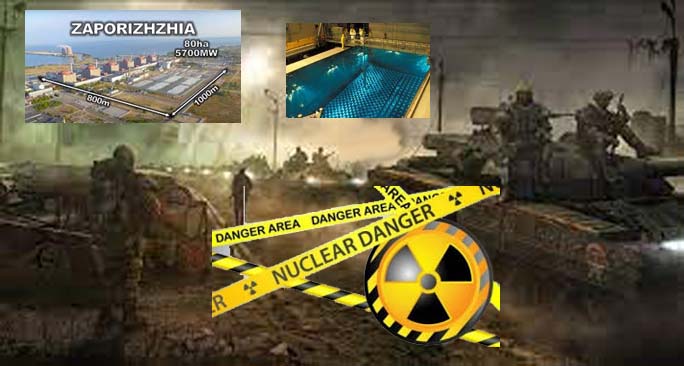
Greenpeace today warned that any plans by Russia to restart reactors at
the Zaporizhzhia nuclear plant would be a further step closer to a
potential nuclear disaster and must be stopped.
The environmental organization has restated its demand for the International Atomic Energy
Agency (IAEA) Director General to state clearly to Rosatom, the Russian
state nuclear corporation, that restart of any of the reactors cannot be
permitted.
The IAEA Director General is traveling to Moscow for meetings
with Rosatom Director General Alexey Likhachev. On 4th March, the second
anniversary of the Russian attack on the Zaporizhzhia plant, Greenpeace,
together with the deputy head of the regional administration, held a press
conference in Zaporizhzhia city. The focus of the event was the
Zaporozhzhia nuclear plant crisis, including the reactor restart threats
and nuclear emergency planning.
Greenpeace 5th March 2024
Improvement notice served over storage of hazardous materials at Dounreay
By Alan Hendry – alan.hendry@hnmedia.co.uk, 4 Mar 24, https://www.johnogroat-journal.co.uk/news/improvement-notice-served-over-storage-of-hazardous-material-344039/
An improvement notice has been served over shortfalls in arrangements for storing alkali metals at Dounreay.
Buildings used to store these metals, predominantly sodium, were leaking in rainwater – with pools observed where the containers were being kept.
The notice was served by the Office for Nuclear Regulation (ONR) on Nuclear Restoration Services (NRS), formerly Magnox Ltd.
ONR inspectors judged that the prolonged period of exposure to moist and damp conditions was resulting in degradation of the barriers for safe storage of the chemicals.
Although no-one was harmed as a result of these shortfalls, and there were no radiological consequences, ONR concluded that there was potential for serious personal injury if workers had been exposed to the hazardous materials.
‘It’ll be a shortlist of one!’ Villagers in England fear nuclear dump proposal

Plans for a new wave of atomic power have not factored in local concerns over the safety of the waste sites the schemes entail.
Alex Lawson, Sun 3 Mar 2024 , https://www.theguardian.com/business/2024/mar/03/itll-be-a-shortlist-of-one-villagers-in-england-fear-nuclear-dump-proposal
When Ian Harrison returned to the Lincolnshire coast to care for his parents a decade ago, he didn’t expect to spend his own retirement fighting plans to dig a £50bn nuclear waste dump near the beaches of his childhood.
Harrison, 67, lives a mile from the village of Theddlethorpe, one of three sites in England being examined for a possible geological disposal facility (GDF) to handle decades of nuclear waste from the power and defence industries. The cavernous dump will feature a series of tunnels and vaults dug 200-1,000 metres underground, capable of holding high-risk nuclear waste.
“It’s just a terrible idea to put a nuclear dump next to a seaside resort,” says Harrison, a retired warrant officer. “The safety concerns are real – look at Chernobyl – but people are more worried about the tourism that comes to Mablethorpe and the impact on local businesses.”Map showing proposed and withdrawn sites for GDFs
After several sites fell out of contention, the former gas terminal in Lincolnshire is one of just three which remain, with two on the Cumbrian coast – Mid Copeland and South Copeland. There is speculation about another site on the north-west coast.
The search for a home for Britain’s nuclear waste underlines a problem at the heart of its energy ambitions. Politicians have extolled the virtues of low-carbon nuclear power, but little attention has been given to the question of where to put the resulting waste.
Allerdale in Cumbria was ruled out last September after the government body behind the GDF project, Nuclear Waste Services (NWS), said there was “only a limited volume of suitable rock”, meaning it was not safe for storage. Last month, councillors in East Yorkshire withdrew from a process to consider hosting a GDF at South Holderness, east of Hull. In 2021, a council leader in Hartlepool resigned in a similar GDF row.
“At South Holderness, the local population complained and the council listened and stopped it,” says Harrison. “Here, people are worried, but they are sugarcoating it and not taking into account local concerns. Eventually, this will end up with a shortlist of one: us.”
The GDF is forecast to cost between £20bn and £53bn. Work on the project could take decades to begin, and high-risk waste will not enter it until at least 2075. The cost will be met by taxpayers, the existing nuclear plants’ operator EDF, and future power station operators.
Work on the GDF is expected to 4,000 jobs in its first 25 years. It is not an unprecedented move – Finland is nearing completion of a 450-metre-deep cavern to store its waste. France, Canada, Switzerland and Sweden are making progress on similar projects.
Britain’s nuclear waste is largely generated by its ageing power stations, as well as by industrial and defence sectors. It is housed in more than 20 ground-level sites which can hold the waste for up to 100 years, meaning a permanent store needs to be found. Even more waste is expected to be generated from a new era of reactors, despite lengthy delays,starting with Hinkley Point C in Somerset, currently the only new UK station under construction.
The handling of nuclear waste in Britain was put in the spotlight last year when the Guardian published Nuclear Leaks, a year-long investigation into problems with cybersecurity, safety and a “toxic” culture at Sellafield. Most of the waste now at the Cumbria site will be sent to a GDF, probably between 2050 and 2125.
While it can be argued that the Copeland sites have communities familiar with nuclear waste, it is an alien industry for Theddlethorpe, where geologists are studying the clay rock under the seabed.
Proponents of a GDF at Theddlethorpe, where a facility would be built onshore and the store tunnelled under the sea six miles off the coast, argue it will bring not only jobs but investment – in flood defences, road improvements and rail links. Detractors say its largely retired community will barely contribute to the workforce, and its holiday parks will play host only to construction workers while tourism slowly dies. A government gaffe in which Skegness was wrongly spelled as “Skegross” on a map did little to engender local support.
Ken Smith, a retired former lecturer and chair of the Guardians of the East Coast pressure group, says: “People call us nimbys and tell us that we’re only interested in the impact on house prices, but that’s a red herring. It’s about the people who live here and the way this could change their lives.”
A test of public support for the Theddlethorpe project is likely to be conducted in 2027. Jon Collins, the independent chair of the Theddlethorpe GDF Community Partnership, says only a small number of the 10,000 people who live in the search area have yet expressed an opinion. “There are a lot of people who have yet to engage. People deserve the opportunity to have a proper debate with all the facts before a decision is made.”
In Mid Copeland, David Moore, 70, a retired farmer, says local support for the project has increased in recent years. “Our community has been brought up handling radioactive waste,” says Moore, a representative on the Mid Copeland GDF community partnership. “We have a highly skilled workforce, and know it brings highly paid jobs.” Residents in nearby South Copeland are more circumspect, he claims.
A contentious element of the project has been the £1m a year in funds offered to prospective sites, handed out by NWS. Spending has included £382,067 for an adventure playground, garden and CCTV at the village halls; £49,981 on a project to reduce loneliness; and £26,102 to the Parrot Zoo Trust. Some locals see the taxpayer money as a “bribe”; others argue the money might as well be taken while the debate continues.
Collins says any final decision needs to take into account both local opinion and the best geological conditions for the site.
But Smith says: “A GDF is simply sweeping the problem under the carpet. My worry is that I want future generations to enjoy what I have I can take my grandchildren for a picnic on the beach: you can’t do that at Sellafield. I do not want the area to be torn apart. If they industrialise this coastline then all that enjoyment will be lost.”
NWS said: “A GDF will only be built where there is a suitable site and a willing community. This is a consent-based process and we are committed to giving local people all the information they need, listening to all voices and letting local people have their say on the topic.”
Out of the unfiltered mouths of US political leaders enabling the destruction of Ukraine.
Walt Zlotow, West Suburban Peace Coalition, Glen Ellyn IL, 4 Mar 24
“Four months into this thing, I like the structural path we’re on here. As long as we help Ukraine with the weapons they need and the economic support, they will fight to the last person. The best money we’ve ever spent.” Sen. Lindsay Graham (R-SC)
“It is a relatively modest amount that we are contributing without being asked to risk life and limb. The Ukrainians are willing to fight the fight for us if the West will give them the provisions. It’s a pretty good deal.” Sen. Roger Wicker (R-MS)
“I call that a bargain.” ND Republican Governor Doug Burgum referring to US war funding damaging Russian military without mentioning catastrophic Ukrainian military damage.
These people are not humane political leaders…they are moral monsters.
Walt Zlotow, West Suburban Peace Coalition, Glen Ellyn IL
The Ukrainian Intelligence Committee Is Preparing For The Worst-Case Scenario
ANDREW KORYBKO, FEB 28, 2024, https://korybko.substack.com/p/the-ukrainian-intelligence-committee—
What’s regarded as the worst-case scenario from the perspective of the ruling Ukrainian elite and their Western masters is the best-case scenario for the rest of the world. In the event that Zelensky is deposed and peace talks immediately resume right as Russia breaks through the Line of Contact, then NATO might not feel as pressured by its security dilemma with Russia to conventionally intervene in Ukraine, thus reducing the risk of World War III by miscalculation.
The Ukrainian Intelligence Committee warned in a Telegram post about the worst-case scenario that could happen by June whereby a Russian breakthrough across the Line of Contact (LOC) merges with protests over conscription and Zelensky’s illegitimacy to deal a deathblow to the state. They predictably claimed that those protests, along with claims of growing fatigue inside Western and Ukrainian societies plus civil-military tensions in Kiev, are just “Russian disinformation” even though they all veritably exist.
“Zelensky Is Desperate To Preemptively Discredit Potentially Forthcoming Protests Against Him” and that’s why he claimed in late November that Russia is conspiring to orchestrate a so-called “Maidan 3” against him, which is what the Intelligence Committee explicitly referred to in their post. Their warning also came as Ukrainian media reported that Zelensky plans to ask the Constitutional Court to rule on holding elections during martial law in order to retain legitimacy after his term expires on 20 May.
The preceding hyperlinked report from Turkish media also mentions how “opposition party leaders Petro Poroshenko and Yulia Tymoshenko proposed forming a coalition government to avoid a crisis of legitimacy” but were rebuked by National Security Council chief Danilov. What’s so interesting about this proposal is that it was first tabled by an expert from the powerful Atlantic Council think tank in an article that they published in Politico in mid-December in order to serve that exact same purpose.
This reminder and the subsequent proposal by those two opposition party leaders debunks the notion that questions about Zelensky’s legitimacy are solely the result of “Russian disinformation” just like a top European think tank’s latest poll from January debunks the same about fatigue over this conflict. The European Council on Foreign Relations, which can’t credibly be described as “pro-Russian”, found that only 10% of Europeans think that Ukraine will defeat Russia.
On the other side of the Atlantic, the Congressional deadlock over more Ukraine aid proves that such sentiments are shared in the halls of power, and those who hold these views understandably don’t want to continue throwing hard-earn taxpayer funds into a doomed-to-fail proxy war. Western leaders as a whole, however, are clearly panicking over the latest military-strategic dynamics that followed the failure of Kiev’s counteroffensive last summer and Russia’s recent victory in Avdeevka.
That’s why many of them debated whether to conventionally intervene in Ukraine during Monday’s meeting in Paris that was attended by over 20 European leaders. French President Macron said that this can’t be ruled out despite there being no consensus on the issue, which his Polish counterpart confirmed was the most heated part of their discussions that day. This prompted strong denials from all other Western leaders who claimed that they’ll never authorize this, but their words can’t be taken seriously.
After all, the worst-case scenario that the Ukrainian Intelligence Committee warned about and is actively trying to discredit as supposedly being driven solely by “Russian disinformation” could push them to conventionally intervene in order to avert the state’s collapse and an Afghan-like disaster in Europe. NATO is unlikely to sit idly on the sidelines if Russia steamrolls through the ruins after breaking through the LOC by sometime this summer, hence why a conventional intervention truly can’t be ruled out.
It would be very unpopular in the West as proven by the previously mentioned think tank’s latest poll and the ongoing Congressional deadlock over Ukraine aid, but that doesn’t mean that the elite won’t do it since they don’t take public opinion into consideration when formulating foreign and military policy. Even so, the large-scale protests that could follow in Europe are something that the elite want to avoid, but they might still risk them in order for their geopolitical project in Ukraine not to be totally for naught.
After all, the worst-case scenario that the Ukrainian Intelligence Committee warned about and is actively trying to discredit as supposedly being driven solely by “Russian disinformation” could push them to conventionally intervene in order to avert the state’s collapse and an Afghan-like disaster in Europe. NATO is unlikely to sit idly on the sidelines if Russia steamrolls through the ruins after breaking through the LOC by sometime this summer, hence why a conventional intervention truly can’t be ruled out.
It would be very unpopular in the West as proven by the previously mentioned think tank’s latest poll and the ongoing Congressional deadlock over Ukraine aid, but that doesn’t mean that the elite won’t do it since they don’t take public opinion into consideration when formulating foreign and military policy. Even so, the large-scale protests that could follow in Europe are something that the elite want to avoid, but they might still risk them in order for their geopolitical project in Ukraine not to be totally for naught.
Considering the global significance of this conflict, what’s regarded as the worst-case scenario from the perspective of the ruling Ukrainian elite and their Western masters is therefore the best-case scenario for the rest of the world. In the event that Zelensky is deposed and peace talks immediately resume right as Russia breaks through the LOC, then NATO might not feel as pressured by its security dilemma with Russia to conventionally intervene in Ukraine, thus reducing the risk of World War III by miscalculation.
Scottish National Party ministers to set out plans for removing nuclear weapons after independence
A new policy paper will focus on an independent Scotland’s ‘place in the world’
The Scotsman, By Alistair Grant, 4 Mar 24
SNP ministers are to set out proposals for the armed forces in an independent Scotland, including the removal of nuclear weapons from the country.
Angus Robertson, the external affairs secretary, will launch a new policy paper today focused on an independent Scotland’s “place in the world”.
And it will argue Scotland would gain “a seat at the table at the UN, the EU and other important global and regional forums”.
Mr Robertson said: “Independence would mean that Scotland gets to determine the type of nation it wants to be on the world stage. A nation that acts based on its values and principles, promotes human rights and development, and builds partnerships with other countries and international organisations to address global challenges.
“As an independent country we could renew and strengthen our existing relationships on these islands and around the world – promoting peace, prosperity and climate action, as a good global citizen committed to safeguarding human rights and upholding international law and the rules-based order.
“Scotland has a long history of being an outward-looking nation and I look forward to setting out our proposals in detail.”
It will be the latest in a series of Scottish Government papers, titled Building a New Scotland, which are described as forming a prospectus for an independent Scotland.
The SNP has long backed the removal of nuclear weapons from Faslane. However, there have been questions in the past over what this would mean for possible Nato membership.
The Scottish Greens, who have a power-sharing relationship with the SNP, do not support joining Nato…………………………………………………………. https://www.scotsman.com/news/politics/snp-ministers-to-set-out-plans-for-removing-nuclear-weapons-after-independence-4540930
Finland’s Olkiluoto nuclear power station to be disconnected for 37 days
The Olkiluoto-3 nuclear power plant in Finland – the first of its type
in Europe – will be disconnected from electricity production on 2 March
for its first annual outage, owner and operator Teollisuuden Voima Oyj
said. Regular electricity production began at the 1,600 MW EPR unit one
year ago with full commercial operation on 1 May.
TVO said the planned
outage is expected to last 37 days. The lengthy duration is due to the
technical characteristics of the plant type and the large number of
periodic tests and maintenance activities to be carried out during the
outage, TVO said. “As OL3 is the largest nuclear power plant unit in
Europe, there is a considerable number of components and equipment that
need to be serviced.” The plan for the Olkiluoto-3 outage includes some
1,900 different activities with almost 6,500 work phases.
Nucnet 1st March 2024
Mistakes, Misfiring and Trident: Britain’s Flawed Nuclear Deterrence
Australian Independent Media, March 4, 2024, Dr Binoy Kampmark
Nuclear weapons are considered the strategic silverware of nation states. Occasionally, they are given a cleaning and polishing. From time to time, they go missing, fail to work, and suffer misplacement. Of late, the UK Royal Navy has not been doing so well in that department, given its seminal role in upholding the doctrine of nuclear deterrence. In January, an unarmed Trident II D5 nuclear missile fell into the Atlantic Ocean after a bungled launch from a Royal Navy submarine.
The missile’s journey was a distinctly shorter than its originally plotted 6,000 km journey that would have ended in a location somewhere between Africa and Brazil. In language designed to say nothing yet conceal monumental embarrassment, UK Defence Secretary Grant Shapps called it “an anomaly” while the Labour opposition expressed concern through its shadow defence secretary, John Healey. An anonymous military source was the most descriptive of all: “It left the submarine but it just went plop, right next to them.
The anomaly in question, which Shapps witnessed on board the HMS Vanguard, took place off the coast of Florida during a January 30 exercise at the US’s Navy Port site. Its failure is the second for the missile, which was also tested in 2016 and resulted in its automatic self-destruction after veering off course and heading to the United States. It was therefore galling for the Defence Secretary to then claim in a written statement to Parliament that Trident was still “the most reliable weapons system in the world”, a claim also reiterated by the missile’s manufacturers, Lockheed Martin. With a gamey sense of delusion, Shapps continued to argue that the test merely “affirmed the effectiveness of the UK’s nuclear deterrent, in which the government has absolute confidence. The submarine and crew were successfully certified and will rejoin the operational cycle as planned.”…………………………………………………………………………………..
Even at the best of times, deterrence, as a claim, is the stuff of fluffy fiction, astrological flight and fancy. It is unverifiable, speculative, highly presumptuous. Who is to know if a nuclear weapon will be fired at any point, at any time, against any target, on whatever pretext presents itself?
The madman theory suggests that such a weapon will be deployed, though we are not sure when this might eventuate. Keeping company with such a theory is the rational, mass murderer type who takes comfort in the prospect that 100 humans might survive a holocaust killing billions. Shoot and take your chances. Human stupidity glows with the hope that errors will be healed, and mass crimes palliated.
In actual fact, the true proof of such deterrence would lie in hellish murder: weapons launched, catastrophe ensuing. Those recording such evidence are bound to be done by coarse skinned mutants with plumbing problems.
The Trident misfiring episode can be seen in one of two ways. First, it illustrates the point that we are here because of dumb luck, having survived error, misunderstanding and miscommunication. In the second sense, it yields an uncomfortable reality for the war planners in White Hall: Trident may not work when asked to.
Whether a system fails because of faulty machinery or accident, the problem of misfiring does not go away. At some point, a misfire with potency will result in deaths, though we can perhaps be assured that Trident may simply fail to live up to the heavy sense of expectation demanded of it. We can hope it just plops. https://theaimn.com/mistakes-misfiring-and-trident-britains-flawed-nuclear-deterrence/
Holderness: Government guarantees plans for nuclear waste dump will be dropped for good
A Government minister has guaranteed that proposals for a nuclear waste dump in south Holderness will be dropped for good, the area’s MP has said.
By Joe Gerrard, 28th Feb 2024, https://www.yorkshirepost.co.uk/news/environment/holderness-government-guarantees-plans-for-nuclear-waste-dump-will-be-dropped-for-good-4536953
Beverley and Holderness MP Graham Stuart said he had secured a commitment from Nuclear Minister Andrew Bowie that a Geological Disposal Facility (GDF) will not come to south Holderness.
The Conservative MP said he was delighted with the confirmation after people from Holderness and local councillors managed to put a stop to the plans..
It comes after Nuclear Waste Services, the Government agency behind the proposals, said it would wind down the South Holderness Working Group after East Riding councillors voted to withdraw.
It followed pressure from local campaigners and South West Holderness ward’s Coun Sean McMaster and Coun Lyn Healing, backed by Mr Stuart, after GDF proposals were announced in January.
They would have seen radioactive nuclear waste transported to south Holderness and stored in a network of vaults and tunnels hundreds of metres underground for up to 175 years.
The establishment of the Working Group began a process that would have lasted at least a decade while also bringing between £1m and £2.5m-a-year in funding to the area.
Nuclear Waste Services said the international consensus was that GDFs were the best long-term solution for disposing of nuclear waste and it would have brought economic benefits to south Holderness
It comes after Nuclear Waste Services, the Government agency behind the proposals, said it would wind down the South Holderness Working Group after East Riding councillors voted to withdraw.
They would have seen radioactive nuclear waste transported to south Holderness and stored in a network of vaults and tunnels hundreds of metres underground for up to 175 years.
The establishment of the Working Group began a process that would have lasted at least a decade while also bringing between £1m and £2.5m-a-year in funding to the area.
Nuclear Waste Services said the international consensus was that GDFs were the best long-term solution for disposing of nuclear waste and it would have brought economic benefits to south Holderness.
But residents and councillors who spoke at East Riding Council’s full meeting on Wednesday, February 21, said it threatened tourism and farming and had caused house sales to fall through.
Former UK Government nuclear waste disposal adviser Paul Dorfman told LDRS putting a GDF in an area at risk of flooding such as south Holderness was ludicrous.
Mr Stuart said Nuclear Minister Mr Bowie had told him Nuclear Waste Services would fully respect the council’s decision to end discussions about the GDF
The Beverley and Holderness MP added the council vote reflected deep opposition in the local community to the plans.
Mr Stuart said: “Many people in Holderness didn’t want nuclear waste to come to the place they call home.
“I always want to see our communities strengthened, and Coun McMaster and Coun Healing did just that through their motion to have the council withdraw from discussions with Nuclear Waste Services.
“I’m delighted that the government minister responsible has confirmed that Nuclear Waste Services will now withdraw from Holderness, and leave us alone for good.”
Macron stands by remarks on NATO troops in Ukraine

https://www.sott.net/article/489392-Macron-stands-by-remarks-on-NATO-troops-in-Ukraine— 1 Mar 24
The French president brushed off criticism from fellow NATO members, insisting his words were “thought-through and measured”
French President Emmanuel Macron on Thursday stood by his controversial remarks on Monday about the prospects of deploying troops to Ukraine, which have caused uproar among some NATO members, and has insisted his words were well thought out.
Speaking to reporters on the sidelines of a visit to inspect the 2024 Olympics village near Paris, Macron refused to backtrack on his statements despite a flurry of criticism from some fellow members of the US-led bloc.
“These are sufficiently serious issues; every one of the words that I say on this issue is weighed, thought-through and measured,” Macron claimed.
The French president triggered the political furore on Monday while speaking to reporters after hosting a meeting of European leaders in Paris. Macron insisted that the West should stop at nothing to prevent Russia from getting the upper hand in the conflict, saying the deployment of troops by NATO and other Western countries to Ukraine could not be ruled out.
“There’s no consensus today to send, in an official manner, troops on the ground,” he said. “In terms of dynamics, we cannot exclude anything. We will do everything necessary to prevent Russia from winning this war.”
The statement prompted a wave of denial from NATO members, with multiple major members of the bloc, including the US, the UK and Germany insisting they harbor no such plans. Some lesser members of the bloc, however, namely Estonia and Lithuania, appeared to back Macron, suggesting that sending troops to Ukraine should not be ruled out.
“We shouldn’t be afraid of our own power. Russia is saying this or that step is escalation, but defense is not escalation,” the Prime Minister of Estonia Kaja Kallas told Sky on Wednesday. “I’m saying we should have all options on the table. What more can we do in order to really help Ukraine win?”
Moscow has strongly condemned Macron’s remarks, cautioning the US-led bloc against taking further hostile moves. Should NATO troops actually be deployed to Ukraine, a direct confrontation between the alliance and Russia will become not only “possible” but actually “inevitable,” Kremlin spokesman Dmitry Peskov warned.
From the same source there was:
1 Mar, 2024 06:34
Vast majority of French oppose Macron’s ‘troops in Ukraine’ comment – poll
Survey results published on Thursday by French newspaper Le Figaro showed that 68% of respondents disapproved of Macron’s comments on a possible future NATO deployment to the war-torn state, while just 31% said they agreed. The remainder, just 1%, were undecided.
Given the many cases of having stood up against the popular wind prevailing in France, 31 % is a pretty good score.
Add to this that although Macron has met with resistance to implications of the statements, he has support from a country like Estonia:
29 Feb, 2024 15:59
NATO member backs ‘boots on the ground’ in Ukraine
Estonia is “not afraid” of Russia and thinks sending NATO ground troops to Ukraine ought to be under consideration, Prime Minister Kaja Kallas has told Sky News in an interview aired on Wednesday.
So far, only Estonia and Lithuania have expressed any enthusiasm for the idea of escalating NATO support to Kiev beyond deliveries of weapons, ammunition, and money.
“We shouldn’t be afraid of our own power. Russia is saying this or that step is escalation, but defense is not escalation,” Kallas told Sky. “I’m saying we should have all options on the table. What more can we do in order to really help Ukraine win?”
Earlier this week, French President Emmanuel Macron argued that the US-led bloc should not rule out sending troops to Ukraine, or any other options. Most members of the bloc have sincedistanced themselvesfrom the idea – except two of the former Soviet Baltic republics.
On Tuesday, Lithuanian Foreign Minister Gabrielius Landsbergis urged NATO to “think outside the box.” Meanwhile, the country’sambassador to Sweden, Linas Linkevicius, said the bloc would “neutralize” the Russian enclave of Kaliningrad if Moscow “dares to challenge NATO.”
The Estonian and Lithuanian officials are supported by the US or were they given the cue cards, … like Macron?
29 Feb, 2024 23:57
Pentagon warns of direct Russia-NATO clash
Addressing the US House Armed Services Committee hearing on Thursday, Austin once again urged lawmakers to approve additional funding for Kiev’s war effort, painting a grim picture for NATO allies.
“If you are a Baltic state, you are really worried about whether you are next… And, frankly, if Ukraine falls, I really believe that NATO will be in a fight with Russia,” the Pentagon chief said.
Austin went on to claim that “other autocrats around the world will look at this and will be encouraged by the fact that this happened and we failed to support a democracy.
Macron is probably aware he is in the same situation as Rishi Sunak. That is there are already French “advisors” involved:
29 Feb, 2024 19:14
UK ‘directly involved’ in Ukraine conflict – KremlinThe outlet RTVI asked Peskov to comment a report from The Times which claimed that Admiral Tony Radakin, the head of the UK armed forces, has helped make “battle plans” for Ukraine.
“In general, it’s no secret that the British really provide different forms of support [to Ukraine]. People on the ground and intelligence and so on and so forth,” Peskov said. “That is, they are actually directly involved in this conflict.”
According to the British outlet, citing a Ukrainian military source, Radakin “is understood to have helped the Ukrainians with the strategy to destroy Russian ships and open up the Black Sea,” and seen as “invaluable in coordinating support from other senior chiefs in NATO.”
The admiral also reportedly visited Kiev and met with President Vladimir Zelensky, to discuss Ukraine’s strategy and the ways in which the West could help.
The Kremlin doesn’t have specific information related to Radakin, but “probably our military knows about this,” Peskov said.
Radakin, 58, was due to retire in November after three years as chief of the defense staff, but will stay on the job for another year at Prime Minister Rishi Sunak’s request, the Times reported. One source told the outlet that the British government considered it important to retain“continuity”ahead of the upcoming general election.
1 This Month

22 June – Virtual Event –Climate Change: New Data, New Debate

Monday, June 22, 2026 2:30 p.m. – 3:15 p.m. CT
YouTube. Register here

25 June- THE PUKE ON NUKES
Thursday, June 25, 2026
7pm Central Time (8pm ET, 6pm MT, 5pm PT) UTC – 5
From NRC & DOE Deregulation to Techno-Fascist Billionaires Going Nuclear, Plus a Few Songs from Atomic Cabaret REGISTER
26 June – Radiation Trainwreck at the NRC / Join the Protect Better Campaign – https://us02web.zoom.us/meeting/register/4ZlZ5_qLSHGiLSCg8FF6Bg#/registration
1st July – Webinar Waste of Space: The Environmental Harm of Military and Civil Space Activity st July, 7 pm

Report Launch Online: We are seeing an increasing exploitation of space for military and commercial purposes. This must change.

Protect Sazan Island from the Trump family! https://secure.avaaz.org/campaign/en/protect_sazan_island_from_the_trump_family_loc/?bqFCVab&v=174511&cl=22707147157&_checksum=5e9dde668860e8231c33699735e16a1fbf22ab2cb01da50c999fe8732b9775ef&utm_source=email&utm_medium=blast_email&utm_campaign=174511


Cuba Is Not a Failed State – It Is a Besieged State
PETITION: “Global Appeal to Endorse Palestinian Right of Return of Refugees”
To see nuclear-related stories in greater depth and intensity – go to https://nuclearinformation.wordpress.com
-
Archives
- June 2026 (227)
- May 2026 (306)
- April 2026 (356)
- March 2026 (251)
- February 2026 (268)
- January 2026 (308)
- December 2025 (358)
- November 2025 (359)
- October 2025 (376)
- September 2025 (257)
- August 2025 (319)
- July 2025 (230)
-
Categories
- 1
- 1 NUCLEAR ISSUES
- business and costs
- climate change
- culture and arts
- ENERGY
- environment
- health
- history
- indigenous issues
- Legal
- marketing of nuclear
- media
- opposition to nuclear
- PERSONAL STORIES
- politics
- politics international
- Religion and ethics
- safety
- secrets,lies and civil liberties
- spinbuster
- technology
- Uranium
- wastes
- weapons and war
- Women
- 2 WORLD
- ACTION
- AFRICA
- Atrocities
- AUSTRALIA
- Christina's notes
- Christina's themes
- culture and arts
- Events
- Fuk 2022
- Fuk 2023
- Fukushima 2017
- Fukushima 2018
- fukushima 2019
- Fukushima 2020
- Fukushima 2021
- general
- global warming
- Humour (God we need it)
- Nuclear
- RARE EARTHS
- Reference
- resources – print
- Resources -audiovicual
- Weekly Newsletter
- World
- World Nuclear
- YouTube
-
RSS
Entries RSS
Comments RSS
 nuclear-news