Pentagon rejects Zelensky’s latest weapons plea

“There should be no restrictions on the range of weapons for Ukraine,” Zelensky said on Monday. “Defenders of life should face no restrictions on weapons.”
https://www.rt.com/news/603168-ukraine-weapons-restriction-change/ 27 Aug 24
Zelensky claimed these restrictions hampered his military in countering the Russian operation north of Kharkov in May and demanded that they be lifted entirely. Washington responded by allowing “counter fires” against Russian forces across the border. In practice, Ukrainian forces have used their US-provided HIMARS rocket launchers to strike towns, bridges and roads instead.
The Ukrainian leader has once again demanded unrestricted use of US-supplied missiles.
Washington’s policy on Kiev’s use of American weapons against Russia remains unchanged, the US Department of Defense has said. The statement came after Ukrainian leader Vladimir Zelensky renewed his demands that all restrictions on Western hardware be lifted.
The limitations were put in place to allow the US and its allies to claim they were not directly involved in the conflict with Russia, yet still send Kiev billions of dollars worth of arms, ammunition, equipment, and cash.
“Our policy has not changed,” Pentagon spokesman Major-General Patrick Ryder said on Tuesday, explaining that Ukraine is allowed to use US-supplied weapons to defend from cross-border attacks but not for “deep strikes” into Russian territory.
National Security Council spokesman John Kirby also told reporters on Monday that there were “no changes” to the policy with regard to the restrictions.
The US has already relaxed its policy from the initial set of restrictions, which only allowed Kiev to strike Russian territory Ukraine claimed as its own – from Crimea to Zaporozhye, Kherson, and the Donetsk and Lugansk People’s Republics.
Zelensky claimed these restrictions hampered his military in countering the Russian operation north of Kharkov in May and demanded that they be lifted entirely. Washington responded by allowing “counter fires” against Russian forces across the border. In practice, Ukrainian forces have used their US-provided HIMARS rocket launchers to strike towns, bridges and roads instead.
“There should be no restrictions on the range of weapons for Ukraine,” Zelensky said on Monday. “Defenders of life should face no restrictions on weapons.”
His chief of staff Andrey Yermak and Defense Minister Rustem Umerov are scheduled to visit Washington later this week and present a list of targets Kiev wishes to strike, Politico reported on Monday, citing anonymous sources. Yermak was behind the initial push to relax the restrictions in May.
China, Brazil, South Africa and Indonesia are “worried that the West will continue to relax the conditions for using supplied weapons to attack Russia’s homeland,” Beijing’s special representative for Eurasian affairs, Li Hui, said on Tuesday.
The current US government drew the line on deep strikes into Russia after one of its ATACMS rockets armed with a cluster warhead struck a Crimean beach in early June. Moscow blamed Washington for the carnage and suggested it might arm “states and entities” around the world hostile to the US in response.
Labour Government must give ‘absolute commitment’ to nuclear test veterans
The Nuclear Free Local Authorities have called on the new Labour
Government to give an ‘absolute commitment’ to righting the injustice
and recompensing the suffering of British nuclear test veteran community
which has lasted for over seventy years.
NFLA 29th Aug 2024
Lakenheath Alliance for Peace (LAP) will have an ongoing presence at American air force base.

Lakenheath Alliance for Peace / NFLAs Joint Media Release – Watching
Lakenheath. Following the successful two-week peace walk and camp in July,
Lakenheath Alliance for Peace (LAP) will have an ongoing presence at USAF
Lakenheath.
The base, the largest American air force base in the UK, is
preparing to accept weapons of mass destruction once more. LAP will hold a
further 10-day peace camp next Easter, from 14th-25th April 2025, and
monthly vigils in the meantime, from 12-2 on the last Saturday each month
(except December). The first of these will be on Saturday August 31st, noon
till 2 pm outside the Main Gate to RAF Lakenheath on the A1065. The
location is Brandon Rd, Lakenheath IP27 9PS.
NFLA 28th Aug 2024
Declassified files show NI’s future reformist PM ‘against nuclear plant in Catholic area’
The man who would become Northern Ireland’s key reformist Prime Minister
repeatedly expressed alarm at a plan to build a nuclear reactor in a
Catholic area of Tyrone, a previously secret file from the old Stormont
government reveals.
In 1950s Northern Ireland, Terence O’Neill was
Minister of Home Affairs and then Finance Minister at a time when the
unionist administration was adapting to life after the Second World War,
the new challenges of the Cold War, the extension of Clement Atlee’s
welfare reforms across the Irish Sea and the IRA border campaign.
Belfast Telegraph 28th Aug 2024
Fears of ‘serious consequences’ if ‘extremely exposed’ Russian nuclear plant is attacked.

Gergana Krasteva Aug 28, 2024, https://metro.co.uk/2024/08/27/extremely-exposed-russian-nuclear-plant-protected-just-normal-roof-21499930/
Fears of a nuclear accident are rising in western Russia weeks after Ukraine began its incursion there.
Russian president Vladimir Putin claimed a power plant came under fire, and the United Nations’ nuclear watchdog chief warned of heightened risk at the facility in the Kursk region.
International Atomic Energy Agency director general Rafael Grossi, who inspected the site outside the town of Kurchatov, said the reactor is ‘extremely exposed’ to attack and the consequences of a drone strike on the facility would be ‘extremely serious’.
He said the RBMK-type facility – the same model as Ukraine’s Chernobyl nuclear plant – is protected by ‘just a normal roof’.
Ukrainian troops currently control territory which is ‘the size of Los Angeles’ around the nuclear plant.
The site lacks the containment dome and protective structure typical of modern power plants.
‘The core of the reactor containing nuclear material is protected just by a normal roof,’ Grossi told a news conference earlier today.
‘This makes it extremely exposed and fragile, for example, to an artillery impact or a drone or a missile.
‘This is like the building across the street, all right? With all this nuclear material.’
Grossi continued: ‘There is no specific protection. And this is very, very important. If there is an impact on the core, the material is there and the consequences could be extremely serious.’
He added that during his visit of the plant he saw evidence of drone strikes in the area.
The Kremlin has accused Ukrainian forces of attacking the area around the plant, but the army has denied this.
‘I was informed about the impact of the drones. I was shown some remnants of them and signs of the impact they had,’ Grossi said, without actually saying who was responsible.
Despite the ongoing fighting, the nuclear facility is operating in ‘close to normal conditions’.
At the same time, the IAEA is monitoring the Ukraine’s Zaporizhzhia plant, which has been occupied by Russian forces since the start of the full-scale invasion.
Grossi will travel to Ukraine next week to meet with Volodymyr Zelensky about the situation at the facility.
The operation in Kursk, the largest incursion into Russia since World War II, has resulted in the occupation of about 500 square miles.
Putin has sent reinforcements into the region but it was not clear to what extent these movements might be weakening his position in eastern Ukraine, where his soldiers were making slow advances in efforts to gain ground in Kharkiv region.
Russia’s defence ministry said that Ukraine has suffered heavy casualties in Kursk – some 6,600 troops either killed or injured – and that more than 70 tanks have been destroyed along with scores of armoured vehicles.
Tangible Panic Grows in Ukraine Amid Donbass-front Collapse
Each paragraph below is illustrated on the original, with explanatory sources – quotes, videos, maps )
Simplicius, Aug 29, 2024 https://simplicius76.substack.com/p/sitrep-82824-tangible-panic-grows?utm_source=post-email-title&publication_id=1351274&post_id=148194067&utm_campaign=email-post-title&isFreemail=true&r=ln98x&triedRedirect=true&utm_medium=email—
Ukraine is slowly descending into a panic regarding the collapse of the Donbass front, and in fact that collapse is seemingly accelerating. Some semblance of a normalcy bias continues to grip the more obdurate observers, but the keen-eyed are seeing the writing on the wall.
Head of the top Ukrainian channel “Deepstate UA”—which is basically the Ukrainian ‘Rybar’—calls the situation complete chaos:
Arestovich wrote a long post on his official account where he called the situation around Pokrovsk an “operational crisis”.
Rada deputy Goncharenko was beside himself, calling the situation catastrophic. He added that after Pokrovsk, the road to the entire Dnieper will be wide open:
It’s almost pointless even updating the exact captures and advances anymore because right now they’re simply happening so fast that within hours of the Sitrep’s release, the information is already obsolete, and Russians have advanced even more. But suffice it to say, this time there were even several major captures in areas other than Pokrovsk.
Russian forces captured the remainder of Konstantinovka on the Ugledar line:
Ugledar is now becoming in danger of being surrounded for the AFU in the near future.
Then Russians captured most of Grodovka, after having just entered it days ago:
At this pace, it will be captured in the next day or two it seems.
After capturing New York, they’ve already entered the next settlement north of it, Nelipovka. And nearby, they’ve advanced deeper into Toretsk, gaining hundreds of meters inside the important city.
As of now, they’re mere kilometers from Pokrovsk, and right at the outskirts of its neighboring city of Mirnograd:
Nearby, they’ve now entered Selidov for the first time, and are already working through it:
Another Ukrainian account:
“Battles for Selidove have begun! The enemy is actively pushing our defenses on the eastern outskirts of the city, the fighting continues in the area of the stadium and the park, slowly moving towards the high-rises, also the podars are trying to level the front and are starting to press from Mykhailivka to the south and push from the highway in the east. The same squeeze situation occurred in New York.”
In light of the ongoing collapse, the potential for dangerous escalation rises because Zelensky gets increasingly desperate to engineer some kind of black swan event that could overturn the table and upend events.
With this in mind there continues to be a slew of rumors for what Zelensky’s next move might be. For instance, there continue to be reports of AFU preparations on the Zaporozhye front:
There is some credence to the above given that in the past few days the Russian airforce has carried out at least 2 separate air strikes along the Black Sea toward Odessa—one was at Snake Island, and another at oil platforms just east of there which Ukrainian GUR was using to stage landings toward Crimea.
This is roughly how Zelensky’s potential plan is meant to play out:
A simultaneous mass landing by special forces around the Kinburn Spit area to harass the ‘rears’ of Russia’s Dnieper grouping, while other amphibious forces directly strike at the Energodar plant and then the main logistics force tries to wrap around from Zaporozhye city along the river to connect with them.
No one quite knows why this happened, but there are a few potential conjectures:
- Lukashenko foresees Ukraine attempting to create some provocation as part of the earlier mentioned ‘black swan’ to involve NATO forces, and is taking appropriate deterrence measures
- Lukashenko is trying to help Russian troops by pinning or ‘fixing’ Ukrainian border guards along the Belarus border, given that Ukraine was said to have removed many of the border forces to use them in Kursk
- Least likely: Russia and Belarus plan some kind of joint final decapitation invasion to finish off the war
Most likely it’s a combination of 1 and 2.
Partly related to the heightening tensions, we now have a new very interesting statement by Lavrov which appears to vindicate my recent reporting about potential changes to the Russian nuclear doctrine, given the West’s unceasing escalations against Russia’s red lines.
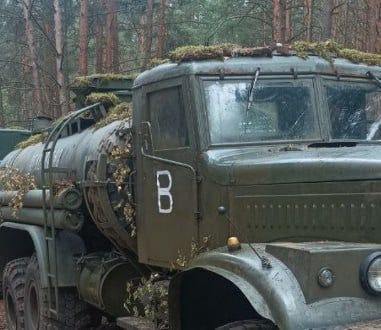
There’s an undercurrent of tension now running through events as other somewhat peculiar happenings have gone on. For instance, Belarus suddenly moved a lot of forces to the Ukrainian border again, and for the first time they appear to have a tactical symbol of a ‘B’ on them, as if they are preparing for direct combat:
Zelensky signs law to ban Ukraine’s largest church
https://www.rt.com/russia/603017-zelensky-signs-orthodox-church-law/ 28 Aug 24
The bill outlaws any religious organizations considered to have ties to Moscow
Vladimir Zelensky has signed a law that calls for the banning of any religious group suspected of having ties to Russia. It threatens to effectively shut down the Ukrainian Orthodox Church (UOC) – the largest faith-based organization in the country.
The Ukrainian parliament introduced the legislation earlier this week; it is expected to take effect in 30 days. After that, all the activities of the Russian Orthodox Church (ROC) and all affiliated religious organizations will be outlawed.
The UOC will have nine months to sever all ties with the ROC, despite the Ukrainian church having already declared full autonomy from the Moscow Patriarchate in 2022, following the outbreak of the Ukraine conflict.
After signing the legislation on Saturday, the country’s Independence Day, Zelensky released a video address stating that “Ukrainian Orthodoxy is today taking a step towards liberation from Moscow’s devils.”
Moscow has condemned Ukraine’s crackdown on religious communities; the Holy Synod of the ROC issued a statement on Thursday comparing the new legislation with Soviet-style repression and other historical persecutions of Christians.
“The purpose of this law is to liquidate [the UOC] and all its communities and to forcibly transfer them to other religious organizations,” the Synod surmised, noting that “hundreds of monasteries, thousands of communities, and millions of Orthodox believers in Ukraine will find themselves outlawed and will lose their property and place of prayer.”
The Synod stated that it would appeal Kiev’s actions with international human rights organizations and call on them to immediately and objectively respond to the “flagrant persecution of believers in Ukraine.”
Meanwhile, former Russian President Dmitry Medvedev responded to the new law by stating that Zelensky has “no religious identity” and describing the crackdown as “full-fledged Satanism,” supported by Ukraine’s Western backers.
“This story will not go unpunished for Ukraine,” Medvedev wrote, stating “the country will be destroyed, like Sodom and Gomorrah,” referring to the Old Testament story of two cities obliterated by divine intervention for their wickedness. “The demons will inevitably fall,” he continued, adding that their punishment will be “earthly, cruel, painful and will happen soon.”
Religious tensions have plagued the country for a long time, with a number of entities claiming to be the true Ukrainian Orthodox Church. The two main rival factions are the Ukrainian Orthodox Church and the Kiev-backed Orthodox Church of Ukraine (OCU), which is considered by the Russian Orthodox Church to be schismatic.
The UOC remains the largest Orthodox church in Ukraine, with more than 8,000 parishes across the country. However, since the 2010s, some of these have been choosing to transfer to the jurisdiction of the OCU under pressure from authorities in Kiev.
Russia says UN watchdog must be ‘more objective’ after trip to nuclear plant near fighting

By Reuters, August 28, 2024
MOSCOW, Aug 28 (Reuters) – Russia said on Wednesday it wanted the International Atomic Energy Agency to take a “more objective and clearer” stance on nuclear safety, a day after the agency head visited a Russian nuclear plant near where Ukraine has mounted an incursion into the country.
Separately, Russia said its forces had defused unexploded U.S.-supplied munitions fired by Ukraine that were shot down just 5 km (3 miles) from the Kursk nuclear plant.
IAEA chief Rafael Grossi toured the Kursk facility on Tuesday and warned of the danger of a serious nuclear accident there. He said he had inspected damage from a drone strike last week, which Russia had blamed on Ukraine, but did not say who was responsible.
Russian state news agency RIA quoted Foreign Ministry spokeswoman Maria Zakharova as saying in a radio interview that Moscow wanted the IAEA to speak out more clearly on issues of nuclear security, although she denied it was demanding that the agency take a pro-Russian line.
“We see both the assessments and the work of this structure (the IAEA), but each time we want a more objective and clearer expression of the position of this structure,” Zakharova said.
“Not in favour of our country, not in favour of confirming Moscow’s position, but in favour of facts with one specific goal: ensuring safety and preventing the development of a scenario along a catastrophic path, to which the Kyiv regime is pushing everyone.”
The IAEA could not immediately be reached for comment…………………………
Ukraine has not responded to Russian accusations that it attacked the plant near where its forces launched a surprise incursion on Aug. 6 that Russia is still trying to repel. There has been fighting about 40 km (25 miles) from the facility.
Russia’s National Guard said in a statement on Wednesday that its sappers had found a shell from a U.S.-supplied HIMARS multiple launch rocket system 5 km from the plant, and a rocket fragment which it said was stuffed with 180 unexploded munitions.
There was no immediate comment from Ukraine on the purported Russian find, and Reuters could not independently verify the location of the video.
Grossi said during his visit that the plant, built to a Soviet design, was especially vulnerable because – unlike most modern nuclear power stations – it lacked a containment dome that might offer protection in the event of a strike by drones, missiles or artillery………………………. https://www.reuters.com/world/europe/russia-criticises-un-nuclear-watchdog-after-trip-plant-close-fighting-2024-08-28/
UN fears nuclear incident possible at Russia’s ‘vulnerable’ Kursk plant after drone strikes
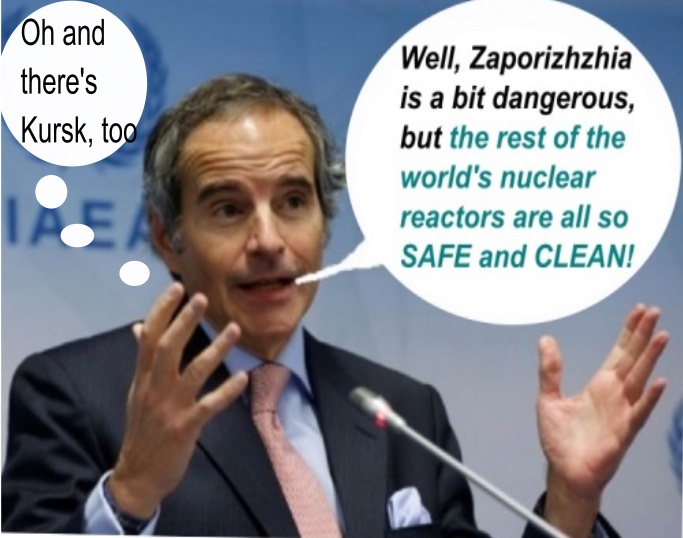
International Atomic Energy Agency raises the alarm about the Kursk plant’s vulnerable nuclear reactor as war rages nearby.
August 27, 2024 By Csongor Körömi https://www.politico.eu/article/un-international-atomic-energy-agency-rafael-grossi-nuclear-incident-russia-kursk-plant-drone-strikes-war-in-ukraine/?fbclid=IwY2xjawE7xONleHRuA2FlbQIxMQABHYsv1ZIaZ4vYeP7K4rKYHQMLy03ZNTz8FBhh11Vv7C3OjzmKz-vJZUlyQA_aem_UFL5Vx9yHAwB2AVR6omFyA
The United Nations’ nuclear watchdog chief warned on Tuesday of heightened risk at the nuclear power plant in Kursk, Russia, where Ukraine has been conducting a military counteroffensive.
International Atomic Energy Agency Director General Rafael Grossi led the mission to the nuclear site after Russian President Vladimir Putin claimed it came under fire following Ukraine’s incursion into the region. Kyiv has denied accusations that it targeted the plant.
“The danger or the possibility of a nuclear accident has emerged near here,” Grossi told reporters, according to Reuters. He added that during his visit of the plant he saw evidence of drone strikes in the area.
“I was informed about the impact of the drones. I was shown some of the remnants of them and signs of the impact they had,” Grossi said, without saying who was responsible.
He warned that the nuclear reactor at the Kursk plant doesn’t have a protective dome, unlike most nuclear facilities, making its core very vulnerable to artillery or drone strikes.
“The core of the reactor containing nuclear material is protected just by a normal roof, he said during his visit. “This makes it extremely exposed and fragile, for example, to an artillery impact or a drone or a missile.”
“A nuclear power plant of this type, so close to a point of contact or a military front, is an extremely serious fact that we take very seriously.”
Despite the ongoing conflict, the power station is operating “in very close to normal conditions,” according to Grossi.
“My message is the same for everyone: no nuclear accident can happen. It is our responsibility to make sure of that,” Grossi said at the news conference, adding that the agency won’t take sides in the Russian-Ukrainian war. “This conflict, this war, is not the responsibility of the IAEA.”
The war that reignited following Russia’s all-out military assault on Ukraine, now in its third year, has been fraught with nuclear risks, with numerous instances of nuclear weapon saber-rattling and recklessness near energy-generating nuclear facilities.
After the start of the conflict, Grossi worked to establish five principles to be respected by both Russia and Ukraine to ensure nuclear safety and avert an atomic catastrophe.
Russia captured Ukraine’s Zaporizhzhia nuclear plant at the start of its invasion and has repeatedly endangered the plant’s safety, drawing condemnation from Grossi.
Grossi will travel to Ukraine next week to meet with President Volodymyr Zelenskyy and discuss “a number of things,” including the situation at the Zaporizhzhia nuclear plant and the presence of IAEA experts at other sites in Ukraine.
The effects of world’s worst nuclear disaster in Chernobyl, Ukraine, in the 1980s are still felt to this day. Hundreds of thousands of square kilometers of land in Russia, Belarus and Ukraine were contaminated, and an area of around 30 kilometers around the plant remains essentially uninhabitable. Soviet authorities initially denied the scale of the disaster.
Sellafield Ltd told to improve after hazardous substance breaches
Sellafield Ltd has been handed two improvement notices after hazardous
substance control breaches. The Office for Nuclear Regulation has served
the notices after breaches of The Control of Substances Hazardous to Health
Regulations 2002.
Enforcement action was taken after Sellafield Ltd failed
to manage the risks of working with nickel nitrate and to prevent or
adequately control exposure of workers to this hazardous substance in one
of its effluent facilities. These shortfalls did not compromise either
nuclear or radiological safety. Used in the treatment of effluent, nickel
nitrate is not radioactive, but is a hazardous substance and could cause
harm to the health of a worker exposed to it.
To mitigate these risks,
operations involving the chemical should be conducted in a glovebox to
protect workers from any harmful health effects. In one facility on site,
contamination was found outside the glovebox area, which resulted in
workers potentially being exposed to the chemical. A poorly designed and
maintained glovebox appeared to have contributed to the contamination.
Cumbria Crack 27th Aug 2024
The western way of war – Owning the narrative trumps reality
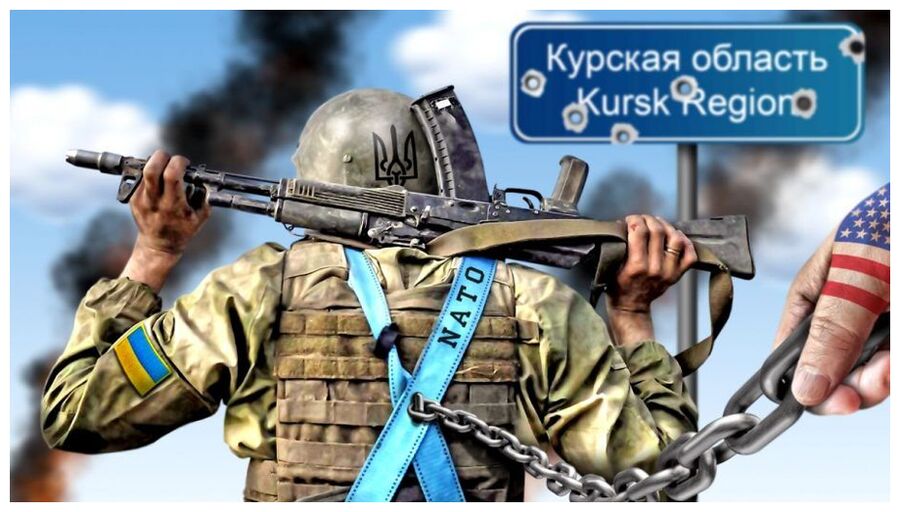
Take, for example, the NATO-orchestrated and equipped incursion into the symbolically significant Kursk Oblast. In terms of a ‘winning narrative’, its appeal to the West is obvious: Ukraine ‘takes the war to into Russia’.
Alastair Crooke, Strategic Culture Foundation, Mon, 26 Aug 2024
War propaganda and feint are as old as the hills. Nothing new. But what is new is that infowar is no longer the adjunct to wider war objectives – but has become an end in and of itself.
The West has come to view ‘owning’ the winning narrative – and presenting the Other’s as clunky, dissonant, and extremist – as being more important than facing facts-on-the ground. Owning the winning narrative is to win, in this view. Virtual ‘victory’ thus trumps ‘real’ reality.
Had the Ukrainian forces succeeded in capturing the Kursk Nuclear Power Station, they then would have had a significant bargaining chip, and might well have syphoned away Russian forces from the steadily collapsing Ukrainian ‘Line’ in Donbas.
And to top it off, (in infowar terms), the western media was prepped and aligned to show President Putin as “frozen” by the surprise incursion, and “wobbling” with anxiety that the Russian public would turn against him in their anger at the humiliation.
Bill Burns, head of CIA, opined that “Russia would offer no concessions on Ukraine, until Putin’s over-confidence was challenged, and Ukraine could show strength“. Other U.S. officials added that the Kursk incursion – in itself – would not bring Russia to the negotiating table; It would be necessary to build on the Kursk operation with other daring operations (to shake Moscow’s sang froid).
Of course, the overall aim was to show Russia as fragile and vulnerable, in line with the narrative that, at any moment Russia, could crack apart and scatter to the wind, in fragments. Leaving the West as winner, of course.
In fact, the Kursk incursion was a huge NATO gamble: It involved mortgaging Ukraine’s military reserves and armour, as chips on the roulette table, as a bet that an ephemeral success in Kursk would upend the strategic balance. The bet was lost, and the chips forfeit.
So, war becomes rather the setting for imposing ideological alignment across a wide global alliance and enforcing it via compliant media.
This objective enjoys a higher priority than, say, ensuring a manufacturing capacity sufficient to sustain military objectives. Crafting an imagined ‘reality’ has taken precedence over shaping the ground reality.
The point here is that this approach – being a function of whole of society alignment (both at home and abroad) – creates entrapments into false realities, false expectations, from which an exit (when such becomes necessary), turns near impossible, precisely because imposed alignment has ossified public sentiment. The possibility for a State to change course as events unfold becomes curtailed or lost, and the accurate reading of facts on the ground veers toward the politically correct and away from reality.
The cumulative effect of ‘a winning virtual narrative’ holds the risk nonetheless, of sliding incrementally toward inadvertent ‘real war’.
Take, for example, the NATO-orchestrated and equipped incursion into the symbolically significant Kursk Oblast. In terms of a ‘winning narrative’, its appeal to the West is obvious: Ukraine ‘takes the war to into Russia’.
Plainly put, this Kursk affair exemplifies the West’s problem with ‘winning narratives’: Their inherent flaw is that they are grounded in emotivism and eschew argumentation. Inevitably, they are simplistic. They are simply intended to fuel a ‘whole of society’ common alignment. Which is to say that across MSM; business, federal agencies, NGOs and the security sector, all should adhere to opposing all ‘extremisms’ threatening ‘our democracy’.
This aim, of itself, dictates that the narrative be undemanding and relatively uncontentious: ‘Our Democracy, Our Values and Our Consensus’. The Democratic National Convention, for example, embraces ‘Joy’ (repeated endlessly), ‘moving Forward’ and ‘opposing weirdness’ as key statements. They are banal, however, these memes are given their energy and momentum, not by content so much, as by the deliberate Hollywood setting lending them razzamatazz and glamour.
It is not hard to see how this one-dimensional zeitgeist may have contributed to the U.S. and its allies’ misreading the impact of today’s Kursk ‘daring adventure’ on ordinary Russians.
‘Kursk’ has history. In 1943, Germany invaded Russia in Kursk to divert from its own losses, with Germany ultimately defeated at the Battle of Kursk. The return of German military equipment to the environs of Kursk must have left many gaping; the current battlefield around the town of Sudzha is precisely the spot where, in 1943, the Soviet 38th and 40th armies coiled for a counteroffensive against the German 4th Army.
Over the centuries, Russia has been variously attacked on its vulnerable flank from the West. And more recently by Napoleon and Hitler. Unsurprisingly, Russians are acutely sensitive to this bloody history. Did Bill Burns et al think this through? Did they imagine that NATO invading Russia itself would make Putin feel ‘challenged’, and that with one further shove, he would fold, and agree to a ‘frozen’ outcome in Ukraine – with the latter entering NATO? Maybe they did.
Ultimately the message that western services sent was that the West (NATO) is coming for Russia. This is the meaning of deliberately choosing Kursk. Reading the runes of Bill Burns message says prepare for war with NATO.
Just to be clear, this genre of ‘winning narrative’ surrounding Kursk is neither deceit nor feint. The Minsk Accords were examples of deceit, but they were deceits grounded in rational strategy (i.e. they were historically normal). The Minsk deceits were intended to buy the West time to further Ukraine’s militarisation – before attacking the Donbas. The deceit worked, but only at the price of a rupture of trust between Russia and the West. The Minsk deceits however, also accelerated an end to the 200-year era of the westification of Russia.
Kursk rather, is a different ‘fish’. It is grounded in the notions of western exceptionalism. The West perceives itself as tacking to ‘the right side of History’. ‘Winning narratives’ essentially assert – in secular format – the inevitability of the western eschatological Mission for global redemption and convergence. In this new narrative context, facts-on-the-ground become mere irritants, and not realities that must be taken into account.
This their Achilles’ Heel.
The DNC convention in Chicago however, underscored a further concern:………………………………………………………………….
The Kursk ploy no doubt seemed clever and audacious to London and Washington. Yet with what result? It achieved neither objective of taking Kursk NPP, nor of syphoning Russian troops from the Contact Line. The Ukrainian presence in the Kursk Oblast will be eliminated.
What it did do, however, is put an end to all prospects of an eventual negotiated settlement in Ukraine. Distrust of the U.S. in Russia is now absolute. It has made Moscow more determined to prosecute the special operation to conclusion. German equipment visible in Kursk has raised old ghosts, and consolidated awareness of the hostile western intentions toward Russia. ‘Never again’ is the unspoken riposte. https://www.sott.net/article/494279-The-western-way-of-war-Owning-the-narrative-trumps-reality
Ukraine doubles down on Russian reactors in nuclear power push
Politico, August 27, 2024, By Gabriel Gavin
Ukraine will push forward with controversial plans to spend hundreds of millions of dollars on aging Russian-made nuclear reactors despite growing opposition from lawmakers, the country’s energy minister said, amid warnings of a major power crisis this winter.
German Galushchenko told POLITICO that the government still intends to pursue the expansion of the Khmelnytskyi nuclear power station in western Ukraine, buying two VVER-1000 reactors currently in storage in Bulgaria. The proposal has drawn criticism from the ruling party’s own MPs, who say there are quicker ways to help prop up the electricity grid, which has been hit hard by Russian bombing…………………..
Last week, Ukrainian MPs told POLITICO that the government had been forced to acknowledge it did not have sufficient support in the parliament to pass a draft law legislating for the purchase of the reactors.
According to Andrii Zhupanyn, a lawmaker from President Volodymyr Zelenskyy’s Servant of the People Party, such defeats are “extremely rare.”
MPs questioned whether the mothballed reactors, bought by Bulgaria more than a decade ago, would be able to be quickly brought into service, and whether the funds could be better spent on renewable power and other sources of electricity. The costs, they said, would likely balloon and open the door to corruption…………………………………………………………………………. https://www.politico.eu/article/ukraine-russia-reactor-khmelnytskyi-nuclear-power-station/
The heroes who saved the world from Chernobyl Two.
they were facing a life-or-death decision – stay or go. The Russians had told them they could leave – but what would happen if there was no one to monitor the radiation and ensure its safety?
the choices they made saved the world from another Chernobyl disaster.
Daily Mail, By Serhii Plokhy, 25 August 2024
Even though he had one of the most challenging jobs in the world as the man in charge of the night-shift at the Chernobyl nuclear power station, nothing fazed Valentyn Heiko. Three-and-a-half decades after the disastrous meltdown in 1986, round-the-clock monitoring of the site in Ukraine continued for deadly radioactive fallout from its defunct reactors and facilities.
On March 1, 2022, Heiko wished staff via loudspeaker ‘peace of the spirit’. It was a brave and apt message in the circumstances – and a defiant one. Because the corridors around the control rooms of the closed – but still lethally contaminated – nuclear compound were being patrolled by machine-gun toting, trigger-happy Russian soldiers.
Following Vladimir Putin’s invasion of Ukraine six days previously, they had burst their way in and taken over the plant.
Back in 1986, a massive explosion in one of Chernobyl’s reactors had blasted about 300 tons of radioactive graphite into the air, sparking a worldwide emergency.
With the collapse of the Soviet Union five years later, the area became part of an independent Ukraine, whose nuclear specialists have since been undertaking the monumental task of containing all possible contamination.
The danger was far from over. Indeed, just a year before, engineers had detected worrying signs that fission had restarted in one of the supposedly defunct reactors, threatening another accident.
After Putin’s decision to invade, the quickest route to the capital, Kyiv, was to go through the wasteland of the Chernobyl exclusion zone. One of the Russian leader’s excuses for invading was his claim that Ukraine was secretly building a nuclear bomb there and enriching irradiated materials to turn into weapons of mass destruction.
On February 24, 2022 – the first day of the invasion – a column of armoured vehicles broke through the security perimeter and hauled down the Ukrainian flag.
Inside the administrative building, soldiers of the Ukrainian National Guard unit took up positions, ready to fight. Two Russian officers, general Sergei Burakov and colonel Andrei Frolenkov, announced that they were assuming control of the plant.
Hopelessly outnumbered, the 170 Ukrainian guards put down their weapons and became prisoners of war, while the plant’s 50 engineers and operators and 80 firefighters found themselves under occupation.
Suddenly, they were facing a life-or-death decision – stay or go. The Russians had told them they could leave – but what would happen if there was no one to monitor the radiation and ensure its safety?
They knew they had to stay. So, for weeks, they worked at gunpoint with no change of clothing, medication or hygienic supplies.
In effect, these men and women were hostages, stuck on an endless shift, uncertain if they would ever see their loved ones or their homes again. But the choices they made saved the world from another Chernobyl disaster.
Their foreman, Heiko, had to cooperate with the Russians but was determined to do so on his own terms. He came up with a daring plan – he would use his technical know-how to frighten them.
Calmly, he introduced himself to his captors: ‘I am the shift supervisor and represent the state of Ukraine.’ After Heiko had confirmed the identity of his Russian ‘guests’, Burakov and Frolenkov declared that the Chernobyl plant was now behind Russian lines.
Though a captive, Heiko laid down his ground rules. He told them that no matter how powerful the Russian military, at the nuclear plant they were not in charge.
They didn’t understand how the plant worked and, as such, any interference would risk nuclear disaster – and all their lives.
As one observer noted: ‘He made it clear to the occupiers that either they would behave decently or be up s**t creek. That is why they did not touch any workers.’
They agreed his terms. Operational control would remain in the hands of the staff, who would be free to move around as necessary and without interference.
The Russian soldiers were allowed in the administration building but would stay away from the obsolete reactor and spent nuclear fuel facilities, and arms would be prohibited in operational areas.
The Russians accepted that they had captured a dangerous site and, to survive, they would have to follow Heiko’s recommendations.
He even bamboozled them into believing that three reactors were still operational when, in fact, the last one had shut in 2000.
As the days of occupation continued, Heiko turned the screws even more, particularly after Putin hinted at the use of nuclear weapons. He told his captors that if the Kremlin used nuclear weapons against Ukraine, he would sabotage the plant and unleash Chernobyl radiation to kill the Russians.
‘I promise you,’ he spelt out, ‘that you will slowly and certainly die here, together with me. I have enough knowledge and skill to ensure that you will remain here with us forever.’
Despite Heiko’s master manipulation, his fellow Ukrainian staff were totally unprepared for the situation they found themselves in. They lived and worked in appalling conditions, jammed into tiny spaces, four to a room
The work was unrelenting. Under normal circumstances, they were to take a 24-hour rest after a 12-hour shift, but now a new shift began immediately after the previous one. ‘We worked almost round the clock, resting for just a few hours,’ remembered engineer Liudmyla Kozak. ‘We were walking around like ghosts.’
Exhausted and homesick, they felt hunted as they were continuously under surveillance. Some succumbed to depression or panic, feeling ‘trapped, stressed and desperate for relief’ in the words of an article in the Wall Street Journal.
………………………………………..Troops started searching for those ‘nuclear bomb’ laboratories imagined by Putin. All the plant’s buildings were checked, with no result. Then, Russian officers considered opening up the mounds of earth erected over the sites where radioactive debris had been buried after the meltdown in 1986.
Valerii Semenov, a senior engineer, told them they were mad as exposing radioactive debris would put everyone in danger of contamination. Faced with the prospect of digging their own radioactive graves, the Russians desisted. Instead, they fortified their military position by digging trenches.
When Semenov discovered sandbags used to protect firing positions had been sourced from contaminated earth, he exploded: ‘You’re bringing in radioactive dirt from outside. Are you out of your mind?’ He also found trenches dug in some of the most contaminated areas – including one where, in 1986, radiation had discoloured the pine trees ginger brown.
The fact was that morale among the 1,000 Russian troops occupying the plant was very low. They drank heavily, with up to half of their rubbish consisting of empty bottles. Fights were frequent. So was looting as they combed the offices for alcohol.
Semenov recalled that many of the Russians were not prepared for a long war. They had expected it to be over within days.
What happened next was arguably the most heroic episode of the whole Chernobyl saga. It was increasingly obvious that staff at the plant had had enough. Even the Russian commanders agreed, realising the exhaustion and resentment of the Ukrainian personnel might lead to an accident that would jeopardise the lives of the occupiers.
They proposed a change of shift, allowing those on duty ever since the occupation to go home, to be replaced by a crew from the nearby town of Slavutych. But this depended on finding experienced staff prepared to risk their freedom – and perhaps their lives – by going into Russian captivity.
Amazingly, there was no lack of volunteers. Forty-six men and women came forward, with two senior men, Volodymyr Falshovnyk and Serhii Makliuk, offering to lead the new shift. Makliuk recalled: ‘We were worried because we were going into the unknown. But our anxiety was less about how we would work at the plant and more what would happen to the families we were leaving behind.’
It was a complicated process getting the original shift out and the new one in, not least because it had to be done in stages so there would always be some staff left to monitor the place. On the 26th day of what had begun as a 12-hour shift, 50 workers were on their way home – 16 engineers and mechanics stayed, including Semenov.
The two shifts met on the side of a river and the exchange took place. ‘We had just seconds to embrace and shed tears,’ recalled a woman from Heiko’s shift.
Heiko considered the volunteers true heroes. ‘They were going into the unknown,’ he said later. ‘No one knew how it would end or how long they would be there.’
Heiko and his crew had spent 600 hours on duty at the occupied nuclear power plant. It was anyone’s guess how long the replacement shift would be there………………………………………………………….
the Russians locked Falshovnyk in his office and presented him with a document.
It was titled ‘Act of Acceptance and Transfer of Protection of the Chernobyl Atomic Station’ and stated the troops of the Russian Guard had provided ‘reliable protection and defence’ of the Chernobyl nuclear station, which they were now transferring back to the Ukrainians. Men carrying automatic rifles demanded that he and Makliuk sign the document or they would be arrested.
They were being asked to confirm that the Russians had behaved well but, faced with the threat of arrest, they signed.
And then, the Russians were gone. A security camera captured an image of one soldier leaving with a Russian flag trailing behind him like the low-hanging tail of a defeated dog.
The next day, April 3, those inside the plant were astonished to hear a voice on a loudspeaker coming from beyond the perimeter. ‘Good morning,’ it said. ‘We are the armed forces of Ukraine. Please let us in.’
And then a Ukrainian armoured personnel carrier and two trucks rolled into Chernobyl.
It really was over.
The Chernobyl staff got to work cleaning up. The extent of the Russian troops’ damage and looting was astounding.
Missing were some 1,500 meters for checking radiation levels, 698 computers and 344 vehicles, amounting to a total value of $135million (£102million).
The only thing the retreating Russian soldiers left behind was an increased level of radiation – up more than 40 times, almost certainly the result of digging trenches in the highly contaminated Red Forest.
There were unverified reports from inside Russia that one soldier had died, 26 had been admitted to hospital and 73 sent for treatment after exposure to radiation in the Chernobyl zone.
The Ukrainians believed that one reason they departed in such a hurry was in panic that so many of them were falling sick.
The Russian troops may have left Chernobyl, but there was every chance that Chernobyl would never leave them. And the threat of nuclear disaster remains very real elsewhere in Ukraine.
Zaporizhia, a nuclear plant in southern Ukraine and the largest power facility in Europe, remains under Russian control.
And last Saturday, following a drone strike nearby, the UN’s nuclear watchdog warned that the safety situation at the plant was ‘deteriorating’.
At Chernobyl, the brave actions of the plant workers prevented nuclear disaster, but we cannot always count on individual heroism to produce such endings in the future.
Unless the world acts to protect nuclear reactors from attack during wartime, instead of being a solution to the problem of climate change, nuclear power will solidify its reputation as the destroyer of worlds.
Adapted from Chernobyl Roulette by Serhii Plokhy (Allen Lane, £25), out on September 3. © Serhii Plokhy 2024. To order a copy for £22.50 (offer valid to 06/09/24; UK P&P free on orders over £25) see tomailshop.co.uk/books or call 020 3176 2937
The Battle of Kursk probably won’t result in nuclear weapons use against Ukraine. But Russian escalation vis-à-vis NATO can’t be ruled out.
any nuclear use against Ukraine would be self-defeating for Russia.
involvement of the West turned Russia’s so-called “special military operation” (“SVO” in Russia) into a full-scale war. Consequently, nuclear signaling has been addressed to the West.
Russia’s central concern is the possible Western involvement in the war on the side of Ukraine, which can turn the tide at the front line. The most visible cause for such concern is the provision of modern Western arms to Ukraine, including long-range missiles capable of targeting deep into Russian territory.
Bulletin, By Nikolai N. Sokov | August 26, 2024
The successful Ukrainian offensive in the Russian Kursk oblast started in early August has once again triggered speculation about possible Russian nuclear use against Ukraine. The situation resembles the successful Ukrainian offensive in the late summer-fall of 2022 in the Kharkiv oblast, when many worried Russia would resort to battlefield nuclear use to stop advancing Ukrainian forces. On the face of it, there was reason to be concerned: Russian President Vladimir Putin did reference nuclear weapons in September 2022, and it became known more than a year later that the United States was “rigorously” preparing for that contingency.
A closer look reveals, however, that Putin’s 2022 reference to nuclear weapons sounded as an emotional impromptu remark made under stress, whereas the US assessment was reportedly based on an intercept of conversations among Russian generals rather than on tangible signs of preparation or data about discussions among policymakers. We now know that Moscow dealt with that situation in a different way: Partial mobilization helped beef up forces, which stopped the Ukrainian Kharkiv offensive.
Although the Kursk operation caught Russia by surprise once again, its military and civilian leadership are better prepared today to deal with surprise than in 2022.
One has reasons to be skeptical about the prospect of battlefield use of nuclear weapons. It was considered an acceptable option during the Cold War, especially its early years. Both the United States and the Soviet Union held large-scale exercises with live nuclear explosions in the 1950s, and both nuclear powers contemplated large-scale use of tactical nuclear weapons in Europe. Today, however, is different. The “nuclear taboo,” which began to take shape in the 1950s, has grown very strong.
Not that nuclear use is technically impossible. But the political and ethical implications make such a decision daunting—and unlikely. Battlefield nuclear use in Ukraine, for whatever reason, would make Russia a true pariah state in the international system, turning countries—partners and neutrals alike, all critical for breaking the tight sanctions regime, which has been established by the G7 economies and their partners—against Moscow. In other words, any nuclear use against Ukraine would be self-defeating for Russia.
Nuclear signals. Russian nuclear signaling has been persistent, going up and down throughout the war, with high points in the fall of 2022 and the spring of 2024, when Russian official rhetoric was the loudest. (Unofficial and semi-official rhetoric has never really stopped.) This signaling, however, has been exclusively and explicitly directed at the West—the United States and its allies. Even the very first statement of Putin announcing the “special military operation” contained a message to the West: “Do not interfere.”
This is hardly surprising: The war is conceptualized in Russia as a proxy war with NATO. Putin’s spokesman, Dmitry Peskov, has repeatedly said—most recently in March and June of this year—that involvement of the West turned Russia’s so-called “special military operation” (“SVO” in Russia) into a full-scale war. Consequently, nuclear signaling has been addressed to the West.
The Ukrainian operation in Kursk may carry certain risks, but these risks are different from what is commonly and hastily assumed as nuclear use against Ukraine.
Russia’s central concern is the possible Western involvement in the war on the side of Ukraine, which can turn the tide at the front line. The most visible cause for such concern is the provision of modern Western arms to Ukraine, including long-range missiles capable of targeting deep into Russian territory.
At a certain level, Western assistance may create serious, perhaps even insurmountable challenges for the Russian military. Each new step—including the provision of tanks, missile defense systems, tactical ballistic missile systems, and most recently F-16 fighter jets—triggers warnings about possible escalation. So far, Russia has coped with each new level of Ukraine’s military capability, but this may change in the future if Western assistance continues or even intensifies.
Perhaps more consequential for Russia, although less visible, is the provision of intelligence, which has helped Ukraine to select targets and significantly constrains Russia’s ability to clandestinely concentrate and move forces and supplies……………………………….
Russians often repeat that a nuclear state cannot be defeated. This is true only to an extent, but there is realization in the Kremlin and beyond that defeat in the ongoing war cannot be tactical. Not only it will end the political regime—which the Kremlin equates with sovereignty—but consequences will affect the entire country for decades. If Russia considers itself de facto at war with the United States and NATO and believes the West seeks its “strategic defeat,” then nuclear weapons legitimately enter the picture under the existing 2020 Decree on Nuclear Deterrence and the 2014 Military Doctrine. This is precisely the situation the United States has tried to avoid: ………………………………
Russian nuclear signals to the West can be divided into two categories.
The first is public statements, especially coming from the most authoritative source, Vladimir Putin, which have been relatively rare—namely, the “SVO” announcement and the September 2022 warning referenced above. ………………………. If someone’s actions will threaten our sovereignty and territorial integrity, we consider it allowable to use all means at our disposal.” Putin also declared that ndeclaredew threats may force Russia to change its nuclear doctrine, hinting that the nuclear threshold might be lowered.
The second category of nuclear signals is arguably more tangible: actions that change Russia’s nuclear posture and/or alert level. Such actions notably include nuclear sharing arrangements with Belarus, whose implementation began in the summer of 2022—after it became clear that war with Ukraine would be protracted, and Russia could not prevent the West from providing assistance to Ukraine—and was completed already in mid-2023. Other highly visible examples are exercises with tactical nuclear weapons, which have been held in three stages in May, June, and August of 2024………………….
Fuzzy red lines. Without doubt, publicly playing with the prospect of nuclear war is dangerous—in addition to be morally reprehensible—but one must admit that Moscow has been relatively restrained in its threats so far; it could certainly make more threats and make them more openly. So why has Russia shown such restraint as it conducts a full-fledged war?
……………………………………………………………………………………….The Russian leadership itself may not know what exactly constitutes a red line. So far, it seems to make such judgement after the fact, evaluating each new level of assistance to determine its impact on the course of the war. If and when such impact reaches a level that puts Russia on the brink of a “strategic defeat,” it may be classified as having crossed a red line…………………..
Evaluation of each new step takes time—from weeks to months. The absence of visible reaction may create a false sense of safety, potentially emboldening U.S. and Western officials. Then, if and when a Russian reaction takes place, it may catch Western allies by surprise and be perceived as unjustified and unprovoked, for the precise reason that the red line was unknown.
No doubt that Russia is very reluctant to launch an escalation that could result in nuclear use: The costs to Russia itself would be enormous—probably unbearable for the country and its leadership. ……………………………….
………the riskiest circumstances will happen after a red line has been crossed, not before. Each side will balance between caution and the perceived strategic need to act. Worse, a long sequence of moves that did not result in escalation may create a false sense of security and increase propensity for risk-taking on the part of Western military officials and political leaders.
…………………..The crossing of a red line in the war in Ukraine may not result in nuclear use. A more likely contingency is escalation starting with something relatively small, but visibly consequential………………………………………. The threat of nuclear use is expected to force the West to retreat, because its stakes in the conflict are believed to be lower than those of Russia in the war in Ukraine.
……………………………………………………………………..It can be predicted with reasonable confidence that Russia will not threaten, much less use, nuclear weapons against Ukraine. Escalation vis-à-vis NATO, however, is a different matter: That likelihood appears higher, but knowing in advance how high it is may be impossible.
Considering the risks outlined above, one obvious question is whether the West should continue and perhaps increase support of Ukraine. I believe that questions about the Kursk invasion and whether the West should continue aiding Ukraine are essentially unrelated. Regardless of which decision is made in regard to Western aid, the risks of that policy must be known and understood. Nothing good can come out of policy that is consciously blind to possible challenges. To the contrary, full information can enhance chances for success and lessen the likelihood of escalation. https://thebulletin.org/2024/08/the-battle-of-kursk-probably-wont-result-in-nuclear-weapons-use-against-ukraine-but-russian-escalation-vis-a-vis-nato-cant-be-ruled-out/?utm_source=Newsletter&utm_medium=Email&utm_campaign=MondayNewsletter08262024&utm_content=NuclearRisk_RussianEscalationVisAVis_08262024
1 This Month




PLEASE OPPOSE HR 8255 AND S.3639 – bills would accelerate satellite deployment, with no environmental review or safeguards – https://ncstd5li.quorum.us/campaign/169331/
To see nuclear-related stories in greater depth and intensity – go to https://nuclearinformation.wordpress.com
-
Archives
- September 2026 (323)
- August 2026 (330)
- July 2026 (355)
- June 2026 (287)
- May 2026 (306)
- April 2026 (356)
- March 2026 (251)
- February 2026 (267)
- January 2026 (308)
- December 2025 (358)
- November 2025 (359)
- October 2025 (375)
-
Categories
- 1
- 1 NUCLEAR ISSUES
- business and costs
- climate change
- culture and arts
- ENERGY
- environment
- health
- history
- indigenous issues
- Legal
- marketing of nuclear
- media
- opposition to nuclear
- PERSONAL STORIES
- politics
- politics international
- Religion and ethics
- safety
- secrets,lies and civil liberties
- spinbuster
- technology
- Uranium
- wastes
- weapons and war
- Women
- 2 WORLD
- ACTION
- AFRICA
- Atrocities
- AUSTRALIA
- Christina's notes
- Christina's themes
- culture and arts
- Events
- Fuk 2022
- Fuk 2023
- Fukushima 2017
- Fukushima 2018
- fukushima 2019
- Fukushima 2020
- Fukushima 2021
- general
- global warming
- Humour (God we need it)
- Nuclear
- RARE EARTHS
- Reference
- resources – print
- Resources -audiovicual
- Weekly Newsletter
- World
- World Nuclear
- YouTube
-
RSS
Entries RSS
Comments RSS

