IAEA chief calls for restraint as fighting remains ongoing ‘in the vicinity’ of Russia’s Kursk Nuclear Power Plant

by Dmytro Basmat, Kyiv Independent 10th Aug 2024
International Atomic Energy Agency (IAEA) Director General Rafael Mariano Grossi called on both Kyiv and Moscow to “exercise maximum restraint” in order to avoid a nuclear accident as fighting is reportedly ongoing in the region around the Kursk Nuclear Power Plant (KNPP).
In a statement issued by the IAEA on Aug. 9, Grossi said that a nuclear accident at the KNPP would have “the potential for serious radiological consequences.”
Grossi noted that two of the six nuclear reactors at the KNPP are in shutdown, while another two are fully operational. The remaining two reactors are under construction.
The statement comes as Ukraine’s continues its surprise incursion across the border into Kursk Oblast, with Ukraine reportedly making gains deeper into Russian territory.
Earlier in the day on Aug. 9, a fire caused by an alleged drone attack on a power substation led to power outages in several areas of Kurchatov which houses the KNPP, regional Governor Alexei Smirnov claimed.
On Aug. 8, Kurchatov’s mayor, Igor Korpunkov, claimed that battles are ongoing “a few dozen kilometers” from the town.
Independent Russian news outlet IStories reported on Aug. 9 that Russia is currently preparing to defend the Kursk Nuclear Power Plant as Ukrainian troops are approaching it.
The entrances to the Kursk Nuclear Power Plant were blocked as of the afternoon of Aug. 9, the pro-government regional newspaper network Bloknot claimed, citing its undisclosed sources.
Everything at the nuclear power plant’s units under construction has been de-energized, and construction workers have left the site, Bloknot claimed………………………………………..
Russia’s Emergency Situations Ministry also said on Aug. 9 that the situation in Kursk Oblast had been declared a “federal emergency,” and began sending additional military equipment into the region. https://kyivindependent.com/iaea-chief-calls-for-restraint-to-ensure-nuclear-safety-at-kursk-nuclear-power-plant/
Spy cop ‘made up absurd bomb plot’ over nuclear waste on railway route
Undercover officer infiltrated ‘anarchist movement’ in the early 1980s
Friday, 9th August — By Tom Foot, https://www.islingtontribune.co.uk/article/spy-cop-made-up-absurd-bomb-plot-over-nuclear-waste-on-railway-route
A SPY cop’s report about a plot to blow up North London Line trains transporting nuclear waste was an absurd fantasy used to justify a top secret undercover unit’s existence, an inquiry has heard.
An officer who infiltrated the “anarchist movement” in the early 1980s claimed “people against the nuclear programme built a bomb” that was “actually found” on the overground railway that runs through Islington.
The route goes through Highbury and Islington station and has recently been renamed the Mildmay Line by London Mayor Sadiq Khan.
The explosive claims from Roger Pearce, known to the inquiry as officer HN85, are discredited by several activists in statements published by the Undercover Policing Inquiry for the first time this week.
The statements tell how for many years nuclear waste was transported on the line from power stations in Kent, Suffolk and Essex to Sellafield, Cumbria.
The documents show how peace groups feared a terrorist attack on the trains could cause a national emergency and considered planting a fake bomb on the network for publicity.
The witness statement from Michael Zeitlin, a campaigner for the anti-nuclear movement, said: “I firmly believe that HN85 has deliberately suggested that a real bomb was planted in order to elevate the status of his reports and so justify his spying.
“I am convinced that any possible ‘bomb on the North London Line’ refers to informal discussions of placing a fake bomb as a publicity stunt, in order to draw attention to the threat created by the transportation of nuclear waste through residential areas.
“The idea that an actual bomb would have been planted is patently absurd as the whole issue was one of public safety. Such a bomb plot does sounds very much like fiction as might be found in a novel.”
The documentss show how a meeting of the Hampstead CND branch had heard discussions about “some form of action to protest against the transportation of nuclear fuel” but this had been “completely taken out of context and then grossly exaggerated” by the undercover officer.
Mr Pearce’s statement to the inquiry said: “There were people who were prepared to take violent action against the nuclear policy of the UK and I felt this provided justification for reporting on them.
“People against the nuclear programme, including anarchists who were my associates, built a bomb on the North London Line which transport nuclear waste.”
The inquiry docs show how Roger Pearce – there is no reporting restriction on using his name – trained as an Anglican Priest at Durham before joining the police in 1973.
He joined the Special Demonstration Squad that was set up by the Met to “prevent violent disorder” but led to officers spying on dozens of left-wing organisations and pacifist groups over four decades with little to no gain.
Training for the “top secret unit” took place at Holborn police station, Mr Pearce’s witness statement reveals, while recruitment took place on a “tap on the shoulder in the corridor” basis.
He chose the “legend” Adrian Roger Thorley, a name taken from a child who was killed in a road accident in in Stoke on Trent, and lied about being a van driver delivering spare parts for the car company Ford.
He lived in a “cover flat” off the Goldhawk Road in west London and wore red and black with shoes with “worn through soles”, claiming he was given the prestigious nickname “Trotsky” by activists he was spying on.
“Using a deceased child’s identity was a distasteful practice and a violation of privacy but we felt it would never be revealed,” his statement said.
The UCP Inquiry was launched in 2017 after it was revealed that some SDS officers used names of dead children and fathered children with activists.
Huge resources were ploughed into the discredited project with critics saying the ends did not justify the means.
More than one million documents have been submitted to the inquiry –already the longest and most expensive in British history – that is not expected to conclude until 2026.
Radiation monitoring keeps track of nuclear waste contamination

Nuclear reactors – whether operational or undergoing decommissioning –
create radioactive waste. Management of this waste is a critical task and
this practice has been optimized over the past few decades. Nevertheless,
strategies for nuclear waste disposal employed back in the 1960s and 70s
were far from ideal, and the consequences remain for today’s scientists
and engineers to deal with.
In the UK, spent nuclear fuel is typically
stored in ponds or water-filled silos. The water provides radiation
shielding, as well as a source of cooling for the heat generated by this
material.
In England and Wales, the long-term disposal strategy involves
ultimately transferring the waste to a deep geological disposal facility,
while in Scotland, near-surface disposal is considered appropriate.
The problem, however, is that some of the legacy storage sites are many decades
old and some are at risk of leaking. And when this radioactive waste leaks
it can contaminate surrounding land and groundwater. The potential for
radioactive contamination to get into the wet environment is an ongoing
problem, particularly at legacy nuclear reactor sites.
“The strategy for waste storage 50 years ago was different to that used now. There wasn’t
the same consideration for where this waste would be disposed of long
term,” explains Malcolm Joyce, distinguished professor of nuclear
engineering at Lancaster University. “A common assumption might have been
‘well it’s going to go in the ground at some point’ whereas actually,
disposal is a necessarily rigorous, regulated and complicated programme.”
In one example, explains Joyce, radioactive waste was stored temporarily in
drums and sited in near-surface spaces. “But the drums have corroded over
time and they’ve started to deteriorate, putting containment at risk and
requiring secondary containment protection,” he says. “Elsewhere, some
of the larger ponds in which spent nuclear fuel was stored are also
deteriorating and risking loss of containment.”
Physics World 7th Aug 2024, https://physicsworld.com/a/radiation-monitoring-keeps-track-of-nuclear-waste-contamination/
Biden administration lies on Ukraine war are monstrous

https://heartlandprogressive.blogspot.com/ 6 Aug 24
Notice mainstream news has imposed a virtual blackout of news about US proxy war against Russia in Ukraine. One can watch 24/7 and see nary a story on a war that could go nuclear in a heartbeat.
Couple of reasons for this. Mainstream news understands the US is suffering a staggering defeat in its effort to save its proxy state Ukraine in order to weaken Russia. Neither Republican nor Democratic media want to touch covering America’s dysfunctional war policy. Bleeding only leads when it’s the other side doing all the bleeding.
A second reason is media fatigue from the Biden administration endless lies for all 30 months of this war without a single truth worth reporting.
The original and biggest lie was the one that kicked off this war on February 24, 2022. Biden claimed Russian President Putin woke up one morning and decided to recreate the Soviet Union…starting by gobbling up Ukraine.
The truth is the US had been provoking the Russian invasion starting with President George W. Bush’s 2008 pledge to entice Ukraine into NATO to weaken, isolate Russia. Russia allowing this senseless US provocation to go on for 14 years is something America would never have done if the situation were reversed. It took the US about 14 hours to respond militarily to Russian missiles in Cuba 60 years earlier.
Biden’s next big whopper was framing the resulting conflict as democracy versus authoritarianism. He proclaimed Ukraine President Volodymyr Zelensky ‘The 21st Century Churchill’, saving Ukrainian democracy from Russian authoritarianism.
But for the past 30 months Zelensky has snuffed out every vestige of the touted Ukraine democracy. He’s cancelled elections under martial law, essentially making him president for the war’s life. No wonder he’s doing nothing to negotiate its end. When the war ends, so does Zelensky’s grasp on power, and possibly his life.
Additionally, Zelensky has banned opposition parties, squelched Ukraine’s free press, curtailed religious freedom and erased any hint of Russian culture among Ukrainian citizens so inclined.
But Biden’s most monstrous lie was that he’d do nothing in supporting Ukraine that could trigger nuclear war, something he said was a real possibility.at the war’s start. For 30 months he’s done the opposite, steadily arming Ukraine with nuclear capable F-16 fighters, Abram tanks and long-range missiles that can hit the heart of Russia. Telling Ukraine to be cautious not to provoke nuclear war with them is akin to giving matches to a kid, then telling him to use them judiciously.
There are many more in Biden’s blizzard of lies over the US proxy war in Ukraine. The saddest for the dying country of Ukraine being sacrificed on the altar of Biden’s lust to weaken, isolate Russia is this. “We will stand with Ukraine forever. We will never abandon Ukraine to Russian aggression.” Biden abandoned Ukraine 30 months ago. The US press and citizenry, weary of Biden’s endless lies on Ukraine, have moved on.
‘It made me cry’: photos taken 15 years apart show melting Swiss glaciers

A tourist has posted “staggering” photos of himself and his wife at
the same spot in the Swiss Alps almost exactly 15 years apart, in a pair of
photos that highlight the speed with which global heating is melting
glaciers. Duncan Porter, a software developer from Bristol, posted photos
that were taken in the same spot at the Rhône glacier in August 2009 and
August 2024. The white ice that filled the background has shrunk to reveal
grey rock. A once-small pool at the bottom, out of sight in the original,
has turned into a vast green lake. “Not gonna lie, it made me cry,”
Porter said in a viral post on social media platform X on Sunday night.
Guardian 6th Aug 2024
EU member warns West not to ‘burn bridges’ with Russia

“Ghosting” doesn’t work in international relations, Austrian Foreign Minister Alexander Schallenberg has said
30 Jul 2024 https://www.rt.com/news/601844-austria-west-burn-bridges-russia/
Austrian Foreign Minister Alexander Schallenberg has warned against “ghosting” Russia when it comes to peace efforts to resolve the Ukraine conflict, insisting that all channels of communication should be used.
The diplomat’s comments come after condemnation from EU officials over Hungarian Prime Minister Viktor Orban’s visit to Russia earlier this month as part of his Ukraine “peace mission.”
“One cannot burn all bridges… Ghosting doesn’t work in foreign policy. I’m a realist and I have to deal with the world as it is, and Russia is part of it,” Schallenberg told Austrian broadcaster ORF on Sunday.
Last month, Switzerland hosted a ‘Peace in Ukraine’ summit to which Russia was not invited. The event focused on Ukrainian leader Vladimir Zelensky’s ‘peace plan’ to end the conflict, which calls on Russia to withdraw from all territories that Kiev claims as its own. The plan has been dismissed by Moscow as being detached from reality.
Schallenberg added that there are “channels of communication” with Russia and insisted that they must be used.
Austria is an EU member but is not part of NATO. Like Hungary, Vienna announced last year that it would not send weapons to Ukraine, countering the trend among the EU. Schallenberg last week also ruled out sending Austrian military instructors to Ukraine.
In March, Austrian Chancellor Karl Nehammer spoke against the idea of using the profits from Russian assets frozen in the EU to provide weapons for Kiev.
In his interview on Sunday, Schallenberg also claimed Russia was not showing willingness to engage in “serious dialogue,” which he said makes it important to involve countries such as India, Brazil, and China in talks, “because they may have more influence on Moscow than others.”
During his controversial peace mission, Orban also visited China, which has long insisted on a diplomatic resolution to the Ukraine conflict. Beijing did not send a delegation to the conference in Switzerland in June, despite being invited.
Russia has repeatedly stated that it is open to dialogue on Ukraine. It has pointed out, however, that any talk of negotiations is pointless unless Zelensky rescinds a law banning Kiev from negotiating with the current leadership in Moscow.
UK’s Astute nuclear submarines stuck in port waiting for maintenance
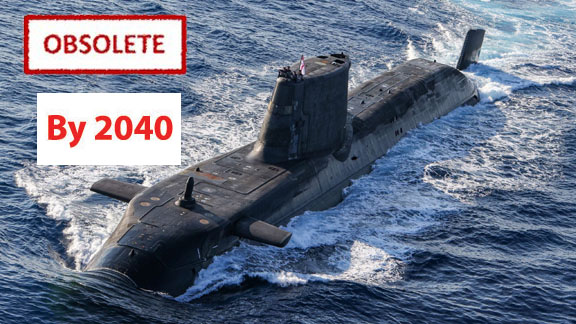
No Astute-class boat — the Royal Navy’s largest and most powerful — has completed an operational voyage this year
Britain’s “hunter-killer” submarines have been stuck in port for up
to two years because of a shortage of maintenance docks. The Astute-class
submarines, the newest in the Royal Navy’s fleet, were designed to hunt
Russian submarines and torpedo targets from up to 14 miles away. They are
the largest and most powerful attack submarines the navy has operated.
However, none of the class has completed an operational voyage so far this
year, while one has been stuck in Faslane — HMNB Clyde — for two years,
The Sun reported.
Times 5th Aug 2024
Radioactive Waste Management – Public Attitudes Survey for Scotland

5 August 2024, Director-General Net Zero Directorate, Environment and Forestry Directorate https://www.gov.scot/publications/radioactive-waste-management-public-attitudes-survey-scotland/
This report summarises findings from a representative survey of the Scottish public that provides new insights into the perceptions and views towards radioactive waste management in Scotland.
Research Context
The Scottish Government commissioned independent researchers, Diffley Partnership, to conduct a public attitudes survey for Scotland exploring attitudes towards radioactive waste management. The primary aim of this study was to design and deliver research that will help develop a deeper understanding of the views of the Scottish public on a range of radioactive waste management issues, including safety and trust in government and industry.
Approach
An online survey was used to measure public attitudes to radioactive waste management. The survey was conducted between 8th and 11th January 2024 and received 2,160 responses. The questionnaire contained both closed questions (analysed quantitatively) and open response questions (analysed qualitatively).
Key Findings
Knowledge of Radioactive Waste Management
Self-reported levels of knowledge of radioactive waste management among respondents were limited. The vast majority (89%) of respondents reported that they were either not very well informed or not at all informed about radioactive waste management in Scotland.
There was a mixed appetite for more information, with just over half of respondents (55%) indicating they would like to know more about radioactive waste management.
Respondents placed the most trust in scientists/academics to provide information on radioactive waste management over other bodies and institutions such as the nuclear industry, the Scottish Government and the media.
The majority of respondents believed that the regulators of the Scottish Nuclear Industry (82%), the Scottish Nuclear Industry itself (81%) and the Scottish Government (79%) should do more to educate the public about radioactive waste management.
Attitudes towards Radioactive Waste Management
Most respondents agreed that public education is important in the management of radioactive waste (70%).
Overall, there was clear recognition that it is vital for Scotland to have a robust strategy for radioactive waste management (84%). This was linked with concerns about the impact of radioactive waste management on the environment (72%), future generations (68%) and health (55%).
Priorities in Radioactive Waste Management
The protection of human health was the biggest priority in radioactive waste management among the respondents, followed closely by the protection of the environment and the security of radioactive waste management facilities.
Safe containment of radioactive waste (64%) and the protection of the environment (67%) were the highest perceived benefits in the creation of new facilities for managing radioactive waste.
Potential for radioactive leaks (72%) was one of the main concerns about the development of new facilities, along with the possible environmental effects (73%) and health impacts (71%).
Decision-Making in Radioactive Waste Management
Most respondents felt that they have no influence over decision making processes relating to radioactive waste management, either locally (75%) or nationally (67%).
Respondents who stated that they have no influence over decision making felt this way because they felt decisions are made without talking to people (61%), that they have no opportunity to have an influence (48%) and they don’t know how to influence decision making (39%).
There was a mixed appetite for wanting to be involved in decision making with just under half of respondents (47%) wanting to be involved.
Too short, ill-timed and clumsy: Welsh Nuclear Free Local Authorities critical of Trawsfynydd radioactive waste consultation

https://www.nuclearpolicy.info/news/too-short-ill-timed-and-clumsy-welsh-nflas-critical-of-trawsfynydd-consultation/ 6 Aug 24
The Nuclear Free Local Authorities are critical of a recent consultation conducted by Natural Resources Wales on plans to leave low-level radioactive building waste in-situ at the former Trawsfynydd nuclear power station and remain fearful that without remedial action in the long-term there could be further contamination that runs off into the lake.
Natural Resources Wales launched its consultation on plans by Nuclear Restoration Services on 6 July and this has just ended today.
The NFLAs made clear in its response its criticism of the timetable and process. NRW only allowed a four-week window for responses on the proposals, despite a typical consultation period in the nuclear industry being twelve weeks. The consultation was also held during summer holiday season when many people take holidays with their families. NRW also made things worse by failing to publish all the documents relating to the consultation on their website; instead interested parties had to ring, or email, a case officer to obtain them after an inevitable delay. Other enquirers reported to the NFLA Secretary that they had been informed there would be a charge for supplying the documents. Consequently, we described the consultation as ‘too short, ill-timed and clumsy’.
Nuclear Restoration Services which is responsible for decommissioning the former Trawsfynydd plant and safely deal with the residual radioactive waste is proposing to leave contaminated building rubble on site by burying it in the now redundant cooling pond complex and covering them with a concrete cap.
The NFLAs are concerned that this will prove an inadequate long-term solution as a report published by the International Atomic Energy Agency detailed issues with historic contamination of the joints in the ponds, and contamination from the ponds of surrounding land.
Trawsfynydd Lake was also routinely the permitted dumping ground for radioactive liquid discharges from the plant, including the water from the cooling ponds when they became redundant, and so it is contaminated. A scientific study indicated that there were abnormal levels of cancer amongst residents of the local area, including amongst some who have consumed the trout that were introduced into the lake and are now fished.
The NFLAs are obviously anxious to ensure that no more radioactive contamination can come from the rubble, however low level, into the land or lake and we would like to see Nuclear Restoration Services to either look to build a bespoke above ground facility or at least look to place the rubble into a relined cooling pond complex.
Russia strengthens security at Kursk nuclear power plant amid Ukraine’s assault in region
Russian Guard Corps says additional forces deployed in vicinity of plant to protect it from Ukraine’s attack
Elena Teslova |07.08.202, MOSCOW , https://www.aa.com.tr/en/russia-ukraine-war/russia-strengthens-security-at-kursk-nuclear-power-plant-amid-ukraines-assault-in-region/3298072
Russia said Wednesday that it strengthened security at the Kursk nuclear power plant amid Ukraine’s assault in the region.
The Russian Guard Corps said it took additional measures to ensure the safety of the plant, including the deployment of additional units in the area.
“As part of ensuring the safety of a particularly important facility, the Russian Guard Corps units took additional measures to protect the Kursk nuclear power plant,” it said.
It added that the security services increased their forces to combat the Ukrainian sabotage and reconnaissance groups in the Kursk and Belgorod regions.
The office of Kursk’s Acting Gov. Alexey Smirnov announced that emergency situation forces were introduced in the region because of ongoing combat operations and the situation on the border “remains tense.”
Additional forces have also been allocated to the operational headquarters under the leadership of the governor of the Kursk region to handle the incursion, it said.
The Russian chief of the General Staff, Valery Gerasimov, said Wednesday that up to 1,000 Ukrainian troops attacked Russia’s military positions near two border settlements adjacent to Ukraine’s Sumy region on Tuesday.
At least five civilians were killed and 24 injured in the attack, including six children, according to statements from regional authorities.
Ukraine has not yet commented on the claims and independent verification is difficult because of the war.
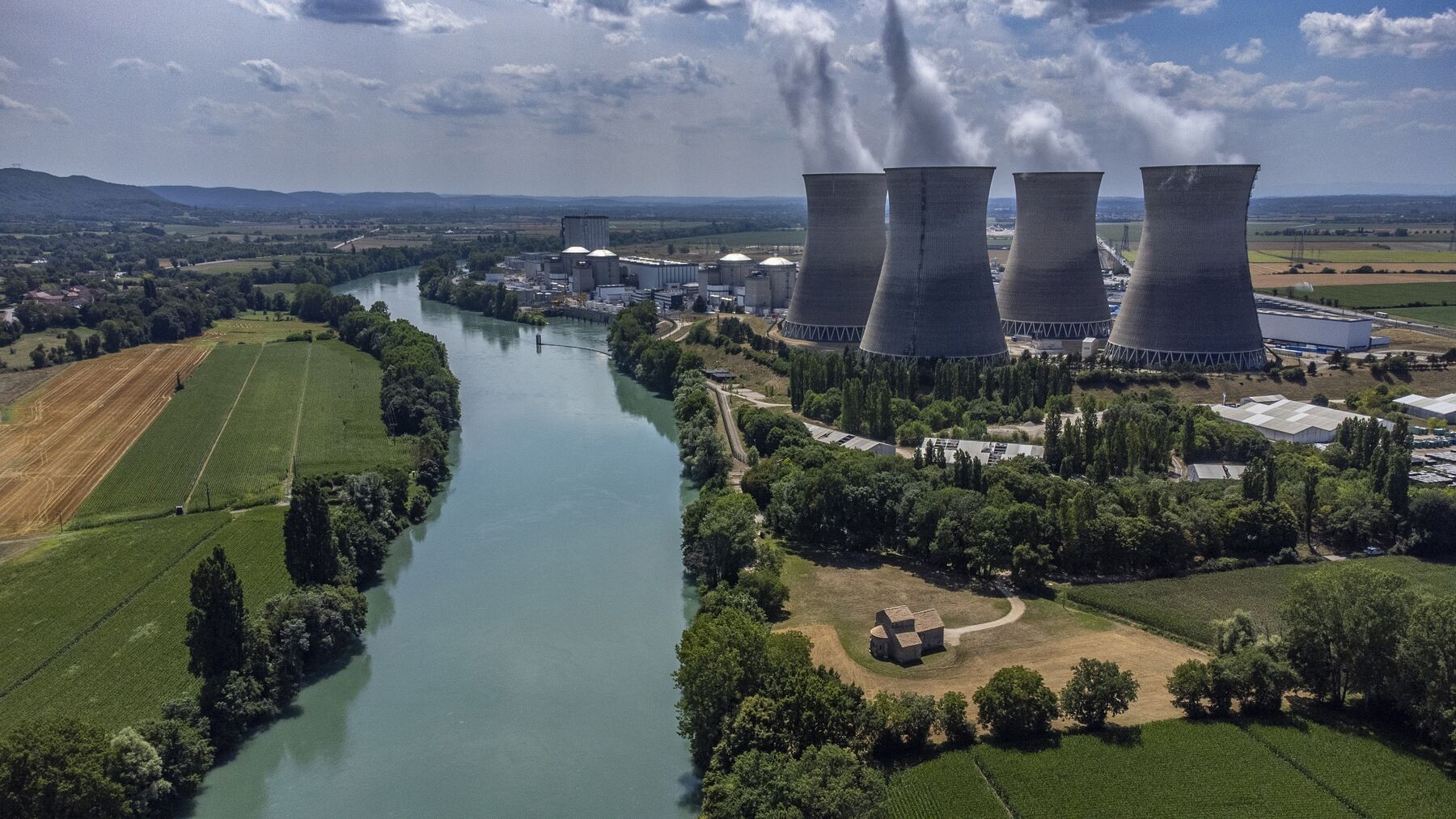
France Warns of Nuclear Power Cuts as Heat Triggers Water Curbs
Bloomberg, By Lars Paulsson, August 8, 2024
Electricite de France SA will likely curtail production at nuclear reactors starting this weekend as hot weather restricts the amount of water that can be discharged into the Rhone River.
EDF uses water to cool its reactors before releasing it into the river, and overheating the waterway can threaten fish and other wildlife. Temperatures across much of western Europe are forecast to climb……………. (Subscribers only) https://www.bloomberg.com/news/articles/2024-08-08/france-warns-of-nuclear-power-cuts-as-heat-triggers-water-curbs?embedded-checkout=true
All six UK Astute-class nuclear submarines stuck in port for repairs
ALL six of the UK’s Astute-class nuclear submarines are stuck in port
– Faslane included – for repairs. The Royal Navy currently has no
working docks for repairs, which has led to the fleet’s newest subs not
conducting a single operation village this year. HMS Ambush — which is
stationed at Faslane – has not sailed for two years.
The National 6th Aug 2024
Over two hundred jobs may be lost if Haverigg jail is displaced by nuclear dump
Whilst Nuclear Waste Services are keen to promote the number of jobs that might be created by the establishment of a Geological Disposal Facility in West Cumbria, there is less clarity when it comes to identifying the number of jobs that might be lost.
The GDF will be the final resting place for the UK’s current and future high-level nuclear waste. Investigations are underway to identify potential sites in either Mid or South Copeland in West Cumbria, and in Theddlethorpe in Lincolnshire. A GDF would require a surface receiving station of around 1 sq KM, to which regular nuclear waste shipments would be made prior to the waste being moved underground and then pushed out along deep tunnels beneath the seabed.
In Theddlethorpe, a specific site, a former gas terminal, has been identified as the potential hub for a receiving station, but this has so far not been the case in Copeland. One major constraint in the South Copeland Search Area is that it mostly comprises the Lake District National Park and the proposed Southern Boundary Extension which are rightly ‘excluded from consideration’. Consequently, any GDF development would have to be confined to small areas around Drigg, Haverigg and Millom, and for many months there has been speculation that one potential site by the coast might be the location of HMP Haverigg.
Mindful that a GDF would most likely mean the closure of the jail, NFLA Secretary Richard Outram sent several Freedom of Information requests to the Ministry of Justice exploring the impact of the closure of the prison in these circumstances. The NFLAs are particularly keen to identify how many local jobs could be lost, as well as ascertaining the impact on local contractors and suppliers engaged in business with HMP Haverigg. There is also the less quantifiable contribution made by prisoners carrying out work within the local community and the positive impact of the training and support provided by prison staff and support agencies in reducing recidivism and turning around the lives of inmates to enable them to reenter society.
On jobs, Ministry of Justice officials were unable to supply all of the information requested, but advised that they employ a total of 206 full-time (80%) and part-time (20%) staff, both operational (prison officers) and non-operational (ancillary roles). Of these over half, 110, reside in the local LL18 postal district. However this excludes the number of staff engaged at this prison who are employed by other agencies, such as the local and regional NHS, and it was surprising to learn that ‘there is no legal requirement for MoJ to collate data relating to contractors and suppliers that work at HMP Haverigg’ so it is impossible to make a determination as to the dependence of the local supply chain on business with the prison.
6th August 2024
Over two hundred jobs may be lost if Haverigg jail is displaced by nuclear dump
Whilst Nuclear Waste Services are keen to promote the number of jobs that might be created by the establishment of a Geological Disposal Facility in West Cumbria, there is less clarity when it comes to identifying the number of jobs that might be lost.
The GDF will be the final resting place for the UK’s current and future high-level nuclear waste. Investigations are underway to identify potential sites in either Mid or South Copeland in West Cumbria, and in Theddlethorpe in Lincolnshire. A GDF would require a surface receiving station of around 1 sq KM, to which regular nuclear waste shipments would be made prior to the waste being moved underground and then pushed out along deep tunnels beneath the seabed.
In Theddlethorpe, a specific site, a former gas terminal, has been identified as the potential hub for a receiving station, but this has so far not been the case in Copeland. One major constraint in the South Copeland Search Area is that it mostly comprises the Lake District National Park and the proposed Southern Boundary Extension which are rightly ‘excluded from consideration’. Consequently, any GDF development would have to be confined to small areas around Drigg, Haverigg and Millom, and for many months there has been speculation that one potential site by the coast might be the location of HMP Haverigg.
Mindful that a GDF would most likely mean the closure of the jail, NFLA Secretary Richard Outram sent several Freedom of Information requests to the Ministry of Justice exploring the impact of the closure of the prison in these circumstances. The NFLAs are particularly keen to identify how many local jobs could be lost, as well as ascertaining the impact on local contractors and suppliers engaged in business with HMP Haverigg. There is also the less quantifiable contribution made by prisoners carrying out work within the local community and the positive impact of the training and support provided by prison staff and support agencies in reducing recidivism and turning around the lives of inmates to enable them to reenter society.
On jobs, Ministry of Justice officials were unable to supply all of the information requested, but advised that they employ a total of 206 full-time (80%) and part-time (20%) staff, both operational (prison officers) and non-operational (ancillary roles). Of these over half, 110, reside in the local LL18 postal district. However this excludes the number of staff engaged at this prison who are employed by other agencies, such as the local and regional NHS, and it was surprising to learn that ‘there is no legal requirement for MoJ to collate data relating to contractors and suppliers that work at HMP Haverigg’ so it is impossible to make a determination as to the dependence of the local supply chain on business with the prison.
On rates of recidivism, Ministry officials did not supply any specifics for the prison but instead referenced the latest national available statistics[i]. However, in a report which followed an unscheduled prison visit by inspectors in May 2021, it was recognised by HM Chief Inspector Charlie Taylor that Haverigg, in providing specialist accommodation and rehabilitation to older male sex offenders, ‘is fast becoming a very capable establishment and is progressing to a point where it soon may well be one of the better open prisons in the estate.’ It was notable that ‘All eligible prisoners had some form of purposeful activity…The employment hub was a particularly helpful service for prisoners’ and that ‘Prisoners benefited from a high standard of technical training. They developed significant new skills, knowledge and behaviours through vocational training.’[ii]
UK Government advice on the prison record that: ‘All prisoners work or train full time at Haverigg. Training and learning opportunities are focused on skills gaps in the job market and designed to improve prisoners’ chances of getting work on release. Professions include timber manufacturing, building, plastering, plumbing, industrial cleaning and agriculture. Prisoners can also train and work towards qualifications in the leisure industry through the gym’.[iii]
On community activities, Ministry officials advised that prisoners are engaged in litter picking and landscaping which has ‘received positive feedback from various community members for their impact on the local area’. The prison also holds a weekly market in Millom to promote the products made by HMP Haverigg, which has ‘significantly contributed to fostering strong relationships between the prison and the community’. Additionally, prisoners also support the local churches by maintaining church yards.
Lake District’s Coastal Nuclear Waste Dump Screw Tightens.
“Geology is the ground we stand on; it’s in the food we eat, and in the water we drink.”
Marianne Birkby, Aug 05, 2024
Lake District’s Coastal Nuclear Waste Dump Screw Tightens. Ethicist Kate
Rawles inadvertently hits the nail on the head in the NIREX sponsored paper
of 2000: ‘Ethical Issues in the Disposal of Radioactive Wastes’: “The
judgment about geology rests on the values put on human life and health. If
human health were not valued, the geological criteria would not be the
same.” Cue Cumbria’s complex and faulted geology! Burying hot
(literally 100 degrees c +) nuclear waste would be akin to burying a
gargantuan cracked pressure cooker containing the most dangerous substances
produced by man. By continuing down the “Implementation of Geological
Disposal” yellow brick road what does that say about the value placed on
human and non-human health? Our dedicated campaign against the nuclear dump
can be seen here at Lakes Against Nuclear Dump – a Radiation Free Lakeland
campaign.
Radiation Free Lakeland 5th Aug 2024
https://radiationfreelakeland.substack.com/p/lake-districts-coastal-nuclear-waste
IAEA: Cooling pond water levels decreasing at Ukraine nuclear plant
Aug 6, 2024, https://www.ans.org/news/article-6266/iaea-cooling-pond-water-levels-decreasing-at-ukraine-nuclear-plant/
The water level in Ukraine’s Zaporizhzhia nuclear power plant cooling pond continues to decrease, creating a serious safety threat.
“If this trend continues, ZNPP staff confirmed that it will soon become challenging to pump water from the pond. Maintaining the level of the pond is made more difficult by the hot summer weather,” said Rafael Mariano Grossi, director general of the International Atomic Energy Agency, in an update issued August 2.
Zaporizhzhia—Europe’s largest nuclear plant—has been under Russian control since March 2022, shortly after the military invasion of Ukraine. The plant stopped producing power in September 2022, and all six of its units currently are in cold storage.
Water issues: Following the destruction of the Kakhovka dam in 2023, Zaporizhzhia workers dug 11 groundwater wells to provide approximately 250 cubic meters of cooling water per hour to support the plant’s sprinkler ponds. These ponds cool all six reactors.
“Dwindling water levels in the cooling pond remains a potential source of concern, and we will continue to closely monitor and observe the situation at the site to ensure the availability of a sufficient supply of cooling water for the plant’s needs at all times,” Grossi said.
During a site walkdown last week, IAEA inspectors stationed at the plant observed proper function in the sprinkler ponds, with water at nominal levels. But any compromise to the availability of water to the sprinkler ponds might necessitate using the cooling pond as a backup source.
Safety concerns: The IAEA team continue to hear military activity at varying distances from the plant.
On April 30, they reported hearing over 100 rounds of gunfire in the vicinity of the Zaporizhzhia, allegedly in response to drones flying near the plant’s training center. The “kamikaze” drones, some measuring 11 feet long and 8 feet wide, were observed in video evidence from Ukraine’s defense intelligence. The drones do not fire missiles but are equipped with explosives and can strike with precision.
Separately, the team reported three direct drone strikes on the plant on April 7 and April 9, resulting in one casualty. Ukrainian military intelligence spokesperson Andrii Cherniak said the Russians are using space around Zaporizhzhia because the Security and Defense Forces of Ukraine cannot return fire in a 1.5-kilometer zone around the plant.
IAEA report: In a letter from the permanent mission of the Russian Federation to the IAEA’s secretariat the following issues were highlighted.
- During a span of six days (July 22–28), 77 aerial vehicles launched with the aim of attacking and provoking ZNPP and the nearby town of Energodar.
- On July 29, Ukrainian armed forces launched three artillery strikes at the checkpoint entrance to Energodar, injuring three Russian Guard employees.
- The plant has enough diesel fuel to operate on emergency power for 19 days.
- Recruitment of personnel for the plant is ongoing, though the current number of employees is sufficient to continue cold shutdown operations and scheduled maintenance tasks.
Support for Zaporizhzhia: Starting in April 2022, the IAEA developed a broad assistance program at Zaporizhzhia. The agency recently organized four remote workshops with a focus on mental health. The sessions were geared toward supervisors, managers, and mental health teams to help recognize signs of distress and support those dealing with stress or trauma.
The United States and United Kingdom have lent support by delivering equipment and hosting workshops.
1 This Month

22 June – Virtual Event –Climate Change: New Data, New Debate
Monday, June 22, 2026 2:30 p.m. – 3:15 p.m. CT
YouTube. Register here

Protect Sazan Island from the Trump family! https://secure.avaaz.org/campaign/en/protect_sazan_island_from_the_trump_family_loc/?bqFCVab&v=174511&cl=22707147157&_checksum=5e9dde668860e8231c33699735e16a1fbf22ab2cb01da50c999fe8732b9775ef&utm_source=email&utm_medium=blast_email&utm_campaign=174511
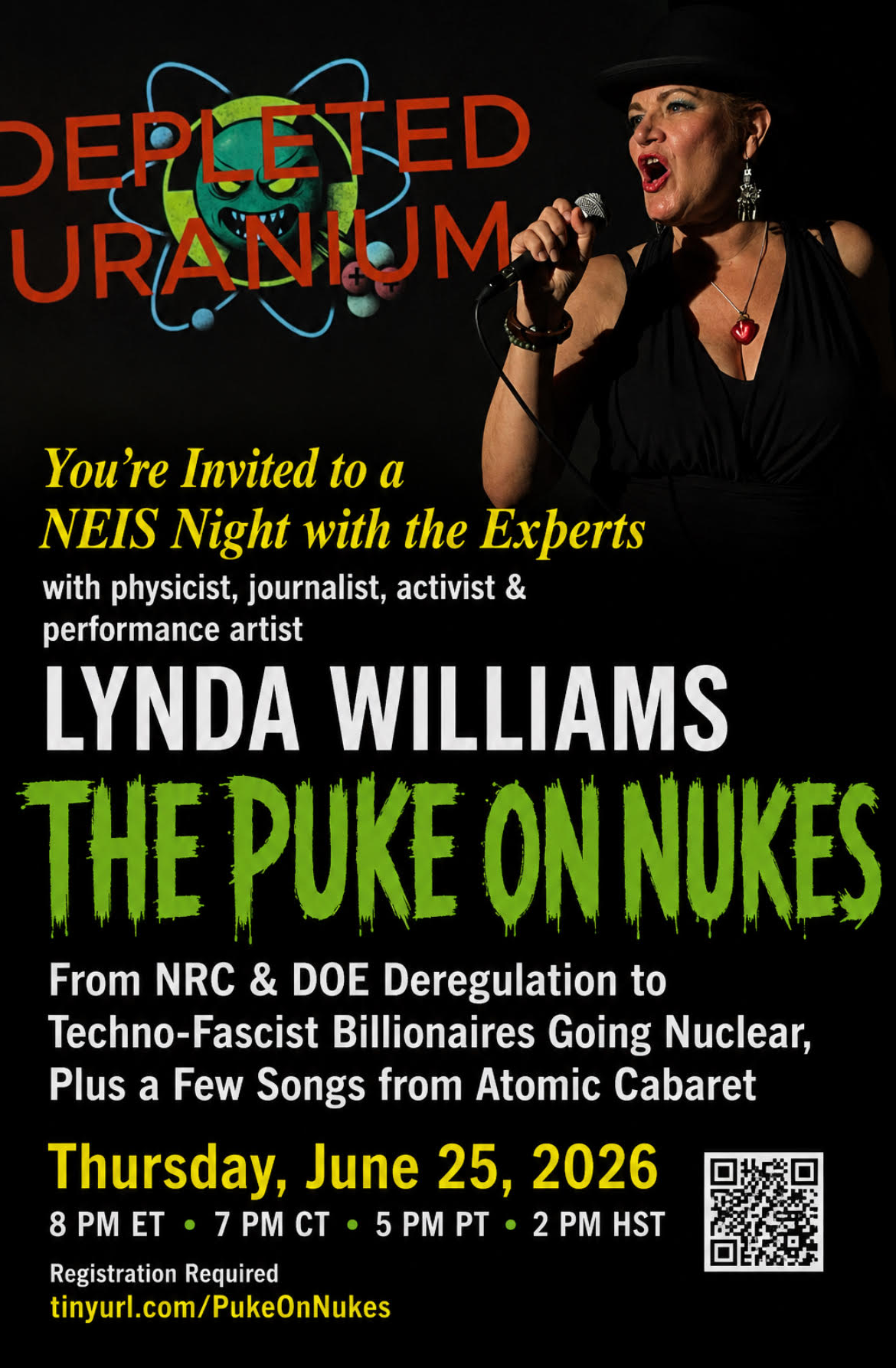
25 June- THE PUKE ON NUKES
Thursday, June 25, 2026
7pm Central Time (8pm ET, 6pm MT, 5pm PT) UTC – 5
From NRC & DOE Deregulation to Techno-Fascist Billionaires Going Nuclear, Plus a Few Songs from Atomic Cabaret REGISTER
26 June – Radiation Trainwreck at the NRC / Join the Protect Better Campaign – https://us02web.zoom.us/meeting/register/4ZlZ5_qLSHGiLSCg8FF6Bg#/registration


Cuba Is Not a Failed State – It Is a Besieged State
PETITION: “Global Appeal to Endorse Palestinian Right of Return of Refugees”
To see nuclear-related stories in greater depth and intensity – go to https://nuclearinformation.wordpress.com
-
Archives
- June 2026 (202)
- May 2026 (306)
- April 2026 (356)
- March 2026 (251)
- February 2026 (268)
- January 2026 (308)
- December 2025 (358)
- November 2025 (359)
- October 2025 (376)
- September 2025 (257)
- August 2025 (319)
- July 2025 (230)
-
Categories
- 1
- 1 NUCLEAR ISSUES
- business and costs
- climate change
- culture and arts
- ENERGY
- environment
- health
- history
- indigenous issues
- Legal
- marketing of nuclear
- media
- opposition to nuclear
- PERSONAL STORIES
- politics
- politics international
- Religion and ethics
- safety
- secrets,lies and civil liberties
- spinbuster
- technology
- Uranium
- wastes
- weapons and war
- Women
- 2 WORLD
- ACTION
- AFRICA
- Atrocities
- AUSTRALIA
- Christina's notes
- Christina's themes
- culture and arts
- Events
- Fuk 2022
- Fuk 2023
- Fukushima 2017
- Fukushima 2018
- fukushima 2019
- Fukushima 2020
- Fukushima 2021
- general
- global warming
- Humour (God we need it)
- Nuclear
- RARE EARTHS
- Reference
- resources – print
- Resources -audiovicual
- Weekly Newsletter
- World
- World Nuclear
- YouTube
-
RSS
Entries RSS
Comments RSS
 nuclear-news