EDF’s controversial River Severn saltmarshes plan should cease, says County Council leader
By Carmelo Garcia – Local Democracy Reporter,, Gloucester News Centre 30th Nov 2024
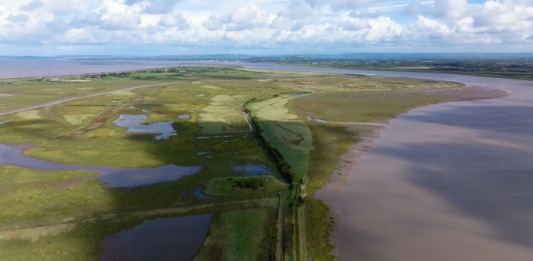
EDF’s controversial plans for saltmarshes linked to Hinkley C nuclear power plant should cease immediately.
That is the view of Gloucestershire County Council’s Conservative leader Stephen Davies (Hardwicke and Severn) who has written to energy, security and net zero secretary Ed Miliband expressing his opposition to the schemes.
Bosses at the French-government owned energy firm have been severely criticised for their environmental improvement plans by residents in Rodley near Westbury-on-Severn and Arlingham on the other side of the river.
Their original plan for Hinkley Point in Somerset was to install an acoustic fish deterrent system to scare fish away from the site as the Bristol Channel is home to numerous species such as eels, herring, salmon and sprats.
However, EDF feel this will no longer be viable and have instead drawn up alternative plans to create salt marshes along the River Severn.
They have identified the two Gloucestershire sites along with Kingston Seymour in Somerset, Littleton Upon Severn in South Gloucestershire as areas for salt marshes.
And they have been in touch with landowners. But villagers strongly oppose the proposals which they fear will destroy the Severn Vale.
Cllr Davies says in the letter, which has not been signed by the other group leaders at GCC, that the authority welcomes the Government’s commitment to delivering net zero.
But he expressed significant concerns regarding the scale of the impact the nuclear power station will have on the migratory fish population in the Severn Estuary special area of conservation which will result from the massive water abstraction at Hickley Point C of 120,000 litres of seawater a second from the Severn for 60 years.
He believes this will be made significantly worse by their intention to remove the required acoustic fish deterrent system at the plant.
And is concerned over the significant impact the emerging salt marsh proposals would have as it would see hundreds of acres of farmland lost.
“This would not only include farmland, but also farms, houses, businesses, roads, footpaths, heritage assets, etc.
“EDF representatives have already confirmed to local residents that they would use compulsory purchase orders in future if need be as well as currently attempting to access privately-owned land for ecological surveys.”
Cllr Davies calls for the acoustic fish deterrent to be installed as originally planned and for appropriate ecological compensation be delivered to address the impact on the Severn Estuary. He is also calling for EDF to be instructed to immediately cease plans to create the new salt marshes along the Severn.
Campaign group Save our Severn Vale do not believe that the proposed location of a saltmarsh in either Rodley or Arlingham is viable from a salinity perspective or compensatory habitat when looking at the species EDF say they want to save………………………….. https://gloucesternewscentre.co.uk/edfs-controversial-river-severn-saltmarshes-plan-should-cease-says-county-council-leader/
‘No plans’ for specific nuclear test veteran compensation
By George Allison, UK Defence Journal, December 1, 2024
Liz Saville Roberts MP (Plaid Cymru – Dwyfor Meirionnydd) recently
questioned the Ministry of Defence (MoD) about the possibility of
establishing a dedicated financial compensation scheme for nuclear test
veterans and their families.
These veterans were involved in the UK’s
nuclear testing programme from 1952 to 1967. Responding to the inquiry,
Luke Pollard, the Parliamentary Under-Secretary of State for Defence,
confirmed that “The Ministry of Defence has no current plans to develop a
specific compensation scheme for either Nuclear Test Veterans or their
families.”
However, Pollard highlighted that veterans who believe they
have been adversely affected by their service can apply to the War Pensions
Scheme. This “no-fault scheme provides compensation for Service personnel
who are disabled or die due to injury caused or made worse by service in
the UK Armed Forces before 6 April 2005.” He also noted the availability
of supplementary pensions and allowances for dependants through the same
programme.
https://ukdefencejournal.org.uk/no-plans-for-specific-nuclear-test-veteran-compensation/
Just Don’t Mention (or Measure) the Pu (Plutonium)
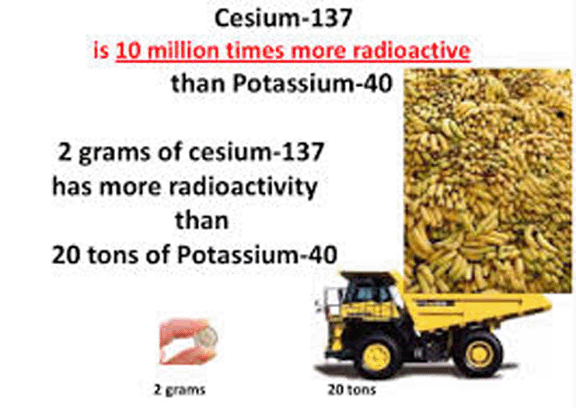
Cs-134 usually appears (at first) in similar amounts as Cs-137, as both are fission wastes………. With regard impact on human health cesium–134 (Cs-134) is extremely serious along with cesium-137 (Cs-137) the longer lived isotope which also present on Cumbrian beaches
By mariannewildart, Radiation Free Lakeland 30th Nov 2024, https://mariannewildart.wordpress.com/2024/11/30/just-dont-mention-or-measure-the-pu-plutonium/
Josh MacAlister MP for Sellafield (sorry Whitehaven and Workington) bigs up the “Good” status of Seascale and “Excellent” status of St Bees bathing water sites.
The bad news is that the criteria for bathing water quality in the UK does not include radioactive pollution – a bad case of the three wise monkeys “see no evil..”
Our own citizen science findings indicate radioactive wastes are a now an insidious and homogeneous part of West Cumbria’s beaches courtesy of the nuclear industry’s routine and accidental discharges to the Irish Sea.
Our own surveys and testing has shown that Caesium 134 is present along with Americium 241. Cs-134 has a short half life of only 2 years which is counter to the already disingenuous claims that the discharges (some very long lived) are “historic..” Cs-134 usually appears (at first) in similar amounts as Cs-137, as both are fission wastes. This implies that this Cs-134 was produced in a nuclear reactor about eight years ago. With regard impact on human health cesium–134 (Cs-134) is extremely serious along with cesium-137 (Cs-137) the longer lived isotope which also present on Cumbrian beaches. In nature, caesium exists only as a non-radioactive (or stable) isotope known as cesium-133. Americium 241 does not exist in nature and is a decay product of Plutonium.
The UK Health Security Agency have stated the risk of the public encountering a radioactive particle is “very low” but this is contested . In reality the ongoing risks are unacceptable and set to increase with new development plans such as proposed new nuclear and a Geological Disposal Facility for heat generating nuclear wastes both of which would cause likely disruption to the fragile Cumbrian Mud Patch through subsidence and induced earthquakes.
Campaigners point out that children and young women of childbearing age are most at risk of health impacts from encountering a radioactive particle. “Inadvertent ingestion of a particle will result in the absorption to blood of a small proportion of the radionuclide content of the particle. The subsequent retention of radionuclides in body organs and tissues presents a potential risk of the development of cancer.” Health risks from radioactive particles on Cumbrian beaches near the Sellafield nuclear site by John D Harrison et al 2023.
France postpones financing decision of 6 new reactors – report

the firm’s Flamanville latest European pressurised reactor project cost EUR 19bn, almost six times the initial cost and faced significant delays.
(Montel) The official body responsible for a financing decision regarding six French new generation reactors has postponed approval from December until early next year amid political uncertainty, French daily Les Echos reported on Thursday.
Reporting by: Muriel Boselli28 Nov 2024
The government was mulling a zero interest loan to help EDF finance the project, it added, though there was a current budget stand-off following a snap election this summer.
This loan option, considered quicker to implement, would cut financial risks due to a mechanism approved by the European Commission, already used in the Czech Republic for its new nuclear project, the daily reported.
The loan would include a zero interest rate for the duration of the works, before moving to a “reasonable” rate once the reactors had been commissioned, the sources said.
This financial package could reduce the total cost of the project, estimated at EUR 67.4bn.
EDF aims to build six and possibly 14 new reactors by 2050, with construction due to start at the Penly nuclear power plant on the Channel coast by 2027. The utility plans to take a final decision in 2026.
However, the firm’s Flamanville latest European pressurised reactor project cost EUR 19bn, almost six times the initial cost and faced significant delays.
Hunterston ‘industrial revolution’ on our doorstep

Drew Cochrane, Largs & Millport Weekly News 29th Nov 2024
When politicians of every hue have been popping up in promotional photos in recent weeks to pronounce the pathway to thousands of jobs for Hunterston in the next five years you know it’s for real.
The bad news for those in Fairlie who are of a protesting disposition (God forbid) is that the projects, spearheading Scotland’s mission towards Net Zero, will not be stopped.
First Minister John Swinney risked a nose bleed by travelling way down south to London to welcome the Highview Power plans to create the world’s largest liquid air energy facility at Hunterston which will store as much as five times Scotland’s current operational battery capacity for locally produced renewable energy.
One thousand jobs in the construction phase and 650 jobs in the local supply chain by its completion in 2030 are the headlines.
Labour’s UK Energy Minister and Scottish MP Michael Shanks visited Hunterston this month to see the ‘Converter’ station at the site of the forthcoming XLCC sub-sea cable production factory which promises 900 permanent well-paid jobs, including, crucially, 200 apprentices. Again, contractors and suppliers will also number hundreds in support work.
Electricity is being supplied from the local site to Wales by sub-sea cable as a precursor to the XLCC plan to bring renewable energy from the Sahara, via Morocco, once the production factory bursts into action by 2029, work scheduled to start in March. We also carried the story and picture of the first apprentices being trained.
Local SNP MSP Kenneth Gibson visited Clydeport which has released 350 acres of the land, designated as National Development Status by the Scottish Government. He, like myself, does not buy the argument from some quarters, that the value of properties in Fairlie will fall; quite the reverse when staff move into the area.
It won’t entirely be a smooth transition, particularly, with heavy traffic on the A78 but as I’ve said before on this page this is our biggest industrial revolution since the decades of IBM and nuclear power on our proverbial doorstep……https://www.largsandmillportnews.com/news/fairlie/24745296.drew-cochrane-hunterston-industrial-revolution-doorstep/
Mass Desertions Over Radiation Could End the War in Ukraine
CounterPunch, Barbara G. Ellis, November 29, 2024
NATO leaders have been dithering about Russia’s recent retaliation against Ukraine’s lofting one of Lockheed’s long-range missiles deep into its interior. Their emergency huddle was about Putin’s new multi-missile (“Oreshnik “) which traveled 10 times the speed of sound (range: 310-3,400 miles) to hit a former ICBM factory . So far, either side seems to have considered the one factor that could end their planet-destroying, nuclear game of chicken.
It’s the real possibility of monumental mutiny and desertions by those boots-on-the-ground that both sides count on to do the heavy lifting in WWIII.
Most soldiers may be willing to risk death by bullets and bombs, but not radiation exposure. Despite recent official assurances by U.S. war planners that nuclear weapons would be used only on battlefields, radiation drifts for thousands of miles. It ignores borders and body protections—as proved by Hiroshima in 1945 and the Chernobyl disaster of 1986.
Russian president Putin claimed Oreshnik’s speed makes NATO’s current defense systems powerless and said its production was imminent. But while the West’s missile designers set up a crash program to counter this latest escalation, these warhawks and their counterparts evidently still ignore the ever-expanding deserter numbers or silent mutinies abuilding in Ukraine and Russia. However, troops usually know military officials traditionally underestimate or conceal death rates lest it demoralize both them and the public to begin questioning the worth of continuing a war.
Current desertion rates in Russia by August were 18,000 and increasing daily, Newsweek reported. Russia’s death rate by September was said to be 71,000 by its independent media outlet Mediazona. The Economist in July put total casualties—dead/wounded/ captured—at between 462,000 and 728,000.
Small wonder then why Putin “borrowed” nearly 12,000 combat troops from North Korea in October for front-line duty. Equally, NATO members have promised troops as well. Many now on site as “advisors” for their equipment—tanks and munitions to aircraft—and infantry training.
Ukrainian desertions have now become legendary, along with increasing populations of neighboring Romania, Poland, and Germany. The Kyiv Post just reported some 60,000 alone are facing criminal charges of desertion since the war’s start in 2022. Thousands of others have not been caught nor wooed or forced back to the ranks. The Eurasian Review also noted Ukrainians on the 629-mile frontline were poorly armed and often out of ammunition. It commented:
frontline were poorly armed and often out of ammunition. It commented:
“Ukraine’s military is now ‘Outgunned and Outnumbered’, struggling with low morale and high rate of desertions….This prolonged war nearing three years have near decimated many Ukrainian infantry battalions, making the situation grim on the battle limes. Reinforcements are few and difficult to be created, leaving soldiers exhausted, demoralized and desert [ing].”
Not to mention the 44,000 draft-age Ukainian males who by August had slipped through border-police lines of other nations. The Wall Street Journal says 15,000 fled to mountainous Romania in particular……………………………………………………………………………………………………………
……………………………………So when presidents Putin and Biden and NATO leaders assume those “boots-on-the-ground” will mindlessly obey orders to escalate the Russo-Ukrainian war from super-sonic missiles to nuclear warheads, they better think about the U.S. mutiny in Vietnam. It has furnished lessons and tools for all soldiers for all time so instead of “Do or die,” perhaps an overwhelming number will demand to know “Why?” https://www.counterpunch.org/2024/11/29/mass-desertions-over-radiation-could-end-the-war-in-ukraine/?fbclid=IwY2xjawG41V5leHRuA2FlbQIxMQABHcNhNoDwHnDD3OtHWQAgtAw4hnfdNGoSyFdDjYMiBciYjUiG08c1VGHdhw_aem__n-ZgkUj1nxhHZoxRJiKgg
Ukraine has lost almost 500,000 troops – Economist

29 Nov 24 https://www.rt.com/russia/608307-ukraine-losses-estimates-economist/
Vladimir Zelensky previously claimed that only some 31,000 Ukrainian servicemen had been killed.
Up to half a million Ukrainian troops have been killed or wounded in the ongoing conflict with Russia, according to new estimates provided by The Economist, which cited leaked intelligence reports, official statements and open sources.
In an article published on Tuesday, the outlet noted that it is difficult to calculate Kiev’s actual losses, given that Ukrainian officials and their allies are “reluctant to provide estimates.”
Ukraine’s Vladimir Zelensky claimed in February that only 31,000 troops had been killed since the conflict with Russia escalated in 2022. He refused to reveal how many had been wounded, arguing it would let Moscow know “how many people are left on the battlefield.”
However, The Economist noted that according to US officials, Kiev’s total casualty figure currently stands at more than 308,000 soldiers. According to the outlet’s analysis of other sources, the figure could be closer to half a million troops, of which “at least” 60,000-100,000 are believed to have been killed.
“Perhaps a further 400,000 are too injured to fight on,” the magazine wrote.
The Economist also cited the UALosses website, which tracks and catalogues the names and ages of the dead. According to its data, Ukraine has lost at least 60,435 troops, or more than 0.5% of its pre-war population of men of fighting age.
While the data from UALosses is not comprehensive and not all soldiers’ ages are known, The Economist suggested that the actual number of those killed in the fighting is higher and the amount of servicemen who are too injured to fight is even greater.
“Assuming that six to eight Ukrainian soldiers are severely wounded for every one who is killed in battle, nearly one in 20 men of fighting age is dead or too wounded to fight on,” the outlet estimated.
Earlier this year, the Russian Defense Ministry claimed that Ukraine’s military losses since February 2022 had reached almost 500,000, without specifying how many had been killed or injured.
According to the latest information from the ministry, Kiev has also lost over 35,000 servicemen since August in its incursion into Russia’s Kursk Region.
In June, Russian President Vladimir Putin said that his country’s personnel losses in the conflict were a fraction of those on the Ukrainian side, suggesting that the ratio of casualties was approximately one to five.
Security planning for small modular reactors ‘not where it should be’, academic says.

28 Nov, 2024 By Tom Pashby
The security planning for the forthcoming wave of small modular reactor (SMR) developments in the UK is “not where it should be” according to an academic who supports the industry.
SMRs have risen up the agenda with Great British Nuclear’s (GBN) competition for developers to get access to government support for deployment making progress, as well as other novel
nuclear energy companies like Last Energy UK saying it will deploy
micro-reactors in Wales by 2027.
Big technology companies like Google,
Amazon and Oracle have said they want SMRs to power their AI data centres,
to overcome grid power constraints.
And in the UK, the Civil nuclear:
roadmap to 2050 stated: “To deliver energy security while driving down
costs our long-term ambition is the deployment of fleets of SMRs in the
UK.” Proponents of SMRs, such as big tech companies, want them because of
the additional flexibility they offer in location. They don’t need to be
built far away from people because of their size, or near water because
SMRs can be air-cooled.
This opens up questions about appropriate security
arrangements, because traditional gigawatt-scale nuclear sites in the UK
benefit from having long sight lines and layers of physical security such
as fences, patrol paths and armed guards.
New Civil Engineer 28th Nov 2024 https://www.newcivilengineer.com/latest/security-planning-for-small-modular-reactors-not-where-it-should-be-academic-says-28-11-2024/
Only 20% of Great British Nuclear staff employed permanently

Just 30 of 140 currently staff at Great British Nuclear (GBN) are employed
on permanent contracts, it has been revealed. GBN is the government body
running the competition for selecting SMRs to receive taxpayer support for
deployment.
However, its responsibilities in the wider UK nuclear picture
are unclear and criticism has been made about how it interfaces with Great
British Energy. GBN chair Simon Bowen was asked by House of Commons Energy
Security and Net Zero select committee chair Bill Esterson on 20 November
2024 about the proportion of permanent staff at GBN. Bowen said: “The
headcount currently runs at about 140, 30 of which are permanent
employees.”
Explaining why only roughly one-in-five (21%) of the staff
are permanent, he added: “It took us many, many months to get a pay
agreement through the various government processes, understandably, which
really slowed down our recruitment, but we’re now starting to accelerate
and to bring people into the organisation.”
New Civil Engineer 29th Nov 2024
https://www.newcivilengineer.com/latest/only-20-of-great-british-nuclear-staff-employed-permanently-29-11-2024/
Civil and military nuclear programmes: will they be derailed by skills shortages?

Because of the continuing problems, efforts are increasing to share resources and costs between the civilian and military nuclear programmes [11]. Rolls Royce is promoting ‘modular’ nuclear power stations with reactors similar to those used in submarines. Also the new industry recruitment website ‘DestinationNuclear.com’ abandons the old pretence that civil nuclear power is separate from the production of nuclear weapons:
It is time for a nuclear reality check.
it looks likely that in future the contribution of nuclear power to UK energy supplies will be small.
Scientists for Global Responsibility 27th Nov 2024, https://www.sgr.org.uk/resources/civil-and-military-nuclear-programmes-will-they-be-derailed-skills-shortages
Alasdair Beal takes a look at the UK nuclear industry – and finds that the proposed expansion has a workforce problem.
The incoming Labour government has inherited two major nuclear programmes – new power stations and new Trident missile submarines. Both are behind schedule and over-budget but the government says it wants them to continue. This article looks at the difficulties mobilising the skilled workforces required.
Nuclear programmes off-track
In 2010, the Conservative-led government announced its aim for work to be started on eight new nuclear power stations by 2025 [1]. Plans and timetables have been repeatedly revised since then but, currently, only one is actually under construction – Hinkley Point C (HPC) in Somerset. The 2024 ‘Civil Nuclear: Roadmap to 2050’ [2] stated that the aim is now to “secure investment decisions to deliver 3-7GW [gigawatts] every five years from 2030 to 2044, to meet our ambition to deploy up to 24GW of nuclear power by 2050.” This would amount to up to eight more plants the size of HPC. Even this appears unrealistic, given the serious problems building current reactor designs [3].
The military nuclear programme is also in trouble. Recently, Vanguard class submarines – armed with Trident nuclear missiles – have three times operated sea patrols lasting over 6 months, setting new Royal Navy records [4]. These occurred because two submarines were out of service for repairs, leaving only two in seaworthy condition. Numerous other problems have also been reported, including a faulty depth gauge leading to a nuclear-armed submarine taking a potentially catastrophic “unplanned dive” [5], and a major fire in the building used to assemble new submarines [6].
Construction of the Vanguard class submarines started in 1986 and they entered service between 1993 and 1999 with a design life of 25 years, later extended by 5 years. Construction of the replacement Dreadnought class began in 2016, with the first planned to enter service in 2028. However, this has now been delayed to “the early 2030s”, [7] which will require the existing submarines to operate until they are 40 years old, i.e. 15 years longer than their original design life and 10 years beyond their extended design life.
Major skills shortages
Skills shortages could also be a problem for both projects. In 2015, a government document [8] stated that to construct five or more new power stations by 2030, decommission existing power stations, and develop new nuclear missile submarines, “the workforce must grow by 4,700 people a year over the next 6 years. Over the same period 3,900 people are expected to leave the sector, mostly due to retirement. This means that the sector must recruit 8,600 people every year.”
Since then the schedule for new power stations has been delayed but there is now also a contract to construct new SSN-AUKUS nuclear-propelled ‘attack’ submarines. According to a House of Commons Science, Innovation and Technology Committee 2023 report [9]:
“If the UK is to achieve a contribution of 24GW of nuclear power by 2050 it will need to plan for, and achieve, a massive increase in the nuclear workforce … 50,000 full time equivalent employees would need to be recruited by 2040, even without an expansion of nuclear power … Under a scenario which envisages 19GW of nuclear capacity by 2050 … 180,000 workers will need to be recruited by 2050 – including an average of 7,234 recruits each year until 2028, compared to the current inflow of around 3,000 a year. Recently, vacancies in the nuclear sector are running at twice the rate of the general engineering and construction sector.”
With existing vacancies unfilled and recruitment insufficient to maintain present staff numbers, let alone those required for government expansion plans, the potential shortage of skilled staff is serious.
However, the situation is actually worse than the bare numbers suggest: those retiring will include many knowledgeable people with experience of designing and constructing previous nuclear submarines or power stations, or else of working with those who did. New recruits can fill the vacant seats but they cannot replace the loss of knowledge. Books, training courses and videos can help but in advanced engineering work nothing beats the passing on of accumulated knowledge and experience directly between generations of engineers.
Experience counts
I am a professional civil and structural engineer and after graduation I worked on long-span bridge design with the engineers who had designed and supervised construction of some of the biggest bridges in the world. I learned a lot from them – not only about stress calculations but also about the thinking required to produce a successful design. Much of this could not have been learned from courses or books.
The case of Rolls Royce in 1971 illustrates why this is important. Problems with their new RB211 jet engine had forced the company into liquidation and it had to be nationalised. To rescue the situation , the new directors had to persuade retired former senior engineers to return to work to lead the process of redesigning the engine to overcome the problems.
This issue may also be contributing to current problems at HPC. Existing UK nuclear engineers have only limited experience of Pressurised Water Reactor (PWR) construction and in any case they are likely to be fully occupied decommissioning the UK’s old AGR reactors and dealing with historic nuclear waste. Therefore construction of HPC depends heavily on French expertise.
French companies have constructed 58 nuclear power stations based on the Westinghouse PWR design, the last of these being ordered in 1990. No more were ordered for 15 years until Finland ordered a power station based on the new European Pressurised Water Reactor (EPR) design in 2005. By then many of the engineers and other workers who constructed France’s PWRs are likely to have retired or changed occupations, making it difficult to assemble teams with the necessary knowledge and experience to build a new power station to a new design. Maybe we should not be surprised that major problems have been encountered constructing the EPRs at Olkiluoto in Finland, at Flamanville in France – each of which has taken 17 years to build [10] – and at HPC.
Similar problems may also be affecting construction of the new Dreadnought submarines. By the time these were ordered in 2016, many of the engineers with experience of designing and constructing their predecessors would have retired or be close to retirement, taking their knowledge and experience with them.
Because of the continuing problems, efforts are increasing to share resources and costs between the civilian and military nuclear programmes [11]. Rolls Royce is promoting ‘modular’ nuclear power stations with reactors similar to those used in submarines. Also the new industry recruitment website ‘DestinationNuclear.com’ abandons the old pretence that civil nuclear power is separate from the production of nuclear weapons:
“Nuclear plays a vital role in shaping the UK’s future in broader ways. Nuclear power produces carbon-free electricity that lights homes, fuels businesses, and keeps the economy moving.
The impact of nuclear goes beyond power grids. The expertise within the sector plays a crucial role in ensuring the strength and effectiveness of the UK’s nuclear deterrent, contributing to global peace and security. Nuclear is not just an energy source; it’s a critical part in building a secure future for the UK.”
While the claims made in this statement can be criticised on many grounds, most relevant for this article is the apparent assumption that people who are concerned about climate change are also likely to be enthusiastic about nuclear weapons – which could trigger a catastrophic ‘nuclear winter’ if used [12]. If they are, then public acknowledgement of the link between the civil and military nuclear programmes is a clever move and will boost recruitment. However, if they are not, this strategy could backfire badly.
Time for a rethink
It is time for a nuclear reality check.
In 1994, the UK had 16 functioning nuclear power stations (total capacity 12.7GW) but in 2024 there were only 5 (total capacity 5.9GW) and by the end of 2028 there will be just one: Sizewell B (1.2GW) [13]. Completion of the HPC first unit (1.6GW) is now expected between 2029 and 2031, with its second unit following some years later [14]. When the effects of potential skills shortages are considered alongside the problems of current nuclear reactor designs, the idea of achieving anything like 24GW capacity by 2050 seems like a fantasy. Given the rapid growth of renewable energy and related technologies – which is set to continue – it looks likely that in future the contribution of nuclear power to UK energy supplies will be small.
Meanwhile, the programme for new Trident nuclear missile-armed submarines is a gamble based on two risky assumptions: (i) despite industry skills shortages, there will be no further delays in completing the new submarines; and (ii) the existing submarines will be able to continue operating for at least 10 years after the end of their design life. If either assumption proves incorrect then, after all the arguments over ‘unilateral’ or ‘multilateral’ nuclear disarmament, we could end up instead with a rather British outcome: ‘Unintentional Nuclear Disarmament’. At that point, the government would finally have to face up to the dangerous flaws in the idea of ‘nuclear deterrence’ and plan instead for a nuclear-free future.
The conclusion is clear: current plans for new nuclear power stations and new nuclear missile-carrying submarines should both be cancelled and the resources diverted to:
(a) reducing energy consumption and accelerating the development and deployment of alternative renewable energy supplies; and
(b) supporting international arms control and disarmament initiatives, such as the United Nations Treaty on the Prohibition of Nuclear Weapons.
Alasdair Beal BSc CEng FICE FIStructE is a chartered civil engineer, based in Leeds, and a former member of SGR’s National Co-ordinating Committee.
References : …………………………………………………………………………………………..
White House Pressing Ukraine To Draft 18-Year-Olds for War

National Security Advisor Jake Sullivan recently hinted that the US was pressuring Ukraine to expand conscription, saying Ukraine’s biggest problem in the war was the lack of manpower.
The pressure from the US comes as polling shows the majority of Ukrainians want peace talks to end the war,
by Dave DeCamp November 27, 2024 , https://news.antiwar.com/2024/11/27/white-house-pressing-ukraine-to-draft-18-year-olds-for-war/
The White House is pressuring Ukraine to increase the size of its military by lowering the minimum age of conscription from 25 to 18, The Associated Press reported on Wednesday.
A senior Biden administration official said the outgoing administration wants Ukraine to start drafting 18-year-olds to expand the current pool of fighting-age males. The pressure from the US comes as polling shows the majority of Ukrainians want peace talks with Russia to end the war.
National Security Advisor Jake Sullivan recently hinted that the US was pressuring Ukraine to expand conscription, saying Ukraine’s biggest problem in the war was the lack of manpower.
“Our view has been that there’s not one weapon system that makes a difference in this battle. It’s about manpower, and Ukraine needs to do more, in our view, to firm up its lines in terms of the number of forces it has on the front lines,” Sullivan said on PBS News Hour last week.
Last month, Serhiy Leshchenko, an aide to Ukrainian President Volodymyr Zelensky, said Ukraine was under pressure from US politicians to lower the conscription age. “American politicians from both parties are putting pressure on President Zelensky to explain why there is no mobilization of those aged 18 to 25 in Ukraine,” he said.
Zelensky signed a mobilization bill into law back in April that lowered the conscription age from 27 to 25. A few weeks before the mobilization bill became law, Zelensky received a visit from US Sen. Lindsey Graham (R-SC), who complained that not enough young Ukrainian med were being sent to the frontline.
“I would hope that those eligible to serve in the Ukrainian military would join. I can’t believe it’s at 27,” Graham said. “You’re in a fight for your life, so you should be serving — not at 25 or 27. We need more people in the line.”
The Biden administration’s push for Ukraine to draft younger men comes as it is doing everything it can to escalate the proxy war before President-elect Donald Trump is inaugurated on January 20. President Biden is seeking another $24 billion to spend on the conflict even though it’s clear there’s no path to a Ukrainian military victory.
Plans to turn land in Somerset into a saltmarsh should be scrapped.
Plans to flood 1500 acres of farmland along the Severn Estuary to create
saltmarsh won’t be effective in saving fish affected by a nuclear power
station – that’s according to ecosystems expert Dr Mark Everard of the
University of the West of England. EDF is building the station at Hinkley
Point in Somerset and had agreed to install and maintain an acoustic fish
deterrent to prevent fish being sucked into the site’s cooling systems. But
they now say it’s dangerous to build and the technology is untested, and
want to flood farmland instead to create saltmarsh habitats. Dr Everard
says most fish – including migrating salmon – won’t benefit from this, and
the deterrent system is already used effectively worldwide.
BBC Farming Today 25th Nov 2024, https://www.bbc.co.uk/sounds/play/m0025cyx
France is weighing zero-interest loan for 6 nuclear reactors, sources say

- Summary
- EDF faces financing challenges due to high debt and project delays
- French government faces no-confidence vote over budget with spending cuts
- EU approval needed for state aid in nuclear projects
PARIS, Nov 27(Reuters) Reporting by Benjamin Mallet; additional reporting by Leigh Thomas; writing by Dominique Patton; editing by Nina Chestney and Tomasz Janowski- https://www.reuters.com/business/energy/france-is-weighing-zero-interest-loan-6-nuclear-reactors-sources-say-2024-11-27/
French officials are drawing up plans to provide an interest-free loan to state-owned power utility EDF to finance a significant portion of the construction of six new nuclear reactors, two people familiar with the matter said.
The financing would clear a major hurdle for one of the country’s biggest public projects in years.
The plans are similar to financing agreed recently for a single reactor in the Czech Republic, and although the size of the loan is not yet known, it shows the growing need for state support in financing new nuclear projects in Europe.
The plans also include a long-term guaranteed price for the power generated, known as a contract for difference (CfD), said the people, who declined to be identified because they are not authorised to speak with media.
The Ministry of Finance and EDF declined to comment.
The discussions on financing the projects that could cost well over 50 billion euros ($52.60 billion) come as the French government faces a potential no-confidence vote over a proposed budget that contains measures to cut spending and raise taxes to contain the country’s soaring debt.
President Emmanuel Macron announced plans in early 2022 for six new reactors with a total production capacity of about 10 gigawatts to partly replace an ageing nuclear fleet and secure future energy supplies.
Construction of the first reactor is due to start in 2027 but Macron has never said who would pay for the project, which at the time was estimated to cost around 52 billion euros. Recent media reports suggest costs may be higher, reaching as much as 67 billion euros.
France’s current 57 nuclear reactors in operation were largely financed by EDF, which was a publicly-listed company until it was fully nationalised last year.
But the company is unlikely to be able to secure private financing for new projects, given its already high debt, and there have been multiple delays and cost overruns at recent projects like Flamanville in France and Hinkley Point in England.
CZECH MODEL
While there is general agreement to provide a zero-interest loan to EDF during the construction phase, the amount is not yet decided and there are still “intense discussions” on matters such as the sharing of risk between the utility and the state from any additional costs and delays, one of the sources said.
The plan also needs approval from the finance minister once EDF submits a final costing for the projects, expected early next year.
As a form of state aid, it also needs to be cleared by the European Commission.
French officials have been encouraged, however, by Brussels’ approval for a similar financing structure for one 1 gigawatt Czech unit at Dukovany, the sources said.
Under the Czech arrangement, interest on a state loan increases to at least 2% after the plant begins operating.
Europe is seeing a resurgence of interest in nuclear power projects, with nations including Poland and the UK planning new plants to shore up their energy self-sufficiency after a major energy crisis in the region.
Financing remains a huge challenge, with construction risks weighing on utilities’ balance sheets and credit ratings.
The British government recently pledged more than 5.5 billion pounds ($6.93 billion) to help fund early development of the 3.2 GW Sizewell C project.
Another project in Britain, EDF’s 3.2 GW Hinkley Point C plant, which is expected to cost between 31 billion pounds and 34 billion pounds based on 2015 values, is also backed by a contract for difference scheme.
($1 = 0.9506 euros)
($1 = 0.7931 pounds)
Transfer of nukes to Kiev would be viewed as attack on Russia – Medvedev
Rt.com 26 Nov 24
The former president’s warning follows reports that discussions have been held in the US about Ukraine obtaining a nuclear arsenal .
Moscow will consider any threat of nuclear arms being supplied to Ukraine by the US as preparation for a direct war with Russia, former president Dmitry Medvedev has warned. The actual transfer of nuclear weapons would be tantamount to an attack on the country under Russia’s new nuclear doctrine, he added.
In a Telegram post on Tuesday, Medvedev referenced a recent report in the New York Times. In a piece bylined by four of its journalists, the NYT claimed that US and EU officials are “discussing deterrence as a security guarantee” for Ukraine, claiming a conversation is underway to consider giving Ukraine nuclear weapons.
US politicians and journalists are seriously discussing the consequences of providing Kiev with nuclear weapons, said Medvedev, who serves as the deputy chair of the Russian Security Council…………………………………………………………………………………………………… more https://www.rt.com/russia/608212-medvedev-nukes-transfer-ukraine/
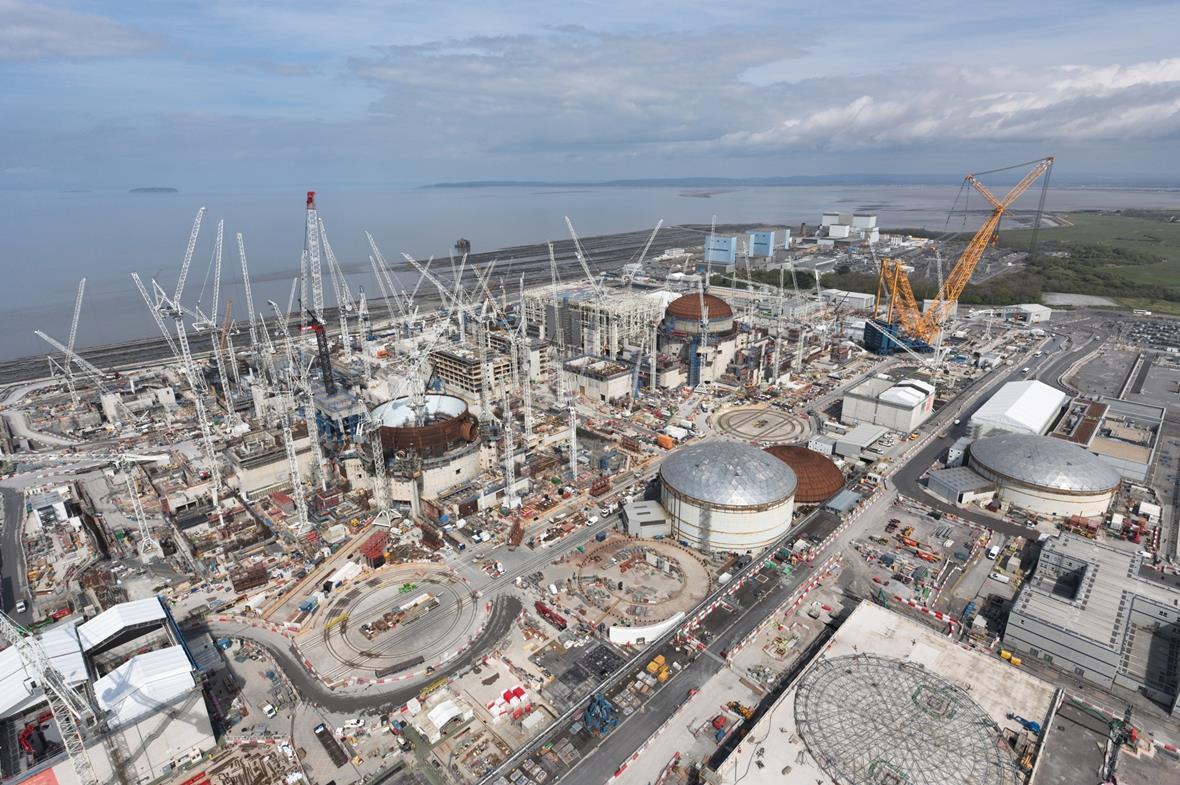
Hinkley Point C: Hundreds down tools over concerns
By Seth Dellow, Bridgwater Mercury 28th Nov 2024
HUNDREDS of workers at Hinkley Point C have stood down today over unresolved concerns.
The action short of strike began at 9am this morning with workers claiming it concerns fingerprint scanners in a small area on site. They have claimed there are only five scanners serving 13,000 workers on site but this is strongly denied by EDF which runs the Hinkley Point site. Electricians, pipe fitters and welders are all said to have walked out.
The number of affected workers could be up to 1,600 as the action only involves some of the MEH workers on site. MEH has contracted staff doing work on the Hinkley Point site.
Earlier, workers claimed between 2,000 and 6,000 workers had walked out.
One electrician, who spoke anonymously to the Bridgwater Mercury, said that workers were “being taken advantage of.”
The nuclear power station is already behind schedule and is expected to be operational between 2029 to 2031.
Workers are planning on taking full strike action on Monday, December 2, 2024, as they say they will be blocked from entering the site because of their actions today.
It follows recent strike action which saw EDF workers walk out over pay concerns. ………………
https://www.bridgwatermercury.co.uk/news/24757425.hinkley-point-c-6-000-workers-walk-concerns/
1 This Month
10 June – Assessing Canada’s Investments in Small Modular Nuclear Reactors – https://zoom.us/meeting/register/IiqHA5feRhaEBycOLNTJlA#/registration


Cuba Is Not a Failed State – It Is a Besieged State
PETITION: “Global Appeal to Endorse Palestinian Right of Return of Refugees”
To see nuclear-related stories in greater depth and intensity – go to https://nuclearinformation.wordpress.com
-
Archives
- June 2026 (89)
- May 2026 (306)
- April 2026 (356)
- March 2026 (251)
- February 2026 (268)
- January 2026 (308)
- December 2025 (358)
- November 2025 (359)
- October 2025 (376)
- September 2025 (257)
- August 2025 (319)
- July 2025 (230)
-
Categories
- 1
- 1 NUCLEAR ISSUES
- business and costs
- climate change
- culture and arts
- ENERGY
- environment
- health
- history
- indigenous issues
- Legal
- marketing of nuclear
- media
- opposition to nuclear
- PERSONAL STORIES
- politics
- politics international
- Religion and ethics
- safety
- secrets,lies and civil liberties
- spinbuster
- technology
- Uranium
- wastes
- weapons and war
- Women
- 2 WORLD
- ACTION
- AFRICA
- Atrocities
- AUSTRALIA
- Christina's notes
- Christina's themes
- culture and arts
- Events
- Fuk 2022
- Fuk 2023
- Fukushima 2017
- Fukushima 2018
- fukushima 2019
- Fukushima 2020
- Fukushima 2021
- general
- global warming
- Humour (God we need it)
- Nuclear
- RARE EARTHS
- Reference
- resources – print
- Resources -audiovicual
- Weekly Newsletter
- World
- World Nuclear
- YouTube
-
RSS
Entries RSS
Comments RSS
 nuclear-news