Skiing in France is slowly dying.

Skiing in France is slowly dying and many resorts are expected to close
down in a little over 20 years, industry experts have warned. Climate
change, ageing ski lifts and rising costs are driving smaller, mid-altitude
resorts out of business. Five shut down this year and 186 have gone out of
business since the 1950s, mostly in inexpensive ski areas with relatively
few runs that were popular with French families but never attracted large
numbers of foreign holidaymakers.
Times 29th Dec 2024 https://www.thetimes.com/world/europe/article/france-affordable-ski-slopes-shut-why-nqkb3qrk7
How Ukraine is Helping the HTS Militants Who Overthrew Assad
Scheerpost, December 29, 2024 , By Stavroula Pabst / Responsible Statecraft
As Islamist, al-Qaida-linked group Hayat Tahrir al Sham (HTS) overruns Syria amid President Assad’s sudden ouster, evidence suggesting Ukraine has assisted the group’s triumph continues to mount.
Namely, the Washington Post reported Tuesday that Ukraine sent 150 first-person-view drones and 20 drone operators to Idlib about a month ago.
The New York Times reported earlier this month, moreover, that Ukraine and HTS were coordinating efforts including “countering Russian misinformation and providing medical assistance.” The reporting also highlighted Ukrainian intelligence head Kyrylo Budanov’s repeated suggestions that Ukraine would target its enemy Russia internationally.
Washington Post columnist David Ignatius mused that Ukraine’s intentions for assisting HTS were obvious, writing that the war-torn nation was looking for other ways to “bloody Russia’s nose and undermine its clients.” In turn, a source told the New York Times that the HTS offensive in Syria was likewise timed in part to strike a blow against mutual enemy Russia.
………………………………………. “Ukraine’s alleged assistance to HTS forces is of limited military significance insofar as the SAA was inherently unprepared to resist the rebel offensive,” said Dr. Mark Episkopos, Quincy Institute Research Fellow and Adjunct Professor of History at Marymount University.
“But it is part of Kyiv’s broader effort to court Western support for its NATO accession bid by demonstrating to the US and other stakeholders its effectiveness in countering Russian interests around the world.” https://scheerpost.com/2024/12/29/how-ukraine-is-helping-the-hts-militants-who-overthrew-assad/
Complex plan for dismantling UK’s 27 dead, rusting, radioactive nuclear submarines.

Fife Council approve Babcock plans for Rosyth Dockyard
28th December, By Ally McRoberts
A NEW secure compound for the Submarine Dismantling Project at Rosyth Dockyard has been given the green light by Fife Council.
Babcock International had sought a certificate of lawfulness to change the use of a car park on Keith Road – with the loss of 86 spaces – and build a storage facility on it.
The much-delayed project aims to dismantle seven old nuclear subs at Rosyth, remove the radioactive waste and recycle as much of the metal as they can into “tin cans and razors”.
The new facility is needed for phases three and four and will be enclosed by three metres high walls, with new gates and drainage infrastructure.
In the application it was described as a laydown area and contractors’ compound that will be roughly 45 metres by 35 metres in size, and take up around half an acre of
land close to dry dock number three.
Swiftsure is the first vessel being disposed of at Rosyth and it’s scheduled to be recycled by 2026. In total, the project will dispose of 27 nuclear subs. Seven have been laid up at
Rosyth for decades – Dreadnought has been there so long, since 1980, that
most of the low-level radiation has “disappeared naturally” – and there are
15 at Devonport in Plymouth. Five are still in service with the Royal Navy.
The UK Government said earlier this year that the project has already
invested more than £200 million into the dockyard and the wider UK supply
chain and sustains more than 500 jobs.
Dunfermline Press 27th Dec 2024
https://www.dunfermlinepress.com/news/24820505.fife-council-approve-babcock-plans-rosyth-dockyard/
Fault puts nuclear power station offline over Christmas
A reactor at a nuclear power station went offline over Christmas, an
energy provider has confirmed. EDF Energy said the outage at Heysham 2
power station, near Morecambe, on Monday was caused by an issue with the
high voltage transmission system run by National Grid. National Grid
confirmed there was a fault at one of its remote substations that was at
about the time Heysham 2 tripped. EDF said it worked with National Grid
over the Christmas period to fix the issue and safely return the reactor to
service.
BBC 28th Dec 2024
https://www.bbc.co.uk/news/articles/ckgx9p1qll4o
Scots to pay ‘£1.5m every day for 30 years’ towards Trident renewal
The National 27th Dec 2024, https://www.thenational.scot/news/24821011.scots-pay–1-5m-every-day-30-years-towards-trident-renewal/
The Alba Party have used the latest National Records of Scotland (NRS) figures available as well as a House of Commons library report to highlight the daily cost of the UK’s so-called nuclear deterrent to Scotland.
The party have also used an estimate by the Campaign for Nuclear Disarmament that up to £205 billion will be spent on replacing the nuclear deterrent that is based at Faslane and Coulport – which considers in-service costs (at 6% of the defence budget) over the 30 years and the cost of additional factors such as infrastructure investment.
Calculated per head of population, Scotland’s share towards the renewal would be over £16 billion – which then comes to over £1.5m every day over the next 30 years.
All three main pro-independence parties have a policy that the Trident would be swiftly removed from a future independent Scotland.
But now, with this new analysis in mind, former defence worker and Alba’s General Secretary Chris McEleny says that the cost of Trident renewal “must be on the table in the here and now”.
He added: “ When we talk about spending over £200 billion on the next generation of nuclear weapons, it is such an abstract and huge number. But what these figures released by Alba Party today show is what the cost will be every single day.
“It is the equivalent of providing free school lunches to around one hundred and fifty classes every single day or paying an additional fifteen thousand pensioners a winter fuel payment every single day.
“When one in four children in Scotland live in poverty it is obscene to be spending so much money every day for the next thirty years on weapons of mass destruction when that money could instead be invested in Scotland’s future.”
Jeremy Corbyn speaks out on danger of Trident in Scotland
JEREMY Corbyn has highlighted the danger posed by the UK’s Trident
nuclear submarines – including having them based in Scotland. The former
Labour leader said there is “no defence” for nuclear weapons, adding
that his dissent from supporting their presence and potential use is
“well-known” – including a pledge in 2015 that, if he were to become
prime minister, he would never use them. On the subject of the UK’s
nuclear arsenal, which is hosted in Scotland at HM Naval Base Clyde, Corbyn
said it put a “target” on the city of Glasgow.
The National 27th Dec 2024, https://www.thenational.scot/news/24819794.jeremy-corbyn-speaks-danger-trident-scotland/
FRANCE’S NUCLEAR ENERGY POLICY: A CHRONICLE OF FAILURE – FLAMANVILLE 3.
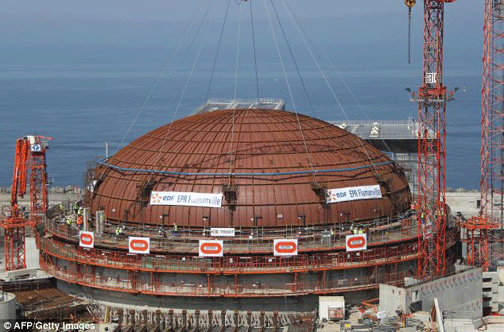
FRANCE’S NUCLEAR ENERGY POLICY: A CHRONICLE OF FAILURE – FLAMANVILLE 3
25 December 2025
France’s ambitious nuclear energy policy, once hailed as a cornerstone of its energy independence, has faced a long series of missteps, delays, and spiralling costs. The Flamanville 3 reactor, emblematic of these challenges, has taken over two decades from decision to anticipated commercial operation, showcasing the systemic failures in planning, execution, and financial management. This timeline highlights the stark realities behind France’s nuclear endeavours.
TIMELINE: 2002 FRENCH NUCLEAR RENAISSANCE
2002: POLITICAL DISCUSSIONS BEGIN
Discussions around a nuclear renaissance gain traction in France. Policymakers and EDF propose new reactor designs to bolster energy independence and address climate goals.
DECISION: 2004
The decision to build the Flamanville 3 reactor marked the beginning of a new chapter for France’s nuclear ambitions. With an estimated cost of €3.3 billion and a planned construction timeline of 56 months, this European Pressurised Reactor (EPR) was touted as a symbol of technological advancement. However, the project’s initial promise soon gave way to setbacks.
INITIAL WORKS: 2006
Preliminary works commenced in 2006, with optimism running high. The EPR design, developed to enhance safety and efficiency, was heralded as the future of nuclear energy. Yet, from the outset, the complexity of the design began to reveal challenges that would compound over time.
REACTOR CONCRETE: 2007
In 2007, construction on the reactor’s concrete base began, symbolising tangible progress. Simultaneously, the cost estimate was revised to €3.3 billion, as technical adjustments and initial delays started to emerge. Early warnings about budget overruns and scheduling issues were largely ignored.
GRID CONNECTION: 2024
After 17 years of setbacks, the reactor was finally connected to the grid. By this point, the budget had ballooned to €13.2 billion, a nearly fourfold increase from the original estimate. The delays and cost overruns underscored critical deficiencies in project management and regulatory compliance, as over 7,000 design changes required significant material additions.
COMMERCIAL OPERATION: 2025 Q1 The reactor is expected to achieve commercial operation in early 2025, over a decade behind schedule. The protracted timeline—more than 20 years from decision to operation—illustrates the systemic inefficiencies plaguing France’s nuclear energy strategy.
COST OVERRUNS AND FINANCIAL STRAIN
The financial fallout from Flamanville 3 is emblematic of broader challenges in the nuclear industry. Initially budgeted at €3.3 billion, the project’s costs had soared to €19.1 billion by 2020, with further increases likely. These overruns mirror similar issues faced by EDF’s international projects, such as Hinkley Point C in the United Kingdom and Olkiluoto 3 in Finland. Hinkley’s budget has nearly doubled to an estimated £46 billion, with completion now pushed to 2029–31.
EDF’S MOUNTING DEBTS AND CHALLENGES
EDF, the state-owned utility tasked with leading France’s nuclear initiatives, has been burdened by mounting debts. With a €65 billion debt load and a near €18 billion loss in 2022, EDF’s financial woes have raised questions about its capacity to handle multiple large-scale projects. Efforts to stabilise its finances through state support and electricity price adjustments have provided temporary relief but have not addressed structural issues.
BROADER IMPLICATIONS
The delays and cost overruns at Flamanville and other EPR projects have cast doubt on the viability of France’s nuclear renaissance. President Macron’s commitment to building six to 14 new reactors appears increasingly untenable given EDF’s financial and operational struggles. Moreover, these challenges have weakened France’s position as a global leader in nuclear technology, with international competitors advancing at a faster pace.
A FAILED STRATEGY
The failure of France’s nuclear energy policy is evident in its inability to deliver projects on time and within budget. The Flamanville 3 reactor, once a beacon of innovation, has become a cautionary tale of mismanagement and overreach. As France doubles down on nuclear energy, it must confront the hard truths of its flawed approach and consider whether a pivot to more agile and cost-effective renewable energy solutions is necessary to ensure its energy security and economic stability.
France connected its first nuclear reactor to the grid this century. Construction was to take 56 months.
2002 TIMELINE STARTS THE
FRENCH NUCLEAR RENAISSANCE
Initial works: construction was to take 56 months.
Timeline:
• decision: 2004
• initial works: 2006
• reactor concrete: 2007
• grid connection: 2024
• commercial operation: 2025 Q1
22 December 2024 Reports
We don’t know the final cost of France’s new #nuclear reactor at Flamanville, but guestimates it’ll be a few hundred $million higher than the 2020 figure:
• 2007 cost estimate: €3.3bn
• 2020 cost estimate: €19.1bn
British energy supplier Centrica is prepared to “walk away” from a planned investment in the Sizewell C nuclear plant
British energy supplier Centrica is prepared to “walk away” from a
planned investment in the Sizewell C nuclear plant, according to its chief
executive. In an exclusive interview with Energy Voice, Centrica chief
executive Chris O’Shea said “there are a number of criteria we have to
consider to invest in the project”. “We’ve said that we are part of the
Sizewell C process but there are a number of criteria we have to consider
to invest in the project,” O’Shea said. “If these are not met, the
right thing to do would be to walk away to protect the business.”
The UK-based supplier owns a 20% stake in the nuclear power stations, amounting
to a 9 terawatt-hour capacity out of a total of 45 TWh. “When the
conditions are right, we’ve seen how good investing in nuclear can be for
Centrica,” said O’Shea. He added that access to that nuclear power
capacity “will be very valuable to the company and to the UK’s energy
system”. “New nuclear will play a crucial role in the future energy
system, however we will only invest if the risks-and-rewards balance is
right for us,” he said. “If it is not right for us, we will not
invest.”
Energy Voice 23rd Dec 2024 https://www.energyvoice.com/renewables-energy-transition/nuclear/564808/centrica-prepared-to-walk-away-from-sizewell-c/
Poland threatens to arrest Netanyahu at Auschwitz

https://www.rt.com/news/609773-israel-arrest-pm-poland/ 24 Dec 24
Warsaw has to comply with the International Criminal Court’s decisions, the deputy foreign minister has said
Israeli Prime Minister Benjamin Netanyahu would be arrested if he attends next month’s ceremonies marking the 80th anniversary of the liberation of Auschwitz in Poland, the EU country’s deputy foreign minister, Wladyslaw Bartoszewski, told newspaper Rzeczpospolita on Friday.
Warsaw’s top diplomat stated that Poland, as a signatory of the Rome Statute, is obligated to comply with the directives of the International Criminal Court (ICC). In November, ICC issued warrants for the arrests of Netanyahu and former Israeli defense minister Yoav Gallant, citing alleged war crimes related to the ongoing conflict in Gaza.
The court accused Netanyahu and Gallant of using starvation as a method of warfare, alleging they deliberately deprived civilians in Gaza of food, water, and medicine. There was “no obvious military necessity” for such actions, which amount to violations of international law, according to prosecutors.
Israel’s Education Minister Yoav Kisch is expected to be the only government representative at the Auschwitz commemoration, Jerusalem Post reports. The participation of President Isaac Herzog “seems unlikely.”
While all 27 European Union member states are parties to the Rome Statute and thus required to enforce ICC arrest warrants, responses to the court’s decision have varied. Hungarian Prime Minister Viktor Orban has openly invited Netanyahu to visit, assuring him that Hungary would not enforce the arrest warrant.
Conversely, countries like Spain, the Netherlands, Belgium, Ireland, Lithuania, and Slovenia have indicated their intent to comply with the ICC’s directives, regardless of diplomatic immunity.
France initially expressed its intention to adhere to the arrest warrant but later cited diplomatic immunity protections for Netanyahu.
The ICC’s actions have elicited strong reactions from Israeli officials. Prime Minister Netanyahu has likened the arrest warrants to a “modern-day Dreyfus affair,” asserting that they are politically motivated.
Auschwitz was a Nazi concentration and extermination camp in occupied Poland during World War II. Over 1.1 million Jews were murdered there, alongside tens of thousands of others, including Poles and Soviet prisoners of war.
Trump suggests Zelensky consider ceding territories – El Pais

COMMENT. We may not like Donald Trump much.
But sometimes he gets it right.
https://www.rt.com/news/609772-trump-zelensky-territorial-claims/ 24 Dec 24
America’s president-elect has reportedly relayed the message this week.
US President-elect Donald Trump has sent a message to Ukrainian leader Vladimir Zelensky, asking him to start thinking about a ceasefire and to abandon claims to territories that are currently under control of Russia, El Pais reported on Sunday.
Trump has repeatedly pledged to end the Ukraine conflict within a day of taking office, but has yet to elaborate on how he plans to achieve this. His vows have raised concerns in Kiev that it may be facing not only a decline in aid but also an audit of the billions of dollars it has received from the White House under President Joe Biden.
“You look at some of these cities and there is not a single building in good condition left. So, when you say “restore the country,” restore what? This is a 110-year reconstruction,” the Spanish newspaper cited Trump as saying in a “message” to Zelensky from his Florida golf club this week.
Earlier this month, Trump called on both Ukraine and Russia to reach an immediate ceasefire. He posted the call on his social media platform Truth Social after meeting in Paris with Zelensky and President Emmanuel Macron.
The Wall Street Journal reported in early December, citing officials, that Trump had said Western Europe should deploy its troops to Ukraine to monitor a potential ceasefire. He reportedly added that the EU should play the main role in defending and supporting Kiev, while Washington could support the effort without sending troops.
Speaking at his end-of-year press conference on Thursday, Russian president Vladimir Putin reiterated that Moscow remains open to negotiating with Kiev without any preconditions, except those that had already been agreed upon in Istanbul in 2022, which envisaged a neutral, non-aligned status for Ukraine, as well as certain restrictions on deploying foreign weaponry. He also noted that such talks would have to respect the realities on the ground that have developed since that time.
Will the legacy of nuclear power ever disappear from our coasts?
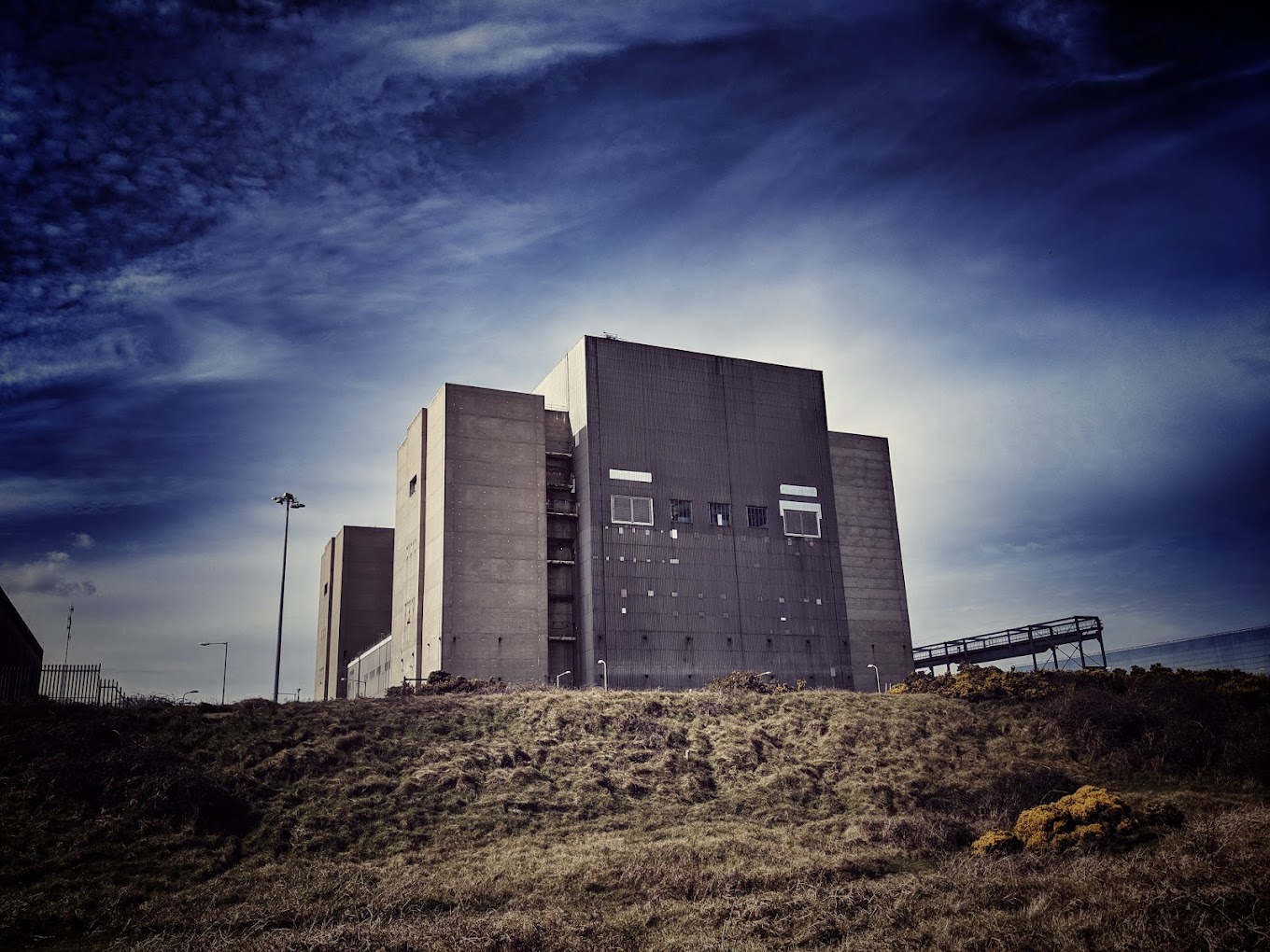
BANNG 17th Dec 2024,
https://www.banng.info/news/regional-life/nuclear-power-legacy/
Andrew Blowers tackles this ongoing question in the December 2024 issue of Regional Life magazine
Back in the last century a fleet of nuclear power stations emerged, their bulky and threatening presence dominating peaceful and often precious, protected coastal environments. Now most have been retired and are in the long process of decommissioning and waste management before all traces of their existence can be erased a century or more from now. Or not…. If plans for new nuclear fructify, then the nuclear presence on our coasts may never disappear.
It is a little difficult to recall Bradwell in past times, a sinister presence on the low shoreline, with its silent reactors and the turbines howling throughout the night; its garish lighting polluting the night sky. Today Bradwell power station is silent and in darkness, its turbines demolished and its reactors shrouded within a huge box clad in grey and blue.
The ecological impact of nuclear power stations is both visible and invisible. Within these structures dangerous radioactive wastes are stored for generations and the risks of radioactive releases, accidental or deliberate (cyber, warfare, terrorism) are incalculable. And, in the age of accelerating climate change, these plants are at risk from sea-level rise, storm surges, flooding and erosion which will inflict yet more grief on future populations.
For existing stations and those currently under construction, there are plans to adapt to changing conditions through massive sea defences and removal of the wastes to a deep repository – if a suitable host rock and willing community can be found. This will be a daunting challenge but greatly exacerbated if a fleet of new nuclear stations is built, leaving vast volumes of wastes to be managed indefinitely on vanishing shores into the far future.
Hinkley Point C
The gigantic Hinkley Point C on the Somerset coast is currently the largest construction site in Europe with a 12,000 workforce and drastic shortage of accommodation for local people. Once operating, it will kill millions of fish, sucked in through its cooling water intake pipes. EDF, the developer, is trying to avoid providing mitigating Acoustic Fish Deterrents (AFD), perversely hoping that by the creation of a saltwater marsh, fish and other marine life will automatically migrate there.
New nuclear is already impacting environments in Somerset and the Suffolk coast is afflicted by preparations for Sizewell C.
Sizewell C
The site lies within a designated National Landscape adjacent to the RSPB’s flagship sanctuary at Minsmere as well as to other designated sites. SZC has not yet got the finance to go ahead but the demolition of a treasured woodland and trashing of other areas has already scarred a wide area in preparation for roads, rail lines, transformer buildings. All in advance of a project that may never materialise. These are premature, wanton acts of vandalism.
Fortunately, the destruction already endured in Somerset and that beginning in Suffolk can be avoided in Essex where proposals for a giant, new nuclear power station which would have inflicted untold damage on the marine and terrestrial environments of the Blackwater region were pushed back by BANNG and other stakeholders.
Now nuclear’s moment may be passing and our energy future lies in other directions, far less dangerous and with far less damaging impacts on the environment for future generations to cope with.
HS: Olkiluoto 3 has been a financial catastrophe for Areva, Siemens

Helsinki Times 19th Dec 2024 Finland , https://www.helsinkitimes.fi/finland/finland-news/domestic/25890-hs-olkiluoto-3-has-been-a-financial-catastrophe-for-areva-siemens.html
THE THIRD REACTOR of Olkiluoto Nuclear Power Plant has been a financial disaster for the two plant suppliers, France’s Areva and Germany’s Siemens, writes Helsingin Sanomat.
Helsinki guide
Teollisuuden Voima (TVO), the company operating the plant, communicated last week that the suppliers have pledged to inject an additional 80 million euros in capital into a fund set up to guarantee the completion of activities during the warranty period.
“The funds reserved for their completion in the fund mechanism were depleted in the autumn of 2024” the company wrote in a press release issued on 12 December.
The third plant unit has experienced numerous faults and disruptions since it was officially inaugurated in 2022. TVO ordered the plant from the suppliers under a turnkey agreement for a fixed price of roughly three billion euros more than 20 years ago. The groundbreaking ceremony was held in 2005, with the completion date set for 2009.
Ultimately, the unit was completed 14 years behind schedule, with the original budget comfortably exceeded. The unit began commercial electricity production in mid-2023.
Helsingin Sanomat on 12 December reminded that Areva estimated already in 2012 that the plant would ultimately cost around 8.5 billion euros. The endeavour eventually bankrupt the company, resulting in intense talks in 2016 as the French government decided to incorporate healthy parts of the company into the state-owned Électricité de France (EDF). The concern was that the plant supplier would not be left with the funds and expertise to complete the project.
Aldermaston nuclear bomb factory makes explosives error
By Niki Hinman, Local Democracy Reporter, 21 Dec 24
Aldermaston’s nuclear bomb making factory AWE has been ordered to
improve procedures after damaging an explosives component. The Office for
Nuclear Regulation (ONR) has served an improvement notice on the Atomic
Weapons Establishment following an incident at its Aldermaston site.
Newbury Today 21st Dec 2024 https://www.newburytoday.co.uk/news/awe-told-to-improve-by-nuclear-regulator-after-explosives-er-9397154/
Foreign company withdraws from plans for Swedish nuclear power.
South Korean KHNP has withdrawn from discussions with Vattenfall about possibly
building new nuclear power in Sweden. KHNP is one of three companies that
have been considered for building large-scale, conventional nuclear power
in Sweden. “The evaluation of other suppliers is progressing according to
plan,” writes Vattenfall to Ekot.
Swedish Radio 18th Dec 2024 https://sverigesradio.se/artikel/sydkoreanskt-foretag-hoppar-av-diskussioner-om-svensk-karnkraft
France’s most powerful nuclear reactor joins grid after €13bn holdup
RFI 20th Dec 2024
France’s flagship Flamanville nuclear reactor in Normandy was to start supplying electricity to homes on Friday when it’s reconnected to the power grid after a dozen costly years of technical setbacks.
…………………………………………. The start of the new generation European Pressurized Reactor (EPR) comes 12 years behind schedule after a slew of delays and cost overruns.
The cost of the project, initially estimated at €3.3 billion, has ballooned to over €13 billion.
A test run in September had to be interrupted after one day due to an “automatic shutdown”, before starting again days later.
Betting on nuclear
Flamanville 3 is the fourth EPR reactor in the world and the most powerful in France, with a capacity of 1,600 MW. It is the 57th reactor in the French nuclear fleet, which generates around three fifths of the country’s energy.
France continues to bet on nuclear as a way of providing relatively cheap and carbon-free electricity.
The government has committed to building six new-generation EPR2 reactors at a cost of tens of billions of euros, with plans to eventually increase this number to 14.
But questions remain about EDF’s ability to deliver on its ambitions. The energy giant is already heavily in debt, as is the French state – EDF’s sole shareholder……………………………… https://www.rfi.fr/en/france/20241220-france-s-most-powerful-nuclear-reactor-joins-grid-after-%E2%82%AC13bn-holdup-flamanville
1 This Month
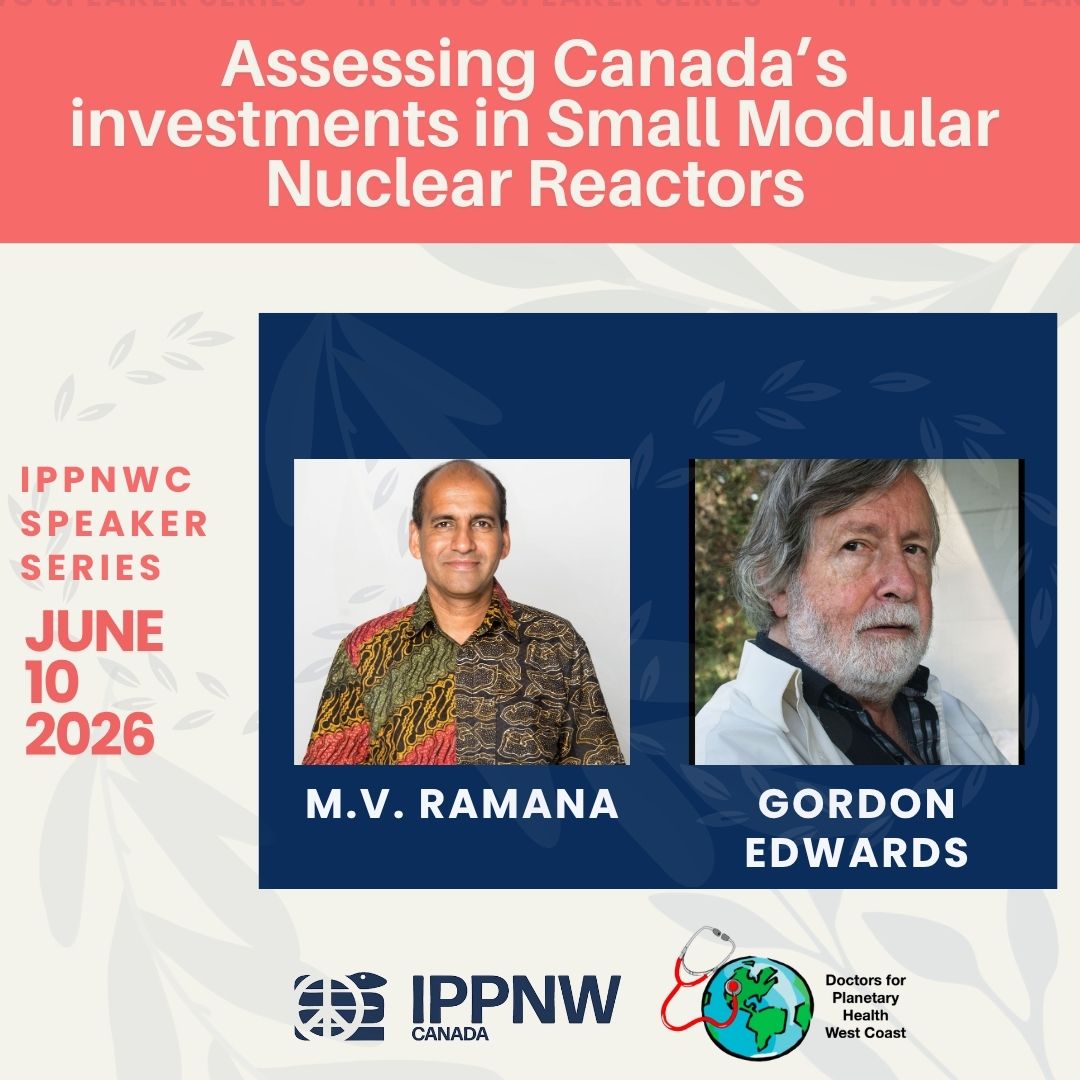
10 June – Assessing Canada’s Investments in Small Modular Nuclear Reactors – https://zoom.us/meeting/register/IiqHA5feRhaEBycOLNTJlA#/registration


Cuba Is Not a Failed State – It Is a Besieged State
PETITION: “Global Appeal to Endorse Palestinian Right of Return of Refugees”
To see nuclear-related stories in greater depth and intensity – go to https://nuclearinformation.wordpress.com
-
Archives
- June 2026 (89)
- May 2026 (306)
- April 2026 (356)
- March 2026 (251)
- February 2026 (268)
- January 2026 (308)
- December 2025 (358)
- November 2025 (359)
- October 2025 (376)
- September 2025 (257)
- August 2025 (319)
- July 2025 (230)
-
Categories
- 1
- 1 NUCLEAR ISSUES
- business and costs
- climate change
- culture and arts
- ENERGY
- environment
- health
- history
- indigenous issues
- Legal
- marketing of nuclear
- media
- opposition to nuclear
- PERSONAL STORIES
- politics
- politics international
- Religion and ethics
- safety
- secrets,lies and civil liberties
- spinbuster
- technology
- Uranium
- wastes
- weapons and war
- Women
- 2 WORLD
- ACTION
- AFRICA
- Atrocities
- AUSTRALIA
- Christina's notes
- Christina's themes
- culture and arts
- Events
- Fuk 2022
- Fuk 2023
- Fukushima 2017
- Fukushima 2018
- fukushima 2019
- Fukushima 2020
- Fukushima 2021
- general
- global warming
- Humour (God we need it)
- Nuclear
- RARE EARTHS
- Reference
- resources – print
- Resources -audiovicual
- Weekly Newsletter
- World
- World Nuclear
- YouTube
-
RSS
Entries RSS
Comments RSS
 nuclear-news