Computer viruses have infected German nuclear power station
 German nuclear plant infected with computer viruses, operator says http://www.dailymail.co.uk/wires/reuters/article-3560358/German-nuclear-plant-infected-computer-viruses-operator-says.html , 27 April 2016 FRANKFURT, – A nuclear power plant in Germany has been found to be infected with computer viruses, but they appear not to have posed a threat to the facility’s operations because it is isolated from the Internet, the station’s operator said on Tuesday.
The Gundremmingen plant, located about 120 km (75 miles) northwest of Munich, is run by the German utility RWE.
The viruses, which include “W32.Ramnit” and “Conficker”, were discovered at Gundremmingen’s B unit in a computer system retrofitted in 2008 with data visualisation software associated with equipment for moving nuclear fuel rods, RWE said.
Malware was also found on 18 removable data drives, mainly USB sticks, in office computers maintained separately from the plant’s operating systems. RWE said it had increased cyber-security measures as a result.
W32.Ramnit is designed to steal files from infected computers and targets Microsoft Windows software, according to the security firm Symantec.
First discovered in 2010, it is distributed through data sticks, among other methods, and is intended to give an attacker remote control over a system when it is connected to the Internet.
Conficker has infected millions of Windows computers worldwide since it first came to light in 2008. It is able to spread through networks and by copying itself onto removable data drives, Symantec said.
RWE has informed Germany’s Federal Office for Information Security (BSI), which is working with IT specialists at the group to look into the incident.
The BSI was not immediately available for comment.
After Japan’s Fukushima nuclear disaster five years ago, concern in Germany over the safety of nuclear power triggered a decision by the government to speed up the shutdown of nuclear plants. Tuesday was the 30th anniversary of the Chernobyl nuclear disaster. (Reporting by Christoph Steitz, Eric Auchard and Joseph Nasr; Editing by Kevin Liffey)
Solar city makes more 4 times more electricity than it consumes
 Revolutionary: Germany Builds A Solar City That Produces Four Times More Energy Than It Consumes http://thelogicalindian.com/environment/germanys-revolutionary-solar-city-that-produces-four-times-more-energy-than-it-consumes/ – Abhishek Mittal 14 Apr 16, We have known cities to be great power-guzzlers, having a huge appetite for consuming electricity to power its homes and buildings. To generate electricity for such cities through renewable sources like solar becomes a difficult task given the vast amount of area required to place the solar panels. But a city in the heart of Germany has achieved something more incredible. It not only has made itself self-sufficient in energy, but in fact has become a net producer of energy – all thanks to a localized approach for adopting solar power.

The Solar cities of Germany:
The Sonnenschiff and Solarsiedlung cities located in Freiburg, Germany are modern, planned habitations that were worked upon with solar power in mind. Literally meaning Solar Ship and Solar Village, the Sonnenschiff and Solarsiedlung cities were specifically designed and built to be solar cities, balancing size, accessibility, green space, and solar exposure. Each of the fifty-two homes along with some commercial buildings is fitted with large rooftop solar panels that double-up as sun shades. The panels are perfectly aligned to point in the right direction of the sun, and the buildings follow the Passivhaus standards of green building technology.
The cities have been designed by architect Rolf Disch. Together with the latest photovoltaic technology for the panels that make them highly efficient, and use of phase-change materials and vacuum insulation for the walls of the buildings that provide optimum thermal performance, the cities are able to generate four times the power which they consume.
Solar Vs Nuclear:
The success of solar as an alternative to the polluting coal-fired power is not limited to these twin-cities. The entire area of Freiburg has been leading the country into a solar revolution since a long time. It was once on the crossroads of choosing between solar and nuclear as the preferred alternative source. Infact a nuclear power plant had already begun construction near Freiburg in early 1970s, amid protests from students and farmers who saw nuclear as a dangerous and polluting source of energy.
A major change in mindset of the local population came when an engineer Dieter Seifried started an institute to research into alternative forms of energy and popularized solar as a safe, reliable and efficient source. Seifried said regarding nuclear power in an interview to CBC news, “you will see first that it is not clean at all, second that it is expensive and third that we have a lot of unsolved problems like where do we deposit the waste.” Gradually more and more residents started to install rooftop solar panels on their houses and ditched the conventional power from grid. In 2000, Germany tabled a clean energy bill that forced power-companies to pay a set fee called a feed-in tariff to anybody providing power to the grid. This gave an impetus to the efforts of Seifried and others, and today, 30% of Germany’s electricity comes from renewable sources, mainly wind and solar. The nuclear plant being built in Freiburg was shut down soon after the protests, and after the unfortunate Fukushima meltdown in Japan in 2011, Germany has committed to phase out all 17 of its nuclear reactors by 2022.
The examples of Freiburg and the solar cities show how people themselves can own up the process of transitioning from conventional methods of energy generation to cleaner alternatives. The role of government in incentivizing renewable energy and providing access to technology is also very important. The Logical Indian gives a big thumbs-up to the residents of Freiburg for kickstarting the solar revolution in their country, and hopes that similar initiatives are taken up by people across the world.
According to German intelligence, terrorist Salah Abdeslam did not have German nuclear files
German intelligence agency disputes reports Salah Abdeslam had German nuclear files http://www.theguardian.com/world/2016/apr/14/paris-attacks-suspect-salah-abdeslam-had-german-nuclear-files
Spokeman for domestic intelligence agency says its head did not brief MPs on files found in Paris attacks suspect’s flat Guardian, Reuters in Berlin. Germany’s domestic intelligence agency has denied reports that Salah Abdeslam, a prime suspect in the Paris attacks, possessed documents about a nuclear research centre in Germany.
Newspapers in the Redaktions Netzwerk Deutschland (RND) media group said on Thursday that documents were found relating to the Juelich centre near the Belgium-Germany border, which is used for the storage of atomic waste.
The centre said in a statement that there was no indication of any danger and that Juelich was in contact with security authorities and nuclear supervisors.
The RND newspapers cited sources within the parliamentary control committee, whose meetings are confidential, as saying that Hans-Georg Maaßen, the head of the domestic intelligence agency (BfV), told the nine-person committee at the end of March that Abdeslam had the documents.
It said he had disclosed to the committee, which monitors the work of German security agencies, that printouts of articles from the internet and photos of the Juelich chairman, Wolfgang Marquardt, had been found in Abdeslam’s apartment in the Molenbeek area of Brussels.
The BfV on Thursday denied Maaßen had briefed the committee. “This is not right,” a spokeswoman said. “We have no information about this. Our president Maaßen never talked to any members of parliament.”
Two committee members also told Reuters that they had not been informed about the matter.
RND earlier reported that several members of the Bundestag and a terrorism expert at the BfV said they knew of this information and that Maaßen had confidentially informed them.
Abdeslam, born and raised in Belgium to Moroccan-born parents, was arrested on 18 March in Brussels. Four days later, suicide bombers killed 32 people in Brussels airport and on a rush-hour metro train.
Concerns that Islamic extremists are turning their attention to potential weak spots in the nuclear industry have risen since the attacks.
German nuclear centre a target for Paris terrorist?
Paris terrorist was eyeing German nuclear centre http://www.thelocal.de/20160414/paris-attacks-ringleader-had-records-of-german-nuclear-plant 4 Apr 2016 Salah Abdeslam, a key figure in the Paris attacks last November, was gathering information on a nuclear energy research centre in Germany, new evidence seen by German media revealed on Thursday.
- Swedish police hold terror suspect wanted in Germany (13 Apr 16)
- Munich police release suspects after terror probe (08 Apr 16)
- ’11 terror plots foiled in Germany since 2000′ (29 Mar 16)
Salah Abdeslam had documents at his apartment about a nuclear research centre at Jülich in North Rhine-Westphalia, raising concerns for authorities about what he many have been planning on German soil.
The documents included articles printed out from online sources about the research facility, as well as photos of the centre’s head, Wolfgang Marquardt, newspapers under the publishing group Redaktionsnetzwerk Deutschland (RND) reported, citing members of a parliamentary panel.
Abdeslam is currently being held in a Belgian prison, waiting to be deported to France, where he will face trial for terrorism offences in connection with the November 13th Paris attacks that left 130 dead.
The most recent documents were reportedly found inside of Abdeslam’s apartment where the French national was arrested last month in the Molenbeek district of Brussels.
Just days later, three bombs went off in Brussels in a coordinated terror attack that killed 32 people.
German domestic intelligence (Verfassungsschutz) President German Hans-Georg Maaßen reportedly informed several members of a Bundestag (German Parliament) security committee last month about the findings.
But according to RND, the Chancellery and the Interior Ministry declared that they did not have any information about the documents.
Similar information about the Brussels terrorists monitoring a Belgian nuclear scientist several weeks ago fueled speculation that they could have been planning to somehow get radioactive material for a dirty bomb, perhaps by blackmailing the researcher. They reportedly spied on the researcher, including filming him at his home for hours.
Immediately after the Brussels attacks, a Belgian nuclear power plant was evacuated of all non-essential personnel. Officials were also concerned when it emerged that two former Belgian nuclear power plant workers had gone to Syria to fight with Isis, one of whom was killed.
German nuclear power plants are extensively protected against the possibility of any interferences or other actions by an outside person, including terror attacks, according to the German Environment Ministry.
But according to environmental NGO BUND, the reactors are not sufficiently safe enough against air attacks.
Fake safety check at German nuclear facility
Nuclear staff feigned safety check just before SZ.de newspaper
magazine [Google translation]
The Ministry of Environment of Baden-Württemberg has the operator now prohibited, the affected reactor Philippsburg 2 to go back. From Michael Bauchmüller , Berlin 14 Apr 16
The power company EnBW has uncovered a serious vulnerability in one of its nuclear power plants. As the company announced on Wednesday, an employee of an external service faked last December a security check, without having performed it. The Ministry of Environment in Stuttgart said on Wednesday the re-start of the reactor……..http://www.sueddeutsche.de/politik/vom-netz-genommen-akw-mitarbeiter-taeuschte-sicherheitspruefung-nur-vor-1.2948941
Amusement Park built from failed $5.3 billion nuclear reprocessing plant
This failed $5.3 billion nuclear power plant in Germany is now an amusement park that gets hundreds of thousands of visitors each year (great photos) http://www.businessinsider.com/nuclear-power-plant-into-amusement-park-2016-4/?r=AU&IR=TCourtney Verrill
The SNR-300 was supposed to be Germany’s first fast breeder nuclear reactor when construction began in 1972. The reactor was made to use plutonium as fuel, and it would output 327 megawatts of energy.
Built in Kalkar, the government had some concerns about the safety of the nuclear reactor, which delayed construction. The power plant was finished in 1985 — $5.3 billion later.
But after the Chernobyl disaster in 1986, the SNR-300 never got a chance to fully operate, and by 1991 the project was officially canceled.
This left the power plant completely unused, and it was eventually sold to a Dutch investor who decided to turn it into an amusement park: Wunderland Kalkar.
Danger of terror attacks on Germany’s nuclear stations
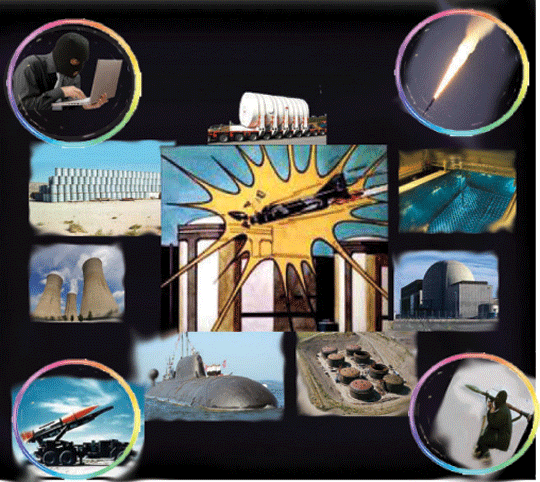 German nuclear plants are vulnerable to terrorist attacks – study Rt.com 24 Mar, 2016 Germany’s nuclear power plants are insufficiently protected against potential terror attacks, including 9/11-style ones, according to a newly-released study.
A nuclear plant’s smokescreen designed to prevent any attacks on it from air provides only minimal protection for the facility, Deutsche Presse-Agentur (DPA) news agency reported, citing findings presented by Oda Becker, a physicist and independent expert on nuclear plants, at the German Federation for the Environment and Nature Conservation (BUND) congress in Berlin on Thursday.
Such smokescreen “only slightly diminishes a chance of collision with a plane,” hijacked by terrorists. Additionally, only two out of eight currently operating nuclear plants in Germany are equipped with such systems, the report points out.
According to Becker’s research, another significant threat to German nuclear plants is posed by a possible terrorist attack using helicopters filled with explosives. A fall of an aircraft rigged with explosives on a nuclear plant could lead to a “massive release of radiation,” as nuclear facilities in Germany are not designed to withstand explosions of such scale.
Reliability tests have demonstrated that the plants’ personnel cannot possibly prevent terrorists from infiltrating the facility and committing a terrorist act there, the study adds.
In another study published March 8 and titled “Nuclear power 2016 – secure, clean, everything under control?” Becker listed insufficient security standards, natural disasters, terrorist attacks and emergencies caused by the deterioration of the German nuclear plants’ security systems as major threats to the industry.
“A serious accident is possible in case of every German nuclear plant,” she said at that time, adding that “there are no appropriate accident management plans.” Becker added that temporary nuclear waste storage sites can also pose a serious threat to people, as they can also be targeted by terrorists and lack relevant security systems.
“The interim [nuclear waste] storages lack protection against aircraft crashes and dangers posed by terrorists,” Becker said, adding that security aspects of the future nuclear waste storage should be discussed, including possible security upgrades of the existing storage sites and the establishment of new facilities.
According to Belgian media, Brussels suicide bombers Khalid and Ibrahim El-Bakraoui were already planning attacks on nuclear plants, although not in Germany but in Belgium. The arrest of Paris attacker Salah Abdeslam allegedly thwarted their plans and forced them to choose another target………
The recent news from Belgium has given some German politicians and activists additional cause for concern. Hubert Weiger, the head of the BUND, said that the Brussels attacks became another reason for immediate nuclear phase-out. “It is even more necessary than ever to abandon this technology,” he said, as quoted by DPA.
Eight nuclear plants remain operational in Germany, after Angela Merkel’s government decided to abandon the use of nuclear energy and immediately halt all operations on the country’s eight oldest nuclear plants in March 2011. Another plant was shut down in 2015. The remaining nuclear stations are due to be closed by 2022.
At the same time, Simone Peter, a co-chair of the German Green Party, demanded additional security checks at all European nuclear plants.
“EU nuclear power plant stress tests did not include [the possibility] of a terrorist attack. It is time to reassess [our] approach to security,” she tweeted. https://www.rt.com/news/337092-german-nuclear-plants-terrorists/
Court hearing – clash between German Govt and nuclear utilities
German utilities, government clash at nuclear court hearing Reuters 14 Mar 16
*Gov’t confident it will win the case -Minister
* Utilities could claim as much as 19 bln euros
* Final decision to take several months (Recasts, adds comments from RWE, Minister, graphic)
By Christoph Steitz and Tom Käckenhoff KARLSRUHE, Germany, German power firms and government members clashed at a court hearing over the country’s controversial decision to shut down all nuclear plants by 2022, a lawsuit that could allow utilities to claim 19 billion euros ($21 billion) in damages.
In a case that pits a struggling energy industry against the government, Germany’s Constitutional Court will examine the arguments of E.ON, RWE and Vattenfall , who want to be compensated for the closure………http://uk.reuters.com/article/germany-utilities-nuclear-idUKL5N16N2G7
Germany 2016: Expanding renewables, stagnating decarbonisation
 nu Clear News, Mar 16 . “……….Despite some short-term market and industry disruptions, the Energiewende policy has been largely successful in achieving its stated goals, and public support remains strong. As reported in a January 2016 by Agora Energiewende, a Berlin-based energy think tank from 2012 to 2015, public sentiment in Germany has been strongly supportive of the Energiewende, with 90% saying it is important or very important.
Germany’s nuclear utilities will have to transfer nuclear clean-up cash by 2022
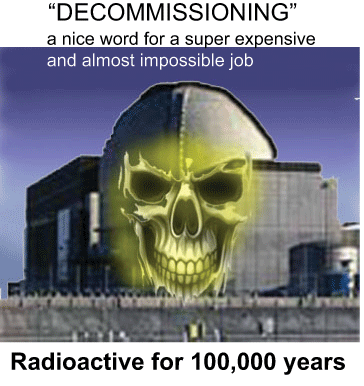 Nuclear commission proposes firms transfer cash by 2022 to pay for clean-up http://af.reuters.com/article/commoditiesNews/idAFB4N10000F
Mon Feb 22, 2016BERLIN Feb 22 (Reuters) – Germany’s utilities will have to transfer provisions set aside to pay for the interim and final storage of nuclear waste to a fund in cash by 2022, according to a draft report from a government-appointed committee seen by Reuters on Monday.
The report recommends that Germany’s “big four” utilities — E.ON, RWE, EnBW and Vattenfall — remain liable for the cost of up to double the 18 billion euros ($19.8 billion) allocated so far to pay for interim and final storage.
The companies will also have to set aside a further 1.3 billion euros in provisions, according to the report which is due to be presented at the end of the month. ($1 = 0.9084 euros) (Reporting by Markus Wacket; Writing by Caroline Copley; Editing by Christoph Steitz)
Germany struggles with nuclear waste storage problem
 German nuclear exit plan fails to solve waste storage puzzle http://uk.reuters.com/article/uk-germany-nuclear-storage-idUKKCN0VW1Y9 Feb 23, 2016 FRANKFURT | BY CHRISTOPH STEITZ When Germany committed itself five years ago to phasing out nuclear power by 2022, there was one big gap in its plans — what to do with the waste that can remain toxic for hundreds of thousands of years.
That issue remains unresolved even after a government-appointed nuclear commission came up with ideas on how to ensure funding for shutting down all of the country’s atomic reactors.
According to a draft proposal, utilities E.ON, RWE, EnBW and Vattenfall [VATN.UL] could be saddled with up to 56 billion euros ($61.6 billion) in costs to cover their share of the cost of the nuclear exit.
But the final bill could climb even higher and the extra cost may have to be met by German taxpayers.
The main uncertainty centres on the difficulty of finding a permanent storage site to house highly radioactive material.
Local opposition has ruled out turning an interim waste storage site in salt formations in the small village of Gorleben in northwest Germany into a final site, with the location having ultimately been excluded by law.
The nuclear commission has proposed capping the utilities’ liability for storage costs at 36 billion euros — twice the size of current provisions made by the four utilities for that part of the process.
This proposal would put a ceiling on costs for the power firms and remove a major source of investor concern.
But there is caution that this is only a draft settlement which does not settle the practical problem of finding a storage site.
Analysts at Jefferies are among those who “remain concerned about the potential for future cost escalations and the negative balance sheet implications that it may have for German utilities”.
GOING UNDERGROUND?
Underlining the tensions around the storage issue, German utilities have sued the government over the Gorleben decision, claiming a ban is politically motivated and will force them to incur additional costs.
The OECD’s Nuclear Energy Agency says it is impossible to gauge the future costs of storage sites because each country’s geography is different and there are no previous projects to serve as examples.
In contrast, the dismantling of nuclear plants, for which utilities have set aside about 20 billion euros in provisions, is more predictable in terms of costs.
Several plants have already been torn down and several more are being dismantled after the German government decided to end nuclear in the wake of the Fukushima disaster in 2011.
More fanciful ideas to dispose of the nuclear waste include shooting it into outer space, but underground storage remains the most feasible option.
Finland and Sweden are most advanced in their preparations for such a solution to their own waste issues, hoping to be the first countries to put high-level waste into underground caverns in the next decade. ($1 = 0.9088 euros)
(Editing by Keith Weir)
Nuclear industry AND tax-payer funds both may be needed to cover nuclear shutdown costs
SHUTDOWN COSTS Picking Up the Nuclear Tab, Handelsblatt BY KLAUS STRATMANN 23 Feb 16, A leaked draft report on Germany’s exit from nuclear power recommends the nation’s four big utilities foot the €19.7 billion bill for decommissioning their power plants – but any costs above that may be carried by taxpayers.
FACTS In 2011, Germany announced a complete phase-out of nuclear power by 2022, with a target of 80 percent renewable energy by 2050.
The four major power firms in Germany, E.ON, RWE, EnBW and Vattenfall, and plant operator Krümmel have set aside €39.6 billion for their share of the phase-out costs.
A government financial commission has now devised a structure for dividing the responsibilities and clarifying the financial liabilities of industry and government. Germany moved a step closer this week to deciding how to pay for its forced exit from nuclear power. The government is moving toward requiring four nuclear plant operators pay the first €19.7 billion ($22 billion). Any costs above that — including hard-to-estimate expenses for storing nuclear fuel — would be paid for by taxpayers.
The recommendations are included in a draft of a government report on the issue obtained by Handelsblatt. The document was described as a preliminary recommendation and could have been leaked as a trial balloon.
The draft recommends making E.ON, RWE EnBW and Vattenfall, the four utilities, pay for “decommissioning and demolition” of their nuclear power plants. The government would then step in assume the costs of the trickier task of removing and storing radioactive waste.
The utilities together have set aside about €39.6 billion ($43.6 billion) to cover their costs of decommissioning. But there is a strong possibility that final costs may rise well beyond that.
The cost of waste disposal and storage, in particular, is seen as particularly difficult to gauge, promting fears among consumer advocates that the utilities could end up saddling taxpayers with the majority of costs.
The report recommends that a state fund be set up to pay for the waste disposal, financed in part by the four utilities, which would transfer in about half of their total reserves. But the report stops short of saying how costs would be divided between industry and taxpayers if disposal costs are greater than expected…… https://global.handelsblatt.com/edition/374/ressort/politics/article/utilities-wont-escape-nuclear-clean-up-costs
Germany’s “big four” utilities liable for nearly 40 billion euros for nuclear waste storage
Nuclear commission proposes firms transfer cash by 2022 to pay for clean-up http://af.reuters.com/article/commoditiesNews/idAFB4N10000F Feb 22, 2016 BERLIN (Reuters) – Germany’s utilities will have to transfer provisions set aside to pay for the interim and final storage of nuclear waste to a fund in cash by 2022, according to a draft report from a government-appointed committee seen by Reuters on Monday.
The report recommends that Germany’s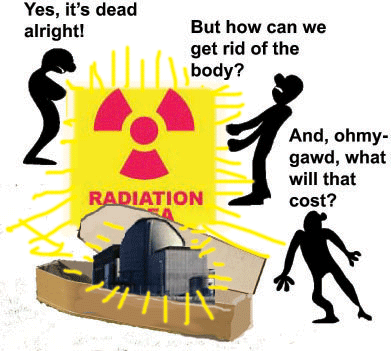 — E.ON, RWE, EnBW and Vattenfall — remain liable for the cost of up to double the 18 billion euros ($19.8 billion) allocated so far to pay for interim and final storage.
The companies will also have to set aside a further 1.3 billion euros in provisions, according to the report which is due to be presented at the end of the month. ($1 = 0.9084 euros) (Reporting by Markus Wacket; Writing by Caroline Copley; Editing by Christoph Steitz)
Limited liability for Germany’s nuclear operators in nuclear paseout
German commission favours limited liability for nuclear phaseout-document http://www.reuters.com/article/germany-nuclear-idUSB4N11703M Feb 18 Germany’s nuclear operators could face only limited long-term liability for the costs of the country’s nuclear phaseout, according to a paper from a government-appointed commission seen by Reuters on Thursday.
The paper indicates that the commission took on board concerns of the four utilities – E.ON, RWE, EnBW and Vattenfall – which have earmarked nearly 40 billion euros in provisions to pay for the dismantling and storage of waste from their nuclear plants.
The last plant will be closed in 2022.
Worries over their financial health have raised fears that the companies may be unable to turn the provisions – including some illiquid assets – into liquid funds, eventually leaving taxpayers to foot some or much of the bill.
The paper said an unlimited liability would lead to excessive demands being made of the operators and that this would ultimately not be beneficial to society.
The paper said the operators may be asked to set aside additional funds on top of existing provisions for the costs of the nuclear phaseout, and that it favoured a state-controlled fund for the long-term costs.
A spokesman for E.ON said he did not want to comment before the final results of the commission are published. (Additional reporting by Tom Kaeckenhoff in Duesseldorf; Reporting by Markus Wacket; Writing by Madeline Chambers; Editing by Noah Barkin)
Costly, not available for decades, but Germany steps forward in nuclear fusion development
Nuclear fusion power has been the dream of many since the 1950s and on Wednesday German scientists took one step closer to making it possible.

German scientists at the Max Planck Institute in Greifswald, joined by German Chancellor Angela Merkel, injected hydrogen into the Wendelstein 7-X fusion device and heated the gas into plasma for a moment, according to the press release.
The device will not produce energy from the plasma, but the experiment is the first of many that could prove whether the design is capable of being used as a power plant. If so, it could answer one of the many questions surrounding nuclear fusion.
Only the ITER project, a tokamak, is thought to be able to produce plasma that supplies energy, according to the press release. The experiments begun Wednesday could prove that stellarator designs could produce comparable heat- and plasma-confinement.
Scientists working on the Wendelstein 7-X will perform similar experiments, heating gas to plasma and holding it in stasis, over the next four years, slowly increasing the temperature and the time of the discharges, according to the press release.
Eventually, in about four years, the Wendelstein 7-X will test its full heating power (20 megawatts) and discharges lasting 30 minutes………
Nuclear fusion is seen as a safe, efficient form of nuclear power and has been proposed as an eventual replacement for oil and fossil fuels, according to the press release.
But critics have pointed to the mounting cost of a technology that is still under development and likely remain unavailable for decades. Investments for the Greifswald fusion device have surpassed €1 billion over the last 20 years, CBS News reported.
The ITER project recently announced in November that it would take six years longer to construct than previously thought and would require additional funding from the €5 billion estimate in 2006. Science reports current estimates place the ITER project needing €15 billion. http://www.csmonitor.com/Science/2016/0203/How-Germany-took-big-step-toward-nuclear-fusion
1 This Month
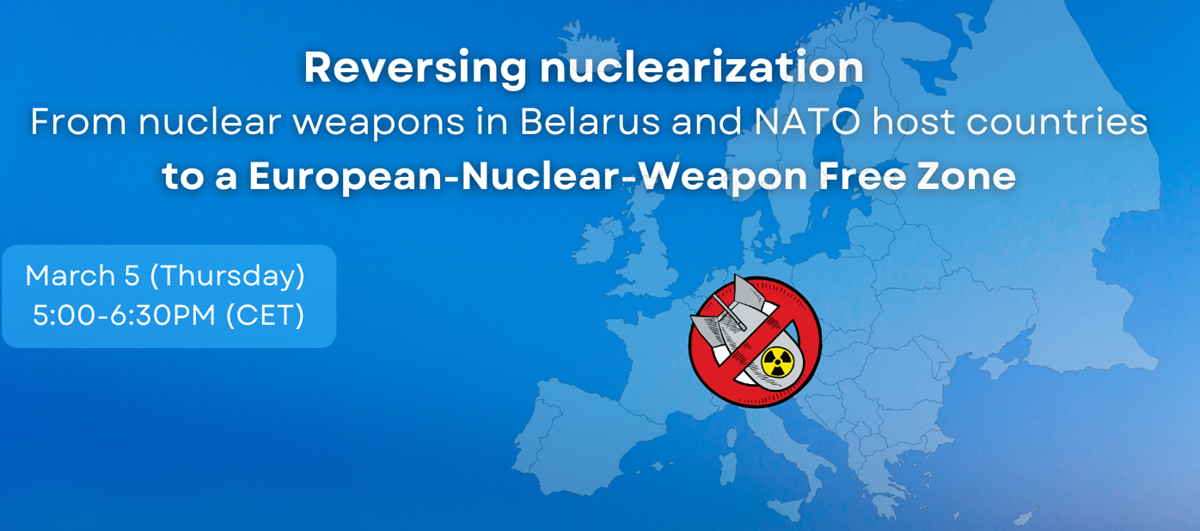
5 March -Online – Reversing nuclearization:
From nuclear weapons in Belarus and NATO host countries to a European-Nuclear-Weapon Free Zone
11am-12:30pm Eastern Time USA / 5pm-6:30pm CET

of the week – Advocating for a
nuclear free beach – https://www.samuellawrencefoundation.org/
The Samuel Lawrence Foundation advocates for a Nuclear Waste Free Beach at San Onofre, join us and take action!
10 March A LIVE WEBINAR THE REAL EFFECTS OF NUCLEAR POWER
What the Industry Isn’t Telling Us
1:00 PM Mountain, 2 pm Central, 3 pm Eastern. Live on the Keepers of the Water Facebook page


18 March Webinar @ 1 PM EST: An Assessment of SMR Projects: The Case of Canada
register for the zoom:
https://us02web.zoom.us/webinar/register/WN_o8BIIOUvQ2ONJR1nta65DQ#/registration

of the week – STOP SMALL MODULAR REACTORS IN CANADA
To see nuclear-related stories in greater depth and intensity – go to https://nuclearinformation.wordpress.com
-
Archives
- March 2026 (51)
- February 2026 (268)
- January 2026 (308)
- December 2025 (358)
- November 2025 (359)
- October 2025 (376)
- September 2025 (258)
- August 2025 (319)
- July 2025 (230)
- June 2025 (348)
- May 2025 (261)
- April 2025 (305)
-
Categories
- 1
- 1 NUCLEAR ISSUES
- business and costs
- climate change
- culture and arts
- ENERGY
- environment
- health
- history
- indigenous issues
- Legal
- marketing of nuclear
- media
- opposition to nuclear
- PERSONAL STORIES
- politics
- politics international
- Religion and ethics
- safety
- secrets,lies and civil liberties
- spinbuster
- technology
- Uranium
- wastes
- weapons and war
- Women
- 2 WORLD
- ACTION
- AFRICA
- Atrocities
- AUSTRALIA
- Christina's notes
- Christina's themes
- culture and arts
- Events
- Fuk 2022
- Fuk 2023
- Fukushima 2017
- Fukushima 2018
- fukushima 2019
- Fukushima 2020
- Fukushima 2021
- general
- global warming
- Humour (God we need it)
- Nuclear
- RARE EARTHS
- Reference
- resources – print
- Resources -audiovicual
- Weekly Newsletter
- World
- World Nuclear
- YouTube
-
RSS
Entries RSS
Comments RSS
 nuclear-news