Skiing in France is slowly dying.

Skiing in France is slowly dying and many resorts are expected to close
down in a little over 20 years, industry experts have warned. Climate
change, ageing ski lifts and rising costs are driving smaller, mid-altitude
resorts out of business. Five shut down this year and 186 have gone out of
business since the 1950s, mostly in inexpensive ski areas with relatively
few runs that were popular with French families but never attracted large
numbers of foreign holidaymakers.
Times 29th Dec 2024 https://www.thetimes.com/world/europe/article/france-affordable-ski-slopes-shut-why-nqkb3qrk7
FRANCE’S NUCLEAR ENERGY POLICY: A CHRONICLE OF FAILURE – FLAMANVILLE 3.
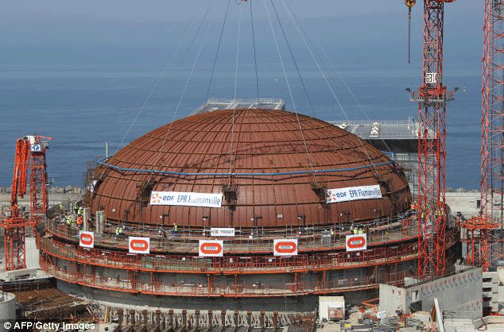
FRANCE’S NUCLEAR ENERGY POLICY: A CHRONICLE OF FAILURE – FLAMANVILLE 3
25 December 2025
France’s ambitious nuclear energy policy, once hailed as a cornerstone of its energy independence, has faced a long series of missteps, delays, and spiralling costs. The Flamanville 3 reactor, emblematic of these challenges, has taken over two decades from decision to anticipated commercial operation, showcasing the systemic failures in planning, execution, and financial management. This timeline highlights the stark realities behind France’s nuclear endeavours.
TIMELINE: 2002 FRENCH NUCLEAR RENAISSANCE
2002: POLITICAL DISCUSSIONS BEGIN
Discussions around a nuclear renaissance gain traction in France. Policymakers and EDF propose new reactor designs to bolster energy independence and address climate goals.
DECISION: 2004
The decision to build the Flamanville 3 reactor marked the beginning of a new chapter for France’s nuclear ambitions. With an estimated cost of €3.3 billion and a planned construction timeline of 56 months, this European Pressurised Reactor (EPR) was touted as a symbol of technological advancement. However, the project’s initial promise soon gave way to setbacks.
INITIAL WORKS: 2006
Preliminary works commenced in 2006, with optimism running high. The EPR design, developed to enhance safety and efficiency, was heralded as the future of nuclear energy. Yet, from the outset, the complexity of the design began to reveal challenges that would compound over time.
REACTOR CONCRETE: 2007
In 2007, construction on the reactor’s concrete base began, symbolising tangible progress. Simultaneously, the cost estimate was revised to €3.3 billion, as technical adjustments and initial delays started to emerge. Early warnings about budget overruns and scheduling issues were largely ignored.
GRID CONNECTION: 2024
After 17 years of setbacks, the reactor was finally connected to the grid. By this point, the budget had ballooned to €13.2 billion, a nearly fourfold increase from the original estimate. The delays and cost overruns underscored critical deficiencies in project management and regulatory compliance, as over 7,000 design changes required significant material additions.
COMMERCIAL OPERATION: 2025 Q1 The reactor is expected to achieve commercial operation in early 2025, over a decade behind schedule. The protracted timeline—more than 20 years from decision to operation—illustrates the systemic inefficiencies plaguing France’s nuclear energy strategy.
COST OVERRUNS AND FINANCIAL STRAIN
The financial fallout from Flamanville 3 is emblematic of broader challenges in the nuclear industry. Initially budgeted at €3.3 billion, the project’s costs had soared to €19.1 billion by 2020, with further increases likely. These overruns mirror similar issues faced by EDF’s international projects, such as Hinkley Point C in the United Kingdom and Olkiluoto 3 in Finland. Hinkley’s budget has nearly doubled to an estimated £46 billion, with completion now pushed to 2029–31.
EDF’S MOUNTING DEBTS AND CHALLENGES
EDF, the state-owned utility tasked with leading France’s nuclear initiatives, has been burdened by mounting debts. With a €65 billion debt load and a near €18 billion loss in 2022, EDF’s financial woes have raised questions about its capacity to handle multiple large-scale projects. Efforts to stabilise its finances through state support and electricity price adjustments have provided temporary relief but have not addressed structural issues.
BROADER IMPLICATIONS
The delays and cost overruns at Flamanville and other EPR projects have cast doubt on the viability of France’s nuclear renaissance. President Macron’s commitment to building six to 14 new reactors appears increasingly untenable given EDF’s financial and operational struggles. Moreover, these challenges have weakened France’s position as a global leader in nuclear technology, with international competitors advancing at a faster pace.
A FAILED STRATEGY
The failure of France’s nuclear energy policy is evident in its inability to deliver projects on time and within budget. The Flamanville 3 reactor, once a beacon of innovation, has become a cautionary tale of mismanagement and overreach. As France doubles down on nuclear energy, it must confront the hard truths of its flawed approach and consider whether a pivot to more agile and cost-effective renewable energy solutions is necessary to ensure its energy security and economic stability.
France connected its first nuclear reactor to the grid this century. Construction was to take 56 months.
2002 TIMELINE STARTS THE
FRENCH NUCLEAR RENAISSANCE
Initial works: construction was to take 56 months.
Timeline:
• decision: 2004
• initial works: 2006
• reactor concrete: 2007
• grid connection: 2024
• commercial operation: 2025 Q1
22 December 2024 Reports
We don’t know the final cost of France’s new #nuclear reactor at Flamanville, but guestimates it’ll be a few hundred $million higher than the 2020 figure:
• 2007 cost estimate: €3.3bn
• 2020 cost estimate: €19.1bn
France’s most powerful nuclear reactor joins grid after €13bn holdup
RFI 20th Dec 2024
France’s flagship Flamanville nuclear reactor in Normandy was to start supplying electricity to homes on Friday when it’s reconnected to the power grid after a dozen costly years of technical setbacks.
…………………………………………. The start of the new generation European Pressurized Reactor (EPR) comes 12 years behind schedule after a slew of delays and cost overruns.
The cost of the project, initially estimated at €3.3 billion, has ballooned to over €13 billion.
A test run in September had to be interrupted after one day due to an “automatic shutdown”, before starting again days later.
Betting on nuclear
Flamanville 3 is the fourth EPR reactor in the world and the most powerful in France, with a capacity of 1,600 MW. It is the 57th reactor in the French nuclear fleet, which generates around three fifths of the country’s energy.
France continues to bet on nuclear as a way of providing relatively cheap and carbon-free electricity.
The government has committed to building six new-generation EPR2 reactors at a cost of tens of billions of euros, with plans to eventually increase this number to 14.
But questions remain about EDF’s ability to deliver on its ambitions. The energy giant is already heavily in debt, as is the French state – EDF’s sole shareholder……………………………… https://www.rfi.fr/en/france/20241220-france-s-most-powerful-nuclear-reactor-joins-grid-after-%E2%82%AC13bn-holdup-flamanville
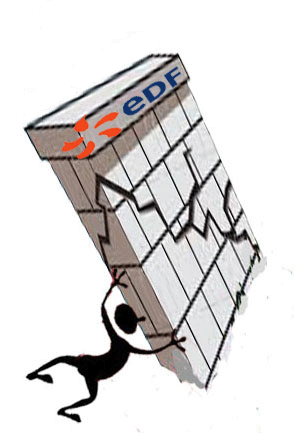
France deal raises concerns over EDF dominance – Collective intelligence or failure?
Montel News 13 Dec 24, https://montelnews.com/it/videos/101197195/video-slot-1?v=107667717
The recent collapse of France’s minority government has deepened uncertainty about the future of a controversial deal state-owned EDF struck with the government a year ago with the aim of replacing the Arenh regulation. Arenh, which expires in 2026, required EDF to sell about a third of its annual nuclear output to rival suppliers at a fixed rate of EUR 42/MWh, but this new deal does away with a fixed price and allows EDF to sell all its atomic output on the wholesale market.
The firm says it will aim to sell this output an average price of EUR 70/MWh via long-term supply contracts, auctions, and a tax on wholesale nuclear output. Not only has this provoked fierce criticism from rival suppliers and intensive power consumers who will probably be forced to pay more for their power supplies, but it has also spectacularly failed to attract any takers for EDF’s long-term supply contracts due to lower wholesale prices, potentially endangering the company’s ability to service its huge debts or maintain and expand its nuclear fleet. So, what should France do next? Reporting by Chris Eales, Editor France. Additional reporting by Caroline Pailliez. Contributor: Andreas Rudinger, energy transition expert, IDDRI.
France’s New Nuclear Power Plant Is a Ticking Bomb

Nuclear power plants are vulnerable to climate change, and the rampant rush to revive the nuclear power industry should be stopped.
President Emmanuel Macron’s ambitious plan to revive France’s nuclear energy industry aims for carbon neutrality by 2050. It highlights significant challenges, including climate risks to nuclear sites, such as the Gravelines plant, which faces flooding threats due to rising sea levels. Additionally, the article points to workforce shortages, economic inefficiencies, and geopolitical risks, such as France’s reliance on uranium from Niger, as critical obstacles.
By Rim Longmeng, December 13, 2024 , https://www.fairobserver.com/more/environment/climate-change-news/frances-new-nuclear-power-plant-is-a-ticking-bomb/
Despite Europe’s growing skepticism of nuclear technology in the wake of Fukushima, in 2021, French President Emmanuel Macron announced the revival of his country’s nuclear energy industry. Macron’s ambitious program aims to end the country’s dependence on fossil fuels and make France carbon neutral by 2050. The plan will require the construction of 14 new nuclear reactors. At first glance, Macron’s plans seem logical, as nuclear energy already accounts for 70% of France’s energy consumption, and cheap nuclear energy has been the backbone of the French economy since the 1970s. However, the populist tactics of the French leader are raising questions among the country’s population and experts, as the problems of the nuclear industry – which will inevitably arise soon – will be left for future generations to solve after Macron leaves office.
No room for improvisation in the face of climate risks
In its report October 3, 2024 Greenpeace harshly criticized the French government’s plans to build two new EPR2 nuclear reactors in northwestern France near Dunkirk due to the risk of flooding. The new units are scheduled to be operational by 2040, but the problem lies in the site chosen for construction. The chosen site is located in a region already at risk of flooding and will become increasingly vulnerable as climate change worsens.
The Gravelines nuclear power plant is currently the most powerful in Western Europe, already consisting of six 900 MW reactors. The French state-owned energy company EDF has promised to build two more reactors at the same plant on an 11-meter-high platform to protect from flooding. According to EDF experts, the NPP project will sufficiently resist climate challenges until 2070. However, this is only the middle of the plant’s lifespan, which is expected to last 60 years until 2100. Its dismantling is scheduled for the middle of the next century, and EDF promises to “adapt” the project to current climate conditions every 10 years after 2070.
It sounds reckless, as the UN Environment Programme warns of a temperature rise of up to +3.1°C in the coming decades, leading to sea level rise and a dramatic increase in extreme climate events. Have the French authorities already forgotten the devastating North Sea flood of 1953 and the numerous disasters in France in recent years? Even today, most of the area around the nuclear power plant is below sea level during high tides, and only protective structures built nearby, turning the NPP into a kind of “island,” have saved the region from disaster. Since 2022, the Gravelines Nuclear Power Station has been surrounded by a 3-kilometer-long protective wall, which costs EDF 35 million euros. How much more will EDF spend to ensure the nuclear plant’s safety, and what will happen if nature proves more potent than the fortifications built?
The EDF project documentation contains too many unanswered questions, which exist only thanks to Macron’s political patronage. The facts indicate that constructing new reactors poses an extreme danger to the local population and the environment. Nuclear power plants are vulnerable to climate change, and the rampant rush to revive the nuclear power industry should be stopped.
New Challenges for Macron’s Nuclear Renaissance
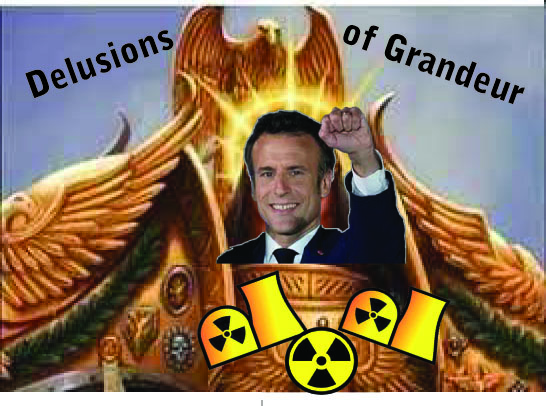
By announcing the revival of nuclear energy in the country, President Macron has formally taken a step toward reviving France’s economic, industrial and military power. However, the French economy is not yet ready to fully support such ambitious plans.
Macron’s ambitious plans to build 14 new nuclear power units will face a glaring shortage of qualified personnel. The French nuclear industry currently employs about 220 thousand people. To achieve Marcon’s objectives, the industry will need a significant influx of skilled workers, particularly in the workforce. By 2030, according to EDF estimates, their number needs to be at least doubled. The proposed construction timeline is also impressive. The first Gravelines unit with the EPR-2 reactor is expected to take only eight years to complete. It is worth mentioning the notorious Flamanville nuclear reactor in Normandy, which ended up costing 4 times its initial budget, reaching €13.2 billion, and was launched more than a decade behind schedule.
The Loss of African Uranium Deposits
France is particularly concerned about the exploitation of uranium from Niger and the potential consequences of losing its supply. For more than four decades, the Orano company, owned by the French state by 45%, has been developing uranium in African countries. Niger is one of the three largest suppliers of this valuable natural resource to France. However, the recent revocation of Orano’s uranium mining license in Niger has cast doubt on France’s energy independence. Representatives of the new Nigerien authorities have stated that uranium has been used to supply Europe with electricity for decades. Still, West Africa remains one of the poorest countries in the world and has not benefited much from exports. Additionally, the economic risks for the French nuclear industry include uranium prices that have reached historical highs, primarily due to European countries’ search for new energy suppliers after 2022.
According to Macron, promoting nuclear technologies in France should lead the country to complete independence from foreign energy supplies and secure France’s status as the flagship nuclear industry in the EU. The problem is that Macron knows it will not be up to him but to future generations of French politicians to address the problems mentioned above regarding his misleading nuclear policy.
[Tara Yarwais edited this piece.]
France postpones financing decision of 6 new reactors – report

the firm’s Flamanville latest European pressurised reactor project cost EUR 19bn, almost six times the initial cost and faced significant delays.
(Montel) The official body responsible for a financing decision regarding six French new generation reactors has postponed approval from December until early next year amid political uncertainty, French daily Les Echos reported on Thursday.
Reporting by: Muriel Boselli28 Nov 2024
The government was mulling a zero interest loan to help EDF finance the project, it added, though there was a current budget stand-off following a snap election this summer.
This loan option, considered quicker to implement, would cut financial risks due to a mechanism approved by the European Commission, already used in the Czech Republic for its new nuclear project, the daily reported.
The loan would include a zero interest rate for the duration of the works, before moving to a “reasonable” rate once the reactors had been commissioned, the sources said.
This financial package could reduce the total cost of the project, estimated at EUR 67.4bn.
EDF aims to build six and possibly 14 new reactors by 2050, with construction due to start at the Penly nuclear power plant on the Channel coast by 2027. The utility plans to take a final decision in 2026.
However, the firm’s Flamanville latest European pressurised reactor project cost EUR 19bn, almost six times the initial cost and faced significant delays.
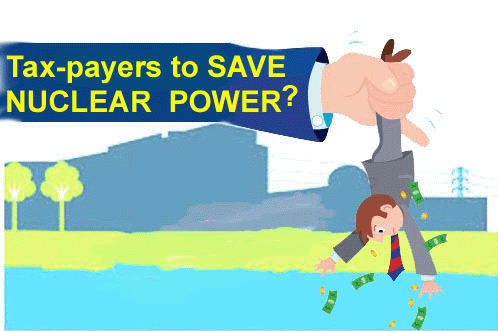
France is weighing zero-interest loan for 6 nuclear reactors, sources say
- Summary
- EDF faces financing challenges due to high debt and project delays
- French government faces no-confidence vote over budget with spending cuts
- EU approval needed for state aid in nuclear projects
PARIS, Nov 27(Reuters) Reporting by Benjamin Mallet; additional reporting by Leigh Thomas; writing by Dominique Patton; editing by Nina Chestney and Tomasz Janowski- https://www.reuters.com/business/energy/france-is-weighing-zero-interest-loan-6-nuclear-reactors-sources-say-2024-11-27/
French officials are drawing up plans to provide an interest-free loan to state-owned power utility EDF to finance a significant portion of the construction of six new nuclear reactors, two people familiar with the matter said.
The financing would clear a major hurdle for one of the country’s biggest public projects in years.
The plans are similar to financing agreed recently for a single reactor in the Czech Republic, and although the size of the loan is not yet known, it shows the growing need for state support in financing new nuclear projects in Europe.
The plans also include a long-term guaranteed price for the power generated, known as a contract for difference (CfD), said the people, who declined to be identified because they are not authorised to speak with media.
The Ministry of Finance and EDF declined to comment.
The discussions on financing the projects that could cost well over 50 billion euros ($52.60 billion) come as the French government faces a potential no-confidence vote over a proposed budget that contains measures to cut spending and raise taxes to contain the country’s soaring debt.
President Emmanuel Macron announced plans in early 2022 for six new reactors with a total production capacity of about 10 gigawatts to partly replace an ageing nuclear fleet and secure future energy supplies.
Construction of the first reactor is due to start in 2027 but Macron has never said who would pay for the project, which at the time was estimated to cost around 52 billion euros. Recent media reports suggest costs may be higher, reaching as much as 67 billion euros.
France’s current 57 nuclear reactors in operation were largely financed by EDF, which was a publicly-listed company until it was fully nationalised last year.
But the company is unlikely to be able to secure private financing for new projects, given its already high debt, and there have been multiple delays and cost overruns at recent projects like Flamanville in France and Hinkley Point in England.
CZECH MODEL
While there is general agreement to provide a zero-interest loan to EDF during the construction phase, the amount is not yet decided and there are still “intense discussions” on matters such as the sharing of risk between the utility and the state from any additional costs and delays, one of the sources said.
The plan also needs approval from the finance minister once EDF submits a final costing for the projects, expected early next year.
As a form of state aid, it also needs to be cleared by the European Commission.
French officials have been encouraged, however, by Brussels’ approval for a similar financing structure for one 1 gigawatt Czech unit at Dukovany, the sources said.
Under the Czech arrangement, interest on a state loan increases to at least 2% after the plant begins operating.
Europe is seeing a resurgence of interest in nuclear power projects, with nations including Poland and the UK planning new plants to shore up their energy self-sufficiency after a major energy crisis in the region.
Financing remains a huge challenge, with construction risks weighing on utilities’ balance sheets and credit ratings.
The British government recently pledged more than 5.5 billion pounds ($6.93 billion) to help fund early development of the 3.2 GW Sizewell C project.
Another project in Britain, EDF’s 3.2 GW Hinkley Point C plant, which is expected to cost between 31 billion pounds and 34 billion pounds based on 2015 values, is also backed by a contract for difference scheme.
($1 = 0.9506 euros)
($1 = 0.7931 pounds)
The secret audit that crucifies most French nuclear start-ups.
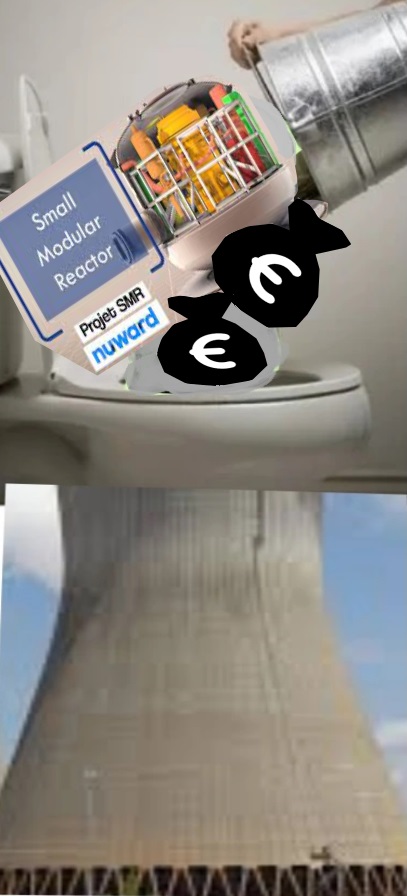
Classified as a top secret, the results of the audit conducted in the spring by the High Commissioner for Atomic Energy and submitted to the Élysée Palace reveal that many subsidized nuclear start-ups will not keep their promises.
By Géraldine Woessner Le Point 22nd Nov 2024
This is what could be called a vast smokescreen operation. On November 19, the start-up Naarea, founded in 2020 to develop fourth-generation modular reactors, with molten salts and fast neutrons, published a triumphant press release on its LinkedIn account: “It is a great honor to have been able to discuss with the High Commissioner for Atomic Energy the conclusions of his report,” the company trumpeted, proudly announcing to potential investors that the audit conducted by the experts had “not identified any unavoidable blocking point” concerning the deployment of its program……… (Subscribers only) https://www.lepoint.fr/economie/exclusif-l-audit-secret-qui-crucifie-la-plupart-des-start-up-francaises-du-nucleaire-22-11-2024-2575980_28.php
Gravelines nuclear power plant: EDF refuses to respond on flood risks and tries to silence whistleblowers

Greenpeace France reminds that Monday morning’s action in the perimeter of the Gravelines power plant carries a message of public interest on the risks of marine submersion and flooding on the Gravelines power plant, an area combining climatic, industrial and nuclear vulnerabilities. For Greenpeace France, in light of the forecasts of scientists and the large uncertainties of the different climate scenarios, it is too dangerous to build two new nuclear reactors on this site, as EDF aims to do.
Greenpeace France 30th Oct 2024, https://www.greenpeace.fr/espace-presse/gravelines-edf-refuse-de-repondre-sur-les-risques-dinondations-et-tente-de-faire-taire-les-lanceurs-dalerte/
After more than 48 hours of deprivation of liberty, 10 of the 12 activists arrested have just been released. This arrest follows the action of Greenpeace France in the perimeter of the Gravelines power plant . Since 9 a.m. this morning, a gathering has been taking place in front of the Dunkirk Judicial Court, at the initiative of several local organizations that came to support the activists. The court informed the activists that a trial would be held on March 3, 2025 at 1:30 p.m. for intrusion into a civil facility housing nuclear materials in assembly. EDF has filed a complaint [1].
After spending two nights in police custody, the activists were brought before the Dunkirk Judicial Court in the early morning, at the request of the public prosecutor. The first activist to be released was deprived of his liberty for a total of 52 hours.
Greenpeace France reminds that Monday morning’s action in the perimeter of the Gravelines power plant carries a message of public interest on the risks of marine submersion and flooding on the Gravelines power plant, an area combining climatic, industrial and nuclear vulnerabilities. For Greenpeace France, in light of the forecasts of scientists and the large uncertainties of the different climate scenarios, it is too dangerous to build two new nuclear reactors on this site, as EDF aims to do.
While EDF refused to respond to Greenpeace France’s questions sent during the summer concerning the consideration of the impacts of climate change on the choice of the Gravelines site and the construction of new nuclear reactors, Greenpeace France dug into the subject and examined EDF’s project file, which resulted in the publication of a report on October 3 demonstrating the underestimation of the seriousness of climate change and the risks inherent in this project to build new reactors.
Greenpeace France also got involved in the consultation areas, particularly the ongoing public debate in Gravelines, and repeated its questions to obtain information on flood risks and the protective measures planned for the new reactors, ahead of the meetings on nuclear safety (theme of 19 November) and climate change (theme of 10 December). After Monday’s action, media reported that EDF did not wish to comment.
For Pauline Boyer, Energy Transition campaign manager at Greenpeace France: ” EDF is ignoring our questions about the risks that the construction of the two EPR2 reactors in Gravelines would create for the population, the workers at the plant and for the environment. In line with its behavior during the public debate for its similar project in Penly, it is clearly sending a signal of contempt for questions from the public, whether NGOs or residents. EDF is operating a diversion strategy by taking activists to court over the form of their action, in order to better evade the substantive issues. EDF is losing more points of trust. EDF will not succeed in gagging the whistleblowers. “
For Marie Dosé, the activists’ lawyer: ” The custody measures are unjustified and have only one purpose: to dissuade activists from alerting the population on a subject of general interest. All of them could have been the subject of a free hearing but, once again, the prosecuting authority preferred to make them sleep two nights in cells and bring them hastily before the court. “
Two activists remain in court at the time of writing this press release.
EDF reportedly seeking up to £4bn from investors to finish Hinkley Point C
French energy firm reported to be in talks over potential investment to cover ballooning cost of nuclear project
Jillian Ambrose 11 Oct 24, https://www.theguardian.com/uk-news/2024/oct/10/edf-seeks-to-raise-up-to-4bn-to-finish-delayed-hinkley-point-c
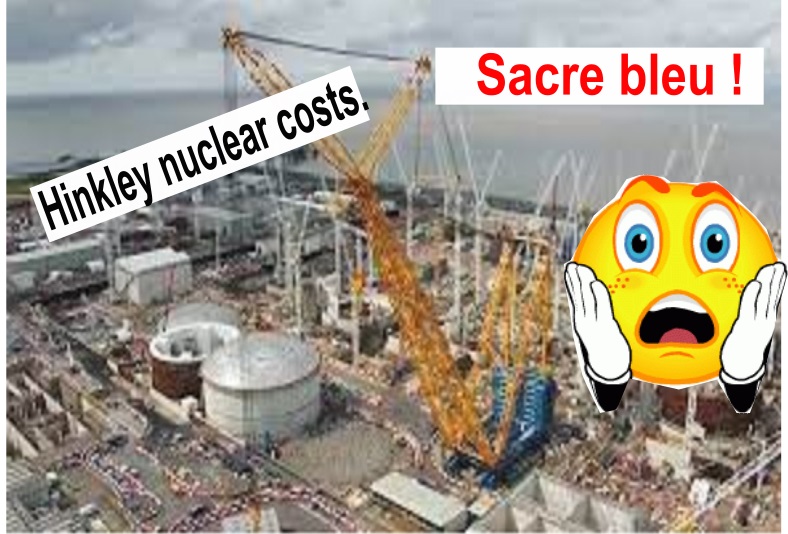
The French energy company EDF is reportedly in talks with investors to raise up to £4bn to finish the delayed Hinkley Point C project in Somerset, Britain’s first new nuclear reactors in a generation.
The utilities company, owned by the French state, has approached investors to help cover the ballooning cost of constructing the nuclear plant, which is understood to have reached almost £50bn due in part to supply chain issues and struggles securing skilled engineers, according to Bloomberg.
EDF is reportedly engaged in talks with sovereign wealth funds and large infrastructure funds to raise the extra money through a bespoke financial instrument that would hand investors a stake in Hinkley while protecting them against the risk that the project is not finished.
Hinkley Point C is due to begin generating electricity by 2030, according to EDF – five years later than first planned and 12 years after construction began. The project’s costs have also spiralled, from £18bn when its contracts were signed in 2016 to £47.9bn in today’s money.
The cost overruns and delays are understood to be in part due to spending on extra safety measures to satisfy UK authorities, and trouble securing skilled engineers after Brexit.
A team of specialist engineers at the Hinkley site, represented by the trade union Prospect, voted to strike for 24 hours from Thursday after pay talks broke down. The union said the engineers had not had a pay increase in the last four years.
The financial pressure on the project has deepened after EDF’s partner, China General Nuclear Power Group (CGN), a state-run company, declined to plough more funding into the project beyond its contracted term in 2023.
CGN has scaled back its interest in investing in the UK after tensions between Westminster and Beijing over security concerns made it clear that a Chinese company would not be given permission to lead a nuclear project in the UK.
In response, EDF has called on the UK government to stump up the cash to help finish the project, which will only benefit from bill payer subsidies once it begins generating, but the suggestion was rebuffed by the previous government.
One of the companies considering an investment in the troubled project is Centrica, the owner of British Gas, which has previously been linked to investment talks relating to EDF’s planned nuclear project at Sizewell C in Suffolk. The FTSE 100 company is reportedly in early talks to invest up to £1bn in Hinkley Point C, according to the Daily Telegraph.
Investing in new nuclear reactors would help to secure future electricity supplies for Centrica, which holds a 20% share in all five of EDF’s remaining UK nuclear power stations, four of which are due to close this decade.
Centrica is understood to be interested in investing in either Hinkley or Sizewell – but not both.
EDF and Centrica declined to comment.
Greenpeace warns of flooding risks at France’s biggest nuclear plant
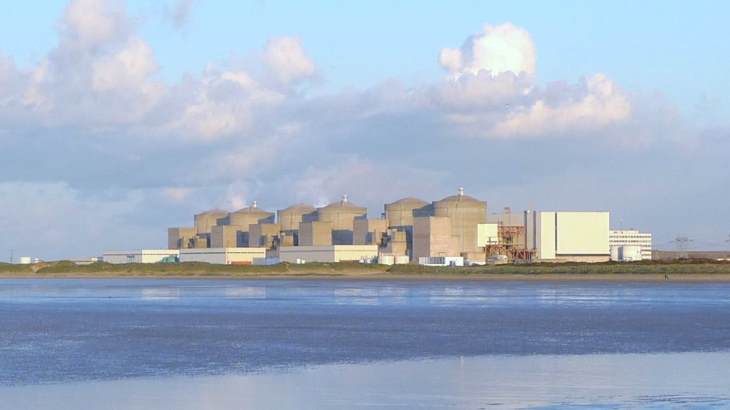
Greenpeace is urging French energy giant EDF to abandon its plans to build two new reactors at its Gravelines nuclear plant, citing the risk of flooding due to rising sea levels. The environmental group accuses the French nuclear industry of underestimating the threat to the coastal site.
04/10/2024 By:RFI
With six 900MW reactors, the Gravelines nuclear power plant on the Channel coast is already the most powerful in Western Europe.
EDF’s proposal to build two additional new generation pressurised water reactors (EPR2) of 1600 MW each is part of President Emmanuel Macron’s nuclear revival programme.
The new reactors are currently the subject of public debate. If they pass safety criteria laid down by France’s nuclear safety authority (ASN), construction would begin in 2031 and they could be on stream by 2040.
While they would be built on a 11-metre-high platform, Greenpeace claims there is a significant safety risk.
“The entire power plant site could find itself – during high tides and when there is a 100-year surge – below sea level” by 2100, it warned in a report published Thursday.
EDF refutes their calculations.
“The height of the platform chosen for the EPR2 reactors at Gravelines provides protection against “extreme” flooding, taking into account the effects of IPCC [Intergovernmental Panel on Climate Change] scenarios, which are among the most penalising with regard to sea-level rise”, EDF said in a statement to RFI.
Protective measures
Greenpeace argues that EDF’s calculations are outdated and do not fully account for the realities of global warming.
“We can’t think as if the current situation were going to remain stable and that sea levels were just going to rise a little”, says Pauline Boyer, Greenpeace’s energy transition campaigner.
The NGO has therefore based its projection on the IPCC’s most pessimistic scenario, which assumes that no action will be taken to reduce greenhouse gas emissions by 2100……………………….
Boyer believes a comprehensive risk study, factoring in climate change, “should govern the choice of site”, and be carried out before the public debate ends on 17 January.
While Greenpeace’s report centres on Gravelines, Boyer warned that climate change threatens other nuclear plants, with risks tied to rising temperatures and extreme weather events like storms.
She also pointed to potential conflicts over access to river water needed to cool reactors. https://www.rfi.fr/en/france/20241004-greenpeace-warns-of-flooding-risks-at-france-s-biggest-nuclear-plant
France asserts itself against Netanyahu over Lebanon: Macron calls for Arms Embargo against Israel
Informed Comment Juan Cole10/06/2024
Ann Arbor (Informed Comment) – In a radio interview with France Inter on Saturday, French president Emmanuel Macron called for an arms embargo against Israel over its ongoing attacks on Gaza and now Lebanon.
BFMTV reported that he said, “I think that today the priority is to return to a political solution, and that we must halt the delivery of arms for pursuing combat against Gaza. France will not deliver them.”
He clarified that France would continue to export defensive materiel, such as parts for the Israeli Iron Dome anti-missile defense system.
The station notes that President Joe Biden has often called for the avoidance of civilian casualties but has steadfastly declined to use his leverage with Israel, given its dependence on US weaponry and ammunition, to pressure it. In Britain, the Labour government of PM Keir Starmer has halted 10 out of 350 weapons licenses on the grounds that those ten weapons would likely be used by Israel against civilians.
Macron is the first leader of a major European country to argue for an embargo of offensive weapons to Israel in response to its total war on Gaza.
The French president has been heavily criticized by former French diplomats and other public figures for not showing the spine toward the Israeli……………………………. more https://www.juancole.com/2024/10/asserts-against-netanyahu.html
Heatwaves caused cuts in France’s nuclear power production.
(Montel) Heatwaves in July and August provoked a 430 GWh cut in nuclear output at four EDF nuclear power plants – double last summer’s amount but slightly below the nine-year median, a French consultancy said on Tuesday.
EDF summer heat cuts double but below 9-year median
Reporting by: Sophie Tetrel, 01 Oct 2024 .
https://montelnews.com/news/70ed2eeb-e06c-4494-abca-42207139db11/edf-heat-cuts-double-from-summer-2023-but-stay-below-9-yr-median
This summer’s cut represented less than 1% of the country’s total atomic generation and was below the 600 GWh median recorded over the 2015-2023 period, said Thibault Laconde, head of analysis consultancy Callendar.
Last year’s climate-related cuts amounted to only 217 GWh due to several reactors being offline for maintenance, he added.
He said the noteworthy aspect of this year was that high temperature levels caused the outages, rather than a lack of water supply due to drought.
Production cuts or stoppages were concentrated between 29 July-3 August and 11-15 August, corresponding with the summer heatwaves, he said.
The cuts amounted to 279 GWh at Golfech, 93 GWh at Bugey, 55 GWh at St Alban and 7 GWh at Tricastin.
However, they were well below the 3 TWh record seen in 2020, Laconde added.
Many French nuclear plants use river water to cool reactors and EDF is required to reduce their output if river temperatures or low flows break legal limits.
Outgoing French nuclear safety chief warns of 25% budget cut

(Montel) France’s ASN nuclear safety authority faces a 25% cut to its budget next year which would leave the body “unable to operate”, its outgoing head, Bernard Doroszczuk, has told parliamentarians.
by: Muriel Boselli, 25 Sep 2024
The same would apply when ASN plans to merge with its technical arm, the Institute for Radiation Protection and Nuclear Safety (IRSN), to create a new body ASNR from 2025, he told a French lower house committee on Tuesday.
“Whether it’s the ASNR or the separate ASN and IRSN, we don’t have the means to operate with these figures,” he said.
The planned cuts, due to be tabled in the government’s finance bill next month, would leave a EUR 37m hole in ASN’s EUR 150m budget, Doroszczuk said, adding this was “very alarming”.
Merger on 1 January?
President Emmanuel Macron proposed the head of the nation’s nuclear waste agency Pierre-Marie Abadie to succeed Doroszczuk when his term ends on 12 November.
One of Abadie’s first tasks will be to oversee the controversial merging of the ASN and the IRSN from 1 January 2025 as approved by parliament and officially stipulated as law on 22 May.
Despite legislative delays following France’s snap election, the launch of ASNR could go ahead on 1 January as planned even if “it won’t be perfect”, Doroszczuk said.
It would be a “transitional” entity at first, with only 30 reconfigured positions out of more than 2,000. The general management will be unified, but the entities responsible for nuclear safety and radiation protection within ASN and IRSN will remain unchanged.
New iodine tablets for communes near French nuclear power sites.
The tablets are distributed for use in the event of an emergency, but some say
the scheme does not go far enough. New iodine tablets are to be distributed
again to people living in French communes near nuclear power station sites,
after authorities renewed the campaign.
Since September 15, residents
living or people working within a 10 km radius of the Penly and Paluel
nuclear power plants (Seine-Maritime, Normandy) have been receiving new
free iodine tablets to use in the event of a nuclear plant accident.
Pharmacies are now able to distribute the tablets. The tablets can also be
collected and dispensed by public establishments to make it easier for
residents to get hold of them (if they are not able to get to a pharmacy).
Connexion 17th Sept 2024
-
Archives
- February 2026 (199)
- January 2026 (308)
- December 2025 (358)
- November 2025 (359)
- October 2025 (376)
- September 2025 (258)
- August 2025 (319)
- July 2025 (230)
- June 2025 (348)
- May 2025 (261)
- April 2025 (305)
- March 2025 (319)
-
Categories
- 1
- 1 NUCLEAR ISSUES
- business and costs
- climate change
- culture and arts
- ENERGY
- environment
- health
- history
- indigenous issues
- Legal
- marketing of nuclear
- media
- opposition to nuclear
- PERSONAL STORIES
- politics
- politics international
- Religion and ethics
- safety
- secrets,lies and civil liberties
- spinbuster
- technology
- Uranium
- wastes
- weapons and war
- Women
- 2 WORLD
- ACTION
- AFRICA
- Atrocities
- AUSTRALIA
- Christina's notes
- Christina's themes
- culture and arts
- Events
- Fuk 2022
- Fuk 2023
- Fukushima 2017
- Fukushima 2018
- fukushima 2019
- Fukushima 2020
- Fukushima 2021
- general
- global warming
- Humour (God we need it)
- Nuclear
- RARE EARTHS
- Reference
- resources – print
- Resources -audiovicual
- Weekly Newsletter
- World
- World Nuclear
- YouTube
-
RSS
Entries RSS
Comments RSS
 nuclear-news