EDF shuts down Golftech nuclear plant due to high river temperature
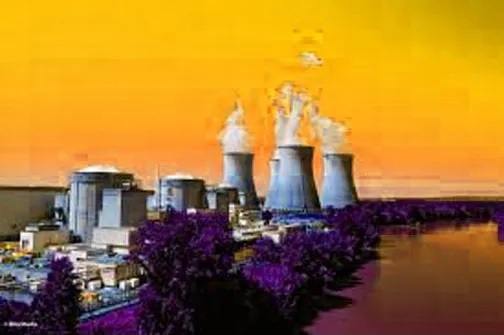
French utility EDF said it shut down the No. 1 reactor at the Golftech
nuclear power plant in southwestern France late on Sunday, ahead of an
anticipated rise in the temperature of the Garonne river that supplies the
plant’s cooling water.
Reuters 30th June 2025, https://www.reuters.com/business/energy/edf-shuts-down-golftech-nuclear-plant-due-high-river-temperature-2025-06-30/
EDF chief weighs asset sales as Paris pushes for new nuclear focus

a “complicated economic equation
… unless someone has found a magic wand”
Insiders say Fontana’s stance signals he is aligned with the French
government unlike his predecessor. EDF’s new boss is conducting a
portfolio review that could lead to the French energy group selling some
assets, as he seeks to meet government demands to focus on building new
nuclear reactors in France.
Bernard Fontana has told insiders that he
wanted to assess which assets were not profitable or did not fit with the
state-owned group’s strategic priorities, according to several people
with knowledge of the situation. Fontana, who took over as chief executive
of the state-owned group last month, told the people that sales could come
after the review, although he has not yet concluded which parts of the
business should be sold off.
The state “has said that we have to make the
new nuclear programme in France a success, and exploit the current nuclear
centres. For the rest, if there aren’t the means, we’ll have to
arbitrate”, said one of the people.
Its other assets and subsidiaries
include the construction engineering division Framatome — of which
Fontana was previously CEO
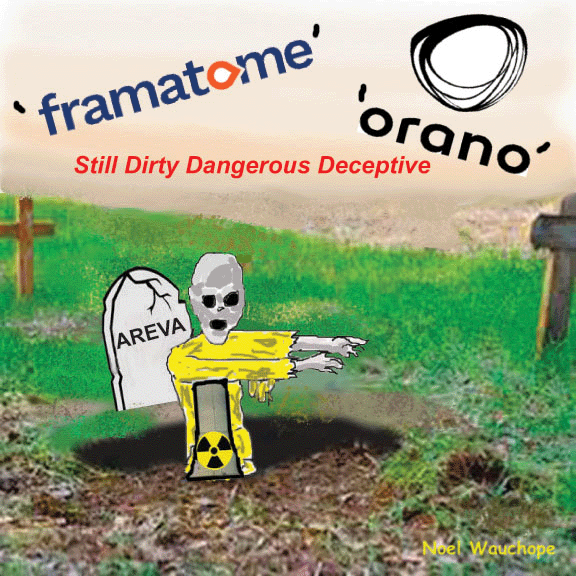
— renewable installations in France and across
the world, Italian utility business Edison and services company Dalkia.
Several people familiar with EDF said Dalkia and Edison are among the
business units that could be sold. Renewable assets, with the exception of
EDF’s hydraulic power projects, could also be under consideration, the
people said.
Still, the company’s aims could be complicated if it tries
to sell assets during a difficult economic environment, potentially forcing
it to offload some assets at deep discounts, especially in the US where it
has a number of offshore wind and solar projects.
Asset sales would also do
little to meet the enormous costs of delivering the new EPR2 programme,
people familiar with the business said. The government and EDF recently
agreed a funding mechanism for the project, but the total cost is yet to be
determined.
Building the EPR2s and meeting EDF’s other priorities such as
guaranteeing low energy prices to consumers and industrial groups, and
completing Hinkley Point make for a “complicated economic equation
… unless someone has found a magic wand”, said one of the people.
FT 25th June 2025
https://www.ft.com/content/e2c4ba72-b40a-4d7b-a820-70957b06958e
Nuclear power plant warning as heatwave hits France.
Independent Forrest Crellin, Friday 20 June 2025
France’s electricity supply faces potential disruption as soaring river temperatures, driven by an impending heatwave, threaten to curtail nuclear power generation along the Rhone.
Nuclear operator EDF announced on Friday that high water temperatures are expected to impact electricity production from 25 June, particularly at the 3.6-gigawatt Bugey nuclear power plant in eastern France.
This marks the first such warning for high river temperatures in France for 2025.
The issue stems from environmental regulations governing the discharge of cooling water, which can be breached when river temperatures become excessively high due to heatwave conditions.
The alert comes as state forecaster Meteo France predicts a significant heatwave will sweep across the country this weekend.
European Power Costs Surge on Fresh Fears of French Nuclear Reactor Corrosion
Power prices across Europe jumped as nuclear giant Electricite de France
SA reported signs of “stress corrosion” at a reactor, renewing fears
that generation may be curtailed once again. The French utility in 2022 and
2023 was forced to halt part of its atomic fleet, the backbone of western
Europe’s electricity market, to fix cracked pipes.
That sent energy prices soaring as the repairs coincided with dwindling Russian gas supplies
to the continent. On Tuesday, the ASNR nuclear safety authority said
“hints” of corrosion had again been found on pipes at the Civaux 2
reactor in central France. That drove French year-ahead power up as much as
8.4% on Wednesday, the most in two years, according to the European Energy
Exchange. The contract for August, when demand for cooling peaks, climbed
13%. Prices also rose in Germany and the UK, which often rely on exports
from neighboring France to keep the lights on. Europe’s power markets
have largely emerged from the energy crisis of a few years ago, when
Russian gas supplies all but stopped. Yet prices remain sensitive to any
issues affecting the region’s largest nuclear fleet, exposing the fragile
nature of the recovery.
Bloomberg 11th June 2025, https://www.bloomberg.com/news/articles/2025-06-11/european-power-surges-on-fresh-fears-of-french-reactor-corrosion
Paris wants to manufacture drones in Ukraine
9 June 25 https://www.rt.com/news/618818-paris-renault-produce-drones-ukraine/
The French Defense Ministry has asked Renault to set up military production for Kiev.
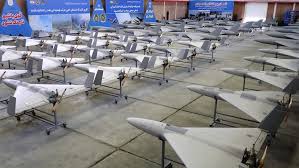
Paris is pushing France’s largest automaker, Renault, to establish a military drone production operation in Ukraine, the company has confirmed. Kiev has been significantly intensifying drone attacks on Russian infrastructure.
During the final week of May, 2,300 Ukrainian UAVs were shot down after being sent across the border to target Moscow and other regions, according to the Russian Defense Ministry.
“We have been contacted by the [French] Defense Ministry about the possibility of producing drones,” Renault said in a statement to several media outlets, including Reuters, on Sunday. Although “discussions” on the issue have taken place, the company insisted that “no decision has been taken at this stage,” and that it is awaiting further details from the ministry.
French Defense Minister Sebastien Lecornu first revealed the plan on Friday, describing it as an “unprecedented partnership” in an interview with broadcaster LCI.
“We are going to embark on a completely unprecedented partnership… to equip production lines in Ukraine to… produce drones,” Lecornu said, noting that the project would involve both a major carmaker and a smaller defense contractor.
Renault could be tasked with setting up drone assembly lines “a few dozen or hundreds of kilometers from the front line” in Ukraine, France Info reported on Sunday.
According to the newspaper Ouest-France, the project could also involve Delair – a Toulouse-based drone manufacturer that supplies UAVs for border surveillance, reconnaissance, intelligence, and special operations forces. The company has previously delivered kamikaze drones to the French Defense Ministry, which were later sent to Ukraine.
Lecornu described the initiative as a “win-win” for Paris and Kiev, claiming no French personnel would be deployed to Ukraine.
The production lines would be operated by Ukrainian workers, and the drones built for the country’s military would also be used by the French Armed Forces for “tactical and operational training that reflects the reality” of modern warfare, he said.
Russian Foreign Minister Sergey Lavrov condemned the strikes as deliberate attempts to sabotage peace talks. Moscow has repeatedly warned that any weapons production facilities in Ukraine are considered legitimate military targets and subject to “unequivocal destruction.”
Nuclear Power will ruin France

Nuclear power will ruin France , by Laure Nouahlat, published by Seuil , May 16, 2025, 224 p., 13.50 euros.
Neither the French population, nor any parliamentarian or senator had their say, as if nuclear power were democratically held above ground.
Reporterre 16th May 2025,
https://reporterre.net/Le-nucleaire-va-ruiner-la-France
Despite the staggering cost of all-nuclear power, France is stuck in this impasse. Here are the excerpts from the investigative book ”
Nuclear Power Will Ruin France
.” Laure Noualhat dissects the mechanisms of this waste.
Is nuclear revival reasonable ? According to Emmanuel Macron and many others, the nuclear ” holy grail “ would be the only solution to slow climate change and preserve our comfort. While the government is making savings at every turn, the sector seems to benefit from an unlimited budget.
It was announced Monday that the Cigéo nuclear waste disposal facility in Bure will cost up to €37.5 billion. To revive the industry, the bill will climb to at least €80 billion. As delays mount, these amounts are continually revised upwards. All this while EDF is already heavily in debt.
Where will the tens of billions of euros for these new EPRs be found ? And the necessary investments in the existing fleet ? It will be the State, that is, the taxpayer, who will pay.
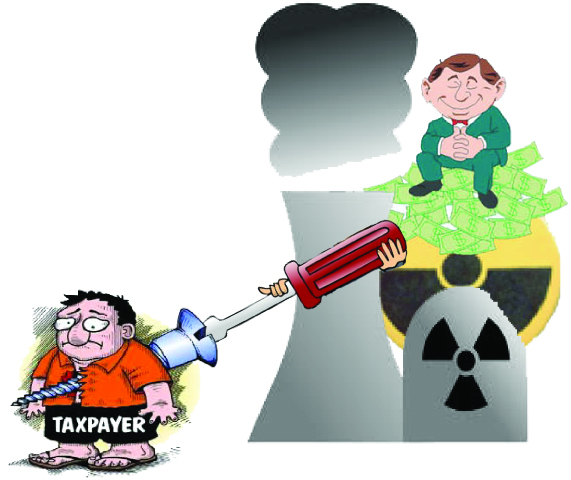
This is what journalist Laure Noualhat demonstrates in her relentless investigative book, Nuclear Power Will Ruin France . The result of six months of investigation, it is published today in the Seuil- Reporterre collection and will be accompanied by a documentary broadcast on YouTube in early June. Through this extensive work, Reporterre is tackling a crucial issue for the future of the country, largely absent from public debate. Because these choices are made in total secrecy, Reporterre is shedding light on a subject that concerns us all.
Here are the previews of “ Nuclear Power Will Ruin France ”:
What were you doing on February 10, 2022 ? For the small world of energy, it was a memorable day. On that day, presidential candidate Emmanuel Macron stood behind a lectern under the immense tin roof of the General Electric plant in Belfort. His voice echoed like a cathedral. Behind him, GE teams had positioned a gigantic Arabelle turbine, 300 tons of gleaming steel lit as if it were an industrial museum piece.
A group of masked employees, all wearing the same electric blue construction jackets, listens learnedly to the president. Four years earlier, these women and men were part of Alstom’s energy division, the industrial flagship that former Economy Minister Emmanuel Macron had conscientiously dismantled during his time at the Ministry of Finance.
No matter, on this Thursday, February 10, the now President has just announced the ” rebirth “ of French nuclear power, boasted of national ” sovereignty “ and praised the merits of ” planning “ to address the challenges of the moment: reducing our CO2 emissions by 55 % by 2050, ensuring France’s industrial development, and controlling the French people’s energy bill.
No law regulates presidential will
Regardless of the background—environmental, energy, nuclear, activist, industrial, or political—this speech hit the mark and is historic. With its delivery, President-candidate Macron has just rescued France from decades of uncertainty by relaunching the mass construction of nuclear reactors. Since its approval in 2003 by the National Assembly, the Flamanville EPR project has been mired in endless setbacks. In 2012, President Hollande chose a contrary path by enshrining in law the reduction of nuclear power’s share to 50 % of the electricity mix by 2025 (compared to 65-70 %) and to 30 % by 2030. In short, the socialist planned a slow phase-out of nuclear power, allowing for the preparation of the decommissioning of the oldest reactors, the ramp-up of renewables, and an unprecedented effort toward energy efficiency.
In February 2017, candidate Macron – a former minister under Hollande – took up this promise.
”
I will maintain the framework of the energy transition law. I am therefore maintaining the 50
% target,
“ he confided to the
WWF during a Facebook Live broadcast watched by 170,000 people and interviewed by… Pascal Canfin, who will join the President’s list for the 2019 European elections.
Five years later, facing General Electric employees, the Jupiterian president performed an about-face. Six
EPR2s will emerge, he promises, built in pairs on three sites: in Penly in Normandy, in Gravelines in the North, and in Bugey in the Ain. And eight more will be under consideration. Neither the French population, nor any parliamentarian or senator had their say, as if nuclear power were democratically held above ground. Since this announcement, the program of the six EPR2s
has still not been validated by any legal decision, much less by an ”
energy and climate programming law
” (
PPE ), which should have been revised for the occasion.
To date, in 2025, no law governs the presidential will shaped by long years of lobbying (by associations such as Xavier Moreno’s Cérémé or Bernard Accoyer’s Nuclear Heritage & Climate, but also Voies du nucléaire or the French Nuclear Energy Society) since his arrival in power.
A colossal cost
Knocking down walls or hiding the misery, insulating here or repainting there, moving the pipes, changing the door… it’s difficult to ask a tradesman for a quote for work if you don’t know what you’re going to do. It’s the same with nuclear reactors.
As these lines are being written, in March 2025, three years after the Belfort speech, no one knows how much the EPR2 will cost . This is normal: their detailed design has not been completed despite the 10.5 million hours of engineering already devoted to the project.
In February 2022, the government had put forward a construction cost of 51.7 billion (2020 euros). In 2023,
EDF made two updates to the costing, noted by the Court of Auditors in its report on the
EPR sector in January 2025:
”
The overnight construction cost [as if the reactor were completed in a single night] of three pairs of
EPR2s rose from 51.7 to 67.4 billion euros [2020 euros], an increase of 30
% under unchanged economic conditions and excluding the effect of inflation.
“ In 2023 euros, the bill reaches 80 billion. For comparison, this figure of 80 billion already represents four times the annual deficit of the Social Security…
They Dumped 200,000 Radioactive Barrels Into the Atlantic: 35 Years Later, French Scientists Are Going After Them.

For decades, radioactive barrels have sat hidden beneath the Atlantic, untouched and untracked. Now, French scientists are setting out on a mission unlike any before.
Arezki Amiri, May 29, 2025, https://indiandefencereview.com/they-dumped-200000-radioactive-barrels-into-the-atlantic-35-years-later-french-scientists-are-going-after-them/
For decades, they lay untouched and largely forgotten—hundreds of thousands of barrels filled with radioactive waste, scattered across the abyssal plains of the Atlantic Ocean. Now, more than 30 years after the last were submerged, a French scientific mission is preparing to search for them, raising fresh questions about the long-term impact of nuclear dumping at sea.
Decades-Old Barrels, Deep-Sea Mysteries
Between 1946 and 1990, over 200,000 barrels of radioactive waste were deliberately sunk into the Atlantic by various nations, including France. Packed in bitumen or cement, the containers were lowered into what scientists at the time considered to be lifeless zones, thousands of meters below the ocean surface and far from any coastline.
The practice was permitted until 1990, when it was banned under the London Convention following growing awareness of deep-sea ecosystems and the potential environmental risks of radioactive leakage. The barrels were never retrieved, and no comprehensive effort has since been made to assess their state—or their potential impact on marine life.
An Ambitious Mission Beneath 4,000 Meters
This summer, a group of French researchers will head into the Atlantic to do just that. The mission, called Nodssum, is a collaboration involving CNRS, Ifremer, and the French Oceanographic Fleet. Their immediate goal is to map a 6,000-square-kilometer section of the seafloor where a significant number of barrels are believed to be resting.
To locate them, the team will deploy a high-resolution sonar system and the autonomous submersible UlyX, one of the few underwater vehicles capable of operating at depths greater than 4,000 meters. UlyX will scan the ocean bottom, helping to establish the precise location of the containers and assess their current condition.
Questions of Leakage and Contamination
So far, the environmental effects of the submerged barrels remain unknown. As the article notes, “no one knows what impact the dumping of these barrels may have had on deep-sea ecosystems, or whether they still represent a radiological risk.” Part of the challenge lies in the vastness and inaccessibility of the ocean floor where the barrels were dropped.
Once the mapping phase is complete, a second campaign will be launched to collect samples of sediments, seawater, and marine organisms near the barrels. These samples will help determine whether radioactive materials have begun to escape their containers and what effect, if any, that may be having on surrounding ecosystems.
Unknowns Beneath the Surface
The mission represents one of the first large-scale scientific efforts to investigate this Cold War-era dumping ground. While scientists long assumed that the deep sea was barren and isolated, more recent research has shown that it is home to complex ecosystems, many of which remain poorly understood.
The researchers hope that the project will provide new insights into the long-term stability of radioactive waste in deep-sea environments and offer a clearer understanding of how past nuclear policies continue to shape today’s oceans.
France spent €90,000 countering research into impact of Pacific nuclear tests
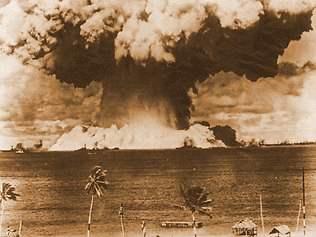
Radiation-related thyroid, breast and lung cancers, as well as leukaemia and lymphoma, are prevalent across the islands.
Documents suggest campaign to discredit revelation that tests contaminated many more people than acknowledged
Jon Henley Guardian, 27 May 25
France’s Atomic Energy Commission (CEA) has spent tens of thousands of euros in an effort to counter research revealing that Paris has consistently underestimated the devastating impact of its nuclear tests in French Polynesia in the 1960s and 1970s.
Days before a parliamentary inquiry presents its report on the tests, documents obtained by the investigative outlet Disclose, and seen by Le Monde and the Guardian, suggest the CEA ran a concerted campaign to discredit the revelations.
A 2021 book, Toxique, which focused on just six of the 193 nuclear tests that France carried out from 1966 to 1996 at Moruroa and Fangataufa atolls, drawing on 2,000 pages of declassified material and dozens of interviews, concluded that they contaminated many more people than France has ever acknowledged.
The latest documents show that a year after the book’s publication, the CEA published 5,000 copies of its own booklet – titled “Nuclear tests in French Polynesia: why, how and with what consequences?” – and distributed them across the islands.
As part of an operation costing more than €90,000, the commission also flew a four-man team by business class to French Polynesia, where they stayed at the Hilton hotel, to meet local dignitaries and give interviews to the media.
The CEA’s booklet, printed on glossy paper, claimed to provide “scientific responses” to the “allegations” contained in Toxique, whose authors it said did not have “the same level of expertise”. It claimed contamination had been limited and that France always behaved transparently and with respect for local inhabitants’ health.
The publication of Toxique – based on the investigation by Disclose, Princeton University’s science and global security programme and Interprt, an environmental justice research collective – caused a furore in France, prompting visits to French Polynesia by a minister and the president, Emmanuel Macron, who acknowledged France’s “debt” to the region.
In one 1974 test alone, the scientific research found, 110,000 people – the population of Tahiti and its nearby islands – could have received a radiation dose high enough to qualify them for compensation if they later developed one of 23 different cancers.
Toxique alleged the CEA has long underestimated the radiation levels involved, significantly limiting the numbers eligible for compensation: by 2023, fewer than half the 2,846 compensation claims submitted had even been judged admissible.
The parliamentary inquiry, which has so far called more than 40 politicians, military personnel, scientists and victims, is due to report before the end of May on the social, economic and environmental impact of the tests – and whether France knowingly concealed the extent of contamination.
The CEA’s military division, CEA/DAM, the inventor of France’s atomic bomb, has repeatedly called this a “false assertion”. But France’s nuclear safety body, the ASNR, has since acknowledged “uncertainties associated with [the CEA’s] calculations” and confirmed to the parliamentary inquiry that it was impossible to prove people received radiation doses lower than the compensation threshold.
The CEA said in a statement that the aim of its booklet “was to provide Polynesians in particular with the elements to understand” the tests and their impact. It said the booklet applied “the necessary scientific rigour” to explain “the health and environmental consequences of the tests” in a “factual and transparent manner”……………………..
The inquiry has heard that the CEA/DAM has so far declassified only 380 documents in the four years since Macron demanded “greater transparency” around the tests and their consequences – compared with 173,000 declassified by the army.
Jérôme Demoment, the director of CEA/DAM, told the parliamentary inquiry earlier this year that it was “highly likely, if we were to have to manage [nuclear tests] today, that the system put in place would respond to a different logic”.
Forty-six of France’s nuclear tests were atmospheric, exposing the local population, site workers and French soldiers who were stationed in Polynesia at the time to high levels of radiation before the testing programme was moved underground in 1974.
Radiation-related thyroid, breast and lung cancers, as well as leukaemia and lymphoma, are prevalent across the islands. For its part, the French army has said up to 2,000 military personnel could have been exposed to enough radiation to cause cancer.
“The notion of a ‘clean bomb’ has generated controversy, which I fully understand,” Demoment told the parliamentary inquiry. “No nuclear test generating radioactive fallout can be considered clean.” https://www.theguardian.com/world/2025/may/27/france-spent-90000-countering-research-into-impact-of-pacific-nuclear-tests
Nuclear in decline: EDF accumulates excesses, the State takes the hit and the French pay the bill without flinching.

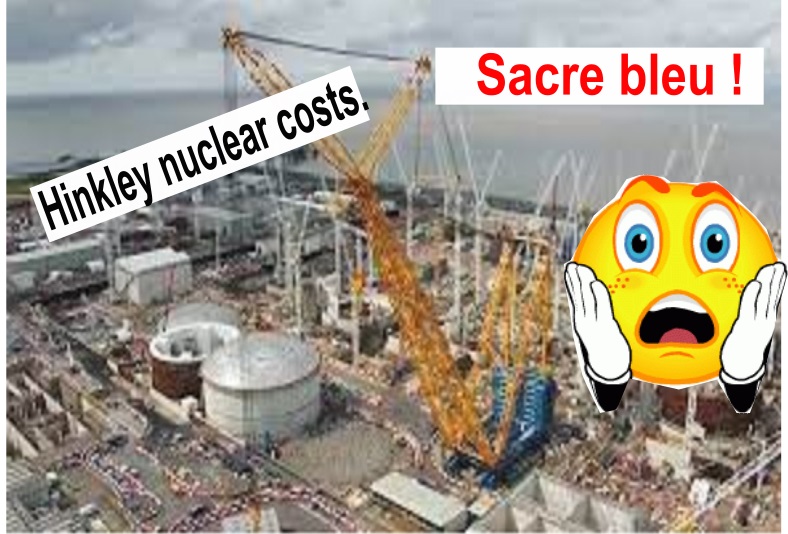
The Hinkley Point EPR project, a symbol of budgetary excesses and opaque management, raises crucial questions about the future of French nuclear energy and the State’s financial commitment
 , 05/09/2025,
 IN BRIEF
The Hinkley Point EPR project has become a financial disaster, with a budget that has ballooned to €54 billion.
EDF, now entirely state-owned, bears 85% of the costs , effectively committing public money without sufficient parliamentary control.
The Hinkley Point construction site is a logistical disaster , with working conditions criticized and significant delays to the schedule.
This project raises questions about French
energy policy and the future of nuclear power, calling for a thorough democratic debate.
This project raises questions about French
energy policy and the future of nuclear power, calling for a thorough democratic debate.
The National Assembly recently witnessed a heated debate surrounding the Hinkley Point EPR project, a project that has crystallized tensions surrounding the French nuclear industry. This project, initially presented as a technological showcase, has turned into a financial drain for EDF, and by extension, for French taxpayers. As the bill continues to mount, MPs are questioning budgetary overhangs and the lack of parliamentary oversight. Far from being a simple isolated incident, Hinkley Point raises crucial questions about the management of nuclear projects internationally.
When the bill explodes
The European Pressurized Power Plant (EPR) at Hinkley Point was supposed to be the flagship of the French nuclear industry. However, over the years, the project has accumulated delays, technical complications, and cost overruns. Initially estimated at £18 billion in 2016, the budget has now reached €54 billion. This cost explosion is symptomatic of poor management and an underestimation of risks from the outset. Aurélie Trouvé, a member of parliament for La France Insoumise, described the project as a “financial abyss” during a speech in the National Assembly .
The consequences of this financial drift are serious for EDF, a company now entirely owned by the State.
With 85% of the costs at its own expense, EDF is effectively committing public money without any real parliamentary safeguards . This situation is all the more worrying as it reveals a democratic anomaly: Bercy, the Ministry of Finance, does not have the construction contract, thus depriving MPs of a key element of control. The debate surrounding Hinkley Point is thus going beyond the technical sphere to become a major political issue.
EDF and the taxpayer’s hostage
The full nationalization of EDF in 2023 has redefined the stakes surrounding Hinkley Point. As the sole shareholder, the French state finds itself on the front line when it comes to the project’s budgetary implications. Aurélie Trouvé pointed out that the state was already an 85% shareholder during the initial negotiations in 2015 , making the lack of oversight over such a binding contract incomprehensible.
The withdrawal of Chinese partner CGN, initially planned to co-finance the project, left EDF alone to face the additional costs. In April 2025, Energy Minister Marc Ferracci called on the United Kingdom to assume its financial responsibilities. However, the British silence leaves uncertainty surrounding the future of the financing. This situation calls into question the role of the state in managing major industrial projects and the relevance of committing public money to such risky undertakings.
Symbol of an industrial shipwreck
Beyond the financial issues, Hinkley Point is also the scene of numerous logistical and human setbacks. The construction site, which was initially scheduled to be operational in 2025, has now seen its commissioning postponed to 2029, or even 2031. Working conditions on the site have also been singled out, with workers denouncing appalling conditions , as reported by the Guardian in a Guardian investigation.
The impact on EDF is significant. In 2024, the company had to record a €12.9 billion impairment charge due to the project’s difficulties. Moody’s has also downgraded EDF’s credit profile, highlighting the growing financial pressures on the company . These challenges illustrate the complexity of nuclear investments and the need for rigorous and transparent management.
A turning point for French nuclear energy
The management of Hinkley Point raises questions about the future of nuclear energy in France. As the country prepares to define its energy roadmap for the next ten years, the failure of this international project could influence future choices. Members of Parliament, such as Charles de Courson, are calling for a broader democratic debate on these issues, emphasizing that decisions made today will have lasting consequences for public finances and national energy policy.
This complex picture of Hinkley Point’s challenges and failures calls for a broader reflection on the state’s role in the nuclear sector. How can technological ambitions be reconciled with financial responsibilities? What lessons can be learned to prevent such projects from becoming financial disasters in the future? These essential questions must be answered to ensure a sustainable and responsible energy transition.
Emmanuel Macron open to stationing French nuclear weapons in other European nations.
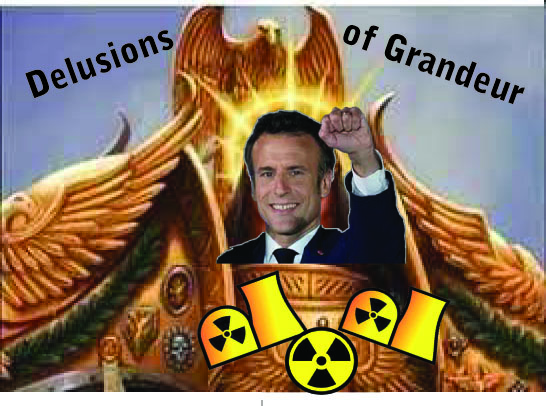
French President Emmanuel Macron said he was “ready to open a
discussion” with European allies about stationing France’s nuclear
weapons on their soil, in an effort to beef up defences against Russia. The
comments made by Macron in an interview with the broadcaster TF1 on Tuesday
come as he has been holding talks with Germany, Poland and other European
countries to explore whether and how France’s nuclear deterrence could be
extended on the continent. Such a move is being considered in response to
signs that US President Donald Trump wants to scale back the American
military presence in Europe and force European countries to take more
responsibility for their own security.
FT 13th May 2025, https://www.ft.com/content/96231d9c-ee48-43b3-9c82-bdc4002b41a5
Inspection at the Flamanville EPR: the nuclear watchdog points out serious shortcomings
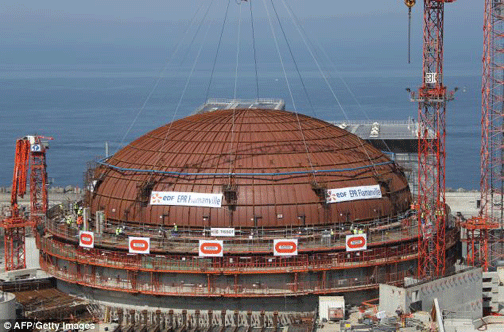
La Presse de la Manche 13th May 2025, https://actu.fr/normandie/flamanville_50184/inspection-a-lepr-de-flamanville-le-gendarme-du-nucleaire-pointe-de-graves-lacunes_62626503.html
Following an inspection into the subject of counterfeiting, falsification and fraud at the EPR site in Flamanville (Manche), the nuclear regulator, ASNR, has issued a severe report.
The affair had shaken the Flamanville EPR construction site (Manche). In February 2024 , journalists revealed cases of falsification involving an EDF supplier . The Flamanville construction site is directly concerned. Some parts, supplied by a subcontractor, are allegedly the subject of fraud . But it is difficult to obtain more information.
” Irregularities have been highlighted within two companies that are part of EDF’s supply chain and produce equipment for operating nuclear reactors as well as the Flamanville EPR reactor,” the Nuclear Safety Authority (ASN) simply admitted in a letter addressed to EDF.
An inspection carried out in March
The safety of the part is not in question. But the affair has revived concerns about fraud, counterfeiting and falsification in the nuclear sector .
A few months later, while the EPR continued its commissioning , the nuclear regulator, ASNR, published on its website the inspection follow-up letter concerning the Flamanville EPR on the theme of “Prevention, detection and treatment of the risk of counterfeiting, falsification and suspicion of fraud”.
For two days, on March 19 and 20, 2025 , the inspectors examined the implementation of the prevention policy , the training of staff on the subject, the monitoring of external stakeholders, the implementation of systems for collecting reports, etc. They carried out interviews with the central services and service providers. And, generally speaking, after this audit, the opinion of the ASNR is unequivocal , since it notes “ numerous weaknesses in the organization implemented.”
The inspectors noted: ”
Gaps in the local implementation of the national note on
irregularities ; weak promotion of the issue, with a lack of dedicated rituals and interfaces; a lack of periodicity in awareness-raising actions…”
Two months to react
The follow-up letter underlines that, generally speaking, it is “necessary to implement an organisation that allows the entire irregularity issue to be managed in a more robust manner, and that capitalisation around the sharing of feedback is still in its infancy and must be improved quickly “.
Seven pages of requests follow. EDF now has two months to formulate its observations and indicate the corrective measures taken in response to the ASNR’s findings.
Andra updates French repository cost estimate
Tuesday, 13 May 2025,
https://www.world-nuclear-news.org/articles/andra-updates-french-repository-cost-estimate
French radioactive waste management agency Andra has estimated the overall cost of constructing, operating and closing France’s planned deep geological repository for the disposal of high- and intermediate-level radioactive waste at between EUR26.1 billion (USD29.1 billion) and EUR37.5 billion (at 2012 prices).
France plans to construct the Centre Industriel de Stockage Géologique (Cigéo) repository – an underground system of disposal tunnels – in a natural layer of clay near Bure, to the east of Paris in the Meuse/Haute Marne area. The facility is to be financed by radioactive waste generators – EDF, Orano and the French Alternative Energies and Atomic Energy Commission – and managed by Andra.
Andra said the costing file is one of the key inputs for determining the cost of Cigéo, which will be finalised by the Minister of Industry and Energy by the end of 2025, after gathering comments from the main waste producers and the opinion of the French Nuclear Safety and Radiation Protection Authority (ASNR).
“This decree provides waste producers with a reference allowing them to establish the provisions they are required to make for the management of their waste,” Andra said. “The overall cost estimate for Cigéo is an iterative process carried out by Andra. This assessment will be revised at key stages of the project.”
In 2005, Andra estimated the cost of the facility at between EUR13.5 and EUR16.5 billion. However, in 2009 it re-estimated the cost at around EUR36 billion. In October 2014, Andra gave a revised cost estimate for Cigéo of EUR34.4 billion, based on 2012 prices. This estimate included EUR19.8 billion for the facility’s construction, EUR8.8 billion for operational costs over 100 years, EUR4.1 billion in taxes and EUR1.7 billion in miscellaneous expenses.
Andra has now issued an updated estimate for the cost of Cigéo. It says the cost of constructing and commissioning the repository will be between EUR7.9 billion and EUR9.6 billion, which includes design (excluding R&D), construction of surface infrastructure and the first storage areas, taxes, and insurance. From its commissioning in 2050, the average annual cost of Cigéo is estimated at between EUR140 million and EUR220 million per year, including operation, progressive construction, maintenance, and refurbishment over a period of about a century, followed by decommissioning and closure over about 20 years, or between EUR16.5 billion and EUR25.9 billion in total, including taxes and insurance. The R&D cost identified to date, including the operation and closure of the underground laboratory, is estimated at between EUR1.7 billion and EUR2 billion.
Andra said the 2025 costing file is consistent with Cigéo’s updated provisional schedule. “This schedule takes into account the additional time required to complete the detailed preliminary design studies (including the optimisations identified in 2016 following the first cost decision), the preparation of the support file for Cigéo’s creation permit application, and its review.”
Subject to the issuance of the creation authorisation decree in late 2027/early 2028, the receipt of the first waste packages is currently planned for 2050.
The cost decree to be set by the Minister of Industry and Energy – expected by the end of 2025 – “will serve as a reference for the project’s continuation until its next assessment,” Andra said. It also “provides waste producers with a reference allowing them to establish the provisions they are required to make for the management of their waste.”
Dispatch from France | May ’25
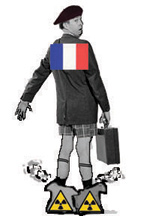
Clean Energy Wire, 02 May 2025, Camille Lafrance
Against the backdrop of the major blackout on the Iberian Peninsula in late April, which also affected parts of France, the country is heading for controversial discussions about its energy strategy for the coming decade. A focus will be on the future roles of renewables and nuclear power. The launch of France’s new generation of nuclear power plants was postponed for several years, while the country’s older reactors continue to cause problems.
- Delay to new generation of nuclear power plants – France’s new generation of nuclear power plants (known as EPR2) is set to go online three years later than previously planned. It is now meant to become operational by 2038, instead of 2035. EPR2 reactors are supposed to be simpler and cheaper to build. The EPR2 programme will be financed by a government loan, which should cover at least half the construction costs. EDF has called for more state money in order to reign in debt.
- Uranium supply and diplomacy – France could lose a large part of its uranium stockpile in Niger as that country’s hostile military leadership might sell it to Russia or China. The mine was operated by French state-owned uranium company Orano’s local subsidiary until the end of 2024. France is entirely dependent on uranium imports. In response, state-owned uranium company Orano is planning to mine the raw material needed for France’s fleet of 57 nuclear reactors in Uzbekistan………………………..
- The Flamanville saga continues – A new malfunction at the controversial Flamanville nuclear power plant has reignited a debate about the future of France’s ageing fleet of nuclear reactors. One of its reactors suffered a steam leak in late March. The incident occurred just one week after the reactor returned to the grid following a two-month maintenance shutdown. The plant already has a twelve-year history of delays and a ballooning budget (from 3.3 billion to 13.2 billion euros)………………………………….. https://www.cleanenergywire.org/news/dispatch-france-may-25
EDF seeks joint financing for UK projects

April 30, 2025, https://www.neimagazine.com/news/edf-seeks-joint-financing-for-uk-projects/?cf-view&cf-closed
DF is seeking to consolidate financing for the Hinkley Point C and Sizewell C NPPs under construction in the UK. French Energy Minister Marc Ferracci told the Financial Times that they should be treated as one financial venture in negotiations. He said he had discussed the issue with UK Energy Minister Ed Miliband on the sidelines of a conference in London.
“France and EDF are very committed to deliver the projects but we have to find a way to accelerate them, and we have to find a way to consolidate the financial schemes of both projects,” he said.
Both projects started out with equity stakes from Chinese state-owned nuclear development corporations but the UK government cancelled the arrangements because of “security issues”. The UK government partly replaced the funding and is seeking support from institutional investors.
Ferracci denied that the French government intended to use Sizewell as “leverage” against the financial troubles at Hinkley. “It is not a discussion about leverage, it is a discussion between friends and allies. . . So there is a way through, and I hope we will be able to find it in the next few months.”
He also called for a global solution that would result in a deal that benefitted EDF’s returns across both schemes. “It is a good approach to have a global approach to our relationship,” Ferracci said, adding more “grid connections between France and the UK” could come into the negotiations.
Meanwhile, workers at the Hinkley Point C NPP construction site are complaining about a significant rat infestation, raising health and safety concerns. In early April, the Unite and GMB trade unions at Hinkley Point C told EDF that the facility was overrun with rats. The unions said immediate action was needed as the rodents were “everywhere”. In recent months, workers have also complained about poor working conditions and low pay. In addition, hundreds of project staff went on strike in November over the inadequate security access to the site.
EDF’s new UK plants should be negotiated as one, French energy minister says.
EDF’s two UK nuclear construction projects at Hinkley Point and Sizewell
should be negotiated as a single financial venture, France’s energy
minister has urged, to prevent the French energy giant shouldering
significant cost overruns.
Marc Ferracci said he had held discussions on
the projects with Britain’s energy minister Ed Miliband on Thursday, on
the sidelines of an energy security summit in London. “France and EDF are
very committed to deliver the projects but we have to find a way to
accelerate them and we have to find a way to consolidate the financial
schemes of both projects,” Ferracci told the FT.
France has been lobbying
the UK government to help EDF with the finances of Hinkley Point C in
Somerset for more than a year. It argues that the French state-owned
electricity operator should not be left on the hook for cost overruns that
have taken the total bill to as high as £46bn. EDF — which has also
experienced long delays on other projects using the same reactor technology
in Finland and France — has warned that the first of two reactors at
Hinkley Point C could be delayed to as late as 2031, which would be six
years later than its original target.
The French company has a smaller
equity stake in the Sizewell C project in Suffolk, which it is also
developing. Ferracci denied that the French government was seeking to use
Sizewell as “leverage” to help bail it out of financial difficulties at
Hinkley.
FT 25th April 2025,
https://www.ft.com/content/0c50a553-3376-42d8-8ac5-c8aa84d2e78d
1 This Month

of the week – Shut Down Drone Warfare!


Tell the Ukrainian Government to Drop Prosecution of Peace Activist Yurii Sheliazhenko

Petition to revoke the licensing of the Near Surface Nuclear Disposal Facility (NSDF) at Chalk River. https://www.ourcommons.ca/petitions/en/Petition/Details?Petition=e-7247
To see nuclear-related stories in greater depth and intensity – go to https://nuclearinformation.wordpress.com
-
Archives
- March 2026 (237)
- February 2026 (268)
- January 2026 (308)
- December 2025 (358)
- November 2025 (359)
- October 2025 (376)
- September 2025 (257)
- August 2025 (319)
- July 2025 (230)
- June 2025 (348)
- May 2025 (261)
- April 2025 (305)
-
Categories
- 1
- 1 NUCLEAR ISSUES
- business and costs
- climate change
- culture and arts
- ENERGY
- environment
- health
- history
- indigenous issues
- Legal
- marketing of nuclear
- media
- opposition to nuclear
- PERSONAL STORIES
- politics
- politics international
- Religion and ethics
- safety
- secrets,lies and civil liberties
- spinbuster
- technology
- Uranium
- wastes
- weapons and war
- Women
- 2 WORLD
- ACTION
- AFRICA
- Atrocities
- AUSTRALIA
- Christina's notes
- Christina's themes
- culture and arts
- Events
- Fuk 2022
- Fuk 2023
- Fukushima 2017
- Fukushima 2018
- fukushima 2019
- Fukushima 2020
- Fukushima 2021
- general
- global warming
- Humour (God we need it)
- Nuclear
- RARE EARTHS
- Reference
- resources – print
- Resources -audiovicual
- Weekly Newsletter
- World
- World Nuclear
- YouTube
-
RSS
Entries RSS
Comments RSS
 nuclear-news