Warning of power cuts for France, as nuclear reactors are working at half capacity
France could face the risk of power cuts this winter when electricity
supply may not be enough to meet demand, Xavier Piechaczyk, the head of
grid operator RTE, said on Thursday, citing the price to pay for slow
renewables and a nuclear energy infrastructure working at half capacity.
There is a risk of red-alert days this winter, but it would mostly depend
on the weather, Piechaczyk told Franceinfo radio today, noting that power
cuts are not necessarily “inevitable”. Due to lower nuclear generation
availability, France will import electricity this winter from most of its
neighbors, including Benelux, the manager added.
Oil Price 1st Dec 2022
Emmanuel Macron picks a bad time to promote France’s nuclear nuclear technology in a marketing tour to USA
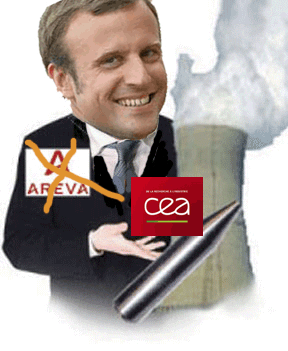
With 40 percent of France’s nuclear power plants offline, there could hardly be a more awkward time to promote the country’s know-how
Macron to promote nuclear energy in U.S., as industry faces crisis in France, By Rick Noack, November 29, 2022, PARIS — As French President Emmanuel Macron makes the rounds in Washington starting Wednesday for the first state visit of the Biden administration, high on his agenda are his plans for a nuclear energy “renaissance.” His entourage includes the major players from France’s nuclear energy industry, who will be looking to the French leader to help boost the development and export of their technology, including smaller and more versatile reactors.
But there could hardly be a more awkward time to promote French nuclear know-how.
While Macron was preparing to head to Washington, France was relying on planes traveling in the opposite direction to prevent its nuclear-reliant power grid from collapsing. U.S. and Canadian contractors have been flown in to help after safety concerns forced the closure of half of the country’s nuclear power plants. Last week, 23 out of 56 were still offline, due to concerns over corrosion cracks and an accumulation of pandemic-related inspection delays.
………….. instead of bolstering its position as an energy exporter, France has had to import electricity from Germany — the country hit hardest by the shift away from Russia. And Britain, which normally depends on France for energy to get through winter, is talking about having to encourage people to keep their ovens and dishwashers off to avoid blackouts.
Other French neighbors, including Belgium, Switzerland and parts of Italy, may be under even more pressure as a result of the French reactor problems, said Clement Bouilloux, country manager for France at energy consultancy EnAppSys.
“Everyone was relying on the French nuclear power plants,” he said.
The situation has tarnished France’s reputation as a nuclear power leader and may have contributed to the country missing out on key contracts. Only weeks ago, France’s state-owned energy company EDF lost the first part of a $40 billion contract for Poland’s first nuclear power plant to U.S. company Westinghouse………………………………………………………..
Macron has acknowledged that the French industry has “fallen behind,” but he has defended its ability to recover, striking deals on nuclear energy cooperation in recent months with countries including India and Britain.
Macron is scheduled to attend a nuclear energy session on Wednesday, alongside four French cabinet members and several executives from the country’s major nuclear energy firms and its public regulator, the Élysée Palace said last week.
A French official added Monday that one area where France anticipates possible mutual interests is the development of small modular reactors (SMRs)…………….. https://www.washingtonpost.com/world/2022/11/29/macron-us-state-visit-nuclear-france/
France’s EDF, Credit Agricole sign 1 bln euro nuclear loan

https://www.reuters.com/business/energy/frances-edf-credit-agricole-sign-1-bln-euro-nuclear-loan-2022-11-18/ LONDON, Nov 18 (Reuters) – EDF (EDF.PA) and Credit Agricole (CAGR.PA) said on Friday they had signed a 1 billion euro ($1.04 billion) loan to finance the maintenance of nuclear power plants in France.
The loan is part of EDF’s major refit programme to improve the security and extend the operating life of nuclear reactors beyond 40 years.
The deal is the first transaction in which the funds will be entirely dedicated to investments in EDF’s nuclear activities, Credit Agricole and EDF said in a statement.
As Europe Quits Russian Gas, Half of France’s Nuclear Plants Are Off-Line
France’s state-backed nuclear operator is scrambling to overcome a monthslong crisis to get as many reactors as possible restarted before winter sets in.
New York Times, By Liz Alderman. Reporting from Paris, Nov. 16, 2022
An army of engineers has fanned out through nuclear power plants across France in recent months, inspecting reactors for signs of wear and tear. Hundreds of expert welders have been recruited to repair problems found in cooling circuits. Stress tests are being conducted to check for safety problems.
As Europe braces for a winter without Russian gas, France is moving fast to repair a series of problems plaguing its atomic fleet. A record 26 of its 56 reactors are off-line for maintenance or repairs after the worrisome discovery of cracks and corrosion in some pipes used to cool reactor cores.
The crisis is upending the role that France has long played as Europe’s biggest producer of nuclear energy, raising questions about how much its nuclear power arsenal will be able to help bridge the continent’s looming crunch……………………………………………
France’s nuclear power crunch has become so acute that Mr. Macron is preparing to have the government take over the remaining 16 percent of EDF that it doesn’t already own, at a cost of nearly 10 billion euros ($10.3 billion).
The company, which is nearly €45 billion in debt, has tumbled further into financial difficulty and announced that its 2022 profit would drop by €29 billion because of the problems with its reactors, as well as a government effort to force EDF to provide artificially cheap electricity for households and businesses.
Even as EDF is rushing to comply with the demand for accelerated repairs, the company last week cut its 2022 nuclear power production forecast. The announcement caused the cost of French and European electricity to spike.
Herculean efforts to repair corrosion in pipes that cool the cores of four reactors were taking longer than expected, the company said. Those reactors now will not restart until January or February.
A strike late last month by French nuclear plant workers demanding higher wages to keep up with inflation was another blow. EDF said it was already behind in performing required maintenance on several aging reactors because of coronavirus lockdowns when the labor action put it further behind.
The company’s recent troubles began late last year, as it started moving through that backlog. The inspections unearthed alarming safety issues — especially corrosion and micro-cracks in systems that cool a reactor’s radioactive core — at an older-generation nuclear reactor in southwest France called Civaux 1. As EDF scoured its nuclear facilities, it found that 16 reactors, most of them newer-generation models, faced similar risks and closed them down.
EDF made to reactors designed by Westinghouse Electric that EDF had used in its older-generation plants. Bernard Doroszczuk, the head of France’s Nuclear Safety Authority, testified to French lawmakers this summer that the modifications, used for later-generation reactors, appeared to have caused abnormal corrosion and stress on critical cooling pipes.
The crisis has sent French nuclear power production to a 30-year low, generating less than half of the 61 gigawatts that the reactors can produce. (EDF also generates electricity with gas, coal and renewable technologies.) Even when more reactors are restarted in the coming months, French nuclear output will be around 45 gigawatts — lower than usual this winter, compounding the impact of Russia’s gas cutoff.
The situation “increases the risk of supply shortages for the coming winter, with availability standing at record-low levels for this time of the year,” Fabian Ronningen, a senior analyst at Rystad Energy, an independent consultancy, said in a note to clients.
The energy shortfall has turned France, once the continent’s biggest exporter of energy, into a net importer this year. A quarter of Europe’s electricity comes from nuclear power plants in about a dozen countries, with France producing more than half the total………………………………..
But even critical repairs must be monitored. EDF said a radioactive leak occurred this month during a hydraulic test on the main cooling circuit of the Civaux 1 nuclear power plant. EDF had spent months laboring to repair the corroded cooling pipes, using new technologies including ultrasound and welding robots that don’t have radiation exposure limits.
EDF said that there was no safety risk from that leak, and that no radioactivity was detected outside of it. But the episode is likely to delay the plant’s reopening beyond a planned Jan. 8 date, adding to the nuclear park’s woes. https://www.nytimes.com/2022/11/15/business/nuclear-power-france.html
Image
Image
Stress corrosion continues to trouble the French nuclear fleet
This week EDF updated its expectations for its nuclear fleet for this
winter, downgrading its output forecasts to 275-285 TWh, compared to the
previous estimate of 280-300 TWh.
The main driver of the downgraded
forecasts is a refusal by the French nuclear regulator, Autorité de
Sȗreté Nucléaire (“ASN”) to allow EDF to re-start number of reactors
with stress corrosion problems, in line with the planned schedule: Cattenom
1 (1.3 GW) will be offline for a further three and a half months until 26
February 2023; Chooz 1 (1.5 GW) will remain closed for about three months
until 29 January 2023; Penly 2 (1.33 GW) will be delayed by more than two
months until 29 January 2023; Cattenom 3 (1.3 GW) will be closed for a
further two and a half months until 26 February 2023. A couple of other
reactors are likely to have minor delays to their re-start schedules.
Watt Logic 10th Nov 2022
Cracks found in feedwater pumps at Finland’s OL3 nuclear plant

by Kerry Hebden, 9 Nov 22
CRACKS of a few centimetres have been identified in all four of the feedwater pumps of the Olkiluoto 3 EPR nuclear power plant in Finland, less than a year after the facility attained first criticality.
Owned and operated by TVO, the Olkiluoto plant consists of two boiling water reactors, each producing 890 MW of electricity, and a third EPR (Evolutionary Power Reactor), dubbed Unit 3 or OL3. The EPR is a “Generation III+” nuclear reactor, “that benefits from significant technological advances in nuclear and occupational safety”, said Framatome (formerly known as Avera NP), the plant’s main contractor.
Unit 3 started construction in 2005, however it only began generating electricity in March 2022 after construction was repeatedly delayed. It was expected to begin commercial operation in September, but after the unit’s boron pumps started unexpectedly during a routine shutdown in April, and following the discovery of material in the turbine’s steam reheater that had detached from the steam guide plates in May, the firm pushed back the start date to December.
Now though, the further damage that has been observed in the inner parts of the feedwater pumps of the OL3 turbine plant, could delay progress further.
The large feedwater pumps are used to pump water from the feedwater tank into the steam generators. TVO said the cracks detected in the impellers of the pumps have no impact on nuclear safety, but so far the cause of the damage, which is currently being investigated in several different laboratories, has yet to be determined. …………………………….
One of Finland’s two nuclear power plants, the other being the VVER Loviisa plant, the Olkiluoto facility has been plagued by issues for years. Built by Areva NP for a fixed price of €3bn (US$3bn), the firm estimated in 2012 that the full cost of building the OL3 reactor would amount to around €8.5bn due to the frequent setbacks encountered during its construction.
The delays led to a bitter dispute between Areva and TVO, with each seeking compensation from the other through the International Court of Arbitration – a scenario which resulted in Areva paying hundreds of millions of euros in compensation to TVO.
Meanwhile the facility’s other reactors have also experienced problems. In July, OL1 was also temporarily shut down due to damaged fuel elements, and in December 2020, the OL2 reactor automatically shut down when a valve failure caused hot water to reach filters in the reactor’s cleaning system. “The plant’s safety systems functioned as planned, and the disturbance did not pose a danger to people or the environment,” TVO said in a statement at the time.
TVO did have plans to build a fourth unit at the Olkiluoto facility, and in 2008 submitted an environmental impact assessment in preparation of applying for a construction license. However delays to OL3 has led the company to put its plans on hold. https://www.thechemicalengineer.com/news/cracks-found-in-feedwater-pumps-at-finland-s-ol3-nuclear-plant/
France electricity prices surge past €1,000/MWh as more nuclear reactors close for winter
Wholesale electricity prices in France for the middle of winter surged
above €1,000/MWh ($A1,540/MWh) after the operator of the world’s biggest
nuclear fleet revealed more problems, and more outages at its reactors.
The surge in prices for January delivery came after the utility EdF reduced its
forecast output for the fourth time this year, on this occasion due to
extended outages at four reactors and maintenance delays at others caused
by the waves of strikes that have affected the nation this autumn. It also
dramatically reversed weeks of falling spot and futures prices as gas
stocks improved and the weather remained wild.
But as analysts noted in the height of summer, nuclear problems pose just as big a threat to the EU grid
as the gas problems.
Renew Economy 8th Nov 2022
Incident at France’s Civaux nuclear reactor adds to EDFs problems of stress corrosion crackingin nuclear plants
Stress corrosion cracking: Assessing and remedying cracking problem in
nuclear plants. The full extent of stress corrosion cracking at EDF’s
reactors in France has still to be determined. Nonetheless, lower
production as plants are re-examined has come at the worst possible time
for the company.
Electricite de France SA is investigating an incident
during a test at a halted nuclear reactor last week, just as a series of
repairs jeopardize the country’s power-supply security for the coming
winter. The utility had to stop a high-pressure hydraulic test of the
primary circuit of its Civaux 1 reactor on Nov. 2 when steam was released
in a room of the reactor building. The reactor wasn’t loaded with nuclear
fuel, no one was hurt nor contaminated, and no radioactivity has been
detected outside the building, according to EDF.
The impact of the incident, which is unrelated to so-called stress-corrosion cracks that have
undermined the French nuclear giant’s reactor availability, still needs to
be assessed, Regis Clement, EDF’s deputy-head for nuclear production, said
at a news conference in Paris Tuesday.
The corrosion cracks hobbling EDF
reactors this year have put a hole in its finances and made France —
typically an exporter of power to its neighbors — a net importer. That,
combined with Russia’s dwindling gas deliveries, has contributed to a spike
in energy prices across Europe and stoked concerns of shortages in case of
a windless cold snap this winter.
Bloomberg 8th Nov 2022
EDF nuclear problems increase risk of winter energy shortages
EDF nuclear problems increase risk of winter energy shortages. French
energy prices surge as EDF scales back electricity output predictions
again. The risk of energy shortages in Britain and across the Channel this
winter is growing as French state energy giant EDF faces fresh problems
with its nuclear power stations.
French power prices for January have
surged above €1,000 (£870) per megawatt hour after EDF scaled back
predictions for its nuclear electricity output for the fourth time this
year. Markets were also rattled further on Tuesday as the company warned it
was “too early to say” whether the Civaux 1 reactor would return to
service on schedule following a radiation leak.
Experts said the
developments risked further squeezing the amount of power available in
January and February, the coldest months of the year when demand is usually
highest. That could spell trouble for France and Britain, which hope to
rely on each other for electricity supplies this winter.
Telegraph 8th Nov 2022
EDF Nuclear Reactor Has Test Incident, Deepening Supply Concerns
EDF Nuclear Reactor Has Test Incident, Deepening Supply Concerns, https://www.bloomberg.com/news/articles/2022-11-08/edf-nuclear-reactor-has-test-incident-deepening-supply-concerns#xj4y7vzkg By Francois De Beaupuy, November 9, 2022,
Electricite de France SA is investigating an incident during a test at a halted nuclear reactor last week, just as a series of repairs jeopardize the country’s power-supply security for the coming winter.
The utility had to stop a high-pressure hydraulic test of the primary circuit of its Civaux 1 reactor on Nov. 2 when steam was released in a room of the reactor building. The reactor wasn’t loaded with nuclear fuel, no one was hurt nor contaminated, and no radioactivity has been detected outside the building, according to EDF.
The impact of the incident, which is unrelated to so-called stress-corrosion cracks that have undermined the French nuclear giant’s reactor availability, still needs to be assessed, Regis Clement, EDF’s deputy-head for nuclear production, said at a news conference in Paris Tuesday.
The corrosion cracks hobbling EDF reactors this year have put a hole in its finances and made France — typically an exporter of power to its neighbors — a net importer. That, combined with Russia’s dwindling gas deliveries, has contributed to a spike in energy prices across Europe and stoked concerns of shortages in case of a windless cold snap this winter.
The French nuclear giant so far is keeping the Jan. 8 restart date for Civaux 1 unchanged. It aims to have about 42 of its 56 reactors online in December as repairs at a dozen sites affected by cracks progress, up from 30 on Tuesday morning, Clement said. That number is due to rise to 46 in January.
At Civaux, where heavy repairs of corrosion cracks have been completed, an inner insulation tube of a pipe used to introduce sensors in the reactor vessel was ejected in a room beneath the reactor during the pressure test, Clement said. That’s because equipment installed specifically for the test phase broke, he said.
EDF will send a robot in coming days to put the long radioactive tube in a container, he said. Employees will then be able to access the room, close a valve, and assess damage caused by water that’s still flowing into the room and into a special drain, Clement added.
“It’s way too early to say” how that will affect the restart of the reactor, he said.
France’s Nuclear Power Problems Are Mounting
Oil Price, By ZeroHedge – Nov 07, 2022,
France’s nuclear troubles are mounting due primarily to routine maintenance of the country’s 56 aging reactors. A new update from French electric utility company Electricite de France SA, commonly known as EDF, said an outlook for nuclear power generation was slashed ahead of winter, causing chaos in energy markets.
EDF is the world’s largest owner of nuclear plants. It reported Friday that its fleet of nuclear reactors is expected to produce between 275 and 285 terawatt-hours of energy this year, down from the range of 280 and 300 terawatt-hours.
The reduced outlook comes amid a series of strikes at nuclear plants across the country that delayed planned maintenance work. Nuclear power generation has been sliding all year due to technical issues, and about half of the country’s 56 reactors are shuttered.
“The situation changed drastically this year, when France swung from being one of Europe’s largest exporters of electricity to a net importer because of issues with its reactors. The outages worried officials that France and the broader region might run short of electricity in the winter, when power demand in Europe peaks,” Bloomberg said. …………………………………………………………………………………https://oilprice.com/Latest-Energy-News/World-News/Frances-Nuclear-Power-Problems-Are-Mounting.html
France’s Macron and UK’s Sunak agree on nuclear energy cooperation
https://www.reuters.com/business/energy/frances-macron-uks-sunak-agree-nuclear-energy-cooperation-2022-11-07/ PARIS, Nov 7 (Reuters) – French President Emmanuel Macron and Britain’s Prime Minister Rishi Sunak on Monday pledged “ambitious cooperation” in the field of nuclear energy to cope with the impact on energy supplies of Russia’s invasion of Ukraine.
Reporting by Michel Rose; Writing by Benoit Van Overstraeten; Editing by Andrew Heavens
The two leaders met on the sidelines of climate talks in Egypt, their first meeting since Sunak became prime minister.
The French presidential palace also said Macron and Sunak wanted better coordination on migration.
As France’s aging nuclear reactors fail, France may block electricity exports to UK
France may block energy exports to UK as Macron’s ‘ancient’ nuclear
plants rust up. Power giant EDF will slash output following delays in vital
repairs to its fleet of nuclear reactors. The French may block electricity
exports to the UK this winter as a result, causing a fresh energy supply
crunch on these shores. It’s a frightening prospect as winter looms.
Express 5th Nov 2022
France, depending on nuclear power, now imports more electricity than it exports

Nuclear power provides 70pc of French electricity. The failure to replace
ageing infrastructure has left more than half of the 56 reactors out of
service as the worst winter in living memory approaches.
EDF, whichnoperates the plants, has been nationalised and, for the first time in
decades, France is importing more energy than it exports, only narrowly
avoiding blackouts so far. For the foreseeable future, the country has not
only been overtaken by Sweden as Europe’s leading electricity exporter,
but has lost its vaunted reputation for energy security.
Telegraph 6th Nov 2022
https://www.telegraph.co.uk/business/2022/11/06/how-france-became-trapped-spiral-chaos-decline/
Crushing blow to French President Macron as EDF braces for £28billion hit over nuclear shortfall
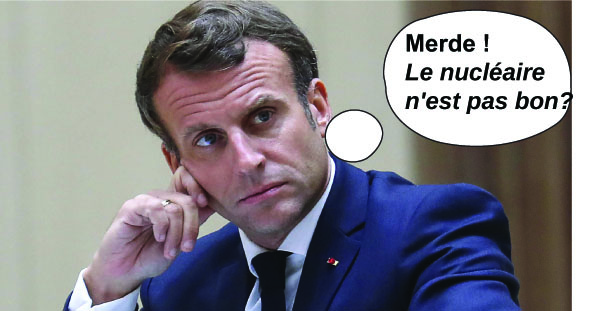
Macron dealt crushing blow as EDF braces for £28billion hit over nuclear
shortfall. Boris Johnson last month announced plans to invest £700million
into EDF’s Sizewell C project, in one of his final acts as Prime Minister.
Express 27th Oct 2022
https://www.express.co.uk/news/world/1688454/emmanuel-macron-news-edf-nuclear-power-fr
1 This Month

of the week – Shut Down Drone Warfare!


Tell the Ukrainian Government to Drop Prosecution of Peace Activist Yurii Sheliazhenko

Petition to revoke the licensing of the Near Surface Nuclear Disposal Facility (NSDF) at Chalk River. https://www.ourcommons.ca/petitions/en/Petition/Details?Petition=e-7247
To see nuclear-related stories in greater depth and intensity – go to https://nuclearinformation.wordpress.com
-
Archives
- March 2026 (251)
- February 2026 (268)
- January 2026 (308)
- December 2025 (358)
- November 2025 (359)
- October 2025 (376)
- September 2025 (257)
- August 2025 (319)
- July 2025 (230)
- June 2025 (348)
- May 2025 (261)
- April 2025 (305)
-
Categories
- 1
- 1 NUCLEAR ISSUES
- business and costs
- climate change
- culture and arts
- ENERGY
- environment
- health
- history
- indigenous issues
- Legal
- marketing of nuclear
- media
- opposition to nuclear
- PERSONAL STORIES
- politics
- politics international
- Religion and ethics
- safety
- secrets,lies and civil liberties
- spinbuster
- technology
- Uranium
- wastes
- weapons and war
- Women
- 2 WORLD
- ACTION
- AFRICA
- Atrocities
- AUSTRALIA
- Christina's notes
- Christina's themes
- culture and arts
- Events
- Fuk 2022
- Fuk 2023
- Fukushima 2017
- Fukushima 2018
- fukushima 2019
- Fukushima 2020
- Fukushima 2021
- general
- global warming
- Humour (God we need it)
- Nuclear
- RARE EARTHS
- Reference
- resources – print
- Resources -audiovicual
- Weekly Newsletter
- World
- World Nuclear
- YouTube
-
RSS
Entries RSS
Comments RSS
 nuclear-news