Amid maintenance delays and strikes in nuclear industry, France restarts one reactor
France’s EDF has restarted the 1.5-GW Civaux-2 reactor while delaying both
planned maintenance and returns elsewhere amid ongoing worker strikes,
transparency data showed April 24.
EDF further delayed planned return dates
for Gravelines 1 and Blayais 1, where strikes have been ongoing for over
five weeks. The start of maintenance at Cruas 4 was also delayed further,
with annual refueling pushed back another fortnight to May 6. Initial
planning set an April 20 return date for the reactor, now scheduled to
remain offline until June 16.
Civaux-2 has been awaiting a restart, having
been delayed by strikes after a failed attempt in early March. The reactor
has been offline since late 2021 for stress corrosion repairs that were
completed in February.
SP Global 24th April 2023
With visit of Algerian President France must face up to its nuclear fallout
Next month the Algerian president, Abdelmadjid Tebboune, is set to visit
Emmanuel Macron in Paris. The two countries have a difficult past, with war
giving way to hostility, giving way to a very curious form of
interdependence. The agenda for the visit looks crowded, with irregular
migration through Algeria dominating the list of the Elysee’s priorities.
However, unlike previous meetings between the two leaders, Tebboune arrives
in France on the crest of a diplomatic wave fuelled by Algeria’s
hydrocarbon reserves at a time when European supplies are at a premium.
Moreover, he arrives with a long list of Algeria’s own grievances, not
least the tonnes of radioactive waste France has buried in the Sahara and
for which it still won’t provide details.
New European 22nd April 2023
https://www.theneweuropean.co.uk/france-faces-up-to-its-nuclear-fallout/
France’s struggle to deliver a second nuclear era
An ambitious reactornconstruction programme aimed at reducing carbon emissions is running into the realities of skilled worker shortages.
For 10 years, Gaetan Geoffray
worked as a plasterer and painter, before learning metalwork at a company
that made cranes. Arnaud Dupuy was a policeman. A third colleague at their
factory in the depths of rural Burgundy used to be a baker.
The factory is owned by Framatome, a subsidiary of state-controlled power utility EDF, and the trio are hoping to qualify for one of the most sought-after jobs in
France, as nuclear-grade welders. If all goes well, they’ll one day be
allowed to work on the most intricate features of the steel parts assembled
in the plant, where the all-important 24-metre-long casings protecting the
core of atomic reactors are made.
For now, that goal is at least three to
four years off, so exacting are the demands in a field in which imperfect
finishes can delay a project by months and cost millions, if not billions,
of dollars. For France, the next intake of hires and welding apprentices
can’t come a day too soon.
After years of political dithering over whether
or not to cut its reliance on nuclear power, a hesitation echoed globally
after the 2011 Fukushima nuclear accident in Japan, the country has gone
all-in with Europe’s most ambitious atomic construction project in decades.
In order to stand a chance of turning this vision into reality, the
government estimates it needs to find another 100,000 nuclear specialists
of all guises, from engineers and project supervisors to boilermakers and
electricians, over the coming six years.
Looming large, beyond hurdles with
design approvals and financing for the €52bn programme, is an even more
basic question — whether France, Europe’s main atomic nation, still has
the industrial capacity and people to make the projects happen on a scale
it has not contemplated since the 1970s.
FT 23rd April 2023
https://www.ft.com/content/d23b14ae-2c4e-458c-af8a-22692119f786
French-Russian nuclear relations turn radioactive
Ukraine and several EU countries want France to cut commercial ties with Russia’s atomic sector.
Politico, BY VICTOR JACK, APRIL 20, 2023
BRUSSELS — Pressure is building on France to fully cut ties with Russia’s atomic sector as the EU mulls its latest sanctions package against Moscow.
The European Commission is set to meet with diplomats from the EU’s 27 member countries on Friday to start discussions on the bloc’s 11th round of Russia sanctions. Hitting Moscow’s state-run nuclear company Rosatom — a divisive issue for some EU countries reliant on Russia for nuclear fuel — is likely come under the spotlight once again.
That means increased scrutiny of France’s ties to Rosatom, the Moscow-based atomic firm…………………………..
“I am sure” that Paris has a moral duty to encourage its state-backed companies to cut ties with Rosatom, Ukraine’s Energy Minister German Galushchenko told POLITICO last month, adding that Kyiv wants all EU countries with links to Russian’s nuclear industry to cut them.
“All of our public scrutiny has been on Germany and not so much on France,” for ties with Russia, said a diplomat from one EU country, who spoke on condition of anonymity, “whereas I think if you look closely … they haven’t been the best kid in the class either.”…………………………………………..
Paris and Moscow’s nuclear ties, which date back to the Cold War, are most apparent in the links between Rosatom and state-controlled EDF, France’s largest utility that runs the country’s nuclear fleet. It signed a strategic cooperation agreement with Rosatom on green hydrogen in 2021, as well as a joint declaration to develop research cooperation.
The Rosatom spokesperson called it “a win-win partnership” that is “a driver of development both in the field of nuclear energy and scientific projects.”……………………….
When Rosatom builds a nuclear plant abroad, it often relies on technology from French companies — typically spending up to €1 billion per project, Faudon said. Those orders usually include command and control systems from Framatome, which is majority-owned by EDF.

Framatome has an ongoing role in Russian nuclear construction projects around the world, including at Paks. The company aims to set up a joint venture with Rosatom to produce nuclear fuel in western Germany, a project that has been sharply criticized by local authorities.
The French firm also signed a strategic cooperation agreement with Rosatom in December 2021 to expand collaboration on fuel fabrication and other technologies.
Framatome didn’t comment on its ongoing contracts but with reference to the 2021 agreement, a company spokesperson said: “Everything has been postponed until further notice,” adding that Framatome will “re-examine the agreement if and when that is appropriate.”
EDF declined to comment…………………………..
And while France isn’t dependent on Russia for its nuclear fuel and security of supply, it bought enriched uranium worth €359 million from Moscow last year, more than three times the amount it bought in 2021.
It’s not the only such sale to the West. The U.S. bought $830 million of enriched uranium from Russia last year. Moscow also supplies fuel to reactors in Bulgaria, the Czech Republic, Finland, Slovakia and Hungary…………………
In February, the European Parliament overwhelmingly passed a resolution calling on Rosatom to face sanctions. ……………………………….
https://www.politico.eu/article/french-russian-nuclear-relations-radioactive-rosatom-sanctions/
French Winter Power Twice as Pricey as Germany’s on Nuclear Woes

Bloomberg By Todd Gillespie, April 19, 2023
France’s weakened nuclear power output means the cost of its electricity for next winter is more than twice as expensive as Germany’s, as concerns over the health of the country’s reactors persist.
The “massive” gap of nearly €250 ($273) per megawatt-hour between French and German prices is because traders are pricing in more risk as they await updates on Electricite de France SA’s struggles with its aging atomic fleet, according to analysts at Engie SA’s EnergyScan. “No participants want to risk being short next winter,” they wrote.
French power for the first quarter of 2024 is trading at €416 per megawatt-hour, more than double Germany’s rate of €169. Normally a power exporter, France’s atomic generation has been gradually returning to service but still remains below historical averages.
The price discrepancy is a sign of France’s lingering energy woes even as its European neighbors benefit from a prolonged drop in prices. EDF’s nuclear reactors have faced recurring corrosion issues as the government takes greater hold over the state-backed utility………………… https://www.bloomberg.com/news/articles/2023-04-19/french-winter-power-twice-as-pricey-as-germany-s-on-nuclear-woes?leadSource=uverify%20wall—
Nuclear Troubles Send French Winter Power Prices Soaring
By Michael Kern – Apr 19, 2023 https://oilprice.com/Latest-Energy-News/World-News/Nuclear-Troubles-Send-French-Winter-Power-Prices-Soaring.html
France’s power prices for early 2024 are double the German prices for next winter as the huge French nuclear fleet continues to show signs of weak output and availability.
The French power price for the first quarter of 2024 was at $455 (416 euros) per megawatt-hour (MWh) on Wednesday. That’s more than double the price for the same period in Germany, where the power price was at $185 (169 euros) per MWh for early 2024, according to data compiled by Bloomberg.
France has had troubles at many of its nuclear reactors, half of which have been shut down for repairs and maintenance at several times over the past year.
Germany, meanwhile, took its last three nuclear power plants offline on Saturday, ending more than six decades of commercial nuclear energy use, Germany ended the nuclear power era despite continued concerns about energy security and energy supply after the Russian invasion of Ukraine and the end of pipeline natural gas deliveries from Russia, which was the largest gas supplier to Europe’s biggest economy before the war.
In France, concerns about the operations at France’s large nuclear power fleet resurfaced last month after the French nuclear safety authority, ASN, told energy giant and large nuclear reactor operator EDF to review its program of reactor checks, following the finding of another crack at a nuclear power plant.
This led to an 8% one-day surge in French power prices for next year, the biggest jump since the end of January.
For much of last year, France’s nuclear power generation was well below capacity, as more than half of the country’s reactors were offline at one point in the autumn due to repairs or maintenance.
At the moment, French nuclear power plants are producing 17.5% less than the average output rate for 2020 and 2021. That’s down from 23% last year, so there is some progress, but concerns remain.
France’s radioactive waste management agency Andra wants to increase storage capacity at Cires waste dump
French radioactive waste management agency Andra has applied to the
department of Aube in north-eastern France for environmental permission to
increase the current authorised storage capacity of Cires, the country’s
dedicated disposal facility for very-low-level radioactive waste (VLLW).
World Nuclear News 12th April 2023
https://www.world-nuclear-news.org/Articles/Application-to-raise-capacity-of-French-very-low-l
16% of France’s power supply blocked amid protest – as nuclear reactor maintenance disrupted
16% of France’s power supply blocked amid protest – as nuclear reactor
maintenance disrupted. Around 16% of the country’s total power production
was disrupted, according to data from grid operator RTE, as thousands
continue to protest against President Macron’s pension reforms.
Sky News 11th April 2023
Macron sparks outrage, infuriates China hawks over Taiwan comments
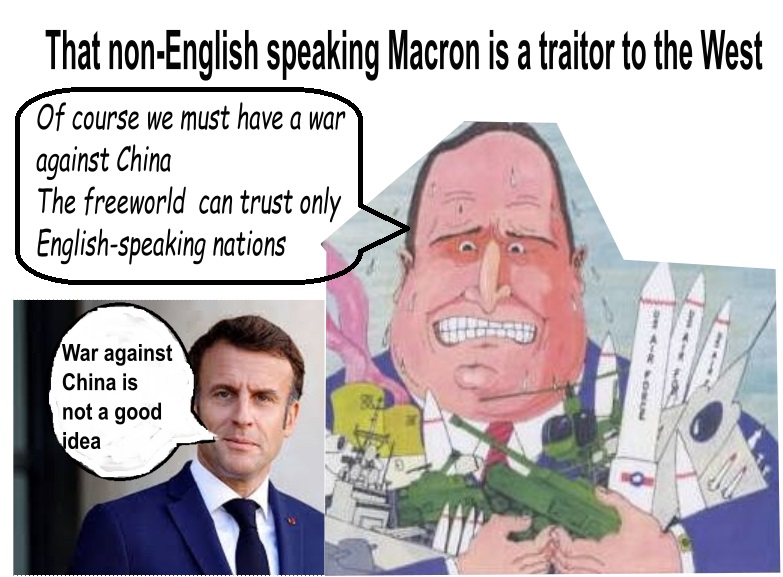
German foreign policy scholar and China-watcher Ulrich Speck said Macron’s comments vindicated Australia’s decision to tear up its contract for French-made submarines in favour of the AUKUS pact.
Malcolm Davis from the Australian Strategic Policy Institute described Macron’s comments as “ill-conceived at best, and poorly timed” given the situation in Ukraine, and the need for Europe and the US to work together to support Kyiv
The Age, By Latika Bourke, April 10, 2023
London: French President Emmanuel Macron has sparked outrage after saying Europe should reduce its dependency on the United States and avoid getting involved in any conflict between Washington and Beijing over Taiwan.
Macron made the comments in an interview with Politico on-board COTAM Unité, France’s Air Force One, while travelling home to Paris after a three-day state visit to Beijing where he struck a range of business deals for French companies…………………
Macron said he wanted Europe to adopt “strategic autonomy” from the United States, a concept which is backed by Beijing.
He warned against Europe becoming “America’s followers”.
“If the tensions between the two superpowers heat up … we won’t have the time nor the resources to finance our strategic autonomy and we will become vassals,” Macron told the travelling journalists.
“The paradox would be that, overcome with panic, we believe we are just America’s followers.
“The question Europeans need to answer … is it in our interest to accelerate [a crisis] on Taiwan? No. The worse thing would be to think that we Europeans must become followers on this topic and take our cue from the US agenda and a Chinese overreaction.
“Europeans cannot resolve the crisis in Ukraine; how can we credibly say on Taiwan, ‘Watch out, if you do something wrong we will be there’? If you really want to increase tensions that’s the way to do it,” he said.
France has long held out an ambivalence for US power and influence over Europe. France, for example, forced the withdrawal of NATO headquarters from Paris in 1967 over fears of US political sway over the continent. Macron has also supported the creation of a European army that could function in place of NATO…………………………………………………
Macron’s comments sparked widespread dismay and anger across Europe and in the United States, where Republican senator Marco Rubio urged European countries to clarify “pretty quickly” if Macron spoke for Europe or France alone.
“We need to ask Europe does he speak for them, because we’re pretty heavily involved in Ukraine right now, we’re spending a lot of our taxpayer money on a European war,” he said in a video statement.
“if our allies’ position, if in fact Macron speaks for all of Europe, and their position now is they’re not going to pick sides between the US and China over Taiwan, maybe we shouldn’t be picking sides either?
“Maybe we should say we’re going to be focusing on Taiwan and the threats that China poses and you guys handle Ukraine on your own?”
German foreign policy scholar and China-watcher Ulrich Speck said Macron’s comments vindicated Australia’s decision to tear up its contract for French-made submarines in favour of the AUKUS pact.
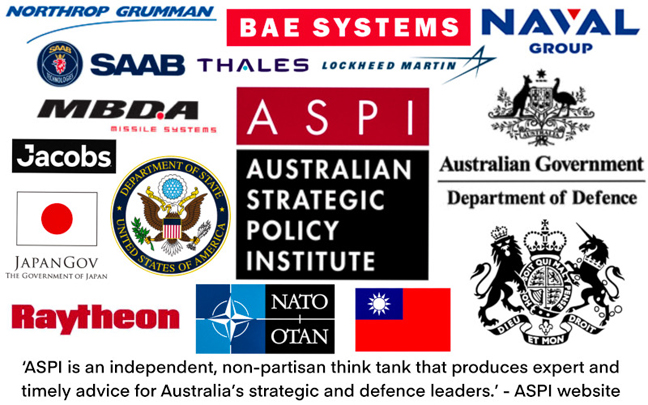
Malcolm Davis from the Australian Strategic Policy Institute described Macron’s comments as “ill-conceived at best, and poorly timed” given the situation in Ukraine, and the need for Europe and the US to work together to support Kyiv………………………………………… more https://www.theage.com.au/world/europe/after-visit-with-xi-macron-warns-europe-on-support-for-taiwan-infuriating-china-hawks-20230410-p5cz6t.html
France’s riverside reactor build plans “irresponsible” – expert.

MURIEL BOSELLI, Paris, 07 Apr 2023, https://www.montelnews.com/news/1477431/edfs-riverside-reactor-build-plans-irresponsible–expert
(Montel) France’s plan to build two riverside reactors is “irresponsible”, given the acceleration of global warming-related water strain, nuclear expert and critic Yves Marignac told Montel.
Climate change has raised fears of extreme temperatures and droughts that will cause more outages at EDF’s 44 nuclear reactors – out of 56 – that are located along rivers and use water for cooling.
The average summer flow of the Rhone, on which 22% of France’s nuclear capacity is installed, could fall by 20% within 30 years, according to a recent study by the Rhone-Mediterranean-Corsica Water Agency.
However, EDF plans to build two additional reactors along the Rhone.
“We can always adapt the reactors to cool themselves by reducing their water withdrawal, as some reactors do in the desert,” said Marignac, but added that these costly developments “remove the interest of placing installations along rivers”.
Higher water use
He said he also feared a “considerable increase” in competition between water-intensive sectors such as agriculture, industry, energy and tourism.
EDF plans to build three pairs of European pressurised reactors (EPRs) by 2042-43 – one at Penly, a second at Gravelines (both on the coast), and a third at Bugey or Tricastin, on the Rhone.
The decision would be made by the end of the year, Joel Barre, inter-ministerial delegate for new nuclear power plants, told Montel.
Last week, president Emmanuel Macron announced a vast investment plan to adapt nuclear power plants to climate change, notably by equipping riverside units with air-cooling towers to make them less dependent on the temperature of waterways.
Although this system allows reactors to continue producing power during hot periods, it consumes much more water as a significant part of the volume withdrawn evaporates through the towers during cooling.
French energy minister Agnes Pannier-Runacher said earlier this week that scenarios established by the international group of climate experts Giec had shown “very limited losses [of production]”.
“Critical” risk
However, a recent report by France’s auditors’ court warned the impact of global warming on the French nuclear fleet could become “critical” by 2050, with three to four times more unavailability than today.
Last summer, France’s nuclear safety authority ASN authorised EDF to exceed temperature limits for some riverside plants to enable units to continue producing power during the drought.
Thibault Laconde, founder of climate risk assessment start-up Callendar, said EDF’s Tricastin site in southeastern France was a better choice than Bugey for cooling because it was near a section of the Rhone that had cool water inflow from the Isere river.
Melting ice caps
Building reactors by the sea also raised questions, experts said, because of uncertainties about the rising sea levels during the EPRs’ lifespan, which EDF has set at a minimum of 60 years.
The auditors’ court has called on EDF to anticipate “the low probability” of an acceleration in ice cap melting, which would lead to a rise in the average sea level of nearly 2 metres by 2100 and 5m by 2150.
However, EDF has only incorporated a sea level rise of around 1.2m into the design of its EPR reactors, said Barre.
EDF did not respond to Montel’s requests to comment.
France’s nuclear company planning to extend the life of its creaky old reactors.
Electricite de France SA is reviving studies to boost the longer-term
output of some nuclear reactors as part of a plan to extend the life of its
atomic fleet to at least 60 years.
Europe’s energy crisis and rising power
prices have put such considerations back “on the company’s agenda for
2023,” according to Sylvie Richard, who’s in charge of the
state-controlled utility’s €33 billion ($35.6 billion) spending on
reactor maintenance and retrofit for the period from 2022 through 2028. The
upgrades could boost the output of some EDF reactors by 4% to 5%. If that
proves financially viable and gets approved by the nuclear safety
authority, some of the work would take place beyond 2028, Richard told
reporters at the Saint-Laurent nuclear power station in central France
Thursday.
The French nuclear giant has been tasked by President Emmanuel
Macron to extend the lifetime of its 56 reactors and to build at least six
new ones to help the country reduce its reliance on fossil fuels. However,
EDF has been grappling for more than a year with extended reactor repairs
and outages that have worsened Europe’s energy crunch, while triggering a
record loss at the company.
Bloomberg 3rd April 2023
https://www.bnnbloomberg.ca/edf-mulls-reactor-upgrades-to-boost-longer-term-nuclear-output-1.1903718
Climate change may pose key risk to French reactors – said the country’s Court of Auditors

Each year, the volume of water withdrawn to cover the needs of the French population amounts to 33.5bcm, half of which is used to cool nuclear power plants.
Some 98% of this water is released back into rivers but at a higher temperature, which is regulated on a plant-by-plant basis.
MURIEL BOSELLI, Paris, 22 Mar 2023 https://www.montelnews.com/news/1466974/climate-change-may-pose-key-risk-to-french-reactors–court
The impact of global warming on France’s nuclear fleet could become “critical” by 2050, with three to four times more outages than today, said the country’s Court of Auditors in a report published late on Tuesday.
“These outages are concentrated, admittedly on short summer periods, but are increasingly long and can prove critical by increasing the risks of pressure on the grid,” said Annie Podeur, president of the second chamber of the court, during a hearing at the Senate.
These outages and capacity cuts led to “losses amounting to several TWh per year”, Podeur said, citing the record unavailability in 2003 of 6 GW of nuclear power, or 10% of France’s installed nuclear capacity.
Extreme heat
Increased risk of extreme heat and droughts amid climate change could impact nuclear plants, which use water to cool down.
Combined with this, the report pointed to the expected significant increase in power demand in the years to come, which would strain the grid.
Each year, the volume of water withdrawn to cover the needs of the French population amounts to 33.5bcm, half of which is used to cool nuclear power plants.
Some 98% of this water is released back into rivers but at a higher temperature, which is regulated on a plant-by-plant basis.
The reduced availability of water resources amid drought could exacerbate conflicts about usage with agriculture, tourism and other industries, said Podeur.
Predicting river flows
Climate models should be updated to include river flow levels for the coming years, recommended the report, adding that EDF needed greater storage capacity for water to cool reactors during periods of low flows.
Last summer, which was particularly hot and dry, France’s nuclear safety authority ASN authorised EDF to exceed temperature limits for certain plants to continue producing power.
This decision was taken after the utility stopped a record number of reactors for maintenance and corrosion probes.
The court urged EDF to quantify the total costs of adapting its fleet to deal with climate change.
The utility spent EUR 1bn on currently operational reactors from 2006-2021 and plans to invest only EUR 612m from 2023-2038, added Podeur.
EDF has estimated that outages related to heat and drought result in a loss of annual nuclear production of around 1%.
Fears that France’s nuclear safety system may now fail – from Nuclear Transparency Watch, 11 French and European NGOs and 23 members of European Parliament.
The nuclear watchdog organisation Nuclear Transparency Watch wrote an open
letter together with 11 French and European NGOs and 23 Members of the
European Parliament (see the lists below) to the French Ministry of Energy
Transition expressing their concerns about the survival of the quality of
the French nuclear safety system.
This open letter was sent in the context
of the French national debate at the National Assembly regarding a reform
of the French nuclear safety system foreseeing the dismantlement of the
Institute for Radioprotection and nuclear safety (IRSN), which is the
French independent nuclear technical support organisation.
On 15 March, this reform was rejected by the Assembly, in fact this reform was
considered unjustified, not being supported by any kind of safety impact
assessment and also dangerous in the perspective of a rapid development of
nuclear facilities.
As a European network, NTW sees this reform as a
potential threat to the nuclear safety culture in Europe with a risk of
downgrading the safety standards set by the well-recognised independent and
dual French nuclear safety system now in place.
Nuclear Transparency Watch 20th March 2023
Strikes hit French nuclear output, disrupt EDF maintenance plans
By Forrest Crellin, March 24, 2023 https://www.reuters.com/business/energy/strikes-hit-french-nuclear-output-disrupt-edf-maintenance-plans-2023-03-24/
PARIS, March 24 (Reuters) – Strikes in France are impacting maintenance plans at EDF’s (EDF.PA) nuclear plants, curbing production just as the utility hoped to rebound from a 34-year output low last year.
At least 14 nuclear reactors in EDF’s fleet of 56 have suffered some delay affecting their maintenance plans, data from the CGT union showed.
France is witnessing widespread industrial action sparked by planned government policy changes including a move to raise the retirement age by two years.
For EDF that has meant nuclear power output in 2023 even lower than last year when it had swathes of reactors offline for repairs and checks for stress corrosion cracks.
Those factors compounded a backlog in regular maintenance due to the COVID-19 pandemic.
On Friday the average hourly nuclear availability until the end of the year was down by around 4% to 44 gigawatts (GW) from 46 GW in January when the strikes began, ICIS analysis showed.
The impact is expected to be more acute in the summer, with availability to June dropping by around 9% to 39 GW from 43 GW, they added.
EDF declined to comment on the impact of the strikes on its maintenance plans.
If average availability drops by another 8 GW this year, EDF’s minimum production target of 300 terawatt-hours (TWh) will become challenging, Refinitiv analyst Nathalie Gerl said.
Refinitiv estimates EDF will achieve production of 296 TWh this year.
The current reduction in availability has so far equated to around a 1% cut to generation for the full year, or 3 to 4 TWh, ICIS data showed.
CGT spokeswoman Virginie Neumayer said EDF’s production targets were “ambitious or even very optimistic” noting they required a vast staff recruitment plan to deal with stress corrosion found in its reactors in late 2021.
“The disorganisation generated by schedule shifts is therefore complex to manage and will be felt over time,” she said.
French nuclear safety watchdog ASN requested EDF revise its maintenance program due to new cracks discovered this month in some reactors.
The French first-quarter 2024 baseload power contract, an indication of market confidence in power supply through the end of next winter, has risen more than 30% in the last two weeks after the latest cracks were discovered and the maintenance delays started.
France trying to “sell off its old nukes” to the Netherlands?
France looking to liberal Netherlands in push for nuclear revival
By Paul Messad | EURACTIV.fr | translated by Daniel Eck 22 Mar 23
Paris is looking towards “liberal” allies such as the Netherlands to revive its nuclear industry, French Green MP Julie Laernoes told EURACTIV, after the country’s National Assembly approved a bill seeking to build six new reactors.
Read the original French story here.
France’s National Assembly approved the bill, which scraps a 50% limit on the share of nuclear in France’s electricity mix, on Tuesday (21 March) with 402 votes in favour and 130 against.
While the bill still needs a second vote of approval to go through, the numbers suggest parliament will most likely rubberstamp the new law.
“We are moving forward on the third pillar of our energy transition,” Energy Minister Agnès Pannier-Runacher said after the vote, in reference to French efforts at reducing energy consumption and building more renewables.
Olivier Marleix, the president of the right-wing Les Républicains group in the National Assembly, which supported the bill, said the text represents a “long-awaited turnaround”.
Nuclear alliance
The approval of the bill comes at a time when France is trying to push the role that its low-carbon nuclear power mix can play in the EU’s energy transition.
France launched a “nuclear alliance” at the end of February, aiming to promote European cooperation along the entire nuclear supply chain and launch “common industrial projects” in new generation capacity as well as small modular reactors.
To broaden support, France is “looking for other partners in Europe” such as the Netherlands, said Laernoes, a French MP of dual French-Dutch nationality who sits with the opposition Green party.
Like other Green lawmakers in the National Assembly, Laernoes voted against the motion to revive nuclear power in France and opposes French-led moves to build more nuclear reactors across Europe………………………………………………
Net-Zero Industry Act
Last week, the European Commission presented its Net-Zero Industry Act, a legislative proposal that describes nuclear power as one of the key technologies needed to attain the EU’s carbon neutrality goal.
Although Paris welcomed the EU’s announcement, it also noted that France’s new generation of pressurised water reactors – known as EPRs – do not appear in a separate list of ‘Strategic Net-Zero technologies’ eligible to receive “particular support” from the EU
The status of nuclear power in the Net-Zero Industry Act will be debated in upcoming negotiations on the text in the European Parliament, said Christophe Grudler, a French MEP sitting with the centrist Renew group in Parliament which includes lawmakers from the French presidential majority.
However, for Laernoes, the French government is waving “an ideological mantra”, as for the time being, “we still don’t have the design of the EPR2s, nor have we validated the extension of existing plants”.
Although the lifetime extension of existing nuclear power plants to 60 years was approved by the text voted on Tuesday, the president of the French Nuclear Safety Authority indicated that a position should be taken by the end of 2026 at the earliest.
“The political text is very far from the industrial and financial reality,” said Laernoes. “France is simply trying to sell off its old nuclear power plants,” she told EURACTIV.
1 This Month

of the week – Shut Down Drone Warfare!


Tell the Ukrainian Government to Drop Prosecution of Peace Activist Yurii Sheliazhenko

Petition to revoke the licensing of the Near Surface Nuclear Disposal Facility (NSDF) at Chalk River. https://www.ourcommons.ca/petitions/en/Petition/Details?Petition=e-7247
To see nuclear-related stories in greater depth and intensity – go to https://nuclearinformation.wordpress.com
-
Archives
- March 2026 (244)
- February 2026 (268)
- January 2026 (308)
- December 2025 (358)
- November 2025 (359)
- October 2025 (376)
- September 2025 (257)
- August 2025 (319)
- July 2025 (230)
- June 2025 (348)
- May 2025 (261)
- April 2025 (305)
-
Categories
- 1
- 1 NUCLEAR ISSUES
- business and costs
- climate change
- culture and arts
- ENERGY
- environment
- health
- history
- indigenous issues
- Legal
- marketing of nuclear
- media
- opposition to nuclear
- PERSONAL STORIES
- politics
- politics international
- Religion and ethics
- safety
- secrets,lies and civil liberties
- spinbuster
- technology
- Uranium
- wastes
- weapons and war
- Women
- 2 WORLD
- ACTION
- AFRICA
- Atrocities
- AUSTRALIA
- Christina's notes
- Christina's themes
- culture and arts
- Events
- Fuk 2022
- Fuk 2023
- Fukushima 2017
- Fukushima 2018
- fukushima 2019
- Fukushima 2020
- Fukushima 2021
- general
- global warming
- Humour (God we need it)
- Nuclear
- RARE EARTHS
- Reference
- resources – print
- Resources -audiovicual
- Weekly Newsletter
- World
- World Nuclear
- YouTube
-
RSS
Entries RSS
Comments RSS
 nuclear-news