Finland detects small amount of radioactivity, sees no health impact

Armen Press 30th Jan 2026, original at https://armenpress.am/en/article/1240847
Small amounts of radioactive substances have been detected in air samples in Finland though there was no risk to public health, Reuters reported citing the country’s nuclear safety watchdog.
“The concentrations were very low and posed no risk to people or the environment,” the Radiation and Nuclear Safety Authority (STUK) said in a statement, according to Reuters.
According to the report, STUK said that the radioactive substances did not originate from Finnish nuclear power plants, though it did not offer an explanation for their detection.
“In many cases, the source of the radioactive substances cannot be identified,” the agency said.
Finland, Sweden, Russia and the wider region have a number of nuclear power reactors.
Further delay in Finnish repository licence review

WNN, 5 December 2025
Finland’s Ministry of Employment and the Economy has granted the country’s nuclear regulator a third extension to the deadline to complete its assessment of Posiva Oy’s operating licence application for the world’s first used nuclear fuel repository. The regulator’s statement is now expected by mid-2026.
Radioactive waste management company Posiva submitted its application, together with related information, to the Ministry of Economic Affairs and Employment on 30 December 2021 for an operating licence for the used fuel encapsulation plant and final disposal facility currently under construction at Olkiluoto. The repository is expected to begin operations in the mid-2020s. Posiva is applying for an operating licence for a period from March 2024 to the end of 2070.
The government will make the final decision on Posiva’s application, but a positive opinion by the Radiation and Nuclear Safety Authority (STUK) is required beforehand. The regulator began its review in May 2022 after concluding Posiva had provided sufficient material. The ministry had requested STUK’s opinion on the application by the end of 2023. However, in January last year, STUK requested the deadline for its opinion be extended until the end of 2024. In December, the ministry extended the deadline for the regulator’s opinion to 31 December 2025.
The ministry has now extended the deadline until the end of June 2026, “if it is possible to do so by then”. According to STUK, the new timetable is possible, but tight, for both the authority and the licence applicant.
Although STUK’s assessment of the application is in the final stages, the statement and safety assessment cannot be completed until it has assessed and approved all of Posiva’s operating licence application materials……………
At the repository, used fuel will be placed in the bedrock, at a depth of about 430 metres. The disposal system consists of a tightly sealed iron-copper canister, a bentonite buffer enclosing the canister, a tunnel backfilling material made of swellable clay, the seal structures of the tunnels and premises, and the enclosing rock
…………… The operation will last for about 100 years before the repository is closed.
….STUK said. “In particular, the demonstration of the performance of the clay material, which acts as one of the barriers to the spread of radioactive substances, is still under way. Posiva replaced the clay material in the original plans with another, and the effects of the new material on the long-term safety of the final disposal still need to be assessed.” https://www.world-nuclear-news.org/articles/further-delay-in-finnish-repository-licence-review#:~:text=Finland’s%20Ministry%20of%20Employment%20and,now%20expected%20by%20mid%2D2026
A multi-million dollar dispute rages over Olkiluoto 3 – Only lawyers will win
The Olkiluoto multi-million dollar dispute between TVO and Fingrid is
alive and well. However, an agreement in this matter would be in the
interest of electricity users. The dispute between Teollisuuden Voima (TVO)
and the transmission grid company Fingrid over the costs of the backup
system – system protection – built in case of a failure of the third
reactor at the Olkiluoto nuclear power plant and who will pay for it shows
no signs of abating – quite the opposite.
MSN 20th Nov 2025,
https://www.msn.com/fi-fi/talous/uutiset/olkiluoto-3-sta-riehuu-miljoonariita-vain-juristit-voittavat/ar-AA1QMSzq
Secrets of the deep, deep tunnels where nuclear waste is buried.
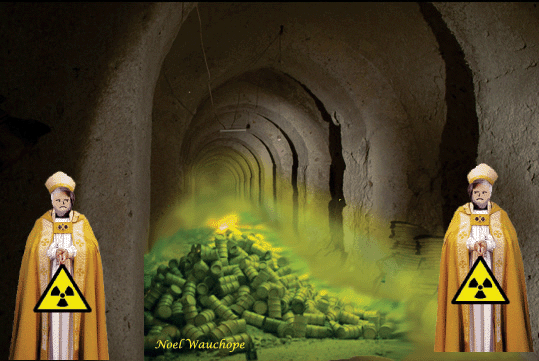
Almost half a kilometre underground, engineers in Finland are about to seal
radioactive material safely for ever. Britain wants to do the same. If all
goes to plan, spent nuclear fuel will be transported early next year down
dedicated lift shafts before robotic machines bury the 24-tonne copper and
iron canisters in the rock where they will remain for the rest of time.
This is the world’s first deep geological disposal facility for nuclear
fuel, a concept that has been discussed by engineers and politicians for
half a century. More than 20 other countries including the UK, US, France
and Sweden have plans to follow suit. But the Finns have got there first.
Fiona McEvoy, 50, the head of site characterisation and research and
development at the British government agency Nuclear Waste Services, is
here as part of a fact-finding mission to see how a similar feat could be
achieved in the UK. She says: “It’s a watershed moment for the nuclear
sector. Long-lived, dangerous waste will be locked away, safe for eternity.
That is amazing.”
Martin Walsh, 51, head of engineering at Nuclear Waste
Services, also on the visit, says: “Nobody disagrees that for the legacy
for nuclear waste in the UK, geological disposal is necessary.” The most
radioactive nuclear waste produced by Britain’s nuclear power stations will
remain hazardous, Walsh says, “beyond our lifetime, and beyond the
lifetime of our children and our children’s children”.
Burying it deep in
the earth is considered a “final disposal”, a solution that has been
calculated to enable the radioactive waste to remain undisturbed for a
nominal 500,000 years, surviving ice ages, tectonic shifts, earthquakes and
sea level rise.
The two private companies that run these facilities, TVO
and Fortum, jointly founded Posiva in 1995, developing this repository to
dispose of their waste. Every week, for the next 100 years, one canister of
spent nuclear fuel will be transported 433m down into the earth.
In the UK,
plans for a similar geological disposal scheme have experienced false
starts because no council has yet agreed to host a site. In June, the newly
elected Reform leadership of Lincolnshire county council pulled the plug on
long-running discussions to site a geological disposal site near the
coastal village of Theddlethorpe.
The most likely location for a site is
now off the Cumbrian coast, close to Sellafield. Nuclear Waste Services is
in discussions with Mid Copeland and South Copeland community partnerships
for a proposal for an access tunnel to be sunk onshore, and then run ten
miles out below the seabed, where 250 miles of disposal tunnels would be
dug, nearly ten times the size of the Finnish scheme.
Subject to local
approval and the go-ahead of whichever government is then in power,
construction is expected to start in the 2040s and start being filled in
the 2050s. It will be filled with waste for 150 years before it is sealed
in 2200.
The lifetime cost of the UK project is estimated at up to £53
billion, compared with about £5 billion for the Finnish scheme, which at
roughly a tenth of the size, serving a nation with a tenth of the
population, is roughly comparable. The speed at which progress has been
made, however, is not comparable. But Walsh defends the cautious pace the
British experts have taken. “The thought process, particularly around
nuclear, has to be robust. You have to make sure your relationship with
safety and security and the environment is sound.”
Times 28th Sept 2025,
https://www.thetimes.com/uk/environment/article/nuclear-power-waste-finland-bkq8sq0lj
Finland backs green hydrogen as Fortum pauses nuclear expansion
28 March 2025, Helsinki Times
Finnish utility Fortum has ruled out new investments in nuclear power in the near term, citing low electricity prices in the Nordic market and high construction costs. The announcement came as Finland inaugurated its first industrial-scale green hydrogen plant, marking a shift in focus toward alternative energy technologies.
Fortum concluded a two-year study into the feasibility of building new nuclear reactors and determined that such investments are not commercially viable under current market conditions.
New nuclear could provide new supply to the Nordics earliest in the second half of the 2030s, if market and regulatory conditions are right,” said Markus Rauramo, CEO of Fortum.
The company will instead focus on expanding renewable power generation, increasing storage capacity, and extending the life of existing nuclear facilities, including the Loviisa nuclear plant.
The company’s Vice President for New Nuclear, Laurent Leveugle, said a risk-sharing model would be required to make future nuclear investments possible.
“We are not saying that the state has to pay for it, but that the risk must be shared with the different parties: technology providers, investors, utilities, and also the state,” Leveugle told Reuters…………………….
While Fortum has paused new nuclear plans, Finland is pressing ahead with new green energy initiatives. On 26 March 2025, P2X Solutions inaugurated the country’s first industrial-scale green hydrogen production plant in Harjavalta. The event was attended by Alexander Stubb, President of the Republic of Finland.
“Finland has everything it takes to become a clean energy superpower,” Stubb said during his speech at the inauguration……………………………………………………………………………
As Fortum turns to renewables and lifetime extensions for existing nuclear facilities, and P2X accelerates hydrogen development, Finland’s energy policy is shifting toward flexible and decentralised solutions.
The Nordic power market has experienced prolonged periods of low electricity prices, driven by increased renewable capacity and lower demand growth. Fortum has warned that these conditions are not sufficient to support capital-intensive projects like nuclear reactors without regulatory reforms or direct financial support……………………………………………..
Finland’s approach to energy diversification comes amid broader European efforts to reduce reliance on fossil fuels and improve energy security. Green hydrogen and advanced storage systems are seen as essential components of this transition.
Fortum’s position reflects growing caution among European utilities over the costs and risks associated with new nuclear builds. The company has yet to release any cost estimates for new reactors, but industry analysts say capital requirements often exceed €10 billion per unit and construction timelines stretch over a decade.
By contrast, modular hydrogen projects like those developed by P2X Solutions involve lower upfront costs and shorter lead times. They also benefit from growing political and financial support across the EU…………………….https://www.helsinkitimes.fi/business/26416-finland-backs-green-hydrogen-as-fortum-pauses-nuclear-expansion.html
Finland’s Fortum says building new nuclear power is too expensive, for now

New nuclear power production capacity is not commercially viable to
build for now, based on the current Nordic power market outlook of low
prices. The company on Monday concluded a two-year study into the
feasibility of new nuclear power but said it would focus on renewable
energy and nuclear lifetime extensions to cover growing electricity demand
in the Nordics for now.
“New nuclear could provide new supply to the
Nordics earliest in the second half of the 2030s, if market and regulatory
conditions are right,” Fortum CEO Markus Rauramo told reporters. He said
Fortum would continue to explore new nuclear generation and pumped
hydropower as long-term options in Sweden and Finland. Fortum said building
new nuclear reactors would require a solid risk sharing framework similar
to the one being prepared by the Swedish government.
Reuters 24th March 2025,
https://www.reuters.com/business/energy/finlands-fortum-explores-long-term-options-new-nuclear-power-2025-03-24/
Militarize Ukraine ‘to the teeth’ – Finnish president
Comment: Is the Finnish President among those that do not really want a settlement in Ukraine any time soon?
Thu, 20 Mar 2025 https://www.sott.net/article/498616-Militarize-Ukraine-to-the-teeth-Finnish-president
Alexander Stubb has also called for stronger sanctions against Russia and the seizure of its frozen assets
Finnish President Alexander Stubb has called on Kiev’s Western backers to pump Ukraine with military resources and financial aid, claiming that this will deter Russia. He made the call shortly after meeting Vladimir Zelensky in Helsinki and as EU lawmakers negotiate doubling the bloc’s weapons budget.
EU foreign policy chief Kaja Kallas had pitched a plan to increase the bloc’s cashflow for Ukraine from €20 billion ($20.9 billion) in 2024 to €40 billion ($43.7 billion) this year. However she admitted to La Stampa that she was opposed by Italy, France, Spain, and Portugal. The Italian newspaper has reported that a €5 billion cap has been placed on the donation.
Stubb told Politico on Wednesday that “Deterrence – which is based on militarizing Ukraine to its teeth,” would be the best way to end the Ukraine conflict.
The Finnish president lamented the fact that Kallas failed to gather support for her plan, expressing hope that that heads of state and government would be able to salvage the package.
“It’s very important now to send a message from Europe that the military, political and economic support continues,” he said, emphasizing that sanctions against Russia should be bolstered, while its frozen assets should be seized to ramp up pressure.
Hungary has refused to sign a joint EU summit statement on Ukraine, according to TASS, which reported that both lethal and non-lethal aid had been rejected by Budapest.
The Finnish president also supported potential Ukrainian membership in the EU and in NATO. Finland, which only joined the US-led military bloc in 2023, has been a strong backer of Kiev since the escalation of the conflict with Russia in February 2022.
Moscow has consistently condemned NATO expansion towards its borders, describing the bloc as a threat to Russia’s national security. President Vladimir Putin and other officials have repeatedly stressed that efforts to include Ukraine in the military bloc had been one of the root causes of the escalation of the conflict in 2022.
Stubb’s comments come amid negotiations for a 30-day ceasefire aimed at halting long-range strikes on energy infrastructure by both sides advocated by US President Donald Trump. Another round of talks between Russian and US delegations is scheduled for March 24 in the Saudi city of Jeddah.
HS: Olkiluoto 3 has been a financial catastrophe for Areva, Siemens

Helsinki Times 19th Dec 2024 Finland , https://www.helsinkitimes.fi/finland/finland-news/domestic/25890-hs-olkiluoto-3-has-been-a-financial-catastrophe-for-areva-siemens.html
THE THIRD REACTOR of Olkiluoto Nuclear Power Plant has been a financial disaster for the two plant suppliers, France’s Areva and Germany’s Siemens, writes Helsingin Sanomat.
Helsinki guide
Teollisuuden Voima (TVO), the company operating the plant, communicated last week that the suppliers have pledged to inject an additional 80 million euros in capital into a fund set up to guarantee the completion of activities during the warranty period.
“The funds reserved for their completion in the fund mechanism were depleted in the autumn of 2024” the company wrote in a press release issued on 12 December.
The third plant unit has experienced numerous faults and disruptions since it was officially inaugurated in 2022. TVO ordered the plant from the suppliers under a turnkey agreement for a fixed price of roughly three billion euros more than 20 years ago. The groundbreaking ceremony was held in 2005, with the completion date set for 2009.
Ultimately, the unit was completed 14 years behind schedule, with the original budget comfortably exceeded. The unit began commercial electricity production in mid-2023.
Helsingin Sanomat on 12 December reminded that Areva estimated already in 2012 that the plant would ultimately cost around 8.5 billion euros. The endeavour eventually bankrupt the company, resulting in intense talks in 2016 as the French government decided to incorporate healthy parts of the company into the state-owned Électricité de France (EDF). The concern was that the plant supplier would not be left with the funds and expertise to complete the project.
Licensing of Finnish repository further delayed

WNN, Thursday, 5 December 2024
Finland’s Radiation and Nuclear Safety Authority has been given another one-year extension to complete its review of Posiva Oy’s operating licence application for the world’s first used nuclear fuel repository.
Radioactive waste management company Posiva submitted its application, together with related information, to the Ministry of Economic Affairs and Employment on 30 December 2021 for an operating licence for the used fuel encapsulation plant and final disposal facility currently under construction at Olkiluoto. The repository is expected to begin operations in the mid-2020s. Posiva is applying for an operating licence for a period from March 2024 to the end of 2070.
The government will make the final decision on Posiva’s application, but a positive opinion by the Radiation and Nuclear Safety Authority (STUK) is required beforehand. The regulator began its review in May 2022 after concluding Posiva had provided sufficient material. The ministry had requested STUK’s opinion on the application by the end of 2023. However, in January this year, STUK requested the deadline for its opinion be extended until the end of 2024.
STUK has now said Posiva “has not completed the materials necessary” for it to conduct a safety assessment concerning the plant’s operating licence. At STUK’s request, the ministry has agreed to extend the deadline for the regulator’s opinion to 31 December 2025.
……………………………………………………………… The government granted Posiva a construction licence for the project in November 2015 and construction work on the repository started in December 2016. Once it receives the operating licence, Posiva can start the final disposal of the used fuel generated from the operation of TVO’s Olkiluoto and Fortum’s Loviisa nuclear power plants. The operation will last for about 100 years before the repository is closed. Posiva announced in late August the start of a trial run – expected to take sev more https://www.world-nuclear-news.org/articles/licensing-of-finnish-repository-further-delayederal months – of the operation of the final disposal facility, albeit still without the used fuel.
Big batteries and EVs to the rescue again as faults with new nuclear plant cause chaos on Nordic grids
Giles Parkinson, Nov 19, 2024 https://reneweconomy.com.au/big-batteries-and-evs-to-the-rescue-again-as-faults-with-new-nuclear-plant-cause-chaos-on-nordic-grids/?fbclid=IwY2xjawGqC8xleHRuA2FlbQIxMQABHadLKvCjeIJudeDt86k27LkV53Q1FcfYmtcRSA_HGcWU1b1TmW7voTgIOA_aem_wwFpyxMordh4V_FbOJ3lfw
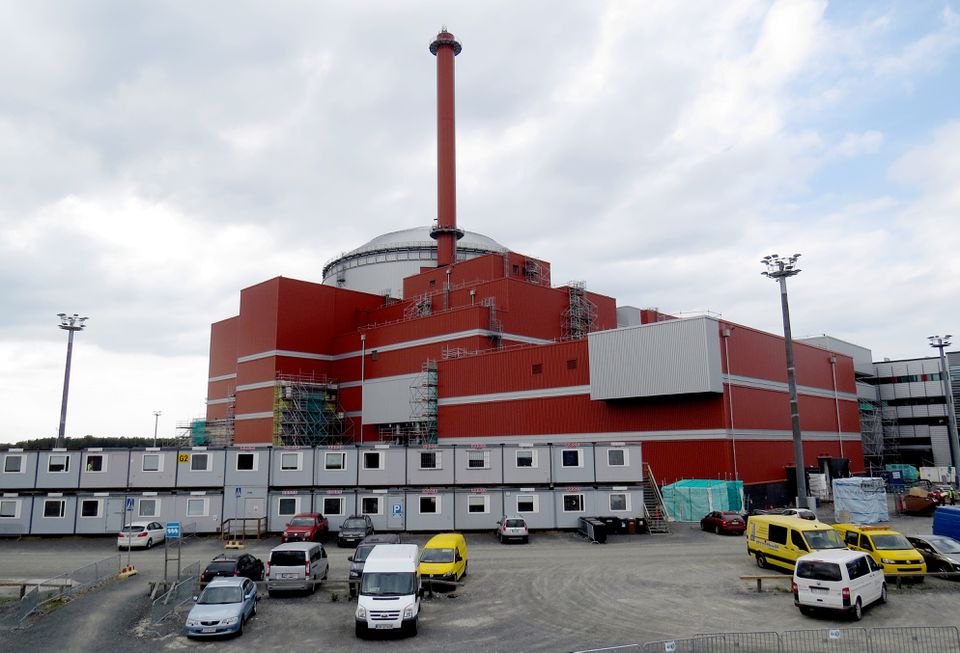
The newest and most powerful nuclear reactor in Europe that was delivered more than a decade late and nearly four times over budget is also proving to be a headache for grid operators now that it is finally up and running.
On Sunday, the 1,600 megawatt Olkiluoto 3 nuclear reactor tripped again, the latest in a series of faults and outages that have plagued the new facility and caused the market to reach out for back-up power to fill the gap.
Olkiluoto owner TVO says the reactor tripped on Sunday due to a turbine malfunction in the generator’s seal oil system. “The repair is taking longer than expected, and based on the current information, the plant is estimated to return to electricity production in approximately two days,” it said in a statement.
It’s not the first time the unit has failed. In October, it was forced to reduce power suddenly when one of the reactor’s control rods unexpectedly dropped into the reactor.
Its sister reactor, Olkiluoto 2, was off line for three weeks due to a faulty water-cooled rotor that had to be replaced and will run for months at reduced output because of the fear of failure.
But on Sunday, when the entire 1,600 MW capacity of Olkiluoto 3 was taken out of the system with no notice, it had a big impact on the grid, sending frequency plunging to 49.55 Hz, well outside the normal band.
“Olkiluoto is starting to compete with the Swedish nuclear power plant, Forsmark, for being the leading cause of major (loss of generation) disturbances in the Nordic power system,” writes Andreas Barnekov Thingvad, a Denmark-based trading systems director at battery company Hybrid Greentech.
He says his company contributed to the market response to stabilise frequency (see graph on original ) and the grid with its portfolio of batteries and virtual power plants, including electric vehicles.
Olkiluoto was finally connected to the grid last year, at an estimated cost of €11 billion ($18 billion) compared to the original budget of €3 billion. That cost blowout forced its developer, the French company Areva, to be bailed out by the French government.
When it did come online, nuclear boosters in Australia hailed it as being responsible for a steep fall in electricity prices. They failed to mention the fact that the reactor was more than a decade late, and Finland was forced to turn to highly expensive Russian gas in the interim to make up the shortfall.
Indeed, TVO, the reactor owner, says now that the new reactor has been commissioned, there is often too much production on the Finnish grid, and the reactor has to be dialled down, or curtailed, in much the same way that renewables often are. It is still not allowed to run at full capacity.
“The electricity system in Finland faces on an increasingly frequent basis a situation where more down-regulating production capacity is needed because there is too much production,” TVO notes.
The new reactor has also spent large periods off line (see the graph above from TVO’s most recent interim report). Its annual outage was supposed to last 37 days, but stretched to double that, to 74 days. TVO blamed “defect repairs and technical problems with inspection equipment took more time than had been planned.”
The point of this story is to highlight another bit of nonsense from the nuclear lobby, who like to claim that renewable sources such as wind and solar require back up, while nuclear does not.
That is simply not true, and the world’s big investment in pumped hydro in the 1970s and 1980s was principally designed to provide back up to nuclear reactors then in vogue. Ontario has ordered some of the world’s biggest batteries to support its nuclear fleet, most of which will be offline for several years for upgrades and maintenance.
Thingvad noted the multiple recent outages that had occurred in both the Finnish and Swedish nuclear reactors over the last few months:
- – On November 17th, at 15:25:51, Olkiluoto 3 had another turbine failure, tripping all 1600 MW of generation and causing the Nordic system frequency to drop to 49.59 Hz. The failure is expected to last several days.
- – On September 3rd, Olkiluoto 3 experienced a fault that caused it to drop 640 MW, leading the Nordic frequency to fall to 49.77 Hz.
- – On June 10th, Forsmark Block 3 experienced a reactor trip of 1172 MW, causing the Nordic system frequency to drop to 49.61 Hz.
- – On June 3rd, 2024, Olkiluoto 3, with 1600 MW, suddenly tripped due to a turbine malfunction. The Nordic system frequency dropped to 49.58 Hz.
- – On May 13, 2024, the Forsmark Block 1 nuclear power plant in Sweden, which has a capacity of 1 GW, tripped due to a grid failure. Forsmark experienced multiple outages – each of at least a gigawatt – in 2023.
- The scale of such outages would be significant in a grid like Australia, where the biggest single unit – at the Kogan Creek coal fired generator in Queensland – is 750 MW.
If, as the federal Coalition proposes, it wants to put in units sized at a gigawatt or more, then the market operator will have to invest in more standby capacity in case of the inevitable trips and outages.
The bigger the unit, the more back up power that is required. Wind and solar may be variable, but those variations are easily and reliably predicted. The sudden loss of a 1,600 MW facility is not.
The Australian Energy Market Operator has already made clear that its biggest headache is managing the unexpected outages of big generators, such as the ageing and increasingly unreliable coal fired power stations that the federal Coalition wants to keep open while it waits for nuclear to be rolled out and commercial SMRs to be invented.
“The repeated outages at Olkiluoto and Forsmark nuclear plants are a stark reminder of the critical need for grid resilience and diversification in our energy systems,” noted Eric Scheithauer-Hartmann, a German-based energy executive.
“It’s encouraging to see companies like Hybrid Greentech stepping up to support the Nordic power grid with advanced battery storage and intelligent energy solutions.
“As we continue to face challenges with traditional power generation, investing in smart grid technologies and renewable integration isn’t just beneficial—it’s essential for maintaining stability and meeting future energy demands.”
New NATO member Finland to place command center near Russian border
https://www.rt.com/news/604782-finland-new-nato-command/ 30 Sept 24
Finland will host the bloc’s HQ for Northern Europe in Mikkeli, less than 200km from the frontier.
Finland will host a new NATO command base responsible for operations in Northern Europe in the city of Mikkeli, less than 200km from the Russian border, Helsinki announced on Friday.
Finland formally joined the US-led military bloc along with Sweden following the escalation of the Ukraine conflict in 2022. Moscow has argued that the two nations compromised their own security by becoming part of what it perceives as a hostile organization that serves US geopolitical interests, while sacrificing their credibility as possible neutral mediators.
The new Multi Corps Land Component Command (MCLCC) will be under the authority of NATO’s Joint Force Command (JFC) in Norfolk, Virginia. Initially, it will comprise only a few dozen service members, Defense Minister Antti Hakkanen told journalists.
“NATO recognizes Finland’s expertise and trusts our ability to contribute to the defense of the northern region,” he said.
The bloc approved the creation of the new command center during its leaders’ summit in July. Helsinki allocated some €8.5 million ($9.5 million) in 2024 for the creation of the MCLCC.
The commander of the Finnish Defense Forces, General Janne Jaakkola, has said that placing the new NATO structure in close proximity to the headquarters of the Finnish Army “fosters cooperation between the national and the Allies’ forces, creating obvious synergy benefits.”
Hakkanen, also said he would soon announce where a new multinational force that Finland intends to host will be based. According to the state broadcaster Yle, Helsinki will choose between Rovaniemi and Sodankyla. The former is the capital of the northern region of Finnish Lapland, while the latter is a municipality located in the same province but closer to the Russian border.
NATO intensified its military buildup in Europe in 2014, following the US-backed armed coup in Kiev, claiming that it was preparing to respond to possible Russian aggression. The military bloc has significantly expanded its presence in Europe, breaking assurances given to Moscow to secure Russia’s support for the reunification of Germany in 1990.
Problems delay OL3 reactor restart by 6 days
Olkiluoto 3 was taken offline at the beginning of last month for annual maintenance.
The outage of Olkiluoto 3, Finland’s newest nuclear reactor which is
currently offline for maintenance, is being extended by six days due to
technical problems, operator Teollisuuden Voima (TVO) announced on Sunday.
The facility was shut down for its first round of annual maintenance on 2
March, according to the firm, which added that around 1,100 professionals
were involved in the effort. The firm’s other two reactors, Olkiluoto 1 and
2, were generating electricity at normal levels of approximately 1,780MW,
the company said. Maintenance on OL3 is now scheduled to be completed on 4
May.
The reactor was put into service just over a year ago, following
construction delays of 14 years. The scheduled break was originally due to
end on 8 April.
YLE News 21st April 2024
Finland: Grid Limitations Force Olkiluoto-3 to Curtail Output
Energy Intelligence Group, Apr 5, 2024, Author Grace Symes, London
Finland’s 1,650 megawatt Olkiluoto-3 nuclear reactor has had to curtail
output more than a dozen times since it began regular electricity
generation in April 2023 due to Finnish electric grid limitations, as well
as low Finnish electricity prices and technical issues.
While Olkiluoto-3 has itself helped to lower these prices, Finland’s electric system does not
currently have enough resiliency to support such a large reactor, and
transmission system operator Fingrid has had to take special measures to
ensure that the Olkiluoto-3 EPR can operate near capacity.
These issues could call into question the rationale for building such a large reactor in
the first place.
https://www.energyintel.com/0000018e-a47c-d9cc-abce-ff7e089c0000
New NATO member Finland admits US pact ‘restricts sovereignty’
The DCA gives the American military access to 15 bases in Finland and allows the deployment of military equipment and supplies on Finnish territory, as well as the free movement of US aircraft, ships, and vehicles. Members of the US military and the facilities they use would also get special legal protections.
29 Mar 2024 https://www.sott.net/article/490230-New-NATO-member-admits-US-pact-restricts-sovereignty
A military agreement with Washington comes at a cost, Helsinki has acknowledged
A new military cooperation deal agreed with Washington will limit Helsinki’s sovereignty, the Finnish Foreign Ministry said on Thursday, advising that its ratification will therefore require a two-thirds majority in the parliament.
Finland joined NATO in April 2023, abandoning a decades-long policy of neutrality. It began negotiating a Defense Cooperation Agreement (DCA) with the US almost immediately, and signed it last December.
A working group led by the Foreign Ministry was set up to draft the ratification protocols which were formally sent to the country’s parliament for comments on Thursday, the ministry announced.
“The working group concludes that the DCA would restrict Finland’s sovereignty, which is why Parliament’s acceptance of the agreement would require a two-thirds majority of the votes cast,” the ministry press release said. The parliament has until May 12 to comment on the draft proposal.
The DCA gives the American military access to 15 bases in Finland and allows the deployment of military equipment and supplies on Finnish territory, as well as the free movement of US aircraft, ships, and vehicles. Members of the US military and the facilities they use would also get special legal protections.
When the DCA was signed, Finnish Defense Minister Antti Hakkanen said it was “a guarantee from the world’s largest military power that they will defend us.”
Russian President Vladimir Putin responded by saying that Helsinki previously enjoyed cordial relations with Moscow and had no disputes, territorial or otherwise, but chose to side with the US-led bloc anyway.
“There was no trouble. Now there will be,” Putin said in December. “We will now create the Leningrad Military District and concentrate certain military units there.”
Comment: As has happened before, the step from EU to NATO was a matter of time. The Finnish government managed to sell the concept of joining NATO, next is to improve on the level of subjugation, let the US do more of what it wants within Finland, thus moving from being a mere vassal to becoming a more fully occupied state. Finland is not alone, somewhat similar agreements have been concluded between the US and the other Nordic countries.
100,000 years and counting: how do we tell future generations about highly radioactive nuclear waste repositories?
Sweden and Finland have described KBS-3 as a world-first nuclear-waste management solution.

Critical questions remain about the storage method, however. There have been widely publicised concerns in Sweden about the corrosion of test copper canisters after just a few decades. This is worrying, to say the least, because it’s based on a principle of passive safety. The storage sites will be constructed, the canisters filled and sealed, and then everything will be left in the ground without any human monitoring its safe functioning and with no technological option for retrieving it. Yet, over 100,000 years the prospect of human or non-human intrusion into the site – both accidental or intentional – remains a serious threat.

International attention is increasingly fixated on “impactful” short-term responses to environmental problems – usually limited to the lifespan of two or three future generations of human life. Yet the nature of long-lived nuclear waste requires us to imagine and care for a future well beyond that time horizon, and perhaps even beyond the existence of humanity.
International attention is increasingly fixated on “impactful” short-term responses to environmental problems – usually limited to the lifespan of two or three future generations of human life. Yet the nature of long-lived nuclear waste requires us to imagine and care for a future well beyond that time horizon, and perhaps even beyond the existence of humanity.
March 19, 2024 Thomas Keating. Postdoctoral Researcher, Linköping University, Anna Storm, Professor of Technology and Social Change, Linköping University https://theconversation.com/100-000-years-and-counting-how-do-we-tell-future-generations-about-highly-radioactive-nuclear-waste-repositories-199441
In Europe, increasing efforts on climate change mitigation, a sudden focus on energy independence after Russia’s invasion of Ukraine, and reported breakthroughs in nuclear fusion have sparked renewed interest in the potential of nuclear power. So-called small modular reactors (SMRs) are increasingly under development, and familiar promises about nuclear power’s potential are being revived.
Nuclear power is routinely portrayed by proponents as the source of “limitless” amounts of carbon-free electricity. The rhetorical move from speaking about “renewable energy” to “fossil-free energy” is increasingly evident, and telling.
Yet nuclear energy production requires managing what is known as “spent” nuclear fuel where major problems arise about how best to safeguard these waste materials into the future – especially should nuclear energy production increase. Short-term storage facilities have been in place for decades, but the question of their long-term deposition has caused intense political debates, with a number of projects being delayed or cancelled entirely. In the United States, work on the Yucca Mountain facility has stopped completely leaving the country with 93 nuclear reactors and no long-term storage site for the waste they produce.
Nuclear power plants produce three kinds of radioactive waste:
- Short-lived low- and intermediate-level waste;
- Long-lived low- and intermediate-level waste;
- Long-lived and highly radioactive waste, known as spent nuclear fuel.
The critical challenge for nuclear energy production is the management of long-lived waste, which refers to nuclear materials that take thousands of years to return to a level of radioactivity that is deemed “safe”. According to the US Nuclear Regulatory Commission (NRC), in spent fuel half of the radiation in strontium-90 and cesium-137 can decay in 30 years, while it would take 24,000 years for plutonium-239 to return to a state considered “harmless”. However, exactly what is meant by “safe” and “harmless” in this context is something that remains poorly defined by international nuclear management organisations, and there is surprisingly little international consensus about the time it takes for radioactive waste to return to a state considered “safe” for organic life.
“Permanent” geological repositories
Despite the seeming revival of nuclear energy production today, very few of the countries that produce nuclear energy have defined a long-term strategy for managing highly radioactive spent fuel into the future. Only Finland and Sweden have confirmed plans for so-called “final” or “permanent” geological repositories.
The Swedish government granted approval for a final repository in the village of Forsmark in January 2022, with plans to construct, fill and seal the facility over the next century. This repository is designed to last 100,000 years, which is how long planners say that it will take to return to a level of radioactivity comparable to uranium found in the earth’s bedrock.
Finland is well underway in the construction of its Onkalo high-level nuclear waste repository, which they began building in 2004 with plans to seal their facility by the end of the 21st century.
The technological method that Finland and Sweden plan to use in their permanent repositories is referred to as KBS-3 storage. In this method, spent nuclear fuel is encased in cast iron, which is then placed inside copper canisters, which are then surrounded by clay and bedrock approximately 500 metres below ground. The same or similar methods are being considered by other countries, such as the United Kingdom.
Sweden and Finland have described KBS-3 as a world-first nuclear-waste management solution. It is the product of decades of scientific research and negotiation with stakeholders, in particular with the communities that will eventually live near the buried waste.
Critical questions remain about the storage method, however. There have been widely publicised concerns in Sweden about the corrosion of test copper canisters after just a few decades. This is worrying, to say the least, because it’s based on a principle of passive safety. The storage sites will be constructed, the canisters filled and sealed, and then everything will be left in the ground without any human monitoring its safe functioning and with no technological option for retrieving it. Yet, over 100,000 years the prospect of human or non-human intrusion into the site – both accidental or intentional – remains a serious threat.
The Key Information File
Another major problem is how to communicate the presence of buried nuclear waste to future generations. If spent fuel remains dangerous for 100,000 years, then clearly this is a time frame where languages can disappear and where the existence of humanity cannot be guaranteed. Transferring information about these sites into the future is a sizeable task that demands expertise and collaboration internationally across the social sciences and sciences into practices of nuclear waste memory transfer – what we refer to as nuclear memory communication.
In a project commissioned by the Swedish Nuclear Waste Management Company (SKB), we take up this precise task by writing the “Key Information File” – a document aimed at non-expert readers containing only the most essential information about Sweden’s nuclear waste repository under development.
The Key Information File has been formulated as a summary document that would help future readers understand the dangers posed by buried waste. Its purpose is to guide the reader to where they can find more detailed information about the repository – acting as a “key” to other archives and forms of nuclear memory communication until the site’s closure at the end of the 21st century. What happens to the Key Information File after this time is undecided, yet communicating the information that it contains to future generations is crucial.
The Key Information File we will publish in 2024 is intended to be securely stored at the entrance to the nuclear waste repository in Sweden, as well as at the National Archives in Stockholm. To ensure its durability and survival through time, the plan is for it to be reproduced in different media formats and translated into multiple languages. The initial version is in English and, when finalised, it will be translated into Swedish and other languages that have yet to be decided.
Our aim is for the file to be updated every 10 years to ensure that essential information is correct and that it remains understandable to a wide audience. We also see the need for the file to be incorporated into other intergenerational practices of knowledge transfer in the future – from its inclusion into educational syllabi in schools, to the use of graphic design and artwork to make the document distinctive and memorable, to the formation of international networks of Key Information File writing and storage in countries where, at the time of writing, decisions have not yet been made about how to store highly radioactive long-lived nuclear waste.
Fragility and short-termism: a great irony
In the process of writing the Key Information File, we have discovered many issues surrounding the efficacy of these strategies for communicating memory of nuclear waste repositories into the future. One is the remarkable fragility of programs and institutions – on more than one occasion in recent years, it has taken just one person to retire from a nuclear organisation for the knowledge of an entire programme of memory communication to be halted or even lost.
And if it is difficult to preserve and communicate crucial information even in the short term, what chance do we have over 100,000 years?
International attention is increasingly fixated on “impactful” short-term responses to environmental problems – usually limited to the lifespan of two or three future generations of human life. Yet the nature of long-lived nuclear waste requires us to imagine and care for a future well beyond that time horizon, and perhaps even beyond the existence of humanity.
Responding to these challenges, even partially, requires governments and research funders internationally to provide the capacity for long-term intergenerational research on these and related issues. It also demands care in developing succession plans for retiring experts to ensure their institutional knowledge and expertise is not lost. In Sweden, this could also mean committing long-term funding from the Swedish nuclear waste fund so that not only future technical problems with the waste deposition are tackled, but also future societal problems of memory and information transfer can be addressed by people with appropriate capacity and expertise.
-
Archives
- February 2026 (211)
- January 2026 (308)
- December 2025 (358)
- November 2025 (359)
- October 2025 (376)
- September 2025 (258)
- August 2025 (319)
- July 2025 (230)
- June 2025 (348)
- May 2025 (261)
- April 2025 (305)
- March 2025 (319)
-
Categories
- 1
- 1 NUCLEAR ISSUES
- business and costs
- climate change
- culture and arts
- ENERGY
- environment
- health
- history
- indigenous issues
- Legal
- marketing of nuclear
- media
- opposition to nuclear
- PERSONAL STORIES
- politics
- politics international
- Religion and ethics
- safety
- secrets,lies and civil liberties
- spinbuster
- technology
- Uranium
- wastes
- weapons and war
- Women
- 2 WORLD
- ACTION
- AFRICA
- Atrocities
- AUSTRALIA
- Christina's notes
- Christina's themes
- culture and arts
- Events
- Fuk 2022
- Fuk 2023
- Fukushima 2017
- Fukushima 2018
- fukushima 2019
- Fukushima 2020
- Fukushima 2021
- general
- global warming
- Humour (God we need it)
- Nuclear
- RARE EARTHS
- Reference
- resources – print
- Resources -audiovicual
- Weekly Newsletter
- World
- World Nuclear
- YouTube
-
RSS
Entries RSS
Comments RSS
 nuclear-news