Japan pulls out of Vietnam nuclear project, complicating Hanoi’s power plans
Japan has dropped out of plans to build a major nuclear power plant in
Vietnam because the time frame is too tight, Japanese ambassador Naoki Ito told Reuters, potentially complicating Vietnam’s long-term strategy to
avoid new power shortages.
Vietnam, home to large manufacturing operations for multinationals including Samsung and Apple, has faced major power blackouts as demand from its huge industrial sector and expanding middle class often outpaces supplies, strained by increasingly frequent extreme weather, such as droughts and typhoons.
“The Japanese side is not in a position to implement the Ninh Thuan 2 project,” the ambassador to Vietnam said, referring to a plant with a planned capacity of 2 to 3.2 gigawatts. The project is part of Vietnam’s strategy to boost power generation capacity.
Asahi Shimbun 8th Dec 2025, https://www.asahi.com/ajw/articles/16208469
Young Vietnamese Diplomat Envisions Nuclear-Free World
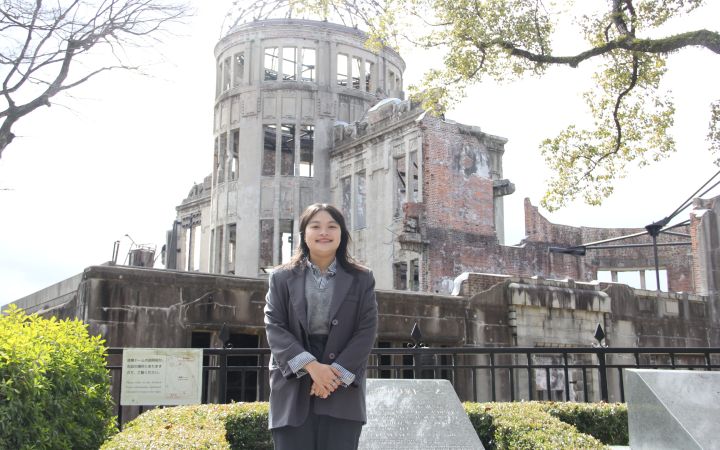
She is proud that Viet Nam has ratified the Treaty on the Prohibition of Nuclear Weapons and is currently at accession level with the NPT.
- Lê Nguyen An Khanh is a young diplomat with the Ministry of Foreign Affairs, Viet Nam. She is passionate about the non-proliferation of nuclear weapons and world peace.
- UNITAR Division for Prosperity trains government officials in Asia to learn about international nuclear disarmament processes and build their communication and negotiation skills.
28 August 2023, Hiroshima, Japan – Lê Nguyen An Khanh is a young official from Viet Nam, working at the Department of International Organisations at the Ministry of Foreign Affairs. She believes that diplomats like her have the responsibility to advocate for nuclear disarmament. But it’s not always easy to keep abreast of the intricacies of the field. “We are constantly having [to] research all the issues, of which nuclear disarmament and non-proliferation is a huge part”, she says………………………………………………………………………………….
Lê has had to learn how to take the uncertainties of global politics and turn them into something surmountable. She is proud that Viet Nam has ratified the Treaty on the Prohibition of Nuclear Weapons and is currently at accession level with the NPT. She wants to make sure her country’s voice is heard on the international stage, that it is seen as a world player. (Plus, she enjoys meeting, learning and working with like-minded people from different backgrounds and cultures.)
Being a young diplomat can come with its challenges: her views and opinions may not be granted the same weight as her older, perhaps more experienced, colleagues. But Lê challenges other young diplomats to be passionate and work hard.
“If you work hard enough, stick to your ideals and you are passionate about what you do and want to do in the future, people will recognize you – especially the seasoned diplomats who have already been there. You have to demonstrate that you are willing and have the capability to deliver. [If] you have a passion, you will be able to overcome challenges”. -Lê Nguyen An Khanh, Vietnamese diplomat and 2023 alumna, UNITAR Nuclear Disarmament and Non-Proliferation Training Programme
Looking to the Future
Lê will incorporate into her work all that she learned in the UNITAR training and expects to share her knowledge with colleagues in other departments and ministries as well. She applauds the UNITAR Hiroshima Office for putting together a well-organized and resourced training programme that she calls “an epitome of a good training programme”.
In the next 20 years, Lê says she wants to see more UNITAR offices around the world and for more people to learn about nuclear disarmament and non-proliferation. “I want to see UNITAR bring people from different regions with different cultures, race, genres to show the similar yet different experiences of their lives.”
Her personal goal is to make sure that she contributes to global peace.
Peace is a universal value. Everybody wants peace. I think peace is the motivation for every country to move towards development and stability. It is only when we have peace that we can move forward and make ourselves stronger.” -Lê Nguyen An Khanh, Vietnamese diplomat and 2023 alumna, UNITAR Nuclear Disarmament and Non-Proliferation Training Programme
About UNITAR
The United Nations Institute for Training and Research (UNITAR) is a dedicated training arm of the United Nations. In 2022, UNITAR trained 396,046 learners around the world to support their actions for a better future. In addition to our headquarters in Geneva, we have offices in Hiroshima, New York and Bonn and networks around the world.
The Division for Prosperity is based in the Hiroshima Office and Geneva. We seek to shape an inclusive, sustainable and prosperous world through world-class learning and knowledge-sharing services on entrepreneurship, leadership, finance and trade, digital technologies, and nuclear disarmament and non-proliferation. We empower individuals from least-developed countries, countries emerging from conflict, and small-island developing states – especially women and young people – to bring about positive change.
United Nations Volunteer Ruhiya Yousuf contributed to this article.
Vietnam set to restart nuclear power project, with Russia’s help
Vietnam poised to resume nuclear project a decade after Fukushima, Free Malaysia Today Nikkei -December 19, 2021 –HANOI: Vietnam says it will proceed with a project to build a 10-megawatt nuclear research reactor with Russian help, a move seen as a new step toward reviving plans to build nuclear power plants a decade after the Fukushima disaster.
Vietnamese President Nguyen Xuan Phuc was escorted by Vietnamese nuclear experts when he visited Moscow for four days starting Nov 29………..
Unlike in democratic countries, where there is criticism of nuclear power programmes and public opinion tends to be divided, such criticism cannot easily surface in Vietnam with its single-party political system, making it possible to resume the nuclear programme……………………..
Political and nuclear energy experts in Vietnam agree that if Hanoi resumes the plan for using nuclear power, Russia could be an initial partner in the projects.https://www.freemalaysiatoday.com/category/world/2021/12/19/vietnam-poised-to-resume-nuclear-project-a-decade-after-fukushima/
277,700 Vietnamese support “Appeal of the Hibakusha ” – call to eliminate nuclear weapons
 Over 277,700 signatures collected in Hanoi supporting elimination of nuclear weapons https://en.vietnamplus.vn/over-277700-signatures-collected-in-hanoi-supporting-elimination-of-nuclear-weapons/171278.vnp Over 277,700 signatures collected in Hanoi supporting elimination of nuclear weapons https://en.vietnamplus.vn/over-277700-signatures-collected-in-hanoi-supporting-elimination-of-nuclear-weapons/171278.vnp
Hanoi (VNA) – Over 277,700 signatures have been collected in Hanoi in the first phase of a campaign called “Appeal of the Hibakusha (atomic bomb survivors)”, which calls for the elimination of nuclear weapons. VNA Monday, April 06, 2020
Collected by the Hanoi Union of Friendship Organisations (HUFO), the signatures have been handed over to the Vietnam Peace Committee (VPC), HUFO said on April 6. According to HUFO Vice President Tran Thi Phuong and Hanoi Peace Committee President Tran Thi Ngoc Thanh, the signatures were collected from people at government offices and residential zones as well as at bus stations and public spaces around Hanoi. They expect to gain more signatures from students in the capital during subsequent phases, when local schools and universities re-open after the COVID-19 pandemic ends. VPC Secretary General Dong Huy Vuong spoke highly of HUFO and the Hanoi Peace Committee’s contributions to the campaign./.
|
|
Vietnam government abandons costly nuclear power plans

 Reuters 22nd Nov 2018 , Vietnam’s National Assembly voted on Tuesday to abandon plans to build
two multi-billion-dollar nuclear power plants with Russia and Japan, after
officials cited lower demand forecasts, rising costs and safety concerns.
The estimated investment needed for the projects had doubled since 2009 to
nearly 400 trillion dong ($18 billion), state media Tien Phong quoted Le
Hong Tinh, vice chairman of the National Assembly’s science, technology
and environment commission, as saying earlier this month.
https://www.reuters.com/article/us-vietnam-politics-nuclearpower-idUSKBN13H0VO
Nuclear marketing agreement between Russia and Vietnam, (but Vietnam turning away from nuclear)

 Russia signs MOU for Vietnam nuclear research centre,WNN, 04 July 2017 A memorandum of understanding (MOU) has been signed by Russian state nuclear corporation Rosatom and Vietnam’s Ministry of Science and Technology on the construction of a nuclear science and technology centre in Vietnam. An inter-governmental agreement to build the centre was signed between Russia and Vietnam in 2011.
The MOU was signed in Moscow on 29 June by Rosatom director general Alexey Likhachov and Vietnam’s deputy minister of science and technology Tran Dai Thanh. The signing was witnessed by Russian President Vladimir Putin and the President of Vietnam Tea Dan Quang.
Vietnam and Russia intend to promote further cooperation in the construction of the nuclear science and technology centre, in particular to work out the next steps once the Vietnamese government approves the project’s pre-feasibility study. The MOU also provides for consultation on the terms and conditions for financing the project. In addition, the two sides will develop a plan for further cooperation in the development of Vietnam’s nuclear infrastructure.
The nuclear science and technology centre will be equipped with Russian-designed research reactors, a multipurpose cyclotron, as well as research laboratories, an engineering complex, equipment and infrastructure to ensure the safe operation of the centre. It will be used for training staff for Vietnam’s nuclear power program………
The Ninh Thuan 2 plant at Vinh Hai, on Cam Ranh Bay about 20 kilometres northeast of Phouc Dinh, was to be developed under a partnership with Japan.
However, last November Vietnam’s legislature endorsed the government’s decision to abandon plans to build the country’s first two nuclear power plants in favour of renewable energy and power imports amid lower crude oil and coal prices……http://www.world-nuclear-news.org/NN-Russia-signs-MOU-for-Vietnam-nuclear-research-centre-0407175.html
Yet another marketing strategy by Russia: Vietnam
 Rosatom to build Nuclear Technology Centre in Vietnam http://russianconstruction.com/news-1/28150-rosatom-to-build-nuclear-technology-centre-in-vietnam.html 29.06.2017 Rosatom State Atomic Energy Corporation and the Ministry of Science and Technology of Vietnam will create a Center of Nuclear Science and Technology in Vietnam, as it follows from documentation published on the Kremlin’s website.
“The Memorandum of understanding between Rosatom State Atomic Energy Corporation and the Ministry of Science and Technology of the Socialist Republic of Vietnam on a plan of the implementation of a project for construction Nuclear Science and Technologies Center in Vietnam”, the document reads.
The announcement came following a meeting of Russian President Vladimir Putin and President of Vietnam Tran Dai Quang.
Very dubious market for nuclear power in South East Asia
 The limited role for nuclear can be explained by the high upfront capital costs, limited access to financing, and uneven and tepid public support in the wake of the Fukushima Daiichi nuclear accident. Public opposition has been especially evident in Indonesia, Malaysia, Philippines and Thailand.”
former Rosatom head Sergey Kirienko’s team has been excellent at drawing up and signing nonbinding nuclear agreements … Actually building nuclear plants seems to be beyond them.
Vietnam’s amazing nuclear journey – why it ended, what it means for South East Asia, Energy Post, November 29, 2016 by Jim Green On November 10, Vietnam took the historic decision to scrap its nuclear power program, after many decades of nuclear preparations, up to a ground-breaking ceremony at the first proposed nuclear site in the country in 2014. Jim Green, editor of Nuclear Monitor, published by WISE (World Information Service on Energy), tells the amazing story of nuclear power in Vietnam – and discusses what the Vietnamese decision means for the prospects of nuclear power in South East Asia. Courtesy of Nuclear Monitor.
2016 cancellation
On November 10, Duong Quang Thanh, CEO of staterun Electricity of Vietnam, said the government would propose the cancellation of plans for reactors at the two Ninh Thuan sites to the National Assembly. He added that nuclear power was not included (or budgeted for) in the power plan which runs until 2030 and had already been approved by Prime Minister Nguyen Xuan Phuc.
The National Assembly voted on November 22 to support the government’s decision to abandon plans to build nuclear power plants. Energy analyst Mycle Schneider said: “Vietnam is only the latest in a long list of countries, including more recently Chile and Indonesia, that have postponed indefinitely or abandoned entirely their plans for nuclear new-build.”
The decision to abandon nuclear power was primarily based on economics. Duong Quang Thanh said nuclear power is “not economically viable because of other cheaper sources of power.”
Le Hong Tinh, vice-chair of the National Assembly Committee for Science, Technology and Environment, said the estimated cost of four reactors at the two sites in Ninh Thuan province had nearly doubled to VND400 trillion (US$18 bn; €17.9 bn). The estimated price of nuclear-generated electricity had increased from 4‒4.5 US cents / kwh to 8 cents / kwh. Vietnam has spent millions of dollars on the project so far, Tinh said, but continuing the program would add more pressure to the already high public debt.
Another media report states that Japanese and Russian consultants said that the cost has escalated from the original estimate of US$10 billion to US$27 billion (€9.5‒25.6 bn). “The plants will have to sell power at around 8.65 cents a kWh, which is almost twice the rate approved in the project license and is not competitive at all,” according to the VN Express newspaper.
Vietnam’s rising public debt, which is nearing the government’s ceiling of 65% of GDP, was another reason for the program’s cancellation, saidCao Si Kiem, a National Assembly member and former governor of the central bank………
A May 2016 report by WWF-Vietnam and Vietnam Sustainable Energy Alliance (VSEA) finds that 100% of Vietnam’s power can be generated by renewable energy technologies by 2050. There are many available renewable power sources in Vietnam including solar, wind, geothermal heat, biomass and ocean energy. The report contrasts three scenarios: business as usual (with only modest growth of renewables), a Sustainable Energy Scenario (81% renewable power generation by 2050) and an Advanced Sustainable Energy Scenario (100%).
Nuclear power in South East Asia – or not
A 2015 International Energy Agency report anticipates that nuclear power will account for just 1% of electricity generation in south-east Asia by 2040.
The report states: “All countries in Southeast Asia that are interested in deploying nuclear power face significant challenges. These include sourcing the necessary capital on favourable terms, creation of legal and regulatory frameworks, compliance with international norms and regulations, sourcing and training of skilled technical staff and regulators, and ensuring public support. … The limited role for nuclear can be explained by the high upfront capital costs, limited access to financing, and uneven and tepid public support in the wake of the Fukushima Daiichi nuclear accident. Public opposition has been especially evident in Indonesia, Malaysia, Philippines and Thailand.”
A June 2016 media article began: “Rosatom, Russia’s state nuclear-energy agency, is bullish on the outlook of its business in Southeast Asia after the speedy development of a project in Vietnam and a range of agreements with every country in the region except Singapore, the Philippines and Brunei.”
Nikolay Drozdov, director of Rosatom’s international business department, said Rosatom is focusing a lot of attention on south-east Asia, reflected by the decision to establish a regional headquarters in Singapore.
Russia has nuclear cooperation agreements with seven countries in south-east Asia ‒ Vietnam, Indonesia, Malaysia, Thailand, Cambodia, Myanmar and Laos. But not one of those seven countries ‒ or any other country in south-east Asia ‒ has nuclear power plants (the only exception is the Bataan reactor in the Philippines, built but never operated) and not one is likely to in the foreseeable future. Nor are other nuclear vendors likely to succeed where Russia is failing.
Drozdov said that after the (stalled) nuclear power project in Vietnam, Indonesia and Malaysia would likely be the next countries in the region to develop nuclear power.2 But Indonesia’s situation is much the same as Vietnam’s ‒ decades of wasted efforts with little to show for it (and the same could be said about Thailand).
Malaysia’s consideration of nuclear power is preliminary. Why would Russia be making such efforts in southeast Asia given that nuclear power prospects in the region are so dim? The answer may lie with domestic Russian politics. Given Rosatom’s astonishing industry in lining up non-binding nuclear agreements with over 20 countries ‒ ‘paper power plants’ as Vladimir Slivyak calls them ‒ we can only assume that such agreements are looked on favorably by the Russian government.
Slivyak writes: “These ‘orders’ are not contracts specifying delivery dates, costs and a clear timescale for loan repayments (in most cases the money lent by Russia for power plant construction comes with a repayment date). Eighty to ninety per cent of these reported arrangements are agreements in principle that are vague on details, and in the overwhelming majority of cases the contracts aren’t worth the paper they’re printed on. … So it is clear that [former Rosatom head Sergey] Kirienko’s team has been excellent at drawing up and signing nonbinding nuclear agreements … Actually building nuclear plants seems to be beyond them.” http://energypost.eu/vietnam-dumps-nuclear-power-economic-reasons-rest-south-east-asia-may-follow/
Vietnam’s legislature endorses scrapping of nuclear power plans
Vietnam Formally Scraps Plans for First Nuclear Power Plants http://www.voanews.com/a/vietnam-scraps-plans-for-nuclear-power-plants/3607042.html , 22 Nov 16 HANOI — Vietnam’s legislature on Tuesday endorsed the government’s decision to scrap plans to build the country’s first two nuclear power plants.
A statement from the government announcing the endorsement said cheaper renewable energy and power imports were available and that investment should be made in more urgent infrastructure needs.
The National Assembly in 2009 approved plans to build two nuclear power plants with combined capacity of 4,000 megawatts. Construction contracts had been awarded to companies from Russia and Japan.
Construction was initially scheduled to start in 2014 but was delayed several times.
State media have reported that the nuclear power plants were not economically viable because of cheaper sources of power and that the costs of the plants had doubled to $18 billion.
Japan’s nuclear marketing disappointment: Vietnam to cancel reactor order
 Japan’s nuclear export ambitions hit wall as Vietnam set to rip up reactor order Reiters, | TOKYO/HANOI, 17 Nov 16
Vietnam is poised to abandon plans for Japanese firms to build a multi-billion dollar nuclear power plant, damaging Prime Minister Shinzo Abe’s drive to begin exporting reactors after the Fukushima disaster left the industry in deep-freeze at home.
The Japanese government said in a statement this week that it had been informed by Vietnamese Deputy Prime Minister Trinh Dinh Dung that Hanoi was close to a decision to cancel the project. Japan’s Minister of Economy, Trade and Industry, Hiroshige Seko, described the move as “very regrettable.”
Vietnam’s decision, attributed to lower demand forecasts and rising costs as well as safety concerns, also deals a broader blow to the global nuclear business. Countries from Germany to Indonesia have decided to either pull out of nuclear energy or cancel development plans in the wake of the Fukushima nuclear disaster in 2011, the world’s worst since Chernobyl in 1986.
Though it has sought contracts for years, Japan has never led a nuclear project to completion overseas and Abe has lent his office’s prestige to attempts to win contracts, most recently in Turkey. The dented ambitions for exports come at a time when Japan is struggling to restart dozens of reactors shut down in the wake of Fukushima.
“This is a major blow to Japanese ambitions to, finally, export their first nuclear reactors,” said Schneider…….
DEMAND GROWTH EASING
Vietnam’s parliament is set next Tuesday to formally approve scrapping the Japanese deal, as well as the country’s first nuclear project, which was awarded to Russia’s Rosatom, according to state media. Rosatom said it would not comment until the Vietnam parliament formalized the decision.
The Japanese and Russian nuclear plants were supposed to have been located in central Ninh Thuan province…….. http://www.reuters.com/article/us-japan-vietnam-nuclearpower-idUSKBN13D0RK
Vietnam rejects nuclear power
Vietnam ditches nuclear power plans, DW, 10 Nov 16
Vietnam has decided to scrap plans to build two nuclear power plants, which would have been the first in southeast Asia. Hydropower and coal are set to remain dominant in the fast-industrializing country. Vietnam’s ruling communist party decided Thursday that two planned plants in the southern region of Ninh Thuan will not feature in the country’s future energy mix, state-controlled media reported.
MP Duong Quang Thanh, chairman of the Electricity Committee in the National Assembly, confirmed that no budget for the plants – which were approved in 2008 with a combined capacity of 4,000 megawatts (MW) – had been included in a long-term energy plan approved by Prime Minister Nguyen Xuan Phuc, the DTI news website reported.
Le Hong Tinh, vice chairman of the National Assembly’s Science, Technology and Environment Committee, said a key reason for the government’s decision was that the price for the plants had doubled to $18 billion (about 16.5 billion euros)…….. http://www.dw.com/en/vietnam-ditches-nuclear-power-plans/a-36338419
Vietnam getting cold feet about the cost of nuclear power development
Vietnam looks to delay Japan-, Russia-backed nuclear plants amid funds crunch, Japan Times, 6 Nov 16 KYODO HANOI – Vietnam’s ruling Communist Party in October instructed government authorities to revise plans to build nuclear power plants with Russian and Japanese assistance with a view to delaying them due to the government’s tight finances, it was learned Sunday from party and government sources.
The government is now working on a comprehensive revision of the plan and intends to submit a report to the National Assembly, according to the sources.
According to one of the sources, a considerable investment at the present time is “extremely difficult” given the financial situation of the government…….
some members of the Communist Party’s new leadership selected at a party congress in January have expressed concern over nuclear power plant construction while public debt remains high as well as over the safety of nuclear power.
At the fourth plenum of the 12th Party Central Committee in October, agreement was reached to reconsider the plan with a view to its postponement……http://www.japantimes.co.jp/news/2016/11/07/business/vietnam-looks-delay-japan-russia-backed-nuclear-plants-amid-funds-crunch/#.WB_SydJ97Gg
Climate Change’s fearful threat to Vietnam’s Mekong Delta
WILL CLIMATE CHANGE SINK THE MEKONG DELTA?, Mongabay News, 3 October 2016 / David Brown
No delta region in the world is more threatened by climate change. Will Vietnam act in time to save it?
- Scientists say the 1-meter sea level rise expected by century’s end will displace 3.5-5 million Mekong Delta residents. A 2-meter sea level rise could force three times that to higher ground.
- Shifting rainfall and flooding patterns are also threatening one of the most highly productive agricultural environments in the world.
- The onus is now on Vietnam’s government in Hanoi to approve a comprehensive adaptation and mitigation plan.
- This is the first article of an in-depth, four-part series exploring threats facing the Mekong Delta and how they might be addressed. Read the second installment here.
IIt’s a sad fact that several decades of talk about climate change have hardly anywhere yet led to serious efforts to adapt to phenomena that are virtually unavoidable. Neuroscientists say that’s because we’re humans. We aren’t wired to respond to large, complex, slow-moving threats. Our instinctive response is apathy, not action.
That paradox was much on my mind during a recent visit back to Vietnam’s fabulously fertile Mekong Delta, a soggy plain the size of Switzerland. Here the livelihood of 20 percent of Vietnam’s 92 million people is gravely threatened by climate change and by a manmade catastrophe, the seemingly unstoppable damming of the upper reaches of the Mekong River.
Samuel Johnson famously said that “nothing concentrates the mind so well as the prospect of imminent hanging.” It’s been nine years since a World Bank study singled out the Mekong Delta as one of the places on our planet that is most gravely threatened by sea level rise. There if anywhere, I imagined, I’d find a sense of urgency. I’d find adaptive measures well advanced.
I was wrong. Vietnamese government ministries, provincial administrations, experts from Vietnamese universities and thinktanks, experts deployed by the World Bank, the Asian Development Bank and foreign governments: all have been pushing plans and policies. The problem has been to sort out the best ideas, make appropriate decisions and find the resources needed to implement them in a timely, coherent way.
Things may be coming together at last, I concluded after talking with dozens of local officials, professors, journalists and farmers in mid-June. None denied the reality of the problem. Many connected the question of what to do about climate change to older arguments over the best ways to grow more and better crops………
- No delta area, not the mouths of the Ganges, the Nile or the Mississippi, is more vulnerable than the Mekong estuary to the predictable impacts of climate change. The 1-meter sea level rise expected by the end of the 21st century, all else being equal, will displace 3.5-5 million people. If the sea instead rose by 2 meters, lacking effective countermeasures, some 75 percent of the Delta’s 18 million inhabitants would be forced to move to higher ground.
Already, said Professor Ni, there’s been a significant decrease in rainfall in the first part of the annual rainy season, and more rain toward the end. The Mekong’s annual flood peak has fallen by a third since 2000. The waters from upstream carry less silt to replenish the Delta floodplain. Also, the volume of fresh water is falling while the sea level rises. This allows salt-laden tidal water to penetrate further and further into Delta estuaries and swampy coastal areas during the dry season.
Modeling of current trends suggest that average temperatures in the Mekong Delta will rise by more than 3 degrees Celsius toward the end of the century. Annual rainfall will decrease during the first half of the century, and then rise well above the 20th century average. The area that’s flooded each autumn won’t change substantially, but the floods won’t last as long.
- All things being equal, rice yields will plummet as temperatures rise. Lighter rains in the early months of the wet season will challenge farmers’ ingenuity. Rising seas and reduced river flows will severely test the system of sea dikes. Riverbanks and the Delta coast are already crumbling; this will accelerate. Farmers who are unable to cope will head north to seek industrial and construction jobs.
That’s not all. At slide 70 (of 86) of the DRAGON presentation, attention shifts to upstream dam construction on Delta water regimes.For China, Laos and Thailand, the hydroelectric potential of the upper Mekong is a seemingly irresistable development opportunity. It may be that not all the dams they plan will be built across the Mekong mainstream. Whether a few or many, their impact on agriculture in Vietnam and Cambodia will be profoundly negative, Professor Ni, his colleagues at Can Tho University, and experts at other institutes in southern Vietnam have pounded the alarm gongs for years. The dam cascade is a nearer and more present danger, and apparently just as unstoppable as climate change.
DRAGON Institute’s slideshow concludes with a call to action. The future is bleak but not hopelessly so if appropriate adaptation and mitigation strategies are launched. What the Delta needs is revealed: sustainable development based on a triply effective foundation of water source security, food security and social security. https://news.mongabay.com/2016/10/will-climate-change-sink-the-mekong-delta/
Russia paying for setting up nuclear power plant in Vietnam
Work on Russian-assisted nuclear power plant in Vietnam to begin in 2023 https://rbth.com/news/2016/07/15/work-on-russian-assisted-nuclear-power-plant-in-vietnam-to-begin-in-2023_611821 TASS
“The schedule is still set for 2028,” Tuan said. Construction will begin in 2022 or 2023, he added.
Such a timeframe is indicated in the revised master plan of Vietnam’s energy sector development, the official said.
Russia’s Rosatom is acting as a partner in the Ninh Thuan 1 nuclear power plant in Vietnam.
USA wants to market nuclear power to Vietnam
 Enhancing U.S.-Vietnam Civil Nuclear Clean Energy Cooperation “…… Earlier this month, the United States and Vietnam signed the Administrative Arrangement under our historic agreement on the peaceful uses of nuclear energy (123 Agreement), which initially opened the door to nuclear trade between our two countries in 2014.
To further build on this robust cooperation in the civil nuclear field, the United States and Vietnam aim to:
Build Institutional Connections: Continue reading
1 This Month

of the week – Shut Down Drone Warfare!


Tell the Ukrainian Government to Drop Prosecution of Peace Activist Yurii Sheliazhenko

Petition to revoke the licensing of the Near Surface Nuclear Disposal Facility (NSDF) at Chalk River. https://www.ourcommons.ca/petitions/en/Petition/Details?Petition=e-7247
To see nuclear-related stories in greater depth and intensity – go to https://nuclearinformation.wordpress.com
-
Archives
- March 2026 (230)
- February 2026 (268)
- January 2026 (308)
- December 2025 (358)
- November 2025 (359)
- October 2025 (376)
- September 2025 (257)
- August 2025 (319)
- July 2025 (230)
- June 2025 (348)
- May 2025 (261)
- April 2025 (305)
-
Categories
- 1
- 1 NUCLEAR ISSUES
- business and costs
- climate change
- culture and arts
- ENERGY
- environment
- health
- history
- indigenous issues
- Legal
- marketing of nuclear
- media
- opposition to nuclear
- PERSONAL STORIES
- politics
- politics international
- Religion and ethics
- safety
- secrets,lies and civil liberties
- spinbuster
- technology
- Uranium
- wastes
- weapons and war
- Women
- 2 WORLD
- ACTION
- AFRICA
- Atrocities
- AUSTRALIA
- Christina's notes
- Christina's themes
- culture and arts
- Events
- Fuk 2022
- Fuk 2023
- Fukushima 2017
- Fukushima 2018
- fukushima 2019
- Fukushima 2020
- Fukushima 2021
- general
- global warming
- Humour (God we need it)
- Nuclear
- RARE EARTHS
- Reference
- resources – print
- Resources -audiovicual
- Weekly Newsletter
- World
- World Nuclear
- YouTube
-
RSS
Entries RSS
Comments RSS
 nuclear-news