Israel’s growing role in Taiwan’s air defense alarms Beijing.
Israel’s expanding ties with Taiwan, particularly in missile defense, are quietly reshaping regional geopolitics and alarming Beijing. In this context, even small defense transfers could undermine years of careful diplomatic calibration.
Uriel Araujo, BRICS, Monday, December 22, 2025
Uriel Araujo, Anthropology PhD, is a social scientist specializing in ethnic and religious conflicts, with extensive research on geopolitical dynamics and cultural interactions.
Israeli-Taiwanese cooperation, long discreet and underreported, is now moving into far more sensitive terrain. Recent reports indicate that Israeli know-how has been quietly feeding into Taiwan’s emerging missile-defense architecture, the so-called “T-DOME,” a system explicitly inspired by Israel’s Iron Dome. As a matter of fact, this development has already triggered a blunt diplomatic rebuke from Beijing, raising uncomfortable questions about Israel’s long-standing balancing act between rival global powers.
A detailed account of this growing cooperation comes from Nadia Helmy, Visiting Senior Researcher at the Centre for Middle Eastern Studies (CMES), who notes that Chinese intelligence agencies have detected expanding Israeli assistance to Taiwan’s missile shield, particularly in radar integration, command-and-control architecture, and layered interception concepts. According to Helmy, Beijing views this cooperation not as an isolated commercial exchange but as a strategic signal, thereby crossing a political red line.
Taiwan’s T-DOME project is ambitious enough. Taipei plans to spend over USD 40 billion on a multi-layered air and missile defense system combining indigenous technology with foreign expertise, drawing lessons from Israel’s battlefield experience.
What makes the situation more delicate is not simply the technology itself but the political choreography surrounding it. Taiwan’s deputy foreign minister reportedly made a secret trip to Israel in December 2025 to discuss defense cooperation, a visit confirmed by multiple outlets. Israeli lawmakers have also traveled to Taiwan, prompting a formal condemnation from China’s embassy in Israel.
There is a context to such moves. Taiwan’s political discourse has increasingly framed Israel as both a security model and a civilizational reference point. One may recall that Taiwanese officials have even invoked biblical imagery when criticizing authoritarianism, explicitly citing Israel as an example. Meanwhile, pro-Israel lobbying networks linked to AIPAC have been expanding their presence in Taiwan, a fact documented but rarely discussed in mainstream Western media.
Israel, for its part, has historically prided itself on its ability to balance competing global relationships. Thus far, it has managed to maintain workable ties with Russia and Ukraine simultaneously, for instance, while also navigating relations with both the US and China.
Be as it may, Taiwan represents a different category of sensitivity altogether. Unlike commercial technology transfers or infrastructure investments, missile defense cooperation touches the core of China’s security concerns. Suffice to say, Beijing’s reaction has been measured rather than escalatory, but unmistakably firm nonetheless. In any case, from China’s perspective, Israeli involvement in Taiwan’s air defense is not neutral, regardless of how it is framed in Tel Aviv.
Some analysts, such as geopolitical expert Sergio Restelli, have already warned that this (and other developments) could mark the end of Israel’s careful balancing with China.
Others argue that Israel is simply responding to pressure from Washington, especially under the Trump administration, which has doubled down on strategic competition with China while encouraging allies to “choose sides.” I’ve written before about how the Trump administration has been pressuring, “sidelining” and “leveraging” the Jewish State in a number ways, including through its Gaza Plan, apparently as part of an effort to rebalance the complex US-Israeli relationship………………………………….. https://infobrics.org/en/post/74234
German experience shows transition to renewables possible for Taiwan and the world.
https://tcan2050.org.tw/en/nonuke-2/ 2025-08-19, Dr. Ortwin Renn |Professor emeritus of Environmental Sociology and Technology Assessment, Stuttgart University; Scientific Director emeritus, Research Institute for Sustainability at GFZ, Potsdam , Germany (RIFS)
I am writing to express my full support for your initiative to keep Taiwan’s nuclear power reactors permanently shut down and to accelerate the transition toward renewable energy. This position is not only grounded in scientific evidence but also in practical experience from countries such as my home country Germany that have successfully advanced toward a sustainable energy future.
In 2011, I served as a member of the German Federal Government’s Ethics Committee on a Safe Energy Supply, established after the Fukushima disaster. Our task was to assess the future role of nuclear energy in Germany. After extensive consultations with leading scientists, economic stakeholders, and civil society organizations, the Committee reached a consensual recommendation: to phase out nuclear energy within ten years while investing heavily in renewable energy sources. This decision was not only an ethical imperative but also based on sound economic and technological reasoning.
The results speak for themselves. Between 2011 and 2025, Germany’s share of renewable energy in electricity generation rose from 23% to over 54%—an increase of 230%. Nuclear power, which contributed less than 18% in 2011, was more than compensated for by renewables. In addition, the expansion of renewables significantly reduced reliance on fossil fuels, thereby contributing to climate protection and energy sovereignty.
Today, renewable energy is not only clean but also cost-competitive. The production of electricity from wind and solar power is now cheaper than generating electricity from coal or gas and even cheaper than nuclear power when comparing the costs of building new facilities. It is true that the transition requires substantial upfront investment in grid upgrades, storage systems, and backup solutions. However, once this infrastructure is in place, the long-term costs of renewable energy generation are lower than those of fossil or nuclear alternatives.
Germany’s relatively high electricity prices are not a consequence of renewables, but largely due to global gas price spikes and the cost of imported electricity. The long-term trend is clear: renewable energy is becoming the most economical, environmentally sound, and politically stable source of power.
The lessons for Taiwan are evident. A transition to renewable energy is possible, economically viable, and ultimately beneficial for society. It contributes to climate protection, environmental quality, and public health. It reduces dependence on imported fuels and avoids the long-term risks and costs associated with nuclear energy, including waste management and potential catastrophic accidents. Most importantly, it enables a decentralized and resilient energy system that benefits local communities.
Achieving this transformation requires significant investment and strong political will, but the German experience demonstrates that it is both feasible and advantageous. I strongly encourage Taiwan to seize this opportunity and prioritize a renewable-based energy future over a return to nuclear power.
https://tcan2050.org.tw/en/nonuke-2/
Older reactors more susceptible to accidents; Nuclear is not a viable climate solution.

TCAN 19th Aug 2025, Statements of support from international energy scholars for Taiwan’s nuclear phase-out, Dr. M.V. Ramana | Professor; Simons Chair in Disarmament, Global and Human Security, School of Public Policy and Global Affairs (SPPGA), University of British Columbia
There is a debate in Taiwan about possibly extending operations of its nuclear reactors that have been shut down. Doing so poses risks and will not help with mitigating climate change.
Risks Associated with Nuclear Power Plant Extensions
As they age, nuclear plants become more susceptible to accidents. The likelihood of failures at reactors is often described by something called the bathtub curve. The failure rate is initially high due to manufacturing problems and operator errors associated with new technology. Then curving like a tub, the failure rate declines with experience. But then eventually it starts rising again as aging related wear and tear starts increasing. So, after some point in time, the dangers of continuing operations at nuclear reactors start increasing. As the examples of Chernobyl, Ukraine in 1986 and Fukushima, Japan in 2011 show, the consequences of a nuclear accident can be catastrophic with long-lasting and financially expensive impacts.
Nuclear Power is not a Solution to Climate Change
Nuclear energy is one of the most expensive ways to generate electricity. This is the reason the share of the world’s electricity produced by nuclear power plants has been declining consistently since the mid 1990s. If one were to think about nuclear power as a solution to climate change, that share should be increasing while the share of fossil fuels must be decreasing. That is simply not happening. Investing in cheaper low-carbon sources of energy will provide more emission reductions per dollar. Second, it takes about a decade to build a nuclear plant. If you add the time needed for all the necessary preparatory steps—obtaining environmental and safety clearances, getting consent from a community that has to live near a hazardous facility for decades, and raising the huge amounts of funding necessary—you’re looking at 15-20 years. This timeline is incompatible with the urgent demands of climate science. Thus, nuclear power fails on two key metrics for evaluating any technology claiming to deal with climate change.
https://tcan2050.org.tw/en/nonuke-2/
Taiwan nuclear plant re-opening vote fails as approval threshold missed

By Ben Blanchard, August 23, 2025
TAIPEI, Aug 23 (Reuters) – A referendum to push for the re-opening of Taiwan’s last nuclear plant failed on Saturday to reach the legal threshold to be valid, though the president said the island could return to the technology in the future if safety standards improve.
The plebiscite, backed by the opposition, asked whether the Maanshan power plant should be re-opened if it was “confirmed” there were no safety issues. The plant was closed in May as the government shifts to renewables and liquefied natural gas.
The small Taiwan People’s Party (TPP) proposed the referendum earlier this year, and with the backing of the much larger Kuomintang (KMT) passed the legislation for the vote, saying Taiwan needs reliable power supplies and not to be so reliant on imports.
Around 4.3 million people voted in favour of the plant’s re-opening in the referendum, a clear majority over the 1.5 million who voted against, figures from the Central Election Commission showed.
But the motion needed the backing of one quarter of all registered electors – around 5 million people – to get through under electoral law, meaning the plant on Taiwan’s southern tip will not re-open.
Taiwan’s government says there are major safety concerns around generating nuclear power in earthquake-prone Taiwan and handling nuclear waste………………………..https://www.reuters.com/business/energy/taiwan-nuclear-plant-re-opening-vote-fails-approval-threshold-missed-2025-08-23/
Taiwan Must Not Turn Back: A Message of Solidarity for a Post-Nuclear Future
TCAN, Statements of support from international energy scholars for Taiwan’s nuclear phase-out, 2025-08-19 Dr. Sun-Jin Yun | Professor and Dean, Graduate School of Environmental Studies, Seoul National University
Taiwan has made history as the first country in Asia to phase out nuclear power. Even before its formal policy decision, Taiwan had already halted construction of two nearly completed reactors at the Lungmen Nuclear Power Plant. Then, following its bold commitment to denuclearization in 2016, Taiwan laid out a clear roadmap and proceeded to permanently shut down all six of its operating nuclear reactors by 2025. In total, eight reactors were removed from Taiwan’s energy future. This achievement stands as a global milestone—one that not only reflects the wisdom and determination of the Taiwanese people, but also shows what democratic leadership and civic engagement can accomplish in energy policy.
As a Korean educator and researcher who has supported Taiwan’s anti-nuclear movement—traveling across the island to share the experience of Seoul’s “One Less Nuclear Power Plant” initiative—I have seen firsthand the strength of Taiwan’s civil society. I was deeply inspired by how communities organized, informed, and mobilized to ensure that energy decisions would be made not by technocrats or corporations alone, but by the people. Taiwan’s experience became a source of hope and pride for many of us in Asia, proving that an energy transition rooted in justice and public engagement is indeed possible—even in societies with high electricity demand and heavy dependence on imported fossil fuels, where renewables are still being developed.
Taiwan’s nuclear phase-out was not just a policy—it was a people-powered choice for the future. Let’s not turn back. Let Taiwan lead again.
But today, that progress is under threat. Taiwan’s opposition parties have proposed a national referendum to restart the final two reactors that were recently shut down. On August 23, Taiwanese citizens will be asked to vote on whether to undo what they have so carefully and courageously accomplished. That is why I write this statement—not only to express concern, but to offer international solidarity.
While nuclear energy is often framed as a low-carbon tool for addressing climate change, the reality is more paradoxical: the worsening climate crisis itself is undermining the viability of nuclear power. As the crisis worsens, rising ocean temperatures reduce reactor cooling efficiency, while extreme weather events—such as typhoons and wildfires—and jellyfish blooms, fueled by ocean warming, increasingly threaten plant operations. And in a region prone to typhoons and earthquakes, the risk of catastrophe is never far away. Above all, nuclear energy produces radioactive waste for which no nation on Earth has found a safe, long-term solution.
Meanwhile, Taiwan has made remarkable strides in expanding solar and offshore wind. Your country is already charting a path toward a resilient, renewable energy future. To reverse course now would not only be scientifically and economically unwise—it would undermine the very civic spirit that brought you this far. The world is watching. Taiwan has led before, and you can lead again.
Please stay the course. A nuclear-free Taiwan is not only possible—it is already underway. Let us not go backward, but forward together.
https://tcan2050.org.tw/en/nonuke-2/
Hundreds rally in Taipei against restart of No. 3 nuclear power plant.
Taiwan is an earthquake- and typhoon-prone island, which makes it unsuitable for the development of nuclear energy.
on May 17, Taiwan officially became a “nuclear-free homeland,” a status that was accomplished after 40 years of hard work, Shih said, calling for that to be retained.
Since the plant was closed, Taiwan has not experienced a power shortage, he said.
08/16/2025 , By Wu Hsin-yun and James Lo),
https://focustaiwan.tw/society/202508160014
Taipei, Aug. 16 (CNA) About 300 people took to the streets of Taipei on Saturday to campaign against an upcoming referendum on the restart of the Maanshan Nuclear Power Plant in southern Taiwan.
Led by the Taiwan Environmental Protection Union (TEPU), the rally included members of the Taiwan Society North, World United Formosans for Independence, and political parties such as the Green Party Taiwan and New Power Party.
The approximately 300 participants walked from Taipei’s National Taiwan University to the Liberty Square, then to a Legislative Yuan building on Jinan Road, calling for the nuclear plant to remain closed.
The campaign was held ahead of the Aug. 23 referendum, which will ask voters to decide on the restart of the Maanshan Nuclear Power Plant that has been inoperative since May 17 when its No. 2 reactor unit was decommissioned after 40 years of service.
The advocates for and against the reopening of the plant, commonly known as Taiwan’s No. 3 nuclear plant, have been holding televised debates and various other activities to push their respective views.
At Saturday’s rally, TEPU founding chairman Shih Hsin-min (施信民) said that Taiwan is an earthquake- and typhoon-prone island, which makes it unsuitable for the development of nuclear energy.
With the retirement of the No. 3 nuclear plant on May 17, Taiwan officially became a “nuclear-free homeland,” a status that was accomplished after 40 years of hard work, Shih said, calling for that to be retained.
Since the plant was closed, Taiwan has not experienced a power shortage, he said.
The No. 3 nuclear power plant is an old facility, and restarting it would mean disregarding the future of Taiwan’s new generations, Shih said.
Taiwan set to hold referendum on restarting last nuclear reactor.

Aug. 23 vote could reverse island’s nuclear phase-out amid fierce debate over energy security, safety, and politics
Girard Lopez |17.08.2025, https://www.aa.com.tr/en/asia-pacific/taiwan-set-to-hold-referendum-on-restarting-last-nuclear-reactor/3661615
TAIPEI, Taiwan
Taiwan will vote next week on whether to restart its last nuclear reactor, a move that could reverse the island’s “nuclear-free homeland” policy adopted in 2016.
The Aug. 23 referendum will ask voters if they agree to restart the Maanshan nuclear power plant’s second reactor in southern Taiwan if authorities find no safety concerns.
The unit was shut down in May under Taiwan’s nuclear phase-out plan.
The Taiwan People’s Party (TPP) proposed the measure on April 18 with support from the main opposition Kuomintang (KMT).
Opposition-dominated local legislature approved it on May 20, and the Central Election Commission scheduled the vote for Aug. 23.
Both pro- and anti-nuclear energy advocates have held rallies and campaigns ahead of the vote.
To pass, the referendum needs support from over 25% of Taiwan’s 5 million eligible voters and more “yes” than “no” ballots.
Nuclear power supplied over half of Taiwan’s electricity in the 1980s but fell to about 6% in 2023 as reactors were decommissioned.
Taiwan had three nuclear reactor plants, all of which have been decommissioned gradually since 2018. The island’s fourth plant was never completed, and a 2021 referendum rejected restarting construction.
Supporters say nuclear energy is crucial for an island reliant on imported fossil fuels, especially amid geopolitical risks.
They cite its low carbon footprint and note that countries like Japan and some EU members have extended reactor lifespans.
TPP chairperson Huang Kuo-Chang criticized the ruling Democratic Progressive Party (DPP) for missing its renewable energy target in a televised debate, saying: “Instead, coal plants are running at full capacity, worsening southern Taiwan’s air quality and harming public health, causing allergies from birth for many children as well as rising cardiovascular disease cases.”
Opponents warn of seismic risks, unresolved nuclear waste issues, and delays to renewable energy adoption.
They also contend that shifting to renewables should be gradual, much like phasing out coal, and argue the TPP and KMT’s preference for nuclear power is politically driven.
“Energy transition doesn’t mean shutting something down overnight. For example, if we shut all coal plants today, we’d instantly lose 40% of our power—unrealistic. Instead, we gradually reduce reliance on polluting or risky sources while scaling up cleaner ones,” said Lin Zheng Yuan of the Green Citizens Action Alliance.
US Has 500 Troops in Taiwan in Major Challenge to China
The number of US troops in Taiwan was disclosed by a retired US Navy rear admiral in a recent congressional hearing
by Dave DeCamp May 26, 2025, https://news.antiwar.com/2025/05/26/us-has-500-troops-in-taiwan-in-major-challenge-to-china/
A retired US Navy admiral recently revealed that the US has 500 troops in Taiwan, a major challenge to Beijing’s red lines related to the island.
Ret. Adm. Mark Montgomery made the disclosure at a House hearing on May 15, where he was arguing that the US should send more military personnel to Taiwan.
“We absolutely have to grow the joint training team in Taiwan. That’s a US team there that’s about 500 people now, it needs to be 1,000,” said Montgomery, who now works for the Foundation for the Defense of Democracies (FDD), an extremely hawkish think tank.
“If we’re going to give them billions of dollars in assistance, sell them tens of billions of dollars worth of US gear, it makes sense that we’d be over there training and working,” he added.
So far, the Pentagon has not confirmed the number, but due to the sensitivity of the matter, the US military typically offers few details about its operations in Taiwan.
After Washington severed diplomatic relations with Taipei in 1979, the US would still deploy a handful of military trainers to Taiwan. The small US presence was always an open secret but wasn’t officially confirmed until 2021, when then-President Tsai Ing-wen became the first Taiwanese leader to acknowledge US troops were on the island since 1979.
At the time of Tsai’s acknowledgment, only a few dozen US troops were believed to be on the island for training purposes. In 2023, media reports said the US was increasing its military presence to about 200 soldiers.
Last year, Taiwan confirmed that some of the US military trainers were deployed to Kinmen, a group of islands that are controlled by Taiwan but located just off the coast of mainland China.
The US has significantly increased military support for Taiwan in recent years despite constant warnings from China that the island is the “first red line” in US-China relations that must not be crossed.
Why the US Won’t Be Able to Help Build Taiwan’s Nuclear Future
Washington itself hasn’t solved the problems that fed into Taiwan’s nuclear phase-out: waste storage and high costs.
By Benjamin Yang and M.V. Ramana, May 26, 2025, https://thediplomat.com/2025/05/why-the-us-wont-be-able-to-help-build-taiwans-nuclear-future/
When the 40-year operating license of Taiwan’s last remaining commercial nuclear reactor expired on May 17, the country realized its nuclear phase-out policy after decades of politicized debates.
If anything, though, the imminent decommissioning of the Maanshan Nuclear Power Plant’s second reactor has only fueled another round of heated discussions on the potential role of nuclear power in Taiwan’s energy future.
On May 13, the Legislative Yuan – Taiwan’s national legislature, where opposition parties currently hold a majority – passed amendments to the Nuclear Reactor Facilities Regulation Act, allowing nuclear power plant operators to apply for a 20-year license renewal beyond the original 40-year cap and easing restrictions on their restarts. In the meantime, it also passed a proposal from the Taiwan People’s Party (TPP) for a referendum on restarting the Maanshan plant, which is now set to take place in August.
Such renewed interest in nuclear energy is a result of a few compounding factors: power shortage concerns amid grid-induced blackouts over the past few years and growing power demands from the semiconductor and AI industries; rising electricity prices that pro-nuclear groups have framed as a result of phasing out nuclear; stalled momentum in renewable energy development; and national security threats of a naval blockade from China.
At the same time, there are several reasons why nuclear power may not really address these questions, most notably the high costs and long construction times of building nuclear plants. Meanwhile, proponents of the nuclear phase-out point to the risks of accidents associated with nuclear reactors and the lack of a demonstrated solution to managing radioactive wastes of different kinds produced by the nuclear fuel chain.
Amid this domestic debate in Taiwan over nuclear power, Director Raymond Greene of the American Institute in Taiwan, the de facto U.S. embassy, added a new twist. In a recent interview, he announced that the United States stands ready to introduce “existing and new technologies such as SMRs (small modular reactors) and to help Taiwan address its nuclear waste storage challenges.” Can U.S. support on SMRs and nuclear waste storage help with the challenges that led Taiwan to phase out nuclear power?
The problem with nuclear waste is two-fold: a shortage of short-term storage capacity at some sites, and the complete absence of a long-term option. Currently, Taiwan has over 21,500 spent fuel rods from almost five decades of operation; all but 112 of these are stored on-site, either in their respective reactor cores or spent fuel pools. Only a portion from the Chinshan Nuclear Power Plant has been moved to a dry storage facility. In July 2021, Taiwan Power Company, the state-owned utility that owns and operates all of Taiwan’s nuclear power plants, had to take unit 1 of the Kuosheng Nuclear Power Plant offline five months before the expiry of its operating license due to the lack of used fuel storage capacity. These are just the problems with short-term storage. In the long term, there is just no plan: the government has yet to create regulations governing the disposal of high-level waste.
With local government concerns over wastewater runoff pollution hampering progress on constructing dry storage facilities and a final disposal repository nowhere in sight, creating more nuclear waste through extensions, restarts, or even building new SMRs will only aggravate this unsolved issue.
The United States has no long-term plan for its nuclear waste, either. Yucca Mountain, the site selected back in 1987 under the 1982 Nuclear Waste Policy Act, proved to be technically problematic, because it had an oxidizing environment and, despite being advertised as a very dry site, proved to allow seepage of lots of water. No alternative site has been seriously considered since Yucca Mountain was picked, although high level committees like the Blue Ribbon Commission set up by President Barack Obama have recommended setting up a process to find a new site. In short, the United States has no successful experience to point to if it intends to help Taiwan with its nuclear waste.
The story is similar with SMRs, the other part of the offer from Greene. Despite much media attention and hype, the United States has so far not constructed a single small modular reactor. In terms of planning, the most advanced SMR project was proposed by the Utah Associated Municipal Power System. Announced in 2015, the UAMPS project was initially expected to start operations “around 2023” at an “overnight cost” of $3 billion. The estimated costs of the project subsequently rose to $6.1 billion, and finally $9.3 billion in 2023. That last figure was for a mere 462 megawatts of electricity capacity. Later that year, the project was canceled because of a lack of demand.
When viewed in terms of the cost per unit of power capacity (i.e., dollars per megawatt), the cost of the UAMPS project was higher than even the most expensive nuclear power plant built in the United States, the Vogle project in Georgia, which cost $36.8 billion. This is to be expected. Small modular nuclear reactors, which produce less than 300 megawatts of power as compared to the roughly 1,000 megawatts for the typical reactors that have been constructed in recent decades, are more expensive per unit of power capacity due to diseconomies of scale.
The underlying reason is that the cost of constructing or operating a nuclear reactor is not directly proportional to the amount of power it is designed to generate. SMRs, therefore, start off with an economic disadvantage and will further undermine the financial viability of nuclear plants.
In the United States, nuclear plants are the most expensive way to supply electricity and building SMRs will make nuclear power even less competitive, especially in comparison to solar and wind energy, with or without electricity storage. No wonder renewables constitute the vast majority of new electricity installations in the United States. Also growing rapidly are energy storage technology, geothermal technologies, and grid resilience innovations such as virtual power plants. If the U.S. is serious about addressing Taiwan’s energy situation, maybe these are the technologies it should be offering.
In the end, the decommissioning of Taiwan’s final nuclear reactor marks a critical crossroads in its energy transition. Every choice Taiwan makes at this juncture would need to tackle the multitude of challenges that come with balancing rising demands, economic development, national security, climate action, and public safety. With the storage solutions for existing nuclear waste yet to appear and the costliness of constructing SMRs both in terms of time and capital, nuclear is unable to serve as a safe, cost-effective, and timely climate solution – even with U.S. support.
Reactor closure marks Taiwan’s nuclear exit
Monday, 19 May 2025, WNN
Unit 2 of the Maanshan nuclear power plant – Taiwan’s last operating reactor – has been disconnected from the grid and will be decommissioned following the expiry of its 40-year operating licence, in accordance with Taiwan’s nuclear phase-out policy. ………………………..
Phase-out policy
Taiwan’s Democratic Progressive Party (DPP) was elected to government in January 2016 with a policy of creating a “nuclear-free” Taiwan by 2025. Under this policy, Taiwan’s six operable power reactors would be decommissioned as their 40-year operating licences expire. Shortly after taking office, the DPP government passed an amendment to the Electricity Act, passing its phase-out policy into law. The government aims for an energy mix of 20% from renewable sources, 50% from liquefied natural gas and 30% from coal……………………………..
Unit 1 of Taiwan’s oldest plant, Chinshan, was taken offline in December 2018, followed by Chinshan 2 in July 2019………………….https://www.world-nuclear-news.org/articles/reactor-closure-marks-taiwans-nuclear-exit
Taiwan is only months away from shutting off all nuclear power.
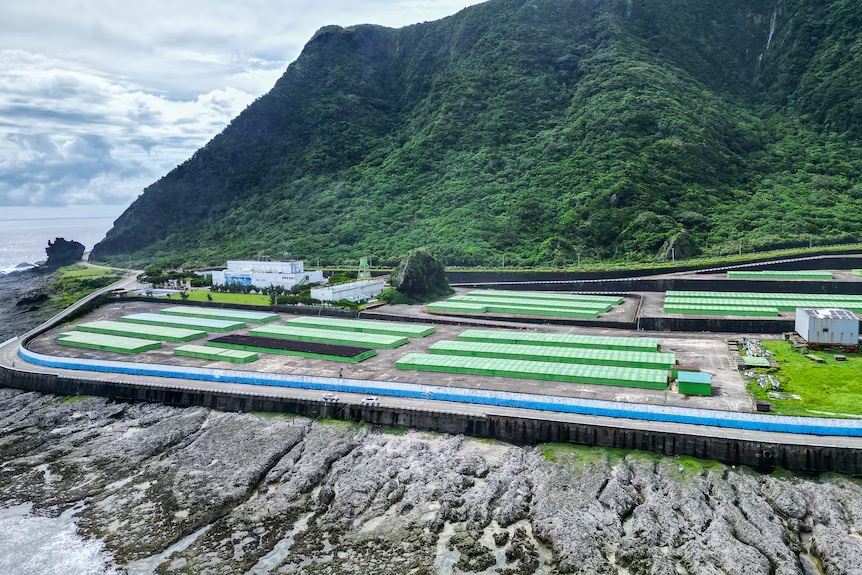
nuclear waste on Lanyu in Taiwan
ABC News, By East Asia correspondent Kathleen Calderwood, Xin-yun Wu and Fletcher Yeung in Lanyu and Hsinchu, Taiwan, 26 Oct 24
As Syamen Womzas harvests taro in a water-logged field on Lanyu, pebbles of sweat trace the lines on his face.
The early autumn sun still beats hard on the island and, about as far south-west as you can go and still be in Taiwan, the humidity is oppressive.
“This is the field I inherited from my parents,” he says.
“These fields have been here for generations.”
The tiny island he calls home is at the heart of Taiwan’s nuclear power debate.
For decades, Lanyu has been saddled with a nuclear waste facility, which Syamen Womzas and others have protested over and campaigned to have removed, fearing environmental impacts.
He wants to see Taiwan completely free of nuclear power.
That transition is happening, but as Taiwan works to phase out its nuclear plants, questions are being asked about how it will continue to power itself……..
Nuclear power and democracy in Taiwan
Syamen Womzas is a member of the Taiwanese aboriginal Tao people, who have lived on Lanyu for thousands of years.
Fringed by emerald cliffs and other-worldly rock formations, today the island is a haven for divers and tourists wanting to explore its stunning coral reefs and enjoy its laid-back lifestyle.
But the nuclear waste facility is one enduring scar on the otherwise pristine island.
“When the nuclear waste entered Lanyu, we people in Lanyu were completely uninformed,” Syamen Womzas tells the students at the Lanyu Elementary School, where he is the principal.
“They said they were building a military harbour and a canning factory.
“No one knew that the so-called cans would turn out to be barrels of nuclear waste.
“For almost 40 years we’ve kept asking the government to remove the storage site, but the officials keep delaying.”
In the 1970s and 80s, when Taiwan was still under martial law and the authoritarian rule of the exiled Kuomintang government, three nuclear power plants were built.
But as Taiwan moved towards democratisation and the Chernobyl disaster occurred in Ukraine, an anti-nuclear movement began to emerge.
“The ruling Democratic Progressive Party really came together only in 1986 — the year of Chernobyl,” says clean energy advocate Angelica Oung, founder of the Clean Energy Transition Alliance.
“The fact that that was such big news back then caused people to draw an equal sign between authoritarianism, contamination and nuclear energy as a symbol of the lack of democracy that Taiwan was under.
“They made it a goal to get rid of nuclear energy in Taiwan, and so the fight against nuclear energy and the fight for democracy in Taiwan have become entwined.”
Fear of disaster puts nuclear out
In 2011, after the Fukushima disaster in Japan, the nuclear debate really entered the mainstream.
It stirred fear in the community that a similar accident could happen in Taiwan where, like Japan, it’s prone to frequent earthquakes.
In the years following, the Democratic Progressive Party installed a nuclear-free homeland policy under which it committed not to renew the licences of the three existing plants.
Meanwhile, the construction of a fourth plant had been beset by problems and delays over a 15-year period.
Then in 2021, a referendum was held that saw the Taiwanese public vote against finally firing it up.
………………………Taiwan’s government now seems to be hedging on its no-nuclear policy and testing the water on how the public might react to the possibility of extending the licence of the nuclear plants…………………………
two power plants have been shut down, with the final one due to be completely decommissioned by May next year.
…………………………Construction of offshore wind is stalling because of delays, high costs due to a local component requirement and the geopolitical risks of investing in Taiwan, while there is limited land space for solar.
………………………………………..The Taiwan Semiconductor Manufacturing Company (TSMC), arguably the world’s most important chip firm, is headquartered in Hsinchu.
“The semiconductor industry is an absolute monster when it comes to consuming electricity,” Ms Oung says.
………………………….Differing views on the future
Meanwhile, Taiwan’s electricity company Taipower is still deciding on what to do with the rest of Taiwan’s nuclear waste.
It says it will decide on a permanent storage location by 2038. If a new site is approved, Taipower says it will also relocate the waste from Lanyu there.
…………………….recently, the government found that Taipower has failed to properly monitor and manage the waste.
The report was initiated in response to a complaint filed by the family of a man who was diagnosed with leukaemia three years after working at the storage site.
It found that “workers performing inspection and re-packaging work back then were likely exposed to quite high doses of radiation.”
“Over the past 30 to 40 years, managing and storing each of these 100,000-plus barrels has cost at least $NT1 million ($47,000) per barrel, with expenses expected to continue indefinitely.”
………………………..Syamen Womzas, the school principal, still worries about how it will impact the environment.
“If the nuclear waste stays in Lanyu, it will continue to impact the environment,” he says.
“It will also impact the roots of the plants, and the habits of the animals.
“I think we are constantly thinking (about) progress and development, so we need more electricity — if everyone can think about more rational use of energy, I think it will be better for the earth.”
Nuclear energy not the way to go: coalition Taiwan
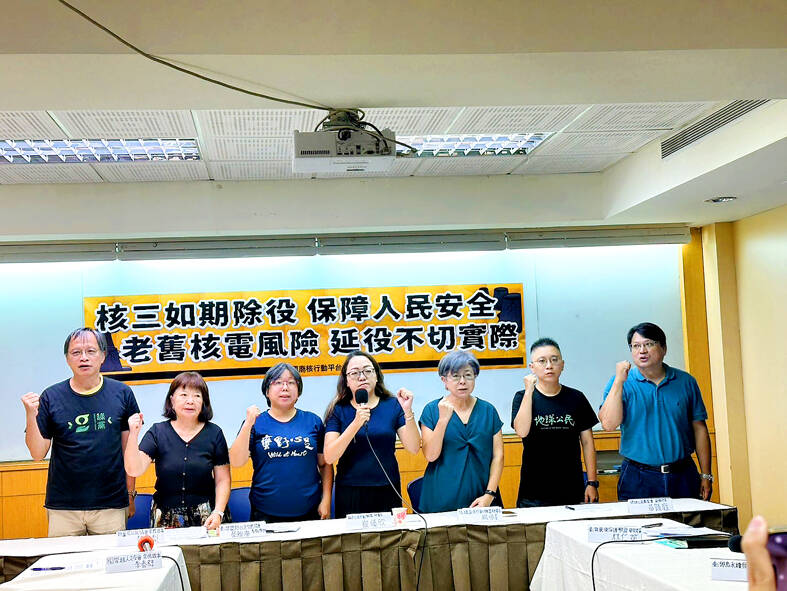
By Yang Yin-ting and Jonathan Chin / Staff reporter, with staff writer, https://www.taipeitimes.com/News/taiwan/archives/2024/07/27/2003821385
Relying on nuclear power is the wrong strategy for Taiwan to achieve net zero emissions, a coalition of environmental groups said yesterday, amid rising calls from some lawmakers and government officials in support of it.
The National Nuclear Abolition Action Platform held a news conference in Taipei yesterday — two weeks before the National Climate Change Response Committee’s inauguration meeting, which is expected to discuss nuclear power.
The Chinese Nationalist Party (KMT) has indicated that it would seek to extend the operations of the nation’s nuclear reactors, including the ones at the Ma-anshan Nuclear Power Plant in Pingtung County, a coalition spokesperson said.
The Ma-ashan plant’s first reactor, which has reached the end of its 40-year service life limit, is to be deactivated today, while its second reactor is scheduled for decommissioning in May next year, it said.
The KMT’s failure to acknowledge the public security risks posed by the nation’s aged reactors or the problem of nuclear waste disposal has exposed the recklessness of the party’s energy policy, it said.
Lawmakers should drop proposed amendments to the Nuclear Reactor Facilities Regulation Act (核子反應器設施管制法) and allow the Ma-anshan plant to be decommissioned as planned, the spokesperson said.
Green Citizens’ Action Alliance secretary-general Tsuei Su-hsin (崔愫欣) said that high operating costs and the lack of suitable sites for waste disposal make the bid to continue generating nuclear power impractical for Taiwan.
Taiwan Environmental Protection Union executive Lin Ren-pin (林仁斌) said that global energy production trends point to a decline in nuclear energy.
China — which has built more new nuclear reactors than any country in the world — reported that renewables experienced faster growth than nuclear energy, he added.
The Ma-anshan plant straddles a geological faultline in the Hengchun Peninsula and has a terrible safety record, Lin said.
The scarcity of land, high population density and propensity to build nuclear power plants on soft rock strata are a recipe for disaster on the scale of the partial meltdown at Japan’s Fukushima Dai-ichi nuclear power plant, he said.
Moms Love Taiwan Association secretary-general Yang Shun-me (楊順美) said that the Jinshan Nuclear Power Plant is practically decommissioned, as the lion’s share of its equipment and transmission towers had already been removed.
The remaining facilities at the power plant has not been maintained for many years, she added.
The Guosheng Nuclear Power Plant has two inoperable reactors, while the Ma-anshan plant cannot resume operations without a full shutdown and replacing critical components, Yan said.
This means none of the nation’s three nuclear power plants stand a chance of contributing to emissions reduction, she said.
Citizen of the Earth Taiwan deputy director Huang Ching-ting (黃靖庭) said opposition lawmakers were making untruthful claims about a purported energy shortage.
Citing Taiwan Power Co’s electricity supply report this month, he said that Taiwan has enough energy to keep the nighttime reserve margin above 10 percent through 2030, which does not indicate a shortage.
Nuclear power plants must obtain safety certifications and replace key components before lengthening their service life, he said, adding that the process is estimated to take five to 10 years.
The Ma-anshan plant is rightly decommissioned since the facility’s reactors generate a marginal amount of electricity compared with the safety risks they represent, he said.
Altogether, there is virtually no chance that Taiwan could get any of its old nuclear power plants back online before 2030, Huang said.
Using nuclear energy to reduce emissions is impractical and impossible to implement in time, he said
US greenlights new arms sale to Taiwan

RT News 20 June 24
The $360 million deal will provide Taipei with hundreds of armed drones and missiles, the State Department has said
The US State Department has approved a new weapons sale to Taiwan involving hundreds of armed drones and missiles worth $360 million, the Pentagon’s Defense Security Cooperation Agency (DSCA) has said.
Under the deal that was concluded on Tuesday, Taiwan will receive Altius-600M systems, which are unmanned aerial vehicles equipped with warheads, and related equipment at an estimated cost of $300 million, the agency said.
The US will also provide 720 Switchblade kamikaze drones known as “extended-range loitering munitions” along with accompanying fire control systems worth $60.2 million, according to the DSCA. Loitering munitions are small guided missiles that can fly around a target area until they are directed to attack.
………………………US defense contractor AeroVironment, which has been supplying Ukraine with the Switchblade suicide drones, said in April that the company had been “gratified by overwhelming user feedback and demand for additional systems.”
The Altius-600M drone can accommodate “multiple seeker and warhead options,” and can be launched from ground, air or sea, according to its manufacturer, Anduril………………………… https://www.rt.com/news/599548-us-approves-taiwan-arms-sale/—
There Is No Grudge That Cannot Be Resolved, China’s Xi Jinping Tells Former Taiwan President Ma Ying-jeou in Momentous Beijing Meeting
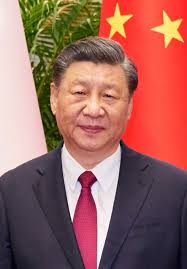
“[There is] [n]o problem that cannot be talked through. And there are no forces that can separate us,” Xi Jinping said.
By Diego Ramos ScheerPost, https://scheerpost.com/2024/04/10/there-is-no-grudge-that-cannot-be-resolved-chinas-xi-jinping-tells-former-taiwan-president-ma-ying-jeou-in-momentous-beijing-meeting/
In a historic meeting marking mainland China’s first reception of a former or serving Taiwanese president, President Xi Jinping and former Taiwanese president Ma Ying-jeou engaged in a dialogue of peace and unity in Beijing on April 10.
Amidst heightened tensions between China and Taiwan, mentions of war are commonplace but according to Ma, “If there’s war, it would be unbearable to the Chinese nation, and the two sides of the [Taiwan] strait have the wisdom to handle their disputes peacefully.”
This echoes Xi’s assertion that the two governments can converse and resolve issues: “Compatriots on the two sides are both Chinese. There is no grudge that cannot be resolved. No problem that cannot be talked through. And there are no forces that can separate us.”
Xi, alluding to reunification, also made reference to “foreign interference,” which, according to him, could not get in the way of a “family reunion.”
The meeting comes a month before William Lai Ching-te, current Taiwanese vice president and president-elect, is set to step into office. Despite being part of the independence-favoring Democratic Progressive Party, the South China Morning Post (SCMP) reports that Beijing does not see significance in the party’s electoral victory.
Zhu Songling, a Taiwan affairs specialist at Beijing Union University, told SCMP that the talks came at a favorable time, citing president-elect Lai’s approaching inauguration. Songling also said Ma’s reception in Beijing signaled the Chinese government’s willingness and resolve to peacefully settle the cross-strait issues.
“Since Ma is not in office, many of his ideas may not be implemented in concrete terms, but in general this [meeting] is still of great significance,” Zhu said, mentioning Ma’s continued influence in the Beijing-friendly Kuomintang (KMT) party.
Towards the end of Ma’s “journey of peace,” another KMT leader, former mayor of Taipei Hau Lung-bin, also plans to visit mainland China, with the possibility of meeting with Xi as well.
Hau is set to visit Zhengzhou and take part in the annual cultural spectacle that pays tribute to the Yellow Emperor. The tribute honors Chinese ancestry and heritage and Hau said his visit “emphasise[s] the fact that the people from both sides of the Taiwan Strait share the same root, the same origin, and the same historical and cultural backgrounds, which should go beyond political differences.”
“It would be unreasonable for the cross-strait relations to end up in a military crisis or dangerous war caused by political manipulation,” Hau also mentioned.
U.S. Sells ‘Link 16’ Battlefield Communications System to Taiwan
22 February 2024
Taipei, February 22 (EFE).- The United States has approved the possible sale of an advanced military data link system upgrade to Taiwan, the first acquisition of this type following Taipei’s January election, the island’s government confirmed Thursday.
In a statement, Taiwan’s foreign ministry said it received formal notification from the US government about the possible sale of the Link-16 system to Taiwan for an estimated value of $75 million.
Link-16 is a standardized communications system used by the armed forces of the US and other countries to transmit and exchange real-time tactical data through the use of links between allied military network participants…………………………………….. https://efe.com/en/latest-news/2024-02-22/us-approves-possible-sale-of-advanced-military-data-link-system-to-taiwan/
1 This Month


Petition to revoke the licensing of the Near Surface Nuclear Disposal Facility (NSDF) at Chalk River. https://www.ourcommons.ca/petitions/en/Petition/Details?Petition=e-7247


of the week – STOP SMALL MODULAR REACTORS IN CANADA
To see nuclear-related stories in greater depth and intensity – go to https://nuclearinformation.wordpress.com
-
Archives
- March 2026 (163)
- February 2026 (268)
- January 2026 (308)
- December 2025 (358)
- November 2025 (359)
- October 2025 (376)
- September 2025 (258)
- August 2025 (319)
- July 2025 (230)
- June 2025 (348)
- May 2025 (261)
- April 2025 (305)
-
Categories
- 1
- 1 NUCLEAR ISSUES
- business and costs
- climate change
- culture and arts
- ENERGY
- environment
- health
- history
- indigenous issues
- Legal
- marketing of nuclear
- media
- opposition to nuclear
- PERSONAL STORIES
- politics
- politics international
- Religion and ethics
- safety
- secrets,lies and civil liberties
- spinbuster
- technology
- Uranium
- wastes
- weapons and war
- Women
- 2 WORLD
- ACTION
- AFRICA
- Atrocities
- AUSTRALIA
- Christina's notes
- Christina's themes
- culture and arts
- Events
- Fuk 2022
- Fuk 2023
- Fukushima 2017
- Fukushima 2018
- fukushima 2019
- Fukushima 2020
- Fukushima 2021
- general
- global warming
- Humour (God we need it)
- Nuclear
- RARE EARTHS
- Reference
- resources – print
- Resources -audiovicual
- Weekly Newsletter
- World
- World Nuclear
- YouTube
-
RSS
Entries RSS
Comments RSS
 nuclear-news