Pakistan nuclear weapons, 2023
Bulletin, By Hans M. Kristensen, Matt Korda, Eliana Johns, September 11, 2023
Pakistan continues to gradually expand its nuclear arsenal with more warheads, more delivery systems, and a growing fissile material production industry. Analysis of commercial satellite images of construction at Pakistani army garrisons and air force bases shows what appear to be newer launchers and facilities that might be related to Pakistan’s nuclear forces.
We estimate that Pakistan now has a nuclear weapons stockpile of approximately 170 warheads (See Table 1 on original). The US Defense Intelligence Agency projected in 1999 that Pakistan would have 60 to 80 warheads by 2020 (US Defense Intelligence Agency 1999, 38), but several new weapon systems have been fielded and developed since then, which leads us to a higher estimate. Our estimate comes with considerable uncertainty because neither Pakistan nor other countries publish much information about the Pakistani nuclear arsenal.
With several new delivery systems in development, four plutonium production reactors, and an expanding uranium enrichment infrastructure, Pakistan’s stockpile has the potential to increase further over the next several years. The size of this projected increase will depend on several factors, including how many nuclear-capable launchers Pakistan plans to deploy, how its nuclear strategy evolves, and how much the Indian nuclear arsenal grows. We estimate that the country’s stockpile could potentially grow to around 200 warheads by the late 2020s, at the current growth rate. But unless India significantly expands its arsenal or further builds up its conventional forces, it seems reasonable to expect that Pakistan’s nuclear arsenal will not continue to grow indefinitely but might begin to level off as its current weapons programs are completed…………………………………………………………………………………………………………………………………………………………………………………………………………………..more https://thebulletin.org/premium/2023-09/pakistan-nuclear-weapons-2023/
Secret Pakistan cable documents US pressure to remove Imran Khan
“All will be forgiven,” said a U.S. diplomat, if the no-confidence vote against Pakistan Prime Minister Imran Khan succeeds.
The Intercept, Ryan Grim, Murtaza Hussain, August 9 2023,
THE U.S. STATE DEPARTMENT encouraged the Pakistani government in a March 7, 2022, meeting to remove Imran Khan as prime minister over his neutrality on the Russian invasion of Ukraine, according to a classified Pakistani government document obtained by The Intercept.
The meeting, between the Pakistani ambassador to the United States and two State Department officials, has been the subject of intense scrutiny, controversy, and speculation in Pakistan over the past year and a half, as supporters of Khan and his military and civilian opponents jockeyed for power. The political struggle escalated on August 5 when Khan was sentenced to three years in prison on corruption charges and taken into custody for the second time since his ouster. Khan’s defenders dismiss the charges as baseless. The sentence also blocks Khan, Pakistan’s most popular politician, from contesting elections expected in Pakistan later this year.
One month after the meeting with U.S. officials documented in the leaked Pakistani government document, a no-confidence vote was held in Parliament, leading to Khan’s removal from power. The vote is believed to have been organized with the backing of Pakistan’s powerful military. Since that time, Khan and his supporters have been engaged in a struggle with the military and its civilian allies, whom Khan claims engineered his removal from power at the request of the U.S.
The text of the Pakistani cable, produced from the meeting by the ambassador and transmitted to Pakistan, has not previously been published. The cable, known internally as a “cypher,” reveals both the carrots and the sticks that the State Department deployed in its push against Khan, promising warmer relations if Khan was removed, and isolation if he was not.
The document, labeled “Secret,” includes an account of the meeting between State Department officials, including Assistant Secretary of State for the Bureau of South and Central Asian Affairs Donald Lu, and Asad Majeed Khan, who at the time was Pakistan’s ambassador to the U.S.
The document was provided to The Intercept by an anonymous source in the Pakistani military who said that they had no ties to Imran Khan or Khan’s party. The Intercept is publishing the body of the cable below, correcting minor typos in the text because such details can be used to watermark documents and track their dissemination………………………………………………………………………………………………………………………………………………
The Intercept has made extensive efforts to authenticate the document. Given the security climate in Pakistan, independent confirmation from sources in the Pakistani government was not possible. The Pakistan Embassy in Washington, D.C., did not respond to a request for comment……………………………………………………………………………………………………………………
more https://theintercept.com/2023/08/09/imran-khan-pakistan-cypher-ukraine-russia/—
India and Pakistan Must Negotiate Nuclear Responsibilities
South Asia Voices, by Ladhu R. Choudhary, April 7, 2023
In 2019, while addressing an election rally, Indian Prime Minister Narendra Modi stated a fiery public remark, “every other day they [Pakistan] used to say ‘we have nuclear button, we have nuclear button.’ What do we have then? Have we kept it for Diwali (a mega Indian festival celebrated with extensive use of firecrackers)?” His statement is just one example of India and Pakistan’s exaggerated rhetoric around their nuclear rivalry.
…………………………………………… responsible nuclear states should strategize to stigmatize the bomb. Most importantly, these statements undermine the essential ingredients of nuclear responsibilities.
Nuclear responsibilities are defined as a set of extraordinary obligations and reasoning of the nuclear weapon states to exercise restraint in nuclear posturing and proliferation activities to avoid nuclear crises and avert a nuclear arms race. A nuclear responsibilities framework demands that states prioritize behaviors that reinforce credible deterrence postures and doctrines, reduce nuclear risks, and create the conditions for disarmament. Given the catastrophic risks of escalation, the political leadership in both India and Pakistan should refrain from acts of nuclear irresponsibility and demonstrate their respect for nuclear safety and security norms.
………………………………………………. Existing South Asian Nuclear Culture Lacks Nuclear Responsibilities
When politicians in India and Pakistan remind one another of the nuclear button and equate nuclear weapons with Diwali firecrackers, they reinforce South Asian atomic culture. This atomic culture has facilitated the acquisition of nuclear technology with chauvinistic pride and a symbol of supreme power for political independence. It has limited space for negotiating potential threats of nuclear exchanges and shared responsibilities of hostile SNW. For instance, New Delhi and Islamabad have not been able to build robust institutional arrangements for Nuclear Confidence Building Measures (NCBMs).
India and Pakistan need a better cooperation record for joint nuclear doctrine formulations and identifying implementation procedures. Furthermore, their ambiguous doctrines, postures, and accidents may escalate nuclear instability. ……………………………… more https://southasianvoices.org/india-and-pakistan-must-negotiate-nuclear-responsibilities/
China marketing nuclear reactors to Pakistan
Pakistani Prime Minister Shehbaz Sharif has inaugurated the third unit of
the Karachi Nuclear Power Plant (KANUPP), which has 1.1GW of power
generating capacity. Built with an investment of $2.7bn, the K-3 nuclear
unit is expected to ease Pakistan’s ongoing energy crisis, according to
Bloomberg.
It is the second Chinese-designed Hualong One reactor to be
deployed at KANUPP, having been built with the Chinese Government’s
assistance under the China-Pakistan Economic Corridor (CPEC) initiative. At
the inauguration ceremony, Prime Minister Sharif said Pakistan ‘badly
needs’ clean and cheap sources of energy, be they nuclear, hydropower or
other renewables.
Power Technology 3rd Feb 2023
https://www.power-technology.com/news/pakistan-karachi-nuclear-power-plant/
Former US Secretary of State says Pakistan’s 2019 conflict with India almost sparked nuclear war
A former high-ranking US official has revealed he will “never forget the night” when the world witnessed what almost became a nuclear catastrophe.
Alex Blair news.com.au 25 Jan 23
Former US Secretary of State Mike Pompeo has detailed just how close the world came to nuclear war in 2019.
In February 2019, the relationship between rival nuclear powers India and Pakistan came dangerously close to escalating into a full-blown conflict, Pompeo writes in his memoir.
It all kicked off when India launched a military operation against militants within Pakistani territory, in response to an attack on its own troops in the disputed region of Kashmir that left 40 Indian soldiers dead.
Pakistan retaliated by shooting down two Indian aircraft and capturing a fighter pilot.
Both nations lay claim to Kashmir, but currently control only portions of the region. India has long accused Pakistan of supporting separatist militants in the Kashmir Valley, a claim that Pakistan denies.
The two nations, both nuclear powers, have engaged in multiple conflicts throughout their history, with the majority of these conflicts centred around the disputed region.
In his memoir, Never Give An Inch: Fighting for the America I Love, Pompeo emphasises that the world was unaware of the sheer gravity of the situation……………………………………………………….. more https://www.news.com.au/technology/innovation/military/former-us-secretary-of-state-says-pakistans-2019-conflict-with-india-almost-sparked-nuclear-war/news-story/75da26ebea96f1064d024205c6108bc2
Pakistan supplies India with a list of its nuclear facilities
Pakistan said it had handed a list of its nuclear installations and
facilities to the Indian mission in Islamabad on Sunday under a decades-old
agreement between the two nuclear-armed rivals. The neighbours have fought
three wars and have had a number of military skirmishes in recent years.
Last year an Indian missile accidentally landed in Pakistan, setting off
alarm bells across the world.
Reuters 1st Jan 2023
US imposes sanctions on six Pakistan companies for unsafeguarded nuclear activities
The US on Thursday designated six companies based in Pakistan on its entity list for unsafeguarded nuclear and missile proliferation activities.
The US on Thursday designated six companies based in Pakistan on its entity list for unsafeguarded nuclear and missile proliferation activities.
The Department of Commerce added as many as 24 companies to the entities list including those from Pakistan, Latvia, Russia, Singapore, Switzerland and United Arab Emirates.
Companies based out of Pakistan are Dynamic Engineering Corporation, EnerQuip Private, Ltd., NAR Technologies General Trading LLC, Trojans, Rainbow Solutions, and Universal Drilling Engineers.
According to a federal register notification, Dynamic Engineering Corporation has been added to the ‘Entity List’ because it poses an unacceptable risk of using or diverting export control items to Pakistan’s unsafeguarded nuclear activities, contrary to the national security and foreign policy interests of the United States.
Same is the case with Rainbow Solutions, while EnerQuip Private, Ltd., and Universal Drilling Engineers have been added to the list based on their contributions to unsafeguarded nuclear activities and missile proliferation-related activities.
NAR Technologies General Trading LLC and TROJANS have been added to the Entity List under the destinations of Pakistan and the U.A.E., based on their actions and activities that are contrary to the national security and foreign policy interests of the United States.
Specifically, these companies have supplied and/or attempted to supply items subject to export control to Pakistan’s unsafeguarded nuclear activities and ballistic missile programme.
The ‘horrors of climate change’ hit Pakistan
More than 1,000 dead and 33MILLION people displaced due to Pakistan flash
floods: Terrifying torrents of water are filmed wiping village away after
monsoon. More than 1,000 deaths from widespread flooding in Pakistan amid
‘climate catastrophe’ monsoon season. Flash flooding washed away entire
villages as 33 million Pakistanis were displaced and army called to rescue.
Pakistani military chiefs released a video Sunday pleading with countries
to offer their financial support. PM Shahbaz Sharif blamed ‘the horrors of
climate change’ for dramatic scenes which saw hotel washed away.
Daily Mail 29th Aug 2022
Pakistan’s desperate plight after monster flooding
Pakistan is appealing for further international assistance after floods
wreaked havoc across the country. The US, UK, United Arab Emirates and
others have contributed to a monsoon disaster appeal but more funds are
needed, an interior ministry official told the BBC. More than 1,000 people
have died and millions have been displaced since June, Salman Sufi said. He
said Pakistan’s government was doing everything in its power to help
people.
BBC 28th Aug 2022
Pakistan Reaffirms Pledge To Nuclear Non-Proliferation Goals
Eurasia Review , By Sher Bano
1540 Support Unit of Office for Disarmament Affairs (UNODA) hosted a side event entitled “Regional Approaches to Supporting UNSCR 1540 (2004)” on 1st June, 2022. UNSCR 1540 came in 2004 as a response to the threats of WMDs, non-proliferation and terrorism that emerged in 21st century. ……………………….
Pakistan conveyed its consistent view during the general debate that the international instruments and standards that are designed to address the threats to international security and peace posed by WMDs must be developed through multilateral and inclusive negotiations. Pakistan being a responsible nuclear state and member of the Security Council has being fulfilling its obligations under the resolution 1540 in order to strengthen the global framework for the non-proliferation of biological, nuclear and radiological weapons to the non-state actors. …………………….
Pakistan also seeks a non-discriminatory global regime on non-proliferation that is principle-based, inclusive and underpinned by the cardinal principle of equal and undiminished security for all states. Genuine progress on disarmament necessitates a conducive regional and global security environment as well as the resolution of long-standing disputes and conflicts. https://www.eurasiareview.com/01072022-pakistan-reaffirms-pledge-to-nuclear-non-proliferation-goals-oped/
 | |||
|
| |||
|
Climate change makes record-breaking heatwaves in northwest India and Pakistan 100 times more likely

Climate change makes record-breaking heatwaves in northwest India and
Pakistan 100 times more likely, a Met Office study finds. The region should
now expect a heatwave that exceeds the record temperatures seen in 2010
once every three years.
Without climate change, such extreme temperatures
would occur only once every 312 years, the Met Office says. The report
comes as forecasters say temperatures in north-west India could reach new
highs in the coming days. The extreme pre-monsoon heatwave the region has
suffered in recent weeks eased a little after peak temperatures reached 51C
in Pakistan on Saturday.
But the heat looks likely to build again towards
the end of this week and into the weekend, the Met Office’s Global Guidance
Unit warns. It says maximum temperatures are likely to reach 50C in some
spots, with continued very high overnight temperatures.
BBC 18th May 2022
Pakistan, India reel under intense heat wave
Market Screener, By Jibran Ahmad and Sumit Khanna, 29 Apr 22,
PESHAWAR, Pakistan/AHMEDABAD,India (Reuters) -Pakistan issued a heat warning after the hottest March in 61 years while in parts of neighbouring India schools were shut and streets deserted as an intense heave wave on Friday showed no signs of abating.
Pakistan’s Federal Minister for Climate Change, Sherry Rehman, urged the federal and provincial governments to take precautionary measures to manage the intense heat wave, which touched highs of 47 degrees Celsius (116.6 Fahrenheit) in parts of the country.
“South Asia, particularly India and Pakistan are faced with what has been a record-breaking heatwave. It started in early April and continues to leave the people gasping in whatever shade they find,” Rehman said in a statement.
Temperatures were predicted to rise by 6 to 8 degrees Celsius above average temperatures after the hottest March on record since 1961, she said.
More than a billion people are at risk of heat-related impacts in the region, scientists have warned, linking the early onset of an intense summer to climate change. For the first time in decades, Pakistan had gone from winter to summer without the spring season, Rehman said.
The government has also told provincial disaster management authorities to prepare urgently for the risk of flash-flooding in northern mountainous provinces due to rapid glacial melting, Rehman said.
Glaciers in the Himalaya, Hindu Kush and Karkoram mountain ranges have melted rapidly, creating thousand of glacial lakes in northern Pakistan, around 30 of which were at risk of sudden hazardous flooding, the climate change ministry said, adding around 7 million people were vulnerable.
A senior scientist at the India Meteorological Department said https://twitter.com/ANI/status/1519938880824176641?s=20&t=NgygE8RS-D4wfM-OJxp9Ew on Friday heat conditions would persist for at least the next three days, but that temperatures would fall after the arrival of monsoons, expected in some parts by May.
The health problems triggered by the heatwave were posing a bigger worry than the expected fourth wave of COVID-19, doctors in India said.
“We are getting many patients who have suffered heatstroke or other heat-related problems,” said Mona Desai, former president of Ahmedabad Medical Association in the western Indian state of Gujarat.
She said that 60-70% of the patients were school-aged complaining of vomiting, diarrhoea, abdominal colic, weakness and other symptoms.
Roads were deserted in Bhubaneshwar, in India’s eastern state of Odisha, where schools have been shut, while neighbouring West Bengal advanced the school summer break by a few days.
India, Pakistan exchange list of nuclear power installations
India, Pakistan exchange list of nuclear power installations, https://energy.economictimes.indiatimes.com/news/power/india-pakistan-exchange-list-of-nuclear-power-installations/88642567 India and Pakistan exchanged lists of nuclear installations and facilities…….
Why the U.S. let Pakistan nuclear scientist A.Q. Khan off the hook
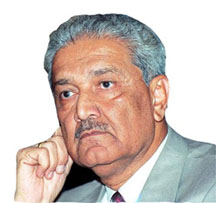
Former Netherlands Prime Minister Ruud Lubbers revealed in 2005 that Dutch authorities wanted to arrest Khan in 1975 and again in 1986 but that on each occasion the Central Intelligence Agency advised against taking such action. According to Lubbers, the CIA conveyed the message: “Give us all the information, but don’t arrest him.”
After Khan was tried in absentia and sentenced to four years in prison in 1983 for stealing uranium enrichment secrets from the Netherlands, files held by an Amsterdam court were mysteriously lost, with the main judge suspecting the CIA’s hand in their disappearance.
When an appeals court overturned Khan’s conviction on a technicality, the Netherlands — a key U.S. ally during the Cold War — declined to seek a retrial, effectively letting Khan off the hook. As the Financial Times put it, the Dutch “abandoned prosecution of the most consequential crime committed on their territory since the second world war.
Why the U.S. let Pakistan nuclear scientist A.Q. Khan off the hook https://asia.nikkei.com/Opinion/Why-the-U.S.-let-Pakistan-nuclear-scientist-A.Q.-Khan-off-the-hook
Decision could still come back to haunt Washington
Brahma Chellaney, October 18, 2021 Brahma Chellaney Is A Geostrategist And Author Of Nine Books, Including “Asian Juggernaut: The Rise Of China, India And Japan.”
The incredible story of Abdul Qadeer Khan, the Netherlands-trained Pakistani metallurgist who — with impunity — ran an illicit global nuclear-smuggling network for a quarter-century would make for a captivating thriller.
A key plotline would surely be the mystery of why Khan, who died on Oct. 10 from complications caused by COVID-19, was never indicted by the U.S. for stealing nuclear secrets from the West. Khan played a pivotal role in helping Pakistan develop nuclear weapons and then selling crucial know-how to three U.S.-labeled “rogue states” — Iran, North Korea and Libya.
Former Netherlands Prime Minister Ruud Lubbers revealed in 2005 that Dutch authorities wanted to arrest Khan in 1975 and again in 1986 but that on each occasion the Central Intelligence Agency advised against taking such action. According to Lubbers, the CIA conveyed the message: “Give us all the information, but don’t arrest him.”
After Khan was tried in absentia and sentenced to four years in prison in 1983 for stealing uranium enrichment secrets from the Netherlands, files held by an Amsterdam court were mysteriously lost, with the main judge suspecting the CIA’s hand in their disappearance.
When an appeals court overturned Khan’s conviction on a technicality, the Netherlands — a key U.S. ally during the Cold War — declined to seek a retrial, effectively letting Khan off the hook. As the Financial Times put it, the Dutch “abandoned prosecution of the most consequential crime committed on their territory since the second world war.”
Geopolitics partly explains why the CIA wanted to protect Khan.
While the U.S. and India are close partners today, at the time Dutch authorities were seeking to arrest Khan, the U.S. was not averse to the idea of Pakistan developing a nuclear-weapons capability to balance India, which had conducted its first nuclear test in 1974. For years, the U.S. simply turned a blind eye to Pakistan’s covert nuclear-weapons development.
American concerns, however, were stirred when Khan began selling nuclear items to other renegade states. U.S. pressure compelled Pakistan to open investigations into Khan’s activities in 2003 after Iran and Libya admitted to the International Atomic Energy Agency (IAEA) that Pakistan-linked black marketeers supplied them with the components they needed to advance their nuclear research.
In 2004, Khan appeared on national television asking for forgiveness, saying he had acted entirely on his own in passing on nuclear secrets to other countries. “I take full responsibility for my actions,” Khan said, “and seek your pardon.”
After this orchestrated confession, Pakistani dictator General Pervez Musharraf, citing Khan’s status as a national hero, pardoned him. Musharraf also barred U.S. or IAEA investigators from questioning Khan. Oddly, Washington went along with this charade, which extended to Khan’s ostensible house detention.
Investigative journalists Adrian Levy and Catherine Scott-Clark, in their acclaimed 2007 book Deception: Pakistan, the United States, and the Secret Trade in Nuclear Weapons, concluded that Khan was the fall guy. “The covert trade in doomsday technology was not the work of one man, but the foreign policy of a nation and supervised by Pakistan’s ruling military clique,” Levy and Scott-Clark wrote, adding that Pakistan’s generals have long maintained a nexus with terrorist groups.
The military’s collusion with Khan was underscored by the use of an army plane in 2000 to transport centrifuges to Pyongyang. In return, Pakistan received North Korean ballistic missile technology, helping it to build its first intermediate-range, nuclear-capable missile, Ghauri.
While most technology transfers appeared to be state-sanctioned, Khan likely sold some nuclear items for personal profit.
Still, despite exaggerated Western media reports then, no evidence has surfaced to indicate that the Pakistani transfers significantly contributed to advancing the Iranian, North Korean and Libyan nuclear programs. North Korea, the only recipient to cross the nuclear threshold, has long relied on plutonium, which the Khan network did not traffic.
Pakistan’s own nuclear weaponization benefited decisively from clandestine transfers from China, another archrival of India. Such transfers began in 1982, when, as Khan admitted, China supplied the blueprint for one of the nuclear bombs it had tested, as well as enough weapons-grade uranium for two atomic weapons.
Yet the U.S., just as it has not penalized China for its continuing nuclear and missile transfers to Pakistan, chose not to indict the rogue Pakistani scientist that spearheaded an international smuggling enterprise. Washington, however, has indicted a number of other individuals — including as recently as last year — for conspiring to smuggle nuclear goods to Pakistan.
America’s shielding of Khan, a nuclear jihadist committed to payback for real and imagined injustices against Muslims, was doubly ironic because it set the stage for Pakistan’s emergence as an epicenter for terrorism, with its own nuclear weapons acting as enough of a deterrent to retaliation by another state.
Indeed, through its humiliating Afghanistan defeat at the hands of the Taliban, America has tasted the bitter fruits of the Pakistani generals’ cross-border use of jihadist proxies from behind their protective nuclear shield.
The U.S. maintains contingency plans to seize Pakistan’s nuclear weapons if they risk falling into terrorist hands. But if a 9/11 style terrorist attack with a crude nuclear device were to occur anywhere in the world, the trail of devastation would likely lead back to Pakistan.
1 This Month

of the week – Shut Down Drone Warfare!


Tell the Ukrainian Government to Drop Prosecution of Peace Activist Yurii Sheliazhenko

Petition to revoke the licensing of the Near Surface Nuclear Disposal Facility (NSDF) at Chalk River. https://www.ourcommons.ca/petitions/en/Petition/Details?Petition=e-7247
To see nuclear-related stories in greater depth and intensity – go to https://nuclearinformation.wordpress.com
-
Archives
- March 2026 (237)
- February 2026 (268)
- January 2026 (308)
- December 2025 (358)
- November 2025 (359)
- October 2025 (376)
- September 2025 (257)
- August 2025 (319)
- July 2025 (230)
- June 2025 (348)
- May 2025 (261)
- April 2025 (305)
-
Categories
- 1
- 1 NUCLEAR ISSUES
- business and costs
- climate change
- culture and arts
- ENERGY
- environment
- health
- history
- indigenous issues
- Legal
- marketing of nuclear
- media
- opposition to nuclear
- PERSONAL STORIES
- politics
- politics international
- Religion and ethics
- safety
- secrets,lies and civil liberties
- spinbuster
- technology
- Uranium
- wastes
- weapons and war
- Women
- 2 WORLD
- ACTION
- AFRICA
- Atrocities
- AUSTRALIA
- Christina's notes
- Christina's themes
- culture and arts
- Events
- Fuk 2022
- Fuk 2023
- Fukushima 2017
- Fukushima 2018
- fukushima 2019
- Fukushima 2020
- Fukushima 2021
- general
- global warming
- Humour (God we need it)
- Nuclear
- RARE EARTHS
- Reference
- resources – print
- Resources -audiovicual
- Weekly Newsletter
- World
- World Nuclear
- YouTube
-
RSS
Entries RSS
Comments RSS
 nuclear-news