As USA ramps up its nuclear weapons, China is urged to follow suit

China urged to increase sea-based nuclear deterrent amid US intensified strategic threat https://www.globaltimes.cn/page/202105/1224773.shtml By Zhang Hui May 28, 2021 Facing a serious strategic threat from the US, China was urged to increase the number of nuclear weapons, especially its sea-based nuclear deterrent of intercontinental submarine-launched ballistic missiles, to deter potential military action by US warmongers, Chinese military experts said on Friday, after reports that the US’ new defense budget will modernize its nuclear arsenal to deter China.
Having a nuclear arsenal appropriate to China’s position will help safeguard national security, sovereignty and development interests and establish a more stable and peaceful world order, which will be beneficial for the world, they said.The US defense budget, set to be sent to Congress on Friday, is expected to include investments in troop readiness, space, and the Pacific Deterrence Initiative aimed at countering China’s military existence in the region, and nuclear weapons technology, Reuters reported on Thursday.
However, Chinese military experts believe that US attempts of increasing military deployment in the Indo-Pacific region will not increase returns for the US as most countries in the region will not allow the flames of war initiated by the US to burn themselves.
The US would buy ships and jets and develop and test hypersonic weapons and other “next-generation” weapons systems to build capabilities to counter Russia and China. The total national security budget will be $753 billion, a 1.7 percent increase over the 2021 figure, Reuters said.
China has kept its defense spending at around 1.3 percent of GDP in recent years, which is far below the average global level of 2.6 percent, data shows. The US, by far the world’s top military spender, has spent about four times that of China in recent years.
Chinese analysts said China has never taken aim at US military spending, nor does China want to engage in any form of arms race with the US.
But the US has applied greater military pressure on China, sending warships and warplanes at an increasing frequency to the South China Sea and Taiwan Straits.
The US is also preparing what US media called its “biggest navy exercise in a generation with 25,000 personnel across 17 time zones,” as it’s preparing for a “possible conflict” with China and Russia.
The US attempted to deepen the militarization of space with its new budget plan, including its investment on future weapons. Considering that the US deems China its top imaginary enemy, China needs to increase the quantity and quality of nuclear weapons, especially submarine-launched ballistic missiles, to effectively safeguard its national security, sovereignty and development interests, Song Zhongping, a Chinese military expert and TV commentator, told the Global Times on Friday.
Some military experts said China should increase the number of its most advanced intercontinental ballistic missiles (ICBM), the DF-41, which has the longest operational range among all Chinese ICBMs.
Facing a serious strategic threat from the US, China was urged to increase the number of nuclear weapons, especially its sea-based nuclear deterrent of intercontinental submarine-launched ballistic missiles, to deter potential military action by US warmongers, Chinese military experts said on Friday, after reports that the US’ new defense budget will modernize its nuclear arsenal to deter China.
Having a nuclear arsenal appropriate to China’s position will help safeguard national security, sovereignty and development interests and establish a more stable and peaceful world order, which will be beneficial for the world, they said.
Song said that strengthening sea-based strategic nuclear deterrence is also an important direction for China’s future development, as these weapons are better at stealth and secondary nuclear strikes.
China could use its most advanced submarine-launched ballistic missile (SLBM) to effectively counter the US threat, Song said.
China just commissioned three PLA Navy warships, namely the Changzheng 18, the Dalian and the Hainan, at a naval port in Sanya, South China’s Hainan Province in April. Observers identified the Changzheng 18 as a likely Type 09IV nuclear-powered strategic ballistic missile submarine.
Burning themselves
The US Pacific Deterrence Initiative, created to counter China, focuses on competition in the Indo-Pacific and aims to boost US preparedness in the region by funding radars, satellites and missile systems, according to Reuters.
Wei Dongxu, a Beijing-based military expert, told the Global Times on Friday that the initiative enables the US to use a variety of spy satellites to conduct reconnaissance and intelligence gathering to provide extensive and accurate intelligence support for US military operations, including joint military operations with its allies, and the US will also use allies, such as US overseas military bases, to deploy more radar systems to guide its weapons.
On the day its budget was sent to Congress, US Secretary of Defense Lloyd Austin was expected to meet with India’s Minister of External Affairs, Subrahmanyam Jaishankar, as part of India’s first cabinet-level visit to Washington, the Pentagon said.
“The secretary’s meeting with the external affairs minister will continue discussions that the two held in New Delhi in March and will continue the robust bilateral defense and security relationship between our two countries,” the Pentagon said.
Chinese military experts said it’s likely that India would buy more American weapons, have more military drills with the US or deepen its cooperation with the US in military intelligence sharing, and the US will use these in exchange for India’s cooperation for its Indo-Pacific strategy.
But India will have second thoughts on US military deployment on its soil, Song said, noting that weapons and radar deployment involves a country’s sovereignty, and India, which has been claiming to pursue an independent foreign policy, will unlikely give the US a satisfactory answer.
Even if India would like to deepen its military cooperation with the US, certain cooperation such as opening military bases to the US is not an option for India, Song said.
India may not be a very ideal partner, and most of US allies in Asia, including Japan and South Korea, also fear that the flames of war would eventually burn themselves.
In South Korea, protests against US military presence have become louder in the past years, and South Korea will not allow the US to turn Northeast Asia into a battlefield and drag itself into war, nor will it sacrifice its relations with China, observers said.
Zhang Junshe, a senior research fellow at the PLA Naval Military Studies Research Institute, told the Global Times on Friday that Australia is likely to allow the US to deploy more military equipment on its soil, making it the only US friend on its Indo-Pacific strategy.
By doing this, Australia will make itself a target for future military conflicts between the US and other countries, Zhang said, adding that a responsible government which really cares about the interests of its people would never allow it.
Radioactive Fukushima soil stored in flood zones
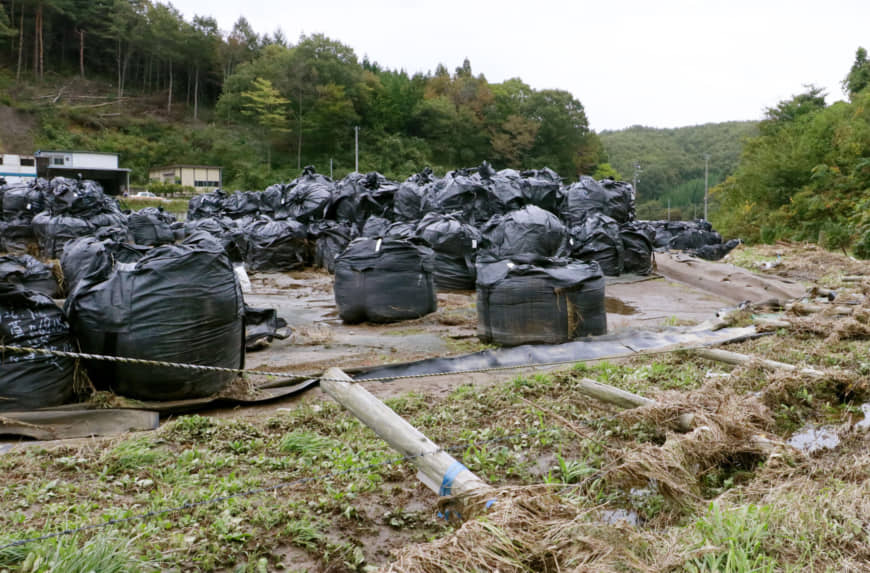
Contaminated Fukushima soil stored in flood zones, audit finds http://www.asahi.com/ajw/articles/14359377?fbclid=IwAR3vSQl1UVoSDAqpoxsL8nYsWhRVPVM55o749Uw1NXEJ9FtvOxh6aquOyq8, By RYOTA GOTO/ Staff Writer, May 27, 2021 Many of the temporary storage sites for soil and waste contaminated by radiation from the crippled Fukushima No. 1 nuclear power plant are located in areas vulnerable to natural disasters, a government audit found.
The Board of Audit of Japan submitted an investigative report to the Diet on May 26 warning the central government to address the contaminated materials that would be in jeopardy in the event of disasters such as landslides and flooding caused by heavy rains, or tsunami.
The board studied the Environment Ministry’s reviews of the temporary storage sites for contaminated soil and designated radioactive waste from October 2019 to April 2020, and took issue with some of its assessments.
The results show 159 out of 170 sites in Fukushima Prefecture, where contaminated soil resulting from the accident at Tokyo Electric Power Co.’s Fukushima No. 1 nuclear plant is being temporarily stored, are within areas deemed vulnerable to landslides and flooding from heavy rain.
The ministry had surveyed locations but concluded that preventive measures were not necessary at 158 sites because the materials were fenced in or the contaminated soil was stored in bags and covered by liner sheets.
As for the remaining location, the ministry moved the contaminated soil to an intermediary storage site.
In nine prefectures including Fukushima, 130 of 379 locations that store contaminated waste are in areas expected to be flooded or hit by landslide in the event of a disaster.For 117 locations, the ministry concluded it is unnecessary to take preventive measures because the waste is stored inside buildings.
But for 13 locations, the ministry said discussion is needed over the necessity of taking preventative measures.
he board said the ministry’s reviews did not include a check of whether each site is located in an area considered vulnerable to tsunami or flooding. The ministry had reasoned that embankments or other obstacles are either in place or under construction, and that the need to take measures against a potential tsunami is low and any impact from a reservoir collapsing would be limited.
But the audit board surveyed 153 temporary storage sites for contaminated soil and found that five of them are vulnerable to a tsunami and three are vulnerable to reservoir flooding.
The board said the ministry needs to consider residents’ concerns about the potential of a leak of contaminated materials, check if the areas are vulnerable to disasters and take preventive measures.
The ministry responded to the audit by defending that it “prioritized quickly securing storage sites at the time and did not have time to check the sites against a hazard map.”
A representative of the Fukushima prefectural government admitted some mistakes were made.
“We knew the locations of storage sites but failed to think about disaster-prevention measures,” the representative said.
China says Japan ‘repeatedly betrayed public trust’ in Fukushima response
 |
China says Japan ‘repeatedly betrayed public trust’ in Fukushima response
Beijing says Tokyo’s handling of Fukushima disaster casts doubt over ‘so-called safe methods, credibility of data’ https://www.aa.com.tr/en/asia-pacific/china-says-japan-repeatedly-betrayed-public-trust-in-fukushima-response/2253463
Riyaz Ul Khaliq |25.05.2021 ANKARA
China on Tuesday repeated its criticism of Japan’s plan to dump treated nuclear waste from the Fukushima nuclear plant into the sea.
“Japan has repeatedly betrayed public trust over its handling of the Fukushima nuclear accident,” Lijian Zhao, spokesperson for China’s Foreign Ministry, said at a news conference in Beijing, according to state-run daily Global Times.
He said Japan’s response to the Fukushima disaster of 2011 has left “a big question mark over the rationality and scientific nature of its so-called safe methods, as well as authenticity and credibility of the data it had provided.”
Apart from China, South Korea, North Korea, the island nation of Taiwan, and other international bodies, including the UN, have previously voiced concern over Tokyo’s idea to release treated wastewater from the destroyed nuclear plant into the ocean in the next two years.
The US, however, has backed Japan’s proposal, which come after years of talks on how to get rid of more than 1 million tons of water accumulated at the Fukushima nuclear complex since the meltdown triggered by a massive earthquake and tsunami in March 2011.
The International Atomic Energy Agency has vowed to play a “central and permanent role in monitoring the discharge.”
Tokyo has said it aims to have an action plan by the end of 2021.
“We will proactively take swift measures to deepen understanding of people in Japan and overseas,” Katsunobu Kato, Japan’s chief Cabinet secretary, said last month.
| Virus-free. www.avast.com |
Thyroid cancer in Fukushima children increased 20-fold — Beyond Nuclear International

In addition to thyroid cancer, other types of malignancies and other diseases triggered or adversely affected by ionized radiation are expected to increase. The FMU thyroid studies represent the only scientific study that can provide any relevant information at all about the health consequences of the Fukushima nuclear disaster. And they are currently in danger of being undermined by the proponents of nuclear energy such as IAEA, which has entered a cooperation with FMU and by the Japanese government, which is trying to dispel any concerns about the meltdowns and nuclear energy as a whole.
Increases are real and can’t be attributed to “screening effect”
Thyroid cancer in Fukushima children increased 20-fold — Beyond Nuclear International
Latest results of the Fukushima thyroid screenings confirm worrying trend https://wordpress.com/read/feeds/72759838/posts/3354864780 By Dr. Alex Rosen, 23 May 21,
In 2011, people in Japan were exposed to radioactive fallout. Some still live in contaminated regions where they are exposed to elevated levels of radiation on a daily basis: radioactive hot-spots on the side of the road, in rice paddies or in sandboxes, contaminated mushrooms or algae, contaminated groundwater, and recontamination from forest fires or flooding.
One of the most dreaded effects of radioactive exposure is the development of cancer through mutation of the DNA. Thyroid cancer in children is certainly not the most dangerous form of radiation-induced cancer, but it is probably the easiest to detect. For one thing, the latency periods before a cancer develops are relatively short, while at the same time, thyroid cancer in children is an extremely rare disease, so that even a slight absolute increase can be statistically detected.
Accordingly, in 2011, there was great pressure on Japanese authorities to investigate the development of thyroid cancer in children and adolescents in Fukushima by conducting long-term screening examinations.
For almost 10 years now, Fukushima Medical University has been regularly examining the thyroid glands of people who lived in Fukushima Prefecture at the time of the meltdowns and were under 18 years of age. Initially, this group consisted of about 368,000 individuals. Of these, 300,000 (about 82%) were successfully screened in the first few years. After the initial screening (2011-2014), follow-up examinations of these children took place every two years. The second examination has already been completed, the third examination is in its final stage, the fourth series of examinations has been running since 2018, and the fifth since 2020.
In the initial investigation in Fukushima, 116 abnormal biopsies were found. Amongst these, 101 cases of cancers were found that were so aggressive that they required surgery. The patients with abnormal biopsies were 6 to 18 years old (average of 14.9 years) at the time of the nuclear disaster. This unexpectedly high number was explained by Fukushima Medical University as a screening effect, the phenomenon of identifying more cases of disease in large-scale screening than would be expected. While the exact magnitude of this screening effect in the first round is unknown, it can be ruled out that the increased cancer rates in subsequent screenings are consequences of a screening effect, because all of these children had already been examined and found to be cancer-free in previous screenings. They must therefore have developed the cancer between the screening examinations.
In the 2nd screening round, 54 cancer cases were found in 71 abnormal biopsies (age at the time of the nuclear disaster 5-18, average of 12.6 years), in the 3rd screening round, another 27 cases were found in 31 abnormal biopsies (age at the time of the nuclear disaster 5-16, average of 9.6 years), and in the current 4th round, 16 new diagnoses have been made in 27 abnormal biopsies (age at the time of the nuclear disaster 0-12, average of 8.0 years). A total of 46 children with suspicious fine-needle biopsies are still under observation and have not yet undergone surgery. The steadily decreasing average age in the screenings is striking: with time, more and more cancer cases are becoming apparent in patients who were still very young at the time of the nuclear disaster, even under 5 years of age.
Incidentally, adolescents in the study cohort who turn 25 are excluded from the main study and transferred to a newly created cohort, the “Age 25 Milestone” group. In this group, 4 additional cases of thyroid cancer have been registered, with 7 conspicuous biopsies so far. The number of unreported cases is likely to be much higher: the participation rate in this study is just 8%. The creation of a new study cohort is generally seen as a measure by FMU to further reduce the number of diagnosed cancer cases.
In addition, there are 11 thyroid cancer cases diagnosed in children from the study cohort, but not during the official screenings. These patients were seen and diagnosed at Fukushima University Hospital. These 11 cases are not reported in the official results, although they show identical tumor entities and occurred in patients who are in the actual study cohort. The 11 cases came to light in June 2017. How many more cases have been diagnosed but not reported since then is unknown. In addition, data from other hospitals in Japan are not available, and patients from contaminated areas outside Fukushima Prefecture are not examined at all, so the unreported number of thyroid cancer cases among patients who were children in the contaminated areas at the time of the meltdowns is likely to be much higher. Nevertheless, the total number of thyroid cancer cases in Fukushima currently stands at 213 (198 official cases from the serial examinations, 4 cases from the Age 25 Milestone cohort and 11 cases from the Fukushima University Hospital).
It is interesting to compare these figures with the overall Japanese incidence rate. The official incidence rate of thyroid cancer in children under 25 in Japan is about 0.59 per 100,000 per year, which means that in the cohort of about 218,000 children, about 1.3 new thyroid cancer cases per year would be expected. Today, 10 years after the beginning of the nuclear disaster, just under 13 thyroid cancer cases would thus have been expected in the study population.
However, the actual number of thyroid cancer cases in Fukushima of 213 is higher by a factor of 16. If we consider only the 112 cases diagnosed after the initial screening and thus not suspected to be caused by a screening effect of any kind, the number of confirmed cases is 20 times higher than the number of expected thyroid cancer cases (5.5 new cases after the end of the initial 1st screening in 2014)
In the following graph, [on original] the officially confirmed thyroid cancer cases (in blue) are compared to the cases expected mathematically in the screening cohort (in orange). It can be seen that the number of cases increased steadily over the course of the initial screening, and continue to increase beyond that, in the years 2014-2020 – an effect that cannot be explained by any kind of screening effect. [Graph on original explains this]
In addition, the geographic distribution of thyroid cancer rates corresponds to the level of radioactive contamination. A significantly higher incidence of thyroid cancer in children was recorded in the 13 most severely contaminated municipalities in eastern Fukushima than in the less contaminated areas in the north, south and central parts of the prefecture. The incidence was lowest in the western part of the prefecture, where the radioactive fallout was also least pronounced.
In the following graph, [on original] the officially confirmed thyroid cancer cases (in blue) are compared to the cases expected mathematically in the screening cohort (in orange). It can be seen that the number of cases increased steadily over the course of the initial screening, and continue to increase beyond that, in the years 2014-2020 – an effect that cannot be explained by any kind of screening effect.
There seems to be a system behind this trend: Fukushima Medical University, which is in charge of the study, has been sending staff to schools in the prefecture for years to educate children about their “right not to participate” and the “right not to know”. On the study forms, there is now a prominent “opt-out” option for people who wish to be removed from the screening. FMU seems to encourage people to opt out of the study. The drop in participation can also be explained by the removal of people over 25 years from the main study. Are FMU staff concerned that the disturbing trend of increasing numbers of thyroid cancer cases will continue? Are they uncomfortable with data that contradicts the thesis, propagated since the beginning of the nuclear disaster, that the multiple meltdowns would not lead to additional cancers?
In addition to thyroid cancer, other types of malignancies and other diseases triggered or adversely affected by ionized radiation are expected to increase. The FMU thyroid studies represent the only scientific study that can provide any relevant information at all about the health consequences of the Fukushima nuclear disaster. And they are currently in danger of being undermined by the proponents of nuclear energy such as IAEA, which has entered a cooperation with FMU and by the Japanese government, which is trying to dispel any concerns about the meltdowns and nuclear energy as a whole.
The people of Japan have an inalienable right to health and to life in a healthy environment. The examination of children’s thyroid glands benefits not only the patients themselves, whose cancers can be detected and treated at an early stage, but also the entire population, which is affected by irradiation from radioactive fallout.
The correct continuation and scientific monitoring of thyroid examinations are therefore in the public interest and must not be thwarted by political or economic motives. It is important to continue to critically accompany these developments from the outside.
Dr. Alex Rosen is a pediatrician and Co-Chair of the German affiliate of IPPNW
Note: this article was first published in IPPNW Germany’s member magazine ippnw forum in 03/21
Headline photo showing thyroid cancer by National Human Genome Research Institute (NHGRI) from Bethesda, MD, USA/Wikimedia Commons
United States considered nuclear strike on China over Taiwan in 1958, classified documents reveal
United States considered nuclear strike on China over Taiwan in 1958, classified documents reveal https://www.scmp.com/news/world/united-states-canada/article/3134511/united-states-considered-nuclear-strike-china-over
The US also assumed that the Soviet Union would aid China and retaliate with nuclear weapons, according to the documents
Former military analyst Daniel Ellsberg is famous for his 1971 leak to US media of a top-secret Pentagon study on the Vietnam war known as the Pentagon Papers
US military planners pushed for nuclear strikes on mainland China in 1958 to protect Taiwan from an invasion by Communist forces, classified documents posted online by Daniel Ellsberg of The Pentagon Papers television show.
US planners also assumed that the Soviet Union would aid China and retaliate with nuclear weapons – a price they deemed worth paying to protect Taiwan, according to the document, first reported by The New York Times.
Former military analyst Ellsberg posted online the classified portion of a top-secret document on the crisis that had been only partially declassified in 1975.
Ellsberg, now 90, is famous for his 1971 leak to US media of a top-secret Pentagon study on the Vietnam war known as the Pentagon Papers.
llsberg told the Times that he copied the top-secret Taiwan crisis study in the early 1970s, and is releasing it as tensions mount between the United States and China over Taiwan.
Had an invasion taken place, General Nathan Twining, the chairman of the Joint Chiefs of Staff at the time, “made it clear that the United States would have used nuclear weapons against Chinese airbases to prevent a successful air interdiction campaign,” the document’s authors wrote.
If this did not stop an invasion, then there was “no alternative but to conduct nuclear strikes deep into China as far north as Shanghai,” the document said, paraphrasing Twining.
In the event, US president Dwight D Eisenhower decided to rely initially on conventional weapons.
The 1958 crisis ended when Communist forces halted artillery strikes on islands controlled by Taiwan, leaving the area under the control of Nationalist forces under Chiang Kai-shek.
China considers Taiwan to be a rebel province that will one day return to the mainland’s fold, by force if necessary.
Washington has recognised Beijing since 1979, but maintains relations with Taipei and is its most important military ally.
In recent months the Chinese air force has increased incursions into Taiwan’s air defence identification zone.
The 1958 crisis ended when Communist forces halted artillery strikes on islands controlled by Taiwan, leaving the area under the control of Nationalist forces under Chiang Kai-shek.
China considers Taiwan to be a rebel province that will one day return to the mainland’s fold, by force if necessary.
Washington has recognised Beijing since 1979, but maintains relations with Taipei and is its most important military ally.
In recent months the Chinese air force has increased incursions into Taiwan’s air defence identification zone.
Discharging Fukushima radioactive waste water to the ocean would violate Japan’s legal and environmental obligations
The Legal Case Against Japan’s Fukushima Wastewater Decision, https://thediplomat.com/2021/05/the-legal-case-against-japans-fukushima-wastewater-decision/
The proposed discharge of wastewater from the Fukushima nuclear plant into the Pacific Ocean would violate Japan’s legal and environmental obligations. By Xiuxiu Zhang, Jeffrey Thaler, and Danning Zhu, May 21, 2021
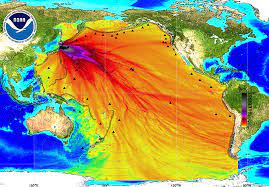
Since the devastating March 2011 Japanese earthquake and tsunami, which damaged the Fukushima Daiichi nuclear power plant, 1.25 million tons of seawater have been pumped through the damaged nuclear units to prevent the melted fuel rods in three damaged reactors from overheating. The contaminated water has been stored in more than 1,000 steel tanks on site. But in April 2021, the Japanese government announced that it would, beginning in 2023 and for decades thereafter, discharge all of the treated wastewater into the Pacific Ocean as part of the plant’s decommissioning process.
Many countries that share a sea border with Japan (especially China, South Korea, and Russia), as well as domestic fishing and export interests, have raised a variety of objections and concerns. Yet with little fanfare in American media, the United States – which has both Alaska and Hawaii at risk – has supported Japan’s plan. The ecological and human risks at stake are potentially huge: The seawater may contain radioactive tritium, strontium-90, and C-14 (the latter known to bioaccumulate in marine ecosystems). Yet international political positioning seems to be playing a greater role than environmental concerns in national responses. Could that change before 2023?
A variety of international treaties, conventions, and agreements, as well as fundamental environmental protection principles, are relevant to the discharge of wastewater from Fukushima.
In 1958, the first United Nations Conference on the Law of Sea adopted the Convention on the High Seas in Geneva, which became effective on September 30, 1962. Pursuant to Article 25 of the Convention, “Every State shall take measures to prevent pollution of the seas from the dumping of radioactive waste, taking into account any standards and regulations which may be formulated by the competent international organizations.” Also in 1958, the Resolution on Pollution of the High Seas by Radioactive Materials was adopted by the first United Nations Conference on the Law of Sea. One of its recommendations was that the International Atomic Energy Agency (IAEA), in consultation with existing groups and established organs having acknowledged competence in the field of radiological protection, should pursue whatever studies and take whatever action is necessary to assist states in controlling the discharge or release of radioactive materials to the sea, in promulgating standards, and in drawing up internationally acceptable regulations to prevent pollution of the sea by radioactive materials in amounts that would adversely affect people and marine resources.
The 1996 London Protocol, signed by many nations, prohibited the dumping of all wastes and other materials is prohibited except certain non-toxic materials that do not contain levels of radioactivity greater than de minimis (exempt) concentrations as defined by the IAEA. In 1999, the IAEA defined “de minimis” risk levels in terms of those of “no regulatory concern” and based on practices and sources that are “inherently safe.”
Last and not least, the United Nations Convention on the Law of the Sea (UNCLOS) is an international treaty ratified by over 160 countries, including China, South Korea, and Japan – but not the United States. UNCLOS stipulates that the ocean is the common heritage of mankind. Pursuant to Article 192, all states have the obligation to protect and preserve the marine environment. UNCLOS also established a complete legal framework that regulates all marine areas, the use of the ocean, and marine resources, as well as the protection and maintenance of the marine environment, marine scientific research, and the development and transfer of marine technology.
Moreover, Article 194 of UNCLOS requires that member countries must: 1) take, individually or jointly as appropriate, all practicable measures necessary to prevent, reduce and control pollution of the marine environment from any source; and 2) take all measures necessary to ensure that activities under their jurisdiction or control are so conducted as not to cause damage by pollution to other states and their environment, and that pollution arising from incidents or activities under their jurisdiction or control does not spread beyond the areas where they exercise sovereign rights in accordance with this Convention. Last, UNCLOS Article 195 specifies that countries shall act so as not to transfer, directly or indirectly, damage or hazards from one area to another or transform one type of pollution into another.
In light of the very clear obligations set forth in UNCLOS and the other conventions, how is the potential Fukushima nuclear wastewater discharging being viewed by neighboring countries?
Both the United States and the IAEA have voiced support for Japan’s announced plans for the Fukushima discharge plan. The IAEA said it would provide technical support for what it deemed to be a feasible means of disposal of the contaminated seawater. A week later the Biden administration voiced its support for what it said was a plan meeting international safety standard.
However, many others did not share those views, both within and outside of Japan. Domestic fishing, environmental, public health, and export interests objected both to the process leading up to the announcement and to the plan itself. They viewed the risks as being too great, and the added pollutant burden to the Pacific Ocean to be too much and with far-ranging scope affecting more than just Asia.
Indeed, calculations by Germany’s Geomar Helmholtz Center for Ocean Research predict that once the wastewater from the Fukushima nuclear power plant is discharged into the sea, radioactive materials will spread to most of the Pacific’s marine life and ecology within 57 days.
Neighboring countries such as China, South Korea, and Russia all voiced vigorous concerns, and warned that imports of Japanese seafood and agricultural products could be restricted – and that consumer confidence in purchasing such goods would be damaged. South Korea has threatened to take the issue to international judicial tribunals for review. How the dispute would be resolved pursuant either to the International Court of Justice, or to one of the various Conventions, remains to be seen. But in the meantime, there are some fundamental environmental protection principles and agreements that the United States in particular seems to be overlooking.
First, the treatment of Fukushima nuclear wastewater should give priority to the alternatives that have the least impact on the marine environment. The precautionary principle is the first principle of environmental law all over the world. Environmental policies and environmental laws should not just be after-the-damage-happens responses, but also should prevent hazards and harms to the environment and human organisms before they occur.
Under the precautionary principle, pollution avoidance is superior to pollution reduction. Avoiding the discharge of Fukushima nuclear wastewater should be superior to behaviors that comply with certain standards but can still cause environmental damage. Although the Fukushima wastewater is treated, the environmental impact of treated wastewater on marine life and ecological environment should be evaluated by marine, biological, and nuclear experts from various countries bordering the Pacific Ocean. In addition, the discharge of Fukushima nuclear wastewater is unprecedentedly huge, and the half-life of some of the radioactive elements means they will continue to pose a threat to the marine environment and marine life for decades. The materials are neither de minimis, nor “inherently safe.” Radioactive materials will also be transferred to the terrestrial environment and humans through marine life and other channels.
A second environmental principle is that of environmental hazard prevention or mitigation. It is akin to a precept to “do no harm” to the health of people, wildlife, fisheries, and natural resources. The ultimate goal is to ensure the protection of existing environmental quality and the possibility of future improvement. The environment must not be further deteriorated, and if pollution damage has occurred, it must be restored. Given that the Fukushima wastewater still exceeds Japanese discharge standards, it is impossible to say that in just two years the discharge will not cause damage to sea life of the Pacific Ocean.
Third, the principle of equity is formed by the concept of ecological compromise, which is concerned primarily with considering the interests of all potentially impacted parties and resources – both international and domestic. The principle of equity is essentially a balancing of interests, which extends to international environmental protection issues and is closely related to the principle of cooperation articulated in UNCLOS and other agreements. Japan’s discharge of nuclear wastewater is not only related to the life and health of its residents and the safety of its ecological environment, but also to the global marine environment. It will impact neighboring countries and even the global ecological environment and people’s rights to life and health. In essence, Japan is placing the costs of its nuclear waste upon other peoples, and upon the Pacific marine life, which has no voice of its own.
UNCLOS stipulates that the ocean is the common heritage of humanity, and that all countries have the obligation to protect and preserve the marine environment. Japan has an international obligation to ensure that the activities under its jurisdiction or control do not cause pollution damage to other countries and their environment, and to ensure that the pollution caused by events or activities within its jurisdiction or control does not extend beyond the area where it exercises sovereign rights in accordance with this Convention. Other countries may pursue remedies through either the International Tribunal for the Law of the Sea, the International Court of Justice, an arbitration tribunal organized in accordance with Annex VII of the Maritime Convention, or a special arbitration tribunal organized in accordance with Annex VIII of the Maritime Convention.
Even the United States, which is not a signatory to UNCLOS, might have some recourse should it change its political position. For example, in mid-2018 the U.S. Environmental Protection Agency and the Japan Atomic Energy Agency executed a Letter of Intent to cooperate “in the field of radiation protection.” As part of that agreement, the two agencies were to share radiation risk assessment models and related data. But, interestingly, the two countries also agreed to share “information on the uncertainty of radiation risk assessment, including the sharing of a report by the EPA on the uncertainty of EPA radionuclide cancer risk coefficients.” Given such acknowledged uncertainty, it would seem at least premature for the U.S. to be opining that the discharge of over 1 million gallons of heavily contaminated nuclear-radiated seawater is safe and poses no risks to human or other life. Indeed, back in 1975 the Japanese and American governments signed an Agreement “on cooperation in the field of environmental protection” in which both countries acknowledged “the responsibilities of each Government for the protection and improvement of the global environment.”
That “global environment” extends beyond Japan’s territorial waters, and any unilateral decision by Japan to discharge pollutants that could materially harm the environment across a significant part of non-Japanese waters would seem to be at odds with its responsibilities agreed to the international agreements we have summarized herein, as well as with the fundamental principles of and duties imposed by environmental protection for current and future generations of human and non-human life on our planet.
China building uneconomic closed fuel cycle nuclear breeder reactors – for plutonium for nuclear weapons?

the kind of plutonium breeder reactors being built on Changbiao, they are among the least cost-effective ways to derive energy from nuclear power.
That raises the question of why China is developing these reactors for its energy use if it doesn’t make sense economically. ……. “They may be dual-purpose.”
Concerns grow over China nuclear reactors shrouded in mystery
No one outside China knows if two new nuclear reactors that are under construction and that will produce plutonium serve a dual civilian-military use. By Al Jazeera Staff, 19 May 21,
Like many of the over 5,000 small islands dotting China’s coastline, the islet of Changbiao is unremarkable in its history and geography. Jutting out from the shoreline of Fujian province like a small right-footed footprint, it has only gained recognition recently – and even then among a small handful of experts – for being home to China’s first two CFR-600 sodium-cooled fast-neutron nuclear reactors……..
The two reactors being built on Changbiao are closed fuel cycle nuclear breeder reactors. They produce plutonium. That plutonium could be reprocessed and used as a fuel source for other nuclear reactors. It could also be used to produce nuclear warheads, a lot of nuclear warheads, and produce them very quickly.
But no one outside of the Chinese officials and companies overseeing the projects knows if the intended use is purely for civilian energy, or if it serves a dual purpose for the country’s perceived nuclear deterrent needs.
That question gained even more urgency this week after a United States official accused Beijing of resisting bilateral talks with Washington on nuclear risk reduction.
The reason these breeder reactors are shrouded in mystery is that China, which had been transparent about its civilian plutonium programme until recently, stopped annual voluntary declarations to the International Atomic Energy Agency [IAEA] on its stocks of civilian plutonium in 2017 and has not added the reactors to the agency’s database to date.
While there are occasionally reporting delays of up to a year among the nine members party to the IAEA voluntary guidelines for the management of plutonium, Frank von Hippel, a senior nuclear research physicist and co-founder of Princeton University’s Program on Science & Global Security, said China’s lack of transparency is beginning to draw concern among non-proliferation experts and governments around the world.
“This is unique at this point,” von Hippel said of the silence over China’s plutonium activities.
I’m worried’
A recent paper (PDF) co-authored by von Hippel and several other nuclear non-proliferation experts drew attention to this issue. The findings stated that China could “conservatively produce 1,270 nuclear weapons by 2030 simply by exploiting the weapons-grade plutonium this program will produce” or even increase that by a factor of two or more if China used highly enriched uranium or composite uranium-plutonium cores from the reactors in bombs and missiles.
This would feed a huge increase from the number of estimated nuclear warheads in China’s arsenal, currently thought to be around 300 to 350.
“Well, I’m worried,” von Hippel said. “They may be dual-purpose.”
While the IAEA management guidelines have been something of a failure over the years, at least they “did provide transparency”, von Hippel says. Now, everyone but China is in the dark about the plutonium programme and it is starting to draw attention……..
The China Atomic Energy Authority, the agency responsible for reporting to the IAEA, did not respond to Al Jazeera’s questions about why China stopped reporting on its civilian plutonium programme. Similar requests from Al Jazeera made through China’s Ministry of Foreign Affairs, the National Energy Administration and the Ministry of Industry and Information Technology were likewise not acknowledged…….
The country has 50 nuclear reactors operating and 14 other conventional reactors under construction, not counting the two breeder reactors, according to IAEA data. China undershot its previous five-year target by around seven gigawatts, so appears to be making a major push to advance its nuclear power capacity over the next five to ten years.
But both Roth and von Hippel said, based on the experience of other countries that have tried the kind of plutonium breeder reactors being built on Changbiao, they are among the least cost-effective ways to derive energy from nuclear power.
“There’s a strong case, and we’ve seen this in other countries, that reprocessing [spent fuel] is not economical,” Roth said. “The reality is it’s cheaper not to reprocess your fuel than it is to reprocess. A once-through fuel cycle with low enriched uranium is a more economical approach.”
That raises the question of why China is developing these reactors for its energy use if it doesn’t make sense economically.
If the reactors are dual-use, it would, particularly from a China concerned about the adequacy of its nuclear deterrent, says von Hippel.
China’s actions, however, may spur others in the region, namely Japan and Korea, to speed up their own plutonium reactor plans.
“I think it’s in China’s best interest not to go down that path,” Roth said. “From an economic perspective, from an environmental perspective, and the impact it has regionally … they seem set on pursuing this reprocessing path, but I don’t think it is going to help them with their nuclear power goals.”
I think it’s in China’s best interest not to go down that path.
A commercial plutonium ‘timeout’?
The way forward, Roth says, is for the US to engage with China to find out why it stopped the declarations to the IAEA and pursue a path to disincentivise others in the region from pursuing plutonium reprocessing.
“I would hope that the Biden administration is choosing to engage with China on non-proliferation issues,” Roth said.
Requests made by Al Jazeera through the US Embassy in Beijing about whether the administration of US President Joe Biden was engaging with China on its halt in reporting on its civilian plutonium programme were declined.
These questions are becoming acutely important, von Hippel said, at a time of increased tension between the US and China, the potential flashpoint of Taiwan, and a growing chorus suggesting the two superpowers are engaged in a Cold War 2.0.
Whether there is interest in China discussing these matters with the US or countries in the region is unknown.
On Tuesday, the issue was thrown back into the spotlight after Robert Wood, US ambassador and permanent representative to the United Nations Conference on Disarmament, accused Beijing of being unwilling “to engage meaningfully” with Washington on nuclear weapons talks.
“Despite China’s dramatic build-up of its nuclear arsenal, it continues to resist discussing nuclear risk reduction bilaterally with the United States – a dialogue we have with Russia,” Wood told a UN conference.
Beijing’s representative reportedly pushed back on the claim, telling the same conference that China is “ready to carry out positive dialogue and exchange with all parties”.
The increasing acrimony that characterised US-China relations under the administration of President Donald Trump didn’t exactly instil confidence in engagement on nuclear security policy, von Hippel said.
Gregory Kulacki, a senior analyst on nuclear policy at the Union of Concerned Scientists who is now based in Japan, said that the good level of engagement built up between the US and China on nuclear policy prior to the early 2000s is something of a distant memory now, with the US side bearing much of the blame for the shroud of silence from China.
“The [George W] Bush Jr administration’s decision [in 2002] to withdraw from the ABM [1972 Anti-Ballistic Missile] treaty pretty much gutted any real interest in China in pursuing arms control talks of any substance with the United States,” Kulacki said.
The Bush administration’s moves were made due to its commitments to deploy missile
defence systems in what it saw as protecting against “growing missile threats” at the time, from a potentially nuclear-armed North Korea. China saw those actions as restricting its own military capabilities in its back yard.
According to von Hippel and his co-authors, the US should work with Japan, South Korea and China on declaring a “commercial plutonium timeout” with offers to delay breeder reactors and commercial plutonium programmes if China agrees to do the same.
If all of these countries could increase the amount of transparency related to uranium holdings and related activities, it would boost confidence for all parties to scale back those programmes, he said.
The trick is figuring out who would take the first steps. https://www.aljazeera.com/economy/2021/5/19/concerns-grow-over-china-nuclear-reactors-shrouded-in-mystery
Flaws found in anti-terror measures at Fukushima No. 2 nuclear plant
Flaws found in anti-terror measures at Fukushima No. 2 nuclear plant, Japan Times, 19 May 21,
Anti-terrorism measures implemented at Tokyo Electric Power Company Holdings Inc.’s Fukushima No. 2 nuclear power plant, which is set to be decommissioned, have been found to be flawed, it was learned Wednesday.
It was discovered that doors leading to the nuclear materials protection areas at the plant, which are under heavy entry-exit surveillance as part of anti-terrorism measures, were not properly managed.
Some security checks conducted when people leave or enter such areas were also neglected.
The flaws were reported to a meeting of the Nuclear Regulation Authority on the same day.
According to the NRA, the flaws have been fixed and there are no signs of intrusion.
The NRA said that a worker at the nuclear plant found a door with inadequate access control measures to the area at the plant’s No. 4 reactor on March 19.
On the following day, a door with a similar flaw was found at the plant’s No. 1 reactor. Plant operator Tepco reported the flaws to the NRA.
The company also found that necessary checks, such as those involving metal detectors, were skipped at some doors to the nuclear materials protection areas.
While the doors in question at the No. 1 and No. 4 reactors were not used on a day-to-day basis and were locked, Tepco said that it was unaware that the doors were on the boundaries…….. https://www.japantimes.co.jp/news/2021/05/19/national/fukushima-antiterror-flaws/
Nuclear emergency guidelines on thyroid radiation exposure under review in Japan
Nuclear emergency guidelines on thyroid radiation exposure under review in Japan, Japan News, The Yomiuri Shimbun, 17 May, 21
The Nuclear Regulation Authority (NRA) plans to establish a system for measuring thyroid gland radiation levels of nearby residents in the immediate aftermath of a nuclear power plant accident, during a review of the government’s nuclear emergency response guidelines being undertaken this fiscal year.
Revisions will likely include a requirement to measure radiation levels of children under the age of 18 and pregnant women, who are most vulnerable to radiation exposure………
Officials are particularly concerned about areas where radiation levels reach 500 microsieverts per hour, which requires immediate evacuation, and those where levels continuously exceed 20 microsieverts per hour, which requires temporary relocation.
The NRA is considering mainly targeting children under the age of 18, pregnant women and nursing mothers in such areas.
Radioactive iodine-131 released in a nuclear accident halves in about eight days, highlighting the importance of taking measurements immediately after an accident to determine radiation exposure levels.
However, the measurement target until now was unclear and the response system and equipment were insufficient………. only about 1,000 of the 370,000 children under the age of 18 in Fukushima Prefecture have had their thyroid gland radiation levels measured. https://the-japan-news.com/news/article/0007405020
Restarting nuclear power in Japan. Will the old ”Nuclear Village” bribery factor trump safety concerns?

Nuclear Power in Japan: Safety at Kashiwazaki-Kariwa Remains an Issue, Nippon.com Takino Yūsaku 14 May 21
……………….An illustration of the dilemma facing host communities is the decision of the mayors of Onagawa and Ishinomaki in Miyagi Prefecture to approve the restart of Unit 2 of Tōhoku Electric Power Company’s Onagawa Nuclear Power Station. Miyagi Governor Murai Yoshihiro also gave his endorsement and announced the decision in November 2020 after meeting with the two mayors, marking the first time a facility affected by the March 2011 earthquake and tsunami received the go-ahead to resume operation. Speaking at a press conference, the governor cited local employment opportunities and tax revenue as key factors in swaying the consensus of local leaders in favor of restarting the reactor, but stressed that the decision was a bitter one to make.
A similar dynamic is at play in the municipalities of Kashiwazaki and Kariwa, which jointly host the TEPCO power plant. As of January 1 of this year, the facility employs some 6,300 people, including utility personnel and staff of independent contractors, of whom around 3,500 are local residents. Factoring in family members potentially quadruples the number of people who rely on the power plant for their livelihoods, making the decision to restart a difficult one to oppose.
The two host municipalities are similarly dependent on revenue flowing into their coffers from the plant. This includes subsidies and grants from the national government, prefectural duties on nuclear fuel, a tax levied on spent fuel, and local property and income taxes. In 2018, Kashiwazaki received ¥3.4 billion in subsidies and other government funding and Kariwa ¥1.3 billion. If local taxes are factored in, Kashiwazaki’s revenue directly related to the nuclear power plant came to ¥8.0 billion and Kariwa’s ¥2.9 billion, around 15% and just over half of their annual income, respectively. This alone shows just how reliant the communities are on nuclear energy.
Like other host communities, the remote, cash-strapped municipalities saw nuclear energy as a lucrative endeavor. Kashiwazaki and Kariwa approved the plant in 1969, construction of the Unit 1 reactor began in 1978, and the facility went online in September 1985. TEPCO subsequently built six more reactors at the site, each bringing additional revenue to the municipalities. The last of these, Unit 7, was fired up in July 1997.
However, safety concerns have dogged the facility. In July 2007, the Chūetsu Offshore Earthquake sparked a fire and caused radiation leaks, forcing all the reactors offline for a time. After upgrades were made, several units were restarted, only to be halted indefinitely following the Great East Japan Earthquake and meltdowns at Fukushima Daiichi in March 2011.
The prolonged shutdown has seriously impacted the economic wellbeing of the communities. A visit to the shopping arcade next to Kashiwazaki Station and the town’s entertainment district reveals a startling number of shuttered businesses, a situation that has only been exacerbated by the pandemic. Kashiwazaki’s population, which was already rapidly graying, has shrunk from 90,000 in 2010 to 81,000 as of 2020. The demographic trend in the village of Kariwa can be assumed to be similarly bleak. As in Onagawa, objections residents may have to restarting the reactors will almost certainly take a back seat to the more pressing considerations of jobs and reviving the local economy.
Weighing the Cost of Safety
The results of elections in November 2020 indicate strong public approval for bringing the reactor back online. Residents of Kashiwazaki reelected Mayor Sakurai Masahiro, who supports the restart, to a second term in a landslide over an antinuclear challenger, while Kariwa voters handed pronuclear Mayor Shinada Hiroo a sixth term. The majority of local assembly members in both towns are likewise in favor of resuming operations at the plant.
In contrast, the prefectural government has taken a measured approach toward resuming operation of the Kashiwazaki-Kariwa plant, including establishing its own supervisory committee to verify the causes of the accident at Fukushima Daiichi and delaying debate on restarting Unit 7 until the body issues its final report. Barring one or more committee members expressing opposition, however, Niigata Governor Hanazumi Hideyo is expected to certify the restart before the gubernatorial election slated for June 2022 to prevent the issue from influencing the race. It remains to be seen to what degree the recently discovered safety flaws will affect this timeline.
The central government remains eager to get Kashiwazaki-Kariwa back up and running. As Japan slowly transitions from carbon-based fuels toward renewables to reduce CO2 emissions, it plans for nuclear power to provide 30% of the country’s energy needs.
In the end, the deciding factor will be safety. TEPCO so far has invested ¥1.2 trillion in upgrading the Kashiwazaki-Kariwa plant and has spent considerable time and energy touting its efforts. In clearing the NRA’s stringent regulations, the utility had seemingly demonstrated beyond a shadow of doubt that it was safe to bring the reactors back online. While there is no denying that the extensive safety measures the utility has put into place have boosted the facility’s resilience against known risks like natural disasters, there is not telling what new and unforeseen threats might be lurking around the corner. Such uncertainty makes it hard for many members of the public, me included, to trust completely in the safety of nuclear power.
It may turn out that the recent security failings, while egregious, on their own would not have allowed an intruder to infiltrate the plant undetected. However, they do illustrate the ongoing risks of neglect, bad judgement, procedural failures, and other human errors, factors that even the most stringent physical upgrades cannot guard against.
The government, despite considerable public uncertainty, is committed to pushing ahead with its plans to bring the country’s fleet of reactors back online. Faced with this reality, it is vital that citizens understand the state of nuclear energy in Japan and decide for themselves if it is something they can live with or choose to do without. https://www.nippon.com/en/in-depth/d00687/
Japanese government and TEPCO planning release of radioactive water, via a pipeline to the Pacific Ocean
Japan Times 12th May 2021, Japan and Tepco studying release of Fukushima water 1 kilometer from coast.
Tokyo Electric Power Company Holdings Inc. and the government are
considering a plan to release treated radioactive water from the crippled
Fukushima No. 1 nuclear power plant into the sea about 1 kilometer from the
coast, informed sources said Tuesday.
The plan calls for a pipeline to be set up at the bottom of the ocean, according to the sources. Tepco, the
government and the Nuclear Regulation Authority are expected to kick off
full-fledged talks next month to decide whether to release the water
directly from the coast near the power plant or offshore through a
pipeline, the sources said. As tritium cannot be removed with existing
technology, the levels of the radioactive substance will be diluted to
about 1/40 of the state-set standard before the release of the treated
water into the ocean.
https://www.japantimes.co.jp/news/2021/05/12/national/release-fukushima-water-study/
Safety and security issues at Kashiwazaki-Kariwa nuclear power station
Nuclear Power in Japan: Safety at Kashiwazaki-Kariwa Remains an Issue, Nippon.com Takino Yūsaku 14 May 21
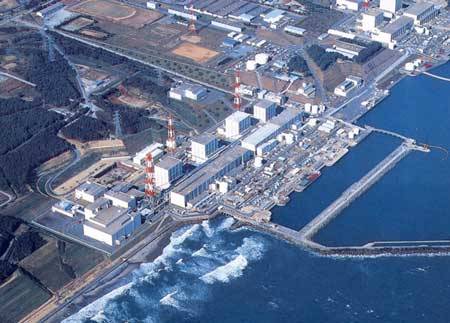
The Fukushima Daiichi accident forced Japan to bolster regulations for its fleet of nuclear reactors. After undergoing significant upgrades, the Kashiwazaki-Kariwa plant in Niigata Prefecture is on track to restart, although recent security issues have come to light that raise new concerns about the safety of nuclear power……..
Over the last several years, utilities looking to restart idled reactors have heavily invested in upgrading facilities to meet rigorous new regulations. So far, though, only a handful of plants have come back online.
Security issues recently uncovered at the Kashiwazaki-Kariwa Nuclear Power Station operated by Tokyo Electric Power Company illustrate the difficulty of passing the Nuclear Regulatory Authority’s stringent safety measures. TEPCO had poured resources into the facility in Niigata Prefecture with the goal of restarting the Unit 6 and 7 reactors at the site, but the NRA has ordered that further improvements be made before authorizing the utility to begin the refueling process. Below I assess the major upgrades made at the Kashiwazaki-Kariwa plant under the new NRA regulations released in July 2013.
Safeguarding Against Tsunami
,,,,,,,,,,,, In the wake of the incident, protecting reactors from tsunami has become a priority. The NRA assessment of the Kashiwazaki-Kariwa plant estimates a tidal wave as high as 6.8 meters could reach the coastline where the facility sits. Learning from Fukushima, TEPCO chose to exceed the regulatory body’s requirement and built a seawall towering 15 meters above the surf. Using existing topography to its advantage, it constructed a 10-meter steel-reinforced concrete barrier for the low-lying Units 1–4 and a 3-meter earth embankment at Units 5–7, which are perched higher above the sea……….
Blackout Response
In an emergency, keeping cooling systems functioning is of utmost importance. To prepare for an event where the seawall and smaller barriers fail or that the power goes out at the Niigata plant, TEPCO installed four sets of mobile gas-fired generators and switchboards on high ground and stationed a fleet of 20 generator cars as backup.
…………… TEPCO faced major challenges in bringing the plant in line with the NRA’s new regulations, considered the strictest in the global nuclear industry. Along with tsunami measures, the utility had to meet stringent antiterrorism guidelines, including developing a response to attackers flying an airplane into the facility. The government completed an inspection of Unit 7 in October 2020 and the bulk of construction was completed in January of this year. TEPCO was confident it had covered all bases, but the discovery that individuals had used an employee ID card to enter the central control room without authorization and that an intruder detection system had not been functioning for an extended period have led the NRA to halt plans for restarting the reactor. The security problems also throw into question whether residents will agree to bringing the plant back online.
Community Considerations
Along with meeting NRA regulations, utilities aiming to restart reactors must win the approval of residents of the towns and cities where plants are located. Debate is often fraught as host communities weigh the economic benefits of nuclear power, including jobs and revenue from government subsidies and local taxes, against safety concerns. Money pouring into construction industries from huge projects to upgrade facilities has only complicated the issue………………..https://www.nippon.com/en/in-depth/d00687/
India is operating the world’s most dangerous, fastest-growing, nuclear weapons and missile programs in the world
World’s most dangerous fastest-growing nuclear weapons programme
Nowadays, South Asia is categorized by international analysts as one of the unstable regions of the world, where the chances of nuclear brinkmanship are high because of the longstanding rivalry between Pakistan and India, The Nation, Syed Zain Jaffery, May 11, 2021
‘‘…………………India is operating the world’s most dangerous fastest-growing nuclear weapons and missile programs in the world, which are not only threatening for the region but world peace because of flawed nuclear safety and security standards. Increasing stocks of Indian fissile material and the development of nuclear triad capability – bombers, missiles and nuclear power/capable submarines – have increased the capability of New Delhi in the strategic realm. Contrary to International media claims, the Indian triad consists almost 500 nuclear weapons including thermonuclear weapons and has the capacity to produce over 2,600 nuclear weapons for tactical and strategic use.
Today, the undisclosed plutonium stocks have not been under IAEA’s inspection and left with Indian arms production facilities under the discriminatory nuclear cooperation deal between the United States and India. The civilian Plutonium reserves that are outside the safeguards of the IAEA and designated for strategic purposes are the main cause of concern. In a three-stage plan, India is continuing to expand its unsafeguarded nuclear power program. The installation of several nuclear reactors has also been announced by New Delhi. This capability will generate excessive fissile material, other than the fuel necessary for breeder and naval reactors. Over the next few years, India will be capable to replace China, France and the United Kingdom in terms of its abilities to produce nuclear weapons to become the third behind the US and Russia.
Under the influence of the rising economy of India, like-minded Western analysts are trying to divert the consideration of the international community from the fastest growing Indian nuclear weapons program and threats associated with it to the peaceful neighboring countries. Since 1974, the Indian intentions are clear that it will use any kind of advanced technology, which provided under the rubric of peaceful purposes, for military use and will violate any international law related to nuclear, space and missiles program to exercise hegemony in the region. The Indian policy aims, concerning nuclear weapons, are solely constructed to push its hegemony in the region. Now it is time for the international community to realize the Indian nuclear threat.
https://nation.com.pk/11-May-2021/world-s-most-dangerous-fastest-growing-nuclear-weapons-programme
How to deal with a nuclear-armed Kim Jong Un

How to deal with a nuclear-armed Kim Jong Un, by David A. Andelman, May 10, 2021, CNN,The Biden administration has pledged to pursue “calibrated” diplomacy.
to persuade North Korean leader Kim Jong Un to halt his mad dash toward a deliverable nuclear weapon. But that is a vain hope. Instead, the world and especially the United States must find a way to live with a North Korea armed with The Bomb. And keep Kim from using — or selling — it.
Discussions with a number of individuals who have dealt with the North Korean government or monitored the actions of its ruling family have convinced me that no Kim — neither Kim Jong Un, nor his father nor his grandfather — ever has or will give up a quest for a deliverable nuclear weapon. Nor is Kim likely to relinquish such a device once it can be deployed. Indeed, North Korea clearly does have any number of such devices — some analysts say it could be more than 60 — though the delivery vehicles are still in development.
That brings us to the realm of what may be possible and achievable. For Kim, possession of a nuclear weapon is a question of existential survival. His ultimate fear is no doubt the fate of Libyan strongman Colonel Moammar Gadhafi — dragged from a drain pipe by rebels and executed, a direct consequence of the decision to relinquish his own nuclear program that allowed his enemies in the West to undermine his regime.
Still, it’s not clear that President Biden or his principal advisers are prepared to accept any nuclearized North Korea. President Joe Biden has said that any diplomacy “has to be conditioned upon the end result of denuclearization.” At the same time, he and his team are rightly rejecting former President Donald Trump’s “go big or go home” approach — agreeing to remove all sanctions in exchange for North Korea fully dismantling its weapons program — which Kim rejected out of hand at their last, abortive summit in Hanoi……….
The essence of any such [diplomacy] plan must lie in the United States finding a way to persuade the North to join the global nuclear non-proliferation club. Implicit would be the acceptance that it already has a weapon. In turn the North will need to make its weapons and their security clearly visible and open to inspection…………
The essence of any such plan must lie in the United States finding a way to persuade the North to join the global nuclear non-proliferation club. Implicit would be the acceptance that it already has a weapon. In turn the North will need to make its weapons and their security clearly visible and open to inspection. https://edition.cnn.com/2021/05/09/opinions/north-korea-nuclear-biden-andelman/index.html
20 tonne space rocket out of control, but luckily landed in the Indian Ocean, rather than on land.
Out-of-control Chinese rocket finally lands in Indian Ocean near the Maldives, https://www.9news.com.au/world/chinese-rocket-expected-to-crash-into-earth-this-weekend/4b39859c-cfc4-4f3c-b9e2-f294e1bb65f4 By CNNJoe Attanasio May 9, 2021 A large Chinese rocket that was orbiting earth out of control has finally made impact, landing in the Indian Ocean close to the Maldives and drawing sharp criticism from NASA.
According to China Manned Space Engineering Office, the rocket made impact about 12.24pm AEST, roughly two hours earlier than predicted.Most of the remnants of the vessel burned up during re-entry to earth’s atmosphere, officials said, putting to bed week-long fears over the potential damage the rocket could have caused if it struck land.What was left of the spacecraft landed at open sea, at 72.47 degrees east longitude and 2.65 degrees north latitude.The Long March 5B rocket, which was around 30 metres tall and weighed 20 tonnes, entered earth’s low orbit earlier this morning.
It travelled at more than 30,000 kilometres an hour, was more than 10 stories tall, and weighed roughly the same as a full garbage truck, causing many to raise concerns about the impact its landing could have hadThe rocket launched a piece of the new Chinese space station into orbit on April 29 but then was left to hurtle through space uncontrolled until Earth’s gravity began pulling it back to the ground.
That approach is a break with what officials call “best practice” compared with what other space agencies do.
NASA Administrator Bill Nelson criticised China over the re-entry, saying spacefaring nations needed to minimise risk and maximise transparency in such situations.”It is clear that China is failing to meet responsible standards regarding their space debris,” he said, in a statement.”It is critical that China and all spacefaring nations and commercial entities act responsibly and transparently in space to ensure the safety, stability, security, and long-term sustainability of outer space activities.”Despite recent efforts to better regulate and mitigate space debris, Earth’s orbit is littered with hundreds of thousands of pieces of uncontrolled junk, most of which are smaller than 10 centimetres.Objects are constantly falling out of orbit, though most of them burn up in the Earth’s atmosphere before they have a chance to make an impact on the surface.
1 This Month
Chernobyl: The Lost Tapes – A good documentary on Chernobyl on SBS available On Demand for the next 3 weeks– https://www.sbs.com.au/ondemand/tv-program/chernobyl-the-lost-tapes/2352741955560

of the week–London Campaign for Nuclear Disarmament

Tell the Ukrainian Government to Drop Prosecution of Peace Activist Yurii Sheliazhenko
To see nuclear-related stories in greater depth and intensity – go to https://nuclearinformation.wordpress.com
-
Archives
- April 2026 (126)
- March 2026 (251)
- February 2026 (268)
- January 2026 (308)
- December 2025 (358)
- November 2025 (359)
- October 2025 (376)
- September 2025 (257)
- August 2025 (319)
- July 2025 (230)
- June 2025 (348)
- May 2025 (261)
-
Categories
- 1
- 1 NUCLEAR ISSUES
- business and costs
- climate change
- culture and arts
- ENERGY
- environment
- health
- history
- indigenous issues
- Legal
- marketing of nuclear
- media
- opposition to nuclear
- PERSONAL STORIES
- politics
- politics international
- Religion and ethics
- safety
- secrets,lies and civil liberties
- spinbuster
- technology
- Uranium
- wastes
- weapons and war
- Women
- 2 WORLD
- ACTION
- AFRICA
- Atrocities
- AUSTRALIA
- Christina's notes
- Christina's themes
- culture and arts
- Events
- Fuk 2022
- Fuk 2023
- Fukushima 2017
- Fukushima 2018
- fukushima 2019
- Fukushima 2020
- Fukushima 2021
- general
- global warming
- Humour (God we need it)
- Nuclear
- RARE EARTHS
- Reference
- resources – print
- Resources -audiovicual
- Weekly Newsletter
- World
- World Nuclear
- YouTube
-
RSS
Entries RSS
Comments RSS
 nuclear-news