Nuclear has no place in Taiwan
While aiming for this ambitious goal, it is also paramount that the government considers national security, energy autonomy and the development of sustainable energy sources.
As a result, we need to focus our energies on developing renewables to achieve a green transition, and nuclear energy has no part in this.
https://www.taipeitimes.com/News/editorials/archives/2021/10/30/2003766999, By Pan Wei-yiu 潘威佑 Translated by Paul Cooper The public must be confused about the issue of whether it is appropriate to restart construction of the Fourth Nuclear Power Plant in New Taipei City’s Gongliao District (貢寮). The site has been sealed up for a long time, and the fuel rods have been shipped overseas. So why is a referendum needed on whether to restart construction of the mothballed plant?
The truth is that the plant has become something of a political ATM. If a political party wants to make it an issue for its own political benefit, it resurrects the debate.
However, not only is restarting construction of the plant inappropriate, it is imperative that the government remain committed to its policy of achieving a “nuclear-free homeland.”
There are three reasons that it is not appropriate to restart construction
First, with the development of any energy source, the protection of lives and property is paramount.
For Taiwan, a densely populated nation in an earthquake zone, if there were to be a nuclear accident, people would have to evacuate quickly. The harm and fear such an event would bring is difficult to imagine.
Second, from a purely economic point of view, construction of the plant, which commenced in 1999, has already cost more than NT$283.8 billion (US$10.2 billion) and the facilities that have been added are up to two decades old. Many of the components have degraded and no longer work.
If construction is to be restarted, those components would need to be replaced, a process that would take a lot of time and money — as a rough estimate, at least a decade and NT$80 billion.
It is questionable whether this process would be sufficient to provide the energy requirements for the rapid development in Taiwan.
Third, there is the question of environmental justice. Where is the nuclear waste to be stored? Nobody has proposed a satisfactory answer to this question. No one would accept having the waste near their home.
In the past, environmental justice was not taken seriously, but that does not mean this state of affairs should continue.
Restarting construction of the Fourth Nuclear Power Plant would be unsafe, uneconomical and unjust.
Would Taiwan suffer from electricity shortages if it continues to progress to a non-nuclear homeland? This is the unfounded argument pushed by pro-nuclear groups.
According to electricity generation figures in a Taiwan Power Co (Taipower) report this year, the proportion of electricity generated from nuclear sources has fallen over the years, providing only 12.7 percent of the nation’s electricity last year.
If Taiwan could increase the percentage of renewable energy sources to 20 percent of the total energy mix by 2025, nuclear power would be a nonissue.
Additionally, if the percentage of renewable energy sources continues to increase, as is planned, Taiwan would no longer require nuclear power
The world has reached a consensus that the way to mitigate climate change is by reducing carbon emissions. Countries the world over are calling for net-zero emissions by 2050, and Taiwan has also committed to this target.
While aiming for this ambitious goal, it is also paramount that the government considers national security, energy autonomy and the development of sustainable energy sources.
As a result, we need to focus our energies on developing renewables to achieve a green transition, and nuclear energy has no part in this.
In the interests of achieving environmental sustainability, many Taiwanese companies have joined the RE100 global initiative to achieve 100 percent of power from renewable sources by 2050. Again, nuclear power is not part of the plan.
In response to the rapid changes and challenges of international political and economic trends, and the energy environment, the world is going through a crucial period of energy transformation.
Green energy technologies and energy conservation development are the major drivers of this transition around the world. Even though the development of renewable energy sources is difficult, it is incumbent that nations rise to the challenge and meet the responsibility to later generations.
It is also the way for Taiwan to truly become a “green island” nation.
Pan Wei-yiu is secretary-general of the Northern Taiwan Society.
Indonesia wants non-peaceful nuclear submarines to be subject to nuclear non-proliferation treaty (surprise, surprise, Australia doesn’t agree)
Caution over nuclear treaty covering subs, Canberra Times, Dominic Giannini, 29 Oct 21,
Caution over nuclear treaty covering subs, Canberra Times, Dominic Giannini, 29 Oct 21,
Australian officials say they don’t believe there is merit in expanding the nuclear non-proliferation treaty to nuclear-powered submarines.
Indonesian officials have said they would seek a “fourth pillar” to include the non-peaceful usage of nuclear technology, closing a “loophole” exposed by Australia’s nuclear-submarine deal with the US and UK.
They say other countries could seek to follow Australia, which would be the first non-nuclear weapons state to acquire nuclear submarines.
Foreign affairs department officials rejected the need to expand the treaty, saying the acquisition of nuclear-propelled submarines was in accordance with Australia’s non-proliferation requirements……
The Indonesians raised concerns about the potential for an arms race in the region after Australia announced its plans to acquire nuclear-powered submarines through the AUKUS partnership…….. https://www.canberratimes.com.au/story/7488125/caution-over-nuclear-treaty-covering-subs/
World without nuclear weapons remains a goal after Sunao Tsuboi’s death
October 29, 2021 (Mainichi Japan) Sunao Tsuboi, a champion of the anti-nuclear movement, has died at age 96. He had served as a representative member of the Japan Confederation of A- and H-Bomb Sufferers Organizations and chairman of the Hiroshima Prefectural Confederation of A-bomb Sufferers Organizations. For many years, Tsuboi led nuclear disarmament activism and dedicated his life to calling for a world without nuclear weapons, while telling himself and others to “never give up.”
Tsuboi himself was a survivor of the atomic bombing of Hiroshima. He continued to share his experience, revealing the inhumaneness of nuclear arms………..
It was because Tsuboi and other hibakusha persistently shared stories about their experiences outside Japan that the inhumane nature of nuclear weapons became widely known across the world. And this led to the enforcement of the Treaty on the Prohibition of Nuclear Weapons, which bans nuclear arms and related activities.
When then U.S. President Barack Obama visited Hiroshima as the first sitting U.S. president to do so in May 2016, Tsuboi said to him, “It (dropping the atomic bomb) was one of the mistakes humanity made. We have to overcome that, and head for the future.”
These words stemmed from Tsuboi’s desire for peace, based on his belief that hatred is fruitless.
Grave challenges still remain after Tsuboi’s departure………..
The number of hibakusha has now declined to about 127,000 and their average age is approaching 84. Anti-nuclear activist and hibakusha Sumiteru Taniguchi, who led the movement in Nagasaki, the second city to be bombed in 1945, passed away in 2017. We will eventually enter a time when there are no hibakusha left in the world.
“An uphill path may continue, but I’m not going to give up and I’ll continue working on eliminating these dreadful weapons from the world,” Tsuboi once said. Succeeding generations must take the baton from him. https://mainichi.jp/english/articles/20211029/p2a/00m/0op/028000c
Prospects for renewable energy in Japan look good, future for nuclear power uncertain.
Japan looks to renewables; role of nuclear power elusive, Japan Today By Takaki Tominaga, TOKYO, 29 Oct 21,
Japan aims to increase its reliance on renewable energy in achieving net-zero emissions, but the role of nuclear power to be played toward that end appears to be elusive even in the government’s energy plan approved by the cabinet last week ahead of Sunday’s general election.
The plan outlines ways to achieve carbon neutrality by 2050 and cut greenhouse gas emissions 46 percent in fiscal 2030 from fiscal 2013 levels, an ambitious leap from the previous reduction target of 26 percent.
The government aims to have renewables account for 36 to 38 percent of Japan’s total power generation capacity in fiscal 2030, more than double the 18 percent recorded in fiscal 2019, while the percentage of fossil-fuel-fired thermal power has been slashed to 41 percent, down from 76 percent.
But the percentage for nuclear power remains unchanged at 20 to 22 percent from the previous plan, released in 2018………………
To achieve the 2030 emissions cut target, Maeda said nuclear power plants are necessary. However, Japanese political parties cannot agree on what to do with nuclear plants even though they agree on the country’s direction toward carbon neutrality.
Prime Minister Fumio Kishida said his Liberal Democratic Party will restart idled nuclear plants, providing they have adequate safety measures, in order to supply electricity stably and at a reasonable price.
In contrast, the major opposition Constitutional Democratic Party of Japan pledges to abandon nuclear power as soon as possible and will not allow any new nuclear plants to be built.
The Democratic Party for the People, a smaller opposition party, has said it will restart nuclear plants that cleared safety rules but will not allow the construction of new ones.
Following the nuclear crisis in Fukushima Prefecture triggered by a massive earthquake and tsunami, most of the nuclear plants in Japan remain offline under stricter safety regulations.
“Realistically, I think (Japan) cannot help but to heavily rely on nuclear and solar power to achieve that 2030 goal,” said Maeda, a former Foreign Ministry official.
He stressed nuclear should not be a long-term power supply given the tremendous amount of money needed in the event of an accident and falling renewable energy costs.
In the long run, energy experts have high expectations for offshore wind power.
“Producing large quantities of electricity from renewables requires a vast amount of space. Since Japan is a maritime nation with the world’s sixth-largest exclusive economic zone, it’s got to be offshore wind,” he said, adding floating turbines will hold the key.
Solar cells produced by Miyasaka, also a fellow at the University of Tokyo’s Research Center for Advanced Science and Technology, are expected to contribute to improving the space problem for renewables if they overcome durability challenges and go into commercial mass production.
Miyasaka’s perovskite solar modules are thin, flexible, and light yet capable of generating high voltages compared with silicon photovoltaics, with their characteristics enabling them to be installed or applied on unconventional places, including low load-bearing roofs, windows and automobile bodies.
In the not too distant future, Miyasaka believes people will be able to generate power by perovskite solar modules on places such as balcony floors and car bodies, store it in batteries and then use it during the night.
In building such a society, Miyasaka said the reliance on nuclear power could be reduced soon rather than later because disaster-prone Japan faces higher risks than many other countries.
“It is time for us to seriously engage in finding ways to live without nuclear power plants,” he said. https://japantoday.com/category/politics/Japan-looks-to-renewables-role-of-nuclear-power-elusive
Stiff opposition to Japan PM’snuclear push as election approaches

Japan PM’s nuclear push faces resistance ahead of election, By Sakura Murakami, KASHIWAZAKI, Japan, Oct 27 (Reuters) – Prime Minister Fumio Kishida’s push to restart Japanese nuclear power plants idled after the Fukushima disaster faces stiff opposition ahead of a general election on Sunday, where his future as leader hangs in the balance if the vote is tight.
A decade after triple meltdowns at Fukushima forced mass evacuations and a shut-down of the nuclear industry, Japan has restarted only a third of its 33 operable reactors.
Debate over whether to fire more of them back up is highly charged, with 40% of the population opposing the move.
It matters most in rural cities hosting the idled plants which had once relied on them for economic activity, such as Kashiwazaki, 265 km (165 miles) northwest of Tokyo – home to the world’s largest atomic power complex.
“The reason why we feel so strongly about this is because we feel the danger of the nuclear power plant – it hangs over our heads every day,” said Mie Kuwabara, a resident of a town close to Kashiwazaki and anti-nuclear activist.
Voters mostly care about economic recovery from the pandemic. But energy policy came into sharp focus last month, when Kishida beat a popular anti-nuclear candidate in the race for the Liberal Democratic Party (LDP) chief.
The architect of Kishida’s victory, party veteran Akira Amari, assumed a key party post and immediately pushed for restarts of 30 reactors while also promoting new, smaller reactors to replace ageing ones…….
Amari faces a tight race in his home district, where he is struggling to attract support from anti-nuclear junior coalition partner, Komeito.
Opposition to his plan is strong in Kashiwazaki too.
“This prefecture as a whole, even within the LDP, is united behind the idea that the nuclear power plant can’t be restarted,” said Mineo Ono, who runs the LDP’s local chapter where anti-nuclear proponent Taro Kono polled higher than Kishida in the leadership race vote.
Ono cited local distrust caused by what he called multiple mishaps by the plant’s operator, Tokyo Electric Power Holdings (Tepco) (9501.T).
………… even the local chamber of commerce, instrumental in wooing the plant which started operations in 1985, says it is tired of what it sees as Tepco’s repeated failures.
“It’s almost unbearable, seeing how shoddy they are,” said chamber of commerce chief Masao Saikawa………..
Reporting by Sakura Murakami; Additional reporting by Aaron Sheldrick; Editing by Antoni Slodkowski and Lincoln Feast https://www.reuters.com/world/asia-pacific/japan-pms-nuclear-push-faces-resistance-ahead-election-2021-10-27/
Temperature rises over 10 degrees Celsius in some parts of the “frozen earth wall” to reduce contaminated water at Fukushima Daiichi Nuclear Power Plant
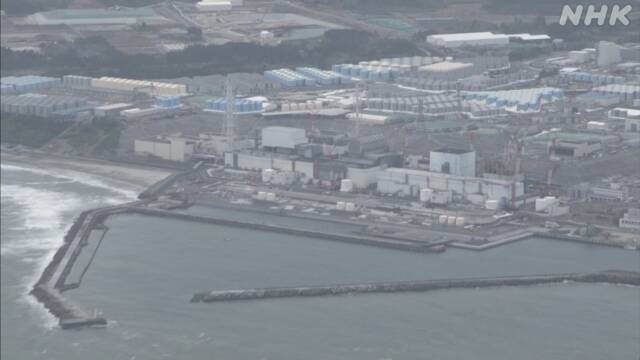
October 28, 2021
As a countermeasure to reduce the amount of contaminated water from the Fukushima Daiichi Nuclear Power Plant, it was found that the temperature of the ground in some parts of the “frozen soil wall”, which freezes the ground around the buildings to prevent the inflow of underground water, has been rising above 0 degrees Celsius since the middle of last month, reaching a maximum of 10 degrees Celsius. The Tokyo Electric Power Company (TEPCO) is investigating the cause of the problem, saying that it does not affect the function of the wall to prevent the inflow of underground water.
The “frozen earth wall” is one of the measures to reduce the amount of contaminated water. Pipes are embedded around the buildings of the Fukushima Daiichi Nuclear Power Plant, and liquid at 30 degrees below zero is poured into the pipes and frozen, forming an “ice wall” that prevents groundwater from flowing into the buildings.
The Tokyo Electric Power Company (TEPCO) has installed thermometers in the “frozen earth wall” to measure the underground temperature, and in some areas located on the mountain side of the No. 4 reactor at the Fukushima Daiichi Nuclear Power Plant, the temperature, which is usually below freezing, has been rising and has been above zero since the middle of last month.
The temperature in the area where the increase was confirmed was between 1 meter and 4 meters deep, and the temperature exceeded 10 degrees Celsius on some days.
The freezing wall is about 10 meters thick, and TEPCO has stated that there is no significant difference in the water level between the inside and outside of the wall, so there is no impact on its ability to control the inflow of groundwater.
It is possible that water leaked from cracks in the drainage channel that intersects the frozen soil wall and seeped into the frozen area, causing the temperature to rise.
Response to claims about China’s space aims
Response to claims about China’s space aims, by Michael Wong, 25 Oct 21
The claim – ”US must build space superhighway before China stakes claims-Senior Space Force Officer. From “Breaking Defense”: https://breakingdefense.com/2021/10/us-must-build-space-superhighway-before-china-stakes-claims-senior-space-force-officer/?utm_source=Sailthru&utm_medium=email&utm_campaign=EBB%2010.21.21&utm_term=Editorial%20-%20Military%20-%20Early%20Bird%20Brief
Some quotes with falsehoods:
- “China fully intends to extend its “territoriality” to the Moon, flouting international law in exactly the same way as it has with regard to the South China Sea, Brig. Gen. John Olson, chief advisor to Space Force head Gen. Jay Raymond on mobilization and space logistics, asserted today.” My comment: There is no evidence that China has any such intentions. China has not said anything like that, has not broken any international laws, nor taken any actions that are anywhere near as aggressive as US actions.
- “If you read their language, if you read their products — which I am a vigorous student of — if you look at what they do they telegraph everything that they’re going to do, they believe that the Moon is manifest destiny for them” and part of their “economic … and security equation,” Olson said.” My comment: In the San Francisco Chinese community of which I’m a part, I have many political friends including scholars, retired elected officials, and others who are from Hong Kong, China, or Taiwan, are native Chinese speakers, and follow the news from China and Asia closely. They have not reported any language, products, or anything else which implies that China believes the moon is “manifest destiny” for China. Remember American lies about WMD in Iraq, incubator babies thrown on the floor in Kuwait, or the Gulf of Tonkin “incident” in Vietnam? These are typical American lies to demonize a nation that the US decides to attack, and justify increased US defense money.
- “The officer drew a direct line between how Beijing has ignored a World Court ruling on a sovereignty dispute with the Philippines in the South China Sea to how Chinese leaders could act in space, without regard to the prohibitions of the 1967 Outer Space Treaty (OST.)” My comment: Check out this 11 minute video from a US Marine veteran living in Thailand, which breaks down this whole distorted narrative about China and the South China Sea: https://www.youtube.com/watch?v=if-fV9U_sWs
- “…US military space leaders more and more openly paint China as an aggressor in space, with goals of not just world but galactic domination.” My comment: “…galactic domination???” Come on, Washington, have you any idea how big the galaxy is? Do you really think China intends to dominate it? What is it with you guys? We hippies were the ones doing LSD in the ’60’s, why are you guys the ones hallucinating now?
Bottom line, it’s all about the money and American domination of the world. To get more and more of the US national budget, the military industrial complex needs an enemy to justify their existence. And they project their mindset onto the Chinese, who are a completely different nation and culture, and who simply don’t think like Washington (if you want to read a longer article on the mindset of the Chinese, here’s my take on it: https://peacepivot.org/america-china-life-death-the-long-game/ ).
Pumice may affect nuclear power plants in Japan
 | |||
| to me |
| |||
| to me |
Pumice may affect nuclear power plants in Japan
Pumice may affect nuclear power plants in Japan, https://www3.nhk.or.jp/nhkworld/en/news/20211027_36/ Japan’s nuclear regulator says a massive number of pumice stones drifting in waters in the country’s southwest could affect domestic nuclear power plants.
Ishiwatari Akira, a member of the Nuclear Regulation Authority, told a regular meeting on Wednesday that the stones may affect the intake of water used for cooling nuclear reactors.
The pumice stones are being washed ashore on the coast of Okinawa Prefecture and the Amami region of Kagoshima Prefecture. They come from an undersea volcanic eruption near the Ogasawara island chain in the Pacific Ocean in August.
Japan’s nuclear regulator says a massive number of pumice stones drifting in waters in the country’s southwest could affect domestic nuclear power plants.
Ishiwatari Akira, a member of the Nuclear Regulation Authority, told a regular meeting on Wednesday that the stones may affect the intake of water used for cooling nuclear reactors.
The pumice stones are being washed ashore on the coast of Okinawa Prefecture and the Amami region of Kagoshima Prefecture. They come from an undersea volcanic eruption near the Ogasawara island chain in the Pacific Ocean in August.
Japanese government’s energy policy concentrates on restarting old nuclear reactors

Japan remains focused on restarting nuclear reactors, Argus, 25 Oct 21, Japan will continue to focus on restarting nuclear reactors instead of building new reactors….Japanese premier Fumio Kishida and cabinet ministers on 22 October endorsed a basic energy policy that did not lay out any plans for construction or replacement of nuclear reactors and only focused on the restart of safe reactors. ………..6Under the latest energy policy, Japan plans to generate 20-22pc of power ou icy B1lop paJcOput from nuclear energy, with 36-38pc from renewables, 41pc thermal power and 1pc from hydrogen and ammonia in 2030-31, which were also unchanged from the draft plans…………………….
Japan will phase out nuclear reactors without any capacity additions. Under the current nuclear safety rules, all reactors are allowed to operate for 40 years with a one-time option to extend their lifespan to 60 years. This suggests that 15 of the existing 33 reactors with a combined capacity of 14,057MW will close by December 2030 and there will be no operational reactors in 2050, assuming a 40-year lifespan.
The future of the nuclear industry also depends on which political party will take majority seats in the 31 October lower house parliamentary election, as most parties have pledged a no-nuclear society. The current ruling liberal democratic party of Japan promotes the restart of safe reactors, without directly prohibiting building reactors. But the second largest the constitutional democratic party has pledged not to allow any new building of reactors in its manifesto.
Recently restarted – Fukui nuclear unit halted for a year on safety issues.
Fukui nuclear unit halted after missing deadline on antiterror steps https://english.kyodonews.net/news/2021/10/e69ddb77abbd-fukui-nuclear-unit-halted-after-missing-deadline-on-antiterror-steps.html
KYODO NEWS – Oct 23, 2021 – A nuclear reactor in central Japan’s Fukui Prefecture was halted on Saturday, just four months after its restart as it could not meet a deadline set by regulators to implement antiterrorism measures.
The suspension of Kansai Electric Power Co.’s Mihama No. 3 unit came ahead of the deadline on Monday for such measures to be completed. After undergoing safety checks, the utility aims to make the necessary changes to its facilities around September next year and restart operations in mid-October.
In June, the No. 3 unit went online for the first time in about 10 years and became the first nuclear unit to operate beyond the government-mandated 40-year service period introduced under new rules set after the 2011 Fukushima disaster.
The reactor had stopped operations after the crisis at the Fukushima Daiichi plant triggered by a massive earthquake and tsunami. Regulators gave the green light to the aging No. 3 unit after screening the utility’s safety measures.
The Nos. 1 and 2 units of the Mihama plant were terminated in April 2015 in line with the 40-year limit.
China backs ‘no first use’ nuclear policy, calls on nations to cut warhead stockpile
China backs ‘no first use’ nuclear policy, calls on nations to cut warhead stockpile
Recent statement by former Chinese ambassador for disarmament suggests Beijing should rethink ‘no first use’ policy to counter US military presence in region
Position paper marks 50th anniversary of Beijing being awarded UN seat representing China over Taipei, SCMP, Liu Zhen in Beijing, 22 Oct, 2021 China has underlined its “no first use” nuclear policy in a position paper amid discussion over its commitments in a developing nuclear arms race.
In the “Position Paper on China and United Nations Cooperation” issued by the foreign ministry on Friday, China declared it had a history of initiating the no first use (NFU) principle, and said nuclear-weapon states should abandon pre-emptive deterrence policies.
| “Bear in mind that ‘a nuclear war cannot be won and must never be fought’,” the paper said.It called on all nuclear powers to reduce the role of nuclear weapons as part of their national security policy, stop developing and deploying global anti-ballistic missile systems and cease deployment of land-based intermediate-range ballistic missiles overseas. It called on them to promote global strategic balance and stability…………. Besides making a statement on NFU, Friday’s position paper continued to stress that “countries with the largest nuclear arsenals have special and primary responsibilities in nuclear disarmament”, with Beijing also under international pressure to do more in nuclear arms control and disarmament efforts……..https://www.scmp.com/news/china/diplomacy/article/3153387/china-backs-no-first-use-nuclear-policy-calls-nations-cut |
North Korea’s ongoing nuclear missile tests prove it’s time to normalize relations
North Korea’s ongoing nuclear missile tests prove it’s time to normalize relations
Given the history of repeated dead-end disarmament talks, déjà vu begs the question whether it is time to cut bait and accept the unacceptable. NBC NewsBy Bennett Ramberg, Former policy analyst at the U.S. State Department’s Bureau of Politico-Military Affairs
Pyongyang’s recent flurry of missile tests — most recently, a submarine-launched ballistic missile South Korea says North Korea launched Tuesday — and the apparent resumption of nuclear weapons materials production at the Yongbyon reactor are reminders that North Korea remains a central perennial problem befuddling U.S. foreign policy. Despite North Korea’s acknowledged shaky economy — further weakened by strong international economic sanctions and the coronavirus pandemic — leader Kim Jong Un’s commitment to maintaining the country’s bomb program remains unbowed.
The Biden administration’s ill-defined “calibrated approach” looks unlikely to move the nuclear-elimination needle. Nonetheless, Washington continues soldiering on — reaching out to China for help with its efforts to draw North Korea back into disarmament negotiations.
Given the history of these repeated dead-end disarmament talks, déjà vu begs the question whether it is time to cut bait: accept the unacceptable — nuclear North Korea is here to stay — and complement current U.S. military containment with an offer of diplomatic relations unconditioned by Pyongyang’s nuclear status.
History demonstrates that not only do such ties keep contacts on an even keel in normal times, they can play a critical role in resolving nuclear crisis.
This path would build on precedent. President Richard M. Nixon’s 1972 opening of relations with China, for example, did not involve questioning Beijing’s nuclear program.
Today, blunting North Korea’s nuclear threat relies on deterrence and defense — embodied in the long-standing U.S.-South Korea alliance, bolstered by nearly 30,000 U.S. troops stationed in the South, an offshore nuclear umbrella and an emerging sea-based ballistic missile defense. What’s lacking is a durable diplomatic component.
With the exception of the United States and North Korea, all nuclear weapons states have diplomatic relations……… https://www.nbcnews.com/think/opinion/north-korea-s-ongoing-nuclear-missile-tests-prove-it-s-ncna1282118
Tamil Nadu leaders call for a nuclear-free zone, and stopping of development of Kudankulam project

—TAMIL NADU Declare T.N. a nuclear free zone, say leaders https://www.thehindu.com/news/national/tamil-nadu/declare-tn-a-nuclear-free-zone-say-leaders/article37100662.ece 20 Oct 21, They express concern over KKNPP
Leaders of political parties, led by VCK chief Thol. Thirumavalavan, on Wednesday sought to declare Tamil Nadu a “nuclear-free zone”.
At a press conference here, he said the unscientific disposal of radioactive waste from the nuclear reactor at Kudankulam was likely to increase the risk to public health. “Experts have said some of the reasons for the disaster in Chernobyl and Fukushima were similar to the existing conditions at Kudankulam,” he said.
Pointing to the issues in the disposal of radioactive waste from the Kudankulam reactor, Mr. Thirumavalavan said the Union Government had continued such activities which were dangerous to people. “The Union Government should suspend the operations pertaining to the third and fourth reactors. It should announce the location of the deep geological repository before conducting the public consultations on the development of the facility away from reactor.”
The government should not develop the fifth and sixth reactors too, he added.
The group of leaders called for a White Paper on the Kudankulam project and the withdrawal of cases against the residents who protested against the project.
The first reactor was stopped for maintenance from June 22 and resumed operations on September 2. After 35 days, it was stopped again. The frequent disruption of operations and snags had increased the risk of disaster, a release said.
Backlash against Japanese Prime Minister’s haste to dump Fukushima nuclear water into the ocean

Kishida triggers backlash by saying dumping Fukushima nuclear water can’t be delayed, Global Times, By Xu Keyue: Oct 19, 2021 Only two weeks after taking office, Japan’s new prime minister Fumio Kishida pressed two hot buttons on the same day on Sunday – sending a ritual offering to the war-linked Yasukuni Shrine, and claiming the Fukushima wastewater release cannot be delayed, despite opposition from home and abroad.
Instead of taking full advantage of its own science and technology to process the Fukushima wastewater and deliver a qualified answer to the world over the water treatment, Japan has opted for its irresponsible plan to dump the wastewater as soon as possible and provided self-contradictory explanations for the decision, said Chinese experts.Speaking at his first visit to the tsunami-wrecked Fukushima nuclear plant since taking office, Kishida said the planned mass disposal of wastewater stored at the facility cannot be delayed, claiming his government would work to reassure residents nearby the plant about the technical safety of the wastewater disposal project, Asahi Shimbun reported Monday.
South Korea has expressed concern over Kishida’s plan to release the radioactive wastewater, according to South Korean media on Monday.
“Japan’s decision [to discharge the wastewater] was made without enough consultations with neighboring nations,” a senior South Korean foreign ministry official said. “We have expressed serious concerns and opposition to its plan, which could affect our people’s health and security as well as the ocean environment.”
The Tokyo Electric Power Company Holdings Inc. (TEPCO) has planned to build a one-kilometer undersea tunnel to release contaminated radioactive water out to sea, amid condemnation from fishermen, media reported in late August.
The plan again showed that Japan’s “explanation” over the safety of the water is “self-contradicting,” Liu Jiangyong, vice dean of the Institute of Modern International Relations at Tsinghua University, told the Global Times on Monday.
Assuming the wastewater has been processed without any side effects or pollution as the Japanese government claimed, and that people can even drink it, why does the Japanese government not simply discharge the water into the sea but plan to dump the water 1 kilometer away from the local residents? asked Liu. He also questioned the claim that it will have no impact on the marine environment and life chain, and asked why the water could not be recycled on land if the wastewater can be processed so cleanly and safely.
Japan can’t answer any of these questions, said Liu, noting that dumping the nuclear water shows that the water is “unusual.”…………. https://mail.google.com/mail/u/0/?tab=rm&ogbl#inbox?compose=DmwnWsTJtkLTcgrqMkBKSqBpmgbKhMHpzMMgttqhvJHgDJrfsKrtFCCwkflZJkjjhwgvJbPrQhFV
1 This Month



26 September – International Day for the Total Elimination of Nuclear Weapons


PLEASE OPPOSE HR 8255 AND S.3639 – bills would accelerate satellite deployment, with no environmental review or safeguards – https://ncstd5li.quorum.us/campaign/169331/
To see nuclear-related stories in greater depth and intensity – go to https://nuclearinformation.wordpress.com
-
Archives
- September 2026 (245)
- August 2026 (330)
- July 2026 (355)
- June 2026 (287)
- May 2026 (306)
- April 2026 (356)
- March 2026 (251)
- February 2026 (267)
- January 2026 (308)
- December 2025 (358)
- November 2025 (359)
- October 2025 (375)
-
Categories
- 1
- 1 NUCLEAR ISSUES
- business and costs
- climate change
- culture and arts
- ENERGY
- environment
- health
- history
- indigenous issues
- Legal
- marketing of nuclear
- media
- opposition to nuclear
- PERSONAL STORIES
- politics
- politics international
- Religion and ethics
- safety
- secrets,lies and civil liberties
- spinbuster
- technology
- Uranium
- wastes
- weapons and war
- Women
- 2 WORLD
- ACTION
- AFRICA
- Atrocities
- AUSTRALIA
- Christina's notes
- Christina's themes
- culture and arts
- Events
- Fuk 2022
- Fuk 2023
- Fukushima 2017
- Fukushima 2018
- fukushima 2019
- Fukushima 2020
- Fukushima 2021
- general
- global warming
- Humour (God we need it)
- Nuclear
- RARE EARTHS
- Reference
- resources – print
- Resources -audiovicual
- Weekly Newsletter
- World
- World Nuclear
- YouTube
-
RSS
Entries RSS
Comments RSS
 nuclear-news