International Atomic Energy Agency doubts the ability of Japan to clean up Fukushima nuclear wreck by intended date 2051

UN team: Unclear if Fukushima cleanup can finish by 2051, MARI YAMAGUCHI, THE PRESS DEMOCRAT, ASSOCIATED PRESS, August 27, 2021,
TOKYO — Too little is known about melted fuel inside damaged reactors at the wrecked Fukushima nuclear power plant, even a decade after the disaster, to be able to tell if its decommissioning can be finished by 2051 as planned, a U.N. nuclear agency official said Friday.
“Honestly speaking, I don’t know, and I don’t know if anybody knows,” said Christophe Xerri, head of an International Atomic Energy Agency team reviewing progress in the plant’s cleanup.
“We need to gather more information on the fuel debris and more experience on the retrieval of the fuel debris to know if the plan can be completed as expected in the next 30 years,” he told reporters.
The cleanup plan depends on how the melted fuel needs to be handled for long-term storage and management, he said.
The IAEA team’s review, the fifth since the disaster, was mostly conducted online due to the coronavirus pandemic. Only Xerri and another team member visited the plant this week before compiling and submitting a report to Japan’s government on Friday.
In the report, the team noted progress in a number of areas since its last review in 2018, including the removal of spent fuel from a storage pool at one of the damaged reactors, as well as a decision to start discharging massive amounts of treated but still radioactive water stored at the plant into the ocean in 2023………. https://www.pressdemocrat.com/article/news/un-team-unclear-if-fukushima-cleanup-can-finish-by-2051/?ref=recent
The health and environmental costs of China’s nuclear bomb tests
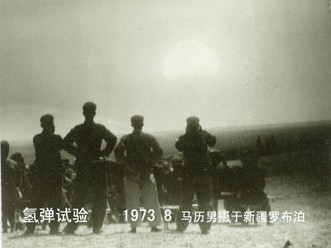
According to reports, China’s effort to become nuclear superpower has cost 1.94 lakh lives as it conducted around 45 successful nuclear tests between 1964-1996 https://www.republicworld.com/world-news/china/chinas-nuclear-tests-killed-1-dot-94-lakh-people-due-to-acute-radiation-exposure-report.html
China’s effort to become a nuclear superpower, according to reports, has cost 1.94 lakh lives as it conducted around 45 successful nuclear tests between 1964 and 1996. Peter Suciu, writing in The National Interest, stated that estimates suggest 194,000 people have died from acute radiation exposure, while around 1.2 million may have received doses high enough to induce leukaemia, solid cancers, and fetal damage during China’s nuclear test attempts.
As per the report, the nuclear test produced a yield of 3.3 megatons–200 times greater than the atomic bomb dropped on Hiroshima. The atomic bomb ‘Little Boy’ detonated on Hiroshima, Japan, killed nearly 80,000 instantly; this marked the first use of nuclear weapons in war.
‘Xinjiang region remained unclear how radiation affected the populace’
The effects of China’s nuclear testing, especially those nearly two dozen atmospheric tests (a total of twenty-three were conducted in the atmosphere), have not largely been studied due to a lack of official data, says Suciu. Xinjiang region that is home to some twenty million people of different ethnic backgrounds has remained unclear how radiation has affected the populace. A Japanese researcher, who studied the radiation levels, has suggested the peak radiation dose in Xinjiang exceeded that measured on the roof of the Chernobyl nuclear reactor following the 1986 meltdown. Suciu also states that reports suggest that radioactive dust has spread across the region, and hundreds of thousands of people may have died already from the nearly four dozen total nuclear tests that were carried out between 1964 and 1969.
China’s atmospheric nuclear testing
China conducted its first atomic bomb test in 1964 in Lop Nur – Project 596, known as the code word “Chic-1” by the US intelligence community (IC). The last of China’s atmospheric tests, which was also the last atmospheric test in the world, took place at Area D at Lop Nur on October 16, 1980–sixteen years to the day from the first test. Since that time, all nuclear tests have been conducted underground due to the Comprehensive Test Ban Treaty (CTBT) concluded in 1996. However, neither Washington nor Beijing has accepted it, even though China has sworn to have adhered to the terms, reported the National Interest.
‘Serious Problem with China’s Nuclear Plant’
Earlier, the French co-owner of a nuclear power plant in China on July 21 warned of problems serious enough to warrant a shutdown. According to CNN, the spokesperson for Electricite de France (EDF) said that the damage to the fuel rods at China’s Taishan Nuclear Power Plant, located in southern Guandong province, are serious enough to warrant shutdown. It was a “serious situation that is evolving,” he said. However, China even denied raising the acceptable limits of radiation. It said that the levels were “still within the range of allowable, stable operations”.
Nuclear Weapons in South Korea? Not So Fringe Anymore.
Nuclear Weapons in South Korea? Not So Fringe Anymore.
Conservatives in South Korea’s upcoming presidential election support the country’s nuclear armament. This trend may be a sign that Washington might soon be dealing with an incoming administration who potentially champions a dangerous pro-nuclear policy.by William Kim The National Interest, 22 Aug 21, Don’t be taken aback if one of the hottest issues for South Korea’s upcoming presidential election is nuclear weapons—more specifically, the need for South Korea to possess its own. While North Korea has refrained from nuclear weapons testing since 2017, the progress they demonstrated in the past has moved the nuclear debate to the forefront of South Korean society. This year, Kim Jong-un’s remarks about strengthening the Democratic People’s Republic of Korea’s (DPRK) nuclear arsenal delivered at the recent Eighth Party Congress was enough for South Korean conservatives to once again stand in favor of developing their own nuclear weapons. With the South Korean presidential election in March 2022 quickly approaching, political discourse in Seoul about nuclear armament is a trend not to be ignored by the U.S. government.
Hawkish voices in favor of nuclearization in South Korea are not new. …………….. https://nationalinterest.org/feature/nuclear-weapons-south-korea-not-so-fringe-anymore-192122
5.2-magnitude quake strikes off Japan’s Fukushima Prefecture, no tsunami warning issued
5.2-magnitude quake strikes off Japan’s Fukushima Prefecture, no tsunami warning issued http://www.xinhuanet.com/english/asiapacific/2021-08/22/c_1310141633.htmSource: Xinhua| 2021-08-22 TOKYO, Aug. 22 (Xinhua) — An earthquake with a magnitude of 5.2 struck off Japan’s Fukushima Prefecture on Sunday, according to the Japan Meteorological Agency (JMA).
The temblor occurred at around 11:24 a.m. local time, with its epicenter at a latitude of 37.6 degrees north and a longitude of 141.7 degrees east, and at depth of 60 km.
The quake logged 4 in some parts of Fukushima Prefecture on the Japanese seismic intensity scale which peaks at 7.
So far no tsunami warning has been issued.
Radioactive snakes may monitor Fukushima fallout
Radioactive snakes may monitor Fukushima fallout, Bulletin of the Atomic Scientists, By Susan D’Agostino | August 17, 2021 When a massive earthquake followed by a tsunami hit Japan a decade ago, the Fukushima Daiichi Nuclear Power Plant experienced a catastrophic meltdown. Humans fled a wide area around the plant that today is known as the Fukushima Exclusion Zone, while animals and plants remained. Now, scientists have enlisted the help of snakes in the zone to make sense of the disaster’s impact on the environment. Their findings, reported in an Ichthyology and Herpetology paper, indicate that Fukushima’s native rat snakes, like canaries in a coal mine, may act as living monitors of radiation levels in the region.
“Because snakes don’t move that much, and they spend their time in one particular local area, the level of radiation and contaminants in the environment is reflected by the level of contaminants in the snake itself,” Hannah Gerke, a lead author on the study, said.
………… The scientists’ findings reinforced their 2020 study that found a high correlation between levels of radiocesium—a radioactive isotope of cesium—in the snakes and levels of radiation in their environment.
………. rat snakes have relatively small home ranges; they travel an average of 65 meters (approximately 213 feet) each day, according to the study. And they are susceptible to accumulating radionuclides—unstable atoms with excess nuclear energy—from disasters such as the one that took place in Fukushima. A rat snake that makes its home in a small but heavily contaminated area will tell a different story than a rat snake lives in a less contaminated locale.
In the decade since the nuclear disaster, most of the contaminants have settled in the soil. This means that animals such as birds that spend much of their time in trees have limited insight to offer about contaminants on the ground. But snakes, whose long bodies slither in and burrow under the soil, can help determine degrees of contamination.
Also, snakes live long, which means that the data they gather provides information about environmental contaminants over time……………..
The scientists identified more than 1,700 locations in the region that the snakes frequented. Rat snakes in Fukushima, it turns out, avoid evergreen broadleaf forests but spend time close to streams, roads, and grassland. They also frequent trees and buildings.
What did the snakes reveal? Some of the snakes’ radiation exposure in the Fukushima Exclusion Zone hails from contaminated prey they eat, but most—80 percent—comes from contact with contaminated soil, trees, and plants.
“Understanding how contaminants move throughout an ecosystem and how they move in different animals throughout the food web gives us a better picture of the impacts [of the nuclear disaster] to the ecosystem,” Gerke said………….. https://thebulletin.org/2021/08/radioactive-snakes-may-monitor-fukushima-fallout/
Safety review of reactor at Tsuruga nuclear plant halted over data tampering

Safety review of reactor at Tsuruga nuclear plant halted over data tampering, Japan Times, 18 Aug 21, The Nuclear Regulation Authority on Wednesday decided to suspend its safety screening of a reactor at Japan Atomic Power Co.’s Tsuruga nuclear power plant in Fukui Prefecture after data tampering was found in documents submitted to the regulator.
The NRA will maintain the suspension of screening, which is a prerequisite for restarting the No. 2 reactor at the plant, until it confirms the credibility of data provided by the company and the effectiveness of preventive measures.
The data tampering was discovered in a diagram containing geological information obtained from a drilling survey conducted at the plant’s premises.
A team of experts set up by the NRA had pointed to the possibility of an active fault underneath the No. 2 reactor building at the nuclear plant.
When the diagram was presented at an NRA screening meeting in February last year, it came to light that descriptions seen in the previous version had been deleted or modified without any explanation…………. https://www.japantimes.co.jp/news/2021/08/18/national/tsuruga-nuclear-data-manipulation-safety/
Japanese teenager calls for nuke-free world at U.N. disarmament confab
Japanese teenager calls for nuke-free world at U.N. disarmament confab https://english.kyodonews.net/news/2021/08/fbf868a14e17-japanese-teenager-calls-for-nuke-free-world-at-un-disarmament-confab.html
KYODO NEWS – Aug 13, 2021 A Japanese teenager on Thursday called for the abolition of nuclear weapons at a U.N. disarmament conference session that highlighted the importance of incorporating the voice of youth in its discussions.
“We must take a big step towards the total elimination of nuclear weapons,” said Rio Sasaki, an 18-year-old student at a senior high school in Hiroshima, which, along with Nagasaki, was one of the two Japanese cities devastated by U.S. atomic bombs in the final days of World War II.
Addressing the conference online, she related the physical and psychological pains suffered by her grandmother throughout her life as a victim of the atomic bomb and said that young people like herself bear a strong responsibility to eliminate nuclear weapons.
“I hope the world will respond to our call,” she said.
The session, which was dedicated to a discussion on youth and disarmament, was opened by U.N. High Representative for Disarmament Affairs Izumi Nakamitsu.
Nakamitsu highlighted in a video message the huge potential of youth to bring positive change in the world, including in the field of disarmament.
Noting that 40 percent of the world’s population is under the age of 25, Nakamitsu said that “inclusiveness is necessary to achieve the ultimate objectives of disarmament, nonproliferation and arms control, and for the effectiveness and sustainability of the agreements that we reach and the work that we do.”
Other youths who attended the meeting included those from Canada and Vietnam.
Sasaki is among Japan’s so-called high school student peace messengers who are selected each year to convey the messages of the two Japanese A-bombed cities.
The messengers have usually visited the European headquarters of the United Nations in Geneva, where disarmament conferences take place, and submitted signatures that they have collected to push for the abolition of nuclear weapons.
But this year, like last year, they have not been able to travel to Switzerland due to the coronavirus pandemic.
Japanese Nuclear Drama ‘Gift of Fire’ Heads for U.S Theaters
Japanese Nuclear Drama ‘Gift of Fire’ Heads for U.S Theaters Variety, By Patrick Frater 13 Aug 21,
“Gift of Fire,” a fact-based drama film about Japan’s secret nuclear bomb program, will play in U.S. cinemas from November this year. Produced in 8K digital, it opened in Japanese theaters last week, distributed by Aeon and scored a top ten ranking.
Yagira Yuya, the Japanese actor who won the acting prize in Cannes for his role in Koreeda Hirokazu’s “Nobody Knows,” heads the cast. He plays a nuclear scientist who struggles with his conscience while working Japan’s own nuclear weapon effort, a secret program that remained largely unknown until a decade ago.
The film is directed by Kurosaki Hiroshi, whose past work includes multi award-winning “Goldfish” (aka “Hi No Sakana”) and 2011’s “Second Virgin.” It was produced in partnership between Japanese public broadcaster NHK and Los Angeles-based Eleven Arts
Eleven Arts will now handle the U.S. release and has set a launch date of Nov. 12, 2021.
“When I first read the script for Gift of Fire I didn’t know that during WWII, Japan was developing an atomic bomb alongside the rest of the world,” said producer Mori Ko. “Instead of being a grand WWII film, the story focuses on the intimate details of three youthful characters’ lives. They deal with the same struggles as the rest of us, while also taking part in the life-changing scientific developments of the era and a war of epic proportions.”
………… “On one hand, the story reflects the romanticism present when floating on the surface of the ocean and looking up at the starry skies to imagine the vastness of the universe. On the other hand, the story explores the crimes that can be committed in the name of science and discovery,” said writer-director Kurosaki. https://variety.com/2021/film/asia/gift-of-fire-japan-nuclear-drama-yagira-yuya-1235041233/
The Case for a New North Korean Nuclear Deal

The Case for a New North Korean Nuclear Deal
Mutual distrust has doomed past efforts to settle a deal between the U.S. and North Korea., The Diplomat
By Iordanka Alexandrova, August 11, 2021 President Joe Biden is planning a full review of U.S. policy toward North Korea. However, unless his team abandons bilateralism and the insistence on “inspections first, negotiations later,” his new approach is unlikely to break the nuclear stalemate with Pyongyang.
The diplomatic impasse continues because the two sides cannot find a way to trust each other.
Negotiating a nuclear deal between North Korea and the United States is challenging since both sides face strong incentives to cheat. When negotiating, Washington hopes to see Pyongyang cooperate by disarming, at which point it will be tempted to make new demands. Pyongyang prefers to reap the benefits of cooperation with Washington, while making sure its deterrent stays in place as insurance. As a result, neither can credibly commit to uphold the terms of any agreement………………
The only hope to restrain North Korea’s nuclear development is through a reversal of American policy. Biden would have to revive multilateral talks, ease sanctions, and commit to concessions to negotiate a mutually acceptable deal…………
There are two main reasons why the timing is perfect for crafting a new functional deal.
First, Pyongyang appears more willing to cooperate. The country is in deep economic trouble. Kim’s unprecedented recognition that North Korea has failed to fulfill its latest economic plan speaks of the gravity of the current situation. The coronavirus pandemic has also taken its toll on the country. Kim desperately needs a moment of stability, making him more likely to agree to meaningful concessions as long as they do not threaten the security of his regime.
Second, this time it may be possible to help North Korea trust U.S. security guarantees. Regional powers today are better equipped to assume more active roles in underwriting the deal between Washington and Pyongyang. China and possibly Russia have grown both their interest and capabilities to act as guarantors of an arms control agreement. There is a role for South Korea, albeit different from the course of direct inter-Korean cooperation pursued by the current administration. Seoul can offer its own guarantee, such as a promise to advocate on behalf of Pyongyang before Washington to increase mutual trust and understanding. Japan would be an important part of this effort as well.
Ultimately, the success of a deal will depend on the ability of North Korea and the United States to overcome their mutual distrust. If they use the present opportune moment to set in motion a virtuous circle of trust-building, a solution of the nuclear issue might soon come in sight. https://thediplomat.com/2021/08/the-case-for-a-new-north-korean-nuclear-deal/
Nagasaki remembers the atomic bomb, Olympic officials refuse to allow a minute’s silence.

Nagasaki nuclear attack remembered https://www.taipeitimes.com/News/world/archives/2021/08/10/2003762363
ATOMIC BOMB ANNIVERSARY: Small turnout due to COVID-19 did not lessen the observance, also marking the first year of a mostly symbolic nuclear ban treaty
The Japanese city of Nagasaki yesterday commemorated the 76th anniversary of the detonation of a US atomic bomb over the city, with the mayor calling for the global community to build on a new nuclear ban treaty.
Nagasaki was hit by an atomic inferno that killed 74,000 people, three days after the nuclear bomb that hit Hiroshima.
The twin attacks brought forth the nuclear age and gave Japan the bleak distinction of being the only country to be struck by foreign atomic weapons.
Survivors and a handful of foreign dignitaries offered a silent prayer at 11:02am local time, the exact time the second — and last — nuclear weapon used in wartime was dropped. For a second year, the number of people attending was much smaller due to COVID-19 restrictions. The ceremony is the first since an international treaty banning nuclear weapons came into force last year.
“World leaders must commit to nuclear arms reductions and build trust through dialogue, and civil society must push them in this direction,” Nagasaki Mayor Tomihisa Taue said.
The treaty has not been signed by countries with nuclear arsenals, but activists believe it will have a gradual deterrent effect.
Japan has not signed it either, saying the accord carries no weight without being accepted by nuclear-armed states.
The country is also in a delicate position, as it is under the US nuclear umbrella, with US forces responsible for its defence.
As the only country that has suffered atomic bombings during the war, it is our unchanging mission to steadily advance the efforts of the international community, step by step, towards realization of a world free of nuclear weapons,” Japanese Prime Minister Yoshihide Suga said at the ceremony.
On Friday, Japan marked 76 years since the US dropped an atomic bomb on Hiroshima, killing around 140,000 people.
Barack Obama in 2016 became the first sitting US president to visit Hiroshima, but Washington has never acceded to demands for an apology for the bombings.
International Olympic Committee president Thomas Bach traveled to Hiroshima in July, before the start of the Tokyo Games, to mark the start of an Olympic truce — a tradition that calls for a halt to global conflict to allow the safe passage of athletes.
However, city officials were disappointed after the IOC refused a request to stage a minute of silence at the Games to mark Friday’s anniversary.
Why China is increasing its nuclear deterrence capacity
China needs to increase nuclear capacity to maintain minimum deterrence against rising US coercion, By Hu Xijin Global Times, Aug 07, 2021 On Friday, US Secretary of State Antony Blinken expressed his “deep concern” about the “rapid growth” of China’s nuclear arsenal with Southeast Asian foreign ministers. He accused Beijing of “sharply deviating from its decades-old nuclear strategy based on minimum deterrence.” This is the US’ official response from the highest level after various US think tanks over the past few months have claimed that China is building a great number of “new missile silos” in Yumen of Northwest China’s Gansu Province and in the Hami region in Northwest China’s Xinjiang Uygur Autonomous Region.
Chinese officials have not directly responded to these allegations made by US think tanks. They have neither confirmed nor denied them.It is important to note that China has never abandoned its minimum deterrence nuclear strategy. However, due to the comprehensive strategic threat that the US keeps posing to China, the nuclear capabilities Beijing needs to achieve “minimum deterrence” are now different from the past. As the potential risk stemming from US nuclear coercion against China is clearly increasing, China needs to have sufficient nuclear forces to contain such a risk
Even many ordinary Chinese people feel the urgency of strengthening China’s nuclear deterrent is common sense. We don’t know if those structures shown in the satellite photos in Yumen and Hami are silos or the foundations of wind power plants as some scholars have speculated. But if it does turn out that they really are silos, Chinese public opinion will definitely support the construction of them unconditionally.
Washington is in no moral position to accuse China of this. China has only a fraction of the number of nuclear warheads that the US has. China is also the only nuclear power that has pledged not to be the first to use nuclear weapons. The US has never indicated that it would consider making the same commitment.
There is no information from Beijing on whether it is strengthening its nuclear buildup in the face of a realistic threat from Washington. But even if we were doing that, it would have nothing to do with Southeast Asian countries, or even with Japan and Australia, because China’s nuclear policy also includes another firm commitment of not using or threatening to use nuclear weapons against any non-nuclear-weapon state.
Once China substantially strengthens its nuclear forces, its only purpose will be to deter the US. Since there is already no mutual trust between China and the US, Chinese society is fully convinced that the US’ ultimate strategic goal is to bring China down. While not giving up on maintaining peace between the two countries, we must be prepared for the possibility that a war could eventually occur in the Taiwan Straits or the South China Sea. One of China’s major strategic missions today is to make the most complete layout for that day…………….https://www.globaltimes.cn/page/202108/1230817.shtml
China starting new nuclear power project, with technology from Russia
China started this week construction work on a new US$17-billion nuclear
power plant project, for which it will install Russian nuclear reactors at
the Xudabao project in northeastern China, World Nuclear News reports.
The Xudabao 3 unit is the first of four units at the plant to see the beginning
of construction. Russia’s Rosatom will design the nuclear island and will
provide equipment. The Russian firm will also provide commissioning
services for the equipment it will have supplied. The Russians will also
provide the construction and equipment for the Xudabao 4 unit, whose
construction is expected to begin in 2022. The two units are currently
expected to be commissioned in 2027 or 2028.
Oil Price 6th Aug 2021
Hiroshima City remembers the sudden cruelty of the atomic bombing

— On this day 76 years ago, a single atomic bomb instantly reduced our hometown to a scorched plain. That bombing brought cruel death to countless innocent victims and left those who managed to survive with profound, lifelong physical and emotional injuries due to radiation, fear of aftereffects, and economic hardship.
One survivor who gave birth to a girl soon after the bombing says, “As more horrors of the bomb came to light,
and I became more concerned about their effects, I worried less about myself and more about my child. Imagining the future awaiting my daughter, my suffering grew, night after sleepless night.”
City of Hiroshima 6th Aug 2021
Tokyo Olympics were touted as a showcase for Fukushima nuclear recovery. That didn’t work

Fukushima struggles on 10 years after devastating earthquake and tsunami, Tokyo Olympics had been touted as a chance to showcase the recovery efforts in the region, Adrienne Arsenault · CBC News Aug 06, 202
The Tokyo Olympics have been without many things — spectators, cheering, singing — and Fukushima may feel the sense of loss more than most.
When Tokyo bid for the Olympics in 2013, the healing of Fukushima and the country’s Tohoku region was part of the pitch.
When the 15-metre tsunami flooded the Fukushima Daiichi Nuclear Power Plant, there were explosions and meltdowns. A contaminated cloud blew north and 150,000 people moved out of the way.
Most haven’t come back.
Japanese Olympic officials had wanted to use the Games to show confidence in the region’s growth. The fresh flowers given to athletes at the medal ceremonies are from three prefectures affected by the disaster. Fukushima grew some of the food served in the athletes’ village. The torch relay began there. The cauldron was lit with clean energy from the region.
It was a neat narrative constructed around a messier reality.
Testing vegetables and soil
Ito, who became an apprentice farmer after his career, started collecting soil samples from throughout the village, and growing potatoes in them — not to eat, but to test. He has been measuring the radioactive properties in the food and soil for nearly a decade, trying to determine what is and isn’t safe to eat, and where it is and isn’t safe to go.
He carries a handheld radiation dosimeter with him, constantly evaluating the atmospheric contamination. And despite the evacuation orders being rescinded in Fukushima, Ito says people — especially children — shouldn’t return to his village.
“It will take 300 years to restore the village to its original state, and it will continue to emit radiation for 300 years,” he said. “The question is, can we bring our children, our newborn children, to such a village?”………
Dealing with the soil has been a priority for the Japanese government. When you drive through the region, you see fields of black bags, emerging like cruel crops on the landscape. They contain the contaminated vegetation and topsoil scraped away from areas near homes, public buildings and schools over the course of years.
There are millions of cubic metres of it. Unnervingly, some appear next to rice paddies. Japan’s government has said that, by 2045, the soil will move to a permanent site outside of Fukushima prefecture. But so far, there’s no word on where the toxic waste will go.
Ito continues to have his doubts about just how much the region has recovered.
“It’s all lies and deceit, isn’t it?” he said.
And if the Olympics were intended to offer the needed boost to reconstruction and confidence for all, it was a chance denied.
The shiny, freshly painted barriers built to guide the throngs of spectators outside the Fukushima Azuma Baseball Stadium never got their Olympic moment. The people never came.
Those barriers were pulled down last week — the experience over, even before the Olympic cauldron goes out. https://www.cbc.ca/news/world/fukushima-recovery-olympics-tokyo-1.6130299
Tokyo Olympics part of propaganda strategy to downplay Fukushima nuclear disaster, as Olympics have been previously used to downplay Hiroshima bombing.

Billions watching the games are imbibing the idea that, protests notwithstanding, Covid, Fukushima, the atomic bombings, and rising nuclear dangers today pose no impediment to normalcy
Olympics row: Tokyo dubbed ‘nuclear games’ as Fukushima disaster overshadows sport https://www.express.co.uk/news/uk/1471101/olympics-tokyo-fukushima-nuclear-disaster-tsunami-2011-yoshihide-suga-shinzo-abe
JAPAN has been accused of recklessly using the Tokyo Olympics as part of a propaganda strategy aimed at downplaying the seriousness of 2011’s Fukushima nuclear disaster.
By CIARAN MCGRATH , Aug 2, 2021 And Alyn Ware has questioned the wisdom of holding some events in the city, given the fact that the clean-up operation at the plant continues more than a decade later. Mr Ware, the co-founder of the Global Campaign for Peace Education, will outline his concerns at a webinar this afternoon to mark the release of a new online documentary, Nuclear Games, which suggests nuclear issues are consistently downplayed by governments including Japan’s.
Prior to this, he penned a piece for The Nation in which he claimed the Olympics had become inextricably intertwined with what he termed the country’s “nuclear politics”.
Mr Ware cited the ongoing controversy surrounding the decision to stage the games in the city in the first place, given the spread of Covid cases in the Olympics Village, suggesting misgivings had been largely ignored.
He said: “But the tone-deafness of these Olympics goes back further – to the Fukushima nuclear disaster.
“In 2019, then-Prime Minister Shinzo Abe dubbed the Tokyo Olympics the ‘Recovery Games’, meant ‘to showcase the affected regions of the tsunami’ and the nuclear meltdown of 2011, which continues to pose threats today.

That’s why some Olympic events are being held in Fukushima’s Azuma Stadium, and why Olympic torch runners have been routed through Fukushima prefecture, hitting what the official Olympic website calls ‘places of interest’ near the Fukushima Daiichi nuclear plant.
It started at J-Village, a former logistics hub for crews working to remediate the stricken reactors, now a sports complex, where Greenpeace detected a radiation hot spot in late 2019.
“It passed through Okuma and Futaba, where the plant is located, and other nearby towns long abandoned after the disaster.”
Mr Ware added: “This is intended to project an image of recovery and normalcy to the world.
“But it’s government propaganda, deaf to citizens’ concerns, and blind to ongoing threats. Fukushima Daiichi continues to leak radioactivity. New radiation hot spots and other impacts are being discovered all the time.”
Such an approach had been used before, in the 1964 Tokyo Olympics, Mr Ware pointed out
He explained: “Yoshinori Sakai, born in Hiroshima on the day the atomic bomb was dropped, lit the Olympic flame.
“A scant year and a half after the Cuban missile crisis, this gesture soft-pedalled the dangers of nuclear technology, nuclear weapons, and the burgeoning arms race.”

Mr Ware argued: “Billions watching the games are imbibing the idea that, protests notwithstanding, Covid, Fukushima, the atomic bombings, and rising nuclear dangers today pose no impediment to normalcy.
“This should be countered with factual context and truth-telling.”
Nuclear Games uses manga and interactive content to offer viewers a crash course in issues including the Cuban Missile Crisis, the Chernobyl disaster and North Korea’s nuclear program.
Mr Ware stressed: “We urgently need remedial education on nuclear issues.
“Most millennials believe nuclear war will occur within the next decade, yet they also rank nuclear weapons as the least important of 12 global issues.
“They’re both justifiably anxious and badly misinformed.”
Achieving what he called “basic nuclear literacy” was more crucial now than ever, Mr Ware argued.
He said: “Nuclear dangers are more acute than in 1964, the risk of nuclear war is growing, and the arms control regime is failing.
“This year, the Bulletin of the Atomic Scientists moved its Doomsday Clock ahead to 100 seconds before midnight – closer to the zero hour than during the Cuban missile crisis.
“Nuclear weapons states are turning away from arms control and embarking on a second Cold War–style arms race.”
Referring to recent alarming revelations, he said: “As China builds missile silos and Russia builds new types of nuclear weapons, the United Kingdom and Pakistan are expanding their nuclear arsenals, the United States is spending billions to ‘modernise’ its arsenal, and other nuclear powers are following suit.”
Mr Ware concluded: “US Senators Ed Markey and Jeff Merkley and their colleagues on the Nuclear Arms Control Working group recently called on Biden to guide the Nuclear Posture Review towards a pledge of no first use and the elimination of new types of nuclear weapons.
“But such things can hardly compete with a two-week Olympic media blitz that normalises nuclear disasters and shrugs at rising nuclear dangers, which illustrates why we need a new drive for mass nuclear literacy.
“With arms control in retreat, an informed citizenry could be our last, best line of defence.”
1 This Month
Chernobyl: The Lost Tapes – A good documentary on Chernobyl on SBS available On Demand for the next 3 weeks– https://www.sbs.com.au/ondemand/tv-program/chernobyl-the-lost-tapes/2352741955560

of the week–London Campaign for Nuclear Disarmament

Tell the Ukrainian Government to Drop Prosecution of Peace Activist Yurii Sheliazhenko
To see nuclear-related stories in greater depth and intensity – go to https://nuclearinformation.wordpress.com
-
Archives
- April 2026 (126)
- March 2026 (251)
- February 2026 (268)
- January 2026 (308)
- December 2025 (358)
- November 2025 (359)
- October 2025 (376)
- September 2025 (257)
- August 2025 (319)
- July 2025 (230)
- June 2025 (348)
- May 2025 (261)
-
Categories
- 1
- 1 NUCLEAR ISSUES
- business and costs
- climate change
- culture and arts
- ENERGY
- environment
- health
- history
- indigenous issues
- Legal
- marketing of nuclear
- media
- opposition to nuclear
- PERSONAL STORIES
- politics
- politics international
- Religion and ethics
- safety
- secrets,lies and civil liberties
- spinbuster
- technology
- Uranium
- wastes
- weapons and war
- Women
- 2 WORLD
- ACTION
- AFRICA
- Atrocities
- AUSTRALIA
- Christina's notes
- Christina's themes
- culture and arts
- Events
- Fuk 2022
- Fuk 2023
- Fukushima 2017
- Fukushima 2018
- fukushima 2019
- Fukushima 2020
- Fukushima 2021
- general
- global warming
- Humour (God we need it)
- Nuclear
- RARE EARTHS
- Reference
- resources – print
- Resources -audiovicual
- Weekly Newsletter
- World
- World Nuclear
- YouTube
-
RSS
Entries RSS
Comments RSS
 nuclear-news