Japan to join with NuScam, Bill Gates’ TerraPower, to develop plutonium fast reactors and small nuclear reactors
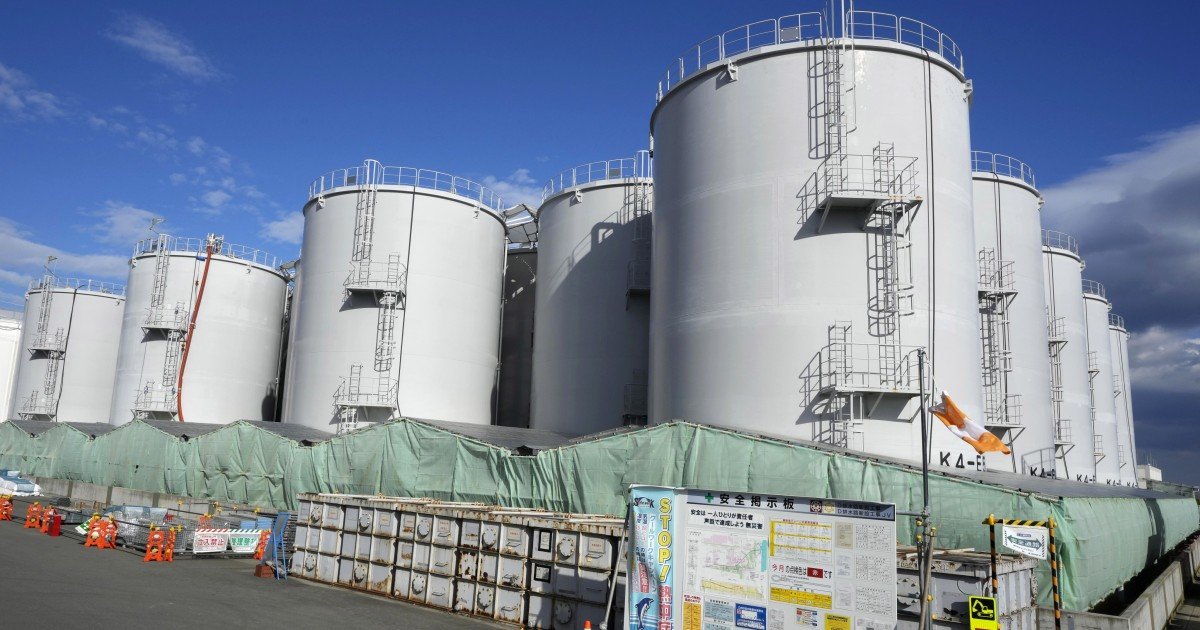
there is considerable skepticism of nuclear energy in Japan, and critics are concerned that the government is moving ahead with alliances with the United States to create new technologies while there are so many unanswered questions about safety
Next-Gen Nuclear Technology – US’ Ambitious Nuclear Power Pact With Tokyo Could Fuel Japanese Industry For Decades, BySakshi Tiwari, Eurasia Times, January 14, 2022 ”………………… (Japan) is set to give nuclear technology an all-new shot……………… Collaboration with scientists and companies in the United States will be a key component in the development of future nuclear energy technology
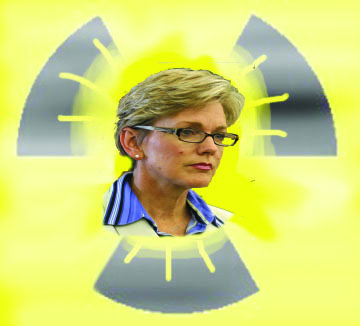
Japan’s Minister of Industry Koichi Hagiuda had a virtual meeting with US Energy Secretary Jennifer Granholm on January 6 during which they agreed to cooperate in the development of plutonium-burning fast reactors and advanced energy plants based on small modular reactors (SMRs).
Hagiuda told Granholm that Tokyo will encourage more local energy companies to join an international program to test fast reactors and small modular reactors, or SMRs, developed by US companies such as NuScale Power LLC and others.
The meeting, Hagiuda’s first since taking office last year, took place at a time when Japan is stepping up its efforts to develop advanced nuclear power technologies.
The Japanese government intends to promote domestic enterprises that participate in international tests incorporating such technology as part of its national energy plan. The United States and France are among the other international participants in the initiative…………………………..
in a noteworthy development that could now be seen as a premise for this new technology development, the Japanese government made it clear in its Sixth Strategic Energy Plan, released in October that it intends to move on from the events in northeast Japan………………..
In 2018, Japan and the United States had signed a memorandum of understanding to “advance the two countries’ worldwide leadership role” in civil nuclear energy.
“The Japan Atomic Energy Agency [JAEA] and Mitsubishi Heavy Industries are cooperating with US nuclear power start-up TerraPower simply because they have the required skills and knowledge on fast reactors,” says Tomoko Murakami, manager of the nuclear energy group at the Institute of Energy Economics Japan.
In the first stage of the alliance, Tokyo would spend 900 million yen ($7.8 million) on improving the AtheNa sodium experimental plant in Ibaraki prefecture for fast reactor development. The facility operated by Japan Atomic Energy Agency (JAEA) is already in operation, and an MoU on technological cooperation with TerraPower is expected to be inked by the end of January, SCMP reported.
In 2018, Japan and the United States had signed a memorandum of understanding to “advance the two countries’ worldwide leadership role” in civil nuclear energy.
“The Japan Atomic Energy Agency [JAEA] and Mitsubishi Heavy Industries are cooperating with US nuclear power start-up TerraPower simply because they have the required skills and knowledge on fast reactors,” says Tomoko Murakami, manager of the nuclear energy group at the Institute of Energy Economics Japan.
The system is meant to extract heat from a reactor core using liquid sodium to generate electricity. The facility will also be used in the cooperative development of a next-generation fast reactor with the United States, while work is also underway at another location, Joyo, to study the impact of neutrons on fuels and other equipment using sodium as a coolant……………………

With American experience in the technology and two of its companies deeply invested in it, Japan has a natural partner to cooperate with. Terrapower is a start-up, which is rigorously working on SMR technology and is partially funded by the American billionaire and philanthropist Bill Gates.
Another US giant working on this advanced next-generation technology is NuScale Power which has partnered with the US government on SMR development for third countries………….
Nonetheless, there is considerable skepticism of nuclear energy in Japan, and critics are concerned that the government is moving ahead with alliances with the United States to create new technologies while there are so many unanswered questions about safety, according to the SCMP.
“All the media coverage has become very positive about these new developments and the technology alliance with the US, but we must remember that at the moment fast reactor technology exists only on paper and there are no guarantees that it will be a success,” Hajime Matsukubo, secretary-general of the Tokyo-based Citizens’ Nuclear Information Centre (CNIC) was quoted as saying.
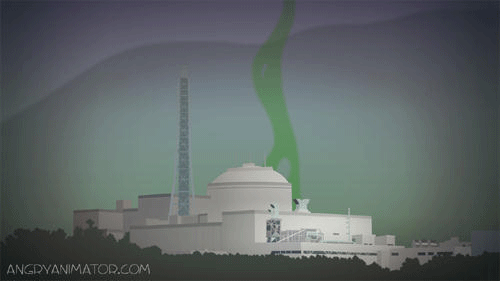
“Japan has already spent 1 trillion yen [US$8.7 billion] on fast reactor research and another 1 trillion yen on decommissioning the experimental Monju reactor, to say nothing of what is being spent on all the work at Fukushima and decommissioning all the other reactors around the country. So it’s ridiculous to spend even more on nuclear technology that so many people do not want and do not trust,” he added.
The billions spent on nuclear power, according to CNIC, would have been far better used in establishing a local renewable sector that could have tapped into geothermal, wind, wave, solar, and other sources — and would have been the envy of the world.
It also warns that due to Japan’s unstable geology, a replay of the Fukushima accident – or a situation far worse –always remains a possibility……
Why joint US-South Korean research on plutonium separation raises nuclear proliferation danger
Why joint US-South Korean research on plutonium separation raises nuclear
proliferation danger by Frank N. von Hippel. South Korea, like the United
States, has long relied on nuclear power as a major source of electric
power.
As a result, it has amassed large stores of spent nuclear fuel and,
as in the United States, has experienced political pushback from
populations around proposed central sites for the spent fuel. South Korea
also has a history of interest in nuclear weapons to deter North Korean
attack.
Bulletin of Atomic Scientists 13th Jan 2022
Why joint US-South Korean research on plutonium separation raises nuclear proliferation danger
Severely damaged fuel at Fukushima No 1 reactor – survey to find this has been halted.

Survey at Fukushima No. 1 reactor container halted, https://www.japantimes.co.jp/news/2022/01/12/national/tepco-fukushima-survey-halted/ Tokyo Electric Power Company Holdings Inc. halted its investigation of the inside of the containment vessel of the No. 1 reactor at its stricken Fukushima No. 1 nuclear power plant on Wednesday.
The move came after an issue was found during preparation work for the display of data such as radiation levels from dosimeters inside underwater robots to be used in the survey. The preparations began at noon the same day and were halted around two hours later.
Tepco said that it will resume the survey once measures to resolve the issue are taken.
In the survey, which will continue until around August, Tepco aims to take pictures of melted nuclear fuel debris and other deposits using six types of underwater robots to record their locations and thickness in water that has accumulated at the bottom of the containment vessel.
It will also try to collect deposit samples and take pictures of the inside of the base that supports the reactor pressure vessel. The information obtained in the survey will be used for studies on ways to remove the debris.
The nuclear fuel at the No. 1 reactor’s core is believed to have melted and mostly fallen inside the containment vessel during the triple meltdown disaster at the plant, which was hit by a huge earthquake and tsunami on March 11, 2011.
In its survey of March 2017, Tepco failed to find nuclear fuel debris at the No. 1 reactor, leaving the reactor’s detailed situation unknown, in contrast to the No. 2 and No. 3 reactors, where melted fuel debris was successfully photographed.
What we know about North Korea’s nuclear weapons and their military power
 | |||
What we know about North Korea’s nuclear weapons and their military power. After talks between the US and North Korea failed in 2019, Kim Jong-un has steadily been growing his military arsenal, but does the nation have any nuclear weapons?. By Robbie Purves, Birmingham Live, 5 JAN 2022 Kicking off their new year with a bang, North Korea has reportedly launched a ballistic missile, landing it in the East Sea, or Sea of Japan.
Fired from the land, it is suspected to be smaller than previous launches as an attempt to show military might, while avoiding large economic sanctions……..
Not only this, but they have an estimated 40 nuclear warheads. These can be carried by missiles that could reach, Los Angeles, Chicago and New York with ease.
Some military experts have warned they could possess technology to make them manoeuvrable mid-flight and therefore harder to detect.
North Korea blatantly violates UN Security Council resolutions regularly, but has highlighted hypocrisy.
Their neighbours, South Korea, launched a ballistic missiles from a submarine in September 2021, making it the first nation to do so without nuclear weapons.
The South’s president, Moon Jae-in, said the test was “Not a response to North Korea” but noted “the reinforcement of our missile capabilities can be a clear deterrent to North Korea’s provocations.”
South Korea, a long time ally of the US, has the capability to make a nuclear warhead, but has chosen not to do so.
Worryingly for peace in the region, the top People Power Party 2022 presidential candidate Yoon Seok-youl, has stated he would demand the US redeploy tactical nuclear weapons in the South.
After talks between then President Donald Trump and Kim Jong-un failed in 2019 despite much promise, tensions have steadily risen.
https://www.birminghammail.co.uk/news/world-news/what-know-north-koreas-nuclear-22653340
Growing radioactive waste crisis at Fukushima nuclear power plant

The continuous accumulation of radioactive slurry and other nasty substances, coupled with the problem of finding a safe way to dispose of melted nuclear fuel debris at reactors No. 1, No. 2 and No. 3, has plant operator Tokyo Electric Power Co. frantically scratching around for ideas.
One problem is that storage containers for the tainted slurry degrade quickly, meaning that they constantly have to be replaced.
TEPCO slow to respond to growing crisis at Fukushima plant, THE ASAHI SHIMBUN, by Yu Fujinami and Tsuyoshi Kawamura, January 2, 2022, Radioactive waste generated from treating highly contaminated water used to cool crippled reactors at the Fukushima No. 1 nuclear power plant has thrown up yet new nightmarish challenges in decommissioning the facility, a project that is supposed to be completed in 30 years but which looks increasingly doubtful.
The continuous accumulation of radioactive slurry and other nasty substances, coupled with the problem of finding a safe way to dispose of melted nuclear fuel debris at reactors No. 1, No. 2 and No. 3, has plant operator Tokyo Electric Power Co. frantically scratching around for ideas.
One problem is that storage containers for the tainted slurry degrade quickly, meaning that they constantly have to be replaced. Despite the urgency of the situation, little has been done to resolve the matter.
Fuel debris, a solidified mixture of nuclear fuel and structures inside the reactors melted as a consequence of the triple meltdown triggered by the 2011 earthquake and tsunami disaster has to be constantly cooled with water, which mixes with groundwater and rainwater rainwater that seep into the reactor buildings, producing more new radioactive water.
The contaminated water that accumulates is processed via an Advanced Liquid Processing System to remove most of radioactive materials. The ALPS is housed in a 17-meter-tall building situated close to the center of the plant site.
Reporters from the Japan National Press Club were granted a rare opportunity in late November to visit the crippled facility to observe the process.
The building houses a large grayish drum-like container designed especially to store radioactive slurry. The interior of each vessel is lined with polyethylene, while its double-walled exterior is reinforced with stainless steel.
ALARMING DEVELOPMENTS The use of chemical agents to reduce radioactive substances from the contaminated water in the sedimentation process produces a muddy material resembling shampoo. Strontium readings of the generated slurry sometimes reach tens of millions of becquerels per cubic centimeter.
TEPCO started keeping slurry in special vessels in March 2013. As of November, it had 3,373 of the containers.
Because the integrity of the vessels deteriorates quickly due to exposure to radiation from slurry, TEPCO and the Nuclear Regulation Authority (NRA) predict that durability of the containers will reach the limit after exposure to an accumulated total of 5,000 kilograys of radiation–a level equivalent to 5 million sieverts.
Based on that grim forecast, TEPCO speculated the vessels will need replacement from July 2025.
But the NRA accused TEPCO of underestimating the impact of the radiation problem. It blasted the operator for measuring slurry density 20 centimeters above the base of the container when making its dose evaluation.
“As slurry forms deposits, the density level is always highest at the bottom,” a representative of the nuclear watchdog body pointed out.

The NRA carried out its own assessment in June 2021 and told TEPCO that 31 containers had already reached the end of their operating lives. Its findings also showed an additional 56 would need replacing within two years.The NRA told TEPCO to wake up and “understand how urgent the issue is since transferring slurry will take time.”………………..
With no drastic solutions in sight, a succession of containers will reach the end of their shelf lives shortly.
ANOTHER NIGHTMARE PROBLEM Radioactive slurry is not the only stumbling block for decommissioning.
In the immediate aftermath of the 2011 disaster, TEPCO stored contaminated water in the underground spaces below two buildings near the No. 4 reactor. In doing so, bags full of a mineral known as zeolite were placed in the temporary storage pools to absorb cesium so as to reduce the amount of radioactive substances.
Twenty-six tons of the stuff are still immersed in the dirty water on the floors under the buildings. Radiation readings of 4 sieverts per hour were detected on their surfaces in fiscal 2019, enough to kill half of all the people in the immediate vicinity within an hour.
TEPCO plans to introduce a remotely controlled underwater robot to recover the bags, starting no earlier than from fiscal 2023, However, it has not determined how long this will take or where to store the bags once they are retrieved.
In addition, radioactive rubble, soil and felled trees at the plant site totaled 480,000 cubic meters as of March 2021, leading TEPCO to set up a special incinerator. The total volume is expected to top 790,000 cubic meters in 10 years, but where to dispose of the incinerated waste remains unclear.
TEPCO is in a race against time. That’s the view of Satoshi Yanagihara, a specially appointed professor of nuclear engineering at the University of Fukui who has specialist knowledge on processes to abandon reactors.
“Now, only 30 years remain before the target date of the end of decommissioning set by the government and TEPCO,” said Yanagihara.As decommissioning work is due to shortly enter a crucial stage, such as recovering nuclear fuel debris on a trial basis from as early as 2022, Yanagihara noted the need for careful arrangements before forging ahead with important procedures.
“The government and TEPCO need to grasp an overall picture of the massive task ahead and discuss how to treat, keep and discard collected nuclear debris and the leftover radioactive waste with local residents and other relevant parties,” he said.https://www.asahi.com/ajw/articles/14503708
India, Pakistan exchange list of nuclear power installations
India, Pakistan exchange list of nuclear power installations, https://energy.economictimes.indiatimes.com/news/power/india-pakistan-exchange-list-of-nuclear-power-installations/88642567 India and Pakistan exchanged lists of nuclear installations and facilities…….
India Launches Nuclear Submarine With ‘Vertical Launch System’
Boosting Indian Navy’s Firepower, DRDO Launches Nuclear Submarine With ‘Vertical Launch System’ Eurasian Times, By Shreya Mundhra January 2, 2022
Amid geopolitical tensions in the Indo-Pacific region, India has quietly launched its third Arihant-class nuclear-powered ballistic missile submarine — the S4 SSBN — at a secretive ship-building center in Visakhapatnam. The development was reported by Janes Defence Weekly, citing satellite imagery.
Arihant-Class Submarines
The Arihant-class, named after the country’s first nuclear-powered submarine — INS Arihant — is a class of Indian nuclear-powered ballistic missile submarines that are being built for the Indian Navy.
It was launched at the Indian Navy’s dockyard located in Visakhapatnam, the headquarters of Eastern Naval Command. The project, earlier called the advanced technology vessel (ATV), has been under development since 1998………
Russia’s Role In Indian Project
INS Arihant, which cost $2.9bn, was jointly developed by the Indian Navy, Bhabha Atomic Research Centre (BARC), and Defence Research and Development Organisation (DRDO) at the naval dockyard……………………….
Arihant And Arighat
INS Arihant was launched on July 26, 2009, by then-Prime Minister Manmohan Singh. Four years later, in August 2013, the submarine’s atomic reactor was activated. Three more years down the line, in August 2016, Prime Minister Narendra Modi inducted the submarine into the Navy………………………..
The Latest Addition — S4 SSBN
In its December 29 report, Janes noted that the S4 SSBN was launched on November 23 and had been ‘relocated’ close to the ‘fitting-out wharf’ that was previously occupied by INS Arighat.
According to Janes, satellite imagery had confirmed that the ship being talked about stood at 7,000-tonnes, “slightly larger” than the lead ship in the Arihant class, INS Arihant.
……. The magazine went on to infer that the satellite imagery indicated that the newly launched boats’ increased length “accommodates expansion of the submarine’s vertical launch system”. This system can support eight missile launch tubes, as planned.
This would enable the SSBN to carry eight K-4 SLBMs, or alternately, 24 K-15 SLBMs. The K-4 SLBM is currently under development. https://eurasiantimes.com/indian-navy-launches-3rd-arihant-class-nuclear-submarine/
Protesters call for abolition of nuclear weapons
Protesters call for abolition of nuclear weapons, https://www3.nhk.or.jp/nhkworld/en/news/20220102_02/ Protesters in the Japanese city of Nagasaki took part in a sit-in on New Year’s Day and called for the abolition of nuclear weapons. A sit-in is held in the city every year on January 1. Nagasaki was hit by an atomic bomb during World War Two.
More than 60 people participated in the protest in the city’s Peace Park on Saturday.
The protesters observed a moment of silence at 11:02 a.m. The atomic bomb exploded in Nagasaki at that time on August 9, 1945. The participants held up pieces of paper with the word “peace” written on them in Japanese.
Atomic bomb survivor Tanaka Yasujiro said 2022 will be an important year. He said he wants non-nuclear countries to surround nuclear states, so that the number of nuclear warheads can be reduced.
The states, which signed the UN treaty that bans nuclear weapons, are scheduled to meet for the first time in March 2022.
The Review Conference of the Treaty on the Non-Proliferation of Nuclear Weapons may be held in August.
Parties to the NPT meet every five years to review the accord. A meeting was scheduled to take place in January. But the participants agreed to postpone it for the fourth time, due to the coronavirus pandemic. Various options are now being considered. A gathering in August is a possibility.
South Korea presidential contender vows to seek nuclear-powered submarines, months after Australia’s Aukus deal.

South Korea presidential contender vows to seek nuclear-powered submarines, months after Australia’s Aukus deal, Guardian, 31 Dec 21,
Lee Jae-myung aims to counter North Korea threats and pledges to restart stalled talks between Pyongyang and Washington
South Korea’s ruling party presidential candidate said he will seek US support to build nuclear-powered submarines to better counter threats from North Korea and proactively seek to reopen stalled denuclearisation talks between Pyongyang and Washington.
In an interview with Reuters and two other media outlets, Lee Jae-myung also pledged to put aside “strategic ambiguity” in the face of intensifying Sino-US rivalry, vowing pragmatic diplomacy would avoid South Korea being forced to choose between the two countries………………
Lee said he will persuade the US to win diplomatic and technology aid to launch nuclear-powered submarines, which can operate more quietly for longer periods, amid renewed calls for building one in the military and parliament after North Korea test-fired a new missile from a submarine in October.
Lee cited the deal Australia struck under a trilateral security partnership with the US and Britain in September to build its own nuclear-powered submarines…………………………… https://www.theguardian.com/world/2021/dec/30/south-korea-presidential-contender-vows-to-seek-nuclear-powered-submarines-months-after-australias-aukus-deal
Japan’s plan for dumping nuclear waste-water into the sea
Japan’s government on Tuesday mapped out a plan for releasing contaminated
water from the crippled Fukushima nuclear plant into the sea, including
compensation standards for local industry and the compilation of a safety
assessment report. Japan said in April it would discharge more than 1
million tonnes of contaminated water in stages after treatment and
dilution, starting around spring 2023. The announcement provoked concerns
from local fishermen and objections from neighbouring China and South
Korea.
Reuters 28th Dec 2021
China hits back at ‘double standards’ amid US tech war, Washington’s nuclear weapon concerns
Beijing issued its first white paper on export controls on Wednesday, a month after 12 more Chinese companies were placed on the United States’ export blacklist
The ‘China’s Export Controls’ white paper argues that no country or region should ‘gratuitously impose discriminatory restrictions or apply ‘double standards’…….. https://www.scmp.com/economy/china-economy/article/3161447/china-hits-back-double-standards-amid-us-tech-war-washingtons
Kashiwazaki-Kariwa nuclear powerplant out of action for many months due to 74 instances of defective welding
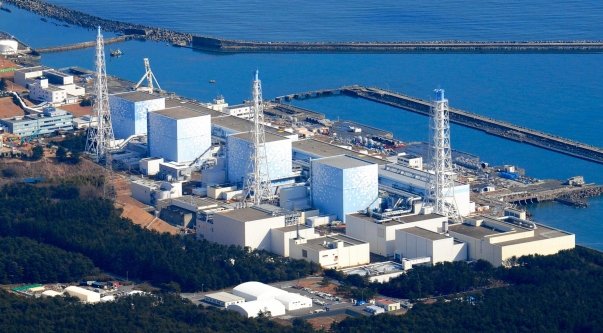
| Shoddy welding maintenance work at the Kashiwazaki-Kariwa nuclear power plant in Niigata Prefecture will push back moves to bring the facility back online by many months, perhaps longer, its operator Tokyo Electric Power Co. acknowledged. The No. 7 reactor has been plagued by problems to do with installing safeguards against terrorist attacks that required further work and a new round of inspections by the Nuclear Regulation Authority, the nation’s nuclear watchdog body. TEPCO announced Dec. 24 that it had uncovered 74 instances of defective welding that is essential to safe operations of the nuclear reactor. The utility said it had been tipped off anonymously on several occasions since March about shoddy welding work done by a subcontractor. In its latest announcement, TEPCO acknowledged the problem and said welding would have to be redone at 1,200 or so sections, a process that will likely take until next summer. Asahi Shimbun 25th Dec 2021 https://www.asahi.com/ajw/articles/14510525 |
TEPCO files for approval of Fukushima plant water release.
Operator Files For Approval of Fukushima Plant Water Release, Claims Journal, By Mari Yamaguchi | December 22, 2021 TOKYO (AP)–The operator of the wrecked Fukushima nuclear plant said Tuesday it has applied for approval from safety authorities to construct an undersea tunnel and other facilities needed for the planned release of large amounts of treated radioactive water into the sea.
The operator, Tokyo Electric Power Company Holdings, said it hopes to obtain approval from the Nuclear Regulation Authority to begin constructing the facilities in June and start releasing the water in April 2023.
The approval would cover the basic plan and design of the undersea tunnel, equipment to dilute the water with sea water and other necessary materials. https://www.claimsjournal.com/news/international/2021/12/22/307711.htm
TEPCO plans to release massive amounts of treated but still radioactive water into the ocean about 1 kilometer (0.6 mile) from the plant to ensure safety and minimize the impact on local fishing and the environment.
The contaminated water is to be diluted with large amounts of seawater to reduce the concentration of radioactive materials below allowable limits.
About 1,000 storage tanks at the plant currently filled with radioactive water need to be removed to make room for facilities necessary for the plant’s decommissioning, TEPCO says.
An official in charge of the water discharge project, Junichi Matsumoto, said TEPCO will construct the undersea tunnel by drilling through bedrock in the seabed.
Under the plan TEPCO submitted to the nuclear authority, the water will be released about 12 meters (40 feet) below the ocean’s surface……….
The government in April approved the decision to start discharging the water into the Pacific Ocean under safety standards set by regulators, calling it the most realistic option. The idea has been fiercely opposed by fishermen, residents and neighboring countries including China and South Korea. https://www.claimsjournal.com/news/international/2021/12/22/307711.htm
China opposes Japanese decision to release nuclear-contaminated water into ocean
BEIJING, Dec. 22 (Xinhua) — China is seriously concerned about and firmly opposes Japan’s unilateral decision to discharge the nuclear-contaminated water into the sea and its proceeding with the preparatory work, a Chinese Foreign Ministry spokesperson said Wednesday.
Zhao Lijian made the remarks when asked to comment on a media report that Tokyo Electric Power Company has submitted an application to Japan’s Nuclear Regulation Authority with a detailed plan of discharging nuclear-contaminated water from the Fukushima Daiichi nuclear power plant into the sea.
Since April this year, the international community has raised concerns to the Japanese side over the legitimacy of the discharge into the sea, the rationality of the discharge plan, the credibility of the data about the nuclear contaminated water and the reliability of the equipment to purify the nuclear-contaminated water, Zhao said.
The work of the IAEA technical working group on the handling of the nuclear-contaminated water from Fukushima is still undergoing, he added.
“In total disregard of the legitimate and reasonable concerns of the international community, the Japanese side only continues to proceed with the preparations for the discharge both policy-wise and technology-wise,” Zhao said.
“Obviously, it wants to impose its wrong decision on the entire international community, and it is all the littoral countries of the Pacific Ocean that will have to take the risk for such move. The Japanese side is extremely irresponsible in doing so.”……….. http://www.xinhuanet.com/english/asiapacific/20211015/C9A4AEDD72B00001F26810B030601260/c.html
Rapid shrinking of glaciers in the Himalayas
Glaciers in the Himalayas are shrinking far more rapidly than glaciers in
other parts of the world, threatening the water supply of millions of
people in Asia, new research warns. The study, led by scientists at the
University of Leeds, found that in recent decades, Himalayan glaciers have
lost ice 10 times more quickly than they have on average since the Little
Ice Age, when glaciers expanded around 400-700 years ago.
Independent 21st Dec 2021
https://www.independent.co.uk/climate-change/news/himalayas-glaciers-melting-water-ice-b1979531.html
1 This Month
Chernobyl: The Lost Tapes – A good documentary on Chernobyl on SBS available On Demand for the next 3 weeks– https://www.sbs.com.au/ondemand/tv-program/chernobyl-the-lost-tapes/2352741955560

of the week–London Campaign for Nuclear Disarmament

Tell the Ukrainian Government to Drop Prosecution of Peace Activist Yurii Sheliazhenko
To see nuclear-related stories in greater depth and intensity – go to https://nuclearinformation.wordpress.com
-
Archives
- April 2026 (114)
- March 2026 (251)
- February 2026 (268)
- January 2026 (308)
- December 2025 (358)
- November 2025 (359)
- October 2025 (376)
- September 2025 (257)
- August 2025 (319)
- July 2025 (230)
- June 2025 (348)
- May 2025 (261)
-
Categories
- 1
- 1 NUCLEAR ISSUES
- business and costs
- climate change
- culture and arts
- ENERGY
- environment
- health
- history
- indigenous issues
- Legal
- marketing of nuclear
- media
- opposition to nuclear
- PERSONAL STORIES
- politics
- politics international
- Religion and ethics
- safety
- secrets,lies and civil liberties
- spinbuster
- technology
- Uranium
- wastes
- weapons and war
- Women
- 2 WORLD
- ACTION
- AFRICA
- Atrocities
- AUSTRALIA
- Christina's notes
- Christina's themes
- culture and arts
- Events
- Fuk 2022
- Fuk 2023
- Fukushima 2017
- Fukushima 2018
- fukushima 2019
- Fukushima 2020
- Fukushima 2021
- general
- global warming
- Humour (God we need it)
- Nuclear
- RARE EARTHS
- Reference
- resources – print
- Resources -audiovicual
- Weekly Newsletter
- World
- World Nuclear
- YouTube
-
RSS
Entries RSS
Comments RSS
 nuclear-news