The Building of the First Atomic Bombs Impacted Workers and Residents, Too
Eighty years after the bombing of Hiroshima and Nagasaki, workers who mined the uranium and people who lived near the test sites are still dying from exposure to radiation.
by Jim Carrier, August 7, 2025, https://progressive.org/magazine/the-building-of-the-first-atomic-bombs-impacted-workers-and-residents-too-carrier-20250807/
The road to Nagasaki was littered with radiation.
Eighty years after an atomic bomb called Fat Man was dropped, killing and poisoning about 100,000 people in Nagasaki, at least a dozen sites around the world—sites that contributed to the bomb’s creation—are still dealing with its deadly legacy.
Under the pressure to win World War II, U.S. military leaders pulled out all stops to prioritize the creation and testing of an atomic bomb, indifferent to the cost on the lives and livelihood of everyday people. Landscapes were polluted, workers were exposed to radiation, and civilian neighbors to the nuclear test sites—the first “downwinders”—were ignored or lied to.
The Manhattan Project—a top-secret research and development program created by the U.S. government during World War II to develop a nuclear bomb—sourced nearly all of its much-needed uranium from the Belgian Congo’s Shinkolobwe mine. Located in the modern-day Haut-Katanga province in the Democratic Republic of Congo, the Shinkolonwe mine was the world’s richest source of high-grade uranium, radium, and other valuable minerals. First opened in 1921, the Belgian-owned mine employed artisanal miners who dug the radioactive ore with handheld tools and carried it out in sacks on their shoulders, further exposing them to the toxic substance. While the environmental impact was visible and more difficult to conceal, any known records of lasting health impacts were disappeared by the authorities or never recorded at all.
In 1939, fearing Adolf Hitler and the German discovery of nuclear fission in uranium—with its potential to create a bomb—the mine’s manager shipped more than 1,000 tons of ore from Katanga to a warehouse on Staten Island, New York. Spilled ore contaminated a portion of the site where it sat for three years. A 1980 study later determined that the site might harm trespassers beneath the Bayonne Bridge, but by that time the site had already been demolished.
President Franklin Roosevelt’s January 19, 1942, decision to build an atomic bomb touched off the $2 billion Manhattan Project with its extraordinary mix of secret research at Los Alamos, New Mexico, and massive construction projects at Oak Ridge, Tennessee, and Hanford, Washington. All of these needed hundreds of tons of uranium to make a few pounds of plutonium.
In November 1942, the U.S. Army discovered and bought the Staten Island uranium stockpile and shipped 1,823 drums by barge and railroad to the Seneca Army Depot in Romulus, New York, where it was put into large concrete igloos before being shipped to various refineries. Now part of an Environmental Protection Agency Superfund site, the depot stored all kinds of munitions and even some classified military equipment that was burned and buried. Most of the site was cleaned up in the early 2000s and opened for recreation and industrial warehousing.
The Army’s search for uranium ore also uncovered 500 tons among vanadium tailings in western Colorado, and 300 tons at Port Hope, Ontario, Canada, where the Eldorado Gold Mines refinery processed ore into more pure concentrations. Eldorado’s own mine, on Great Bear Lake in the Northwest Territories of Canada, employed First Nations Dene workers who would later suffer cancers and die from handling sacks of ore. Their community of Délı̨nę became known as a “village of widows.” Without contemporary health records, a re-created exposure study found that overall cancer rates for Délı̨nę were “not statistically significantly different from the Northwest Territories.”
Port Hope, on the northern shore of Lake Ontario, which processed all the African and North American uranium ore for the Manhattan Project, spread tailings in neighborhoods and in the lake, eventually requiring a $1.3 billion cleanup that did not begin until 2018. Residents blame the contamination for cancers, although a 2013 study found no statistical evidence of greater radiosensitive cancers.
An enduring and poetic legend links the labors of Délı̨nę villagers to the Japanese bombs, a story told in A Village of Widows, a documentary film that followed ten Dine to Hiroshima in 1998 where they paid their respects and shared mutual sorrow with hibakusha, the Japanese word for the survivors of the atomic bombs. The uranium ore from Great Bear Lake did, in fact, contribute to the Manhattan Project—a U.S. government history found that Great Bear Lake ore amounted to one-sixth of the uranium used in the Manhattan Project, Colorado ore contributed one-seventh, and the rest came from the Belgian Congo. However, a detailed 2008 analysis of the ore’s movements concluded that “the fissile material in the Nagasaki weapon was almost certainly derived from oxide processed by Eldorado which would have been mostly of Belgian Congo origin. The same is probably true for the Hiroshima weapon. It is also possible that there was some uranium of U.S. origin in both of these weapons.”
After Port Hope, the uranium was further refined at nineteen industrial sites including: Linde Air in Tonawanda, New York; Dupont’s Deepwater Works in New Jersey; Metal Hydrides Inc. in Beverly, Massachusetts; Harshaw Chemical in Cleveland, Ohio; and at Mallinckrodt Chemical Company in St. Louis, Missouri. All of these sites have undergone expensive remediation. Mallinckrodt, whose radiation contamination caused numerous cancers in children and adults, has yet to be scrubbed clean.
Uranium salts were then delivered to either Oak Ridge, Tennessee, where the Y-12 refinery produced enriched uranium for the bomb dropped on Hiroshima, or to Hanford, Washington, where refineries produced the plutonium used in both the Trinity test bomb and the Nagasaki bomb. Both reactor sites deliberately released radioactive material into the air and water. Cleaning the mess has cost much more than the original Manhattan Project. The cost to clean Hanford, considered the most radioactive spot in the world, is estimated at $640 billion. Oak Ridge’s cleanup won’t be finished until 2050. Hanford’s effort to meld radioactive sludge into glass containers and bury them in salt caves is only beginning.

The first atomic bomb blast in history, the Trinity test of the plutonium implosion “gadget” in the Alamogordo, New Mexico, desert on July 16, 1945, left permanent marks on the land and the people downwind. The airborne plume from Trinity drifted across the Tularosa Basin, landing on vegetables, cattle, and water, poisoning residents who would later report leukemia, cancers, and heart disease. Subsequent studies have found Trinity fallout reached forty-six states, Canada, and Mexico. After five years of lobbying, the Tularosa Basin Downwinders Consortium won a two-year window—until December 31, 2028—to be included in the federal Radiation Exposure Compensation Act which covers U.S. uranium workers and downwinders exposed at the Nevada Test Site during the Cold War. As of June 24, 2025, 42,575 people have received $2.7 billion dollars. Tourists can visit the test site one day a year, on the third Saturday in October. Radiation at ground zero is ten times the region’s natural radiation.
The area around Los Alamos, where brilliant physicists and world-class machinists created the bombs that fell on Japan eighty years ago, has realized that the work of those scientists also left plutonium contamination close to home. Wartime practices that dumped raw radioactive waste into Acid Canyon continued until 1951, and despite several cleanup efforts, measurable plutonium remains. The Los Alamos National Laboratory says the risks to humans walking the canyon are “tiny.” However, plutonium has a half-life of 24,000 years.
For more on the story of Nagasaki, Japan, today, see Jim Carrier’s article “The Bombs Still Ticking” from the August/September 2025 issue of The Progressive.
Pakistan nuclear weapons, 2025

Bulletin, By Hans M. Kristensen, Matt Korda, Eliana Johns, Mackenzie Knight-Boyle | September 4, 2025
Pakistan continues to slowly modernize its nuclear arsenal with improved and new delivery systems, and a growing fissile material production industry. Analysis of commercial satellite images of construction at Pakistani army garrisons and air force bases shows what appear to be newer launchers and facilities that might be related to Pakistan’s nuclear forces, although authoritative information about Pakistan’s nuclear units is scarce.
We estimate that Pakistan has produced a nuclear weapons stockpile of approximately 170 warheads, which is unchanged since our last estimate in 2023 (see Table 1). The US Defense Intelligence Agency projected in 1999 that Pakistan would have 60 to 80 warheads by 2020 (US Defense Intelligence Agency (1999, 38), but several new weapon systems have been fielded and developed since then, which leads us to a higher estimate. Our estimate comes with considerable uncertainty because neither Pakistan nor other countries publish much information about the Pakistani nuclear arsenal.
With several new delivery systems in development, four plutonium production reactors, and an expanding uranium enrichment infrastructure, Pakistan’s stockpile has the potential to increase further over the next several years. The size of this increase will depend on several factors, including how many nuclear-capable launchers Pakistan plans to deploy, how its nuclear strategy evolves, and how much the Indian nuclear arsenal grows. We estimate that the country’s stockpile could potentially grow to around 200 warheads by the late 2020s. But unless India significantly expands its arsenal or further builds up its conventional forces, it seems reasonable to expect that Pakistan’s nuclear arsenal will not grow significantly, but might level off as its current weapons programs are completed.
………………………………….. Analyzing Pakistan’s nuclear forces is particularly fraught with uncertainty, given the lack of official state-originating data. The Pakistani government has never publicly disclosed the size of its arsenal and does not typically comment on its nuclear doctrine. Unlike some other nuclear-armed states, Pakistan does not regularly publish any official documentation explaining the contours of its nuclear posture or doctrine. Whenever such details emerge in the public discourse, they usually originate from retired officials commenting in their personal capacities. The most regular official source on Pakistani nuclear weapons is the Inter Services Public Relations (ISPR), the media wing of the Pakistan Armed Forces, which publishes regular press releases for missile launches and occasionally couples them with launch videos.
Occasionally, other countries offer official statements or analysis about Pakistan’s nuclear forces. ……………………………………………………………………
Pakistan’s nuclear doctrine
Pakistan has historically maintained a deliberately ambiguous nuclear doctrine, including through refusal to endorse or reject a no-first-use policy.
…………………………..Within its broader philosophy of “credible minimum deterrence,” which seeks to emphasize a defensive and limited but flexible nuclear posture, Pakistan operates under a nuclear doctrine that it calls “full spectrum deterrence.” This posture is aimed mainly at deterring India, which Pakistan identifies as its primary adversary.
…………………………..Pakistan’s nuclear posture—particularly its development and deployment of tactical nuclear weapons—has created considerable concern in other countries, including the United States, which fears that it increases the risk of escalation and lowers the threshold for nuclear use in a military conflict with India.
…………………………..Nuclear security, command-and-control, and crisis management
Over the past decade-and-a-half, the US assessment of nuclear weapons security in Pakistan appears to have changed considerably from confidence to concern, particularly because of the introduction of tactical nuclear weapons in the Pakistani arsenal. ……………………………………………………………………..
2025 India-Pakistan conflict
In May 2025, India and Pakistan engaged in a brief conflict, during which India launched conventional missile strikes against several Pakistani military facilities. The conflict, which lasted days, included an escalatory exchange of fire from both sides following the April 22 terrorist attack in Pahalgam, Indian-administered Kashmir.
In the aftermath of the conflict, the Pakistan Air Force (PAF) and the Military Engineer Services—which conducts construction and maintenance operations for all branches of the Pakistani military—issued a series of public procurement contracts for post-strike repairs at a variety of military bases, indicating which facilities suffered damage due to the conflict (Mishra 2025). ……………………
……………………….One study concluded that although the “mutual possession of nuclear weapons heavily conditioned the response of both sides” and “overt nuclear signaling was lower than in many prior India-Pakistan crises, … the crisis underscores that South Asia is one of the most likely theaters for nuclear war, even if that prospect was not imminent in this instance” (Clary 2025).
Fissile materials, warheads, and missile production
Pakistan has a well-established and diverse fissile material production complex that is expanding. This includes four heavy-water plutonium production reactors at the Khushab Complex, three of which were completed in the past 15 years. ………………………………………….
We estimate that Pakistan currently is producing sufficient fissile material to build 14 to 27 new warheads per year, although we estimate that the actual warhead increase in the stockpile probably averages around 5 to 10 warheads per year.[2]…………………………………………..
Nuclear-capable aircraft and air-delivered weapons…………………………………………………………………………………..
Land-based ballistic missiles…………………………………………………………………………….
Land-based missile garrisons…………………………………………………………………………..
Ground- and sea-launched cruise missiles…………………………………………………………………….. https://thebulletin.org/premium/2025-09/pakistan-nuclear-weapons-2025/?utm_source=ActiveCampaign&utm_medium=email&utm_content=Pakistan%20s%20nuclear%20arsenal&utm_campaign=20250904%20Thursday%20Newsletter%20%28Copy%29
Is fishmeal from Fukushima-affected fish the source of Indonesian shrimp’s radioactive contamination?

J. P. Unger, 8 Sept 25
It just hit me earlier, while thinking about the recently exposed case of radioactive shrimp being recalled in the US, and in particular why one Indonesian shrimp farming business’s harvests would be contaminated with radioactive Cesium and not those from other Indonesian shrimp farms: it’s probably the feed they used!
Cheap, radioactive fishmeal, perhaps made from fish impacted by contamination from Fukushima, I suspect could well be the source. This is why:
Shrimp farming has traditionally used fishmeal as a high-protein source to feed the shrimp -with fishmeal normally consisting of smaller fish, fishing “by-catch” and fish-processing byproducts, all shredded and ground to a texture like coarse sand or pellets to feed farm animals and aquaculture operations.
As ocean fish populations become increasingly strained and global demand for fish keeps increasing, fishmeal has become increasingly expensive and in shorter supply
Therefore, it’s quite likely that fishmeal from contaminated fisheries -for example, with high levels of radioactive pollution- would be offered at a comparatively low price. That would be quite attractive for a business that’s more concerned with profit margins than with what happens to consumers down the line.
If this was the case, and given that many businesses around the world likely prioritize profit margins over long-term effects in far-removed consumers (or might not even be aware of the contamination of the feed), this case could be the tip of a very worrisome iceberg and open up a big can of worms….
It certainly demands a careful inspection of food imports AND of food “precursors”, in particular imported fishmeal and food from animals raised on it. Also, international cooperation and vigilance, to know who might be selling contaminated fishmeal and where, who has been buying and using it, and what land- or water-farmed meat production it might be affecting.
Unless I hear concerns or suggestions to the contrary, I’ll prepare and send a slightly different articulation of these thoughts to a handful of government officials and media here and in the US who might be interested in investigating, as precautions should probably be ramped up for a variety of food products…
This would not be the first time radioactively contaminated foodstuff circulates at bargain prices… When I was starting as a science and environment journalist in Peru in the 1980’s I wrote about the post-Chernobyl arrival of radioactive powdered milk from Europe (a “generous” 12,000 ton donation from the European Community…), and radioactive meat from Germany (sold at a bargain price!). I received brush-offs, threats and warnings from corrupt government officials profiting from it, as well as ignorance and disinterest among other journalists and the general population, all with other “more immediate concerns” at the time, as the country faced five-digit inflation and the expansion of a brutally violent Maoist insurgency -nobody wanted to hear about yet more dangers then, and everywhere I was met by a frustrating fatalistic denial or avoidance mantra along the lines of “one has to die from something anyway.” Anyways… JPU
Japan shocks the world — Solar panels as strong as 20 nuclear reactors unveiled.
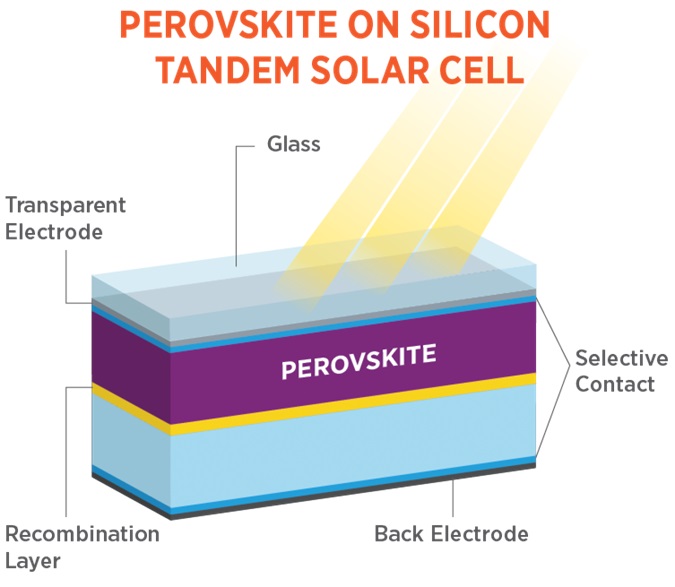
by Beatriz T., September 6, 2025.EcoNews,
Imagine a country with limited space, a large population, and an urgent need for clean energy. That’s Japan, a nation that, since the Fukushima disaster in 2011, has been burdened with rethinking its entire energy system. This is because the catastrophe not only shook confidence in nuclear energy but also accelerated the race for sustainable and safe alternatives. More than a decade later, Japan surprises the world again with revolutionary perovskite solar cells, a light, thin, and flexible material that can be installed in places unimaginable until recently, like windows, walls, and even car roofs.
There are several important advantages
of these cells, and some of these are: Superior efficiency; application
flexibility; strategic security; export potential. Japanese companies like
Sekisui Chemical are already investing heavily in research (and other
companies are investing in the first typhoon turbine).
Internationally, Swedish company Exeger has successfully applied flexible panels to consumer products like headphones and keyboards, demonstrating that the future may be closer than we imagine. The dilemma lies in Japan seeking not only clean energy but also economic security. Essentially, the question remains: invest billions in a still-immature technology or risk losing its global leadership once again?
For a country dependent on energy imports and
vulnerable to international crises, investing in perovskites is both a
necessity and a strategic move. The country’s plan is clear: by 2040,
Japan aims to generate 20 gigawatts of power with perovskites, the
equivalent of 20 nuclear power plants.
Achieving this goal will not only be
a technological victory but a historic milestone in the global energy
transition. Essentially, this advancement could transform Japan into an
exporter of energy technology, offering the world a more efficient
alternative that’s less dependent on large areas. For densely populated
countries like South Korea, Singapore, or even parts of Europe, the
Japanese experience could serve as a model.
Eco News 6th Sept 2025,
https://www.ecoticias.com/en/japan-shocks-the-world-solar-panels/19817/
Russian engineer-physicist Ozharovsky spoke about deportation from Mongolia.
Andrey Ozharovsky was detained in Mongolia while exploring the Gobi Desert. He was trying to find out if there was radiation contamination where the French were mining uranium. Metro asked the Russian nuclear scientist what happened to him.
Metro Moscow 27th Aug 2025, https://www.gazetametro.ru/articles/rossijskij-inzhener-fizik-ozharovskij-rasskazal-chto-proizoshlo-s-nim-v-mongolii-27-08-2025
The media reported on the detention of the Russian activist on August 19. As Ozharovsky himself said, in Mongolia he was deprived of his freedom, passport and the opportunity to talk to his relatives. At the same time, Mongolian security forces behaved correctly with him.
Why Russian Researcher Deported from Mongolia
“I came to help local activists figure out whether there is radioactive contamination in the part of the Gobi Desert where the French company Orano mines uranium using the underground solution method,” Ozharovsky told Metro.
According to him, Mongolian activists invited him to participate in the research of the area because the scientist’s equipment had previously detected similar contamination in Russia. During three days of research in Mongolia, Ozharovsky found deviations – the consequences of uranium mining by the French.
“Apparently, those who mine uranium in the Gobi did not like this. And perhaps the French nuclear scientists are behind my deportation,” the scientist concluded.
Suddenly a jeep with three security officers and a female employee of the migration service arrives. After that they take my passport for inspection and give it back only a week later.— deported nuclear physicist Andrei Ozharovsky
Ozharovsky believes that the circumstances of his arrest were extremely strange.
“We finished taking measurements in the desert, then moved to a new location, the Maradai mine. That’s where the immigration service detained me. Before that, we had only met one shepherd the previous day,” he explained.
According to the researcher, he was first taken under guard for interrogation to the provincial capital, the city of Choibalsan. And only after that was he sent to Ulaanbaatar.
“Russian spy” and “Rosatom saboteur”
As Ozharovsky says, shortly before his arrest, an active campaign against him began in the local media. The scientist emphasizes that in their materials, Mongolian journalists called him a spy and intelligence officer who was in Mongolia “in the interests of Rosatom.”
— After completing the measurements in Gobi, we traveled for more than a day to a new location. And during this time, as if on command, several articles were published in which journalists called on the Mongolian authorities to take decisive action, because “a Russian spy is driving around the country’s uranium mines,” the nuclear physicist explains.
At the same time, after his arrest, representatives of Mongolian intelligence stated that they had no claims against Ozharovsky. And his case was forwarded to the police.
However, the nuclear physicist emphasizes that Mongolia is now allegedly trying to hide a major environmental problem that he and local activists managed to discover.
“I found three areas in Mongolia where the usual Gobi dose rate of 0.1 microsievert per hour was exceeded by 20-50 times. In problem areas, the pollution level reached 5 microsievert per hour,” he said.
Microsieverta unit of measurement that can be used to determine how much radiation a person has received
According to the researcher, such indicators can already have serious consequences for humans. And the nomads living in the region can make specific assumptions about what caused the increase in cancer cases.
“One nomad we spoke to had a father who died of cancer. And his young wife was diagnosed with breast cancer,” the scientist said.
Deportation and its consequences
The nuclear physicist fully admits that he could have violated Mongolian law. But he emphasizes that this happened due to ignorance of its subtleties.
— In Mongolia, it is prohibited to measure the radiation environment with devices that have not been accredited in the country. That is, even if you have proof of the functionality of the equipment in other countries, you must bring your device to the authorities, pay money for the inspection, and only then receive the right to conduct research, he explained.
In addition, the country has very specific restrictions for Russians. And Ozharovsky could have accidentally violated one of them.
— According to Mongolian law, Russians can stay in the country without a visa only if they are tourists. After the dosimeter was turned on, according to the law enforcement officers who deported me, I ceased to be one, — the nuclear scientist added.
According to the researcher, he plans to contact lawyers to assess the legality of the punishment. He also emphasized that he does not plan to abandon his research in Mongolia, but will now conduct it in other ways.
Japan exploring whether AI could help inspect its nuclear power plants.
Japan’s Nuclear Regulation Authority has requested extra funds to
experiment with AI-powered nuclear plant inspectors. Japanese media report
that the authority wants to explore AI inspection because many nuclear
plants operated by Japanese energy companies are already old and will
likely need more oversight as they continue operating. Decommissioning
those plants will also create a need for extra supervision. The regulator
reportedly said it doesn’t have sufficient staff to handle the
inspections needed for extended operations and decommissioning of old
plants.
The Register 28th Aug 2025, https://www.theregister.com/2025/08/28/japan_ai_for_nuclear_inspectiona/
Indonesia Bets On Thorcon’s Molten Salt Reactor, But History Suggests Trouble Ahead.
Indonesia has none of the ingredients that historically led to nuclear success. It has no prior nuclear fleet, no experience operating reactors, no large-scale nuclear workforce, no plans to build nuclear weapons and no tradition of standardized reactor builds.
Michael Barnard, Clean Technica, 27 Aug 25
Indonesia has taken a bold and likely problematic step with the announcement of its first, early stage regulatory approval for a nuclear power project. Thorcon International, a Singapore-based developer of molten salt reactors, has received permission from Indonesia’s regulator to evaluate a site for a demonstration plant on Kelasa Island. For a country of more than 270 million people with electricity demand that is still growing rapidly, this might appear to be a turning point. Yet if one examines history, technology, and the context in which this project is being launched, the chances of it succeeding look vanishingly small.
Indonesia is the world’s largest archipelago, stretching across more than 17,000 islands, with only about 6,000 of them inhabited. This geography creates enormous challenges for the national grid, which is fragmented into multiple regional systems rather than a single interconnected backbone. Java and Sumatra host most of the country’s transmission infrastructure, while many outlying islands depend on small isolated grids. Remote communities often rely on diesel generators for electricity, which are expensive to operate and create significant local pollution…………………………………………………………….
the government has announced a target of 10 GW of nuclear capacity by 2040, marking its first commitment to nuclear power.
If delivered, these additions would lift renewables to roughly 35% of the national mix while also introducing nuclear into the system for the first time. Looking further ahead, Indonesia targets 75 GW of new renewable capacity by 2035, supported by more than 10 GW of storage, reflecting the scale of investment needed to diversify away from coal and meet climate commitments.
Nuclear power has only succeeded when certain conditions were in place. In the mid-twentieth century, large economies aligned nuclear energy programs with nuclear weapons programs. They standardized on one design, built dozens of gigawatt-scale plants in sequence, trained workforces through government-led programs, and maintained focus for decades. Those programs were not efficient by today’s standards, but they were coherent and well-resourced.
Countries that did not follow that formula, such as Canada’s stop-start approach with CANDUs or the the last couple of decades of western nuclear reactor builds, ended up with mixed results and rising costs. Even China, which has mastered megaproject delivery, is struggling with nuclear because it has spread effort across too many designs and has not locked into the necessary standardization. While nuclear advocates in the west point to China’s build out as impressive, it is years behind on targets and falling further behind. It only achieved its 2020 target in 2024, is still well under its 2% of grid capacity target for 2025 and its scheduled construction through 2030 will leave it tens of GW off that target.
Indonesia has none of the ingredients that historically led to nuclear success. It has no prior nuclear fleet, no experience operating reactors, no large-scale nuclear workforce, no plans to build nuclear weapons and no tradition of standardized reactor builds. It’s not building dozens of standard and proven GW-scale reactors, but only 10 GW in total, starting with a 500 MW unproven design, and not necessarily repeating that one solution multiple times. So far they appear to have little political opposition to nuclear, but that doesn’t mean the bipartisan support required for a two to four decade strategic national construction program. The country is signatory to the nuclear Non-Proliferation Treaty and has eliminated highly enriched uranium that might be transferable to nuclear weapons from the countyr, so there is military strategic alignment and discipline to call upon.
The choice of a molten salt reactor adds another layer of difficulty. Molten salt designs were first tested at Oak Ridge in the 1960s. They worked in the lab but ran into issues with corrosion, material embrittlement, plugging of salt lines, and complex chemistry that had to be actively managed. They never scaled beyond a few megawatts of thermal output. In recent years, startups from North America to Scandinavia have revived the concept, promising walk-away safety and lower costs. Yet not a single one has delivered a commercial plant. Thorcon itself has never built or operated a reactor, anywhere. It is proposing to build large sealed modules in shipyards and tow them to Indonesia, an approach that exists only on paper.

……………………………..Germany tried thorium in its pebble-bed reactor, and India built an entire nuclear strategy around its domestic thorium reserves, planning a three-stage cycle that would eventually rely on advanced heavy water reactors fueled with uranium-233 bred from thorium. Yet in every case, thorium stopped short of commercial deployment. The complexity of fuel handling, the need for an initial fissile inventory of uranium or plutonium, and the sheer momentum of the uranium-fueled reactor fleet kept thorium in the category of “promising but not delivered.”
Thorcon’s original vision was built on thorium’s promise. Its very name, short for “Thorium Concept,” signaled an intention to commercialize molten salt reactors running on a thorium cycle. Early designs envisioned dissolving thorium in molten fluoride salt, breeding uranium-233 in situ, and demonstrating the fuel’s long-touted advantages. But as the company moved from concept to trying to build an actual plant in Indonesia, pragmatism set in. For a first-of-a-kind power reactor, relying on thorium would mean untested chemistry, uncertain licensing pathways, and even greater risk.
Indonesia’s proposed demonstration plant is therefore designed to run on conventional low-enriched uranium fuel dissolved in molten salt, not thorium. Thorium remains a potential long-term option in the design, but the Indonesian reactor will take the easier, more familiar path to get the project off the ground. In other words, while Thorcon began as a bet on thorium, its first potential real-world deployment has been scaled back to uranium, underscoring how thorium continues to hover at the edge of nuclear power rather than forming its core.
Bent Flyvbjerg’s work on megaprojects should be a warning. He has shown repeatedly that nine out of ten large projects go over budget and over schedule, and nuclear projects are consistently among the very worst. The average nuclear build is more than 100% over budget and about a decade late. Add in the fact that this is a first-of-a-kind reactor by a company with no track record, in a country with no nuclear infrastructure, and the probability of delivering on time, on budget, and at promised cost of electricity falls close to zero. Even if the project is eventually completed, it will almost certainly take much longer and cost much more than advertised, and the benefits to Indonesia will not match the rhetoric.
The alternative paths are clearer and less risky. Indonesia sits on some of the world’s richest geothermal resources and has significant hydro potential. Solar costs continue to fall and the archipelago has ample land and rooftops for deployment. With investment in storage, interconnections, and grid modernization, these resources could supply reliable and cheap electricity without the risks of nuclear. International partnerships like the Just Energy Transition Partnership are already funneling billions into renewables and grid upgrades. Building out this system is not trivial, but it does not carry the weight of unproven technologies, uncertain regulation, and the specter of megaproject failure that Thorcon does.
……………………..A better bet would be to double down on renewables, expand storage, and build the transmission backbone to connect islands and balance supply. That path has its own challenges but rests on proven technologies already delivering results worldwide. Indonesia has made a bold gesture toward nuclear. The sober assessment is that it will not pay off. https://cleantechnica.com/2025/08/26/indonesia-bets-on-thorcons-molten-salt-reactor-but-history-suggests-trouble-ahead/
Wastewater release from Fukushima nuclear plant enters third year.
By Ian Stark, Aug. 25 (UPI) —
The Japanese utility that keeps the nuclear fuel inside the damaged Fukushima plant cool reports its release of treated wastewater has entered its third year.
The Tokyo Electric Power Company announced Monday that it has completed its third discharge of Advanced Liquid Processing System treated water into the sea on Monday…………………
According to TEPCO, the ALPS is designed to remove 62 types of radioactive materials from the affected sea and dilute the water to lower the tritium levels. The water is considered “treated” to distinguish it from water yet to be decontaminated…………………………..
Around 70 tons of radioactive wastewater is produced daily at the plant, which cools the nuclear fuel that melted inside the reactor buildings at the Fukushima nuclear power plant. As of the first week of August, around 102,000 tons of treated water have been released. https://www.upi.com/Top_News/World-News/2025/08/25/Japan-Fukushima-nuclear-wastewater-TEPCO-radioactive/9871756140747/
German experience shows transition to renewables possible for Taiwan and the world.
https://tcan2050.org.tw/en/nonuke-2/ 2025-08-19, Dr. Ortwin Renn |Professor emeritus of Environmental Sociology and Technology Assessment, Stuttgart University; Scientific Director emeritus, Research Institute for Sustainability at GFZ, Potsdam , Germany (RIFS)
I am writing to express my full support for your initiative to keep Taiwan’s nuclear power reactors permanently shut down and to accelerate the transition toward renewable energy. This position is not only grounded in scientific evidence but also in practical experience from countries such as my home country Germany that have successfully advanced toward a sustainable energy future.
In 2011, I served as a member of the German Federal Government’s Ethics Committee on a Safe Energy Supply, established after the Fukushima disaster. Our task was to assess the future role of nuclear energy in Germany. After extensive consultations with leading scientists, economic stakeholders, and civil society organizations, the Committee reached a consensual recommendation: to phase out nuclear energy within ten years while investing heavily in renewable energy sources. This decision was not only an ethical imperative but also based on sound economic and technological reasoning.
The results speak for themselves. Between 2011 and 2025, Germany’s share of renewable energy in electricity generation rose from 23% to over 54%—an increase of 230%. Nuclear power, which contributed less than 18% in 2011, was more than compensated for by renewables. In addition, the expansion of renewables significantly reduced reliance on fossil fuels, thereby contributing to climate protection and energy sovereignty.
Today, renewable energy is not only clean but also cost-competitive. The production of electricity from wind and solar power is now cheaper than generating electricity from coal or gas and even cheaper than nuclear power when comparing the costs of building new facilities. It is true that the transition requires substantial upfront investment in grid upgrades, storage systems, and backup solutions. However, once this infrastructure is in place, the long-term costs of renewable energy generation are lower than those of fossil or nuclear alternatives.
Germany’s relatively high electricity prices are not a consequence of renewables, but largely due to global gas price spikes and the cost of imported electricity. The long-term trend is clear: renewable energy is becoming the most economical, environmentally sound, and politically stable source of power.
The lessons for Taiwan are evident. A transition to renewable energy is possible, economically viable, and ultimately beneficial for society. It contributes to climate protection, environmental quality, and public health. It reduces dependence on imported fuels and avoids the long-term risks and costs associated with nuclear energy, including waste management and potential catastrophic accidents. Most importantly, it enables a decentralized and resilient energy system that benefits local communities.
Achieving this transformation requires significant investment and strong political will, but the German experience demonstrates that it is both feasible and advantageous. I strongly encourage Taiwan to seize this opportunity and prioritize a renewable-based energy future over a return to nuclear power.
https://tcan2050.org.tw/en/nonuke-2/
Older reactors more susceptible to accidents; Nuclear is not a viable climate solution.

TCAN 19th Aug 2025, Statements of support from international energy scholars for Taiwan’s nuclear phase-out, Dr. M.V. Ramana | Professor; Simons Chair in Disarmament, Global and Human Security, School of Public Policy and Global Affairs (SPPGA), University of British Columbia
There is a debate in Taiwan about possibly extending operations of its nuclear reactors that have been shut down. Doing so poses risks and will not help with mitigating climate change.
Risks Associated with Nuclear Power Plant Extensions
As they age, nuclear plants become more susceptible to accidents. The likelihood of failures at reactors is often described by something called the bathtub curve. The failure rate is initially high due to manufacturing problems and operator errors associated with new technology. Then curving like a tub, the failure rate declines with experience. But then eventually it starts rising again as aging related wear and tear starts increasing. So, after some point in time, the dangers of continuing operations at nuclear reactors start increasing. As the examples of Chernobyl, Ukraine in 1986 and Fukushima, Japan in 2011 show, the consequences of a nuclear accident can be catastrophic with long-lasting and financially expensive impacts.
Nuclear Power is not a Solution to Climate Change
Nuclear energy is one of the most expensive ways to generate electricity. This is the reason the share of the world’s electricity produced by nuclear power plants has been declining consistently since the mid 1990s. If one were to think about nuclear power as a solution to climate change, that share should be increasing while the share of fossil fuels must be decreasing. That is simply not happening. Investing in cheaper low-carbon sources of energy will provide more emission reductions per dollar. Second, it takes about a decade to build a nuclear plant. If you add the time needed for all the necessary preparatory steps—obtaining environmental and safety clearances, getting consent from a community that has to live near a hazardous facility for decades, and raising the huge amounts of funding necessary—you’re looking at 15-20 years. This timeline is incompatible with the urgent demands of climate science. Thus, nuclear power fails on two key metrics for evaluating any technology claiming to deal with climate change.
https://tcan2050.org.tw/en/nonuke-2/
Taiwan nuclear plant re-opening vote fails as approval threshold missed

By Ben Blanchard, August 23, 2025
TAIPEI, Aug 23 (Reuters) – A referendum to push for the re-opening of Taiwan’s last nuclear plant failed on Saturday to reach the legal threshold to be valid, though the president said the island could return to the technology in the future if safety standards improve.
The plebiscite, backed by the opposition, asked whether the Maanshan power plant should be re-opened if it was “confirmed” there were no safety issues. The plant was closed in May as the government shifts to renewables and liquefied natural gas.
The small Taiwan People’s Party (TPP) proposed the referendum earlier this year, and with the backing of the much larger Kuomintang (KMT) passed the legislation for the vote, saying Taiwan needs reliable power supplies and not to be so reliant on imports.
Around 4.3 million people voted in favour of the plant’s re-opening in the referendum, a clear majority over the 1.5 million who voted against, figures from the Central Election Commission showed.
But the motion needed the backing of one quarter of all registered electors – around 5 million people – to get through under electoral law, meaning the plant on Taiwan’s southern tip will not re-open.
Taiwan’s government says there are major safety concerns around generating nuclear power in earthquake-prone Taiwan and handling nuclear waste………………………..https://www.reuters.com/business/energy/taiwan-nuclear-plant-re-opening-vote-fails-approval-threshold-missed-2025-08-23/
Taiwan Must Not Turn Back: A Message of Solidarity for a Post-Nuclear Future
TCAN, Statements of support from international energy scholars for Taiwan’s nuclear phase-out, 2025-08-19 Dr. Sun-Jin Yun | Professor and Dean, Graduate School of Environmental Studies, Seoul National University
Taiwan has made history as the first country in Asia to phase out nuclear power. Even before its formal policy decision, Taiwan had already halted construction of two nearly completed reactors at the Lungmen Nuclear Power Plant. Then, following its bold commitment to denuclearization in 2016, Taiwan laid out a clear roadmap and proceeded to permanently shut down all six of its operating nuclear reactors by 2025. In total, eight reactors were removed from Taiwan’s energy future. This achievement stands as a global milestone—one that not only reflects the wisdom and determination of the Taiwanese people, but also shows what democratic leadership and civic engagement can accomplish in energy policy.
As a Korean educator and researcher who has supported Taiwan’s anti-nuclear movement—traveling across the island to share the experience of Seoul’s “One Less Nuclear Power Plant” initiative—I have seen firsthand the strength of Taiwan’s civil society. I was deeply inspired by how communities organized, informed, and mobilized to ensure that energy decisions would be made not by technocrats or corporations alone, but by the people. Taiwan’s experience became a source of hope and pride for many of us in Asia, proving that an energy transition rooted in justice and public engagement is indeed possible—even in societies with high electricity demand and heavy dependence on imported fossil fuels, where renewables are still being developed.
Taiwan’s nuclear phase-out was not just a policy—it was a people-powered choice for the future. Let’s not turn back. Let Taiwan lead again.
But today, that progress is under threat. Taiwan’s opposition parties have proposed a national referendum to restart the final two reactors that were recently shut down. On August 23, Taiwanese citizens will be asked to vote on whether to undo what they have so carefully and courageously accomplished. That is why I write this statement—not only to express concern, but to offer international solidarity.
While nuclear energy is often framed as a low-carbon tool for addressing climate change, the reality is more paradoxical: the worsening climate crisis itself is undermining the viability of nuclear power. As the crisis worsens, rising ocean temperatures reduce reactor cooling efficiency, while extreme weather events—such as typhoons and wildfires—and jellyfish blooms, fueled by ocean warming, increasingly threaten plant operations. And in a region prone to typhoons and earthquakes, the risk of catastrophe is never far away. Above all, nuclear energy produces radioactive waste for which no nation on Earth has found a safe, long-term solution.
Meanwhile, Taiwan has made remarkable strides in expanding solar and offshore wind. Your country is already charting a path toward a resilient, renewable energy future. To reverse course now would not only be scientifically and economically unwise—it would undermine the very civic spirit that brought you this far. The world is watching. Taiwan has led before, and you can lead again.
Please stay the course. A nuclear-free Taiwan is not only possible—it is already underway. Let us not go backward, but forward together.
https://tcan2050.org.tw/en/nonuke-2/
KHNP And Westinghouse ‘Holding Talks’ Over Nuclear JV For US And Europe
By David Dalton, 22 August 2025, https://www.nucnet.org/news/khnp-and-westinghouse-holding-talks-over-nuclear-jv-for-us-and-europe-8-5-2025
Companies may cooperate on new build as they try to put legal dispute behind them.
Korea Hydro & Nuclear Power (KHNP) and Westinghouse are holding talks to set up a joint venture for US and European projects as they try to move on from a legal settlement that has been criticised by politicians in Seoul, multiple press reports have said.
The UK daily Financial Times (subscription required) reported that KHNP’s chief executive will travel to Washington on Saturday to meet executives from Pennsylvania-based Westinghouse.
The proposed joint venture could pave the way for South Korean groups to expand in the US, where president Donald Trump has pledged to quadruple nuclear energy capacity by 2050.
“The two countries are expected to discuss ways to cooperate on nuclear power, including building nuclear power plants in the US,” a South Korean Democratic Party lawmaker told The Korea Economic
The move comes after KHNP was awarded a 26 trillion won (€16bn, $18.6bn) contract in June to build two nuclear power plants at Dukovany in the Czech Republic, following the resolution in January of a long-running dispute over nuclear technology rights with Westinghouse.
Unconfirmed reports have said KHNP ceded leadership of nuclear projects in Europe to Westinghouse when it settled the dispute in order to secure the Dukovany contract.
As a result, KHNP is said to be barred from entering the nuclear markets of European Union member states – except the Czech Republic – the US, the UK, Japan and Ukraine.
Thi means it is restricted to pursuing projects in Southeast Asia, Central Asia, the United Arab Emirates, Saudi Arabia, South America and Turkey, reports said.
According to press reports, KHNP and its parent company Korea Electric Power Corporation also agreed to pay Westinghouse $825m in goods, services and royalties per exported reactor over the next 50 years.
Westinghouse had accused the South Korean company of infringing on its intellectual property, claiming KHNP’s APR1000 and APR1400 plant designs use its licensed technology.
The January settlement removed a major hurdle for a KHNP-led consortium to sign the final Dukovany contract in June.
KHNP has withdrawn from bidding for nuclear deals in the Netherlands, Slovenia and Sweden in the past year. The company also said this week it had pulled out of a potential Polish project.
Fukushima nuclear plant decommissioning seen overrunning estimate
Fukushima nuclear plant decommissioning seen overrunning estimate. $35bn
already committed, with debris removal price ‘difficult’ to guess. The
amount spent or budgeted so far to decommission the Fukushima Daiichi
nuclear power plant has reached 5.2 trillion yen ($35.4 billion), it was
learned Friday, making it highly likely that the grand total will exceed
the government’s estimate of 8 trillion yen.
Nikkei Asian Review 22nd Aug 2025, https://asia.nikkei.com/business/energy/fukushima-nuclear-plant-decommissioning-seen-overrunning-estimate
How did cs137, a fission product get into the Indonesian shipping container?
Dennis LENEVEU, 22 Aug 25,
Re: [Nuclear Waste Watch] US FDA guidance on health impacts of cesium exposure.
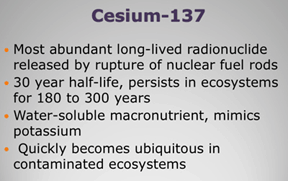
Indonesia has only research reactors. If the cs137 contamination came from these small reactors what about all the large reactors such as CANDUs that have continual measured stack releases of beta gamma particulate that would contain cs137 that is volatile?
CANDUs emit large amounts of carbon 14 that has been measured at elevated levels in tree rings around Pickering. Cs137 would also be expected to be in tree rings wood. Wood is used as shipping containers and many other uses such as furniture and interior housing lumber and wood.
Both carbon 14 and cs147 are known to off gass. C14 is particularly a problem being a beta emitter that would never be measured. Cs137 is a gamma emitter that is easily measured with a Geiger counter. Carbon 14 off gassing has been documented in the Bruce low and intermediate level waste facility but is not routinely measured.
Huge amounts of carbon 14 has been deposited around reactors for years. Carbon14 accumulates in the biosphere. With a half life of 5730 years it’s all still around gradually building up in the environment. The stack releases allowed for reactors are based on airborne exposure only. The carbon 14 is greatly dispersed in the air but settles out and deposits in the environment. Gradual bioaccumulation is ignored in regulations for emission standards.
1 This Month

of the week – Shut Down Drone Warfare!


Tell the Ukrainian Government to Drop Prosecution of Peace Activist Yurii Sheliazhenko

Petition to revoke the licensing of the Near Surface Nuclear Disposal Facility (NSDF) at Chalk River. https://www.ourcommons.ca/petitions/en/Petition/Details?Petition=e-7247
To see nuclear-related stories in greater depth and intensity – go to https://nuclearinformation.wordpress.com
-
Archives
- March 2026 (244)
- February 2026 (268)
- January 2026 (308)
- December 2025 (358)
- November 2025 (359)
- October 2025 (376)
- September 2025 (257)
- August 2025 (319)
- July 2025 (230)
- June 2025 (348)
- May 2025 (261)
- April 2025 (305)
-
Categories
- 1
- 1 NUCLEAR ISSUES
- business and costs
- climate change
- culture and arts
- ENERGY
- environment
- health
- history
- indigenous issues
- Legal
- marketing of nuclear
- media
- opposition to nuclear
- PERSONAL STORIES
- politics
- politics international
- Religion and ethics
- safety
- secrets,lies and civil liberties
- spinbuster
- technology
- Uranium
- wastes
- weapons and war
- Women
- 2 WORLD
- ACTION
- AFRICA
- Atrocities
- AUSTRALIA
- Christina's notes
- Christina's themes
- culture and arts
- Events
- Fuk 2022
- Fuk 2023
- Fukushima 2017
- Fukushima 2018
- fukushima 2019
- Fukushima 2020
- Fukushima 2021
- general
- global warming
- Humour (God we need it)
- Nuclear
- RARE EARTHS
- Reference
- resources – print
- Resources -audiovicual
- Weekly Newsletter
- World
- World Nuclear
- YouTube
-
RSS
Entries RSS
Comments RSS
 nuclear-news