Radiation in seafoods
“[People] should not venture into the ocean [where the radioactive materials are being released]; they should not eat any fish or seaweed from the ocean.
“The living species likely to be most affected are shellfish because they are stationary whereas fish that swim may pass through the area and out again. The shellfish such as mussels, oysters and clams certainly accumulate high levels of radioactivity….
Japanese earthquake | what Japan’s new nuclear crisis rating means, Sydney Morning Herald, Glenda Kwek April 12, 2011 As Japan raised the severity level of its nuclear crisis to match Chernobyl’s seven, an Australian scientist explained what that meant. Continue reading
32 Asian nuclear plants at risk from earthquakes
.Like Japan’s Fukushima Dai-ichi plant they lie within a few hundred miles of the type of fault known to unleash the largest tsunami-spawning earthquakes…..At least 32 plants in operation or under construction in Asia are at risk of one day being hit by a tsunami, nuclear experts and geologists warn…..
Asia nuclear reactors face tsunami risk, Google News (AP) 19 April 11, JAKARTA, Indonesia — The skeleton of what will soon be one of the world’s biggest nuclear plants is slowly taking shape along China’s southeastern coast — right on the doorstep of Hong Kong’s bustling metropolis. Three other facilities nearby are up and running or under construction. Continue reading
Anti nuclear protestor killed by police
Anti-nuclear activists were planning further protests this weekend in Maharahstra to demand that the Jaitapur and other nuclear power plant schemes be scrapped,
Indian police kill protester in anti-nuclear demo, Google News, (AFP) – 19 April 11, MUMBAI — Indian police opened fire on hundreds of protesters — killing one — at a demonstration against the proposed construction of a nuclear power station, police and the government said Monday… Continue reading
Eight ghost towns in Fukushima Prefecture
Futaba Mayor Katsutaka Idogawa, meanwhile, said it will be “years” before the residents of his town can return. …….
Eerie Hush Descends on Japan’s Nuclear Zone – WSJ.com, 19 April 11, “……..Over the road that runs through the town center, a white-and-blue sign proclaims: “Understanding Nuclear Power Correctly Will Lead to an Abundant Life.”But life, by and large, is what is absent in this town, just a few miles away from the troubled Fukushima Daiichi nuclear plant.
Futaba, once home to 7,000 residents, is one of eight towns forced to evacuate the day after the March 11 earthquake and tsunami damaged the nuclear plant. In the following days, tens of thousands of residents living within 12 miles of the damaged reactors fled. Last Monday, the Japanese government expanded the mandatory evacuation zone to encompass more towns. Continue reading
Radiation forces Japan to use robots in Fukushima nuclear plant
Japanese Using Robots To Peer Into Crippled Nuclear Plant Radio Free Europe / Radio Liberty © 2011 April 18, 2011 Reports said robots were being used to investigate Japan’s crippled Fukushima Daiichi nuclear power plant, one day after plant operators announced a new nine-month stabilization plan for the facility Continue reading
Tokyo – thousands march against nuclear energy
Japan: Thousands march against nuclear power | Green Left Weekly, April 17, 2011, By Alexander Brown About 15,000 people attended the “No Nukes” protest in the central Tokyo district of Koenji on April 10.The rally called for assistance to those affected by the March earthquake and tsunami disaster, and for an end to nuclear power. Organisers said more than 1.23 million yen (A$14,000) had been raised for those affected by the disaster.About 2500 people joined a separate rally in another part of the city calling for the Hamaoka nuclear plant in Shizuoka to be switched off. The Hamaoka plant is on a fault line considered likely to be affected by future quakes.The Koenji rally, officially titled the “Great Anti-Nuclear Rock Festival Demo in Kōenji”, was called by Matsumoto Hajime of the Shiroto no ran (Amateur’s Riot) network.The network, based in Koenji, has been trying to build alternative spaces and communities in the area.
Japan: Thousands march against nuclear power | Green Left Weekly
Grim health outlook for Fukushima nuclear cleanup workers
Children born to liquidator families were seriously affected with birth defects and thyroid diseases, including cancer, and loss of intellect. As for other children, based upon the work of multiple researchers, it is estimated that in the heavily contaminated areas of Belarus, only 20 percent of children are considered healthy,
 Is the Fukushima nuclear plant breakdown worse than Chernobyl? | San Francisco Bay View, by Janette D. Sherman, M.D., 16 April 11“………Key to understanding effects is the difference between external and internal radiation. While external radiation, as from x-rays, neutron, gamma and cosmic rays, can harm and kill, internal radiation – alpha and beta particles – when absorbed by ingestion and inhalation release damaging energy in direct contact with tissue and cells. Continue reading
Nuclear payout not adequate for Fukushima refugees
Nuclear plant evacuees call for bigger payouts, The Independent 16 April 2011 * The operator of Japan’s tsunami-damaged nuclear plant said yesterday it would pay an initial £7,400 for each household that was forced to evacuate because of leaking radiation – a handout some displaced families said was too little.Tens of thousands of residents unable to return to their homes near the nuclear plant are bereft of their livelihoods and possessions, unsure when, if ever, they will be able to return home.
Some have travelled hundreds of miles to the headquarters of Tokyo Electric Power Company (Tepco) to press the company president Masataka Shimizu for higher compensation. At the government’s request, the company will start paying out roughly ¥50bn (£370m) in compensation from 28 April to those forced to evacuate; families will get ¥1m and single adults ¥750,000, the government said.
Roughly 48,000 households will be eligible for the payments. But many families are disappointed. “I’m not satisfied,” said Kazuko Suzuki, a 49-year-old single mother of two teenagers from the town of Futuba, next to the plant. She has lived at a shelter at a high school north of Tokyo for the past month. “We’ve had to spend money on so many extra things and we don’t know how long this could go on,” she said….Nuclear plant evacuees call for bigger payouts – Asia, World – The Independent
The Faustian bargain of nuclear power
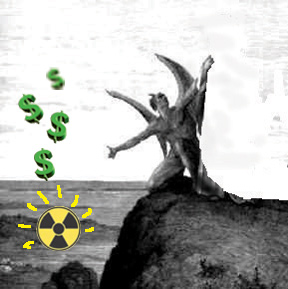 Fukushima Daiichi Is a ‘Ticking Time Bomb’ HUFFINGTON POST, 04/14/11 “…..DR. MICHIO KAKU: Well, there’s something called a Faustian bargain. Faust was this mythical figure who sold his soul to the devil for unlimited power. Now, the Japanese government has thrown the dice with a Faustian bargain. Japan has very little fossil fuel reserves, no hydroelectric power to speak of, and so they went nuclear. However, in the United States, we’re now poised, at this key juncture in history, where the government has to decide whether to go to the next generation of reactors. These are the so-called gas-cooled pebble bed reactors, which are safer than the current design, but they still melt down. The proponents of this new renaissance say that you can go out to dinner and basically have a leisurely conversation even as your reactor melts down. But it still melts. That’s the bottom line.
AMY GOODMAN: And so, what do you think should happen? Do you think nuclear power plants should be built in this country?
DR. MICHIO KAKU: I think there should be a national debate, a national debate about a potential moratorium. The American people have not been given the full truth, because, for example, right north of New York City, roughly 30 miles north of where we are right now, we have the Indian Point nuclear power plant, and the Nuclear Regulatory Commission has now admitted that of all the reactors prone to earthquakes, the one right next to New York City is number one on that list. And the government itself, back in 1980, estimated that property damage would be on the order of about $200 billion in case of an accident, in 1980 dollars, at the Indian Point nuclear power station…..Democracy Now!: Fukushima Daiichi Is a ‘Ticking Time Bomb’
Risk of radiation in milk, rainwater, says French radiation agency
 Global Radiation Levels ‘No Longer Negligible’ In Milk, Water, Produce Care 2, by: Beth Buczynski 15 April 11, A French research authority on radioactivity is now warning expectant European mothers and young children to avoid drinking milk or rainwater, while EPA data released on Sunday shows that at least three different milk samples — all from different parts of the US — have tested positive for radioactive Iodine-131 at levels that exceed the current maximum thresholds for safety.
The radiation risk from Fukushima is “no longer negligible,” says CRIIRAD, the French agency. Two weeks ago, the FDA began blocking imports of some Japanese milk and produce.
CRIIRAD told Europeans that eating these items qualifies as “risky behavior.”….
it may still be some time until we learn the true extent of the contamination.
Global Radiation Levels ‘No Longer Negligible’ In Milk, Water, Produce
Save Japanese nuclear workers by collecting their stem cells
the solution is not perfect, the team admits. High exposure to radiation would also attack cells in the gut, skin or lung — problems a stem cell transplant could not fixYet, with containment and clean-up efforts at the damaged plant expected to drag on for months or even years, Tanimoto and Taniguchi say taking steps to protect the workers’ from future harm is paramount.
Banking stem cells could save Japan nuclear workers By Julie Steenhuysen CHICAGO Apr 14, 2011 (Reuters) – Health officials should collect blood from workers at the crippled Fukushima Daiichi nuclear power plant in case they are accidentally exposed to high levels of radiation and need a stem cell transplant, Japanese researchers said on Thursday. Continue reading
Fukushima Prefecture children must stay indoors
Schools keep kids indoors The Yomiuri Shimbun 15 April 11, Outdoor activities in Fukushima Pref. stopped over radiation Worried about radiation, schools in Fukushima Prefecture have stopped holding physical education classes in their school yards regardless of schools’ distance from the crippled nuclear power plant in the prefecture……the central government’s failure to provide any guidelines on students’ outdoor activities has left schools wondering what to do.
During soil inspection in school yards, inspectors took five-centimeter-deep samples to check the levels of radioactive iodine and cesium.
The school yard of Yamakiya Primary School in Kawamatamachi recorded the highest level: 59,059 becquerels per kilogram of soil for both isotopes. The school began holding its physical education class indoors after the new academic year started on April 6 and such events as excursions and hiking will be suspended…..Schools keep kids indoors / Outdoor activities in Fukushima Pref. stopped over radiation : National : DAILY YOMIURI ONLINE (The Daily Yomiuri)
Huge and unprecedented problems in Fukushima nuclear cleanup
The scale and complexity of the challenge is unprecedented. No nuclear reactor has ever been fully decommissioned in Japan, let alone the four certain to be dismantled at Fukushima
Nuclear Cleanup Plans Hinge on Unknowns, NYTimes.com, By HIROKO TABUCHI April 14, 2011 “…..he widely divergent outlooks underscore the basic uncertainties clouding any forecast for Fukushima: when cooling stems will be restored and radiation emission halted; how soon workers can access some parts of the plant; and how bad the damage to the reactors, their fuel, and nearby stored fuel turns out to be. Continue reading
Uncertain future for Japan’s nuclear refugees
Japan’s “nuclear refugees” face the unknown – World Watch – CBS News 14 April TOKYO – There are still 139,000 people living in shelters across Japan. While most of those displaced by the earthquake and tsunami in the Miyagi and Iwate prefectures (states) can expect to eventually return home, the fate of Fukushima’s 47,000 “nuclear refugees” is murky…
Japan’s “nuclear refugees” face the unknown – World Watch – CBS News
Fukushima nuclear plant on a disaster tightrope
“The slightest disturbance could set off a full-scale meltdown at three nuclear power stations, far beyond what we saw at Chernobyl… you’re looking at basically a ticking time bomb.”……now you have these Japanese samurai warriors. They know that this is potentially a suicide mission.
Fukushima Daiichi Is a ‘Ticking Time Bomb’ HUFFINGTON POST, 04/14/11 “……”Radiation is continuing to leak out of the reactors. The situation is not stable at all,” says Dr. Michio Kaku, professor of theoretical physics at the City University of New York and the City College of New York, in an interview with Democracy Now! April 13. Continue reading
1 This Month
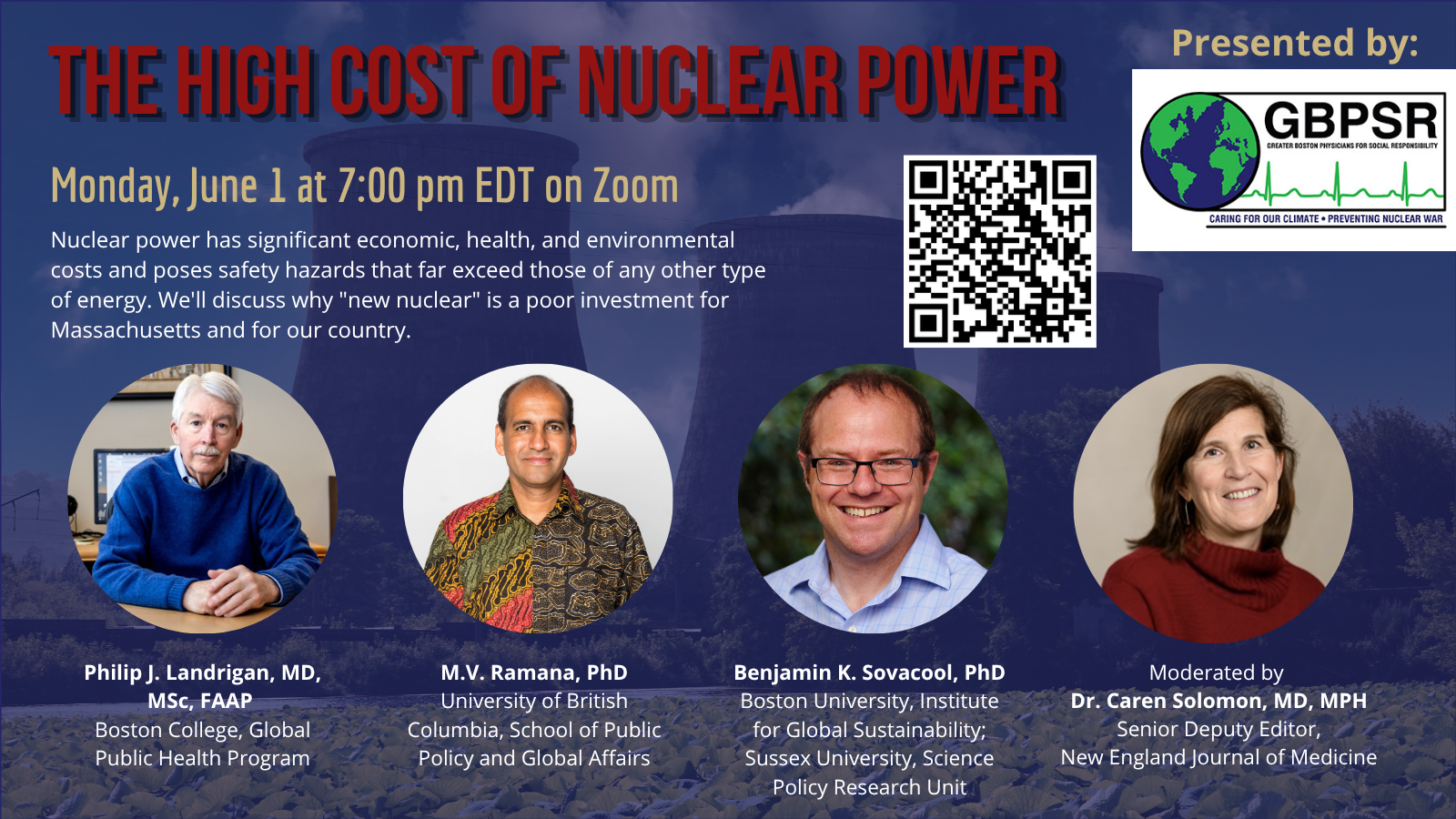
1 June Webinar – The High Cost of Nuclear Power – Register


of the week– Nuclear Reactor Information Task Force
To see nuclear-related stories in greater depth and intensity – go to https://nuclearinformation.wordpress.com
-
Archives
- May 2026 (262)
- April 2026 (356)
- March 2026 (251)
- February 2026 (268)
- January 2026 (308)
- December 2025 (358)
- November 2025 (359)
- October 2025 (376)
- September 2025 (257)
- August 2025 (319)
- July 2025 (230)
- June 2025 (348)
-
Categories
- 1
- 1 NUCLEAR ISSUES
- business and costs
- climate change
- culture and arts
- ENERGY
- environment
- health
- history
- indigenous issues
- Legal
- marketing of nuclear
- media
- opposition to nuclear
- PERSONAL STORIES
- politics
- politics international
- Religion and ethics
- safety
- secrets,lies and civil liberties
- spinbuster
- technology
- Uranium
- wastes
- weapons and war
- Women
- 2 WORLD
- ACTION
- AFRICA
- Atrocities
- AUSTRALIA
- Christina's notes
- Christina's themes
- culture and arts
- Events
- Fuk 2022
- Fuk 2023
- Fukushima 2017
- Fukushima 2018
- fukushima 2019
- Fukushima 2020
- Fukushima 2021
- general
- global warming
- Humour (God we need it)
- Nuclear
- RARE EARTHS
- Reference
- resources – print
- Resources -audiovicual
- Weekly Newsletter
- World
- World Nuclear
- YouTube
-
RSS
Entries RSS
Comments RSS
 nuclear-news