The two Koreas to discuss nuclear disarmament
Korea Envoys to Discuss Resuming Nuclear Talks, NYT, By CHOE SANG-HUN, September 16, 2011, SEOUL, South Korea — The top nuclear negotiators from North and South Korea plan to meet next week in Beijing to discuss terms of restarting the long-stalled six-nation talks aimed at ending North Korea’s nuclear weapons program, a senior government official here said Friday. Continue reading
Japan’s nuclear crisis making young Japanese more thoughtful
 young people in Japan have significantly shifted their focus from material gain to altruism….
Previously, the key purpose for finding a career had been to earn money …..respondents said that their views had also changed about nuclear power
Nuclear incidents cause shift in values among young Japanese, Inside Japan Tours, 15th September 2011 A new survey reveals that the earthquake and nuclear disaster that beset Japan earlier this year has led to a shift in attitudes among the country’s young citizens. Continue reading
Roundup of news on severity of Fukushima radiation fallout
 VIDEO http://www.globalresearch.ca/index.php?context=va&aid=26546: New Radiation Releases: Governments Underreported Severity of Fukushima Massive New Radiation Releases Possible from Fukushima … Especially If Melted Core
 Over 20,000 people in relay fast against nuclear power
 have extended their support to the protest
 Govt calls for talks with anti-Nuclear Plant protestors, Hndustan Times, Press Trust Of India, Tirunelveli, September 14, 2011 As the protest against Koodankulam Nuclear Power Plant in the district continued to gather momentum with over 20,000 people staging a relay fast on Wednesday, the Tamil Nadu Government invited representatives of the core group spearheading the stir for talks. Continue reading
 Catholics, Hindus, Muslims against nuclear energy in Kudankulam
The Catholic Church and the Church of South India have joined the Hindu and Muslim communities in the protest fast being undertaken by 127 people over the past four days, giving a new turn to the protest. Religious leaders who have formally pledged their support to the protest include Kottar bishop Peter Remigus, Palayamkottai bishop Jude Paulraj, Tuticorin Nazareth bishop Jebachandran, CSI bishop Christudas, Swami Balaprajapathi and Mohammed Elias.
“This has nothing to do with the Catholic Church in particular. We are supporting the cause in our individual capacities. We see this as a fight between good and evil”, said bishop Ambrose,
 After caste, south Tamil Nadu on the boil over nuclear power, ECONOMIC TIMES, 4 SEP, 2011, JOE A SCARIA, CHENNAI: On Sunday, seven lives were lost in Paramakudi in south Tamil Nadu’s Ramanathapuram district when a gathering to pay homage to Dalit leader Immanuel Sekaran turned violent, triggering police firing. Just as the last of the victims are being cremated, three other districts in south Tamil Nadu are up in revolt, demanding closure of the nuclear power plant at Kudankulam in Tirunelveli district.
Once a barren landscape, Kudankulam village is on the verge of being the latest nuclear power location on the world map, but just weeks away from the commissioning of the first of its two1,000 mw nuclear reactors, villagers in Kanyakumari, Tuticorin and Tirunelveli districts are massing to demand that the Rs 13,000-crore, ready-to-commission plant be scrapped. ….
The Catholic Church and the Church of South India have joined the Hindu and Muslim communities in the protest fast being undertaken by 127 people over the past four days, giving a new turn to the protest. Religious leaders who have formally pledged their support to the protest include Kottar bishop Peter Remigus, Palayamkottai bishop Jude Paulraj, Tuticorin Nazareth bishop Jebachandran, CSI bishop Christudas, Swami Balaprajapathi and Mohammed Elias.
“This has nothing to do with the Catholic Church in particular. We are supporting the cause in our individual capacities. We see this as a fight between good and evil”, said bishop Ambrose, demanding that the Indian government also take a line like the Germans, to steer clear of nuclear power in the interest of people’s safety.
SP Udayakumar, co-ordinator of the People’s Movement against Nuclear Power, said the organisation’s demand was to have a resolution passed in the Tamil Nadu assembly against commissioning the plant. He said the project had given false hopes of thousands of jobs, while the reality was different. “When the plant was under construction, there were many north Indian labourers, to whom local people rented out houses or rooms, but now even that income has stopped”, says Udayakumar.
Experts say that a plant as sophisticated as the one at Kudankulam typically does not employ people in the hundreds, and that the Kudankulam unit’s employee strength is in the region of 1,000.
Getting rid of Fukushima’s nuclear reactors a tortuous and dangerous task
Tepco also needs to find ways to prevent any new nuclear reaction, which could happen if the fuel is not adequately cooled during the entire process…
 Japan Atomic Energy Body Sees Technical Hurdles Ahead, WSJ, By MITSURU OBE, 14 Sept 11, TOKYO—Japan’s efforts to safely dismantle the stricken Fukushima Daiichi nuclear complex is expected to be fraught with technical challenges and take more than a decade to complete, the government’s Atomic Energy Commission said Wednesday.
Removing the fuel from the spent-fuel pools and the reactors is vital to ensuring there will be no radiation leakage from the quake-ravaged facility. Experts fear that their structures might have been weakened by the heat and radiation from the damaged fuel and the large amount of seawater that was poured into them as an emergency measure to cool down the fuel. Continue reading
Following France’s accident, Koodankulam anti nuclear protest gathers momentum
this was not a struggle by a selective group of people. “Authorities are giving a colour that it is a struggle by fishermen against a nuclear project. But the fact is that all sections of people are participating in it,”
France nuke blast fuels Koodankulam agitation, New Indian Express, 14 Sept 11, TIRUNELVELI: As news about the explosion at a nuclear site in Marcoule, southern France reached the fasting agitators in Idinthakarai, the call to shut down the Koodankulam Nuclear Power Project (KKNPP) almost reached a feverish pitch. Continue reading
Tomioka a nuclear ghost town
Inside Japan’s nuclear ghost zone, By David ShukmanEnvironment & science correspondent, BBC News 13 sept 11, As David Shukman enters the exclusion zone, he finds cattle that have starved to death. Nothing stirs in the empty heart of Tomioka, a community of 16,000 now reduced to the eerie status of a ghost town after the nuclear disaster at Fukushima. Continue reading
Increasing anti nuclear protest at Koodankulam
Protests against Koodankulam nuclear project gather steam News One, 14 Sept 11, Chennai, Sep 13 (IANS) Protests at Koodankulam in Tamil Nadu’s Tirunelveli district, where a nuclear plant is to be commissioned soon, have been gathering steam with politicians joining the agitators. Over 125 people are fasting to demanding closure of the two 1,000 MW power plants being built by the Nuclear Power Corporation of India Ltd (NPCIL) with Russian help.MDMK leader Vaiko, who has lent his support to the protesters, told reporters Tuesday in Tirunelvelli that after the recent nuclear accident in Japan, there is increased awareness about atomic power and its hazards. He said the nuclear power project poses danger not only to the livelihood of the fishermen but also to the entire southern districts in Tamil Nadu.
According to S.P.Udaykumar, an anti-nuclear activist, the project poses danger to human life, and environment in the area. He said over 15,000 villagers will participate in relay fasts in support of those who are fasting indefinitely.
Those on an indefinite fast against the project include women, disabled as well as nuns and priests. Tirunelveli is around 650 km from Chennai. http://www.inewsone.com/2011/09/13/protests-against-koodankulam-nuclear-project-gather-steam/75963
India: police crack down on Koodankulam anti nuclear protestors
 Koodankulam tense, cops step up security, IBN Live 10 Sept 11, TIRUNELVELI: With the announcement of the hunger strike at Idinthakarai near Koodankulam on Sunday, police have initiated preventive measures by detaining a few persons, Continue reading
Offshore wind turbines for Japan’s Fukushima coast
 Japan plans floating wind power for Fukushima coast, By Yoko Kubota, TOKYO | Tue Sep 13, 2011 (Reuters) – Japan will join the race to develop floating wind turbines to use in deepwater off its tsunami-stricken northern Pacific coast as it rethinks energy sources after the Fukushima nuclear disaster. It aims to outpace the leaders in the sector in Europe, trade ministry official Masanori Sato said on Tuesday…..
In the next five years, Japan plans to spend 10 to 20 billion yen to install six or more floating turbines off the northeast coast. It will work with firms including Mitsubishi Heavy Industries and Fuji Heavy Industries, Sato said.
Globally, Norway leads the way on floating turbines with a 2009 pilot project while other countries including Britain and Portugal have studied the technology….http://www.reuters.com/article/2011/09/13/us-japan-wind-idUSTRE78C41M20110913
World waits for Fukushima nuclear plant to be brought under control
 “The whole world is waiting for Japan to bring the nuclear accident under control,” said Japan’s new prime minister, Yoshihiko Noda, last Thursday when he visited the plant
 6 months into Japan’s cleanup, radiation a major worry, By Craig Dale, CBC News Sep 12, 2011 “……Decontamination The Japanese government is now conducting extensive aerial surveys, from the northeast to the central part of the country, to track the spread of radiation from Fukushima Daiichi. Continue reading
Anxiety in city on border of Fukushima’s no-go zone
Japan city on border of nuclear no-go zone fights for survival, By Antoni Slodkowski, Editing by Tomasz Janowski and Jonathan Thatcher, MINAMI SOMA, Japan Sep 11, 2011 (Reuters) – A line dividing the no-go zone around the Fukushima nuclear plant and the area deemed safe from radiation cuts right across this coastal city but the “good” part is starting to look very much like the ghost town on the other side.
Six months after a magnitude 9.0 earthquake unleashed a deadly tsunami that triggered meltdowns and radiation leaks at the Tokyo Electric Power’s complex, Minami Soma, a city just a half an hour’s drive away, struggles to stay alive. Continue reading
Japan can shut down all nuclear power by 2012
“With only 11 out of 54 reactors online at the height of summer and little impact to daily life, Japan has already proven that by conserving energy it does not need nuclear power”,
Permanent Nuclear Shutdown in Japan Possible by 2012: Report, September 12, 2011 Tokyo- (PanOrient News) Japan can switch off all nuclear plants permanently by 2012 and still achieve both economic recovery and its CO2 reduction goals, according to a new Greenpeace report.
Released today, the Advanced Energy Revolution report for Japan, shows how energy efficiency and rapid deployment of renewable technology can provide all the power Japan needs. Continue reading
The psychological fallout from Fukushima’s continuing radiation
Low-level radiation is an invisible threat that breaks DNA strands with results that do not become apparent for years or decades. Though the vast majority of people remain completely unaffected throughout their lives, others develop cancer. Not knowing who will be affected and when is deeply unsettling….
Twenty years after the 1986 reactor explosion in Chernobyl, the World Health Organisation said psychological distress was the largest public health problem unleashed by the accident…
the radiation “creates a slow, creeping, invisible pressure” that can lead to prolonged depression.
Fukushima disaster: it’s not over yet Six months after the multiple meltdowns at the Fukushima Daiichi nuclear plant, the streets have been cleared but the psychological damage remains “…...Jonathan Watts, guardian.co.uk, Sept 9 11, ”……..Reiko went on to describe how everything had changed in the wake of the nuclear accident in Fukushima the previous month. Daily life felt like science fiction. She always wore a mask and carried an umbrella to protect against black rain. Every conversation was about the state of the reactors. In the supermarket, where she used to shop for fresh produce, she now looked for cooked food – “the older, the safer now”. She expressed fears for her son, anger at the government and deep distrust of the reassuring voices she was hearing in the traditional media. “We are misinformed. We are misinformed,” she repeated. “Our problem is in society. We have to fight against it. And it seems as hard as the fight against those reactors.” Continue reading
1 This Month

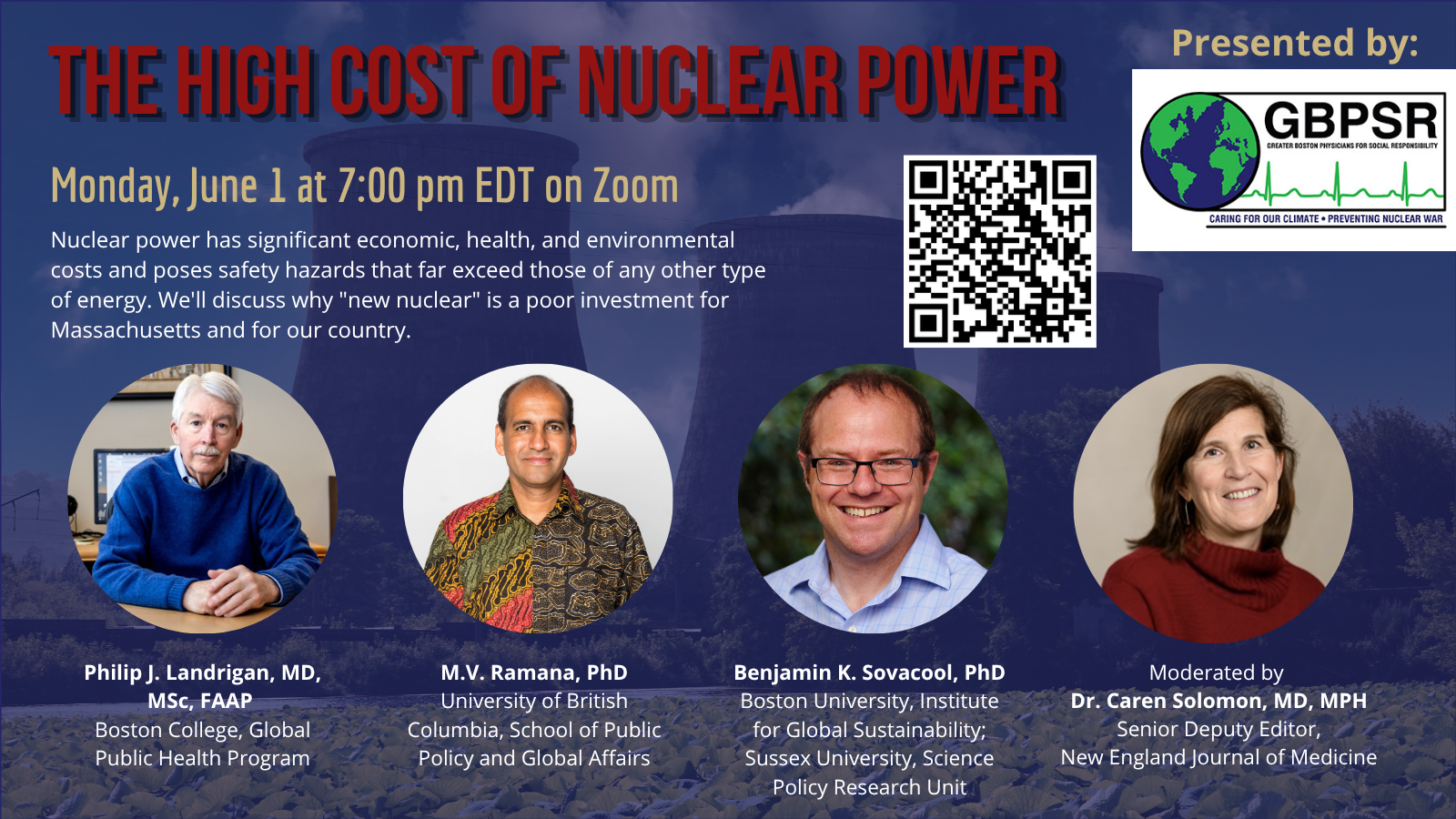
1 June Webinar – The High Cost of Nuclear Power – Register


of the week– Nuclear Reactor Information Task Force
To see nuclear-related stories in greater depth and intensity – go to https://nuclearinformation.wordpress.com
-
Archives
- May 2026 (262)
- April 2026 (356)
- March 2026 (251)
- February 2026 (268)
- January 2026 (308)
- December 2025 (358)
- November 2025 (359)
- October 2025 (376)
- September 2025 (257)
- August 2025 (319)
- July 2025 (230)
- June 2025 (348)
-
Categories
- 1
- 1 NUCLEAR ISSUES
- business and costs
- climate change
- culture and arts
- ENERGY
- environment
- health
- history
- indigenous issues
- Legal
- marketing of nuclear
- media
- opposition to nuclear
- PERSONAL STORIES
- politics
- politics international
- Religion and ethics
- safety
- secrets,lies and civil liberties
- spinbuster
- technology
- Uranium
- wastes
- weapons and war
- Women
- 2 WORLD
- ACTION
- AFRICA
- Atrocities
- AUSTRALIA
- Christina's notes
- Christina's themes
- culture and arts
- Events
- Fuk 2022
- Fuk 2023
- Fukushima 2017
- Fukushima 2018
- fukushima 2019
- Fukushima 2020
- Fukushima 2021
- general
- global warming
- Humour (God we need it)
- Nuclear
- RARE EARTHS
- Reference
- resources – print
- Resources -audiovicual
- Weekly Newsletter
- World
- World Nuclear
- YouTube
-
RSS
Entries RSS
Comments RSS
 nuclear-news