Japan’s inadequate response to its Fukushima radiation victims
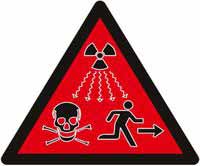 U.N. envoy: Japan should do more for nuclear victims, Asahi Shimbun November 27, 2012 THE ASSOCIATED PRESS A United Nations rights investigator said Nov. 26 that Japan hasn’tdone enough to protect the health of residents and workers affected by the Fukushima nuclear accident.
Anand Grover, U.N. special rapporteur on the right to health, said the government has adopted overly optimistic views of radiation risks and has conducted only limited health checks after the partial meltdowns at several reactors at the Fukushima No.1 nuclear power plant caused by an earthquake and tsunami in 2011.
Several investigations, including one conducted by a parliament-appointed panel, have criticized the government for alleged cover-ups and delays in disclosing key radiation information, causing evacuees to be unnecessarily exposed to radiation. That has also
caused deep-rooted public distrust of the government and nuclear industry. Continue reading
Japan’s displaced people fear to ever return to radiation contaminated areas
In response to a questionnaire sent to Okuma’s evacuees by the town hall in September, only 11 percent of the 3,424 households that responded said they wanted to go back, while 45.6 percent said they had no intention of ever returning, mostly because of radiation fears.
Hopes of Home Fade Among Japan’s Displaced By MARTIN FACKLER NYT, : November 25, 2012 AIZU-WAKAMATSU, Japan — As cold northerly winds sprinkle the first snow on the mountains surrounding this medieval city, those who fled here after last year’s Fukushima nuclear disaster are losing hope that they will ever return to their old homes. Continue reading
Renewable Energy – a job provider for millions of Indians
Indian Renewable Energy Sector to Create 2.4 Million Jobs by 2020 http://theenergycollective.com/energyjobline/147291/indian-renewable-energy-sector-create-24-million-jobs-2020 by C. Dominguez November 24, 2012 India’s renewable energy sector is to create up to 2.4 million jobs by 2020, according to a report jointly commissioned by environmental group Greenpeace, the Global Wind Energy Council and the European Renewable Energy Council.
To date, the sector employs 200,000 people, but this could jump 14 times by 2030 with the right policies and investments in place, stated India Energy [R]evolution report.
By 2050, about 92 percent of India’s energy infrastructure will be based on renewable energy sources. Renewables such as wind, solar thermal energy and photovoltaic, will comprise 74 percent of electricity generation. Continue reading
Slow increase of radiation in Fukushima No 1 reactor’s water intake
 [Radiation leakage to the sea] Radiation level at water intake of
reactor1~4 is slowly increasinghttp://fukushima-diary.com/2012/11/radiation-leakage-to-the-sea-radiation-level-at-water-intake-of-reactor14-is-slowly-increasing/ by Mochizuki on November 26th, 2012 ·
According to Tepco’s report of “Radioactivity Density of the Seawaterat the South of Unit 1-4 Water Intake of Fukushima Daiichi NPS (Bq/L)” published on 11/26/2012, the radiation level at the water intake is slowly increasing since the first week of this October.
Kudankulam nuclear waste now a political issue in India
 “The people of Karnataka and the ruling BJP will not allow dumping of spent fuel from Kudankulam nuclear power plant in deep mines of KGF, as proposed by the Centre.”
 BJP opposes nuclear waste dump at KGF The Pioneer, 25 NOVEMBER 2012 KESTUR VASUKI | BANGALORE The submission by the Nuclear Power Corporation of India Limited (NPCIL) to the Supreme Court to bury the spent fuel from Kudankulam nuclear power plant in Tamil Nadu at the now defunct Kolar Gold Fields (KGF), has become a major political issue. Continue reading
Understandably, Japan doesn’t like India’s Nuclear Liability Law
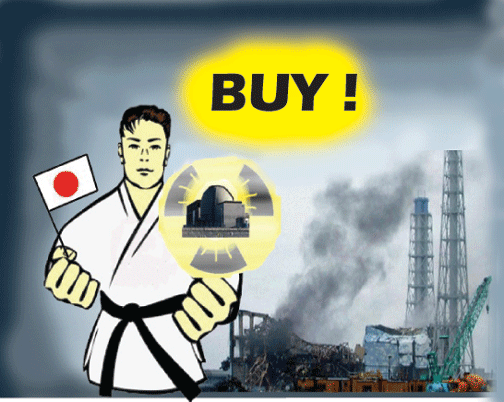 Japan also sought some clarifications about India’s nuclear liability law that prevents suppliers from making themselves immune to compensation claims in the event of an accident.
PM revives nuclear energy talks with Japan By Sachin Parashar, TNN | Nov 26, 2012 NEW DELHI: PM Manmohan Singh sought to revive with Japan negotiations for peaceful use of nuclear energy, which has remained stalled since the Fukushima nuclear accident in March, 2011, in a meeting with his counterpart Yoshihiko Noda in Phnom Penh last week.
Sources said Singh expressed hope before Noda that Japan would soon share its nuclear technology and expertise with India. Continue reading
10,000 protest, in Kuala Lumpur, against Lynas rare earths processing plant
The rally is a culmination of a 13-day march against the plant’s opening
 Kuala Lumpur: 10,000 protest rare earth plant over health concerns Environmental activist group Himpunan Hijau organized the rally against the opening of rare earth company Lynas’ new plant. Global Post,Talia Ralph November 25, 2012 early 10,000 people took to the streets in Kuala Lumpur Sunday to protest the opening of Australia-based mining company Lynas’ new rare earth plant. Continue reading
World Health Organisation grudgingly admits that radiation raises cancer risk in children
 WHO forecasts no significant increase in cancer patients in Fukushima, Asahi Shimbun, By YURI OIWA, 25 Nov 12 “……..for children, who are deemed more susceptible to radiation exposure than adults, the increases varied sharply depending on the location.
The incidence rate for 1-year-old girls in Namie for developing thyroid cancer by the age of 16 grew 9.1 times from 0.004 percent before the accident to 0.037 percent, according to the WHO report. That means 3.7 1-year-old girls out of 10,000 living in the town will
develop thyroid cancer, compared with 0.4 girls before the accident.
For 1-year-old boys in Namie, the likelihood of developing leukemia was predicted to go up 1.8 times from 0.03 percent before the accident.
The thyroid cancer rate for 1-year-olds in Iitate, another town near the stricken nuclear plant, grew 5.9 times, while the rate in the prefectural capital of Fukushima increased 3.7 times.
The risks posed to fetuses were considered the same as those for 1-year-olds.
The report also said the chances of young people exposed to low-level radiation developing benign tumors or cysts will likely rise, and it urged continued monitoring of their health even though the tumors and cysts are unlikely to become cancerous…..
Some health experts hailed the WHO report for spelling out the health risks in numbers.
Residents in Fukushima Prefecture became skeptical of the repeated reassurances by the central government and the Fukushima prefectural government that their health would probably not be affected if their radiation exposure was 100 millisieverts or less.
Exploiting Japan’s university students as Fukushima cleanup workers
[Exploiting the youth] Fukushima university to give students credit
for decontamination work http://fukushima-diary.com/2012/11/exploiting-the-youth-fukushima-university-to-give-students-credit-for-decontamination-work/ by Mochizuki November 24th, 2012
 On 11/19/2012, Fukushima Diary wrote, “It’s likely that they make it a credit necessary to graduate from schools to go to Fukushima (plant).” in the column [Japan may seek solution of Fukushima in drifting to the right]. Fukushima university is going to do exactly what was written in the column.
Fukushima university is going to give students credit for decontamination work, which is supposed to be volunteer. 45 hours of decontamination is one credit, 90 hours of decontamination is two credits.
South Korea’s ambitions for a nuclear reactor export industry
Lee: Nuclear power plants ‘core staple’ for S. Korea SEOUL, Nov. 26 (Yonhap) — President Lee Myung-bak said Monday atomic power plants are a key export industry that will help lift South Korea’s growth in the years to come, just as auto, shipbuilding and
electronics industries have powered the country’s economy so far.
Lee also said his latest trip to the United Arab Emirates was aimed at laying the groundwork for South Korea to win another massive nuclear power plant construction order from the oil-rich MiddleEastern nation after the first deal in 2009 to build and operate four reactors……
Underhand planning by Indian Government to dump nuclear wastes in Kolar Gold Mnes
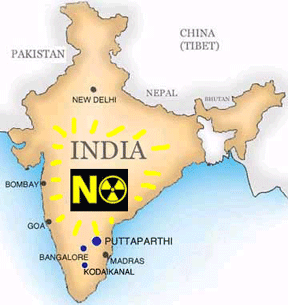 Kolar should not become nuclear dumpyard: Activists
http://www.newstrackindia.com/newsdetails/2012/11/23/379–Kolar-should-not-become-nuclear-dumpyard-Activists-, Chennai, Nov 23 (IANS) People’s Movement Against Nuclear Energy (PMANE) Friday said dumping spent nuclear fuel in Kolar gold mines could lead to disastrous health consequences.
“When all the national roads transport deadly nuclear cargo to Kolar (Kolar gold mines), millions and millions of our people in Karnataka, Andhra (Pradesh) and Tamil Nadu will be exposed to all kinds of threats and dangers. Nuclear waste management is much more expensive and dangerous than nuclear power plants and even most developed
countries such as the United States and Germany are not able to handle the waste effectively,” PMANE said in a statement.
“The Indian government should not go against the anti?nuclear trend of the world to promote the interests of the United States, Russia and France and expose the people of our country to nuclear dangers in Kudankulam, or Kolar or anywhere else,” the statement said. According to the PMANE, the Department of Atomic Energy (DAE) had not shared any basic information on storing the spent fuel of Kudankulam Nuclear Power Project (KNPP) at Kolar in Karnataka.
“The ad?hoc nature of the DAE’s decision?making and the short shrift given to science and public opinion are so glaring and, in fact, very disturbing,” PMANE said.
At Kolar Gold Fields, first cyanide dumps made people sick – now nuclear wastes
 Locals petrified of nuclear radiation in Karnataka http://timesofindia.indiatimes.com/city/bangalore/Locals-petrified-of-nuclear-radiation-in-Karnataka/articleshow/17331215.cms? By K RANGANATH, TNN | Nov 23, 2012 Having put their misfortunes behind them, residents of Kolar Gold Fields are now staring at the proposition of nuclear radiation in their neighbourhood.
The Union government’s unforeseen decision to dump nuclear waste in the now-defunct gold mines has come as a bolt from the blue. “We’ve had enough. Just as we thought it’s all over, this is a rude shock for us. Why does this country treat us like second-class citizens?” asked senior advocate P Raghavan, reflecting the town’s anger.
For residents, the downslide started with the closure of the Bharat Gold Mines Limited (BGML) in April 2000. The once buzzing township , given the name of ‘Little England’ , largely because of the presence of many Anglo-Indians , turned completely lifeless.
The township, with its population of 1.2 lakh, which till then depended on BGML for survival, found it hard to adapt to the harsh new reality.
The closure affected every aspect of life and the physical environment too. The local economy shrunk, and people started migrating to neighbouring cities in search of jobs. Former workers say they had no alternative means of earning a livelihood.
But this was just the beginning. The deadly silicosis disease struck the town, making the people’s lives even more miserable. The gold mining process at KGF generated about 32 million tonnes of tailings called cyanide dumps. Years of inhaling the gold dust aggravated the silicosis ailment among the former workers and their families living close to the site.
Since 2005, the disease, it is said, killed over 100 people in this town, the highest incidence reported in the state.
With their own lives a shambles, workers hoped their children, armed with an education they themselves did not get, would build new lives. They now see that dream being shattered, under the threat of nuclear waste dumping.
Fukushima had 3 nuclear meltdowns
Michio Kaku: 3 meltdowns in Fukushima, but uranium actually totally liquified… 1st time in history — “Reactor actually melted totally” (VIDEO) http://enenews.com/michio-kaku-3-meltdowns-fukushima-uranium-actually-totally-liquified-1st-time-history-reactor-actually-melted-totally-video November 22nd, 2012
Coast to Coast AM with George Noory, November 20, 2012: Previously Kaku has stated that one Fukushima reactor had “liquified Professor Michio Kaku, City College of New York:
We had three simultaneous core meltdowns in Fukushima, but the uranium actually liquified — liquified — we’ve never seen a totally liquified core before.
First time in history.
But the Fukushima reactor actually melted totally.
Michio Kaku: American theoretical physicist, the Henry Semat Professor of Theoretical Physics in the City College of New York of City University of New York, a co-founder of string field theory […] Kaku graduated summa cum laude from Harvard University in 1968 and was first in his physics class. He attended the Berkeley Radiation Laboratory at the University of California, Berkeley and received a Ph.D. in 1972.
Listen to the broadcast here
Japan’s solar feed in tariff boosting renewable energy
 The Land of the Rising Sun Goes Solar http://financialconservation.blogspot.com/2012/11/the-land-of-rising-sun-goes-solar.html#ixzz2D4daQDH6 Business Insider, Michael E. Douroux, Financial Conservation | Nov. 22, 2012 “According to a new report from the Japan Photovoltaic Energy Association, domestic shipments of solar cells and modules have risen by 80% in the July-September quarter of this year.
 This is on the heels of the Japanese government enacting an ambitious solar energy incentive initiative, a feed-in tariff (known as net energy metering in California) that aims to help support the adoption of solar energy throughout the country.
The feed-in tariff was introduced in the wake of the Fukushima disaster of 2011, when a powerful earthquake and tsunami triggered a nuclear crisis in Northern Japan. After the disaster, the government made moves to abandon nuclear power. While moving away from nuclear energy has proven to be a slow and laborious process, the country has been keen to aggressively replace nuclear with other forms of alternative energy that are considered safer. Solar energy has, thus
far, become one of the country’s most favored forms of alternative energy for this purpose.”
India: organisations join in protest movement against radioactive waste dumping
Protests against move to dump nuclear waste in KGF, KOLAR GOLD FIELDS, November 23, 2012 http://www.thehindu.com/news/states/karnataka/protests-against-move-to-dump-nuclear-waste-in-kgf/article4123795.ece?homepage=true
People in Kolar district are concerned over the likelihood of uranium waste generated at the Kudankulam nuclear power plant being dumped in the mine shafts of Kolar Gold Fields (KGF).
Reports that the Union government has filed an affidavit in the Supreme Court saying that nuclear waste from the Kudankulam plant will be stored in the disused shafts of Bharat Gold Mines Ltd. (BGML) in Kolar Gold Fields have stirred a hornet’s nest in the region with
people discussing the safety aspects of such a move.
Taken aback by the prospects of the gold mines turning into a dump yard for hazardous nuclear waste, a number of organisations irrespective of political affiliations staged a series of protests at KGF on Thursday. Continue reading
1 This Month
23-25 October – on Zoom – World BEYOND War’s annual global conferenc


Shut down the radiation-damaged Heysham nuclear reactors now
To see nuclear-related stories in greater depth and intensity – go to https://nuclearinformation.wordpress.com

Say No to NASA’s Reckless Nuclear Reactor on the Moon
Say No to NASA’s Reckless Nuclear Reactor on the Moon
-
Archives
- October 2026 (180)
- September 2026 (339)
- August 2026 (330)
- July 2026 (355)
- June 2026 (287)
- May 2026 (306)
- April 2026 (356)
- March 2026 (251)
- February 2026 (267)
- January 2026 (308)
- December 2025 (358)
- November 2025 (359)
-
Categories
- 1
- 1 NUCLEAR ISSUES
- business and costs
- climate change
- culture and arts
- ENERGY
- environment
- health
- history
- indigenous issues
- Legal
- marketing of nuclear
- media
- opposition to nuclear
- PERSONAL STORIES
- politics
- politics international
- Religion and ethics
- safety
- secrets,lies and civil liberties
- spinbuster
- technology
- Uranium
- wastes
- weapons and war
- Women
- 2 WORLD
- ACTION
- AFRICA
- Atrocities
- AUSTRALIA
- Christina's notes
- Christina's themes
- culture and arts
- Events
- Fuk 2022
- Fuk 2023
- Fukushima 2017
- Fukushima 2018
- fukushima 2019
- Fukushima 2020
- Fukushima 2021
- general
- global warming
- Humour (God we need it)
- Nuclear
- RARE EARTHS
- Reference
- resources – print
- Resources -audiovicual
- Weekly Newsletter
- World
- World Nuclear
- YouTube
-
RSS
Entries RSS
Comments RSS

