China likely to abandon three major nuclear energy projects
 No nuclear restart in sight Global Times | 2013-1-29 By Liang Fei
China’s three largest major inland nuclear projects, operated by China
National Nuclear Corp, China Power Investment Corp and China Guangdong
Nuclear Power Holding Co respectively, are not likely to resume
construction any time soon, experts said Tuesday. ….
The three inland nuclear power projects, located in Taojiang county in
Central China’s Hunan Province, Tongshan county in Central China’s
Hubei Province, and Pengze county in East China’s Jiangxi Province,
have already invested around 10 billion yuan ($1.6 billion), China
Economic Weekly reported Tuesday.
“It is very likely that these inland projects will ultimately be
abandoned,” Lin Boqiang, director of the China Center for Energy
Economics Research at Xiamen University, told the Global Times. Continue reading
Another nuclear capable missile test by India
India tests nuclear-capable missile
http://www.theaustralian.com.au/news/breaking-news/india-tests-nuclear-capable-missile/story-fn3dxix6-1226563126908
AAP January 28, 2013 AN Indian news report says India has
successfully tested a medium-range, nuclear-capable ballistic missile
fired from an underwater platform in the Bay of Bengal.
The Press Trust of India news agency says the missile would soon be
ready for deployment on platforms, including a nuclear submarine.
India’s Defence Ministry spokesman was not immediately available for comment.
Pallava Bagla, a defence expert, said Sunday’s test off the east coast
was 14th in the series with a range of 700 kilometres. It would
complete India’s nuclear triad – the capability to launch missiles
from land, air and below the sea.
India and its nuclear-armed rival Pakistan routinely test different
versions of their missiles. The countries have fought three wars since
they gained independence from Britain in 1947.
Safety concerns may shut world’s largest nuclear plant, Kashiwarazaki-Kariwa
The Kashiwarazaki-Kariwa plant may be susceptible the same type of
cataclysmic event which led to Fukushima Daiichi nuclear disaster, as
the plant itself is situated in an active fault zone.
Japan may shutter world’s largest nuclear plant over earthquake
threat, RT.com 26 January, 2013, The world’s largest nuclear power
plant may be forced to shut down under stricter rules proposed by
Japan’s new nuclear watchdog. The measures are intended to safeguard
against future natural disasters following the 2011 tsunami.

The Kashiwazaki-Kariwa nuclear power plant in the heart of Japan is
now facing permanent closure following a move by the country’s Nuclear
Regulation Authority (NRA) to expand the definition of an active fault
– a crack in the earth’s crust. The operators of the plant, Tokyo
Electric Power are the same company which powered the stricken
Fukishima plant. Continue reading
Japan’s only two operating nuclear reactors to be shut for maintenance in 2013
 Japan faces nuclear shutdown for 2nd time since Fukushima — Expert: They’re trying to protect their nation from diseases, death http://enenews.com/reuters-japan-faces-nuclear-shutdown-for-2nd-time-since-fukushima-expert-trying-to-protect-their-nation-from-diseases-and-death-audio

January 24th, 2013
Title: Japan faces nuclear shutdown for second time since Fukushima
Source: Reuters
Author: Aaron Sheldrick
Date: Jan 24, 2013
Japan may face a total nuclear shutdown in the summer for the second time since the March 2011 Fukushima disaster as the country’s two operating reactors close for maintenance and tough new safety checks keep the rest of the fleet offline. […]
The only two of Japan’s 50 nuclear plants operating are both at Kansai Electric Power’s Ohi plant in western Japan, and must be for shut for maintenance [in mid-September 2013] 13 months after resuming commercial operations, according to Japanese law. […]
Title: Japan Contemplates Complete Nuclear Shutdown
Source: Voice of Russia American Edition
Date: Jan 24, 2013
Full broadcast here
Over 5 months, radiation in Fukushima soil nearly doubled
TV: Radiation levels nearly doubled in Fukushima soil sample over 5-month period (VIDEO) http://enenews.com/watch-radiation-levels-doubled-fukushima-soil-sample-5-month-period-video
Title: ReUpload. Full Version Upload was Rejected !!! 音声入りが上がりません
Source: guardianofmiyagi
Date: Jan 24, 2013
Riverside soil samples from same location in Aizu, Fukushima (~100 kilometers west of Fukushima Daiichi)
December 2011: 8,790 becquerels per kilogram of cesium 134 & 137
April 2012: 17,000 becquerels per kilogram of cesium 134 & 137
Watch the video here
Radioactive water to be dumped into Pacific Ocean by TEPCO
 TEPCO plans to dump water stored at Fukushima Daiichi into
  Pacific http://enformable.com/2013/01/tepco-plans-to-dump-water-stored-at-fukushima-daiichi-into-pacific/ TEPCO has announced that it plans to dump contaminated water into the Pacific Ocean after processing it to reduce radioactive materials to legally permissible levels. By “processing”, TEPCO means once-high radioactive content has been reduced considerably, but not completely.
The plant has already released enormous amounts of highly contaminated water directly into the ocean from a plethora of leaks from the reactor buildings. Outside experts are seriously concerned about the contaminated water that is released, and have warned there may well be lasting impact on the environment.
The utility says the operation is necessary due to concerns that they will run out of capacity to store highly contaminated water which continues to accumulate. After the water has passed through the crippled units, it is processed through the SARRY system to remove cesium, but other systems designed to remove other radioactive materials have been overwhelmed by the complexity and concentration of contamination found at Fukushima Daiichi.
TEPCO estimates show that the volume of contaminated water required to be stored on site will likely triple over the next three years.
Questions have been raised if TEPCO would be able to gain the necessary approval from local municipalities and other parties who have raised concerns about plans to dump the water into the ocean.
In December 2011, the utility was forced to scrap a previous plan to dump water into the sea following fierce protests from fishing groups.
“Descent from Heaven ” Japan’s nuclear top men in lucrative jobs
 2 key industry ministry bureaucrats landed lucrative jobs after
retirement, Asahi Shimbun January 21, 2013 By ATSUSHI KOMORI/ Senior
Staff Writer
Two industry ministry officials who played a central role in Japan’s
nuclear policy at the time of the Fukushima disaster went on to land
senior positions at major financial institutions after they retired
from public life.
The practice of retired bureaucrats ending up in jobs at organizations
or companies that were often once under their jurisdiction is called
“amakudari,” which translates as “descent from heaven,” and has come
under severe criticism due to fears it fosters collusion between
bureaucrats and private companies.
Kazuo Matsunaga, 60, was formerly vice minister of the Ministry of
Economy, Trade and Industry, and Tetsuhiro Hosono, 60, served as
director-general of the Agency for Natural Resources and Energy.
They held these key posts during the reactor meltdowns at the
Fukushima No. 1 nuclear power plant triggered by the March 11, 2011,
Great East Japan Earthquake, which spawned towering tsunami that
devastated coastlines of northeastern Japan.
Their re-employment will likely ignite controversy, because even now,
more than 150,000 people affected by the disaster have not been able
to return to their homes because of high radiation levels and other
reason…. http://ajw.asahi.com/article/0311disaster/fukushima/AJ201301210093
Radioactvity increasing in water at Fukushima Unit No. 2 nuclear reactor
Report: Radioactivity levels rising at Fukushima Unit No. 2 sub-drain since November http://enenews.com/report-radioactivity-levels-rising-at-fukushima-unit-no-2-sub-drain-since-november
January 22nd, 2013
Title: Contaminated water still a serious issue at Fukushima Daiichi
Source: Enformable
Date: Jan 22, 2013
[…] over 220,000 metric tons of contaminated water have been collected and stored on site, still another 75,000 tons remains in the reactor buildings. Every day at least another 40 tons of contaminated water are created […]
The utility has been so far unable to prevent the contaminated water injected into the damaged reactors from flowing out of the buildings into the environment and even escaping directly into the ocean. […]
The levels of radioactivity measured near the Unit 2 Sub-Drain have been on the rise since November […] it is critical to control the seeping of contamination through the local groundwater.
See Tepco’s report here
North Korea ups the nuclear ante
Defiant North Korea ups nuclear rhetoric,SMH, January 24, 2013 Flavia Krause-jackson and Sangwon Yoon NORTH Korea vowed to boost its nuclear capability after the United Nations Security Council, including its ally China, imposed new sanctions against the totalitarian state for last month’s rocket launch
Denuclearisation of the Korean peninsula is impossible,” North Korea’s Foreign Ministry said in a statement carried by the official Korean Central News Agency. ”We will take physical response measures to expand and bolster the quality of our sovereign military power – including our nuclear deterrence.”
The Security Council on Tuesday unanimously agreed to measures that build on a series of travel bans and asset freezes. The US-drafted resolution imposes sanctions on North Korea’s space agency, targets the illicit smuggling of sensitive items and updates a list of nuclear and ballistic missile technology prohibited for transfer in or out of the country……. The most significant aspect of the UN vote may be political, with China siding against its ally and neighbouring communist regime in the world body for the first time in four years.
North Korea has ignored repeated calls to abandon its nuclear weapons program and to also stop test launches to develop long-range ballistic missiles that could carry nuclear warheads.
Fukushima radiation in seafood chain – record level in rockfish
 Record cesium levels measured in Fukushima rockfish, signaling radiation woes in food chain far from over in Japan, Part of: Nuclear meltdown in Japan Less than two months shy of the second anniversary of the devastating triple nuclear meltdown at Japan’s coastal Fukushima Daiichi plant, a fish containing more than 2,500 times Japan’s legal limit for radiation has been caught by the plant’s operator in waters near the wrecked facility. Bellona, Charles Digges, 21/01-201
The ‘murasoi’ fish, similar to a rockfish – indicating an amount of cesium measuring 254,000 Becquerel per kilogram, or 2,540 times Japans limit for radiation in seafood – was caught at a port inside the plant by its owner, Tokyo Electric Power Co. (TEPCO) Friday, according to AFP.
The utility also released a photo of the fish, caught near an unloading point north of the No. 1 through No. 4 reactors. No fishermen operate in the nuclear plant’s port.
Friday’s catch shatters the previous record for wildlife contamination as a result of radioactive contamination, which was was 25,800 Becquerel of cesium per kilogram found in two greenlings caught about 20 kilometers north of the plant in August 2012, the Asashi Shimbun newspaper reported.
Other countries are also increasingly distressed by the amount of irradiated marine life turning up near their coastlines along the Pacific Rim: Over the summer, Russia’s state English language television station RT reported concern over fish caught off its coast near Japan.
In May, a tuna contaminated by low levels of radiation was found near the California coast, Reuters reported……. http://www.bellona.org/articles/articles_2012/fukushima_rockfish
Japan’s nuclear utilities buy the silence of communities
“This structure of dependency makes it impossible for communities to speak out against the plants or nuclear power,”
Japanese nuclear plant operators charge over 90 million dollars per year to pay local authorities http://enformable.com/2013/01/japanese-nuclear-plant-operators-charge-over-90-million-dollars-per-year-to-pay-local-authorities/ A report by NHK has shown that operators of nuclear power plants in Japan charge the public users over 90 million dollars per year, in order to cover payments made to local authorities in the areas which host the nuclear sites. Last year, the central government announced that it did not consider these charges as an expense, and that it would no longer allow utilities to charge users to cover them.
Osaka University Professor Tatsuo Hatta says utilities may be able to find other ways to compensate themselves for the payments, and is calling for further transparency.
Kansai Electric has been charging their users around 40 million dollars per year, TEPCO charges around 22 million, Kyushu charges around 10 million, Chugoku charges about 8 million, and Chubu charges about 4 million. Continue reading
New safety regulations for Japanese nuclear reactors: in force from July
Japanese nuclear regulators present new safety measures THE HINDU, TOKYO, JAN 21: Japan’s nuclear regulators on Monday presented a draft outline of new safety measures to prevent or minimise the consequences of severe accidents like Fukushima nuclear disaster.
Among other features, the Nuclear Regulation Authority said utilities will be required to build a special safety facility housing a secondary control room for reactor operations to guard against accidents from natural disasters or acts of terrorism, such as intentional aircraft crashes.
Japan’s new nuclear safety standards are expected to come into force in July, replacing the current ones that proved insufficient in the wake of the 2011 Fukushima nuclear disaster.
The implementation of new safety standards is a major precondition for Japanese power companies to apply for government permits to put their idled reactors back online…… Continue reading
Corporations circle around for lucrative nuclear waste cleanup
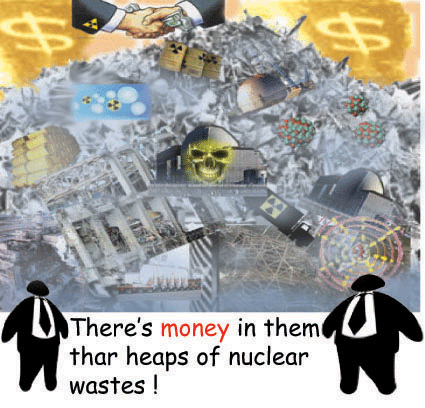 UK firms to bid for Japan’s nuclear clean-up
http://www.independent.co.uk/news/business/news/uk-firms-to-bid-for-japans-nuclear-cleanup-8458524.html
MARK LEFTLY, 20 JANUARY 2013 British engineers Amec, Babcock
International, and Atkins are believed to be circling nuclear
decommissioning work estimated to be worth at least $5bn (£3.2bn) in
Japan as a result of the Fukushima disaster.
The new Japanese government is thought to be preparing decommissioning
contracts that will include Fukushima’s Daiichi plant, which was
overwhelmed by a tsunami in 2011, and other reactors in seismically
endangered areas.
A nuclear source said bids could be invited for the clean-up work
before the end of the year, with British groups in a strong position
due to all the decommissioning work that has been undertaken in the
UK.
US-owned Energy Solutions will also be interested.
“This is a huge opportunity,” claimed the source. “Japan should start
making some real progress on decommissioning now.”
Japanese professors remind public of the story of hibakusha
 The next few years will be crucial in collecting oral
histories from hibakusha. I feel a sense of responsibility as the last
generation that can learn directly from the victims.
INTERVIEW: Scholars call for greater cooperation between Hiroshima,
Nagasaki in anti-nuclear push January 20, 2013 THE ASAHI SHIMBUN
Two scholars who have spent their careers collating first-hand
accounts of atomic victims from Hiroshima and Nagasaki and using those
experiences to push for nuclear disarmament sat down with The Asahi
Shimbun to talk about their research into the 1945 attacks.
Taeko Kiriya, 32, is an assistant professor at the Hiroshima Peace
Institute of Hiroshima City University while Keiko Nakamura, 40, is an
associate professor at the Research Center for Nuclear Weapons
Abolition (RECNA) at Nagasaki University.
Excerpts of the interviews follow:…… Continue reading
Japan’s govt confirms cases of badly done nuclear decontamination work
CROOKED CLEANUP: Government confirms 5 cases of shoddy decontamination
work January 18, 2013 THE ASAHI SHIMBUN
The Environment Ministry on Jan. 18 said that there have been five
cases of shoddy decontamination work around the crippled Fukushima No.
1 nuclear power plant and has punished the general contractors
involved in the cleanup effort.
In the five instances, three general contractors were ordered to take
corrective actions, the ministry said on Jan. 18 in its report on the
investigation into the central government-commissioned work, following
reports of the suspected such dumping of potentially radioactive
debris. Two other contractors were given guidance on following proper
procedures.
The ministry also announced that countermeasures would be taken for
preventing illegal dumping in the future….
http://ajw.asahi.com/article/0311disaster/fukushima/AJ201301180075
1 This Month
23-25 October – on Zoom – World BEYOND War’s annual global conferenc


Shut down the radiation-damaged Heysham nuclear reactors now
To see nuclear-related stories in greater depth and intensity – go to https://nuclearinformation.wordpress.com

Say No to NASA’s Reckless Nuclear Reactor on the Moon
Say No to NASA’s Reckless Nuclear Reactor on the Moon
-
Archives
- October 2026 (180)
- September 2026 (339)
- August 2026 (330)
- July 2026 (355)
- June 2026 (287)
- May 2026 (306)
- April 2026 (356)
- March 2026 (251)
- February 2026 (267)
- January 2026 (308)
- December 2025 (358)
- November 2025 (359)
-
Categories
- 1
- 1 NUCLEAR ISSUES
- business and costs
- climate change
- culture and arts
- ENERGY
- environment
- health
- history
- indigenous issues
- Legal
- marketing of nuclear
- media
- opposition to nuclear
- PERSONAL STORIES
- politics
- politics international
- Religion and ethics
- safety
- secrets,lies and civil liberties
- spinbuster
- technology
- Uranium
- wastes
- weapons and war
- Women
- 2 WORLD
- ACTION
- AFRICA
- Atrocities
- AUSTRALIA
- Christina's notes
- Christina's themes
- culture and arts
- Events
- Fuk 2022
- Fuk 2023
- Fukushima 2017
- Fukushima 2018
- fukushima 2019
- Fukushima 2020
- Fukushima 2021
- general
- global warming
- Humour (God we need it)
- Nuclear
- RARE EARTHS
- Reference
- resources – print
- Resources -audiovicual
- Weekly Newsletter
- World
- World Nuclear
- YouTube
-
RSS
Entries RSS
Comments RSS

