Foundation in Fukushima nuclear plant reactor likely badly damaged
The internal wall of a cylindrical foundation supporting the reactor
pressure vessel of the No. 1 unit of the crippled Fukushima Daiichi nuclear
power plant may be badly damaged across its entire circumference, its
operator said Tuesday. Some of the damage was revealed in videos taken
during a survey of the No. 1 unit’s containment vessel by operator Tokyo
Electric Power Company Holdings Inc., which said it would further analyze
the footage and assess the seismic resistance of the pedestal. The survey,
conducted from March 28 through March 31 using an underwater robot, found
the concrete wall missing in over half of the pedestal measuring 5 meters
in internal diameter, leaving the reinforcing bar exposed.
Mainichi 4th April 2023
https://mainichi.jp/english/articles/20230404/p2g/00m/0bu/040000c
Citizens’ Nuclear Information Center news roundup April/May 2023
Nuke Info Tokyo April/May Newsletter includes: Fukushima Now – Part 1:
Railroading the Contaminated Water Release is Unacceptable! by Ban
Hideyuki; Fukushima Now – Part 2: Current State of Post-Accident
Operations at Fukushima Daiichi Nuclear Power Station (Jun. to Dec. 2022)
By Matsukubo Hajime; Childhood thyroid cancer cases confirmed in the
Fukushima Health Management Survey and others; Nuclear fusion is a
never-ending dream By Nishio Baku; News Watch Revisions to Basic Policy on
High-level Radioactive Waste Disposal / Surveillance Camera Monitoring
Interrupted at Rokkasho Recycling Plant / Takahama Unit 4 Automatically
Shut Down / Unjust Verdict in Lawsuit for National Compensation for
Second-Generation Hibakusha.
CNIC 5th April 2023
Japan’s nuclear regulators find errors in Japan Atomic Power’s safety documents for the Tsuruga plant.
Nuclear regulators said Wednesday they will again halt a safety assessment
of an offline central Japan reactor after its operator repeatedly submitted
documents containing errors, further prolonging a process toward resumption
that has already taken years. Japan Atomic Power has been seeking approval
to reboot the No. 2 unit at the Tsuruga plant in Fukui Prefecture under
stricter regulations imposed following the 2011 Fukushima nuclear power
plant disaster, but its application has been fraught with mistakes and data
tampering.
Japan Times 5th April 2023
https://www.japantimes.co.jp/news/2023/04/05/national/tsuruga-reactor-safety-assessment-halt/
Mainichi 5th April 2023
https://mainichi.jp/english/articles/20230405/p2g/00m/0na/027000c
New images from inside Fukushima reactor spark safety worry
Images captured by a robotic probe inside one of the three melted reactors
at Japan’s wrecked Fukushima nuclear power plant showed exposed steel bars
in the main supporting structure and parts of its thick external concrete
wall missing, triggering concerns about its earthquake resistance in case
of another major disaster.
The plant’s operator, Tokyo Electric Power
Company Holdings, has been sending robotic probes inside the Unit 1 primary
containment chamber since last year. The new findings released Tuesday were
from the latest probe conducted at the end of March. An underwater remotely
operated vehicle named ROV-A2 was sent inside the Unit 1 pedestal, a
supporting structure right under the core.
It came back with images seen
for the first time since an earthquake and tsunami crippled the plant 12
years ago. The area inside the pedestal is where traces of the melted fuel
can most likely be found. An approximately five-minute video – part of
39-hour-long images captured by the robot – showed that the 120-centimeter
(3.9-foot) -thick concrete exterior of the pedestal was significantly
damaged near its bottom, exposing the steel reinforcement inside. TEPCO
spokesperson Keisuke Matsuo told reporters Tuesday that the steel
reinforcement is largely intact but the company plans to further analyze
data and images over the next couple of months to find out if and how the
reactor’s earthquake resistance can be improved.
The images of the exposed
steel reinforcement have triggered concerns about the reactor’s safety.
Daily Mail 4th April 2023
Mental illness plagues Japan’s nuclear disaster survivors
Some 37 percent of the survivors of Japan’s Fukushima Daiichi nuclear
power plant disaster of 2011 still suffer from mental illness due to
financial crisis, isolation, and drastic changes in living conditions, says
a survey.
The survey results indicated that the victims suffer from
post-traumatic stress disorder or PTSD due to “anxieties about
compensation and indemnification,” “unemployment” and “nuisances
just by being an evacuee.” The survey was conducted by the Waseda
Institute of Medical Anthropology on Disaster Reconstruction and the
Disaster Relief Assistance Network Saitama, a citizens group, between
January to April 2022 among 5,350 households, the Asahi Shimbun reported on
April 3.
Union of Catholic Asian News 4th April 2023
https://www.ucanews.com/news/mental-illness-plagues-japans-nuclear-disaster-survivors/100894
China on track to triple its terawatt-scale wind and solar target.
The research arm of American banking giant Goldman Sachs has concluded
that China is currently on track to generate almost three times more power
from wind turbines and solar panels than the government has targeted.
According to a report published by Goldman Sachs in late March, combined
capacity from China’s solar and wind energy sector will reach 3.3
terawatts (TW) by 2030. This far outstrips the Chinese government’s
current target of 1.2TWh. The conclusion from the report is that, with such
an accelerated pace for wind and solar deployment, China could become
energy self-sufficient by 2060.
Renew Economy 5th April 2023
China warns of World War III with ‘nuclear sword hanging over our heads’ over Putin’s plan to send nukes to Belarus
China has called for superpowers to step back from the brink of nuclear war as Russia announces a plan to deploy tactical nukes.
news.com.au Alike Kraterou and Jack Evans 2 Apr 23
China has issued a warning of a possible World War III after Russia’s announcement to deploy tactical nuclear weapons in Belarus.
Geng Shuang, China’s representative in the United Nations, called for all world powers to step back from the brink and maintain “global strategic stability”.
He urged nations to prevent nuclear proliferation and crisis, avoid armed attacks against nuclear power plants and the use of nuclear weapons in Ukraine.
Speaking at a Security Council meeting on international peace, Shuang made clear China’s opposition to Kremlin’s plan to send nuclear weapons to Minsk.
He described nuclear weapons as “the sword of Damocles hanging over our heads” and called on all nuclear weapon states to reduce the risk of a nuclear war and avoid any armed conflict between nuclear weapons states.
“We call for the abolition of the nuclear-sharing arrangements and advocate no deployment of nuclear weapons abroad by all nuclear weapons states, and the withdrawal of nuclear weapons deployed abroad,” Shuang said.
Shuang stressed that “nuclear proliferation must be prevented and nuclear crisis avoided.” He added that “a nuclear war cannot be won and must not be fought,” and that China’s position on nuclear weapons has been “clear and consistent”.
China has firmly committed to a defensive nuclear strategy, not using or threatening to use nuclear weapons against non-nuclear weapon states or nuclear-weapon-free zones, and to no first use of nuclear weapons at any time and under any circumstances.
While not directly mentioning Russia, Geng called for all parties to “stay rational, avoid aggravating tensions, and intensifying frictions, or fanning the flames”.
China has claimed to maintain a neutral stance in the war but has also pointed out its “no-limits friendship with Russia”.
Last month, China released a point peace plan to end the war, calling for a ceasefire and talks between Ukraine and Russia…………………………………………………….
North Korea May Be Close to Completing New Nuclear Reactor: 38 North
Satellite images indicate North Korea may be close to completing a new
reactor in its major nuclear complex in Yongbyon, according to 38 North, a
Washington-based website that tracks events in the country. Construction
crews are working on a support building at the site’s Experimental Light
Water Reactor (ELWR) development and water discharges have been spotted
near the ELWR’s pump house that could be associated with testing of the
reactor’s cooling system, the website said.
North Korean leader Kim Jong Un
visited a facility producing nuclear bombs earlier this week and reiterated
his order to massively expand the North’s nuclear arsenal. Kim said North
Korea is ready to use nuclear weapons “anytime and anywhere,” the
official Korean Central News Agency reported. His visit to the facility
came as the nation carried out series of weapon tests including ballistic
missiles designed to deliver a nuclear warhead. The Yongbyon site’s
existing 5 MWe reactor has been running since July 2021 and commercial
satellite images from March show there’s new construction for the reactor’s
spent fuel storage building, according to 38 North.
Bloomberg 2nd April 2023
China’s new warning to Australia over nuclear submarine deal
China has fired off another dire warning to Australia, amid growing tension over the nuclear submarine deal with the US and Britain.
Carla Mascarenhas, 1 Apr 23
Global superpowers unite against US
‘Anytime, anywhere’: Kim’s nuke threat
Dan appears on Chinese TV
China has fired off a frightening warning to Australia over its nuclear submarines deal with the US and the UK, declaring it may trigger an unpredictable global arms race.
The Chinese foreign ministry said on Thursday that once a Pandora’s box is opened, the “regional strategic balance will be disrupted and regional security will be seriously threatened”.
The United States, Australia and UK this month unveiled details of a plan to provide Australia with nuclear-powered attack submarines from the early 2030s to counter China’s ambitions in the Indo-Pacific.
“China firmly opposes the establishment of the so-called ‘trilateral security partnership’ between the United States, the United Kingdom and Australia,” said Tan Kefei, a spokesman at the Chinese defence ministry, during a regular press briefing.
“This small circle dominated by Cold War mentality is useless and extremely harmful.”
Mr Tan added such co-operation was an extension of the nuclear deterrence policy of individual countries, a game tool for building an “Asia-Pacific version of NATO” and seriously affected peace and stability in the Asia-Pacific region………………………………………………………….
Richard Dunley, a naval and diplomatic historian, said the deal “looks best from Washington – they get major wins in terms of basing, maintenance support and recapitalisation in their yards”.
He noted the Australian perspective was “less clear”.
“The cost is astronomical,” he wrote on Twitter.
Huge but still unknown amounts will be paid to the US in subsidies and then to buy the Virginias. This capability will only realise materialise mid-next decade, and is only a stopgap.”
carla.mascarenhas@news.com.au https://www.news.com.au/world/asia/chinas-new-warning-to-australia-over-nuclear-submarine-deal/news-story/16904f97d0a534af20dd69815f9c1986
TEPCO visually confirms melted nuclear fuel at Fukushima plant
THE ASAHI SHIMBUN, March 31, 2023 , This article was written by Keitaro Fukuchi, Ryo Sasaki and Takuro Yamano.
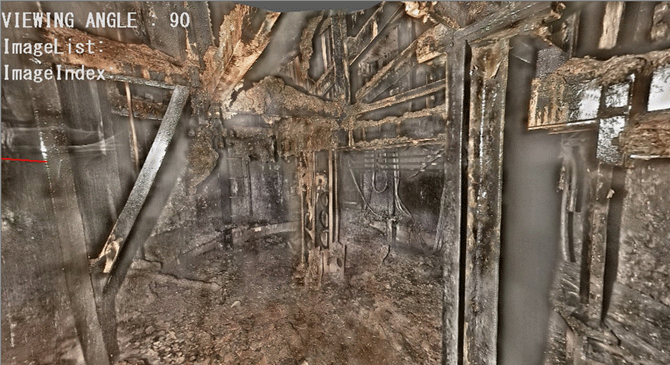
A robotic study provided the first visual confirmation that melted nuclear fuel broke through a pressure vessel at the Fukushima No. 1 nuclear power plant, the government and Tokyo Electric Power Co. said March 30.
Images taken by the robot under the No. 1 reactor at the plant also confirmed heavy damage to a concrete “pedestal” under the pressure vessel.
The inspection by the robot started on March 29. It was the first such study at the No. 1 reactor, one of the three reactors that melted down at the plant following the Great East Japan Earthquake and tsunami in 2011.
More than 90 percent of the nuclear fuel at the No. 1 reactor is believed to have fallen from the pressure vessel.
The robot found a large amount of melted fuel debris under the pressure vessel.
……………. TEPCO still faces the difficult challenge of how to remove the fuel debris and how to protect the damaged pedestal from future earthquakes.
The meltdown at the No. 1 reactor is believed to be worse than those at the No. 2 and No. 3 reactors at the plant.
The International Research Institute for Nuclear Decommissioning estimates the No. 1 reactor building contains 279 tons of melted fuel debris.
Naoyuki Takaki, a professor of nuclear safety engineering at Tokyo City University, said the fuel debris “cannot be taken out unless it is broken down into small pieces.”
Takaki said the method for cutting up such chunks will depend on the ratio and hardness of metal mixed in with the melted fuel.
But the information on objects within the fuel debris is limited so far.
“To put it briefly, it is unknown,” Takaki said.
The No. 1, No. 2 and No. 3 reactors at the Fukushima plant contain an estimated total of 880 tons of melted fuel debris.
TEPCO officials aim to start removal work of the fuel debris at the No. 2 reactor in the latter half of fiscal 2023. The initial plan is to take out a few grams, analyze their elements and hardness, and then increase the amount to be removed.
No timetable is set for such work at the No. 1 and No. 3 reactors.
The damaged pedestal has raised concerns that an earthquake could knock down the structure…………………………….more https://www.asahi.com/ajw/articles/14874722
Concern about Turkey’s Akkuyu Nuclear Power Plant
https://www.ekathimerini.com/opinion/1207709/nuclear-concern/ 1 Apr 23, The announcement by Turkish President Recep Tayyip Erdogan that nuclear fuel will be loaded into the first power unit of the Akkuyu Nuclear Power Plant on April 27 this year should set the alarm bells ringing in the international community and Western allies in particular.
It must be ensured that the nuclear power plant in Mersin Province, on Turkey’s southern coast, will be used only for peaceful purposes and that the unstable leadership of Greece’s neighbor across the Aegean will not be tempted by its aspirations for the role of regional superpower, developing into an even more threatening risk factor.
The issue should not only concern Greece. https://www.ekathimerini.com/opinion/1207709/nuclear-concern/
Aukus subs deal firms China support for Asean nuclear weapon-free zone
Beijing ‘willing’ to become first nuclear-armed state to sign treaty pledging to keep the weapons out of Southeast Asia
China’s efforts to woo its neighbours is a counter to US alliance building in the region, which now includes nuclear-powered submarines for Australia
Laura Zhou SCMP, 28 Mar 23
China is willing to sign a treaty making Southeast Asia a nuclear weapons-free zone, in Beijing’s latest effort to woo its neighbours and counter Washington’s decision to speed the sale of nuclear-powered submarines and technology to Australia.
Chinese Foreign Minister Qin Gang made the pledge at a meeting with Kao Kim Hourn, secretary general of the Association of Southeast Asian Nations, in Beijing on Monday. It would make China the first major nuclear power to commit to the zone.
Asean secretary general Kao Kim Hourn (left) and Chinese foreign minister Qin Gang in Beijing on Monday. Photo: Xinhua
China is willing to sign a treaty making Southeast Asia a nuclear weapons-free zone, in Beijing’s latest effort to woo its neighbours and counter Washington’s decision to speed the sale of nuclear-powered submarines and technology to Australia.
Chinese Foreign Minister Qin Gang made the pledge at a meeting with Kao Kim Hourn, secretary general of the Association of Southeast Asian Nations, in Beijing on Monday. It would make China the first major nuclear power to commit to the zone.
“China is willing to take the lead in signing the protocol to the Southeast Asia Nuclear Weapon Free Zone treaty and advocate with Asean for solidarity and win-win cooperation to safeguard regional security and stability,” he said.
The treaty has been in force since 1997 and obliges the 10 Asean member states “not to develop, manufacture or otherwise acquire, possess or have control over nuclear weapons; station or transport nuclear weapons by any means; or test or use nuclear weapons”.
None of the five recognised nuclear-armed states – China, France, Russia, Britain and the US – has acceded to the treaty’s protocol, which implies a commitment not to use nuclear weapons within the zone or against any contracting state.
Chinese President Xi Jinping said in 2021 that Beijing was ready to sign the protocol – also known as the Bangkok Treaty – “at the earliest possible date”, just months after the US-led Aukus alliance with Australia and Britain was unveiled.
The latest pledge comes at a time when China is increasingly vigilant towards Aukus, which two weeks ago announced a pathway for Australia to acquire three, possibly five, US nuclear-powered submarines by the early 2030s.
In his meeting with Kao, Qin said China’s domestic and foreign policies had maintained “a high degree of stability and continuity”, according to a Chinese foreign ministry readout.
Qin said China’s policies would “inject more stability into regional peace and tranquillity, while providing more strong momentum for regional development and prosperity”………………….
Beijing is strongly opposed to Aukus and the Quad – a US-led partnership with Japan, India and Australia – which together form the centrepiece of Washington’s strategy of building alliances to contain China, in its view.
The Aukus announcement – which may pave the way for Canberra to eventually build its own attack submersibles – was described by Chinese foreign ministry spokesman Wang Wenbin as “nothing but selfish”. The US, Australia and Britain “had gone further down a wrong and dangerous road”, he said.
The deal also intensified regional concerns in Southeast Asia. Hours after the announcement, Malaysia said it was important for all countries to refrain “from any provocation that could potentially trigger an arms race or affect peace and security in the region”.
Indonesia, another major power in Southeast Asia, urged Australia to comply with its non-proliferation treaty obligations, saying that it was the responsibility of all countries to maintain peace and stability in the region………………………….. https://www.scmp.com/news/china/diplomacy/article/3215103/aukus-subs-deal-firms-china-support-asean-nuclear-weapon-free-zone
South Korea to keep Fukushima seafood ban despite thaw with Japan
Aljazeera, 30 Mar 23
President Yoon Seok-yeol’s administration says ‘health and safety’ top priority despite improving Seoul-Tokyo ties.
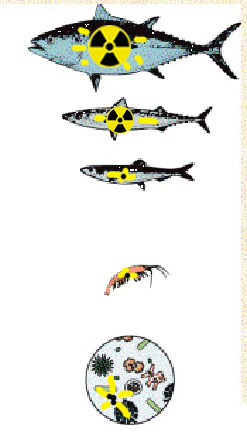
South Korea has ruled out lifting a ban on Japanese seafood imports from the area around the Fukushima nuclear plant despite warming relations between Seoul and Tokyo.
“
“Seafood imports from near the tsunami-stricken plant will “never come into” South Korea due to health concerns related to leaked radiation, the administration of President Yoon Seok-yeol said on Thursday.
With regard to the import of Japanese seafood products, the government’s stance remains unchanged that the health and safety of the people are the top priority,” the presidential office said in a statement, South Korea’s Yonhap News Agency reported.
South Korea has banned Japanese seafood imports from eight prefectures, including Fukushima, since 2013 due to fears of radiation contamination from the meltdown of the plant following an earthquake and tsunami.
…………………………………………….. Apart from South Korea, mainland China and Hong Kong continue to block imports of food from the region, including all dairy products and fruits and vegetables. https://www.aljazeera.com/economy/2023/3/30/south-korea-to-keep-fukushima-seafood-ban-despite-thaw-with-japan
Xi Jinping’s Russia trip reduced chance of nuclear war, says EU foreign policy chief
Josep Borrell says Chinese leader made it clear Vladimir Putin should not deploy atomic weapons
The Chinese president’s trip to Moscow this month has made the world safer, reducing the chance that Vladimir Putin will use nuclear weapons, according to the EU’s foreign policy chief.
Josep Borrell told reporters that President Xi Jinping had made it “very, very clear” to the Russian leader that he should not deploy nuclear weapons, citing China’s peace 12-point Ukraine peace plan, which condemned their use.
“One important thing is this visit reduces the risk of nuclear war and they [the Chinese] have made it very, very clear,” Borrell said. ………………………………… https://www.ft.com/content/8f895b27-9e16-47b4-8608-dbd002facd65
12 years later, evacuation orders lifted in parts of two towns near the crippled Fukushima nuclear power station
The government said Wednesday it will lift evacuation orders for parts of
two towns near the crippled Fukushima nuclear power plant next week, 12
years after their residents were forced to leave due to a nuclear disaster
following the massive earthquake and tsunami in March 2011. Evacuation
orders will be lifted in parts of Namie at 10 a.m. on March 31 and
neighboring Tomioka at 9 a.m. on April 1, the government said, while aiming
for a similar order to be lifted in the remaining village, Iitate, this
spring.
Japan Times 22nd March 2023
https://www.japantimes.co.jp/news/2023/03/22/national/fukushima-evacuation-orders-lifted/
1 This Month

of the week – Shut Down Drone Warfare!


Tell the Ukrainian Government to Drop Prosecution of Peace Activist Yurii Sheliazhenko

Petition to revoke the licensing of the Near Surface Nuclear Disposal Facility (NSDF) at Chalk River. https://www.ourcommons.ca/petitions/en/Petition/Details?Petition=e-7247
To see nuclear-related stories in greater depth and intensity – go to https://nuclearinformation.wordpress.com
-
Archives
- April 2026 (103)
- March 2026 (251)
- February 2026 (268)
- January 2026 (308)
- December 2025 (358)
- November 2025 (359)
- October 2025 (376)
- September 2025 (257)
- August 2025 (319)
- July 2025 (230)
- June 2025 (348)
- May 2025 (261)
-
Categories
- 1
- 1 NUCLEAR ISSUES
- business and costs
- climate change
- culture and arts
- ENERGY
- environment
- health
- history
- indigenous issues
- Legal
- marketing of nuclear
- media
- opposition to nuclear
- PERSONAL STORIES
- politics
- politics international
- Religion and ethics
- safety
- secrets,lies and civil liberties
- spinbuster
- technology
- Uranium
- wastes
- weapons and war
- Women
- 2 WORLD
- ACTION
- AFRICA
- Atrocities
- AUSTRALIA
- Christina's notes
- Christina's themes
- culture and arts
- Events
- Fuk 2022
- Fuk 2023
- Fukushima 2017
- Fukushima 2018
- fukushima 2019
- Fukushima 2020
- Fukushima 2021
- general
- global warming
- Humour (God we need it)
- Nuclear
- RARE EARTHS
- Reference
- resources – print
- Resources -audiovicual
- Weekly Newsletter
- World
- World Nuclear
- YouTube
-
RSS
Entries RSS
Comments RSS
 nuclear-news