Chinese astronauts install radiation-exposure experiment outside Tiangong space station
By Andrew Jones, 21 June 23, https://www.space.com/astronauts-install-radiation-experiment-china-tiangong-space-station
China plans to conduct radiation experiments on plant seeds, microorganisms and small animals.
China is running a biological radiation exposure experiment outside its space station.
The country’s Shenzhou 16 astronauts — Jing Haipeng, Zhu Yangzhu and Gui Haichao — installed the experiment outside the Tiangong space station‘s Mengtian science module on June 10, China’s National Space Science Center (NSSC) announced in a statement.
The experiment was deployed using Mentian’s dedicated payload airlock and attached to an external payload adapter using the space station’s small robotic arm.
The experiment payload contains 13 sample box units loaded with biomaterials. These are designed to study the impact of cosmic radiation and microgravity on organisms, the origin and evolution of life and the development of space radiation mutagenic resources.
The equipment can be used for in-orbit experiments on biological samples, including plant seeds, microorganisms and small animals, according to NSSC. The temperature inside each sample container unit can be adjusted to suit the organisms it is hosting.
On-orbit medical research involving space radiation biological exposure is of great significance to supporting China’s human spaceflight program. That program is ambitious, with plans to launch long-term crewed missions in Earth orbit and send people to the surface of the moon, the Chinese-language outlet Science and Technology Daily reported.
The experiment payload was developed jointly by the NSSC and Dalian Maritime University. It is intended to operate for five years and is planned to be used for several scientific projects.
The Shenzhou 16 crew arrived at Tiangong on May 30 and will remain aboard the space station until November.
Japan urged to halt release of toxic water
By Xu Weiwei in Hong Kong and Karl Wilson in Sydney, China Daily : 2023-06-19
Impact of Fukushima nuclear plant discharge plan seen as catastrophic
Environmental and social experts from across Asia have called on Japan to refrain from contaminating the sea with radioactive wastewater after it began test running the equipment to discharge toxic water from a crippled nuclear power plant into the Pacific.
The nuclear-contaminated wastewater from the Fukushima Daiichi Nuclear Power Plant will contain traces of tritium, a radioactive isotope, and possibly other radioactive traces such as carbon-14, scientists said.
“Nobody wants to dump (radioactive substances) into the ocean,” said David Krofcheck, senior lecturer in the faculty of science at the University of Auckland in New Zealand.
“We need to be aware of the difference between tritium and carbon-14, on one hand, and the radioactive fission products which tend to remain in the human body,” he said, adding that tritium could still enter the food chain throughout its buildup in underwater plants.
“This organically bound tritium still decays with a half-life of 12.3 years, and it stays in the human body for about 10 days, the biological half-life, before excretion.”
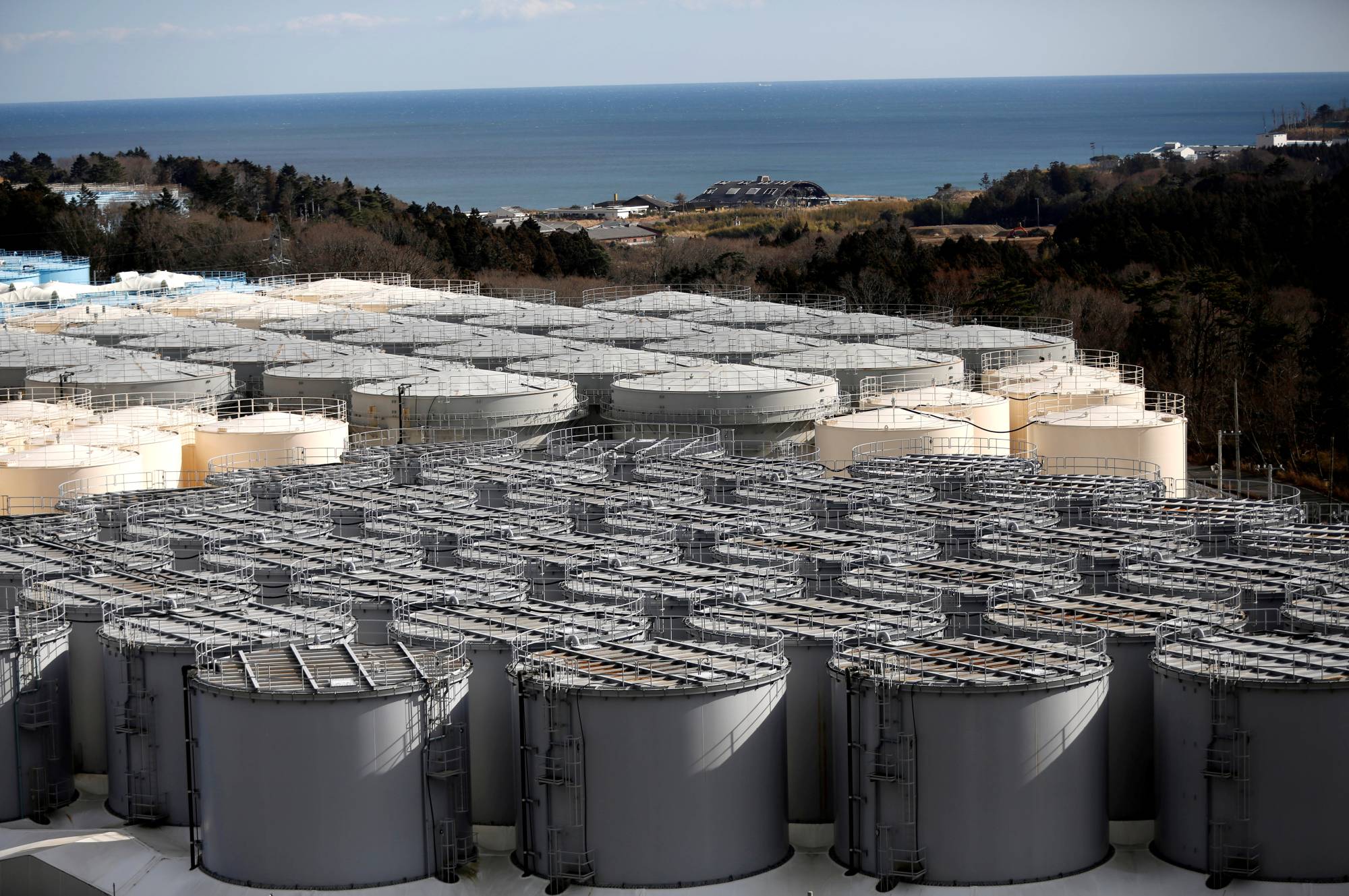
Instead of pumping the wastewater into the sea, Japan can dispose of it safely, Krofcheck said, offering an alternative for managing the Fukushima water: to hold it on site in an ever “growing number of water tanks”.
“If the water is properly filtered to leave only tritium and carbon-14, the natural decay of tritium can be used to reduce its radioactivity.
“Since the radioactive half-life of tritium is 12.3 years, holding the water in tanks for seven half-lives would reduce the tritium content to less than 1 percent of its current value.”
This option still leaves the carbon-14 that would still roughly have the same radioactivity because of its 5,730-year half-life, he said.
The potential impact of releasing treated radioactive water from the Fukushima plant into the ocean remains a subject of contention and concern among stakeholders, said Anjal Prakash, clinical associate professor (research) and research director of the Bharti Institute of Public Policy at the Indian School of Business in Hyderabad.
“The ocean release decision itself has sparked opposition, leading to ongoing debates on alternative water management strategies. The decision-making process weighs safety, public perception, regulations and potential impacts on industries and trade.”
While the Japanese government and the Tokyo Electric Power Company, operator of the crippled plant, say there is minimal risk, differing opinions persist, Prakash said, adding that factors such as ocean currents, distance, dilution and treatment efficacy will determine the impact on neighboring areas, including South Asia, Pacific Island countries, Australia, New Zealand and the rest of the world.
Long-term effects and bioaccumulation concerns remain, he said. “Evaluating the precise impact is complex, necessitating considerations of various factors and ongoing scientific research.”
Despite continuing opposition from domestic experts, civic groups and fishery organizations, Japan has been rushing to dump the nuclear-contaminated water into the ocean, which has also spurred protests from neighboring countries and communities within the Pacific Islands.
Firm opposition
In April the Fijian government reaffirmed its opposition to Japan’s plan to discharge nuclear-contaminated wastewater into the Pacific Ocean.
Fiji’s Deputy Prime Minister Manoa Kamikamica said earlier that the Pacific Ocean should not be seen as an easy and convenient dumping ground for unwanted and dangerous materials and waste that larger countries produce but do not want to use in their own ecosystem, local media reported.
“The social and economic impact of this irresponsible behavior is catastrophic, particularly on our vulnerable communities,” he said.
Environmental groups have argued that the move sets a bad precedent and poses a serious danger to Pacific communities that depend on the ocean for their livelihoods…………….
Many people are asking why, if the wastewater treated by Japan’s Advanced Liquid Processing System is so safe, Japanese are not using such water for alternative purposes, in manufacturing and agriculture for instance.
According to a report issued by Tokyo Electric Power Company on June 5, the radioactive elements in the marine fish caught in the harbor of the Fukushima plant far exceed safety levels for human consumption. In particular, the content of cesium-137, a radioactive element and a common byproduct in nuclear reactors, is said to be 180 times that of the standard maximum stipulated in Japan’s food safety law.
Kalinga Seneviratne, a visiting lecturer at the University of the South Pacific in Fiji, said: “The contamination will affect the South Pacific Nuclear Free Zone Treaty (adopted in 1986) areas as well when it eventually flows there. Also, since fish stocks are migratory, contaminated fish could be caught within the treaty area.”…………………………. https://global.chinadaily.com.cn/a/202306/19/WS648f8421a31033ad3f7bce66.html
Macao SAR to suspend Japanese food import after nuclear-contaminated wastewater discharge
An official at the Municipal Affairs Bureau (IAM) of the Government of Macao Special Administrative Region (SAR) said on Tuesday that it will immediately suspend food import applications from Japan’s nine prefectures, if the country releases nuclear-contaminated wastewater into the sea.
O Lam, acting chairman of the IAM, said in an interview that import suspension will be expanded to the country’s nine “highest-risk prefectures,” including Tokyo Metropolis and Chiba prefectures.
Products to be suspended will include aquatic products, vegetables and fruits.
Fresh and live food imported from other prefectures may be asked to attach a certificate on radiation monitoring and pass inspection before entering Macao SAR, she added…………………………more https://news.cgtn.com/news/2023-06-13/Macao-to-suspend-Japanese-food-import-after-nuclear-wastewater-release-1kBLwicliP6/index.html
2
US nuclear-powered submarine arrives in South Korea
By Hyunsu Yim, June 16 2023 https://www.canberratimes.com.au/story/8237042/us-nuclear-powered-submarine-arrives-in-south-korea/
A US nuclear-powered submarine has arrived at a port in the South Korean city of Busan, the South Korean military says.
It is the first time a submarine classified as “SSGN” by the US Navy, or a cruise-missile submarine, has stopped off in South Korea in almost six years.
The USS Michigan’s arrival on Friday comes after North Korea fired two short-range missiles off its east coast on Thursday and follows a failed attempt by Pyongyang to launch a spy satellite last month.
In April, South Korean President Yoon Suk Yeol and US President Joe Biden agreed in Washington to “further enhance the regular visibility of strategic assets” on the Korean Peninsula.
The leaders also agreed a US Navy nuclear-armed ballistic missile submarine (SSBN) would visit South Korea for the first time since the 1980s to help demonstrate Washington’s resolve to protect the country from a North Korean attack.
There was no timetable given for such a visit.
South Korea begins public briefings to address concern over Fukushima water
South Korea’s fisheries ministry held the first of a series of nationwide
briefings for the public on Tuesday regarding seafood safety amid Japan’s
plan to release treated radioactive water from the disaster-hit Fukushima
nuclear power plant into the sea.
The Oceans and Fisheries Ministry said
Monday the briefings will continue until late June to provide scientific
information on the treated water at the Fukushima No. 1 plant that Japan
plans to start discharging in the summer.
The first event was held in the
southern port city of Busan with about 40 people — all working in the
local fisheries industry — in attendance, a ministry official said. Song
Sang-keun, the vice fisheries minister, said Monday, “(The ministry)
plans to meet face-to-face with the public, especially those working in the
fisheries industry, to explain how safe our marine products are, based on
scientific and objective facts. “There is no way that inappropriate
marine products will get to the table of our people,” Song added.
Japan Times 14th June 2023
https://www.japantimes.co.jp/news/2023/06/14/national/south-korea-briefings-fukushima-water/
The Fukushima Wastewater ‘Discharge’: What’s in a Name? – technostrategic language.
Japan is very carefully shaping the narrative around its release of radioactive water into the Pacific Ocean.
The Diplomat By Maxime Polleri, June 12, 2023
Japan is planning to soon release a million tons of radioactive water from the Fukushima power plant. Since the 2011 Fukushima nuclear disaster, water used to cool the crippled power plant has become contaminated, while being kept in huge storage tanks. Advanced techniques of water treatment have removed many of the radioactive substances from this stored water, but one pollutant, radioactive tritium, remains especially tricky to get rid of. Since tritium is a radioactive isotope of hydrogen – a key component of water – it cannot be removed by purification and remains in the treated water.
Currently, tritium-contaminated water is filling Japan’s tanks to the brink and the government has no choice but to release this water in the sea. This decision is fueling numerous controversies surrounding the potential danger of releasing nuclear wastewater in the ocean. It is notably facing stark opposition from Japan’s fishing industry, which has been scrambling to recover ever since the 2011 nuclear meltdowns.
As a social anthropologist working on this disaster, I am less concerned about the scientific debates over the safety vs. danger, and more interested in another type of battle that surrounds this decision: a linguistic one. For instance, when fishermen discuss their concerns, they at times use a specific narrative that accuses the authorities of treating the sea as a garbage dump. On the other hand, state authorities and nuclear organizations like The International Atomic Energy Agency (IAEA), rarely talk about “dumping” wastewater in the sea. Instead, they use words like “release,” “disposal,” or even “dilution.” Words like “garbage,” “pollutants,” “contaminants,” or “waste” are also utterly absent from these expert organizations’ vocabulary. In talking about tritium-contaminated water, for example, IAEA prefers resorting to highly technical terms like Advanced Liquid Processing System-treated water.
These words are not random choices. They reflect highly peculiar ways of governing environmental risks in the aftermath of nuclear disasters. In particular, they echo what scholar Carol Cohn famously called “technostrategic language,” that is, terminologies that disregard particular realities in the face of risks, while preventing the expression of specific values. Cohn first talked about technostrategic languages in the context of nuclear defense intellectuals, arguing that their specific language allowed a rejection of the idea that they too could become victims of the wrath of nuclear weapons.
Similarly, words like “discharge,” “dilution,” or “treated water” are part of governance techniques that have powerful symbolic functions. This language imbues post-disaster narratives with specific values, while shutting out alternatives. Let us examine some of the consequences of this technostrategic language.
First, technical words provide an aura of expertise, legitimacy, and control toward the things that cannot be governed, such as the slow accumulation of tons of contaminated water………………………..
Second, much like the phenomenon of radioactive decay – a process where unstable atomic elements gradually transform themselves into wholly different elements – bringing discussions of contamination into the technical sphere literally transmutes the narrative of “waste dumping” into what appears to be a sound policy of “treated-water management.”………………….
Third, the use of scientific jargon also creates powerful hierarchical divisions between people and experts. For instance, Japanese fishermen are worried that the release of radioactive water will affect their livelihood. Yet they can rarely compete against the technical lingo of reified expertise. https://thediplomat.com/2023/06/the-fukushima-wastewater-discharge-whats-in-a-name/
Fukushima waste-water plan a nuclear threat to Asia-Pacific
By Shaun Burnie | chinadaily.com.cn 2023-06-13 https://www.chinadaily.com.cn/a/202306/13/WS6487d3e0a31033ad3f7bbf92.html
Japan has decided to start discharging radioactive wastewater from the Fukushima Daiichi nuclear power plant into the Pacific Ocean very soon. The operator of the wrecked plant began tests on Monday of newly constructed facilities for discharging treated radioactive wastewater into the sea. Many myths and untruths have been spread about the nuclear-contaminated water. For example, the Japanese government has said, that according to the International Atomic Energy Agency, the global nuclear industry and some scientists, there is nothing to worry about the effects of the radioactive wastewater.
The Japanese government also claims that nearly all the radioactive materials will be removed from the wastewater using the Advanced Liquid Processing System (ALPS) with only tritium remaining before it is released into the Pacific. It is constantly stated that tritium cannot be removed from the wastewater, but would emit very weak radiation and therefore it will have no impact on either the marine environment or human health in the Asia-Pacific region and beyond.
False claims to mislead the Japanese public
As for Tokyo Electric Power Company, the owner of the Fukushima nuclear plant, it claims discharging the wastewater is necessary due to insufficient space for more storage tanks and for it to be able to fully decommissioning the Fukushima plant between 2041 and 2051. TEPCO also says the discharges will meet regulatory standards and will be lawful.
In the real world, it is a lot worse and a lot more complicated than what TEPCO, the Japanese government and the IAEA claims. The ALPS has been a spectacular failure, with major doubts about its effectiveness. In addition to tritium, all the radioactive carbon (C-14) in the wastewater will be released into the ocean along with many other radionuclides (plutonium isotopes, iodine-129, strontium-90). But despite the Japanese government and TEPCO “planning” to keep them below the regulatory limit, they will still be significant.
There is no safety threshold for artificial radioactivity in the environment, and technology does exist to process tritium from the tanks’ water. However, TEPCO and the Japanese government do not want to spend huge amounts of money needed to do so. Tritium is indeed a low energy radioactive material but that does not mean its effect is weak; if ingested, it has the potential to damage plants, animals and humans.
Recent research published by a leading radiation biologist shows scientific literature of the past 60-plus years is clear — tritium, in particular organically bound tritium (OBT), is biologically harmful to all forms of life. The persistence, bioaccumulation and potential biomagnification and increased toxicity of OBT increases the potential impact on the environment if tritiated water is discharged on land or in the sea.
Tritium more dangerous than previously believed
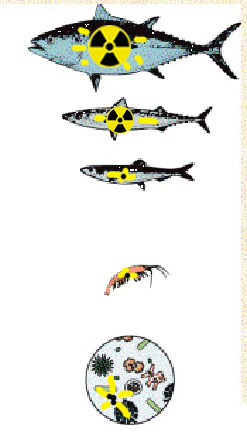
None of the current regulations in Japan (or worldwide) takes into full account the nature of organic forms of tritium. That organic forms of tritium have been found to bioaccumulate in phytoplankton, the base of the marine food chain, is deeply worrying. The fact that there has been no comprehensive environmental impact assessment of these and many other issues is outrageous, and suggests there is a deliberate underestimation of the accumulation and potential toxic effect of tritium on the environment.
Equally important, the many other radioactive materials in the Fukushima wastewater have the potential to cause damage to the environment and human health. In fact, Japan has sufficient storage capacity, including in the areas around the Fukushima plant. And storing the toxic wastewater, TEPCO cannot fully decommission the reactors at Fukushima in the next 20-30 years — probably not in this century. Rather than being lawful, the release of the wastewater into the sea will violate international law, specifically the United Nations Convention on the Law of the Sea.
One reason why the untruths and myths continue to be spread is that there is a lot at stake for the Japanese government and the nuclear industry. Japan’s energy policy is dependent on restarting many nuclear reactors shut down after the 2011 Fukushima disaster. So far, nine have resumed operations — but according to government policy, Japan needs 30-plus reactors by 2030.
Public opinion in Japan has been influenced by the government’s claim that it is safe to operate these nuclear reactors and that it is possible to recover from a three-reactor meltdown without consequences for human health and the environment. Of course, it’s not.
Sweeping real issue under the carpet
TEPCO, the Japanese government or the IAEA refuses to accept that the wastewater crisis points to a deeper nuclear crisis at the Fukushima plant. And it is getting worse, because groundwater entering the plant continues to become highly contaminated, while the water in the tanks requiring ALPS processing increases.
In November 2021, based on TEPCO data, there were 1,284,284 cubic meters of contaminated ALPS water in the storage tanks, of which 832,900 cu m needed further ALPS processing. As of April 20, 2023, the total volume of radioactive wastewater stored in the tanks was 1,330,944 cu m — a 3.6 percent increase in less than 2 years.
Worse, about 70 percent or 931,600 cu m of the wastewater needs to be processed again (and probably many times again) by the ALPS to bring the radioactive concentration levels below the regulatory limit for discharge. This is an increase of nearly 12 percent in less than 2 years.
TEPCO has succeeded in reducing the concentration levels of strontium, iodine and plutonium in only 0.2 percent of the total volume of the wastewater, and it still requires further processing. But no secondary processing has taken place in the past nearly three years. Neither TEPCO nor the Japanese government nor the IAEA wants to talk about this. They have not said how many times the wastewater needs to be processed, how long it will take to do so or whether the efforts will ever be successful.
Problems not new but none solved in 5 years
Greenpeace wrote about these problems and why the ALPS failed nearly five years ago; none of those issues has been resolved. Also, there is a high possibility of the ALPS failing in the future.
To proceed with their discharge plan, the Japanese government and TEPCO have been creating a false impression on the public that significant progress has been made in decommissioning the Fukushima plant. But fact is, the source of the problem — the highly radioactive fuel debris in reactor pressure vessels 1, 2 and 3 — continues to contaminate groundwater. Nearly 1000 cu m of water becomes highly contaminated every 10 days. So until the nuclear fuel is isolated from the environment, contaminated groundwater, potentially hundreds of thousands of cubic meters, will continue to accumulate.
While the Fukushima plant, after being destroyed by the earthquake-triggered tsunami in March 2011, released large amounts of radioactive particles into the environment, most of the radioactive inventory remains inside the melted fuel. As such, the damaged Fukushima plant on the edge of ocean is a long-term radioactive threat to the environment, including the marine environment. And this threat will be aggravated once Japan begins dumping the toxic water into the ocean.
TEPCO, the Japanese government and the IAEA refuse to acknowledge the fact that the decommissioning plan for the Fukushima plant is not attainable, and that they must embark on a comprehensive reassessment of the plan.
Crisis compounded by damage to reactor
The nuclear crisis in Fukushima is compounded by the damage to the reactors, in particular unit 1. The rapid meltdown of the nuclear fuel in March 2011 severely damaged the large concrete block the 440-ton reactor pressure vessel sits on. One of the agencies responsible for its decommissioning has recently demanded that TEPCO work out immediate countermeasures to prevent the possible collapse of the reactor. But with very high radiation levels inside the plant, it’s not clear whether any countermeasures are possible.
Building a very large containment structure covering the reactor buildings, like it was done at the Chernobyl plant in Ukraine after the nuclear disaster in 1986, is probably the only way to prevent highly radioactive dust entering the lower atmosphere in the event of a future collapse. But such a “solution” is not a currently an option for the Japanese government or the nuclear industry, as it would send the wrong message that the decommissioning process is not going according to plan.
There is no scientific, legal or moral justification for Japan to deliberately contaminate our shared and common marine environment. And concerned citizens, scientists, maritime lawyers, the fishing communities across the Asia-Pacific and the world’s leading oceanography universities and institutes have spread public awareness about the nuclear dangers, something that has rarely been done before.
There is a very strong legal case for challenging Japan’s decision to dump the wastewater into the sea but doing so is a major undertaking. For many reasons, no state or group of states may take up the challenge through UNCLOS this year. But since the environmental threat from the Fukushima plant will only intensify, future legal action should not be ruled out.
At a time when our oceans are under so many multiple threats, including from melting glaciers and related climate emergencies, overfishing and biodiversity loss and plastic pollution — there is no reason why Japan should be allowed to dump the radioactive water into the sea.
Greenpeace has been campaigning for protection for our oceans from radioactive contamination since the 1970s. And the most important thing I have learned in my 30 years with Greenpeace is that positive change is possible even if it does not often happen as early as it should but it can happen and people must never give up their efforts or hope.
The author is a senior nuclear specialist with Greenpeace East Asia and has worked in Japan and wider Asia for over 30 years.
Fukushima nuclear plant begins tests of wastewater release plan; fishing officials remain opposed
The operator of the wrecked Fukushima nuclear plant has begun tests of newly constructed facilities for discharging treated radioactive wastewater into sea, a plan strongly opposed by local fishing communities and neighboring countries
By MARI YAMAGUCHI Associated Press. abc news, June 12, 2023,
TOKYO — The operator of the wrecked Fukushima nuclear plant began tests on Monday of newly constructed facilities for discharging treated radioactive wastewater into the sea, a plan strongly opposed by local fishing communities and neighboring countries.
The tests at the Fukushima Daiichi nuclear power plant use fresh water instead of the treated water, operator Tokyo Electric Power Company Holdings said……………………………….
The plan has faced fierce protests from local fishing communities concerned about safety and reputational damage. Nearby countries, including South Korea, China and Pacific Island nations, have also raised safety concerns. Japan’s government has set up a fund to promote Fukushima seafood and provide compensation in case sales fall due to safety concerns.
Fishing officials said they remain opposed to the plan when they met Industry Minister Yasutoshi Nishimura on Saturday when he visited Fukushima and the neighboring prefectures of Ibaraki and Miyagi.
“We stand by our opposition,” Tetsu Nozaki, head of the Fukushima prefectural fisheries association, told Nishimura. Nozaki, however, said the association supports progress in the plant’s decommissioning and hopes to continue the dialogue. “At the moment, our positions remain wide apart.”
………….. In South Korea, fishermen staged a rally in front of the National Assembly in Seoul on Monday against the plan to release treated radioactive water. https://abcnews.go.com/Technology/wireStory/fukushima-nuclear-plant-begins-tests-wastewater-release-plan-100006333
A-bombed artist to distribute ‘war brooms’ in Hiroshima as he calls for nuclear abolition
June 11, 2023 (Mainichi Japan)
SHIKAOI, Hokkaido — A Hiroshima A-bomb survivor ink artist seeking to amplify his nuclear abolition message will hand out miniature brooms signifying the renunciation of war in front of Hiroshima Peace Memorial Museum, coinciding with his art show opening in the city on June 24.
Miki Tsukishita, 82, a resident of the Hokkaido town of Shikaoi, was exposed to radiation from the atomic bombing in Hiroshima when he was 4 years old. He is upset that the recent Group of Seven (G7) summit held in the A-bombed city from May 19 to 21 recognized the deterrence of war through the possession of nuclear weapons.
The joint document, “G7 Leaders’ Hiroshima Vision on Nuclear Disarmament,” set forth the direction that the G7 would pursue to realize a world without nuclear weapons. At the same time, the document referred to nuclear deterrence. While it also pointed out the importance of nuclear nonproliferation, Tsukishita said emphatically, “What we are seeking is not nuclear nonproliferation, but nuclear abolition.”
After the summit, he wrote a letter of appeal to the participating leaders in his distinctive ink brush strokes, which was full of sarcasm, beginning with “Did the ‘okonomiyaki’ (savory pancakes that are a Hiroshima specialty) suit your palate?” It is lined with harsh phrases such as, “You left us with the continuation of nuclear nonproliferation,” “What was the purpose of your visit to Hiroshima?” “The tender ‘heart of Hiroshima’ has been trampled on by all of you.”
The feelings of the people of Hiroshima cannot be conveyed only by the appeal letter. So, in line with his already scheduled show in Hiroshima, Tsukishita decided to convey the wishes of A-bomb survivors for nuclear abolition by distributing miniature brooms, paper cranes and letters of appeal to foreign visitors to the Hiroshima museum……………………………………………..
The upcoming exhibition, titled “war brooms art exhibition,” will be held at Aster Plaza in the city of Hiroshima from June 24 to 29. In addition to Tsukishita’s ink artwork, pictures such as “The boy standing by the crematory” and a young A-bombed Chinese parasol tree will be on display. Seeds of the tree will also be handed out. https://mainichi.jp/english/articles/20230608/p2a/00m/0na/025000c
(Japanese original by Hitoshi Suzuki, Obihiro Bureau)
China and Russia building most nuclear power plants, – the main goal is to market them to developing countries


China and Russia account for 70% of new nuclear plants
Exports used as diplomatic card while Western nations fall behind
NAOYUKI TOYAMA, Nikkei staff writerJune 11, 2023
TOKYO — Russia and China are building up an outsized presence in the field of nuclear power, with the countries accounting for nearly 70% of reactors under construction or in planning worldwide.
…………………Notably, 33 of the reactors are being constructed or planned outside each respective country. Russia has the largest number of overseas reactors with 19, and despite growing opposition from Europe and the U.S. following its invasion of Ukraine, it maintains a strong global influence in nuclear power.
In April, Russian President Vladimir Putin participated remotely in a ceremony to mark the arrival of the first fuel at the under-construction Akkuyu nuclear power plant in Turkey………
Russia’s nuclear power diplomacy is extending to other countries as well. In May, Rosatom began full-scale construction on Unit 3 of the Dabaa nuclear plant in Egypt, the country’s first.
Hungarian Prime Minister Viktor Orban met with Rosatom officials this month to discuss the company’s plans to build a new nuclear power plant in the country’s south. Hungary opposes sanctions the European Union has imposed on Rosatom.
“Many developing countries take a positive view of Russia,” Kacper Szulecki of the Norwegian Institute of International Affairs told British scientific journal Nature Energy. Russia’s acceptance of spent nuclear fuel is also attractive to emerging countries.
Meanwhile, China is deepening its engagement with Pakistan………………………………..
China also plans to build a nuclear plant in Argentina…………………………………
The U.S., Japan and Europe are hoping to catch up using small modular reactors (SMRs), considered fourth-generation technology………………………………………..
Another issue is nuclear fuel. Uranium enrichment has become the weak link for Western nations. Enrichment facilities are limited, and Russia is the global leader for that process. In April, the U.S., the U.K., France, Canada and Japan formed a nuclear fuel alliance. While the aim is to shut out Russian fuel from Western reactors, doing so will not be easy.
https://asia.nikkei.com/Business/Energy/China-and-Russia-account-for-70-of-new-nuclear-plants
Anxiety and disagreement in South Korea about Fukushima radioactive wastewater
[Lee Kyong-hee] Fallout from Fukushima radioactive wastewater, By Korea Herald, Jun 8, 2023
“………………….. quoting a diplomatic source, the reports say that President Yoon Suk Yeol vowed to make all-out efforts to remove public concerns in Korea about the wastewater discharge when he met Japanese lawmakers in March during his visit to Tokyo for a summit with Prime Minister Fumio Kishida.
Many Koreans were caught off guard, and this administration’s purported stance is further proof that their president is bent on fence-mending with an unrepentant government at whatever cost.
Yoon has neither confirmed nor denied the reports. Transparency is not a priority of his administration, though his search for avenues of rapprochement with Japan is clear.
As Yoon remains tight-lipped, we can only guess his views about the rationality of the discharge and whether he grasps the potential risks. Hence a confrontation with the main opposition Democratic Party of Korea is underway, each side blaming the other for spreading malicious rumors lacking scientific basis.
Amid the accusations, the science community also has misgivings. Seo Kyun-ryeol, a professor emeritus at Seoul National University’s Department of Nuclear Engineering, is an outspoken critic. He is among several scientists who question the contaminated water filtration process and cautions that sea currents will ultimately bring some of discharged wastewater to Korea’s shores.
…………………….public mistrust is understandable, given TEPCO’s history; a Japanese government investigation report in 2012 said TEPCO had failed to meet initial safety requirements.
………………………. Seo says, “There is no guarantee that all of the system’s many filters for different isotopes will work perfectly all of the time, given the condition and quantity of the water, let alone the period of time required.”
The SNU professor highlights the potential hazards associated with cesium, strontium and plutonium, which were released from the reactors due to the disaster. “These substances not only enter the bloodstream but also penetrate the muscles, bones and brain, leading to the development of solid cancers and tumors,” he said.
Seo has raised concerns that marine life and ocean currents can carry harmful radioactive isotopes across the Pacific. He warns of the potential risks to entire marine ecosystems, from the deep-sea organisms up to invertebrates, fish and marine mammals through the food chain, eventually reaching humans.
Naturally, among the most vocal critics of the ocean discharge is the Pacific Islands Forum, an organization representing 18 island nations. They have already suffered from nuclear tests by the United States and European countries. Their concerns are reasonable as most of their populations are coastal residents who depend on the ocean for their livelihoods.
The International Atomic Energy Agency is expected to release its final assessment later this month before Japan embarks on its plan. The root of the problem, as contended by Ken Buesseler, a marine radiochemist and advisor to the Pacific Islands Forum, is that Japan is moving already with a plan which has not proven workable.
Masashi Goto, a retired nuclear engineer who designed reactor containment vessels for Toshiba for many years, bemoans the “safety culture” he encountered in the industry. In a presentation marking the 10th year after the Fukushima accident, he said, “Risks can be expressed in terms of their potential for damage or probability of occurrence. Many unlikely scenarios run the risk of horrendous consequences.”
Goto’s views concerning the decommissioning of a nuclear reactor are worth heeding. “TEPCO claims to have a decommissioning schedule that can be completed within the next 30 to 40 years, but this is completely unrealistic. Given the severity of what happened and the current state of the reactors, in practice we are looking at a process lasting anywhere from 100 to 200 years.”
“What is the number one priority? It’s the same question that was thrust upon the citizens of Japan 10 years ago. Do we prioritize the economy and convenience at any cost, or do we choose to live modestly in safety and free from worry?” he asked.
All said, Japan should suspend the planned release of the wastewater. Heeding the concerns of the international community, it may well consider other possible options, such as long-term storage and processing through half-lives of isotopes or cement-based solidification. https://www.koreaherald.com/view.php?ud=20230607000843
Despite scientific evidence and public opposition, Japan to test ocean nuclear wastewater discharge on June 12
CGTN, 11 June 23
Japan plans to start sending seawater in an underwater tunnel built to release nuclear-contaminated water into the ocean from the Fukushima Daiichi nuclear power plant on June 12, local media reported on Friday citing news from the plant’s operator, Tokyo Electric Power Company (TEPCO).
According to TEPCO, the tunnel has been filled with about 6,000 tonnes of seawater this week for a two-week test before releasing the nuclear-contaminated water from the plant to a point about one kilometer offshore.
Japan is likely to officially begin its plan to dump the nuclear-contaminated wastewater into the ocean as early as the beginning of July. So far, the implementation of Japan’s plan still needs to await the outcome of the International Atomic Energy Agency’s (IAEA) meeting in late June.
However, the content of Cs-137 (a radioactive element that is a common byproduct in nuclear reactors) in the marine fish caught in the harbor of the Fukushima Daiichi Nuclear Power Plant is 180 times that of the standard maximum stipulated in Japan’s food safety law, according to a statement released by the Chinese embassy in Japan on Monday, referring to data from a report released by TEPCO.
It also pointed out that there are more than 60 radionuclides, including tritium, carbon-14, cobalt-60, strontium-90 and iodine-129, in the nuclear-contaminated water. Some long-lived nuclides may spread with ocean currents and result in a bioconcentration effect, which will increase the total amount of radionuclides in the environment and cause unpredictable hazards to the marine ecosystem and human health.
Earlier, TEPCO admitted that tritium, a mildly radioactive form of hydrogen, cannot be removed from the wastewater, but insisted it is not harmful to human health, which has aroused the opposition of many experts.
“When tritium gets inside the body, it’s at least as dangerous as any of the other radionuclides. And in some cases, it’s more than double as dangerous in terms of the effects of the radiation on the genetic material, on the proteins,” Timothy Mousseau, professor of biological sciences at the University of South Carolina, told a press conference in Seoul.
Japan insists that the purified “treated water” is no different from the normal discharged water from a nuclear power plant. ………………………………..
Regardless of raging opposition from home and abroad, Japan has been rushing to dump the wastewater into the ocean, which has incited protests from local civic groups as well as neighboring nations and communities within the Pacific Islands.
A spontaneous protest was held in front of the headquarters of TEPCO in Tokyo on Wednesday evening. Holding banners and flags with slogans that read “Don’t discharge polluted water into the sea” and “Don’t pollute the ocean for all,” the protesters said that the discharge of nuclear-contaminated water in the ocean is a highly irresponsible act.
On the same day, Green Korea United, an environmental group, also staged a protest in front of the Japanese embassy in Seoul, calling the discharge an “international crime” that will transfer the risk of further pollution to the world through the seas…………………. more https://news.cgtn.com/news/2023-06-11/Despite-opposition-Japan-to-test-wastewater-discharge-on-June-12-1kyqtkyBhNC/index.html
Hong Kong to ban seafood from high-risk regions near Fukushima if Japan dumps nuclear-contaminated water into ocean
Global Times, By GT staff reporters Jun 08, 2023
Hong Kong will ban seafood from high-risk regions near Fukushima at once if Japan starts to dump nuclear-contaminated water from its crippled Fukushima Daiichi nuclear power plant into the Pacific Ocean, said Hong Kong’s Environment and Ecology Bureau told the Global Times.
HK to ban seafood from high-risk regions near Fukushima if Japan dumps nuclear-contaminated water into ocean
Hong Kong will ban seafood from high-risk regions near Fukushima at once if Japan starts to dump nuclear-contaminated water from its crippled Fukushima Daiichi nuclear power plant into the Pacific Ocean, said Hong Kong’s environment chief on Thursday.
The Hong Kong Special Administrative Region has set up a special group to guarantee food security for residents, said Secretary for Environment and Ecology Tse Chin-wan, emphasizing that if Japan starts dumping the nuclear-contaminated wastewater, the government will take immediate measures to ban the import of aquatic products from high-risk regions along the Fukushima coast and to impose strict import controls on aquatic products from other risk regions in Japan…………………………………….more https://www.globaltimes.cn/page/202306/1292233.shtml
Amid opposition, Japan takes 1st step to release nuclear waste water into ocean
China slams Tokyo’s ‘irresponsible’ actions on Fukushima’s contaminated water, urging safe disposal
Alperen Aktas |07.06.2023
Despite mounting pressure, Japan has begun injecting seawater into a drainage tunnel of the crippled Fukushima Daiichi Nuclear Power Plant as a first step to release treated radioactive wastewater into the ocean.
The tunnel was filled with water on Tuesday, triggering a sharp response from the Chinese mission in Tokyo.
Japan plans to release treated radioactive wastewater into the ocean, triggering opposition and concerns from local fishing communities and neighboring countries.
“The harm caused by the discharge of nuclear water into the sea is immeasurable,” China’s diplomatic mission in Japan said in a statement.
“Workers at the crippled Fukushima Daiichi nuclear power plant are sending seawater into an underwater tunnel that has been built to release treated and diluted water from the facility into the ocean,” Japanese public broadcaster NHK reported.
“Once filled with seawater, the tunnel will guide treated water from the plant to a point about 1 kilometer offshore.”
The water release system is nearing completion, with the exception of a reservoir that will store treated water prior to its release. The utility aims to finish all construction tasks by the end of June……………………
Urging Japan not to put future generations at risk, the Chinese Embassy stressed that besides ocean discharge, formation injection, steam discharge, hydrogen discharge, and underground burial are also viable options. However, it is “irresponsible” for the Japanese side not to seriously consider and show other extermination options.
Zhang Kejian, Chairman of China Atomic Energy Authority, also criticized Japan’s “extremely irresponsible” act.
Japan disregarded the concerns of its people and other countries, providing no scientific answers or consulting with neighbors and stakeholders, he said at an International Atomic Energy Agency (IAEA) board of governors meeting held on Monday in Austria.
A signature campaign was launched in South Korea last week to oppose Japan’s intended discharge of radioactive water from the crippled Fukushima nuclear power plant.
The campaign was initiated by South Korea’s leading opposition Democratic Party in the capital Seoul.
DP Chairman Lee Jae-Myung expressed his concerns, questioning how the president and the ruling party can support Japan and grant them immunity and permission to dispose of hazardous nuclear-contaminated water into the ocean.
Japan unveiled the water discharge plan in April 2021, triggering massive criticism from China, South Korea, North Korea, the island nation of Taiwan, and international bodies, including the UN……………………. https://www.aa.com.tr/en/asia-pacific/amid-opposition-japan-takes-1st-step-to-release-nuclear-waste-into-ocean/2916489
Content of radioactive element in fish at Fukushima’s Nuclear Power Plant 180 times of safe limit
CGTN 6 June 23
The radioactive elements in the marine fish caught in the harbor of the Fukushima Daiichi Nuclear Power Plant in Japan far exceed safety levels for human consumption, according to a report issued by the plant’s operator Tokyo Electric Power Company (TEPCO) on Monday. In particular, the data released show that the content of Cs-137, a radioactive element that is a common byproduct in nuclear reactors, is 180 times that of the standard maximum stipulated in Japan’s food safety law.
CGTN downloaded the English version of the report available on TEPCO’s official website. According to the data, the sampled black rockfish contains the radioactive element Cs-137 with a content of 18,000 becquerels per kilogram. Data available on the website of Fukushima Revitalization Station run by Japan’s Fukushima prefectural government shows that Japan’s current limit of radioactive cesium in general food which contains fish is set at 100 becquerels per kilogram.
According to the report, the location where the sampled fish was caught is at the port area of Units 1 to 4 of the Fukushima Daiichi Nuclear Power Plant, where a breakwater is built and nuclear wastewater with a high concentration of radioactive substances flows in. TEPCO said it will set up multiple protective nets to prevent fish from swimming out of the harbor.
A Chinese news website sina.com.cn quoted experts noting that the radioactive elements in the nuclear wastewater could penetrate into fish, shrimp and other seafood, and later accumulate in the human body after consumption. ……………………
TEPCO on Monday started sending seawater into an underwater tunnel to be diluted before releasing the nuclear wastewater into the ocean. The company said that all facilities for the water release system are expected to be completed by the end of this month.
Local fishing communities say their businesses and livelihoods will suffer still more damage. Neighboring countries such as China and South Korea and Pacific Island nations have raised safety concerns. Environmental groups including Friends of the Earth oppose the release. https://news.cgtn.com/news/2023-06-06/Radioactive-element-in-fish-at-Fukushima-plant-180-times-safe-limit-1kpOlJEH9xm/index.html
1 This Month

of the week – Shut Down Drone Warfare!


Tell the Ukrainian Government to Drop Prosecution of Peace Activist Yurii Sheliazhenko

Petition to revoke the licensing of the Near Surface Nuclear Disposal Facility (NSDF) at Chalk River. https://www.ourcommons.ca/petitions/en/Petition/Details?Petition=e-7247
To see nuclear-related stories in greater depth and intensity – go to https://nuclearinformation.wordpress.com
-
Archives
- April 2026 (34)
- March 2026 (251)
- February 2026 (268)
- January 2026 (308)
- December 2025 (358)
- November 2025 (359)
- October 2025 (376)
- September 2025 (257)
- August 2025 (319)
- July 2025 (230)
- June 2025 (348)
- May 2025 (261)
-
Categories
- 1
- 1 NUCLEAR ISSUES
- business and costs
- climate change
- culture and arts
- ENERGY
- environment
- health
- history
- indigenous issues
- Legal
- marketing of nuclear
- media
- opposition to nuclear
- PERSONAL STORIES
- politics
- politics international
- Religion and ethics
- safety
- secrets,lies and civil liberties
- spinbuster
- technology
- Uranium
- wastes
- weapons and war
- Women
- 2 WORLD
- ACTION
- AFRICA
- Atrocities
- AUSTRALIA
- Christina's notes
- Christina's themes
- culture and arts
- Events
- Fuk 2022
- Fuk 2023
- Fukushima 2017
- Fukushima 2018
- fukushima 2019
- Fukushima 2020
- Fukushima 2021
- general
- global warming
- Humour (God we need it)
- Nuclear
- RARE EARTHS
- Reference
- resources – print
- Resources -audiovicual
- Weekly Newsletter
- World
- World Nuclear
- YouTube
-
RSS
Entries RSS
Comments RSS
 nuclear-news
