Japan’s nuclear plants are short of storage for spent fuel. A remote town could have the solution.
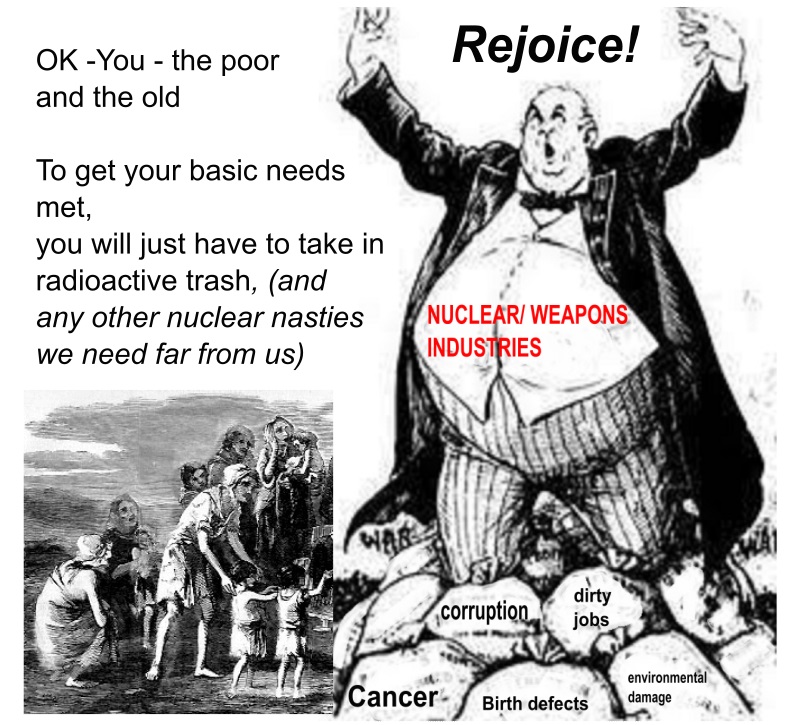
Chugoku Electric’s plan to build a nuclear power plant in Kaminoseki has been stalled for more than a decade since the Fukushima Daiichi disaster, delaying subsidies for the remote town, whose population is aging and shrinking.
“The town will only get poorer if we just keep waiting,” Kaminoseki Mayor Tetsuo Nishi – “We should do whatever is available now.”
ByMARI YAMAGUCHI Associated Press, https://abcnews.go.com/Business/wireStory/japans-nuclear-plants-short-storage-spent-fuel-remote-102373016 August 19, 2023
TOKYO — A Japanese town said Friday it has agreed to a geological study to determine its suitability as an interim storage site for spent nuclear fuel.
Kaminoseki, a small town in the southwestern prefecture of Yamaguchi, said it would accept the offer of a survey by Chugoku Electric Power Co., one of two major utility operators, along with Kansai Electric Power Co., whose spent fuel storage pools are almost full.
The Japanese government is promoting the greater use of nuclear power as a low-carbon energy source, but the country’s nuclear plants are running out of storage capacity.
The problem stems from Japan’s stalled nuclear fuel recycling program to reprocess plutonium from spent fuel for reuse. The government has continued to pursue the program, despite serious technical setbacks. A plutonium-burning Monju reactor failed and is being decommissioned, while the launch of the Rokkasho reprocessing plant in northern Japan has been delayed for almost 30 years.
After the meltdown of the Fukushima Daiichi nuclear power plant in 2011, many reactors were temporarily taken offline and their restarts delayed, helping to reduce the spent fuel stockpile.
However, when Prime Minister Fumio Kishida’s government decided to reverse a phaseout and maximize nuclear power as clean energy, concerns over the lack of storage space were rekindled.
Earlier this month, Chugoku put forward a proposal to build a storage facility jointly with Kansai Electric, but the plan was met by angry protests from residents, who surrounded the mayor and yelled at him.
Chugoku Electric’s plan to build a nuclear power plant in Kaminoseki has been stalled for more than a decade since the Fukushima Daiichi disaster, delaying subsidies for the remote town, whose population is aging and shrinking.
“The town will only get poorer if we just keep waiting,” Kaminoseki Mayor Tetsuo Nishi told a televised news conference Friday. “We should do whatever is available now.”
Kansai Electric, Japan’s largest nuclear plant operator, is urgently seeking additional storage for spent fuel: the cooling pools at its plants are more than 80% full. The company pledged to find a potential interim storage site by the end of this year.
About 19,000 tons of spent fuel, a byproduct of nuclear power generation, is stored at power plants across Japan, taking up about 80% of their storage capacity, according to the economy and industry ministry.
The continuation of spent fuel reprocessing program and the delay have only added to Japan’s already large plutonium stockpile, raising international concern. Japan also lacks a final repository for high-level nuclear waste.
An intermediate facility is designed to keep nuclear spent fuel in dry casks for decades until it is moved to a reprocessing or to a final repository. Experts say it is a much safer option than keeping it in uncovered cooling pools at their plants.
If the storage is actually built, it will be the second such facility in Japan. The only other one is in Mutsu, near Rokkasho, which is reserved for Tokyo Electric Power Co. and a smaller utility.
Fukushima water release poses test for Japan-South Korea unity
TOKYO/SEOUL – Japan Times , BY TIM KELLY, SAKURA MURAKAMI AND HYONHEE SHIN
REUTERS 18 Aug 23
U.S. President Joe Biden wants to lock in friendly ties between Japan and South Korea at a summit on Friday, but their readiness to shelve grievances will be tested when Tokyo begins pumping water from its wrecked Fukushima nuclear plant into the sea.
Japan already delayed the release to avoid stirring up political opposition in South Korea before President Yoon Suk-yeol joins Prime Minister Fumio Kishida for a meeting with Biden at the Camp David retreat on Friday, four officials in Japan and South Korea said.
The dumping of radioactive water may happen days after the summit, which the United States is billing as a “historical” trilateral meeting that will deliver a “bold counter” to regional rival China.
That puts less domestic political pressure on Yoon, said one of the officials, who asked not to be identified because of the sensitivity of the issue.
Washington needs its Asian allies to work together because they see the military power balance in East Asia, including around Taiwan, shifting in China’s favor.
…………………….. Even if Fukushima fades as an issue, the risk of bad blood remains real. As relations soured in 2019, for example, Moon nearly scrapped a critical intelligence-sharing deal with Japan, reversing the decision at the last minute under U.S. pressure.
By accepting an International Atomic Energy Agency (IAEA) report last month that greenlit Japan’s Fukushima water release, Yoon could encourage fresh dissent that China will try to amplify, analysts say.
“There is certainly some possibility that Yoon will come under pressure over this, particularly if there is data that shows that the water is more dangerous than we otherwise thought,” said Christopher Johnstone, a former East Asia director of Biden’s National Security Council who is now with the Center for Strategic and International Studies.
Japan says it will remove most radioactive elements from the water except for tritium, a hydrogen isotope that must be diluted because it is difficult to filter.

U.S. Secretary of State Antony Blinken on Tuesday expressed satisfaction with Japan’s plans.
………………….a Gallup poll in late June showed that 78% of South Koreans worry about potential contamination of the ocean and seafood…………………………
more https://www.japantimes.co.jp/news/2023/08/18/japan/politics/south-korea-fukushima-radioactive-water/
Japan mothers’ group fears Fukushima water release could revive health concerns
By Kiyoshi Takenaka, Akiko Okamoto and Tom Bateman, August 18, 2023
IWAKI, Japan, Aug 17 (Reuters) – Waves crashing on a Japanese beach lashed a man and a woman wearing waders and hats as they demonstrated the use of a blue bucket to scoop some of the liquid into large plastic containers to be taken away and tested for radiation.
Members of a group that tracks such levels in food and seawater, they fear Japan’s plans to release treated radioactive water into the sea near the Fukushima nuclear plant could stir an anxiety among residents reminiscent of the 2011 disaster.
“The people of Fukushima endured the risks for the last 12 years and have confirmed the radiation level has dropped,” said Ai Kimura, director of non-profit group Mothers’ Radiation Lab Fukushima, also known as Tarachine.
“But if radioactive materials are released into the ocean now, it will again bring back the tragedy of 12 years ago,” she added, speaking at the lab in the city of Iwaki, 50 km (30 miles) south of the power plant.
Japan is preparing this summer to start discharging into the Pacific more than a million tons of water from the tsunami-crippled power plant, but has not yet revealed the date.
Although the government and an international nuclear regulator say the plan is safe, it has alarmed neighbours, particularly China, and the regional fisheries industry.
Tarachine comprises 13 members – mostly mothers – who had no experience in radiology when they started, but were taught by scientists and doctors how to run tests and keep records.
After losing a job cooking school lunches in the wake of the disaster, Kimura joined the group in 2014 and taught herself how to measure radiation, in hopes of protecting her daughters, who were teenagers at the time, as well as others.
Now she says she wants more dialogue between the government and plant operator Tokyo Electric Power (9501.T) on one side, and citizens, fishermen and others on the other, to allay concerns over safety and other fears.
“Since the ocean has no walls … and what’s been released can’t be taken back, this issue is not only for Fukushima or for Japan to give consideration to, but for the whole world,” Kimura added.
…………… Kimura’s group vowed to continue its activities after the release begins.
“We will keep on providing data, so that fathers and mothers can decide for themselves, and children can also decide, when they grow up, whether to eat Fukushima fish or whether to go swimming in the sea,” Kimura said.
Reporting by Kiyoshi Takenaka, Akiko Okamoto and Tom Bateman; Editing by Chang-Ran Kim and Clarence Fernandez https://www.reuters.com/world/asia-pacific/japan-mothers-group-fears-fukushima-water-release-could-revive-health-concerns-2023-08-17/
US tightens export controls of nuclear power items to China
By Timothy Gardner, August 19, 2023
WASHINGTON, (Reuters) – The Biden administration has tightened controls on the export of materials and components for nuclear power plants to China, saying it would ensure the items were used only for peaceful purposes and not the proliferation of atomic weapons.
The steps are among the latest signs of strained relations between Washington and Beijing, which have clashed over spying allegations, human rights, China’s industrial policies, and U.S. export bans on advanced technologies.
The Bureau of Industry and Security (BIS), an arm of the Commerce Department, now requires exporters to get specific licenses to export certain generators, containers and software intended for use in nuclear plants in China.
The Nuclear Regulatory Commission (NRC), the federal agency responsible for nuclear energy safety, also requires exporters to get specific licenses to export special nuclear material and source material.
That includes different types of uranium as well as deuterium, a hydrogen isotope that, in large amounts, could be used in reactors to make tritium, a nuclear weapons component.
The Biden administration sees the action as “necessary to further the national security interests of the United States and to enhance the common defense and security” the NRC said.
A U.S. official said the changes, made on Monday, were prompted by general policy toward China…………………….
Non-proliferation analyst Edwin Lyman of the Union of Concerned Scientists non-profit group said the changes were “more symbolic than substantive” and doubted China’s nuclear weapons program would be meaningfully impacted.
…………………………….U.S. company Westinghouse has four AP1000 reactors in China. In 2018 Donald Trump’s administration issued restrictions on exports of nuclear reactor technology newer than the AP1000 due to proliferation concerns. Westinghouse did not immediately respond to a request for comment about the U.S. requirements.
Reporting by Timothy Gardner; additional reporting by Michael Martina; editing by Barbara Lewis https://www.reuters.com/world/us/us-tightens-export-controls-nuclear-power-items-china-2023-08-18/
South Korea’s opposition party to file UN complaint against Japan over nuclear waste
Democratic Party plans to visit Tokyo to oppose release of treated water from crippled Fukushima nuclear plant
Esra Tekin |14.08.2023 -ISTANBUL, https://www.aa.com.tr/en/asia-pacific/south-koreas-opposition-party-to-file-un-complaint-against-japan-over-nuclear-waste/2967294
South Korea’s main opposition party announced on Monday its intention to lodge a formal grievance with the United Nations Human Rights Council (UNHRC) in the upcoming week, regarding Japan’s proposed strategy to release water from the Fukushima site.
According to representative Woo Won-shik, who leads the Democratic Party (DP) committee that opposes Tokyo’s proposal to discharge treated water from the damaged Fukushima nuclear plant into the ocean, the complaint will be formally submitted on Thursday, Seoul-based Yonhap News reported.
The DP asserts that the planned release, set to start as soon as late August, breaches several international agreements and lacks verified scientific safeguards.
The UNHRC assesses grievances originating from individuals, entities, or nations pertaining to instances of ongoing and severe human rights transgressions.
Alongside submitting the complaint, the DP intends to collect signatures from roughly 1.5 million citizens and deliver them to the office of the president.
Furthermore, DP members are making preparations for a visit to Japan by the end of this month to express their opposition to Tokyo’s scheme, subsequent to two prior visits made in April and July.
Japan is expected to release treated nuclear waste from the crippled Fukushima nuclear power plant this month or early next month.
Japan’s water discharge plan, announced in April 2021, faced significant criticism from China, South Korea, North Korea, Taiwan, and international organizations, including the UN.
The US supported the proposal, following years of discussions on dealing with over 1 million tons of water stored at the Fukushima nuclear complex since the 2011 disaster.
2 minor earthquakes strike near North Korea’s nuclear test site
Sunday’s tremors latest in series of earthquakes to hit Kilju region in recent months
By Anadolu staff 13.08.2023 https://www.aa.com.tr/en/asia-pacific/2-minor-earthquakes-strike-near-north-koreas-nuclear-test-site/2966671
ANKARA
Two minor earthquakes struck on Sunday near North Korea’s nuclear test site, the latest in a series of natural earthquakes to hit the region in recent months, South Korea’s state weather agency said.
There were no reports of any damage.
The first earthquake of 2.7 magnitude struck about 40 kilometers (24.8 miles) north-northwest of Kilju, North Hamgyong Province, at 3:13 a.m. (local time), while the second of 2.3 magnitude struck 42 km (26 m) north-northwest of Kilju at 7:55 a.m, Seoul-based Yonhap News reported.
Kilju is home to the Punggye-ri nuclear test site, where North Korea conducted all six of its nuclear tests.
Eight natural earthquakes were reported to have struck the area in 2022 alone.
Who decides whether Bataan should go nuclear?
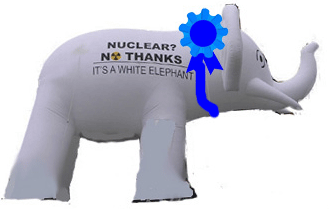
The plant is located near to not one but four volcanoes, in an area prone to earthquakes’
Rappler.com, AUG 13, 2023 LOLITA CASTILLO
Bataan, a beautiful peninsula located west of the Philippine capital, Manila, is most famous for a couple of things. One, it was where the Death March began following the defeat of the allied forces of American and Filipino soldiers led by Gen. Douglas McArthur against the Japanese Imperial Army during World War II. Two, it is where the mothballed Bataan Nuclear Power Plant (BNPP) with a price tag of $2.3 billion idly resides, unoperated for nearly four decades.
Bataan residents did not have any sort of control or say in these two circumstances that brought their province to prominence. The former, BNPP’s construction amid opposition, was decided without their consent, and the latter a byproduct of the irrationalities of war and the fight for democracy.
Bataan is my birthplace and remains dear to my heart. Although I have been away for a few decades, I keep abreast of the potential threats to its security and stability. BNPP’s construction began when I was in grade school, and most people in Bataan were not even aware of it until cause-oriented groups outside of Bataan and the local informal leaders bravely protested against its operation in a militarized, political climate. Now, it’s an issue that has resurfaced, and it will test how democracy is manifested and mediated in local and national settings, and how crucial decisions and trade-offs will be made regarding safety, equity, and sustainable development.
Each year, the government allocates more than $1 million for the BNPP’s upkeep and maintenance. It remains a losing and wasteful investment that does not give back. It is important that a decision is made about the white elephant as delays in the decision come with opportunity costs.
The plant, the first of its kind in Southeast Asia, was designed to provide 620 megawatts of electricity, and was completed in 1984 in response to the oil crisis in the ’70s – but has never produced any single watt of electricity due to a combination of factors. The biggest of these factors are safety concerns.
The administration of Aquino and Ramos had ordered it mothballed in spite of its extremely high costs based on the findings from the technical audit conducted by the National Union of Scientists (NUS) in 1986, 1988, and 1990, citing over 4,000 technical defects concerning cover design, construction, quality assurance, workmanship, etc.
The plant is located near to not one but four volcanoes, in an area prone to earthquakes. Fear and uncertainty about the location, and the wake of the Three Mile Island accident in the US in 1979, the Chernobyl disaster in 1986, and the more recent 2011 Fukushima nuclear disaster restrained efforts to revive it.
As the Philippines seeks to retire its coal plants to meet its pledge and climate goals, as the impact of climate change around the globe, especially among the most vulnerable island countries, intensifies, and as demand for electricity increases, the discussions and debates whether to revive the BNPP or not, or whether to repurpose it, continues.
Nuclear energy is depicted as “cleaner” than coal, and Bataan’s power plants that send electricity to the Luzon grid rely heavily on fossil fuel. As of November 30, 2022, the total capacity of existing power plants in Bataan equals 3,676.7 MW. Renewable energy accounts only for 92.4 MW while fossil fuel-fired plants account for 3,528 MW. More solar and wind farms are slated for construction and operation by 2026, which will increase the output to 4,920.7 MW.
……………………………………… there are compelling dangers or risks as well: the plant is nearly 40 years old and would need substantial rehabilitation that require further spending. Rigorous safety protocols are imperative to ensure safety, as it is sitting on earthquake-prone area. It generates radioactive waste, and the disposal of waste is expensive, as well as poses potential environmental risks. The cost of repair, maintenance, and operation might be higher than if the government were to build and operate renewable sources of energy. In 2017, a South Korean firm estimated that rehabilitation and upgrade of BNPP would be up to $1.19 billion.
………………………….The residents of Bataan must always be included in decision-making on the path to development, as they are the ones who directly suffer from the consequences of bad economic and environmental policies. Moreover, Bataan is already disproportionally carrying the heavy burden of supplying energy to Luzon. It will be unequitable to force it to host an old nuclear plant that faces considerable uncertainties.
Whatever Bataan decides, the following questions loom: Would the national government respect its decision and local autonomy? Would it allow Bataan the right to self-determination? If Bataan were to demand the national government to fund the rapid expansion of renewable sources of energy and repurpose BNPP, would the current president support it or would he follow the path of his father? – Rappler.com https://www.rappler.com/voices/imho/opinion-who-decides-whether-bataan-should-go-nuclear/
In South Korea, activists march against Tokyo’s waste plan
Hundreds of people in South Korean took to the streets of Seoul on Saturday
to protest against Japan’s contentious plan to release treated nuclear
wastewater into the Pacific Ocean. Tokyo is set to release the water from
the tsunami-hit Fukushima nuclear plant later this month. It has been
approved by the UN nuclear watchdog, and a South Korean assessment found it
meets international standards. But protesters fear marine life will be
destroyed and seafood contaminated. Marching in central Seoul, they held
signs reading “Protect the Pacific Ocean” and “Nuclear Power? No Thanks!”.
BBC 12th Aug 2023
Secret Pakistan cable documents US pressure to remove Imran Khan
“All will be forgiven,” said a U.S. diplomat, if the no-confidence vote against Pakistan Prime Minister Imran Khan succeeds.
The Intercept, Ryan Grim, Murtaza Hussain, August 9 2023,
THE U.S. STATE DEPARTMENT encouraged the Pakistani government in a March 7, 2022, meeting to remove Imran Khan as prime minister over his neutrality on the Russian invasion of Ukraine, according to a classified Pakistani government document obtained by The Intercept.
The meeting, between the Pakistani ambassador to the United States and two State Department officials, has been the subject of intense scrutiny, controversy, and speculation in Pakistan over the past year and a half, as supporters of Khan and his military and civilian opponents jockeyed for power. The political struggle escalated on August 5 when Khan was sentenced to three years in prison on corruption charges and taken into custody for the second time since his ouster. Khan’s defenders dismiss the charges as baseless. The sentence also blocks Khan, Pakistan’s most popular politician, from contesting elections expected in Pakistan later this year.
One month after the meeting with U.S. officials documented in the leaked Pakistani government document, a no-confidence vote was held in Parliament, leading to Khan’s removal from power. The vote is believed to have been organized with the backing of Pakistan’s powerful military. Since that time, Khan and his supporters have been engaged in a struggle with the military and its civilian allies, whom Khan claims engineered his removal from power at the request of the U.S.
The text of the Pakistani cable, produced from the meeting by the ambassador and transmitted to Pakistan, has not previously been published. The cable, known internally as a “cypher,” reveals both the carrots and the sticks that the State Department deployed in its push against Khan, promising warmer relations if Khan was removed, and isolation if he was not.
The document, labeled “Secret,” includes an account of the meeting between State Department officials, including Assistant Secretary of State for the Bureau of South and Central Asian Affairs Donald Lu, and Asad Majeed Khan, who at the time was Pakistan’s ambassador to the U.S.
The document was provided to The Intercept by an anonymous source in the Pakistani military who said that they had no ties to Imran Khan or Khan’s party. The Intercept is publishing the body of the cable below, correcting minor typos in the text because such details can be used to watermark documents and track their dissemination………………………………………………………………………………………………………………………………………………
The Intercept has made extensive efforts to authenticate the document. Given the security climate in Pakistan, independent confirmation from sources in the Pakistani government was not possible. The Pakistan Embassy in Washington, D.C., did not respond to a request for comment……………………………………………………………………………………………………………………
more https://theintercept.com/2023/08/09/imran-khan-pakistan-cypher-ukraine-russia/—
Agency to test for tritium in fish after Fukushima water discharge
The Fisheries Agency will conduct daily checks of tritium levels in fish
caught off the coast of Fukushima Prefecture after treated water from the
Fukushima No. 1 nuclear power plant is released into the ocean.
The agency announced on Aug. 10 that the results of the checks would be released two
days later. The study will continue for about a month after the start of
the discharge of water treated after being contaminated with radiation
within the plant grounds.
The government plans to begin releasing the
water, which has accumulated at the crippled plant for more than a decade
and is nearing the capacity of storage tanks on the site, later this
summer. China has been especially virulent in opposing the discharge of the
treated water due to environmental concerns. The results of the daily
checks will be released in Japanese and English by the Fisheries Agency.
Asahi Shimbun 11th Aug 2023
Nippon Life bans investments in nuclear arms firms, tobacco companies

The company’s ESG investment list already excludes cluster munitions and landmine manufacturers and coal power programs.
By Kenneth Araullo, Aug 10, 2023
https://www.insurancebusinessmag.com/asia/news/life-insurance/nippon-life-bans-investments-in-nuclear-arms-firms-tobacco-companies-455734.aspx
Nippon Life, Japan’s largest life insurer, will not invest in nuclear weapons manufacturers as part of its new environmental, social, and governance (ESG) policy.
In addition to nuclear arms, tobacco-related companies – a first for a major insurer in the country – and palm-oil related businesses are also off its investment list. Nippon Life’s exclusion list already includes manufacturers of inhumane weapons like cluster munitions and landmines, in addition to coal-fired power generation programs.
With this change, Nippon Life is affirming its commitment to nuclear disarmament and abolition, an idea that is beginning to see huge strides ever since the G7 leaders’ “Hiroshima Vision on Nuclear Disarmament.” According to The Mainichi, Nippon Life decided that it should “clarify a corporate policy of not investing in or financing nuclear weapons manufacturers, based on the mission of the life insurance business and its public nature.”
In addition to Nippon Life, Dai-ichi Life already bans investments or loans to nuclear arms firms; this makes two of the largest insurers in the country now following the same ESG policy regarding such weapons.
Elsewhere, the Japan Fair Trade Commission (JFTC) has started its probe into four nonlife insurers which were alleged to have taken part in price fixing activities.
Another Washington declaration: U.S. nuclear weapons on the Korean Peninsula
Foreign Policy Research Institute, Joseph Su 9 Aug 23
- On July 18, the USS Kentucky docked in South Korea, marking the first visit by a potentially nuclear-armed US submarine since the 1980s on the heels of North Korean missile launches.
- After North Korea conducted a record amount of missile tests in 2022, South Korea has become increasingly worried about the nuclear threat and sought further nuclear security guarantees with the United States, signing the Washington Declaration to increase deployments of US strategic assets on the peninsula.……….
Sending Kentucky to Korea
On July 18, 2023, the USS Kentucky, an Ohio-class ballistic missile submarine, docked in Busan, South Korea. The USS Kentucky is one of 14 Ohio-class submarines tasked with conducting nuclear deterrence patrols and carries up to 20 Trident II D5 nuclear-armed ballistic missiles. This visit marks the first port call by a nuclear-capable submarine since the 1980s and the 1991 decision to withdraw US nuclear forces from the Korean Peninsula.
…………………………………………………. The USS Kentucky is an Ohio-class submarine that joined the fleet in 1983 and continues to carry the United States’ nuclear forces at sea. Equipped with 20 launch tubes for the Trident II D5 missile which carries on average four nuclear warheads per missile, a single Ohio submarine could carry a nuclear payload 1,100 times more powerful than the two bombs combined that were dropped in 1945, even abiding by treaty limitations………………………………………………………………………………………………………………………………………………………………………………. https://www.fpri.org/article/2023/08/another-washington-declaration-us-nuclear-weapons-on-the-korean-peninsula/
Target China

The UNZ Review, MIKE WHITNEY • AUGUST 3, 2023
The Biden Administration is implementing a plan to draw Taiwan into a direct military confrontation with the People’s Republic of China. The plan bears many similarities to the strategy that was used in Ukraine where Russia was goaded into invading the country in response to emerging threats to its national security. In this case, Beijing is expected to react to mounting challenges to its territorial integrity by US proxies and their political allies operating in Taiwan. These incitements will inevitably lead to greater material support from the United States which has stealthily worked behind the scenes (and in the media) to create a crisis.
The ultimate objective of these machinations, is to arm, train and provide logistical support for Taiwanese separatists who will spearhead Washington’s proxy war on China. According to a number of independent reports, there is already growing operational collaboration between the Taiwanese Army and US Armed Forces. That collaboration will undoubtedly deepen after hostilities break out and the island is plunged into war.
The plan to confront China militarily was outlined in the 2022 National Security Strategy in which the PRC was identified as “America’s most consequential geopolitical challenge” who expressed its “intent to reshape the international order.” This NSS analysis was followed by an explicit commitment to prevail in the struggle to control the “Indo-Pacific” region which “fuels much of the world’s economic growth and will be the epicenter of 21st century geopolitics.”...(“No region will be of more significance to …everyday Americans than the Indo-Pacific.”) Biden’s NSS emphasizes the critical role the military will play in the impending confrontation with China: “We will…modernize and strengthen our military so it is equipped for the era of strategic competition with major powers”… “America will not hesitate to use force to defend our national interests”.
Drawing China into a Taiwan quagmire is the first phase of a broader containment strategy aimed at preserving America’s top spot in the global order while preventing China from becoming the region’s dominant economy. The plan also includes economic, cyber and informational elements that are designed to work in concert with the military component. In its entirety, the strategy represents Washington’s best effort to roll-back the clock to the heyday of the unipolar world order when America set the global agenda and the United States had no rival.
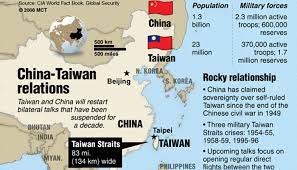
Trouble in Taiwan
Taiwan is not a country. Taiwan is an island off the coast of China much like Santa Catalina is an island off the coast of California. No one disputes that Santa Catalina is part of the United States, just as no one disputes that Taiwan is a part of China. The issue was settled long ago, and the US agrees with the results of that settlement. For all practical purposes, the issue has been resolved.
The United Nations does not recognize Taiwan’s independence nor do the 181 countries that have established diplomatic relations with China. In fact, the UN adopted a General Assembly Resolution back in 1971 acknowledging the “People’s Republic of China as the sole legal government representing the whole of China.”
The One-China policy explicitly relates to the status of Taiwan. Taiwan is part of China, that’s what the One-China policy means. Nations that want to have relations with China must agree on the status of Taiwan; it is the foundational principle upon which all relations with China are based. The issue is not debatable. One can either accept that ‘Taiwan is an inalienable part of China’s territory’ or take their business elsewhere. There is no third option.
The United States claims that it is committed to the One-China policy. In their recent visits to Beijing, all three senior-level officials from the Biden Administration (Anthony Blinken, Janet Yellen and John Kerry) publicly stated their unwavering support for the One-China policy. This is an excerpt from an article at Forbes:

Secretary of State Antony Blinken reiterated the U.S.’ position on its One China policy as he met with China’s leader Xi Jinping Monday, saying it does not support Taiwanese independence and that containing China’s economy was not an American goal….
Blinken said the U.S. held a “One China” policy and does not support Taiwanese independence, but is concerned about China’s “provocative actions” along the Taiwan Strait. Blinken Tells Xi Jinping U.S. Does Not Support Taiwanese Independence, After Meeting To Quell Tensions, Forbes
President Joe Biden has also stated his support for the One-China principle on many, many occasions, which is what you would expect since it is the official position of the United States government. Here’s a short recap on the issue from China’s Ministry of Foreign Affairs:
The US made the following commitments to China regarding the one-China principle in the three China-US joint communiqués.
In the Shanghai Communiqué released in 1972, the US explicitly stated that “The United States acknowledges that all Chinese on either side of the Taiwan Strait maintain there is but one China and that Taiwan is a part of China. The United States Government does not challenge that position”.
In the Joint Communiqué on the Establishment of Diplomatic Relations released in 1978, the US clearly stated that, “The Government of the United States of America acknowledges the Chinese position that there is but one China and Taiwan is part of China”.
In the August 17 Communiqué released in 1982, the US unequivocally stated that “In the Joint Communiqué on the Establishment of Diplomatic Relations on January 1, 1979, issued by the Government of the People’s Republic of China and the Government of the United States of America, the United States of America recognized the Government of the People’s Republic of China as the sole legal Government of China, and it acknowledged the Chinese position that there is but one China and Taiwan is part of China”, and that “it has no intention of infringing on Chinese sovereignty and territorial integrity, or interfering in China’s internal affairs, or pursuing a policy of ‘two Chinas’ or ‘one China, one Taiwan’”. (China’s Ministry of Foreign Affairs)
The western media would like their readers to think there is some “gray area” here and that the issue regarding China’s sovereign territory has not been settled. But—as we have shown—it has been settled. Taiwan is China. We must assume therefore that the media is being intentionally misleading in order to garner support for an “independence” movement that serves only one purpose; to legitimize the arming and training of US assets and insurgents that will be used in a bloody conflagration with China. In truth, the United States is laying the groundwork for a proxy-war on China, and Taiwan has been designated as the frontlines in that war. The independence movement is merely the cover Washington has chosen to conceal its real objectives.
This is why Taiwan has become a flashpoint in US-China relations. This is why numerous US-led delegations have visited Taiwan expressing their tacit support for Taiwan independence. This is why Congress has allocated millions of dollars to provide lethal weaponry for the Taiwanese military. This is why the US Navy has sent warships through the Taiwan Strait and conducted massive military drills on China’s perimeter. This is why Washington continues to provoke Beijing on the one issue that it is most sensitive. All of these incitements were conjured-up with one goal in mind: War with China. This is from Politico:
The Biden administration announced a $345 million weapons package for Taiwan on Friday, the first tranche in a total of $1 billion the U.S. has allotted to be transferred directly from Pentagon stockpiles to the island this year…..………………………………………………..
Repeat: “The move is sure to anger China.”
Indeed, the move was designed to anger China. That was clearly the point. But, why? Why is Washington challenging China on an issue on which there is virtually universal agreement?
- To goad China into overreacting and thus alienating itself from its allies and regional trading partners.
- To turn public opinion against China by portraying the country as a violent aggressor that poses a clear threat to its neighbors.
Here’s more from the World Socialist Web Site:
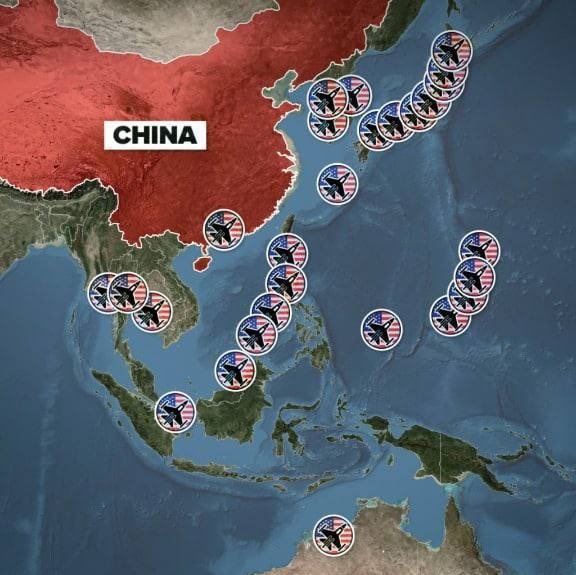
……………………………………………………………………………………………………………………………….. Preparing for war with China, US provides $345 million in arms to Taiwan,
Imagine if China sent millions of dollars of lethal weapons to a budding secessionist movement in Texas. ……………………………………………………………………………………………………………
And, ask yourself this: Haven’t we seen this drill before? Didn’t this same scenario unfold in Ukraine following the CIA-backed coup in 2014 after which the US armed and trained Ukrainian forces to dig-in and provoke hostilities with Russia?……………………………………………………………………………………………………………………………………………………………………………………
Let’s summarize:
- The Indo-Pacific is now America’s top foreign policy priority because that is the area that will experience the most growth
- The US will lead with its military and with the allies who share US interests
- “We will…modernize and strengthen our military” to prevail in our “strategic competition with major powers.”
- America’s Number 1 enemy is China; “the PRC presents America’s most consequential geopolitical challenge ….The PRC is the only competitor with both the intent to reshape the international order and, increasingly, the economic, diplomatic, military, and technological power to do it…”
- “The post-Cold War era is over” but the United States is prepared to preserve the “rules-based order” whatever the cost in blood and treasure.
This is America’s foreign policy in a nutshell. US leaders and their globalist allies are fully committed to prevailing in today’s great power struggle with Russia and China. They have a clear grasp of the objectives they want to achieve and they are prepared to risk anything, including nuclear war, to achieve them. Any developments in Taiwan must be seen through the lens of Washington’s geopolitical ambitions which are clearly driving events.…. more https://www.unz.com/mwhitney/target-china/
As Japan set to dump nuclear-contaminated wastewater in late August, Japanese nuclear expert vows to ‘fight it to the end’
Global Times, By Xu Keyue, Aug 07, 2023
As mainstream Japanese media revealed that Tokyo could start to dump the nuclear-contaminated wastewater as early as the end this month after the trilateral US-Japan-South Korea summit, observers and the wider public in China, Japan and South Korea reiterated their opposition to the irresponsible move with a Japanese nuclear expert stating that they would continue to protest against the plan.
“We plan to fight it to the end. We are planning to hold a big gathering in front of the prime minister’s office on August 18 and we plan to make a petition and submit signatures,” Hideyuki Ban, a Japanese nuclear expert and co-director of the Citizens’ Nuclear Information Center (CNIC), told the Global Times on Monday.
According to Japanese media outlet Asahi Shimbun, the Japanese government has entered into coordination to determine the wastewater release timing after the summit with the US and South Korea scheduled for August 18. After Prime Minister Fumio Kishida returns from the US, he will hold a ministerial meeting and make a decision over the dumping of contaminated wastewater.
Asahi cited several officials as saying that the dumping is estimated to begin as early as the end of August. The report claimed that Kishida is expected to explain “the safety of the treated water, its scientific basis, and measures to be taken after the release” to the two leaders of the US and South Korea to gain their understanding.
But Ban believes if the contaminated wastewater is dumped in late August, it is the Japanese government that would force the plan without caring for the concerns and opposition from fisheries and the relevant personnel………………………………….
As many parties in Japan and other countries including China oppose the wastewater dumping plan, the Japanese government must be thinking that it will at least get the consent of Seoul and Washington and if the three reach a consensus over the issue during the summit, it is expected to help Tokyo press ahead with its arbitrary plan, Ban pointed out.
Anonymous Japanese officials in the prime minister’s office were quoted by Asahi as saying that they believe since some offshore trawling will commence off the coast of Fukushima Prefecture in September, the government hopes to avoid starting the release after the fishing season has begun. For this reason, it is assumed that the dumping will start around the end of August, Asahi reported. https://www.globaltimes.cn/page/202308/1295820.shtml
Counting the dead at Hiroshima and Nagasaki

This is a very long, well-researched, and amply illustrated article. Below are a few snatches to give a sense of the work involved in seeking an answer to this question.
Bulletin, By Alex Wellerstein, August 4, 2020
How many people died as a result of the atomic bombings of Hiroshima and Nagasaki?
There is one thing that everyone who has tackled this question has agreed upon: The answer is probably fundamentally unknowable. The indiscriminate damage inflicted upon the cities, coupled with the existing disruptions of the wartime Japanese home front, means that any precise reckoning is never going to be achieved.
Earliest estimates……………………………………………………………………………………….
Occupation estimates………………………………….
……………………………………………………………………………………………………………………………………………….. One of the most useful sources they consulted was also one of the most grim: schools and schoolchildren, which kept meticulous attendance records. Not only were there good records, but “the headmasters in many instances had made earnest efforts to trace families by letter, messenger, or personal contact.” Even better, the researchers found that many of the children were not in their classrooms at the time of the bombing, but had been detailed into “patriotic work parties” throughout the city, working in factories or working on firebreaks. So this provided data for many different distances from the bombing, and different types of structures. In this tragic fashion, the most vulnerable of those who died at Hiroshima and Nagasaki played a key role in establishing the total death counts…………………………………………………………………………………………………………………………………
Japanese-led reconsiderations………………………………………………………………………………………………………………….
So what numbers should one use?
Given all of the above, and the disagreements about source terms that can dramatically alter the totals, what numbers should people who want to discuss the victims of the bombings use when doing so?
There is, I think it should be clear, no simple answer to this. In practice, authors and reports seem to cluster around two numbers, which I will call the “low” and the “high” estimates. The “low” estimates are those derived from the estimates of the 1940s: around 70,000 dead at Hiroshima, and around 40,000 dead at Nagasaki, for 110,000 total dead. The “high” estimates are those that derive from the 1977 re-estimation: around 140,000 dead at Hiroshima, and around 70,000 dead at Nagasaki, for a total of 210,000 total dead. Given that the “high” estimates are almost double the “low” estimates, this is a significant difference. There is no intellectually defensible reason to assume that, for example, an average (105,000 dead at Hiroshima, 55,000 dead at Nagasaki) would be more accurate or meaningful.
My qualitative sense is that historians who want to emphasize the suffering of the Japanese (and the injustice of the bombing) tend to prefer the “high” numbers, while those who want to emphasize the military necessity of the attack tend to prefer the “low” numbers. And therein lies the real question: What do these estimates do for us, rhetorically? It is clear that numbers, stripped from their technical contexts, are deployed primarily as a form of moral calculus. And this should not surprise us, given that so much of the argument defending the atomic bombs relies on another casualty estimate: how many people might have died in a full-scale land invasion of Japan (numbers that have been similarly contested for decades, ranging from tens of thousands of casualties, to the more imaginative millions).
Separately, the number of dead at Hiroshima and Nagasaki have also been explicitly compared to the estimated dead from the devastating firebombing attacks against both Germany (notably Dresden) and Japan (notably Tokyo) that preceded them. This argument is again part of the justification of atomic bombings, an attempt to show that they were not “special” in any particular moral sense when put up against “conventional” Allied activity. Whether this is or isn’t a strong argument is out of scope for this article, but it is just worth keeping in mind what work the “low” numbers do, for they pale in comparison with the highest estimates of the Tokyo bombing dead, and with the estimates for a land invasion of Japan.
Given that there is no satisfactory way to decide whether the “low” or “high” estimates are more accurate, it is fairly clear there is no “neutral” choice to be made. It ultimately comes down to which sort of authority one wishes to go with: the official estimates of the United States military in the 1940s, or the later estimates by a group of anti-nuclear weapons scientists, largely spearheaded by Japan. Both made legitimate points in making their estimations; neither show any apparent perfidy or obvious intellectual dishonesty.
Short of choosing one or the other, is there an elegant way to talk about the range? Saying “between 70,000 and 140,000 people died at Hiroshima” captures some of it, but does not really capture the reasons for the variance in these numbers. I might suggest, if there is space to do so, saying something like:
“The United States military estimated that around 70,000 people died at Hiroshima, though later independent estimates argued that the actual number was 140,000 dead. In both cases, the majority of the deaths occurred on the day of the bombing itself, with nearly all of them taking place by the end of 1945.”
This makes the authorship claims more explicit (even as it generalizes quite a bit into “the United States military” and “independent estimates”), and also makes it clear that this range is the cause of two entirely different assessments, not the errors of a single assessment. And it clarifies the question of timing, if the latter clause is allowed in. It is a wordy explanation—journalists will no doubt question whether it is worth the space in an article where they probably just wanted a simple number to quote—but if we are going to invoke such uncounted dead, it is worth the effort to do it in a way that is respectful of the uncertainties involved.
1 This Month

of the week – Shut Down Drone Warfare!


Tell the Ukrainian Government to Drop Prosecution of Peace Activist Yurii Sheliazhenko

Petition to revoke the licensing of the Near Surface Nuclear Disposal Facility (NSDF) at Chalk River. https://www.ourcommons.ca/petitions/en/Petition/Details?Petition=e-7247
To see nuclear-related stories in greater depth and intensity – go to https://nuclearinformation.wordpress.com
-
Archives
- April 2026 (19)
- March 2026 (251)
- February 2026 (268)
- January 2026 (308)
- December 2025 (358)
- November 2025 (359)
- October 2025 (376)
- September 2025 (257)
- August 2025 (319)
- July 2025 (230)
- June 2025 (348)
- May 2025 (261)
-
Categories
- 1
- 1 NUCLEAR ISSUES
- business and costs
- climate change
- culture and arts
- ENERGY
- environment
- health
- history
- indigenous issues
- Legal
- marketing of nuclear
- media
- opposition to nuclear
- PERSONAL STORIES
- politics
- politics international
- Religion and ethics
- safety
- secrets,lies and civil liberties
- spinbuster
- technology
- Uranium
- wastes
- weapons and war
- Women
- 2 WORLD
- ACTION
- AFRICA
- Atrocities
- AUSTRALIA
- Christina's notes
- Christina's themes
- culture and arts
- Events
- Fuk 2022
- Fuk 2023
- Fukushima 2017
- Fukushima 2018
- fukushima 2019
- Fukushima 2020
- Fukushima 2021
- general
- global warming
- Humour (God we need it)
- Nuclear
- RARE EARTHS
- Reference
- resources – print
- Resources -audiovicual
- Weekly Newsletter
- World
- World Nuclear
- YouTube
-
RSS
Entries RSS
Comments RSS
 nuclear-news