U.S. Sells ‘Link 16’ Battlefield Communications System to Taiwan
22 February 2024
Taipei, February 22 (EFE).- The United States has approved the possible sale of an advanced military data link system upgrade to Taiwan, the first acquisition of this type following Taipei’s January election, the island’s government confirmed Thursday.
In a statement, Taiwan’s foreign ministry said it received formal notification from the US government about the possible sale of the Link-16 system to Taiwan for an estimated value of $75 million.
Link-16 is a standardized communications system used by the armed forces of the US and other countries to transmit and exchange real-time tactical data through the use of links between allied military network participants…………………………………….. https://efe.com/en/latest-news/2024-02-22/us-approves-possible-sale-of-advanced-military-data-link-system-to-taiwan/
March 11 – reflecting on Fukushima

by Linda Pentz Gunter https://beyondnuclearinternational.org/2024/03/10/reflecting-on-fukushima/
The lesson learned should be an end to nuclear power. Japan is going in the opposite direction
On March 11 this year, and every year since 2011, we reflect on what happened on that day at the Fukushima-Daiichi nuclear power plant in Japan — and the impacts that continue. The never-ending tragedy.
The news cycle was 24/7 on the Fukushima nuclear disaster in March 2011. Gradually, the media lost interest. Fresh catastrophes — also human-caused — came to dominate the headlines.
The stories of ongoing harm, of physical and psychic pain, disease and death, displacement, family separation, and lawsuits dismissed or lost, are often told through the megaphones of desperate Japanese mothers, determined not to let such a fate befall another generation. They are the new Hibakusha, the Cassandras of Japan, sounding the warning but doomed to be disbelieved or ignored.
Because there will be another major nuclear disaster. And Japan, shockingly, is lining itself up to be a strong candidate. A country that has now experienced the second worst nuclear disaster of all time, and is heavily seismically active, is seeking not only to reopen its old reactors but to explore building new ones, including small modular reactors.
The only lesson from the Fukushima nuclear disaster that successive Japanese governments seem to have learned is how to minimize, cover-up and even dismiss and deny its devastating environmental and health effects.
It has done this by consistently whitewashing the Fukushima aftermath — holding the Summer Olympics (delayed a year only due to covid, not the unacceptable radiation levels); moving people back into still contaminated areas; ascribing the high thyroid cancer rates to increased testing; forbidding schools to teach children about the harms of radiation; and, of course, pouring radioactive water from the site into the Pacific Ocean so the unsightly waste water storage casks — a perpetual reminder of the continued build-up of radioactive water at the site — will vanish from view along with the bad PR.
Japan got another reminder of just what kind of gamble it is taking when a 7.6 magnitude earthquake struck the Noto Peninsula on January 1st of this year, not far from the Shika nuclear power plant. Buildings fell, 100,000 people were evacuated and tsunami warnings were posted. Conflicting stories emerged as to whether the Shika reactors, mercifully shut down at the time, had suffered lasting damage or whether there were radioactive spills. Area residents have demanded an investigation.
Catastrophe was averted because luck prevailed. Next time, it might not.
All of this should serve as a warning and not only to Japan of course. It doesn’t take an earthquake or a tsunami— or even a war as we are seeing in Ukraine whose reactors remain at perpetual risk —to cause a nuclear disaster. The safety margins are so fragile at nuclear power plants, that even something as minor as a falling tree limb could set an accident in motion if both offsite and then onsite power is lost to the reactors.
There was no war or earthquake or tsunami in Ukraine in 1986 when Chernobyl Unit 4 exploded. Nor in Pennsylvania in 1979 when the Three Mile Island Unit 2 reactor melted down. Nor in New Mexico later in 1979 when 90 million gallons of radioactive liquid and eleven hundred tons of solid mill waste burst from the Church Rock uranium mill tailings pond, permanently contaminating the Puerto River.
What was there, on each occasion, were human beings who made catastrophic mistakes with a highly dangerous, obsolete technology that even on a good day, causes harm to human health and on a bad one can leave a deadly, longlasting legacy as we have seen in Fukushima.
All of those human errors were preventable. And they still are — provided we remove the object of fallible human responsibility: inherently dangerous nuclear power plants.
The only worthy legacy of the Fukushima disaster, now 13 years on and still going, is to abandon the use of nuclear technology permanently.
Linda Pentz Gunter is the international specialist at Beyond Nuclear and writes for and edits Beyond Nuclear International. All opinions are her own.
Coalition Kill Chain for the Pacific: Lessons from Ukraine

U.S. Naval Institute, By Majors Dylan Buck and Steven Stansbury, U.S. Marine Corps, July 2023
Proceedings Vol. 149/7/1,445
Russia’s war in Ukraine offers a critical case study on why—and how—to build a more robust kill chain that leverages partners’ and allies’ capabilities. A more expansive satellite communications (SATCOM) network that enables a real-time integrated common operational picture (COP) will be necessary to generate the relative combat power advantage over the People’s Liberation Army (PLA). Russia initiated combat operations in Ukraine with cyberattacks on SATCOM to disrupt Ukraine’s kill chain—the methodology for finding, fixing, targeting, tracking, engaging, and assessing (F2T2EA) an adversarial objective.
Ukraine’s kill chain—the methodology for finding, fixing, targeting, tracking, engaging, and assessing (F2T2EA) an adversarial objective. The United States, alongside partners, allies, and industry, was able to blunt Russia’s invasion by reconstructing Ukraine’s SATCOM network and sharing critical intelligence. However, the kill chain architecture leveraged against Russia does not exist in the first island chain of the western Pacific.
…………… To achieve the capability required to deter the PLA, the Department of Defense (DOD) must further develop SATCOM architecture in the first island chain and expand partners and allies’ access to the COP to build a coalition kill chain that can mass fires.
……….. the United States had to create more permissive policy for intelligence sharing for more effective targeting. Furthermore, kill chains in the Pacific are more dependent on SATCOM as submarine internet cables are more vulnerable and likely already compromised by China.
……. First, to enhance U.S. SATCOM architecture, the DoD could begin to supplement geosynchronous orbit satellites by proliferating low-earth-orbit and medium-earth-orbit satellites. This would reduce vulnerabilities related to adversarial space operations and expand SATCOM range and resiliency. SpaceX’s Starlink functions off the same principle of a mesh networks of low-earth-orbit satellites.
Second, the United States could use partner and allies’ satellite networks and make policy more permissive with intelligence sharing. In March 2022, the Department of Defense announced its Joint All-Domain Command and Control Implementation Plan with the 5th line of effort to “Modernize Mission Partner Information Sharing.” The intent is to enhance the ability to integrate partner and allies’ data for all-domain coalition operations. After all, the value in integrating systems is only as good as the real-time tracks being shared. To build a coalition kill chain, U.S. policy will have to become more permissive with intelligence sharing among partners and allies.
Structure of the Multinational Kill Chain
The United States will also need to create a methodology for building a multinational COP and integrated fires network. Tactical-level forces across the partner and ally network must evolve to contribute more to operational and strategic-level fires and effects. This effort is twofold: first, the joint force could expand partners and allies’ access to Type-1 Link-16 cryptography, so they are built into the operational tasking link; and second, it could reduce constraints on protocols and pathways for sharing information.
The first effort would integrate partners and allies into the tactical data link router used by the U.S. joint force, also known as the Joint Range Extension Applications Protocol. This would require access to the joint Link 16 architecture by assigning partners and allies a cryptographic variable logic label via an operational tasking data link (OPTASK LINK). Access to the Link 16 architecture would provide a shared COP capable of integrating national technical means for finding and fixing targets and cuing assets to track them.
……………………………………………Once the multilateral kill chain is built, it must be rehearsed with common understanding of joint war-at-sea terminology among partners and allies. War-at-sea, zones of action, and zones of fire must be standardized in planning to achieve a common lexicon. The Global Area Reference System is also key to orientation and understanding the battlespace. Rehearsing multilateral plans for fire, specifically including protocols for authorities, and collaborating on battle damage assessments are necessary to achieve true integration………………………………………………….. https://www.usni.org/magazines/proceedings/2023/july/coalition-kill-chain-pacific-lessons-ukraine
Could Fukushima’s radioactive water pose lasting threat to humans and the environment?
studies have highlighted how tritium can be absorbed into sediments and soils, raising concerns about its potential transfer to the water cycle and the food web.
research showing that fish have transported radioactive particles generated by the Fukushima incident far and wide. Like a number of other nuclear accidents before it, that makes what happened at Fukushima a global concern.”
by Alan Williams, University of Plymouth, https://phys.org/news/2024-03-fukushima-radioactive-pose-threat-humans.html
The meltdown of Japan’s Fukushima Daiichi power plant, caused by the devastating earthquake and tsunami of March 2011, represents the most severe nuclear power accident of the 21st century so far.
However, a new study highlights how the decision by the Japanese government to begin releasing the radioactive water stored within it—a decision approved by the International Atomic Energy Agency (IAEA)—has generated scientific and public debate, given its potential to cause environmental harm for decades to come.
Writing in the journal Environmental Science and Technology, researchers say the water cannot be stored indefinitely due to the ongoing risk of earthquakes and tsunamis in the region.
But they say not enough is known about the long-term impacts of tritium—the primary radionuclide present, with a half-life of 12.6 years—to ascertain if the release of more than one million tons of water can be considered safe or not.
As a result, they have called for assurances that regular monitoring will be carried out in different components of the region’s ecosystem to examine any impacts the release might be having on the environment.
They have also suggested more evidence is needed about the future effects of tritium in the presence of multiple and emerging stressors, such as hypoxia, rising ocean temperatures, and microplastics, given that environmental contamination can occur in many combinations.
The study was carried out at the University of Plymouth, where researchers have been examining the environmental impacts of radioactive material for almost three decades.
“The Japanese tsunami of 2011 was devastating for people living along this whole coastline. The presence of a nuclear power plant within the region left a lasting threat, and this study highlights some of the complex challenges that need managing and scientific questions that still need addressing.”
“Being in a region prone to earthquakes and tsunamis, there is an obvious danger in simply storing radioactive water there indefinitely. But based on our research, not enough is known about the impacts of tritium on both environmental and human health to say that releasing the water into the ocean is completely safe,” says Awadhesh Jha, professor in genetic toxicology and ecotoxicology and corresponding author on the research.
The new study includes a review of existing literature on the behavior of tritium in the environment and studies that have assessed its impact on individual species.
That includes studies that have highlighted how tritium can be absorbed into sediments and soils, raising concerns about its potential transfer to the water cycle and the food web.
There has also been research showing that tritium can cause DNA damage to certain fish species, which could impact their physical and reproductive fitness and—ultimately—the genetic diversity of a population.
However, the researchers say there is little data available on the distribution, behavior, and potential effects of tritiated water and organically-bound tritium, and therefore assessing the broad risks is almost impossible.
They also say the Fukushima situation cannot be compared with the Chornobyl accident, as some authorities have attempted to do, given the differing geographical locations of the two plants and the fact the long-term environmental impacts of Chornobyl are still being debated.
“Through our study, we have found research showing that fish have transported radioactive particles generated by the Fukushima incident far and wide. Like a number of other nuclear accidents before it, that makes what happened at Fukushima a global concern.”
“As such, we urgently need global research into the impacts of tritium—and how they might be managed—especially with the nuclear power industry set to expand significantly. If it does indeed expand, the construction of nuclear power plants, especially in coastal regions, should also take into account worst-case scenarios of flooding, earthquakes, and tsunamis as part of a fundamental goal to minimize radioactive discharges to the environment,” says Professor Jha.
13 Years On: Fukushima Governor Urges State to Clarify Soil Policy

Nippon Mar 9, 2024 1
Fukushima, March 9 (Jiji Press)–Fukushima Governor Masao Uchibori wants the Japanese government to clarify its policy on transferring soil from decontamination work following the March 2011 nuclear accident to final disposal sites outside the northeastern Japan prefecture.
“We’ll seize every opportunity to strongly call on the state to present a specific policy and a road map swiftly, in order not to create a blank period,” he has said in a recent interview.
Fukushima has decided to host interim storage facilities for the soil on the premise that the soil is stored at final disposal sites to be created outside the prefecture, Uchibori noted. This is the central government’s “legally prescribed responsibility,” he said.
A considerable amount of time will be needed to realize the soil transfer because there are a host of issues, including the selection of final disposal sites, but the remaining time is limited, Uchibori said………. https://www.nippon.com/en/news/yjj2024030701079/13-years-on-fukushima-governor-urges-state-to-clarify-soil-policy.html
Russia and China announce plan to build shared nuclear reactor on the moon by 2035, ‘without humans’
Live Science, By Harry Baker, 8 Mar 24
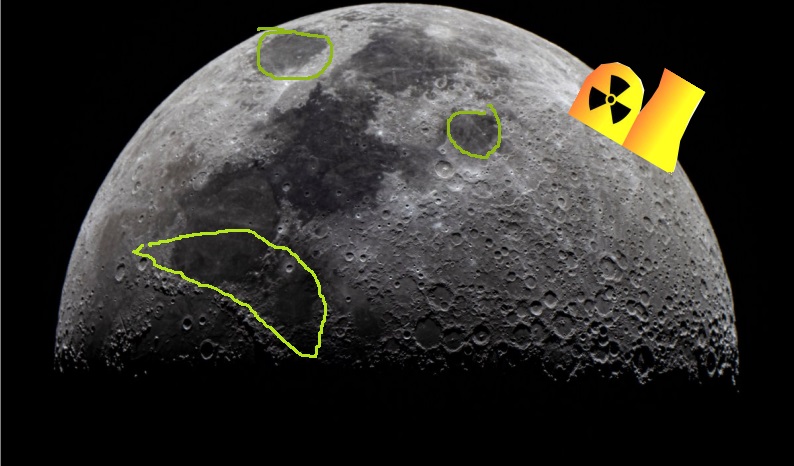
The proposed nuclear reactor, which could be transported and assembled without human assistance, would provide energy to a lunar base that Russia and China have agreed to build together.
Russia’s space agency Roscosmos has announced plans to work with China to build an automated nuclear reactor on the moon by 2035. The proposed reactor will help power a proposed lunar base that the two countries will jointly operate.
Back in 2021, Roscosmos and the China National Space Administration (CNSA) revealed that they intended to build a shared base on the moon, named the International Lunar Research Station (ILRS), which they claimed at the time would be “open to all interested countries and international partners.”
However, NASA astronauts are unlikely to be allowed to visit this base due to historically frosty relations with CNSA and a more recent split with Roscosmos, which will leave the International Space Station by 2025 in response to sanctions from the U.S. over Russia’s invasion of Ukraine in February 2022.
On Tuesday (March 5), Roscosmos announced that it will eventually attempt to build a nuclear reactor alongside CNSA, which would theoretically be able to power the ILRS.
“Today we are seriously considering a project — somewhere at the turn of 2033-2035 — to deliver and install a power unit on the lunar surface together with our Chinese colleagues,” Roscosmos director general Yury Borisov told state-owned Russian news site TASS.
Borisov added that the challenging construction job would likely be carried out autonomously “without the presence of humans” and that the necessary technological solutions to pull it off are “almost ready.”
Roscosmos is also looking to use massive nuclear-powered rockets to transfer cargo to the moon to build this base, but the agency has not yet figured out how to build these spacecraft safely, Reuters reported……………………………………..
Roscosmos and CNSA, neither of which have put humans on the moon’s surface, have contrasting track records when it comes to recent lunar exploration.
Last year, Russia’s first moon mission in 47 years ended in disaster when the Luna-25 lander crashed into the lunar surface, leaving behind a 33-foot (10 meter) wide crater.
However, China has had a presence on the moon since 2013, when the Chang’e 3 mission put a lander and rover on the lunar surface. The subsequent Chang’e 4 and Chang’e 5 missions, which occurred in 2019 and 2020 respectively, also successfully landed spacecraft on the moon. The most recent mission also successfully returned lunar samples to Earth — a feat that CNSA will attempt to repeat later this year.
Last week, CNSA also announced that it will start launching giant reusable rockets over the next two years as part of the agency’s plan to put boots on the moon by 2030.
However, NASA is still on track to return humans to the lunar surface before then, despite the first crewed Artemis mission being delayed until 2026. https://www.livescience.com/space/space-exploration/russia-and-china-announce-plan-to-build-shared-nuclear-reactor-on-the-moon-by-2035-without-humans
Fukushima fishers strive to recover catches amid water concerns
Amid voices of support from across the country for seafood products sourced from Fukushima Prefecture, the local fishing community is pushing ahead with efforts to revitalize the industry despite apprehension about the ongoing decommissioning of the crippled Fukushima No. 1 nuclear power plant.
While Fukushima Prefecture has yet to experience significant reputational repercussions, the fishing industry remains concerned about the decommissioning work, which is expected to take several decades, coupled with the discharge of the treated radioactive water from the crippled plant that began about half a year ago…………………………….
With government subsidies and other initiatives, the prefecture’s seven fishery cooperatives aim to increase the catch to surpass 50% of pre-disaster levels………………………………………………… https://www.japantimes.co.jp/news/2024/03/06/japan/society/fukushima-fishermen-fight-recover-catch/
China outlines position on use of space resources
Space News Andrew Jones, March 6, 2024
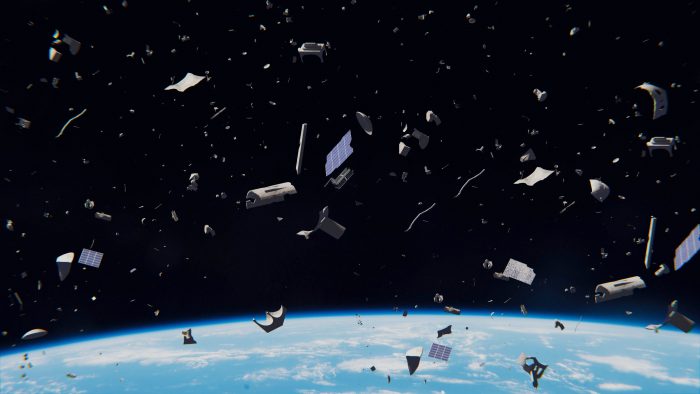
HELSINKI — China holds a seemingly positive stance towards the use of space resources, according to a recent submission made by a Chinese delegation to the United Nations.
The delegation appears to state that China considers space resource utilization as permissible, but must be conducted in accordance with the Outer Space Treaty (OST) of 1967.
China’s submission treats the use of space resources as legal, but also calls for adherence to the existing frameworks of international space law, with the OST as the cornerstone.
The document was submitted to the Working Group on Legal Aspects of Space Resource Activities of the Legal Subcommittee of the Committee on the Peaceful Uses of Outer Space (COPUOS).
COPUOS is a body of the United Nations tasked with governing the exploration and use of space for the benefit of all humanity, overseeing matters related to space science and technology and their applications. The Working Group plays a critical role in addressing the legal challenges posed by the utilization of space resources, helping to shape the international legal framework that will govern these activities.
The submission could be seen as a beneficial development, helping to set the stage for a dialogue on the legal frameworks for governing the use of space resources.
“This engagement by China on the international discussion on space resources is a positive development,” Christopher Johnson, director of legal affairs and space law for the Secure World Foundation, told SpaceNews. “It tells us that China is taking international fora like COPUOS seriously, and seems to be engaging in good faith with the fora and with the process.
“Additionally, it’s welcome to have a clear statement of Chinese positions on these issues, and this informs other States in their approach and preparations to the international discussions going on at the UN.”
Johnson interprets the Chinese stance as seemingly largely aligned with the broader international consensus on the use of space resources. That is, the right to possess and use space resources is not only desirable by space agencies and national governments, but is also permissible under the current international law.
Discussion and consideration of the use and legality utilizing space resources has grown in recent years due to advancements in the space sector, the rise of commercial companies and renewed interest in the moon.
This has made international law and diplomacy related to the subject matters of key focus, with the distance between the respective stances of the U.S. and China likely to be pivotal. ……………….
There are a number of issues for the international community to settle going forward, some of which are noted in the Chinese submission. These include how space resources can be utilized in a sustainable fashion and in a way that fosters scientific investigations, while also ensuring peaceful relations in space between states and other actors in space.
Another key matter is the question of how states supervise their national activities, making sure private companies comply with the law. Additionally, all such activities will also need to preclude any national territorial annexation of the moon or other celestial bodies, as prohibited by Article II of the OST. ……………………………………………………………….. more https://spacenews.com/china-outlines-position-on-use-of-space-resources/
South Korea (and U.S.) has a permanent war economy.
The only real jobs investment by Washington these days is going toward weapons of war.
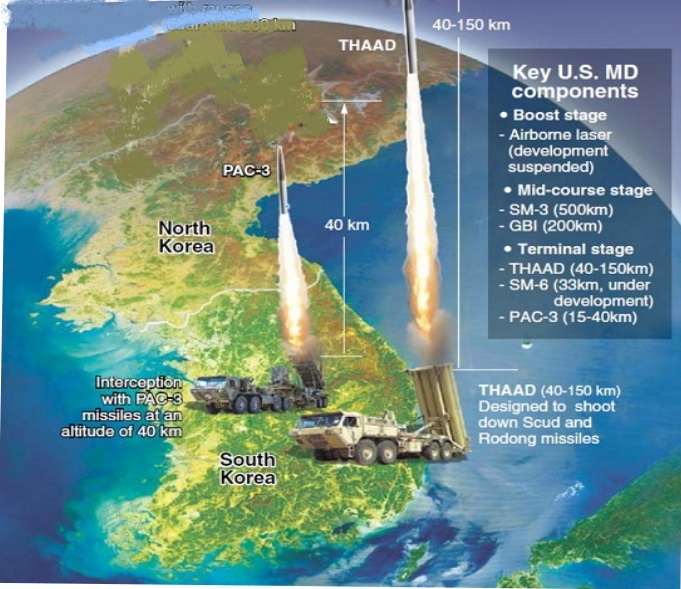
South Korea is now being flooded with so-called ‘missile defense’ systems.
Bruce Gagnon – coordinator of the Global Network Against Weapons & Nuclear Power in Space
https://space4peace.blogspot.com/2024/03/south-korea-and-us-has-permanent-war.html
Yesterday was the last day of my space issues speaking tour across South Korea.
I had two meetings in the afternoon before my final talk in the evening in Seoul.
The first was a meeting with two representatives from SPARK (Solidarity for Peace and Reunification of Korea) which was formed to organize for national self-determination, peace and disarmament, and the reunification of the two East Asian Korean nations.
SPARK is now working on holding an ‘International People’s Tribunal to hold the U.S. accountable for dropping Atomic bombs’ in New York City in 2026 (date not yet set). The event aims to highlight the bombing of Hiroshima and Nagasaki in 1945 from the perspective of Korean A-bomb victims (an oppressed ethnic group) in Japan who are usually the forgotten victims. The goal of the tribunal will be to contribute to the realization of a nuclear-free Korean Peninsula and world, free from the threat and use of nuclear weapons.
I agreed that the Global Network would help in every way possible to make the event a success. (Let me know if your group would be interested in co-sponsoring this tribunal.)
Next on the schedule was a dinner meeting with Dr. Kang-Ho Song and other members of the organization called The Frontiers. Dr. Song was a major supporting activist in Gangjeong on Jeju Island during the long campaign to oppose the Navy base that was forced upon the 500 year old fishing/farming village by the United States. Dr. Song went to jail three times (the longest sentence was more than a year) for his non-violent protests against the base.
The Frontiers recently has become quite active supporting Japanese controlled islanders who are opposing the deployment of offensive missiles being aimed at China. They have made sailboat trips to the string of islands (including Okinawa and Taiwan) to build inter-island solidarity. In their literature The Frontiers states: ‘We sail with the hope of driving out war, military training, and bases from this sea and creating a sea of co-existence and peace where humanity and all sea creatures can live together.’
Last presentation
My last talk was attended by 55 people. I’m told that even for Seoul that is a good turnout as similar peace talks these days are lucky to draw 30 people.
It was fun to see several old friends show up who I know from my many visits to Jeju Island since 2009. The talk went well (my voice which these days occasionally gets shaky has held up throughout this trip) and there was a healthy question and answer period.
One woman approached me after the talk and said that ‘South Korea’s economy is not good for the people, we are becoming a permanent war economy’. I responded that it is the same in the United States these days as well.
In fact just this morning I received an email that in my home state of Maine Governor Mills, U.S. Senators Susan Collins and Angus King, and U.S. Representative Chellie Pingree will participate in the unveiling of the Maine Defense Industry Alliance (MDIA) at the York County Community College (YCCC) Instructional Site in Sanford. The MDIA is a newly established non-profit coalition of Maine defense companies, state agencies, community colleges and universities, and other vocational training organizations. The partnership was created to attract and train thousands of new employees for critical jobs in Maine’s defense industrial base.
This is a perfect example of what a permanent war economy looks like. The only real jobs investment by Washington these days is going toward weapons of war. In the case of Maine, the so-called leaders want expanded Pentagon funding for more Aegis destroyers at Bath Iron Works shipyard. They also want hypersonics testing at a former US air base in the northern part of the state (Loring). And they want a rocket launch center near Acadia national park that would hoist mini-satellites for the US Space Force to help fill up Lower Earth Orbit (LEO) before China and Russia can put significant numbers of satellites there.
South Korea is now being flooded with so-called ‘missile defense’ systems. They are on-board Navy Aegis destroyers which are consistently ported on Jeju Island. They are the THAAD and PAC-3 systems deployed at several bases throughout the ROK. And the US is deploying these same ‘shields’ in Guam, Japan/Okinawa, Taiwan, Philippines, and other locations in the region.
U.S. bases in the ROK are expanding and held more than 200 days last year of US-ROK war games right along the border of North Korea.
Alternative media
As a result of my talks during this tour there are already articles and interviews by people who came to hear me speak and quickly moved to share what they learned. Here are three examples and I am told there will be more to come.
- A woman named Oh Hyun-hwa in Daejeong gave a local radio interview. https://www.youtube.com/watch?v=iJfcAvmL8uo
- Anti-War Peace Activist Concerned Jeju seems to be turning into a big South Korea-U.S. military base. Article by Kim Soon-ae. https://www.ohmynews.com/NWS_Web/View/at_pg.aspx?CNTN_CD=A0003004637
- Space industry erodes the space, the commons, and destroys the future.Article by Kim Na-hee. https://www.ohmynews.com/NWS_Web/View/at_pg.aspx?CNTN_CD=A0003005816
China urges largest nuclear states to negotiate a ‘no-first-use’ treaty
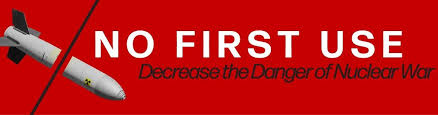
States with the largest nuclear arsenals should negotiate a treaty on no-first-use of nuclear weapons against each other or make a political statement in this regard, the Chinese foreign ministry’s arms control department said.
Director general of the department, Sun Xiaobo, called on nuclear states to fulfil their “special and priority responsibilities” on nuclear disarmament according to the U.N. Conference on Disarmament, which seeks to prevent nuclear war, official news agency Xinhua said on Wednesday.
During the forum’s weekly meeting in Geneva on Monday, Sun said the body should define a roadmap or timetable for an international legal instrument that would protect non-nuclear-weapon states from the threat of nuclear weapons.
“Nuclear-weapon states should negotiate and conclude a treaty on no-first-use of nuclear weapons against each other or make a political statement in this regard,” Sun said.
China and India are currently the only two nuclear powers to formally maintain a no first use policy. Russia and the United States have the world’s biggest nuclear arsenals.
Sun also called for a universal, non-discriminatory, non-proliferation, export control order to address global security challenges, and promote more compliance in the field of biochemistry to maintain the authority of the arms control treaty system.
The U.N. disarmament forum should also respond to emerging scientific and technological challenges such as artificial intelligence, outer space and cyber, he said.
Sun described the international strategic security situation as facing new challenges, and that countries with the strongest military power have repeatedly “broken treaties” in order to “seek their own absolute superiority”.
Release of fourth batch of Fukushima treated radioactive water begins

Japan Times, 28 Feb 24
The operator of the crippled Fukushima No. 1 nuclear power plant on Wednesday started releasing a fourth batch of treated radioactive water into the sea, in what will be the last discharge for the fiscal year ending March.
As in previous rounds, Tokyo Electric Power Company Holdings (Tepco) will discharge 7,800 metric tons of treated water over about 17 days, having confirmed that the radioactivity level of the latest batch of water meets the standards set by the government and the utility.
China, which opposes the water release, has banned Japanese seafood imports since the first discharge in late August. The two countries have engaged in informal discussions to resolve the matter, but no substantial progress has been made……………………….. more https://www.japantimes.co.jp/news/2024/02/28/japan/society/fukushima-radioactive-water-fourth-release/
China is ‘unlikely’ to lift import ban on Japanese seafood as dumping continues
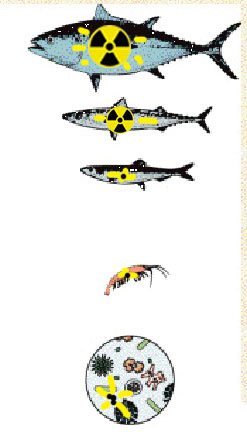
predatory species higher up in the food chain have a greater chance of experiencing bioaccumulation and biomagnification of radioactive substances. As time goes on and more nuclear-contaminated water is discharged, the negative effects will only increase
By GT staff Feb 25, 2024 , https://www.globaltimes.cn/page/202402/1307658.shtml
Half a year after Japan opened Pandora’s box by dumping nuclear-contaminated wastewater from the crippled Fukushima Daiichi nuclear power plant into the ocean, Japanese media are discussing the possibility of bilateral talks for getting China to revoke its import ban on Japanese marine products, in an apparent attempt to test the waters.
In response, Chinese experts told the Global Times on Sunday that, in the short term, it is unlikely that China will revoke the ban as there are currently no conditions for a withdrawal.
Meanwhile, a Kyodo News survey on Friday showed that most Japanese fishery groups have been affected by the discharge, with many feeling the impact through China’s import ban on Japanese seafood.
The survey found that 29 out of 36 respondents among the members of the National Federation of Fisheries Cooperative Associations said they “had felt” or “had somewhat felt” negative effects, including financial damage due to the contaminated water dumping, overwhelmingly due to the subsequent import ban by China.
Chinese Foreign Ministry spokesperson Mao Ning said at a regular press conference that the precautionary measures taken by China and some other countries in response to Japan’s move are aimed at protecting food safety and people’s health.
“These measures are entirely legitimate, reasonable and necessary,” Mao said.
Chang Yen-chiang, director of the Yellow Sea and Bohai Sea Research Institute of Dalian Maritime University, revealed several main factors why China is less likely to revoke the ban in the short run.
There is no halt in the ocean discharge, that is, the Japanese side has not withdrawn from their erroneous actions, he said.
Currently, half a year has passed since the dumping began, meaning that under the influence of ocean currents, the impact of Japan’s nuclear-contaminated water discharge on East Asia may just be starting, and further impacts need to be assessed, Chang said.
In addition, predatory species higher up in the food chain have a greater chance of experiencing bioaccumulation and biomagnification of radioactive substances. As time goes on and more nuclear-contaminated water is discharged, the negative effects will only increase, Chang said. “Under these circumstances, how could the ban be lifted?” the expert asked.
TEPCO – operator of the Daiichi plant – plans to release a total of about 54,600 tons of nuclear-contaminated water on seven occasions in the 2024 fiscal year, more than double the amount of 2023, according to media reports.
Chang called on Japan to consider solving the Fukushima nuclear power plant issue on a fundamental level, such as focusing on research on how to handle the burnt-out nuclear reactors. Otherwise, radioactive substances will continue to be produced endlessly, and the discharge of nuclear contamination could last for over 100 years, making the situation increasingly worse.
Japanese media have reported on a series of scandals concerning leaks occurring during the contaminated water discharge process, which led to soil contamination around the nuclear power plant.
Most recently, 1.5 metric tons of highly radioactive water escaped in early February during valve checks at a treatment machine designed to remove cesium and strontium from the contaminated water, according to TEPCO.
According to Japanese experts studying the soil, the radiation levels in Fukushima soil are much higher compared to other areas.
“We should be more vigilant toward crops and plants grown in this contaminated soil. China should increase radioactive testing of Japanese agricultural products and cosmetics imports,” Chang stated.

China is ‘unlikely’ to lift import ban on Japanese seafood as dumping continues
By GT staff reportersPublished: Feb 25, 2024 09:50 PM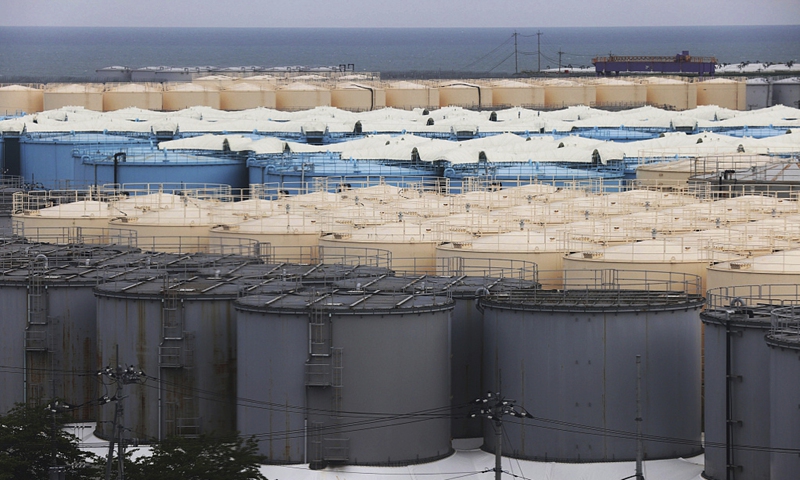
Water tanks near Fukushima Daiichi nuclear power plant in Okuma town of Fukushima prefecture on May 26, 2023 Photo: VCG
Half a year after Japan opened Pandora’s box by dumping nuclear-contaminated wastewater from the crippled Fukushima Daiichi nuclear power plant into the ocean, Japanese media are discussing the possibility of bilateral talks for getting China to revoke its import ban on Japanese marine products, in an apparent attempt to test the waters.
In response, Chinese experts told the Global Times on Sunday that, in the short term, it is unlikely that China will revoke the ban as there are currently no conditions for a withdrawal.
Meanwhile, a Kyodo News survey on Friday showed that most Japanese fishery groups have been affected by the discharge, with many feeling the impact through China’s import ban on Japanese seafood.
The survey found that 29 out of 36 respondents among the members of the National Federation of Fisheries Cooperative Associations said they “had felt” or “had somewhat felt” negative effects, including financial damage due to the contaminated water dumping, overwhelmingly due to the subsequent import ban by China.
Chinese Foreign Ministry spokesperson Mao Ning said at a regular press conference that the precautionary measures taken by China and some other countries in response to Japan’s move are aimed at protecting food safety and people’s health.
“These measures are entirely legitimate, reasonable and necessary,” Mao said.
Chang Yen-chiang, director of the Yellow Sea and Bohai Sea Research Institute of Dalian Maritime University, revealed several main factors why China is less likely to revoke the ban in the short run.
There is no halt in the ocean discharge, that is, the Japanese side has not withdrawn from their erroneous actions, he said.
Currently, half a year has passed since the dumping began, meaning that under the influence of ocean currents, the impact of Japan’s nuclear-contaminated water discharge on East Asia may just be starting, and further impacts need to be assessed, Chang said.
In addition, predatory species higher up in the food chain have a greater chance of experiencing bioaccumulation and biomagnification of radioactive substances. As time goes on and more nuclear-contaminated water is discharged, the negative effects will only increase, Chang said. “Under these circumstances, how could the ban be lifted?” the expert asked.
TEPCO – operator of the Daiichi plant – plans to release a total of about 54,600 tons of nuclear-contaminated water on seven occasions in the 2024 fiscal year, more than double the amount of 2023, according to media reports.
Chang called on Japan to consider solving the Fukushima nuclear power plant issue on a fundamental level, such as focusing on research on how to handle the burnt-out nuclear reactors. Otherwise, radioactive substances will continue to be produced endlessly, and the discharge of nuclear contamination could last for over 100 years, making the situation increasingly worse.
Japanese media have reported on a series of scandals concerning leaks occurring during the contaminated water discharge process, which led to soil contamination around the nuclear power plant.
Most recently, 1.5 metric tons of highly radioactive water escaped in early February during valve checks at a treatment machine designed to remove cesium and strontium from the contaminated water, according to TEPCO.
According to Japanese experts studying the soil, the radiation levels in Fukushima soil are much higher compared to other areas.
“We should be more vigilant toward crops and plants grown in this contaminated soil. China should increase radioactive testing of Japanese agricultural products and cosmetics imports,” Chang stated.
As Japanese industries, including fisheries and cosmetics, have been affected, Japanese media continues to report news about bilateral talks aimed at getting China to revoke its import ban on Japanese marine products, trying to test the reaction from China.
The Asahi Shimbun revealed Friday that nuclear experts from Japan and China started talks in January regarding contaminated water. The report noted that the Chinese side has still shown no signs of ending its import ban.
The Kyodo News reported on Thursday that when Chinese Ambassador to Japan Wu Jianghao met with the leader of the Social Democratic Party, Mizuho Fukushima, in January, China’s import suspension was also discussed, but there were no conditions for lifting the ban at present.
Most Japan fishing groups hit by China import ban in Fukushima row
A Kyodo News survey has found that 80.6% of prefectural fisheries cooperative associations were affected by the discharge of treated radioactive water from the crippled Fukushima No. 1 nuclear plant into the sea, with many feeling the impact through China’s import ban on Japanese marine products. The survey, released Friday, found that 29 out of 36respondents among the members of the National Federation of FisheriesCooperative Associations said they “had felt” or “had somewhat felt”negative effects, including financial damage due to the water release,overwhelmingly due to the subsequent import ban by China
. Japan Times 24th Feb 2024 https://www.japantimes.co.jp/news/2024/02/24/japan/japan-fishing-groups-china-fukushima-ban/
Justice Department Announces Nuclear Materials Trafficking Charges Against Japanese Yakuza Leader
Takeshi Ebisawa, Leader within the Yakuza Transnational Organized Crime Syndicate, Allegedly Trafficked Nuclear Materials, Including Uranium and Weapons-Grade Plutonium
A superseding indictment was unsealed in Manhattan today charging a Japanese national with conspiring with a network of associates to traffic nuclear materials from Burma to other countries.
According to court documents, Takeshi Ebisawa, 60, and co-defendant Somphop Singhasiri, 61, were previously charged in April 2022 with international narcotics trafficking and firearms offenses, and both have been ordered detained.
“The defendant stands accused of conspiring to sell weapons grade nuclear material and lethal narcotics from Burma, and to purchase military weaponry on behalf of an armed insurgent group,” said Assistant Attorney General Matthew G. Olsen of the Justice Department’s National Security Division. “It is chilling to imagine the consequences had these efforts succeeded and the Justice Department will hold accountable those who traffic in these materials and threaten U.S. national security and international stability.”
“As alleged, the defendant brazenly trafficked material containing uranium and weapons-grade plutonium from Burma to other countries,” said U.S. Attorney Damian Williams for the Southern District of New York. “He did so while believing that the material was going to be used in the development of a nuclear weapons program, and while also negotiating for the purchase of deadly weapons. It is impossible to overstate the seriousness of this conduct. I want to thank the career prosecutors of my office and our law enforcement partners for ensuring that the defendant will now face justice in an American court.” …………………………………………………………………………………………………………………………………………………………………………………………………. more https://www.justice.gov/opa/pr/justice-department-announces-nuclear-materials-trafficking-charges-against-japanese-yakuza
Minister urges TEPCO to ensure nuclear safety measures
By Jiang Xueqing in Tokyo 2024-02-22 , https://global.chinadaily.com.cn/a/202402/22/WS65d6a0fca31082fc043b86ea.html
Japan’s industry minister said on Wednesday a recent radioactive water leak at the wrecked Fukushima Daiichi Nuclear Power Plant earlier this month has caused anxiety in Japan and abroad and will hinder the completion of the decommissioning of the plant.
Ken Saito, minister of economy, trade and industry, summoned Tomoaki Kobayakawa, president of the Tokyo Electric Power Company, operator of the Fukushima plant, to his office on Wednesday, urging TEPCO to take the incident as a serious management issue and ensure thorough safety measures.
Furthermore, Saito requested an analysis to identify any common factors contributing to a series of troubles for the purpose of preventing recurrence. He also urged the utilization of digital technology to prevent human errors, Japanese public broadcaster NHK reported.
On Feb 7, TEPCO informed the International Atomic Energy Agency that water containing radioactive materials was found to have leaked from a caesium absorption tower at the plant.
TEPCO calculated that the leakage totaled around 5.5 cubic meters of water containing an estimated 0.022 terabecquerel of radioactive substances, according to the IAEA.
The water was assessed to have leaked from a valve left open during cleaning work at the absorption tower.
On Oct 26 last year, TEPCO announced that two male workers in their 20s and 40s, who were exposed to nuclear-contaminated water while cleaning pipes at the Advanced Liquid Processing System at the Fukushima nuclear power plant, have been hospitalized for decontamination and observation.
The two workers, employees of a partner firm of TEPCO, were engaged in the cleaning process along with three other male workers. During the operation, a hose used to transfer nuclear-contaminated water to a tank went loose, leading to the splashing of approximately 100 milliliters of radioactive water, as reported by The Asahi Shimbun, one of the major daily newspapers in Japan.
In the process of handling the Fukushima nuclear-contaminated water, accidents have occurred repeatedly, fully exposing the chaotic and disorderly internal management of TEPCO, a spokesperson of the Chinese Embassy in Japan said on Feb 8.
The accidents also demonstrate the inadequate and ineffective supervision measures by the Japanese government and once again prove the lack of long-term reliability of the nuclear-contaminated water treatment equipment, highlighting the necessity for international supervision, he said.
Japan has so far dumped approximately 23,400 cubic meters of nuclear-contaminated water from the Fukushima nuclear power plant into the sea since August 2023 in three rounds. The fourth round is scheduled to commence in late February.
The spokesperson of the Chinese Embassy in Japan said the discharge of nuclear-contaminated water from Fukushima into the sea concerns the health of all mankind, the global marine environment and international public interests.
“We once again earnestly urge Japan to take seriously the concerns of neighboring countries and the international community; engage in sincere consultations with relevant stakeholders; fully cooperate in establishing effective international monitoring arrangements with substantive participation from stakeholders; and handle nuclear-contaminated water in a scientific, safe and transparent manner,” he said.
1 This Month



26 September – International Day for the Total Elimination of Nuclear Weapons


PLEASE OPPOSE HR 8255 AND S.3639 – bills would accelerate satellite deployment, with no environmental review or safeguards – https://ncstd5li.quorum.us/campaign/169331/
To see nuclear-related stories in greater depth and intensity – go to https://nuclearinformation.wordpress.com
-
Archives
- September 2026 (206)
- August 2026 (330)
- July 2026 (355)
- June 2026 (287)
- May 2026 (306)
- April 2026 (356)
- March 2026 (251)
- February 2026 (267)
- January 2026 (308)
- December 2025 (358)
- November 2025 (359)
- October 2025 (375)
-
Categories
- 1
- 1 NUCLEAR ISSUES
- business and costs
- climate change
- culture and arts
- ENERGY
- environment
- health
- history
- indigenous issues
- Legal
- marketing of nuclear
- media
- opposition to nuclear
- PERSONAL STORIES
- politics
- politics international
- Religion and ethics
- safety
- secrets,lies and civil liberties
- spinbuster
- technology
- Uranium
- wastes
- weapons and war
- Women
- 2 WORLD
- ACTION
- AFRICA
- Atrocities
- AUSTRALIA
- Christina's notes
- Christina's themes
- culture and arts
- Events
- Fuk 2022
- Fuk 2023
- Fukushima 2017
- Fukushima 2018
- fukushima 2019
- Fukushima 2020
- Fukushima 2021
- general
- global warming
- Humour (God we need it)
- Nuclear
- RARE EARTHS
- Reference
- resources – print
- Resources -audiovicual
- Weekly Newsletter
- World
- World Nuclear
- YouTube
-
RSS
Entries RSS
Comments RSS
 nuclear-news