The $97 billion mess – spent nuclear fuel reprocessing in Japan

The reprocessing plant was initially scheduled for completion in 1997.
Including expenditures for the future decommissioning of the plant, the total budget has reached 14.7 trillion yen. (close to $97 billion)
Even if the reprocessing plant is completed, it can treat only 800 tons of spent nuclear fuel annually at full capacity, compared with 19,250 tons of spent fuel stored nationwide.
“They have invested too much money in the program to give up on it halfway,“
Another delay feared at nuclear fuel reprocessing plant in Aomori
By AKI FUKUYAMA/ Staff Writer, April 1, 2024, https://www.asahi.com/ajw/articles/15183716
Long-flustered nuclear fuel cycle officials fear there could be another delay in the project.
In a surprise to hardly anyone, the “hopeful outlook” for completion in June of a spent fuel reprocessing plant, a key component in Japan’s nuclear fuel cycle project, was pushed back in late January.
The facility is supposed to extract plutonium and uranium from used nuclear fuel. The recycled fuel can then be used to create mixed-oxide (MOX) fuel, which can run certain nuclear reactors.
But the incompletion of the plant has left Japan with 19,000 tons of spent nuclear fuel with nowhere to go.
The nuclear waste stockpile will only grow, as the administration of Prime Minister Fumio Kishida is turning to nuclear energy to cut Japan’s greenhouse gas emissions and reduce the country’s dependence on increasingly expensive fossil fuels.
Under the plan, 25 to 28 reactors will be running by 2030, more than double the current figure. Tokyo Electric Power Co. is seeking to restart reactors at its Kashiwazaki-Kariwa nuclear power plant in Niigata Prefecture this year.
31 YEARS AND COUNTING
A sign reading “village of energy” stands near Japan Nuclear Fuel Ltd.’s nuclear fuel reprocessing plant in Rokkasho, Aomori Prefecture.
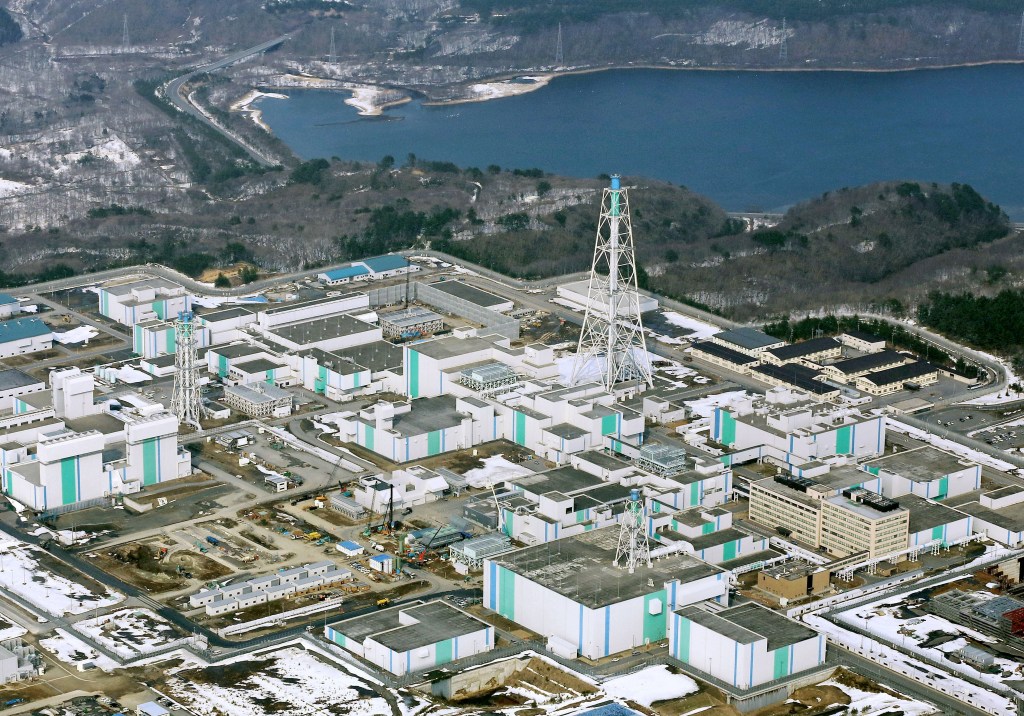
The site, which is 159 times the size of Tokyo Dome, is lined with white buildings with no windows.
Construction started 31 years ago. It was still being built in late November last year, when it was shown to reporters.
The reprocessing plant is located on the Shimokita Peninsula at the northern tip of the main Honshu island.
Crops in the area are often damaged by cold humid winds during summer, so Rokkasho village accepted the plant in 1985 for local revitalization in place of agriculture.
Employees of privately-run Japan Nuclear Fuel, which is affiliated with nine major power companies, and other industry-related personnel account for more than 10 percent of Rokkasho’s population.
After repeated readjustments to the schedule, Naohiro Masuda, president of Japan Nuclear Fuel, said in December 2022 that the plant’s completion should come as early as possible during the first half of fiscal 2024, which is April to September 2024. More specifically, he pointed to “around June 2024.”
But at a news conference on Jan. 31 this year, Masuda said it is “inappropriate to keep saying the plant will be completed in June.”
The reprocessing plant was initially scheduled for completion in 1997.
Many insiders at the plant say it will be “quite difficult” to complete the work within the first half of fiscal 2024.
If officially decided, it will be the 27th postponement of the completion.
PROLONGED SCREENING, ACCIDENTS
One of the reasons for the delay of the completion is prolonged screenings by the Nuclear Regulation Authority.
Flaws were identified one after another in the company’s documents submitted to the nuclear watchdog, and around 400 Japan Nuclear Fuel employees are working on the papers within a gymnasium at the plant site.
Mechanical problems have also hampered progress. In 2022, for example, a system to cool high-level radioactive liquid waste broke down.
Masuda visited industry minister Ken Saito on Jan. 19 to report on the situation at the plant.
Saito told Masuda about the construction, “I expect you to forge ahead at full tilt.”
Masuda stressed his company “is fully devoted to finishing construction as soon as possible,” but said safety “screening is taking so much time because we have myriad devices.”
The cost to build the reprocessing plant, including new safety measures, has ballooned to 3.1 trillion yen ($20.57 billion), compared with the initial estimate of 760 billion yen.
Including expenditures for the future decommissioning of the plant, the total budget has reached 14.7 trillion yen. (close to $97 billion)
Even if the reprocessing plant is completed, it can treat only 800 tons of spent nuclear fuel annually at full capacity, compared with 19,250 tons of spent fuel stored nationwide.
Kyushu Electric Power Co. said in January that it would tentatively suspend pluthermal power generation at the No. 3 reactor of its Genkai nuclear power plant in Saga Prefecture. The reactor uses MOX fuel.
Kyushu Electric commissioned a French company to handle used fuel, but it recently ran out of stocks of MOX fuel.
Kyushu Electric has a stockpile of plutonium in Britain, but it cannot take advantage of it because a local MOX production plant shut down.
HUGE INVESTMENT
Calls have grown over the years to abandon the nuclear fuel cycle project.
Many insiders of leading power companies doubt whether the reprocessing plant “will really be completed” at some point.
But the government has maintained the nuclear fuel cycle policy, despite the huge amounts of time and funds poured into it.
“The policy is retained just because it is driven by the state,” a utility executive said.
Hajime Matsukubo, secretary-general of nonprofit organization Citizens’ Nuclear Information Center, said the government’s huge investment explains why the fuel cycle program has yet to be abandoned.
“They have invested too much money in the program to give up on it halfway,” Matsukubo said.
Xi Jinping’s Thoughts on China’s Nuclear Weapons

Xi noted the increased readiness those new silos might provide was necessary to prepare to respond to foreign military intervention. That sounds more defensive than aggressive. ……………….. China’s long-standing commitment not to use nuclear weapons first at any time or under any circumstances.
UCS is concerned about the future direction of Chinese nuclear weapons policy. We agree with Gen. Cotton that “the PRC’s long-term nuclear strategy and requirements remain unclear.” We urge influential US voices, including the media, to refrain from encouraging the public, and especially US decision-makers, to jump to conclusions the available evidence does not support. We also urge the Biden administration, and the US Congress, to wait until they have a clearer understanding of Chinese nuclear thinking before making precipitous decisions about the future of the US nuclear arsenal.
April 1, 2024, Gregory Kulacki, China Project Manager, This blog was co-authored with UCS China analyst Robert Rust. https://blog.ucsusa.org/gregory-kulacki/xi-jinpings-thoughts-on-chinas-nuclear-weapons/
Last month UCS published a critique of a New York Times article that claimed Chinese military strategists, “are looking to nuclear weapons as not only a defensive shield, but as a potential sword — to intimidate and subjugate adversaries.” We examined the evidence and found it did not support that claim.
However, there was one piece of evidence in the article we could not examine; a speech by Chinese leader Xi Jinping to China’s Second Artillery in December of 2012. It operates China’s conventional and nuclear missiles and was renamed the People’s Liberation Army Rocket Force in 2016. We’ve since obtained a copy of that speech and found it doesn’t support the New York Times claim either. There is no language in Xi’s speech that suggests he thinks about the purpose of China’s nuclear arsenal differently than his predecessors.
We posted the original Chinese text with an English translation. It is classified as an “internal publication” that should be “handled with care.” It was printed and distributed to all Chinese military officers at the regimental level and above by the General Political Department of the People’s Liberation Army (PLA) in February 2014.
Why is this speech worth reading?
UCS first learned about the speech ten years ago when a Chinese colleague drew our attention to language in a commentary on the speech by generals Wei Fenghe and Zhang Haiyang, the commander and party secretary of the Second Artillery at the time. Our colleague noticed it contained new language describing the alert level of Chinese missiles. He thought the two officers might be trying to influence Xi’s thinking. UCS took note of that the new language in our 2016 report on a possible change in China’s nuclear posture.
That report concluded China may shift some of its nuclear forces to what is called a “launch on warning” or “launch under attack” alert status that would give Chinese leaders the option to launch those nuclear missiles quickly before they could be destroyed by an incoming attack. Traditionally, China kept its nuclear missile force off-alert, and the Second Artillery trained to launch a retaliatory nuclear strike only after being struck first. Currently, China is believed to keep most of its nuclear warheads in storage, separated from the missiles that carry them, to prevent an accidental or unauthorized launch.
Although China may still be moving to a launch on warning posture, the full text of Xi’s December 2012 speech, and the phrase it contains related to alert levels, reveals Xi did not discuss nuclear strategy or announce an intention to put Chinese nuclear forces on alert. He addresses more general concerns about the combat readiness, ideological orientation, and human qualities of Chinese military officers. Every Chinese head of state since 1842, when the United Kingdom defeated Imperial China in the Opium War, shared the same concerns. Xi did not say anything new, specific, or surprising. There is no language in his speech that justifies the suggestion he communicated aggressive new nuclear ambitions that day.
What did Xi say?
Continue reading‘Oppenheimer’ finally opens in Japan, the only nation to experience horror of nuclear war
By Chris Lau and Moeri Karasawa, CNN, Mon April 1, 2024
Japanese moviegoers finally got the chance to see “Oppenheimer” this weekend, eight months after the biopic’s worldwide release, following concerns over how it might be received in the only country to directly experience the horror of nuclear weapons.
The Oscar-winning blockbuster by British-American director Christopher Nolan was one of 2023’s most successful films and its joint release on the same weekend as “Barbie” created a global movie spectacle dubbed “Barbenheimer.”
But that framing left many Japanese people feeling uncomfortable — as did the painful content of a movie that centers on the devastating technology unleashed by J. Robert Oppenheimer and his team of scientists.
Some in Japan felt that the unofficial “Barbenheimer” marketing campaign trivialized the 1945 nuclear attacks on Hiroshima and Nagasaki, and studio Universal Pictures opted not to include the country in its global release rollout last July.
The three-hour biopic has broken several records since its release last year, becoming the highest-grossing movie set during World War II, according to Universal.
In Japan, it ranked fourth at the box office following its release Friday, according to industry tracker Kogyo Tsushinsha, raking in 379 million yen ($2.5 million) in its first three days.
As part of its promotional campaign, Universal sought the views of atomic bomb survivor Tomonaga Masao, who is the president of a Nagasaki-based “hibakusha” group — the name survivors call themselves. In quotes published on the movie’s official Japanese website, Masao said could feel the titular character’s struggle in the latter part of the film, when Oppenheimer begins to push back against the nuclear arms race that emerges after the war.
“This is… connected to the fundamental problem of the world today, where a nuclear-free world is becoming more and more distant,” he is quoted as saying
“Here we sense Nolan’s hidden message of pursuing the responsibility of politicians,” he added.
Former Hiroshima Mayor Hiraoka Takashi is meanwhile quoted saying that he saw “a man full of contradictions,” whose scientific work was weaponized by the state and whose warning against downplaying the threat of nuclear war was later ignored by those same authorities.
“The atmosphere of those days still fills our world today,” he said, adding: “I would like to watch it again and think about what a nation that believes in nuclear deterrence is”
……………………………………………………………………………………
Rishu Kanemoto, a 19-year-old student, saw the film on Friday.
“Hiroshima and Nagasaki, where the atomic bombs were dropped, are certainly the victims,” he told Reuters.
But he also expressed sympathy for Oppenheimer.
“I think even though the inventor is one of the perpetrators, he’s also the victim caught up in the war,” he added. https://edition.cnn.com/2024/04/01/style/japan-oppenheimer-release-nuclear-intl-hnk/index.html
Oppenheimer: Monaghan man, Daniel A. McGovern, who captured nuclear devastation
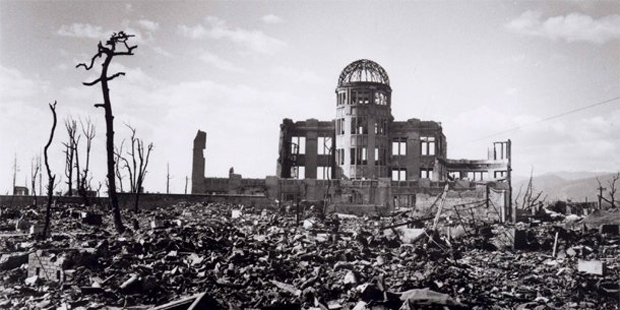
By Adam Mandeville, BBC News NI 31 Mar 24
The success of the film Oppenheimer has shone a spotlight once more on the bombings of Hiroshima and Nagasaki.
However, the story of one Monaghan man involved in the aftermath appears to have been forgotten.
Just one month after the bombings, Lt Col Daniel A. McGovern was the first person sent by the US to document the damage.
A member of the US Airforce, he was a specialist cameraman trained to document bombs and their aftermath.
In one scene in the Academy Award winning Oppenheimer film, the titular character played by Irish man Cillian Murphy looks in horror at footage of the aftermath of the bombing.
But these images may not have survived for others to see if it were not for one man from Carrickmacross.
McGovern’s biographer said the story is one of most amazing he has ever heard.
“McGovern’s story is better, in my opinion, than Oppenheimer’s,” he said.
In total, Col McGovern’s team collected over 125,000ft of colour and black and white footage – though much of this was classified.
When he returned from Japan, Col McGovern made secret copies of the footage to ensure it would be saved from US government censorship.
He took these from the Pentagon, storing one set at an air force motion picture depository in Dayton, Ohio, and kept the other himself.
In 1967, a US Congressional committee, that included Robert Kennedy, asked to see the atomic bomb footage.
The material had been declassified but no one could find the originals.
Col McGovern directed the authorities to his copies.
In 1970, the general public got its first glimpse of some of the footage as it was incorporated into a film called Hiroshima Nagasaki – August 1945.
McGovern’s huge risk to secretly keep copies of his footage ensured that the committee had access to crucial documents.
Joseph McCabe spent 20 years working on a biography of Col McGovern, called Rebels to Reels: A Biography of Combat Cameraman Daniel A. McGovern USAF.
He said Col McGovern could have been shot for treason after making copies of the classified footage, but did so to save it for future generations…………………………………………………..
Mr McCabe suggested the footage watched by J Robert Oppenheimer would have been captured by McGovern.
Historian Dr Tom Thorpe said without the footage captured by McGovern, films such as Oppenheimer may never have been made.
“McGovern’s actions to save the footage ensured that it remained available for future generations,” he said.
“[McGovern’s] contributions indirectly influenced the availability of such archival material for films like Oppenheimer.”
He added that the images are “immensely important to our understanding of history”.
…………………………………………………………………….. In the latter half of the 20th Century, Col McGovern would continue to work for the US military and government, photographing various bomb tests, including those of Wernher Von Braun, co-developer of the V2 rocket.
He was also asked to help gather footage in and around Roswell, New Mexico following the now famous Roswell incident.
Col Daniel A McGovern passed away in California in 2005.
In 2022, 100 years after the McGovern family left for the US, his family returned to Carrickmacross to witness the unveiling of a commemorative plaque, dedicated to the man who photographed one of the most infamous events of the 20th Century. https://www.bbc.com/news/uk-northern-ireland-68656372
Japan confirms experts met in China to ease concerns over discharge of treated radioactive water
Japan said Sunday its experts have held talks with their Chinese
counterparts to try to assuage Beijing´s concerns over the discharge of
treated radioactive wastewater from the wrecked Fukushima Daiichi nuclear
power plant into the sea. The discharges have been opposed by fishing
groups and neighboring countries especially China, which banned all imports
of Japanese seafood. China´s move has largely affected Japanese scallop
growers and exporters to China. During the talks held Saturday in the
northeastern Chinese city of Dalian, Japanese officials provided
“science-based” explanation of how the discharges have been safely carried
out as planned, according to the Japanese Foreign Ministry.
Daily Mail 31st March 2024
Experts from Japan and China held talks on treated radioactive wastewater
Experts from Japan and China held talks on treated radioactive wastewater
being released from the Fukushima No. 1 nuclear power plant, the Foreign
Ministry in Tokyo said late Saturday, in the first public announcement of
such a meeting.
The two Asian powerhouses have faced off over the issue
since Japan began releasing the water into the Pacific Ocean last August,
with Beijing — a major importer of Japanese seafood — slapping a ban on
all such products immediately after.
Japan Times 31st March 2024
https://www.japantimes.co.jp/news/2024/03/31/japan/politics/fukushima-china-japan-experts
Court Allows Ageing Japanese Nuclear Plants to Continue Operations
By Tsvetana Paraskova – Mar 29, 2024, https://oilprice.com/Latest-Energy-News/World-News/Court-Allows-Ageing-Japanese-Nuclear-Plants-to-Continue-Operations.html
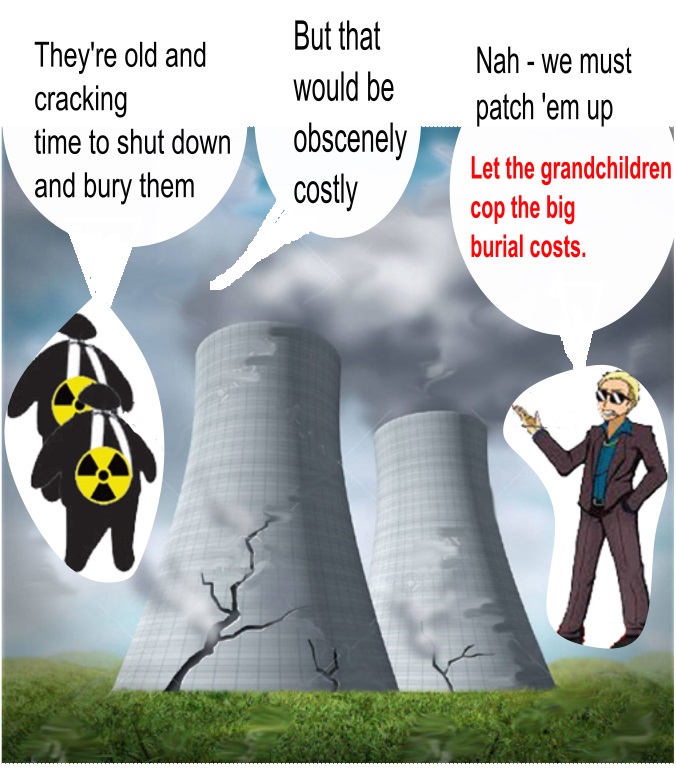
A Japanese district court on Friday rejected petitions from residents and allowed five ageing nuclear reactors in central Japan to continue operations.
The five reactors at the plants, operated by Kansai Electric Power Co in the Fukui Prefecture on the Sea of Japan coast, began commercial operations between the mid-1970s and mid-1980s.
Local residents had asked the Fukui District Court to grant injunctions for the operations of one reactor at the Mihama nuclear plant and four reactors at the Takahama power plant, citing inadequate safety measures.
The court, however, denied the injunctions, thus allowing the five reactors to continue operations.
More than a decade after the Fukushima disaster, public opinion continues to be generally negative toward an en masse return to nuclear power, but Japanese authorities are keen to avoid energy crises and are betting on re-opening more nuclear power plants.
Following the Fukushima disaster in 2011, Japan closed all of its nuclear power plants for rigorous safety checks and inspections. The country has been returning reactors in service in recent years.
Japan is bringing back nuclear power as a key energy source, looking to protect its energy security in the wake of the energy crisis that led to surging fossil fuel prices. The resource-poor country which needs to import about 90% of its energy requirements, made a U-turn in its nuclear energy policy at the end of 2022, as its energy import bill soared amid the energy crisis and surging costs to import LNG at record-high prices.
The Japanese government confirmed in December 2022 a new policy for nuclear energy, which the country had mostly abandoned since the Fukushima disaster. A panel of experts under the Japanese Ministry of Industry has also decided that Japan would allow the development of new nuclear reactors and allow available reactors to operate after the current limit of 60 years.
The extraordinary financial costs of ‘small’ nuclear power stations

By Alan Finkel, Cosmos, 21 Mar 24
Partial extract from an article to be posted in 360info.org
They’re being touted as the solution to kickstarting a nuclear power industry in Australia.
According to the Opposition’s Minister for Climate Change and Energy, Ted O’Brien, small modular reactors (SMR) could be built within ten-year period if it wins the next election.
However, it would likely take 20 years to commence commercial operation of any nuclear reactors in Australia from the time in-principle approval was reached. To reach that starting point and enable detailed consideration of the challenges and costs of nuclear power, the existing legislative ban on nuclear power in Australia will need to be removed.
There are other obstacles.
While there’s plenty of excitement about SMRs, the problem is there just isn’t enough data about them, mainly because there are none operating in any OECD country.
And it’s unknown when any might be. As Allison Macfarlane, former chair of the US Nuclear Regulatory commission, argues in her article,The end of Oppenheimer’s energy dream, the proposal for small modular reactors to help us in the clean energy transition is fanciful.
The SMR furthest along the US Nuclear Regulatory Commission (NRC) approval process, from the US company NuScale, cancelled its first planned installation in Utah last November when the initial cost blew out to USD$9 billion, corresponding to USD$20 billion per GW.
The only countries with working SMRs are China and Russia.
Micro and large reactors
Micro reactors are intended to generate electrical power up to 10 MW per unit. Although companies such as Rolls Royce are developing these, there do not appear to be any commercial micro modular reactors that have completed their design.
That leaves full-scale reactors, which have also been mentioned as part of a possible Australian nuclear power play.
Korean company KEPCO builds most of the nuclear reactors in Korea and has now built one at Barakah in the United Arab Emirates. This 5.6 GW plant, scheduled to open this year, has taken 16 years to complete and cost USD$24 billion (AUD$36 billion). At 5.6 GW, that is AUD$6.4 billion per GW. Given salaries and skills shortages in Australia, inflation, interest rates and our regulatory requirements, it would cost more and take longer in Australia.
The Hinkley C plant in the UK was supposed to be finished in 2017 but has been delayed again until 2031 – 23 years after approval. The estimated construction cost ballooned to AUD$89 billion. At 3.2 GW electrical power, that is AUD$28 billion per GW.
In the US, the most recent nuclear reactors to be built are the Vogtle 3 and 4built at the existing facility that is home to the Vogtle 1 and 2 reactors. Both were anticipated to be in service in 2016. Vogtle 3 began commercial operation in July 2023. Vogtle 4 is projected to commence operation in the second quarter of 2024 – 15 years after the construction contract was awarded.
Construction cost USD$34 billion (AUD$52 billion) for the combined 2.2 GW output of the two reactors, or AUD$24 billion per GW.
Construction of nuclear plants in the United States has declined dramatically over the years. Approximately 130 were built from the mid 1950s to the mid 1990s. Only four commenced operation in the 30 years from the mid 1990s to now, and at the time of writing there are no nuclear reactors under construction in the United States.
In France, only one nuclear power plant is under construction. The 1.65 GW Flamanville EPR reactor is hoped to be completed and begin to supply electricity later this year, 17 years after construction began. The most recent cost estimate was AUD$22 billion or AUD$13 billion per GW. No other nuclear power plants are planned in France.
These high costs and long delivery durations for full-scale reactors are the reasons SMRs are proposed as a way forward in Australia. However, SMRs are a new technology. There are none in operation or construction in any OECD countries, thus it is not possible to estimate the costs or delivery schedules. NuScale’s investment to date suggests that the capital cost for the first units to be delivered will be very high. ………… https://cosmosmagazine.com/technology/energy/the-extraordinary-financial-costs-of-nuclear-power/
U.S. Troops Are One Mile From The Chinese Border
the most important news, March 21, 2024 [ The original has several substantial quotations from news media]
The U.S. cannot afford a war with China. The size of our military has been shrinking, and our resources are stretched way too thin. Today, the U.S. has military bases in 80 different countries, and we have troops stationed in 178 different countries. That is insane. No empire in the entire history of humanity has had forces spread all over the planet like this. Our ammunition levels are extremely low due to major conflicts in the Middle East and Ukraine, and every war game that our leaders have conducted has shown us losing a war to protect Taiwan. So we should be trying to avoid sparking a war with China, because we are holding a losing hand.
But our politicians seem determined to provoke one anyway. It is being reported that officials in Taiwan have confirmed that U.S. forces are now permanently stationed “on its islands in the Taiwan Strait”…
Taiwan’s main island is approximately 100 miles from China, but in some places the Kinmen islands and China are “barely more than a mile apart”…
What are our leaders thinking?
This doesn’t make war less likely.
It makes war more likely.
On Wednesday, China sent 32 warplanes toward Taiwan in a 24 hour period…
The Chinese do this sort of thing when they are upset.
And right now they are very, very upset.
And China has been feverishly preparing for the coming war…
When war with China finally erupts, will we be able to handle it?
Of course not.
Our forces are scattered all over the planet, and so many of our resources have already been poured into the war in Ukraine.
Even though there have been efforts to ramp up ammunition production in the U.S., it is being reported that “Russia is producing nearly three times as many artillery munitions as the United States and Europe combined”…
No matter how you feel about the war, that is just embarrassing.
One of the reasons why we won World War II was because the U.S. could simply outproduce everyone else by a wide margin.
But now we just look pathetic.
French President Emmanuel Macron and other western leaders have suggested that NATO troops should be sent into Ukraine if that is what is necessary to keep the Russians from winning.
If that actually happens, U.S. boys and girls will inevitably be sent to die in the trenches of eastern Ukraine too.
In anticipation of a wider war, the Russians are conducting another round of mobilization.
In fact, Russian Defense Minister Sergei Shoigu has just announced “the creation of 2 new ground armies, with 16 new brigades & 14 new divisions”.
Meanwhile, Israeli officials continue to insist that a major ground operation will happen in Rafah no matter what the Biden administration thinks about such a move…
When the IDF goes into Rafah, that could cause the entire region to erupt.
And so U.S. forces may be called on to intervene in the Middle East as well.
Spreading your resources way too thin is a sure way to lose.
Unfortunately, our politicians don’t seem to understand this, and their very foolish decisions will soon lead to absolutely disastrous consequences.
Michael’s new book entitled “Chaos” is available in paperback and for the Kindle on Amazon.com, and you can check out his new Substack newsletter right here. https://themostimportantnews.com/archives/u-s-troops-are-one-mile-from-the-chinese-border
Japan finishes first-year ocean discharge of nuclear-tainted wastewater amid backlash
“All fishermen are against ocean dumping. The contaminated water has flowed into what we fishermen call ‘the sea of treasure’, and the process will last for at least 30 years,“
“There is no good reason to dump radioactive materials into the ocean. There is no reason to just dilute them and flush them away,“
https://thesun.my/world/japan-finishes-first-year-ocean-discharge-of-nuclear-tainted-wastewater-amid-backlash-PD12227910 18 Mar 24,
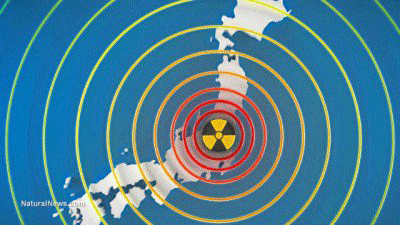
TOKYO: Despite opposition and concern from at home and abroad, Japan’s crippled Fukushima Daiichi Nuclear Power Plant has finished its initial year of discharging nuclear-contaminated wastewater into the ocean, according to the plant’s operator, said Xinhua.
As per the initial plan, approximately 31,200 tons of wastewater, containing radioactive tritium, was released into the ocean since the discharge started in August 2023, with each round of discharge carried out for about two weeks. Earlier this week, International Atomic Energy Agency Director-General Rafael Grossi emphasised continued efforts in monitoring Japan’s ocean discharge of nuclear-contaminated wastewater from the crippled plant, following his first visit to Fukushima prefecture since the discharge started.
Stressing that the discharge marks merely the initial phase of a long process, Grossi said that “much effort will be required in the lengthy process ahead,“ and reiterated the organisation’s stance on maintaining vigilance throughout the process.
While the Japanese government and TEPCO have asserted the safety and necessity of the discharge, concerns have been raised by neighbouring countries and local stakeholders regarding environmental impacts.
“All fishermen are against ocean dumping. The contaminated water has flowed into what we fishermen call ‘the sea of treasure’, and the process will last for at least 30 years,“ said Haruo Ono, a fisherman in the town of Shinchi in Fukushima.
“There is no good reason to dump radioactive materials into the ocean. There is no reason to just dilute them and flush them away,“ said the man in his 70s.
“Is it really necessary, in the first place, to dump what has been stored in tanks into the sea? How can we say it’s ‘safe’ when the discharged water clearly consists of harmful radioactive substances? I think the government and TEPCO must provide a solid answer,“ said Chiyo Oda, a resident of Fukushima’s Iwaki city.
Concerns were fuelled among the Japanese public over the recent leakage of contaminated water from pipes at the Fukushima plant. – Bernama, Xinhua
Fourth discharge of treated Fukushima water completed
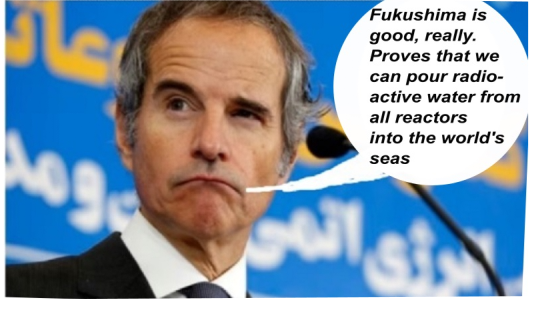
The release of the fourth batch of treated radioactive water from the
crippled Fukushima No. 1 nuclear power plant into the sea concluded Sunday,
with the next round possibly starting next month, the plant’s operator
said.
Japan Times 17th March 2024
https://www.japantimes.co.jp/news/2024/03/17/japan/fourth-fukushima-water-release-completed
Concerns and complaints continue as fourth Fukushima wastewater discharge completed

Concerns and complaints from home and abroad remain while Japan’s crippled Fukushima Daiichi Nuclear Power Plant has finished its first year of discharging nuclear-contaminated wastewater into the ocean.
The plant completed its fourth and final round of discharge for the current fiscal year, which ends in March, Tokyo Electric Power Company (TEPCO) said on Sunday.
As per the initial plan, approximately 31,200 tonnes of wastewater containing radioactive tritium has been released into the ocean since August 2023, with each discharge running for about two weeks.
Earlier this week, International Atomic Energy Agency Director-General Rafael Grossi emphasized continued efforts to monitor the discharging process.
Stressing that the discharge marks merely the initial phase of a long process, Grossi said that “much effort will be required in the lengthy process ahead,” and reiterated the organization’s stance on maintaining vigilance throughout the process.
While the Japanese government and TEPCO have asserted the safety and necessity of the process, there are still concerns from other countries and local stakeholders regarding environmental impacts.
Sophia from the U.S. complained that the release of nuclear-contaminated water into the sea made her fear for the future.
Najee Johnson, a college student from Canada, suggested the Japanese government find a different plan because it could pollute our ocean and harm our sea life.
Haruo Ono, a fisherman in the town of Shinchi in Fukushima, said “All fishermen are against ocean dumping. The contaminated water has flowed into what we fishermen call ‘the sea of treasure’, and the process will last for at least 30 years.”
“Is it really necessary, in the first place, to dump what has been stored in tanks into the sea? How can we say it’s ‘safe’ when the discharged water clearly consists of harmful radioactive substances? I think the government and TEPCO must provide a solid answer,” said Chiyo Oda, a resident of Fukushima’s Iwaki city.
The recent leakage of contaminated water from pipes at the Fukushima plant also fueled concerns among the Japanese public.
Besides, the promised fund of more than 100 billion yen (around $670 million) to compensate and support local fishermen and fishing industry remains doubtful as a court ruling last December relieved the government of responsibility to pay damages to Fukushima evacuees.
A Tokyo court ruled that only the operator of the tsunami-wrecked Fukushima nuclear power plant has to pay damages to the evacuees, relieving the government of responsibility. Plaintiffs criticized the ruling as belittling their suffering and the severity of the disaster. The court also slashed the amount by ordering the TEPCO to pay a total of 23.5 million yen to 44 of the 47 plaintiffs.
The ruling backpedaled from an earlier decision in March 2018, when the Tokyo District Court held both the government and TEPCO accountable for the disaster, which the ruling said could have been prevented if they both took better precautionary measures, ordering both to pay 59 million yen in damages.
IAEA director’s visit to Japan widely questioned, seeks to downplay nuclear water dumping
Global Times, By Xu Yelu and Xing Xiaojing Mar 15, 2024
Rafael Grossi, director general of the International Atomic Energy Agency (IAEA), said during his visit to Japan that he confirmed that the “treated water” in Fukushima fully meets international standards, and experts believe such remarks supporting the discharge have become a kind of “political security” reached between the Japanese government and the IAEA.
Grossi was in Japan visiting the site of the nuclear power plant for the first time since the water dumping began. He also attended a meeting in Fukushima where representatives of the government and fishing communities discussed the current situation, according to Kyodo News.
He supported Japan’s decision once again, saying, “Our corroboration and information and also independent sampling have confirmed the very low presence of tritium … In some cases even impossible to trace, which means that the process is working as we thought it will be. So in this regard, it is correct. We are satisfied.”
According to the Japanese newspaper Mainichi Shimbun, Japanese Prime Minister Fumio Kishida and Foreign Minister Yoko Kamikawa separately met with Grossi, confirming continued cooperation on the issue of the discharge. The Japanese side announced that they will provide approximately 18.5 million euros ($20 million) in assistance to the IAEA.
The Chinese Embassy in Japan responded on Thursday that the Japanese side’s forced implementation of discharging nuclear-contaminated wastewater into the sea has no precedent since the peaceful use of nuclear energy by humans, nor are there any recognized disposal standards. How can it be said to comply with so-called “international standards?”
The nuclear-contaminated wastewater generated by the Fukushima nuclear accident contains various radioactive nuclides present in the melted core, many of which do not have effective treatment technologies. Focusing solely on tritium clearly ignores this basic fact………………………….
The IAEA should uphold the principles of objectivity, professionalism, and impartiality, and should not endorse Japan’s erroneous actions of discharging nuclear-contaminated wastewater into the sea, nor should it disseminate one-sided information that misleads international public opinion, the embassy stressed.
………………”With the internal management chaos of Tokyo Electric Power Company and inadequate government supervision in Japan, in a situation where standards are unclear, boundaries are unclear, and data is not transparent, no one or organization can guarantee that the nuclear-contaminated wastewater being discharged into the ocean by Japan is safe,” Zhang said.
…………………………….the plan to discharge Fukushima’s contaminated water into the sea will last for 30 years. However, since the first round of discharge, it has been less than seven months, and the IAEA has expressed “satisfaction” with the discharge situation. Or, it can be said that this is a kind of “political security” reached between the Japanese government and the IAEA.
https://www.globaltimes.cn/page/202403/1308918.shtml
Japan Ramps Up Drive to Restart World’s Biggest Nuclear Plant
Stephen Stapczynski and Aya Wagatsuma, Bloomberg News, 15 Mar 24
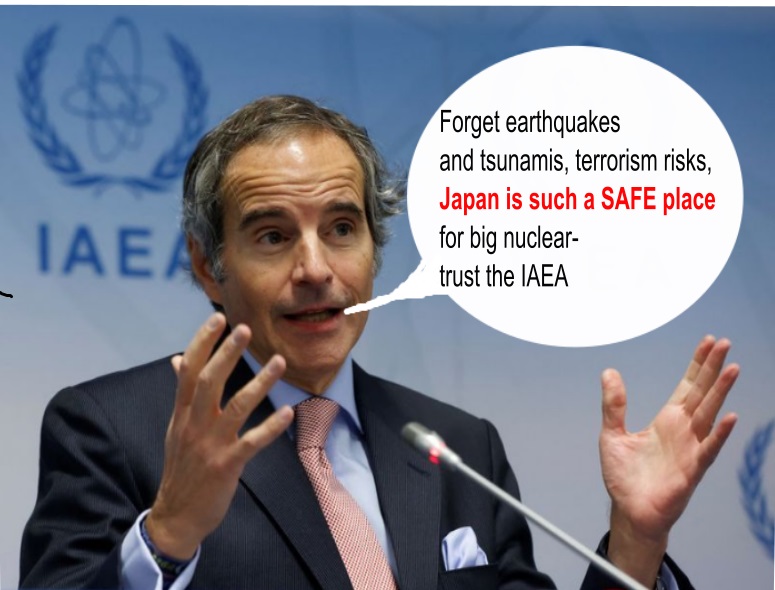
Japan’s government is ramping up an effort to secure local approval to resume operations at the world’s biggest nuclear power plant, according to a report, amid a wider push by the nation to restart its idled fleet of reactors.
Minister of Economy, Trade and Industry Ken Saito will next week request Niigata Governor Hideyo Hanazumi to endorse the restart of Tokyo Electric Power Co’s Kashiwazaki-Kariwa nuclear power station, according to the Niigata Nippo newspaper. METI didn’t respond to a request for comment.
The governor’s approval is one of the last hurdles before the nuclear plant can resume…………………………….
The head of the International Atomic Energy Agency this week said that the organization would provide technical assistance for the plant, and send a team of experts to assist Tepco’s effort to gain public trust.
Kashiwazaki Kariwa, which has seven reactors totaling 8.2 gigawatts in capacity, is located about 250 kilometers (155 miles) north of Tokyo. The nation’s regulator said in 2017 that reactor units 6 and 7 met post-Fukushima safety protocols.
–With assistance from Winnie Hsu and Shoko Oda. https://www.bnnbloomberg.ca/japan-ramps-up-drive-to-restart-world-s-biggest-nuclear-plant-1.2047179—
Conditions inside Fukushima’s melted nuclear reactors still unclear 13 years after disaster struck
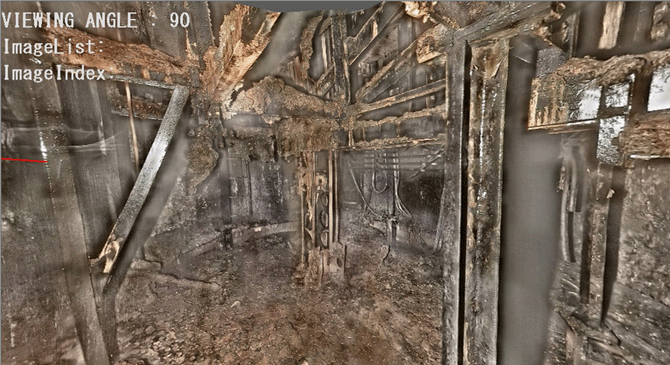
The contents of the three reactors is still largely a mystery. Little is known, for instance, about the melted fuel’s condition or exactly where it’s located in the reactors. Not even a spoonful of the fuel has been removed
About 880 tons of melted nuclear fuel remain inside the three damaged reactors, and Japanese officials say removing it would take 30-40 years. Experts call that timeline overly optimistic. The amount of melted fuel is 10 times that removed from Three Mile Island following its 1979 partial core melt.
MARI YAMAGUCHI, TOKYO, THE ASSOCIATED PRESS, March 11, 2024, https://www.theglobeandmail.com/world/article-conditions-inside-fukushimas-melted-nuclear-reactors-still-unclear-13/—
Japan on Monday marked 13 years since a massive earthquake and tsunami hit the country’s northern coasts. Nearly 20,000 people died, whole towns were wiped out and the Fukushima Daiichi nuclear power plant was destroyed, creating deep fears of radiation that linger today. As the nation observes the anniversary, the AP explains what is happening now at the plant and in neighboring areas.
What happened 13 years ago?
A magnitude 9.0 earthquake struck on March 11, 2011, causing a tsunami that battered northern coastal towns in Iwate, Miyagi and Fukushima prefectures. The tsunami, which topped 15 meters (50 feet) in some areas, slammed into the nuclear plant, destroying its power supply and fuel cooling systems, and causing meltdowns at reactors No. 1, 2 and 3.
Hydrogen explosions caused massive radiation leaks and contamination in the area.
The operator, Tokyo Electric Power Company Holdings, says that the tsunami couldn’t have been anticipated. Government and independent investigations and some court decisions have said the accident was the result of human error, safety negligence, lax oversight by regulators and collusion.
Japan has since introduced stricter safety standards and at one point shifted to a nuclear energy phaseout. Prime Minister Fumio Kishida’s government reversed that policy and has accelerated restarts of workable reactors to maintain nuclear power as a main source of Japan’s power supply.
A deadly Jan. 1 earthquake in Japan’s northcentral region destroyed many homes and roads but didn’t damage an idled nuclear power plant. Even so, it caused worry that current evacuation plans that solely focus on radiation leaks could be unworkable.
The nation marked a moment of silence at 2:46 p.m. Monday, with Kishida attending a memorial in Fukushima.
What happened to people in the area?
About 20,000 of more than 160,000 evacuated residents across Fukushima still haven’t returned home.
Decontamination work before the Tokyo Olympics meant to showcase Fukushima’s recovery led to the elimination of some no-go zones, but they remain in seven of 12 towns that had been fully or partially off-limits.
In Futaba, the hardest-hit town and a co-host of the Fukushima Daiichi plant, a small area was opened in 2022. About 100 people, or 1.5% percent of the pre-disaster population, have returned to live. The other host town, Okuma, which along with Futaba sacrificed part of its land to build an interim storage site for nuclear waste gathered from the decontamination, has seen 6% of its former residents return.
Annual surveys show the majority of evacuees have no intention of returning home, citing lack of jobs, schools and lost communities, as well as radiation concerns.
Residents who have raised radiation worries or linked it to their health problems have come under attack for hurting Fukushima’s reputation.
The disaster-hit towns, including those in Iwate and Miyagi prefectures, have seen sharp population drops.
Fukushima Gov. Masao Uchibori said on NHK TV that a growing number of young people want to move to Fukushima to open businesses or help in the reconstruction, and he expressed hope that more residents will return.
What about treated radioactive water discharges?
Last August, Fukushima Daiichi began discharging treated water into the sea, and is currently releasing a fourth 7,800-ton batch of treated water. So far, daily seawater sampling results have met safety standards. The plan has faced protests from local fishers and neighboring countries, especially China, which has banned Japanese seafood imports.
Fukushima Daiichi has struggled to handle the contaminated water since the 2011 meltdowns. TEPCO says the start of the process is a milestone and removing the tanks is crucial to make space for facilities needed as decommissioning progresses.
The contaminated cooling water is pumped up, treated and stored in about 1,000 tanks. The government and TEPCO say the water is diluted with massive seawater before release, making it safer than international standards.
What about local fishing?
Despite earlier fears that the water discharge would further hurt Fukushima’s hard-hit fishing industry, they have not damaged its reputation domestically. China’s ban on Japanese seafood, which mostly hit scallop exporters in Hokkaido, apparently prompted Japanese consumers to eat more Fukushima seafood.
Sampling and monitoring by the International Atomic Energy Agency have also boosted confidence in local fish.
Fukushima fishing returned to normal operations in 2021, and the local catch is now about one-fifth of its pre-disaster level because of a decline in the fishing population and smaller catch sizes.
The government has earmarked 10 billion yen ($680 million) to support Fukushima fisheries.
Any progress removing melted fuel?
The contents of the three reactors is still largely a mystery. Little is known, for instance, about the melted fuel’s condition or exactly where it’s located in the reactors. Not even a spoonful of the fuel has been removed.
About 880 tons of melted nuclear fuel remain inside the three damaged reactors, and Japanese officials say removing it would take 30-40 years. Experts call that timeline overly optimistic. The amount of melted fuel is 10 times that removed from Three Mile Island following its 1979 partial core melt.
Robotic probes have glimpsed inside the three reactors, but their investigation has been hampered by technical glitches, high radiation and other complications.
It’s crucial for officials to understand the data from melted debris so they can make a plan to remove it safely. TEPCO aims to get the first sample out later this year from the least-damaged No. 2 reactor.
TEPCO has been trying to get the sample by using a robotic arm. Officials have struggled to get the robot past the wreckage, and hope that by October they can use a simpler device that looks like a fishing rod.
The fuel in the worst-damaged No. 1 reactor mostly fell from the core to the bottom of its primary containment vessel. Some of it penetrated and mixed with the concrete foundation, making removal extremely difficult.
In February, the plant made its first drone flight into the primary containment vessel to investigate the melted debris and examine how the fuel initially fell from the core. But a second day of exploration was canceled because a data transmission robot failed.
Is a 2051 completion possible?
The government has stuck to its initial target for a completed decommissioning by 2051, but it hasn’t defined what that means.
The lack of data, technology and plans on what to do with the radioactive melted fuel and other nuclear waste makes it difficult to understand what’s in store for the plant and surrounding areas when the cleanup ends, according to TEPCO’s decommissioning company chief, Akira Ono.
An overly ambitious schedule could result in unnecessary radiation exposure for plant workers and excess environmental damage, experts say.
1 This Month

of the week – Shut Down Drone Warfare!


Tell the Ukrainian Government to Drop Prosecution of Peace Activist Yurii Sheliazhenko

Petition to revoke the licensing of the Near Surface Nuclear Disposal Facility (NSDF) at Chalk River. https://www.ourcommons.ca/petitions/en/Petition/Details?Petition=e-7247
To see nuclear-related stories in greater depth and intensity – go to https://nuclearinformation.wordpress.com
-
Archives
- March 2026 (251)
- February 2026 (268)
- January 2026 (308)
- December 2025 (358)
- November 2025 (359)
- October 2025 (376)
- September 2025 (257)
- August 2025 (319)
- July 2025 (230)
- June 2025 (348)
- May 2025 (261)
- April 2025 (305)
-
Categories
- 1
- 1 NUCLEAR ISSUES
- business and costs
- climate change
- culture and arts
- ENERGY
- environment
- health
- history
- indigenous issues
- Legal
- marketing of nuclear
- media
- opposition to nuclear
- PERSONAL STORIES
- politics
- politics international
- Religion and ethics
- safety
- secrets,lies and civil liberties
- spinbuster
- technology
- Uranium
- wastes
- weapons and war
- Women
- 2 WORLD
- ACTION
- AFRICA
- Atrocities
- AUSTRALIA
- Christina's notes
- Christina's themes
- culture and arts
- Events
- Fuk 2022
- Fuk 2023
- Fukushima 2017
- Fukushima 2018
- fukushima 2019
- Fukushima 2020
- Fukushima 2021
- general
- global warming
- Humour (God we need it)
- Nuclear
- RARE EARTHS
- Reference
- resources – print
- Resources -audiovicual
- Weekly Newsletter
- World
- World Nuclear
- YouTube
-
RSS
Entries RSS
Comments RSS
 nuclear-news