‘Offshore wind farms could have averted Fukushima disaster’

A global review led by the University of Surrey reveals that offshore wind farms could have prevented the Fukushima disaster and are now a cheaper energy alternative than nuclear power
Dimitris Mavrokefalidis, 05/30/2024 , https://www.energylivenews.com/2024/05/30/offshore-wind-farms-could-have-averted-fukushima-disaster/
A review conducted by researchers at the University of Surrey has concluded that offshore wind farms could have averted the Fukushima nuclear disaster by maintaining the cooling systems and preventing a meltdown.
The study highlights that wind farms are less vulnerable to earthquakes than nuclear power plants.
Suby Bhattacharya, Professor of Geomechanics at the University of Surrey, emphasised that wind power provides abundant clean energy and can enhance the safety and reliability of other facilities.
The review indicates that wind energy is now more cost-effective due to reduced construction costs and improved methods to minimise environmental impact.
The report finds that new wind farms can produce energy at a significantly lower cost than new nuclear power stations.
In the UK, the lifetime cost of generating wind power has dropped from £160/MWh to £44/MWh, covering all expenses from planning to decommissioning.
Professor Bhattacharya said: “What makes wind so attractive is that the fuel is free, and the cost of building turbines is falling. There is enough of it blowing around the world to power the planet 18 times over.
“Our report shows the industry is ironing out practical challenges and making this green power sustainable, too.”
2
Fukushima nuclear debris removal to begin as early as August

Crucial work at devastated plant has been delayed for three years
AYAKA OTAKA, Nikkei staff writer, May 31, 2024,
TOKYO — Trial removal of melted fuel rods at the tsunami-hit Fukushima Daiichi nuclear plant will begin as early as August, Tokyo Electric Power Co. Holdings announced on Thursday, a critical step in a decommissioning process that is expected to take decades.
Removal of the fuel rods, which is now three years behind schedule, had been slated to start by October, but TEPCO now says it will happen between August and October. Necessary equipment will be set up at the plant in northeastern Japan as early as July.
“We will continue to proceed with the work carefully, with safety as our top priority, so as not to impact the surrounding environment,” said Akira Ono, the TEPCO official in charge of decommissioning efforts.
The radioactive debris consists of fuel and other materials that melted, then cooled and solidified, after the plant lost power in the devastating March 2011 tsunami. An estimated 880 tonnes of debris are in reactor units 1 to 3.
As the melted fuel is highly radioactive, people cannot come near it, and removal must be done in small amounts to prevent leakage during the process.
A device similar to a fishing rod will be used to carry out the work. On Tuesday, a video was released showing the device being tested at a Mitsubishi Heavy Industries shipyard in Kobe, using a full-scale model of a nuclear reactor.
According to TEPCO, a 3- to 4-meter cable with a mechanical claw will be hung from the device down towards the bottom of the reactor. Less than 3 grams can be collected at a time.
Shortening shifts to reducing workers’ exposure to radiation will be necessary. The trial removal is expected to take about two weeks.
Removal was originally to be carried out in 2021. The plan was to use a robot arm to remove the debris, but development of the arm was delayed. A large amount of non-fuel debris blocking access also caused delays………………………………
The government has said that it will take 30 years to 40 years from the 2011 incident to decommission the plant.
The reactor building cannot be dismantled unless the debris is removed. Cooling water, as well as rainwater, that comes in contact with the debris becomes contaminated.
TEPCO began releasing treated wastewater in August 2023, but as long as the debris remains, the cycle of water being contaminated and requiring treatment and release will continue.
Some critics say the government’s decommissioning plan is unrealistic. The process could take more than 100 years, say some scientists in the Atomic Energy Society of Japan. After the Chernobyl nuclear disaster in the former Soviet Union, decommissioning was abandoned, and a shelter structure was built to completely cover the area with radioactive waste.
There is also the issue of how to dispose of soil and rubble contaminated by scattered radioactive materials. The government has promised to transport this waste outside of Fukushima prefecture by 2045, but a destination has not been decided. https://asia.nikkei.com/Spotlight/Environment/Fukushima-nuclear-debris-removal-to-begin-as-early-as-August
‘Unliveable’: Delhi’s residents struggle to cope in record-breaking heat

Temperatures of more than 45C have left population of 29 million exhausted – but the poorest suffer most
Hannah Ellis-Petersen in Delhi 31May 24
The consensus among experts and residents is that the summer temperatures
are now regularly rising far above the norm as India bears the brunt of the
climate crisis. A heatwave has enveloped much of north India in May –
this week temperatures consecutively rose above 45C – making conditions
unbearable and even life threatening for the millions who cannot afford to
cool themselves down or are forced to work outside in construction or
labouring jobs. Some parts of the city recorded temperatures as high as 52C
on Wednesday, though officials later said that may have been a faulty
reading.
Guardian 30th May 2024
China and Russia Issue Nuclear Warnings
CEPA. By Michael Sheridan, May 28, 2024
The leaders of Russia and China have jointly shifted their stance on nuclear weapons, signaling a move away from decades of cautious Chinese thinking.
The Chinese-Russian accord is significant because it was accompanied by a joint challenge to the West’s buildup of its alliances and military presence in the Asia-Pacific region.
While the nuclear element of the joint communique following the May 16 summit of Xi Jinping and Vladimir Putin was not trumpeted and received little media attention, the two countries spelled out points of agreement on issues of significance.
The backdrop is China’s accelerated expansion of its nuclear forces and new fields of missile silos, leading the Pentagon to predict it may more than triple its capability to 1,500 weapons by 2035.
While Beijing is believed to adhere to a historical pledge that it would not be the first to use nuclear weapons, its actual doctrine remains obscure, there is a worrying absence of military dialogue with its rivals and recent purges at the top of its nuclear forces add to the uncertainties.
Nonetheless, it is clear that President Xi sees nuclear weapons as pieces on the global chessboard in a way that no previous leader of the People’s Republic thought necessary or desirable. Mao Zedong himself dismissed the atomic bomb as “a paper tiger.”…………………………………………………………………………….
Xi and Putin expressed “serious concern” that the US “under the pretext of conducting joint exercises with its allies that are clearly aimed at China and Russia” was acting to deploy land-based intermediate-range missile systems in the Asia-Pacific region (possibly a reference to plans to sell 400 Tomahawk cruise missiles to Japan and defend the so-called first island chain that rings China’s coasts.)
They did not specify the systems referred to but warned the US and NATO against providing “extended deterrence” to individual allies. They also singled out the AUKUS pact tightening defense cooperation between the US, Britain, and Australia.
In unusually specific language, the two leaders warned against “building infrastructure in Australia, a signatory to the South Pacific Nuclear Free Zone Treaty, that could be used for US and British nuclear forces to conduct operations and to carry out US-UK-Australian nuclear submarine co-operation.”………………………………….. https://cepa.org/article/china-and-russia-issue-nuclear-warnings/
A robot will soon try to remove melted nuclear fuel from destroyed Fukushima reactor
THE ASSOCIATED PRESS, May 29, 2024, https://www.asahi.com/ajw/articles/15284702
The operator of Japan’s destroyed Fukushima No. 1 nuclear power plant demonstrated Tuesday how a remote-controlled robot would retrieve tiny bits of melted fuel debris from one of three damaged reactors later this year for the first time since the 2011 meltdown.
Tokyo Electric Power Company Holdings plans to deploy a “telesco-style” extendable pipe robot into Fukushima No. 2 reactor to test the removal of debris from its primary containment vessel by October.
That work is more than two years behind schedule. The removal of melted fuel was supposed to begin in late 2021 but has been plagued with delays, underscoring the difficulty of recovering from the magnitude 9.0 quake and tsunami in 2011.
During the demonstration at the Mitsubishi Heavy Industries’ shipyard in Kobe, western Japan, where the robot has been developed, a device equipped with tongs slowly descended from the telescopic pipe to a heap of gravel and picked up a granule.
TEPCO plans to remove less than 3 grams (0.1 ounce) of debris in the test at the Fukushima plant.
“We believe the upcoming test removal of fuel debris from Unit 2 is an extremely important step to steadily carry out future decommissioning work,” said Yusuke Nakagawa, a TEPCO group manager for the fuel debris retrieval program. “It is important to proceed with the test removal safely and steadily.”
About 880 tons of highly radioactive melted nuclear fuel remain inside the three damaged reactors. Critics say the 30- to 40-year cleanup target set by the government and TEPCO for Fukushima Daiichi is overly optimistic. The damage in each reactor is different, and plans must accommodate their conditions.
Better understanding the melted fuel debris from inside the reactors is key to their decommissioning. TEPCO deployed four mini drones into the No. 1 reactor’s primary containment vessel earlier this year to capture images from the areas where robots had not reached.
Rare spat shows China and North Korea still at odds on nuclear weapons
Japan Times, BY JOSH SMITH, SEOUL, May 29, 2024
North Korea’s rare swipe at China this week underscored how Beijing and Pyongyang do not entirely see eye-to-eye on the latter’s illicit nuclear weapons arsenal, despite warming ties in other areas, analysts and officials in South Korea said.
The North condemned China, Japan and South Korea on Monday for discussing denuclearization of the peninsula, calling their joint declaration after a summit in Seoul a “grave political provocation” that violates its sovereignty.
Even though Beijing helped tone down the statement by advocating mention of the peninsula rather than the North specifically, that was enough to raise its neighbor’s hackles, one analyst said.
“It is notable that North Korea criticized a joint statement that China had signed onto, even after Beijing helped water down the statement,” added Patricia Kim, of the Brookings Institution in the United States.
In their remarks, the three nations “reiterated positions on regional peace and stability, denuclearization of the Korean Peninsula” but unlike the last such statements in 2019 and earlier, did not commit to pursue denuclearization.
Since international talks with the United States and other countries stalled in 2019, North Korea has moved to reject the concept of ever giving up its nuclear weapons.
“This is about North Korea emphasizing its stance that any diplomatic rhetoric suggesting Pyongyang should eventually denuclearize is unacceptable,” said Tong Zhao, a nuclear expert at the Carnegie Endowment for International Peace.
“After enshrining its nuclear status in the constitution and reprimanding anyone who questions it, North Korea is raising demands for formal international recognition as a nuclear-armed country.”……………………………………… more https://www.japantimes.co.jp/news/2024/05/29/asia-pacific/politics/china-north-korea-nuclear-weapons/—
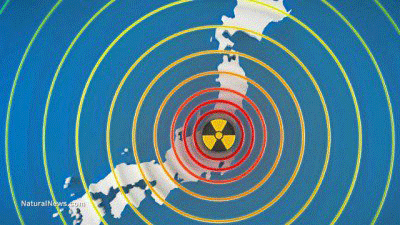
Protest continues against Japan’s further discharge of nuke-contaminated water
By Jiang Xueqing in Tokyo https://www.chinadaily.com.cn/a/202405/26/WS66531eb9a31082fc043c9296.html
2024-05-26
Japanese people continued to strongly oppose the discharge of nuclear-contaminated water from the wrecked Fukushima Daiichi nuclear power plant into the ocean during the latest round of radioactive water release.
Tokyo Electric Power Company, the operator of the Fukushima plant, started the sixth round of releasing nuclear-contaminated water into the sea on May 17. The company said it plans to discharge approximately 7,800 metric tons of radioactive water through June 4.
During a rally in front of the Prime Minister of Japan’s office in Tokyo on Friday, Kem Komdo, a 61-year-old Tokyo resident, said the discharge of nuclear-contaminated water into the ocean has no benefits at all, and the main risk is marine pollution.
Although Japanese media is promoting that the water treated through the Advanced Liquid Processing System, or ALPS, only contains tritium, Komdo said that is not true. He emphasized that the radioactive water contains various hidden contaminants that have come into contact with fuel debris, so the actual situation must be made clear.
“The (Japanese) government and TEPCO always tell the media to call it ‘ALPS-treated water’, not nuclear-contaminated water, saying that calling it nuclear-contaminated water causes harmful rumors. But that statement is clearly wrong because this is indeed contaminated water,” Komdo said. “By forcing us to call it ‘ALPS-treated water,’ TEPCO and the government are trying to evade responsibility for the Fukushima nuclear accident.”
The Fukushima Daiichi nuclear power plant suffered a triple meltdown following a major earthquake and subsequent tsunami on March 11, 2011.
Komdo said the Japanese government should change its policy to avoid discharging nuclear-contaminated water into the ocean and immediately switch to land storage as there is still space available.
“Otherwise, the government won’t gain the trust of China and other Pacific island countries, and it will also affect other diplomatic relations,” he said.
North Korea vows to boost nuclear posture after US subcritical nuke test
DPRK slams US for destabilizing global security through no-expolosion experiment, though expert downplays threat
NK News Jeongmin Kim , May 20, 2024
North Korea has condemned the U.S. for conducting a no-explosion nuclear experiment that it claims destabilizes global security, vowing to recalibrate its own nuclear deterrence measures in response.
The U.S. Energy Department’s National Nuclear Security Administration (NNSA) announced last week that it conducted a “subcritical experiment at an underground facility in Nevada on May 14 to collect information about the reliability and effectiveness of American nuclear warheads.
“This is a dangerous act that renders the extremely worsening global security environment more unstable, having seriously negative impact on the strategic balance among major nuclear powers,” an unnamed spokesperson of North Korea’s foreign ministry said in a statement on Monday.
Both the externally facing Korean Central News Agency and the domestic party daily Rodong Sinmun carried the statement.
The spokesperson called the U.S. the “world’s biggest nuclear weapons state” with a “strategic goal to militarily control other countries,” disqualifying it from discussing the threat of nuclear war.
It is “nothing but rhetoric,” the statement continues before referencing the strategic assets that visited South Korea in the past couple of years, the U.S.-ROK Nuclear Consultative Group on discussing joint nuclear planning and the joint tabletop exercise slated for August on North Korean nuclear use scenarios.
The latest test in Nevada has “added new tension to the military showdown among nuclear weapons states, fomenting the international nuclear arms race,” the statement reads, vowing to improve its nuclear defense posture against this threat.
However, Shin Seung-ki, a senior analyst at the Korea Institute for Defense Analyses (KIDA), told NK News that the U.S. test is not as threatening or new as North Korea described it. ………………………………………….
South Korean and U.S. authorities have said North Korea completed preparations for a seventh nuclear test around two years ago, but Pyongyang has not conducted one so far. https://www.nknews.org/2024/05/north-korea-vows-to-boost-nuclear-posture-after-us-subcritical-nuke-test/
North Korea says it forced to take measures to increase nuclear deterrence
20 May 2024, By Alimat Aliyeva, https://www.azernews.az/region/226324.html
The subcritical nuclear test conducted by the United States at the Nevada test site leads to an escalation of the global nuclear arms race, and Pyongyang is forced to take the necessary measures in this regard, Azernews reports.
It notes that the test “creates new tensions in the military confrontation between nuclear states and accelerates the global nuclear arms race.”
“In no case should the influence of this nuclear test on the military security situation in the region of the Korean Peninsula be allowed. In order to prepare for the strategic instability that is being created in the region and globally due to the unilateral action of the United States, we are forced to take the necessary measures to increase universal readiness for nuclear deterrence within the framework of our sovereign right and possible options,” the representative of the department added.
It is not said exactly what measures can be taken, but it is noted that the DPRK will “consistently protect the security, rights and interests of the state “by these actions, as well as “prevent the creation of a strategic imbalance and a security vacuum in the region of the Korean Peninsula.”
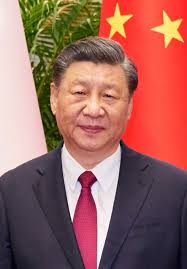
Xi outlines solution to Ukraine conflict
https://www.sott.net/article/491542-Xi-outlines-solution-to-Ukraine-conflict 19 May 24
Chinese President Xi Jinping has stressed that peace negotiations recognized by both Russia and Ukraine are the best way to end the ongoing conflict between the two nations.
Speaking during a meeting with Russian President Vladimir Putin on Thursday at the Chinese leader’s residential compound at Zhongnanhai, Xi argued that the entire global security architecture must be amended in order to end the fighting and avoid similar hostilities in the future, according to the Xinhua news outlet.
Putin is on his first state visit to China since he took office for the fifth time earlier this month.
Xi was cited as saying:
“China supports the timely convening of an international peace conference recognized by both Russia and Ukraine, with equal participation by all parties, and fair discussion of all options. Beijing is willing to aid in brokering the peace talks.”
“Global powers must address both the symptoms and the root cause [of the conflict], and we must consider both the present and the long term.
“The fundamental solution to the Ukraine crisis is to promote the construction of a balanced, effective, and sustainable new security architecture.”
Beijing has repeatedly rejected Western pressure to join in the condemnation of Russia over the Ukraine conflict. Since last year, China has been promoting a peace formula consisting of 12 points, including the cessation of hostilities and unilateral sanctions, mutual respect for national security concerns and the sovereignty of nations, and the rejection of a ‘Cold War’ mentality.
Kiev has rejected the formula as unrealizable because it does not demand a retreat of Russian forces from territories Kiev claims as its own. Ukraine has long insisted that a peace settlement can only be achieved on its terms, which include a return of all former Ukrainian territories, the withdrawal of Russian troops, and an international tribunal for Russian leaders.
Kiev’s Western backers plan to hold a summit on the Ukraine conflict in Switzerland next month, to which Russia has not been invited. Beijing has yet to officially confirm whether it will send a delegation.
Russia has welcomed China’s proposed peace formula from the start, having repeatedly stressed that it remains open to a political solution to the conflict. In an interview with Xinhua ahead of his visit to China, Putin said Beijing’s initiative showed “the genuine desire… to help stabilize the situation” in the region. He added that he would endorse the formula as it calls for a dialogue based on mutual consideration of the interests of all sides involved in the conflict, including Russia.
Japan starts 6th discharge of Fukushima nuclear-contaminated wastewater

CGTN, 17-May-2024
Japan on Friday started the sixth round of release of nuclear-contaminated wastewater from the crippled Fukushima Daiichi Nuclear Power Plant into the Pacific Ocean.
Despite opposition among local fishermen, residents as well as backlash from the international community, Tokyo Electric Power Company (TEPCO), the plant’s operator, started releasing the radioactive wastewater in the morning, the second round in fiscal 2024.
The same as the previous rounds, about 7,800 tonnes of wastewater are being discharged from about a kilometer off the coast of Fukushima Prefecture via an underwater tunnel until June 4.
According to the TEPCO, the concentrations of all radioactive substances other than tritium in the water stored in the tank scheduled for release were below the national release standards, while the concentration of tritium that cannot be removed will be diluted with seawater.
The Chinese Embassy in Japan expressed firm opposition to this unilateral move of ocean discharge. While safety and reliability have yet to be ensured, Japan’s dumping of nuclear-contaminated water has repeatedly raised risks to neighboring countries and marine ecology, a spokesperson for the embassy said.
The spokesperson called on the Japanese side to attach great importance to the concerns at home and abroad and to fully cooperate in setting up an independent international monitoring arrangement that remains effective in the long haul and has the substantive participation of stakeholders.
………………………….. In fiscal 2024, the TEPCO plans to discharge a total of 54,600 tonnes of contaminated water in seven rounds, which contains approximately 14 trillion becquerels of tritium. https://news.cgtn.com/news/2024-05-17/news-1tFIzr3u9Da/p.html
U.S. rejects China’s proposal to ban first use of nuclear weapons.

People’s World May 16, 2024 BY JOHN WOJCIK, MARK GRUENBERG AND BEN CHACKO
The U.S. has dismissed Chinese calls for a no-first-use treaty between nuclear weapons states, saying it has questions about China’s “sincerity.”
The outright dismissal of China’s proposal followed a major speech in which Biden announced radical tariffs of up to 100 percent, on steel imports from China. That speech follows months of U.S. military buildup in the waters off the coast of China, including the placement of additional nuclear submarines around the Korean peninsula, all in the name of “protecting” Taiwan, which is, of course, a part of China itself.
Undersecretary of State Bonnie Jenkins, the country’s top arms control official, told the Senate Foreign Relations Committee last night that the U.S. worried China had increased its number of nuclear warheads to over 500, might have 1,000 by 2030, and that this was proof that the country was not “sincere” about its proposal to ban first use of the apocalypse-engendering weapons.
The Biden administration’s claim that China had increased the number of its warheads to 500 is just that – an unverified claim. In addition, the U.S. has 12 times that number with an admitted 3,700 of such warheads.
The U.S. says China refuses to engage in nuclear disarmament talks with it. China actually has engaged in talks, first by discussing with the U.S. the need for the U.S. to reduce its outrageously large number of missiles, as compared to China’s number, to show it is serious about fairness. And now it has added to those talks with its proposal to ban the first use of the weapons.
China’s position is that it has an arsenal that is tiny in comparison with that of the United States and that the size of the arsenals has to be part of serious talks. China has also gotten India to sign a no-first-use deal between those two countries. While all these initiatives by China were underway the U.S. was busy unilaterally canceling nuclear arms deals between the U.S. and Russia and continuing to push expansion of NATO not just up to the borders of Russia but into the Pacific regions near China.
China also stores its warheads and delivery systems separately, to avoid the risk of launches by accident or misunderstanding, as almost happened in 1983, when Soviet lieutenant Stanislav Petrov recognized reports of incoming U.S. missiles as a system malfunction and prevented a retaliatory strike which could have begun World War III.
The new, highest-ever U.S. tariffs on Chinese products were announced by President Biden shortly before the Chinese peace initiatives were rejected by his administration. The tariffs would apply to government-subsidized Chinese steel, aluminum, solar cells, electric vehicles—rising to 100% tariffs this year—and their batteries, semiconductors, and some raw materials.
The Biden tariffs are much higher than the Trump tariffs that Biden opposed when Trump was president……………………………… more https://peoplesworld.org/article/u-s-rejects-chinas-proposal-to-ban-first-use-of-nuclear-weapons/—
China and Russia Disagree on North Korea’s Nuclear Weapons
Beijing and Moscow have different perspectives on – and different appetites for – Pyongyang’s nuclear program.
The Diplomat, By Wooyeal Paik, May 15, 2024
China has been ambivalent about North Korea and its strategic behaviors for the last few decades, leading scholars in China to describe North Korea as both “strategic asset” and “strategic liability.” North Korea, China’s sole military ally with an official treaty, the Sino-North Korean Treaty of Friendship, Cooperation, and Mutual Assistance, signed in 1961, has proved tough to handle, if not outright volatile, for its security and economic patron.
Nonetheless, North Korea’s geopolitical importance to China as a buffer state against the United States and its East Asian allies (South Korea and Japan) has not lessened. Even in the era of high-tech weapons such as missiles, military satellites, nuclear submarines, and fifth-generation fighter jets, all of which serve to reduce the strategic value of physical buffer zones, it is still effective and valuable for China not to confront the mighty hostile power, the United States, on its immediate land border. Ground forces are still the ultimate military presence, and sharing a border with a U.S. allied, unified Korea would also come at a psychological cost for China.
Beyond its role as a buffer state, North Korea’s value as leverage or a bargaining chip for China in Beijing’s relations with South Korea and the United States has been well recognized. In 2024, however, China may consider adding another layer to this leverage by supporting North Korea’s nuclear program, as Russia has done.
North Korea is a de facto nuclear state with a set of viable delivery mechanisms including intercontinental ballistic missiles (ICBMs) and submarine-launched ballistic missiles (SLBMs).
This nuclear element of the Kim regime has been regarded as the quintessential reason for an ever-growing regional security instability in Northeast Asia and beyond.
For China, North Korea – and particularly its nuclear program – is a strategic liability. China prioritizes stability in its neighborhood, but North Korea purposefully pursues instability right next to China. This conflict of interests between the treaty allies exacerbates Chinese national security concerns, particularly regarding the United States and its hub-and-spoke system in the Indo-Pacific area.
In response to North Korea’s rapid nuclear and missile developments, the United States has significantly ramped up its military presence on and around the Korean Peninsula, in consultation with its ally, South Korea. That includes the regular deployment of strategic (i.e., nuclear-capable) U.S. assets to the region, something China is not comfortable with.
Russia, however, takes a different view. Over the past year, Moscow has shifted its strategic approach to the North Korea’s nuclear capability and provocations, from viewing them as a nuisance that disrupts the Non-Proliferation Treaty (NPT) regime to a tactical countermeasure against the United States. From Russia’s perspective, distracting the U.S. – the primary military and economic presence as the NATO leader – is a goal unto itself, as Washington is a major obstacle to Russia’s desire to conquer Ukraine and influence the post-Soviet Central and Eastern Europe.
Russia has been importing North Korean weapons – 152 mm artillery ammunition,122 mm multiple rocket launcher ammunition, and other conventional weapons – for use against Ukraine. In return, it’s widely believed that North Korea receives Russia’s technical assistance for the research and development of advanced space and weapons technologies: nuclear-powered submarines, cruise and ballistic missiles, military reconnaissance satellites. North Korea also receives food and energy in addition to rare international support for its pariah regime.
Russia actively endorses North Korea as a nuclear state and supports its “legitimate” use of nuclear weapons for its self-defense and beyond. As Kim Jong Un embraces a lower nuclear threshold, Russian President Vladimir Putin and his ruling elites have also expressed their willingness to employ low-yield tactical nuclear weapons against Ukraine and European NATO countries.
Thus, North Korea has evolved into a double-layered tool for Russia, acting as both a buffer state and a nuclear threat against the United States in Northeast Asia and Europe. This accelerates the convergence of security between Indo-Pacific and Euro-Atlantic regions.
Despite Russia’s high-profile advances with North Korea, China is still thought to be the only nation with significant influence over Pyongyang. ……………………………………………………….. more https://thediplomat.com/2024/05/china-and-russia-disagree-on-north-koreas-nuclear-weapons/
Indonesia civil society groups raise concerns over proposed Borneo nuclear reactor

by Irfan Maulana on 14 May 2024, https://news.mongabay.com/2024/05/indonesia-civil-society-groups-raise-concerns-over-proposed-borneo-nuclear-reactor/
- Indonesia’s largest environmental advocacy group, Walhi, staged demonstrations in Jakarta and West Kalimantan province to raise awareness about a proposed nuclear power plant in West Kalimantan’s Bengkayang district.
- In 2021, a U.S. agency signed a partnership agreement with Indonesia’s state-owned power utility to explore possibilities for a reactor in the province. Survey work is currently being conducted to determine the project’s viability and safety.
- Some environmental groups have questioned the merit of the plan on safety grounds and the availability of alternative renewable sources.
JAKARTA — Civil society organizations in Indonesia staged protests in late April to raise awareness of a planned nuclear plant near Pontianak, capital of West Kalimantan province on the island of Borneo.
“We are advocating that West Kalimantan be kept away from the threat of a nuclear radiation disaster. Indonesia is not Chernobyl,” said Hendrikus Adam, executive director of the West Kalimantan chapter of the Indonesia Forum for the Environment, a national NGO known as Walhi, referring to the site of a notorious 1986 nuclear meltdown in the Ukrainian Soviet Socialist Republic.
Indonesia’s first experimental nuclear reactor, the TRIGA Mark II, opened in the city of Bandung in February 1965. Since then, however, the world’s fourth-largest country has yet to open a full-fledged nuclear power station.
In March 2023, Indonesia and the U.S. Trade and Development Agency (USTDA) signed a partnership agreement to develop small modular reactor technology for the archipelago’s power network. The agreement included a $1 million grant to PLN, the state-owned power utility, to carry out feasibility studies on a nuclear reactor.
PLN has proposed a 462-megawatt facility in West Kalimantan, which would use technology supplied by NuScale Power OVS, a publicly traded company based in Oregon in the U.S.
In capacity terms, that represents almost one-tenth of the giant Paiton coal-fired complex in East Java province, a mainstay of the Java-Bali power grid.
NuScale says the modular design of its technology has additional resilience to earthquakes — a significant consideration for civil engineering projects in Indonesia, one of the most seismically active countries in the world.
However, the technology encountered controversy after John Ma, a senior structural engineer with the U.S. Nuclear Regulatory Commission (NRC), questioned the commission’s approval of the design’s earthquake resistance. That “differing professional opinion” was subsequently dismissed on review.
In 2021, Indonesia’s national research agency, known as BRIN, carried out a seismic study on a prospective site in the West Kalimantan district of Bengkayang.
That early work is part of research under the internationally agreed Probabilistic Seismic Hazard Assessment, which is recommended by the International Atomic Energy Agency as part of its safety regimen.
Risk assessment
At Walhi’s demonstration on April 26 in Jakarta, volunteers with the environmental group unfurled banners stating “Indonesia is not Chernobyl.” Lessons from the Chernobyl incident, as well as the 2011 Fukushima Daiichi nuclear plant meltdown in Japan — the latter triggered by an earthquake — inform much of the civil society campaign in Indonesia.
“The number of human and environmental tragedies shows that human-created technology such as nuclear power plants cannot be completely controlled,” Adam said.
He also questioned the government’s choice of Indonesian Borneo, known locally as Kalimantan, on the basis that it isn’t as seismically active as islands like Java, Sumatra and Sulawesi.
“The assumption that Kalimantan is safe from this disaster is of course not true,” Adam said. “Kalimantan has earthquake sources, such as the Meratus Fault, Mangkabayar Fault, Tarakan Fault, Sampurna Fault and Paternoster Fault.”
Walhi also pointed to slow uptake of solar and other renewable energy sources in Indonesia, which haven’t received the kinds of subsidies seen in other countries transitioning to clean energy.
“We have so many choices for energy transition, why do we have to choose technology that is actually dangerous?” said Fanny Tri Jamboree Christianto, Walhi’s energy campaign lead.
“Bouncing-back” and other resilience neologisms championed by the state are inherently at odds with the irreversibility of nuclear waste.

Rhetoric of resilience
Recovery of the state or recovery of the people?
Beyond Nuclear International By Mia Winther-Tamaki, 12 May 24
The Japanese people and landscapes still feel the unending impacts of a nuclear catastrophe that occurred a dozen years ago. Thousands of black bags litter the Fukushima exclusion zone enclosing radioactive earth and rubbish with nowhere to go. Japan has begun releasing millions of tons of radioactive wastewater into the sea. The death and destruction of the earthquake and tsunami — a tragedy in itself — was compounded by nuclear calamity…………………….
The Japanese government was responsible for not only creating the circumstance of neglect that caused the nuclear meltdown, but also for exacerbating the impacts of nuclear fallout through a delayed and opaque response that downplayed the severity of the catastrophe…………….
Following the nuclear disaster, Japan shifted to a necessary post-disaster survival and recovery strategy that can be characterized by the term “resilience,” defined by the United Nations Office for Disaster Risk Reduction as the ability to “resist, absorb, accommodate to and recover from the effects of a hazard in a timely and efficient manner, including through…preservation and restoration…”………………………………………………………………………..
“Bouncing-back” and other resilience neologisms championed by the state are inherently at odds with the irreversibility of nuclear waste. The Japanese translation of resilience, “fukkō” (復興), was employed as a catchphrase in building “apparatuses of [capital] capture” out of crisis, according to Sabu Kohso in his 2020 book Radiation and Revolution. In what Kohso calls the “nuclear capitalist nation-state,” the government endeavored to “build back better” and rejuvenate the national economy amidst an unprecedented crisis by implementing a series of fukkō reforms. These reforms included cuts in public spending, tax incentives targeted at international investors and the procurement of construction contracts, all of which ultimately proved advantageous for nuclear corporations and other private actors in the “business of reconstruction.”
The government used the disaster conveniently for profit-making, further transferring the nation’s wealth to the elites, while further immiserating the people. TEPCO exempted itself from responsibility for the nuclear meltdown when it referred to radiation as a “masterless object” (無主物), therefore absolving any self-accountability for cleaning up the radiation emitted from TEPCO’s own nuclear reactors.
Strategic documents such as the government’s 2012 white paper titled, “Toward a Robust and Resilient Society” were published with the intention of “nurturing the dreams and hopes of the people,” ………………………………………………………………….
While enlisting idealistic language and visions of a future, the Japanese state failed to provide basic amenities, housing, resources and support for the Japanese people who had essentially become nuclear refugees. The state divisively categorized evacuees as either “mandatory” or “voluntary,” based on the proximity of their homes to the site of the nuclear meltdown, though it has been shown that deadly levels of radioactivity persisted far outside mandatory zoned areas.
……………………………………………………………..The media ignored the resistance movement, dismissing the public’s widespread anticipation and anxiety about future nuclear accidents, and instead toed the government’s line about nuclear energy as safe.
Community-driven resilience led by activists focused on a diverse range of concerns, including anti-capitalism, feminism and environmentalism. Spearheading this resistance were mothers and those who work to provide everyday needs, tirelessly organizing networks of information-sharing and support. For the sake of their children and loved ones, those in caregiving roles questioned the government’s opaque reports of radiation levels, though they were often denigrated as “hysterical” and “paranoid” by authorities and other family members, according to Kohso. Within the confines of Japan’s patriarchal society, which frequently undermines the value of womens’ knowledge, female activists subverted norms that “freed them from a degree of social control, giving them greater freedom to mobilize.”
Author Nicole Frieiner documents how women mobilized resistance in informal digital spaces, such as a Facebook group named “Fukushima Network for Saving Children from Radiation,” and a blog titled “Connecting Mother’s Blog.” They created safe and accessible spaces that supported alternative points of connection for people across the world. Artists were also crucial to the Fukushima nuclear resistance.
………………………………………………………………… Survivors of Fukushima must live not only with the trauma caused by the earthquake, tsunami and nuclear meltdown, but also that which followed in the ambiguous aftermath — years of a violent lack of acknowledgement, dignity and respect from public authorities………………………………………………………. more https://beyondnuclearinternational.org/2024/05/12/rhetoric-of-resilience/
1 This Month

of the week – Shut Down Drone Warfare!


Tell the Ukrainian Government to Drop Prosecution of Peace Activist Yurii Sheliazhenko

Petition to revoke the licensing of the Near Surface Nuclear Disposal Facility (NSDF) at Chalk River. https://www.ourcommons.ca/petitions/en/Petition/Details?Petition=e-7247
To see nuclear-related stories in greater depth and intensity – go to https://nuclearinformation.wordpress.com
-
Archives
- March 2026 (251)
- February 2026 (268)
- January 2026 (308)
- December 2025 (358)
- November 2025 (359)
- October 2025 (376)
- September 2025 (257)
- August 2025 (319)
- July 2025 (230)
- June 2025 (348)
- May 2025 (261)
- April 2025 (305)
-
Categories
- 1
- 1 NUCLEAR ISSUES
- business and costs
- climate change
- culture and arts
- ENERGY
- environment
- health
- history
- indigenous issues
- Legal
- marketing of nuclear
- media
- opposition to nuclear
- PERSONAL STORIES
- politics
- politics international
- Religion and ethics
- safety
- secrets,lies and civil liberties
- spinbuster
- technology
- Uranium
- wastes
- weapons and war
- Women
- 2 WORLD
- ACTION
- AFRICA
- Atrocities
- AUSTRALIA
- Christina's notes
- Christina's themes
- culture and arts
- Events
- Fuk 2022
- Fuk 2023
- Fukushima 2017
- Fukushima 2018
- fukushima 2019
- Fukushima 2020
- Fukushima 2021
- general
- global warming
- Humour (God we need it)
- Nuclear
- RARE EARTHS
- Reference
- resources – print
- Resources -audiovicual
- Weekly Newsletter
- World
- World Nuclear
- YouTube
-
RSS
Entries RSS
Comments RSS
 nuclear-news