A robot resumes mission to retrieve a piece of melted fuel from inside a damaged Fukushima reactor

The goal of the operation is to bring back less than 3 grams (0.1 ounce) of an estimated 880 tons of fatally radioactive molten fuel that remain in three reactors.
An operation to send an extendable robot into one of three damaged reactors at Fukushima Daiichi nuclear power plant to bring back a tiny gravel of melted fuel debris has resumed, nearly three weeks after its earlier attempt was suspended due to a tech…
By MARI YAMAGUCHI Associated Press, September 10, 2024, https://abcnews.go.com/International/wireStory/robot-resumes-mission-retrieve-piece-melted-fuel-inside-113538057
An extendable robot on Tuesday resumed its entry into one of three damaged reactors at Fukushima Daiichi nuclear power plant to retrieve a fragment of melted fuel debris, nearly three weeks after its earlier attempt was suspended due to a technical issue.
The collection of a tiny sample of the spent fuel debris from inside of the Unit 2 reactor marks the start of the most challenging part of the decadeslong decommissioning of the plant where three reactors were destroyed in the March 11, 2011, magnitude 9.0 earthquake and tsunami disaster.
The sample-return mission, initially scheduled to begin on Aug. 22, was suspended when workers noticed that a set of five 1.5-meter (5-foot) add-on pipes to push in and maneuver the robot were in the wrong order and could not be corrected within the time limit for their radiation exposure, the plant operator Tokyo Electric Power Company Holdings said.
The pipes were to be used to push the robot inside and pull it back out when it finished. Once inside the vessel, the robot is operated remotely from a safer location.
The robot, nicknamed “telesco,” can extend up to about 22 meters (72 feet), including the pipes pushing it from behind, to reach its target area to collect a fragment from the surface of the melted fuel mound using a device equipped with tongs that hang from the of the robot.
The mission to obtain the fragment and return with it is to last about two weeks.
The mix-up, which TEPCO called a “basic mistake,” triggered disappointment and raised concerns from officials and local residents. Industry Minister Ken Saito ordered TEPCO President Tomoaki Kobayakawa a thorough investigation of the cause and preventive steps before resuming the mission.
The pipes were brought into the Unit 2 reactor building and pre-arranged at the end of July by workers from the robot’s prime contractor and its subsidiary, but their final status was never checked until the problem was found.
TEPCO concluded the mishap was caused by a lack of attention, checking and communication between the operator and workers on the ground. By Monday, the equipment was reassembled in the right order and ready for a retrial, the company said.
The goal of the operation is to bring back less than 3 grams (0.1 ounce) of an estimated 880 tons of fatally radioactive molten fuel that remain in three reactors. The small sample will provide key data to develop future decommissioning methods and necessary technology and robots, experts say.
The government and TEPCO are sticking to a 30 to 40-year cleanup target set soon after the meltdown, despite criticism it is unrealistic. No specific plans for the full removal of the melted fuel debris or its storage have been decided.
Indian nuclear weapons, 2024
By Hans M. Kristensen, Matt Korda, Eliana Johns, Mackenzie Knight | September 5, 2024
India continues to modernize its nuclear arsenal, with at least four new weapon systems and several new delivery platforms under development to complement or replace existing nuclear-capable aircraft, land-based delivery systems, and sea-based systems. Several of these systems are nearing completion and will soon be fielded.
We estimate that India may have produced enough military plutonium for 130 to 210 nuclear warheads but likely has produced only around 172, although the country’s warhead stockpile is likely growing. The Nuclear Notebook is researched and written by the staff of the Federation of American Scientists’ Nuclear Information Project: director Hans M. Kristensen, associate director Matt Korda, senior research associates Eliana Johns and Mackenzie Knight.
This article is freely available in PDF format in the Bulletin of the Atomic Scientists’ digital magazine (published by Taylor & Francis) at this link.
…………………..India continues to modernize its nuclear weapons arsenal and operationalize its nascent triad. We estimate that India currently operates eight different nuclear-capable systems: two aircraft, five land-based ballistic missiles, and one sea-based ballistic missile. At least five more systems are in development, most of which are thought to be nearing completion and to be fielded with the armed forces soon.
Research methodology and confidence
The Indian government does not publish numbers about the size of its nuclear weapon stockpile. The analyses and estimates made in the Nuclear Notebook are therefore derived from a combination of open sources: (1) state-originating data (e.g. government statements, declassified documents, budgetary information, military parades, and treaty disclosure data); (2) non-state-originating data (e.g. media reports, think tank analyses, and industry publications); and (3) commercial satellite imagery. …………………………………………………………….
…………Fissile material and warhead inventory estimates
India is one of only a handful of countries believed to be producing both highly enriched uranium (HEU) and weapons-grade plutonium, although its HEU production is largely assumed to be focused on producing fuel for its growing number of nuclear-powered vessels and submarines (Frieß et al. 2024).
………………..Nuclear doctrine
Tensions between India and Pakistan constitute one of the most concerning nuclear hotspots on the planet. These two nuclear-armed countries engaged in open hostilities as recently as November 2020, when Indian and Pakistani soldiers exchanged artillery and gunfire over the Line of Control, resulting in at least 22 deaths. ……………………………………………………………………………………………………………………………………………………………………………………………………………………………………………………. more https://thebulletin.org/premium/2024-09/indian-nuclear-weapons-2024/
Fukushima fishermen not in the clear yet
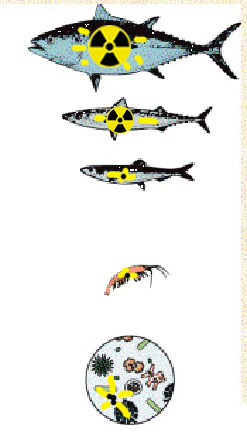
Japan Times 1 Sept 24
A year has passed since treated water containing trace amounts of tritium started to be released into the sea from the crippled Fukushima No. 1 nuclear power plant.
While the move is said to have had no significant impact on the prices of fishery products, tourism or the surrounding environment, challenges remain, including a number of hurdles for Tokyo Electric Power Company Holdings’ decommissioning of its reactors and measures to reduce the generation of contaminated water………………………………………………………..
In the absence of price decreases, the central and prefectural governments conclude that there has been almost no reputational impact to seafood from the region.
However, those in the local fisheries industry say the prices are holding up because there is momentum to support Fukushima, but they are not optimistic about the future due to it being a temporary measure.
The trading of Joban-mono increased in response to a central government initiative after the treated water started to be released.
But this process is expected to continue for around 30 years.
In April, the release of treated water was temporarily halted after a worker accidentally damaged a power cable at the Fukushima plant, partially cutting off the supply of power.
If such incidents continue to occur, they could pose reputational risks to Joban-mono.
………………………………………………………………………………………….. the local fishermen have lost trust in the central government after it decided on proceeding with the plan to release the treated water into the ocean despite opposition from the fisheries industry in and out of Fukushima Prefecture.
In announcing the decision, Prime Minister Fumio Kishida said, “Even though operations will last for decades, the government will take responsibility until the release is completed.”
The local fishing industry has become increasingly distrustful of Kishida, who suddenly expressed his intention of not seeking reelection as Liberal Democratic Party leader in this month’s presidential race.
“Concerns over treated water will remain for a long time,” a Fukushima fisheries industry official said. “We want the government to work with us as one to cope with the issue.” https://www.japantimes.co.jp/news/2024/09/02/japan/society/fukushima-fisheries-radioactive-water/
NATO Ally Sounds Alarm on ‘Risks’ of Nuclear War With Russia
https://www.newsweek.com/nato-ally-turkey-hakan-fidan-sounds-alarm-nuclear-risks-russia-1946854 30 Aug 24
Turkish Foreign Minister Hakan Fidan issued a warning about the “risks” of nuclear war with Russia, according to Russian state news agency Tass.
The Russia-Ukraine war has raged on for more than two years after Russian President Vladimir Putin ordered the “special military operation” in Ukraine in February 2022. Although Moscow aimed for a quick victory over its Eastern European neighbor, viewed as having a much smaller military, its spirited defense effort bolstered by Western aid, has blocked it from making substantial gains.
Recent weeks have seen Ukraine launch its own counteroffensive into Kursk—marking the first time Russian territory has been seized since World War II.
The conflict, however, has long raised concerns about whether Russia could deploy nuclear weapons. Putin has repeatedly made eyebrow-raising statements about nuclear weapons amid the ongoing war as Moscow has more nuclear warheads than any other country, according to the International Campaign to Abolish Nuclear Weapons (ICANW).
On Friday, Fidan raised concerns about whether nuclear weapons would eventually be used in Ukraine. Turkey is notably a key ally to the United States and member of the North Atlantic Treaty Organization (NATO), though Turkish President Recep Tayyip Erdoğan has at times broken from the West on Ukraine.
“Unfortunately, a war in the heart of Europe between Russia and Ukraine is in its third year. It risks escalating into a war involving the use of nuclear weapons,” Fidan said during a TRT Haber broadcast, Tass reported.
He added that there is “nothing more humane than the demand to stop the war” and that negotiations need to take place to “prevent our region from being further devastated by war.”
Newsweek has reached out to the Russian, Turkish and Ukrainian foreign ministries for comment via email
His remarks come after Sergey Naryshkin, director of Russia’s Foreign Intelligence Service (SVR) on Thursday accused the U.S. of “trying to bring imbalance to the system of international security” in the nuclear sphere.
In June, Putin said the possibility of Russia using nuclear weapons amid the war should “not be taken lightly” by the West.
“For some reason, the West believes that Russia will never use it…We have a nuclear doctrine, look what it says,” the Russian leader said, referring to his country’s policy of allowing nuclear weapon usage if “the very existence of the state is put under threat.”
“If someone’s actions threaten our sovereignty and territorial integrity, we consider it possible for us to use all means at our disposal,” Putin added. “This should not be taken lightly, superficially.”
The U.S. has been a key ally to Ukraine amid the conflict, with the Biden administration, along with many other world leaders, saying the invasion was unprovoked and lacks justification. Washington has given billions of dollars in military aid to Kyiv that has proven crucial to its defense efforts.
Ukraine’s Kursk offensive sparked nuclear concerns from Russia, which earlier this month accused Ukraine of attempting to attack a nuclear power plant using drones.
Tepco aims to dismantle Fukushima water tanks from 2025
Tokyo Electric Power Company Holdings aims to begin dismantling tanks used for storing treated wastewater in 2025. The tanks are now empty following water discharges into the Pacific since August last year.
Tepco released a total of 62,400 metric tons of treated water from its meltdown-stricken Fukushima No. 1 nuclear power plant in eight rounds of discharges over the past year.
Investigations by the government and Tepco into the surrounding sea areas have shown that the concentration of the radioactive substance tritium, contained in the treated water, is far below the safety limit. Last month, the International Atomic Energy Agency published a report that the water releases meet international safety standards………. (Subscribers only)
Japan Times 26th Aug 2024
https://www.japantimes.co.jp/news/2024/08/26/japan/fukushima-water-tanks-dismantle/
Central Japan nuclear reactor fails to pass safety review
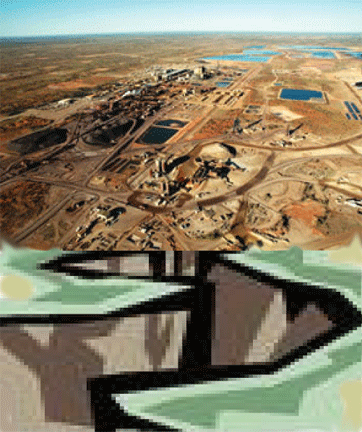
Tsuruga plant’s No. 2 reactor may lie above active fault in Fukui, watchdog says
https://asia.nikkei.com/Business/Energy/Central-Japan-nuclear-reactor-fails-to-pass-safety-review— 28 Aug 24
TOKYO (Kyodo) — Japan’s nuclear watchdog on Wednesday decided that a reactor in Fukui Prefecture failed to pass its restart safety review, marking the first such case since the regulatory body’s founding after the 2011 Fukushima nuclear crisis.
The No. 2 reactor at the Tsuruga plant, operated by Japan Atomic Power, fell short of the safety requirements due to a possible active fault underneath the offline unit. The Nuclear Regulation Authority plans to seek public comments on its assessment report before making its decision official, possibly in October.
In quake-prone Japan, building reactors or other important safety facilities directly above active faults is prohibited.
Japan Atomic Power first applied for the safety screening with the hope of restarting the reactor in November 2015.
But a safety review team of the NRA concluded in July it could not rule out that an active fault located around 300 meters north of the reactor building could potentially stretch right beneath the facility.
The assessment process for the reactor had been rocky, with proceedings suspended twice after it was revealed that Japan Atomic Power had submitted documents that included inaccuracies and data rewritten without approval. It reapplied in August last year.
The Tsuruga nuclear plant is a two-unit complex, with the No. 1 reactor set to be scrapped.
The No. 2 reactor, which started commercial operations in February 1987, went offline in May 2011.
Japan revamped its regulatory setup by launching the NRA in 2012 and has also introduced a set of new safety requirements to reflect the lessons learned from the disaster at Tokyo Electric Power Co. Holdings’ Fukushima Daiichi plant, triggered by a huge earthquake and tsunami in March 2011.
South Korea pushes to export nuclear reactors to Europe

Asian nation seeks to become leading player in market dominated by China and Russia
Ft.com Song Jung-a and Christian Davies in Seoul, Raphael Minder in Warsaw, Sarah White in Paris and Alice Hancock in Brussels , 29 Aug 24,
South Korea is accelerating its push to export nuclear reactors to Europe as it seeks to become a leading player in a global market dominated by China and Russia.
After beating Westinghouse of the US and France’s EDF to become preferred bidder on a $17bn project in the Czech Republic in July, state-run utility Korea Hydro & Nuclear Power is set to sign a contract early next year for two reactors in the central European country.
The deal, if completed, will mark Korea’s first major overseas nuclear power project in 15 years, since a consortium led by KHNP parent Kepco won a $20bn contract in 2009 to build and operate four nuclear plants in the United Arab Emirates.
Whang Joo-ho, the president of KHNP, said the company was conducting a feasibility study for a nuclear power plant in the Netherlands and was in talks to build reactors in Finland and Sweden as it aims to export 10 more reactors globally by 2030.
Kepco has also held early-stage discussions with British officials about building a new station on the island of Anglesey off the coast of Wales. ……………………………………………………………………………………………………
There could be bumps along the way for the South Koreans, however. KHNP faces claims from Westinghouse that they used its proprietary technology for their APR1400 reactors. A US district court last year dismissed Westinghouse’s lawsuit that argued that the Korean companies violated US export regulations requiring US government approval for technology sharing. However, the dispute remains unresolved as the court did not rule on the issue of intellectual property infringement.
The Czech deal has highlighted South Korea’s efforts at a time when projects run by western competitors including EDF remain mired in construction delays and cost overruns.
Although Ahn, the South Korean industry minister, said earlier this month that the two companies were “in last-stage talks” to settle the disputes, the US company this week filed an appeal with the Czech anti-monopoly office in protest at the selection of KHNP as the preferred bidder.
“KHNP neither owns the underlying technology nor has the right to sub-licence it to a third party without Westinghouse consent,” the US company said……………………………………………………………
Please use the sharing tools found via the share button at the top or side of articles. Copying articles to share with others is a breach of FT.comT&Cs and Copyright Policy. Email licensing@ft.com to buy additional rights. Subscribers may share up to 10 or 20 articles per month using the gift article service. More information can be found here.
https://www.ft.com/content/85a7e313-6089-4ba9-8f5b-f45adcbc5074
Suh Kyun-ryul, a nuclear expert and a former professor at Seoul National University, said KHNP would probably have to reach a financial settlement with Westinghouse. “This could even end up as a lossmaking deal,” he said. Suh also noted that South Korea was constrained by a long-standing agreement with the US that was signed in the 1950s to restrict Seoul’s ability to develop a nuclear weapons programme.
Under the agreement, South Korea’s access to raw material supplies is limited and it is not allowed to conduct uranium enrichment or the reprocessing of used fuel. Long-term buyers were likely to ask for a one-stop service ranging from nuclear fuel supply to waste disposal, he said, adding the US agreement remained “South Korea’s Achilles heel”. https://www.ft.com/content/85a7e313-6089-4ba9-8f5b-f45adcbc5074
Hokkaido more plugged in to renewable energy than rest of Japan
Hokkaido had over 40% of its electricity generated by renewable energy
sources in fiscal 2023, nearly twice the national average and already above
the maximum share that the central government is looking to achieve by
2030.
With use of renewables — especially wind power — expected to grow
further, the local government has set a goal of getting 60% of its
electricity from solar, on and offshore wind, biomass, hydropower,
geothermal and some nuclear energy by 2030.
For all of Japan, the average
goal is to have between 36% and 38% of electricity be from renewables by
then.
Japan Times 26th Aug 2024
https://www.japantimes.co.jp/news/2024/08/26/japan/society/hokkaido-renewable-energy/
North Korea condemns new US nuclear strategic plan report
VOA News, Seoul, South Korea26 Aug 24
North Korea vowed Saturday to advance its nuclear capabilities, reacting to a report that the United States had revised its own nuclear strategic plan.
The country will “bolster up its strategic strength in every way to control and eliminate all sorts of security challenges that may result from Washington’s revised plan,” the official Korean Central News Agency (KCNA) reported.
The New York Times reported this week that a U.S. plan approved by President Joe Biden in March was to prepare for possible coordinated nuclear confrontations with Russia, China and North Korea.
The highly classified plan for the first time reorients Washington’s deterrent strategy to focus on China’s rapid expansion in its nuclear arsenal, the Times said.
KCNA said North Korea’s foreign ministry “expresses serious concern over and bitterly denounces and rejects the behavior of the U.S.”
It added North Korea vowed to push forward the building of nuclear force sufficient and reliable enough to firmly defend its sovereignty.
Pyongyang and Moscow have been allies since North Korea’s founding after World War II and have drawn even closer since Russia’s 2022 invasion of Ukraine.
The United States and Seoul have accused North Korea of providing ammunition and missiles to Russia for its war in Ukraine.
Pyongyang, which has declared itself an “irreversible” nuclear weapons power, has described allegations of supplying weapons to Russia as “absurd.”…………………………………… more https://www.voanews.com/a/north-korea-condemns-new-us-nuclear-strategic-plan-report/7755256.html
China keeps door firmly closed to Japanese seafood imports
Japan Times, Zhoushan, China – 24 Aug 24
China is keeping its door tightly shut to Japanese fishery products after imposing an import ban a year ago in protest against the discharge of treated water into the sea from a crippled nuclear power plant in Japan.
Despite Tokyo’s repeated assurances that the procedure is safe, Chinese officials still refer to the treated water, which contains small amounts of radioactive tritium, as “nuclear-contaminated water.”
Tokyo and Beijing are in talks over the issue but there are no clues yet as to how the situation could be resolved.
In a meeting with Japanese Foreign Minister Yoko Kamikawa late last month, Chinese Foreign Minister Wang Yi reiterated Beijing’s demand that an international system to monitor the water release be established.
China imposed the blanket ban on fishery products from Japan on Aug. 24 last year immediately after the Fukushima No. 1 nuclear power plant started releasing treated water.
Chinese trade statistics show that no fishery products, except aquarium fish, have been imported from Japan since September last year…………………………………………..
The Japanese food company’s sales in China have yet to return to normal levels. “The situation remains tough,” the food company official said.
The impact of the import ban has spread further than Beijing had anticipated.
A woman in her 40s in Beijing said she has not eaten marine products for a long while.
……………………………………………Beijing has said seafood sold in China is safe because strict radiation inspections are conducted in China.
But a dealer in fishery products in Zhoushan said that the ocean is connected. It is illogical that Japanese products are dangerous and Chinese products are safe, the dealer said.
In China, experts’ views that the treated water would reach the Chinese coast as early as this spring spread in state media and on social media. ……………………………………………… https://www.japantimes.co.jp/business/2024/08/24/china-ban-japan-seafood/—
US crying wolf over China’s ‘nuclear threat’ while expanding nuclear arsenal
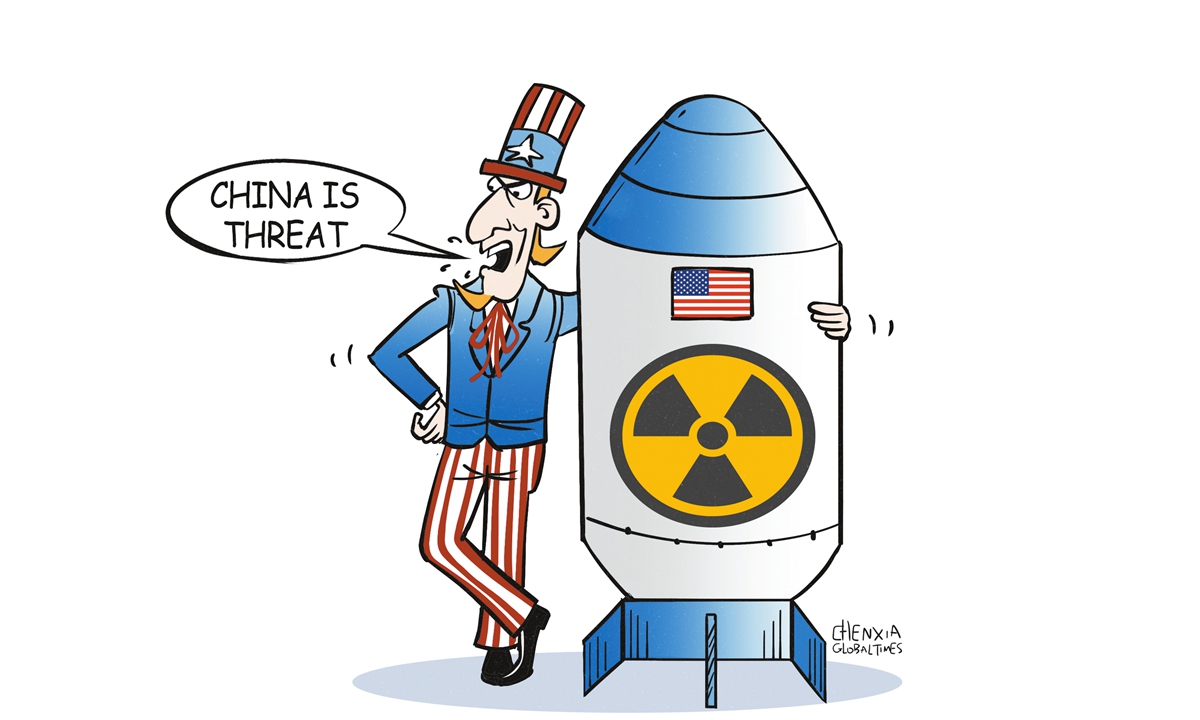
Aug 22, 2024 https://www.globaltimes.cn/page/202408/1318466.shtml
On Tuesday, a New York Times report caused quite a stir: US President Joe Biden has ordered US forces to prepare for “possible coordinated nuclear confrontations with Russia, China and North Korea.” It sounds like the US president was instructing the military to prepare for doomsday, observers pointed out.
The report revealed that in March, Biden approved a highly classified nuclear strategy plan called “Nuclear Employment Guidance,” which for the first time reorients the US’ deterrent strategy to focus on the so-called threat posed by China’s rapid expansion in its nuclear arsenal. The article states that this shift comes as the Pentagon believes China’s stockpiles will rival the size and diversity of the US’ and Russia’s over the next decade.
With over 5,000 nuclear warheads, the US possesses the world’s largest and most advanced nuclear arsenal. So why does it repeatedly target China in its nuclear threat rhetoric? This can be traced back to a dilemma faced by the US Department of Defense – how to justify maintaining such a massive nuclear arsenal in the post-Cold War world. To secure more defense budgets for the domestic military-industrial complex, the US chooses to constantly manufacture or exaggerate baseless “nuclear threats.” And China has become the best excuse.
What the US truly seeks is to ensure that its power far exceeds that of any other country in the world, allowing it to threaten and coerce other nations at will, without fear of retaliation. As a hegemonic state, US’ security is built on the insecurity of other countries. To maintain its hegemonic status, the US struggles to ensure its absolute superiority in power, with nuclear weapons being a crucial tool in maintaining its global dominance. Therefore, this new nuclear strategy plan is an excuse for expanding its nuclear arsenal and sustaining its military hegemony.
China and the US have fundamentally different perceptions of the strategic role of nuclear weapons. China has repeatedly emphasized that it pursues a nuclear strategy of self-defense, and is committed to the policy of no first use of nuclear weapons. China does not engage in any nuclear arms race with any other country, and keeps its nuclear capabilities at the minimum level required for national security. The notion of establishing an offensive nuclear hegemony or pursuing the so-called goal of rivaling the nuclear arsenal size of the US does not align with China’s strategic logic. As experts pointed out, China’s development of nuclear weapons is aimed at avoiding threats from other nuclear-armed states.
No matter how the US fabricates or exaggerates the so-called China threat narrative, China’s nuclear development follows its own set pace, including a measured increase in the quantity and quality of its nuclear arsenal, which will not be swayed by the US’ interference. This is a necessary measure for China in a complex international environment to safeguard its national security and territorial integrity – a legitimate act of self-defense, Shen Yi, a professor at Fudan University, told the Global Times.
The US repeatedly harps on the “China nuclear threat” narrative, yet it is, in fact, the one that poses the biggest nuclear threat to the world. In possession of the largest nuclear arsenal in the world, the US follows a nuclear policy that allows first-use of nuclear weapons. In recent years, the US has invested heavily to miniaturize nuclear weapons, lowering the threshold of their use in real-combat, and used nuclear weapons as a bait to hijack its allies and partners. Its irresponsible decisions and actions have resulted in the proliferation of nuclear risks, and its attempts to maintain hegemony and intimidate the world with nuclear power have been fully exposed.
There will be no winners in a nuclear war. We urge the US to abandon Cold War mentality, recognize that a nuclear war cannot be won and must never be fought, reduce the role of nuclear weapons in national and collective security policies, and take concrete actions to promote global strategic stability, instead of doing the opposite. Instead of smearing and hyping up China, the US should reflect on itself and consider how to rebuild mutual trust with China through dialogue and sincerity.
The U.S. and China Can Lead the Way on Nuclear Threat Reduction

Policies of “no first use” are a model for nuclear states.
Foreign Policy, By Zhou Bo, a senior fellow at the Center for International Security and Strategy at Tsinghua University and a retired senior colonel in the Chinese People’s Liberation Army. August 20, 2024,
Since the end of the Cold War, the role of nuclear weapons has only grown. Nuclear arsenals are being strengthened around the world, with many nuclear states continuing to modernize their arsenals. In June, outgoing NATO Secretary-General Jens Stoltenberg said that the alliance was in talks to deploy more nuclear weapons, taking them out of storage and placing them on standby. Robert C. O’Brien, a former national security advisor to former U.S. President Donald Trump, has urged him to conduct nuclear tests if he wins a new term, arguing that it would help the United States “maintain technical and numerical superiority to the combined Chinese and Russian nuclear stockpiles.”
There are two bleak conclusions about nuclear diplomacy in this age. First, it will be impossible to ban such weapons anytime soon. Since its passage in 2017, no nuclear-armed states have signed the United Nations Treaty on the Prohibition of Nuclear Weapons, some of them instead contending that it will distract attention from other disarmament and nonproliferation initiatives.
It is also very hard, if not impossible, to convince these states to reduce their nuclear stockpiles amid ever-intensifying geopolitical and military competition. On the contrary, in February 2023, Russia announced that it was suspending its participation in the 2010 Treaty on Measures for the Further Reduction and Limitation of Strategic Offensive Arms (New START)—the last remaining nuclear arms control treaty limiting Russian and U.S. strategic nuclear forces.
In response, the United States has also suspended the sharing and publication of treaty data. In November, Russia went a step further and withdrew its ratification of the Comprehensive Nuclear Test Ban Treaty (CTBT), citing “an imbalance” with the United States, which has failed to ratify the treaty since it opened for signature in 1996.
Amid such a situation, it is impossible for Beijing to stand by idly. The Stockholm International Peace Research Institute estimates that the size of China’s nuclear arsenal has increased from 410 warheads in January 2023 to 500 in January 2024, and it is expected to continue to grow. For the first time, China may also now be deploying a small number of warheads on missiles during peacetime. According to the U.S. Defense Department, China is likely to increase its nuclear warheads to 1,500 by 2035.
Given this reality, perhaps the most promising near-term way to guard against nuclear risks is not by limiting the number of nuclear weapons but by controlling the policies that govern their use. In this regard, a pledge by nuclear-armed states of “no first use” of nuclear weapons looks to be the most realistic approach in reducing the escalation of nuclear threats.
In theory, no first use refers to a policy by which a nuclear-armed power formally refrains from the use of nuclear weapons or other weapons of mass destruction in warfare, except in the case of doing so as a second strike in retaliation to an attack by an enemy power using weapon of mass destruction.
Of the five nuclear states that have signed onto the Treaty on the Nonproliferation of Nuclear Weapons (NPT)—China, France, Russia, the United Kingdom, and the United States—only China has ever declared a no-first-use policy. On Oct. 16, 1964, when China successfully detonated its first atomic bomb, the country immediately declared that it would not be the first to use nuclear weapons at any time and under any circumstances, and unconditionally committed itself not to use or threaten to use nuclear weapons against nonnuclear states or in nuclear-weapon-free zones…………………………………………..
All nuclear powers could afford to adopt a formal no-first-use policy—taking the moral high ground without reducing their capabilities for retaliation.
Though it has never adopted a no-first-use policy itself, the United States’ nuclear posture is actually more similar to China’s than it seems. In its 2022 Nuclear Posture Review, the Biden administration declared that it would only consider the use of nuclear weapons “in extreme circumstances to defend the vital interests of the United States or its allies and partners.” But it is hard to imagine which interests are so vital that they might require Washington to use nuclear weapons as a first measure to defend them.
To be sure, it is important for the United States to assure its allies that it will follow through on its deterrent promises. It is equally hard to imagine who would venture to launch a nuclear strike on a U.S. ally, knowing the dire potential consequences.
The United Kingdom’s nuclear deterrent, meanwhile, is operationally independent. But in terms of its nuclear policy, the British government has made it clear that “we would consider using our nuclear weapons only in extreme circumstances of self-defence, including the defence of our NATO allies.” France, meanwhile adheres to a principle of “strict sufficiency.”
The real challenge, then, is getting Russia to commit to a no-first-use policy. The Soviet Union adopted a formal policy of no first use in 1982. But after its dissolution, the Russian Federation reversed this approach in 1993, likely to mitigate the comparative weakness of the Russian Armed Forces in the post-Soviet era………………………………………………….
A dual-track approach may be the best bet for the adoption of a formal no-first-use policy.
In Europe, NATO can start with a unilateral no-first-use pledge against Russia as a gesture of goodwill. Even if such an offer isn’t immediately reciprocated by Russia, it might begin to thaw tensions.
As a second—and crucial—step, NATO could pledge to halt any further expansion of its alliance in exchange for Moscow adopting a no-first-use policy This would be a difficult pill for the alliance to swallow. But after Sweden’s and Finland’s entry earlier this year, there are only three aspiring countries on the waiting list: the barely significant Bosnia and Herzegovina as well as Georgia and Ukraine, which have deeply problematic ongoing conflicts with Russia that NATO is sensitive about.
The path forward would likely be smoother if it went through Asia. Both Russia and China have already agreed to no first use against each other. China and the United States could reach a similar agreement, thus de-escalating potential conflicts involving U.S. allies—such as the Philippines and Japan—as well as the dangers that could be provoked through accidental collisions in the sea or air. A U.S.-led example might then make it easier to bring the Europeans on board.
This may seem far-fetched in the current geopolitical climate, but there is precedent for it. When India and Pakistan tested nuclear devices in May 1998, they incurred swift condemnation from the U.N. Security Council, which called for both countries to sign both the NPT and the Comprehensive Nuclear Test Ban Treaty. In a rare show of solidarity, China and the United States made a joint declaration in June 1998 agreeing to de-target their nuclear weapons against each other.
This was largely a symbolic and unverifiable step. But it was not only a defusing of tensions, but also good to see nuclear states at least partially honoring the vision of nuclear disarmament laid out in Article VI of the NPT. And this China-U.S. joint statement eventually led to another joint statement among the five nuclear-armed permanent Security Council states in May 2000, which affirmed that their nuclear weapons are not targeted at each other or at any other states.
No first use is a big step forward from nontargeting. It’s not out of bounds to imagine that, with enough diplomatic capital, a similar but more important pledge of no first use could be made today. In fact, in January 2022—only a month before Russia’s invasion of Ukraine—these five nuclear powers agreed in a joint statement that “a nuclear war cannot be won and must never be fought.”
What is more significant is that during Chinese President Xi Jinping’s visit to Moscow last year, China and Russia reiterated this commitment, even amid Russia’s ongoing war.
If, indeed, a nuclear war cannot be won, then what is stopping these nuclear powers from taking a no-first-use pledge? Nuclear weapons didn’t help the United States in its wars in Vietnam, Iraq, and Afghanistan—or the Russians in Ukraine. A commitment of no first use by the nuclear-armed states would give people hope that a nuclear-free world, however distant, is still possible one day.
This essay is published in cooperation with the Asian Peace Programme at the National University of Singapore’s Asia Research Institute. https://foreignpolicy.com/2024/08/20/nuclear-weapons-war-no-first-use-policy/—
A robot’s attempt to get a sample of the melted nuclear fuel at Japan’s damaged reactor is suspended
An attempt to use an extendable robot to remove a fragment of melted fuel from a wrecked reactor at Japan’s tsunami-hit nuclear plant has been suspended due to a technical issue
abc news, By MARI YAMAGUCHI Associated Press, August 22, 2024,
TOKYO — An attempt to use an extendable robot to remove a fragment of melted fuel from a wrecked reactor at Japan’s tsunami-hit Fukushima Daiichi nuclear power plant was suspended Thursday due to a technical issue.
The collection of a tiny sample of the debris inside the Unit 2 reactor’s primary containment vessel would start the fuel debris removal phase, the most challenging part of the decadeslong decommissioning of the plant where three reactors were destroyed in the March 11, 2011, magnitude 9.0 earthquake and tsunami disaster.
The work was stopped when workers noticed that five 1.5-meter (5-foot) pipes used to maneuver the robot were placed in the wrong order and could not be corrected within the time limit for their radiation exposure, the plant operator Tokyo Electric Power Company Holdings said.
The pipes were to be used to push the robot inside and pull it back out when it finished. Once inside the vessel, the robot is operated remotely from a safer location.
The robot can extend up to about 22 meters (72 feet) to reach its target area to collect a fragment from the surface of the melted fuel mound using a device equipped with tongs that hang from the tip of the robot.
The mission to obtain the fragment and return with it is to last two weeks. TEPCO said a new start date is undecided…………………………………………………………….
The government and TEPCO are sticking to a 30-40-year cleanup target set soon after the meltdown, despite criticism it is unrealistic. No specific plans for the full removal of the melted fuel debris or its storage have been decided. https://abcnews.go.com/Technology/wireStory/robots-attempt-sample-melted-nuclear-fuel-japans-damaged-113049701
Japan: Removal of nuclear fuel remains in Fukushima will begin on August 22

the first step it will be the recovery of “a few grams” of spent fissile fuel from the plant’s nuclear reactor no. 2.
Large-scale removal of semi-melted fuel rods is expected to be undertaken early in the next decade
Tokyo, August 20 2024, https://www.agenzianova.com/en/news/Japan-the-removal-of-the-remains-of-nuclear-fuel-in-Fukushima-will-begin-on-August-22/
Tokyo Electric Power Company (Tepco), operator of the Japanese Fukushima Daiichi nuclear power plant, will begin on August 22 the delicate operations to recover the remains of nuclear fuel from the reactors damaged in the 2011 disaster. The company announced today that the first step it will be the recovery of “a few grams” of spent fissile fuel from the plant’s nuclear reactor no. 2. Plans call for the gradual expansion of operations to unit #3.
Large-scale removal of semi-melted fuel rods is expected to be undertaken early in the next decade. The removal of radioactive debris contained in the power plant’s reactors is considered the most difficult challenge in the process of decommissioning and disposing of the infrastructure, which was seriously damaged following the devastating earthquake and subsequent tsunami that hit north-eastern Japan 12 years ago. In all, around 880 tonnes of radioactive debris will have to be removed from reactors number 1, 2 and 3 at the nuclear power plant.
’Balance of terror’: South Korea’s unthinkable ‘shift’
Amid worrying times, South Korea is considering building nuclear weapons of its own in what could create a “balance of terror”.
news.com.au Jamie Seidel, August 19, 2024
North Korean dictator Kim Jong-un now has 50 nuclear warheads under his thumb.
US presidential candidate Donald Trump wants to pull out of the troubled peninsula altogether. That’s left South Korea thinking the unthinkable – building nuclear weapons of its own.
“Proponents argue that this approach would create a ‘balance of terror’ similar to that which maintained peace during the Cold War, ensuring that neither side could risk initiating a conflict without facing catastrophic consequences,” argues Seol-based Asia Institute geostrategist Dr Lakhvinder Singh.
A national campaign was launched Thursday to gather 10 million signatures in support of establishing a South Korean nuclear weapons program.
“This represents a profound shift, driven by doubts about the reliability of relying solely on the United States for extended deterrence,” says Singh……………………..
Now, many South Koreans doubt the 70-year-old “nuclear umbrella” of protection offered by the United States remains a reliable deterrent……………………………………………………………………………more https://www.news.com.au/technology/innovation/military/balance-of-terror-south-koreas-unthinkable-shift/news-story/2459122e37191a7b7e5644932ca85b62
1 This Month

of the week – Shut Down Drone Warfare!


Tell the Ukrainian Government to Drop Prosecution of Peace Activist Yurii Sheliazhenko

Petition to revoke the licensing of the Near Surface Nuclear Disposal Facility (NSDF) at Chalk River. https://www.ourcommons.ca/petitions/en/Petition/Details?Petition=e-7247
To see nuclear-related stories in greater depth and intensity – go to https://nuclearinformation.wordpress.com
-
Archives
- March 2026 (244)
- February 2026 (268)
- January 2026 (308)
- December 2025 (358)
- November 2025 (359)
- October 2025 (376)
- September 2025 (257)
- August 2025 (319)
- July 2025 (230)
- June 2025 (348)
- May 2025 (261)
- April 2025 (305)
-
Categories
- 1
- 1 NUCLEAR ISSUES
- business and costs
- climate change
- culture and arts
- ENERGY
- environment
- health
- history
- indigenous issues
- Legal
- marketing of nuclear
- media
- opposition to nuclear
- PERSONAL STORIES
- politics
- politics international
- Religion and ethics
- safety
- secrets,lies and civil liberties
- spinbuster
- technology
- Uranium
- wastes
- weapons and war
- Women
- 2 WORLD
- ACTION
- AFRICA
- Atrocities
- AUSTRALIA
- Christina's notes
- Christina's themes
- culture and arts
- Events
- Fuk 2022
- Fuk 2023
- Fukushima 2017
- Fukushima 2018
- fukushima 2019
- Fukushima 2020
- Fukushima 2021
- general
- global warming
- Humour (God we need it)
- Nuclear
- RARE EARTHS
- Reference
- resources – print
- Resources -audiovicual
- Weekly Newsletter
- World
- World Nuclear
- YouTube
-
RSS
Entries RSS
Comments RSS
 nuclear-news