Nuclear safety should be the first priority in the Korean Peninsula
Absent since the restart of dialogue with North Korea is any discussion on inter-Korean nuclear safety cooperation, despite concerns over possible safety risks at the North Korean nuclear complex. Inattention to the facility could have dire consequences for the peninsula: radioactive fallout does not recognize borders.
For example, because of its inability to acquire civil nuclear technology from abroad, North Korea might try to develop its own power reactor from a variation of outdated Soviet designs such as the RBMK-1000 type that resulted in the most catastrophic man-made disaster in history, the 1986 Chernobyl nuclear accident. On the other hand, the possible dismantlement of nuclear facilities such as the Punggye-ri nuclear test site, which contains hazardous material and radioactive elements, could contaminate the surrounding environment and expose North Korean workers if there is improper clean-up.
In addition, as the operator of several fuel cycle facilities, North Korean leaders and experts no doubt would be interested in learning more about Japan’s costly lessons with nuclear safety. Despite having sophisticated industrial capability and arguably high nuclear safety standards, Japan has experienced deadly accidents in fuel cycle facilities — most notably the accident at a fuel fabrication plant in Tokaimura in September 1999, when the mishandling of enriched uranium led to the death of two workers from acute radiation exposure, and permanent injury of another. The accident, attributed to poor safety culture and inadequate regulatory oversight, exposed 436 people to radiation.
Without strict safety practices and adequate protection, North Korea might experience a similar scenario. Furthermore, the country has issues related to emergency response and communication in the event of a nuclear accident because of the secretive nature of its nuclear program. In particular, because North Korea terminated all cooperation with the International Atomic Energy Agency (IAEA) in 2009, it would be difficult for outsiders to learn about any incident and provide support, if necessary. It is equally difficult for North Koreans to improve their safety culture and standards without an adequate, transparent working environment.
Why make nuclear safety an early priority in the high-level diplomatic process with North Korea? The number, pervasiveness and close-to-the-border locations of nuclear facilitates in North Korea are reasons enough.
The significant role of nuclear energy in electricity generation in South Korea, where 24 nuclear power units contribute almost 30 percent of the electricity production, means South Korean experts would have much to share.
Indeed, South Korea has had to overcome its own safety problems, such as the cover-up of a plant blackout at the Kori-1 nuclear power unit in 2012, and the revelation of falsified test results for safety-grade equipment in the same year. Scientists and engineers from these two countries should be enabled to cooperate on nuclear safety by sharing information about their safety practices.
Besides, communication platforms have existed for this kind of engineering diplomacy. Striving for the middle-power status in the region, South Korea has proposed several initiatives aimed at regional integration among Northeast Asian countries; thus, the issue of nuclear safety in North Korea would be a perfect opportunity for Moon to promote a nuclear safety initiative for bilateral cooperation of nuclear safety professionals from the two Koreas. …….. https://thehill.com/opinion/international/409750-first-cooperate-on-nuclear-safety-in-the-korean-peninsula
North Korea is not really making any big nuclear concession
Why North Korea’s latest nuclear concession isn’t one at all
Secretary of State Mike Pompeo wants you to believe North Korea just gave up something big. It didn’t. Vox By Secretary of State Mike Pompeo said on Monday that he and North Korean leader Kim Jong Un made “significant progress” over the weekend toward dismantling Pyongyang’s nuclear program. The problem is it’s not clear what advancement he’s pointing to.
The two met for a nearly three-hour summit in Pyongyang on Sunday to discuss a way to break the impasse in discussions. Speaking after the meeting on Monday, Pompeo told reporters that North Korea has agreed to let international inspectors visit Punggye-ri, the site of all six of North Korea’s nuclear tests. In September 2017, Pyongyang tested a nuke there that was around seven times stronger than the bomb America dropped on Hiroshima in 1945.
Letting inspectors visit the facility may sound well and good, except for one thing: It’s already been destroyed.
North Korea blew up that facility in May. And although the country’s leaders had originally invited international inspectors to witness the demolition, they changed their minds and said they would only allow a small group of foreign journalists to watch. CNN, for example, could only watch the destruction from about 1,600 feet away.
Letting inspectors in now to verify that the site is, in fact, destroyed is certainly a welcome step. After all, North Korea has been reluctant for years to let outsiders into its nuclear facilities and question officials at the sites. And while it’s unclear how much access the inspectors will get, it’s understandable that Pompeo is touting this as a victory……….
A second Trump-Kim summit may be on the horizon
The US and North Korea remain in a stalemate over how to dismantle Pyongyang’s nuclear program.
Washington wants Pyongyang to destroy much of its nuclear arsenal upfront and offer an inventory list of all parts of its program. Kim’s regime, meanwhile, wants President Donald Trump to sign a peace declaration — a nonbinding document that would formally end the Korean War — before Pyongyang makes any concessions.
Experts are split on whether that’s a good idea. Those who want the US to sign the agreement say it’s costless because it’s nonbinding, and therefore America has nothing to lose and everything to gain by signing it………https://www.vox.com/2018/10/8/17952178/pompeo-north-korea-trip-nuclear-site
US Secretary of State Mike Pompeo says that North Korea is ready to allow inspection of key nuclear site
|
North Korea is ready to allow inspection of key nuclear site, Pompeo says https://edition.cnn.com/2018/10/08/politics/pompeo-north-korea-nuclear-inspectors-intl/index.html, By Angela Dewan and James Griffiths, CNN October 8, 2018 US Secretary of State Mike Pompeo said Monday that North Korean leader Kim Jong Un is ready to allow international inspectors into a key nuclear testing site, signaling a step forward in Pyongyang’s commitment to denuclearizing the Korean Peninsula.
|
|
US Secretary of State Mike Pompeo talks about breaking USA-North Korea stalemate
POMPEO: U.S., N.KOREA HOPE TO BREAK NUCLEAR STALEMATE https://www.jpost.com/Breaking-News/Pompeo-US-NKorea-hope-to-break-nuclear-stalemate-568823
BY REUTERS OCTOBER 7, 2018 EOUL, – US Secretary of State Mike Pompeo said on Sunday he met North Korean leader Kim Jong Un during his trip to Pyongyang, aimed at breaking a stalemate in nuclear negotiations between the two countries.
The dangers and unknown challenges of Russia’s plan for floating nuclear power plants in Northeast Asia
 Floating Nuclear Power Plants in Northeast Asia? A Daunting Prospect. Weak multilateral architecture, territorial disputes, and natural disaster vulnerability compound the unknowns of Russia’s new energy platform. The Diplomat, By Tom Corben October 05, 2018 Given the controversy of all things nuclear power in the post-Fukushima era, it was no surprise that the April launch of Russia’s first floating nuclear power plant (FNPP), the Akademik Lomonosov, drew polarizing responses immediately (in spite of the fact that its nuclear fuel was only loaded earlier this week). Russia’s state-owned nuclear utility Rosatom, claimed that the Akademik Lomonosov’s safety precautions exceed “all possible threats,” granting it “invincibility against natural disasters,” and highlighted the enhancements to economic development efforts in Russia’s far-flung territories. Conversely, environmental organizations like Greenpeace labeled the Akademik Lomonosov a “nuclear titanic” or “Chernobyl on ice,” a serious risk to the global environmental and human security. Observers ought to regard warily the sensationalist claims of advocates and opponents of FNPPs alike. Even so, it is difficult not to view Rosatom’s “invincibility” claim without incredulity.
North Korea could have 60 nuclear weapons- according to South Korea Unification Minister Cho Myoung-gyon

 South Korea says Kim Jong Un could have 60 nuclear weapons SEOUL, South Korea , CBS News, 2 Oct 18-– A top South Korean official told lawmakers that North Korea is estimated to have up to 60 nuclear weapons, in Seoul’s first public comment about the size of the North’s secrecy-clouded weapons arsenal. Unification Minister Cho Myoung-gyon told parliament Monday the estimates on the size of North Korea’s nuclear arsenal range from 20 bombs to as many as 60. He was responding to a question by a lawmaker, saying the information came from the intelligence authorities.
The National Intelligence Service, South Korea’s main spy agency, couldn’t immediately comment.
Cho may have unintentionally revealed the information. His ministry said Tuesday Cho’s comments didn’t mean that South Korea would accept North Korea as a nuclear state, suggesting Seoul’s diplomatic efforts to rid the North of its nuclear program would continue.
The South Korean assessment on the North’s arsenal is not much different from various outside civilian estimates largely based on the amount of nuclear materials that North is believed to have produced……….https://www.cbsnews.com/news/north-korea-kim-jong-un-60-nuclear-weapons-south-korea-minister-atomic-bombs/
Cancers in Japan – concern over Fukushima radiation microparticles and rapid onset cancers
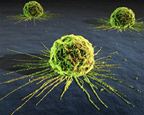 SimplyInfo.org Report: Fukushima Microparticles, An Unrecognized Threat Simply Info 7th Sept 2018, In the years since the initial disaster there have been disparities between
the official radiation exposure estimates and the subsequent health
problems in Japan. In some cases the estimates were based on faulty or
limited early data. Where a better understanding of the exposure levels is
known there still remained an anomaly in some of the health problems vs.
the exposure dose. Rapid onset cancers also caused concern. The missing
piece of the puzzle may be insoluble microparticles from the damaged
reactors.
http://www.fukuleaks.org/web/?p=16788
North Korea says it won’t disarm without trust
The Latest: North Korea says it won’t disarm without trust https://apnews.com/3465b94b6a9641f3a5942e5aecb0c3f6 North Korean Foreign Minister Ri Yong Ho says his nation will never disarm its nuclear weapons first if it can’t trust Washington.
Ri was speaking Saturday at the United Nations General Assembly. He called on the United States to follow through on promises made during a summit in Singapore between the rivals’ leaders.
His comments come as US. Secretary of State Mike Pompeo seems to be on the verge of restarting deadlocked nuclear diplomacy more than three months after the Singapore with North Korea’s Kim Jong Un.
Ri says it’s a “pipe dream” that continued sanctions and U.S. objection to a declaration ending the Korean War will ever bring the North to its knees.
Washington is wary of agreeing to the declaration without Pyongyang first making significant disarmament moves.
Both Kim and U.S. President Donald Trump want a second summit. But there is widespread skepticism that Pyongyang is serious about renouncing an arsenal that the country likely sees as the only way to guarantee its safety.
Pompeo is planning to visit Pyongyang next month to prepare for a second Kim-Trump summit.
Fukushima’s stored water still contains radioactive iodine, cesium and strontium, as well as tritium
 Water stored at Fukushima nuclear plant still radioactive, https://abcnews.go.com/International/wireStory/water-stored-fukushima-nuclear-plant-radioactive-58147073 By MARI YAMAGUCHI, ASSOCIATED PRESS, The operator of Japan‘s wrecked Fukushima nuclear plant said Friday that much of the radioactive water stored at the plant isn’t clean enough and needs further treatment if it is to be released into the ocean.
Tokyo Electric Power Co. and the government had said that treatment of the water had removed all radioactive elements except tritium, which experts say is safe in small amounts.
They called it “tritium water,” but it actually wasn’t.
TEPCO said Friday that studies found the water still contains other elements, including radioactive iodine, cesium and strontium. It said more than 80 percent of the 900,000 tons of water stored in large, densely packed tanks contains radioactivity exceeding limits for release into the environment.
TEPCO general manager Junichi Matsumoto said radioactive elements remained, especially earlier in the crisis when plant workers had to deal with large amounts of contaminated water leaking from the wrecked reactors and could not afford time to stop the treatment machines to change filters frequently.
“We had to prioritize processing large amounts of water as quickly as possible to reduce the overall risk,” Matsumoto said.
About 161,000 tons of the treated water has 10 to 100 times the limit for release into the environment, and another 65,200 tons has up to nearly 20,000 times the limit, TEPCO said………
TEPCO only says it has the capacity to store up to 1.37 million tons of water through 2020 and that it cannot stay at the plant forever.
Some experts say the water can be stored for decades, but others say the tanks take up too much space at the plant and could interfere with ongoing decommissioning work, which could take decades.
Follow Mari Yamaguchi on Twitter at www.twitter.com/mariyamaguchi
Find her work at https://www.apnews.com/search/mari%20yamaguchi https://abcnews.go.com/International/wireStory/water-stored-fukushima-nuclear-plant-radioactive-58147073
The workers of Fukushima

|
TOUCHING FROM A DISTANCE, The workers of Fukushima Daiichi BY ANDREW DECK METROPOLIS JAPAN, SEPTEMBER 28, 2018“………an elaborate operation that also aspires to full decommissioning of Units 1, 2, 3 and 4 by 2050. Now seven years into this proposed timeline, some critics have questioned its feasibility. According to Daisuke Hirose, a TEPCO spokesperson who debriefed Metropolis on the state of decommissioning, there are three major priorities in fulfilling the plan as scheduled.
The most complex is the location and extraction of nuclear fuel debris. Hundreds of tons of melted fuel remain buried deep within Units 1, 2 and 3, the exact locations of which remain unknown. Rubble and fatal radioactivity levels have rendered these parts of the reactor buildings inaccessible to humans, leaving remote-controlled robots the most viable method of investigation. Only minimal fuel debris in Unit 2 has currently been identified and the means of extraction have not been finalized, but Hirose says TEPCO will meet a 2021 benchmark for initial fuel extraction. Alongside the handling of nuclear debris, the plant must confront a rapid accumulation of contaminated water on site, perhaps the most urgent task facing the operation. ……….
Our coach passed the border of the “difficult to return zone,” a government-designated boundary that separates areas of Fukushima deemed habitable from those deemed uninhabitable. Suddenly we were facing the Fukushima “ghost towns” of popular imagination. While Fukushima Daiichi is ground zero, the heart of this disaster is in the abandoned towns of the prefecture: homes and businesses and schools left behind in an instant, hard evidence of the 160,000 residents that were displaced by the disaster. Abandoned vehicles, shattered windows, hollowed-out storefronts, a dilapidated pachinko parlor and seven years of weeds rising from cracks in the cement — they all passed by the coach windows on our approach to Fukushima Daiichi. We were not the only vehicles on this highway, trucks rumbled past us and cars lined the road. Calling these “ghost towns” is a misnomer: these towns may be uninhabited, but they are not unoccupied. Many of these vehicles belonged to a decontamination project that spans the original 20km exclusion zone and beyond. It is not operated by TEPCO, but rather a web of government agencies and municipalities. Their job, first and foremost, entails the mass removal of dirt, stripping entire towns of topsoil and manually washing down rooftops and other surfaces that were doused in radioactive particles in an effort to clean away radiation. Fields of black refuse sacks, millions of which are filled with contaminated soil, now litter the prefecture without plans for their permanent storage or removal. Regardless of this work’s efficacy, it is an undertaking that requires a massive labor force; Japan’s Ministry of Health, Labour and Welfare reports that more than 46,000 were employed in Fukushima decontamination work in 2016. The harsh reality is that the disaster has disrupted the industries that once thrived in Fukushima Prefecture — fishing, agriculture and service jobs. Currently, only half of the region’s 1,000 fishermen are going out to sea and they face highly reduced demand. The decontamination industry is one of the few thriving seven years later, but this line of work is not without its risks. In early September, the UN human rights division released a statement warning of possible worker exploitation in the recovery effort, both within the prefectural decontamination projects and on the 1F site. “Workers hired to decontaminate Fukushima reportedly include migrant workers, asylum seekers and people who are homeless,” wrote three UN Special Rapporteurs. “They are often exposed to a myriad of human rights abuses, forced to make the abhorrent choice between their health and income, and their plight is invisible to most consumers and policymakers with the power to change it.” Japan’s Foreign Ministry responded by calling the statement “extremely regrettable.” There are many people who shoulder the burden of the nuclear disaster: parents sending their children to school with Geiger counters on their backpacks, farmers who have lost their livestock and livelihood, elderly left to care for deserted towns as the young set roots far from Futaba-gun, multi-generation Fukushima lineages that have been forced to abandon their familial homes for prefabricated temporary housing units. Yamamoto carries one small burden of this sweeping tragedy, as do the other workers of Fukushima Daiichi, as do those who labor in irradiated fields without other means of income. They are trying to extinguish a danger that can’t be seen, but its presence is felt in every aspect of their work. At times the job they’ve been assigned feels beyond comprehension, but Fukushima is not a supernatural disaster and Yamamoto is no ghostbuster. This disaster is deeply human, founded in both nature and negligence. “If you think in terms of decades, the long road ahead and the abstractness of it all will crush you,” says Yamamoto. “But just as with any other work, if you split up big projects into smaller pieces, the feeling of accomplishment from each small victory will keep you motivated.” Inside the exclusion zone, we witness the people of Fukushima trying to take their land a few steps closer to normal. https://metropolisjapan.com/workers-of-fukushima-daiichi-power-plant/
|
|
|
Scientists study North Korea’s nuclear tests, and the earthquakes
 Earthquake Studies Reveal the True Cost of North Korea’s Nuclear Tests Inverse, By Emma Betuel September 26, 2018
On September 3, 2017, North Korea tested a nuclear bomb 17 times larger than the one that leveled Hiroshima, sending ripples of alarm across the world. More than just raise the eyebrows of policy makers, the blast also piqued the interest of experts at Columbia University’s Lamont Doherty Earth Observatory, who show in a pair of recent papers that last September’s nuclear test may be responsible for many of the aftershocks that occurred in the past year.
While some existing research argues it’s unlikely that a nuclear test could cause a massive earthquake, the two papers identify 13 high-frequency tremors that traveled through North Korea in the months following the September test. More importantly, they confirm which of them were triggered by the explosion, which were unrelated earthquakes, and which — as some have feared — were caused by additional nuclear tests.
“North Korea has conducted six nuclear tests, but the latest one was huge. That’s what we’ve analyzed the signals from,” Woon Young Kim, Ph.D., the lead author of the Seismological Research Letters paper and a professor of seismology geology and tectonophysics, tells Inverse. “The question was: Were they explosions or were they earthquakes?”
The earliest rumblings occurred just eight minutes after the initial nuclear test but were not included in the paper’s aftershock count. But two occurred later that month and another on October 12. In December there were five more. The tremors continued into 2018, with four in February and the final one on April 22.
The issue, explains Kim, is that scientists were aware of these tremors as they occurred but nobody knew why they were happening. At the time, some expertsidentified these tremors as evidence that North Korea was testing more nukes on a smaller scale, but Kim’s new paper, published in conjunction with another studyauthored by his colleague David Schaff, Ph.D., suggests not only that some of those tremors were actually just earthquakes but also that they were tightly grouped along a fault line, where similar events will likely occur in the future.
Bomb or Earthquake?
To find out whether these shakes were organic or the result of nuclear testing, Kim analyzed two major wave types measured after the tests. Whenever the earth shakes (whether it’s due to an explosion or not), the first rumble to roll by is called an “P-wave” or primary wave. It’s typically the first wave to get picked up by monitoring stations and travels around six kilometers per second.
…….. After more analysis, the researchers concluded that “event 8” was actually an earthquake, together with two other suspected explosions.
“There have been about three events at the North Korea test site that we feel were misclassified,” Schaff tells Inverse. “No method is 100 percent certain, but combining the two methods, I was able to say with a very high probably of certainty that these were earthquakes.”
The Real Consequences of September 3, 2017
The good news is that these results suggest that North Korea isn’t testing bombs as frequently as some might fear They do, however, suggest that there could be something going on underneath the surface as a result of the September 3 explosion.
Using the data provided by Kim, Schaff showed that the tremors following the explosion were clustered along a unified path. As it turns out, what had originally looked like a random spattering of explosions and earthquakes over an area spanning five kilometers was actually a cluster of tremors that occurred within about 700 meters of one another near North Korea’s Chinese border.
The activity around this fault line can actually be traced back to that initial explosion in September of last year, explains Kim. “It’s not 100 percent sure, but I think somehow that the nuclear test was so large that it triggered these small seismic events to the north of the area,” he says.
As some have feared, it appears that North Korea’s testing hasaltered the landscape, at least near the surface of the Earth. In April, Kim Jong-Un announced that North Korea would stop testing nukes in its mountainous hideaway beneath Mt. Mantap, a move that Chinese scientists have suggested is due to the fact that a number of underground tunnels have collapsed beneath the mountain. Other studies have also suggested that continued testing has blown bits of Mt. Mantap to smithereens, making it a non-useful test site.
Should North Korea start testing again, says Schaff, he will be eager to continue the project. “It’s nice to be working on something that affects the state of the world we’re living in,” he says. “This is more than just knowledge for knowledge’s sake. https://www.inverse.com/article/49304-north-korea-nuclear-test-caused-earthquakes
Formal restart approval of tsunami-hit Tokai N°2 nuclear plant near Tokyo
Tokai No. 2 nuke plant passes tighter safety checks introduced after 2011 quake

Tsunami-hit nuclear plant near Tokyo wins formal restart approval
Japan vows to cut its nuclear hoard but neighbours fear the opposite

More than 30 years ago, when its economy seemed invincible and the Sony Walkman was ubiquitous, Japan decided to build a recycling plant to turn nuclear waste into nuclear fuel.
It was supposed to open in 1997, a feat of advanced engineering that would burnish its reputation for high-tech excellence and make the nation even less dependent on others for energy.
Then came a series of blown deadlines as the project hit technical snags and struggled with a Sisyphean list of government-mandated safety upgrades. Seventeen prime ministers came and went, the Japanese economy slipped into a funk and the initial $6.8 billion budget ballooned into $27 billion of spending.
Now, Japan Nuclear Fuel Ltd, the private consortium building the recycling plant, says it really is almost done. But there is a problem: Japan does not use much nuclear power anymore.
The country turned away from nuclear energy after the 2011 Fukushima disaster, and only nine of its 35 reactors are operational.
It is a predicament with global ramifications. While waiting for the plant to be built, Japan has amassed a stockpile of 47 metric tons of plutonium, raising concerns about nuclear proliferation and Tokyo’s commitment to refrain from building nuclear arms even as it joins the United States in pressing North Korea to give up its arsenal.
In August, North Korea’s state-run Rodong Sinmun newspaper accused Japan of accumulating plutonium “for its nuclear armament.”
Japan pledged for the first time this past summer to reduce the stockpile, saying the recycling plant would convert the plutonium into fuel for use in Japanese reactors.
But if the plant opens as scheduled in four years, the nation’s hoard of plutonium could grow rather than shrink.
That is because only four of Japan’s working reactors are technically capable of using the new fuel, and at least a dozen more would need to be upgraded and operating to consume the plutonium that the recycling plant would extract each year from nuclear waste.
“At the end of the day, Japan is really in a vice of its own making,” said James M. Acton, a researcher at the Carnegie Endowment for International Peace in Washington.
“There is no easy way forward, and all those ways forward have significant costs associated with it.”
A handful of countries reprocess nuclear fuel, including France, India, Russia and the United Kingdom.
But the Japanese plan faces a daunting set of practical and political challenges, and if it does not work, the nation will be left with another problem: about 18,000 metric tons of nuclear waste in the form of spent fuel rods that it has accumulated and stored all these years.
 A storage facility for spent fuel rods at Japan Nuclear Fuel Ltd.’s plant in Rokkasho, Japan, Aug 2018.
Japan’s neighbours, most notably China, have long objected to the stockpile of plutonium, which was extracted from the waste during tests of the recycling plant and at a government research facility, as well as by commercial recycling plants abroad.
Most of this plutonium is now stored overseas, in France and Britain, but 10 metric tons remain in Japan, more than a third of it in Rokkasho, the northeastern fishing town where the recycling plant is being built.
Japan says it stores its plutonium in a form that would be difficult to convert into weapons, and that it takes measures to ensure it never falls into the wrong hands.
But experts are worried the sheer size of the stockpile — the largest of any country without nuclear weapons, and in theory enough to make 6,000 bombs — could be used to justify a nuclear buildup by North Korea and others in the region.
Any recycling plan that adds to the stockpile looks like “a route to weaponise down the road,” said Alicia Dressman, a nuclear policy specialist. “This is what really concerns Japan’s neighbours and allies.”
Japan maintains that its plutonium is for peaceful energy purposes and that it will produce only as much as it needs for its reactors. “We are committed to nonproliferation,” said Hideo Kawabuchi, an official at the Japan Atomic Energy Commission.
But the launch of the Rokkasho plant has been delayed so long — and popular opposition to restarting additional nuclear reactors remains so strong — that scepticism abounds over the plan to recycle the stockpile.
Critics say Japan should concede the plant will not solve the problem and start looking for a place to bury its nuclear waste.
“You kind of look at it and say, ‘My God, it’s 30 years later, and that future didn’t happen,’” said Sharon Squassoni, a nonproliferation specialist at George Washington University.
“It’s just wishful thinking about how this is going to solve their myriad problems.”
Ikata NPP’s reactor to restart as Hiroshima court judges volcanic erution frequency to be extremely low
Ruling puts onus on anti-nuclear plaintiffs citing volcanic risks

Reactor can restart in Japan after little risk seen from volcano
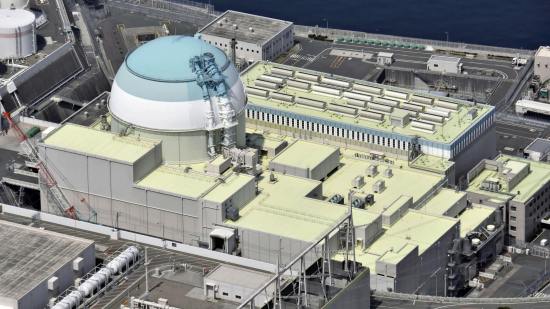
Hiroshima High Court signs off on restart of reactor at Shikoku Electric’s Ikata nuclear power plant

1 This Month
26 September – International Day for the Total Elimination of Nuclear Weapons





PLEASE OPPOSE HR 8255 AND S.3639 – bills would accelerate satellite deployment, with no environmental review or safeguards – https://ncstd5li.quorum.us/campaign/169331/
To see nuclear-related stories in greater depth and intensity – go to https://nuclearinformation.wordpress.com
-
Archives
- September 2026 (305)
- August 2026 (330)
- July 2026 (355)
- June 2026 (287)
- May 2026 (306)
- April 2026 (356)
- March 2026 (251)
- February 2026 (267)
- January 2026 (308)
- December 2025 (358)
- November 2025 (359)
- October 2025 (375)
-
Categories
- 1
- 1 NUCLEAR ISSUES
- business and costs
- climate change
- culture and arts
- ENERGY
- environment
- health
- history
- indigenous issues
- Legal
- marketing of nuclear
- media
- opposition to nuclear
- PERSONAL STORIES
- politics
- politics international
- Religion and ethics
- safety
- secrets,lies and civil liberties
- spinbuster
- technology
- Uranium
- wastes
- weapons and war
- Women
- 2 WORLD
- ACTION
- AFRICA
- Atrocities
- AUSTRALIA
- Christina's notes
- Christina's themes
- culture and arts
- Events
- Fuk 2022
- Fuk 2023
- Fukushima 2017
- Fukushima 2018
- fukushima 2019
- Fukushima 2020
- Fukushima 2021
- general
- global warming
- Humour (God we need it)
- Nuclear
- RARE EARTHS
- Reference
- resources – print
- Resources -audiovicual
- Weekly Newsletter
- World
- World Nuclear
- YouTube
-
RSS
Entries RSS
Comments RSS

