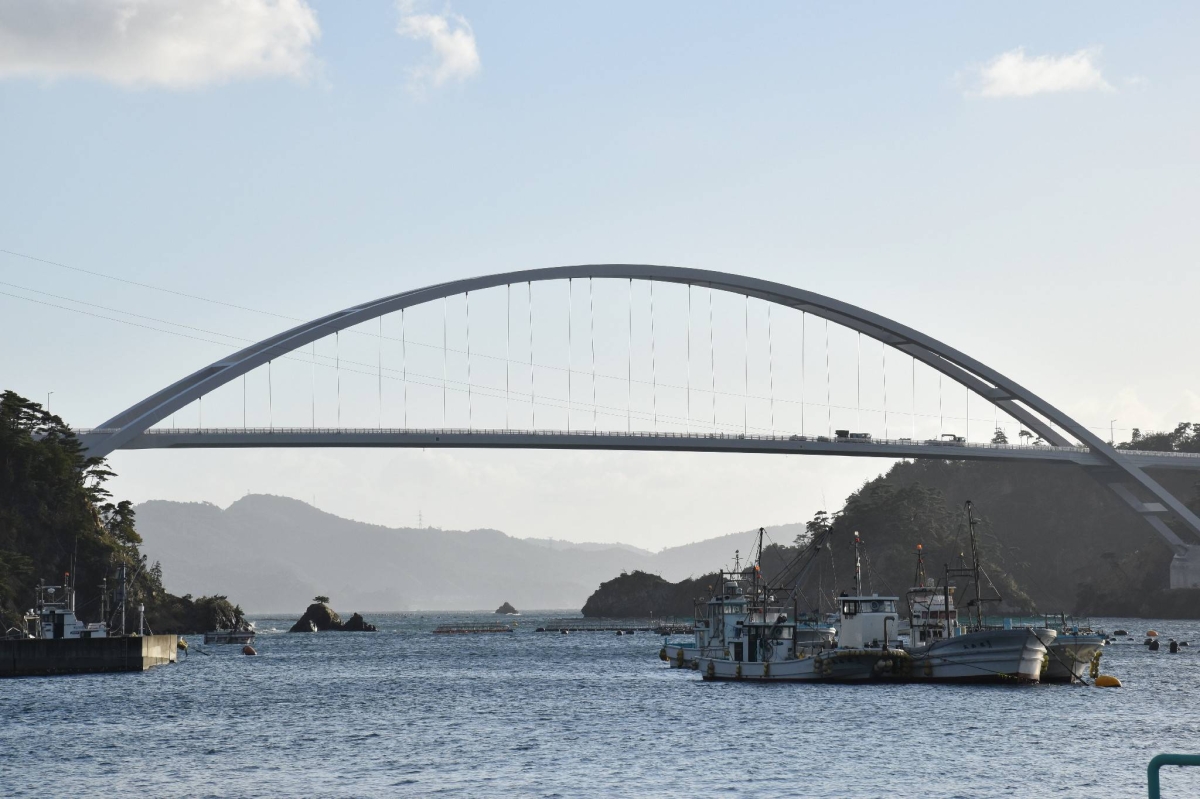
Can quake-prone Japan ever embrace nuclear energy again?
Japan Times, By River Akira Davis and Hisako Ueno. The New York Times 4 Nov 24
A decade after one of the most devastating atomic energy disasters in history, Japan was finally getting closer to reviving nuclear power.
Around 2022, a majority of the public began to express support for restarting the nation’s nuclear plants, most of which have remained offline since an earthquake and tsunami caused a nuclear meltdown in Fukushima Prefecture in 2011. The governing Liberal Democratic Party pushed forward with plans to not only restart idled plants, but also build new ones.
The LDP made an urgent call to advance nuclear energy, which it said would help the heavily fossil-fuel-dependent country meet growing energy demands and fulfill its pledge to cut carbon emissions.
Then, this year, a series of disasters reminded many in Japan of their deep fears about nuclear energy, and the LDP lost their majority in the influential lower chamber of parliament. The fate of nuclear power in the country is again uncertain.
In January, the country’s deadliest earthquake in over a decade struck the Noto Peninsula. More than 400 people died, and many buildings were damaged, including an idled nuclear power plant.
In August, a tremor in southern Japan prompted experts to warn that the long-anticipated Nankai Trough megaquake, predicted to kill hundreds of thousands, could be imminent.
“With earthquakes erupting across the country, it is so clear that nuclear power is a harm to our safety,” said Hajime Matsukubo, secretary-general of the Citizens’ Nuclear Information Center in Tokyo. “This was made evident in 2011 and again during the Noto earthquake.”
A poll conducted by the Mainichi Shimbun newspaper a few months after the Noto earthquake revealed that 45% of respondents opposed restarting Japan’s nuclear plants, surpassing the 36% who supported it.
After the LDP’s losses in parliamentary elections Sunday, the party has less than a month to form a minority government or recruit other allies to regain a majority. The Constitutional Democratic Party of Japan, which won the second-most seats behind the LDP in the recent election, strongly opposes plans for Japan to build new nuclear reactors.
Within the next five months, Japan will release a revised energy plan that will define the nation’s target energy mix heading toward 2040. That means that the nascent government — in whatever shape it ultimately assumes — will be forced to confront two long-standing questions that have proved largely impossible to reconcile.
Is nuclear energy, widely considered [?] clean and [?] affordable, the best option for Japan — a nation heavily dependent on fossil fuels yet prone to frequent earthquakes and tsunamis? And if so, how can government leaders sell this to a populace still haunted by the memories of nuclear disaster?……………………………………………………………………………. https://www.japantimes.co.jp/news/2024/11/02/japan/society/nuclear-fears-quake-prone-japan/
Japanese nuclear reactor that restarted 13 years after Fukushima disaster is shut down again
A Japanese nuclear reactor that restarted last week for the first time in more than 13 years after it survived a massive earthquake and tsunami that badly damaged the nearby Fukushima nuclear plant has been shut down again due to an equipment problem
Mari Yamaguchi, 4 Nov 24, https://www.independent.co.uk/news/ap-japanese-tokyo-fukushima-b2640761.html
A Japanese nuclear reactor that restarted last week for the first time in more than 13 years after it had survived a massive 2011 earthquake and tsunami that badly damaged the nearby Fukushima nuclear plant was shut down again Monday due to an equipment problem, its operator said.
The No. 2 reactor at the Onagawa nuclear power plant on Japan’s northern coast was put back online on Oct. 29 and had been expected to start generating power in early November.
But it had to be shut down again five days after its restart due to a glitch that occurred Sunday in a device related to neutron data inside the reactor, plant operator Tohoku Electric Power Co. said.
The reactor was operating normally and there was no release of radiation into the environment, Tohoku Electric said. The utility said it decided to shut it down to re-examine equipment to address residents’ safety concerns. No new date for a restart was given.
The reactor is one of three at the Onagawa plant, which is 100 kilometers (62 miles) north of the Fukushima Daiichi plant where three reactors melted following a magnitude 9.0 earthquake and tsunami in March 2011, releasing large amounts of radiation.
South has raised risk of nuclear war, North Korea says
Canberra Times, By Josh Smith, 3 Nov 24
A white paper released by North Korean state media has accused South Korean President Yoon Suk-yeol of exposing his country to the danger of nuclear war through his policies toward the North.
The document, compiled by North Korea’s Institute of Enemy State Studies and released on Sunday by state news agency KCNA, criticised Yoon’s “reckless remarks” about war, abandoning elements of an inter-Korean agreement, engaging in nuclear war planning with the United States, and seeking closer ties with Japan and NATO.November 3 2024
“Its ever-worsening military moves resulted only in the paradoxical consequences of pushing (North Korea) to stockpile its nuclear weapons at an exponential rate and further develop its nuclear attack capability,” the paper said……………………………………………
The two Koreas have also clashed over balloons of trash floated since May from North Korea.
Pyongyang has said the launches are a response to balloons sent by anti-regime activists in the South…………………………..
Meanwhile, the US on Sunday deployed B-1B bombers for joint aerial drills with South Korea and Japan, in response to North Korea’s recent launch of an intercontinental ballistic missile, according to South Korea’s Joint Chiefs of Staff.
The military exercise showed the three countries’ strong commitment to responding to the North’s nuclear and missile threats through co-operation, the Joint Chiefs of Staff said in a statement.
This is the second time this year that the three countries conducted joint air drills and the fourth time in 2024 that the US deployed its strategic bombers on the Korean peninsula, the Joint Chiefs of Staff said. https://www.canberratimes.com.au/story/8809775/south-has-raised-risk-of-nuclear-war-north-korea-says/
The global nuclear industry has no idea how to decommission Fukushima nuclear plant, but hopes that a tiny robot might help
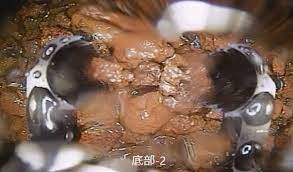
Robot retrieves radioactive fuel sample from Fukushima nuclear reactor site
Plant’s owners hope analysis of tiny sample will help to establish how to safely decommission facility
Kevin Rawlinson and agency, Sun 3 Nov 2024
A piece of the radioactive fuel left from the meltdown of Japan’s tsunami-hit Fukushima Daiichi nuclear power plant has been retrieved from the site using a remote-controlled robot.
Investigators used the robot’s fishing-rod-like arm to clip and collect a tiny piece of radioactive material from one of the plant’s three damaged reactors – the first time such a feat has been achieved. Should it prove suitable for testing, scientists hope the sample will yield information that will help determine how to decommission the plant.
The plant’s manager, Tokyo Electric Power Company Holdings (Tepco), has said the sample was collected from the surface of a mound of molten debris that sits at the bottom of the Unit 2 reactor’s primary containment vessel.
The “telesco” robot, with its frontal tongs still holding the sample, returned to its enclosed container for safe storage after workers in full hazmat gear pulled it out of the containment vessel on Saturday. But the mission is not over until it is certain the sample’s radioactivity is below a set standard and it is safely contained.
If the radioactivity exceeds the safety limit then the robot must return to find another piece, but Tepco officials have said they expect the sample will prove to be small enough.
The mission started in September and was supposed to last two weeks, but had to be suspended twice.
A procedural mistake held up work for nearly three weeks. Then the robot’s two cameras, designed to transmit views of the target areas for its operators in the remote control room, failed. That required the robot to be pulled out entirely for replacement before the mission resumed on Monday.
Fukushima Daiichi lost its cooling systems during the 2011 earthquake and tsunami, causing meltdowns in three of its reactors. An estimated 880 tons of fuel remains in them, and Tepco has carried out several robotic operations.
Tepco said that on Wednesday the robot successfully clipped a piece estimated to weigh about 3 grams from the area underneath the Unit 2 reactor core, from which large amounts of melted fuel fell during the meltdown 13 years ago.
The plant’s chief, Akira Ono, said only the tiny sample can provide crucial data to help plan a decommissioning strategy, develop necessary technology and robots and retroactively establish exactly how the accident had developed.
The Japanese government and Tepco have set a target of between 30 and 40 years for the cleanup, which experts say is optimistic. No specific plan for the full removal of the fuel debris or its final disposal has been decided.
Onagawa nuclear plant’s restart sparks concerns over evacuation routes
Located on the intricate ria coast of the Oshika Peninsula, Tohoku Electric Power’s Onagawa nuclear power plant — which was restarted on Tuesday — sits amid a maze of narrow, winding mountain roads and remote islands with few transportation options.
When the Great East Japan Earthquake struck in 2011, several sections of evacuation routes along prefectural roads were closed. Residents now fear about their ability to escape if another disaster hits.
According to Miyagi Prefecture’s road management division, two main coastal prefectural roads along the peninsula were partially closed after the earthquake due to road surface collapses, while another inland road saw nine landslides that cut off isolated communities for around 10 days………………….(Subscribers only) https://www.japantimes.co.jp/news/2024/10/30/japan/society/onagawa-evacuation-challenges/
A small amount of nuclear fuel debris retrieved at Tepco Fukushima plant
Japan Times 31st Oct 2024
https://www.japantimes.co.jp/news/2024/10/31/japan/fukushima-debris-catch/
A device has retrieved a small amount of nuclear fuel debris during trial work to remove debris from a reactor at Tokyo Electric Power Company Holdings’ Fukushima No. 1 plant, the company has said.
It is expected to take about a week to finish collecting the portion of debris.
If successful, it will be the first time for nuclear fuel debris to be removed from any of the three reactors at the plant that experienced meltdowns following the March 2011 Great East Japan Earthquake and tsunami.
The trial work began just before 10 a.m. on Wednesday.
A claw-like tool attached to the tip of a telescopic collection device was lowered toward debris at the bottom of the containment vessel of the No. 2 reactor at the plant in Fukushima Prefecture.
The remotely operated device retrieved a small amount of debris at 10:30 a.m.
Tepco was set to pull out the removal device from the containment vessel Thursday or later and put the debris in a transport container.
If radiation levels are higher than expected, the debris may be put back into the containment vessel to avoid workers being exposed to radiation.
If they are not higher than expected, however, the collected debris will be analyzed at a facility of the Japan Atomic Energy Agency.
About 880 tons of nuclear fuel debris are believed to sit inside the meltdown-stricken No. 1 to No. 3 reactors.
Removing the debris is viewed as the most difficult part of the process of decommissioning the Fukushima plant.
Tepco initially planned to begin the removal work in 2021.
It started in September this year about three years behind schedule due chiefly to delays in the development of the device and problems with preparing for the work.
Japan struggles to find nuclear waste disposal site

Japan is facing difficulties selecting a final disposal site for high-level radioactive waste left from spent fuel at nuclear power plants across the nation.
https://www.japantimes.co.jp/news/2024/10/27/japan/nuclear-waste-site-struggles/
First-stage surveys to find locations suited to host an underground storage facility have been conducted in three municipalities — two in Hokkaido and one in Saga Prefecture — despite continuing anxieties among local residents.
With nuclear power plants in Japan gradually going back online, there remains no clear timeline for reprocessing spent nuclear fuel, keeping the government’s goal of a nuclear fuel cycle out of reach.
High-level radioactive waste, which is vitrified after uranium and plutonium are extracted from spent fuel for reuse, presents a significant challenge. Japan’s plan for final disposal involves burying the waste more than 300 meters underground for tens of thousands of years, allowing its radioactivity to diminish over time.
Nuclear power plants in Japan, operating without a designated final dump site for waste, are often criticized for being like “a condominium building without a toilet.”
The Nuclear Waste Management Organization of Japan, or NUMO, responsible for managing final disposal, began inviting municipalities to host surveys for potential dump sites in 2002. To date, however, no location has been selected.
The research process for selecting a final repository site consists of three stages: a literature survey, a drilling survey, and a detailed investigation using an underground facility. Local governments that host such surveys receive subsidies from the central government.
Literature surveys, which involve reviewing geological maps and historical earthquake records, began in the town of Suttsu and the village of Kamoenai in Hokkaido in 2020, and in the town of Genkai, Saga Prefecture, in 2024. No other municipality has agreed to participate in site selection research, however.
The first-stage surveys concluded that all of Suttsu and most of Kamoenai are suitable for moving forward to the drilling survey phase. NUMO plans to release a report as early as this fall and hold briefing sessions for local residents.
Still, Hokkaido Gov. Naomichi Suzuki has expressed opposition to the drilling surveys, and Saga Gov. Yoshinori Yamaguchi has also voiced objections to conducting such a survey in Genkai. The consent of the prefectural governor is required to proceed with second-stage surveys.
The central government has emphasized its responsibility in its basic policies on the final disposal of nuclear waste and aims to conduct surveys in about 10 additional locations, following international precedents.
In the past, the town of Toyo in Kochi Prefecture and the city of Tsushima in Nagasaki Prefecture considered hosting surveys but ultimately declined. Central government representatives now plan to visit over 100 local governments, increasing opportunities to explain the process to residents.
Japan, which has relied on nuclear power for over half a century, currently holds around 19,000 tons of spent fuel at its nuclear power plants and other facilities, using about 80% of its total storage capacity.
As a resource-scarce nation, Japan has been promoting a nuclear fuel cycle, by which spent fuel is reprocessed and recycled for continued use in power generation. The reprocessing plant that is key to this cycle has yet to be completed, however.
Japan Nuclear Fuel started construction of the country’s first commercial reprocessing facility in Rokkasho, Aomori Prefecture, in 1993, but its completion has been delayed 27 times.
In September, an interim storage facility in the city of Mutsu, Aomori Prefecture, took delivery of the first batch of spent fuel from Tokyo Electric Power Company Holdings’ Kashiwazaki-Kariwa nuclear plant in Niigata Prefecture. This facility, not on the premises of any nuclear power plant site, will store the fuel for up to 50 years before it undergoes reprocessing.
Many local residents see the receipt of spent fuel as premature, given the unfinished reprocessing plant and the lack of a final disposal solution. They worry that storage at the facility may become permanent rather than temporary.
The central government has decided to rebuild nuclear power plants and extend their operational periods. This marks a reversal of the previous policy, which aimed to reduce reliance on nuclear energy following the March 2011 accident at TEPCO’s Fukushima No. 1 plant, caused by severe damage from the earthquake and tsunami the same month.
An official from the Ministry of Economy, Trade and Industry said that “as we have used nuclear power plants, we cannot avoid” the issue of final nuclear waste disposal.
Hideki Masui, president of Japan Atomic Industry Forum, emphasized the need for “a national debate” as Japan struggles to conduct surveys in additional areas for potential disposal sites, placing disproportionate burdens on certain regions.
Japan to resume trial removal of Fukushima nuclear debris, reports say
https://www.japantimes.co.jp/news/2024/10/25/japan/fukushima-debris-removal/
The operator of the tsunami-stricken Fukushima No. 1 nuclear plant will resume an operation to remove a sample of highly radioactive material next week, reports said Friday, after having suspended the effort over a technical snag.
Extracting the estimated 880 tons of highly radioactive fuel and debris inside the former power station remains the most challenging part of decommissioning the facility, which was hit by a catastrophic tsunami in 2011.
Radioactivity levels inside are far too high for humans to enter, and last month engineers began inserting an extendable device to try and remove a small sample.
However, operator Tokyo Electric Power Company Holdings had to halt the procedure after noticing that remote cameras on the apparatus were not beaming back images to the control center.
Tepco on Friday said it would resume the removal on Monday after replacing the cameras with new ones, the Asahi Shimbun daily and other local media reported.
Tepco officials could not immediately be reached to confirm the reports.
Three of Fukushima’s six reactors went into meltdown after a tsunami triggered by the nation’s biggest earthquake on record swamped the facility in one of the world’s worst nuclear accidents.
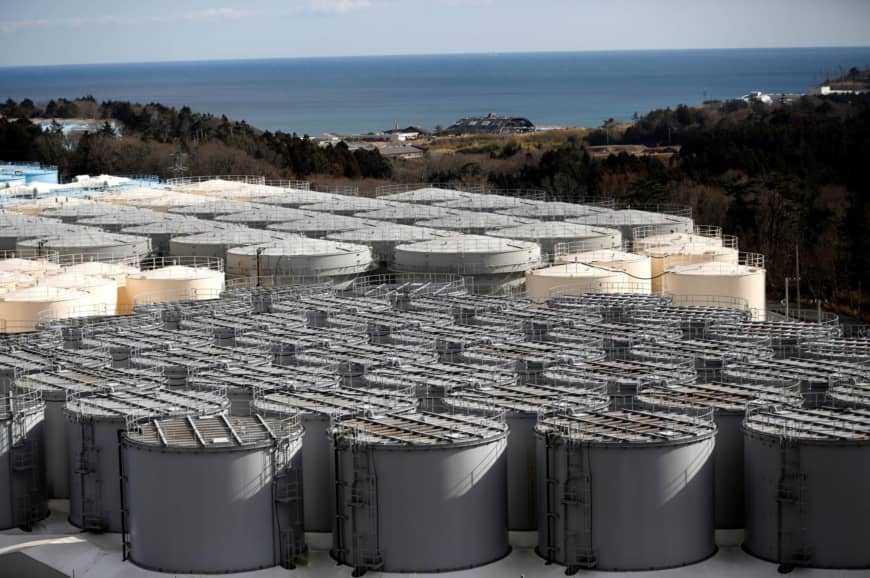
Japan last year began releasing into the Pacific Ocean some of the 540 Olympic swimming pools’ worth of reactor cooling water amassed since the catastrophe.
China and Russia banned Japanese seafood imports as a result, although Tokyo insists the discharge is safe, a view backed by the U.N. atomic agency.
Beijing last month said it would “gradually resume” importing seafood from Japan after imposing the blanket ban.
In a Tepco initiative to promote food from the Fukushima area, swanky London department store Harrods began selling peaches grown in the region last month.
Taiwan is only months away from shutting off all nuclear power.
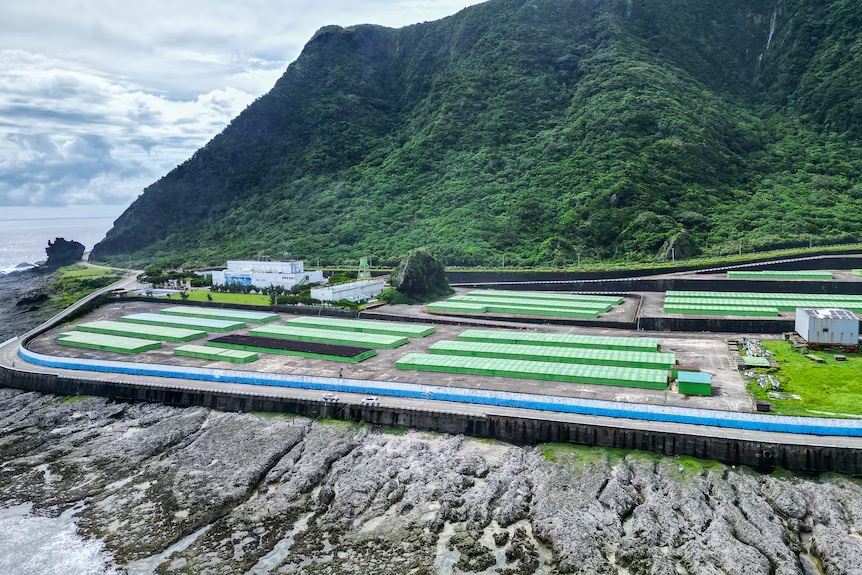
nuclear waste on Lanyu in Taiwan
ABC News, By East Asia correspondent Kathleen Calderwood, Xin-yun Wu and Fletcher Yeung in Lanyu and Hsinchu, Taiwan, 26 Oct 24
As Syamen Womzas harvests taro in a water-logged field on Lanyu, pebbles of sweat trace the lines on his face.
The early autumn sun still beats hard on the island and, about as far south-west as you can go and still be in Taiwan, the humidity is oppressive.
“This is the field I inherited from my parents,” he says.
“These fields have been here for generations.”
The tiny island he calls home is at the heart of Taiwan’s nuclear power debate.
For decades, Lanyu has been saddled with a nuclear waste facility, which Syamen Womzas and others have protested over and campaigned to have removed, fearing environmental impacts.
He wants to see Taiwan completely free of nuclear power.
That transition is happening, but as Taiwan works to phase out its nuclear plants, questions are being asked about how it will continue to power itself……..
Nuclear power and democracy in Taiwan
Syamen Womzas is a member of the Taiwanese aboriginal Tao people, who have lived on Lanyu for thousands of years.
Fringed by emerald cliffs and other-worldly rock formations, today the island is a haven for divers and tourists wanting to explore its stunning coral reefs and enjoy its laid-back lifestyle.
But the nuclear waste facility is one enduring scar on the otherwise pristine island.
“When the nuclear waste entered Lanyu, we people in Lanyu were completely uninformed,” Syamen Womzas tells the students at the Lanyu Elementary School, where he is the principal.
“They said they were building a military harbour and a canning factory.
“No one knew that the so-called cans would turn out to be barrels of nuclear waste.
“For almost 40 years we’ve kept asking the government to remove the storage site, but the officials keep delaying.”
In the 1970s and 80s, when Taiwan was still under martial law and the authoritarian rule of the exiled Kuomintang government, three nuclear power plants were built.
But as Taiwan moved towards democratisation and the Chernobyl disaster occurred in Ukraine, an anti-nuclear movement began to emerge.
“The ruling Democratic Progressive Party really came together only in 1986 — the year of Chernobyl,” says clean energy advocate Angelica Oung, founder of the Clean Energy Transition Alliance.
“The fact that that was such big news back then caused people to draw an equal sign between authoritarianism, contamination and nuclear energy as a symbol of the lack of democracy that Taiwan was under.
“They made it a goal to get rid of nuclear energy in Taiwan, and so the fight against nuclear energy and the fight for democracy in Taiwan have become entwined.”
Fear of disaster puts nuclear out
In 2011, after the Fukushima disaster in Japan, the nuclear debate really entered the mainstream.
It stirred fear in the community that a similar accident could happen in Taiwan where, like Japan, it’s prone to frequent earthquakes.
In the years following, the Democratic Progressive Party installed a nuclear-free homeland policy under which it committed not to renew the licences of the three existing plants.
Meanwhile, the construction of a fourth plant had been beset by problems and delays over a 15-year period.
Then in 2021, a referendum was held that saw the Taiwanese public vote against finally firing it up.
………………………Taiwan’s government now seems to be hedging on its no-nuclear policy and testing the water on how the public might react to the possibility of extending the licence of the nuclear plants…………………………
two power plants have been shut down, with the final one due to be completely decommissioned by May next year.
…………………………Construction of offshore wind is stalling because of delays, high costs due to a local component requirement and the geopolitical risks of investing in Taiwan, while there is limited land space for solar.
………………………………………..The Taiwan Semiconductor Manufacturing Company (TSMC), arguably the world’s most important chip firm, is headquartered in Hsinchu.
“The semiconductor industry is an absolute monster when it comes to consuming electricity,” Ms Oung says.
………………………….Differing views on the future
Meanwhile, Taiwan’s electricity company Taipower is still deciding on what to do with the rest of Taiwan’s nuclear waste.
It says it will decide on a permanent storage location by 2038. If a new site is approved, Taipower says it will also relocate the waste from Lanyu there.
…………………….recently, the government found that Taipower has failed to properly monitor and manage the waste.
The report was initiated in response to a complaint filed by the family of a man who was diagnosed with leukaemia three years after working at the storage site.
It found that “workers performing inspection and re-packaging work back then were likely exposed to quite high doses of radiation.”
“Over the past 30 to 40 years, managing and storing each of these 100,000-plus barrels has cost at least $NT1 million ($47,000) per barrel, with expenses expected to continue indefinitely.”
………………………..Syamen Womzas, the school principal, still worries about how it will impact the environment.
“If the nuclear waste stays in Lanyu, it will continue to impact the environment,” he says.
“It will also impact the roots of the plants, and the habits of the animals.
“I think we are constantly thinking (about) progress and development, so we need more electricity — if everyone can think about more rational use of energy, I think it will be better for the earth.”
China not part of nuclear arms race, says envoy

US, with largest arsenal, called on to stop misrepresenting nation’s policy
By MINLU ZHANG at United Nations and SHAO XINYING in Beijing | CHINA DAILY 2024-10-21 https://www.chinadaily.com.cn/a/202410/21/WS671596c9a310f1265a1c88ef.html
A Chinese arms control official called on the United States on Friday to “stop misrepresenting China’s nuclear policy” and said that China “has not, and will not, engage in a nuclear arms race”.
A representative of the US told the First Committee of the United Nations General Assembly on Friday that Russia is violating the New START Treaty and employing “irresponsible nuclear rhetoric” amid the Ukraine crisis. The representative also claimed that China has not fully disclosed the extent of its nuclear weapons modernization.
Shen Jian, China’s ambassador for disarmament affairs, told the committee that China’s no-first-use policy “requires maintaining a certain level of ambiguity regarding its nuclear arsenal to ensure the survivability of its limited nuclear forces”.
“As long as no country uses nuclear weapons against China, it will not face a nuclear threat from China. This is the most meaningful form of transparency,” Shen said.
He said the US possesses the largest and most advanced nuclear arsenal, adding that it adheres to “the policy of preemptive nuclear strikes, and even tailors nuclear deterrence strategies for other countries”.
“The transparency of the US display of nuclear power is nothing more than a ‘muscle show’ that will not make other countries feel safe,” he said.
“China has consistently maintained its nuclear forces at the minimum level required for national security and has not, and will not, engage in a nuclear arms race,” the Chinese envoy said.
He said China must “appropriately” modernize its nuclear forces to “ensure the safety, reliability and survivability of its minimum nuclear deterrent”, as “China’s external security environment continues to deteriorate”, noting that certain countries are developing global missile defense systems and other weapons that “impact strategic stability”.
He urged the US to “stop misrepresenting China’s nuclear policy”. For 60 years, China has adhered to a no-first-use policy with a high degree of stability, consistency and predictability, he said. Recently, China again formally proposed that nuclear-armed states negotiate a “No First Use Treaty” or issue a joint political statement on the matter as soon as possible.
China has engaged in arms control and nonproliferation dialogues with many countries around the world, including the US, Shen said. As the current coordinator of the P5 mechanism, China is also actively promoting dialogue and cooperation among the five nuclear-weapon states.
The P5 mechanism is a dialogue process among the five permanent members of the UN Security Council: China, France, Russia, the United Kingdom and the US.
Shen said that the US should stop projecting its logic that “power inevitably seeks dominance “onto China.
China not part of nuclear arms race, says envoy
US, with largest arsenal, called on to stop misrepresenting nation’s policy
By MINLU ZHANG at United Nations and SHAO XINYING in Beijing | CHINA DAILY | Updated: 2024-10-21 07:48
A Chinese arms control official called on the United States on Friday to “stop misrepresenting China’s nuclear policy” and said that China “has not, and will not, engage in a nuclear arms race”.
A representative of the US told the First Committee of the United Nations General Assembly on Friday that Russia is violating the New START Treaty and employing “irresponsible nuclear rhetoric” amid the Ukraine crisis. The representative also claimed that China has not fully disclosed the extent of its nuclear weapons modernization.
Shen Jian, China’s ambassador for disarmament affairs, told the committee that China’s no-first-use policy “requires maintaining a certain level of ambiguity regarding its nuclear arsenal to ensure the survivability of its limited nuclear forces”.
“As long as no country uses nuclear weapons against China, it will not face a nuclear threat from China. This is the most meaningful form of transparency,” Shen said.
He said the US possesses the largest and most advanced nuclear arsenal, adding that it adheres to “the policy of preemptive nuclear strikes, and even tailors nuclear deterrence strategies for other countries”.
“The transparency of the US display of nuclear power is nothing more than a ‘muscle show’ that will not make other countries feel safe,” he said.
“China has consistently maintained its nuclear forces at the minimum level required for national security and has not, and will not, engage in a nuclear arms race,” the Chinese envoy said.
He said China must “appropriately” modernize its nuclear forces to “ensure the safety, reliability and survivability of its minimum nuclear deterrent”, as “China’s external security environment continues to deteriorate”, noting that certain countries are developing global missile defense systems and other weapons that “impact strategic stability”.
He urged the US to “stop misrepresenting China’s nuclear policy”. For 60 years, China has adhered to a no-first-use policy with a high degree of stability, consistency and predictability, he said. Recently, China again formally proposed that nuclear-armed states negotiate a “No First Use Treaty” or issue a joint political statement on the matter as soon as possible.
China has engaged in arms control and nonproliferation dialogues with many countries around the world, including the US, Shen said. As the current coordinator of the P5 mechanism, China is also actively promoting dialogue and cooperation among the five nuclear-weapon states.
The P5 mechanism is a dialogue process among the five permanent members of the UN Security Council: China, France, Russia, the United Kingdom and the US.
Shen said that the US should stop projecting its logic that “power inevitably seeks dominance “onto China.
Shen said that over the past 20 years, the US has withdrawn from the Anti-Ballistic Missile Treaty, the Intermediate-Range Nuclear Forces Treaty and the Iran nuclear deal, and these moves undermine the international arms control regime.
According to The New York Times, amid ongoing global conflicts, the US plans to allocate an estimated $1.7 trillion over the next 30 years to modernize its arsenal.
Shen noted that while some countries have criticized China and Russia with regard to their nuclear arsenals, they made “no mention of other nuclear-weapon states upgrading their arsenals”. He called this a “double standard “and emphasized that such actions, which “draw lines based on ideology and stir up bloc confrontation”, will not advance nuclear disarmament.
Wang Zhen, a researcher of international politics at the Shanghai Academy of Social Sciences’ Institute of International Relations, told China Daily that “the US’ misrepresenting of China’s nuclear development serves mainly to justify its upgrading of its nuclear arsenal, and the so-called ‘China nuclear threat’ is used as an excuse to adjust its nuclear strategy”.
He said that the US, despite its huge nuclear arsenal, clings to a first-use nuclear deterrence policy, which “underscores its pursuit of nuclear hegemony”.
China’s openness about its latest nuclear missile test shows growing confidence vis-à-vis the United States

The rare public ICBM test seems to have been specifically aimed at dissuading Washington from using nuclear weapons in a potential conflict across the Taiwan Strait
Bulletin, By Hui Zhang | October 16, 2024
China’s Ministry of National Defense announced last month that the People’s Liberation Army Rocket Force (PLARF) had successfully launched an intercontinental ballistic missile (ICBM) carrying a simulated warhead into the Pacific Ocean and that the missile accurately fell into the designated area. This was the first time since 1980 that China had test-fired an ICBM into international waters.
But the test launch was part of routine annual training, the ministry added, in line with international law and international practice, and not directed against any country or target.
Just as observers were vigorously speculating about the type of missile used in the test, China Junhao (China’s military media wing) cut short the discussions, releasing pictures of the launch site—a very rare step given that the Chinese army has not made public a photo of the launch of a new ICBM for decades.
China’s Ministry of National Defense announced last month that the People’s Liberation Army Rocket Force (PLARF) had successfully launched an intercontinental ballistic missile (ICBM) carrying a simulated warhead into the Pacific Ocean and that the missile accurately fell into the designated area. This was the first time since 1980 that China had test-fired an ICBM into international waters.
But the test launch was part of routine annual training, the ministry added, in line with international law and international practice, and not directed against any country or target.
Just as observers were vigorously speculating about the type of missile used in the test, China Junhao (China’s military media wing) cut short the discussions, releasing pictures of the launch site—a very rare step given that the Chinese army has not made public a photo of the launch of a new ICBM for decades…………………
With this new launch test, China certainly wants to show a forceful response to suspicion about its nuclear deterrence capabilities in the wake of recent corruption scandals and command instability in its rocket force. The test shows that the rocket force has an operational and credible nuclear force that can help ensure China’s ability to maintain a strong nuclear deterrent—a key element of President Xi Jinping’s long-held military objectives and emphasis on strengthening China’s nuclear forces, an emphasis initiated in 2015.
The rare public ICBM test seems to have been specifically aimed at dissuading Washington from using nuclear weapons in a potential conflict across the Taiwan Strait. The unusual transparency surrounding the test shows how China is becoming increasingly confident vis-à-vis the United States. It also could offer a rare opportunity for engaging in risk reduction talks.
A new missile type. Unlike the United States, which usually tests its ICBMs in international waters, China has usually fired its ICBMs over its homeland, using a lofted or depressed trajectory to keep the missile inside Chinese territory. China’s last full-trajectory flight test of an ICBM (the DF-5) was conducted in May 1980………………………………….
Where the 1980 test was meant to be a trump card for deterring Moscow, today’s DF-31AG test is aimed at deterring Washington………………………………………………………………………………………………………………….
Changing target. China now perceives the United States as being its main threat, and the question of whether China has a credible and reliable deterrent against a US first nuclear strike has become more important in Chinese government circles. At least, this appears to be the strategic calculation that Xi currently pursues………………………………………….
Since 2012 and Xi’s presidential tenure, however, China has been substantially modernizing, expanding, and diversifying its nuclear forces to address perceived threats from the United States. …………………………..
China has expanded its nuclear arsenal at unprecedented speed and scale. It has increased its total warhead count from about 260 in 2016 to about 500 in 2024. Most of the increase has come in the shape of ICBMs capable of reaching the continental United States—from about 65 in 2016 to about 240 in 2024. The US Defense Department projected that China would possess over 1,000 warheads by 2030.
The observable transformation of China’s nuclear posture and the projections for its expansion over the next decade raise the question of whether China has changed its nuclear strategy.[8] Until recently, Chinese officials and government documents reaffirmed China’s commitment to a no-first-use policy and a self-defense nuclear strategy.[9] Under this nuclear policy and strategy, China has always confirmed that it “keeps its nuclear capabilities at the minimum level required for national security.” The major question is how to interpret the “minimum” needs of a nuclear force for a secured second-strike capability.
Searching for a minimum and “effective” deterrent. China’s officials have never declared a specific number of weapons required for its minimum level. Such a level is never static. It depends on several factors, including estimates of survivability during a nuclear attack and a projected enemy’s missile defense systems. …………………….
………….. since 2000, the US missile defense plan has been a major driver of China’s nuclear modernization and buildup…………………………….
At this stage, it is not clear whether Xi Jinping has decided to empower the country’s nuclear force beyond assuring such a reliable second-strike capability. However, while there is little evidence to show that China has changed its long-standing nuclear strategy and no-first-use policy, recent qualitative and quantitative improvements in the nuclear forces demonstrate that Chinese leaders may now pursue a more ambitious nuclear strategy.
A more confident China—and the need to reduce risk. Without a clear understanding of China’s goals and motivations, a new arms race could be triggered with the United States, which would reverse China’s long-standing policy against such engagements. It is now the time for both countries to conduct dialogues to avoid a nuclear arms race and reduce the risk of nuclear conflict. Both sides should undertake risk-reduction and military confidence-building measures to address security concerns, clarify strategic intentions, and increase transparency. They should also engage in “strategic stability” talks.
As a first step, China and the United States could negotiate a bilateral agreement on mutual notification for ballistic missile and space launches, which would significantly reduce the risk of misperception and miscalculation……………………..https://thebulletin.org/2024/10/chinas-openness-about-its-latest-nuclear-missile-test-shows-growing-confidence-vis-a-vis-the-united-states/?utm_source=Newsletter&utm_medium=Email&utm_campaign=ThursdayNewsletter10172024&utm_content=NuclearRisk_ChinaNuclearMissileTest_10162024
.
Japan PM Ishiba eyes more renewables, less nuclear in energy mix
New leader plans stimulus package for ‘structural transformation of the economy’
Prime Minister Shigeru Ishiba on Saturday stressed Japan’s potential to
develop renewable energy sources and vowed to raise their share in the
country’s overall power supply, indicating he will prioritize
decarbonization as his government prepares an economic stimulus plan.
“Japan has large untapped potential for renewable energy development,
including geothermal, wind and small-scale hydroelectric power,” Ishiba
said in an interview with Nikkei Asia.
Nikkei Asia 12th Oct 2024 https://asia.nikkei.com/Editor-s-Picks/Interview/Japan-PM-Ishiba-eyes-more-renewables-less-nuclear-in-energy-mix
Japanese anti-nuclear organisation awarded 2024 Nobel Peace Prize
ABC News, By Aoife Hilton with wires, 11 Oct 24
In short:
Japanese Hibakusha organisation Nihon Hidankyo has been awarded the 2024 Nobel Peace Prize.
Hibakusha is the grassroots movement for survivors of the Hiroshima and Nagasaki atomic bombings in 1945.
Norwegian Nobel Chair Jørgen Watne Frydnes said the organisation was chosen for its efforts to establish a worldwide “nuclear taboo”.
The 2024 Nobel Peace Prize has been awarded to Japanese Hibakusha organisation Nihon Hidankyo, the Chair of the Norwegian Nobel Committee has announced at a press conference in Oslo.
Hibakusha is the grassroots movement for survivors of the Hiroshima and Nagasaki atomic bombings in 1945.
Committee Chair Jørgen Watne Frydnes said Nihon Hidankyo had become “the largest and most influential Hibakusha organisation in Japan” and had made efforts for “a world free of nuclear weapons and for demonstrating … that nuclear weapons must never be used again”.
He said the Nobel committee “wishes to honour all survivors who, despite physical suffering and painful memories, have chosen to use their costly experience to cultivate hope and engagement for peace”.
The ‘nuclear taboo’
He credited the organisation with contributing to the “nuclear taboo”, referring to the status quo wherein world powers avoid nuclear weapon use.
“Nuclear weapons are the most destructive weapons the world has ever seen,” he said.
“Today’s nuclear weapons have far greater destructive power.”
Mr Fryndes stressed it was “alarming that today this taboo against the use of nuclear weapons is under pressure” with new countries acquiring nuclear weapons and others bolstering their arsenals………………………………………………………………………………….
United Nations spokesperson in Geneva, Alessandra Vellucci, said the movement for Hiroshima and Nagasaki survivors “fights against … even the idea that such a war can be fought again”.
“We’ve seen the effects of the bomb in the Second World War. We have got now weapons that are so many more times more powerful than those that we use in Hiroshima and Nagasaki,” she said…………………………………………………………………………………………..
Peace Prize winner compares post-war Japan to Gaza
Nihon Hidankyo’s co-head Toshiyuki Mimaki, a survivor himself, was standing by at the Hiroshima City Hall for the announcement.
He said the prize would give a major boost towards efforts to demonstrate that the abolition of nuclear weapons was possible.
“It would be a great force to appeal to the world that the abolition of nuclear weapons can be achieved.”
“Nuclear weapons should absolutely be abolished.”
He added the situation for children in Gaza is similar to the situation in Japan at the end of World War II.
“In Gaza, children in blood are being held. It’s like in Japan 80 years ago,” Mr Mimaki said……………………………………………
Prize will be presented in December
The Norwegian Nobel Committee has regularly put focus on the issue of nuclear weapons, most recently with its award to the the International Campaign to Abolish Nuclear Weapons (ICAN), who won the award in 2017.
“The Hibakusha help us to describe the indescribable, to think the unthinkable, and to somehow grasp the incomprehensible pain and suffering caused by nuclear weapons,” the committee said in a statement.
The Peace Prize is worth 11 million Swedish crowns, or about $1.57 million.
It is due to be presented in Oslo on December 10, the anniversary of the death of Swedish industrialist Alfred Nobel, who founded the awards in his 1895 will………………………… https://www.abc.net.au/news/2024-10-11/nobel-peace-prize/104464170
China to head green energy boom with 60% of new projects in next six years

China is expected to account for almost 60% of all renewable energy
capacity installed worldwide between now and 2030, according to the
International Energy Agency. The IEA’s highly influential renewable energy
report found that over the next six years renewable energy projects will
roll out at three times the pace of the previous six years, led by the
clean energy programmes of China and India.
It found that the world’s
renewable energy capacity is on course to outpace the 2030 goals set by
governments to roughly equal the power systems in China, the EU, India and
the US combined. Fatih Birol, the executive director of the IEA, said:
“If I could sum this [trend] up in two words they would be: China,
solar.”
Guardian 9th Oct 2024, https://www.theguardian.com/environment/2024/oct/09/china-to-head-green-energy-boom-with-60-of-new-projects-in-next-six-years
Urgent Action by S. Korean Civil Society in Solidarity with Palestine.
Urgent Action by S. Korean Civil Society in Solidarity with Palestine, Facebook Page, 6 Oct 24
We Will Stand Together for Palestinian Liberation Until the Very End
One year. One year has passed as the Israeli occupation has escalated the genocide in Gaza. Throughout this past year, we saw children torn to pieces by American weapons. We saw civilians with white flags being executed. We saw the stream of refugees following evacuation orders from the occupation, only to be bombed on the road. We saw refugees burned alive in hospitals, UN-run schools, and tents in the so-called safe-zones. We saw medical staff who tended to patients, journalists who spread the truth, UN workers who provided aid, all massacred. Throughout the past year, we saw in real-time how Israel turned Gaza into an extermination camp, systematically destroying 2 percent of its population.
The survivors of the bombardment are dying of starvation and disease. Since last October 7, Israel escalated the 16-year-long blockade of Gaza, calling its residents “human animals” and cutting off all access to water, food, medicine, electricity and fuel. Children, sole survivors of their families, suffer through amputation without anesthetics, and find that they have no home to go back to. Those who cannot follow Israeli evacuation orders, such as patients, the disabled and the elderly, are taken to concentration camps where they are tortured, raped, or murdered. Israeli politicians are already planning to build illegal settlements over the ruin, and Israeli soldiers are singing and dancing over the murder of Gazans, while fake news endlessly tries to legitimize the genocide. Israel is escalating its ethnic cleansing in its other illegal occupations in East Jerusalem and the West Bank, preparing for forceful annexation of these territories.
The US and the European powers are colluding with the Israeli genocide at an unprecedented level. They exponentially increased their weapons supply to Israel, and blatantly defended Israel’s war crimes. On top of this, they imprisoned and punished their own citizens who condemned the genocide. Throughout this past year, as the genocide unfolded in Gaza, the international community failed to stop the Israeli war crimes, and failed to stop Israel from escalating the war across the Middle East. From September 23, Israel started bombing southern and eastern Lebanon, and on September 29, over the course of 24 hours, Israel bombed Gaza, Lebanon, Yemen and Syria. On September 30, Israel began the ground invasion against Lebanon, and now they are threatening to start a war with Iran as well.
However, the Palestinian struggle is changing the course of history. Palestinians still shout that existence is resistance, and the refugees still vow to return to their homes, even after 76 years of displacement. The new generations are inheriting the resistance struggle, without breaking under the oppression. Palestinians everywhere expose and shatter the hypocrisy and double standards of this world. All over the world, students occupied their campuses demanding their universities to stop their collusion in the genocide and colonial rule, while dockworkers refused to service ships headed to Israel, stopping them from leaving port. Protests of unprecedented scale are filling the streets, shouting from the river to the sea Palestine will be free. This solidarity with the Palestinian struggle led to the ICJ ordering Israel to stop its genocide, and to the ICC seeking arrest warrants for the Israeli war criminals. The UN General Assembly resolution not only demanded Israel to end its illegal occupation of Palestine within a year, but also obligated member states to sanction Israel. Slowly but surely, the Zionist Israeli entity is being isolated.
We stand together with the Palestinian resistance. October 7 changed everything. To end Israeli genocide, military occupation and colonial rule have become our own problem as well. We will bring Palestinian liberation forward with even stronger solidarity. We will pressure the Korean government to issue a comprehensive arms embargo on Israel. We will hold Korean companies accountable, when their machines destroy Palestinian lives. We will reject all attempts at whitewashing that seeks to normalize the Israeli occupation of Palestine. Until Palestinians reclaim their lands, and all refugees return to their homes, we will stand with the Palestinian resistance to the very end.
1 This Month

of the week – Shut Down Drone Warfare!


Tell the Ukrainian Government to Drop Prosecution of Peace Activist Yurii Sheliazhenko

Petition to revoke the licensing of the Near Surface Nuclear Disposal Facility (NSDF) at Chalk River. https://www.ourcommons.ca/petitions/en/Petition/Details?Petition=e-7247
To see nuclear-related stories in greater depth and intensity – go to https://nuclearinformation.wordpress.com
-
Archives
- March 2026 (244)
- February 2026 (268)
- January 2026 (308)
- December 2025 (358)
- November 2025 (359)
- October 2025 (376)
- September 2025 (257)
- August 2025 (319)
- July 2025 (230)
- June 2025 (348)
- May 2025 (261)
- April 2025 (305)
-
Categories
- 1
- 1 NUCLEAR ISSUES
- business and costs
- climate change
- culture and arts
- ENERGY
- environment
- health
- history
- indigenous issues
- Legal
- marketing of nuclear
- media
- opposition to nuclear
- PERSONAL STORIES
- politics
- politics international
- Religion and ethics
- safety
- secrets,lies and civil liberties
- spinbuster
- technology
- Uranium
- wastes
- weapons and war
- Women
- 2 WORLD
- ACTION
- AFRICA
- Atrocities
- AUSTRALIA
- Christina's notes
- Christina's themes
- culture and arts
- Events
- Fuk 2022
- Fuk 2023
- Fukushima 2017
- Fukushima 2018
- fukushima 2019
- Fukushima 2020
- Fukushima 2021
- general
- global warming
- Humour (God we need it)
- Nuclear
- RARE EARTHS
- Reference
- resources – print
- Resources -audiovicual
- Weekly Newsletter
- World
- World Nuclear
- YouTube
-
RSS
Entries RSS
Comments RSS
 nuclear-news