Villagers oppose proposed nuclear plant in Arasinkeri
Hindustan Times,By Coovercolly Indresh, Bengaluru, Dec 21, 2024,
https://www.hindustantimes.com/india-news/villagers-oppose-proposed-nuclear-plant-in-arasinkeri-101734721956152.html
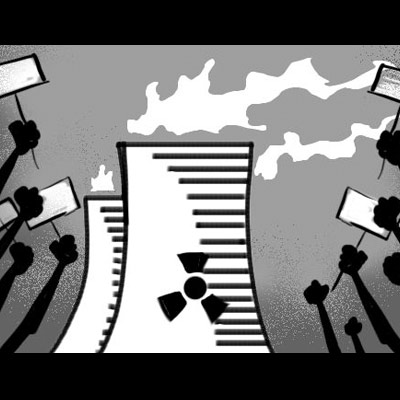
The residents of Arasinkeri village in Karnataka’s Koppal district have vowed not to surrender their land for the proposed establishment of a nuclear power plant near their village.
The central government’s initiative to set up a nuclear power plant in the region has caused significant apprehension among the villagers. The Department of Atomic Energy has reportedly directed local authorities to identify at least 1,200 acres of land surrounding Arasinkeri for the project. Revenue department officials have started surveying the area to locate suitable sites.
On December 13, the villagers made an official plea to Koppal deputy commissioner Nalini Atul, urging the government to abandon the project. They warned that failure to address their concerns could result in intensified protests.
“Arasinkeri is already burdened by pollution from over a hundred factories, including steel plants. Living conditions are already difficult. The majority of residents here depend on agriculture and forestry. Adding a nuclear power plant will destroy our livelihoods and pose irreversible risks to our health and the environment,” said M Veerabhadrappa, a local farmer. He is one of the 2,500 villagers who have refused to surrender their land.
The proposed site reportedly includes over 400 acres of forest land in Survey No 80 and another 100 acres in Survey No 9, areas critical to both the local community and biodiversity. Villagers fear the project will disrupt the fragile balance of their environment while threatening their safety and well-being.
On December 13, officials from NTPC (National Thermal Power Corporation) visited Koppal district and conducted an inspection in Arasinkeri village. “The project is still in its preliminary stages. If the site is approved, farmers will be provided with suitable compensation for their land. A technical team from Delhi is expected to visit soon to finalise the location,” Koppal sub-divisional magistrate Mahesh Malagati told Hindustan Times.
Despite these assurances, anxiety among villagers continues to grow. Their primary concern lies in the health risks associated with having a nuclear power plant in close proximity. They worry about potential contamination and other hazards that could affect both people and the environment.
“The government needs to understand that a nuclear power plant near a densely populated area is unacceptable,” said another villager. “We will continue to oppose this project with all our might.”
‘We need to be prepared’: China adapts to era of extreme flooding

“The Chinese leadership tends to see the long game,” Li said. “To demonstrate their far-sight and to prevent further risks, more should be done to prepare for the impacts of climate change systematically.”
While some residents take to building houses in trees, officials recognise need for national response to climate disasters
Amy Hawkins , Guardian 24th Dec 2024, https://www.theguardian.com/world/2024/dec/24/we-need-to-be-prepared-china-adapts-to-era-of-extreme-flooding
Every summer, Dongting Hu, China’s second-largest freshwater lake, swells in size as flood water from the Yangtze River flows into its borders. Dams and dikes are erected around the lake’s edges to protect against flooding. But this year, not for the first time, they were overwhelmed.
For three days in early July, more than 800 rescue workers in Hunan province scrambled to block the breaches. One rupture alone took 100,000 cubic metres of rock to seal, according to Zhang Yingchun, a Hunan official. At least 7,000 people had to be evacuated. It was one of a series of disasters to hit China as the country grappled with a summer of extreme weather. By August, there had been 25 large floods, the biggest number since records began in 1998, reported state media.
Xi Jinping, China’s president, “urged all-out rescue and relief work” to safeguard the people affected by the flooding in Hunan, state media reported.
One of those people was Ren Benxin, an archaeologist who lives on a small, forested island in the upper tributaries of Dongting Hu. He calls his idyllic home Soultopia. As well as carrying out archaeological research, he provides accommodation for travellers and looks after the herd of stray cats and dogs that he has adopted over the years.
On 5 July, his home was flooded. “First, I rescued the animals. Then, I rescued the supplies,” he said. “It was the first time in 10 years that I’d experienced something like this.”
The wooden huts in Ren’s corner of the islet were nearly completely submerged in muddy water. Chickens used the remnants of destroyed buildings as rafts to avoid drowning. Ren traversed the island in a small plastic dinghy. One of his dogs, Eason, fell ill after drinking dirty flood water, and died a few days later.
“Two years ago, we had a severe drought, and this year it’s been floods. I think we need to be prepared for anything,” Ren said.
Experiences like Ren’s are becoming more common in China, as
global heating makes extreme weather events more likely, as well as undermining communities’ defences against those disasters.
Dongting Hu exemplifies these challenges. It was once China’s largest freshwater lake. But decades of agricultural development meant that huge swathes of its land were reclaimed for farming, reducing the lake’s storage capacity. Both droughts and floods are becoming more serious and severe.
At least six Chinese provinces experienced major flooding in 2024. As well as the floods in Hunan, heavy rainfall in Guangdong, China’s most populous province, forced more than 110,000 people to relocate. After years of treating weather disasters as isolated incidents that require a local response, Chinese officials are becoming increasingly aware of the need to adapt to extreme weather events on a national scale.
“The harsh reality is here: the lack of climate action will cost China and present a social security threat,” said Li Shuo, director of the China Climate Hub at the Asia Society Policy Institute.
At the Cop29 UN climate crisis conference in November, China published an action plan for climate adaptation, vowing to establish a technical platform to monitor and forecast extreme weather events and to share its knowledge of improving early warning mechanisms.
It marked a shift the country which has long acknowledged the science of the climate crisis, but has focused its environmental cleanup efforts on issues such as air pollution – rather than severe but relatively rare floods and droughts.
“The Chinese leadership tends to see the long game,” Li said. “To demonstrate their far-sight and to prevent further risks, more should be done to prepare for the impacts of climate change systematically.”
For flooding victims like Ren, an official recognition of – and compensation for – the damage wrought by the climate crisis cannot come soon enough. The repair work cost him more than 70,000 yuan (£7,600), although the authorities did send some relief workers to help.
For now, Ren is developing his own ways to adapt to climate breakdown. He shuns electrical appliances after his were destroyed in the flood, and uses wood burners for cooking and heating. He plans to build a new home suspended in trees, so as to be safe from floods.
“I think extreme weather is more frequent now. So I have to be prepared for anything. If I like the place, I’ll stay.”
Additional research by Chi-hui Lin and Jason Tzu Kuan Lu
Earthquake-prone Indonesia considers nuclear power plan as 29 possible plant sites revealed
ABC News, By Natasya Salim, Tri Ardhya and Sally Brooks, 28 Dec 24
In short:
Indonesia’s energy council has proposed 29 sites for nuclear power plants in a bid to secure reliable energy sources and reduce carbon emissions.
Environmental groups say the plan is “dangerous”, partly because the country is prone to earthquakes.
What’s next?
The energy council is searching for foreign investors to back the plan.
…………………………………………………………………………………………………………………….. The new detail on plant site locations has renewed safety concerns among environmental advocates in part because Indonesia is prone to natural disasters.
The archipelago mostly sits along the Pacific Ring of Fire where tectonic plates frequently collide and cause earthquakes and other disasters.
Twenty years ago, a magnitude-9.1 earthquake struck off the coast of Indonesia’s Aceh province and triggered the 2004 Boxing Day tsunami, that killed some 230,000 people across Indonesia, Sri Lanka, India, Thailand, and nine other countries.
Hendrikus Adam, from environmental not-for-profit organisation WALHI, said authorities needed to learn from past nuclear power disasters, including those caused by earthquakes and tsunamis like the Fukushima accident in Japan in 2011.
“We think nuclear plants are risky, dangerous and harmful for humans and the environment,” said Mr Adam.
“The development of a nuclear plant itself is also very expensive and hazardous.”
……………………………………………. Last month, National Development Planning Deputy Minister Vivi Yulaswati said Indonesia was in talks with the US and Russia about acquiring technology to develop nuclear power plants.
Separately, Indonesia’s state-owned electricity firm PLN has reportedly signed agreements with companies in the US and Japan to build small modular reactors, Coordinating Economic Minister Airlangga Hartarto said earlier this month……….
Details of the agreements are scarce and PLN declined to comment for this story………….
Currently none are in commercial operation in any Organisation for Economic Co-operation and Development (OECD) country….. https://www.abc.net.au/news/2024-12-27/earthquake-prone-indonesia-plans-for-nuclear-power/104758008
Second Fukushima nuclear sample removal eyed for March

CNA 26th Dec 2024
Three of Fukushima’s six reactors went into meltdown in 2011 after a huge tsunami swamped the facility.
TOKYO: The operator of Japan’s stricken Fukushima nuclear plant said on Thursday (Dec 26) it will start the second round of a tricky operation to collect samples of radioactive debris from the site this spring.
Around 880 tonnes of hazardous material remain at the Fukushima site, 13 years after a catastrophic tsunami caused by a 9.0-magnitude earthquake triggered one of history’s worst nuclear accidents.
Removing the debris is seen as the most daunting challenge in a decommissioning project due to last decades, because of the dangerously high radiation levels.
Last month, operator Tokyo Electric Power Company (TEPCO) said a trial debris removal operation using a specially developed extendible device had been completed.
The sample weighing just below 0.7g – equivalent to about one raisin – was delivered to a research lab near Tokyo for analysis.
A TEPCO official told a press conference they are now gearing up for a second sample removal due in “March to April”……….
https://www.channelnewsasia.com/east-asia/fukushima-nuclear-plant-sample-removal-march-2025-4826701
References to ‘inducing a North Korean attack’ found in ex-military official’s notes
2024-12-24 , By Lee Ji-hye, staff reporter, HANKYOREH,
A notebook found at the home of Roh Sang-won, the former Defense Intelligence Command, included jottings about shooting people to death and “concentration and handling” of those who were to be arrested.
A memo written by Roh Sang-won, the former head of the Defense Intelligence Command identified as the secret mastermind of the Dec. 3 insurrection attempt, contained the phrases “inducing a North Korean attack around the Northern Limit Line (NLL),” and “trash balloons.” With evidence pointing to attempts to stoke conflict with North Korea surfacing, police have stated that they are investigating President Yoon Suk-yeol, his former defense chief Kim Yong-hyun, and others on suspicions of treason.
Roh’s notebook also mentioned the “means of concentration and handling” of those who were to be arrested, even going so far as to suggest “execution by shooting.” Such drastic phrases suggest those plotting to punish so-called “anti-state forces” may not have been satisfied with simply detaining these figures.
The special unit investigating the martial law declaration under the Korean National Police Agency’s National Office of Investigation announced on Monday that Roh’s notebook contained the phrase “inducing a North Korean attack around the Northern Limit Line (NLL).”
When asked by Democratic Party lawmaker Youn Kun-young whether “trash balloons” also appeared in Roh’s notebook during a plenary session of the parliamentary Public Administration and Security Committee on the same day, Woo Jong-soo, the head of the National Office of Investigation, confirmed that the phrase was spotted in the notebook.
This is the first time that a plot to provoke North Korea has been confirmed in the investigation into the Dec. 3 insurrection attempt……………………………………………………………………………..more https://english.hani.co.kr/arti/english_edition/e_national/1174701.html
Martial Law Fiasco Casts Doubt Over Korea’s Nuclear Power Push
Enegy Connect, By Bloomberg, By Heesu Lee, Dec 16, 2024
— South Korea’s embrace of nuclear energy has been thrown into doubt as President Yoon Suk Yeol’s impeachment case raises the possibility of the opposition coming to power and overhauling the nation’s broader energy strategy.
With Yoon suspended from office because of a botched attempt to impose martial law, his push to build more reactors at home and ramp up exports of Seoul’s nuclear technology is at risk of stalling, alongside a flagship oil and gas discovery. Stocks related to the nuclear sector and the drilling project have already suffered losses due to souring investor sentiment since the political crisis began.
Asia’s fourth-largest economy has pledged to curb emissions by 40% from 2018 levels by 2030 and, while Yoon has come out in support of nuclear, successive governments have been criticized for dragging their feet on adding more renewables like solar and wind. The country is due to update its climate targets by early next year, but the political upheaval has now complicated that.
Opposition leader Lee Jae-myung, Yoon’s most likely successor if he loses the impeachment case, is seen as more climate-friendly. During his campaign in the 2022 presidential election, which he narrowly lost, he pledged to expand renewables, bring forward the country’s 2050 net zero target by a decade, and pushed for stricter emissions targets with early phase-out of coal-fired power plants.
At the same time, he has opposed building new nuclear reactors but is set to allow the use of existing facilities. ……….
critics argued that Yoon’s nuclear-centric strategy sidelined the potential of renewable energy, which aligns more closely with global green initiatives. At the same time, his push for oil and gas exploration off the country’s east coast also faced a backlash from climate activists and opposition lawmakers, who claimed these policies undermine the decarbonization efforts of the world’s eighth-biggest emitter.
For now, all eyes are on South Korea’s Constitutional Court, which must decide whether or not to validate Yoon’s impeachment within 180 days. If it does, an election must be held for a new president within 60 days.
All this could delay the parliamentary approval needed for the country’s long-term energy roadmap plan…………………………………………..https://www.energyconnects.com/news/renewables/2024/december/martial-law-fiasco-casts-doubt-over-korea-s-nuclear-power-push/
We used to laugh at North Korean nuclear submarine boasts. Not any more
In January 2021, North Korean strongman Kim Jong Un stood before thousands of
members of the Worker’s Party of Korea in Pyongyang and announced that
North Korean industry was in the late stages of developing a
nuclear-powered submarine – the first such sub for the North Korean navy.
At the time, it may have been wise to be sceptical: nuclear submarines are
among the costliest and most complex weapon systems in the world. North
Korean industry isn’t exactly known for its wealth and sophistication.
Nearly four years later, there’s much less reason to doubt Kim’s claim.
Because now North Korea has Russia’s help. And for all its woes, Russian
industry still builds a lot of world-class nuke boats.
Telegraph 6th Dec 2024, https://www.telegraph.co.uk/news/2024/12/06/putin-russia-nuclear-submarine-north-korea-axis-evil/
Indonesia’s nuclear energy push pits growth against safety concerns

SCMP, Resty Woro Yuniar, 1 Dec 2024
In a move that could reshape Indonesia’s energy landscape, President Prabowo Subianto is advocating for nuclear power as a solution to the country’s growing energy demands. While supporters hail the initiative as a transformative step for Southeast Asia’s largest economy, critics sound alarms about radioactive waste and high costs.
Prabowo’s brother and top adviser, Hashim Djojohadikusumo, outlined the administration’s ambitious goal during Cop29 in Baku on November 19: to add over 100 gigawatts of power in the next 15 years, with at least 75 per cent sourced from renewable and [?]clean energy, including nuclear. The country aims for net zero emissions by 2060………
Hashim had previously said that the government plans to build two nuclear plants with varying capacities, including a larger facility in western Indonesia capable of producing up to 2GW. The country currently operates two nuclear reactors, primarily for research purposes.
“What needs to be looked for is the safest place [for the plants], one that is earthquake-resistant. Don’t build it in areas where there is a high risk of earthquakes, there could be an accident,” Hashim said on November 12.
…………………………………………………………….. ‘Fake solutions’
While proponents argue nuclear power is a reliable source of clean energy, many environmentalists and concerned Indonesians have opposed plans to build nuclear plants in the past, typically citing safety or security concerns and recalling disasters like Chernobyl and Fukushima.
“We are actually bucking the global trend. Developed countries like Germany have abandoned their nuclear power plants two years ago, and now we are planning to build one,” said Hadi Priyanto, a climate and renewable energy activist.
“At Cop28 last year, we called for the government to triple our use of renewable energy, and we made the same call this year. Instead of doing that, the government was peddling nuclear power and other fake [energy transition] solutions.”
He raised concerns about the government’s budget for managing radioactive waste, questioning whether Indonesia has the financial capacity to handle such challenges.
“If it is not managed properly … it will pollute water and soil. In the Fukushima case, they stored hundreds of thousands of tonnes of its radioactive waste for 13-15 years, and they only released it last year. Do we have the financial strength to manage waste like that?” he said.
Deon Arinaldo, an energy transition programme manager at Jakarta-based Institute for Essential Services Reform, said that while nuclear was a “reliable” energy source, construction of nuclear plants would be “problematic” as it would be expensive and time-consuming.
“What is very unfortunate is that Indonesia has high renewable energy potential, from the data of the Ministry of Energy and Mineral Resources there is more than 3,600GW of renewable energy potential, especially solar and wind, which can be deployed at a cheaper price and [produced] faster, so that it can support economic growth,” Deon said.
Both Hadi and Deon argued that nuclear plants would also make Indonesia dependent on foreign energy providers, as the country currently lacks the technology to build and operate the plants – or enrich uranium, a key nuclear fuel…………….. https://www.scmp.com/week-asia/economics/article/3288703/indonesias-nuclear-energy-push-pits-growth-against-safety-concerns
Tepco eyes second test removal of Fukushima nuclear fuel debris
Japan Times 29th Nov 2024, https://www.japantimes.co.jp/news/2024/11/29/japan/tepco-debris-removal-plan/
Tokyo Electric Power Company Holdings is considering conducting a second test to remove nuclear fuel debris from one of the three meltdown-hit reactors at its Fukushima No. 1 nuclear power plant, company officials said Thursday.
As in the previous test, Tepco plans to use a fishing rod-shaped device to remove the debris from the plant’s No. 2 reactor.
Tepco collected 0.7 gram of debris in the first test, which started in September and ended on Nov. 7. The debris is currently under analysis at the Japan Atomic Energy Agency.
Nuclear Regulation Authority Chairperson Shinsuke Yamanaka has asked the company to collect more debris to gather more data.
Some 880 tons of nuclear debris, a mixture of melted fuel and reactor parts, is estimated to remain in the No. 1, No. 2 and No. 3 reactors at the plant, which was crippled by the March 2011 Great East Japan Earthquake and tsunami.
Japan / Blow For Nuclear Programme As Regulator Blocks Tsuruga-2 Restart

Nucnet By David Dalton, 14 November 2024
NRA cites presence of possible active fault lines underneath facility
Japan’s nuclear watchdog has formally prevented the Tsuruga-2 nuclear power plant in the country’s north-central region from restarting, the first rejection under safety standards that were revised after the 2011 Fukushima disaster.
The Nuclear Regulation Authority said the unit, in Fukui Prefecture, is “unfit” for operation because owner and operator Japan Atomic Power Company (JAPC) failed to address safety risks stemming from the presence of possible active fault lines, which can potentially cause earthquakes, underneath it.
Tsuruga-2, a 1,108-MW pressurised water reactor unit that initially began commercial operation in 1987, is the first reactor to be prevented from restart under safety standards adopted in 2013 based on lessons from the 2011 Fukushima-Daiichi meltdowns following a massive earthquake and tsunami.
Those standards prohibit reactor buildings and other important facilities being located above any active fault…………………………………
Recent press reports in Japan said the NRA had decided Tsuruga-2 could not be restarted because it could not rule out the possibility that a fault line running under the reactor building is connected to adjacent active fault lines.
“We reached our conclusion based on a very strict examination,” NRA chairperson Shinsuke Yamanaka told reporters.
‘Data Coverups And Mistakes’ By Operator
The verdict comes after more than eight years of safety reviews that were repeatedly disrupted by data coverups and mistakes by the operator, Yamanaka said. He called the case “abnormal” and urged the utility to take the result seriously.
An older unit at Tsuruga, the 340-MW Tsuruga-1 boiling water reactor, began commercial operation in 1970 and was permanently shut down in 2015……………………………. https://www.nucnet.org/news/blow-for-nuclear-programme-as-regulator-blocks-tsuruga-2-restart-11-4-2024
Nuclear reactor in 2011 disaster-hit area restarted
A nuclear reactor in northeastern Japan, hit by the devastating 2011 earthquake and tsunami, was restarted Wednesday after a temporary suspension due to an instrument problem, the plant operator said.
In late October, the Onagawa plant’s No. 2 unit became the first reactor to operate in eastern Japan since the natural disaster, but it was halted earlier this month after a checking device became stuck inside the containment vessel.
Tohoku Electric Power Co, the operator of the Onagawa nuclear plant in Miyagi Prefecture, said it detected that a nut on a joint of a guide tube — designed to send devices into the reactor — was not tightened adequately when it was replaced in May.
The operator said it plans to begin power generation possibly this week after the reactor reaches stable criticality and hopes to start commercial operations around December.
The Onagawa unit cleared safety screening in February 2020 under stricter safety standards set after the 2011 nuclear accident at the Fukushima Daiichi power plant. The reactor is the same type as those at the Fukushima plant.
Nuclear debris retrieved from Fukushima reactor weighs 0.7 gram, (Just 880 tons to go)
Japan Times 9th Nov 2024
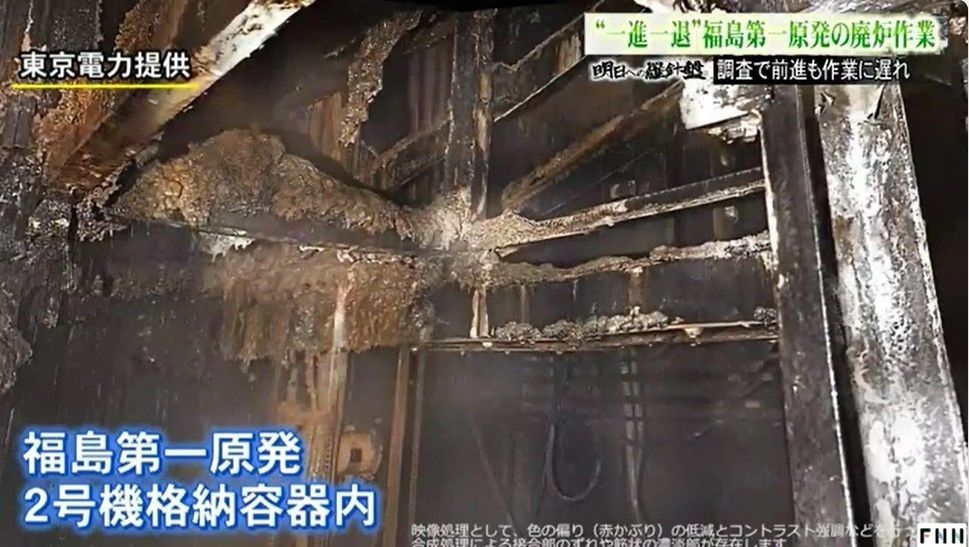
The nuclear fuel debris collected on a trial basis from a crippled reactor at the Fukushima No. 1 nuclear power station weighs 0.7 gram, Tokyo Electric Power Company Holdings said Friday.
The collected substance will be analyzed at four facilities, including the Japan Atomic Energy Agency, for research toward full-scale extraction of nuclear fuel debris from reactors at the Tepco plant in Fukushima Prefecture…………………..
The company plans to spend the next few days preparing for the transportation of the fuel debris to the four facilities.
The four facilities will share the nuclear fuel debris and analyze its components and hardness over several months to a year.
TEPCO collected the debris from the No. 2 reactor Thursday, about two months after the trial work was launched Sept. 10. It was the first time that fuel debris has been removed from a damaged reactor at the Fukushima No. 1 plant.
A total of about 880 tons of nuclear debris, a mixture of melted fuel and reactor parts, is believed to remain in the No. 1 to No. 3 reactors………
https://www.japantimes.co.jp/news/2024/11/09/japan/fukushima-tepco-nuclear-debris/
Tepco removes [a tiny sceric]of nuclear fuel debris from Fukushima disaster site
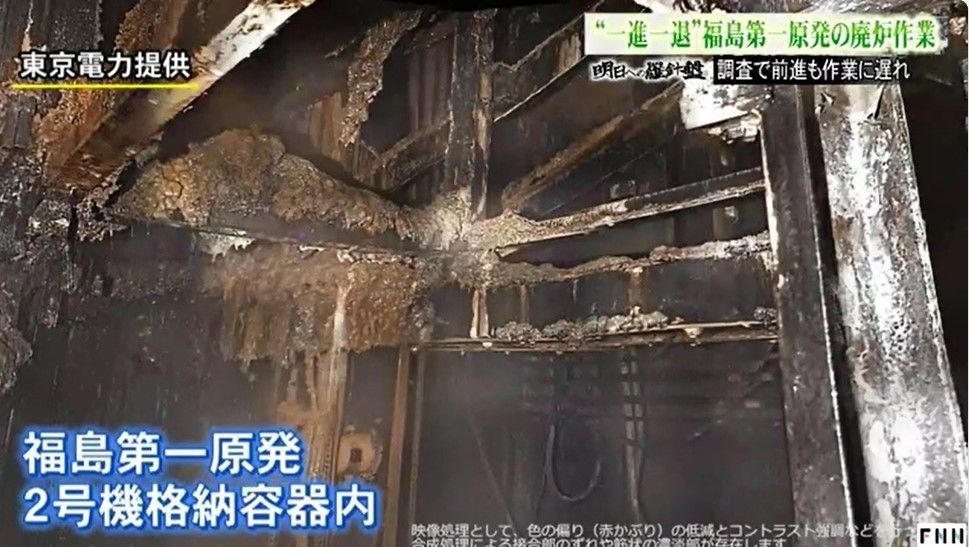
The whole process is expected to cost around ¥23 trillion ($149 billion) and take decades to complete. About 880 tons of radioactive material, like melted fuel and metal cladding, are said to be stuck at the bottom of the three reactors at the plant.
By Shoko Oda, Bloomberg, Japan Times 7th Nov 2024
https://www.japantimes.co.jp/news/2024/11/07/japan/tepco-debris-removal-demonstration/
Tokyo Electric Power Company Holdings says it has removed nuclear fuel debris left inside a reactor in a demonstration at its Fukushima No. 1 power plant, 13 years after a meltdown there.
Radioactive debris was removed from the Unit 2 reactor at the plant and was placed inside a sealed container for transportation, the power producer said in an emailed statement on Thursday.
The demonstration is part of Tepco’s cleanup plan for the site, after the March 2011 Great East Japan Earthquake and tsunami overwhelmed the facility and led to the worst nuclear disaster since Chernobyl. The whole process is expected to cost around ¥23 trillion ($149 billion) and take decades to complete. About 880 tons of radioactive material, like melted fuel and metal cladding, are said to be stuck at the bottom of the three reactors at the plant.
Tepco, which is decommissioning the plant alongside the government, is using a robotic arm that looks like a fishing rod with a claw grip to remove a small sample of the nuclear debris. The company had planned to remove just 3 grams as part of the demonstration.
The removed debris is set to be transported to Japan Atomic Energy Agency’s research facility for analysis, according to Tepco’s website.
The retrieval process began in September but faced challenges. A camera attached to the robotic arm stopped working, forcing Tepco to suspend the demonstration to replace the camera.
Robot Removes First Bit Of Fukushima’s Nuclear Fuel Debris – Just 880 Tons More To Go

The radioactive ruins are still far too dangerous for humans.
Tom Hale, IFL Science 6th Nov 2024, https://www.iflscience.com/robot-removes-first-bit-of-fukushimas-nuclear-fuel-debris-just-880-tons-more-to-go-76669
robot has delved into the radioactive ruins of Fukushima to retrieve a tiny chunk of spent nuclear fuel. It’s the first time solid fuel debris has been removed from the plant – but they’ve still got a hell of a long way to go: 880 tons of the stuff to be precise.
The remotely operated robotic arm, equipped with a telescopic camera, was able to grasp and retrieve a “small amount of fuel debris” from the floor of Unit 2’s reactor on October 30, according to the plant’s operator Tokyo Electric Power Company Holdings (TEPCO).
“From the results of primary containment vessel internal investigations, we have deduced that the accumulated debris on the surface of the floor inside the pedestal is solidified molten material that consists of fuel elements and also may contain a lot of metal,” TEPCO said in a statement.
The fuel debris will now be taken away from the Fukushima site where scientists will analyze it to gain further insight into how to remove the rest of the debris.
“By analyzing the attributes of the sampled fuel debris we will directly ascertain information such as the composition of debris at the sampling location and radioactivity density,” added TEPCO……………………………………………………………..
It’s estimated that the three impacted reactors contain an estimated total of 880 tons of melted fuel debris, all of which TEPCO hopes to remove during their decommissioning effort by the year 2031. The latest retrieval of a small chunk of radioactive debris is just the beginning of the mammoth feat ahead.
Along with solid debris, the decommissioning project has also had to deal with the colossal quantities of radioactive water that accumulated after being used to cool the damaged reactor cores. In August 2023, Japan began releasing some of the treated wastewater into the Pacific Ocean, much to the annoyance of their neighbors.
TEPCO has expressed hope the entire clean-up operation will be completed in 30 to 40 years, although some speculate the target is overly optimistic.
Senior Journalist
1
Fifty two nations call for global arms embargo on Israel
Turkiye is leading the call for the embargo despite its ongoing trade with, and oil deliveries to, Israel
The Cradle, NOV 4, 2024
The Foreign Ministry of Turkiye sent the UN a letter signed by 52 nations and two organizations calling for a halt in military transfers to Israel, stating the Israeli army is committing genocide against Palestinians in Gaza.
Turkish Foreign Minister Hakan Fidan called for the arms embargo on Israel while speaking at a news conference in Djibouti on 1 November.
While attending the Turkiye–Africa collaboration meeting, Fidan announced that the group letter was sent to the UN and that it must be “repeated at every opportunity that selling arms to Israel means participating in its genocide.”
Ahmet Yildiz, Turkiye’s permanent ambassador to the UN, stated that Israel’s actions have pushed the region to the brink of war……………………………………………..more https://thecradle.co/articles/fifty-two-nations-call-for-global-arms-embargo-on-israel
1 This Month

of the week – Shut Down Drone Warfare!


Tell the Ukrainian Government to Drop Prosecution of Peace Activist Yurii Sheliazhenko

Petition to revoke the licensing of the Near Surface Nuclear Disposal Facility (NSDF) at Chalk River. https://www.ourcommons.ca/petitions/en/Petition/Details?Petition=e-7247
To see nuclear-related stories in greater depth and intensity – go to https://nuclearinformation.wordpress.com
-
Archives
- March 2026 (244)
- February 2026 (268)
- January 2026 (308)
- December 2025 (358)
- November 2025 (359)
- October 2025 (376)
- September 2025 (257)
- August 2025 (319)
- July 2025 (230)
- June 2025 (348)
- May 2025 (261)
- April 2025 (305)
-
Categories
- 1
- 1 NUCLEAR ISSUES
- business and costs
- climate change
- culture and arts
- ENERGY
- environment
- health
- history
- indigenous issues
- Legal
- marketing of nuclear
- media
- opposition to nuclear
- PERSONAL STORIES
- politics
- politics international
- Religion and ethics
- safety
- secrets,lies and civil liberties
- spinbuster
- technology
- Uranium
- wastes
- weapons and war
- Women
- 2 WORLD
- ACTION
- AFRICA
- Atrocities
- AUSTRALIA
- Christina's notes
- Christina's themes
- culture and arts
- Events
- Fuk 2022
- Fuk 2023
- Fukushima 2017
- Fukushima 2018
- fukushima 2019
- Fukushima 2020
- Fukushima 2021
- general
- global warming
- Humour (God we need it)
- Nuclear
- RARE EARTHS
- Reference
- resources – print
- Resources -audiovicual
- Weekly Newsletter
- World
- World Nuclear
- YouTube
-
RSS
Entries RSS
Comments RSS
 nuclear-news