 US strike on North Korea would spark world war with China, think-tank warns https://www.thesun.co.uk/news/2090813/crushing-crazy-kims-nuke-bid-will-spark-war-with-china/
U.S. warned against nuking nutty North Korea because it risked war with neighbouring China BY PATRICK KNOX 1st November 2016,
AMERICAN is doomed to fighting an apocalyptic war with China if it dares to hit North Korea with surgical nuclear strikes, experts are warning.
Washington is becoming increasingly alarmed at the pace of crackpot Kim Jong-un’s bid to build-up his nuclear firepower which he vows will be used against the U.S. As revealed by Sun Online, the Pentagon is operating a bizarre looking “floating golf ball” which turns out to a sophisticated anti-missile shield to shoot down Kim’s rockets.
But as well as beefing up its defences, U.S. forces could be forced to carry out a preemptive “surgical strike” against North Korea before its nukes transform California into a radiated hell-hole.
China expert John Delury warns this option would be on the table.
But he said it could end up spectacularly backfiring because nuclear armed Beijing would then feel compelled to defend its neighbour.
He said: “How might Beijing react to a US preemptive or surgical strike on the North?
“North Korea is, after all, China’s only defence treaty ally in the world, and is obligated to ‘immediately render military and other assistance by all means at its disposal’ to defend Pyongyang if attacked.
“A strike of this nature could likely drive Beijing to side with the North in accordance with their 1961 treaty.
Writing for the think tank 38 North, Dr Delury added: “‘Surgery’ would rapidly descend into a bloodbath. “Preemption” would start a war.”
As reported, leaked emails show U.S. Presidential wannabe Hillary Clinton is threatening to “ring China with missile defence” if it doesn’t agree to Washington’s requests and use its influence over the one-party state to stop developing the weapons.
Meanwhile, Major General William Hix, of the US Army, confessed World War 3 is “almost guaranteed” and will be “extremely lethal and fast.” He said that China and Russia are both developing huge militaries which are driven by new technologies.
And he warned that the US is preparing for “violence on the scale that the U.S. Army has not seen since Korea” when over 30,000 American troops were slaughtered.
November 4, 2016
Posted by Christina Macpherson |
China, North Korea, USA, weapons and war |
1 Comment
On Thursday (October 27) a US military spokesperson confirmed the exercise had been carried out in a rare public announcement.
They said: “Troops of South Korean Air Force’s combat control team, an infiltration commando unit, and the US Air Force’s 353rd Special Operations Group staged a joint exercise at Gunsan Air Base recently.”
Part of the operation saw military transport aircraft practising flying low – something that has been done since the 1990s to test infiltrating North Korea.
These aircraft are apparently used to transport special forces who are on a mission to destroy Kim Jong-un’s missiles and nuclear weapons.
According to a South Korean news network, the 353rd Special Operations Group, which is based at the Kadena Air Base in Okinawa, Japan, completes missions to send commandos into the closed country.
The military spokesperson added: “The latest Teak Knife exercise focused on infiltrating an inland area in the North to destroy key facilities.
“It’s different from a decapitation strike operation targeting the North Korean leadership.”
There have been calls in the US to launch pre-emptive strikes in North Korea following numerous incidents of despot leader Kim Jong-un testing his countries nuclear power.
Just this week officials confirmed he tested nuclear-capable missile which has the potential to reach the US military base in Guam.
October 31, 2016
Posted by Christina Macpherson |
North Korea, secrets,lies and civil liberties, South Korea, USA |
Leave a comment
South Korea’s March Toward a Strike-First Nuclear Policy An increasingly provocative North Korea and wavering U.S. support leave Seoul scrambling for more forceful defense options. WSJ By DONALD KIRKOct. 25, 2016 Seoul
After years of hesitation, South Korean defense officials and members of President Park Geun-hye’s ruling Saenuri Party are openly discussing the possibility of pre-emptive strikes on North Korean missile and nuclear facilities. Increasingly, political figures are urging both their own government and the U.S. to go beyond the level of study promised by U.S. Secretary of State John Kerry and enshrine the right to respond to North Korean threats at least with the heaviest conventional weapons in their arsenal as a formal tenet of U.S. and Korean policy.
Nor is “strike first” the only demand gaining common currency among conservative Koreans. While North Korea’s leader, Kim Jong Un, orders missile and nuclear tests, voices are rising within the Saenuri for South Korea to develop its own nuclear deterrent. The U.S. has opposed proliferation ever since physicists at the Korea Atomic Energy Research Institute were discovered looking into it during the presidency of Ms. Park’s father, Park Chung-hee………
Calls for a South Korean nuclear submarine are rising in tandem with North Korean missile testing. The North has a large submarine fleet—and has spread alarm by testing a ballistic missile fired from one of its subs.
One South Korean assembly member, Won Yoo-chul, derided longtime U.S. guarantees of a “nuclear umbrella” since the withdrawal of U.S. nuclear weapons from the South 25 years ago. “We cannot borrow an umbrella from a neighbor every time it rains,” he warned. “We need to have a raincoat and wear it ourselves.”
The North Koreans for their part vow to strike first—against a nuclear-armed U.S. “We will not step back,” said Lee Yong Pil, an official at the North Korean Foreign Ministry, as long as the U.S. “has nuclear weapons off our coast, targeting our country, our capital and our Dear Leader, Kim Jong Un.”
U.S. and South Korean officials are talking openly about “decapitation” of the North Korean leadership in a quick strike at Pyongyang. If the word seems hyperbolic to Americans, North and South Koreans alike take it seriously. North Korea has said the term clearly shows why the North has to have a nuclear program “for self-defense” while many South Korean officials see “decapitation” as the ultimate solution—with or without nuclear weapons.
“Korea Massive Punishment and Retaliation” was the name the Koreans gave a massive exercise this month in the Yellow Sea in which the aircraft carrier USS Ronald Reagan led a joint U.S.-South Korean strike force. Their mission was more sharply defined than in previous war games. This time, said a Korean defense official, ships and planes focused specifically on imaginary North Korean nuclear and missile facilities, command headquarters—and Kim Jong Un…..http://www.wsj.com/articles/south-koreas-march-toward-a-strike-first-nuclear-policy-1477414963
October 27, 2016
Posted by Christina Macpherson |
North Korea, South Korea, weapons and war |
Leave a comment
 Unofficial US-N. Korea talks held in Malaysia https://au.news.yahoo.com/world/a/32991266/unofficial-us-n-korea-talks-held-in-malaysia/#page1 October 24, 2016 Seoul (AFP) – A group of former US diplomats held closed door talks at the weekend with senior Pyongyang officials, even as international efforts gather pace to further isolate North Korea, diplomatically and economically.
The two-day meeting in Kuala Lumpur, which was confirmed by the South Korean and US governments, was the latest in a series of unofficial talks commonly referred to as Track 2 that are closely monitored in the absence of any official contact between Washington and Pyongyang.
In July, the North cut off its only remaining official channel of diplomatic communications with the United States in retaliation for American sanctions against its leader, Kim Jong-Un.
The so-called “New York channel” had previously served as a key point of contact between North Korean and US diplomats at the United Nations.
American participants at the talks in the Malaysian capital included Robert Gallucci, who had led the US negotiating team that brokered a 1994 deal with Pyongyang on freezing its nuclear weapons programme.
Among those on the North Korean side was vice foreign minister Han Song-Ryol, who previously served as deputy ambassador to the UN.
The meeting came after North Korea on Thursday test-fired a powerful new medium-range missile and Leon Sigal, an academic specialising in the Koreas who attended the talks, said the North’s nuclear weapons programme had dominated the discussion.
Sigal told South Korea’s Yonhap news agency that the North had reiterated the need to sign a peace treaty with the United States before moving on its weapons programme.
The US side stressed that the moves to scrap the nuclear programme had to come first, said Sigal. Under President Barack Obama, the United States has eschewed an official dialogue with the North, but with a looming change in the White House, there is growing speculation as to whether a new administration might adopt a different track.
Critics of the current policy say sanctions and non-engagement have done nothing to prevent the North’s accelerated drive towards a credible nuclear deterrent that could directly threaten the US mainland.
South Korea, which has stood shoulder-to-shoulder with the US hardline on Pyongyang, stressed that the talks with North Korea had no governmental involvement.
“We are aware that the US government maintains a firm stance that rushing into dialogue in the absence of North Korea’s will to denuclearise will only justify their wrong behaviour,” a foreign ministry official told AFP.
The UN Security Council is currently discussing a new resolution to punish North Korea over its fifth nuclear test in September — having already imposed tough economic measures after a fourth test in January.
The Track 2 talks have been taking place sporadically for years, with meetings in Singapore, Berlin, Beijing and elsewhere.
October 27, 2016
Posted by Christina Macpherson |
North Korea, politics international, USA |
Leave a comment
North Korean Missile Reportedly Explodes Soon After Liftoff North Korea failed in attempt to launch a midrange Musudan missile, U.S. and South Korea Say Associated Press WSJ, Oct. 16, 2016 WASHINGTON—South Korea and the U.S. said Sunday that the latest missile launch by North Korea ended in failure after the projectile reportedly exploded soon after liftoff.
The South Korean Joint Chiefs of Staff said in a statement that the military believed the North unsuccessfully attempted to fire a midrange Musudan missile. It said the failed launch occurred near an airport in North Pyongan province.
South Korea’s Yonhap News Agency said that the missile was believed to have exploded soon after liftoff. Yonhap cited no source for this information.
South Korea strongly condemns the launch because it violates United Nations Security Council resolutions that ban any ballistic activities by North Korea, the statement said……….
North Korea has claimed technical breakthroughs in its goal of developing a long-range nuclear missile capable of reaching the continental U.S. However, South Korean defense officials have said the North doesn’t yet have such a weapon.
The failed launch was the latest in a series of moves by North Korea apparently aimed at displaying a show of force. As recently as last month, it fired three ballistic missiles off its east coast, timed to get the attention of world leaders including President Barack Obamawho were visiting the region for a series of summits. The U.N. Security Council subsequently condemned those North Korean launches and threatened “further significant measures” if it refused to stop its nuclear and missile tests.
North Korea also conducted its fifth nuclear test last month and in all has launched more than 20 ballistic missiles this year, part of its program aimed at improving the delivery system for nuclear weapons. Earlier this year, North Korea successfully launched a Musudan missile in June after several failed attempts…….. http://www.wsj.com/articles/u-s-detects-failed-north-korean-missile-launch-1476572239
October 18, 2016
Posted by Christina Macpherson |
North Korea, weapons and war |
Leave a comment
US Pentagon detects a failed North Korean nuclear test launch, news.com.au 16 Oct 16 THE US military has detected a failed North Korean test launch of an intermediate ballistic missile near the northwestern city of Kusong, the Pentagon says.
“We strongly condemn this and North Korea’s other recent missile tests,” said US Navy Commander Gary Ross, a Pentagon spokesman.
“We intend to raise our concerns at the UN to bolster international resolve in holding the DPRK accountable for these actions.” Ross said the US commitment to the defence of its allies in the region, including South Korea and Japan, was “iron-clad” in the face of such North Korean actions.
The missile to be launched by North Korea was a Musadan intermediate-range ballistic missile. In August, North Korea said it would turn the US and South Korea into a ‘heap of ash’ if provoked………
The failed nuclear test launch followed the fifth and biggest launch of its kind in September by one of world’s most secretive societies, governed by communist dictator Kim Jong-un.
There had been speculation that Jong-un could mark the 10 October anniversary of the founding of its Workers’ party with a sixth detonation. http://www.news.com.au/world/asia/us-pentagon-detects-a-failed-north-korean-nuclear-test-launch/news-story/849a066713be509ffd775b0cc0462aff
October 18, 2016
Posted by Christina Macpherson |
North Korea, weapons and war |
Leave a comment
US think tank warns North Korea could develop up to 100 nuclear weapons by 2020 http://www.ibtimes.co.uk/us-think-tank-warns-north-korea-could-develop-100-nuclear-weapons-by-2020-1585557 Rand Corporation says Pyongyang is testing nuclear missiles that can threaten targets across the Pacific Ocean. By Ananya Roy October 10, 2016 A US-based think tank has estimated that given the pace of North Korea’s nuclear programme, Pyongyang could have enough fissile material to develop up to 100 nuclear weapons by 2020. The organisation has warned ahead of the US presidential elections that the new administration would face major challenges from the East Asian country, highlighting the need to review its policy on Pyongyang.
In its latest report, Rand Corporation – an American nonprofit global policy think tank – said that Japan and South Korea are “losing faith in the US nuclear umbrella”. The think tank warned that it was upset as Washington failed to constrain North Korea’s nuclear programme, which has led to the two US allies to call for “independent nuclear arsenals”. Rand Corporation noted that the new administration that takes charge in Washington following the 8 November election would have to focus on tackling the growing security threats in the Korean peninsula.
“During the next four to six years, Pyongyang will possess a nuclear force of sufficient size, diversity, reliability, and survivability to invalidate our regional military posture and war plans by holding at risk key bases and amplifying the risk to allies.
“The most recent open-source estimates suggest North Korea may already have enough fissile material to build between 13 and 21 nuclear weapons; by 2020, it could possess enough for 50 to 100. The DPRK [Democratic People’s Republic of Korea or North Korea] can already deliver nuclear weapons by aircraft or ship and perhaps by theater ballistic missiles; it is now testing nuclear-capable missiles that could threaten targets across the Pacific Ocean, including the continental United States. “Current estimates suggest a number of these nuclear-tipped missiles—long-range, road-mobile, and submarine-launched—could be operational between 2020 and 2025,” the report warned.
It further stated: “A DPRK nuclear force approaching 100 weapons with multiple delivery means likely poses an unacceptable threat to US and South Korea [or the Republic of Korea, ROK] security, as well as a serious proliferation threat.”
The foreign policy think tank stressed that the incoming US administration will have to face “critical policy questions” involving what measures need to be taken to stop North Korea’s Kim Jong-un from pursuing their nuclear programme; what should the US do if provocation continues and what should be done if South Korea initiates a counterforce attack or begins developing its own nuclear force.
October 14, 2016
Posted by Christina Macpherson |
North Korea, weapons and war |
Leave a comment
Nuclear conflict with North Korea: a spiral of repeated failure, DW, 9 Oct 16
 North Korea carries out a nuclear test; the UN imposes sanctions; North Korea repeats its actions. This cycle has been repeated for 10 years now and has so far proved impossible to break. North Korea has carried out five nuclear tests in the past 10 years. Five times, the UN Security Council has imposed or tightened sanctions. For years now the West has issued similar words of condemnation after each new test. And time and again North Korea has demonstrated that the international community still has not found any way of resolving this nuclear confrontation in the long term. Meanwhile, the cycle of action and reaction continues.
Monday, 9 October 2006
Exactly ten years ago, then dictator Kim Jong Il shocked the world with the first North Korean nuclear test. It was the middle of the night in Europe when the earth shook in the northeast of the country at 10:36 local time. The South Korean secret service estimated that the bomb had an explosive force of 0.55 kilotons. This was considerably smaller than the first atomic bomb ever used in conflict, dropped on Hiroshima in Japan by the United States: That had an explosive force of around 12.5 kilotons. But the message is clear – and the rest of the world is outraged.
US President George W. Bush on 9 October 2006:
“The United States condemns this provocative act. Once again North Korea has defied the will of the international community, and the international community will respond.”
It was the start of a spiral that has continued ever since, with no resolution in sight.
Five days later, the 15 members of the UN Security Council vote unanimously to impose sanctions against North Korea.
UN Resolution 1718, passed on 14 October 2006 The resolution forbids North Korea from carrying out any further nuclear tests or firing any ballistic missiles. It calls upon the country to suspend its nuclear program and return to the negotiation table. Among other things, Resolution 1718 freezes the assets of people involved in the North Korean nuclear program and imposes travel bans on them. It also imposes a trade embargo covering items such as tanks, combat vehicles, large war materials, fighter planes, helicopters and battleships. And, of course, anything connected to the further development of North Korea’s nuclear program………
Friday, 9 September 2016
Just nine months after the fourth nuclear test, North Korea carries out a fifth – and last, to date – on its Punggye-ri test site. It is also the strongest. Foreign experts estimate that it had an explosive force of around 10 kilotons.
US President Barack Obama, 9 September 2016:
“To be clear, the United States does not, and never will, accept North Korea as a nuclear state. […] Today’s nuclear test, a flagrant violation of multiple UN Security Council Resolutions, makes clear North Korea’s disregard for international norms and standards for behavior and demonstrates it has no interest in being a responsible member of the international community.”
The UN Security Council has announced that further sanctions will be imposed. http://www.dw.com/en/nuclear-conflict-with-north-korea-a-spiral-of-repeated-failure/a-35999751
October 10, 2016
Posted by Christina Macpherson |
North Korea, politics international, weapons and war |
Leave a comment
Pope concerned over North Korea’s nuclear testing, Crux, Inés San Martín
September 27, 2016 VATICAN CORRESPONDENT The United States has flown nuclear-capable supersonic bombers over ally South Korea in a show of force meant to cow North Korea after its fifth nuclear test and also to settle rattled nerves in the South.
“The Holy See supports continued efforts by the international community to revive negotiations over denuclearization and to enable the IAEA to resume its critical role in nuclear verification there,” says Monsignor Antoine Camilleri, Vatican Undersecretary for Relations with States. ROME-Watching the continuing tension on the Korean Peninsula, with North Korea carrying out nuclear tests, a Vatican’s representative has expressed Pope Francis’s concerns to Vienna’s International Atomic Energy Agency.
Vatican spokesman Greg Burke said on Tuesday that he could confirm that, considering the “delicate situation on the Korean Peninsula,” the Vatican’s Undersecretary for Relations with States, Monsignor Antoine Camilleri, had reiterated in Vienna “the concern of the Holy Father and the Holy See about the continuing tensions in the area on account of the nuclear tests carried out by North Korea.”
Last Tuesday, the state-run Korean Central News Agency (KCNA) had reported that North Korea had successfully conducted a ground test of a new type of high-powered rocket engine.
Camillieri was speaking as the Vatican representative in the 60th General Assembly of the International Atomic Energy Agency (IAEG), taking place in Vienna Sept. 26-30.
“We view the situation in the DPRK [Democratic People’s Republic of Korea] with grave concern,” Camillieri said in his remarks. “The Holy See supports continued efforts by the international community to revive negotiations over denuclearization and to enable the IAEA to resume its critical role in nuclear verification there.”
The Vatican representative also said the Church welcomes the IAEA’s participation in the “verification and monitoring of Iran’s nuclear-related commitments under the Joint Comprehensive Plan of Action,” adding that the Holy See sees this agreement positively…….. Talking about disarmament, he again quoted Francis, but this time from the pontiff’s message to the Vienna Conference on the Humanitarian Impact of Nuclear Weapons in 2014, when the Argentine pope said that spending on these weapons squanders a country’s wealth.
“To prioritize such spending is a mistake and a misallocation of resources which would be far better invested in the areas of integral human development, education, health and the fight against extreme poverty. When these resources are squandered, the poor and the weak living on the margins of society pay the price,” the pope had said in the message Camillieri quoted on Tuesday. https://cruxnow.com/vatican/2016/09/27/pope-concerned-north-koreas-nuclear-testing/
September 28, 2016
Posted by Christina Macpherson |
North Korea, politics international, Religion and ethics, South Korea |
Leave a comment
Will North Korea’s Nuclear Test Tempt South Korea and Japan to Go Nuclear?The latest test may strengthen calls South Korea and Japan to develop their own nuclear weapons. The Diplomat, By Pang Zhongying September 27, 2016 North Korea’s latest nuclear test strengthened the sections of public opinion that approve of obtaining nuclear weapons in South Korea and Japan. The test, then, could bring about a chain reaction and accelerate the pace of Japanese and South Korean efforts to possess nuclear weapons. Under these circumstances, China will face not only a threat from the Terminal High Altitude Area Defense (THAAD) system, but also the further deterioration of Northeast Asia’s strategic environment.
In my opinion, the biggest challenge posed to China by this North Korean nuclear test is that South Korea’s domestic support for nuclear weapons may increase. Since Kim Jong-un assumed leadership of North Korea — especially this year — public support for possessing nuclear weapons and turning South Korea into a nuclear state has reached a certain scale. South Korea has been protected by the U.S nuclear umbrella, but now more and more people in South Korea want to build up a domestic nuclear deterrent to balance against North Korea.
On July 1, President Park Geun-hye suddenly decided to deploy the U.S. THAAD system in South Korea. In the following two months, domestic voices advocating for possessing and/or developing nuclear weapons have been constantly coming from South Korea. These voices will get even louder after the latest nuclear test in North Korea. It is said that the tested nuclear warhead was miniaturized, but its blast is estimated to be very large. Readings of the seismic activity in North Korea indicate that the test was very successful. Therefore, South Korea is currently enveloped by the sense of a national security crisis and many now believe that it is not enough to only have United States’ nuclear protection. So North Korea’s nuclear test may further stimulate South Korea to acquire nuclear weapons or develop nuclear weapons, which is also a big challenge for the United States………http://thediplomat.com/2016/09/will-north-koreas-nuclear-test-tempt-south-korea-and-japan-to-go-nuclear/
September 28, 2016
Posted by Christina Macpherson |
Japan, North Korea, politics international, South Korea, weapons and war |
Leave a comment
North Korea tells UN ‘going nuclear’ is only option North Korea’s foreign minister has told the United Nations that “going nuclear” is his country’s only way to defend itself and vowed to further bolster its nuclear military forces. SBS News, AFP 24 SEP 2016
Speaking to the General Assembly, Ri Yong-ho said his country will “continue to take measures to strengthen its national nuclear armed forces in both quantity and quality.”
He spoke just two weeks after North Korea’s fifth and most powerful nuclear test provoked worldwide condemnation, prompting the UN Security Council to begin work on a new sanctions resolution.
“Going nuclear armed is the policy of our state,” Ri, who has been foreign minister since May, told the world gathering.
“As long as there exists a nuclear weapon state in hostile relations with the DPRK (North Korea), our national security and the peace on the Korean peninsula can be defended only with reliable nuclear deterrence,” he said……..http://www.sbs.com.au/news/article/2016/09/24/north-korea-tells-un-going-nuclear-only-option
September 24, 2016
Posted by Christina Macpherson |
North Korea, weapons and war |
Leave a comment
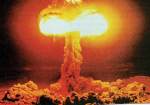

 South Korea, US to simulate attack on nuclear facility By Jungeun Kim, Paula Hancocks and Joshua Berlinger, CNN September 21, 2016
Story highlights
- The two countries will simulate attacks on nuclear facilities and sudden missile strikes
- The announcement comes after North Korea conducted a nuclear test this month
Seoul (CNN)South Korea and the United States will conduct a mock attack on a nuclear facility next month, an official with the South Korean Defense Department told CNN.
Though the official said the drills are not aimed particularly at North Korea, the announcement comes less than two weeks after North Korea claimed to have successfully
tested a nuclear warhead — its second nuclear test this year and fifth one ever.
The US and South Korea will also simulate what to do in the event of a sudden missile attack……..
The simulation, dubbed joint exercise “Red Flag,” will take place in Alaska from October 3 until October 21……..The munitions
In its announcement, South Korea said the nuclear facility attack simulation will take place using a GBU-31 Joint Direct Attack Munition, a kit that converts bombs that normally just free-fall from planes into guided munitions…….
Another show of force
The US on Wednesday also announced that it conducted its second show of force operation in two weeks in South Korea to send North Korea a message.
It sent two B-1B bombers to fly alongside the Korean demilitarized zone, a source told CNN……
The US flew B-1 bombers over Seoul on September 13th in a show of force responding to the recent North Korean nuclear test.
September 23, 2016
Posted by Christina Macpherson |
North Korea, South Korea, USA, weapons and war |
Leave a comment
As world protests, North Korea sees nuclear power status within reach BY JOHN POWER on SEPTEMBER 18, 2016 in ASIA TIMES NEWS
Denying North Korea nuclear status may be “as foolish an act as trying to eclipse the sun with a palm.” Since its first nuclear test in 2006, Pyongyang has detonated progressively more powerful devices, in 2009, 2013 and twice this year and also made major strides in developing its delivery systems. The more the U.S. isolates North Korea, the more are the chances of Pyongyang rising to a fully fledged nuclear power.Following North Korea’s fifth and most powerful nuclear test last week, U.S. President Barack Obama reiterated a stance that has undergirded American and much international policy for decades: Pyongyang would never be accepted as a member of the nuclear arms club.
Promising new sanctions against the already isolated country in response to its “unlawful and dangerous actions,” Obama was unequivocal that “the United States does not, and never will, accept North Korea as a nuclear state.”
It’s a vow, however, that appears increasingly hollow in light of Pyongyang’s impressive advancement of its nuclear ambitions, forcefully demonstrated by last Friday’s detonation, the second this year and fourth on Obama’s watch……..
Since its first nuclear test in 2006, Pyongyang has detonated progressively more powerful devices, in 2009, 2013 and twice this year, with its most recent weapon thought to have been more powerful than the bomb dropped on Hiroshima. At the same time, it has made major strides in developing its delivery systems. Last month, it successfully launched a ballistic missile from a submarine.
Experts such as Siegfried Hecker now consider plausible the once fanciful idea that North Korea could soon be capable of striking the U.S. mainland with a nuclear warhead, possibly within a decade……..http://atimes.com/2016/09/as-world-protests-north-korea-sees-nuclear-power-status-within-reach/
September 19, 2016
Posted by Christina Macpherson |
North Korea, weapons and war |
Leave a comment
Rooting Out the North Korean Nuclear Crisis: the Past and Present U.S. Role, CounterPunch, by CHRISTINE HONG – PAUL LIEM, 15 Sept 16, North Korea’s nuclear test of September 9, 2016, the fifth and largest measuring twice the force of previous blasts, prompted a predictable round of condemnations by the United States and its allies along with calls for China to step up its enforcement of sanctions on North Korea. Yet few “expert” analyses suggest that China will risk destabilizing North Korea or that further United Nations resolutions and international sanctions will succeed in deterring North Korea from pursuing its nuclear weapons and missile programs.
The Obama administration’s reliance on China to rein in North Korea is at odds with its efforts to contain China’s influence in Asia, a quixotic goal in itself. It reflects an unrealistic desire for China to be influential just enough to do the bidding of the United States but not powerful enough to act in its own interests.
North Korea is, after all, China’s strategic ally in the region, and it is in South Korea that the United States plans to deploy THAAD, a defense system with radar capable of tracking incoming missiles from China. It is simply not in China’s interest to risk losing an ally on its border only to have it replaced by a U.S.-backed state hosting missile-tracking systems and other military forces targeting it. And China knows it is not the target of North Korea’s nukes. If the United States cannot punt the problem of North Korea’s nuclear weapons to China it must deal with North Korea directly.
Indeed, in response to U.S. Secretary of Defense Ashton Carter’s recent condemnation of China’s “role” and “responsibility” in failing to restrain North Korea’s nuclear pursuits, the Chinese Foreign Ministry issued a statement calling on the United States to take a long hard look at its own foreign policy:……….
Despite President Barack Obama’s efforts over his two terms in office to “pivot” or “rebalance” U.S. foreign policy to Asia and the Pacific and his repeated identification of the United States as a Pacific power, the memory of nuclear ruin in the region is shadowed by the history of the United States as a first-user of atomic weapons against civilian populations in Japan at the close of World War II and as a tester of devastating nuclear technology, including human radiation experiments, in the Marshall Islands during the Cold War. Moreover, it has not gone unnoticed that President Obama, despite his professed commitment to nuclear de-escalation, has refused to issue an “unequivocal no-first-use pledge.”
In Korea, the one place on the planet where nuclear conflagration is most likely to erupt, given the current state of affairs, President Obama can still end the threat of nuclear warfare. This would require what few in his administration appear to have entertained, namely, the elimination of the demand for North Korea to agree to irreversible denuclearization as a precondition for bilateral talks. This rigid goal makes it virtually impossible for the United States to respond positively to any overture from North Korea short of a fantastic offer by that country to surrender all its nuclear weapons. The premise that the denuclearization of North Korea is necessary to ensure peace and stability on the Korean peninsula needs to be shelved, and all possibilities for finding common ground upon which to negotiate the cessation of hostilities on the Korean peninsula should be explored…….
Let us also recall that North Korea offered to halt testing of its nuclear weapons if the United States agreed to put an end to the annual U.S.-South Korea war games.[6] Combining live artillery drills and virtual exercises, these war games, as of this year, implemented OPLAN 5015, a new operational war plan that puts into motion a preemptive U.S. nuclear strike against North Korea and the “decapitation” of its leadership. Unsurprisingly, North Korea considers this updated operational plan to be a rehearsal for Libya-style regime change……..
President Obama should prioritize any and all possibilities for achieving a halt to North Korea’s nuclear programs by diplomacy, over the goal of achieving an illusory agreement for complete denuclearization. As an achievement, halting North Korea’s nuclear advances is far short of the peace treaty needed to bring an end to the Korean War and a lasting peace to Korea. It is far short of creating international conditions for the Korean people to achieve the peaceful reunification of their country. And it is a far cry from achieving nuclear disarmament on a global scale. Yet, as a redirection of U.S. policy towards engagement with North Korea, it would be the greatest achievement in U.S. Korea policy of the last fifteen years, and a concrete step towards achieving denuclearization in the region, and worldwide… (extensive references) http://www.counterpunch.org/2016/09/15/rooting-out-the-north-korean-nuclear-crisis-the-past-and-present-u-s-role/#_edn3
September 16, 2016
Posted by Christina Macpherson |
North Korea, politics international, USA, weapons and war |
Leave a comment
North Korea’s nuclear program is targeting U.S., Japanese lawmaker says, WP. 4 By Anna Fifield September 13
TOKYO — North Korea’s nuclear program is directed at the United States, a close adviser to Kim Jong Un said after last week’s atomic test, according to a Japanese lawmaker who just returned from Pyongyang.
The warning came as two U.S. military B-1 bombers flew over the southern half of the peninsula in a show of force against North Korea, and top military brass and diplomats alike warned Pyongyang the United States was prepared to take all steps to contain and punish the regime.
North Korea defied United Nations resolutions and international warnings by detonating its fifth and largest nuclear weapon Friday, declaring that it was a warhead that could be used to counter “the American threat.”
Antonio Inoki, a former professional wrestler who now serves in Japan’s parliament, returned Tuesday from a five-day visit to Pyongyang saying that Japan need not worry about the North’s nuclear program.
“This is not directed at Japan. The nuclear development is toward the United States,” Inoki quoted Ri Su Yong, an elder statesman of North Korean foreign affairs who is particularly close to Kim, as saying……..https://www.washingtonpost.com/world/north-koreas-nuclear-program-is-targeting-us-japanese-lawmaker-says/2016/09/13/73faa86a-f52e-4559-9923-7f8e8cf31011_story.html
September 13, 2016
Posted by Christina Macpherson |
Japan, North Korea, politics international |
Leave a comment






 nuclear-news