North Korea’s reasons for persisting in testing nuclear weapons
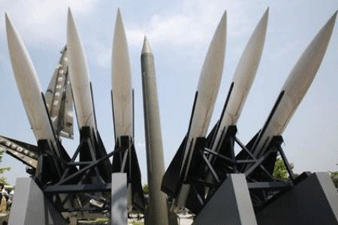
 Why North Korea is testing nuclear weapons Pyongyang accuses Washington of plotting a ‘decapitation strike’, and sees in nuclear weapons a powerful deterrent, Aljazeera, 5 May 17
1. Guaranteeing security of the state
2. Economic development and prosperity
3. Gaining respect and prestige in the international arena
On April 14, North Korea’s Vice Foreign Minister said: “We’ve got a powerful nuclear deterrent already in our hands, and we certainly will not keep our arms crossed in the face of a US pre-emptive strike.”
North Korea’s deputy ambassador to the United Nations, Choe Myong-nam, referred to the annual joint drills between the US and South Korea to justify his country’s nuclear pursuits: “It is because of these hostile activities on the part of the United States and South Korea that we strengthen our national defence capability, as well as pre-emptive strike capabilities with nuclear forces as a centrepiece.”
North Korea is publicly stating that it is going ahead with its nuclear weapons programme, while the International Atomic Energy Agency on May 4 said it has “concrete information” that this is indeed the case, and points out that security risks would apply beyond the region.
New satellite images of the Punggye-ri site in North Korea have shown workers pumping out water at a tunnel believed to have been prepared for a forthcoming nuclear test, US monitors said.
Has North Korea declared war in 2017?
North Korea has not officially declared war on any country since 1950, but has threatened to launch a “great war of justice for national reunification” and to strike the US mainland in “full-out war… under the situation where the US hurts the DPRK by force of arms,” using the alternative name for North Korea.
In 1950, North Korea invaded South Korea, starting the three-year Korean War which ended in 1953 with an armistice, not a peace treaty. This mean that North Korea is still technically at war with South Korea.
The US has 28,500 troops stationed in South Korea, while the Korean Peninsula has been divided by a 4km-wide demilitarised zone stretching 250km along the border.
The US has been performing the annual Foal Eagle military drills with South Korea, imposed sanctions on North Korea and has deployed the Terminal High-Altitude Area Defence system, designed to intercept and destroy ballistic missiles fired at South Korea.
From its side, North Korea has defiantly carried out missile test launches despite regional and US condemnation, and continues to develop its nuclear weapons capability.
How did North Korea get nuclear weapons?…….
How many nuclear weapons does North Korea have?
It was estimated that North Korea may have produced up to 20 nuclear bombs by the end of 2016, although the true nuclear capability of the isolated and secretive North Korean state could not be verified.
Meanwhile, North Korea asserts it will keep building up its nuclear arsenal in “quality and quantity”.
In September 2016, Siegfried Hecker from Johns Hopkins University in Washington toured North Korea’s main Yongbyon nuclear facility in 2010 and estimated that North Korea produced enough highly enriched uranium to make additional six nuclear bombs a year.
Experts and governments estimate plutonium production levels from tell-tale signs of reactor operation in satellite imagery. http://www.aljazeera.com/news/2017/05/north-korea-testing-nuclear-weapons-170504072226461.html
North Korea readying for another nuclear weapons test: China is worried.
Meanwhile satellite images indicate activity has resumed at North Korea’s nuclear test site, US-based analysts said Tuesday, as tensions remain high over fears of an sixth atomic test by the reclusive state.
 Monitor group 38 North warns North Korea is ready to conduct another nuclear weapons test, news.com.au 4 May 17 Beijing regularly calls for parties to avoid raising tensions — remarks that can apply to both Washington and Pyongyang — and in February it announced the suspension of coal imports from the North for the rest of the year, a crucial foreign currency earner for the authorities.
Chinese state-run media have called for harsher sanctions against the North in the event of a fresh atomic test, urged Pyongyang to “avoid making mistakes”, and spoken of the need for it to abandon its nuclear programmes.
The KCNA commentary denounced the People’s Daily, the official mouthpiece of the Chinese Communist party, and the Global Times, which sometimes reflects the thinking of the leadership, as having “raised lame excuses for the base acts of dancing to the tune of the US”.
China’s Global Times newspaper retorted that the nuclear-armed North was in the grip of “some form of irrational logic” over its weapons programs.
Beijing and Pyongyang have a relationship forged in the blood of the Korean War, and the Asian giant remains its wayward neighbour’s main provider of aid and trade.
But ties have begun to fray in recent years, with China increasingly exasperated by the North’s nuclear antics and fearful of a regional crisis. North Korean leader Kim Jong-Un has yet to visit Beijing, more than five years after taking power.
The rival texts are a sign of the level to which ties between the two have deteriorated. KCNA regularly carries vivid denunciations of the US, Japan, and the South Korean authorities, but it is rare for it to turn its ire on China.
“The DPRK will never beg for the maintenance of friendship with China, risking its nuclear programme which is as precious as its own life,” it said, referring to the North by its official name, the Democratic People’s Republic of Korea.
Pyongyang had acted as a buffer between Beijing and Washington since the Korean War in the 1950s and “contributed to protecting peace and security of China”, it said, adding that its ally should “thank the DPRK for it”.
Beijing should not try to test the limits of the North’s patience, it said, warning: “China had better ponder over the grave consequences to be entailed by its reckless act of chopping down the pillar of the DPRK-China relations.”
’NATIONALISTIC’ PASSION
In its response Thursday, the Global Times — which can sometimes stridently espouse what it sees as China’s interests — dismissed the KCNA article as “nothing more than a hyper-aggressive piece completely filled with nationalistic passion”.
“Pyongyang obviously is grappling with some form of irrational logic over its nuclear programme,” it added.
Beijing “should also make Pyongyang aware that it will react in unprecedented fashion if Pyongyang conducts another nuclear test”, it said.
“The more editorials KCNA publishes, the better Chinese society will be able to understand how Pyongyang thinks, and how hard it is to solve this nuclear issue,” the Global Times said.
Washington is meanwhile pushing Beijing — which says its influence is less than believed — to put more pressure on Pyongyang.
US Secretary of State Rex Tillerson last week warned the UN Security Council of “catastrophic consequences” if the international community — most notably China — failed to pressure the North into abandoning its weapons programme.
Chinese Foreign Minister Wang Yi brushed aside Tillerson’s comments, saying that “the key to solving the nuclear issue on the peninsula does not lie in the hands of the Chinese side”.
CHINA: GET OUT OF N KOREA
CHINA has called for all of its citizens to return from North Korea immediately as a US citizen is detained for allegedly trying to overthrow the country’s regime.
The Korea Times reports that the Chinese embassy in North Korea began advising Korean-Chinese residents to return to China.
A Korean-Chinese citizen told Radio Free Asia he was advised to ‘stay a while’ in China, and stated: ‘The embassy has never given such a warning. I was worried and left the country in a hurry.’
But he said most Chinese citizens in North Korea had opted not to heed the warning.
It comes as North Korea confirmed the detention of another American citizen for alleged acts of hostility aimed at overthrowing the country………
IMAGES SHOW RESUMPTION AT NUCLEAR SITE
Meanwhile satellite images indicate activity has resumed at North Korea’s nuclear test site, US-based analysts said Tuesday, as tensions remain high over fears of an sixth atomic test by the reclusive state……..
38 North said the latest images were “unusual and almost assuredly a component of an overall North Korean deception and propaganda effort” and the result of media reporting on the earlier volleyball sightings……
Washington is now exploring options at the UN Security Council to ramp up pressure on the North, with diplomats saying it was in discussion with China on possible sanctions.
Over the past 11 years, the Security Council has imposed six sets of sanctions on Pyongyang, including imposing a cap on coal exports among other measures in November. http://www.news.com.au/world/asia/monitor-group-38-north-warns-north-korea-is-ready-to-conduct-another-nuclear-weapons-test/news-story/d3504fd695e52c53f1dcc8aaaeb02e88
China tells its citizens – Get out of North Korea
GET OUT: North Korea ‘ready’ for new nuclear test, Northern Star, 4th May 2017 CHINA has called for all of its citizens to return from North Korea immediately as a US citizen is detained for allegedly trying to overthrow the country’s regime……https://www.northernstar.com.au/news/get-out-north-korea-ready-new-nuclear-test/3173765/
Russia: “It is evident that Pyongyang will not abandon its nuclear weapons as long as it sees itself directly threatene
 Moscow doubts North Korea will ditch nuclear weapons as long as ‘threat looms’ http://tass.com/politics/944297 May 03 17, The Russian diplomat stressed the necessity of consolidated diplomatic efforts to settle the situation on the Korean Peninsula. MOSCOW . North Korea will never abandon the idea of having nuclear weapons as long as it feels threat to its security, a Russian foreign ministry official said on Tuesday.
“It is evident that Pyongyang will not abandon its nuclear weapons as long as it sees itself directly threatened,” Mikhail Ulyanov, director of the ministry’s non-proliferation and weapons control department, said at the first session of the Preparatory Committee for the 2020 Review Conference of the Parties to the Treaty on the Non-Proliferation of Nuclear Weapons.
“We are nonetheless convinced that existing tensions on the Korean Peninsula are caused not only by Pyongyang’s nuclear and missile programmes, but also by an increased military activity in the North-East Asia of some regional and especially non-regional States,” he said.
The Russian diplomat stressed the necessity of consolidated diplomatic efforts to settle the situation on the Korean Peninsula. “No minute should be lost. Otherwise the confrontation logic may become overwhelmingly dominant,” he said. “Russia rejects the nuclear status of the DPRK. We do not accept nuclear tests conducted by Pyongyang and its defiance of the relevant UN Security Council resolutions.”.
Chinese diplomat warns that talk between USA and North Korea is essential – tipping point is near
Talk or risk reaching nuclear tipping point, Chinese diplomat warns US and North Korea
Kim Jong-un has stabilised his regime and it is unrealistic to expect it to collapse under the weight of sanctions, former deputy foreign minister says, 03 May, 2017, South China Morning Post, Laura Zhou, North Korea’s missile and nuclear technology might reach a tipping point if Washington and Pyongyang refuse to negotiate, a senior Chinese diplomat has warned.
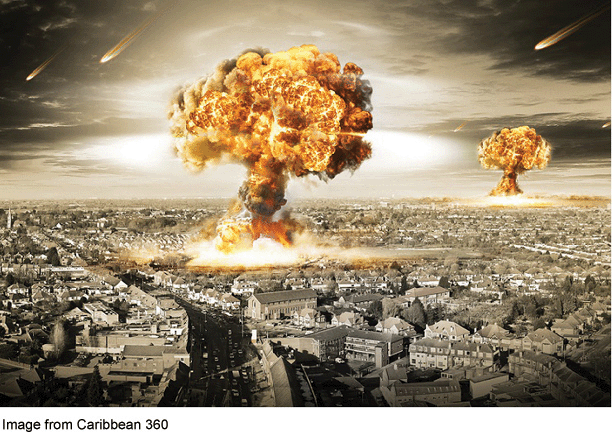
In an analysis piece published on Sunday by US think tank the Brookings Institution, Fu Ying, chairwoman of the National People’s Congress’ Foreign Affairs Committee, said it was unrealistic to expect the regime of North Korean leader Kim Jong-un to succumb to pressure of sanctions or collapse.
“Sanctions may exert huge pressure, but the country can hold up and will not give up nuclear development because of them,” wrote Fu, who is also a former deputy foreign minister.
“It is not hard to see that this situation could make the issue drag on into a spiral of intensified sanctions and continued nuclear testing until [North] Korean nuclear and missile technologies reach a tipping point.”
She said that once that point was reached, the countries opposing Pyongyang’s possession of nuclear weapons would be “faced with the hard choice of taking extreme action with unknown consequences, or tolerating it”……..
She also repeated Beijing’s call for a “double suspension” – that Pyongyang suspend its nuclear and missile tests in exchange for a halt of large scale US-South Korean military exercises.
Fu said China did not have leverage over North Korea because Pyongyang’s security concerns in the face of US military threats had not been addressed.
Trump said on Monday that he would consider meeting Kim “under the right circumstances”.
Lu Chao, from the Liaoning Academy of Social Sciences, said Trump’s offer could be “positive” to the Korean crisis.
“As Fu Ying said, the key has never been owned by China,” Lu said. “The problem can only be solved by the two sides [the US and North Korea].
“I don’t think Kim would really want to wage a war with the US.” http://www.scmp.com/news/china/diplomacy-defence/article/2092432/talk-or-risk-reaching-nuclear-tipping-point-chinese
North Korea accuses USA of planning a pre-emptive nuclear strike, with its bomber flights

 North Korea says US bomber flights signal pre-emptive nuclear strike, ABC News 3 May 17 North Korea is accusing the United States of pushing the Korean peninsula to the brink of nuclear war after a pair of strategic US bombers flew over the area in a training drill with the South Korean air force.
Key points:
- Supersonic B-1B Lancer bombers flew over Korean peninsula
- North Korea says US is practising a nuclear strike
- Mr Trump has said he would consider meeting Kim Jong-un but also warned of a “major, major conflict”
The two supersonic B-1B Lancer bombers were deployed amid rising tensions over North Korea’s dogged pursuit of its nuclear and missile programs in defiance of United Nations sanctions and pressure from the United States.
The flight of the two bombers on Monday came as US President Donald Trump said he was open to meeting North Korean leader Kim Jong-un in the appropriate circumstances, even though Pyongyang suggested it would continue with its nuclear tests……..
The North is technically still at war with the South after their 1950-53 conflict ended in a truce, not a treaty, and regularly threatens to destroy the United States, Japan and South Korea.http://www.abc.net.au/news/2017-05-02/us-bomber-flights-push-peninsular-to-the-brink-of-war/8489952
North Korea threatens a pre-emptive nuclear strike on USA
 North Korea threatens to reduce USA ‘to ruins’ with preemptive nuclear strike http://metro.co.uk/2017/05/02/north-korea-threatens-to-reduce-usa-to-ruins-with-preemptive-nuclear-strike-6611855/Tuesday 2 May 2017
The piece says, ‘Its vast territory is exposed to our preemptive nuclear strike.
‘If the U.S. shows any slight sign of provocation, just the inter-continental ballistic rockets displayed in the April military parade will fly into the U.S.
‘The reckless nuclear war provocation by the Trump administration will bring it nothing but the fall of the American empire.’ The piece says that the North Korean army is ‘waiting for the moment it will reduce the whole of the U.S. mainland to ruins with its absolute weaponry of justice.
Last week North Korea released a video showing nuclear missile attack on Washington DC.
The video, released by official state media, shows the White House in a gun-style crosshair – and a missile descending on the city and exploding in a giant fireball. Another sequence shows American warships being targeted by rockets – interspersed with videos of recent live-fire drills.
The video showed sequences from a live-fire exercise conducted this week, designed to show off the strength of Pyongyang’s million-strong army
North Korea’s threat to sink US nuclear submarine
North Korea threatens to sink US nuclear submarine http://www.independent.co.uk/news/world/asia/north-korea-threat-sink-us-nuclear-submarine-uss-michigan-south-korea-donald-trump-kim-jong-un-a7709946.html ‘It will be doomed to face the miserable fate of becoming an underwater ghost without being able to come to the surface’ Samuel Osborne @SamuelOsborne93 30 Apr 17, North Korea , has threatened to sink a US nuclear submarine deployed in South Korean waters.
“The moment the USS Michigan tries to budge even a little, it will be doomed to face the miserable fate of becoming an underwater ghost without being able to come to the surface,” the North’s propaganda website Urminzokkiri said.
“The urgent fielding of the nuclear submarine in the waters off the Korean Peninsula, timed to coincide with the deployment of the super aircraft carrier strike group, is intended to further intensify military threats toward our republic.”
The guided missile submarine USS Michigan has been joined by the USS Carl Vinson aircraft carrier group in waters near the Korean peninsula.
The website added that “whether it’s a nuclear aircraft carrier or a nuclear submarine, they will be turned into a mass of scrap metal in front of our invincible military power centred on the self-defence nuclear deterrence.”
The aircraft carrier group began exercises with the South Korean navy on Sunday after it completed drills with the Japanese navy.
The dispatch of the Carl Vinson was a “reckless action of the war maniacs aimed at an extremely dangerous nuclear war,” the Rodong Sinmun, the official newspaper of North Korea’s ruling Workers’ Party, said in a commentary.It comes after the hermit kingdom test-fired another ballistic missile in a clear message of defiance aimed at Washington and its allies.
However, US officials said the medium-range ballistic missile disintegrated mid-flight, minutes after launch, and fell into the Sea of Japan.
President Donald Trump, asked about his message to North Korea after the latest missile test, told reporters: “You’ll soon find out”, but did not elaborate on what the US response would be.The North has been conducting missile and nuclear weapons related activities at an unprecedented rate and is believed to have made progress in developing intermediate-range and submarine-launched missiles.
Tension on the Korean peninsula has been high for weeks over fears the North may conduct a long-range missile test, or its sixth nuclear test, around the time of the 15 April anniversary of its state founder’s birth.
Is it REALLY a good idea to start another Korean war?
North Korea already is a nuclear power. Its first nuclear test was over a decade ago, and analysts say it probably has enough material for a dozen bombs today…… there are absolutely no good reasons to start another Korean War.
 North Korea’s Nuclear Weapons Are Not Reason Enough to Start a War, TIME, Charlie Campbell / Beijing Apr 28, 2017 More than 2 million people were killed in the 1950-3 Korean War, including almost 40,000 Americans. Some 7,000 U.S. soldiers are still listed as missing. Countless families were torn apart by the conflict, which is still officially ongoing, as it was only ended by armistice rather than a peace treaty. It remains one of modern history’s longest wars.
These facts are important to remember when a U.S. President says, “There is a chance that we could end up having a major, major conflict with North Korea,” as Donald Trump did in an exclusive Reuters interview published Thursday.
On Feb.13, it even unleashed VX nerve agent — a U.N.-certified Weapon of Mass Destruction — at Kuala Lumpur International Airport to assassinate of Kim Jong Nam, Kim Jong Un’s estranged half-brother. It has abducted possibly hundreds of foreign nationals. At home, its own citizens are subject to “crimes against humanity,” according to a 2014 U.N. report.
However, what’s spurred Trump’s saber-rattling is North Korea’s nuclear program. Pyongyang has tested five nuclear bombs to date, and appears poised for a sixth. It also frequently tests missiles that may one day be able to reach the continental U.S. “[We can] can tip new-type intercontinental ballistic rockets with more powerful nuclear warheads and keep any cesspool of evils in the earth, including the U.S. mainland, within our striking range,” Kim Jong Un said after watching a rocket test last year.
Trump says that if North Korea cannot be persuaded from dismantling its nuclear weapons then military action maybe unavoidable. On April 8, he ordered a U.S. navy strike group — an “armada,” he called it — to the Korean peninsula. The obvious problem is that Seoul — home to half of South Korea’s 50 million people, including 200,000 Americans — lies within range of North Korea’s artillery, and possibly even nuclear weapons.
Trump’s gamble is that Kim Jong Un would shy away from retaliating against a U.S. strike on his nuclear facilities, cognizant that American military superiority means any full-scale war would undoubtedly result in his regime’s complete destruction…….
Trump told Reuters that he operates under the assumption that Kim Jong Un is “rational.” But backed into a corner, is Trump willing to bet nuclear apocalypse on that?
But even if North Korea were not to retaliate, there’s no guarantee strikes would achieve their goal of permanently retarding the regime’s nuclear program. Plus there would be dire strategic consequences. Beijing would be livid. The U.S. would have started yet another 21st Century war, utterly alienating international public opinion, tearing up its hard-fought Asian security alliance and inviting Chinese hardliners to push it out of the region. According to an August 2016 study by Brown University, the wars in Iraq, Afghanistan and Pakistan — in which the U.S. military has been involved — have directly cost 370,000 lives since 2001. (Not that we’ve stopped counting.)
However, the broader point is that North Korea, for all its many and egregious faults, is a state hell-bent on survival. It might have nuclear weapons, but the regime cannot use them without guaranteeing its own destruction……..
Unfortunately, there is little chance the regime will voluntarily give up its nuclear weapons. Kim Jong Un is very aware of the fates of Libyan dictator Muammar Gaddafi and Iraqi dictator Saddam Hussein, who were both toppled after abandoning their nuclear aspirations. He believes a nuclear bomb guarantees the security of his regime. And he might be right.
For lack of any better option, the U.S. and its allies should utilize the countless strategic advantages that won the Cold War, because the tussle with North Korea is still part of that ideological reckoning. ……
North Korea already is a nuclear power. Its first nuclear test was over a decade ago, and analysts say it probably has enough material for a dozen bombs today…… there are absolutely no good reasons to start another Korean War. http://time.com/4759066/north-korea-kim-jong-un-donald-trump-nuclear-weapons/
Admiral Harris warns on North Korea’s nuclear warheads. Most Americans favour military action against North Korea.
 US commander’s damning warning over nuclear weapons http://www.news.com.au/finance/work/leaders/us-commanders-damning-warning-over-nuclear-weapons/news-story/3e0fab5c0c9dd82a1c99956aa8a9eb24 APRIL 28, 2017 MORE than half of Americans want President Donald Trump to attack North Korea – and the president has indicated that’s a real possibility.
In an interview with Reuters today, Mr Trump admitted a major conflict with North Korea was possible but said it wasn’t his preferred outcome.
“There is a chance that we could end up having a major, major conflict with North Korea. Absolutely,” Mr Trump told Reuters in an Oval Office interview ahead of his 100th day in office on Saturday.
He maintained he wanted to resolve the dispute peacefully.
Meanwhile, the commander of US Pacific Command, Admiral Harry B Harris Jr, warned it was only a matter of time before Kim Jong-un is capable of launching a nuclear warhead towards the US.
“The crisis on the Korean peninsula is real — the worst I’ve seen,” he said in an interview with Fox News. “There is some doubt within the intelligence community whether Kim Jong-un has that capability today or whether he will soon, but I have to assume he has it, the capability is real, and that he’s moving towards it.”
His dire warning comes as a Fox News Poll found 53 per cent of Americans believe military action is the best way to stop North Korea’s nuclear ambitions.
The poll also showed 39 per cent of voters believe North Korea is the biggest risk facing the country today compared to 25 per cent for Islamic State.
Long History of US Military Brutality Against Korea
The High Costs of US Warmongering Against North Korea TruthOut, Wednesday, April 26, 2017 By Christine Ahn, Truthout | News Analysis
“………..Contrary to Trump’s campaign rhetoric that he “would be very, very cautious” and not be a “happy trigger” compared to Hillary Clinton, the Trump administration has mercilessly and without coherence dropped massive US bombs throughout the Middle East. With regards to Korea, the Trump administration has said that all options are on the table, including military action. Trump announced that the US launched 59 Tomahawk cruise missiles on Syria over dinner with President Xi Jinping at Mar-a-Lago in a clear message to China that it must either rein in North Korea, or the United States will take unilateral action. It was soon after that Donald Trump told the world that the US was “sending an armada, very powerful” toward North Korea, even though it wasn’t.
A Long History of US Military Brutality Against Korea
But North Koreans don’t need to look at Syria or Afghanistan, or at Libya or Iraq, to understand the sheer brutality of US military power. They have their own history of surviving indiscriminate US bombing during the Korean War that destroyed 80 percent of North Korean cities and claimed one in four relatives.
More bombs were dropped on Korea than on all of Asia and the Pacific islands during World War II. According to the memoir Soldier by Anthony Herbert, the most decorated veteran of the Korean War, in May 1951, one year into the war, General MacArthur offered this testimony before Congress:
The war in Korea has already almost destroyed that nation of 20,000,000 people. I have never seen such devastation. I have seen, I guess, as much blood and disaster as any living man, and it just curdled my stomach…. After I looked at that wreckage and those thousands of women and children and everything, I vomited…. If you go on indefinitely, you are perpetuating a slaughter such as I have never heard of in the history of mankind.
Curtis LeMay, who took over for MacArthur, later wrote, “We burned down just about every city in North Korea and South Korea both … we killed off over a million civilian Koreans and drove several million more from their homes.”
While all parties to the Korean War, including the North Korean People’s Army, committed heinous acts, Americans must remember this tragic history because it very much underlies the North Korean mindset and their enormous will to survive, underscoring how counterproductive “strategic patience” is.
According to Korea expert John DeLury,
Thinking that it’s a matter of making North Korea hurt enough, shows a fundamental misunderstanding of a key attribute of the [Democratic People’s Republic of Korea] state and society which has an extraordinary capacity to absorb pain. They have maybe suffered more than anyone since 1945. They’re like a boxer, they’ll never beat you but you can never knock them down. No matter how hard you hit them, they get back up.
And the sober lesson that the Obama, Bush and Clinton administrations ultimately arrived at was that there was no military option.
In 1994, President Bill Clinton considered a preemptive strike on North Korea’s Yongbyon nuclear reactor, but the Pentagon concluded that even limited action would claim a million lives in the first 24 hours — and this was well before Pyongyang possessed nuclear weapons. President Obama, too, considered surgical strikes, but as David Sanger reported in the New York Times, obtaining such timely intelligence was nearly impossible and “the risks of missing were tremendous, including renewed war on the Korean peninsula.” Any military action by Washington will undoubtedly trigger a counter-reaction from Pyongyang that could instantly kill a third of the South Korean population.
To most Americans, Korea is a problem “over there.” It’s not. The situation on the Korean Peninsula has for 70 years been dictated by US foreign policy. In 1945, at the end of WWII, the United States, along with the Soviets — as victors over Japan in the Pacific Theater — divided the Korean peninsula. Two young officers in the State Department literally tore a page out of the National Geographic and drew a line across the 38th parallel, taking Seoul and giving Pyongyang to the Soviets.
The Korean people, who were preparing for their liberation from 35 years of Japanese colonial rule, had organized one of the most vibrant grassroots democratic people’s committees in history. Instead of liberation, they got two military occupations and became the front line of the Cold War. The division of Korea led in 1948 to the creation to two separate states: the Republic of Korea in the south, and the Democratic People’s Republic in the north, which ultimately led to the 1950-53 Korean War.
The atrocious war was temporarily halted on July 27, 1953, when US Army Lieutenant General William Harrison, representing the UN Command, and North Korean General Nam Il, representing the Korean People’s Army and the Chinese People’s Volunteers, signed the Armistice Agreement. Article IV, paragraph 60, called for the official end of the Korean War by replacing the Armistice with a peace treaty.
Hopes for Diplomacy and Peacebuilding
Today, the US still has wartime operational control over South Korea and jurisdiction over half the DMZ. There are 28,500 US troops across South Korea, and it’s the US missile defense system, THAAD, which has prompted massive protests across South Korea and is straining Seoul’s relations with Beijing. The rapid deployment of THAAD — ahead of schedule and pushed during the political vacuum in South Korea — is just the latest example of US intrusion into Korean affairs to further its own geopolitical interests.
But just as the security of Korean peoples is tied to US policy, Korea has very much influenced human security in the United States. Fifty years ago, Dr. Martin Luther King Jr. presciently noted, “A nation that continues year after year to spend more money on military defense than on programs of social uplift is approaching spiritual death.” In fact, Korea has been the justification for US military expansion in the Asia Pacific, and inaugurated the military-industrial complex and massive spending that has built the greatest war-making force in world history. According to University of Chicago historian Bruce Cumings, “It was the Korean War, not Greece or Turkey, or the Marshall Plan or Vietnam that inaugurated big defense budgets and the national security state that transformed a limited containment doctrine into a global crusade that ignited McCarthyism just as it seemed to fizzle, and thereby gave the Cold War its long run.”
Sadly, the conflict with North Korea is being used as further justification to increase the US military budget. In February, President Trump requested an additional $54 billion for the military — a 10 percent increase — while making drastic cuts to social welfare programs. This is on top of the already bloated $598 billion US military budget, which is the world’s largest and more than the next seven highest-spending countries combined. “The Pentagon spends an estimated $10 billion a year on overseas bases,” according to the Los Angeles Times. “More than 70% of the total is spent in Japan, Germany and South Korea, where most US troops abroad are permanently stationed.”
The good news is that on May 9, South Korea will be holding a snap presidential election after the impeachment and imprisonment of its corrupt politician Park Geun-hye, whose hardline policy against North Korea strained inter-Korean relations. The leading candidate, Moon Jae-in, has pledged to improve relations with Pyongyang, noting that diplomatic relations are the best bet to ensure South Koreans’ security. As South Koreans work to improve peace on the Korean Peninsula, our job here in the United States is to strengthen the connection between the struggles for democracy, justice and liberation throughout the Asia Pacific, including South Korea, Okinawa and the Philippines, which are very much tied to our struggle for a just world built on food, land, water, health care and education. http://www.truth-out.org/news/item/40367-the-high-costs-of-us-warmongering-against-north-korea
North Korea says America is preparing for war: highlights 1250 US marines to Darwin, Australia
 North Korea highlights 1250 US marines in Darwin to claim America is preparing for nuclear war, SMH, Kirsty Needham and James Massola, 25 Apr 17, North Korea’s state newspaper has singled out the United States’ deployment of 1250 marines to Darwin to claim America is preparing for nuclear war.
And as regional tensions escalate and a US carrier strike group approaches the Korean peninsula, Australian Foreign Minister Julie Bishop said the secretive regime “must be stopped” as it represented a threat to the region and, potentially, globally.
In a phone call with US president Donald Trump, Chinese president Xi Jinping said China opposed any actions that went against UN security council resolutions, as Japan confirmed it was joining drills with the strike group led by the USS Carl Vinson that is headed to Korean waters.
Pusan National University associate professor Robert Kelly told Fairfax Media North Korea’s missiles might have the range to reach northern Australia, but played down the threat as “the question is guidance, not range”.
Rodong Sinmun, the official paper of the Worker’s Party of North Korea, highlighted the US marines’ arrival in northern Australia on April 18. The marines will be joined by 12 military helicopters including five Cobra helicopters and four Osprey carriers.
“This is the largest scale US military presence in Australia after World War 2,” the newspaper reported on Monday. “America is fanatically, crazily trying to optimise its nuclear war readiness,” it claimed.
The story, on page six of the North Korean newspaper, was headlined: America prepares for nuclear war in different overseas military deployments. Darwin was the only city named…….
Australia-based defence experts believe it is unlikely North Korea has the capacity to strike Australia yet, though they may do within the next three years. The nation’s most recent missile test, earlier this month, failed just seconds after launch…….
The deployment of 1250 marines is the largest to Darwin since the former prime minister Julia Gillard and former president Barack Obama struck a deal back in 2011 to undertake the yearly rotation of troops.
with Sanghee Liu, AAP http://www.smh.com.au/federal-politics/political-news/north-korea-highlights-1250-us-marines-in-darwin-to-claim-america-is-preparing-for-nuclear-war-20170424-gvrbzl.html
North Korea issues nuclear warning to Australia’s hawkish Foreign Minister, Julie Bishop
North Korea issues nuclear warning to Australia, Camden Narellan Advertiser ,23 Apr 2017 Beijing: North Korea’s foreign ministry has lashed out at Foreign Minister Julie Bishop and warned Australia was “coming within the range of the nuclear strike”. The threats were reported by the North Korean state news agency KCNA as being made on Friday, in response to a radio interview given by Ms Bishop.
 According to a translation of the KCNA report, which was dated Friday, the same day US Vice-President Mike Pence arrived in Australia, Ms Bishop had said in the radio interview that North Korea seriously threatens regional peace and she supports the US policy that “all options are on the table”.
A spokesman for the Foreign Ministry of North Korea – officially the Democratic People’s Republic of Korea (DPRK) – was quoted as saying: “The present government of Australia is blindly and zealously toeing the US line. It is hard to expect good words from the foreign minister of such government.”….
“If Australia persists in following the US moves to isolate and stifle the DPRK and remains a shock brigade of the US master, this will be a suicidal act of coming within the range of the nuclear strike of the strategic force of the DPRK.”….
The KCNA report continued: “The Australian foreign minister had better think twice about the consequences to be entailed by her reckless tongue-lashing before flattering the US.”
Prime Minister Malcolm Turnbull on Saturday pledged support for the US policy on North Korea and again urged China to do more to place economic pressure on North Korea.
China has turned back coal shipments to North Korea in recent weeks, one of the regime’s few sources of funding. Chinese media have speculated the Chinese government is also considering cutting oil supplies.
There are renewed concerns that North Korea may conduct its sixth nuclear test on Tuesday, the 85th anniversary of its military, and China said this week it was “gravely concerned”.
China’s official People’s Daily newspaper on Saturday evening reported online that new satellite images of the North Korean nuclear test site had shown probable new trailer activity, citing US research website 38 North. http://www.camdenadvertiser.com.au/story/4614177/north-korea-issues-nuclear-warning-to-australia/?cs=5
The multi-million death toll that would result from a pre-emptive strike on North Korea
But besides demanding North Korea give up its only trump card — no pun intended — some are pushing the administration to go even further: to consider launching a preemptive strike on Pyongyang.
What happens next is one of the worst military and human tragedies in history: Kim orders a nuclear strike on Seoul. While the missile lands four miles outside of the city thanks to a targeting error, millions of people are instantly killed with millions more poisoned by radioactive fallout. In a sheer panic, the millions of people who survive the attack rush south, creating a massive humanitarian crisis of the worst magnitude.
From here, things get even worse……the price of such a victory could be millions of people dead and large sections of Korea rendered uninhabitable for decades, if not longer.
No one wants to talk to the dictator of a nation with over 200,000 people or more in prison camps — but an attack that could lead to a conflict where millions could die in a nuclear war is far worse. The stakes are too great to at least not consider it.
 How a preemptive strike on North Korea could end up killing millions http://theweek.com/articles/692872/how-preemptive-strike-north-korea-could-end-killing-millions Harry J. Kazianis 21 Apr 17 While North Korea might not have tested another nuclear weapon in recent days, tensions in Asia keep rising — and Washington is at least partially to blame.
Satellite images indicate that North Korea has resumed work at its nuclear test site
Volleyball Over, North Koreans Go Back to Work at Nuclear Site, Analysts Say, NYT, APRIL 22, 2017, SEOUL, South Korea — North Korea appears to have resumed work at its nuclear test site after a perplexing series of volleyball matches were held there, according to analysts who studied satellite images of the site, renewing concerns that a major weapons test could be imminent.
Many observers had feared that North Korea would test a nuclear device at the site around April 15, the birthday of Kim Il-sung, the North’s founding president and the grandfather of the current leader, Kim Jong-un. But Mr. Kim’s government celebrated the day instead with a military parade in Pyongyang, the capital, during which a fleet of missiles were rolled out, including what analysts believed were never-before-seen long-range ballistic missiles.
North Korea carried out a missile test on Sunday, but it was considered an embarrassing failure, with the projectile exploding immediately after liftoff.
But North Korea is preparing to celebrate another major holiday this coming week: Tuesday will be the 85th anniversary of the founding of the Korean People’s Army, and the North often uses such occasions to show off its military advances…….
On Friday, the analysts Joseph S. Bermudez Jr. and Jack Liu posted new satellite images of the nuclear test site in Punggye-ri, in northeastern North Korea, on 38 North, a website affiliated with the Johns Hopkins University School of Advanced International Studies……
Mr. Bermudez and Mr. Liu said it was unclear whether the latest activity from Punggye-ri reflected a “tactical pause” before a coming nuclear test, a prolonged “stand-down” from testing or normal operations at the site.
“Regardless, satellite imagery continues to indicate that the Punggye-ri nuclear test site appears able to conduct a sixth nuclear test at any time once the order is received from Pyongyang,” they concluded…..
On Saturday in Sydney, Australia, Mr. Pence said that an American naval strike group led by the aircraft carrier Carl Vinson was expected to be in the Sea of Japan, which borders the Korean Peninsula, by the end of April.
Senior aides to Mr. Trump have said that military options are not off the table in dealing with North Korea’s rapidly advancing nuclear and missile technologies. Those remarks prompted fears in the region that the new American president might order a pre-emptive strike at North Korea’s weapons sites, which could set off a war…….https://www.nytimes.com/2017/04/22/world/asia/north-korea-nuclear-test-preparations.html?_r=0
1 This Month
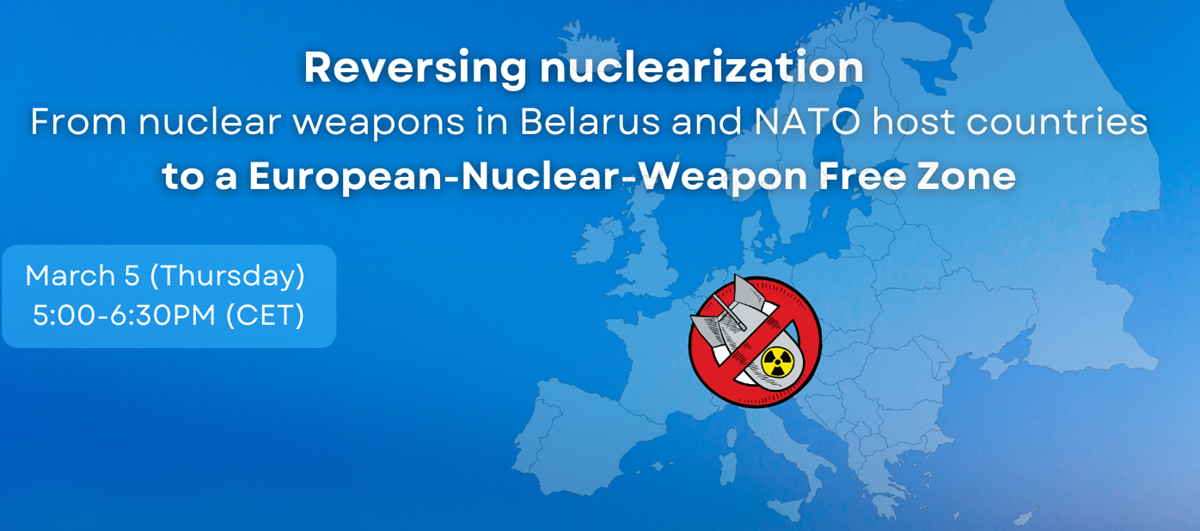
5 March -Online – Reversing nuclearization:
From nuclear weapons in Belarus and NATO host countries to a European-Nuclear-Weapon Free Zone
11am-12:30pm Eastern Time USA / 5pm-6:30pm CET

of the week – Advocating for a
nuclear free beach – https://www.samuellawrencefoundation.org/
The Samuel Lawrence Foundation advocates for a Nuclear Waste Free Beach at San Onofre, join us and take action!

10 March A LIVE WEBINAR THE REAL EFFECTS OF NUCLEAR POWER
What the Industry Isn’t Telling Us
1:00 PM Mountain, 2 pm Central, 3 pm Eastern. Live on the Keepers of the Water Facebook page

18 March Webinar @ 1 PM EST: An Assessment of SMR Projects: The Case of Canada
register for the zoom:
https://us02web.zoom.us/webinar/register/WN_o8BIIOUvQ2ONJR1nta65DQ#/registration

of the week – STOP SMALL MODULAR REACTORS IN CANADA
To see nuclear-related stories in greater depth and intensity – go to https://nuclearinformation.wordpress.com
-
Archives
- March 2026 (51)
- February 2026 (268)
- January 2026 (308)
- December 2025 (358)
- November 2025 (359)
- October 2025 (376)
- September 2025 (258)
- August 2025 (319)
- July 2025 (230)
- June 2025 (348)
- May 2025 (261)
- April 2025 (305)
-
Categories
- 1
- 1 NUCLEAR ISSUES
- business and costs
- climate change
- culture and arts
- ENERGY
- environment
- health
- history
- indigenous issues
- Legal
- marketing of nuclear
- media
- opposition to nuclear
- PERSONAL STORIES
- politics
- politics international
- Religion and ethics
- safety
- secrets,lies and civil liberties
- spinbuster
- technology
- Uranium
- wastes
- weapons and war
- Women
- 2 WORLD
- ACTION
- AFRICA
- Atrocities
- AUSTRALIA
- Christina's notes
- Christina's themes
- culture and arts
- Events
- Fuk 2022
- Fuk 2023
- Fukushima 2017
- Fukushima 2018
- fukushima 2019
- Fukushima 2020
- Fukushima 2021
- general
- global warming
- Humour (God we need it)
- Nuclear
- RARE EARTHS
- Reference
- resources – print
- Resources -audiovicual
- Weekly Newsletter
- World
- World Nuclear
- YouTube
-
RSS
Entries RSS
Comments RSS
 nuclear-news