“Denuclearization” has different meanings for North Korea and USA
|
North Korean missiles: Size does not matter, Bulletin of the Atomic Scientists, By Duyeon Kim, Melissa Hanham, May 15, 2019 When it comes to dealing with North Korea’s nuclear program, one fundamental challenge (among many) has been a gap in the definitions of very basic terms in the security lexicon. This inability to agree on the basics has complicated negotiations and communications for more than 25 years. While the vague use of the term “denuclearization” has allowed a kind of rapprochement between the United States and North Korea, denuclearization will never actually happen until the parties agree on what it means and how to achieve it.
“Denuclearization” is not the only term in contention, and diplomacy is not the only field in which semantics count. North Korea is playing another hand in this age-old word game: Missiles are being tested, but Pyongyang prefers to call them “rockets.” In North Korea, a rocket can be anything from artillery rounds to a space launch vehicle. Pyongyang fired a short-range ballistic missile, artillery, and multiple-launch rocket systems on May 4 and another barrage on May 9, revealing what the new “tactical guided weapon” they also tested on April 18 and likely November 2018 really is. The regime claims that the firing of these “rockets” is routine and defensive in nature. The activities near Wonson are indeed likely to resemble how North Korea would attempt to repel an invasion from the East. Unfortunately, this exercise included what may be a short-range missile capable of carrying a nuclear warhead. Washington does not appear to be overreacting to these latest tests, which it should not, and has chosen to focus on the short-range nature of the missile involved. But the Trump administration must not turn a blind eye either. Responses and punishments—proportionate to the significance and gravity of Pyongyang’s actions—can be taken without botching the diplomatic process. The lack of an international response only emboldens the regime to sharpen its gray-zone tactics to push the envelope and gain influence without having to explode nuclear devices or fire long-range missiles. These smaller, solid-fuel missiles matter because—tipped with nuclear warheads or chemical or biological weapons—they threaten South Korea as well as US troops and American citizens in the South. Indeed these may be the first weapons used in a large scale conflict that could pull allies in. They cannot be regarded simply as part of a sovereign country’s right to develop arms. The larger intercontinental ballistic missiles (ICBMs) are not the only enemy. Smaller missiles are just as significant. Size does not matter—it’s what you can do with a missile that counts. What’s in a name? For the first time, Washington, Pyongyang, and Seoul are reading from the same script and agree on one thing: these missiles ought not to be called “missiles.” Instead, they are being named “projectiles” and “rockets.” The common thread is to prevent the already fragile diplomatic process from unraveling…… https://thebulletin.org/2019/05/north-korean-missiles-size-does-not-matter/?utm_source=Bulletin%20Newsletter&utm_medium=iContact%20email&utm_campaign=NKmissiles_05152019 |
|
North Korea is unlikely to ever give up all its nuclear weapons
Former Defense Secretary Robert Gates said North Korea is unlikely to ever give up all its nuclear weapons, and that President Donald Trump was right to walk away from deal with leader Kim Jong-un in February.In an interview with CBS that taped on May 10, Gates said North Koreans have come to see some modest nuclear capabilities as “essential to their national survival.”
“I believe that North Koreans will never completely denuclearize,” Gates said, adding that the Trump administration is “unrealistic in believing that they can get complete denuclearization.” ……. https://www.politico.com/story/2019/05/12/robert-gates-north-korea-1317623
Increased tension as U.S. has seized a North Korean ship for sanctions violations
 In Middle of Nuclear Standoff, U.S. Seizes North Korean Cargo Ship Illicitly
  Exporting Coal, Slate, By HANNON, 9 May 19
Donald Trump’s gamble with nuclear negotiations with North Korea – the risk of war if it falls apart
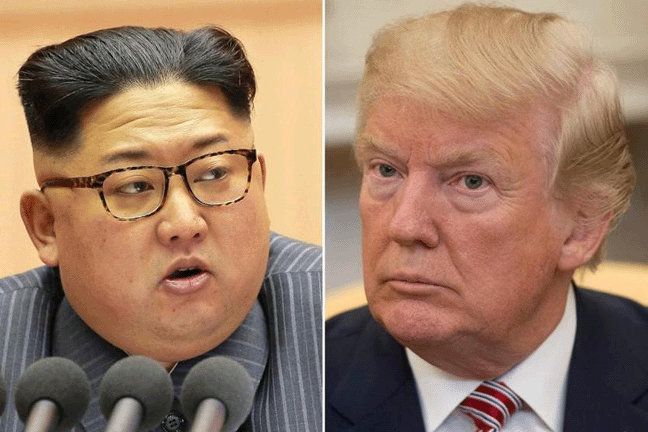 Trump’s Bet on Kim Might Not Pay Off, All that’s preventing the collapse of talks is that North Korea’s missiles haven’t flown far enough yet. The Atlantic URI FRIEDMAN, 10 May 19
U.S. Secretary of State Mike Pompeo ays that a nuclear deal with North Korea is still possible
|
Pompeo insists North Korea nuclear deal still possible despite weapons test, Secretary of state echoes the president, saying ‘there’s opportunity to get a negotiated outcome’ on a denuclearization deal, Guardian, Victoria Bekiempis in New York 6 May 2019 Secretary of State Mike Pompeo insisted Sunday that a nuclear disarmament deal between the US and North Korea was still possible, despite the country’s launch of several short-range projectiles into the sea one day earlier.“There’s an opportunity to get a negotiated outcome, where we get fully verified denuclearization” and said the US hopes to “get back to the table and find the path forward,” he told ABC’s This Week politics program on Sunday. He also claimed that North Korean leader Kim Jong-un is on board with coming to an accord. “Chairman Kim has repeated that,” Pompeo said. “He’s repeated that quite recently, in fact.” Pompeo said the latest missile launch did not cross any international boundaries. “That is, they landed in the water east of North Korea and didn’t present a threat to the United States or to South Korea or Japan,” he said. “And we know that they were relatively short-range.” Pompeo’s statements about brokering a deal echo those of Donald Trump, who said he still thought the US and North Korea would reach a nuclear dealdespite the fact that talks have stalled since the leaders’ recent unsuccessfulsummit meeting in Vietnam. ……. https://www.theguardian.com/world/2019/may/05/mike-pompeo-north-korea-disarmament-deal-possible-despite-weapons-test |
|
Donald Trump still predicting nuclear deal with Kim Jong Un
Trump insists nuclear deal will happen after North Korea fires projectiles, Guardian, 5 May 19, President tweeted on Saturday he believes Kim Jong-un understands North Korea’s ‘great economic potential’ and won’t interfere. Donald Trump said he still believes a nuclear deal with North Korea will happen, after the country fired several unidentified short-range projectilesinto the sea.
The US president tweeted on Saturday that he believes that leader Kim Jong-un “fully realizes the great economic potential of North Korea, & will do nothing to interfere or end it”……..
If it’s confirmed that the North fired banned ballistic missiles, it would be the first such launch since the North’s November 2017 test of an intercontinental ballistic missile. That year saw a string of increasingly powerful weapons tests from the North and a belligerent response from Trump that had many in the region fearing war.
Experts say the North may increase these sorts of low-level provocations to apply pressure on the US to agree to reduce crushing international sanctions
South Korea said it’s “very concerned” about North Korea’s weapons launches, calling them a violation of last year’s inter-Korean agreements to reduce tensions between the countries.
South Korea’s military has bolstered its surveillance in case there are additional weapons launches, and South Korean and US authorities are analyzing the details.
North Korea could choose to fire more missiles with longer ranges in coming weeks to ramp up its pressure on the US to come up with a roadmap for nuclear talks by the end of this year……..https://www.theguardian.com/world/2019/may/04/trump-north-korea-nuclear-deal-short-range-projectiles
Russia’s President Putin supports North Korea, seeks multilateral talks on decnuclearising the Korean Peninsula
After Meeting Kim Jong-un, Putin Supports North Korea on Nuclear Disarmament, NYT, By Andrew E. Kramer and Choe Sang-Hun, April 25, 2019, MOSCOW — President Vladimir V. Putin of Russia made a public show of support for North Korea on nuclear disarmament, seeming to undermine President Trump’s approach to nuclear diplomacy, as Mr. Putin and Kim Jong-un on Thursday wrapped up their first summit meeting.
Russian officials have long insisted they wanted to support Mr. Trump’s efforts at one-on-one nuclear negotiations with Mr. Kim, the North Korean leader. But speaking to reporters after the meeting in Vladivostok, on Russia’s Pacific Ocean coast, Mr. Putin said that North Korea needs security guarantees from more nations than just the United States before abandoning its nuclear arsenal.
Mr. Putin also reiterated Russian backing for a gradual process of trading disarmament for sanctions relief. “If we take one step forward and two backward, then we would fail to achieve the desired result,” Mr. Putin said. “But it will eventually be possible to achieve this goal, if we move forward gradually and if we respect each other’s interests.”
At talks in February in the Vietnamese capital, Hanoi, Mr. Trump had proposed a “big deal” to lift punishing economic sanctions in return for a quick and complete elimination of North Korea’s nuclear weapons program. Mr. Kim offered, instead, only a partial dismantling of nuclear facilities — while keeping his arsenal of nuclear warheads and missiles — in exchange for relief from the most harmful sanctions.
With each side calling the other’s plan unacceptable the talks collapsed — in sharp contrast to the rosy picture both leaders painted of their first meeting in Singapore in June.
After the breakdown in talks in Hanoi, North Korea vented its frustration with a weapons test and accusations that Mr. Trump’s national security adviser, John R. Bolton, and secretary of state, Mike Pompeo, were sabotaging negotiations.
In his first trip abroad since the talks in Vietnam, Mr. Kim sought to stress his friendly relations with the Kremlin as a counterweight to the hard-line tactics of the Trump administration.
…….. Mr. Putin suggested Russia might welcome a revival of multilateral talks on North Korea, known as the six-party negotiations, which have been dormant for a decade and were previously derided by Mr. Trump
…….. “The most important thing, as we have discussed today during the talks, is to restore the rule of international law and revert to the position where global developments were regulated by international law instead of the rule of the fist,” Mr. Putin said. “If this happens, this would be the first and critical step toward resolving challenging situations such as the one on the Korean Peninsula.”
….. Before they collapsed in 2009, the six-party talks among China, Japan, North Korea, South Korea, the United States and Russia had produced agreements to halt North Korea’s nuclear program, but the North later abrogated them.
Any Russian attempt to revive them now is bad news for Mr. Trump, who has repeatedly cited them as the prime example of the failed tactics of previous administrations. He has claimed that his own leader-to-leader diplomacy with Mr. Kim stood a far better chance of bringing about the North’s denuclearization.
Russian foreign policy has a different starting point. “In Moscow’s thinking, Kim Jong-un has learned from the fates of Iraq’s Saddam Hussein and Libya’s Col. Muammar el-Qaddafi that for an authoritarian regime, the only safeguard against U.S. military intervention is the possession of nuclear weapons capable of hitting the American mainland,” Aleksandr Gabuev, a fellow at the Moscow Carnegie Center, wrote……… https://www.nytimes.com/2019/04/25/world/europe/summit-kim-putin-trump-nuclear-north-korea.html
Kim Jong Un’s round of summits: the latest with Vladimir Putin
 Ingram Pinn’s illustration of the week: Nuclear roundabout – (illustration on original) Kim Jong Un turns to Vladimir Putin, https://www.ft.com/content/fcd74e58-675a-11e9-a79d-04f350474d62 . INGRAM PINN
North Korean leader Kim Jong Un received a red-carpet welcome when he arrived by armoured train in Russia’s pacific port of Vladivostok for his first summit with Russian President Vladimir Putin. After four summits with Chinese President Xi Jinping and two with US President Donald Trump, Mr Kim has now turned to Mr Putin. The US-North Korea talks in Hanoi in February broke down in acrimony. Since then, North Korean state media has said they no longer wanted to deal with Mike Pompeo, US secretary of state, as a nuclear negotiator and that they wanted to work with someone “more careful and mature in communicating”. Mr Kim was also claimed to have launched a new missile designed to carry a “powerful warhead” and that the test was “of a very weighty significance in increasing the combat power of the (Korean) People’s Army”. “Chairman Kim Jong Un himself personally asked us to inform the American side about his position and the questions he has about what’s unfolding on the Korean Peninsula,” Mr Putin told reporters after the summit ended. “[And] of course I will speak tomorrow in Beijing, probably with the leadership of the People’s Republic of China.” INGRAM PINN
North Korean leader Kim Jong Un received a red-carpet welcome when he arrived by armoured train in Russia’s pacific port of Vladivostok for his first summit with Russian President Vladimir Putin. After four summits with Chinese President Xi Jinping and two with US President Donald Trump, Mr Kim has now turned to Mr Putin. The US-North Korea talks in Hanoi in February broke down in acrimony. Since then, North Korean state media has said they no longer wanted to deal with Mike Pompeo, US secretary of state, as a nuclear negotiator and that they wanted to work with someone “more careful and mature in communicating”. Mr Kim was also claimed to have launched a new missile designed to carry a “powerful warhead” and that the test was “of a very weighty significance in increasing the combat power of the (Korean) People’s Army”. “Chairman Kim Jong Un himself personally asked us to inform the American side about his position and the questions he has about what’s unfolding on the Korean Peninsula,” Mr Putin told reporters after the summit ended. “[And] of course I will speak tomorrow in Beijing, probably with the leadership of the People’s Republic of China.”
Russia urges for six-part talks as the practical way to deal with North Korea
 Kremlin: Six-party talks only efficient way to tackle nuclear North Korea https://www.reuters.com/article/us-northkorea-russia-kremlin/kremlin-six-party-talks-only-efficient-way-to-tackle-nuclear-north-korea-idUSKCN1S01BNMOSCOW (Reuters) Writing by Anton Kolodyazhnyy; Editing by Maria Kiselyova – 24 Apr 19,The Kremlin said on Wednesday that six-party talks, which are currently stalled, were the only efficient way of addressing the de-nuclearisation of the Korean peninsula, but all other efforts also merited support. Kremlin: Six-party talks only efficient way to tackle nuclear North Korea https://www.reuters.com/article/us-northkorea-russia-kremlin/kremlin-six-party-talks-only-efficient-way-to-tackle-nuclear-north-korea-idUSKCN1S01BNMOSCOW (Reuters) Writing by Anton Kolodyazhnyy; Editing by Maria Kiselyova – 24 Apr 19,The Kremlin said on Wednesday that six-party talks, which are currently stalled, were the only efficient way of addressing the de-nuclearisation of the Korean peninsula, but all other efforts also merited support.
North Korean leader Kim Jong Un arrived in the Russian city of Vladivostok on Wednesday for a summit he is likely to use to seek support from Russian President Vladimir Putin while Pyongyang’s nuclear talks with Washington are in limbo. “There are no other efficient international mechanisms at the moment,” Kremlin spokesman Dmitry Peskov said. “But, on the other hand, efforts are being made by other countries. Here all efforts merit support as long as they really aim at de-nuclearisation and resolving the problem of the two Koreas,” he told reporters. |
|
Russia’s attitude to North Korea’s nuclear weapons
What Russia thinks about North Korea’s nuclear weapons, Bulletin of the Atomic Scientists, By Anastasia Barannikova, April 24, 2019, North Korean leader Kim Jong Un arrived in Russia today for a meeting with President Vladimir Putin….. Despite Russia’s past vote in favor of sanctions on Kim’s regime, Moscow has many reasons not to lean too hard on Kim over nuclear disarmament…………
Russia wants a stable North more than a non-nuclear North. Although, Russia continues to officially oppose North Korea’s nuclear status on the basis of its strict interpretation of the NPT, experts already speak about “nuclear emancipation” for the North, meaning recognition of its status as a lesser nuclear state. These ideas coincide with an idea some Chinese scholars have developed whereby North Korea would reduce its nuclear arsenal but keep some weapons as a deterrent. From Russia’s perspective, nuclear weapons now guarantee the security of the North Korean regime. The weapons can prevent attempts at violent regime change by external force. Through them, North Korean leadership has the independence to make changes within its borders. That’s good for Russia.
Many Russian analysts consider North Korea’s nuclear program to be defensive. Looking at the North’s nuclear doctrine, it seems likely the country wouldn’t use its nuclear weapons against a country that isn’t planning an attack. While little is known about Russia’s military planning beyond its publicly available doctrines, the specifics of the bilateral relations it holds with the North may guarantee that Russia has no plans to attack its neighbor.
……….The security of Kim’s regime, in turn, guarantees stability near Russia’s eastern borders. For Russia, a stable North Korean regime guarantees the absence of refugees flows, a normal feature of conflict zones, but also prevents US troops from deploying in a potentially disintegrating North. And with its nuclear weapons as diplomatic leverage, North Korea can maintain some independence from China. Thus, Moscow views Kim’s stability as providing something of a buffer between Russia and China.
Do North Korean nuclear weapons pose a threat to Russia? From Moscow’s perspective, the Korean Peninsula and Northeast Asia are relatively stable and don’t pose any immediate threats to security. Relations between Russia and North Korea are neutral, if not friendly. North Korean leadership appreciates Russia’s cautious, slow approach to the relationship, in contrast to China’s activist take on issues on the Korean Peninsula. Russia’s emphasis on the need to respect state sovereignty as a fundamental principle of international relations further lubricates the bilateral relationship: Russia avoids any attempt to interfere in the internal affairs of the North, so Pyongyang does not consider Russia as an external threat.
Many Russian analysts consider North Korea’s nuclear program to be defensive. Looking at the North’s nuclear doctrine, it seems likely the country wouldn’t use its nuclear weapons against a country that isn’t planning an attack. While little is known about Russia’s military planning beyond its publicly available doctrines, the specifics of the bilateral relations it holds with the North may guarantee that Russia has no plans to attack its neighbor.
But there is one scenario whereby North Korea’s nuclear weapons could threaten Russia. If Kim launches missiles against the United States, experts say they’ll fly over Russian territory. A US anti-missile response could, thus, risk a war between Russia and the United States. But Russian experts don’t believe that North Korea would ever attack the United States; they consider Kim Jong Un too rational for that. ………https://thebulletin.org/2019/04/what-russia-thinks-about-north-koreas-nuclear-weapons/
China opens fourth border crossing with North Korea, complete with radiation detectors
Japan Times AFP-JIJI, APR 10, 2019
BEIJING – A Chinese city has opened a new border crossing with North Korea — fitted with radiation detectors — even as talks between Washington and Pyongyang have languished over disagreements for nuclear sanctions relief………
The crossing also has a nuclear radiation detection gate, the city said. China has long been worried about any fallout from North Korea’s nuclear activities and Jilin was rocked by an earthquake after a massive bomb test across the border in September 2017. ….. https://www.japantimes.co.jp/news/2019/04/10/asia-pacific/china-opens-fourth-border-crossing-north-korea-complete-radiation-detectors/#.XK6MiFUzbGg
Absolute stalemate in nuclear negotiations, but Trump says that his relationship with Kim Jong-un is“very good,”
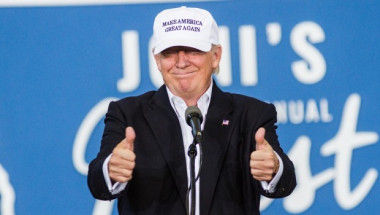 Trump says his relationship with Kim remains ‘very good’ amid nuclear stalemate, US President Donald Trump made the statement during the Republican Jewish Coalition’s annual meeting. Asia News Network, by The Korea Herald, pril 8, 2019 US President Donald Trump said on Saturday (US time) that his relationship with North Korean leader Kim Jong-un remains “very good,” conveying his hopes of drawing Kim back to the negotiation table.His remarks come amid a stalemate between the two countries following the breakdown of the two leaders’ second summit in Hanoi, Vietnam, in late February. The deal breakers concerned denuclearization and economic sanctions.
“We’re getting along with North Korea. We’ll see how it works out, but we have a good relationship. Don’t forget, I have a very good relationship with Kim Jong-un,” Trump said during a speech at the Republican Jewish Coalition’s 2019 spring leadership meeting in Las Vegas………..
After their summit ended without an agreement, media reports revealed that the US had delivered a draft of an agreement demanding that Pyongyang transfer all its nuclear weapons and nuclear materials to the US.
According to Japan’s Yomiuri Shimbun on Sunday, the draft agreement consisted of five main points — two demands for the communist regime and three compensatory items.
In the document, the US defined denuclearization for the North as shipping out all its nuclear weapons and dismantling all related facilities, according to the Japanese daily, which cited as its sources officials from the US, South Korea and Japan.
The US draft sought to ban all future nuclear activities by Pyongyang and to conduct inspections to verify its nuclear disarmament process. There was also a plan to excavate the remains of US soldiers in North Korea.
In return, Washington reportedly offered to declare an official end to the 1950-53 Korean War — which came to a halt with only an armistice — and to establish joint liaison offices and provide economic support to the communist regime.
On Friday, US Secretary of State Mike Pompeo said he is “confident” that there will be a third summit between Trump and Kim, though he did not provide a clear date or a location.
n a televised interview with “CBS This Morning,” based in the US, Pompeo also said the Trump administration is “convinced” that Pyongyang is “determined as well” to achieve denuclearization.
Pompeo noted, however, that the administration remains “incredibly clear” that economic sanctions on the North “will not be lifted until our ultimate objective is achieved.”
Since the February summit, Pyongyang has expressed dissatisfaction toward Washington via its state news agency and its Foreign Ministry.
With Pyongyang’s Supreme People’s Assembly due to hold its first meeting on Thursday since a recent election, eyes are on whether the North Korean leader will mention denuclearization talks in his policy speech.
Pompeo said the US side will “closely watch” to see what Kim says, but that it does not expect any great surprises.
The North’s parliamentary session will coincide with the summit expected to take place in Washington between Trump and South Korean President Moon Jae-in. https://asianews.network/2019/04/08/trump-says-his-relationship-with-kim-remains-very-good-amid-nuclear-stalemate/
U.S. Secretary of State Mike Pompeo hopes that North Korea will just hand over its nuclear weapons to USA
Pompeo hopes North Korea’s Kim does ‘right thing’ on nuclear weapons in parliament speech, David Brunnstrom, WASHINGTON (Reuters) 5 Apr 19, – U.S. Secretary of State Mike Pompeo said on Friday he hoped North Korean leader Kim Jong Un would use a meeting of the country’s parliament next week to state publicly “it would be the right thing” for Pyongyang to give up its nuclear weapons.
North Korea’s Supreme People’s Assembly is due to hold its first meeting this year on Thursday and could feature the first public comments from Kim about a second summit between him and U.S. President Donald Trump Hanoi in February that collapsed………..
Pompeo said he was “confident” there would be a third summit between Trump and Kim but did not have a timetable although he hoped it would be soon.
Pompeo stressed though that economic sanctions would not be lifted until North Korea gave up its nuclear weapons.
……..North Korea has warned that it is considering suspending talks and may rethink a freeze on missile and nuclear tests, in place since 2017, unless Washington makes concessions.
According to a document seen by Reuters last week, on the day their Hanoi talks collapsed, Trump handed Kim a piece of paper that included a blunt call for the transfer of Pyongyang’s nuclear weapons and bomb fuel to the United States. Analysts said the move was probably seen by the North Korean leader as insulting and provocative…… https://www.reuters.com/article/us-northkorea-usa/pompeo-hopes-north-koreas-kim-does-right-thing-on-nuclear-weapons-in-parliament-speech-idUSKCN1RH1ZW
The merits of letting North Korea keep its nuclear weapons, for now
The US has hardened its position on North Korea- the influence of John Bolton?
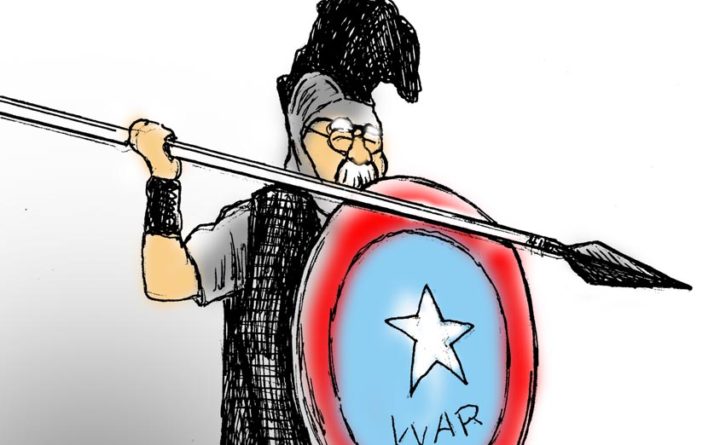 A top US diplomat just laid out the new approach to North Korea. It’s doomed.
Stephen Biegun told a Washington audience that “we are not going to do denuclearization incrementally.”Vox, By The top US diplomat tasked with negotiating with North Korea just laid out a denuclearization plan that’s destined to fail.
above – John Bolton
In his first public comments since President Donald Trump and North Korean leader Kim Jong Un met in Vietnam last month, Stephen Biegun, the US special representative for North Korea, told a Washington audience Monday that the administration wants Pyongyang to give up all of its weapons of mass destruction before anything else.
“We are not going to do denuclearization incrementally,” the envoy said at the Carnegie Endowment for International Peace’s nuclear conference. “The foundation of US policy is denuclearization.”
But it’s not just nuclear weapons: The Trump administration also wants the complete removal of chemical and biological weapons from North Korea, Biegun said, meaning the US wants Pyongyang only to have conventional weapons by the end of the process.
Let’s be extremely clear about what this means: If the US maintains this position, any chance for the US to convince North Korea to part with its nuclear arsenal is gone.
Pyongyang for years has said that the only way it would consider giving up its nuclear weapons is through a step-by-step process where both sides offer reciprocal, commensurate concessions. By resolving smaller disagreements, like lifting sanctions in exchange for the closure of an important nuclear facility, over time the US and North Korea would eventually arrive at the grand prize: the end of Pyongyang’s nuclear program.
But Biegun said the US won’t do that. Instead, the Trump administration wants to see North Korea dismantle its nuclear arsenal before it offers any economic or diplomatic benefits. That’s just not going to work, experts say.
The US has hardened its position on North Korea………..
1 This Month

of the week – Shut Down Drone Warfare!


Tell the Ukrainian Government to Drop Prosecution of Peace Activist Yurii Sheliazhenko

Petition to revoke the licensing of the Near Surface Nuclear Disposal Facility (NSDF) at Chalk River. https://www.ourcommons.ca/petitions/en/Petition/Details?Petition=e-7247
To see nuclear-related stories in greater depth and intensity – go to https://nuclearinformation.wordpress.com
-
Archives
- March 2026 (244)
- February 2026 (268)
- January 2026 (308)
- December 2025 (358)
- November 2025 (359)
- October 2025 (376)
- September 2025 (257)
- August 2025 (319)
- July 2025 (230)
- June 2025 (348)
- May 2025 (261)
- April 2025 (305)
-
Categories
- 1
- 1 NUCLEAR ISSUES
- business and costs
- climate change
- culture and arts
- ENERGY
- environment
- health
- history
- indigenous issues
- Legal
- marketing of nuclear
- media
- opposition to nuclear
- PERSONAL STORIES
- politics
- politics international
- Religion and ethics
- safety
- secrets,lies and civil liberties
- spinbuster
- technology
- Uranium
- wastes
- weapons and war
- Women
- 2 WORLD
- ACTION
- AFRICA
- Atrocities
- AUSTRALIA
- Christina's notes
- Christina's themes
- culture and arts
- Events
- Fuk 2022
- Fuk 2023
- Fukushima 2017
- Fukushima 2018
- fukushima 2019
- Fukushima 2020
- Fukushima 2021
- general
- global warming
- Humour (God we need it)
- Nuclear
- RARE EARTHS
- Reference
- resources – print
- Resources -audiovicual
- Weekly Newsletter
- World
- World Nuclear
- YouTube
-
RSS
Entries RSS
Comments RSS
 nuclear-news