Repeated malfunctions reveal safety issues in Fukushima discharge

CGTN 6 Oct 23 #nuclear #antinuclear #nuclear-free #NoNukes
Japan started the second discharge of nuclear-contaminated wastewater from the crippled Fukushima Daiichi Nuclear Power Plant into the Pacific Ocean on Thursday, despite strong opposition from local fishermen as well as neighboring and Pacific island countries.
The plant’s operator, Tokyo Electric Power Company (TEPCO), said it plans to carry out the release over 17 days to discharge 7,800 tons of the radioactive wastewater, about the same amount as the first discharge which ended on September 11.
Currently, more than 1.3 million tons of nuclear-contaminated wastewater has been accumulated in storage tanks at Fukushima.
The company’s key facility for nuclear-contaminated water treatment, the Advanced Liquid Processing System (ALPS), is a multi-filter system that can remove radioactive materials through a series of chemical reactions. The international community has had doubts about the safety, effectiveness and sustainability of the system, due to its treatment capacity and incidents of malfunction.
When the amount of nuclear-contaminated water is too large, the chances to replace the filters are limited and the performance of the ALPS is significantly degraded, said Ryota Koyama, a professor at Fukushima University in Japan.
“If nuclear-contaminated water is discharged, I think there must be a problem. If the Japanese government or the TEPCO really wants to discharge the contaminated water into the sea, they need to explain in more detail,” Koyama told China Media Group (CMG) in an interview……………………………..
The ALPS has failed to remove isotopes adequately, with the adsorbents used to remove radioactive isotopes being replaced less often than they were supposed to be. As a result, 70 percent of the water in the storage tanks still contains non-tritium radionuclides at a concentration that exceeds the regulatory standards applicable for discharge into the environment.
Since its trial operation in 2013, the ALPS has frequently experienced malfunctions. Just before the first discharge in August, TEPCO found leaks in a hose used to transfer nuclear-contaminated water, according to Japanese broadcaster NHK………………..
In June, the government of Republic of Korea said that there have been eight confirmed cases of malfunction with the ALPS between 2013 and 2022, which concerned corrosion of facilities and issues with filters, after its experts conducted an on-site inspection, said the country’s public broadcaster KBS.
According to previous reports, TEPCO found that there were at least 10 breakages on the ALPS’ filters used to absorb nuclides in August 2021. In the process of replacing the broken filters, the company discovered that 24 filters were damaged. A month later, TEPCO announced that five more filters in the ALPS were found to have been damaged, and radioactive contamination had been detected near some of the filters.
Hikaru Amano, senior researcher of the Nuclear Science Research Institute, Japan Atomic Energy Agency, told CMG that another problem with the ALPS is that there is little room to store used filters.
Amid concerns of Japan’s discharge of nuclear-contaminated wastewater, the Republic of Korea (ROK) plans to raise the number of testing spots to nearly 250 next year, increasing from the 75 coastal locations where emergency radiation tests were conducted about a month ahead of Japan’s first release in August, Seoul-based Yonhap News reported…………… https://news.cgtn.com/news/2023-10-06/Repeated-malfunctions-reveal-safety-issues-in-Fukushima-discharge-1nFOJHDPdgQ/index.html
As Japan releases more Fukushima water, what about the rest of the plant?

A second batch of treated water is being released into the Pacific, but the entire decommissioning process will be far more complex.
all that will need to take place in an environment where the level of radiation is so high, it is nearly impossible for workers to get inside.
Japan has not yet worked out where all the waste will go
Aljazeera, By Hanako Montgomery, 5 Oct 2023 #nuclear #anti-nuclear #nuclear-free #NoNukes
“…………………………………………………………………………………………Japan has promised to decommission the power station as part of its recovery plan for Namie town and the rest of Fukushima prefecture. The plant’s six reactors suffered catastrophic damage, after the tsunami smashed into the complex, crippling the plant’s cooling systems. As radioactive material leaked from the site, 470,000 people were forced to evacuate.
But while the plant had been rendered useless, progress towards its decommissioning has been slow.
Complex challenge
According to Tokyo Electric Power Company (TEPCO), the plant operator, that is partly because of the accumulation of 1.3 billion tonnes of treated radioactive wastewater that was used to cool the three reactors that were in operation at the time of the disaster.
The 1,000 or so blue and white tanks to store the water have taken up space needed for decommissioning, according to TEPCO, which has had to contend with strong criticism from local fishing communities and neighbouring countries like China, which have continued to protest against Japan’s plan to discharge the water into the ocean.
………………………………………………………………… According to TEPCO, the entire decommissioning process will take between 30 and 40 years. That is at least six times longer than it typically takes to decommission a plant under normal circumstances, Brent Heuser, a nuclear engineering professor from the University of Illinois in the United States, told Al Jazeera.
“Decommissioning involves removing fuel stored in structured arrangements. Japan, however, is facing unique challenges such as widely dispersed fuel, requiring both human and robotic efforts for detection,” he told Al Jazeera.
Japan has not yet worked out where all the waste will go.
TEPCO is planning to reduce some of it through incineration or recycling onsite, but that does not include the waste that will be produced from the dismantling of reactor buildings, and there is no estimate for how much radioactive waste there will be as the process moves forward.
To decommission the Daiichi plant, TEPCO must first remove the spent fuel and the fuel debris that is stuck inside the damaged units. Experts will then place the collected debris in storage containers before they can transport it to a new facility that will be built onsite.
The reactor buildings must also be dismantled.
Later this year, TEPCO will carry out a trial removal of melted debris from Unit 2. The retrieval will be expanded in stages if successful.
By 2027, plant operators hope to be able to turn their attention to Unit 1, the most seriously damaged of the reactors, which they plan to enclose with a large cover.
By 2031, they will focus on removing the melted debris.
But all that will need to take place in an environment where the level of radiation is so high, it is nearly impossible for workers to get inside.
“The doses they would receive would go way beyond any allowable limit, so that certainly is playing a role in the extended timeline for the decommission process,” Heuser said, suggesting more staff may be needed given the short period of time they will be able to remain on site.
“They’re spreading the worker dose exposure over a much larger body of people.”
Help from robots
The level of radiation means Japan is also yet to understand the full extent of the damage inside the corroded reactors.
TEPCO has used robotic probes to try and get a sense of the destruction. Equipped with 3D scanners, sensors, and cameras, robots have mapped the terrain, measured radiation levels, and searched for the elusive missing fuel.
Although some headway has been made in assessing the condition of the reactors, the data is far from reassuring.
Since 2022, TEPCO has dispatched a robotic probe into Unit 1.
The probe’s findings revealed the core had largely melted and settled at the bottom of the containment chamber – which serves as a vital safeguard against the release of radioactive material – and possibly Unit 1’s concrete basement. Furthermore, it suggested significant damage to the pedestal, the primary support structure directly beneath Unit 1’s core.
Financial considerations also loom large in Japan’s struggle with decommissioning
Ordinarily, the decommissioning of a standard nuclear plant would cost between $300m to $400m, according to the US nuclear regulator.
But given the extensive damage, compensation paid to local residents and the specialised equipment required for managing one of the world’s worst nuclear disasters, the Japanese government predicts the final bill could come to about 21.5 trillion yen ($141bn).
Akira Ono, who leads TEPCO’s decommissioning unit, has admitted the work is “challenging”. Earlier this year, a remotely-operated vehicle managed to collect only a tiny sample from Unit 1’s reactor, which is thought to contain some 880 tonnes of melted fuel debris -10 times the amount removed during the cleanup of Three Mile Island in the northeastern United States in 1979………………………………………………………………………….. https://www.aljazeera.com/news/2023/10/5/as-japan-releases-fukushima-water-into-the-sea-what-about-everything-else
The Discharge of Fukushima’s Radioactive Water could be a Precedent for Similar Actions

Obviously, it would be misleading to rely on the IAEA’s statements suggesting that radioactive wastewater does not pose any risk to global health. This information strengthens the likelihood that the IAEA did not reveal valid and precise radiation data regarding the Chornobyl accident and Zaporizhia nuclear power plant during the ongoing Ukrainian war either.
Pinar Demircan 7 Sept 23 https://www.dianuke.org/the-discharge-of-fukushimas-radioactive-water-could-be-a-precedent-for-similar-actions/
Underlying the disregard for objections from global civil society and transforming the ocean into a nuclear waste dump lies a bigger goal inspired by capitalist practices that arise from its crisis: to achieve another threshold by normalization of cost-cutting measures for the sake of the nuclear industry.
While the climate crisis is rapidly turning forests and habitats of living creatures into coal and ash with a tiny spark of fire in Turkiye, Greece, and Canada, the planet’s seas, already polluted with plastics and waste, are also being recklessly infused with radioactivity, driven by profit and cost-centered policies. On August 24, within the framework of the procedures carried out by the Japanese government and TEPCO, the discharge of 1.34 million tonnes of radioactive water which is accumulated in tanks at the plant site, started.
The installation of a treatment system costing 23 million USD, the discharge of wastewater without an Environmental Impact Assessment (EIA) is being realized by foregoing safer alternatives such as solidification of wastewater into construction materials or long-term storage costing 100 times more that constitutes ecocide. Clearly, this method of release that is expected to be carried out over the next 40 years, indicates a systemic assault on the global ecosystem that is longer and more severe than presently apparent.
The Japanese Government is not telling the truth about ‘purification’
The discharge process of the wastewater resulting from the complete meltdown of three reactor cores at the Fukushima nuclear facility began in 2011 and is at par with the danger level ascribed to the Chornobyl disaster. This also highlights how the Fukushima discharge differs from the regular discharge processes of nuclear power plants and indicates the extent of danger that nuclear power plants pose. Furthermore, the radioactive isotopes treated in the accumulated wastewater is only half of the whole amount according to what was stated on the website of the Japanese Ministry of the Environment.
A detail that has been overlooked till today is that there is no information regarding the amount of discharge during this 40-year time frame for the disposal of radioactive water into the ocean. This might indicate that the discharged amount may even be equivalent to the period of, for example, 100 years despite the declared duration of 40. In addition, since the present objections have been disregarded, it is worth considering the potential impact of future oppositions at the end of the 40 years.
A threshold to be achieved
Apparently, over the next decade, the radioactive water discharged from Fukushima is anticipated to disseminate into multiple seas worldwide, encompassing the Marmara, Mediterranean, Aegean, and Black Sea, which surrounds Turkiye. A recent scientific study [2] suggests that the evaporation in these seas will escalate industrial radioactivity levels in the ecosystem. Given this backdrop, it is important to ask why TEPCO, the Japanese government, and the IAEA continue to disregard the adverse impacts of the discharge, which also makes them responsible for the potential increases in cancer, DNA damage, increased miscarriages, hormone imbalances, and unhealthy future generations worldwide? Underlying the disregard for objections raised by global civil society, and transforming the ocean into a nuclear waste dump, lies a bigger goal inspired by capitalist practices that arise from its crisis: to achieve another threshold of the normalization of cost-cutting measures for the sake of nuclear industry.
How can we be sure of the exact amount to be released?
It is also possible to consider the above statement with the possibility of adding wastewater from the other nuclear power plants across Japan to the already 1 million 340 thousand tonnes of water accumulated over the past 12 years at Fukushima. While nuclear power plants operate under higher costs and have to cope with four times cheaper renewable energy production costs, the ocean dumping of the radioactive wastewater offers an easy solution for the nuclear industry. Crossing this threshold guarantees the capability to manage climate-induced hazards to nuclear facilities since now, societal consent has been obtained for this plan of action. Imagine how beneficial this course of action will be for the nuclear industry, with the IAEA promising its support for the industry – to the 410 reactors operating worldwide, approximately 50 reactors under construction, and 80 reactors [3] in various stages of maintenance, repair, decommissioning, and dismantling.
Take for example, Rosatom of Russia, the owner of the Akkuyu Nuclear Power Plant which reached its final stage of construction for the first reactor in Turkiye. It has a long history of concealing the Mayak nuclear power plant accident, well into the 1990s. Furthermore, from 1948 to 2004, Rosatom discharged nuclear waste into the Techa River, thus reinforcing its already questionable track record, and also points to how the legalization of nuclear discharge might be beneficial for the industry. It is also easy to predict the potential impact of this approach in the Mediterranean region by a nation with an underdeveloped democratic system and institutional dynamics dominated [4] by political power. This is especially important since an exemption made for the Akkuyu NPP in the article which allows for the discharge water from the facilities around the Mediterranean temperature of the plant and allows the sea temperature to reach up to 35 Celsius and poses serious ecological challenges indicating that Turkiye violates Barcelona Agreement.
The Role of the IAEA
The example of Fukushima’s radioactive water discharge presents us a picture of a political power that has adopted the corporate management mentality prioritizing profits and industry interests under the guise of efficiency and profitability. The International Atomic Energy Agency (IAEA) plays a vital role in ensuring that nuclear energy generation is conducted safely and within established guidelines. However, a leaked document [5] from the IAEA reveals that the agency, which declared its support for TEPCO and the Japanese government, advised them to refrain from making statements that could portray nuclear power plants negatively and disseminate information that influences the press and public opinion. As this scandal brings to light the deep connections between the IAEA, the Japanese government, and TEPCO, it is important to consider the role of the IAEA as a highly regarded global organization.
It is noteworthy to mention that the IAEA’s involvement in the nuclear industry stems from a confidential agreement WHA 12-40 [6] with the World Health Organization (WHO) in 1959, stating that “whenever either organization proposes to initiate a programme or activity on a subject in which the other organization has or may have a substantial interest, the first party shall consult the other with a view to adjusting the matter by mutual agreement”. Consequently, the IAEA, established to promote the growth of nuclear power plants worldwide, refrained from disclosing any potential health hazards posed by these plants.
Obviously, it would be misleading to rely on the IAEA’s statements suggesting that radioactive wastewater does not pose any risk to global health. This information strengthens the likelihood that the IAEA did not reveal valid and precise radiation data regarding the Chornobyl accident and Zaporizhia nuclear power plant during the ongoing Ukrainian war either.
It is important to inform the global society that the IAEA, which focuses mainly on promoting nuclear power, should not be involved in discussions related to public health in line with the principle of separating responsibilities to avoid conflict of interest. Therefore, it is recommended that civil society should inform the international community about the content of the recently disclosed IAEA document and demand an end to the discharge of radioactive water from Fukushima into the ocean. Accordingly, it should be ensured that all processes involved in disposing radioactive contamination in Fukushima are subject to internal and financial control measures performed by a minimum of two separate units.
At this stage, it is essential to take measures by clarifying the issues emphasized by the non-governmental organizations following the processes, and it should be ensured that realistic solutions can only be produced with the involvement of a consortium of neighbouring countries such as South Korea, China, Taiwan and the Pacific Islands. In this regard, the process management for the construction of the steel dome shelter, which was completed in 2016 with financing by 40 countries that came together in 1997 to protect the exploded fourth reactor of the Chornobyl Nuclear Power Plant from external weather conditions, can be taken as an example. [7]
Undoubtedly, the economic and administrative control mechanisms created for Chornobyl due to Ukraine’s lack of financial resources is not acceptable for the technology-giant Japan, which bears the costs of the disaster on its own. However, since global society has not entirely shown its commitment to changing the system, an in-system solution can prevent adding the radioactive disaster to the climate crisis before the transformation of life on the planet hits its constraints. In other words, claiming efficiency and profitability and institutionalization of the logic of ‘running the state like a business’, which has become the common discourse of political powers will at least help to achieve the rationality of emulated corporate management.
” The future of nuclear as an alternative energy source relies on the success of the Fukushima release” – Rafael Grossi.

“more broadly, the future of nuclear as an alternative energy source relies on the success of the Fukushima release,” he said. Though there has been heightened public alarm toward nuclear plants recently – for instance, regarding the Russian-occupied Zaporizhzhia plant in Ukraine – “the problem there is war, the problem is not nuclear energy,” Grossi said.
AEA chief ‘completely convinced’ it’s safe to release treated Fukushima nuclear wastewater .
By Jessie Yeung, Marc Stewart and Emiko Jozuka, Tokyo CNN, 7 July 23
Japan’s plan to release treated radioactive water into the ocean is safe and there is no better option to deal with the massive buildup of wastewater collected since the 2011 Fukushima nuclear disaster, the head of the United Nations’ nuclear watchdog told CNN.
Japan will release the wastewater sometime this summer, a controversial move 12 years after the Fukushima nuclear plant meltdown. Japanese authorities and the IAEA have insisted the plan follows international safety standards – the water will first be treated to remove the most harmful pollutants, and be released gradually over many years in highly diluted quantities.
But public anxiety remains high, including in nearby countries like South Korea, China and the Pacific Islands, which have voiced concern about potential harm to the environment or people’s health. On Friday, Chinese customs officials announced they would maintain a ban on food imports from 10 Japanese prefectures including Fukushima, and strengthen inspections to monitor for “radioactive substances, to ensure the safety of Japanese food imports to China.”……………………..
On Tuesday, Grossi formally presented the IAEA’s safety review to Japanese Prime Minister Fumio Kishida. The report found the wastewater release plan will have a “negligible” impact on people and the environment, adding that it was an “independent and transparent review,” not a recommendation or endorsement……………………….
The 2011 disaster caused the plant’s reactor cores to overheat and contaminate water within the facility with highly radioactive material. Since then, new water has been pumped in to cool fuel debris in the reactors. At the same time, ground and rainwater have leaked in, creating more radioactive wastewater that now needs to be stored and treated.
That wastewater now measures 1.32 million metric tons – enough to fill more than 500 Olympic-sized swimming pools.
Japan has previously said there were “no other options” as space runs out – a sentiment Grossi echoed on Friday. When asked whether there were better alternatives to dispose of the wastewater, the IAEA chief answered succinctly: “No.”
It’s not that there are no other methods, he added – Japan had considered five total options, including hydrogen release, underground burial and vapor release, which would have seen wastewater boiled and released into the atmosphere………………………………………
International skepticism
But some critics have cast doubt on the IAEA’s findings, with China recently arguing that the group’s assessment “is not proof of the legality and legitimacy” of the wastewater release.
Many countries have openly opposed the plan; Chinese officials have warned that it could cause “unpredictable harm,” and accused Japan of treating the ocean as a “sewer.” The Secretary General of the Pacific Islands Forum, an inter-governmental group of Pacific island nations that includes Australia and New Zealand, also published an op-ed in January voicing “grave concerns,” saying more data was needed.
And in South Korea, residents have taken to the streets to protest the plan. Many shoppers have stockpiled salt and seafood for fear these products will be contaminated once the wastewater is released – even though Seoul has already banned imports of seafood and food items from the Fukushima region.
International scientists have also expressed concern to CNN that there is insufficient evidence of long-term safety, arguing that the release could cause tritium – a radioactive hydrogen isotope that cannot be removed from the wastewater – to gradually build up in marine ecosystems and food chains, a process called bioaccumulation…………………………………
more broadly, the future of nuclear as an alternative energy source relies on the success of the Fukushima release, he said. Though there has been heightened public alarm toward nuclear plants recently – for instance, regarding the Russian-occupied Zaporizhzhia plant in Ukraine – “the problem there is war, the problem is not nuclear energy,” Grossi said……….. https://edition.cnn.com/2023/07/06/asia/japan-fukushima-water-iaea-chief-interview-intl-hnk/index.html
At Fukushima Daiichi, decommissioning the nuclear plant is far more challenging than water release.
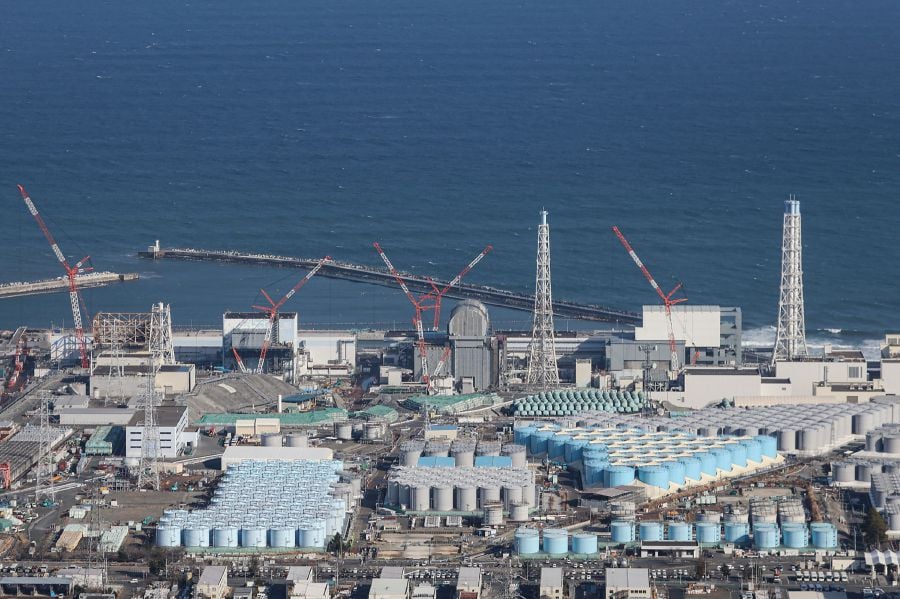
“technical difficulty involving the decommissioning is much higher” than the water release and involves higher risks of exposures by plant workers to remove spent fuel or melted fuel.
Some experts say it would be impossible to remove all the melted fuel debris by 2051 and would take 50-100 years, if achieved at all.
BY MARI YAMAGUCHI, August 27, 2023
FUTABA, Japan (AP) — For the wrecked Fukushima Daiichi nuclear plant, managing the ever-growing volume of radioactive wastewater held in more than 1,000 tanks has been a safety risk and a burden since the meltdown in March 2011. Its release marks a milestone for the decommissioning, which is expected to take decades.
But it’s just the beginning of the challenges ahead, such as the removal of the fatally radioactive melted fuel debris that remains in the three damaged reactors, a daunting task if ever accomplished.
Here’s a look at what’s going on with the plant’s decommissioning:
…………………………………………………… WILL THE WASTEWATER RELEASE PUSH DECOMMISSIONING FORWARD?
Not right away, because the water release is slow and the decommissioning is making little progress. TEPCO says it plans to release 31,200 tons of treated water by the end of March 2024, which would empty only 10 tanks out of 1,000 because of the continued production of wastewater at the plant.
The pace will later pick up, and about 1/3 of the tanks will be removed over the next 10 years, freeing up space for the plant’s decommissioning, said TEPCO executive Junichi Matsumoto, who is in charge of the treated water release. He says the water would be released gradually over the span of 30 years, but as long as the melted fuel stays in the reactors, it requires cooling water, which creates more wastewater.
Emptied tanks also need to be scrapped for storage. Highly radioactive sludge, a byproduct of filtering at the treatment machine, also is a concern.
WHAT CHALLENGES ARE AHEAD?
About 880 tons of fatally radioactive melted nuclear fuel remain inside the reactors. Robotic probes have provided some information but the status of the melted debris remains largely unknown.
Earlier this year, a remote-controlled underwater vehicle successfully collected a tiny sample from inside Unit 1’s reactor — only a spoonful of the melted fuel debris in the three reactors. That’s 10 times the amount of damaged fuel removed at the Three Mile Island cleanup following its 1979 partial core melt.
Trial removal of melted debris using a giant remote-controlled robotic arm will begin in Unit 2 later this year after a nearly two-year delay. Spent fuel removal from Unit 1 reactor’s cooling pool is set to start in 2027 after a 10-year delay. Once all the spent fuel is removed, the focus will turn in 2031 to taking melted debris out of the reactors. But debris removal methods for two other reactors have not been decided.
Matsumoto says “technical difficulty involving the decommissioning is much higher” than the water release and involves higher risks of exposures by plant workers to remove spent fuel or melted fuel.
“Measures to reduce radiation exposure risks by plant workers will be increasingly difficult,” Matsumoto said. “Reduction of exposure risks is the basis for achieving both Fukushima’s recovery and decommissioning.”
HOW BADLY WERE THE REACTORS DAMAGED?
Inside the worst-hit Unit 1, most of its reactor core melted and fell to the bottom of the primary containment chamber and possibly further into the concrete basement. A robotic probe sent inside the Unit 1 primary containment chamber found that its pedestal — the main supporting structure directly under its core — was extensively damaged.
Most of its thick concrete exterior was missing, exposing the internal steel reinforcement, and the nuclear regulators have requested TEPCO to make risk assessment.
CAN DECOMMISSIONING END BY 2051 AS PLANNED?
The government has stuck to its initial 30-to-40-year target for completing the decommissioning, without defining what that means.
An overly ambitious schedule could result in unnecessary radiation exposures for plant workers and excess environmental damage. Some experts say it would be impossible to remove all the melted fuel debris by 2051 and would take 50-100 years, if achieved at all.
‘Animals could become MUTATED’ from the 1.3 million tons of radioactive waste dumped from Japan’s nuclear power plant in the Pacific
Japan started dumping more than 1.3 million tons of radioactive water into
the Pacific Ocean Thursday – and an expert has warned it ‘has the potential
to cause mutations as seen in Chernobyl.
‘The wastewater is currently being
held in the nation’s Fukushima nuclear plant, which is set to be
decommissioned and must be cleaned to prevent accidental leaks. The
contaminated water has been filtered to remove isotopes, leaving only
tritium and carbon-14, which are radioactive isotopes of hydrogen and
carbon that cannot be easily removed from water.
Timothy Mousseau, a
researcher at the University of South Carolina, told DailyMai.com: Tritium
and carbon-14, along with the other radionuclides [that cause cancer] to be
released, all have the potential to cause mutations, cancers and
developmental deformities, as seen in Chernobyl.’
Daily Mail 24th Aug 2023
Fukushima waste-water decision disregards scientific evidence, violates the human rights of Pacific region communities

Japan announces date for Fukushima radioactive water release
Greenpeace International, 22 August 2023 https://www.greenpeace.org/international/press-release/61364/japan-announces-date-for-fukushima-radioactive-water-release/
Tokyo – Greenpeace Japan criticises the Japanese government’s announcement of the start date for radioactive water discharges from the Fukushima Daiichi nuclear station into the Pacific Ocean.
The decision disregards scientific evidence, violates the human rights of communities in Japan and the Pacific region, and is non-compliant with international maritime law. More importantly it ignores its people’s concerns, including fishermen. The Japanese government and Tokyo Electric Power Company (TEPCO) – the nuclear power plants’ operators – falsely assert that there is no alternative to the decision to discharge and that it is necessary to move towards final decommissioning. This further highlights the failure of the decommissioning plan for the nuclear plants destroyed in the 2011 earthquake, stating that tens of thousands of tons of contaminated water will continue to increase with no effective solution.
“We are deeply disappointed and outraged by the Japanese Government’s announcement to release water containing radioactive substances into the ocean. Despite concerns raised by fishermen, citizens, Fukushima residents, and the international community, especially in the Pacific region and neighboring countries, this decision has been made,” said Hisayo Takada, Project Manager at Greenpeace Japan.
The increasing volumes of and the pending release of the radioactive water demonstrate the failure of the decommissioning plan for the Fukushima Daiichi. The contaminated water will continue to accumulate for many years without effective measures to stop it. The Japanese Government and TEPCO falsely claim that discharge is the only viable option necessary for eventual decommissioning. Nuclear power generation, which experiences shutdowns due to accidents and natural disasters, and perpetually requires thermal power as a backup, cannot serve as a solution to global warming.
“The deliberate pollution of the Pacific Ocean through these radioactive waste discharges is a consequence of the 2011 nuclear disaster and Japan’s decades long nuclear power program. Instead of acknowledging the flaws in the current decommissioning plan, the ongoing nuclear crisis, and the massive amount of public funds required, the Japanese government intends to restart more nuclear reactors despite evidence of major earthquakes and safety risks. The current government energy plan fails to deliver secure and sustainable renewables such as wind and solar energy that the climate emergency demands,” said Takada.
As of 8 June 2023, there were 1,335,381 cubic meters of radioactive wastewater stored in tanks[1], but due to the failure of the ALPS (Advanced Liquid Processing System) processing technology, approximately 70% of this water will have to be processed again. Scientists have warned that the radiological risks from the discharges have not been fully assessed, and the biological impacts of tritium, carbon-14, strontium-90 and iodine-129, which will be released in the discharges, have been ignored.[2]
The International Atomic Energy Agency (IAEA) endorsed Japan’s plans for discharge. However, the IAEA has failed to investigate the operation of the ALPS, has completely ignored the highly radioactive fuel debris that melted down which continues every day to contaminate ground water – nearly 1000 cubic meters every ten days. Furthermore, the discharge plan has failed to conduct a comprehensive Environmental Impact Assessment, as required by its international legal obligations, given that there is a risk of significant transboundary harm to neighboring countries. The IAEA is not tasked with protecting the global marine environment but it should not encourage a state to violate it.
“The myth is being perpetuated that discharges are necessary for decommissioning. But the Japanese government itself admits that there is sufficient water storage space in Fukushima Daiichi.[3] Long-term storage would expose the current government decommissioning roadmap as flawed, but that is exactly what needs to happen. The Fukushima Daiichi nuclear station is still in crisis, posing unique and severe hazards, and there is no credible plan for its decommissioning,” emphasized Shaun Burnie, Senior Nuclear Specialist at Greenpeace East Asia.
Member states at the United Nations Human Rights Council in Geneva, as well as UN Special Rapporteurs, have opposed and criticized Japan’s discharge plans.[4] Japan’s discharge plans also disregard the groundbreaking Human Rights Council resolution 48/13, which in 2021 determined that it is a human right to have a clean, healthy and sustainable environment.[5] Furthermore, Japan has failed to comply with its legal obligations under the United Nations Convention for the Law of the Sea (UNCLOS), to protect the marine environment including its legal requirement to conduct a comprehensive Environmental Impact Assessment into the discharges into the Pacific Ocean, given the risk of significant transboundary harm to neighboring countries.[6]
“Instead of engaging in an honest debate about this reality, the Japanese government has opted for a false solution – decades of deliberate radioactive pollution of the marine environment – during a time when the world’s oceans are already facing immense stress and pressures. This is an outrage that violates the human rights of the people and communities of Fukushima, and other neighboring prefectures and the wider Asia-Pacific region,” said Burnie.
Fukushima Daiichi Nuclear Power Station is still continuing to release radioactive materials

A new argument for considering the issue of contaminated ALPS water release .
This brief examines the amount of radioactive material that has been
leaking from the Fukushima Daiichi Nuclear Power Station ever since the
meltdowns occurred more than 12 years ago.
It is huge. Both TEPCO and the
government are undoubtedly aware of this reality. Despite this, they are
now attempting to release even the radioactive materials they have been
able to manage in tanks to the outside world. While attention focuses on
this release, this brief attempts to highlight the even larger problems of
Fukushima Daiichi and the irresponsible way the authorities are dealing
with them.
CNIC 23rd Aug 2023
Fukushima: What are the concerns over waste water release?
By Tessa Wong, Asia Digital Reporter, BBC News, 23 Aug 23,
Japan’s controversial plan to release treated waste water from the Fukushima nuclear plant into the Pacific Ocean has sparked anxiety and anger at home and abroad.
Since the 2011 tsunami which severely damaged the plant, more than a million tonnes of treated waste water has accumulated there. Japan has said it will start discharging it from 24 August.
Despite an endorsement from the UN nuclear watchdog, the International Atomic Energy Agency (IAEA), the plan has been deeply controversial in Japan with local communities expressing concerns about contamination.
Fishing industry groups in Japan and the wider region are also worried about their livelihoods, as they fear consumers will avoid buying seafood.
China has accused Japan of treating the ocean as its “private sewer”, and criticised the IAEA of being “one-sided”. While South Korea’s government has said it has no objections to the plan, many of its citizens are opposed to it.
So what is Japan’s plan and how exactly has it churned the waters?
What is Japan doing with the nuclear waste water?
Since the disaster, power plant company Tepco has been pumping in water to cool down the Fukushima nuclear reactors’ fuel rods. This means every day the plant produces contaminated water, which is stored in massive tanks.
More than 1,000 tanks have been filled, and Japan says that it needs the land occupied by the tanks to build new facilities to safely decommission the plant. It has also pointed out concerns that the tanks could collapse in a natural disaster.
Releasing treated waste water into the ocean is a routine practice for nuclear plants – though critics have pointed out that the amount from Fukushima is on an unprecedented, far vaster scale.
Tepco filters the Fukushima water through its Advanced Liquid Processing System (ALPS), which reduces most radioactive substances to acceptable safety standards, apart from tritium and carbon-14…………………………………………….
What do critics say?
Despite years of government assurances, the plan remains deeply controversial to the Japanese public. Only 53% said they support it, while 41% said they did not, in a survey conducted in August by the newspaper Asahi Shimbun.
UN-appointed human rights experts have opposed the plan, as have environmental activists. Greenpeace has released reports casting doubt on Tepco’s treatment process, alleging it does not go far enough in removing radioactive substances.
Critics say Japan should, for the time being, keep the treated water in the tanks. They argue this buys time to develop new processing technologies, and allow any remaining radioactivity to naturally reduce.
There are also some scientists who are uncomfortable with the plan. They say it requires more studies on how it would affect the ocean bed and marine life.
“We’ve seen an inadequate radiological, ecological impact assessment that makes us very concerned that Japan would not only be unable to detect what’s getting into the water, sediment and organisms, but if it does, there is no recourse to remove it… there’s no way to get the genie back in the bottle,” marine biologist Robert Richmond, a professor with the University of Hawaii, told the BBC’s Newsday programme.
Tatsujiro Suzuki, a nuclear engineering professor from Nagasaki University’s Research Center for Nuclear Weapons Abolition, told the BBC the plan would “not necessarily lead to serious pollution or readily harm the public – if everything goes well”.
But given that Tepco failed to prevent the 2011 disaster, he remains concerned about a potential accidental release of contaminated water, he said.
What have Japan’s neighbours said?
China has been the most vocal, accusing Japan of violating “international moral and legal obligations” and “putting its selfish interests above the long-term wellbeing of the entire humanity”.
It has also warned that Tokyo “must bear all consequences”, and has already banned seafood from Fukushima and surrounding prefectures…………….
n contrast to China, Seoul – which has been keen to build ties with Japan – has soft-pedalled its concerns. It says it “respects” the IAEA’s findings and has endorsed the plan.
But this approach has angered the South Korean public, 80% of whom are worried about the water release according to a recent poll.
“The government enforces a strong no-littering policy at sea… But now the government is not saying a word (to Japan) about the wastewater flowing into the ocean,” Park Hee-jun, a South Korean fisherman told BBC Korean………….
Thousands have attended protests in Seoul calling for government action, as some shoppers fearing food supply disruptions have stockpiled salt and other necessities.
In response, South Korea’s parliament passed a resolution in late June opposing the water release plan – though it is unclear what impact this would have on Japan’s decision. Officials are also launching “intense inspections” of seafood, and are sticking to an existing ban of Japanese seafood imports from regions around the Fukushima plant……………………………
the biggest vindication may lie with the IAEA report, released by the agency’s chief Rafael Grossi while visiting Japan in July.
The report, which came after a two year investigation, found that Tepco and Japanese authorities were meeting international safety standards on several aspects including facilities, inspections and enforcement, environmental monitoring, and radioactivity assessments.
Mr Grossi said the plan would have a “negligible radiological impact on people and the environment”.
Yet, Japan’s decision to start discharging the Fukushima water has set the stage for an intensified showdown with its critics.
Additional reporting by Yuna Ku and Chika Nakayama. https://www.bbc.com/news/world-asia-66106162
The Fukushima nuclear plant will start releasing treated wastewater. Here’s what you need to know.
The Canadian Press, Mari Yamaguchi, The Associated Press 23 Aug 23,
TOKYO (AP) — Japanese officials plan to start discharging treated radioactive wastewater from the damaged Fukushima Daiichi nuclear power plant into the Pacific Ocean on Thursday, a contentious step more than 12 years after a massive earthquake and tsunami set off a battle against ever-increasing amounts of radioactive water at the plant.
The government and plant operator say the release is an unavoidable part of its decommissioning and will be safely carried out, but the plan faces opposition in and outside Japan. Here is a look at the controversy.
WHY IS THERE SO MUCH WASTEWATER?
The March 2011 earthquake and tsunami destroyed the plant’s cooling systems, causing three reactors to melt. Highly contaminated cooling water applied to the damaged reactors has leaked continuously to building basements and mixed with groundwater.
The plant operator, Tokyo Electric Power Company Holdings (TEPCO), has taken steps to limit the amount of groundwater and rainwater entering the reactor area, and has reduced the increase in contaminated water to about 100 tons a day, 1/5 of the initial amount. The water is collected and partly recycled as cooling water after treatment, with the rest stored in around 1,000 tanks, which are already filled to 98% of their 1.37 million-ton capacity.
WHY IS TEPCO RELEASING THE WATER NOW?
The government and TEPCO say they need to make room for the plant’s decommissioning and prevent accidental leaks from the tanks.
Japan has obtained support from the International Atomic Energy Agency to improve the transparency and credibility of the release and ensure it meets international safety standards. The government has also stepped up a campaign promoting the plan’s safety at home and through diplomatic channels.
WHAT’S IN THE TREATED WATER’?
The water is being treated by what’s called an Advanced Liquid Processing System, which can reduce the amounts of more than 60 selected radionuclides to government-set releasable levels, except for tritium, which officials say is safe for humans if consumed in small amounts.
About 70% of the water held in the tanks still contains cesium, strontium, carbon-14 and other radionuclides exceeding government-set levels. It will be retreated until the concentrations meet those limits, then diluted by more than 100 times its volume of seawater before it is released. That will bring it way below international safety limits, but its radioactivity won’t be zero.
HOW SAFE IS IT?
IAEA concluded in a report that the plan, if conducted as designed, will have negligible impact on the environment and human health. IAEA chief Rafael Grossi visited the plant and said he was satisfied with preparations.
Japan’s government says the release of tritium into the sea is a routine practice by nuclear plants around the world and that the amount will be several times lower than from plants in China and South Korea.
Scientists generally support the IAEA’s conclusion, while some call for more attention to dozens of low-dose radionuclides that remain in the water, saying data on their long-term effects on the environment and marine life are insufficient.
HOW WILL IT BE RELEASED?
TEPCO executive Junichi Matsumoto says the release will begin with the least radioactive water to ensure safety. After samples are analyzed in final testing, the water will be transported through a thin black pipe to a coastal area where it will be diluted with hundreds of times its volume of seawater.
The diluted water will enter an undersea tunnel and be released a few minutes later from a point 1 kilometer (0.6 mile) off the coast. The release will be gradual and will continue for decades until the decommissioning of the plant is finished, TEPCO officials say. Matsumoto said the slow release will further reduce the environmental impact.
Final preparation for the release began Tuesday when just 1 ton of water was sent for dilution with 1,200 tons of seawater, and the mixture was to be kept in the primary pool for two days for final sampling to ensure safety, Matsumoto said. A batch of 460 tons will be sent to the mixing pool Thursday for the actual discharge.
The company plans to release 31,200 tons of treated water by the end of March 2024, which would empty only 10 tanks because of the continued production of wastewater at the plant. The pace will later pick up.
WHY ARE PEOPLE WORRIED?
Fukushima’s badly hit fisheries, tourism and economy are still recovering from the disaster. Fisheries groups worry about a further damage to the reputation of their seafood. Fukushima’s current catch is only about one-fifth its pre-disaster level due to a decline in the fishing population and smaller catch sizes.
The head of the National Federation of Fisheries Cooperatives, Masanobu Sakamoto, said on Monday that “scientific safety and the sense of safety are different.”
Groups in South Korea and China have also raised concerns, turning the release into a political and diplomatic issue. China has stepped up radiation testing of fishery and agricultural products from Fukushima and nine other prefectures, halting exports at customs for weeks, Fisheries Agency officials say.
WHAT IF SOMETHING GOES WRONG?
The Japanese government says potential risks from the release of treated water are limited to reputational damage resulting from rumors, rather than scientific study. It has allocated 80 billion yen ($550 million) to support fisheries and seafood processing and combat potential reputation damage. TEPCO has also promised to deal with reputational damage claims.
Japan’s nuclear wastewater – should we be worried?
August 22, 2023 https://www.nst.com.my/opinion/leaders/2023/08/945792/nst-leader-japans-nuclear-wastewater
FUKUSHIMA is a dreaded word in the region because what happens there doesn’t stay there. There in Japan on March 11, 2011, an earthquake and tsunami, in that order, knocked out the Fukushima Daiichi nuclear-power plant, releasing untreated radioactive water into the sea.
Given the state of the nuclear plant technology then — or even now — there wasn’t the time for the radioactive elements to self-destruct. The human mind, including the Japanese ones, for some reason didn’t perceive that calamities can happen all at once.
The Fukushima disaster is such a tale of instantaneous conjunction of calamities. On a visit to the disaster zone on Sunday, Japanese Prime Minister Fumio Kishida was quoted by news agency AFP as saying that he was refraining from “commenting on a concrete timing of the release into the ocean at this point in time”, leaving ample room for a prime ministerial hint that it will be soon.
Some 500 Olympic-size swimming pools of wastewater, accumulated over 12 years after the disaster, are expected to be released into the Pacific Ocean. The fact that it would be a slow release over 10 years registered no effect in the region’s dread meter.
The region is on dread-watch, but much of it is coated with diplomatic niceties. China has been the most vociferous in opposing the release of the wastewater into the ocean. In China, dread comes mixed with geopolitical anger, given that Tokyo is a tango partner of Washington.
If a taste of Chinese animus is needed, here is one quote from a Beijing official, gleefully circulated by the Western media: Japan is treating the sea as its sewer. An interesting take, we must say, now that all nations without exception are treating the seas as their sewer.
How many marine lives were destroyed or how many people have ingested radioactive materials through seafood after the accident 12 years ago is hard to tell. Nuclear literature tells us if the water isn’t treated properly, dangerous isotopes can have devastating effects, including DNA-damaging ones. Should we fear? Yes and no. Start with yes.
The Tokyo Electric Power Company (Tepco), the operator of the crippled nuclear plant, and Japanese regulators stand accused of negligence, notwithstanding the earthquake and tsunami. Now that Tepco and the government are saying the 1.34 million tonnes of wastewater planned to be released into the Pacific Ocean is safe, many in Japan don’t believe them. Both are victims of trust deficit.
Kishida, though he wasn’t prime minister when disaster struck in 2011, is in need of reputation management advice. Not just to repair the trust deficit at home, but also abroad.
China has banned seafood from Fukushima and considering a wider ban. Others in the region are beginning to be infected by China’s isotope fear, not because of Beijing’s geopolitics, but because of the nightmarish outcome of radioactive contamination. If the dread grows, it will cripple more than Fukushima.
Now for the no, our second response to Japan’s release of the treated wastewater into the ocean. The world shouldn’t fear because the Japanese guarantee that the dangerous radioactive elements have been filtered out and comes stamped with the approval of the United Nations’ International Atomic Energy Agency
Unless, of course, if the world has reasons to believe that the IAEA, too, comes branded with a trust deficit.
Agency to test for tritium in fish after Fukushima water discharge
The Fisheries Agency will conduct daily checks of tritium levels in fish
caught off the coast of Fukushima Prefecture after treated water from the
Fukushima No. 1 nuclear power plant is released into the ocean.
The agency announced on Aug. 10 that the results of the checks would be released two
days later. The study will continue for about a month after the start of
the discharge of water treated after being contaminated with radiation
within the plant grounds.
The government plans to begin releasing the
water, which has accumulated at the crippled plant for more than a decade
and is nearing the capacity of storage tanks on the site, later this
summer. China has been especially virulent in opposing the discharge of the
treated water due to environmental concerns. The results of the daily
checks will be released in Japanese and English by the Fisheries Agency.
Asahi Shimbun 11th Aug 2023
Failed Fukushima System Should Cancel Wastewater Ocean Dumping

The global ban on ocean dumping of radioactive waste adopted in 1993 applies only to barrels. It has allowed Britain and France to pump billions of gallons of radioactive wastewater into the Irish Sea and the North Sea respectively, for decades.
BY JOHN LAFORGE, 25 July 23 https://www.counterpunch.org/2023/07/25/failed-fukushima-system-should-cancel-wastewater-ocean-dumping/
From the Fukushima-Daiichi triple-reactor meltdown wreckage, Japan’s government and “Tepco,” the owner, are rushing plans to pump 1.37 million tons (about 3 billion pounds) of radioactive wastewater into the Pacific.
Their record is poor. Their lies are documented. This is not safe, at all.
To keep the three meltdowns’ wasted fuel from melting again, Tepco continuously pours cold water over 880 tons of “corium,” the red-hot rubblized fuel amassed somewhere under three devastated reactors. “That water leaks into a maze of basements and trenches beneath the reactors and mixes with groundwater flowing into the complex,” Reuters reported Sep. 3, 2013.
Most of this water is collected and put through Tepco’s jerry-rigged mechanism dubbed ALPS, for Advanced Liquid Processing System, which it turns out hasn’t processed much of anything.
Tepco, Japan’s Nuclear Regulatory Authority, the International Atomic Energy Agency (IAEA), and much of the media endlessly repeat that ALPS removes over 62 radioactive materials from the ever-expanding volume of wastewater. Reports regularly claim the planned dumping is routine, safe, and manageable.
This unverified PR loop has fooled a lot of people, but the ALPS is a fraud. As early as 2013, the filter system stalled and the IAEA reported that April that ALPS had not “accomplished the expected result of removing some radionuclides,” Reuters reported.
In September 2018, the ALPS was revealed to have drastically failed, forcing Tepco to issue a public apology and a promise to re-filter huge volumes of the waste.
According to Reuters, Oct. 11, 2018, documents on a government committee’s website show that 84 percent of water held at Fukushima contains concentrations of radioactive materials higher than legal limits allow to be dumped.
Among the deadly isotopes still in the waste are cesium-137, strontium-90, cobalt-60, ruthenium, carbon-14, tritium, iodine-129, plutonium isotopes, and more than 54 more.
In a June 14, 2023 op/ed for the China Daily, Shaun Burnie, the Senior Nuclear Specialist at Greenpeace East Asia, reported that the ALPS “has been a spectacular failure,” and noted:
“About 70 percent or 931,600 cubic meters of the wastewater needs to be processed again (and probably many more times) by the ALPS to bring the radioactive concentration levels below the regulatory limit for discharge. Tepco has succeeded in reducing the concentration levels of strontium, iodine, and plutonium in only 0.2 percent of the total volume of the wastewater, and it still requires further processing. But no secondary processing has taken place in the past nearly three years. Neither Tepco nor the Japanese government has said how many times the wastewater needs to be processed, how long it will take to do so, or whether the efforts will ever be successful. … none of these issues has been resolved.”
Tepco says it will re-filter more than 70 percent of the wastewater through ALPS again, a process that itself leaves massive amounts of highly radioactive sludge that must be kept out of the environment for centuries.
Hoping to slow the rush to dump, Professor Ryota Koyama from Fukushima University, said in an interview with China Media Group last May, “If the Japanese government or the Tokyo Electric Power Co. really wants to discharge contaminated water into the sea, they need to explain in more detail whether the nuclides have really been removed.”
International law governing state-sponsored or corporate pollution of the seven seas is relatively useless in challenging Tepco’s outrageous transfer of private industrial poison into the public commons. The global ban on ocean dumping of radioactive waste adopted in 1993 applies only to barrels. It has allowed Britain and France to pump billions of gallons of radioactive wastewater into the Irish Sea and the North Sea respectively, for decades.
Hong Kong tightens radiation inspection of Japanese seafood imports
Hong Kong has started strengthening radiation inspections of seafood
imports from Japan, sources said Saturday, amid concerns in China over a
plan to discharge treated radioactive water from the crippled Fukushima
nuclear plant into the ocean. The tighter inspections started in mid-June
and customs clearance of Japanese seafood was delayed by about three hours
compared with earlier clearance times.
Hong Kong on Friday reiterated its
concerns over the water plan. The Japanese government has confirmed that
some shipments of Japanese seafood have been held up at China’s customs.
Hong Kong is Japan’s second-largest market for agricultural and fisheries
exports, while mainland China is its biggest.
Japan Times 22nd July 2023
https://www.japantimes.co.jp/news/2023/07/22/national/hong-kong-food-fukushima-treated-water/
Cesium 180 times limit found in fish at Fukushima nuke plant 12 years after disaster.

July 19, 2023 (Mainichi Japan)
FUKUSHIMA — Radioactive cesium 180 times Japan’s legal maximum has been found in fish caught in the port at the crippled Fukushima Daiichi nuclear plant, revealing that the March 2011 triple meltdown there continues to impact the local ecosystem.
The cesium in the black rockfish caught in May measured 18,000 becquerels per kilogram. The legal limit under the Food Sanitation Act is 100 becquerels per kg. According to plant operator Tokyo Electric Power Company (TEPCO) Holdings Inc., the fish was captured inside the inner breakwater, close to the No. 1 to No. 4 reactors at the seaside plant, where decommissioning work continues.
When it rains, the rainwater streams into the “K drainage” — one of several drainpipes at the plant — after running through debris and over the ground, both contaminated with radioactive substances. It is then discharged into the station’s small port.
TEPCO claims that it has confirmed the cesium levels in the discharged rainwater are below the government criteria of 60 becquerels per liter for cesium-134 and 90 becquerels for cesium-137. But compared with other drainages at the plant, runoff with higher concentrations of radioactive materials has been discharged within the inner breakwater. The seabed sediment in the area was also found to contain cesium-137 up to 130,000 becquerels-plus per kilogram and cesium-134 up to 3,400 becquerels-plus as of the end of January this year………………………………………………………………..
……………………………………………………….”We urge that TEPCO take thorough measures to prevent radioactive materials from getting into the ocean, even within the port,” a fisheries federation official urged, refering to the black rockfish with more than 100 becquerels per kg caught in May at the nuclear complex’s port.
Toshihiro Wada, an associate professor of fish ecology at Fukushima University, said of the heavily contaminated fish, “It’s likely that cesium was concentrated within the fish from the food chain, confined as it is by the inner breakwater where radioactive substances have accumulated from the drainages flowing into the port.”
He continued, “Unless fundamental measures are taken to lower the concentrations of radioactive materials discharged from the ‘K drainage,’ fish surpassing the maximum will likely keep being found,” even as TEPCO has stepped up measures to prevent fish from getting away…………………………………
Radioactively contaminated water has been swelling daily at the plant as water injected to cool nuclear fuel debris that melted down in the 2011 disaster has been accumulating with groundwater and rainwater mixing into it. TEPCO processes the contaminated water using ALPS, or multi-nuclide removal equipment, and stores the treated water in tanks after reducing the radioactive levels apart from tritium, which is difficult to remove from water.
‘Set treated water aside’
The Japanese government plans to release treated water from the Fukushima plant into the ocean around the summer, after diluting it to get tritium concentrations below 1,500 becquerels per liter, or one-fortieth of the national standard. It plans to release the water about 1 kilometer offshore via an undersea tunnel.
“Unlike cesium, tritium does not concentrate in fish even if they ingest it, according to data,” associate professor Wada said. “Experimental results have shown that if treated water is put into regular seawater, the concentration (of tritium) is reduced. We need to consider (tritium) separately from cesium.”
(Japanese original by Riki Iwama, Fukushima Bureau, and Hideyuki Kakinuma, Iwaki Local Bureau) https://mainichi.jp/english/articles/20230718/p2a/00m/0na/019000c?fbclid=IwAR2R-0GtuaSlHvGQZ13yqRzQdZ1HUr3RNu4yHWzLBLytboJldZs2eMLHmxM
1 This Month


31st January – Challenging the War Machine – a DECLASSIFIED UK SUMMIT



Website of the Week
Now until to February 10, 2026 Radioactive waste storage in France: the debate is finally open! How to participate?
-
Archives
- January 2026 (211)
- December 2025 (358)
- November 2025 (359)
- October 2025 (377)
- September 2025 (258)
- August 2025 (319)
- July 2025 (230)
- June 2025 (348)
- May 2025 (261)
- April 2025 (305)
- March 2025 (319)
- February 2025 (234)
-
Categories
- 1
- 1 NUCLEAR ISSUES
- business and costs
- climate change
- culture and arts
- ENERGY
- environment
- health
- history
- indigenous issues
- Legal
- marketing of nuclear
- media
- opposition to nuclear
- PERSONAL STORIES
- politics
- politics international
- Religion and ethics
- safety
- secrets,lies and civil liberties
- spinbuster
- technology
- Uranium
- wastes
- weapons and war
- Women
- 2 WORLD
- ACTION
- AFRICA
- Atrocities
- AUSTRALIA
- Christina's notes
- Christina's themes
- culture and arts
- Events
- Fuk 2022
- Fuk 2023
- Fukushima 2017
- Fukushima 2018
- fukushima 2019
- Fukushima 2020
- Fukushima 2021
- general
- global warming
- Humour (God we need it)
- Nuclear
- RARE EARTHS
- Reference
- resources – print
- Resources -audiovicual
- Weekly Newsletter
- World
- World Nuclear
- YouTube
-
RSS
Entries RSS
Comments RSS
 nuclear-news