First Images Inside Fukushima’s Nuclear Reactor Show “Icicle-Like”Structures
First Images Inside Fukushima’s Nuclear Reactor Show “Icicle-Like”
Structures. Many robots have ventured into the ruins of Fukushima, but few
have returned.
A snake-like robot and mini drones have ventured deep inside
the irradiated reactor of the Fukushima Daiichi Nuclear Power Station in
Japan.
As shown in their new images, the clean-up operations still have
some way to go 13 years after the catastrophic nuclear meltdown. In their
latest step to clean up the area, TEPCO sent robotic probes in the bowels
of this reactor to examine the core and its melted nuclear fuel. Their aim
is to learn about the condition of the spent fuel to facilitate its removal
so the plant can be decommissioned. It marks the first time they’ve managed
to return with images from inside the “pedestal” of reactor Unit 1.
IFL Science 9th April 2024
TEPCO plans new installations at Fukushima nuclear plant, to deal with radioactive leakage
In the wake of recent contaminated water leakage at Japan’s Fukushima
Daiichi Nuclear Power Plant, the plant’s operator Tokyo Electric Power
Company (TEPCO) has announced its plan for new installations as a
preventive measure, local media reported.
TEPCO is expected to install new
piping and ventilation ports designed to guide any spewing liquid to fall
within the building, thereby containing the spread of contamination,
national news agency Kyodo reported, citing the company’s announcement on
Friday. The construction is slated to commence on Monday and is expected to
be completed by the end of the month, according to the operator.
CGTN 6th April 2024
Japan finishes first-year ocean discharge of nuclear-tainted wastewater amid backlash
“All fishermen are against ocean dumping. The contaminated water has flowed into what we fishermen call ‘the sea of treasure’, and the process will last for at least 30 years,“
“There is no good reason to dump radioactive materials into the ocean. There is no reason to just dilute them and flush them away,“
https://thesun.my/world/japan-finishes-first-year-ocean-discharge-of-nuclear-tainted-wastewater-amid-backlash-PD12227910 18 Mar 24,
TOKYO: Despite opposition and concern from at home and abroad, Japan’s crippled Fukushima Daiichi Nuclear Power Plant has finished its initial year of discharging nuclear-contaminated wastewater into the ocean, according to the plant’s operator, said Xinhua.
As per the initial plan, approximately 31,200 tons of wastewater, containing radioactive tritium, was released into the ocean since the discharge started in August 2023, with each round of discharge carried out for about two weeks. Earlier this week, International Atomic Energy Agency Director-General Rafael Grossi emphasised continued efforts in monitoring Japan’s ocean discharge of nuclear-contaminated wastewater from the crippled plant, following his first visit to Fukushima prefecture since the discharge started.
Stressing that the discharge marks merely the initial phase of a long process, Grossi said that “much effort will be required in the lengthy process ahead,“ and reiterated the organisation’s stance on maintaining vigilance throughout the process.
While the Japanese government and TEPCO have asserted the safety and necessity of the discharge, concerns have been raised by neighbouring countries and local stakeholders regarding environmental impacts.
“All fishermen are against ocean dumping. The contaminated water has flowed into what we fishermen call ‘the sea of treasure’, and the process will last for at least 30 years,“ said Haruo Ono, a fisherman in the town of Shinchi in Fukushima.
“There is no good reason to dump radioactive materials into the ocean. There is no reason to just dilute them and flush them away,“ said the man in his 70s.
“Is it really necessary, in the first place, to dump what has been stored in tanks into the sea? How can we say it’s ‘safe’ when the discharged water clearly consists of harmful radioactive substances? I think the government and TEPCO must provide a solid answer,“ said Chiyo Oda, a resident of Fukushima’s Iwaki city.
Concerns were fuelled among the Japanese public over the recent leakage of contaminated water from pipes at the Fukushima plant. – Bernama, Xinhua
Fourth discharge of treated Fukushima water completed
The release of the fourth batch of treated radioactive water from the
crippled Fukushima No. 1 nuclear power plant into the sea concluded Sunday,
with the next round possibly starting next month, the plant’s operator
said.
Japan Times 17th March 2024
https://www.japantimes.co.jp/news/2024/03/17/japan/fourth-fukushima-water-release-completed
Concerns and complaints continue as fourth Fukushima wastewater discharge completed

Concerns and complaints from home and abroad remain while Japan’s crippled Fukushima Daiichi Nuclear Power Plant has finished its first year of discharging nuclear-contaminated wastewater into the ocean.
The plant completed its fourth and final round of discharge for the current fiscal year, which ends in March, Tokyo Electric Power Company (TEPCO) said on Sunday.
As per the initial plan, approximately 31,200 tonnes of wastewater containing radioactive tritium has been released into the ocean since August 2023, with each discharge running for about two weeks.
Earlier this week, International Atomic Energy Agency Director-General Rafael Grossi emphasized continued efforts to monitor the discharging process.
Stressing that the discharge marks merely the initial phase of a long process, Grossi said that “much effort will be required in the lengthy process ahead,” and reiterated the organization’s stance on maintaining vigilance throughout the process.
While the Japanese government and TEPCO have asserted the safety and necessity of the process, there are still concerns from other countries and local stakeholders regarding environmental impacts.
Sophia from the U.S. complained that the release of nuclear-contaminated water into the sea made her fear for the future.
Najee Johnson, a college student from Canada, suggested the Japanese government find a different plan because it could pollute our ocean and harm our sea life.
Haruo Ono, a fisherman in the town of Shinchi in Fukushima, said “All fishermen are against ocean dumping. The contaminated water has flowed into what we fishermen call ‘the sea of treasure’, and the process will last for at least 30 years.”
“Is it really necessary, in the first place, to dump what has been stored in tanks into the sea? How can we say it’s ‘safe’ when the discharged water clearly consists of harmful radioactive substances? I think the government and TEPCO must provide a solid answer,” said Chiyo Oda, a resident of Fukushima’s Iwaki city.
The recent leakage of contaminated water from pipes at the Fukushima plant also fueled concerns among the Japanese public.
Besides, the promised fund of more than 100 billion yen (around $670 million) to compensate and support local fishermen and fishing industry remains doubtful as a court ruling last December relieved the government of responsibility to pay damages to Fukushima evacuees.
A Tokyo court ruled that only the operator of the tsunami-wrecked Fukushima nuclear power plant has to pay damages to the evacuees, relieving the government of responsibility. Plaintiffs criticized the ruling as belittling their suffering and the severity of the disaster. The court also slashed the amount by ordering the TEPCO to pay a total of 23.5 million yen to 44 of the 47 plaintiffs.
The ruling backpedaled from an earlier decision in March 2018, when the Tokyo District Court held both the government and TEPCO accountable for the disaster, which the ruling said could have been prevented if they both took better precautionary measures, ordering both to pay 59 million yen in damages.
Conditions inside Fukushima’s melted nuclear reactors still unclear 13 years after disaster struck
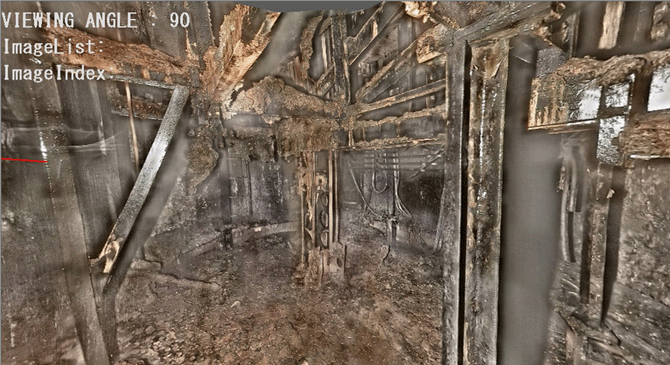
The contents of the three reactors is still largely a mystery. Little is known, for instance, about the melted fuel’s condition or exactly where it’s located in the reactors. Not even a spoonful of the fuel has been removed
About 880 tons of melted nuclear fuel remain inside the three damaged reactors, and Japanese officials say removing it would take 30-40 years. Experts call that timeline overly optimistic. The amount of melted fuel is 10 times that removed from Three Mile Island following its 1979 partial core melt.
MARI YAMAGUCHI, TOKYO, THE ASSOCIATED PRESS, March 11, 2024, https://www.theglobeandmail.com/world/article-conditions-inside-fukushimas-melted-nuclear-reactors-still-unclear-13/—
Japan on Monday marked 13 years since a massive earthquake and tsunami hit the country’s northern coasts. Nearly 20,000 people died, whole towns were wiped out and the Fukushima Daiichi nuclear power plant was destroyed, creating deep fears of radiation that linger today. As the nation observes the anniversary, the AP explains what is happening now at the plant and in neighboring areas.
What happened 13 years ago?
A magnitude 9.0 earthquake struck on March 11, 2011, causing a tsunami that battered northern coastal towns in Iwate, Miyagi and Fukushima prefectures. The tsunami, which topped 15 meters (50 feet) in some areas, slammed into the nuclear plant, destroying its power supply and fuel cooling systems, and causing meltdowns at reactors No. 1, 2 and 3.
Hydrogen explosions caused massive radiation leaks and contamination in the area.
The operator, Tokyo Electric Power Company Holdings, says that the tsunami couldn’t have been anticipated. Government and independent investigations and some court decisions have said the accident was the result of human error, safety negligence, lax oversight by regulators and collusion.
Japan has since introduced stricter safety standards and at one point shifted to a nuclear energy phaseout. Prime Minister Fumio Kishida’s government reversed that policy and has accelerated restarts of workable reactors to maintain nuclear power as a main source of Japan’s power supply.
A deadly Jan. 1 earthquake in Japan’s northcentral region destroyed many homes and roads but didn’t damage an idled nuclear power plant. Even so, it caused worry that current evacuation plans that solely focus on radiation leaks could be unworkable.
The nation marked a moment of silence at 2:46 p.m. Monday, with Kishida attending a memorial in Fukushima.
What happened to people in the area?
About 20,000 of more than 160,000 evacuated residents across Fukushima still haven’t returned home.
Decontamination work before the Tokyo Olympics meant to showcase Fukushima’s recovery led to the elimination of some no-go zones, but they remain in seven of 12 towns that had been fully or partially off-limits.
In Futaba, the hardest-hit town and a co-host of the Fukushima Daiichi plant, a small area was opened in 2022. About 100 people, or 1.5% percent of the pre-disaster population, have returned to live. The other host town, Okuma, which along with Futaba sacrificed part of its land to build an interim storage site for nuclear waste gathered from the decontamination, has seen 6% of its former residents return.
Annual surveys show the majority of evacuees have no intention of returning home, citing lack of jobs, schools and lost communities, as well as radiation concerns.
Residents who have raised radiation worries or linked it to their health problems have come under attack for hurting Fukushima’s reputation.
The disaster-hit towns, including those in Iwate and Miyagi prefectures, have seen sharp population drops.
Fukushima Gov. Masao Uchibori said on NHK TV that a growing number of young people want to move to Fukushima to open businesses or help in the reconstruction, and he expressed hope that more residents will return.
What about treated radioactive water discharges?
Last August, Fukushima Daiichi began discharging treated water into the sea, and is currently releasing a fourth 7,800-ton batch of treated water. So far, daily seawater sampling results have met safety standards. The plan has faced protests from local fishers and neighboring countries, especially China, which has banned Japanese seafood imports.
Fukushima Daiichi has struggled to handle the contaminated water since the 2011 meltdowns. TEPCO says the start of the process is a milestone and removing the tanks is crucial to make space for facilities needed as decommissioning progresses.
The contaminated cooling water is pumped up, treated and stored in about 1,000 tanks. The government and TEPCO say the water is diluted with massive seawater before release, making it safer than international standards.
What about local fishing?
Despite earlier fears that the water discharge would further hurt Fukushima’s hard-hit fishing industry, they have not damaged its reputation domestically. China’s ban on Japanese seafood, which mostly hit scallop exporters in Hokkaido, apparently prompted Japanese consumers to eat more Fukushima seafood.
Sampling and monitoring by the International Atomic Energy Agency have also boosted confidence in local fish.
Fukushima fishing returned to normal operations in 2021, and the local catch is now about one-fifth of its pre-disaster level because of a decline in the fishing population and smaller catch sizes.
The government has earmarked 10 billion yen ($680 million) to support Fukushima fisheries.
Any progress removing melted fuel?
The contents of the three reactors is still largely a mystery. Little is known, for instance, about the melted fuel’s condition or exactly where it’s located in the reactors. Not even a spoonful of the fuel has been removed.
About 880 tons of melted nuclear fuel remain inside the three damaged reactors, and Japanese officials say removing it would take 30-40 years. Experts call that timeline overly optimistic. The amount of melted fuel is 10 times that removed from Three Mile Island following its 1979 partial core melt.
Robotic probes have glimpsed inside the three reactors, but their investigation has been hampered by technical glitches, high radiation and other complications.
It’s crucial for officials to understand the data from melted debris so they can make a plan to remove it safely. TEPCO aims to get the first sample out later this year from the least-damaged No. 2 reactor.
TEPCO has been trying to get the sample by using a robotic arm. Officials have struggled to get the robot past the wreckage, and hope that by October they can use a simpler device that looks like a fishing rod.
The fuel in the worst-damaged No. 1 reactor mostly fell from the core to the bottom of its primary containment vessel. Some of it penetrated and mixed with the concrete foundation, making removal extremely difficult.
In February, the plant made its first drone flight into the primary containment vessel to investigate the melted debris and examine how the fuel initially fell from the core. But a second day of exploration was canceled because a data transmission robot failed.
Is a 2051 completion possible?
The government has stuck to its initial target for a completed decommissioning by 2051, but it hasn’t defined what that means.
The lack of data, technology and plans on what to do with the radioactive melted fuel and other nuclear waste makes it difficult to understand what’s in store for the plant and surrounding areas when the cleanup ends, according to TEPCO’s decommissioning company chief, Akira Ono.
An overly ambitious schedule could result in unnecessary radiation exposure for plant workers and excess environmental damage, experts say.
March 11 – reflecting on Fukushima

by Linda Pentz Gunter https://beyondnuclearinternational.org/2024/03/10/reflecting-on-fukushima/
The lesson learned should be an end to nuclear power. Japan is going in the opposite direction
On March 11 this year, and every year since 2011, we reflect on what happened on that day at the Fukushima-Daiichi nuclear power plant in Japan — and the impacts that continue. The never-ending tragedy.
The news cycle was 24/7 on the Fukushima nuclear disaster in March 2011. Gradually, the media lost interest. Fresh catastrophes — also human-caused — came to dominate the headlines.
The stories of ongoing harm, of physical and psychic pain, disease and death, displacement, family separation, and lawsuits dismissed or lost, are often told through the megaphones of desperate Japanese mothers, determined not to let such a fate befall another generation. They are the new Hibakusha, the Cassandras of Japan, sounding the warning but doomed to be disbelieved or ignored.
Because there will be another major nuclear disaster. And Japan, shockingly, is lining itself up to be a strong candidate. A country that has now experienced the second worst nuclear disaster of all time, and is heavily seismically active, is seeking not only to reopen its old reactors but to explore building new ones, including small modular reactors.
The only lesson from the Fukushima nuclear disaster that successive Japanese governments seem to have learned is how to minimize, cover-up and even dismiss and deny its devastating environmental and health effects.
It has done this by consistently whitewashing the Fukushima aftermath — holding the Summer Olympics (delayed a year only due to covid, not the unacceptable radiation levels); moving people back into still contaminated areas; ascribing the high thyroid cancer rates to increased testing; forbidding schools to teach children about the harms of radiation; and, of course, pouring radioactive water from the site into the Pacific Ocean so the unsightly waste water storage casks — a perpetual reminder of the continued build-up of radioactive water at the site — will vanish from view along with the bad PR.
Japan got another reminder of just what kind of gamble it is taking when a 7.6 magnitude earthquake struck the Noto Peninsula on January 1st of this year, not far from the Shika nuclear power plant. Buildings fell, 100,000 people were evacuated and tsunami warnings were posted. Conflicting stories emerged as to whether the Shika reactors, mercifully shut down at the time, had suffered lasting damage or whether there were radioactive spills. Area residents have demanded an investigation.
Catastrophe was averted because luck prevailed. Next time, it might not.
All of this should serve as a warning and not only to Japan of course. It doesn’t take an earthquake or a tsunami— or even a war as we are seeing in Ukraine whose reactors remain at perpetual risk —to cause a nuclear disaster. The safety margins are so fragile at nuclear power plants, that even something as minor as a falling tree limb could set an accident in motion if both offsite and then onsite power is lost to the reactors.
There was no war or earthquake or tsunami in Ukraine in 1986 when Chernobyl Unit 4 exploded. Nor in Pennsylvania in 1979 when the Three Mile Island Unit 2 reactor melted down. Nor in New Mexico later in 1979 when 90 million gallons of radioactive liquid and eleven hundred tons of solid mill waste burst from the Church Rock uranium mill tailings pond, permanently contaminating the Puerto River.
What was there, on each occasion, were human beings who made catastrophic mistakes with a highly dangerous, obsolete technology that even on a good day, causes harm to human health and on a bad one can leave a deadly, longlasting legacy as we have seen in Fukushima.
All of those human errors were preventable. And they still are — provided we remove the object of fallible human responsibility: inherently dangerous nuclear power plants.
The only worthy legacy of the Fukushima disaster, now 13 years on and still going, is to abandon the use of nuclear technology permanently.
Linda Pentz Gunter is the international specialist at Beyond Nuclear and writes for and edits Beyond Nuclear International. All opinions are her own.
Could Fukushima’s radioactive water pose lasting threat to humans and the environment?
studies have highlighted how tritium can be absorbed into sediments and soils, raising concerns about its potential transfer to the water cycle and the food web.
research showing that fish have transported radioactive particles generated by the Fukushima incident far and wide. Like a number of other nuclear accidents before it, that makes what happened at Fukushima a global concern.”
by Alan Williams, University of Plymouth, https://phys.org/news/2024-03-fukushima-radioactive-pose-threat-humans.html
The meltdown of Japan’s Fukushima Daiichi power plant, caused by the devastating earthquake and tsunami of March 2011, represents the most severe nuclear power accident of the 21st century so far.
However, a new study highlights how the decision by the Japanese government to begin releasing the radioactive water stored within it—a decision approved by the International Atomic Energy Agency (IAEA)—has generated scientific and public debate, given its potential to cause environmental harm for decades to come.
Writing in the journal Environmental Science and Technology, researchers say the water cannot be stored indefinitely due to the ongoing risk of earthquakes and tsunamis in the region.
But they say not enough is known about the long-term impacts of tritium—the primary radionuclide present, with a half-life of 12.6 years—to ascertain if the release of more than one million tons of water can be considered safe or not.
As a result, they have called for assurances that regular monitoring will be carried out in different components of the region’s ecosystem to examine any impacts the release might be having on the environment.
They have also suggested more evidence is needed about the future effects of tritium in the presence of multiple and emerging stressors, such as hypoxia, rising ocean temperatures, and microplastics, given that environmental contamination can occur in many combinations.
The study was carried out at the University of Plymouth, where researchers have been examining the environmental impacts of radioactive material for almost three decades.
“The Japanese tsunami of 2011 was devastating for people living along this whole coastline. The presence of a nuclear power plant within the region left a lasting threat, and this study highlights some of the complex challenges that need managing and scientific questions that still need addressing.”
“Being in a region prone to earthquakes and tsunamis, there is an obvious danger in simply storing radioactive water there indefinitely. But based on our research, not enough is known about the impacts of tritium on both environmental and human health to say that releasing the water into the ocean is completely safe,” says Awadhesh Jha, professor in genetic toxicology and ecotoxicology and corresponding author on the research.
The new study includes a review of existing literature on the behavior of tritium in the environment and studies that have assessed its impact on individual species.
That includes studies that have highlighted how tritium can be absorbed into sediments and soils, raising concerns about its potential transfer to the water cycle and the food web.
There has also been research showing that tritium can cause DNA damage to certain fish species, which could impact their physical and reproductive fitness and—ultimately—the genetic diversity of a population.
However, the researchers say there is little data available on the distribution, behavior, and potential effects of tritiated water and organically-bound tritium, and therefore assessing the broad risks is almost impossible.
They also say the Fukushima situation cannot be compared with the Chornobyl accident, as some authorities have attempted to do, given the differing geographical locations of the two plants and the fact the long-term environmental impacts of Chornobyl are still being debated.
“Through our study, we have found research showing that fish have transported radioactive particles generated by the Fukushima incident far and wide. Like a number of other nuclear accidents before it, that makes what happened at Fukushima a global concern.”
“As such, we urgently need global research into the impacts of tritium—and how they might be managed—especially with the nuclear power industry set to expand significantly. If it does indeed expand, the construction of nuclear power plants, especially in coastal regions, should also take into account worst-case scenarios of flooding, earthquakes, and tsunamis as part of a fundamental goal to minimize radioactive discharges to the environment,” says Professor Jha.
13 Years On: Fukushima Governor Urges State to Clarify Soil Policy

Nippon Mar 9, 2024 1
Fukushima, March 9 (Jiji Press)–Fukushima Governor Masao Uchibori wants the Japanese government to clarify its policy on transferring soil from decontamination work following the March 2011 nuclear accident to final disposal sites outside the northeastern Japan prefecture.
“We’ll seize every opportunity to strongly call on the state to present a specific policy and a road map swiftly, in order not to create a blank period,” he has said in a recent interview.
Fukushima has decided to host interim storage facilities for the soil on the premise that the soil is stored at final disposal sites to be created outside the prefecture, Uchibori noted. This is the central government’s “legally prescribed responsibility,” he said.
A considerable amount of time will be needed to realize the soil transfer because there are a host of issues, including the selection of final disposal sites, but the remaining time is limited, Uchibori said………. https://www.nippon.com/en/news/yjj2024030701079/13-years-on-fukushima-governor-urges-state-to-clarify-soil-policy.html
Release of fourth batch of Fukushima treated radioactive water begins
Japan Times, 28 Feb 24
The operator of the crippled Fukushima No. 1 nuclear power plant on Wednesday started releasing a fourth batch of treated radioactive water into the sea, in what will be the last discharge for the fiscal year ending March.
As in previous rounds, Tokyo Electric Power Company Holdings (Tepco) will discharge 7,800 metric tons of treated water over about 17 days, having confirmed that the radioactivity level of the latest batch of water meets the standards set by the government and the utility.
China, which opposes the water release, has banned Japanese seafood imports since the first discharge in late August. The two countries have engaged in informal discussions to resolve the matter, but no substantial progress has been made……………………….. more https://www.japantimes.co.jp/news/2024/02/28/japan/society/fukushima-radioactive-water-fourth-release/
Minister urges TEPCO to ensure nuclear safety measures
By Jiang Xueqing in Tokyo 2024-02-22 , https://global.chinadaily.com.cn/a/202402/22/WS65d6a0fca31082fc043b86ea.html
Japan’s industry minister said on Wednesday a recent radioactive water leak at the wrecked Fukushima Daiichi Nuclear Power Plant earlier this month has caused anxiety in Japan and abroad and will hinder the completion of the decommissioning of the plant.
Ken Saito, minister of economy, trade and industry, summoned Tomoaki Kobayakawa, president of the Tokyo Electric Power Company, operator of the Fukushima plant, to his office on Wednesday, urging TEPCO to take the incident as a serious management issue and ensure thorough safety measures.
Furthermore, Saito requested an analysis to identify any common factors contributing to a series of troubles for the purpose of preventing recurrence. He also urged the utilization of digital technology to prevent human errors, Japanese public broadcaster NHK reported.
On Feb 7, TEPCO informed the International Atomic Energy Agency that water containing radioactive materials was found to have leaked from a caesium absorption tower at the plant.
TEPCO calculated that the leakage totaled around 5.5 cubic meters of water containing an estimated 0.022 terabecquerel of radioactive substances, according to the IAEA.
The water was assessed to have leaked from a valve left open during cleaning work at the absorption tower.
On Oct 26 last year, TEPCO announced that two male workers in their 20s and 40s, who were exposed to nuclear-contaminated water while cleaning pipes at the Advanced Liquid Processing System at the Fukushima nuclear power plant, have been hospitalized for decontamination and observation.
The two workers, employees of a partner firm of TEPCO, were engaged in the cleaning process along with three other male workers. During the operation, a hose used to transfer nuclear-contaminated water to a tank went loose, leading to the splashing of approximately 100 milliliters of radioactive water, as reported by The Asahi Shimbun, one of the major daily newspapers in Japan.
In the process of handling the Fukushima nuclear-contaminated water, accidents have occurred repeatedly, fully exposing the chaotic and disorderly internal management of TEPCO, a spokesperson of the Chinese Embassy in Japan said on Feb 8.
The accidents also demonstrate the inadequate and ineffective supervision measures by the Japanese government and once again prove the lack of long-term reliability of the nuclear-contaminated water treatment equipment, highlighting the necessity for international supervision, he said.
Japan has so far dumped approximately 23,400 cubic meters of nuclear-contaminated water from the Fukushima nuclear power plant into the sea since August 2023 in three rounds. The fourth round is scheduled to commence in late February.
The spokesperson of the Chinese Embassy in Japan said the discharge of nuclear-contaminated water from Fukushima into the sea concerns the health of all mankind, the global marine environment and international public interests.
“We once again earnestly urge Japan to take seriously the concerns of neighboring countries and the international community; engage in sincere consultations with relevant stakeholders; fully cooperate in establishing effective international monitoring arrangements with substantive participation from stakeholders; and handle nuclear-contaminated water in a scientific, safe and transparent manner,” he said.
Latest Fukushima leak exposes failures in nuclear crisis management
Xinhua 2024-02-12, https://www.chinadaily.com.cn/a/202402/12/WS65c9eda7a3104efcbdaeab75.html
In a chilling revelation that sent shockwaves through the world, a new nuclear waste leak has unearthed the gaping crack in Japan’s professed claim of responsible handling the accident at the Fukushima Daiichi nuclear power plant.
The leakage of about 5.5 tons of water containing radioactive materials from the plant also highlights the need for international supervision of Japan’s controversial discharge of the Fukushima nuclear-contaminated water into the ocean.
It is estimated that 22 billion becquerels of radioactive materials such as cesium and strontium are contained in the leaked water, and the plant’s operator, Tokyo Electric Power Company (TEPCO), claimed on Wednesday that monitoring of a nearby drainage channel did not show any significant radiation level changes.
This begs the question: What constitutes a “significant” level?
Nearly 13 years after the catastrophic earthquake and tsunami, recurring leaking incidents still hint at the utility’s mismanagement and the Japanese government’s inadequacy in overseeing it.
On Oct. 26, 2023, just one week before Japan started the third round of release, two men were hospitalized after being accidentally splashed with radioactive liquid at the plant. On Aug. 11, 2023, days before the first round of discharge started, TEPCO found leaks in a hose used to transfer nuclear-contaminated water, which, as it said, would not affect the discharge plan.
Even more concerning, the causes of these incidents have fully exposed the chaos and disorder of TEPCO’s internal management. The leak on Wednesday stemmed from a valve left open during cleaning operations, while the October incident resulted from a loose hose channeling contaminated solutions. In August, TEPCO attributed a leak to cracks approximately four centimeters in length found in a hose.
The deficiencies in the fundamental equipment raise questions about the potential for similar occurrences and whether TEPCO conducts regular inspections of its equipment.
While TEPCO this time claimed that there is no risk to the public and that the surrounding environment remains unaffected by the leak, its history of cover-ups and opacity has eroded public trust.
For instance, it took TEPCO over two years after the 2011 tsunami to acknowledge that radioactive tritium had leaked into the Pacific Ocean, contradicting its initial assertions that the toxic water had been contained within the plant’s premises.
Also, in February 2015, TEPCO admitted that since April 2014, it had been aware of radioactive substances from a rainwater drainage ditch linked to one of its buildings being leaked into the sea when it rained.
Until meaningful reforms are enacted, the specter of Fukushima will continue to haunt Japan, serving as a sober reminder of the country’s failure to protect its citizens and the broader environment.
5.5 tons of radioactive water leaked from Fukushima nuclear plant: media
China Daily, Xinhua 2024-02-07
TOKYO — Approximately 5.5 tons of water containing radioactive materials have leaked from an equipment at Japan’s Fukushima Daiichi nuclear power plant, local media reported Wednesday.
At about 8:53 am local time on Wednesday, workers discovered water leaking from the outlet of a device used to purify nuclear-contaminated water during the inspection of the equipment, Fukushima Central Television reported, citing the plant’s operator Tokyo Electric Power Company (TEPCO).
TEPCO estimates that the amount of water that leaked was approximately 5.5 tons, which may contain 22 billion becquerels of radioactive materials such as cesium and strontium, the report said.
Most of the leaked water appeared to have seeped into the soil, but monitoring of a nearby drainage channel did not show any significant radiation level changes, it added.
TEPCO has made the area where the water was leaked a no-go area……………………………. more https://www.chinadaily.com.cn/a/202402/07/WS65c35af9a3104efcbdaea423.html
Still no end in sight for Fukushima nuke plant decommissioning work
January 27, 2024 (Mainichi Japan), https://mainichi.jp/english/articles/20240127/p2a/00m/0na/003000c
OKUMA, Fukushima — Nearly 13 years since the triple-meltdown following the March 2011 Great East Japan Earthquake and tsunami, it is still unclear when decommissioning of the Fukushima Daiichi Nuclear Power Station’s reactors will be completed.
Operator Tokyo Electric Power Company (TEPCO) Holdings Inc. showed the power plant to Mainichi Shimbun reporters on Jan. 26 ahead of the 13th anniversary of the nuclear accident. Radiation levels in many areas are almost normal, and people can move in ordinary work clothes. However, the most difficult part of the work, retrieving melted nuclear fuel, has been a challenge. The management of solid waste, which is increasing daily, also remains an issue. The decommissioning of the reactors, which is estimated to take up to 40 years, is still far from complete.
Meltdowns occurred in reactor Nos. 1, 2 and 3. The start of nuclear fuel debris removal at reactor No. 2, which had been scheduled to begin by the end of fiscal 2023, has just been postponed for the third time. Reactor buildings are still inaccessible due to high radiation, meaning the work has to be done remotely.
More than 1,000 tanks for storing treated wastewater are lined up next to reactor Nos. 1 through 4, and new facilities to stably store and process approximately 520,000 cubic meters of existing solid waste are being built by reactor Nos. 5 and 6.
Treated wastewater began being discharged into the ocean in 2023, and the tanks are gradually being removed, but there is no timetable for the disposal of the solid waste. A TEPCO representative said, “The final issue that remains is how to deal with the radioactive waste that continues to be produced even as the decommissioning of the plant progresses.”
Japanese original by Yui Takahashi, Lifestyle, Science & Environment News Department)
Japan’s Fukushima nuclear plant: further delays for removal of melted fuel debris
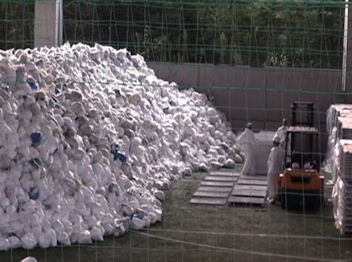
About 880 tons of highly radioactive melted nuclear fuel remain inside the three damaged reactors. Critics say the 30- to 40-year cleanup target set by the government and TEPCO for Fukushima Daiichi is overly optimistic. The damage in each reactor is different and plans need to be formed to accommodate their conditions.
NewsDay, By The Associated Press, January 25, 2024
TOKYO — The operator of the tsunami-hit nuclear plant in Fukushima announced Thursday a delay of several more months before launching a test to remove melted fuel debris from inside one of the reactors, citing problems clearing the way for a robotic arm.
The debris cleanup initially was supposed to be started by 2021, but it has been plagued with delays, underscoring the difficulty of recovering from the plant’s meltdown after a magnitude 9.0 quake and tsunami in March 2011.
The disasters destroyed the Fukushima Daiichi nuclear plant’s power supply and cooling systems, causing three reactors to melt down, and massive amounts of fatally radioactive melted nuclear fuel remain inside to this day.
The government and the Tokyo Electric Power Company Holdings, or TEPCO, initially committed to start removing the melted fuel from inside one of the three damaged reactors within 10 years of the disaster.
In 2019, the government and TEPCO decided to start removing melted fuel debris by the end of 2021 from the No. 2 reactor after a remote-controlled robot successfully clipped and lifted a granule of melted fuel during an internal probe.
But the coronavirus pandemic delayed development of the robotic arm, and the plan was pushed to 2022. Then, glitches with the arm repeatedly have delayed the project since then.
On Thursday, TEPCO officials pushed back the planned start from March to October of this year.
TEPCO officials said that the inside of a planned entryway for the robotic arm is filled with deposits believed to be melted equipment, cables and other debris from the meltdown, and their harder-than-expected removal has delayed the plan.
TEPCO now is considering using a slimmer, telescope-shaped kind of robot to start the debris removal.
About 880 tons of highly radioactive melted nuclear fuel remain inside the three damaged reactors. Critics say the 30- to 40-year cleanup target set by the government and TEPCO for Fukushima Daiichi is overly optimistic. The damage in each reactor is different and plans need to be formed to accommodate their conditions.
TEPCO has previously tried sending robots inside each of the three reactors but got hindered by debris, high radiation and inability to navigate them through the rubble, though they were able to gather some data in recent years.
Getting more details about the melted fuel debris from inside the reactors is crucial for their decommissioning. TEPCO plans to deploy four mini drones and a snake-shaped remote-controlled robot into the No. 1 reactor’s primary containment vessel in February to capture images from the areas where robots have not reached previously……… more https://www.newsday.com/news/nation/Japan-Fukushima-nuclear-plant-melted-fuel-decommissioning-v83291
1 This Month


31st January – Challenging the War Machine – a DECLASSIFIED UK SUMMIT



Website of the Week
Now until to February 10, 2026 Radioactive waste storage in France: the debate is finally open! How to participate?
-
Archives
- January 2026 (211)
- December 2025 (358)
- November 2025 (359)
- October 2025 (377)
- September 2025 (258)
- August 2025 (319)
- July 2025 (230)
- June 2025 (348)
- May 2025 (261)
- April 2025 (305)
- March 2025 (319)
- February 2025 (234)
-
Categories
- 1
- 1 NUCLEAR ISSUES
- business and costs
- climate change
- culture and arts
- ENERGY
- environment
- health
- history
- indigenous issues
- Legal
- marketing of nuclear
- media
- opposition to nuclear
- PERSONAL STORIES
- politics
- politics international
- Religion and ethics
- safety
- secrets,lies and civil liberties
- spinbuster
- technology
- Uranium
- wastes
- weapons and war
- Women
- 2 WORLD
- ACTION
- AFRICA
- Atrocities
- AUSTRALIA
- Christina's notes
- Christina's themes
- culture and arts
- Events
- Fuk 2022
- Fuk 2023
- Fukushima 2017
- Fukushima 2018
- fukushima 2019
- Fukushima 2020
- Fukushima 2021
- general
- global warming
- Humour (God we need it)
- Nuclear
- RARE EARTHS
- Reference
- resources – print
- Resources -audiovicual
- Weekly Newsletter
- World
- World Nuclear
- YouTube
-
RSS
Entries RSS
Comments RSS
 nuclear-news