Fukushima resident still can’t return home 10 years after nuclear disaster
|
Fukushima resident still can’t return home 10 years after nuclear disaster, March 3,
 2021 (Mainichi Japan) FUKUSHIMA — Yasuko Sasaki’s house lies just 30 kilometers away from the Fukushima Daiichi Nuclear Power Station, where a meltdown took place following the 2011 Great East Japan Earthquake and tsunami. On Feb. 1, Sasaki temporarily returned to clean up leaves that had fallen on the grave at the back of the property. 2021 (Mainichi Japan) FUKUSHIMA — Yasuko Sasaki’s house lies just 30 kilometers away from the Fukushima Daiichi Nuclear Power Station, where a meltdown took place following the 2011 Great East Japan Earthquake and tsunami. On Feb. 1, Sasaki temporarily returned to clean up leaves that had fallen on the grave at the back of the property.
Once a month, the 66-year-old visits her house in the Tsushima district in the Fukushima Prefecture town of Namie from the prefectural village of Otama — 50 kilometers away — where she is currently evacuated to. It has been almost 10 years since she became unable to live at her own residence. Due to high radiation levels, Tsushima was designated a “difficult to return” zone, where restrictions for entering are in place, and people are barred from living there. Homes without their owners living in them have been ransacked by wild animals. While Sasaki has been away, wild animals chewed up stuffed turtle and bird specimens kept at her house. She continues to clean her house so that she “can return at any time.”………… The Reconstruction Design Council in response to the Great East Japan Earthquake, an advisory panel to the prime minister, deemed that “recovery from the devastating disaster will not be completed until Fukushima soil recovers.” The government has set up Specified Reconstruction and Revitalization Bases within difficult-to-return zones and is carrying out decontamination work and developing infrastructure so that people can reside in the area once again. It aims to lift evacuation orders for the bases in between 2022 and 2023. However, the areas designated as reconstruction bases are limited. In the Tsushima district, a 153-hectare space surrounding the town hall’s Tsushima branch is designated — just 1.6% of the whole district. Of the 532 households in the district at the time of the disaster, 80% including Sasaki’s house are not included in the reconstruction base area, and there are no prospects for these people to be able to return to their homes. Sasaki said, “Everything’s still the same, even 10 years after the (nuclear) disaster. I wonder for how many more years I’ll have to continue cleaning (my house).” (Japanese original by Rikka Teramachi, Fukushima Bureau, Suyon Kimu, City News Department) https://mainichi.jp/english/articles/20210302/p2a/00m/0na/012000c |
|
|
Fukushima nuclear containment system failed. This kind of disaster will happen again

The supposedly failsafe containment system at Fukushima Dai-ichi Unit Three failed and released massive amounts of radioactivity into the local environment and the worldwide atmosphere. Such an enormous human tragedy will happen again at an atomic power reactor somewhere in the world.
Think about that. No nuke in the world can withstand a supersonic shockwave, and here is the evidence on international TV and across the Internet that it occurred in 2011, as Fairewinds said.
Japan’s Fukushima Meltdowns (New Video): Much Still Unknown 10 Years Later, https://www.fairewinds.org/demystify/japans-fukushima-meltdowns-10-years-later-new-video-shows-much-still-unknown February 17, 2021 By The Fairewinds Crew
As we approach the 10th commemoration of Japan’s March 11, 2011, Fukushima Dai-ichi triple meltdowns, organizations around the globe, including environmental groups, nonprofits (like Fairewinds Energy Education), engineering and pronuclear organizations, and media organizations like Japan’s Nippon TV, will release new information.
Some of this information is really new and recently uncovered. Other media events will bring people together to share and discuss what these major meltdowns meant to the people of Japan and communities worldwide. And sometimes, these media events are just a corporation or an agency marketing new nukes by putting their positive spin on nuclear power rather than acknowledging its dangers. For example, nuclear zealots continue to claim that atomic power reactors are safer for workers than working at Toys R Us, and reactors cannot meltdown and certainly will never blow up. The Fukushima disaster proved them wrong, but yet they persist!
As Fukushima Daichi Units One, Two, and Three were melting down, Nippon TV, the largest and flagship station of the Nippon Television Network System, dispatched television film crews to monitor the events as they unfolded. No one in the world has ever captured the core melting down, but Nippon TV captured two meltdown-induced explosions on film.
Now, Nippon TV has just released a new digital copy of the Fukushima Dai-ichi Unit One and Unit Three explosions (see video below ). Fukushima Centralt TV/NipponTv
At Fairewinds, we congratulate Nippon for the excellent work they did to create the original initial explosion footage in 2011 and on this essential remastered copy just completed in 2021. Nippon’s newly released digital footage is important historically and technically.
That said, the new video footage and Nippon’s ensuing interview with Tokyo Electric Company (TEPCO), the atomic power corporation that owns all six Fukushima Dai-ichi nuclear power plants, contain three glaring technical errors.
- First, Fairewinds continues to have significant concerns about TEPCO’s technical interpretations of these explosions’ cause.
- Second, TEPCO is blaming newly uncovered lethal radioactivity sitting at the top of the containment structure on the supersonic shockwave.
- Third, TEPCO does not discuss that there likely was a second explosion that occurred 3 seconds after the first.
Understanding the mechanics behind explosions is critical to understanding what happened at Fukushima and what such a danger means to nuclear power anywhere in the world.
- There are two explosion methods: a deflagration shock wave, which happened at Fukushima Unit One and Three Mile Island in Middletown, Pennsylvania, in the United States. While still destructive, a deflagration shockwave travels at subsonic speeds (less than 760 miles an hour, the speed of sound).
-
- The second type of explosion is called a detonation shockwave. It is much more destructive because it travels at supersonic speeds.
In 2011, with Geoff Sutton’s assistance from the United Kingdom, Fairewinds clearly showed that the Unit Three explosion was the more destructive detonation shockwave while Unit One’s was a deflagration.
Does it matter whether or not an explosion at Fukushima was a detonation or a deflagration? Absolutely! Hydrogen gas at room (atmospheric) pressure cannot create a supersonic shockwave. Fairewinds’s 2011 findings that a detonation shockwave occurred should have changed the scientific and nuclear engineering analyses of such events worldwide.
No nuclear power radioactive release containment system built anywhere in the world will withstand a detonation shockwave!
The fact that a detonation shockwave did occur is something the nuclear industry has ignored since Fairewinds’ Arnie Gundersen and Geoff Sutton identified it did happen at Fukushima Unit Three in 2011.
The nuke industry and its regulatory handlers do not believe that a supersonic shockwave explosion will ever happen in a nuclear power plant. If they admitted that an atomic reactor containment system would fail by detonation, the nuke industry would also have to acknowledge that nuke plants’ containment systems are not failsafe. Nuclear power containment systems will fail when there is a supersonic shockwave explosion.
The supposedly failsafe containment system at Fukushima Dai-ichi Unit Three failed and released massive amounts of radioactivity into the local environment and the worldwide atmosphere. Such an enormous human tragedy will happen again at an atomic power reactor somewhere in the world.
Think about that. No nuke in the world can withstand a supersonic shockwave, and here is the evidence on international TV and across the Internet that it occurred in 2011, as Fairewinds said.
- The second type of explosion is called a detonation shockwave. It is much more destructive because it travels at supersonic speeds.
- Fairewinds second area of concern about TEPCO’s analysis on this latest NIPPON video is the linkage of recently discovered lethal radiation levels at the top of the containment to the supersonic detonation. Ten years ago, immediately following the three meltdowns at Fukushima in 2011, Fairewinds identified superheated highly radioactive gases escaping from this same area that TEPCO suddenly claims it has just uncovered in 2021. The containment was leaking before the explosion and continued to spread radioactivity after the blast. Still, no nuclear engineer or scientist is surprised that significant contamination continues to leak from the damaged containment system. The containment was breached, which allowed this radiation to leak! However, there is no evidence to suggest that the explosion is the cause of that leak since the containment was leaking before the supersonic shockwave.
- Finally, Nippon’s remastered video vividly shows Fairewinds’ third concern. The eye is drawn to the detonation’s sudden flash and the ensuing upward-moving black cloud of rubble. Now, look again. About three seconds after the initial vertical blast, a white cloud suddenly moves horizontally at ground level to the north. (see picture on original -comparing the first and second plumes)
- Community-volunteer citizen-scientists Arnie met while collecting radioactive samples in Fukushima prefecture say they heard more than one explosion. They said it sounded like the snapping of bamboo burning in a fire. This new video shows that there were at least two explosions, one vertically and one horizontally. As more data becomes available, Fairewinds Energy Education will put forward the reasons why, but as of now, the entire explosion sequence at Fukushima Unit Three is something the nuclear industry zealots want to ignore. They continue to hope that history will not repeat itself while they continue to build and operate more lethally radioactive and highly risky atomic reactors.
- Throughout the Nippon video, the announcer reverentially refers to TEPCO and the Japanese Regulators as “the authorities” and “officials”. This kind of public propaganda occurs because TEPCO, the Japanese Government and its regulators, and the International Atomic Energy Agency (IAEA) have successfully captured the Japanese media.
What was called for in 2011 and is still desperately required in 2021 are independent experts. These would be people from outside TEPCO, its captive regulators, or its allies embedded in the nuclear industry. Once again, Fairewinds calls for an independent consortium of experts who would be able to give a frank assessment of the magnitude and extent of the problems that lie ahead for the failed Fukushima cleanup.
Did you know that in 2013, Fairewinds and 16 other international experts coauthored a letter to the United Nations (UN) asking it to establish this independent panel? The UN never had the courtesy even to acknowledge that it received these serious requests and recommendations. Such machinations by TEPCO, the Japanese Government, and the international nuclear industry are indeed a human rights and environmental injustice issue!
Ten years have passed, yet Japan’s citizens still wait for independent oversight of the Fukushima disaster. The people of Japan deserve better than the authorities covering up the truth and lying to them.
The Fukushima nuclear catastrophe – far from over, 10 years later

10 years since the Fukushima nuclear disaster, Briefing paper by Dr. Philip White, Feb. 2021 https://nuclear.foe.org.au/wp-content/uploads/White-2021-Fukushima10-BackgroundBriefing.pdf
From the introduction:
Ten years ago, three of the nuclear reactors at the Fukushima Daiichi Nuclear Power Station suffered melt downs in the days following a Magnitude 9 earthquake that struck off the northeast coast of Japan on 11 March 2011. Along with the 1986 nuclear accident at the Chernobyl Nuclear Power Station in the former Soviet Union, it was one of the two worst nuclear power accidents in history.
On the tenth anniversary, it is important that we remember what happened then and what has happened since. It is in the interests of those who caused the accident that we forget. We must refuse to do so, for the sake of the victims and to prevent more disasters in future.
The most important take-home message is that the disaster is far from over. In order to win the bid for the (now postponed) 2020 Olympics, then Prime Minister Abe asserted that the nuclear accident was ‘under control’. The government now calls the games (if they are ever held) ‘the recovery Olympics’, with the torch relay route running through Fukushima Prefecture. But despite the efforts of the Japanese Government and the nuclear industry to lull the Japanese public and the world into a false sense of security, the fact is that radioactive contamination remains and many people continue to suffer. Even where compensation is available, nothing can undo the damage done to people’s lives and to the environment.
It is also important to understand that the Fukushima Daichi nuclear accident was by no means the worst-case scenario for nuclear power. But for a few remarkable pieces of good fortune, the disaster could have been far worse.
This paper summarises some of the key issues. In brief:
- thousands of people are still classified as evacuees;
- they have not been adequately compensated;
- the radioactive fallout is still a major problem;
- decommissioning of the nuclear reactors will take decades and has barely begun;
- the total cost of decommissioning, decontamination and compensation is astronomical;
- the culprits have not been punished; and
- nuclear vested interests are back in charge of Japan’s energy policy.
Fukushima evacuees on return visits find radiation signs confusing
Radiation criteria sow confusion for evacuees, https://www.japantimes.co.jp/news/2021/02/26/national/fukushima-radiation-criteria/—, 25 Feb 21, New Year holiday, with people avoiding traveling back to see their relatives due to the novel coronavirus pandemic.
Roadside signs show the radiation levels of areas near the no-go zones put in place after meltdowns in 2011 at the Fukushima No. 1 nuclear plant, reflecting the fact that, even after 10 years, Fukushima residents are unable to return to their homes.
The no-go zones, which are considered uninhabitable for the foreseeable future due to high radiation levels, stretch through six Fukushima towns and villages: Tomioka, Okuma, Futaba, Namie, Katsurao and Iitate. Parts of those zones are now designated as special reconstruction districts, where the government will concentrate its decontamination efforts so that residents can return to their homes in the future.
A decade after the tsunami-triggered nuclear disaster, decontaminating the areas damaged by the fallout is a crucial part of the reconstruction that will pave the way for evacuees to come back to their homes and resume the life they had before the disaster.
But two figures of radiation exposure levels — 20 millisieverts a year and 1 millisievert a year — that the government provides as safety criteria are causing confusion among residents, triggering criticism of what could be called a double standard.
One of the criteria for the government to lift evacuation orders is whether the area’s annual cumulative radiation level has become 20 millisieverts or below, based on a recommendation from the nongovernmental International Commission on Radiological Protection.
When there is a nuclear disaster similar to that at the Fukushima No. 1 nuclear power plant, the ICRP recommends that annual radiation exposure should be limited to between 20 to 100 millisieverts immediately after the disaster. It then recommends the exposure is lowered to between 1 to 20 millisieverts during the reconstruction period.
As the minimum recommended exposure level right after a disaster, the 20 millisieverts mark became the radiation level yardstick for the central government to order the evacuation of a certain area after the nuclear meltdowns.
Meanwhile, the government has set up a long-term decontamination goal of reducing the radiation levels of contaminated areas to an annual 1 millisievert and below. This is to keep a lifetime exposure level below 100 millisievert — the level at which it starts to affect one’s health.
Therefore, the government stipulated the annual 1 millisievert exposure level in its reconstruction policy plan for Fukushima approved by the Cabinet in July 2012. The Environment Ministry aims to keep radiation levels in the special reconstruction district under 1 millisievert as a long-term goal.
However, the no-go zones had been above 50 millisieverts on an annual basis immediately after the nuclear meltdowns. The radiation level is on the decline with natural attenuation of radioactive cesium as well as weathering effects, but there are still patches with high radiation levels.
Even within the no-go zones, there is no easy way to carry out decontamination. Typically it is done by mowing lawns, raking up fallen leaves, washing down roads and other surfaces with a high-pressure water hose, and wiping off the walls and roofs of buildings and housing.
“It’s not easy to bring down radiation levels to 1 millisievert or below just with decontamination,” said an Environment Ministry official in charge.
In Article 1 of the radiation decontamination legislation established after the nuclear disaster, it is stipulated that the purpose of decontamination is to “minimize the health risks of radioactive exposure as much as possible.”
Despite the criteria for easing evacuation orders and the long-term goal on bringing down radiation levels, it is unclear how the government can lower radiation levels to 1 millisievert after evacuation orders are lifted for no-go zones.
The two figures are creating a confusion among local residents, who are torn between the desire to return to their homes and concerns over the radiation level.
“I won’t feel safe until annual radiation levels are below 1 millisievert,” one resident said, while another said, “Can you say for sure that an annual exposure of 20 millisieverts won’t affect our health in the future?”
Fukushima nuclear mess 2021 – the tasks ahead
“………..Decommissioning and contaminated water management
The work to decommission the plants, deal with contaminated water and solid waste, and remediate the affected areas is immense. A “Mid-and-Long Term Roadmap”2 was developed soon after the disaster to set out how this will be achieved. Also, to facilitate decommissioning units 1-6, and dealing with contaminated water, TEPCO announced, at the end of 2013 the establishment of an internal entity: the Fukushima Daiichi Decontamination & Decommissioning Engineering Company, which commenced operations in April 2014. The entire decommissioning process will take 30–40 years, and, as noted above, the volume of tasks is gigantic. Therefore, the Government of Japan and TEPCO have prioritised each task and set the goal to achieve them. Essentially, it is a continuous risk reduction activity to protect the people and the environment from the risks associated with radioactive substances by:
- removing spent fuel and retrieval of fuel debris from the reactor buildings;
- establishing measures to deal with contaminated water; and
- establishing measures to deal with radioactive waste material.
Fuel removal from the reactor buildings
In the Fukushima Daiichi design of reactor, used and new fuel rod assemblies are stored in the upper part of the reactor. The used fuel rods are highly radioactive and continue to generate heat, and thus require continued cooling.
Depending on the degree of damage, the process of removing the fuel assemblies presents different challenges in each of the reactors. For example, one of the significant challenges is to firstly remove the large quantities of rubble caused by the hydrogen explosions. As noted above, reactors 5 and 6 were shut down at the time of the accident. The reactor cores were successfully cooled, and thus suffered no damage. Given that the conditions of the buildings and the equipment for storing the fuel are stable, and risks of causing any problem in the decommissioning process are estimated to be low compared to the other units, the fuel assemblies of units 5 and 6 continue to be safely stored in the spent fuel pool in each building for the time being. The next step will be to carefully remove the fuel from the fuel pools in units 5 and 6 without impact on fuel removal from units 1, 2 and 3.
All the remaining units are going through a number of stages to achieve fuel removal. They differ slightly for each unit, but essentially the stages are: survey of internal state, removal of rubble, installation of fuel handling facility, and removal of fuel. By way of example, the position regarding unit 3 is shown in Figure 3 [on original].
At unit 3, rubble removal and other work at the upper part of the reactor building, together with installation of a cover for fuel removal was completed in February 2018.
After all preparations were in place, work to remove the 566 fuel rod assemblies, including 52 non-irradiated fuel assemblies, began in April 2019. The process of fuel removal is shown diagrammatically in Figure 4.
The four stages are:
- Fuel rod assemblies stored on fuel racks in the spent fuel pool are transferred in the water one at a time to transport casks, using fuel handling equipment;
- after closing the cask cover and washing, a crane is used to lower the cask to ground level and load into a trailer;
- the cask is transported to a common pool on the site; and
- the fuel in the cask is stored in the common pool.
As of 8 January 2021, 468 assemblies including the 52 non-irradiated fuel assemblies had been removed from unit 3. Measurements of airborne contamination levels are being monitored in the surrounding environment throughout the fuel removal operations. The plan is that all fuel will have been removed from all of the reactor units by sometime during 2031.
Retrieval of fuel debris
At the time of the accident, units 1–3 were operating and had fuel rods loaded in the reactors. After the accident occurred, emergency power was lost, preventing further cooling of the cores. This resulted in overheating and melting of the fuel, together with other substances. Fuel debris refers to this melted fuel and other substances, which have subsequently cooled and solidified, and, of course, still remains dangerously radioactive. This clearly poses a very complex and difficult decommissioning challenge.
Currently the state inside the containment vessel is being confirmed, and various kinds of surveys are being conducted prior to retrieval of the debris. The current aim is to begin retrieval from the first unit (unit 2), and to gradually enlarge the scale of the retrieval. The retrieved fuel debris will be stored in the new storage facility that will be constructed within the site.
The distribution of debris between the pressure and containment vessels differs in each of the 3 units. By way of example, Figure 5 [on original] shows the current position in unit 2. Large amounts of debris are located in the bottom of the pressure vessel, with little in the containment vessel.
The investigation to capture the location of fuel debris inside unit 2 was conducted from 22 March–22 July 2016. This operation applied the muon transmission method, of which effectiveness was demonstrated in its appliance for locating the debris inside unit 1. (Muon transmission method is a technique that uses cosmic ray muons to generate three-dimensional images of volumes using information contained in the Coulomb scattering of the muons.) These operations used a small device developed through a project called “Development of Technology to Detect Fuel Debris inside the Reactor’’.
- establishing measures to deal with contaminated water; and
- establishing measures to deal with radioactive waste material.
…….. Understanding of the situation inside the stricken reactors was urgently needed following the accident in order to prevent the spread of damage and to mitigate
Purification treatment of contaminated water and management of treated water…….
The storage management plan is updated once a year, while reviewing the waste generation forecasts, taking account of progress of the decommissioning work.
For example, the latest edition of the roadmap estimates the amount of solid waste which will be generated over the next 10 years to be 780,000 m3
Fukushima – radioactive water into the sea – a nightmare for fishermen
 A decade after the Fukushima meltdown, this Japanese region faces a new nightmare — radioactive water in the sea, ABC, By North Asia correspondent Jake Sturmer and Yumi Asada in Fukushima, Japan, 21 Feb 21,
I won’t lie — I was a little nervous heading inside the destroyed nuclear plant at the centre of Japan’s 2011 nuclear accident.
It was a rare opportunity to look at how the clean-up effort was going 10 years on.
But weighing on my mind as I headed inside and took a look around was that this was of the most radioactive places on earth right now.
I’ve been inside Fukushima’s no-go zones, where the radiation levels are so high it’s unliveable and overgrown weeds entangle anything in their way — from abandoned homes, cars and even vending machines.
It is always an eerie experience seeing entire towns frozen in time and the stories from those who once called it home are equally chilling.
This is the first time I’ve been in the place responsible for it……..
It’s been 10 years since Japan’s worst nuclear accident, which was triggered by the most powerful earthquake ever recorded in the country and a massive tsunami that wiped out everything in its path.
Yet the aftershocks from the devastating March 11 disaster continue to rattle these parts — the most recent occurring only a week ago.
Japan’s nuclear disaster site is still a hive of activity
When the tsunami hit the nuclear plant in 2011, it cut power and consequently cooling to three operational reactors.
At that point, only flooding the reactors with seawater could have cooled them quickly enough to avoid a meltdown.
But that decision was delayed because of fears it would permanently destroy the reactors.
By the time the government ordered the seawater to be used, it was too late. The nuclear fuel overheated and melted down.
Some of the reactors exploded and the twisted wreckage of the blast is still exposed today.
When I arrived at the Fukushima Daiichi Nuclear Power Plant, I was given a radiation dosimeter and handed a plastic bag containing gloves, a mask and three pairs of socks.
I had been given specific instructions to put on one after the other.
The idea was to prevent any radioactive material from getting onto my pants — if it does, the officials jokingly told me, I’ll have to leave them there.
Once I’m ready, I follow an official through a maze-like path to the Whole Body Counter room.
That’s where I have a scan that measures the existing radiation levels inside my body so they can check how much I have been exposed to throughout the day.
It’s a bustling hive of activity — there are thousands of workers here and as we pass by many say ‘otsukaresama deshita’, a Japanese phrase that loosely translates to ‘thank you for your service’.
We’re accompanied and guided by several officials from the plant’s operator, the Tokyo Electric Power Company (TEPCO)……….
The long process of removing 800 tones of radioactive fuel
TEPCO has spent the last 10 years trying to cool and stabilise the three reactors so that they can eventually start to remove the molten fuel debris that sits inside them.
As we pull up to the destroyed reactors, which contain more than 800 tonnes of highly radioactive molten nuclear fuel, we can see many workers in full protective equipment heavily involved in the decontamination effort.
In the space of just a few steps, radiation levels spike from 80 microsieverts an hour to 100. At the same time, my radiation alarm goes off to tell me I’ve accumulated 0.02 millisieverts of radiation while at the plant.
It’s about the same as a chest x-ray and nothing to be worried about at this stage — but our minders tell us we shouldn’t spend too much more time here.
It’s estimated the full clean-up effort will take another 30-40 years, though some experts feel this is optimistic.
The company was hoping to start removal of the highly radioactive debris this year, but the coronavirus pandemic will prevent that from happening.
“We are planning to remove the fuel debris from Unit 2 using a robot arm and the plan was to make the arm and carry out a performance test in the UK,” TEPCO’s Yoshinori Takahashi told me.
“But because of the coronavirus, the manufacturing process and testing has been delayed.”
The delay could be up to 12 months. But that is not the most pressing issue facing TEPCO.
How do you remove a million tonnes of contaminated water?
All of the water that touches the highly radioactive molten fuel also becomes contaminated.
The water is processed to remove more than 60 different types of radioactive materials from it, but the Advanced Liquid Processing System (ALPS) doesn’t completely purify the water.
The radioactive element, tritium, remains inside all of the stored water, albeit at “low” levels, according to TEPCO.
Currently, 1.2 million tonnes of contaminated water is stored in more than 1,000 tanks spanning the entire power plant facility. But by the end of next year, the tanks and the site will be full.
The Japanese government is now weighing up what to do next.
A panel of experts has recommended disposing of it in the ocean as the most practical option as opposed to releasing it into the air, which TEPCO said would be more difficult to monitor.
Mr Takahashi said tritium was a weak form of radiation and that the water would be released in such limited quantities over such a long period that it would be safe.
But for those who make their living from the part of the ocean where TEPCO is proposing to dump its contaminated water, they fear the damage this poses to their reputation.
That includes Haruo Ono, who has been fishing in Fukushima’s waters for 50 years.
Fisherman worried about what water release will mean for their livelihoods
Although most fishermen are receiving compensation payments from TEPCO to cover their revenue shortfalls, he fears that if contaminated water is released into the ocean, it will finish off the industry for good.
“They say it’s OK to release tritium, but what do consumers think? We can’t sell fish because the consumers say no,” he said.
The 70-year-old is opposed to the scheme and says he’s hoping to watch the decommissioning first-hand over the next 30-40 years…………… https://www.abc.net.au/news/2021-02-21/a-tour-inside-fukushimas-nuclear-plant-10-years-after-accident/13158976
Water leaks indicate new damage at Fukushima nuclear plant
|
Water leaks indicate new damage at Fukushima nuclear plant
By MARI YAMAGUCHI TOKYO (AP) — Cooling water levels have fallen in two reactors at the wrecked Fukushima nuclear plant since a powerful earthquake hit the area last weekend, indicating possible additional damage, its operator said Friday.
New damage could further complicate the plant’s already difficult decommissioning process, which is expected to take decades. Tokyo Electric Power Co. spokesman Keisuke Matsuo said the drop in water levels in the Unit 1 and 3 reactors indicates that the existing damage to their primary containment chambers was worsened by Saturday’s magnitude 7.3 quake, allowing more water to leak. The leaked water is believed to have remained inside the reactor buildings and there is no sign of any outside impact, he said. In 2011, a powerful magnitude 9.1 earthquake and tsunami damaged the Fukushima plant’s cooling systems, causing three reactor cores to melt and nuclear fuel to fall to the bottom of their primary containment vessels. TEPCO will monitor the water and temperatures at the bottom of the containment vessels, Matsuo said. Since the 2011 disaster, cooling water has been escaping constantly from the damaged primary containment vessels into the basements of the reactor buildings. To make up for the loss, additional cooling water has been pumped into the reactors to cool the melted fuel remaining inside them. The recent decline in the water levels indicates that more water than before is leaking out, TEPCO said…….. TEPCO initially reported that there was no abnormality at the plant from Saturday’s quake. Matsuo said the cooling water level fell as much as 70 centimeters (27 inches) in the primary containment chamber of the Unit 1 reactor and about 30 centimeters (11 inches) in Unit 3. TEPCO wasn’t able to determine any decline in Unit 2 because indicators have been taken out to prepare for the removal of melted debris, it said. Increased leakage could require more cooling water to be pumped into the reactors, which would result in more contaminated water that is treated and stored in huge tanks at the plant. TEPCO says its storage capacity of 1.37 million tons will be full next summer. A government panel’s recommendation that it be gradually released into the sea has faced fierce opposition from local residents and a decision is still pending. Meanwhile, the Tokyo High Court on Friday held the government as well as TEPCO accountable for the 2011 nuclear disaster, ordering both to pay about 280 million yen ($2.6 million) in compensation to more than 40 plaintiffs forced to evacuate to Chiba, near Tokyo, for their lost livelihoods and homes. Friday’s decision reverses an earlier ruling by the Chiba district court that excluded the government from responsibility. Judge Yukio Shirai said the government could have foreseen the risk of a massive tsunami and taken measures after a long-term assessment in 2002 of seismic activities. Lawyers representing the plaintiffs welcomed the decision and said it would affect other pending cases. “The case raises the question of whether we should tolerate a society that prioritizes economic activities over people’s lives and health,” said Izutaro Mangi, a lawyer representing the plaintiffs. https://apnews.com/article/water-leaks-fukushima-new-damage-a7ecf765d0233b1cad7332ff9fed5ffe |
|
New study on highly radioactive particles emitted during Fukushima nuclear meltdown
The 10 year anniversary of the Fukushima Daiichi nuclear accident occurs in March. Work just published in the Journal ‘Science of the Total Environment’ documents new, large (> 300 micrometers), highly radioactive particles that were released from one of the damaged Fukushima reactors.
Particles containing radioactive cesium (134+137Cs) were released from the damaged reactors at the Fukushima Daiichi Nuclear Power Plant (FDNPP) during the 2011 nuclear disaster. Small (micrometer-sized) particles (known as CsMPs) were widely distributed, reaching as far as Tokyo. CsMPs have been the subject of many studies in recent years. However, it recently became apparent that larger (>300 micrometers) Cs-containing particles, with much higher levels of activity (~ 105 Bq), were also released from reactor unit 1 that suffered a hydrogen explosion. These particles were deposited within a narrow zone that stretches ~8 km north-northwest of the reactor site. To date, little is known about the composition of these larger particles and their potential environmental and human health impacts.
Now, work just published in the journal Science of the Total Environment characterizes these larger particles at the atomic-scale and reports high levels of activity that exceed 105 Bq.
The particles, reported in the study, were found during a survey of surface soils 3.9 km north-northwest of reactor unit 1
From 31 Cs-particles collected during the sampling campaign, two have given the highest ever particle-associated 134+137Cs activities for materials emitted from the FDNPP (specifically: 6.1 × 10⁵ and 2.5 × 10⁶ Bq, respectively, for the particles, after decay-correction to the date of the FDNPP accident).
The study involved scientists from Japan, Finland, France, the UK, and USA, and was led by Dr. Satoshi Utsunomiya and graduate student Kazuya Morooka (Department of Chemistry, Kyushu University). The team used a combination of advanced analytical techniques (synchrotron-based nano-focus X-ray analysis, secondary ion mass spectrometry, and high-resolution transmission electron microscopy) to fully characterize the particles. The particle with a 134+137Cs activity of 6.1 × 10⁵ Bq was found to be an aggregate of smaller, flakey silicate nanoparticles, which had a glass like structure. This particle likely came from reactor building materials, which were damaged during the Unit 1 hydrogen explosion; then, as the particle formed, it likely adsorbed Cs that had had been volatized from the reactor fuel. The 134+137Cs activity of the other particle exceeded 106 Bq. This particle had a glassy carbon core and a surface that was embedded with other micro-particles, which included a Pb-Sn alloy, fibrous Al-silicate, Ca-carbonate / hydroxide, and quartz (Fig. 2).
The composition of the surface embedded micro-particles likely reflect the composition of airborne particles within the reactor building at the moment of the hydrogen explosion, thus providing a forensic window into the events of March 11th 2011 (Fig. 3). Utsunomiya added, “The new particles from regions close to the damaged reactor provide valuable forensic clues. They give snap-shots of the atmospheric conditions in the reactor building at the time of the hydrogen explosion, and of the physio-chemical phenomena that occurred during reactor meltdown.” He continued, “whilst nearly ten years have passed since the accident, the importance of scientific insights has never been more critical. Clean-up and repatriation of residents continues and a thorough understanding of the contamination forms and their distribution is important for risk assessment and public trust.
Professor Gareth Law (co-author, University of Helsinki) added, “clean-up and decommissioning efforts at the site face difficult challenges, particularly the removal and safe management of accident debris that has very high levels of radioactivity. Therein, prior knowledge of debris composition can help inform safe management approaches”.
Given the high radioactivity associated with the new particles, the project team were also interested in understanding their potential health / dose impacts.
Dr Utsunomiya stated, “Owing to their large size, the health effects of the new particles are likely limited to external radiation hazards during static contact with skin. As such, despite the very high level of activity, we expect that the particles would have negligible health impacts for humans as they would not easily adhere to the skin. However, we do need to consider possible effects on the other living creatures such as filter feeders in habitats surrounding Fukushima Daiichi. Even though ten years have nearly passed, the half-life of 137Cs is ~30 years. So, the activity in the newly found highly radioactive particles has not yet decayed significantly. As such, they will remain in the environment for many decades to come, and this type of particle could occasionally still be found in radiation hot spots.”
Professor Rod Ewing (co-author from Stanford University) stated “this paper is part of a series of publications that provide a detailed picture of the material emitted during the Fukushima Daiichi reactor meltdowns. This is exactly the type of work required for remediation and an understanding of long-term health effects”.
Professor Bernd Grambow (co-author from IMT Atlantique) added “the present work, using cutting-edge analytical tools, gives only a very small insight in the very large diversity of particles released during the nuclear accident, much more work is necessary to get a realistic picture of the highly heterogeneous environmental and health impact”.
New highly radioactive particles found in Fukushima
|
New highly radioactive particles found in Fukushima https://www.sciencedaily.com/releases/2021/02/210217134852.htm
|
|
|
Leak at Fukushima Nuclear Power Plant a concern after Japanese Earthquake
Leak at a Nuclear Power Plant concern after Japanese Earthquake, eturbo news, Juergen T Steinmetz, February 13, 2021
- Strong Earthquake in Japan 10 years after the devastating tsunami in 2011
- 7.3 strong, the earthquake reports little damage
- A leak in a nuclear plant and widespread power outage are initial concerns
The 7.3 magnitude quake which hit near Fukushima on Saturday night 11.04 pm local time hit off of Fukushima just weeks before the 10th anniversary of a quake on March 11, 2011 that devastated northeast Japan…………
, most concerning are reports of a leak at Fukushima Daini Nuclear Power plant, according to public broadcaster NHK – though this has been denied by the facility owners.
Pool water used for storing spent nuclear fuel may have leaked and contaminated the surrounding area, the outlet said.
However, reports also suggest the risk to workers and the surrounding area is low as the level of radiation is not an extreme risk………. https://eturbonews.com/2899572/leak-at-a-nuclear-power-plant-concern-after-japanese-earthquake/
Research into radiocesium in forests after the Fukushima disaster: Concerns and some hope
Dynamics of radiocesium in forests after the Fukushima disaster: Concerns and some hope
Scientists compile available data and analyses on the flow of radionuclides to gain a more holistic understanding, FORESTRY AND FOREST PRODUCTS RESEARCH INSTITUTE, 5 Feb 21, HTTPS://WWW.EUREKALERT.ORG/PUB_RELEASES/2021-02/FAFP-DOR020221.PHP
Research News After the Chernobyl disaster of 1986, the 2011 Fukushima Daiichi nuclear power plant (FDNPP) disaster was the second worst nuclear incident in history. Its consequences were tremendous for the Japanese people and now, almost a decade later, they can still be felt both there and in the rest of the world. One of the main consequences of the event is the release of large amounts of cesium-137 (137Cs)–a radioactive “isotope” of cesium–into the atmosphere, which spread farther away from the power plant through wind and rainfall.
Considering the massive threat posed by 137Cs to the health of both humans and ecosystems, it is essential to understand how it has distributed and how much of it still lingers. This is why the International Atomic Energy Agency (IAEA) has recently published a technical document on this specific issue. The fifth chapter of this “Technical Document (TECDOC),” titled “Forest ecosystems,” contains an extensive review and analysis of existing data on 137Cs levels in Fukushima prefecture’s forests following the FDNPP disaster.
The chapter is based on an extensive study led by Assoc. Prof. Shoji Hashimoto from the Forestry and Forestry Products Research Institute, Japan, alongside Dr. Hiroaki Kato from the University of Tsukuba, Japan, Kazuya Nishina from the National Institute of Environmental Studies, Japan, Keiko Tagami from the National Institutes for Quantum and Radiological Science and Technology, Japan, George Shaw from the University of Nottingham, UK, and Yves Thiry from the National Agency for Radioactive Waste Management (ANDRA), France, and several other experts in Japan and Europe.
The main objective of the researchers was to gain a better understanding of the dynamics of 137Cs flow in forests. The process is far from straightforward, as there are multiple elements and variables to consider. First, a portion of 137Cs-containing rainfall is intercepted by trees, some of which is absorbed, and the rest eventually washes down onto the forest floor. There, a fraction of the radiocesium absorbs into forest litter and the remainder flows into the various soil and mineral layers below. Finally, trees, other plants, and mushrooms incorporate 137Cs through their roots and mycelia, respectively, ultimately making it both into edible products harvested from Fukushima and wild animals.
Considering the complexity of 137Cs flux dynamics, a huge number of field surveys and gatherings of varied data had to be conducted, as well as subsequent theoretical and statistical analyses. Fortunately, the response from the government and academia was considerably faster and more thorough after the FDNPP disaster than in the Chernobyl disaster, as Hashimoto explains: “After the Chernobyl accidents, studies were very limited due to the scarce information provided by the Soviet Union. In contrast, the timely studies in Fukushima have allowed us to capture the early phases of 137Cs flow dynamics; this allowed us to provide the first wholistic understanding of this process in forests in Fukushima.”
Understanding how long radionuclides like 137Cs can remain in ecosystems and how far they can spread is essential to implement policies to protect people from radiation in Fukushima-sourced food and wood. In addition, the article also explores the effectiveness of using potassium-containing fertilizers to prevent the uptake of 137Cs in plants. “The compilation of data, parameters, and analyses we present in our chapter will be helpful for forest remediation both in Japan and the rest of the world,” remarks Hashimoto.
When preventive measures fail, the only remaining option is trying to fix the damage done–in the case of radiation control, this is only possible with a comprehensive understanding of the interplay of factors involved.
In this manner, this new chapter will hopefully lead to both timely research and more effective solutions should a nuclear disaster happen again.
Fukushima businesses battle for survival, as few former residents return
Fukushima businesses struggling to stay afloat despite government help, Japan Times, 29 Jan 21 Commercial complexes built as part of revitalization projects in areas affected by the triple meltdown at the Fukushima No. 1 nuclear power plant in March 2011 are struggling to stay afloat.Faced with difficulties due to swelling costs, business operators often turn to local municipalities for financial aid to help them overcome crises. But the financial struggles will not end soon, given that only a portion of the residents who evacuated from the disaster-stricken areas have returned or are expected to.
Those outlets are now facing a testing moment that will determine whether they can continue with their businesses.
A small village in Fukushima Prefecture located northwest of the power plant, Iitate, which was issued evacuation orders after the nuclear disaster, built the commercial complex Michi no Eki Madeikan for ¥1.4 billion. However, business at the commercial building, which has a convenience store and a vegetable stand, has always been touch and go.
Madei Garden Village Iitate runs the business using a ¥33 million payment from the local government. But even with those funds, the operator saw a deficit of ¥9 million in fiscal 2017 and ¥8 million the following year.
Faced with a severe financial crisis, the company was forced to seek financial aid worth ¥35 million from Iitate in 2018.
After revising its business strategy, the company managed to reduce running costs and decrease the deficit to ¥300,000 in fiscal 2019.
“We are expecting a profit in fiscal 2020. I’ll be dealing with the accumulating debt as a priority,” says Rokutaro Kurihara, the company’s managing director.
Kurihara’s company is among those operating at 12 commercial facilities in 10 towns in areas that used to be designated as no-go zones, including the town of Namie and Tamura city.
Since most of the stores and shops shut down when residents evacuated from the region, local governments have built them for returning residents.
But many of them share the same fate as Kurihara’s…… https://www.japantimes.co.jp/news/2021/01/29/national/fukushima-business-struggles/
Fukushima nuclear clean-up delayed as new radioactive contamination found
|
Newly found Fukushima plant contamination may delay cleanup as thousands still unable to return home https://www.9news.com.au/world/japan-nuclear-explosion-new-fukushima-plant-contamination-fears-leave-thousands-unable-to-return/afae1775-bcbf-472a-98a0-313efc1e7335, By Associated Press Jan 27, 2021 A draft investigation report into the 2011 Fukushima nuclear meltdown, adopted by Japanese nuclear regulators on Wednesday, says it has detected dangerously high levels of radioactive contamination at two of the three reactors, adding to concerns about decommissioning challenges.
The interim report said data collected by investigators showed that the sealing plugs sitting atop the Number Two and Number Three reactor containment vessels were as fatally contaminated as nuclear fuel debris that had melted and fell to the bottom of the reactors following the March 2011 tsunami and earthquake.
The experts said the bottom of the sealed plug, a triple-layered concrete disc-shaped lid 12 metres in diameter sitting atop the primary containment vessel, is coated with high levels of radioactive Cesium 137.
The Number One reactor lid was less contaminated, presumably because the plug was slightly knocked out of place and disfigured due to the impact of the hydrogen explosion, the report said.
The experts measured radiation levels at multiple locations inside the three reactor buildings, and examined how radioactive materials moved and safety equipment functioned during the accident.
They also said venting attempt at Unit Two to prevent reactor damage never worked, and that safety measures and equipment designs still need to be examined.
The lid contamination does not affect the environment as the containment vessels are enclosed inside the reactor buildings.
The report did not give further details about if or how the lid contamination would affect the decommissioning progress.
Nuclear Regulation Commission Chairman Toyoshi Fuketa called the findings “extremely serious” and said they would make melted fuel removal “more difficult.”
He said figuring out how to remove the lids would be a major challenge.
Removing an estimated 900 tons of melted fuel debris from three reactors is a daunting task expected to take decades, and officials have not been able to describe exactly when or how it may end.
The Fukushima plant was to start removing melted fuel debris from Unit Two, the first of three reactors, later this year ahead of the 10th anniversary of the accident.
But in December, plant operator Tokyo Electric Power Co. and the government announced a delay until 2022.
They said the development of a robotic arm for the debris removal — a joint project with Britain — has been delayed due to the pandemic.
Under the current plan, a remote-controlled robotic arm will be inserted from the side of the reactor to reach the molten fuel mixed with melted parts and concrete floor of the reactor.
Eventually the lids also would have to be removed, but their contamination is a major setback.
The team of experts entered areas inside the three reactors that were previously highly contaminated and inaccessible after radiation levels came down significantly.
They’re seeking data and evidence before they get lost in the cleanup.
Massive radiation from the reactors has caused some 160,000 people to evacuate from around the plant.
Tens of thousands are still unable to return home.
|
|
|
Fukushima’s former residents demand stricter decontamination of radiation before they would return
One condition that stands out among the list, though, is a further reduction in the amount of radiation, which 1 in 3 residents raised as an important issue. The government has been decontaminating specially designated areas, where it was once thought that settlement was limited for good but which can be reopened for residents. It has set the annual radiation exposure limit to be lower than 20 millisieverts as one of the standards to lift the evacuation orders.
Now that nearly 10 years have passed since the nuclear crisis at the Fukushima No. 1 plant, Kamata stressed the need for the government to decontaminate the area under stricter standards so that residents will feel safer returning to their hometown.
“In order to maintain people’s feelings for their hometowns, I want (the government) to stick to the stance of rebuilding our Tomioka in the form that we all want, including restoring the (basic living) environment.”……..
The lifting of the evacuation order in the specially designated area is expected in the spring of 2023, 12 years after the order was first issued.
“Without tackling issues such as restoring the living environment and infrastructure, as well as decommissioning of the Fukushima No.1 plant in a diligent manner, people won’t come back,” said Kamata. …https://www.japantimes.co.jp/news/2021/01/22/national/fukushima-decontaminating-town/
India must oppose dumping of radioactive waste into the Pacific, but IAEA and Indian govt downplay the dangers
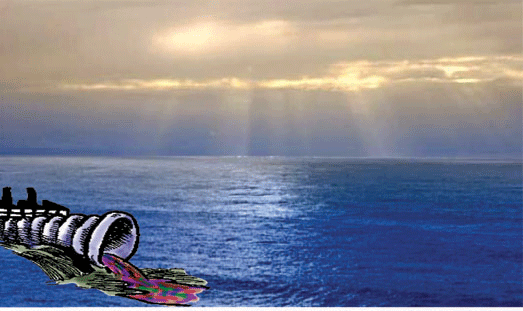 Silence on Fukushima Disaster Exposes our Approach to Nuclear Safety and Why India must Oppose Dumping of Radioactive Water Into the Pacific, BYSONALI HURIA, JANUARY 17, 2021 Next year, the operator of the tsunami-hit Fukushima nuclear plant would start releasing radioactive water into the Pacific Ocean. A number of nations are up in arms against it, but Indian authorities are not rising to the occasion to protect its most vulnerable against the impending disaster.
SONALI HURIA explains what is at stake for people and the environment.
THE new year has begun on a grim note with a toxic gas leak at the Rourkela Steel Plant in Odisha on 6 January, which claimed the lives of four contractual workers. This is the latest in a disconcerting string of industrial accidents in India over the last few years, which have remained peripheral to the mainstream media narrative.
It appears that India has learned precious little from the Bhopal gas disaster, which has ebbed from public memory even as the accident site remains contaminated and survivors continue to await an elusive justice.
Against this backdrop, as we approach the tenth anniversary of the Fukushima nuclear disaster, it may be pertinent to think of what a nuclear accident might mean for the country’s already shoddy industrial safety record and systemic inadequacies, especially as the Fukushima disaster now poses a formidable new challenge to which India’s response, so far, has been active denial and muted silence.
“Fukushima” has become synonymous with the devastating and ongoing nuclear accident that occurred off the eastern Pacific coast of Japan in 2011.
Japan’s nuclear regulator, the Nuclear Regulation Authority (NRA) reportedly stated as recently as in December 2020 that the reactor buildings of the Fukushima Daiichi nuclear power plant continue to record “lethal” levels of radiation, thus posing a “serious challenge” to decommissioning efforts.
DISPOSING CONTAMINATED WATER
Among the many vexing problems precipitated by the accident is the disposal of the contaminated water from the beleaguered nuclear plant.
The acerbic debate within Japan on the disposal of this radioactive water came to a head recently when the Japanese government made it clear that beginning 2022, the operator of the Fukushima plant, the Tokyo Electric Power Company (TEPCO), would start releasing radioactive water from the wrecked plant into the Pacific Ocean—a task envisaged to be accomplished over the next several years as part of larger decommissioning efforts.
Since the devastating earthquake and tsunami off the Pacific coast of Tōhoku triggered a meltdown at the three units of the nuclear plant in March 2011, cleanup efforts have required, among other things, the pumping of tens of thousands of tons of water to cool the smouldering reactor fuel cores.
However, this has led to a steady on-site accumulation of heavily contaminated water—as of 2020, TEPCO has nearly 1.23 million metric tons (and counting) of highly radioactive wastewater on its hands that has been stored in nearly 1,044 tanks…………
LOOMING DANGERS
Greenpeace International has warned that carbon-14, which TEPCO affirmed is present in the contaminated tank-water for the first time in August 2020, has the “potential to damage human DNA”.
Tokyo’s decision has understandably ruffled feathers globally.
The Republic of Korea, China, and Chile, state parties to the London Convention on the Prevention of Marine Pollution by Dumping of Wastes and Other Matter, have repeatedly called for international deliberation and resolution of the problem, even as South Korea, which has banned all seafood imports from the region since the accident, has formally called upon the International Atomic Energy Agency (IAEA) to dissuade Japan. While the North Korean state media described the proposed discharge as a “criminal act”, a coalition of environmental and citizens’ groups from Taiwan petitioned the Japanese government in November 2020, expressing their objections.
The IAEA has confined itself to assisting the Japanese government rather than question or evaluates the proposed water disposal plan. It has demonstrated yet again that it is not the international nuclear watchdog many believe it to be.
UN Special Rapporteurs on hazardous wastes, right to food, rights to assembly and association, and the rights of indigenous people have also urged Japan not to use the present pandemic as a “sleight of hand” to release the radioactive water without any credible consultation within and outside Japan regarding a decision that will have a long-lasting impact on the environment and human health.
DANGERS FOR INDIA
The stakes for India cannot be overstated either.
In an unanticipated moment of candidness, nuclear health scientists from within the Indian establishment—the Defence Research Development Organisation (DRDO) and the All India Institute of Medical Sciences (AIIMS)—have warned that the release of the Fukushima wastewater containing “radioactive isotopes such as cesium, tritium, cobalt and carbon-12” will prove disastrous for human and aquatic health across the world’s coastal belts by crippling fishing economies and causing a “spectrum of diseases, including cancer”……..
the Indian government, in particular, its nuclear establishment, has consistently downplayed the risks associated with nuclear energy to public and environmental health, even labelling public concerns surrounding radiation “myths”, and whose first reactions to the Fukushima nuclear accident were of impudent denial.
… EAS Sarma, former Union Power Secretary to the Government of India, has exhorted the Department of Atomic Energy (DAE) to apprise the Prime Minister’s Office of the “far-reaching implications” of the proposed release of the radioactive Fukushima water, and for India to take a firm stand at the IAEA against this unilateral decision of the Japanese government.
TEPCO has reportedly already been draining hundreds of tonnes of contaminated water into the Pacific Ocean. Noting with dismay the abject silence of the DAE and India’s Environment Ministry in this regard, Sarma identifies the lack of a robust nuclear regulatory body or mechanism in India as responsible for this lack lustre approach to an issue of great import for the health of the people of the country and the larger marine ecology of the region.
Domestically, it is time to pause and think whether India is equipped to handle an accident of the scale of Fukushima—a nuclear Bhopal?
Sarma’s letter to the Cabinet Secretary also underscores the need for the government to recognise the magnitude of the devastation wrought by nuclear accidents, the inability of TEPCO to handle the disaster even a decade since its occurrence, and thus to pause its own plans “to import reactors on a large scale and enlarge nuclear power generation capacity”.
…..…DOWNPLAYING THE DANGERS
In effect, therefore, the IAEA has demonstrated yet again that it is not the international nuclear watchdog many believe it to be. In her fascinating new account of the Chernobyl nuclear accident, Manual for Survival, the environmental historian, Kate Brown, explores the IAEA’s complicity in downplaying the accident and denying radiation impacts in exposed Chernobyl children and even asserting that “radiation anxiety” stems from “irrational fears”, as nuclear technocrats across the globe are prone to doing.
In the tenth year of the ongoing Fukushima accident, therefore, it is imperative that a dialogue be initiated on the need for an effective international nuclear monitoring regime that isn’t also tasked with the responsibility of promoting nuclear energy.
Domestically, it is time to pause and think whether India is equipped to handle an accident of the scale of Fukushima—a nuclear Bhopal?
At the very least, it is time India’s government demonstrates that it is willing and able to deploy its purportedly surging international stature and influence under Prime Minister Narendra Modi to protect the country’s environment and the health of its vulnerable communities against the Fukushima water release, which appears a near certainty now. https://www.theleaflet.in/silence-on-fukushima-disaster-exposes-our-approach-to-nuclear-safety-and-why-india-must-oppose-dumping-of-radioactive-water-into-the-pacific/#
1 This Month


31st January – Challenging the War Machine – a DECLASSIFIED UK SUMMIT



Website of the Week
Now until to February 10, 2026 Radioactive waste storage in France: the debate is finally open! How to participate?
-
Archives
- January 2026 (220)
- December 2025 (358)
- November 2025 (359)
- October 2025 (377)
- September 2025 (258)
- August 2025 (319)
- July 2025 (230)
- June 2025 (348)
- May 2025 (261)
- April 2025 (305)
- March 2025 (319)
- February 2025 (234)
-
Categories
- 1
- 1 NUCLEAR ISSUES
- business and costs
- climate change
- culture and arts
- ENERGY
- environment
- health
- history
- indigenous issues
- Legal
- marketing of nuclear
- media
- opposition to nuclear
- PERSONAL STORIES
- politics
- politics international
- Religion and ethics
- safety
- secrets,lies and civil liberties
- spinbuster
- technology
- Uranium
- wastes
- weapons and war
- Women
- 2 WORLD
- ACTION
- AFRICA
- Atrocities
- AUSTRALIA
- Christina's notes
- Christina's themes
- culture and arts
- Events
- Fuk 2022
- Fuk 2023
- Fukushima 2017
- Fukushima 2018
- fukushima 2019
- Fukushima 2020
- Fukushima 2021
- general
- global warming
- Humour (God we need it)
- Nuclear
- RARE EARTHS
- Reference
- resources – print
- Resources -audiovicual
- Weekly Newsletter
- World
- World Nuclear
- YouTube
-
RSS
Entries RSS
Comments RSS
 nuclear-news