Legal action on Fukushima nuclear disaster’s impact on health
 | |||

Fukushima Disaster’s Impact on Health Will Be Challenged in Court https://thediplomat.com/2022/02/fukushima-disasters-impact-on-health-will-be-challenged-in-court/
A link between radiation from the Fukushima nuclear disaster and cancer will be the focal point of the civil court case against operator TEPCO. By Thisanka Siripala, February 17, 2022
Almost 11 years have passed since the Fukushima Daiichi nuclear power plant catastrophe. But even as Fukushima prefecture gets ready to launch a new revitalization slogan – “Making Fukushima’s reconstruction a reality one step at a time” – it is still struggling to overcome the lingering aftereffects of the accident. Earlier this month, a group of six men and women diagnosed with thyroid cancer as children filed a class action case against Tokyo Electric Power Company (TEPCO), seeking $5.4 million in compensation.
Eastern Japan was hit by a massive magnitude 9.1 earthquake and 15-meter tsunami on March 11, 2011. The disaster shut off power and cooling to three reactors at the Fukushima Daiichi nuclear power plant, triggering the release of radiation for up to six days.
The plaintiffs, who are aged between 17 and 27, are seeking to hold TEPCO responsible for the thyroid cancer they developed. Two have had one side of their thyroid removed and four others have had a complete thyroidectomy and are planning or undergoing radiation therapy. The treatment has forced them to drop out of school or college and give up on their dreams. The plaintiffs argue that their thyroid cancer has created barriers to their education and employment as well as marriage and starting a family.
The Fukushima Daiichi meltdown was the worst nuclear accident since Chernobyl in 1986, which was followed by a spike in cancer cases in the region. In Japan a health survey conducted by the Fukushima prefecture found 266 cases of cancer among the 380,000 people aged under 18 at the time of the accident. The lawyers representing the plaintiffs argue that pediatric thyroid cancer is extremely rare, with an annual incident rate of two cases in one million people
The plaintiffs added that in the past decade they have been forced to stay silent due to social pressure and the risk of public outrage over speaking out about the connection between the Fukushima nuclear accident and their thyroid cancer.
The Federation of Promotion of Zero-Nuclear Power and Renewable Energy, a civic group that includes five former Japanese prime ministers, sent a letter to the EU urging the elimination of nuclear power. In the letter, they stated that many children are suffering from thyroid cancer as a result of the Fukushima nuclear power plant accident.
However, the Japanese government believes there is no causal link between exposure to radiation from the accident and the children developing thyroid cancer. Prime Minister Kishida Fumio said at a House of Representatives Budget Committee meeting that “it is not appropriate to spread false information that children from Fukushima are suffering from health problems.”
At a press conference Takaichi Sanae, chairperson of the ruling LDP’s Policy Research Council refuted the letter sent by the federation. She stressed the government’s position that the cases of childhood thyroid cancer have been assessed by experts who have determined the accident is unlikely to have caused cancer.
Fukushima prefecture’s expert panel say there could be the possibility of “over-diagnosis” due to increased vigilance after the disaster, suggesting that some patients diagnosed with cancer did not need treatment. They say they are continuing to investigate the nature of each diagnosis. The Ministry of Environment also said they will continue to disseminate knowledge based on scientific findings to dispel rumors about the health effects of radiation.
Last week, the Fukushima reconstruction and revitalization council met to discuss the “diverse needs of the prefecture” and a long term response to support evacuees. Governor of Fukushima Uchibori Masao acknowledged that the prefecture is “facing many difficulties including the reconstruction and rehabilitation of evacuated areas and rebuilding the lives of evacuees and victims of the disaster.” There are also plans to establish a new national research and education organization in Fukushima that will devise measures to prevent and dispel rumors fueling discrimination toward evacuees and Fukushima food.
Taiwan recently lifted its blanket food import ban on Fukushima produce introduced in the wake of the disaster but there are 14 countries and regions that still maintain import restrictions. Additionally, Japan’s decision to discharge more than one million tonnes of low-level radioactive water from the crippled Fukushima nuclear power plant into the sea is another issue attracting negative publicity abroad.
UN to review Japan’s plan to release Fukushima water into Pacific

UN to review Japan’s plan to release Fukushima water into Pacific
Taskforce will ‘listen to local people’s concerns’, as government plans to release more than 1m tonnes, Guardian, Justin McCurry in TokyoFri 18 Feb 2022
A UN nuclear taskforce has promised to prioritise safety as it launches a review of controversial plans by Japan to release more than 1m tonnes of contaminated water into the ocean from the wrecked Fukushima Daiichi nuclear plant.
Japan’s government announced last April that it had decided to release the water over several decades into the Pacific Ocean, despite strong opposition from local fishers and neighbouring China and South Korea……………
The Tokyo Electric Power company (Tepco) says its treatment technology can remove all radioactive materials from water except tritium, which is harmless in small amounts. It said the gradual release of the water, diluted with seawater, would not pose a threat to human health or the marine environment. In 2020, however, Greenpeace said the water still contained contaminants beside tritium and would have to be treated again.
The wastewater is being stored in about 1,000 tanks that officials say need to be removed so the plant can be decommissioned, an operation expected to take several decades. The tanks are expected to reach their capacity of 1.37m tonnes this summer.
The liquid includes water used to cool the damaged reactors, as well as rain and groundwater that seeps into the area.
Shaun Burnie, a senior nuclear specialist for Greenpeace East Asia, said he did not believe the IAEA would fully investigate and address safety and environmental concerns in its report.
Noting that the agency had welcomed the discharge option when it was announced last year, Burnie said: “The IAEA is not an independent agency in nuclear affairs – under statute its mission is to promote nuclear power. It has sought to justify radioactive marine pollution as having no impact and safe. But the IAEA is incapable of protecting the environment, human health or human rights from radiation risks – that’s not its job.
“The IAEA taskforce should be investigating the root cause of the contaminated water crisis and exploring the option of long-term storage and the best available processing technology as an alternative to the deliberate contamination of the Pacific.”
The IAEA team, which includes experts from South Korea and China, will report its findings at the end of April.
South Korea, which has yet to lift an import ban on Fukushima seafood introduced in 2013, has said that discharging the water would pose a “grave threat” to the marine environment. Pacific peoples have challenged Japan to prove the water is safe by dumping it in Tokyo.
Local fishers also oppose the water’s release, saying it would undo a decade’s work to rebuild their industry and reassure nervous consumers their seafood is safe………https://www.theguardian.com/environment/2022/feb/18/un-to-review-japans-plan-to-release-fukushima-water-into-pacific
Robots used to remove Fukushima’s highly radioactive used nuclear fuel, but they’re still problematic.
Plutonium problems won’t go away, By Chris Edwards, Engineering and Technology, February 15, 2022 ”’………………………………………At a conference organised by the International Federation of Robotics Research on the 10th anniversary of the accident, Toyota Research chief scientist Gill Pratt said the first robots “got there in the overhead luggage of commercial flights”. For all of them it was a baptism of fire.
Narrow staircases and rubble turned into insurmountable obstacles for some. Those that made it further failed after suffering too much radiation damage to key sensors and memories. Finally, some developed by the Chiba Institute of Technology were able to explore the upper floors of Reactor 2. The researchers designed their Quince to work for up to five hours in the presence of a cobalt-60 source that would generate an average dose of 40 grays per hour.
Direct radiation damage was not the only problem for the Fukushima robots. Reactors are protected by thick concrete walls. Wireless signals fade in and out and fibre-optic cabling becomes an impediment in the cluttered space of a damaged building.
To be close enough to the machines, operators had to wear bulky protective clothing that made teleoperation much harder than it would be in other environments. Several robots went into the building only to fail and get stuck, turning into obstacles for other machines.
The risk of these kinds of failure played into the nuclear industry’s long-term resistance to using robots for repair and decommissioning. Plant operators continued to favour mechanical manipulators operated by humans, separated by both protective clothing and thick lead-heavy glass.
Since Fukushima, attitudes to robots in the nuclear industry have changed, but remote control remains the main strategy. Pratt says humans remain generally better at control and are far better at dealing with the unstructured environments within many older and sometimes damaged installations.
The long-term aim of those working on these systems is to provide robots with greater degrees of autonomy over time. For example, surveillance drones will be flown with operator supervision but the machines are acquiring more intelligence to let them avoid obstacles so they need only respond to simpler, high-level commands. This can overcome one of the problems created by intermittent communications. One instance of this approach was shown when UK-based Createc Robotics recently deployed a drone at Chernobyl and Fukushima, choosing in the latter case to survey the partly collapsed turbine hall for a test of its semi-autonomous mapping techniques.
To get more robots into play in the UK, the NDA has focused its procurement more heavily on universities and smaller specialist companies, some of which are adapting technologies from the oil and gas industry.
The NDA expects it will take many years to develop effective robot decommissioning and handling technologies. It has put together a broad roadmap that currently extends to 2040. Radiation susceptibility remains an issue. Visual sensors are highly susceptible to damage by ionising radiation. However, a mixture of smarter control systems and redundancy should make it possible to at least move robots to a safe point for repair should they start to show signs of failure.
Another design strategy being pursued both in the UK and Japan is to build robots as though they are a moving, smart Swiss-army knife: armed with a variety of detachable limbs and subsystems so they can adapt to conditions and possibly even perform some on-the-fly repairs to themselves.
Slowly, the technology is appearing that can handle and at least put the waste out of harm’s way for a long time, though you might wonder why the process has taken decades to get to this stage of development. ……………. (Goes on to laser developments, again, far from a sure thing.) https://eandt.theiet.org/content/articles/2022/02/plutonium-problems-won-t-go-away/
Latest look inside Fukushima ruins show mounds of melted nuclear fuel
A remote-controlled robot has captured images of melted nuclear fuel
inside Japan’s wrecked Fukushima nuclear plant. A massive earthquake and
tsunami in 2011 damaged cooling systems at the power plant, causing the
meltdown of three reactor cores. Most of their highly radioactive fuel fell
to the bottom of their containment vessels, making its removal extremely
difficult. A previous attempt to send a small robot with cameras into the
Unit 1 reactor failed, but images captured this week by a ROV-A robot show
broken structures, pipes and mounds of what appears to be melted fuel.
Metro 16th Feb 2022 https://metro.co.uk/2022/02/16/take-a-look-inside-the-radioactive-ruins-of-fukushima-nuclear-plant-16113689/
Russia, China concerned over Japan’s plans to dump Fukushima radioactive wate
Russia, China concerned over Japan’s plans to dump Fukushima radioactive water — statement, BEIJING, February 4. /TASS/. Russia and China are concerned over Japan’s plans to dump contaminated water from the wrecked Fukushima nuclear power plant into the ocean, both countries said in a joint statement on Friday.
“Japan’s plans to release nuclear contaminated water from the destroyed Fukushima nuclear plant into the ocean and the potential environmental impact of such actions are of deep concern to the sides,” the statement reads.
In this regard, Moscow and Beijing emphasized that “the disposal of nuclear contaminated water should be handled with responsibility” and carried out in a proper manner based on arrangements between the Japanese side, neighboring states and international organizations………..
At present, over 1.25 million tonnes of water are being stored in steel tanks on the territory of the accident-hit power plant. The water has reportedly been purified of all harmful radioactive substances except for tritium, as there is no technology to rid the water of it. The Japanese government officially permitted to release a significant amount of Fukushima-1 water into the ocean. The water is expected to be dumped into the ocean gradually in small amounts over 30 years. The International Atomic Energy Agency has already announced that it will control this process on a permanent basis…………….
Tokyo Electric Power (TEPCO) specialists constantly pump away this water and put it into special steel reservoirs located on the plant’s territory. However, more than a thousand of them have already been piled up there. The space for these tanks is running out and the limit may be reached already in the summer of 2022. About 140 tonnes of specially treated water are being pumped into them daily. As the Japanese side says, the liquid will be further treated to reduce the amount of tritium before its release into the ocean. https://tass.com/world/1398125
Doubts grow on water-release schedule at Fukushima plant

Doubts grow on water-release schedule at Fukushima plant cTHE ASAHI SHIMBUN, January 31, 2022 Shovel loaders digging pits at the Fukushima No. 1 nuclear power plant on Jan. 17 were a rare sign of progress in the government’s contentious water-discharge plan at the stricken site.
Under the plan, millions of tons of treated but still contaminated water stored at the plant will be released into the sea over decades starting in spring 2023.
However, opposition to the plan remains fierce among local residents, the fishing industry and even overseas governments.
The pits being dug will temporarily hold radioactive water right before the release. But other preparatory work has already been stalled.
The government plans to create an undersea tunnel through which the treated and diluted radioactive water will be released into the sea about 1 kilometer from the plant.
Drilling work for the tunnel was initially scheduled to start early this year, but it was delayed to June.
Some government officials now doubt that the tunnel can be completed in time for the planned water release.
“It would be impossible to construct the underwater tunnel in less than a year,” one official said.
The government in April last year decided to discharge the contaminated water stored at the plant to move forward the decades-long process of decommissioning of the plant.
The accumulation of highly contaminated water has been a serious problem for the government and plant operator Tokyo Electric Power Co. since the Great East Japan Earthquake and tsunami in March 2011 caused the triple meltdown there.
An average of 150 tons of such water was produced each day last year as rainwater and groundwater keeps flowing into the damaged reactor buildings and mixing with water used to cool the melted nuclear fuel.
The contaminated water is treated by a multi-nuclide removal facility, known as ALPS, and stored in tanks. ALPS, however, cannot remove tritium, a beta-emitting radioactive isotope of hydrogen, and others.
The pits are being built to ensure that tritium levels in the treated water after dilution with a large amount of seawater are low enough to be sent to the planned tunnel for discharge into the sea.
Disposal of the contaminated water has become an urgent matter.
TEPCO said the existing 1,061 tanks at the plant are capable of holding a total of 1.37 million tons of water and would be full by around spring next year.
As of Jan. 20, the plant had reached 94 percent of capacity.
The government fears that continuing to add more storage tanks at the plant could jeopardize the overall decommissioning work.
EFFORTS TO EASE CONCERNS DELAYED
The government asked the International Atomic Energy Agency to send an inspection team to examine the safety of the treated radioactive water.
A seal of approval from a credible international body could go a long way in easing domestic and international opposition about the water release plan.
The IAEA team of researchers from 11 countries, including China and South Korea, which are opposed to the water release, was expected to visit Japan in December to begin its on-site inspection.
But that trip was scrapped after a new wave of novel coronavirus infections hit the global community.
Government officials are negotiating with the IAEA for a visit in spring by the team. But it remains unclear when the trip will finally materialize.
The government and TEPCO have also made little progress in gaining support from fishermen and the public, despite holding numerous briefings about the water release plan.
Distrust of the government and the utility remain high in Fukushima Prefecture over their series of mishandling of the nuclear disaster.
Fishermen, in particular, are adamantly opposed to the release of the water into areas where they make their living.
“If you insist on the safety of treated water, why don’t you spray it in your garden or dump it in a river flowing into Tokyo Bay?” Toru Takahashi, a fisherman in Soma, asked government officials at a recent briefing session.
The officials brought with them a huge stack of documents to emphasize the safety of the treated water.
But they lowered their eyes and clammed up when Takahashi and other opponents challenged their view.
“I will never ever drop my opposition,” Takahashi said.
Such opposition has created a headache for leaders of the towns hosting the plant.
They are eager to see progress in the decommissioning work, and getting rid of the huge amount of contaminated water at the plant would be a big step toward rebuilding their affected communities.
After the government’s decision to release the water, Shiro Izawa, mayor of Futaba, a town that co-hosts the plant along with Okuma, called on then industry minister Hiroshi Kajiyama to gain support for the water discharge plan from the public and fisheries to advance the decommissioning process.
Futaba, a town with a population of nearly 7,000 before the nuclear disaster, is the only municipality in Fukushima Prefecture that remains entirely under an evacuation order.
In 2015, Futaba grudgingly became the storage site of contaminated soil and debris gathered in the cleanup of municipalities in the prefecture on the pretext of “moving forward rebuilding.”
If the planned water release is further delayed because of opposition from other municipalities, the future of rebuilding Futaba will remain in doubt.
(This story was compiled from reports by Takuro Yamano, Keitaro Fukuchi, Tsuyoshi Kawamura and Mamoru Nagaya.)
The more radiation, the weirder Fukushima’s fir trees became.
NUCLEAR DISASTER IN JAPAN DID SOMETHING STRANGE TO TREES https://futurism.com/the-byte/nuclear-japan-trees
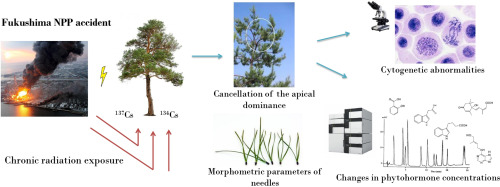
SOMETHING IS UP WITH THOSE TREES. by ABBY LEE HOOD ( Journalist) They didn’t grow any larger or suddenly become sentient, but the trees outside the Fukushima Daiichi Nuclear Power Plant are definitely acting weird, according to a new study published earlier this month in the journal Plants.
Researchers from multiple universities in Italy and Brazil studied fir trees growing near the plant, which was destroyed in 2011 following a severe earthquake. The scientists studied whorls — nodes where leaves, branches or other plant parts grow from a central point — and found that fir trees around Fukushima exhibited weird growth patterns around them.
“These conifers showed irregular branching at the main axis whorls,” reads the study, spotted by Newsweek. “The frequency of these anomalies corresponded to the environmental radiation dose rate at the observed sites.”
The more radiation, in other words, the weirder the trees got.
Circle of Life
It’s pretty interesting that trees affected by nuclear radiation grow in funky patterns and are still affected by material in the soil near Fukushima. But even more important is the team’s goal of learning how to better take care of people caught up in similar, future disasters, and to create better emergency management plans.
“Ten years have passed since the FNPP accident, and still the large-scale effects are visible,” the researchers concluded. “Learning from past incidents and implementing this knowledge can make a significant difference in terms of lives and costs in healthcare management.”
We may not always be good stewards of the environment around us, but nature seems happy to provide cautionary tales for humanity to learn from all the same.
More on Fukushima weirdness: Scientists Monitoring Radioactive Snakes Near Fukushima Meltdown Site
Fukushima nuclear radiation has had strange effects on plants and trees
Fukushima Radiation Made Japanese Fir Trees Go Haywire After Nuclear Disaster Newsweek, BY ORLANDO JENKINSON ON 1/27/22 Plants in Fukushima are growing in abnormal ways because of the radiation left over from the 2011 nuclear accident, a study suggests.
In a study published on January 15 in the journal Plants, scientists described changes to the structure of plants and trees in areas close to where a partial meltdown occurred at Fukushima Dai-ichi Nuclear Power Plant (FNPP) after an earthquake caused a tsunami that overwhelmed the plant’s cooling systems.
………….. To come to their conclusion, researchers examined the whorls—the places on plants where foliage like leaves, petals or needles spread out from a central point.
Instead of branching out in the expected way, the whorls showed irregular growths and even elimination of some shoots in ways not seen on trees that avoided radiation.
What is more, the number of strange mutations like this corresponded with the amount of radiation the trees were hit with. Researchers said that the rate of mutations was “directly proportional to the dose of ionizing radiation to which the conifers had been exposed.”
The authors of the paper said that another abnormality they found was the “deletion” of shoots of Japanese fir and red pine trees. This happened most often after the spring of 2012, and peaked in 2013, though precisely why remains a mystery.
The paper consequently offered further evidence that ionizing radiation like that produced by nuclear accidents can alter the structure of conifer trees.
The authors noted that the abnormalities they uncovered were like those found on Scots Pine trees in the Chernobyl Exclusion Zone, the 18.6-mile radius surrounding the site of the Chernobyl nuclear disaster in the former Soviet Union in 1986. https://www.newsweek.com/fukushima-radiation-japanese-fir-trees-haywire-nuclear-disaster-1673577
Can reactor fuel debris be safely removed from Fukushima Daiichi?
Can reactor fuel debris be safely removed from Fukushima Daiichi?, Science Daily, :January 25, 2022Source:University of Helsinki
Summary:Decommissioning and clean-up are ongoing at the Fukushima Daiichi Nuclear Power Plant (FDNPP); however, many difficult problems remain unaddressed. Chief amongst these problems is the retrieval and management of fuel debris.
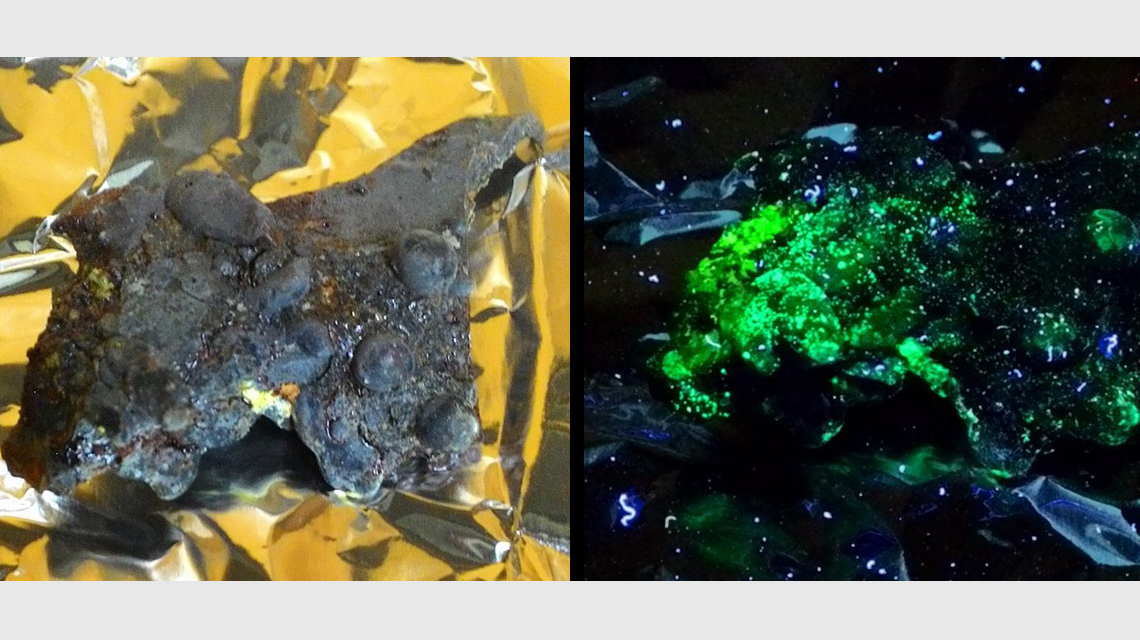
Decommissioning and clean-up are ongoing at the Fukushima Daiichi Nuclear Power Plant (FDNPP); however, many difficult problems remain unaddressed. Chief amongst these problems is the retrieval and management of fuel debris. Fuel debris is the name given to the solidified mixture of melted nuclear fuel and other materials that now lie at the base of each of the damaged reactors (reactor Units 1 — 3). This material is highly radioactive and it has potential to generate enough neutrons to trigger successive nuclear fission reactions (uranium-235 breaks into two elements after capturing neutrons, emitting enormous amounts of energy, radiation, and more neutrons). Successive fission reactions would present a serious safety and material management risk.
One of the materials in nuclear reactors that can lower the number of neutrons interacting with uranium-235 is boron carbide (B4C). This was used as the control rod material in the FDNPP reactors, and it may now remain within the fuel debris. If so, it may limit fission events within the fuel debris.
Can the fuel debris be safely removed?
On March 11th 2011, the control rods were inserted into the FDNPP reactors to stop the fission reactions immediately after the earthquake, but the later tsunami destroyed the reactor cooling systems. Fuel temperatures soon became high enough (>2000 °C) to cause reactor meltdowns. Currently, the fuel debris material from each reactor is cooled and stable; however, careful assessment of these materials, including not only their inventories of radioactive elements but as well their boron content, a neutron absorber, is needed to ascertain if successive fission reactions and associated neutron flux could occur in the fuel debris during its removal. Many important questions remain: was boron from the control rods lost at high temperature during the meltdown? If so, does enough boron remain in the fuel debris to limit successive fission reactions within this material? These questions must be answered to support safe decommissioning.
Study shows direct evidence of volatilization of control rods during the accident.
Despite the importance of this topic, the state and stability of the FDNPP control rod material has remained unknown until now. However, work just published in the Journal of Hazardous Materials now provides vital evidence that indicates that most of the control rod boron remains in at least two of the damaged FDNPP reactors (Units 2 and/or 3).
The study was an international effort involving scientists from Japan, Finland, France, and the USA………………….. https://www.sciencedaily.com/releases/2022/01/220125093041.htm
Leakage of coolant water from ice wall around crippled Fukushima nuclear power station
| The operator of Japan’s crippled Fukushima nuclear power plant said this month that two storage tanks had leaked about four tonnes of coolant solution used to create an ice wall that prevented groundwater from seeping in. The operator, Tokyo Electric Power Co Holdings (9501.T) (Tepco), said the leak had no impact on the wall or the environment, however. But the incident highlights its struggle to clean up the plant nearly 11 years after a massive earthquake and tsunami set off meltdowns in the worst nuclear disaster since Chernobyl in 1986. Reuters 25th Jan 2022 https://www.reuters.com/world/asia-pacific/wall-ice-fukushimas-crippled-nuclear-plant-2022-01-25/ |
Scientists trace the path of radioactive cesium in the ecosystem of Fukushima

Scientists trace the path of radioactive cesium in the ecosystem of Fukushima https://phys.org/news/2022-01-scientists-path-radioactive-cesium-ecosystem.html
by National Institute for Environmental Studies In 2011, the nuclear accident at Fukushima, Japan, resulted in the deposit of radioactive cesium (radiocesium) into habitats in the vicinity. A decade after the accident, researchers from the National Institute of Environmental Studies, Japan, have collated the complicated dynamics of radiocesium within forest-stream ecosystems. Understanding radiocesium flow in the environment could help mitigate contamination and inform future containment strategies.
In the aftermath of the Fukushima nuclear accident, the Japanese government performed intensive decontamination in the human-occupied parts of the affected area by removing soil surface layers. But a major affected region consists of dense, uninhabited forests, where such decontamination strategies are not feasible. So, finding ways to avoid the spread of radioactive contaminants like radiocesium to areas of human activity that lie downstream to these contaminated forests is crucial.
The first step to this is to understand the dynamics of radiocesium flow through forest-stream ecosystems. In the decade since the accident, a vast body of research has been dedicated to doing just that. Scientists from the National Institute of Environmental Studies, Japan, sifted through the data and detangled the threads of individual radiocesium transport processes in forest-stream ecosystems. “We identified that radiocesium accumulates primarily in the organic soil layer in forests and in stagnant water in streams, thereby making them potent sources for contaminating organisms. Contamination management in these habitats is crucial to provisioning services in forest-stream ecosystems,” says Dr. Masaru Sakai, who led the study. The findings of this study was made available online on 6 July 2021 and published in volume 288 of the journal Environmental Pollution on 1st November 2021.
The research team reviewed a broad range of scientific research on radiocesium in forests and streams to identify regions of radiocesium accumulation and storage. After the accident, radiocesium was primarily deposited onto the forest canopy and forest floor. This radiocesium reaches the earth eventually—through rainfall and falling leaves—where it builds up in the upper layers of the soil. Biological activities, such as those of detritivores (insects and fungi that live off leaf debris etc.) ensure that radiocesium is circulated through the upper layers of the soil and subsequently incorporated into plants and fungi. This allows radiocesium to enter the food web, eventually making its way into higher organisms. Radiocesium is chemically similar to potassium, an essential mineral in living organisms, contributing to its uptake in plants and animals. “Fertilizing” contaminated areas with an excess of potassium provides an effective strategy to suppress the biological absorption of radiocesium.
Streams and water bodies in the surrounding area get their share of radiocesium from runoff and fallen leaves. Most radiocesium in streams is likely to be captured by the clay minerals on stream beds, but a small part dissolves in the water. Unfortunately, there is little information on the relationship between dissolved radiocesium and aquatic organisms, like fish, which could be important to the formulation of contamination management strategies. Radiocesium in streams also accumulates in headwater valleys,pools, and other areas of stagnant water. Constructions such as reservoir dams provide a way to effectively trap radiocesium but steady leaching from the reservoir sediments causes re-contamination downstream.
This complicated web of radiocesium transport is hard to trace, making the development of a one-stop solution to radiocesium contamination impossible. Dr. Sakai and team recommend interdisciplinary studies to accelerate a full understanding of radiocesium pathways in forest-stream ecosystems so that measures can be developed to reduce future contamination. “This review can serve as basal knowledge for exploring future contamination management strategies. The tangled radiocesium pathways documented here may also imply the difficulties of creating successful radiation contamination management strategies after unwished-for nuclear accidents,” explains Dr. Sakai.
Nuclear power is often touted as a solution to the energy crisis, but it is important to plan response measures to unpredictable contamination events. To address the essential need for clean energy in view of the climate crisis, contamination management in societies depending on nuclear power is integral. Fully understanding the behavior of radiocesium in ecosystems can not only lead to the successful management of existing contamination but can also ensure the swift containment of potential future accidents.
Severely damaged fuel at Fukushima No 1 reactor – survey to find this has been halted.

Survey at Fukushima No. 1 reactor container halted, https://www.japantimes.co.jp/news/2022/01/12/national/tepco-fukushima-survey-halted/ Tokyo Electric Power Company Holdings Inc. halted its investigation of the inside of the containment vessel of the No. 1 reactor at its stricken Fukushima No. 1 nuclear power plant on Wednesday.
The move came after an issue was found during preparation work for the display of data such as radiation levels from dosimeters inside underwater robots to be used in the survey. The preparations began at noon the same day and were halted around two hours later.
Tepco said that it will resume the survey once measures to resolve the issue are taken.
In the survey, which will continue until around August, Tepco aims to take pictures of melted nuclear fuel debris and other deposits using six types of underwater robots to record their locations and thickness in water that has accumulated at the bottom of the containment vessel.
It will also try to collect deposit samples and take pictures of the inside of the base that supports the reactor pressure vessel. The information obtained in the survey will be used for studies on ways to remove the debris.
The nuclear fuel at the No. 1 reactor’s core is believed to have melted and mostly fallen inside the containment vessel during the triple meltdown disaster at the plant, which was hit by a huge earthquake and tsunami on March 11, 2011.
In its survey of March 2017, Tepco failed to find nuclear fuel debris at the No. 1 reactor, leaving the reactor’s detailed situation unknown, in contrast to the No. 2 and No. 3 reactors, where melted fuel debris was successfully photographed.
Growing radioactive waste crisis at Fukushima nuclear power plant

The continuous accumulation of radioactive slurry and other nasty substances, coupled with the problem of finding a safe way to dispose of melted nuclear fuel debris at reactors No. 1, No. 2 and No. 3, has plant operator Tokyo Electric Power Co. frantically scratching around for ideas.
One problem is that storage containers for the tainted slurry degrade quickly, meaning that they constantly have to be replaced.
TEPCO slow to respond to growing crisis at Fukushima plant, THE ASAHI SHIMBUN, by Yu Fujinami and Tsuyoshi Kawamura, January 2, 2022, Radioactive waste generated from treating highly contaminated water used to cool crippled reactors at the Fukushima No. 1 nuclear power plant has thrown up yet new nightmarish challenges in decommissioning the facility, a project that is supposed to be completed in 30 years but which looks increasingly doubtful.
The continuous accumulation of radioactive slurry and other nasty substances, coupled with the problem of finding a safe way to dispose of melted nuclear fuel debris at reactors No. 1, No. 2 and No. 3, has plant operator Tokyo Electric Power Co. frantically scratching around for ideas.
One problem is that storage containers for the tainted slurry degrade quickly, meaning that they constantly have to be replaced. Despite the urgency of the situation, little has been done to resolve the matter.
Fuel debris, a solidified mixture of nuclear fuel and structures inside the reactors melted as a consequence of the triple meltdown triggered by the 2011 earthquake and tsunami disaster has to be constantly cooled with water, which mixes with groundwater and rainwater rainwater that seep into the reactor buildings, producing more new radioactive water.
The contaminated water that accumulates is processed via an Advanced Liquid Processing System to remove most of radioactive materials. The ALPS is housed in a 17-meter-tall building situated close to the center of the plant site.
Reporters from the Japan National Press Club were granted a rare opportunity in late November to visit the crippled facility to observe the process.
The building houses a large grayish drum-like container designed especially to store radioactive slurry. The interior of each vessel is lined with polyethylene, while its double-walled exterior is reinforced with stainless steel.
ALARMING DEVELOPMENTS The use of chemical agents to reduce radioactive substances from the contaminated water in the sedimentation process produces a muddy material resembling shampoo. Strontium readings of the generated slurry sometimes reach tens of millions of becquerels per cubic centimeter.
TEPCO started keeping slurry in special vessels in March 2013. As of November, it had 3,373 of the containers.
Because the integrity of the vessels deteriorates quickly due to exposure to radiation from slurry, TEPCO and the Nuclear Regulation Authority (NRA) predict that durability of the containers will reach the limit after exposure to an accumulated total of 5,000 kilograys of radiation–a level equivalent to 5 million sieverts.
Based on that grim forecast, TEPCO speculated the vessels will need replacement from July 2025.
But the NRA accused TEPCO of underestimating the impact of the radiation problem. It blasted the operator for measuring slurry density 20 centimeters above the base of the container when making its dose evaluation.
“As slurry forms deposits, the density level is always highest at the bottom,” a representative of the nuclear watchdog body pointed out.

The NRA carried out its own assessment in June 2021 and told TEPCO that 31 containers had already reached the end of their operating lives. Its findings also showed an additional 56 would need replacing within two years.The NRA told TEPCO to wake up and “understand how urgent the issue is since transferring slurry will take time.”………………..
With no drastic solutions in sight, a succession of containers will reach the end of their shelf lives shortly.
ANOTHER NIGHTMARE PROBLEM Radioactive slurry is not the only stumbling block for decommissioning.
In the immediate aftermath of the 2011 disaster, TEPCO stored contaminated water in the underground spaces below two buildings near the No. 4 reactor. In doing so, bags full of a mineral known as zeolite were placed in the temporary storage pools to absorb cesium so as to reduce the amount of radioactive substances.
Twenty-six tons of the stuff are still immersed in the dirty water on the floors under the buildings. Radiation readings of 4 sieverts per hour were detected on their surfaces in fiscal 2019, enough to kill half of all the people in the immediate vicinity within an hour.
TEPCO plans to introduce a remotely controlled underwater robot to recover the bags, starting no earlier than from fiscal 2023, However, it has not determined how long this will take or where to store the bags once they are retrieved.
In addition, radioactive rubble, soil and felled trees at the plant site totaled 480,000 cubic meters as of March 2021, leading TEPCO to set up a special incinerator. The total volume is expected to top 790,000 cubic meters in 10 years, but where to dispose of the incinerated waste remains unclear.
TEPCO is in a race against time. That’s the view of Satoshi Yanagihara, a specially appointed professor of nuclear engineering at the University of Fukui who has specialist knowledge on processes to abandon reactors.
“Now, only 30 years remain before the target date of the end of decommissioning set by the government and TEPCO,” said Yanagihara.As decommissioning work is due to shortly enter a crucial stage, such as recovering nuclear fuel debris on a trial basis from as early as 2022, Yanagihara noted the need for careful arrangements before forging ahead with important procedures.
“The government and TEPCO need to grasp an overall picture of the massive task ahead and discuss how to treat, keep and discard collected nuclear debris and the leftover radioactive waste with local residents and other relevant parties,” he said.https://www.asahi.com/ajw/articles/14503708
Japan’s plan for dumping nuclear waste-water into the sea
Japan’s government on Tuesday mapped out a plan for releasing contaminated
water from the crippled Fukushima nuclear plant into the sea, including
compensation standards for local industry and the compilation of a safety
assessment report. Japan said in April it would discharge more than 1
million tonnes of contaminated water in stages after treatment and
dilution, starting around spring 2023. The announcement provoked concerns
from local fishermen and objections from neighbouring China and South
Korea.
Reuters 28th Dec 2021
TEPCO files for approval of Fukushima plant water release.
Operator Files For Approval of Fukushima Plant Water Release, Claims Journal, By Mari Yamaguchi | December 22, 2021 TOKYO (AP)–The operator of the wrecked Fukushima nuclear plant said Tuesday it has applied for approval from safety authorities to construct an undersea tunnel and other facilities needed for the planned release of large amounts of treated radioactive water into the sea.
The operator, Tokyo Electric Power Company Holdings, said it hopes to obtain approval from the Nuclear Regulation Authority to begin constructing the facilities in June and start releasing the water in April 2023.
The approval would cover the basic plan and design of the undersea tunnel, equipment to dilute the water with sea water and other necessary materials. https://www.claimsjournal.com/news/international/2021/12/22/307711.htm
TEPCO plans to release massive amounts of treated but still radioactive water into the ocean about 1 kilometer (0.6 mile) from the plant to ensure safety and minimize the impact on local fishing and the environment.
The contaminated water is to be diluted with large amounts of seawater to reduce the concentration of radioactive materials below allowable limits.
About 1,000 storage tanks at the plant currently filled with radioactive water need to be removed to make room for facilities necessary for the plant’s decommissioning, TEPCO says.
An official in charge of the water discharge project, Junichi Matsumoto, said TEPCO will construct the undersea tunnel by drilling through bedrock in the seabed.
Under the plan TEPCO submitted to the nuclear authority, the water will be released about 12 meters (40 feet) below the ocean’s surface……….
The government in April approved the decision to start discharging the water into the Pacific Ocean under safety standards set by regulators, calling it the most realistic option. The idea has been fiercely opposed by fishermen, residents and neighboring countries including China and South Korea. https://www.claimsjournal.com/news/international/2021/12/22/307711.htm
1 This Month


31st January – Challenging the War Machine – a DECLASSIFIED UK SUMMIT



Website of the Week
Now until to February 10, 2026 Radioactive waste storage in France: the debate is finally open! How to participate?
-
Archives
- January 2026 (220)
- December 2025 (358)
- November 2025 (359)
- October 2025 (377)
- September 2025 (258)
- August 2025 (319)
- July 2025 (230)
- June 2025 (348)
- May 2025 (261)
- April 2025 (305)
- March 2025 (319)
- February 2025 (234)
-
Categories
- 1
- 1 NUCLEAR ISSUES
- business and costs
- climate change
- culture and arts
- ENERGY
- environment
- health
- history
- indigenous issues
- Legal
- marketing of nuclear
- media
- opposition to nuclear
- PERSONAL STORIES
- politics
- politics international
- Religion and ethics
- safety
- secrets,lies and civil liberties
- spinbuster
- technology
- Uranium
- wastes
- weapons and war
- Women
- 2 WORLD
- ACTION
- AFRICA
- Atrocities
- AUSTRALIA
- Christina's notes
- Christina's themes
- culture and arts
- Events
- Fuk 2022
- Fuk 2023
- Fukushima 2017
- Fukushima 2018
- fukushima 2019
- Fukushima 2020
- Fukushima 2021
- general
- global warming
- Humour (God we need it)
- Nuclear
- RARE EARTHS
- Reference
- resources – print
- Resources -audiovicual
- Weekly Newsletter
- World
- World Nuclear
- YouTube
-
RSS
Entries RSS
Comments RSS
 nuclear-news