IAEA to have marine sampling near Fukushima plant with China, others
The International Atomic Energy Agency said Friday it will conduct a
sampling of the marine environment near the wrecked Fukushima nuclear power
plant from next week with international experts including those from China.
China, a staunch opponent of the discharge of treated radioactive water
from the power complex into the sea, imposed a blanket ban on seafood
imports from Japan immediately after the discharge started in August last
year. Meanwhile, the Japanese government has repeatedly urged Beijing to
repeal the ban. The environment monitoring and assessment activities will
be carried out from Monday to Oct 15 by a team of IAEA scientists and
experts from laboratories in China, South Korea and Switzerland.
Japan Today 5th Oct 2024, https://japantoday.com/category/national/iaea-to-have-marine-sampling-near-fukushima-plant-with-china-others
Japan’s new Prime Minister calls for deployment of US nuclear weapons
MILITARNYI 29 Sept 24
Japan’s new Prime Minister Shigeru Ishiba considers it necessary to discuss the prospect of deploying US nuclear weapons.
The deployment of nuclear weapons in the Asia-Pacific region should be discussed during the revision of the agreement on the status of the US contingent in Japan.
He also called for the creation of the country’s own nuclear arsenal to strengthen national security. According to Mr. Ishiba, the absence of a collective self-defense system similar to that of NATO in Asia creates a risk of new military conflicts in the region.
In particular, he expressed concern about China’s growing military activity around the Japanese islands…………………………….
The Asian version of NATO should specifically consider the joint use of nuclear weapons with the United States or the introduction of nuclear weapons into the region.
Officially, Shigeru Ishiba will become the new Prime Minister of Japan on October 1 after being approved by the parliament.
Since the 1990s, the politician has been actively involved in defense issues. He has consistently advocated for expanding the use of the Japan Self-Defense Forces and revising the pacifist provisions of the postwar Constitution………………..
In September, it was reported that the United States expressed an interest in deploying its MRC Typhon medium-range missile system with Tomahawk missiles to Japan…………………………….. more https://mil.in.ua/en/news/japan-s-new-prime-minister-calls-for-deployment-of-us-nuclear-weapons/
Spent nuclear fuel shipped to Japan’s 1st interim storage facility in Aomori
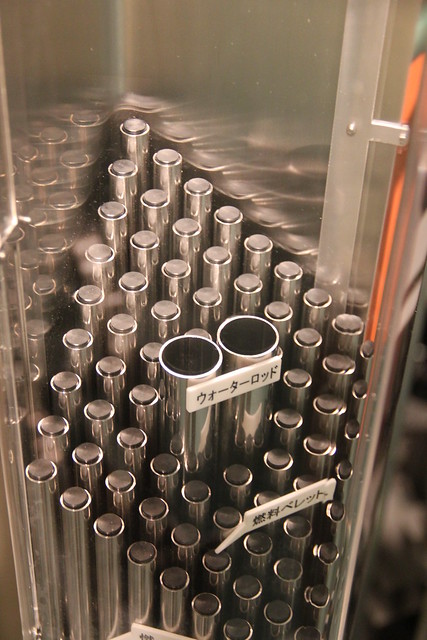
The interim storage facility, set up with joint investment from TEPCO and Japan Atomic Power Co, can store up to 5,000 tons of spent nuclear fuel for up to 50 years.
But there are concerns that the storage period will be exceeded
Sep. 25 TOKYO, https://japantoday.com/category/national/spent-nuclear-fuel-shipped-to-japan’s-1st-interim-storage-facility
The operator of a nuclear power plant in central Japan on Tuesday shipped spent fuel to the country’s first interim storage facility.
Tokyo Electric Power Company Holdings Inc sent 69 spent fuel assemblies from the Kashiwazaki-Kariwa plant in Niigata Prefecture by ship. The fuel will be delivered to the interim storage facility in Mutsu, Aomori Prefecture, on Thursday at the earliest.
With capacity at spent fuel pools at the plant’s No. 6 and No. 7 reactors approaching the limit, TEPCO plans to transfer two containers that can hold 138 fuel assemblies and five containers with 345 assemblies from the plant to the interim storage facility in fiscal 2025 and fiscal 2026, respectively.
The 69 assemblies, which had been kept at the No. 4 unit, were shipped out in a metal container.
The interim storage facility, set up with joint investment from TEPCO and Japan Atomic Power Co, can store up to 5,000 tons of spent nuclear fuel for up to 50 years.
But there are concerns that the storage period will be exceeded as a nuclear fuel recycling plant due to be built in Rokkasho, also in Aomori, has yet to be completed.
The storage facility is expected to begin operations in late October following inspections by the Nuclear Regulation Authority.
There were 13,752 spent fuel assemblies kept at the Nos. 1-7 reactors at Kashiwazaki-Kariwa before the shipment, accounting for over 80 percent of the spent fuel pools’ capacity. At No. 6 and No. 7 units, the spent fuel pools were at over 90 percent capacity.
Japan and 11 other countries call for early start of fissile material ban talks

New York – https://www.japantimes.co.jp/news/2024/09/24/japan/politics/kishida-nuke-material-ban-treaty/
Japan and 11 other countries on Monday agreed to work together to launch negotiations immediately on a proposed treaty banning the production of fissile materials, including highly enriched uranium and plutonium, for nuclear weapons.
A Fissile Material Cut-off Treaty will significantly contribute to nuclear disarmament and nonproliferation, high-level representatives from the 12 countries, including Prime Minister Fumio Kishida, said in a joint statement after a meeting in New York.
“A nondiscriminatory, multilateral and effectively verifiable treaty banning the production of fissile material for nuclear weapons and other nuclear explosive devices would represent a significant practical contribution to nuclear disarmament and nonproliferation efforts,” the statement said.
“The participants confirmed that they would work closely together…for the immediate commencement of negotiations on an FMCT,” the statement said. The 12 countries included three nuclear powers — the United States, Britain and France.
Kishida told the meeting that a strong political will is needed to start FMCT negotiations. Creating a momentum for an early start of the negotiations will help to maintain and strengthen the Nuclear Non-Proliferation Treaty regime, he said.
He also said Japan will send hibakusha atomic bomb victims abroad to promote the understanding of the reality of exposure to nuclear weapons. Next year marks 80 years since the U.S. atomic bombing of Hiroshima and Nagasaki.
TEPCO again halts work to collect melted nuclear fuel
By KEITARO FUKUCHI/ Staff Writer, September 17, 2024
https://www.asahi.com/ajw/articles/15429866
Once again, Tokyo Electric Power Co. has been forced to halt its project to collect melted nuclear fuel debris at the stricken Fukushima No. 1 nuclear power plant.
On Sept. 17, TEPCO could not confirm camera images of equipment being used to remove the debris from the No. 2 reactor of the plant, bringing a stop to the project, the utility said.
TEPCO had planned to pick up melted fuel debris from the bottom of the reactor’s containment vessel that day.
The cause of the problem is under investigation, and there are no prospects of soon resuming the fuel-collecting operation, TEPCO said.
The company had earlier planned to start the fuel-removal work on Aug. 22. But the project was suspended after it was discovered that equipment for the operation had been installed in an incorrect order.
The work resumed on Sept. 10 after TEPCO took measures to prevent a recurrence.
After the fuel-removal device was pushed inside the reactor containment vessel, TEPCO checked the operation of the camera on the tip of the device. It was working on Sept. 13.
Workers had been checking the equipment from the morning of Sept. 17.
But a glitch occurred in the remote control room, about 400 meters away from the site, and the camera images could not be checked, the utility said.
Because of this, workers were unable to pick up the fuel debris.
Japan, to make the biggest mistake in history: nuclear energy with water, and risk of explosion
by Jessica A., 09/15/2024, https://www.ecoticias.com/en/nuclear-energy-japan-hydrogen/6246/
Japan has a traumatic history with nuclear power, but that’s not stopping the country from taking new risks
The Fukushima nuclear disaster of 2011 devastated Japan and left the rest of the world terrified of nuclear power. While it wasn’t as horrific as the Chernobyl nuclear reactor explosion of 1986, it still traumatized both the Japanese people and the government. Yet now, Japan is facing an energy crisis, and nuclear energy may be the only realistic solution.
Japan is one of the countries at the forefront of the green energy revolution. The Japanese government understands that solar, wind, and hydroelectric energy can only produce a portion of the fuel and electricity the country and the world need. Hydrogen will have to make up some of the difference in the industrial sector, for uses in shipping, aviation, and manufacturing. Japan wants to use next-generation nuclear reactors to produce hydrogen with zero emissions.
Next-generation nuclear reactors have lower energy outputs and marginally better safety records
To make hydrogen a viable option for industrial fuel needs, Japan plans to use nuclear reactors
Many companies are already producing hydrogen for the industrial sector, but they often use natural gas or fossil fuels to do it. These methods result in at least some greenhouse emissions, and Japan wants to have a zero-emissions hydrogen production process in place by 2040 to help meet the world’s energy needs.
Nuclear reactors seem to offer a good solution to this problem because they generate a lot of heat, and that heat can be used to break down water for hydrogen harvesting. Hydrogen is the only clean fuel that scientists know of that can power industrial shipping vessels, planes, and large machinery.
To avoid making the climate crisis worse, governments need to commit to making the production of hydrogen a green process, meaning releasing zero emissions. Japan is looking at innovative ways of designing nuclear reactors to keep them safe so that they can power homes and produce hydrogen.
Many people are skeptical of nuclear energy, and Japan could be courting disaster with its plans to use high temperatures to break down water. One more nuclear explosion could mean the end of nuclear power forever. Only time will tell if the next-gen reactors pass all the safety tests required to go online.
TEPCO restarts debris extraction attempt at Fukushima plant

 KYODO NEWS – https://english.kyodonews.net/news/2024/09/35e573ef1ad3-urgent-tepco-restarts-debris-extraction-attempt-at-fukushima-plant.html
The operator of the Fukushima Daiichi nuclear complex restarted Tuesday a bid to retrieve a small amount of melted fuel from one of its stricken reactors after its first attempt last month was suspended due to setup complications.
The trial extraction was put on hold on Aug. 22 due to issues discovered during preparations, according to Tokyo Electric Power Company Holdings Inc.
The resumption comes after TEPCO confirmed that five pipes set to be used to insert a retrieval device into the No. 2 reactor’s containment vessel are now installed in the correct order.
TEPCO said earlier that it and contractor Mitsubishi Heavy Industries Ltd. failed to check the order in which the pipes were set up, causing the earlier issues.
There are an estimated 880 tons of fuel debris in the Nos. 1, 2 and 3 reactors.
The task of retrieving melted fuel remains a serious challenge in the decades-long decommissioning plan for the Fukushima Daiichi complex, which was damaged following a massive earthquake and tsunami in March 2011.
A robot resumes mission to retrieve a piece of melted fuel from inside a damaged Fukushima reactor

The goal of the operation is to bring back less than 3 grams (0.1 ounce) of an estimated 880 tons of fatally radioactive molten fuel that remain in three reactors.
An operation to send an extendable robot into one of three damaged reactors at Fukushima Daiichi nuclear power plant to bring back a tiny gravel of melted fuel debris has resumed, nearly three weeks after its earlier attempt was suspended due to a tech…
By MARI YAMAGUCHI Associated Press, September 10, 2024, https://abcnews.go.com/International/wireStory/robot-resumes-mission-retrieve-piece-melted-fuel-inside-113538057
An extendable robot on Tuesday resumed its entry into one of three damaged reactors at Fukushima Daiichi nuclear power plant to retrieve a fragment of melted fuel debris, nearly three weeks after its earlier attempt was suspended due to a technical issue.
The collection of a tiny sample of the spent fuel debris from inside of the Unit 2 reactor marks the start of the most challenging part of the decadeslong decommissioning of the plant where three reactors were destroyed in the March 11, 2011, magnitude 9.0 earthquake and tsunami disaster.
The sample-return mission, initially scheduled to begin on Aug. 22, was suspended when workers noticed that a set of five 1.5-meter (5-foot) add-on pipes to push in and maneuver the robot were in the wrong order and could not be corrected within the time limit for their radiation exposure, the plant operator Tokyo Electric Power Company Holdings said.
The pipes were to be used to push the robot inside and pull it back out when it finished. Once inside the vessel, the robot is operated remotely from a safer location.
The robot, nicknamed “telesco,” can extend up to about 22 meters (72 feet), including the pipes pushing it from behind, to reach its target area to collect a fragment from the surface of the melted fuel mound using a device equipped with tongs that hang from the of the robot.
The mission to obtain the fragment and return with it is to last about two weeks.
The mix-up, which TEPCO called a “basic mistake,” triggered disappointment and raised concerns from officials and local residents. Industry Minister Ken Saito ordered TEPCO President Tomoaki Kobayakawa a thorough investigation of the cause and preventive steps before resuming the mission.
The pipes were brought into the Unit 2 reactor building and pre-arranged at the end of July by workers from the robot’s prime contractor and its subsidiary, but their final status was never checked until the problem was found.
TEPCO concluded the mishap was caused by a lack of attention, checking and communication between the operator and workers on the ground. By Monday, the equipment was reassembled in the right order and ready for a retrial, the company said.
The goal of the operation is to bring back less than 3 grams (0.1 ounce) of an estimated 880 tons of fatally radioactive molten fuel that remain in three reactors. The small sample will provide key data to develop future decommissioning methods and necessary technology and robots, experts say.
The government and TEPCO are sticking to a 30 to 40-year cleanup target set soon after the meltdown, despite criticism it is unrealistic. No specific plans for the full removal of the melted fuel debris or its storage have been decided.
Fukushima fishermen not in the clear yet
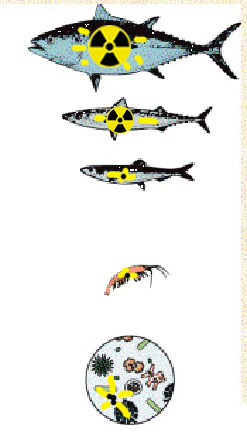
Japan Times 1 Sept 24
A year has passed since treated water containing trace amounts of tritium started to be released into the sea from the crippled Fukushima No. 1 nuclear power plant.
While the move is said to have had no significant impact on the prices of fishery products, tourism or the surrounding environment, challenges remain, including a number of hurdles for Tokyo Electric Power Company Holdings’ decommissioning of its reactors and measures to reduce the generation of contaminated water………………………………………………………..
In the absence of price decreases, the central and prefectural governments conclude that there has been almost no reputational impact to seafood from the region.
However, those in the local fisheries industry say the prices are holding up because there is momentum to support Fukushima, but they are not optimistic about the future due to it being a temporary measure.
The trading of Joban-mono increased in response to a central government initiative after the treated water started to be released.
But this process is expected to continue for around 30 years.
In April, the release of treated water was temporarily halted after a worker accidentally damaged a power cable at the Fukushima plant, partially cutting off the supply of power.
If such incidents continue to occur, they could pose reputational risks to Joban-mono.
………………………………………………………………………………………….. the local fishermen have lost trust in the central government after it decided on proceeding with the plan to release the treated water into the ocean despite opposition from the fisheries industry in and out of Fukushima Prefecture.
In announcing the decision, Prime Minister Fumio Kishida said, “Even though operations will last for decades, the government will take responsibility until the release is completed.”
The local fishing industry has become increasingly distrustful of Kishida, who suddenly expressed his intention of not seeking reelection as Liberal Democratic Party leader in this month’s presidential race.
“Concerns over treated water will remain for a long time,” a Fukushima fisheries industry official said. “We want the government to work with us as one to cope with the issue.” https://www.japantimes.co.jp/news/2024/09/02/japan/society/fukushima-fisheries-radioactive-water/
Tepco aims to dismantle Fukushima water tanks from 2025
Tokyo Electric Power Company Holdings aims to begin dismantling tanks used for storing treated wastewater in 2025. The tanks are now empty following water discharges into the Pacific since August last year.
Tepco released a total of 62,400 metric tons of treated water from its meltdown-stricken Fukushima No. 1 nuclear power plant in eight rounds of discharges over the past year.
Investigations by the government and Tepco into the surrounding sea areas have shown that the concentration of the radioactive substance tritium, contained in the treated water, is far below the safety limit. Last month, the International Atomic Energy Agency published a report that the water releases meet international safety standards………. (Subscribers only)
Japan Times 26th Aug 2024
https://www.japantimes.co.jp/news/2024/08/26/japan/fukushima-water-tanks-dismantle/
Central Japan nuclear reactor fails to pass safety review
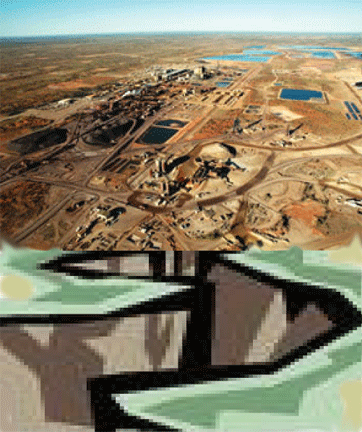
Tsuruga plant’s No. 2 reactor may lie above active fault in Fukui, watchdog says
https://asia.nikkei.com/Business/Energy/Central-Japan-nuclear-reactor-fails-to-pass-safety-review— 28 Aug 24
TOKYO (Kyodo) — Japan’s nuclear watchdog on Wednesday decided that a reactor in Fukui Prefecture failed to pass its restart safety review, marking the first such case since the regulatory body’s founding after the 2011 Fukushima nuclear crisis.
The No. 2 reactor at the Tsuruga plant, operated by Japan Atomic Power, fell short of the safety requirements due to a possible active fault underneath the offline unit. The Nuclear Regulation Authority plans to seek public comments on its assessment report before making its decision official, possibly in October.
In quake-prone Japan, building reactors or other important safety facilities directly above active faults is prohibited.
Japan Atomic Power first applied for the safety screening with the hope of restarting the reactor in November 2015.
But a safety review team of the NRA concluded in July it could not rule out that an active fault located around 300 meters north of the reactor building could potentially stretch right beneath the facility.
The assessment process for the reactor had been rocky, with proceedings suspended twice after it was revealed that Japan Atomic Power had submitted documents that included inaccuracies and data rewritten without approval. It reapplied in August last year.
The Tsuruga nuclear plant is a two-unit complex, with the No. 1 reactor set to be scrapped.
The No. 2 reactor, which started commercial operations in February 1987, went offline in May 2011.
Japan revamped its regulatory setup by launching the NRA in 2012 and has also introduced a set of new safety requirements to reflect the lessons learned from the disaster at Tokyo Electric Power Co. Holdings’ Fukushima Daiichi plant, triggered by a huge earthquake and tsunami in March 2011.
Hokkaido more plugged in to renewable energy than rest of Japan
Hokkaido had over 40% of its electricity generated by renewable energy
sources in fiscal 2023, nearly twice the national average and already above
the maximum share that the central government is looking to achieve by
2030.
With use of renewables — especially wind power — expected to grow
further, the local government has set a goal of getting 60% of its
electricity from solar, on and offshore wind, biomass, hydropower,
geothermal and some nuclear energy by 2030.
For all of Japan, the average
goal is to have between 36% and 38% of electricity be from renewables by
then.
Japan Times 26th Aug 2024
https://www.japantimes.co.jp/news/2024/08/26/japan/society/hokkaido-renewable-energy/
A robot’s attempt to get a sample of the melted nuclear fuel at Japan’s damaged reactor is suspended
An attempt to use an extendable robot to remove a fragment of melted fuel from a wrecked reactor at Japan’s tsunami-hit nuclear plant has been suspended due to a technical issue
abc news, By MARI YAMAGUCHI Associated Press, August 22, 2024,
TOKYO — An attempt to use an extendable robot to remove a fragment of melted fuel from a wrecked reactor at Japan’s tsunami-hit Fukushima Daiichi nuclear power plant was suspended Thursday due to a technical issue.
The collection of a tiny sample of the debris inside the Unit 2 reactor’s primary containment vessel would start the fuel debris removal phase, the most challenging part of the decadeslong decommissioning of the plant where three reactors were destroyed in the March 11, 2011, magnitude 9.0 earthquake and tsunami disaster.
The work was stopped when workers noticed that five 1.5-meter (5-foot) pipes used to maneuver the robot were placed in the wrong order and could not be corrected within the time limit for their radiation exposure, the plant operator Tokyo Electric Power Company Holdings said.
The pipes were to be used to push the robot inside and pull it back out when it finished. Once inside the vessel, the robot is operated remotely from a safer location.
The robot can extend up to about 22 meters (72 feet) to reach its target area to collect a fragment from the surface of the melted fuel mound using a device equipped with tongs that hang from the tip of the robot.
The mission to obtain the fragment and return with it is to last two weeks. TEPCO said a new start date is undecided…………………………………………………………….
The government and TEPCO are sticking to a 30-40-year cleanup target set soon after the meltdown, despite criticism it is unrealistic. No specific plans for the full removal of the melted fuel debris or its storage have been decided. https://abcnews.go.com/Technology/wireStory/robots-attempt-sample-melted-nuclear-fuel-japans-damaged-113049701
Japan: Removal of nuclear fuel remains in Fukushima will begin on August 22

the first step it will be the recovery of “a few grams” of spent fissile fuel from the plant’s nuclear reactor no. 2.
Large-scale removal of semi-melted fuel rods is expected to be undertaken early in the next decade
Tokyo, August 20 2024, https://www.agenzianova.com/en/news/Japan-the-removal-of-the-remains-of-nuclear-fuel-in-Fukushima-will-begin-on-August-22/
Tokyo Electric Power Company (Tepco), operator of the Japanese Fukushima Daiichi nuclear power plant, will begin on August 22 the delicate operations to recover the remains of nuclear fuel from the reactors damaged in the 2011 disaster. The company announced today that the first step it will be the recovery of “a few grams” of spent fissile fuel from the plant’s nuclear reactor no. 2. Plans call for the gradual expansion of operations to unit #3.
Large-scale removal of semi-melted fuel rods is expected to be undertaken early in the next decade. The removal of radioactive debris contained in the power plant’s reactors is considered the most difficult challenge in the process of decommissioning and disposing of the infrastructure, which was seriously damaged following the devastating earthquake and subsequent tsunami that hit north-eastern Japan 12 years ago. In all, around 880 tonnes of radioactive debris will have to be removed from reactors number 1, 2 and 3 at the nuclear power plant.
Japan: Radioactive water leaks reported at crippled Fukushima power plant
Economic Times 14 Aug 24
About 25 tons of radioactive water have leaked within the crippled Fukushima Daiichi Nuclear Power Plant, the plant’s operator has reported, a week after the latest round of ocean discharge started.
Tokyo: About 25 tons of radioactive water have leaked within the crippled Fukushima Daiichi Nuclear Power Plant, the plant’s operator has reported, a week after the latest round of ocean discharge started.
The nuclear-contaminated water, which leaked from a surge tank connected to the Unit 2 reactor building, was meant to be contained in a tank receiving overflow from the spent nuclear fuel pool, reports Xinhua news agency, quoting Tokyo Electric Power Company (TEPCO).
Accumulating on the first basement level of the reactor building, the leaked water led to a rise in the level of contaminated water already present in the area, TEPCO introduced on Tuesday, confirming that the contaminated water had not escaped outside the reactor building.
The leak was first identified last Friday when a decrease in the water level of the surge tank was detected, according to TEPCO, which, upon further investigation, discovered water flowing into a drain in a room on the third floor of the reactor building…………………………. https://energy.economictimes.indiatimes.com/amp/news/japan-radioactive-water-leaks-reported-at-crippled-fukushima-power-plant/112522815?fbclid=IwY2xjawErZw1leHRuA2FlbQIxMQABHSWwmPKOPQUA1lBz87XbNFrQ3wk0wpyhN7qtxdfQuEx-DbXmtfHad_QMGg_aem_4DBCWO0jAgCiBqQbTvKONA
1 This Month
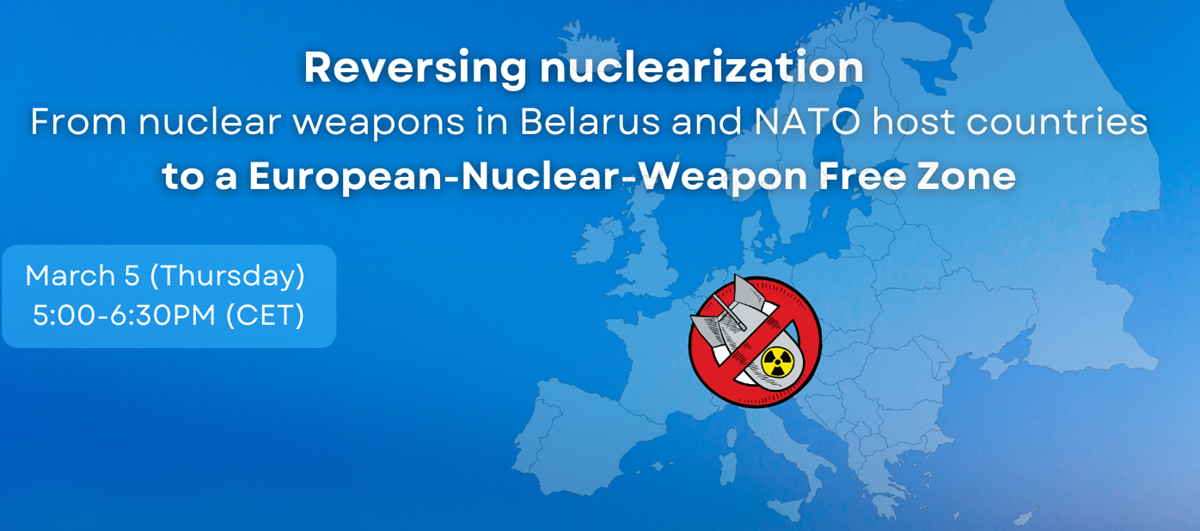
5 March -Online – Reversing nuclearization:
From nuclear weapons in Belarus and NATO host countries to a European-Nuclear-Weapon Free Zone
11am-12:30pm Eastern Time USA / 5pm-6:30pm CET

of the week – Advocating for a
nuclear free beach – https://www.samuellawrencefoundation.org/
The Samuel Lawrence Foundation advocates for a Nuclear Waste Free Beach at San Onofre, join us and take action!

10 March A LIVE WEBINAR THE REAL EFFECTS OF NUCLEAR POWER
What the Industry Isn’t Telling Us
1:00 PM Mountain, 2 pm Central, 3 pm Eastern. Live on the Keepers of the Water Facebook page

18 March Webinar @ 1 PM EST: An Assessment of SMR Projects: The Case of Canada
register for the zoom:
https://us02web.zoom.us/webinar/register/WN_o8BIIOUvQ2ONJR1nta65DQ#/registration

of the week – STOP SMALL MODULAR REACTORS IN CANADA
To see nuclear-related stories in greater depth and intensity – go to https://nuclearinformation.wordpress.com
-
Archives
- March 2026 (38)
- February 2026 (268)
- January 2026 (308)
- December 2025 (358)
- November 2025 (359)
- October 2025 (376)
- September 2025 (258)
- August 2025 (319)
- July 2025 (230)
- June 2025 (348)
- May 2025 (261)
- April 2025 (305)
-
Categories
- 1
- 1 NUCLEAR ISSUES
- business and costs
- climate change
- culture and arts
- ENERGY
- environment
- health
- history
- indigenous issues
- Legal
- marketing of nuclear
- media
- opposition to nuclear
- PERSONAL STORIES
- politics
- politics international
- Religion and ethics
- safety
- secrets,lies and civil liberties
- spinbuster
- technology
- Uranium
- wastes
- weapons and war
- Women
- 2 WORLD
- ACTION
- AFRICA
- Atrocities
- AUSTRALIA
- Christina's notes
- Christina's themes
- culture and arts
- Events
- Fuk 2022
- Fuk 2023
- Fukushima 2017
- Fukushima 2018
- fukushima 2019
- Fukushima 2020
- Fukushima 2021
- general
- global warming
- Humour (God we need it)
- Nuclear
- RARE EARTHS
- Reference
- resources – print
- Resources -audiovicual
- Weekly Newsletter
- World
- World Nuclear
- YouTube
-
RSS
Entries RSS
Comments RSS
 nuclear-news