14 years since Fukushima nuclear disaster: Greenpeace statement
Greenpeace International, 11 March 2025
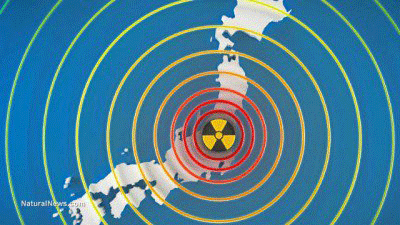
Tokyo, Japan – 14 years have passed since the Great East Japan Earthquake and the Fukushima Daiichi nuclear disaster devastated the northeast region of Japan. Greenpeace Japan extends heartfelt condolences to the victims and their families who are still suffering the aftermath of this devastating catastrophe……………………………
The risks of nuclear power plants increase with the length of time they have been in operation, as does their vulnerability to natural disasters such as earthquakes. The Fukushima Daiichi nuclear accident occurred at a nuclear power plant that had been in operation for more than 30 years, and radiation levels remain so high that even 14 years after the accident, it is still impossible for humans to directly inspect the damaged reactors. Therefore, the change of policy to promote nuclear power is unacceptable.[1]
There is no prospect for the disposal of spent nuclear fuel while the existing storage facilities are already close to full capacity, and many local authorities have yet to put in place an effective method for the safe evacuation of residents living near nuclear power stations in the event of an unforeseen emergency.
In addition, the Japanese Government and the Tokyo Electric Power Company (TEPCO), pushing aside the concerns of fishermen, residents and others, have decided to start deliberately discharging contaminated water containing radioactive substances from the accident at the Fukushima Daiichi Nuclear Power Plant into the environment. This discharge is expected to continue for about 30 years until 2051.
14 years ago, the then Government considered the possibility of evacuating 50 million people in the Tokyo metropolitan area. In fact, water treatment plants in Tokyo even introduced temporary restrictions on the amount of water that infants should drink. Due to the direction of the wind, much of the released radioactive material was carried out to sea, but a different wind direction would have resulted in a completely different outcome. The Prime Minister secretly drafted a statement at that time which stated that the worst case scenario had occurred. Have we, who experienced the accident, stayed true to the feelings we had in our hearts at the time?
The Great Hanshin-Awaji Earthquake 30 years ago, the Great East Japan Earthquake 14 years ago, the Noto Peninsula Earthquake a year ago and other earthquakes and floods across the country have occurred in rapid succession. We can only prepare for these natural disasters as best we can, but nuclear disasters are different. Nuclear disasters are caused by our choice and use of nuclear power as a means of generating electricity in Japan. Fortunately, there are many possibilities in Japan to pursue comfortable energy savings, as the electricity supply can be replaced by renewable energies that use neither nuclear power nor fossil fuels.
Therefore, Greenpeace Japan, whose vision is to preserve the bounty of the earth for our children 100 years from now, believes that the only reasonable course to take is to stop nuclear power generation in order to prevent nuclear disasters from happening again. The government should clearly state its policy to phase out the use of nuclear power and fossil fuels, in order to ensure a stable energy supply and decarbonise the country. They should make great strides in energy conservation in a way that promotes health, comfort and efficiency, and the use of renewable energy in a way that is in harmony with local communities and nature, thereby aiming to make Japan an energy-saving and renewable energy powerhouse. We will do our utmost this year to work towards this goal.” https://www.greenpeace.org/international/press-release/73383/14-years-since-fukushima-nuclear-disaster-greenpeace-statement/
“Difficult-to-Return” zones

Some have returned to areas contaminated by the Fukushima disaster but they should never be considered safe, writes Ruiko Muto
https://beyondnuclearinternational.org/2025/03/09/difficult-to-return-zones/ 9 Mar 25
Last summer, I had the opportunity to visit parts of the Difficult-to-Return zones in Fukushima. A hospital, where more than 50 patients died during evacuation efforts in the 2011 nuclear disaster, was now overgrown with dense trees and grasses. In a care home for older people, I saw disarrayed beds and scattered items, such as diapers, medicines and documents, all left untouched since the residents had to evacuate suddenly for safety. The meal plan for 11th March 2011 was still written on the whiteboard.
At a nearby primary school, I found dictionaries placed on each small wooden desk. Pupils’ bags, shoes, brush washers, and even fallen bicycles as well as helmets were still there – everything was left behind. No sounds were to be heard except for the hum of cicadas. There is no doubt that people lived here until just 13 years ago, but now, there is no one. These places remain abandoned even today.
Only a very small number of people have returned to the areas where evacuation orders were lifted. Empty houses need to be demolished one by one. Grand gates and storehouses, seemingly with centuries of history, are being torn down. New homes have been built nearby for disaster-affected families, with some residents with children moving in from outside Fukushima. A resident told me that the current indoor radiation level was as high as 0.3μSv/h, five to ten times higher than the levels before 2011. Part of the Difficult-to-Return zone begins just behind the fences surrounding these homes. Such living conditions should never be called safe.
Meanwhile, the Japanese government has removed its pledge to reduce reliance on nuclear energy from its Seventh Strategic Energy Plan, signalling their intention to revive the industry. To someone like me, who is acutely aware of the ongoing sufferings from the Fukushima nuclear disaster and the reality that local residents cannot safely stay or evacuate if a similar disaster were triggered by an earthquake in areas like the Noto Peninsula, the epicentre of a major earthquake in 2024, Japan’s continued reliance on nuclear energy seems inconceivably absurd.
In 2022, Japan’s Supreme Court ruled that the government was not liable for the 2011 disaster, dismissing the claims of many evacuees and victims seeking fair compensation and accountability. Since then, it has been revealed by a journalist that there was a collusion between the judge and the executives of Tokyo Electric Power Company (TEPCO). The state of the judicial system in Japan is deeply concerning. Similar rulings in other Fukushima nuclear disaster related cases followed in lower courts, leaving those suffering in an incredibly difficult position.
The extraction of 0.7 gramme of nuclear debris from the damaged Fukushima Daiichi nuclear plant has been recently reported, but the modest “success” was achieved only after repeated failed attempts. Harsh working conditions with high levels of radiation exposure and mismanagement by TEPCO — such as failing to send a company staff member to properly inspect a telescopic device — became evident during the process. No review of the plant’s decommissioning roadmap has been carried out to account for the radioactive decay period, even though no one believes the decommissioning process will be completed by 2051, as originally planned.
Having released contaminated underground water from the plant into the ocean despite strong opposition, Japan is now distributing contaminated soil to wider areas, touting it as a “recycled” material for rebuilding works. In doing so, the Japanese government continues to propagate nuclear safety myths, particularly among younger people, while asserting that they alone have the authority to determine which evidence is scientific and which is not.
Along the quiet Fukushima coastline, almost empty of people, lavish corporate facilities and state-of-the art laboratories have been built with generous subsidiaries under the guise of reconstruction efforts.
A nuclear disaster not only devastates your life and home, but it also deprives you of basic human rights. Confronted with this harsh reality even 14 years after the disaster, I cannot help but feel a sense of despair about the future of Fukushima.
With winter nearly gone and spring just around the corner, I long to be filled with good intentions and to see the world with discerning eyes. Encouraged by the knowledge that many friends around the world are tirelessly working to end nuclear energy production, I will continue to contribute as much as possible to this important cause.
Update: Last week the Japanese Supreme Court upheld the acquittals made by a lower court of two of the three TEPCO ex-executives charged. The charges against ex-chairman Katsumata Tsunehisa were dropped following his death in October last year. Lawyers from the criminal trial support group and Ruiko Muto, the plaintiff’s representative, held a press conference. The following are excerpts from Ms. Muto’s statement, translated from the original Japanese:
“Although the defendants were all acquitted by the District Court and the High Court, we put our hope in the dignity of judges and in the justice of the Supreme Court.
“The fact that this decision was made today just before March 11 shows the heartlessness with which the victims of the nuclear accident were truly treated. I wonder how many victims are disappointed and angry.
“The Fukushima nuclear accident is still ongoing. How much damage has been caused by this accident, how many lives have been ruined, how much negative legacy has been inflicted on future generations! Failure to hold accountable the management of the companies responsible for the accident could lead to another nuclear accident. It is very regrettable and disappointing that the court did not understand all this. We cannot challenge this decision in court, but we are not convinced of its validity. I believe that the responsibility for this accident will be challenged in many ways in the future, and we are determined to continue working towards that goal.”
Ruiko Muto is a Fukushima native and a longtime opponent of nuclear power who has spent more than 30 years in the anti-nuclear movement. Ms. Muto is also co-representative of the Nuclear Accident Victims Group Liaison Committee and the Chair of the Complainants for the Criminal Prosecution of the Fukushima Nuclear Disaster. Translation from the Japanese by Japanese Against Nuclear (UK).
Fukushima victims angered, saddened by TEPCO acquittals.
THE ASAHI SHIMBUN, March 7, 2025, by Susumu Okamoto, Noriyoshi Otsuki, Yuto Yoneda and Takashi Endo. https://www.asahi.com/ajw/articles/15659097?fbclid=IwY2xjawI5r7VleHRuA2FlbQIxMQABHWN3s0dp9P01VgNx6-uHR7J7t09vvNY9N_2gIceMP_VQvQV1fbE1ExO8Qw_aem_q068mi2UQmCXSqQO2wrDJQ
Victims of the Fukushima nuclear disaster expressed outrage and sadness after the Supreme Court upheld the acquittals of two former executives of Tokyo Electric Power Co., operator of the stricken nuclear plant.
But for Yoshinobu Ishii, the March 5 decision came as no surprise.
“I expected this because the rulings of the first and second trials were ‘not guilty,’” said Ishii, 80, from Kawauchi, Fukushima Prefecture.
Ishii’s mother, Ei, died at the age of 91 after being forced to flee from the nuclear accident in March 2011.
“My mother is not coming back, even if I blame someone (for her death),” said Ishii, resigned.
The two former vice presidents at TEPCO were charged with professional negligence resulting in death and injury concerning the company’s preparations for a tsunami that could hit its Fukushima No. 1 nuclear power plant.
However, the top court agreed with earlier rulings that said a tsunami of that scale could not have been foreseen and absolved them of criminal responsibility.
Ishii said he was concerned the ruling could further promote Japan’s return to using nuclear power generation for its energy needs.
EVACUATION PLAN ‘USELESS’
On the morning of March 11, 2011, Ishii’s wife, Aiko, 75, visited Ei at an affiliated facility near Futaba Hospital in Okuma, near the nuclear plant.
Ei, who had hurt her back, ate the grated apple and pickled radish that Aiko had brought, and then said her last words to her daughter-in-law: “Be careful on your way home. Come again tomorrow.”
The Great East Japan Earthquake struck that afternoon, unleashing a tsunami that caused the triple meltdown at the nuclear plant.
In the ensuing chaos, patients left behind in hospitals and related facilities were forced to take buses and other means on a harsh evacuation route exceeding 200 kilometers.
A week after the tsunami, the Ishii couple found Ei’s body wrapped in a white cloth in a high school gymnasium. Her death certificate read: “Cause of death: hypothermia” and “Date of death: around March 14.”
The former TEPCO executives were cleared of negligence charges concerning the deaths of 44 people, including hospital patients like Ei who died in evacuation.
Immediately after the nuclear accident, there was a growing movement to move away from nuclear power generation.
Now, however, nuclear reactors are increasingly being restarted around the nation.
“Japan is a country where many earthquakes occur, so ‘100 percent safety’ is impossible,” Ishii said. “That’s why the nuclear accident happened and why the evacuation plan was useless.”
FEELING HELPLESS
A group of victims in Fukushima Prefecture initiated the criminal procedures against the former TEPCO executives.
The group’s leader, Ruiko Muto, 71, ran a coffee shop in Tamura, Fukushima Prefecture, about 40 kilometers west of the Fukushima No. 1 nuclear power plant.
She had no choice but to close the shop after the accident.
“I wanted to make it clear through a criminal trial who should take responsibility to prevent a repeat of the same mistakes,” she said.
She had sat in the galleries of court rooms since the first hearing of the trial at the Tokyo District Court in 2017.
When she learned on March 6 that the Supreme Court had effectively finalized the not guilty verdicts, she felt frustrated and shed tears.
She fears the acquittals will intensify a sense of helplessness among those affected in Fukushima Prefecture.
“Victims of damage caused by the nuclear accident tend not to speak out,” Muto said.
FOCUS NOW ON CIVIL CASE
Yuichi Kaido, a lawyer representing plaintiffs in both the criminal case and a civil lawsuit against former TEPCO managers, criticized the Supreme Court’s decision at a news conference on March 6.
“Its logic was too rough,” Kaido said.
But he said some good came out of the trial and appeals process, which took more than seven years to complete.
Many TEPCO employees and other related parties testified as witnesses.
“The testimonies at the trial have become invaluable evidence when discussing the nuclear accident,” Kaido said.
In the civil lawsuit, the Tokyo District Court ordered the former TEPCO managers to pay more than 13 trillion yen ($88 billion) in damages over the nuclear accident.
The defendants appealed the ruling, and the Tokyo High Court is expected to hand down its ruling in June.
“It is important to ensure the district court’s ruling is upheld,” Kaido said.
DISAPPOINTMENT
In the criminal case, prosecutors initially decided not to charge the former TEPCO executives.
But a citizens inquest panel twice ruled that they should be prosecuted, and mandatory indictments were applied.
(A third former TEPCO executive was charged, but his trial was terminated after his death in October last year.)
The four designated lawyers who acted as prosecutors in the trial held a news conference after the top court’s decision.
“The Supreme Court did not respond to our arguments,” Shozaburo Ishida said. “I wish they had made a more rigorous decision.”
9-year lawsuit fails to stop Ikata nuclear plant operations

By KAI NEMOTO/ Staff Writer, March 5, 2025, https://www.asahi.com/ajw/articles/15655918
HIROSHIMA—The district court here rejected a request on March 5 by plaintiffs to stop operations at the Ikata nuclear power plant in Ehime Prefecture on the main island of Shikoku.
The Hiroshima District Court ended a nine-year lawsuit brought by 337 plaintiffs, including some who survived the Aug. 6, 1945, atomic bombing of Hiroshima, by rejecting the injunction request.
Although Hiroshima is located about 100 kilometers north of the Ikata plant, operated by Shikoku Electric Power Co., the plaintiffs argued that a serious accident would send radioactive materials spewing into the air and waters of the Seto Inland Sea that lies between Hiroshima and Ehime prefectures.
The main points of contention in the lawsuit filed in March 2016 were the safety of the Ikata plant against earthquakes and volcanic eruptions in Kyushu.
During the course of the trial, atomic bomb survivors testified about what they went through after Hiroshima was leveled 80 years ago.
The Ikata nuclear plant began operations in 1977, but only the No. 3 reactor is currently operating. The other two reactors are in the process of being decommissioned.
Similar lawsuits to stop operations have been filed in other district courts in the region, but in March 2024 the Oita District Court rejected the request by plaintiffs, who appealed to the Fukuoka High Court.
Debris extracted from Fukushima nuclear plant revealed to media
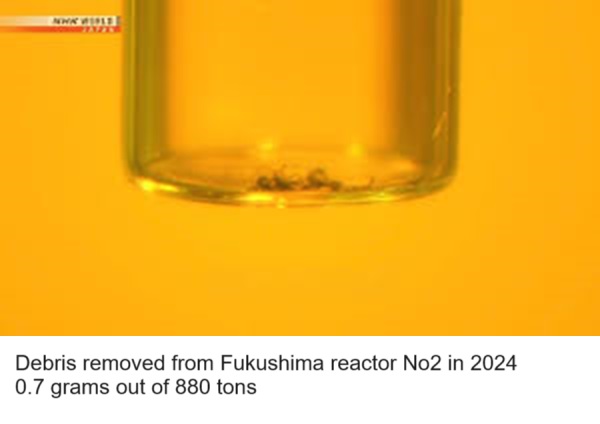
Friday, Feb. 21, https://www3.nhk.or.jp/nhkworld/en/news/20250221_08/?fbclid=IwY2xjawInSAlleHRuA2FlbQIxMQABHSRSw2PSosgQ6p28ndBqzler46N1Sr9mAHZH_X5SQL5hfjsJ5Tr3M48JTg_aem_xXho8cY6EkFQUvxp6aOcZQNuclear fuel debris that was extracted from the damaged Fukushima Daiichi nuclear power plant last year has been revealed to reporters for the first time.
The debris taken from the plant’s No.2 reactor consists of molten fuel mixed with surrounding structural components. The operator, Tokyo Electric Power Company, successfully retrieved 0.7 grams of the material in its first test extraction operation through November last year.
The debris was first transferred to a research facility of the Japan Atomic Energy Agency in Oarai Town, Ibaraki Prefecture, for the initial analysis, including surface observation.
The researchers then split the debris into smaller pieces to be examined at five research facilities, including a large one in Hyogo Prefecture.
Reporters were given the opportunity to observe the samples, which were placed in two separate transparent containers at a facility in Ibaraki Prefecture. One container held a particle about 2 millimeters in size that appeared silver, while the other had multiple dark fragments.
So far, the researchers have detected uranium, which is contained in nuclear fuel, on the surface of the debris, as well as metals such as iron, which are believed to have come from the reactor’s structure.
The researchers plan to examine the characteristics of the debris, including its hardness and adhesiveness. They will also expose the samples to lasers to determine whether the uranium inside is prone to triggering a nuclear fission reaction.
The agency says it will use these analyses to evaluate potential methods for full-scale extraction of the debris, and to determine the risk of a renewed criticality event, in which a self-sustaining chain reaction could occur.
The agency plans to release the findings of the major analyses in the middle of this year.
Ogino Hideki, the chief engineer at the agency’s Collaborative Laboratories for Advanced Decommissioning Science, spoke to the reporters.
He said it is difficult to fully grasp the overall characteristics of the debris based on the ongoing analyses alone. But he expressed his commitment to contributing to the decommissioning efforts through analyzing the samples using the technology that he and his fellow researchers have developed.
It is estimated that there is a total of around 880 tons of fuel debris in the No. 1, 2 and 3 reactors.
5.0-magnitude quake strikes off Japan’s Fukushima: JMA
TOKYO, Feb. 21 (Xinhua) https://english.news.cn/20250221/1a62306993674102b4bf547c66308416/c.html?fbclid=IwY2xjawInSGJleHRuA2FlbQIxMQABHaLmlIJlO8LIDD4_tC9mDYzpZnPQTSalQEzW0hj-j5vNUxWQ8hVw_Wrelw_aem_JSAQL14AGKbnrwbZ10cXPA
— An earthquake with a preliminary magnitude of 5.0 struck off the northeastern Japanese prefecture of Fukushima on Friday, the country’s weather agency said.
The temblor occurred at around 10:01 p.m. local time at a depth of 50 km, measuring 4 on the Japanese seismic intensity scale of 7, according to the Japan Meteorological Agency (JMA).
The epicenter was located at a latitude of 37.5 degrees north and a longitude of 141.5 degrees east.
There was no tsunami warning, the JMA added
Japan to pick final disposal sites for Fukushima soil around 2030

The Environment Ministry plans to decide around 2030 or later where to finally dispose of soil removed from the ground during decontamination work after the March 2011 disaster at Tokyo Electric Power Company Holdings’ Fukushima No.1 nuclear power plant, it was learned Wednesday.
The plan was included in a draft timetable for the final disposal of such soil outside Fukushima Prefecture by March 2045, presented by the ministry at a meeting of a related expert panel on the day. The ministry will consider a process for selecting final disposal sites from fiscal 2025.
As of the end of December, about 14 million cubic meters of such soil had been transported to an interim storage facility straddling the Fukushima towns of Okuma and Futaba.
Three-quarters of the soil had radiation concentrations of 8,000 becquerels per kilogram or less and will be reused in public works, while the rest will be subject to final disposal.
Final disposal sites are estimated to require up to 50 hectares if the volume of the soil is not reduced, or 2 to 3 hectares if the volume is reduced. Meanwhile, radiation levels would be higher in the reduced soil.
The government is slated to draw up a basic plan as early as this spring for reusing some of the soil and finally disposing of the rest.
TEPCO takes on challenge of making space for Fukushima nuclear debris
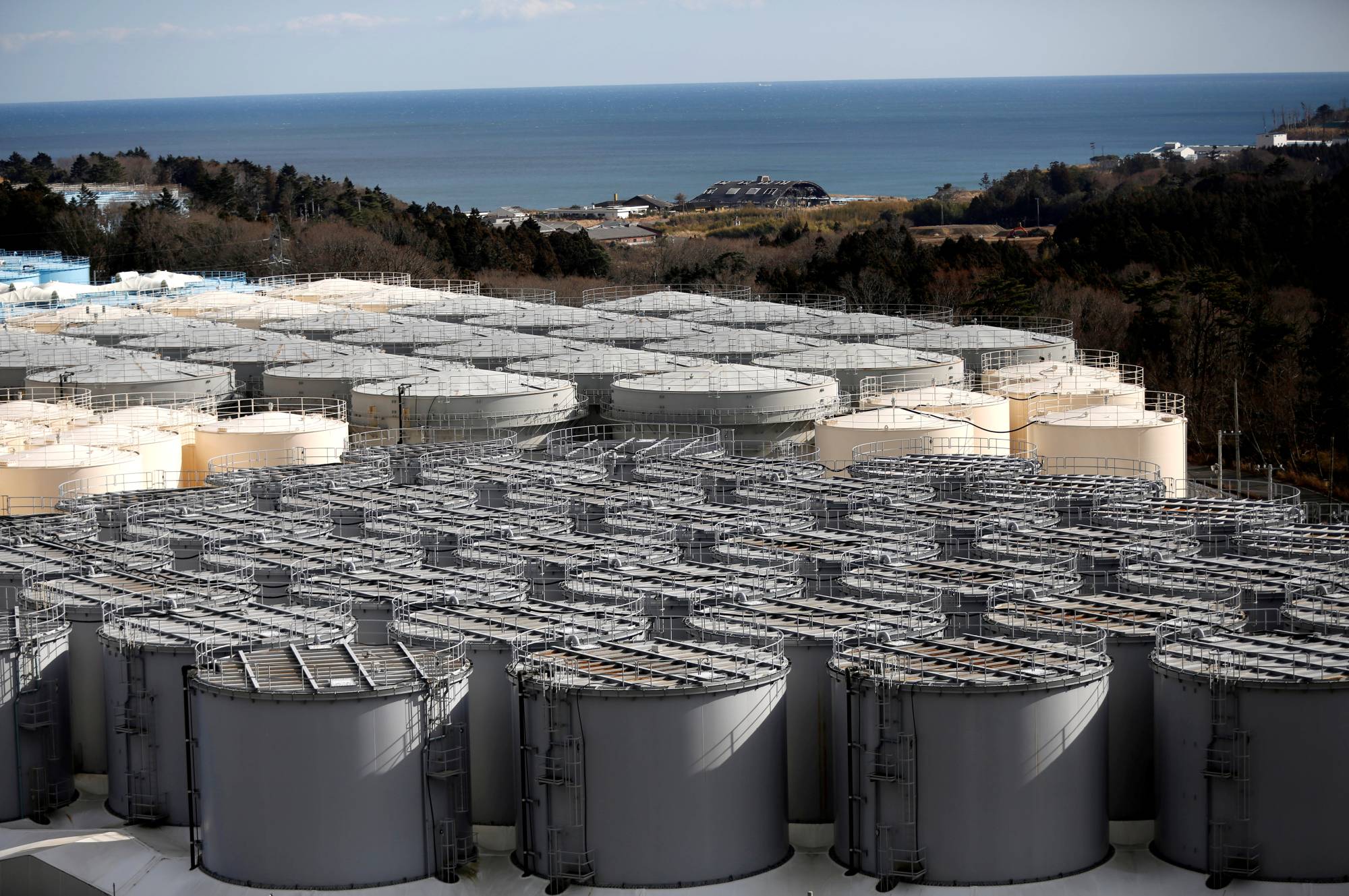
Fukushima Daiichi Nuclear Power Plant (Japan) (AFP) – Workers at Japan’s crippled Fukushima nuclear plant have started dismantling water storage tanks to free up space for tonnes of nuclear debris, 14 years after the facility was hit by a devastating tsunami.…………………….
France24 15th Feb 2025, https://www.france24.com/en/live-news/20250215-tepco-takes-on-challenge-of-making-space-for-fukushima-nuclear-debris
Kansai Electric to ship more spent nuclear fuel to France

Fukui Japan Times 9th Feb 2025 https://www.japantimes.co.jp/news/2025/02/09/japan/japan-more-spent-nuke-fuel-to-france/
Kansai Electric Power is working to double the amount of spent nuclear fuel it will ship to France, increasing it by about 200 tons, informed sources said.
The move comes as Fukui Prefecture, home to several nuclear plants, urges Kansai Electric to address shrinking storage capacity for spent nuclear fuel, the sources said.
In 2023, Kansai Electric announced a plan to ship about 200 tons of the fuel from its Takahama plant in Fukui to France starting in fiscal 2027. Based on the Japanese government’s policy, the spent fuel will be used for research on technology to reprocess uranium-plutonium mixed oxide, or MOX, fuel.
At the Takahama plant, about 90% of the spent fuel storage capacity has already been used, and that amount is expected to reach the upper limit in about three years.
About 200 tons of spent fuel will be generated if the No. 1 to No. 4 reactors at the plant are operated for about three years. Kansai Electric has restarted all of its seven nuclear reactors.
The company initially planned to send spent fuel mainly to a reprocessing plant to be built in Aomori Prefecture, but the completion of the facility has been postponed.
Last September, the company notified Fukui Gov. Tatsuji Sugimoto of its intention to review the plan, and said that it would halt three reactors in the prefecture if it fails to come up with a proposal that can win the understanding of officials there by the end of fiscal 2024.
40% of workers cite radiation concerns at Fukushima plant

By KEITARO FUKUCHI/ Asahi Shimbun, Staff Writer, February 2, 2025
Forty percent of the workforce at the crippled Fukushima No. 1 nuclear plant worry about radiation issues on the job, a nearly three-fold spike over the previous year, a survey found.
More than half of those respondents cited fears of their body coming into contact with a radioactive substance.
Tokyo Electric Power Co., the plant operator that conducted the annual survey, said recent incidents at the plant probably contributed to the heightened concerns.
For example, two workers were hospitalized in October 2023 after they were accidentally splashed with waste liquid containing highly radioactive substances while cleaning piping in a contaminated water treatment facility.
The survey was carried out between September and October to improve the working environment. TEPCO distributed a questionnaire to all workers at the plant and received responses from 5,498 individuals, or 94.5 percent……………………….
Asked to choose specific issues they were concerned about, 52.2 percent, the largest percentage, picked “physical contamination,” up about seven points from 2023.
In another incident, about 1.5 tons of contaminated water flowed out of a water purification facility at the plant through an air exhaust opening in February 2024…… more https://www.asahi.com/ajw/articles/15609878
Towns near Fukushima plant struggle to attract families with children
Japan Times 27th Jan 2025
The Great East Japan Earthquake on March 11, 2011, and the subsequent meltdowns at the Fukushima No. 1 nuclear power plant have left deep scars on Fukushima Prefecture, which has seen a significant decline in its estimated population.
Futaba County, home to the Fukushima plant that straddles the towns of Futaba and Okuma, has been hit particularly hard, with the prolonged evacuation of residents drastically reducing the number of children in the area. The region’s population decline due to the disaster is beyond the scope of natural or social population shifts.
Municipalities in the region are trying to come up with measures to bring back residents or attract new ones, but increasing the number of children remains a tall order.
Futaba County once enjoyed a high birth rate and strong ties among its residents thanks to stable job opportunities provided by the Fukushima No. 1 and No. 2 power plants and related industries.
Saki Yoshizaki, 36, a worker who lives in the city of Iwaki, gave birth to her eldest daughter, now 14, in her hometown of Okuma in 2010, a year before the nuclear disaster.
“With many relatives, friends and acquaintances around, the whole community helped raise children. I had almost no worries about becoming a parent,” Yoshizaki said, recalling her hometown fondly. “In a good way, it was a tight-knit community.”
However, such an environment changed suddenly following the nuclear incident as residents fled elsewhere. Today, young parents who are bearing and rearing children in the region are voicing their feelings of loneliness where community ties have been severed.
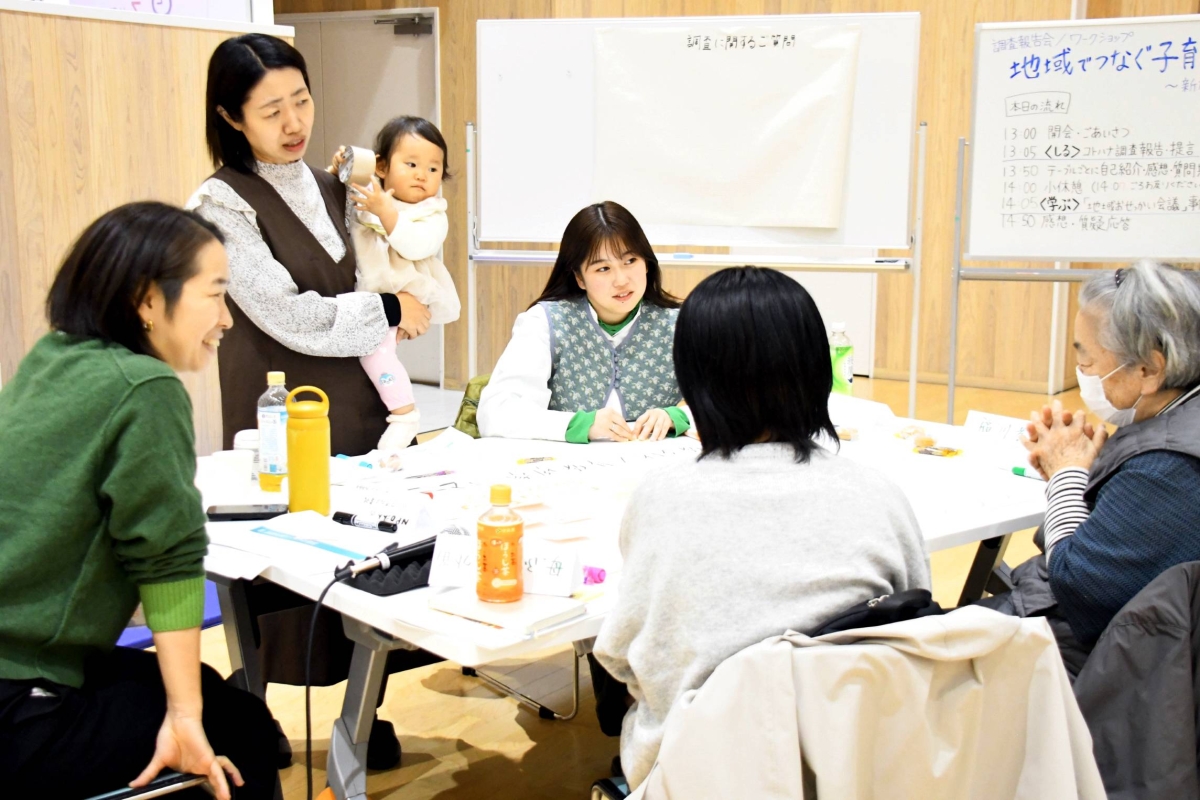
Minami Suzuki, 34, a co-representative of the volunteer group Cotohana in the Futaba town of Tomioka, worries about the future of the region. “If we don’t strengthen connections among parents, it might become increasingly difficult for the younger generations to choose to have children here,” she says……………………………………………………………………………………..
https://www.japantimes.co.jp/news/2025/01/27/japan/society/fukushima-children-decline/
How Fukushima’s radioactive fallout in Tokyo was concealed from the public

Because of the controversy surrounding Satoshi’s paper and the lack of research on the health impacts of these particles, it remains unclear to what extent Tokyo residents have been exposed to dangerous radiation levels as a result of the Fukushima accident.
Because CsMPs are so small, typically two microns or less in diameter, if humans breathe them, they could potentially reach the bottom of the lung, and be lodged into sacs known as alveoli, where the lung generally cannot expel them.
By unit of mass, CsMPs are much more radioactive than even spent reactor fuel
Japanese radiochemist Satoshi Utsunomiya found that air samples from March 15, 2011, in Tokyo contained a very high concentration of insoluble cesium microparticles. He immediately realized the implications of the findings for public safety, but his study was kept from publication for years.
Bulletin, By François Diaz-Maurin, January 13, 2025 [excellent illustrations]
On March 14 and 15, 2011—three days after the Great East Japan Earthquake and its resulting tsunami hit the Fukushima nuclear power plant—explosions at two of the plant’s reactor buildings released a huge amount of invisible radioactivity. These radioactive plumes were blown away by the wind, descending over the surrounding area and into the ocean. Eventually, the radiation emitted from the Fukushima plants spread over the entire Northern Hemisphere. It also spread to Japan’s capital, Tokyo.
Following the explosions, Japanese researchers rushed to collect and study radioactive materials from the soil and the air to find out what had happened inside the reactors, believed now to have melted down because their cooling systems failed. On March 13, the Tokyo Metropolitan Industrial Technology Research Institute, the agency responsible for measuring the air quality of particulate matter in the Tokyo area, started to collect air samples more frequently. This effort was part of the Tokyo metropolitan government’s emergency monitoring program for environmental radiation, which aimed to detect gamma-emitting nuclides in airborne dust. The filters revealed that at around 10 a.m. on March 15, 2011, a large plume of radioactivity reached Tokyo, some 240 kilometers (149 miles) south of Fukushima. All samples taken on March 14 and March 15 showed spikes in radioactivity.
The institute’s researchers published their first results in the journal of the Japan Radioisotope Association in June 2011 (Nagakawa et al. 2011); they estimated the total exposure dose to humans from radioactive substances, including iodine 131 and cesium 137 found in airborne dust, foodstuffs, and drinking water from the Setagaya ward in the old Tokyo City. Extrapolating from their measurements from March 13 to May 31, they calculated the corresponding annual cumulative dose of radiation in that part of Tokyo as being 425.1 microsieverts, which is less than half the annual dose limit to the public recommended by the International Commission on Radiological Protection. In a second conference publication in English (Nagakawa et al. 2012), the researchers extended their monitoring period to October and estimated that the total annual effective dose due to inhalation for adults in the Tokyo metropolitan area from the Fukushima radioactive plumes was far lower, at 25 microsieverts.
But two years after the accident, Japanese scientists discovered a new type of highly radioactive microparticle in the exclusion zone around the Fukushima plant. The microparticles, which had been ejected from the Fukushima reactors, contained extremely high concentrations of cesium 137—a radioactive element that can cause burns, acute radiation sickness, and even death. Satoshi Utsunomiya, an environmental radiochemist from Kyushu University in southwestern Japan, soon found that these particles were also present in air filter samples collected in Tokyo in the aftermath of the Fukushima accident.
The controversy surrounding his attempts to publish his findings nearly cost him his career and prevented his results from being widely known by the Japanese public ahead of the 2020 Summer Olympics in Tokyo.[1] Scientists still don’t know if these highly radioactive microparticles present significant danger to people, and Satoshi is one of the very few scientists who is focused on trying to find out. “We have the measurements now that tell that the particles did pass over population centers and were being deposited in places,” Gareth Law, a radiochemist from the University of Helsinki, told me. “We should answer the question.”
The discovery
In May 2012, Toshihiko Ohnuki, an accomplished environmental radiochemist then at the Japan Atomic Energy Agency (JAEA), visited Yoshiyasu Nagakawa at the Tokyo Metropolitan Industrial Technology Research Institute, also known as TIRI. Nagakawa was the first author of two TIRI studies on radiation exposure in Tokyo, and Ohnuki asked Nagakawa if he could obtain some air samples for further analysis. Ohnuki had already studied how radioactive cesium fallout from Fukushima reacted with components of contaminated soil. Now, he wanted to do the same with the airborne dust samples from Tokyo.
Nagakawa gave Ohnuki five small filters that had been collected from the Setagaya ward in old Tokyo City at different times on March 15, 2011—the day the radioactive plume reached Tokyo. Ohnuki received the samples without restriction on their use, and no written agreement was made.[2]
Back in his laboratory at JAEA, Ohnuki performed autoradiography of the five samples, revealing many radioactive spots on all of them. The bulk radioactivity on each sample was measured to be between 300 counts per minute for the filter that covered the midnight to 7 a.m. period and 10,500 counts per minute between 10 a.m. and 11 a.m. on March 15.[3] The radiation rate was so high that Ohnuki had to cut some of the filters into small pieces, less than one square centimeter, to keep from saturating the scanning electron microscope. Ohnuki stored the unexamined filters for future analysis.
Months later, in August 2013, four researchers from the Meteorological Research Institute in Japan reported for the first time about a new type of spherical radioactive cesium-bearing particle that had been ejected in the early days of the Fukushima accident (Adachi et al. 2013). The researchers had collected air samples on quartz fiber filters at their institute in Tsukuba, located 170 kilometers southwest of the Fukushima plant. Their findings, published in Scientific Reports, were about to revolutionize the way environmental radiochemists understood the radioactive fallout from Fukushima.
Back in the lab, the researchers placed the filters on an imaging plate and inserted them into a portable radiography scanner. The images revealed many black dots, which indicated the presence of radioactive materials on the filters, with a maximum radioactivity level measured on the sample at 9:10 a.m. on March 15, 2011, four days after the Fukushima accident began. The researchers placed this sample under a scanning electron microscope and then into an energy-dispersive X-ray spectrometer to directly observe the shape and composition of the radioactive materials on the filters. What they saw stunned them………………………………………………………………
Shocking results
The newly discovered entities were initially called spherical cesium-bearing particles, but Satoshi and his co-workers coined the term cesium-rich microparticles, or CsMPs, in 2017, which is now what researchers call them generally (Furuki et al. 2017). CsMPs had not been noted in earlier major reactor accidents.
Scientists knew the microparticles came from the Fukushima reactors because their isotopic ratio between cesium 134 and cesium 137 matched the average ratio for the three damaged reactors calculated by the Oak Ridge National Laboratory.[5] Because these particles emanated from the Fukushima reactors, Satoshi and the other scientists studying them thought that they may contain evidence about reactions that occurred during the accident. But the environmental radiochemist’s curiosity was also triggered by the unique features of these microparticles: Their size is very small, typically two to three microns, even smaller than one micron in some cases.[6] And the cesium concentration in each of the particles is very high relative to their size.
After Satoshi obtained four small pieces of the Tokyo air filters, he designed what he calls “a very simple procedure” to find out whether the filters contained cesium-rich microparticles. In April 2015, he took autoradiograph images of the four pieces, confirming what Ohnuki had already seen with a digital microscope at JAEA. Then Satoshi moved to characterize the structural and chemical properties of the particles using scanning electron microscopy (SEM) and atomic-resolution transmission electron microscopy (TEM). Although the procedure’s design was simple, executing these steps would prove to be extremely difficult.
In July 2015, as Satoshi was busy working on the Tokyo air filters in his lab at Kyushu University, Ohnuki received a note from Nagakawa, the TIRI researcher who had provided the samples, asking him to return them so they could be reanalyzed. In his e-mail, Nagakawa did not specify the motive for his request, which appeared innocuous: “Please return at least some of the materials we gave you for reanalysis … if the location is unknown, it can’t be helped.”
Ohnuki immediately sent Nagakawa two filters from March 15, including the filter from 10 a.m. to 11 a.m. that had the highest level of radioactivity and contained the largest number of radioactive spots. Ohnuki added that he had discarded the other three filters after he analyzed them in 2013.
Nagakawa also asked Ohnuki whether he was planning to publish papers based on the samples. Ohnuki explained that he stopped analyzing them after his inconclusive attempts in 2013, but did not mention he had given Satoshi part of the filters for study.[9]
Satoshi was now ready to publish his results in a scientific journal. These were important findings that the scientific community needed to know. But Satoshi also understood that they could create a public relations crisis in Japan because his findings contradicted previous statements that played down the implications for public health of Fukushima fallout in Tokyo.
The Goldschmidt Conference—the foremost such international meeting on geochemistry—that year was held in the Japanese city of Yokohama. Satoshi was invited to give a plenary talk and present his research on environmental contamination from the Fukushima disaster (Utsunomiya 2016). During the talk, he presented his new findings on the Tokyo air filters. His talk received a lot of attention and was even reported by several Japanese and international newspapers. After his presentation, the scientific chair of the conference, Hisayoshi Yurimoto, said: “Very interesting results. And also very shocking results.”[1
In April and June 2016, Satoshi conducted dissolution experiments and quickly confirmed that the CsMPs were insoluble in water. The experiments also showed that most of the cesium activity on these filters came from CsMPs. In fact, up to 90 percent of the cesium radioactivity came from these microparticles, not from soluble forms of cesium—meaning that most of the cesium radioactivity detected during the March 15 plume in Tokyo was from CsMPs.
Between 2016 and 2019, a Kafkaesque sequence of events circled about Ohnuki, the former JAEA researcher who gave Satoshi the Tokyo air filter samples, and Satoshi. During that sequence of events, Satoshi’s research paper was accepted for publication by a prestigious scientific journal after peer review—but the journal delayed publication of the paper for years, eventually deciding not to publish it based on mysterious accusations of misconduct that, it turned out, were unwarranted. As a result, Satoshi’s findings were not made widely known, saving the Japanese authorities a possible public relations crisis as the summer Olympics in Tokyo neared. Because of the controversy surrounding Satoshi’s paper and the lack of research on the health impacts of these particles, it remains unclear to what extent Tokyo residents have been exposed to dangerous radiation levels as a result of the Fukushima accident.
I worked to reconstruct the sequence of events related to Satoshi’s research paper to find out whether the controversy over its publication was the result of some unethical practice on his part; competition between research laboratories; or attempted suppression of scientific results. The account that follows is based on the review of dozens of e-mails, letters, reports, and transcripts of phone conversations the Bulletin has obtained, as well as on multiple interviews with people directly involved in the events.
In August 2016, the leader of Nagakawa’s research group at TIRI, Noboru Sakurai, sent an e-mail to Ohnuki urging him to return filter samples he had earlier obtained from TIRI to the Tokyo Institute of Technology, where Ohnuki was now employed. Ohnuki responded that the filters had already been sent, but Sakurai maintained they had not received them. Ohnuki had asked a staff member of the research group he used to work in at the Japan Atomic Energy Agency to send the samples he had left there, but the samples were not sent. Because the samples were studied in a controlled area, theymay have been disposed of together with other Fukushima-related samples that had been stored at JAEA.
In October, as Ohnuki dealt with insistent requests that he return the filter samples, Satoshi submitted two research manuscripts to the journal Scientific Reports, one on the first successful isotopic analysis of individual cesium-rich microparticles based on soil samples collected from the exclusion zone at Fukushima, and one on the first characterization of the CsMPs from the Tokyo air filter samples that he had presented during his talk in Yokohama. Both articles were accepted in early January 2017 after peer review.[11]
The Tokyo paper, titled “Caesium fallout in Tokyo on 15th March, 2011 is dominated by highly radioactive, caesium-rich microparticles,” was co-authored by three graduate students from Satoshi’s lab—Jumpei Imoto, Genki Furuki, and Asumi Ochiai, who conducted the experiments—and three Japanese collaborators: Shinya Yamasaki from the University of Tsukuba who contributed to the measurement of samples; Kenji Nanba of Fukushima University, who contributed to the collection of samples; and Toshihiko Ohnuki, who had obtained the samples. The paper included two international collaborators who were world experts in the study of radioactive materials, Bernd Grambow of the French National Center for Scientific Research at the University of Nantes in France and Rodney C. Ewing of Stanford University, who contributed to the research ideas and participated in the analysis of the data. Satoshi was the lead author of the study.
……………………………………………..On the day of the visit, Moriguchi sent an e-mail to Ohnuki, pressing him to inform TIRI about the planned publication. “This type of information makes government agencies very sensitive,” Moriguchi wrote. “If the results obtained from these valuable sample collections conducted at a research institute under the administration were to incur the displeasure of government agencies and it becomes difficult to obtain cooperation from research institutions, we are concerned that this could hinder future research using these types of samples.”
…………………………………………………..Almost immediately, Sakurai moved to block the publication, according to e-mails obtained by the Bulletin.
………………………………………………………………………………………In July 2017, TIRI increased the pressure by sending a formal complaint to the Tokyo Institute of Technology, where Ohnuki was now employed. In a letter that the researchers were not able to see until a year after it was sent, TIRI accused Ohnuki of “suspected acts violating internal regulations, researcher’s ethics and code of conduct” in providing Satoshi with samples from TIRI without the institute’s consent.
As the issue became more political and involved more institutions, Satoshi continued his research on CsMPs and presented two other papers about Fukushima at the next Goldschmidt Conference in Paris in August 2017. Later that month, under pressure from the Tokyo Metropolitan Institute of Industrial Technology, the Tokyo Institute of Technology opened a formal investigation of Ohnuki on suspicion of improper research activities with Satoshi. “It was like a court,” Satoshi said of being called before the compliance committee. Except that, unlike in a trial, he did not know the exact terms of what they were accused of. “The team at TIRI didn’t even allow Kyushu University to show me this letter,” Satoshi said. “So at that point, I didn’t understand what the problem was.”
………………………………………………………………………………………………………………………………………………. Cleared but still harassed
During the investigation, Satoshi almost gave up on publishing the paper based on examination of the filters in Tokyo. He told the committee members that he would probably withdraw the paper, then “in press,” from Scientific Reports. Both the committee members and TIRI were pleased. “But then I talked to Rod [Ewing], and we did something clever,” Satoshi explained. They would not withdraw the paper; instead, they would keep it “in press” until the investigation was over.
…………………………………………………………………………….Tokyo Tech initiated a pressure campaign against Ohnuki and Satoshi to get the samples back…………………………………..
Satoshi did not want to give the samples away. “These are the only evidence to prove our article,” he said.
………………………………………………………“I sent all the samples to Stanford,” Satoshi said. Satoshi sent the air filter samples through regular postal services “in a UPS package.”[15] On September 13, Kyushu University’s executive vice president, Koji Inoue, called Satoshi to his office and yelled at him, urging him to give back the samples. Satoshi told Inoue that it was too late; he had already sent the samples to Stanford “for further investigation.”
Now the samples were secured, but Satoshi still needed his paper to be published.
……………………………………………………………………….. Thompson’s article in Scientific American was published on March 11, 2019, mentioning the fact that the paper had been rejected (Thompson 2019).
In June 2019, Satoshi and his co-authors posted their paper on arXiv (Utsunomiya et al. 2019), thereby making the findings public—two-and-a-half years after its acceptance by Scientific Reports. Ohnuki’s name does not appear in the list of co-authors on the arXiv paper, and Satoshi did not acknowledge TIRI for providing the samples.
……………………………………………………………………………………. After the paper was made public, the researchers received some attention, but not the visibility commensurate with the implications that the study had for public health in Japan.[16] The three institutions—TIRI, Tokyo Tech, and Kyushu University—were all “very happy,” Satoshi said. “People may think that we lost, but for me, we actually protected science.“
New risks
In the early days after the Fukushima accident, radiochemists thought that the situation was very different from Chernobyl. The three reactor-core damage events at Fukushima were considered to be of low energy, meaning that no actual explosion of the reactors had occurred, as was the case for Chernobyl. This led radiochemists to assume that radioactive particles probably had not come out of the reactors or, at least, not in large volume. A lot of the early post-accident research, therefore, focused on the traditional environmental radiochemist approach of collecting soils and sediments, doing bulk analysis, and learning from that.
It was only after scientists discovered the existence of cesium-rich microparticles that researchers, including Satoshi, realized that particles had actually been ejected from the reactors.
…………………………………………………………………………Because they were unknown until recently, CsMPs pose new risks that are still underappreciated by the research community and public authorities.
Once formed, radioactive cesium 137 has a half-life of about 30 years, after which half of the nuclides will have decayed into stable barium 137, whereas the other half will remain radioactive. CsMPs tend to accumulate, forming hotspots that contain many of the particles.[17] Hotspots of the microparticles have been found inside and outside abandoned buildings in the Fukushima exclusion zone and in other places (Fueda et al. 2023; Ikenoue et al. 2021; Utsunomiya 2024a). “They’re actually there in great numbers in many places, and then that’s when the health questions start to come in,” Law said. Despite their great numbers and potential risks, hotspots of CsMPs have not been systematically mapped around Fukushima. “When we visited the exclusion zone, we could still see some hot spot occurrences on the roadside without any protection,” Satoshi said. “We shouldn’t be able to access freely that kind of hot spots.”
Because CsMPs are so small, typically two microns or less in diameter, if humans breathe them, they could potentially reach the bottom of the lung, and be lodged into sacs known as alveoli, where the lung generally cannot expel them.[18] Scientists don’t know what would happen then. For instance, a typical immune system response would consist of some kind of clearance mechanism that seeks out foreign bodies and tries to either envelop or dissolve them. But it is still unknown how exactly CsMPs would dissolve in lung fluids.
Most knowledge about breathing and radioactive particulates is based on the assumption that particles dissolve, and researchers have calculated the rates for their dissolution in the human body. But because CsMPs don’t dissolve easily, once inhaled, they will likely stay longer in the human body. Researchers believe that, because CsMPs are so slow to dissolve, they may stay much longer—certainly for several months, maybe longer—in the body, compared to hours or days for suspended cesium.[19]
By unit of mass, CsMPs are much more radioactive than even spent reactor fuel. Some researchers from the Japan Atomic Energy Agency have shown that cultured cells exposed to the radiation from suspended CsMPs display a stronger local impact compared to what is known from previous radiological simulation studies using soluble radionuclides (Matsuya et al. 2022). Scientists are only now seeing some emerging evidence that the point-source nature of the radioactivity from CsMPs could lead to damage to cell systems. This is qualitatively different from the conventional estimate of internal radiation dose at the organ level based on uniform exposure to soluble cesium.
Despite the new risks that CsMPs might pose, the study of their impacts has received little interest.
…………………………………………………………………………………………………….Satoshi continues to study CsMPs actively and regularly presents his results to the Goldschmidt Conference and publishes his results in scientific journals. He and his collaborators work relentlessly to understand better the fate of CsMPs in the environment and their impacts on human health. In 2024, Satoshi received the Geochemical Society’s Clair C. Patterson Award in recognition of his innovative contributions to the understanding of CsMPs.[21]……………… more https://thebulletin.org/premium/2025-01/how-fukushimas-radioactive-fallout-in-tokyo-was-concealed-from-the-public/?utm_source=SocialShare&utm_medium=Facebook&utm_campaign=Facebook&utm_term&fbclid=IwY2xjawHyUndleHRuA2FlbQIxMQABHb1H3gK2UVzfBC5I7-s75EVtx4t5Q9uUi2MspvTqpluEOqbarYJJnhIwUA_aem_ok6x3HQOxccGg2I-7KnZjA
Japanese yakuza leader pleads guilty to trafficking nuclear materials from Myanmar
US authorities charged Takeshi Ebisawa with conspiring to traffic nuclear materials from Myanmar for expected use by Iran in nuclear weapons, handling nuclear material sourced from Myanmar and seeking to sell it to fund an illicit arms deal, US authorities have said.
Yakuza leader Takeshi Ebisawa and a co-defendant had previously been charged in April 2022 with drug trafficking and firearms offences, and both were remanded.
He was then additionally charged in February 2024 with conspiring to sell weapons-grade nuclear material and lethal narcotics from Myanmar, and to purchase military weaponry on behalf of an armed insurgent group, prosecutors said.
The military weaponry to be part of the arms deal included surface-to-air missiles, the indictment alleged.
“As he admitted in federal court today, Takeshi Ebisawa brazenly trafficked nuclear material, including weapons-grade plutonium, out of Burma,” acting US attorney Edward Kim said on Wednesday, using another name for Myanmar.
“At the same time, he worked to send massive quantities of heroin and methamphetamine to the United States in exchange for heavy-duty weaponry such as surface-to-air missiles to be used on battlefields in Burma.”
Prosecutors alleged that Ebisawa, 60, “brazenly” moved material containing uranium and weapons-grade plutonium, alongside drugs, from Myanmar.
From 2020, Ebisawa boasted to an undercover officer he had access to large quantities of nuclear materials that he sought to sell, providing photographs of materials alongside Geiger counters registering radiation.
During a sting operation including undercover agents, Thai authorities assisted US investigators in seizing two powdery yellow substances that the defendant described as “yellowcake.”
“The (US) laboratory determined that the isotope composition of the plutonium found in the Nuclear Samples is weapons-grade, meaning that the plutonium, if produced in sufficient quantities, would be suitable for use in a nuclear weapon,” the Justice Department said in its statement at the time.
One of Ebisawa’s co-conspirators claimed they “had available more than 2,000 kilograms (4,400 pounds) of Thorium-232 and more than 100 kilograms of uranium in the compound U3O8 – referring to a compound of uranium commonly found in the uranium concentrate powder known as ’yellowcake’.”
The indictment claimed Ebisawa had suggested using the proceeds of the sale of nuclear material to fund weapons purchases on behalf of an unnamed ethnic insurgent group in Myanmar.
Ebisawa faces up to 20 years’ imprisonment for the trafficking of nuclear materials internationally.
Prosecutors describe Ebisawa as a “leader of the Yakuza organised crime syndicate, a highly organised, transnational Japanese criminal network that operates around the world (and whose) criminal activities have included large-scale narcotics and weapons trafficking.”
Sentencing will be determined by the judge in the case at a later date, prosecutors said.
Japanese crime boss admits to conspiring to sell nuclear material to Iran
Takeshi Ebisawa faces a maximum punishment of life in prison after pleading guilty to six counts in a Manhattan court.
A Japanese crime boss has pleaded guilty to conspiring to sell nuclear material from Myanmar to Iran along with drug trafficking and weapons offences, authorities in the United States have said.
Takeshi Ebisawa, 60, a member of the yakuza, entered a guilty plea to six counts in federal court in Manhattan on Wednesday, the US Department of Justice said in a statement.
He is set to be sentenced on April 9.
According to prosecutors, Ebisawa in 2020 told an undercover agent for the Drug Enforcement Administration (DEA) and a DEA source that he had acquitted a large quantity of thorium and uranium that he wished to sell.
In response to Ebisawa’s repeated inquiries, the undercover agent agreed to help Ebisawa broker the sale of the nuclear materials to an associate who was posing as an Iranian general, prosecutors said.
Ebisawa then offered to supply the undercover associate with plutonium that would be even “better” and more “powerful” than uranium for making nuclear weapons, according to prosecutors.
A powdery yellow substance that Ebisawa’s co-conspirators showed to undercover agents was later determined in a laboratory analysis to contain detectable quantities of uranium, thorium and plutonium, the Justice Department said.
Ebisawa also conspired to broker the purchase of US-made surface-to-air missiles and heavy-duty weaponry to arm multiple ethnic armed groups in Myanmar, and to accept large quantities of heroin and methamphetamine as partial payment for the arms, according to prosecutors.
US officials said they conducted Ebisawa’s arrest and prosecution in cooperation with law enforcement partners in Indonesia, Japan and Thailand.
“Today’s plea should serve as a stark reminder to those who imperil our national security by trafficking weapons-grade plutonium and other dangerous materials on behalf of organized criminal syndicates that the Department of Justice will hold you accountable to the fullest extent of the law,” said Assistant Attorney General Matthew G Olsen of the Justice Department’s National Security Division.
Ebisawa, who was previously charged in 2022 with international drug trafficking and firearms offences, faces possible life imprisonment for the most serious of the charges.
Improved way to gauge radiation doses developed for Fukushima
Asahi Shimbun, By KEITARO FUKUCHI/ Staff Writer, December 31, 2024
[Ed. they studied only 30 people]
The Japan Atomic Energy Agency said it has developed a more accurate method to estimate radiation exposure doses among people who spend time around the stricken Fukushima No. 1 nuclear plant.
The JAEA has adapted the method, based on daily life patterns, into program format and is offering it for free on a municipal government website and elsewhere.
When the central government designated evacuation zones following the 2011 triple meltdown at the plant operated by Tokyo Electric Power Co., it estimated radiation doses among residents using a simple evaluation method that assumed they spent eight hours outdoors and 16 hours indoors a day.
That method allowed for quick estimation, but it tended to overestimate the doses.
Other existing evaluation methods also have shortcomings, including a failure to reflect the actual environment.
The JAEA began developing the new method in 2017.
JAEA researchers drew on data compiled by the Nuclear Regulation Authority to calculate average air dose rates for 100-meter-by-100-meter areas.
They also took into account where and for how long the residents and workers frequented near the plant, and how they moved between different locations, such as on foot or by car, the officials said.
They asked around 30 people working in former and current evacuation zones to carry personal dosimeters and then compared the measurements and estimates for their exposure doses in 106 patterns……………………………………………………………….. https://www.asahi.com/ajw/articles/15553626?fbclid=IwY2xjawHh0Y9leHRuA2FlbQIxMQABHRIRfUukVbNPX60rGOQi_qUp5oMiYFThXBvPZN4h0XJiPQ_xn8trGYEIkA_aem_GwPtrY24MPxB4L0v2u8SuA
1 This Month

of the week – Shut Down Drone Warfare!


Tell the Ukrainian Government to Drop Prosecution of Peace Activist Yurii Sheliazhenko

Petition to revoke the licensing of the Near Surface Nuclear Disposal Facility (NSDF) at Chalk River. https://www.ourcommons.ca/petitions/en/Petition/Details?Petition=e-7247
To see nuclear-related stories in greater depth and intensity – go to https://nuclearinformation.wordpress.com
-
Archives
- April 2026 (44)
- March 2026 (251)
- February 2026 (268)
- January 2026 (308)
- December 2025 (358)
- November 2025 (359)
- October 2025 (376)
- September 2025 (257)
- August 2025 (319)
- July 2025 (230)
- June 2025 (348)
- May 2025 (261)
-
Categories
- 1
- 1 NUCLEAR ISSUES
- business and costs
- climate change
- culture and arts
- ENERGY
- environment
- health
- history
- indigenous issues
- Legal
- marketing of nuclear
- media
- opposition to nuclear
- PERSONAL STORIES
- politics
- politics international
- Religion and ethics
- safety
- secrets,lies and civil liberties
- spinbuster
- technology
- Uranium
- wastes
- weapons and war
- Women
- 2 WORLD
- ACTION
- AFRICA
- Atrocities
- AUSTRALIA
- Christina's notes
- Christina's themes
- culture and arts
- Events
- Fuk 2022
- Fuk 2023
- Fukushima 2017
- Fukushima 2018
- fukushima 2019
- Fukushima 2020
- Fukushima 2021
- general
- global warming
- Humour (God we need it)
- Nuclear
- RARE EARTHS
- Reference
- resources – print
- Resources -audiovicual
- Weekly Newsletter
- World
- World Nuclear
- YouTube
-
RSS
Entries RSS
Comments RSS
 nuclear-news