The hybrid boars of Fukushima
“Once people were gone, the boar took over,” explains Donovan Anderson, a
researcher at Fukushima University in Japan. His genetic study of the wild
boar that roam in an area largely abandoned after Japan’s 2011 nuclear
disaster – has revealed how the animals have thrived. Using DNA samples, he
also discovered that boar have bred with domestic pigs that escaped from
farms. This has created wild pig-boar hybrids that now inhabit the zone.
“While the radiation hasn’t caused a genetic effect, the invasive domestic
pig species has,” Mr Anderson explained.
BBC 30th June 2021
Japan’s murky management of Fukushima nuclear wastewater

Japan’s murky management of Fukushima nuclear wastewater https://www.eastasiaforum.org/2021/06/25/japans-murky-management-of-fukushima-nuclear-wastewater/
Author: Cheol Hee Park, SNU
On 13 April 2021, the Japanese government announced plans to dispose of the wastewater stored at the Fukushima Daiichi nuclear plant into the Pacific Ocean over a period of 30 years.
The plant has about 1000 wastewater tanks that can hold up to 1.37 million tons of contaminated water. Currently, 1.25 million tons are being stored, which accounts for about 90 per cent of the total storage capacity. The tanks are expected to fill up by the autumn of 2022, which prompted the Japanese government to adopt the least expensive option — disposing the wastewater into the sea, starting from 2023.
The United States and the International Atomic Energy Agency (IAEA) remain sympathetic to the Japanese decision, saying that it meets the international standard. On the other hand, China and South Korea have voiced concerns about the decision. They are distrustful of and dissatisfied with the sudden decision made by the Japanese government. The difference is starkly highlighted in how the wastewater is being referred to by different countries. Japan and the United States call it ‘treated water’ while China and South Korea define it as ‘contaminated water’.
The Japanese government explained that it will fully treat and dilute the wastewater until the contamination level is reduced to at least one-hundredth of its original concentration. Officials say that tritium will be reduced to one-fortieth of the Japanese government’s normal standard. Deputy Prime Minister Taro Aso even claimed that the treated water will be drinkable.
he Japanese government also made it clear that before the accident in 2011 the Fukushima nuclear plant disposed of 2.2 trillion becquerels of tritium into the sea each year, which caused no problems. They added that because tritium is a weak radioactive isotope, most of the material will exit the human body, meaning its negative impact will be small.
Despite the Japanese government’s efforts to convince people outside of the country, the most vocal opposition has come from within Japan. The Japan Fishermen’s Association argued that they will not accept the Japanese government’s decision. They explain that the decision went against the government’s promise in 2015 that the release would not happen without their consent. Fishermen from Fukushima and Ibaraki are particularly sensitive about the potential consumer backlash over the radioactive wastewater release, which will directly impact their livelihoods. About 70 per cent of fishermen oppose the government’s decision. It remains unclear whether the Japanese government will be able to persuade them.
Concerns from neighbouring countries are another hurdle to overcome. There is little sign that the Japanese government fully consulted adjacent countries before it announced the decision. Because of the lack of prior consultation and reliable notice, the Japanese government’s decision should be regarded as a unilateral move. South Korea and China should not approach this issue to drag down Japan’s efforts to resolve the problem. At the same time, it is Japan’s responsibility to be attentive to neighbouring countries’ legitimate concerns.
Securing transparency in the process of implementing the plan is another challenge. Despite the Japanese government’s explanation, it remains uncertain whether various nuclides other than tritium can be reliably removed using the Advanced Liquid Processing System (ALPS). Passing on the correct and reliable information to concerned parties in and outside the country is necessary. Japan should incorporate third-party specialists to provide objective and reliable information about the process.
Finally, verifying the safety of the water with international standards would give comfort to and garner trust from concerned parties, including Japanese fishermen. The IAEA could mobilise experts or build a verification team on behalf of Japan and its neighbouring countries so that all concerned regional countries can be persuaded about the safety of the water.
The Japanese government should better fulfil its responsibilities, justify the necessity of its decision, remain transparent about its implementation of the plan and be resilient in verifying the safety of the water it disposes of.
Cheol Hee Park is Professor at the Graduate School of International Studies and Director of the Institute of International Affairs, Seoul National University.
TEPCO begins process to scrap Fukushima No. 2 nuclear plant,
TEPCO begins process to scrap Fukushima No. 2 nuclear plant, http://www.asahi.com/ajw/articles/14379413
THE ASAHI SHIMBUN, June 23, 2021 Tokyo Electric Power Co. Holdings Inc. began decommissioning the Fukushima No. 2 nuclear power plant in Fukushima Prefecture on June 23, aiming to complete the work in fiscal 2064.
In 2018, TEPCO decided to scrap all four reactors at the plant, located south of the No. 1 nuclear plant that was devastated by the 2011 Great East Japan Earthquake and tsunami. Operations at the No. 2 plant have been suspended since it was inundated by the tsunami.
The company estimates the total cost of scrapping the No. 2 plant, including reprocessing spent nuclear fuel, at 410 billion yen ($3.70 billion).
TEPCO divided the process of decommissioning the plant in four stages, each taking about a decade. In the first stage, the company will focus mainly on decontamination work.
TEPCO has already begun work to scrap all six reactors at the crippled No. 1 plant. The company needs considerable manpower to simultaneously carry out the decommissioning work at both plants.
It is also facing many challenges, such as where some 10,000 spent nuclear fuel assemblies should be transferred to.
The Nuclear Regulation Authority, the government’s nuclear watchdog, approved TEPCO’s decommissioning plan for the No. 2 plant on April 28. The company also obtained prior consent to the plan from Fukushima Prefecture as well as Tomioka and Naraha towns, which co-host the plant, on June 16.
Fukushima Governor Masao Uchibori is urging TEPCO to move the spent fuel out of the prefecture and to cultivate a corporate culture that prioritizes safety and to work with local companies when carrying out the decommissioning work.
TEPCO started the work by inspecting the interior of the reactor buildings and checking the procedure for decommissioning. It will bring in necessary equipment and materials to the plant from July 1 and begin decontamination work on a full scale from mid-July.
(This article was written by Tetsuya Kasai and Satoshi Shinden.)
Alarm at Japan’s plan to restart Kansai’s ageing No.3 nuclear reactor
As Japan reboots ageing Mihama nuclear reactor, experts express concern, Reuters, Aaron Sheldrick 23 June 21
- Reactor restarted after sitting idle for 10 years
- First of four old reactors to get exceptions
- For an interactive graphic on the status of Japan’s nuclear reactors, click https://tmsnrt.rs/2OTpNfA
– The head of a major inquiry into Japan’s nuclear disaster and a former senior Cabinet adviser have sounded alarms over plans this week to restart a 44-year old reactor, saying the industry and government have not taken on board the lessons from Fukushima.
Kansai Electric Power (9503.T), which serves Osaka and its industrial environs – an area with roughly the same economic output as Mexico – said it restarted the No. 3 reactor at its Mihama station in western Japan earlier on Wednesday.
The reactor is the oldest to be restarted since the 2011 Fukushima disaster and needed special approval to have its lifetime extended beyond the standard 40-year limit. Most reactors in Japan remain shut after the accident highlighted failings in regulation and oversight.
Tatsujiro Suzuki, a former deputy chairman of the Cabinet Office’s Atomic Energy Commission, told Reuters he has misgivings over how approval for the restart was obtained.
- He said he was concerned about a lack of transparency and the use of subsidies to sweeten local opinion to get the necessary restart approval…….
- It looks like the industry and the government have not learned the lessons of Fukushima,” said Suzuki, who is on the advisory board of a parliamentary committee on nuclear safety.
Bureaucrats from the Ministry of Economy, Trade and Industry (METI), which supports nuclear energy to power Japan’s industrial economy, went to Fukui prefecture 110 times over a two-year period until early this year.
The visits to Fukui by officials including the head of the powerful natural resources agency were raised at a recent hearing of the parliamentary committee.
A subsidy of 2.5 billion yen ($23 million) was agreed for local communities before the Fukui governor signed off on the restart…….
- Five workers died at Mihama power station in 2004 after a pipe that had not been inspected for nearly a decade burst, releasing high pressure steam and hot water.
- In 2019, Kansai Electric executives admitted to receiving cash and gifts worth 360 million yen from an official from a town hosting one of its other nuclear plants.”They haven’t changed, that’s my impression, despite the scandal involving kickbacks,” Suzuki said……..
A silo mentality among executives and a collectivist mindset among bureaucrats, which puts organisational interests ahead of public duties on safety are still prevalent in Japan, Kurokawa said.
“It’s always important to ask what are the sanctions for bad corporate behaviour. If there are none, and in Japan there are none, then oversight is meaningless,” he said, adding he was concerned about the restart.
Mihama is one of 16 reactors that have received either preliminary or final approval to restart…………https://www.reuters.com/world/asia-pacific/japan-reboots-44-year-old-nuclear-reactor-experts-sound-alarm-2021-06-22/
The Fukushima nuclear disaster and the Tokyo Olympics

“There was a very clear political agenda by Shinzo Abe, to use the Olympics to rehabilitate the impression of both Fukushima and the nuclear disaster domestically and globally,”
“It’s hard for me to support the idea of using the Olympics to present a narrative of recovery, where so much recovery remains to be done.”
The Fukushima nuclear disaster and the Tokyo Olympics, Engineering and Technology, By Max Bernhard
Wednesday, June 16, 2021 Before Covid-19 forced a delay, Japan’s government saw the ‘Recovery Olympics’ as a way to show the Fukushima nuclear disaster was under control. 10 years on, critics say many issues remain unresolved.
Members of the Japan women’s soccer team began the Olympic torch relay on 25 March this year, kicking off a four-month countdown to the Tokyo Summer Games after a year-long delay due to the Covid-19 pandemic. The brief opening ceremony – closed to the public and attended only by a small number of dignitaries – took place on a football pitch in J-Village. The sports complex lies just 20km south of Japan’s Fukushima Daiichi nuclear power plant, where a devastating earthquake and subsequent tsunami killed more than 18,000 people and triggered a triple nuclear meltdown in 2011. J-Village was used as a base for the thousands of clean-up workers tasked with decommissioning the plant.
Long before the pandemic forced Japan to delay the Games, then-Prime Minister Shinzo Abe pegged the sporting mega-event as a way to show that Japan had overcome the disaster and to promote reconstruction efforts in the region. Ten years on, questions over radiation in the area, its prospects for recovery, and the decommissioning of the reactor, as well as Japan’s overall energy policy, remain.
Abe’s successor Yoshihide Suga has said the Games would also be a sign of overcoming another tragedy. Going ahead with the event would be “proof that humanity has defeated the pandemic”, he said last year. But here, too, not everyone agrees. With less than two months to go until the official start of the Olympics, the Japanese government has recently extended its state of emergency in Tokyo and several other prefectures until at least 20 June. While the number of new Covid-19 infections has been going down and cases remain relatively low in an international comparison, a stretched-out fourth wave has strained the country’s medical sector.
Meanwhile, Japan’s vaccination efforts have been significantly lagging behind other developed nations. Less than 3 per cent of the population have been fully vaccinated as of 27 May 2021 and polls show that most of the public wants the Games cancelled. Despite that, Suga has been iterating his commitment to hold the Olympics in Tokyo this summer.
To assure members of the International Olympic Committee (IOC) that the event in Tokyo would be safe, then-Prime Minister Abe promised in his 2013 pitch to host the 2020 Games that the situation at the destroyed Fukushima nuclear plant was “under control”.
Three years later, Junichiro Koizumi, a former prime minister and fellow member of Abe’s Liberal Democratic Party, called this promise a lie. “I think Abe understands the arguments on both sides of the debate, but he has chosen to believe the pro-nuclear lobby,” Koizumi, who became an outspoken critic of nuclear energy following the catastrophe, said at a press conference in Tokyo in September 2016.
“There was a very clear political agenda by Shinzo Abe, to use the Olympics to rehabilitate the impression of both Fukushima and the nuclear disaster domestically and globally,” says Sean Burnie, a senior nuclear specialist for Greenpeace East Asia, who has surveyed radiation in Fukushima dozens of times since the nuclear meltdowns happened.
Following the disaster, Japan halted all its nuclear reactors. Since then, it has restarted only nine out of a possible 42 across five power plants, while more than 20 are set to be decommissioned. Before the 2011 disaster, Japan generated about a third of its energy from nuclear power, and there were plans to increase that to around 40 per cent. The Japanese government’s current energy policy plans for 30 to 35 reactors operating by 2030, meaning about 20 per cent of the country’s power would come from nuclear energy. That target is also part of the government’s plan to significantly reduce carbon emissions in the country by the end of the next decade. This target requires at least a further 21 reactors to be back online.
One of the major obstacles to those restarts is public opinion, says Burnie. “The perception of Fukushima is that because you have an accident, you can’t rehabilitate, you can’t bring people back to live there, it’s not safe, and the decommissioning of the plant will take many, many decades, or centuries longer,” he adds. “So trying to create a new image, a new perception of Fukushima on the nuclear issue is really important [to the Japanese government].”
Changing public perception played a significant role in the government’s decision to host events in Fukushima and to use the framework of the ‘Recovery Olympics’, Burnie says, adding that the desire of the prefectural government and general society in Fukushima to communicate their region’s recovery was also a factor. “I think it creates a sense of slight schizophrenia because people want to have some good news … the Olympics were seen as perhaps a positive.”
At the same time, there was widespread criticism because the significant investments into the Olympics were seen as taking resources away that could have gone towards the area’s general reconstruction. The entire cost of hosting the 2020 Games is projected to be more than $15bn (£10.6bn), including $2.8bn for the postponement and an estimated $900m for measures to curb the spread of Covid-19. The Tokyo Games are the most expensive to date, according to a 2020 University of Oxford study that looked at Olympic costs since 1960. “There are still tens of thousands of people displaced, people still living in emergency housing. Obviously, the whole radiological situation is still complex and hazardous. There were mixed feelings about it,” Burnie says.
A year ago, when international visitors to the Games were still considered a possibility, some questioned whether it was safe for athletes and spectators to visit sporting venues in Fukushima or even Japan in general. South Korea reportedly considered providing its own food for athletes out of radiation concerns, although the move was seen as political by some.
Levels of radiation in Japan have decreased thanks in part to a massive programme by the government to remove the top layer of soil in affected areas. The contaminated soil is stored in millions of black one-cubic-metre bags that are piled up on temporary open-air areas scattered across the prefecture before being transported to interim storage sites. As of April 2020, about 6.7 million of the black bags were still stored in Fukushima, according to the Ministry of Environment.
While the plant’s operator managed to stabilise the damaged reactors at Fukushima Daiichi, melted nuclear fuel buried deep into the ground below the plant is still to be located and removed – an endeavour that is projected to take at least four more decades. Meanwhile, in April, the government approved plans to gradually release more than one million tonnes of contaminated water into the sea…………………
at the end of 2019 Greenpeace conducted radiation measurements around J-Village, where the Olympic torch relay would later kick off, and found several hotspots.
Continue readingFukushima waste water dumped in Pacific Ocean – a critical environmental issue threatening marine pollution

Is Japan’s Nuclear Wastewater Dumping Reckless? THE ASEAN POST, Anna Malindog-Uy6 June 2021
it is important to speak about one of the most critical environmental issues that might cause marine pollution in the Pacific Ocean and beyond soon.
It can be recalled that a few months back, Japan alarmingly announced that it will release around 1.25 million tons of contaminated water or wastewater from the destroyed Fukushima nuclear power plant into the sea. These 1.25 million tons of wastewater can fill up around 500 Olympic-sized swimming pools.
What’s pretty disquieting is the fact that, thus far, there has never been any precedent in the world or actual practice of discharging such a huge volume of wastewater into the sea. Even the International Atomic Energy Agency (IAEA), though not opposed to Japan’s decision, has no relevant experience in this regard.
Accordingly, it will be hard to assess the long-term effects of such dumping of radioactive waste into the sea. Likewise, according to some reports, no independent testing of the water will be allowed as previously promised. ………
Perplexing
But one perplexing thing about all this is the fact that the United States (US) seems to be in agreement with this decision. In a tweet, US Secretary of State, Antony Blinken said “We thank Japan for its transparent efforts in its decision to dispose of the treated water.” This is a bit idiosyncratic and out of the ordinary given that the US continues to ban the import of farm and seafood products from the Fukushima region just like some other countries, precisely because of fears that these marine and agricultural products are contaminated with radioactive materials.,……….
Protests
Nevertheless, countries in East Asia like South Korea, China, and even Taiwan are protesting against Japan’s unilateral decision to dump radioactive waste into the Pacific Ocean. This is because it will be hazardous to marine ecosystems and resources, and will affect the fishing industries of these countries. ……….
Roque, an expert on international law said that “I can only repeat the principles of International Environmental Law that I hope all countries will comply with. The first principle is we are one ecosystem. The second principle is that we are interconnected and the third principle is that the polluter must pay.”……….
it’s not only neighbouring countries that have expressed their opposition and resistance to the plan of dumping wastewater into the sea. Even the Japanese people themselves are opposed to it.
For instance, the local fisherfolks of Fukushima have publicly announced their opposition to the plan saying, “…the said plan will undo the years of work rebuilding their industry’s reputation since the plant was destroyed and ruined by the huge tsunami in March 2011.”
In a Yahoo Japan survey, 41.5 percent of the 31,035 respondents disagreed with the government’s plan.
Conclusion
The unilateral plan of the Japanese government to dump wastewater in the Pacific Ocean needs to be reconsidered and studied further. Japan should at least show the necessary courtesy to consult and discuss its decision with its immediate neighbours like South Korea, China, Taiwan, and even beyond East Asia given the seriousness of the matter.
It should be noted that the bodies of water in Asia are very much connected and pollutants originating from the Fukushima water will no doubt reach other nearby areas, affecting local marine and the coastal environments and people’s health. Thus, as a responsible member of the community of nations, Japan should think twice before proceeding with its plan and prudently consult with countries that will directly be affected by such a decision.
However, Japan being a privileged country may not heed the call of its neighbours probably because it has the backing of the US. But if something goes wrong with the said plan, developing countries like the Philippines will surely be adversely affected and left on their own to suffer the negative consequences. ……
It is also quite shocking that the international media and even the mainstream media in the Philippines is downplaying this issue which is of great importance.
Another baffling issue is why has the IAEA sanctioned Japan’s decision when not much study has been done yet on the effects of dumping such a huge volume of radioactive wastewater into the sea. ……..https://theaseanpost.com/article/japans-nuclear-wastewater-dumping-reckless
Japanese government is weakening its support for nuclear power.

Japan has softened its commitment to nuclear power in a draft economic
growth strategy to be finalized later this month after facing opposition
from several Cabinet ministers, government sources said Thursday.
The government has dropped the key phrase that it “will continue to seek to
make the most out of nuclear power” after protests from Environment
Minister Shinjiro Koizumi and administrative reform minister Taro Kono, who
are proponents of renewable energy in order to achieve a carbon neutral
society, according to the sources.
The draft is being compiled at a time when Tokyo is seeking to take a leading role in combating global warming
under Prime Minister Yoshihide Suga. The continued commitment to nuclear
energy was sought by the Ministry of Economy, Trade and Industry. The draft
now says, “While reducing reliance (on nuclear power) as much as
possible, (the government will seek to) steadily proceed with the
restarting of reactors in the country while placing utmost priority on
safety.”
Japan Times 3rd June 2021
https://www.japantimes.co.jp/news/2021/06/03/national/nuclear-power-commitment/
Radioactive Fukushima soil stored in flood zones
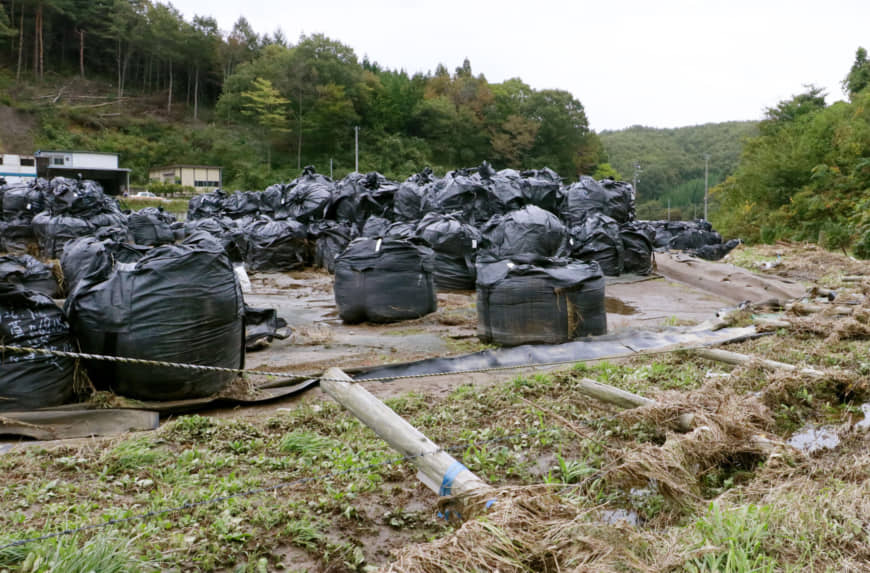
Contaminated Fukushima soil stored in flood zones, audit finds http://www.asahi.com/ajw/articles/14359377?fbclid=IwAR3vSQl1UVoSDAqpoxsL8nYsWhRVPVM55o749Uw1NXEJ9FtvOxh6aquOyq8, By RYOTA GOTO/ Staff Writer, May 27, 2021 Many of the temporary storage sites for soil and waste contaminated by radiation from the crippled Fukushima No. 1 nuclear power plant are located in areas vulnerable to natural disasters, a government audit found.
The Board of Audit of Japan submitted an investigative report to the Diet on May 26 warning the central government to address the contaminated materials that would be in jeopardy in the event of disasters such as landslides and flooding caused by heavy rains, or tsunami.
The board studied the Environment Ministry’s reviews of the temporary storage sites for contaminated soil and designated radioactive waste from October 2019 to April 2020, and took issue with some of its assessments.
The results show 159 out of 170 sites in Fukushima Prefecture, where contaminated soil resulting from the accident at Tokyo Electric Power Co.’s Fukushima No. 1 nuclear plant is being temporarily stored, are within areas deemed vulnerable to landslides and flooding from heavy rain.
The ministry had surveyed locations but concluded that preventive measures were not necessary at 158 sites because the materials were fenced in or the contaminated soil was stored in bags and covered by liner sheets.
As for the remaining location, the ministry moved the contaminated soil to an intermediary storage site.
In nine prefectures including Fukushima, 130 of 379 locations that store contaminated waste are in areas expected to be flooded or hit by landslide in the event of a disaster.For 117 locations, the ministry concluded it is unnecessary to take preventive measures because the waste is stored inside buildings.
But for 13 locations, the ministry said discussion is needed over the necessity of taking preventative measures.
he board said the ministry’s reviews did not include a check of whether each site is located in an area considered vulnerable to tsunami or flooding. The ministry had reasoned that embankments or other obstacles are either in place or under construction, and that the need to take measures against a potential tsunami is low and any impact from a reservoir collapsing would be limited.
But the audit board surveyed 153 temporary storage sites for contaminated soil and found that five of them are vulnerable to a tsunami and three are vulnerable to reservoir flooding.
The board said the ministry needs to consider residents’ concerns about the potential of a leak of contaminated materials, check if the areas are vulnerable to disasters and take preventive measures.
The ministry responded to the audit by defending that it “prioritized quickly securing storage sites at the time and did not have time to check the sites against a hazard map.”
A representative of the Fukushima prefectural government admitted some mistakes were made.
“We knew the locations of storage sites but failed to think about disaster-prevention measures,” the representative said.
China says Japan ‘repeatedly betrayed public trust’ in Fukushima response
 |
China says Japan ‘repeatedly betrayed public trust’ in Fukushima response
Beijing says Tokyo’s handling of Fukushima disaster casts doubt over ‘so-called safe methods, credibility of data’ https://www.aa.com.tr/en/asia-pacific/china-says-japan-repeatedly-betrayed-public-trust-in-fukushima-response/2253463
Riyaz Ul Khaliq |25.05.2021 ANKARA
China on Tuesday repeated its criticism of Japan’s plan to dump treated nuclear waste from the Fukushima nuclear plant into the sea.
“Japan has repeatedly betrayed public trust over its handling of the Fukushima nuclear accident,” Lijian Zhao, spokesperson for China’s Foreign Ministry, said at a news conference in Beijing, according to state-run daily Global Times.
He said Japan’s response to the Fukushima disaster of 2011 has left “a big question mark over the rationality and scientific nature of its so-called safe methods, as well as authenticity and credibility of the data it had provided.”
Apart from China, South Korea, North Korea, the island nation of Taiwan, and other international bodies, including the UN, have previously voiced concern over Tokyo’s idea to release treated wastewater from the destroyed nuclear plant into the ocean in the next two years.
The US, however, has backed Japan’s proposal, which come after years of talks on how to get rid of more than 1 million tons of water accumulated at the Fukushima nuclear complex since the meltdown triggered by a massive earthquake and tsunami in March 2011.
The International Atomic Energy Agency has vowed to play a “central and permanent role in monitoring the discharge.”
Tokyo has said it aims to have an action plan by the end of 2021.
“We will proactively take swift measures to deepen understanding of people in Japan and overseas,” Katsunobu Kato, Japan’s chief Cabinet secretary, said last month.
| Virus-free. www.avast.com |
Thyroid cancer in Fukushima children increased 20-fold — Beyond Nuclear International

In addition to thyroid cancer, other types of malignancies and other diseases triggered or adversely affected by ionized radiation are expected to increase. The FMU thyroid studies represent the only scientific study that can provide any relevant information at all about the health consequences of the Fukushima nuclear disaster. And they are currently in danger of being undermined by the proponents of nuclear energy such as IAEA, which has entered a cooperation with FMU and by the Japanese government, which is trying to dispel any concerns about the meltdowns and nuclear energy as a whole.
Increases are real and can’t be attributed to “screening effect”
Thyroid cancer in Fukushima children increased 20-fold — Beyond Nuclear International
Latest results of the Fukushima thyroid screenings confirm worrying trend https://wordpress.com/read/feeds/72759838/posts/3354864780 By Dr. Alex Rosen, 23 May 21,
In 2011, people in Japan were exposed to radioactive fallout. Some still live in contaminated regions where they are exposed to elevated levels of radiation on a daily basis: radioactive hot-spots on the side of the road, in rice paddies or in sandboxes, contaminated mushrooms or algae, contaminated groundwater, and recontamination from forest fires or flooding.
One of the most dreaded effects of radioactive exposure is the development of cancer through mutation of the DNA. Thyroid cancer in children is certainly not the most dangerous form of radiation-induced cancer, but it is probably the easiest to detect. For one thing, the latency periods before a cancer develops are relatively short, while at the same time, thyroid cancer in children is an extremely rare disease, so that even a slight absolute increase can be statistically detected.
Accordingly, in 2011, there was great pressure on Japanese authorities to investigate the development of thyroid cancer in children and adolescents in Fukushima by conducting long-term screening examinations.
For almost 10 years now, Fukushima Medical University has been regularly examining the thyroid glands of people who lived in Fukushima Prefecture at the time of the meltdowns and were under 18 years of age. Initially, this group consisted of about 368,000 individuals. Of these, 300,000 (about 82%) were successfully screened in the first few years. After the initial screening (2011-2014), follow-up examinations of these children took place every two years. The second examination has already been completed, the third examination is in its final stage, the fourth series of examinations has been running since 2018, and the fifth since 2020.
In the initial investigation in Fukushima, 116 abnormal biopsies were found. Amongst these, 101 cases of cancers were found that were so aggressive that they required surgery. The patients with abnormal biopsies were 6 to 18 years old (average of 14.9 years) at the time of the nuclear disaster. This unexpectedly high number was explained by Fukushima Medical University as a screening effect, the phenomenon of identifying more cases of disease in large-scale screening than would be expected. While the exact magnitude of this screening effect in the first round is unknown, it can be ruled out that the increased cancer rates in subsequent screenings are consequences of a screening effect, because all of these children had already been examined and found to be cancer-free in previous screenings. They must therefore have developed the cancer between the screening examinations.
In the 2nd screening round, 54 cancer cases were found in 71 abnormal biopsies (age at the time of the nuclear disaster 5-18, average of 12.6 years), in the 3rd screening round, another 27 cases were found in 31 abnormal biopsies (age at the time of the nuclear disaster 5-16, average of 9.6 years), and in the current 4th round, 16 new diagnoses have been made in 27 abnormal biopsies (age at the time of the nuclear disaster 0-12, average of 8.0 years). A total of 46 children with suspicious fine-needle biopsies are still under observation and have not yet undergone surgery. The steadily decreasing average age in the screenings is striking: with time, more and more cancer cases are becoming apparent in patients who were still very young at the time of the nuclear disaster, even under 5 years of age.
Incidentally, adolescents in the study cohort who turn 25 are excluded from the main study and transferred to a newly created cohort, the “Age 25 Milestone” group. In this group, 4 additional cases of thyroid cancer have been registered, with 7 conspicuous biopsies so far. The number of unreported cases is likely to be much higher: the participation rate in this study is just 8%. The creation of a new study cohort is generally seen as a measure by FMU to further reduce the number of diagnosed cancer cases.
In addition, there are 11 thyroid cancer cases diagnosed in children from the study cohort, but not during the official screenings. These patients were seen and diagnosed at Fukushima University Hospital. These 11 cases are not reported in the official results, although they show identical tumor entities and occurred in patients who are in the actual study cohort. The 11 cases came to light in June 2017. How many more cases have been diagnosed but not reported since then is unknown. In addition, data from other hospitals in Japan are not available, and patients from contaminated areas outside Fukushima Prefecture are not examined at all, so the unreported number of thyroid cancer cases among patients who were children in the contaminated areas at the time of the meltdowns is likely to be much higher. Nevertheless, the total number of thyroid cancer cases in Fukushima currently stands at 213 (198 official cases from the serial examinations, 4 cases from the Age 25 Milestone cohort and 11 cases from the Fukushima University Hospital).
It is interesting to compare these figures with the overall Japanese incidence rate. The official incidence rate of thyroid cancer in children under 25 in Japan is about 0.59 per 100,000 per year, which means that in the cohort of about 218,000 children, about 1.3 new thyroid cancer cases per year would be expected. Today, 10 years after the beginning of the nuclear disaster, just under 13 thyroid cancer cases would thus have been expected in the study population.
However, the actual number of thyroid cancer cases in Fukushima of 213 is higher by a factor of 16. If we consider only the 112 cases diagnosed after the initial screening and thus not suspected to be caused by a screening effect of any kind, the number of confirmed cases is 20 times higher than the number of expected thyroid cancer cases (5.5 new cases after the end of the initial 1st screening in 2014)
In the following graph, [on original] the officially confirmed thyroid cancer cases (in blue) are compared to the cases expected mathematically in the screening cohort (in orange). It can be seen that the number of cases increased steadily over the course of the initial screening, and continue to increase beyond that, in the years 2014-2020 – an effect that cannot be explained by any kind of screening effect. [Graph on original explains this]
In addition, the geographic distribution of thyroid cancer rates corresponds to the level of radioactive contamination. A significantly higher incidence of thyroid cancer in children was recorded in the 13 most severely contaminated municipalities in eastern Fukushima than in the less contaminated areas in the north, south and central parts of the prefecture. The incidence was lowest in the western part of the prefecture, where the radioactive fallout was also least pronounced.
In the following graph, [on original] the officially confirmed thyroid cancer cases (in blue) are compared to the cases expected mathematically in the screening cohort (in orange). It can be seen that the number of cases increased steadily over the course of the initial screening, and continue to increase beyond that, in the years 2014-2020 – an effect that cannot be explained by any kind of screening effect.
There seems to be a system behind this trend: Fukushima Medical University, which is in charge of the study, has been sending staff to schools in the prefecture for years to educate children about their “right not to participate” and the “right not to know”. On the study forms, there is now a prominent “opt-out” option for people who wish to be removed from the screening. FMU seems to encourage people to opt out of the study. The drop in participation can also be explained by the removal of people over 25 years from the main study. Are FMU staff concerned that the disturbing trend of increasing numbers of thyroid cancer cases will continue? Are they uncomfortable with data that contradicts the thesis, propagated since the beginning of the nuclear disaster, that the multiple meltdowns would not lead to additional cancers?
In addition to thyroid cancer, other types of malignancies and other diseases triggered or adversely affected by ionized radiation are expected to increase. The FMU thyroid studies represent the only scientific study that can provide any relevant information at all about the health consequences of the Fukushima nuclear disaster. And they are currently in danger of being undermined by the proponents of nuclear energy such as IAEA, which has entered a cooperation with FMU and by the Japanese government, which is trying to dispel any concerns about the meltdowns and nuclear energy as a whole.
The people of Japan have an inalienable right to health and to life in a healthy environment. The examination of children’s thyroid glands benefits not only the patients themselves, whose cancers can be detected and treated at an early stage, but also the entire population, which is affected by irradiation from radioactive fallout.
The correct continuation and scientific monitoring of thyroid examinations are therefore in the public interest and must not be thwarted by political or economic motives. It is important to continue to critically accompany these developments from the outside.
Dr. Alex Rosen is a pediatrician and Co-Chair of the German affiliate of IPPNW
Note: this article was first published in IPPNW Germany’s member magazine ippnw forum in 03/21
Headline photo showing thyroid cancer by National Human Genome Research Institute (NHGRI) from Bethesda, MD, USA/Wikimedia Commons
Discharging Fukushima radioactive waste water to the ocean would violate Japan’s legal and environmental obligations
The Legal Case Against Japan’s Fukushima Wastewater Decision, https://thediplomat.com/2021/05/the-legal-case-against-japans-fukushima-wastewater-decision/
The proposed discharge of wastewater from the Fukushima nuclear plant into the Pacific Ocean would violate Japan’s legal and environmental obligations. By Xiuxiu Zhang, Jeffrey Thaler, and Danning Zhu, May 21, 2021
Since the devastating March 2011 Japanese earthquake and tsunami, which damaged the Fukushima Daiichi nuclear power plant, 1.25 million tons of seawater have been pumped through the damaged nuclear units to prevent the melted fuel rods in three damaged reactors from overheating. The contaminated water has been stored in more than 1,000 steel tanks on site. But in April 2021, the Japanese government announced that it would, beginning in 2023 and for decades thereafter, discharge all of the treated wastewater into the Pacific Ocean as part of the plant’s decommissioning process.
Many countries that share a sea border with Japan (especially China, South Korea, and Russia), as well as domestic fishing and export interests, have raised a variety of objections and concerns. Yet with little fanfare in American media, the United States – which has both Alaska and Hawaii at risk – has supported Japan’s plan. The ecological and human risks at stake are potentially huge: The seawater may contain radioactive tritium, strontium-90, and C-14 (the latter known to bioaccumulate in marine ecosystems). Yet international political positioning seems to be playing a greater role than environmental concerns in national responses. Could that change before 2023?
A variety of international treaties, conventions, and agreements, as well as fundamental environmental protection principles, are relevant to the discharge of wastewater from Fukushima.
In 1958, the first United Nations Conference on the Law of Sea adopted the Convention on the High Seas in Geneva, which became effective on September 30, 1962. Pursuant to Article 25 of the Convention, “Every State shall take measures to prevent pollution of the seas from the dumping of radioactive waste, taking into account any standards and regulations which may be formulated by the competent international organizations.” Also in 1958, the Resolution on Pollution of the High Seas by Radioactive Materials was adopted by the first United Nations Conference on the Law of Sea. One of its recommendations was that the International Atomic Energy Agency (IAEA), in consultation with existing groups and established organs having acknowledged competence in the field of radiological protection, should pursue whatever studies and take whatever action is necessary to assist states in controlling the discharge or release of radioactive materials to the sea, in promulgating standards, and in drawing up internationally acceptable regulations to prevent pollution of the sea by radioactive materials in amounts that would adversely affect people and marine resources.
The 1996 London Protocol, signed by many nations, prohibited the dumping of all wastes and other materials is prohibited except certain non-toxic materials that do not contain levels of radioactivity greater than de minimis (exempt) concentrations as defined by the IAEA. In 1999, the IAEA defined “de minimis” risk levels in terms of those of “no regulatory concern” and based on practices and sources that are “inherently safe.”
Last and not least, the United Nations Convention on the Law of the Sea (UNCLOS) is an international treaty ratified by over 160 countries, including China, South Korea, and Japan – but not the United States. UNCLOS stipulates that the ocean is the common heritage of mankind. Pursuant to Article 192, all states have the obligation to protect and preserve the marine environment. UNCLOS also established a complete legal framework that regulates all marine areas, the use of the ocean, and marine resources, as well as the protection and maintenance of the marine environment, marine scientific research, and the development and transfer of marine technology.
Moreover, Article 194 of UNCLOS requires that member countries must: 1) take, individually or jointly as appropriate, all practicable measures necessary to prevent, reduce and control pollution of the marine environment from any source; and 2) take all measures necessary to ensure that activities under their jurisdiction or control are so conducted as not to cause damage by pollution to other states and their environment, and that pollution arising from incidents or activities under their jurisdiction or control does not spread beyond the areas where they exercise sovereign rights in accordance with this Convention. Last, UNCLOS Article 195 specifies that countries shall act so as not to transfer, directly or indirectly, damage or hazards from one area to another or transform one type of pollution into another.
In light of the very clear obligations set forth in UNCLOS and the other conventions, how is the potential Fukushima nuclear wastewater discharging being viewed by neighboring countries?
Both the United States and the IAEA have voiced support for Japan’s announced plans for the Fukushima discharge plan. The IAEA said it would provide technical support for what it deemed to be a feasible means of disposal of the contaminated seawater. A week later the Biden administration voiced its support for what it said was a plan meeting international safety standard.
However, many others did not share those views, both within and outside of Japan. Domestic fishing, environmental, public health, and export interests objected both to the process leading up to the announcement and to the plan itself. They viewed the risks as being too great, and the added pollutant burden to the Pacific Ocean to be too much and with far-ranging scope affecting more than just Asia.
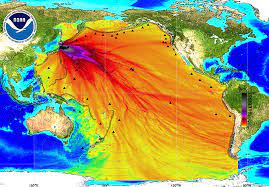
Indeed, calculations by Germany’s Geomar Helmholtz Center for Ocean Research predict that once the wastewater from the Fukushima nuclear power plant is discharged into the sea, radioactive materials will spread to most of the Pacific’s marine life and ecology within 57 days.
Neighboring countries such as China, South Korea, and Russia all voiced vigorous concerns, and warned that imports of Japanese seafood and agricultural products could be restricted – and that consumer confidence in purchasing such goods would be damaged. South Korea has threatened to take the issue to international judicial tribunals for review. How the dispute would be resolved pursuant either to the International Court of Justice, or to one of the various Conventions, remains to be seen. But in the meantime, there are some fundamental environmental protection principles and agreements that the United States in particular seems to be overlooking.
First, the treatment of Fukushima nuclear wastewater should give priority to the alternatives that have the least impact on the marine environment. The precautionary principle is the first principle of environmental law all over the world. Environmental policies and environmental laws should not just be after-the-damage-happens responses, but also should prevent hazards and harms to the environment and human organisms before they occur.
Under the precautionary principle, pollution avoidance is superior to pollution reduction. Avoiding the discharge of Fukushima nuclear wastewater should be superior to behaviors that comply with certain standards but can still cause environmental damage. Although the Fukushima wastewater is treated, the environmental impact of treated wastewater on marine life and ecological environment should be evaluated by marine, biological, and nuclear experts from various countries bordering the Pacific Ocean. In addition, the discharge of Fukushima nuclear wastewater is unprecedentedly huge, and the half-life of some of the radioactive elements means they will continue to pose a threat to the marine environment and marine life for decades. The materials are neither de minimis, nor “inherently safe.” Radioactive materials will also be transferred to the terrestrial environment and humans through marine life and other channels.
A second environmental principle is that of environmental hazard prevention or mitigation. It is akin to a precept to “do no harm” to the health of people, wildlife, fisheries, and natural resources. The ultimate goal is to ensure the protection of existing environmental quality and the possibility of future improvement. The environment must not be further deteriorated, and if pollution damage has occurred, it must be restored. Given that the Fukushima wastewater still exceeds Japanese discharge standards, it is impossible to say that in just two years the discharge will not cause damage to sea life of the Pacific Ocean.
Third, the principle of equity is formed by the concept of ecological compromise, which is concerned primarily with considering the interests of all potentially impacted parties and resources – both international and domestic. The principle of equity is essentially a balancing of interests, which extends to international environmental protection issues and is closely related to the principle of cooperation articulated in UNCLOS and other agreements. Japan’s discharge of nuclear wastewater is not only related to the life and health of its residents and the safety of its ecological environment, but also to the global marine environment. It will impact neighboring countries and even the global ecological environment and people’s rights to life and health. In essence, Japan is placing the costs of its nuclear waste upon other peoples, and upon the Pacific marine life, which has no voice of its own.
UNCLOS stipulates that the ocean is the common heritage of humanity, and that all countries have the obligation to protect and preserve the marine environment. Japan has an international obligation to ensure that the activities under its jurisdiction or control do not cause pollution damage to other countries and their environment, and to ensure that the pollution caused by events or activities within its jurisdiction or control does not extend beyond the area where it exercises sovereign rights in accordance with this Convention. Other countries may pursue remedies through either the International Tribunal for the Law of the Sea, the International Court of Justice, an arbitration tribunal organized in accordance with Annex VII of the Maritime Convention, or a special arbitration tribunal organized in accordance with Annex VIII of the Maritime Convention.
Even the United States, which is not a signatory to UNCLOS, might have some recourse should it change its political position. For example, in mid-2018 the U.S. Environmental Protection Agency and the Japan Atomic Energy Agency executed a Letter of Intent to cooperate “in the field of radiation protection.” As part of that agreement, the two agencies were to share radiation risk assessment models and related data. But, interestingly, the two countries also agreed to share “information on the uncertainty of radiation risk assessment, including the sharing of a report by the EPA on the uncertainty of EPA radionuclide cancer risk coefficients.” Given such acknowledged uncertainty, it would seem at least premature for the U.S. to be opining that the discharge of over 1 million gallons of heavily contaminated nuclear-radiated seawater is safe and poses no risks to human or other life. Indeed, back in 1975 the Japanese and American governments signed an Agreement “on cooperation in the field of environmental protection” in which both countries acknowledged “the responsibilities of each Government for the protection and improvement of the global environment.”
That “global environment” extends beyond Japan’s territorial waters, and any unilateral decision by Japan to discharge pollutants that could materially harm the environment across a significant part of non-Japanese waters would seem to be at odds with its responsibilities agreed to the international agreements we have summarized herein, as well as with the fundamental principles of and duties imposed by environmental protection for current and future generations of human and non-human life on our planet.
Flaws found in anti-terror measures at Fukushima No. 2 nuclear plant
Flaws found in anti-terror measures at Fukushima No. 2 nuclear plant, Japan Times, 19 May 21,
Anti-terrorism measures implemented at Tokyo Electric Power Company Holdings Inc.’s Fukushima No. 2 nuclear power plant, which is set to be decommissioned, have been found to be flawed, it was learned Wednesday.
It was discovered that doors leading to the nuclear materials protection areas at the plant, which are under heavy entry-exit surveillance as part of anti-terrorism measures, were not properly managed.
Some security checks conducted when people leave or enter such areas were also neglected.
The flaws were reported to a meeting of the Nuclear Regulation Authority on the same day.
According to the NRA, the flaws have been fixed and there are no signs of intrusion.
The NRA said that a worker at the nuclear plant found a door with inadequate access control measures to the area at the plant’s No. 4 reactor on March 19.
On the following day, a door with a similar flaw was found at the plant’s No. 1 reactor. Plant operator Tepco reported the flaws to the NRA.
The company also found that necessary checks, such as those involving metal detectors, were skipped at some doors to the nuclear materials protection areas.
While the doors in question at the No. 1 and No. 4 reactors were not used on a day-to-day basis and were locked, Tepco said that it was unaware that the doors were on the boundaries…….. https://www.japantimes.co.jp/news/2021/05/19/national/fukushima-antiterror-flaws/
Nuclear emergency guidelines on thyroid radiation exposure under review in Japan
Nuclear emergency guidelines on thyroid radiation exposure under review in Japan, Japan News, The Yomiuri Shimbun, 17 May, 21
The Nuclear Regulation Authority (NRA) plans to establish a system for measuring thyroid gland radiation levels of nearby residents in the immediate aftermath of a nuclear power plant accident, during a review of the government’s nuclear emergency response guidelines being undertaken this fiscal year.
Revisions will likely include a requirement to measure radiation levels of children under the age of 18 and pregnant women, who are most vulnerable to radiation exposure………
Officials are particularly concerned about areas where radiation levels reach 500 microsieverts per hour, which requires immediate evacuation, and those where levels continuously exceed 20 microsieverts per hour, which requires temporary relocation.
The NRA is considering mainly targeting children under the age of 18, pregnant women and nursing mothers in such areas.
Radioactive iodine-131 released in a nuclear accident halves in about eight days, highlighting the importance of taking measurements immediately after an accident to determine radiation exposure levels.
However, the measurement target until now was unclear and the response system and equipment were insufficient………. only about 1,000 of the 370,000 children under the age of 18 in Fukushima Prefecture have had their thyroid gland radiation levels measured. https://the-japan-news.com/news/article/0007405020
Restarting nuclear power in Japan. Will the old ”Nuclear Village” bribery factor trump safety concerns?

Nuclear Power in Japan: Safety at Kashiwazaki-Kariwa Remains an Issue, Nippon.com Takino Yūsaku 14 May 21
……………….An illustration of the dilemma facing host communities is the decision of the mayors of Onagawa and Ishinomaki in Miyagi Prefecture to approve the restart of Unit 2 of Tōhoku Electric Power Company’s Onagawa Nuclear Power Station. Miyagi Governor Murai Yoshihiro also gave his endorsement and announced the decision in November 2020 after meeting with the two mayors, marking the first time a facility affected by the March 2011 earthquake and tsunami received the go-ahead to resume operation. Speaking at a press conference, the governor cited local employment opportunities and tax revenue as key factors in swaying the consensus of local leaders in favor of restarting the reactor, but stressed that the decision was a bitter one to make.
A similar dynamic is at play in the municipalities of Kashiwazaki and Kariwa, which jointly host the TEPCO power plant. As of January 1 of this year, the facility employs some 6,300 people, including utility personnel and staff of independent contractors, of whom around 3,500 are local residents. Factoring in family members potentially quadruples the number of people who rely on the power plant for their livelihoods, making the decision to restart a difficult one to oppose.
The two host municipalities are similarly dependent on revenue flowing into their coffers from the plant. This includes subsidies and grants from the national government, prefectural duties on nuclear fuel, a tax levied on spent fuel, and local property and income taxes. In 2018, Kashiwazaki received ¥3.4 billion in subsidies and other government funding and Kariwa ¥1.3 billion. If local taxes are factored in, Kashiwazaki’s revenue directly related to the nuclear power plant came to ¥8.0 billion and Kariwa’s ¥2.9 billion, around 15% and just over half of their annual income, respectively. This alone shows just how reliant the communities are on nuclear energy.
Like other host communities, the remote, cash-strapped municipalities saw nuclear energy as a lucrative endeavor. Kashiwazaki and Kariwa approved the plant in 1969, construction of the Unit 1 reactor began in 1978, and the facility went online in September 1985. TEPCO subsequently built six more reactors at the site, each bringing additional revenue to the municipalities. The last of these, Unit 7, was fired up in July 1997.
However, safety concerns have dogged the facility. In July 2007, the Chūetsu Offshore Earthquake sparked a fire and caused radiation leaks, forcing all the reactors offline for a time. After upgrades were made, several units were restarted, only to be halted indefinitely following the Great East Japan Earthquake and meltdowns at Fukushima Daiichi in March 2011.
The prolonged shutdown has seriously impacted the economic wellbeing of the communities. A visit to the shopping arcade next to Kashiwazaki Station and the town’s entertainment district reveals a startling number of shuttered businesses, a situation that has only been exacerbated by the pandemic. Kashiwazaki’s population, which was already rapidly graying, has shrunk from 90,000 in 2010 to 81,000 as of 2020. The demographic trend in the village of Kariwa can be assumed to be similarly bleak. As in Onagawa, objections residents may have to restarting the reactors will almost certainly take a back seat to the more pressing considerations of jobs and reviving the local economy.
Weighing the Cost of Safety
The results of elections in November 2020 indicate strong public approval for bringing the reactor back online. Residents of Kashiwazaki reelected Mayor Sakurai Masahiro, who supports the restart, to a second term in a landslide over an antinuclear challenger, while Kariwa voters handed pronuclear Mayor Shinada Hiroo a sixth term. The majority of local assembly members in both towns are likewise in favor of resuming operations at the plant.
In contrast, the prefectural government has taken a measured approach toward resuming operation of the Kashiwazaki-Kariwa plant, including establishing its own supervisory committee to verify the causes of the accident at Fukushima Daiichi and delaying debate on restarting Unit 7 until the body issues its final report. Barring one or more committee members expressing opposition, however, Niigata Governor Hanazumi Hideyo is expected to certify the restart before the gubernatorial election slated for June 2022 to prevent the issue from influencing the race. It remains to be seen to what degree the recently discovered safety flaws will affect this timeline.
The central government remains eager to get Kashiwazaki-Kariwa back up and running. As Japan slowly transitions from carbon-based fuels toward renewables to reduce CO2 emissions, it plans for nuclear power to provide 30% of the country’s energy needs.
In the end, the deciding factor will be safety. TEPCO so far has invested ¥1.2 trillion in upgrading the Kashiwazaki-Kariwa plant and has spent considerable time and energy touting its efforts. In clearing the NRA’s stringent regulations, the utility had seemingly demonstrated beyond a shadow of doubt that it was safe to bring the reactors back online. While there is no denying that the extensive safety measures the utility has put into place have boosted the facility’s resilience against known risks like natural disasters, there is not telling what new and unforeseen threats might be lurking around the corner. Such uncertainty makes it hard for many members of the public, me included, to trust completely in the safety of nuclear power.
It may turn out that the recent security failings, while egregious, on their own would not have allowed an intruder to infiltrate the plant undetected. However, they do illustrate the ongoing risks of neglect, bad judgement, procedural failures, and other human errors, factors that even the most stringent physical upgrades cannot guard against.
The government, despite considerable public uncertainty, is committed to pushing ahead with its plans to bring the country’s fleet of reactors back online. Faced with this reality, it is vital that citizens understand the state of nuclear energy in Japan and decide for themselves if it is something they can live with or choose to do without. https://www.nippon.com/en/in-depth/d00687/
Japanese government and TEPCO planning release of radioactive water, via a pipeline to the Pacific Ocean
Japan Times 12th May 2021, Japan and Tepco studying release of Fukushima water 1 kilometer from coast.
Tokyo Electric Power Company Holdings Inc. and the government are
considering a plan to release treated radioactive water from the crippled
Fukushima No. 1 nuclear power plant into the sea about 1 kilometer from the
coast, informed sources said Tuesday.
The plan calls for a pipeline to be set up at the bottom of the ocean, according to the sources. Tepco, the
government and the Nuclear Regulation Authority are expected to kick off
full-fledged talks next month to decide whether to release the water
directly from the coast near the power plant or offshore through a
pipeline, the sources said. As tritium cannot be removed with existing
technology, the levels of the radioactive substance will be diluted to
about 1/40 of the state-set standard before the release of the treated
water into the ocean.
https://www.japantimes.co.jp/news/2021/05/12/national/release-fukushima-water-study/
1 This Month

of the week – Shut Down Drone Warfare!


Tell the Ukrainian Government to Drop Prosecution of Peace Activist Yurii Sheliazhenko

Petition to revoke the licensing of the Near Surface Nuclear Disposal Facility (NSDF) at Chalk River. https://www.ourcommons.ca/petitions/en/Petition/Details?Petition=e-7247
To see nuclear-related stories in greater depth and intensity – go to https://nuclearinformation.wordpress.com
-
Archives
- April 2026 (114)
- March 2026 (251)
- February 2026 (268)
- January 2026 (308)
- December 2025 (358)
- November 2025 (359)
- October 2025 (376)
- September 2025 (257)
- August 2025 (319)
- July 2025 (230)
- June 2025 (348)
- May 2025 (261)
-
Categories
- 1
- 1 NUCLEAR ISSUES
- business and costs
- climate change
- culture and arts
- ENERGY
- environment
- health
- history
- indigenous issues
- Legal
- marketing of nuclear
- media
- opposition to nuclear
- PERSONAL STORIES
- politics
- politics international
- Religion and ethics
- safety
- secrets,lies and civil liberties
- spinbuster
- technology
- Uranium
- wastes
- weapons and war
- Women
- 2 WORLD
- ACTION
- AFRICA
- Atrocities
- AUSTRALIA
- Christina's notes
- Christina's themes
- culture and arts
- Events
- Fuk 2022
- Fuk 2023
- Fukushima 2017
- Fukushima 2018
- fukushima 2019
- Fukushima 2020
- Fukushima 2021
- general
- global warming
- Humour (God we need it)
- Nuclear
- RARE EARTHS
- Reference
- resources – print
- Resources -audiovicual
- Weekly Newsletter
- World
- World Nuclear
- YouTube
-
RSS
Entries RSS
Comments RSS
 nuclear-news