Japan rejects EU plan to steal Russian assets – Politico.
09 Dec 2025, https://www.sott.net/article/503419-Japan-rejects-EU-plan-to-steal-Russian-assets-Politico
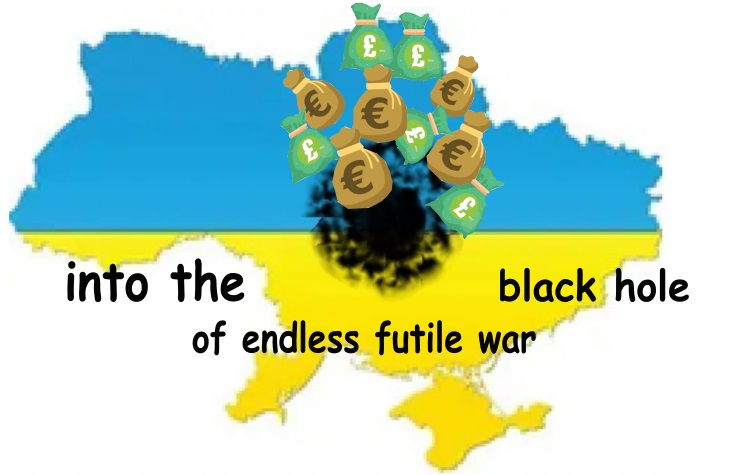
The bloc wants to use Moscow’s funds immobilized in the West to cover Ukraine’s budget deficit.
Japan has reportedly dismissed a European Union initiative to tap frozen Russian sovereign assets to help finance Ukraine’s massive budget shortfall.
Brussels hopes to issue a so-called “reparation loan” backed by Russian funds immobilized in the West – a plan that Moscow has denounced as outright theft. Belgium, where most of the money is held by the Euroclear clearinghouse, has refused to greenlight the proposal unless other nations agree to share associated legal and financial risks.
Belgian Prime Minister Bart De Wever has said broader international backing, particularly from non-EU countries holding Russian assets, would bolster the European Commission’s case for what he called the effective confiscation of a foreign state’s funds. But at a meeting of G7 finance ministers on Monday, Japan’s Satsuki Katayama made clear her government would not support the plan due to legal constraints, Politico reported, citing EU diplomatic sources.
Officials told the outlet they believe Japan’s stance aligns with that of the United States, which also opposes the EU approach and views the frozen assets as leverage in negotiations with Moscow.
France has reportedly likewise declined to touch any assets held on its soil, while Canada and the UK have signaled possible participation if the EU ultimately pursues the scheme.
Ukraine’s parliament last week adopted a 2026 budget with a staggering $47.5 billion deficit, expecting foreign donors and creditors to fill the gap. Roughly half that anticipated support – an estimated $23.6 billion – remains uncertain pending the fate of the EU loan plan.
Ukrainian media noted that lawmakers pushed the budget through despite unresolved questions over foreign financing, in part to project stability following the removal of Andrey Yermak, formerly the most powerful aide to the country’s leader, Vladimir Zelensky. Yermak was dismissed as a corruption scandal engulfed Kiev’s political establishment.
Japan inspects nuclear sites as seismologists warn of another large quake.

Authorities assessed the damage from Monday’s 7.5-magnitude earthquake, amid warnings of aftershocks and a potentially larger tremblor in the coming days.
Nuclear facilities were inspected in Japan on Tuesday as
authorities assessed the damage from a 7.5-magnitude earthquake, amid
warnings of aftershocks and a potentially larger tremblor in the coming
days. As cleanup operations began, Prime Minister Sanae Takaichi told
reporters that an emergency task force was formed to urgently assess
damage, according to The Associated Press. “We are putting people’s
lives first and doing everything we can,” she said……………………………………………………………..
Japanese officials found “no abnormalities” at Fukushima, the International Atomic Energy Agency said early Tuesday.
But as inspections were carried out on other nuclear sites, the country’s Nuclear Regulation Authority said in a statement that nearly 120 gallons of water spilled from a fuel cooling system at a nuclear fuel processing plant in the city of Aomori near the epicenter of Monday’s earthquake……………………….
NBC News 9th Dec 2025, https://www.nbcnews.com/world/asia/japan-earthquake-nuclear-sites-damage-injuries-emergency-rcna248160
Japan pulls out of Vietnam nuclear project, complicating Hanoi’s power plans
Japan has dropped out of plans to build a major nuclear power plant in
Vietnam because the time frame is too tight, Japanese ambassador Naoki Ito told Reuters, potentially complicating Vietnam’s long-term strategy to
avoid new power shortages.
Vietnam, home to large manufacturing operations for multinationals including Samsung and Apple, has faced major power blackouts as demand from its huge industrial sector and expanding middle class often outpaces supplies, strained by increasingly frequent extreme weather, such as droughts and typhoons.
“The Japanese side is not in a position to implement the Ninh Thuan 2 project,” the ambassador to Vietnam said, referring to a plant with a planned capacity of 2 to 3.2 gigawatts. The project is part of Vietnam’s strategy to boost power generation capacity.
Asahi Shimbun 8th Dec 2025, https://www.asahi.com/ajw/articles/16208469
Hiroshima Declaration and Declaration on the Rights of Nuclear Victims 2025

October 2025, https://mp-nuclear-free.com/Nuclear/2025_WNVF_01.html
In 2025, Hiroshima and Nagasaki mark the 80th anniversary of the atomic bombings by the United States. The nuclear age began when the United States dropped atomic bombs on Hiroshima and Nagasaki and human beings gained the power to wipe humanity from the earth. The atomic bombings instantly slaughtered countless innocent people, bringing unprecedented inhuman misery to Hiroshima and Nagasaki. Those who survived the horrors of this hell are still suffering from the effects of radiation. Reparation for victims of indiscriminate genocide as a result of state-provoked wars is yet to be fulfilled.
For more than 80 years, the nuclear industry and countries that have promoted the use of the nuclear cycle have trivialized or concealed the health effects of radiation and have created nuclear victims all over the world, regardless of whether it is used for military purposes or “peaceful” uses. Much of the nuclear impacts have been inflicted on Indigenous and colonized peoples. Even after the devastating nuclear disasters in Chernobyl and Fukushima, these countries and the nuclear industry are trying to further expand their negative impact by parading nuclear energy as a climate solution.
We would like to create a place of international solidarity in Hiroshima for nuclear victims and their allies, aiming for the elimination of the nuclear cycle and a world in which no more hibakusha (nuclear victims) are created.
Full text of the declaration at https://mp-nuclear-free.com/Nuclear/WNVF2025_image/HiroshimaDeclaration-Declaration-Rights-WNV2025_EN.pdf
China warns of severe consequences if Japan fails to retract its threats of military intervention over Taiwan
Japan, like most of the countries in the world, officially recognizes Taiwan as part of China. Both the countries signed an agreement in 1972 according to which Japan recognizes the one-China policy.
Though Japan recognizes the “one-China policy”, earlier this month its prime minister, Sanae Takaichi, threatened military intervention if China tried to unify Taiwan with the mainland.
November 20, 2025 by Abdul Rahman, https://peoplesdispatch.org/2025/11/20/china-warns-of-severe-consequences-if-japan-fails-to-retract-its-threats-of-military-intervention-over-taiwan/
China reiterated its demand that Japanese Prime Minister Sanae Takaichi retract her statement threatening military intervention in the event that China tries to forcefully integrate Taiwan into the mainland. It warned of strong counter measures otherwise.
The “Japanese prime minister’s erroneous remarks on Taiwan have fundamentally eroded the political foundation of China-Japan relations and triggered strong outrage and condemnation from the Chinese people,” said official spokesperson of the Chinese Ministry of Foreign Affairs, Mao Ning, in response to a question on Wednesday, November 19.
“Retract the erroneous remarks, stop making provocations on issues concerning China, take practical steps to admit and correct the wrongdoing, and uphold the political foundation of China-Japan relations,” Mao reiterated.
Speaking in the country’s parliament, newly elected Takaichi had said on November 7 that her country may respond militarily to any “situation threatening Japan’s survival” including an attempt to force the unification of Taiwan with China.
She also added that if a US warship sent to break a possible blockade on Taiwan is attacked it would invite a similar Japanese military response.
Japan hosts the largest contingent of American forces anywhere outside the US territory.
Despite strong Chinese protests and a diplomatic spat last week, Takaichi is still refusing to retract her comments, claiming that they were “hypothetical” in nature. She also said she would not repeat them in future.
However, China has demanded a complete retraction, saying Takaichi’s statement violates the fundamental principle of China-Japan relations and amounts to interference in its domestic affairs, a red line.
Indications of Japanese militarism
Mao also objected to Takaichi’s invocation of phrases such as “survival threatening situation” and “collective self defense” in the case of Taiwan, saying that it is a pretext for “Japanese militarism to launch aggression” in the region.
Takaichi, of Japan’s Liberal Democratic Party (LDP), is widely seen as an ultra nationalist and a hawk who wants to reverse the demilitarization of Japan imposed post the Second World War.
After assuming power in October she pushed the country’s defense budget up and even talked about revisiting Japan’s long held no-nuclear policy and manufacture of heavy weapons.
Takaichi’s Taiwan statement is based on the country’s military strategy, which provoked widespread popular protests in the country when it was adopted in 2015.
Mao reminded that similar aggressions and excuses had been used by the Japanese to justify its occupation of Chinese territories in the last century and to bring the Second World War into the region.
“In 1931, Japan called its seizure of Manchuria as ‘survival-threatening’, and used that as a pretext to carry out the September 18th incident and invaded and occupied Northeast China,” Mao reminded.
“Japan later claimed that to defend ‘the greater East Asia co-prosperity sphere’ was an existential battle” for it and expanded its war of aggression to the entire Asian region, Mao pointed out, asking “whether to attack Pearl Harbor was also deemed as survival-threatening to Japan, which ignited the Pacific War.”
“As we mark the 80th anniversary of the victory of the Chinese People’s War of Resistance against Japanese Aggression and the World Anti-Fascist War the international community must guard against and firmly thwart any attempt of reviving militarism, jointly uphold the post-WWII international order and safeguard world peace,” she emphasized.
Chinese counter measures
Japan, like most of the countries in the world, officially recognizes Taiwan as part of China. Both the countries signed an agreement in 1972 according to which Japan recognizes the one-China policy.
On November 12, China had underlined that Taiwan is the core of its national interest and a red line which no external force should cross. It asked the Japanese to respect the agreement signed between the two countries, including adherence to the “one-China policy”.
Since Takaichi’s remarks, China has taken several counter measures, including issuing a travel advisory asking its citizens to avoid traveling to Japan and restricting the sale of Japan’s seafood products in the country, among others.
China and Japan had a mutual trade of around USD 300 billion in 2024. Chinese visitors to Japan bring substantial revenue to the Japanese economy, according to one estimate, around USD 14 billion dollars each year.
“If Japan refuses to retract them or even continue to pursue the wrong course, China will have to take strong and resolute countermeasures and all consequences arising therefrom will be borne by Japan,” Mao warned.
Japan approves restart of world’s biggest nuclear power plant
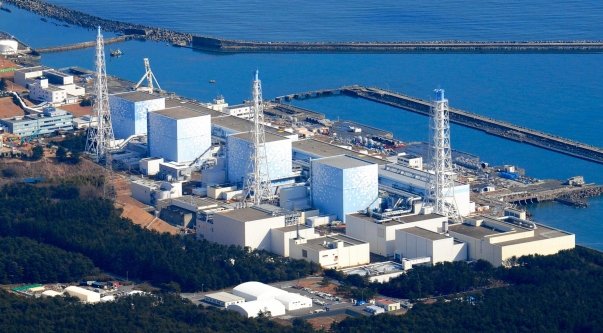
Reactor at Niigata to reopen more than a decade after Fukushima disaster as country returns to atomic energy. Japan has approved the restart of the world’s largest nuclear power plant more than a decade after its closure following the Fukushima disaster, as the country returns to atomic energy to address rising power costs.
The governor of Niigata prefecture approved the
reactivation of one reactor unit on Friday, clearing the last major hurdle
to restarting the Kashiwazaki-Kariwa plant. Japan has been gradually
restarting reactors, reopening 14 out of 54 that were closed. Another four
are waiting for local governments to give the green light and eight more
are pending regulatory approval, according to Yamashita.
FT 21st Nov 2025, https://www.ft.com/content/c5244861-0a72-42a7-87d6-b98497ad82ae
TEPCO’s Kashiwazaki nuclear plant hit with another security flaw
Japan’s nuclear watchdog said Thursday another faulty antiterrorism measure
had been found at the Kashiwazaki-Kariwa nuclear complex, operated by Tokyo
Electric Power Company Holdings Inc. The Nuclear Regulation Authority
convened an emergency meeting to discuss responses to the latest discovery
that a TEPCO employee had made an unauthorized copy of a confidential
document in June and stored it in his desk at the complex in Niigata
Prefecture, northwest of Tokyo. TEPCO is preparing to restart a reactor at
the site for the first time since the 2011 crisis at its Fukushima plant.
Mainichi 21st Nov 2025, https://mainichi.jp/english/articles/20251120/p2g/00m/0bu/053000c
The World’s Largest Nuclear Plant Inches Toward Restart After Key Approval.
By Tsvetana Paraskova – Nov 19, 2025, https://oilprice.com/Latest-Energy-News/World-News/The-Worlds-Largest-Nuclear-Plant-Inches-Toward-Restart-After-Key-Approval.html
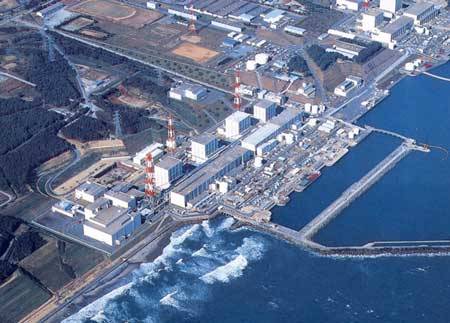
The Kashiwazaki-Kariwa nuclear power plant in Japan, the world’s largest in terms of nameplate capacity, could soon clear a major hurdle toward a partial restart as the governor of the prefecture hosting the plant is expected to give consent to startup, Japanese media reported on Wednesday.
Hideyo Hanazumi, the governor of the Niigata Prefecture, is set to announce on Friday an approval to the restart of two units of the 8-gigawatt (GW) nuclear power plant, Japan’s Kyodo news agency reports.
The governor’s approval is not enough for the plant operator, Tokyo Electric Power Company (TEPCO), to restart two reactors—the startup needs the approval of the Niigata Prefecture assembly, too. A session of the assembly is set to discuss TEPCO’s proposal in early December.
TEPCO, which also operated the nuclear power plant in Fukushima prior to the 2011 disaster, has planned for years to restart the Kashiwazaki-Kariwa plant in the Niigata prefecture.
Last month, TEPCO said that it carried out a full round of integrity checks at Kashiwazaki-Kariwa after fuel loading of Unit 6 was completed, confirming that primary facilities can sufficiently perform the functions required for reactor startup.
But the company faces backlash over its restart plans and proposal to “contribute monetarily to vitalizing the regional economy.” Local residents and anti-nuclear activists in Japan oppose the restart and have slammed TEPCO’s proposal as a “bribery” of the local residents to accept the restart of the plant.
Opinion polls suggest that local residents are split on whether TEPCO should be allowed to restart the nuclear power plant.
Japan’s newly elected Prime Minister, Sanae Takaichi, favors accelerating the restart of nuclear reactors as a way to reduce the G7 economy’s dependence on energy imports.
Before the Fukushima meltdown in 2011, nuclear energy accounted for about 30% of Japan’s electricity mix. The disaster prompted the closure of all reactors for safety checks. Since 2015, Japan has restarted 14 reactors out of 33, while 11 others are currently in the process of restart approval.
US to Own Nuclear Reactors Stemming From Japan’s $550 Billion Pledge.
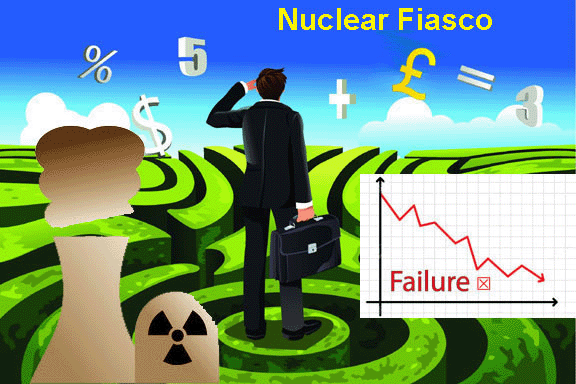
The US government plans to buy and own as many as 10 new, large nuclear reactors that could be paid for using Japan’s $550 billion funding
pledge, part of a push to meet surging demand for electricity. The new
details of the unusual arrangement were outlined Wednesday by Carl Coe, the Energy Department’s chief of staff, about the non-binding commitment made by Japan in October to fund $550 billion in US projects, including as much as $80 billion for the construction of new reactors made by Westinghouse Electric Co.
Bloomberg 19th Nov 2025,
https://www.bloomberg.com/news/articles/2025-11-19/us-to-own-reactors-stemming-from-japan-s-550-billion-pledge
Japan edges towards hosting nuclear weapons
The Strategist, 18 Nov 2025, Rajeswari Pillai Rajagopalan
It looks like Japan will finally cast aside its ban on hosting nuclear weapons—specifically, those of the United States.
Moving towards action she called for last year, Prime Minister Sanae Takaichi is reviewing the three principles that have kept Japan at arm’s length from nuclear weapons since 1967. The ban is the third of those principles, the other two holding that Japan must neither own nor produce nuclear weapons.
Japan is responding to what it perceives as worsening security dynamics in the region, surrounded as it is by three nuclear powers—China, Russia and North Korea—all of which are engaging in aggressive behaviour.
A 14 November Kyodo news report citing government sources noted that any changes in the three principles would constitute a major shift in Japan’s security policy in line with the ‘tough security environment.’ According to the report, the Japanese government sees the ban on placement of nuclear weapons within its territory as ‘weakening the effectiveness of the nuclear deterrence provided by its ally, the United States.’ This is particularly relevant as US considers developing a nuclear-armed sea-launched cruise missile, known as SLCM-N, to strengthened deterrence against China.
Japan’s third nuclear principle was a non-issue after the end of the Cold War, when the US withdrew its tactical nuclear weapons. But Tokyo may need to re-think its position if Washington seeks to field SLCM-Ns………………………..
Any shift in Japan’s non-nuclear principles could invite reactions from the region. China has already responded to news of Japan’s review. Chinese Ministry of Foreign Affairs spokesperson Lin Jian said on 14 November that China remained ‘seriously concerned over Japan’s military and security moves recently …. The Sanae Takaichi administration has been making ambiguous statements about the three non-nuclear principles and implying the possibility of quitting the principles.’ The spokesperson added that China was also concerned about the claims by senior Japanese officials that Japan ‘has not ruled out the possibility of possessing nuclear submarines.’……..https://www.aspistrategist.org.au/japan-edges-towards-hosting-nuclear-weapons/
Trump’s bet on US nuclear buildout ropes in Japan

By TIMOTHY CAMA . 10/31/2025
President Donald Trump is eager for the United States to build large nuclear reactors again — with Japanese money.
Administration officials are pulling every lever they can. They’re using trade deals, pulling the China card, and even elbowing into the boardroom of the largest U.S.-based reactor maker: Westinghouse Energy.
“The world is wanting to go and
embrace nuclear power,” Energy Secretary Chris Wright said last week.
“And guess who’s building their reactors? The Russians or the Chinese.”
The president and his loquacious Commerce secretary, Howard Lutnick,
unveiled two agreements during their trip to Asia this week that, at least
on paper, would lead to a nuclear buildout in the United States and could
boost U.S. reactor sales overseas. — One is a $550 billion investment
package folded into a U.S.-Japan trade deal. Under that, Japan will help
finance $80 billion worth of U.S. nuclear projects. — Under a second
deal, the Trump administration and Pennsylvania-based Westinghouse
effectively became business partners this week.
If government investment
leads to profits at Westinghouse, the deal opens the door to American
taxpayers getting a large equity stake in the company.
Politico 31st Oct 2025, https://www.politico.com/newsletters/power-switch/2025/10/31/trumps-bet-on-us-nuclear-buildout-ropes-in-japan-00631233
Some 890 tons of Tepco nuclear fuel kept at Aomori reprocessing plant

Aomori – Nov 1, 2025,
https://www.japantimes.co.jp/news/2025/11/01/japan/tepco-nuclear-fuel-aomori-plant/
Some 890 tons of spent nuclear fuel from Tokyo Electric Power Company Holdings are being stored at Japan Nuclear Fuel’s reprocessing plant under construction in Aomori Prefecture — the first time a specific amount of nuclear fuel at the plant from an individual company has been confirmed.
Also kept at the nuclear fuel reprocessing plant in the village of Rokkasho are about 180 tons of fuel from Japan Atomic Power.
Both numbers were included in the Aomori Prefectural Government’s answer dated Oct. 7 to a questionnaire from a civic organization in the prefecture. The prefecture’s answer was based on explanations from Tepco and Japan Atomic Power
The plant keeps a total of 2,968 tons of used nuclear fuel.
The plant, planned to be completed in fiscal 2026, will start to extract plutonium from used nuclear fuel once it becomes operational.
Under the principle of the peaceful use of plutonium, the Japanese government has a policy of not possessing the radioactive material unless there are specific purposes for it such as use for uranium-plutonium mixed oxide (MOX) fuel, because it can be used to make nuclear weapons.
With none of the nuclear reactors at Tepco and Japan Atomic Power having restarted and neither companies having clear plans to start so-called pluthermal power generation using MOX fuel, there are concerns that a situation may occur in which Japan possesses plutonium without specific purposes.
In the prefecture’s answer to the questionnaire, Tepco said that it “plans to implement pluthermal power generation at one of its reactors based on a policy that it will consume plutonium definitely.”
The firm also said it assumes that some plutonium will be supplied to a nuclear plant of Electric Power Development, better known as J-Power, which is now being constructed in the town of Oma, Aomori Prefecture. The Oma plant is expected to use MOX fuel at all reactors.
“There is no change in our policy to use our plutonium with our responsibility,” Japan Atomic Power said.
Contacted by reporters, Tepco offered the same explanation as that given to the Aomori government.
Meanwhile, Japan Atomic Power said that it plans to conduct pluthermal power generation at the Tsuruga nuclear power station’s No. 2 reactor in Fukui Prefecture and at the Tokai nuclear plant in Ibaraki Prefecture, although when this would start has yet to be decided.
Japan’s seismic history and the Westinghouse deal.
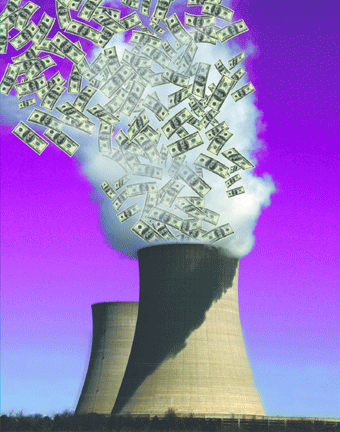
Letter to Ft.com : It almost feels impolite to point out some simple facts regarding your story “Westinghouse and US government strike $80bn nuclear reactor deal”. We are celebrating what Donald Trump hails as its “great friendship” between US and Japan, in addition to the election of our
first female prime minister, and an $80bn nuclear reactor deal — struck
by Washington and funded by Tokyo — all under the bright banner of what
appears to be a new era for our two countries.
Yet the simple fact remains,
whether we like it or not, that Japan is one of the most seismically active
countries in the world, which makes operating nuclear power plants far
riskier there than in the US.
The major nuclear players in both countries
— Westinghouse and Tokyo Electric Power (Tepco) — have faced bankruptcy or financial collapse. All publicly available, reliable data shows that solar power is significantly cheaper than new nuclear energy. Both our
countries’ leaders have issued similarly nationalistic statements on green
energy — President Trump even signed executive orders on “Unleashing
American Energy”, implicitly pointing to a common foe, namely China.
Warren Buffett once wrote that “more money has been stolen with the point
of a pen than at the point of a gun”. These nuclear power plant projects
will consume billions of dollars over the coming decades — long after
today’s leaders have left office. Future generations are being made the
“collateral” for decisions taken today.
FT 31st Oct 2025, https://www.ft.com/content/77769193-1cb0-4d8e-807a-e57936617de9
Three workers at nuclear fuel reprocessing plant possibly exposed to internal radiation
AOMORI – https://www.japantimes.co.jp/news/2025/10/29/japan/society/nuclear-plant-internal-exposure/
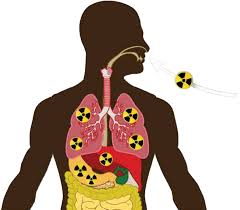
Three workers may have suffered internal radiation exposure while working in a spent nuclear fuel reprocessing plant in Rokkasho, Aomori Prefecture, Japan Nuclear Fuel has said.
The men in their 20s to 40s are employees of a partner company sent to work in a controlled area of the plant, according to an announcement by Japan Nuclear Fuel on Monday.
Radiation was detected inside the nasal cavity of one of the three, who is in his 40s, prompting the company to check whether all three had been internally exposed.
None of them has reported any change in their health condition so far, Japan Nuclear Fuel said.
According to the company, the three were working to replace filters that remove radioactive materials from gas emitted from a tank, in a building used for denitration of uranium-plutonium mixed solution, when radiation levels rose at around 11:10 a.m. Friday.
After they left the area, as instructed, contamination was found on the outer surface of the filters of their protective masks.
When contamination is detected, workers are typically instructed to cover air intake filters with tape to prevent further contamination and replace the filter while holding their breath.
However, two of the three breathed without filters for up to three minutes, according to Japan Nuclear Fuel. It is not clear when that occurred.
The company is still investigating why the two men breathed without filters. It is also analyzing urine and stool samples from the three workers to determine whether internal radiation exposure occurred, and investigating the cause of the increase in radiation levels.
Japan Weighs Nuclear-Powered Submarines Amid Regional Tensions
Rojoef Manuel. The Defense Post, October 10, 2025
Japan is considering developing nuclear-powered submarines after a state-backed panel formally recommended research into “next-generation propulsion” systems for the Japan Maritime Self-Defense Force (JMSDF).
Submitted to the Ministry of Defense last September, the proposal marks the first time an official advisory group has opened the door to studying nuclear propulsion, signaling a potential departure from Japan’s long-standing policy limiting military use of nuclear energy, Army Recognition reported……………………………………………………………………………………
Legal, Political Barriers Remain
Despite the new strategy, Japan’s postwar laws still make such development difficult. The Atomic Energy Basic Act restricts nuclear technology to peaceful uses, while Japan’s “Three Non-Nuclear Principles” forbid manufacturing, acquiring, or receiving nuclear weapons.
Chief Cabinet Secretary Yoshimasa Hayashi also reiterated last year that the East Asian government has “no plans to possess nuclear submarines” under its current law……………………………………………………………. https://thedefensepost.com/2025/10/10/japan-nuclear-submarines/
1 This Month

of the week – Shut Down Drone Warfare!


Tell the Ukrainian Government to Drop Prosecution of Peace Activist Yurii Sheliazhenko

Petition to revoke the licensing of the Near Surface Nuclear Disposal Facility (NSDF) at Chalk River. https://www.ourcommons.ca/petitions/en/Petition/Details?Petition=e-7247
To see nuclear-related stories in greater depth and intensity – go to https://nuclearinformation.wordpress.com
-
Archives
- April 2026 (44)
- March 2026 (251)
- February 2026 (268)
- January 2026 (308)
- December 2025 (358)
- November 2025 (359)
- October 2025 (376)
- September 2025 (257)
- August 2025 (319)
- July 2025 (230)
- June 2025 (348)
- May 2025 (261)
-
Categories
- 1
- 1 NUCLEAR ISSUES
- business and costs
- climate change
- culture and arts
- ENERGY
- environment
- health
- history
- indigenous issues
- Legal
- marketing of nuclear
- media
- opposition to nuclear
- PERSONAL STORIES
- politics
- politics international
- Religion and ethics
- safety
- secrets,lies and civil liberties
- spinbuster
- technology
- Uranium
- wastes
- weapons and war
- Women
- 2 WORLD
- ACTION
- AFRICA
- Atrocities
- AUSTRALIA
- Christina's notes
- Christina's themes
- culture and arts
- Events
- Fuk 2022
- Fuk 2023
- Fukushima 2017
- Fukushima 2018
- fukushima 2019
- Fukushima 2020
- Fukushima 2021
- general
- global warming
- Humour (God we need it)
- Nuclear
- RARE EARTHS
- Reference
- resources – print
- Resources -audiovicual
- Weekly Newsletter
- World
- World Nuclear
- YouTube
-
RSS
Entries RSS
Comments RSS
 nuclear-news