Fukushima greets summer with dread as nuclear-contaminated wastewater dumping approaches
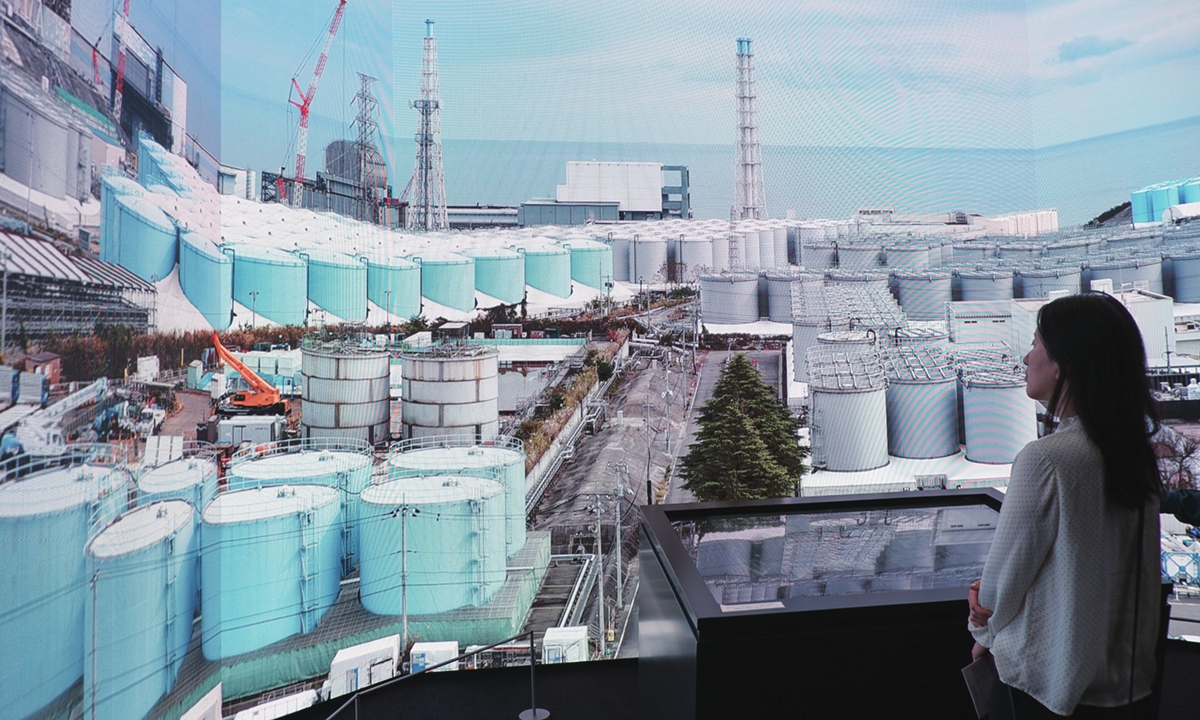
Global Times, By Xu Keyue and Xing Xiaojing in Iwaki, May 15, 2023
The Fukushima Prefecture in northeastern Japan is known as “the island of happiness,” which embodies people’s longing for a better life. Summer began in Fukushima in early May when locals normally look forward to intimate contact with the sea.
However, despite strong opposition at home and abroad, the Japanese government and the Tokyo Electric Power Company (TEPCO) are set to go ahead with the plan to dump the nuclear-contaminated wastewater from the Fukushima Daiichi Nuclear Power Plant into the sea this summer.
As summer approaches, the Global Times reporters went to the Fukushima Prefecture. In this first installment of this field investigation, the Global Times reveals the palpable sense of fear and unease hanging over Fukushima, paired with intense opposition from locals who chanted “Never allow arbitrary dumping into the sea!”………………………………………………………………………………………………………
About 54 kilometers away from the Fukushima Daiichi Nuclear Power Plant, the city looks subdued with few passersby along the streets. The excavation of an underwater tunnel for the project to drain the nuclear-contaminated wastewater from the Fukushima Daiichi Nuclear Power Plant was completed in April, and TEPCO announced that it is expected to complete the construction of the tunnel by the end of June. Measuring 1,031 meters long and 1 kilometer away from the coast, the tunnel will allow radioactive wastewater to be dumped into the sea.
…………………………………………………….. Chiyo Oda, co-chairperson of an environmental NGO and city assembly “Stop polluting the oceans!” was one of them.
“Summer is coming. What’s going to happen? Fukushima greets summer with fear!” said Oda, who expressed strong concern about the dumping of nuclear-contaminated wastewater at a conference themed “Don’t Nuke the Pacific” on May 7. “The Japanese government has reached an agreement with the fishing community that nothing will be done without [the fishing community and other stakeholders’] understanding.” Nevertheless, the Japanese government is apparently breaking its promise and is preparing to dump the water which is likely to start this summer.
When the Global Times reporters met Oda, the 68-year-old woman had just returned to Iwaki from Fukushima city, the capital of Fukushima Prefecture. Early that day, with Kazuyoshi Sato, another co-representative of the city assembly, Oda had driven for two hours to the Fukushima prefectural office to hold a press conference to announce that a mass rally called “May 16 Tokyo Action” will be held in Tokyo on May 16 to urge the Japanese government and TEPCO to stop dumping the nuclear-contaminated wastewater.
Oda told the Global Times that the campaign will last all day on May 16, when anti-sea pollution campaigners from all over Japan are meant to gather in Tokyo. As planned, they will gather in front of the TEPCO headquarters at 10:30 am, and then head to the House of Representatives with lawmakers to hold the rally. The rally and petition to the Japanese government and parliament will be followed by a speech at the Hibiya Open Air Concert Hall in the evening. It will then be followed by a massive demonstration in Ginza, Tokyo, which is expected to be attended by more than 1,000 people.
“The sea of my hometown, the Sea of Japan, and the seas of the world must not be polluted,” said Oda.
Oda noted that the Japanese government, TEPCO, the Fukushima Prefectural Federation of Fisheries Cooperative Associations, and the National Federation of Fisheries Cooperative Associations of Japan signed an agreement in 2015, stating it would not “do anything about the nuclear-contaminated water from Fukushima without the understanding and consent of the relevant people,” but now the Japanese government and TEPCO insist on dumping the water despite opposition from all parties, including fishermen. …………………………………………………………………………………………………………………………………………………………………..
“Look! This is the sea we want to protect!” Ikarashi told the Global Times that he and his family have fond memories of living by the sea, eating the catch from the same sea, surfing, and frolicking with their children. The people of Fukushima live just like them, having enjoyed the bounty of the sea for generations. If the nuclear-contaminated wastewater is dumped into the sea, future generations will no longer be able to enjoy the beautiful nature.
Ruiko Muto, who lives in Tamura, Fukushima, is the head of the association for the victims of the Fukushima nuclear accident. After the accident, she worked hard to hold the former management of TEPCO accountable as a member of the legal team for the Fukushima nuclear accident and the criminal prosecution team.
Muto told the Global Times in an email that “ALPS-treated water” used by the Japanese government and TEPCO contains many other radioactive substances besides tritium, making it “not safe at all.” Under such circumstances, attempts to release the radioactive wastewater from Fukushima into the sea must not be allowed.
Muto said that as summer approaches, her group will join forces with other civic groups and continue to express opposition through protests and rallies.
Dumping not only way
In an on-the-spot interview, Global Times reporters noted the intense concern over whether “ALPS-treated water,” as the Japanese government and TEPCO refer to it, is safe, and whether there is an alternative to dealing with the wastewater.
Hideyuki Ban, a Japanese nuclear expert and co-director of the Tokyo-based Citizens’ Nuclear Information Center (CNIC), told the Global Times that “the nuclear-contaminated wastewater contains 64 radionuclides, including tritium, some of which are very long-lived and cannot necessarily be diluted. [The compounds] can accumulate in the ocean and attach to fish and shellfish, and some of them can enter the body of marine organisms, causing human beings to be exposed to nuclear radiation after consumption. Even if [the wastewater] is treated and released into the sea, it is not safe.”
“There is no precedent in the world for dumping such wastewater containing 64 radionuclides into the sea,” he said.
“The capacity of ALPS to remove radionuclides and the amount of the nuclear-contaminated wastewater to be discharged are not fully understood, let alone gaining the understanding and consent of stakeholders. Under such circumstances, it is not allowed to arbitrarily discharge the wastewater,” he said.
Ban noted that there are other ways to dispose of the wastewater. For example, there is the option of “mortar solidification,” where the nuclear-contaminated wastewater is mixed, solidified, and stored in mortar as in cement production. What the Japanese government has done is based on a political decision, not one based on scientific research, Ban criticized……………………………………………………………………….
The problem, however, is that even if the nuclear-contaminated wastewater is disposed of, key issues such as whether nuclear fuel debris can be removed from the Daiichi plant remain unresolved. The government plans to decommission the reactor in the next 30 to 40 years, but it has yet to give a clear explanation of how long it will take to complete the project and in what condition the facility will have to be in order to qualify as successfully decommissioned, according to Muto.
Surrounded by the sea, Japan gives thanks to the gracious sea as a prosperous maritime nation, on “Sea Day” held annually on the third Monday of July, which is one of the statutory holidays in the country.. Born by the sea, the locals reached by the Global Times could not help but express their deep concern and fear that if the sea is polluted, it will be difficult to enjoy the sea’s succor in the future. https://www.globaltimes.cn/page/202305/1290745.shtml
 |
What to Know About Fukushima’s Exclusion Zone and Nuclear Mutations
The Fukushima exclusion zone is the result of a nuclear disaster in 2011. Keep reading to learn more about nuclear mutations and the earthquake that started it all.
BY RAYNA SKIVER. MAY 8 2023, https://www.greenmatters.com/clean-energy/fukushima-exclusion-zone
Back in 2011, a coastal city in Japan was hit by a powerful earthquake and tsunami. When this disaster struck Fukushima, reactors at a nuclear power plant overheated melted, causing radioactive materials to be released into the environment.
Soon after the catastrophe, the Fukushima exclusion zone was created.
After the disaster, the area surrounding the power plant was closed off due to the dangers of radiation— this site is called an exclusion zone. Today, a few places are still closed even after all of these years.
Some people might think that Fukushima is completely unsafe to visit, but that’s actually not the case. In fact, it’s possible to tour the area and learn more about the disaster. Real Fukushima is one of the many organizations that are working to change the public’s perception — they want people to see the city as hopeful, not dark.
The Fukushima disaster resulted in nuclear mutations.
Another result of the 2011 catastrophe was nuclear mutations. According to NBC News, researchers found mutations in butterflies near the Daiichi power plant. This observation was a sign of potential changes to the local ecosystem.
Nearby forests were also affected by the nuclear disaster. Studies showed that leaves had high concentrations of radiation and that there were “growth mutations of fir trees,” according to Greenpeace. The organization voiced concern about the potential consequences that the disaster might have on plants and animals.
The Fukushima nuclear disaster had terrible consequences for the surrounding communities and the environment. According to BBC, the earthquake and the tsunami that followed killed over 18,000 people, with many still missing. Over 150,000 had to evacuate the area as well, due to radiation leaks.
After the event, many countries began correcting design flaws — such as having the generators in the basement — and conducting stress tests in order to minimize future risks. On the other hand, Japan decided to phase out nuclear energy altogether.
The country’s citizens were uncomfortable with their dependence on atomic energy after the disaster, understandably so. Most nuclear power plants in Japan have been idle since 2011. Before the incident, nuclear energy accounted for about a third of the country’s power, but in 2020, the number significantly decreased to less than 5 percent, according to The Guardian.
But now, the country is reconsidering its reliance on nuclear power. Japan is looking for a secure energy supply — the war in Ukraine and rising energy costs have made the feat difficult. Not only might this be an unpopular move with the country’s citizens, but it’s also a loss for the environment.
Nuclear energy produces radioactive waste. This waste can end up harming both humans and the environment, according to the Energy Information Association. Nuclear power plants are also water hungry — they require a lot of water for cooling, Greenpeace explained.
With all of the risks involved, it might be best to turn away from nuclear energy and toward renewable energy.
Abolish Nukes, Kishida, G7! — limitless life

Secretariat for the G7 Hiroshima Summit Ministry of Foreign Affairs, Japan 2-2-1 Kasumigaseki, Chiyoda-ku Tokyo 100-8919
Dear Members of the Secretariat:
Ever since the summer of 1955, the Japan Council Against Atomic and Hydrogen Bombs (Gensuikyo) has actively campaigned to prevent nuclear war and abolish nuclear weapons. All of humanity is indebted to them for making significant contributions to world peace, such as when they organized the largest anti-nuclear protest ever, i.e., the antinuclear petition initiated by women and eventually signed by 32 million people, that came in the aftermath of March 1954 when U.S. nuclear testing irradiated people of the Bikini Atoll and the crew of a Japanese fishing boat called the “Lucky Dragon.” That international nuclear crime was only one in a long list of such crimes that began with President Harry Truman’s decision to drop the bombs on Hiroshima and Nagasaki in August 1945, ultimately killing hundreds of thousands of Japanese as well as tens of thousands of Koreans, not to mention the
people of other countries or the U.S. who were in those cities at the time.
Sadly, despite Gensuikyo’s foresight and decades-long, diligent efforts, we, all the members of our species, have been living under the threat of nuclear war for three quarters of a century. And during the last year that threat has been greatly elevated by the war in Ukraine, a war in which two nuclear powers, Russia and NATO, could possibly come into direct conflict in the near future.
Daniel Ellsberg, the famous whistleblower who sadly will not be with us much longer due to terminal cancer, paraphrased on the first of May the words of Greta Thunberg: “The adults are not taking care of this, and our future absolutely depends on this changing somehow fast, now.” Thunberg spoke of global warming while Ellsberg was warning about the threat of nuclear war.
With the high stakes of the war in Ukraine in mind, we must now, for the sake of young people, be “the adults in the room” during the G7 Summit in Hiroshima (19-21 May 2023). And we must voice our demands to the elected leaders of the G7 countries (essentially, the NATO side of the conflict).
World BEYOND War agrees with Gensuikyo that one “cannot build peace through nuclear weapons”. And we do endorse Gensuikyo’s main demands, which we understand as the following:
- Japan must pressure the other G7 nations to abolish nuclear weapons once and for all.
- Japan and the other G7 countries must sign and ratify the TPNW (Treaty on the Prohibition of Nuclear Weapons).
- In order to do so, the Japanese government must take the lead and promote the TPNW.- (Treaty for the Prohibition of Nuclear Weapons)
- Japan must not engage in military buildup under pressure from the United States.
…………………………………………………… more https://limitlesslife.wordpress.com/2023/05/07/abolish-nukes-kishida-g7/
G-7 Expected to Focus on Nuclear Dangers in Hiroshima
Arms Control Association, May 2023, By Daryl G. Kimball
The leaders of the Group of Seven (G-7) industrialized nations, who will convene this month in Hiroshima, the city destroyed in 1945 by the world’s first nuclear attack, are expected to emphasize measures to address rising nuclear dangers.
Japanese Prime Minister Fumio Kishida, who will preside over the summit, chose Hiroshima as the venue “to deepen discussions so that we can release a strong message toward realizing a world free of nuclear weapons.” In response to concerns that Russia might use nuclear weapons in its war in Ukraine, Kishida also said on Jan. 9 that the G-7 needs to “demonstrate a firm commitment to absolutely reject the threat or use of nuclear weapons.”
………………………. According to The Japan Times, the Japanese government is arranging for a meeting between the G-7 leaders and some of the remaining hibakusha, the survivors of the atomic bomb attacks, during a visit to the peace museum on May 19.
………………… Kishida also met representatives from the “Civil 7” group of nongovernmental organizations from 72 countries on April 13 to hear their recommendations on how the G-7 leaders could advance progress on nuclear risk reduction and nuclear disarmament. Among other measures, the civil society group recommended that G-7 leaders meet atomic bombing survivors, unequivocally condemn threats to use nuclear weapons, and endorse urgent negotiations to achieve the complete elimination of nuclear weapons before 2045……………….
https://www.armscontrol.org/act/2023-05/news/g-7-expected-focus-nuclear-dangers-hiroshima
—
Japanese authorities doubtful of removal process of Fukushima radioactive sandbags
Japanese authorities have expressed doubt over the removal of radioactive sandbags at the Fukushima nuclear plant as the plant operator aims to start the recycling procedure this fiscal year, NHK reported on Monday.
Japan’s Nuclear Regulation Authority said the recycling approach needs to be fully verified, adding that it was unclear whether the procedure can be carried out as expected.
The zeolite-packed sandbags were put on the basement floors of the factory building as an emergency measure to lower radiation levels of contaminated water after the 2011 nuclear disaster.
Although their radiation levels have weakened with time, the sandbags can still emit radiation levels of up to 4.4 sieverts per hour, which could kill people exposed to the high reading for two hours.
The plant operator Tokyo Electric Power Co. (TEPCO) plans to use robots to collect the sandbags and store them in other receptacles. The company is expecting the plan to be approved in September.
The regulator said tests need to be carried out this summer to verify the plan’s safety.
Discharge of tritium from Fukushima to harm human body: scientist
Tritium, which the Japanese government planned to dump from its crippled Fukushima Daiichi nuclear power plant into the Pacific Ocean, will harm human beings’ inside bodies as internal exposure can be more dangerous than external one, a renowned scientist said Thursday.
“When tritium gets inside the body, it’s at least as dangerous as any of the other radionuclides. And in some cases, it’s more than double as dangerous in terms of the effects of the radiation on the genetic material, on the proteins,” Timothy Mousseau, professor of biological sciences at the University of South Carolina, told a press conference in Seoul.
The Japanese government and institutions, including the Tokyo Electric Power Company (TEPCO), have claimed that tritium is not dangerous because it emits a very “weak” beta particle, but the professor called it “fiction.”
“Ingestion is really the most dangerous. People have said that tritium is not dangerous based on the concerns for external exposure, but using the same argument, you would say that uranium 235 is not dangerous,” he noted.
Tritium is known as an emitter of low-energy beta particles incapable of penetrating a human body as they are stopped by a layer of clothing, in contrast to gamma rays that can pass through a human body and only be stopped by several feet of concrete.
If the tritiated water or the organically bound tritium discharged from the collapsed Fukushima power plant is consistently ingested, the ionizing radiation would directly damage DNA or indirectly affect other metabolic activities through oxidative stress or an imbalance inside the body that can lead to cell and tissue damage.
“The way it works is that the tritium molecule comes inside the cell and ejects an electron…It’s a little bullet. It’s like a bullet coming from a gun. It comes out from the nucleus of the tritium atom. That bullet hits something like the DNA,” Mousseau said.
“What makes tritium more dangerous than high-energy emission is that the bullet is moving kind of slow, so it hits something and bounces. And it hits something else and then it hits something else. It doesn’t go anywhere, so you end up with a clustered damage from that beta particle,” the professor noted.
“High-energy beta particles are higher energy. They will hit something, yes, but then they continue and go through the cell, maybe out of the body, and do much less damage as a result. So, this is why we need to pay attention to tritium in particular,” he added.
Mousseau, who published over 130 scientific papers related to radiation effects, presented a new paper on the biological consequences of exposure to tritium earlier this month based on 250 studies after scanning over 700,000 references to tritium.
According to the paper, the scientific literature indicated that tritium could be genotoxic and carcinogenic and can affect reproductive systems such as sperm and eggs.
Japan planned to release over 1.2 million tonnes of the tritium-laced water into the ocean for 30 years from 2023, but the discharge would last much longer than planned, Shaun Burnie, a senior nuclear specialist at Greenpeace East Asia, told the press conference.
“Those discharges could begin as early as July, possibly later, and continue for many decades, not just the 30 years but maybe 50, 60, 70, 80 years. Next century is really possible,” said Burnie.
“This is water that’s radioactive in tanks, so it’s the deliberate decision to pollute and contaminate the environment, which doesn’t need to take place because actually there is sufficient storage space in the two districts next to the Fukushima nuclear power plant,” he noted.
Burnie was also skeptical of Japan’s claim that the contaminated water could be diluted through an advanced liquid processing system (ALPS).
“This is water that has come in direct contact with a reactor, a nuclear fuel that suffered a severe melt, which means fission products within the nuclear fuel became in direct contact with water,” the specialist said.
“It’s unclear how successfully the ALPS system processes the water. Around 70 percent of the water in the tanks still needs to undergo further processing. So, we still don’t know how effective it’s going to be. It can’t be discharged as it is at the moment,” he added.
Fukushima nuclear disaster – new Netflix series
Over the course of eight episodes, this multi-layered drama faithfully captures a disastrous incident from three different perspectives based on careful research. “What happened there on that day?” This story seeks to answer this question based on the true events of seven intense days from the perspectives of government, corporate organizations, and the people on site risking their lives.
This series is developed and produced by Jun Masumoto, who crafted massive hits such as the “Code Blue” series while also delivering powerful social drama series such as “Shiroi Kyoto” series and “Hadashi no Gen.” The two directors of this series are Masaki Nishiura, who has worked alongside Masumoto for many years as the director of the “Code Blue” series, and Hideo Nakata of the “Ring” series.
At 2:46 p.m. on 11 March, 2011, a magnitude 9.0 earthquake with a maximum seismic intensity of 7 (recorded at Kurihara-cho, Miyagi prefecture) struck approximately 130 kilometers off the Sanriku coast. One hour after this earthquake shook the islands of Japan, a 15-meter-tall tsunami swallowed up the Fukushima nuclear power plant in an instant. But that was only the start of the nightmare. With its cooling function lost, the power plant fell into a dangerous and uncontrollable state. The Netflix Series “The Days” starts streaming in 2023, only on Netflix https://www.netflix.com/title/81233755
Japan hopes to start discharging Fukushima nuclear wastewater in July
Gong Zhe https://news.cgtn.com/news/2023-04-23/Japan-hopes-to-start-discharging-Fukushima-nuclear-wastewater-in-July-1jfbTfpbNvy/index.html
Japan is hoping to start discharging radioactive waste water from its destroyed Fukushima nuclear plant into the ocean in July.
Tokyo Electric Power Company (TEPCO) told Kyoto News on Saturday that the excavator is near the exit of the tunnel located one-kilometer offshore. The 1,030-meter tunnel is used to discharge the treated water stored in the Fukushima Daiichi Nuclear Power Plant into the sea. As long as 1,017 meters of the tunnel have been excavated.
TEPCO is trying to complete the tunnel and other facilities related to water discharging before the end of June, and the possibility of starting discharge operations as early as July has increased.
The Japanese government and TEPCO are trying to start discharging around this summer, but fishermen and others continue to oppose it. The plan faces opposition at home and has raised “grave concern” in neighboring countries, including but not limited to China and South Korea.
TEPCO plans to use a large amount of seawater for dilution to make the activity of tritium in treated water less than one-fortieth of national standards, and then discharge it through a seabed tunnel. It is expected to be discharged for several decades.
Fukushima’s fishing industry survived a nuclear disaster. 12 years on, it fears Tokyo’s next move may finish it off.
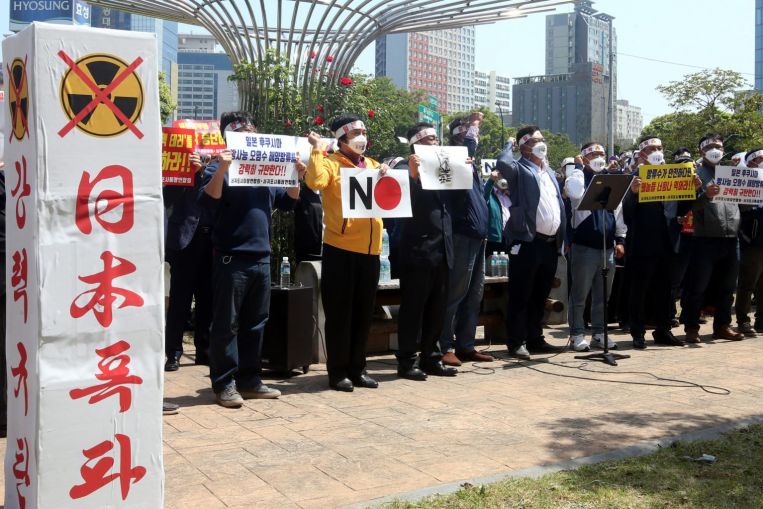
By Emiko Jozuka, Krystina Shveda, Junko Ogura, Marc Stewart and Daniel Campisi, CNN, April 19, 2023
It is still morning when Kinzaburo Shiga, 77, returns to Onahama port after catching a trawler full of fish off Japan’s eastern coast.
But the third-generation fisherman won’t head straight to market. First, he’ll test his catch for radiation.
It’s a ritual he’s repeated for more than a decade since a devastating earthquake and tsunami triggered a nuclear meltdown at the Fukushima Daiichi power plant in 2011, spewing deadly radioactive particles into the surrounding area.
Radiation from the damaged nuclear plant leaked into the sea, prompting authorities to suspend fishing operations off the coast of three prefectures that had previously provided Japan with half of its catch.
That ban lasted over a year and even after it was lifted, Fukushima-based fishermen like Shiga were for years mostly limited to collecting samples for radioactivity tests on behalf of the state-owned electricity firm Tokyo Electric Power Company, or TEPCO, rather than taking their catches to market.
Ocean currents have since dispersed the contaminated water enough that radioactive Cesium is nearly undetectable in fish from Fukushima prefecture. Japan lifted its last remaining restrictions on fish from the area in 2021, and most countries have eased import restrictions.
Shiga and others in the industry thought they’d put the nightmare of the past years behind them.
So when Japan followed through on plans to gradually release more than 1 million metric tons of filtered wastewater into the Pacific Ocean from the summer of 2023 – an action the government says is necessary to decommission the plant safely – the industry reeled.
The Japanese government and the International Atomic Energy Agency (IAEA), a United Nations body promoting the peaceful use of nuclear energy, say the controlled release, which is expected to take decades, will meet international safety regulations and not harm the environment, as the water will be treated to remove radioactive elements – with the exception of tritium – and diluted more than 100 times.
But with the deadline for the planned water release looming this summer, Fukushima’s fishermen fear that – whether the release is safe or not – the move will undermine consumer confidence in their catches and once again threaten the way of life they have fought so hard to recover…………………………………………………………………..
While radioactive wastewater contains dangerous elements including Cesium and Strontium, TEPCO says the majority of those particles can be separated from the water and removed. TEPCO claims its filtering system, called advanced liquid processing (ALPS), can bring down the amount of those elements far below regulatory standards.
But one hydrogen isotope cannot be taken away, as there is currently no technology available to do so. This isotope is radioactive tritium, and the scientific community is divided on the risk its dissemination carries………………………………………………………
“For decades, nuclear power plants worldwide – including in the United States, Canada, Britain, France, China and South Korea – have been releasing waste contaminated with tritium, each under its own national quota,” said Tim Mousseau, an environmental scientist at the University of South Carolina.
But Mousseau argues tritium is overlooked because many countries are invested in nuclear energy, and “there’s no way to produce it without also generating vast amounts of tritium.”
“If people started picking on TEPCO in Fukushima, then the practice of releasing tritium to the environment in all of these other nuclear power plants would need to be examined as well. So, it opens up a can of worms,” he said, adding the biological consequences of exposure to tritium have not been studied sufficiently.
In 2012, a French literature review study said tritium can be toxic to the DNA and reproductive processes of aquatic animals, particularly invertebrates, and the sensitivity of different species to various levels of tritium needs to be further investigated.
Currently, countries set different standards for the concentration of tritium allowed in drinking water. For example. Australia, which has no nuclear power plants, allows more than 76,000 becquerel per liter, a measure used to gauge radioactivity, while the WHO’s limit is 10,000. Meanwhile, the US and the European Union have much more conservative limits – 740 and 100 becquerel per liter respectively.
Ian Fairlie, an independent consultant on radioactivity in the environment, told CNN that “two wrongs don’t make a right” when it comes to Japan’s decision to release tritiated water. He argues TEPCO should build more storage tanks to allow for the decay of the radioactive tritium, which has a half-life of 12.3 years.
Lack of trust for the ‘nuclear village’
In Japan, the Fukushima wastewater issue has become highly contentious due to a lack of trust among influential advocates of nuclear energy, or what’s locally known as the “nuclear village.”
The informal group includes members of Japan’s ruling party (the Liberal Democratic Party), the Ministry of Economy Trade and Industry and the nuclear industry.
“(The nuclear village) used to tell us that nuclear energy is 100% safe – but it wasn’t, as the Fukushima Daiichi plant accident revealed,” said Koichi Nakano, a political scientist at Sophia University, in Tokyo.
A series of missteps after the disaster further eroded public trust, according to a 2016 report written by Kohta Juraku, a researcher at Tokyo Denki University.
For instance, in 2012, the government and TEPCO presented a proposed action plan to local fishing representatives that involved pumping up groundwater before it flooded into the nuclear reactor buildings and releasing it into the sea. Fishing bodies were on board but the plan was it postponed until 2014 after 300 tons of radioactive water leaked from the plant into the sea, infuriating fishers……………………………………… https://edition.cnn.com/2023/04/19/asia/japan-fukushima-disaster-wastewater-fishing-concerns-hnk-dst-dg-intl/index.html
How Fukushima wastewater into Pacific will disrupt seafood trade
By Ming Wang, Dalian Maritime University, China
Public opinion will dictate how Japanese seafood is received after the wastewater is disposed of into the Pacific Ocean.
The global seafood market faces turmoil with the release of the Fukushima nuclear wastewater from Japan into the Pacific Ocean, computer modelling predicts.
Japan announced in 2021 it would release over 1.25 million tonnes of treated Fukushima radioactive wastewater into the sea as part of its plan to decommission the power station when its storage capacity reaches its limit this year.
Seafood is one of the most important food commodities in international trade, far exceeding meat and milk products. According to the United Nations Comtrade database, global seafood trade has grown from $US7.6 billion in 2009 to $US12.4 billion in 2019, an increase of 63 percent.
The Japanese nuclear wastewater discharge raises global worries about the safety of Japanese seafood as public opinion influences consumers’ preference for seafood.
In this empirical study involving American consumers, 30 percent of respondents said they reduced their seafood consumption following the Fukushima nuclear plant accident and more than half believe Asian seafood poses a risk to consumer health due to the disaster.
Most of Japan’s seafood trading partners, such as China, Russia, India and South Korea, imposed temporary bans on food from several districts around Fukushima in the wake of the accident in 2011.
This paper models the potential impact of the Fukushima nuclear wastewater disposal on the global seafood trade using the import and export data for 26 countries which make up more than 92 percent of the world’s trade in marine products………………..
China, South Korea and the US are expected to increase their seafood imports from Denmark, France, Norway and other community group two countries while reducing seafood exports to them. This is because these three countries have already reduced their seafood trade with Japan.
The increase in exports from community group three to community group two nations leads to a decrease in imports and exports between countries within community group two. For example, the study notes that Denmark, Norway and France are all experiencing a decrease in seafood exports and imports between each other……………………………………..
The model also divided the global seafood market into two segments – the first being the Japanese market and the second comprising 25 other countries. It calculated that Japan’s seafood exports fell by 19 percent in 2021, or $US259 million.
Public opinion after the Fukushima wastewater is discharged will have different impacts on the import and export trade of seafood for each country, especially for countries which trade with Japan.
What people think about the discharge is closely related to the amount of Japanese seafood imported by each country. The higher the amount of Japanese seafood imported by a particular country, the more negative public opinion is likely to be, according to computer modelling…………………………………………………………… more https://www.rnz.co.nz/international/pacific-news/487942/how-fukushima-wastewater-into-pacific-will-disrupt-seafood-trade
Ignoring science, environmental protection and international law – G7 endorses Japan’s Fukushima water discharge plans

Greenpeace International, 16 April 2023 https://www.greenpeace.org/international/press-release/59193/science-environmental-protection-international-law-g7-japans-fukushima-water-discharge/
Legacy of Fukushima disaster shows nuclear energy is no solution to energy and climate crisis.
Sapporo, Japan – The nations of the G7 have chosen politics over science and the protection of the marine environment with their decision today to support the Japanese government’s plans to discharge Fukushima radioactive waste water into the Pacific Ocean.
The 1.3 million cubic meters/tons of radioactive waste water at the Fukushima Daiichi plant, currently in tanks, is scheduled to be discharged into the Pacific Ocean this year. Nations in the Asia Pacific region, led by the Pacific Island Forum, have strongly voiced their opposition to the plans.[1] Some of the world’s leading oceanographic institutes and marine scientists have criticised the weakness of the scientific justification applied by TEPCO, the owner of the nuclear plant, warned against using the Pacific Ocean as a dumping ground for radioactive contaminated water, and called for alternatives to discharge to be applied.[2]
“The Japanese government is desperate for international endorsement for its Pacific Ocean radioactive water dump plans. It has failed to protect its own citizens, including the vulnerable fishing communities of Fukushima, as well as nations across the wider Asia Pacific region. The aftermath of the nuclear disaster at Fukushima is still strongly felt, and the Japanese government has failed to fully investigate the effects of discharging multiple radionuclides on marine life. The government is obligated under international law to conduct a comprehensive environmental impact assessment, including the impact of transboundary marine pollution, but has failed to do so. Its plans are a violation of the UN Convention Law of the Sea.
The marine environment is under extreme pressure from climate change, overfishing and resource extraction. Yet, the G7 thinks it’s acceptable to endorse plans to deliberately dump nuclear waste into the ocean. Politics inside the G7 at Sapporo just trumped science, environmental protection, and international law,” said Shaun Burnie, Senior Nuclear Specialist at Greenpeace East Asia.
Greenpeace East Asia analysis has detailed the failures of liquid waste processing technology at the Fukushima Daiichi plant and the environmental threats posed by the releases.[3] There is no prospect of an end to the nuclear crisis at the plant as current decommissioning plans are not feasible. Furthermore, the report finds the nuclear fuel debris in the reactors cannot be completely removed and will continue to contaminate the ground water over many decades.[4] Claims that the discharges will take 30 years is inaccurate as in reality, it will continue into the next century. Viable alternatives to discharge, specifically long term storage and processing, have been ignored by the Japanese government.[3]
The Japanese government’s attempt to normalise the Fukushima nuclear disaster is directly linked to its overall energy policy objective of increasing the operation of nuclear reactors again after the 2011 disaster. 54 reactors were available in 2011 compared to only ten reactors in 2022, generating 7.9% of the nation’s electricity in FY21 compared to 29% in 2010.[5] Meanwhile, five of the other six G7 governments led by France, the US and the UK are also aggressively promoting nuclear power development.
The idea that the nuclear industry is capable of delivering a safe and sustainable energy future is delusional and a dangerous distraction from the only viable energy solution to the climate emergency which is 100% renewable energy. The global growth of low cost renewable energy has been phenomenal – but it has to be much faster and at an even greater scale if carbon emissions are to be reduced by 2030. Approval for nuclear waste dumping and nuclear energy expansion sound like the 1970’s but we have no time for such distractions. We are in a race to save the climate in the 21st century, and only renewables can deliver this,” said Shaun Burnie.
34,200 tons of radioactive sewage sludge kept in Kanto area 12 yrs after Fukushima disaster.
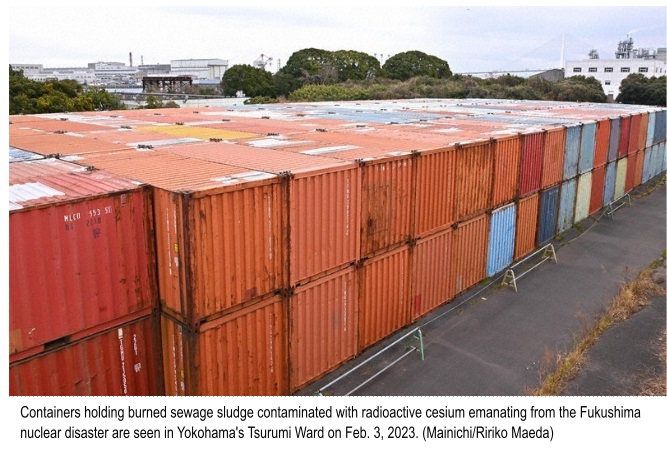
April 10, 2023 (Mainichi Japan)
TOKYO — A total of some 34,200 metric tons of sewage sludge contaminated with radioactive substances emanating from the Fukushima nuclear disaster is still kept in temporary storage by major local bodies in the Kanto region, the Mainichi Shimbun has learned.
The massive tainted waste — a year’s worth of ordinary burned sludge ash generated in Tokyo’s 23 wards — has partially been kept as incinerated ash. Due to difficulties in obtaining local understanding for landfill disposal of radioactive waste in harbors, forests and mountains, some of the waste has nowhere to go even 12 years on since the onset of the disaster.
The finding came after the Mainichi queried major local governments in five prefectures in the Kanto region and other sources about radioactively contaminated sewage sludge accumulated in the wake of the March 2011 Fukushima Daiichi Nuclear Power Station meltdown.
In May 2011, two months after the disaster, radioactive cesium was detected in the sewage sludge in Fukushima Prefecture. This prompted inspections of sewage in other local bodies in the Kanto region, and authorities took measures, such as keeping highly contaminated sludge within their local sewage facilities.
Of these, the Mainichi Shimbun interviewed 15 local bodies — Tokyo and six other Kanto region prefectures, their capital cities, and government-designated major cities in the region — between December 2022 and March 2023, regarding the status of their treatment of sewage sludge in which radioactive substances were detected.
It emerged that the Yokohama Municipal Government, south of Tokyo, had kept approximately 26,600 tons of radioactively contaminated waste within its sewage facilities as incinerated sludge ash as of the end of February 2023, while the Kawasaki Municipal Government, also in Kanagawa Prefecture, had kept 3,435 tons of such waste inside its port areas in the same form…………………………………………..
In the Kanto region alone, a total of some 4,180 tons of radioactive sewage requiring the central government’s treatment remains in Ibaraki, Tochigi, Gunma and Chiba prefectures, according to the Ministry of the Environment and other sources. The national government plans to place this waste under long-term management by setting up treatment facilities in state-owned forests and other sites in accordance with the special measures law on radioactive contamination response. However, the plan remains up in the air as the candidate sites have not been finalized due to protests from local residents and other factors.
Meanwhile, Tokyo, Saitama and Kanagawa prefectures responded to the survey that they have finished disposing of all radioactive sewage sludge under their control. The cities of Mito, Saitama and Chiba also answered the same. Based on the peak amount of radioactive sludge kept by these local bodies, it is estimated that they had disposed of at least some 120,000 tons of such waste.
(Japanese original by Kazuhiro Igarashi and Kaoru Watanabe, Tokyo Regional News Department)https://mainichi.jp/english/articles/20230408/p2a/00m/0na/013000c
Childhood thyroid cancer cases confirmed in the Fukushima Health Management Survey and others
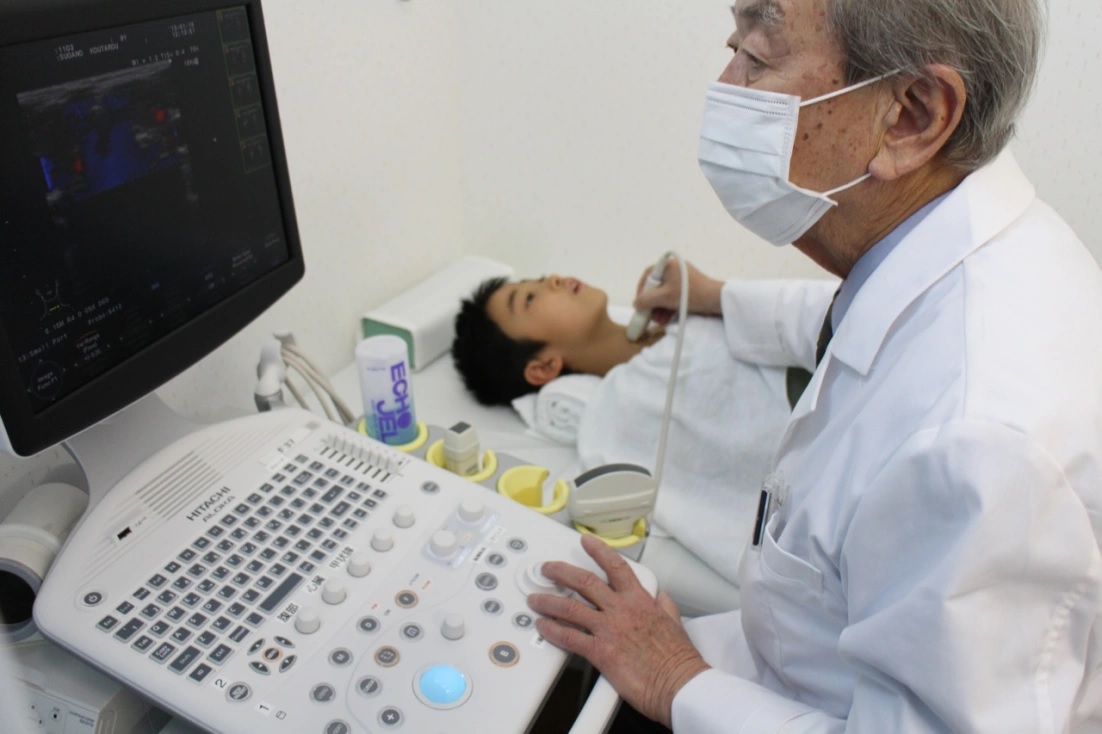
BY CITIZENS’ NUCLEAR INFORMATION CENTER · APRIL 5, 2023 https://cnic.jp/english/?p=6551
Fukushima Prefecture has been implementing thyroid gland examinations for children (born between April 2, 1992 and April 1, 2012) who were living in the prefecture at the time of the earthquake and nuclear disaster. The results are summarized in the table below: [on original]
In addition to the 295 children with thyroid cancer confirmed in the survey (excluding one with benign nodules), 43 other patients were identified outside of the tally in the cancer registry, bringing the total number of children aged 18 or younger with malignant or suspected malignant thyroid cancer who were living in Fukushima Prefecture at the time of the accident to 338. Note that the screening uptake rate at the age of 25 is low.
Surveys have found thyroid cancer in children at a rate dozens of times higher than normal.
Current State of Post-Accident Operations at Fukushima Daiichi Nuclear Power Station (Jun. to Dec. 2022)

State of the Plant Fukushima Now – Part 2, BY CITIZENS’ NUCLEAR INFORMATION CENTER APRIL 5, 2023 · By Matsukubo Hajime (CNIC)
The water temperature in the containment vessels and the spent fuel pools (SFPs) shows no great variation despite seasonal temperature changes. The state of releases of Xenon-135 (half-life roughly nine hours), released when uranium fuel undergoes fission, is also unchanged and it can therefore be estimated that the state of the reactors is stable. Further, according to an assessment by TEPCO in December 2022, around 10,000 becquerels per hour (Bq/h) of radioactive materials were being released to the atmosphere from the buildings (Fig.1 on original).
At the same time, decay heat has fallen greatly with the passage of time, and thus the volume of cooling water injected into the reactors has been reduced (falling from 7-10m3 per hour in May 2011 to 1.6-4m3 per hour as of December 2022).
The state of removal of spent nuclear fuel from the SFPs is summarized in Table 1 [0n original]. Spent nuclear fuel removal from Units 3 and 4 has been completed. However, as it has not been possible to remove control rods and other high-dose equipment stored in the SFPs, preparatory work has been underway for removal of this equipment from Unit 3 in the second half of FY2022 and removal from Unit 4 will commence in the second half of FY2024. Further, the removal of this equipment from Unit 3 was due to start from late October 2022, but this has now been rescheduled for early March 2023.
Preparations for the removal of fuel debris are also under way…………………………………..
The Unit 2 reactor core isolation cooling (RCIC) system was operating after the accident and for a further three days, including the time when the tsunami arrived at the plant. Uncovering the reason why it ceased functioning has been an issue, but it is inaccessible even now, after approximately 12 years underground………………………………………..
The changes in the average number of workers onsite per day is shown in Fig. 2 [on original] . As of December 2022, the number of workers was 4,410, about half the number it was at its peak. …………………………………
Contaminated water countermeasures at Fukushima Daiichi Nuclear Power Station (FDNPS) can be broadly divided into three areas: 1) Reduction of groundwater flowing into buildings, 2) Reduction of contaminated water flowing into the sea, and 3) Reduction of the toxicity of contaminated water. The main countermeasures to reduce water inflow into the buildings are, from higher elevations downward, ………………………………………………………
In the reduction of the toxicity of contaminated water, cesium and strontium are removed, and after the removal of impurities using a reverse osmosis (RO) membrane, radionuclides other than tritium are removed by the multi-radionuclide removal equipment…………………………………………
The frozen earth barrier consists of about 1600 30-meter freeze pipes buried in the ground, through which coolant at -30°C is circulated to freeze the surrounding soil. The effectiveness of the frozen earth barrier has been questioned since it was first installed, but since 2019 there have been several coolant leakage incidents.
Concerning the issue of releasing contaminated water into the ocean after ALPS treatment, TEPCO’s policy to release the water was authorized at the 25th Meeting of the Nuclear Regulatory Authority on July 22, and the construction was approved by the governor or Fukushima Prefecture and the mayors of both Okuma Town and Futaba Town in August. At present, construction of the release tunnel is ongoing, and the plan is to complete the construction during the first quarter of 2023. ………………………….. A fund of 30 billion yen has already been established as a measure against “adverse publicity.” Additionally, TV commercials, etc. are also being employed as “actions to foster understanding.” On the same day Chairman Masanobu Sakamoto of the National Federation of Fisheries Cooperative Associations released a statement saying, “We have not altered one little bit our opposition to the oceanic release.”
Meanwhile, Secretary General Henry Puna of the Pacific Islands Forum (PIF), an inter-governmental organization that aims to enhance cooperation among 15 countries and two regions of Oceania, announced in a statement on January 18 that PIF will demand a postponement of releases until it has become possible to confirm the safety of all involved [timetable of events shown on original] more https://cnic.jp/english/?p=6553
Fukushima Now Part 1: Railroading the Contaminated Water Release is Unacceptable!
BY CITIZENS’ NUCLEAR INFORMATION CENTER · APRIL 5, 2023, By Ban Hideyuki (CNIC Co-Director)
The Ministry of Economy, Trade and Industry (METI) and Tokyo Electric Power Holdings (TEPH) had decided on a policy of oceanic release of the contaminated water, which continues to build up at Fukushima Daiichi NPS, from an early stage and have been steadily proceeding with preparatory construction work for the release. This work has been proceeding despite written commitments to the National Federation of Fisheries Cooperative Associations and Fukushima Prefecture Federation of Fisheries Cooperative Associations in August 2015 that “(contaminated water) would not be released into the ocean without their agreement.”
This is the plan for how the release work will proceed. …………………………………………………………………..
This resulted in construction costs of 43 billion yen for the first four years and a release period of 30 years or more, a significant increase from the initial estimate of 3.4 billion yen and 88 months. However, the cost is based on an assessment of 800,000 tons, which differs from the current volume, but nevertheless the assessment that the oceanic release method is “cheap and fast” has been destroyed. Fishermen’s groups passed a special resolution at their general meeting in FY2022 to oppose oceanic releases, and their opposition remains unchanged.
………………………………………………………………….. Securing storage space for high integrity containers is a challenge
Wastewater collected during the ALPS treatment and its pre-treatment stage is stored in polyethylene high integrity containers (HICs). As of December 2022, there were 4,192 containers in storage. To prepare for an increase in wastewater, TEPH plans to expand the storage space by 192 units by June 2025 and a further 192 units by about the middle of 2026………………………………………………
As of June 2021, the Nuclear Regulation Authority had pointed out that there were 31 HICs with absorbed doses that had reached the limit of five mega-grays. That means the limit has been reached sooner than TEPCO had predicted, because, unlike TEPH, TEPCO evaluated absorbed doses from the sludge accumulated at the bottom of the waste effluent HIC. ………………………. Given that contaminated water will continue to be generated in the future, it is likely that securing storage space will become even more difficult. https://cnic.jp/english/?p=6562
1 This Month

of the week – Shut Down Drone Warfare!


Tell the Ukrainian Government to Drop Prosecution of Peace Activist Yurii Sheliazhenko

Petition to revoke the licensing of the Near Surface Nuclear Disposal Facility (NSDF) at Chalk River. https://www.ourcommons.ca/petitions/en/Petition/Details?Petition=e-7247
To see nuclear-related stories in greater depth and intensity – go to https://nuclearinformation.wordpress.com
-
Archives
- April 2026 (79)
- March 2026 (251)
- February 2026 (268)
- January 2026 (308)
- December 2025 (358)
- November 2025 (359)
- October 2025 (376)
- September 2025 (257)
- August 2025 (319)
- July 2025 (230)
- June 2025 (348)
- May 2025 (261)
-
Categories
- 1
- 1 NUCLEAR ISSUES
- business and costs
- climate change
- culture and arts
- ENERGY
- environment
- health
- history
- indigenous issues
- Legal
- marketing of nuclear
- media
- opposition to nuclear
- PERSONAL STORIES
- politics
- politics international
- Religion and ethics
- safety
- secrets,lies and civil liberties
- spinbuster
- technology
- Uranium
- wastes
- weapons and war
- Women
- 2 WORLD
- ACTION
- AFRICA
- Atrocities
- AUSTRALIA
- Christina's notes
- Christina's themes
- culture and arts
- Events
- Fuk 2022
- Fuk 2023
- Fukushima 2017
- Fukushima 2018
- fukushima 2019
- Fukushima 2020
- Fukushima 2021
- general
- global warming
- Humour (God we need it)
- Nuclear
- RARE EARTHS
- Reference
- resources – print
- Resources -audiovicual
- Weekly Newsletter
- World
- World Nuclear
- YouTube
-
RSS
Entries RSS
Comments RSS
 nuclear-news