IAEA team in Japan for final review before planned discharge of Fukushima nuclear plant water.

abc news, 29 May 23
An International Atomic Energy Agency team has arrived in Tokyo for a final review before Japan begins releasing massive amounts of treated radioactive water into the sea from the wrecked Fukushima nuclear plant, a plan that has been strongly opposed b…
By MARI YAMAGUCHI Associated Press, May 29, 2023
TOKYO — An International Atomic Energy Agency team arrived in Tokyo on Monday for a final review before Japan begins releasing massive amounts of treated radioactive water into the sea from the wrecked Fukushima nuclear plant, a plan that has been strongly opposed by local fishing communities and neighboring countries.
The team, which includes experts from 11 countries, will meet with officials from the government and the plant operator, Tokyo Electric Power Company Holdings, and visit the Fukushima Daiichi nuclear power plant during their five-day visit, the economy and industry ministry said………………………………
Some scientists say the impact of long-term, low-dose exposure to radionuclides is unknown and the release should be delayed.
Japan’s government has stepped up campaigns in Japanese media and at food fairs to promote the safety of seafood from Fukushima, while providing regular briefings to foreign governments including South Korea and members of the Pacific Islands Forum.
…………………. Japanese officials say the water stored in the tanks needs to be removed to prevent accidental leaks in case of another disaster and to make room for the plant’s decommissioning. https://abcnews.go.com/Technology/wireStory/iaea-team-japan-final-review-planned-discharge-fukushima-99669696
Fukushima reactor 1 found to have damaged pedestal supporting nuclear core

(Picture above is of the same structure one year previously)
A nuclear watchdog has asked the operator of Japan’s wrecked Fukushima
nuclear power station to assess potential risks from damage found in a key
supporting structure inside the worst-hit of the three melted reactors. A
robotic probe inside the Fukushima Daiichi nuclear power plant’s Unit 1
primary containment chamber found its pedestal — a main supporting
structure right underneath the core — was largely damaged. The thick
concrete exterior was missing almost all the way around, exposing the
internal steel reinforcement. About 800 tonnes of highly radioactive melted
nuclear fuel remain inside the plant’s three reactors.
LBC 25th May 2023
https://www.lbc.co.uk/world-news/8af57263389e457aa47b8846ede3d7b0/
Japan Nuclear Watchdog Asks Fukushima Plant Operator to Assess Reactor Risk
Photo May 22– damaged pedestal supporting reactor core, Unit 1
By Mari Yamaguchi | May 26, 2023
TOKYO (AP) – A nuclear watchdog has asked the operator of Japan’s wrecked Fukushima nuclear power plant to assess possible risks resulting from damage that was found in a key supporting structure inside one of the three melted reactors.
A robotic probe sent inside the Fukushima Daiichi plant’s Unit 1 primary containment chamber found that its pedestal – the main supporting structure directly under its core – was extensively damaged. Most of its thick concrete exterior was missing, exposing the internal steel reinforcement.
About 880 tons of highly radioactive melted nuclear fuel remain inside the plant’s three damaged reactors. Robotic probes have provided some information, but the status of the melted debris is still largely unknown.
Based on data collected from earlier probes and simulations, experts have said most of the melted fuel inside Unit 1, believed to be the worst hit, fell to the bottom of the primary containment chamber, but some might have fallen through to the concrete foundation – a situation that makes the already daunting task of decommissioning extremely difficult.
At a meeting Wednesday of the Nuclear Regulation Authority, its commissioners agreed to order operator Tokyo Electric Power Company Holdings to urgently assess the risks from the pedestal damage, including the possible leak of radioactive substances from cracks and holes caused by the meltdown. The authority also requested that TEPCO assess potential risks if, in the event of another disaster, the pedestal fails to support the reactor.
”We need to think about responses in case of an accident,” commissioner Shinsuke Yamanaka told reporters. “TEPCO has a responsibility to make the risk assessment as soon as possible.”…………………………………………………….
The damage is believed to be from the initial earthquake in 2011, but might have happened more recently. The images of the exposed steel reinforcement have triggered concerns among local residents about the reactor’s safety.
A plan to release treated, but still slightly radioactive, water from the Fukushima Daiichi plant into the sea has also triggered concerns and protests from the local fishing community and neighboring countries, including South Korea.
A South Korean delegation of government experts visited the plant for two days this week to see the facilities related to the planned water release. The team members were to meet with Japanese officials on Thursday in Tokyo, where they said they plan to follow the review of the International Atomic Energy Agency, which has been assisting Japan to improve transparency and credibility…………………. https://www.claimsjournal.com/news/international/2023/05/26/317199.htm—
South Korean experts to continue analysis of Fukushima water discharge
Japan Times 26 May 23
A South Korean delegation of experts will continue, from home, with its analysis of Japan’s plan to discharge treated radioactive water into the sea from the disaster-hit Fukushima nuclear power plant, the group said Thursday after inspecting it.
The delegation of 21 experts from agencies and affiliated organizations of the South Korean government with expertise in radiation and nuclear reactors, among other fields, held a meeting with Japanese officials to summarize their observations following the two-day inspection, telling the Japanese side they still needed to confirm several things before releasing their conclusion on the plan’s safety.
They requested additional materials, such as protocols for a power outage and a long-term management plan for an advanced liquid processing system (ALPS) capable of removing radionuclides other than tritium in water……….. (Subscribers only) more https://www.japantimes.co.jp/news/2023/05/26/national/south-korea-fukushima-analysis/
Court rejects case opposing restart of Miyagi Prefecture nuclear plant
Japan Times. 24 May 23
SENDAI – A district court on Wednesday rejected local residents’ calls to halt the restart of a nuclear reactor in Miyagi Prefecture, ruling their concerns about flaws in emergency evacuation plans are not relevant as it cannot be assumed a serious accident is likely.
The Sendai District Court ruling came as Tohoku Electric Power aims to resume operations at the No. 2 unit of the Onagawa plant in February next year, becoming the first in the area hit by the 2011 earthquake and tsunami to restart.
“It cannot be assumed that a specific danger of an accident exists that leads to the abnormal release of radioactive materials,” said presiding Judge Mitsuhiro Saito……………………………………..more https://www.japantimes.co.jp/news/2023/05/24/national/crime-legal/tohoku-miyagi-nuclear-plant-approval-case/
Hiroshima Survivor Slams G7 Leaders for Embracing War & Rejecting Nuclear Disarmament
Democracy Now, MAY 22, 2023
The G7 summit wrapped up Sunday in Hiroshima, where much of the summit focused on the war in Ukraine and China. While in Japan, President Biden and other world leaders paid tribute to the victims of the world’s first nuclear attack — the U.S. bombing of Hiroshima on August 6, 1945 — laying wreaths at the Hiroshima Peace Memorial and planting a tree.
But President Biden did not issue an apology for the attack, which killed an estimated 140,000 people and seriously injured another 100,000. For more, we speak with Setsuko Thurlow, who survived the U.S. bombing of Hiroshima in 1945 and devoted her life to nuclear disarmament. In 2017, she was chosen to accept the Nobel Peace Prize on behalf of the International Campaign to Abolish Nuclear Weapons.
Media Options
This is viewer supported news. Please do your part today.
TOPICS
GUESTS
- Setsuko Thurlowsurvivor of the atomic bombing of Hiroshima in 1945 and nuclear disarmament activist.
LINKS
The G7 summit wrapped up Sunday in Hiroshima, where much of the summit focused on the war in Ukraine and China. While in Japan, President Biden and other world leaders paid tribute to the victims of the world’s first nuclear attack — the U.S. bombing of Hiroshima on August 6, 1945 — laying wreaths at the Hiroshima Peace Memorial and planting a tree. But President Biden did not issue an apology for the attack, which killed an estimated 140,000 people and seriously injured another 100,000. For more, we speak with Setsuko Thurlow, who survived the U.S. bombing of Hiroshima in 1945 and devoted her life to nuclear disarmament. In 2017, she was chosen to accept the Nobel Peace Prize on behalf of the International Campaign to Abolish Nuclear Weapons.
Transcript
………………………………………………………………………………………………………………………. SETSUKO THURLOW: Well, I came to Hiroshima from Canada, where I live. I wanted to be part of this whole excitement that the world leaders are coming to Hiroshima and to discuss the nuclear disarmament. And the people here were so excited, so happy to have the opportunity to give them the — to give the leaders the opportunity to be with us, to be in the center of the calamity and catastrophe, and to have a profound encounter themselves with the meaning of the dawn of the nuclear age. And people had a great anticipation and excitement. They’ve prepared for this with all kinds of recommendations to the leaders.
But somehow their wishes were not fully listened. To put it bluntly, for us survivors, who want nothing less than the total disarmament, total abolishment of nuclear weapons, and the majority of the citizens of Japan who support survivors’ idea, to us, it was nothing but a disaster. We are feeling more than frustration. It’s a fury, anger and a total disappointment, because we —
Media Options
This is viewer supported news. Please do your part today.
TOPICS
GUESTS
- Setsuko Thurlowsurvivor of the atomic bombing of Hiroshima in 1945 and nuclear disarmament activist.
LINKS
The G7 summit wrapped up Sunday in Hiroshima, where much of the summit focused on the war in Ukraine and China. While in Japan, President Biden and other world leaders paid tribute to the victims of the world’s first nuclear attack — the U.S. bombing of Hiroshima on August 6, 1945 — laying wreaths at the Hiroshima Peace Memorial and planting a tree. But President Biden did not issue an apology for the attack, which killed an estimated 140,000 people and seriously injured another 100,000. For more, we speak with Setsuko Thurlow, who survived the U.S. bombing of Hiroshima in 1945 and devoted her life to nuclear disarmament. In 2017, she was chosen to accept the Nobel Peace Prize on behalf of the International Campaign to Abolish Nuclear Weapons.
Transcript
This is a rush transcript. Copy may not be in its final form.
AMY GOODMAN: The G7 summit wrapped up Sunday in Hiroshima, Japan. Much of the summit focused on two issues: the war in Ukraine and China. President Biden announced $375 million more in military aid for Ukraine. He also pledged to begin training Ukrainian forces on flying U.S.-made F-16 fighter jets. Biden did not offer to send any F-16s, but the U.S. has lifted its opposition to allies supplying the warplanes to Ukraine. Britain and the Netherlands have announced plans to work together to help provide Ukraine F-16s. President Biden spoke Sunday.
PRESIDENT JOE BIDEN: You know, in my private meeting with President Zelensky after the G7 meeting, and with his staff, I told — the United States, together with our allies and partners, is going to begin training Ukrainian pilots in fourth-generation fighter aircraft, including F-16s, to strengthen Ukraine’s air force as part of a long-term commitment to Ukraine’s ability to defend itself. … I have a flat assurance from the — from Zelensky that they will not — they will not use it to go on and move into Russian geographic territory. But wherever Russian troops are within Ukraine in the area, they would be able to do that.
AMY GOODMAN: Ukrainian President Volodymyr Zelensky, who attended the G7 in Hiroshima, thanked Biden for his support.
PRESIDENT VOLODYMYR ZELENSKY: We are very thankful. I think it will give us more strong positions on the battlefield. So, we are very thankful that that is a new package. I really didn’t know the details, but I know that you gave us very big package during this year. It’s more than $37 billion. My appreciations. We will never forget. Thank you.
AMY GOODMAN: While in Hiroshima, President Biden and other world leaders paid tribute to the victims of the world’s first nuclear attack — the U.S. bombing of Hiroshima on August 6, 1945 — laying wreaths at the Hiroshima Peace Memorial and planting a tree. But President Biden did not issue an apology for the attack. A group of anti-nuclear activists rallied on the streets.
PROTESTER 1: [translated] Japan and the United States are trying to conduct a war of aggression on China. I am protesting because I absolutely cannot accept the fact that they are in Hiroshima, a place where an atomic bomb was dropped, trying to hold a meeting to start a nuclear war.
PROTESTER 2: [translated] I’m absolutely against the war. I’m against using nuclear weapons. That is why I’m here. This summit is being held to prepare for a nuclear war, so we, the union, need to do whatever we can to protest against it.
AMY GOODMAN: We go now to Hiroshima, where we’re joined by Setsuko Thurlow, who survived the U.S. bombing of Hiroshima in 1945 that killed about 140,000 people. She’s devoted her life to nuclear disarmament and the ban treaty process. In 2017, she was chosen to accept the Nobel Peace Prize on behalf of the International Campaign to Abolish Nuclear Weapons, or ICAN. She’s joining us on the phone from Hiroshima.
It’s great to have you back with us, Setsuko Thurlow. If you can respond to the G7 meeting and the outcome this weekend, held in Hiroshima, where you are?
SETSUKO THURLOW: Well, I came to Hiroshima from Canada, where I live. I wanted to be part of this whole excitement that the world leaders are coming to Hiroshima and to discuss the nuclear disarmament. And the people here were so excited, so happy to have the opportunity to give them the — to give the leaders the opportunity to be with us, to be in the center of the calamity and catastrophe, and to have a profound encounter themselves with the meaning of the dawn of the nuclear age. And people had a great anticipation and excitement. They’ve prepared for this with all kinds of recommendations to the leaders.
But somehow their wishes were not fully listened. To put it bluntly, for us survivors, who want nothing less than the total disarmament, total abolishment of nuclear weapons, and the majority of the citizens of Japan who support survivors’ idea, to us, it was nothing but a disaster. We are feeling more than frustration. It’s a fury, anger and a total disappointment, because we —
AMY GOODMAN: Setsuko Thurlow, how do you think the war can end, the war in Ukraine can end?
SETSUKO THURLOW: Well, to me, personally, you know, why we keep hearing about more military aid, the support for war, than hearing about the efforts being made for a peaceful ceasefire at the earliest possible time? Every day, many, many lives have been killed. Certainly, something must be going on, some — quietly, some effort must be being paid for ceasefire. But we don’t hear about them. Are they really making that effort? Do they really feel they can win this out? I don’t know what’s their thoughts. All I can say is it has to stop at the earliest possible chance, no matter what.
AMY GOODMAN: President Biden did not apologize for the U.S. dropping the atomic bomb on Hiroshima, then three three days later on Nagasaki. Your thoughts?
SETSUKO THURLOW: Well, it’s unfortunate. He had the opportunity, but he didn’t. This time, too, in the joint statement or communiqué, he kept criticizing the Russians, the Chinese or North Korea. And why do they fail to look at themselves with a critical eye, and we don’t hear anything evil which is being committed by the West? I mean, of course, as far as the war in Ukraine is concerned, I think Putin should get a total condemnation. I do condemn. No matter what the reason is, to be willing to kill so many human lives, that’s not acceptable. That must stop.
But your question was whether the president should have — well, my opinion, yes, the United States has committed the crime against humanity. The United States has never acknowledged any guilt. And, well, this truth, old saying, the victims — victors write the history. The U.S. has been condemning —………………………………………………… more https://www.democracynow.org/2023/5/22/g7_meeting_hiroshima_nuclear_weapons
Anti-nuclear activists protest Japanese government plans to release radioactive water into the Pacific Ocean
DOZENS of anti-nuclear activists protested today to demand Japan scrap its plan to release radioactive water from a tsunami-damaged nuclear power plant into the sea, which may begin this summer.
”Don’t dump contaminated water into sea,” protesters chanted outside the Tokyo Electric Power Company Holding’s (Tepco) headquarters in Tokyo, holding banners with their demands such as “Don’t nuke the Pacific,” and “Stop contaminated water.”………………………………………………………………..
Several activists from South Korea joined Tuesday’s rally.
“The Pacific Ocean does not belong to Japan. It belongs to all living things in the ocean and everyone who depends on it for their livelihoods,” said Kyoungsook Choi, a Korea Radiation Watch co-ordinator.
“We are here today to send the message that Japan does not have the right to dump the radioactive water…………………. more https://morningstaronline.co.uk/article/w/anti-nuclear-activists-protest-japanese-government-plans-release-radioactive-water
Fukushima fishermen speak out against nuclear-contaminated wastewater dumping plan
Global Times, Xu Keyue and Xing Xiaojing in Iwaki May 17, 2023
Located at the confluence of cold and warm currents, the coastal area of Fukushima Prefecture, Japan, has a rich variety of sea life and a long history of local fishing.
In the 12 years since the accident at the Fukushima Daiichi Nuclear Power Plant, the fishing industry in the area has started to recover thanks to the efforts of local fishermen and other groups.
However, the Japanese government and the Tokyo Electric Power Company (TEPCO) have gone back on their promises and arbitrarily decided to release nuclear-contaminated wastewater into the sea, in a big blow to the Fukushima fishing industry and the prefecture’s revitalization.
As the scheduled plan to dump the nuclear-contaminated wastewater from Daiichi plant approaches, Global Times reporters went to Fukushima. In this second installment of this field investigation, the Global Times reveals the helpless fishermen who are speaking out.
Silenced Fukushima fishermen
Fishermen in Fukushima were banned from fishing after the March 11 earthquake and tsunami in 2011, which caused leaks at the Fukushima Daiichi Nuclear Power Plant. In 2015, the Japanese government, TEPCO, the Fukushima Prefectural Federation of Fisheries Cooperative Associations, and the National Federation of Fisheries Cooperative Associations of Japan signed an agreement, stating nothing would be done “about the nuclear-contaminated water from Fukushima without the understanding and consent of the relevant people.” However, in April 2021, the Japanese government blatantly broke its promise and announced that it had decided to dump the nuclear-contaminated wastewater from the Daiichi plant into the sea in two years, which has sparked strong dissatisfaction from fishery associations and the wider public.
As the most direct stakeholders, the voices of Fukushima fishermen are indispensable in the opposition to the disposal of nuclear-contaminated wastewater. However, when contacting them before the trip to Fukushima, Global Times reporters were surprised to find that the local fishermen were not allowed to speak.
Global Times reporters contacted industry groups such as the Fukushima Prefectural Federation of Fisheries Cooperative Associations and Fukushima Prefecture’s Soma Futaba Fisheries Cooperative Association for help in reaching fishermen in their areas, but were told that “individual fishermen are not allowed to give interviews.” Toshimitsu Konno, president of the Soma Futaba Fisheries Cooperative Association, told the Global Times that fishermen have different views and need to unify their opinions to form a single position on behalf of the association before negotiating with the Japanese government and TEPCO.
The voices of fishermen are at the heart of a series of field investigations into the issue of nuclear-contaminated wastewater at Fukushima. Global Times reporters tried other ways to contact the fishermen for interviews, but were either rejected or ignored.
It is understood that Japan’s trade associations are highly hierarchical and an extremely closed society. If members are excluded for offending the trade associations, it is equivalent to losing their jobs. When asked for an interview, one fisherman said, “we have to fish here for generations.”
The voices of fishermen are at the heart of a series of field investigations into the issue of nuclear-contaminated wastewater at Fukushima. Global Times reporters tried other ways to contact the fishermen for interviews, but were either rejected or ignored.
It is understood that Japan’s trade associations are highly hierarchical and an extremely closed society. If members are excluded for offending the trade associations, it is equivalent to losing their jobs. When asked for an interview, one fisherman said, “we have to fish here for generations.”
However, Haruo Ono, a fisherman from the town of Shinchi in Fukushima, said he was willing to be interviewed. He had something to say about the dumping of nuclear-contaminated wastewater.
The town is the northernmost part of Fukushima’s coastline, where rivers run eastward into the Pacific Ocean. Since Iwaki city where the Global Times reporters stayed is in the southernmost part of Fukushima Prefecture, to interview Ono, they set out early and drove north through towns of Hirono, Tomioka, Futaba and Namie, near the Daiichi and Daini nuclear power plants, and through Minamisoma and Soma cities, for more than 100 kilometers before arriving at Shinchi……………..
After the accident, fishermen were unable to fish normally for a long time and have not fully recovered until now. For years, Ono has been pressing for answers from the Japanese government and TEPCO…………………………………
the 71-year-old walked briskly, holding forth without waiting for a reporter’s question.
“When will Fumio Kishida, the Japanese prime minister, come and listen to our voices? When can he come to know the real situation in Fukushima?” asked Ono, speaking quickly in the Fukushima dialect.
“Does the government think that by issuing leaflets telling people that the nuclear-contaminated wastewater is OK, it can be released into the sea? Is that really safe? The sea is not a dustbin! In Japan, where people are fined for throwing rubbish into the sea, how can the wastewater containing radioactive materials be discharged into the sea? It is really strange that the Japanese government and TEPCO chose the easiest and cheapest way to throw out the wastewater when there were other options,” Ono said with a puzzled face………………………………………………………………………………………………….
Global Times reporters also visited seafood shelves in local supermarkets and found many imported products from areas such as the US, Chile and Russia, but those from Fukushima were nowhere to be found……………………………………………………….
“There is no change in the Fukushima fisheries association’s clear stance against the discharge plan,” Sawada said, stressing that he will continue to express his opposition to the plan to the Japanese government and TEPCO in collaboration with the national fishery association and other organizations.
………………………… World’s responsibility to protect the sea
Why would the association prohibit individual fishermen from speaking out when it also opposes the dumping plan? What is the “unified position” of the association, and how did the negotiations with the Japanese government go?……………………………………..more https://www.globaltimes.cn/page/202305/1290843.shtml
Japanese protesters call for US military to be evicted
https://www.rt.com/news/576288-okinawa-protesters-us-bases-china/ 15 May 23
Increasingly hostile relations between Washington and Beijing have dialed up the urgency of Okinawan protesters’ demands
Thousands of Japanese protesters assembled near Kadena Air Base in Okinawa to protest the US occupation of the island on Saturday, on the 51st anniversary of the island returning to Japanese control.
The annual demonstration comes amid rising regional tensions as the US supplies Taiwan with weapons in what China views as open provocation.
Chanting slogans including “Give us back our peaceful life” and “Osprey get out,” the latter being a reference to US military helicopters, the demonstrators demanded the closure of the US’ Okinawa bases. The island’s inhabitants are weary of the pollution – both chemical and aural – produced by Washington’s military outposts, as well as the high number of crimes committed by American servicemembers, from petty theft and drunk driving to rape and murder.
Governor Denny Tamaki has urged the Japanese and US governments to reduce the Pentagon’s footprint on the island, which hosts 70% of all US military facilities in Japan despite comprising just 1% of the country’s total land area.
The protests come as an increasingly militarized Japan becomes a focal point in the great-power rivalry between the US and China. The US recently fast-tracked a $500 million defense package to Taiwan, just a month after hosting Taiwanese President Tsai Ing-Wen for a hugely controversial “unofficial” visit, eliciting warnings and massive military maneuvers from Beijing.
Last year, Japan’s Ground Self-Defense Force held its first-ever large-scale maritime drill with US troops stationed in Okinawa, enacting scenarios aimed at deterring “competitor and adversary aggression.”
NATO is reportedly even planning to open a liaison office in Tokyo, as the bloc last year discarded the pretense of limiting itself to the ‘North Atlantic’ part of North Atlantic Treaty Organization by inviting its regional allies – Japan, Australia, South Korea, and New Zealand – to its annual summit in a signal of increased focus on Beijing.
Should war break out between the two countries, it is widely understood that the US would use its Japanese bases to stage operations, making Japan a likely target of Chinese retaliation.
Japan approved its largest defense budget ever last year and plans to double defense spending to 2% of GDP by 2027, making its defense budget the world’s third-largest after the US and China, in a drive to acquire “counterstrike capability.” This represents a significant strategic shift away from the solely defensive posture Tokyo has been legally required to maintain since the end of World War II, though the constitution’s language was relaxed in 2017.
Fukushima greets summer with dread as nuclear-contaminated wastewater dumping approaches
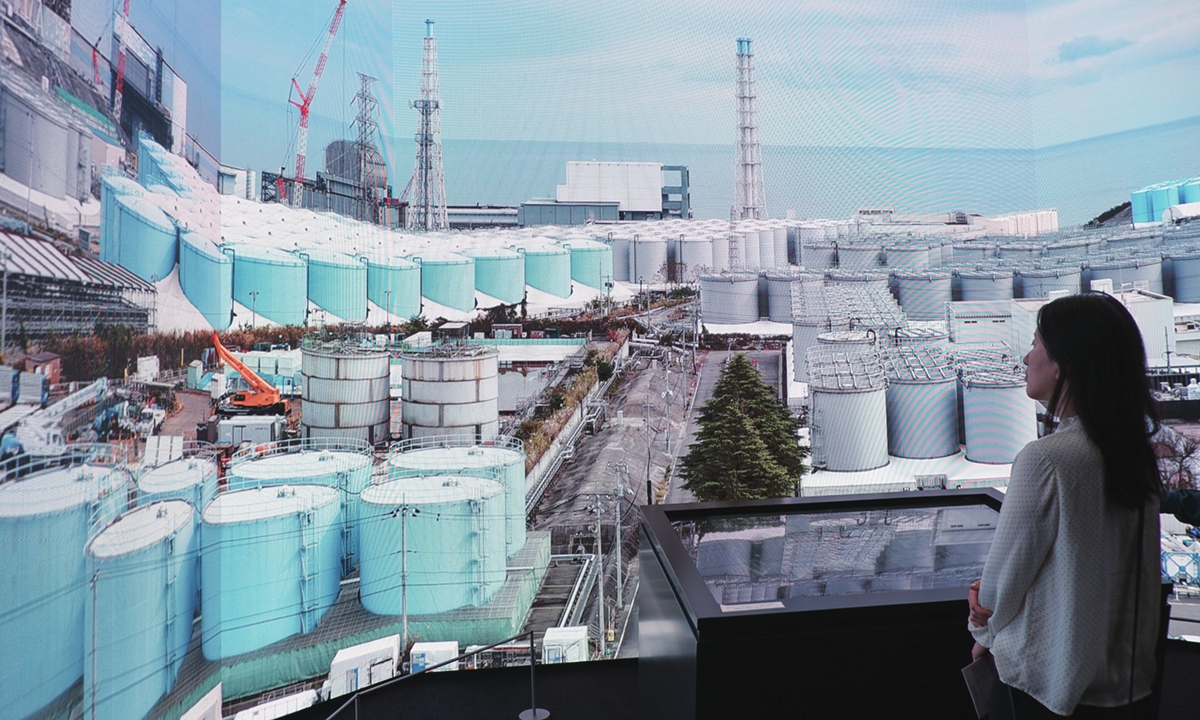
Global Times, By Xu Keyue and Xing Xiaojing in Iwaki, May 15, 2023
The Fukushima Prefecture in northeastern Japan is known as “the island of happiness,” which embodies people’s longing for a better life. Summer began in Fukushima in early May when locals normally look forward to intimate contact with the sea.
However, despite strong opposition at home and abroad, the Japanese government and the Tokyo Electric Power Company (TEPCO) are set to go ahead with the plan to dump the nuclear-contaminated wastewater from the Fukushima Daiichi Nuclear Power Plant into the sea this summer.
As summer approaches, the Global Times reporters went to the Fukushima Prefecture. In this first installment of this field investigation, the Global Times reveals the palpable sense of fear and unease hanging over Fukushima, paired with intense opposition from locals who chanted “Never allow arbitrary dumping into the sea!”………………………………………………………………………………………………………
About 54 kilometers away from the Fukushima Daiichi Nuclear Power Plant, the city looks subdued with few passersby along the streets. The excavation of an underwater tunnel for the project to drain the nuclear-contaminated wastewater from the Fukushima Daiichi Nuclear Power Plant was completed in April, and TEPCO announced that it is expected to complete the construction of the tunnel by the end of June. Measuring 1,031 meters long and 1 kilometer away from the coast, the tunnel will allow radioactive wastewater to be dumped into the sea.
…………………………………………………….. Chiyo Oda, co-chairperson of an environmental NGO and city assembly “Stop polluting the oceans!” was one of them.
“Summer is coming. What’s going to happen? Fukushima greets summer with fear!” said Oda, who expressed strong concern about the dumping of nuclear-contaminated wastewater at a conference themed “Don’t Nuke the Pacific” on May 7. “The Japanese government has reached an agreement with the fishing community that nothing will be done without [the fishing community and other stakeholders’] understanding.” Nevertheless, the Japanese government is apparently breaking its promise and is preparing to dump the water which is likely to start this summer.
When the Global Times reporters met Oda, the 68-year-old woman had just returned to Iwaki from Fukushima city, the capital of Fukushima Prefecture. Early that day, with Kazuyoshi Sato, another co-representative of the city assembly, Oda had driven for two hours to the Fukushima prefectural office to hold a press conference to announce that a mass rally called “May 16 Tokyo Action” will be held in Tokyo on May 16 to urge the Japanese government and TEPCO to stop dumping the nuclear-contaminated wastewater.
Oda told the Global Times that the campaign will last all day on May 16, when anti-sea pollution campaigners from all over Japan are meant to gather in Tokyo. As planned, they will gather in front of the TEPCO headquarters at 10:30 am, and then head to the House of Representatives with lawmakers to hold the rally. The rally and petition to the Japanese government and parliament will be followed by a speech at the Hibiya Open Air Concert Hall in the evening. It will then be followed by a massive demonstration in Ginza, Tokyo, which is expected to be attended by more than 1,000 people.
“The sea of my hometown, the Sea of Japan, and the seas of the world must not be polluted,” said Oda.
Oda noted that the Japanese government, TEPCO, the Fukushima Prefectural Federation of Fisheries Cooperative Associations, and the National Federation of Fisheries Cooperative Associations of Japan signed an agreement in 2015, stating it would not “do anything about the nuclear-contaminated water from Fukushima without the understanding and consent of the relevant people,” but now the Japanese government and TEPCO insist on dumping the water despite opposition from all parties, including fishermen. …………………………………………………………………………………………………………………………………………………………………..
“Look! This is the sea we want to protect!” Ikarashi told the Global Times that he and his family have fond memories of living by the sea, eating the catch from the same sea, surfing, and frolicking with their children. The people of Fukushima live just like them, having enjoyed the bounty of the sea for generations. If the nuclear-contaminated wastewater is dumped into the sea, future generations will no longer be able to enjoy the beautiful nature.
Ruiko Muto, who lives in Tamura, Fukushima, is the head of the association for the victims of the Fukushima nuclear accident. After the accident, she worked hard to hold the former management of TEPCO accountable as a member of the legal team for the Fukushima nuclear accident and the criminal prosecution team.
Muto told the Global Times in an email that “ALPS-treated water” used by the Japanese government and TEPCO contains many other radioactive substances besides tritium, making it “not safe at all.” Under such circumstances, attempts to release the radioactive wastewater from Fukushima into the sea must not be allowed.
Muto said that as summer approaches, her group will join forces with other civic groups and continue to express opposition through protests and rallies.
Dumping not only way
In an on-the-spot interview, Global Times reporters noted the intense concern over whether “ALPS-treated water,” as the Japanese government and TEPCO refer to it, is safe, and whether there is an alternative to dealing with the wastewater.
Hideyuki Ban, a Japanese nuclear expert and co-director of the Tokyo-based Citizens’ Nuclear Information Center (CNIC), told the Global Times that “the nuclear-contaminated wastewater contains 64 radionuclides, including tritium, some of which are very long-lived and cannot necessarily be diluted. [The compounds] can accumulate in the ocean and attach to fish and shellfish, and some of them can enter the body of marine organisms, causing human beings to be exposed to nuclear radiation after consumption. Even if [the wastewater] is treated and released into the sea, it is not safe.”
“There is no precedent in the world for dumping such wastewater containing 64 radionuclides into the sea,” he said.
“The capacity of ALPS to remove radionuclides and the amount of the nuclear-contaminated wastewater to be discharged are not fully understood, let alone gaining the understanding and consent of stakeholders. Under such circumstances, it is not allowed to arbitrarily discharge the wastewater,” he said.
Ban noted that there are other ways to dispose of the wastewater. For example, there is the option of “mortar solidification,” where the nuclear-contaminated wastewater is mixed, solidified, and stored in mortar as in cement production. What the Japanese government has done is based on a political decision, not one based on scientific research, Ban criticized……………………………………………………………………….
The problem, however, is that even if the nuclear-contaminated wastewater is disposed of, key issues such as whether nuclear fuel debris can be removed from the Daiichi plant remain unresolved. The government plans to decommission the reactor in the next 30 to 40 years, but it has yet to give a clear explanation of how long it will take to complete the project and in what condition the facility will have to be in order to qualify as successfully decommissioned, according to Muto.
Surrounded by the sea, Japan gives thanks to the gracious sea as a prosperous maritime nation, on “Sea Day” held annually on the third Monday of July, which is one of the statutory holidays in the country.. Born by the sea, the locals reached by the Global Times could not help but express their deep concern and fear that if the sea is polluted, it will be difficult to enjoy the sea’s succor in the future. https://www.globaltimes.cn/page/202305/1290745.shtml
 |
What to Know About Fukushima’s Exclusion Zone and Nuclear Mutations
The Fukushima exclusion zone is the result of a nuclear disaster in 2011. Keep reading to learn more about nuclear mutations and the earthquake that started it all.
BY RAYNA SKIVER. MAY 8 2023, https://www.greenmatters.com/clean-energy/fukushima-exclusion-zone
Back in 2011, a coastal city in Japan was hit by a powerful earthquake and tsunami. When this disaster struck Fukushima, reactors at a nuclear power plant overheated melted, causing radioactive materials to be released into the environment.
Soon after the catastrophe, the Fukushima exclusion zone was created.
After the disaster, the area surrounding the power plant was closed off due to the dangers of radiation— this site is called an exclusion zone. Today, a few places are still closed even after all of these years.
Some people might think that Fukushima is completely unsafe to visit, but that’s actually not the case. In fact, it’s possible to tour the area and learn more about the disaster. Real Fukushima is one of the many organizations that are working to change the public’s perception — they want people to see the city as hopeful, not dark.
The Fukushima disaster resulted in nuclear mutations.
Another result of the 2011 catastrophe was nuclear mutations. According to NBC News, researchers found mutations in butterflies near the Daiichi power plant. This observation was a sign of potential changes to the local ecosystem.
Nearby forests were also affected by the nuclear disaster. Studies showed that leaves had high concentrations of radiation and that there were “growth mutations of fir trees,” according to Greenpeace. The organization voiced concern about the potential consequences that the disaster might have on plants and animals.
The Fukushima nuclear disaster had terrible consequences for the surrounding communities and the environment. According to BBC, the earthquake and the tsunami that followed killed over 18,000 people, with many still missing. Over 150,000 had to evacuate the area as well, due to radiation leaks.
After the event, many countries began correcting design flaws — such as having the generators in the basement — and conducting stress tests in order to minimize future risks. On the other hand, Japan decided to phase out nuclear energy altogether.
The country’s citizens were uncomfortable with their dependence on atomic energy after the disaster, understandably so. Most nuclear power plants in Japan have been idle since 2011. Before the incident, nuclear energy accounted for about a third of the country’s power, but in 2020, the number significantly decreased to less than 5 percent, according to The Guardian.
But now, the country is reconsidering its reliance on nuclear power. Japan is looking for a secure energy supply — the war in Ukraine and rising energy costs have made the feat difficult. Not only might this be an unpopular move with the country’s citizens, but it’s also a loss for the environment.
Nuclear energy produces radioactive waste. This waste can end up harming both humans and the environment, according to the Energy Information Association. Nuclear power plants are also water hungry — they require a lot of water for cooling, Greenpeace explained.
With all of the risks involved, it might be best to turn away from nuclear energy and toward renewable energy.
Abolish Nukes, Kishida, G7! — limitless life

Secretariat for the G7 Hiroshima Summit Ministry of Foreign Affairs, Japan 2-2-1 Kasumigaseki, Chiyoda-ku Tokyo 100-8919
Dear Members of the Secretariat:
Ever since the summer of 1955, the Japan Council Against Atomic and Hydrogen Bombs (Gensuikyo) has actively campaigned to prevent nuclear war and abolish nuclear weapons. All of humanity is indebted to them for making significant contributions to world peace, such as when they organized the largest anti-nuclear protest ever, i.e., the antinuclear petition initiated by women and eventually signed by 32 million people, that came in the aftermath of March 1954 when U.S. nuclear testing irradiated people of the Bikini Atoll and the crew of a Japanese fishing boat called the “Lucky Dragon.” That international nuclear crime was only one in a long list of such crimes that began with President Harry Truman’s decision to drop the bombs on Hiroshima and Nagasaki in August 1945, ultimately killing hundreds of thousands of Japanese as well as tens of thousands of Koreans, not to mention the
people of other countries or the U.S. who were in those cities at the time.
Sadly, despite Gensuikyo’s foresight and decades-long, diligent efforts, we, all the members of our species, have been living under the threat of nuclear war for three quarters of a century. And during the last year that threat has been greatly elevated by the war in Ukraine, a war in which two nuclear powers, Russia and NATO, could possibly come into direct conflict in the near future.
Daniel Ellsberg, the famous whistleblower who sadly will not be with us much longer due to terminal cancer, paraphrased on the first of May the words of Greta Thunberg: “The adults are not taking care of this, and our future absolutely depends on this changing somehow fast, now.” Thunberg spoke of global warming while Ellsberg was warning about the threat of nuclear war.
With the high stakes of the war in Ukraine in mind, we must now, for the sake of young people, be “the adults in the room” during the G7 Summit in Hiroshima (19-21 May 2023). And we must voice our demands to the elected leaders of the G7 countries (essentially, the NATO side of the conflict).
World BEYOND War agrees with Gensuikyo that one “cannot build peace through nuclear weapons”. And we do endorse Gensuikyo’s main demands, which we understand as the following:
- Japan must pressure the other G7 nations to abolish nuclear weapons once and for all.
- Japan and the other G7 countries must sign and ratify the TPNW (Treaty on the Prohibition of Nuclear Weapons).
- In order to do so, the Japanese government must take the lead and promote the TPNW.- (Treaty for the Prohibition of Nuclear Weapons)
- Japan must not engage in military buildup under pressure from the United States.
…………………………………………………… more https://limitlesslife.wordpress.com/2023/05/07/abolish-nukes-kishida-g7/
G-7 Expected to Focus on Nuclear Dangers in Hiroshima
Arms Control Association, May 2023, By Daryl G. Kimball
The leaders of the Group of Seven (G-7) industrialized nations, who will convene this month in Hiroshima, the city destroyed in 1945 by the world’s first nuclear attack, are expected to emphasize measures to address rising nuclear dangers.
Japanese Prime Minister Fumio Kishida, who will preside over the summit, chose Hiroshima as the venue “to deepen discussions so that we can release a strong message toward realizing a world free of nuclear weapons.” In response to concerns that Russia might use nuclear weapons in its war in Ukraine, Kishida also said on Jan. 9 that the G-7 needs to “demonstrate a firm commitment to absolutely reject the threat or use of nuclear weapons.”
………………………. According to The Japan Times, the Japanese government is arranging for a meeting between the G-7 leaders and some of the remaining hibakusha, the survivors of the atomic bomb attacks, during a visit to the peace museum on May 19.
………………… Kishida also met representatives from the “Civil 7” group of nongovernmental organizations from 72 countries on April 13 to hear their recommendations on how the G-7 leaders could advance progress on nuclear risk reduction and nuclear disarmament. Among other measures, the civil society group recommended that G-7 leaders meet atomic bombing survivors, unequivocally condemn threats to use nuclear weapons, and endorse urgent negotiations to achieve the complete elimination of nuclear weapons before 2045……………….
https://www.armscontrol.org/act/2023-05/news/g-7-expected-focus-nuclear-dangers-hiroshima
—
Japanese authorities doubtful of removal process of Fukushima radioactive sandbags
Japanese authorities have expressed doubt over the removal of radioactive sandbags at the Fukushima nuclear plant as the plant operator aims to start the recycling procedure this fiscal year, NHK reported on Monday.
Japan’s Nuclear Regulation Authority said the recycling approach needs to be fully verified, adding that it was unclear whether the procedure can be carried out as expected.
The zeolite-packed sandbags were put on the basement floors of the factory building as an emergency measure to lower radiation levels of contaminated water after the 2011 nuclear disaster.
Although their radiation levels have weakened with time, the sandbags can still emit radiation levels of up to 4.4 sieverts per hour, which could kill people exposed to the high reading for two hours.
The plant operator Tokyo Electric Power Co. (TEPCO) plans to use robots to collect the sandbags and store them in other receptacles. The company is expecting the plan to be approved in September.
The regulator said tests need to be carried out this summer to verify the plan’s safety.
1 This Month

10 March A LIVE WEBINAR THE REAL EFFECTS OF NUCLEAR POWER
What the Industry Isn’t Telling Us
1:00 PM Mountain, 2 pm Central, 3 pm Eastern. Live on the Keepers of the Water Facebook page

18 March Webinar @ 1 PM EST: An Assessment of SMR Projects: The Case of Canada
register for the zoom:
https://us02web.zoom.us/webinar/register/WN_o8BIIOUvQ2ONJR1nta65DQ#/registration


of the week – STOP SMALL MODULAR REACTORS IN CANADA
To see nuclear-related stories in greater depth and intensity – go to https://nuclearinformation.wordpress.com
-
Archives
- March 2026 (51)
- February 2026 (268)
- January 2026 (308)
- December 2025 (358)
- November 2025 (359)
- October 2025 (376)
- September 2025 (258)
- August 2025 (319)
- July 2025 (230)
- June 2025 (348)
- May 2025 (261)
- April 2025 (305)
-
Categories
- 1
- 1 NUCLEAR ISSUES
- business and costs
- climate change
- culture and arts
- ENERGY
- environment
- health
- history
- indigenous issues
- Legal
- marketing of nuclear
- media
- opposition to nuclear
- PERSONAL STORIES
- politics
- politics international
- Religion and ethics
- safety
- secrets,lies and civil liberties
- spinbuster
- technology
- Uranium
- wastes
- weapons and war
- Women
- 2 WORLD
- ACTION
- AFRICA
- Atrocities
- AUSTRALIA
- Christina's notes
- Christina's themes
- culture and arts
- Events
- Fuk 2022
- Fuk 2023
- Fukushima 2017
- Fukushima 2018
- fukushima 2019
- Fukushima 2020
- Fukushima 2021
- general
- global warming
- Humour (God we need it)
- Nuclear
- RARE EARTHS
- Reference
- resources – print
- Resources -audiovicual
- Weekly Newsletter
- World
- World Nuclear
- YouTube
-
RSS
Entries RSS
Comments RSS
 nuclear-news