Concerns and complaints continue as fourth Fukushima wastewater discharge completed

Concerns and complaints from home and abroad remain while Japan’s crippled Fukushima Daiichi Nuclear Power Plant has finished its first year of discharging nuclear-contaminated wastewater into the ocean.
The plant completed its fourth and final round of discharge for the current fiscal year, which ends in March, Tokyo Electric Power Company (TEPCO) said on Sunday.
As per the initial plan, approximately 31,200 tonnes of wastewater containing radioactive tritium has been released into the ocean since August 2023, with each discharge running for about two weeks.
Earlier this week, International Atomic Energy Agency Director-General Rafael Grossi emphasized continued efforts to monitor the discharging process.
Stressing that the discharge marks merely the initial phase of a long process, Grossi said that “much effort will be required in the lengthy process ahead,” and reiterated the organization’s stance on maintaining vigilance throughout the process.
While the Japanese government and TEPCO have asserted the safety and necessity of the process, there are still concerns from other countries and local stakeholders regarding environmental impacts.
Sophia from the U.S. complained that the release of nuclear-contaminated water into the sea made her fear for the future.
Najee Johnson, a college student from Canada, suggested the Japanese government find a different plan because it could pollute our ocean and harm our sea life.
Haruo Ono, a fisherman in the town of Shinchi in Fukushima, said “All fishermen are against ocean dumping. The contaminated water has flowed into what we fishermen call ‘the sea of treasure’, and the process will last for at least 30 years.”
“Is it really necessary, in the first place, to dump what has been stored in tanks into the sea? How can we say it’s ‘safe’ when the discharged water clearly consists of harmful radioactive substances? I think the government and TEPCO must provide a solid answer,” said Chiyo Oda, a resident of Fukushima’s Iwaki city.
The recent leakage of contaminated water from pipes at the Fukushima plant also fueled concerns among the Japanese public.
Besides, the promised fund of more than 100 billion yen (around $670 million) to compensate and support local fishermen and fishing industry remains doubtful as a court ruling last December relieved the government of responsibility to pay damages to Fukushima evacuees.
A Tokyo court ruled that only the operator of the tsunami-wrecked Fukushima nuclear power plant has to pay damages to the evacuees, relieving the government of responsibility. Plaintiffs criticized the ruling as belittling their suffering and the severity of the disaster. The court also slashed the amount by ordering the TEPCO to pay a total of 23.5 million yen to 44 of the 47 plaintiffs.
The ruling backpedaled from an earlier decision in March 2018, when the Tokyo District Court held both the government and TEPCO accountable for the disaster, which the ruling said could have been prevented if they both took better precautionary measures, ordering both to pay 59 million yen in damages.
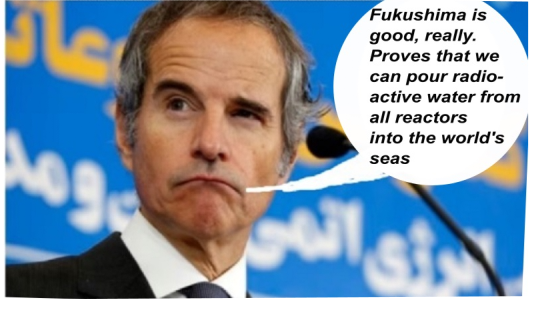
IAEA director’s visit to Japan widely questioned, seeks to downplay nuclear water dumping
Global Times, By Xu Yelu and Xing Xiaojing Mar 15, 2024
Rafael Grossi, director general of the International Atomic Energy Agency (IAEA), said during his visit to Japan that he confirmed that the “treated water” in Fukushima fully meets international standards, and experts believe such remarks supporting the discharge have become a kind of “political security” reached between the Japanese government and the IAEA.
Grossi was in Japan visiting the site of the nuclear power plant for the first time since the water dumping began. He also attended a meeting in Fukushima where representatives of the government and fishing communities discussed the current situation, according to Kyodo News.
He supported Japan’s decision once again, saying, “Our corroboration and information and also independent sampling have confirmed the very low presence of tritium … In some cases even impossible to trace, which means that the process is working as we thought it will be. So in this regard, it is correct. We are satisfied.”
According to the Japanese newspaper Mainichi Shimbun, Japanese Prime Minister Fumio Kishida and Foreign Minister Yoko Kamikawa separately met with Grossi, confirming continued cooperation on the issue of the discharge. The Japanese side announced that they will provide approximately 18.5 million euros ($20 million) in assistance to the IAEA.
The Chinese Embassy in Japan responded on Thursday that the Japanese side’s forced implementation of discharging nuclear-contaminated wastewater into the sea has no precedent since the peaceful use of nuclear energy by humans, nor are there any recognized disposal standards. How can it be said to comply with so-called “international standards?”
The nuclear-contaminated wastewater generated by the Fukushima nuclear accident contains various radioactive nuclides present in the melted core, many of which do not have effective treatment technologies. Focusing solely on tritium clearly ignores this basic fact………………………….
The IAEA should uphold the principles of objectivity, professionalism, and impartiality, and should not endorse Japan’s erroneous actions of discharging nuclear-contaminated wastewater into the sea, nor should it disseminate one-sided information that misleads international public opinion, the embassy stressed.
………………”With the internal management chaos of Tokyo Electric Power Company and inadequate government supervision in Japan, in a situation where standards are unclear, boundaries are unclear, and data is not transparent, no one or organization can guarantee that the nuclear-contaminated wastewater being discharged into the ocean by Japan is safe,” Zhang said.
…………………………….the plan to discharge Fukushima’s contaminated water into the sea will last for 30 years. However, since the first round of discharge, it has been less than seven months, and the IAEA has expressed “satisfaction” with the discharge situation. Or, it can be said that this is a kind of “political security” reached between the Japanese government and the IAEA.
https://www.globaltimes.cn/page/202403/1308918.shtml
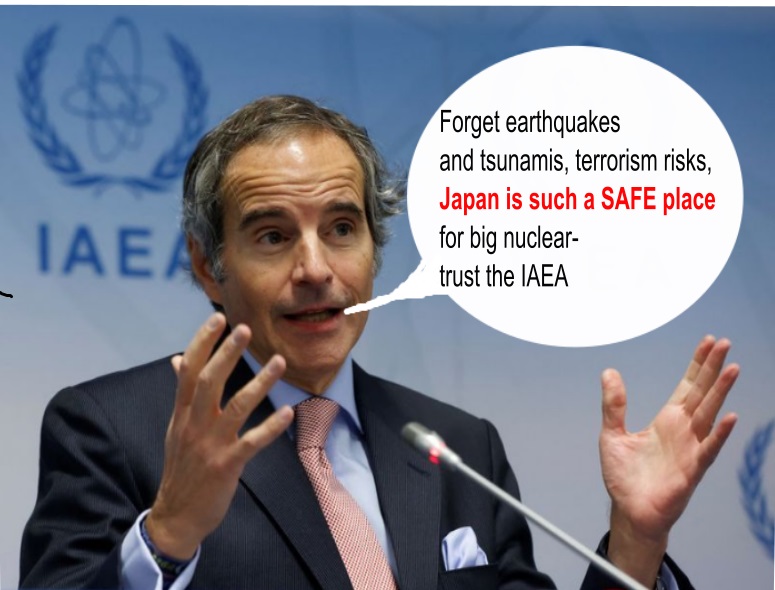
Japan Ramps Up Drive to Restart World’s Biggest Nuclear Plant
Stephen Stapczynski and Aya Wagatsuma, Bloomberg News, 15 Mar 24
Japan’s government is ramping up an effort to secure local approval to resume operations at the world’s biggest nuclear power plant, according to a report, amid a wider push by the nation to restart its idled fleet of reactors.
Minister of Economy, Trade and Industry Ken Saito will next week request Niigata Governor Hideyo Hanazumi to endorse the restart of Tokyo Electric Power Co’s Kashiwazaki-Kariwa nuclear power station, according to the Niigata Nippo newspaper. METI didn’t respond to a request for comment.
The governor’s approval is one of the last hurdles before the nuclear plant can resume…………………………….
The head of the International Atomic Energy Agency this week said that the organization would provide technical assistance for the plant, and send a team of experts to assist Tepco’s effort to gain public trust.
Kashiwazaki Kariwa, which has seven reactors totaling 8.2 gigawatts in capacity, is located about 250 kilometers (155 miles) north of Tokyo. The nation’s regulator said in 2017 that reactor units 6 and 7 met post-Fukushima safety protocols.
–With assistance from Winnie Hsu and Shoko Oda. https://www.bnnbloomberg.ca/japan-ramps-up-drive-to-restart-world-s-biggest-nuclear-plant-1.2047179—
Conditions inside Fukushima’s melted nuclear reactors still unclear 13 years after disaster struck
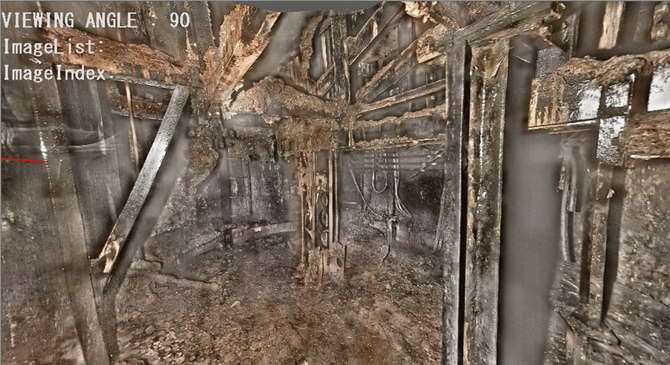
The contents of the three reactors is still largely a mystery. Little is known, for instance, about the melted fuel’s condition or exactly where it’s located in the reactors. Not even a spoonful of the fuel has been removed
About 880 tons of melted nuclear fuel remain inside the three damaged reactors, and Japanese officials say removing it would take 30-40 years. Experts call that timeline overly optimistic. The amount of melted fuel is 10 times that removed from Three Mile Island following its 1979 partial core melt.
MARI YAMAGUCHI, TOKYO, THE ASSOCIATED PRESS, March 11, 2024, https://www.theglobeandmail.com/world/article-conditions-inside-fukushimas-melted-nuclear-reactors-still-unclear-13/—
Japan on Monday marked 13 years since a massive earthquake and tsunami hit the country’s northern coasts. Nearly 20,000 people died, whole towns were wiped out and the Fukushima Daiichi nuclear power plant was destroyed, creating deep fears of radiation that linger today. As the nation observes the anniversary, the AP explains what is happening now at the plant and in neighboring areas.
What happened 13 years ago?
A magnitude 9.0 earthquake struck on March 11, 2011, causing a tsunami that battered northern coastal towns in Iwate, Miyagi and Fukushima prefectures. The tsunami, which topped 15 meters (50 feet) in some areas, slammed into the nuclear plant, destroying its power supply and fuel cooling systems, and causing meltdowns at reactors No. 1, 2 and 3.
Hydrogen explosions caused massive radiation leaks and contamination in the area.
The operator, Tokyo Electric Power Company Holdings, says that the tsunami couldn’t have been anticipated. Government and independent investigations and some court decisions have said the accident was the result of human error, safety negligence, lax oversight by regulators and collusion.
Japan has since introduced stricter safety standards and at one point shifted to a nuclear energy phaseout. Prime Minister Fumio Kishida’s government reversed that policy and has accelerated restarts of workable reactors to maintain nuclear power as a main source of Japan’s power supply.
A deadly Jan. 1 earthquake in Japan’s northcentral region destroyed many homes and roads but didn’t damage an idled nuclear power plant. Even so, it caused worry that current evacuation plans that solely focus on radiation leaks could be unworkable.
The nation marked a moment of silence at 2:46 p.m. Monday, with Kishida attending a memorial in Fukushima.
What happened to people in the area?
About 20,000 of more than 160,000 evacuated residents across Fukushima still haven’t returned home.
Decontamination work before the Tokyo Olympics meant to showcase Fukushima’s recovery led to the elimination of some no-go zones, but they remain in seven of 12 towns that had been fully or partially off-limits.
In Futaba, the hardest-hit town and a co-host of the Fukushima Daiichi plant, a small area was opened in 2022. About 100 people, or 1.5% percent of the pre-disaster population, have returned to live. The other host town, Okuma, which along with Futaba sacrificed part of its land to build an interim storage site for nuclear waste gathered from the decontamination, has seen 6% of its former residents return.
Annual surveys show the majority of evacuees have no intention of returning home, citing lack of jobs, schools and lost communities, as well as radiation concerns.
Residents who have raised radiation worries or linked it to their health problems have come under attack for hurting Fukushima’s reputation.
The disaster-hit towns, including those in Iwate and Miyagi prefectures, have seen sharp population drops.
Fukushima Gov. Masao Uchibori said on NHK TV that a growing number of young people want to move to Fukushima to open businesses or help in the reconstruction, and he expressed hope that more residents will return.
What about treated radioactive water discharges?
Last August, Fukushima Daiichi began discharging treated water into the sea, and is currently releasing a fourth 7,800-ton batch of treated water. So far, daily seawater sampling results have met safety standards. The plan has faced protests from local fishers and neighboring countries, especially China, which has banned Japanese seafood imports.
Fukushima Daiichi has struggled to handle the contaminated water since the 2011 meltdowns. TEPCO says the start of the process is a milestone and removing the tanks is crucial to make space for facilities needed as decommissioning progresses.
The contaminated cooling water is pumped up, treated and stored in about 1,000 tanks. The government and TEPCO say the water is diluted with massive seawater before release, making it safer than international standards.
What about local fishing?
Despite earlier fears that the water discharge would further hurt Fukushima’s hard-hit fishing industry, they have not damaged its reputation domestically. China’s ban on Japanese seafood, which mostly hit scallop exporters in Hokkaido, apparently prompted Japanese consumers to eat more Fukushima seafood.
Sampling and monitoring by the International Atomic Energy Agency have also boosted confidence in local fish.
Fukushima fishing returned to normal operations in 2021, and the local catch is now about one-fifth of its pre-disaster level because of a decline in the fishing population and smaller catch sizes.
The government has earmarked 10 billion yen ($680 million) to support Fukushima fisheries.
Any progress removing melted fuel?
The contents of the three reactors is still largely a mystery. Little is known, for instance, about the melted fuel’s condition or exactly where it’s located in the reactors. Not even a spoonful of the fuel has been removed.
About 880 tons of melted nuclear fuel remain inside the three damaged reactors, and Japanese officials say removing it would take 30-40 years. Experts call that timeline overly optimistic. The amount of melted fuel is 10 times that removed from Three Mile Island following its 1979 partial core melt.
Robotic probes have glimpsed inside the three reactors, but their investigation has been hampered by technical glitches, high radiation and other complications.
It’s crucial for officials to understand the data from melted debris so they can make a plan to remove it safely. TEPCO aims to get the first sample out later this year from the least-damaged No. 2 reactor.
TEPCO has been trying to get the sample by using a robotic arm. Officials have struggled to get the robot past the wreckage, and hope that by October they can use a simpler device that looks like a fishing rod.
The fuel in the worst-damaged No. 1 reactor mostly fell from the core to the bottom of its primary containment vessel. Some of it penetrated and mixed with the concrete foundation, making removal extremely difficult.
In February, the plant made its first drone flight into the primary containment vessel to investigate the melted debris and examine how the fuel initially fell from the core. But a second day of exploration was canceled because a data transmission robot failed.
Is a 2051 completion possible?
The government has stuck to its initial target for a completed decommissioning by 2051, but it hasn’t defined what that means.
The lack of data, technology and plans on what to do with the radioactive melted fuel and other nuclear waste makes it difficult to understand what’s in store for the plant and surrounding areas when the cleanup ends, according to TEPCO’s decommissioning company chief, Akira Ono.
An overly ambitious schedule could result in unnecessary radiation exposure for plant workers and excess environmental damage, experts say.
Japan’s Nuclear Energy Policy Disaster
The yawning gap between vision and policy reality jeopardizes Japan’s important energy security goals and efforts to decarbonize the energy supply.
By Florentine Koppenborg, March 08, 2024, https://thediplomat.com/2024/03/japans-nuclear-energy-policy-disaster/
The Japanese government is chasing a nuclear mirage 13 years after the Fukushima Daiichi nuclear disaster in March 2011. Government statements in support of nuclear power, such as the recent declaration at COP28 that Japan will triple nuclear energy by 2050, receive much attention. Away from the public spotlight, however, Japan is facing a nuclear energy policy disaster as it struggles to actually return to nuclear energy after the Fukushima nuclear accident.
As the Japanese government pursues a nuclear revival to no avail, the yawning gap between vision and policy reality jeopardizes important energy policy goals such as energy security and decarbonizing energy supply.
The share of nuclear power in Japan’s electricity mix has stagnated between 5 and 8 percent since 2018, and the goal to generate 20–22 percent of electricity from nuclear by 2030 has become elusive. Japan’s fleet of commercial nuclear reactors, once the third largest in the world at 54 units, has diminished to 33 plus two units currently under construction. Restarting these 35 reactors would barely be enough to meet the government’s 2030 targets. However, only 27 reactors are undergoing the safety reviews required for a restart permit. If successful, they can provide about 14 percent of Japan’s electricity mix by 2030, far from the government’s goals.
Actual restart progress is even more bleak, with only 12 reactors back on the grid by early 2024. Plans to start using the Onagawa plant’s reactor number two for electricity generation in May 2024 had to be postponed to September due to delays in additional safety construction work. For the Tokai reactor number two, work on safety measures is scheduled to conclude in September 2024, but it remains to be seen whether construction will finish on time. With the restart process riddled with setbacks and uncertainties, the total number of reactors actually generating electricity looks to increase only marginally over the next few years.
One potential solution to this problem, constructing new reactors, takes at least a decade and risks public backlash as safety concerns linger. The recent Noto earthquake was a reminder of safety risks as the earthquake partly exceeded assumptions made in safety checks and led to questions about the adequacy of emergency evacuation plans. Removing the official 40-year lifespan limit on nuclear reactors – introduced as a major safety lesson after the 2011 nuclear disaster – as part of Japan’s so-called GX (green transformation) strategy that will guide the country’s decarbonization appears as a rather desperate and potentially risky measure. The next generation of modular reactors stressed in the COP28 declaration on nuclear and the GX strategy are not even market-ready technology at the moment.
Japan’s nuclear energy revival is supposed to increase energy security and drive decarbonization. Chasing unattainable goals, however, has the exact opposite effect as the yawning implementation gap is continuously filled with fossil fuel imports.
It is time to embrace the solution at hand: expanding renewable energy capacity.
Increasing energy security has been a major goal of Japan’s energy policy ever since the oil shock in the 1970s. Dependence on fossil fuel imports, already high at 81 percent in 2010, shot up once all of the nuclear power plants were shut down following the Fukushima accident. What brought it down again to about 83 percent in 2021 was not nuclear restarts, but rather an increasing share of renewable energy. Nuclear power and renewable energy have essentially switched places in Japan’s energy mix as renewables increased from 4 percent in 2010 to 11 percent in 2021 and nuclear decreased from 10 percent in 2010 to 3 percent in 2021.
Additional coal and gas imports to fill the nuclear power gap not only keep Japan’s import dependence high, but also have a substantial impact on its greenhouse gas emissions. Aside from a small share of nuclear energy, low-carbon electricity mainly comes from renewables, which have seen an impressive annual growth at about 16 percent since 2012. The remaining 72 percent come from fossil fuels. Once a climate leader in the 1990s, the current nuclear energy disaster solidifies Japan as a fossil fuel champion rather than a decarbonization leader.
In 2024, the Japanese government has an opportunity to turn things around. Japan’s Strategic Energy Plan, revised every three years, is due again. This presents an opportunity for the government to increase its renewable energy target, ideally in line with the international commitment made at COP28 to triple renewable energy capacity by 2050, and to reduce its nuclear power target accordingly. This would be the best way to alleviate Japan’s current nuclear energy policy disaster and to put the country back on track in its pursuit of energy security and decarbonization.
Film poses moral questions about 2011 Fukushima disaster displacement
Japan Times, BY MIE SAKAMOTO, KYODO 12 Mar 24
A new documentary that questions whether it is right to sacrifice a community’s way of life for the betterment of the wider public has revealed the turmoil and hardships faced by those who were displaced in the wake of the 2011 Fukushima nuclear power plant disaster.
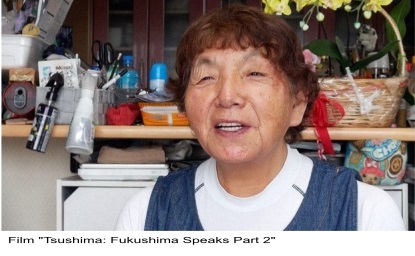
“Tsushima: Fukushima Speaks Part 2,” directed by freelance journalist Toshikuni Doi, features the testimonies of people seeking the return of their hometown, which was deemed uninhabitable for a century after the world’s worst nuclear accident since the 1986 Chernobyl meltdown.
The documentary explores the story of a minority group that must endure suffering for the happiness and convenience of others, a theme of global resonance, with Doi, 71, explaining that the film focuses on the impact the accident had on the daily lives of people forced to leave their homes.
Their hometown — Tsushima district in Namie, Fukushima Prefecture — is some 30 kilometers from the Fukushima No. 1 nuclear power plant, which was crippled by the massive earthquake and tsunami on March 11, 2011. Most of its 1,400 former residents remain unable to return due to the contamination left behind by radioactive materials.
The 187-minute film, whose version with English subtitles will be available online for one week from March 11 for audiences outside Japan, delves into people’s memories of their hometown, with many expressing deep affection for their tight-knit rural community, where residents were close to each other.
“Many people don’t care much about nuclear issues,” Doi said in an interview. “But if the film can show the impact the accident had on people’s lives and what they thought about being driven away and losing their hometown, the audience will be drawn to it, even if they are not deeply interested in such issues.”
Many of the film’s 18 interviewees — who took part in Doi’s project of preserving disaster victims’ testimonies for future generations — have special feelings for their hometown. Some shed tears as they spoke about their personal histories and how their lives were changed irrevocably following the disaster.
The film begins with Yoshito Konno, who was among those told by officials of the plant’s operator, Tokyo Electric Power Company Holdings Inc. (Tepco), and the central government in the fall of 2011 that people from Tsushima would likely be unable to return “for the next 100 years.”
“People were speechless,” Konno, 79, says in the film, continuing to say that it made him think there would be “no one left after 100 years,”
which prompted him to start compiling records on the histories of families who had lived in the area.
Kano Sudo, 72, lived in poverty with three children after she divorced her estranged husband. She worked hard at local factories to support her children, but even buying daily rice was a struggle.
“I had even thought about (suicide) with my three children,” she admits in the film, adding that she was only able to get through those times “because of the help of those around us.”
Her neighbors, she says, would routinely feed her kids and watch over them, to prevent them from being led astray as they grew up………………………………………………………………………………………..
“From an economic utility standpoint, the best policy would be to transfer us to another place and set up a compensation system so that we can make a living,” rather than spending massive amounts of the state’s budget so that some hundreds of Tsushima residents can return home, Konno says.
But he goes on to argue that it is wrong to sever the local residents’ ties to their former community while denying their basic rights to joy and fulfillment as human beings — in effect, turning a blind eye to the damage done to each individual whose life was upended.
“It is not only about Tsushima,” Konno says. “This issue should be common to all of Japan and the whole world.”
The film was released in Tokyo on March 2, which will be followed by screenings in other major cities, including in the prefectures of Osaka and Aichi. https://www.japantimes.co.jp/news/2024/03/12/japan/society/japan-fukushima-displacement/
March 11 – reflecting on Fukushima

by Linda Pentz Gunter https://beyondnuclearinternational.org/2024/03/10/reflecting-on-fukushima/
The lesson learned should be an end to nuclear power. Japan is going in the opposite direction
On March 11 this year, and every year since 2011, we reflect on what happened on that day at the Fukushima-Daiichi nuclear power plant in Japan — and the impacts that continue. The never-ending tragedy.
The news cycle was 24/7 on the Fukushima nuclear disaster in March 2011. Gradually, the media lost interest. Fresh catastrophes — also human-caused — came to dominate the headlines.
The stories of ongoing harm, of physical and psychic pain, disease and death, displacement, family separation, and lawsuits dismissed or lost, are often told through the megaphones of desperate Japanese mothers, determined not to let such a fate befall another generation. They are the new Hibakusha, the Cassandras of Japan, sounding the warning but doomed to be disbelieved or ignored.
Because there will be another major nuclear disaster. And Japan, shockingly, is lining itself up to be a strong candidate. A country that has now experienced the second worst nuclear disaster of all time, and is heavily seismically active, is seeking not only to reopen its old reactors but to explore building new ones, including small modular reactors.
The only lesson from the Fukushima nuclear disaster that successive Japanese governments seem to have learned is how to minimize, cover-up and even dismiss and deny its devastating environmental and health effects.
It has done this by consistently whitewashing the Fukushima aftermath — holding the Summer Olympics (delayed a year only due to covid, not the unacceptable radiation levels); moving people back into still contaminated areas; ascribing the high thyroid cancer rates to increased testing; forbidding schools to teach children about the harms of radiation; and, of course, pouring radioactive water from the site into the Pacific Ocean so the unsightly waste water storage casks — a perpetual reminder of the continued build-up of radioactive water at the site — will vanish from view along with the bad PR.
Japan got another reminder of just what kind of gamble it is taking when a 7.6 magnitude earthquake struck the Noto Peninsula on January 1st of this year, not far from the Shika nuclear power plant. Buildings fell, 100,000 people were evacuated and tsunami warnings were posted. Conflicting stories emerged as to whether the Shika reactors, mercifully shut down at the time, had suffered lasting damage or whether there were radioactive spills. Area residents have demanded an investigation.
Catastrophe was averted because luck prevailed. Next time, it might not.
All of this should serve as a warning and not only to Japan of course. It doesn’t take an earthquake or a tsunami— or even a war as we are seeing in Ukraine whose reactors remain at perpetual risk —to cause a nuclear disaster. The safety margins are so fragile at nuclear power plants, that even something as minor as a falling tree limb could set an accident in motion if both offsite and then onsite power is lost to the reactors.
There was no war or earthquake or tsunami in Ukraine in 1986 when Chernobyl Unit 4 exploded. Nor in Pennsylvania in 1979 when the Three Mile Island Unit 2 reactor melted down. Nor in New Mexico later in 1979 when 90 million gallons of radioactive liquid and eleven hundred tons of solid mill waste burst from the Church Rock uranium mill tailings pond, permanently contaminating the Puerto River.
What was there, on each occasion, were human beings who made catastrophic mistakes with a highly dangerous, obsolete technology that even on a good day, causes harm to human health and on a bad one can leave a deadly, longlasting legacy as we have seen in Fukushima.
All of those human errors were preventable. And they still are — provided we remove the object of fallible human responsibility: inherently dangerous nuclear power plants.
The only worthy legacy of the Fukushima disaster, now 13 years on and still going, is to abandon the use of nuclear technology permanently.
Linda Pentz Gunter is the international specialist at Beyond Nuclear and writes for and edits Beyond Nuclear International. All opinions are her own.
Could Fukushima’s radioactive water pose lasting threat to humans and the environment?
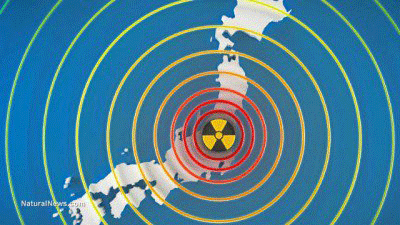
studies have highlighted how tritium can be absorbed into sediments and soils, raising concerns about its potential transfer to the water cycle and the food web.
research showing that fish have transported radioactive particles generated by the Fukushima incident far and wide. Like a number of other nuclear accidents before it, that makes what happened at Fukushima a global concern.”
by Alan Williams, University of Plymouth, https://phys.org/news/2024-03-fukushima-radioactive-pose-threat-humans.html
The meltdown of Japan’s Fukushima Daiichi power plant, caused by the devastating earthquake and tsunami of March 2011, represents the most severe nuclear power accident of the 21st century so far.
However, a new study highlights how the decision by the Japanese government to begin releasing the radioactive water stored within it—a decision approved by the International Atomic Energy Agency (IAEA)—has generated scientific and public debate, given its potential to cause environmental harm for decades to come.
Writing in the journal Environmental Science and Technology, researchers say the water cannot be stored indefinitely due to the ongoing risk of earthquakes and tsunamis in the region.
But they say not enough is known about the long-term impacts of tritium—the primary radionuclide present, with a half-life of 12.6 years—to ascertain if the release of more than one million tons of water can be considered safe or not.
As a result, they have called for assurances that regular monitoring will be carried out in different components of the region’s ecosystem to examine any impacts the release might be having on the environment.
They have also suggested more evidence is needed about the future effects of tritium in the presence of multiple and emerging stressors, such as hypoxia, rising ocean temperatures, and microplastics, given that environmental contamination can occur in many combinations.
The study was carried out at the University of Plymouth, where researchers have been examining the environmental impacts of radioactive material for almost three decades.
“The Japanese tsunami of 2011 was devastating for people living along this whole coastline. The presence of a nuclear power plant within the region left a lasting threat, and this study highlights some of the complex challenges that need managing and scientific questions that still need addressing.”
“Being in a region prone to earthquakes and tsunamis, there is an obvious danger in simply storing radioactive water there indefinitely. But based on our research, not enough is known about the impacts of tritium on both environmental and human health to say that releasing the water into the ocean is completely safe,” says Awadhesh Jha, professor in genetic toxicology and ecotoxicology and corresponding author on the research.
The new study includes a review of existing literature on the behavior of tritium in the environment and studies that have assessed its impact on individual species.
That includes studies that have highlighted how tritium can be absorbed into sediments and soils, raising concerns about its potential transfer to the water cycle and the food web.
There has also been research showing that tritium can cause DNA damage to certain fish species, which could impact their physical and reproductive fitness and—ultimately—the genetic diversity of a population.
However, the researchers say there is little data available on the distribution, behavior, and potential effects of tritiated water and organically-bound tritium, and therefore assessing the broad risks is almost impossible.
They also say the Fukushima situation cannot be compared with the Chornobyl accident, as some authorities have attempted to do, given the differing geographical locations of the two plants and the fact the long-term environmental impacts of Chornobyl are still being debated.
“Through our study, we have found research showing that fish have transported radioactive particles generated by the Fukushima incident far and wide. Like a number of other nuclear accidents before it, that makes what happened at Fukushima a global concern.”
“As such, we urgently need global research into the impacts of tritium—and how they might be managed—especially with the nuclear power industry set to expand significantly. If it does indeed expand, the construction of nuclear power plants, especially in coastal regions, should also take into account worst-case scenarios of flooding, earthquakes, and tsunamis as part of a fundamental goal to minimize radioactive discharges to the environment,” says Professor Jha.
13 Years On: Fukushima Governor Urges State to Clarify Soil Policy

Nippon Mar 9, 2024 1
Fukushima, March 9 (Jiji Press)–Fukushima Governor Masao Uchibori wants the Japanese government to clarify its policy on transferring soil from decontamination work following the March 2011 nuclear accident to final disposal sites outside the northeastern Japan prefecture.
“We’ll seize every opportunity to strongly call on the state to present a specific policy and a road map swiftly, in order not to create a blank period,” he has said in a recent interview.
Fukushima has decided to host interim storage facilities for the soil on the premise that the soil is stored at final disposal sites to be created outside the prefecture, Uchibori noted. This is the central government’s “legally prescribed responsibility,” he said.
A considerable amount of time will be needed to realize the soil transfer because there are a host of issues, including the selection of final disposal sites, but the remaining time is limited, Uchibori said………. https://www.nippon.com/en/news/yjj2024030701079/13-years-on-fukushima-governor-urges-state-to-clarify-soil-policy.html
Fukushima fishers strive to recover catches amid water concerns
Amid voices of support from across the country for seafood products sourced from Fukushima Prefecture, the local fishing community is pushing ahead with efforts to revitalize the industry despite apprehension about the ongoing decommissioning of the crippled Fukushima No. 1 nuclear power plant.
While Fukushima Prefecture has yet to experience significant reputational repercussions, the fishing industry remains concerned about the decommissioning work, which is expected to take several decades, coupled with the discharge of the treated radioactive water from the crippled plant that began about half a year ago…………………………….
With government subsidies and other initiatives, the prefecture’s seven fishery cooperatives aim to increase the catch to surpass 50% of pre-disaster levels………………………………………………… https://www.japantimes.co.jp/news/2024/03/06/japan/society/fukushima-fishermen-fight-recover-catch/
Release of fourth batch of Fukushima treated radioactive water begins
Japan Times, 28 Feb 24
The operator of the crippled Fukushima No. 1 nuclear power plant on Wednesday started releasing a fourth batch of treated radioactive water into the sea, in what will be the last discharge for the fiscal year ending March.
As in previous rounds, Tokyo Electric Power Company Holdings (Tepco) will discharge 7,800 metric tons of treated water over about 17 days, having confirmed that the radioactivity level of the latest batch of water meets the standards set by the government and the utility.
China, which opposes the water release, has banned Japanese seafood imports since the first discharge in late August. The two countries have engaged in informal discussions to resolve the matter, but no substantial progress has been made……………………….. more https://www.japantimes.co.jp/news/2024/02/28/japan/society/fukushima-radioactive-water-fourth-release/
China is ‘unlikely’ to lift import ban on Japanese seafood as dumping continues
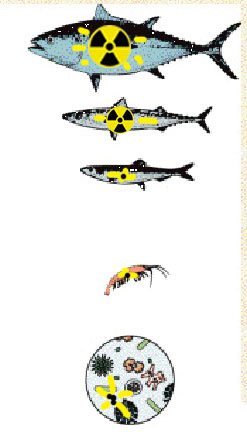
predatory species higher up in the food chain have a greater chance of experiencing bioaccumulation and biomagnification of radioactive substances. As time goes on and more nuclear-contaminated water is discharged, the negative effects will only increase
By GT staff Feb 25, 2024 , https://www.globaltimes.cn/page/202402/1307658.shtml
Half a year after Japan opened Pandora’s box by dumping nuclear-contaminated wastewater from the crippled Fukushima Daiichi nuclear power plant into the ocean, Japanese media are discussing the possibility of bilateral talks for getting China to revoke its import ban on Japanese marine products, in an apparent attempt to test the waters.
In response, Chinese experts told the Global Times on Sunday that, in the short term, it is unlikely that China will revoke the ban as there are currently no conditions for a withdrawal.
Meanwhile, a Kyodo News survey on Friday showed that most Japanese fishery groups have been affected by the discharge, with many feeling the impact through China’s import ban on Japanese seafood.
The survey found that 29 out of 36 respondents among the members of the National Federation of Fisheries Cooperative Associations said they “had felt” or “had somewhat felt” negative effects, including financial damage due to the contaminated water dumping, overwhelmingly due to the subsequent import ban by China.
Chinese Foreign Ministry spokesperson Mao Ning said at a regular press conference that the precautionary measures taken by China and some other countries in response to Japan’s move are aimed at protecting food safety and people’s health.
“These measures are entirely legitimate, reasonable and necessary,” Mao said.
Chang Yen-chiang, director of the Yellow Sea and Bohai Sea Research Institute of Dalian Maritime University, revealed several main factors why China is less likely to revoke the ban in the short run.
There is no halt in the ocean discharge, that is, the Japanese side has not withdrawn from their erroneous actions, he said.
Currently, half a year has passed since the dumping began, meaning that under the influence of ocean currents, the impact of Japan’s nuclear-contaminated water discharge on East Asia may just be starting, and further impacts need to be assessed, Chang said.
In addition, predatory species higher up in the food chain have a greater chance of experiencing bioaccumulation and biomagnification of radioactive substances. As time goes on and more nuclear-contaminated water is discharged, the negative effects will only increase, Chang said. “Under these circumstances, how could the ban be lifted?” the expert asked.
TEPCO – operator of the Daiichi plant – plans to release a total of about 54,600 tons of nuclear-contaminated water on seven occasions in the 2024 fiscal year, more than double the amount of 2023, according to media reports.
Chang called on Japan to consider solving the Fukushima nuclear power plant issue on a fundamental level, such as focusing on research on how to handle the burnt-out nuclear reactors. Otherwise, radioactive substances will continue to be produced endlessly, and the discharge of nuclear contamination could last for over 100 years, making the situation increasingly worse.
Japanese media have reported on a series of scandals concerning leaks occurring during the contaminated water discharge process, which led to soil contamination around the nuclear power plant.
Most recently, 1.5 metric tons of highly radioactive water escaped in early February during valve checks at a treatment machine designed to remove cesium and strontium from the contaminated water, according to TEPCO.
According to Japanese experts studying the soil, the radiation levels in Fukushima soil are much higher compared to other areas.
“We should be more vigilant toward crops and plants grown in this contaminated soil. China should increase radioactive testing of Japanese agricultural products and cosmetics imports,” Chang stated.

China is ‘unlikely’ to lift import ban on Japanese seafood as dumping continues
By GT staff reportersPublished: Feb 25, 2024 09:50 PM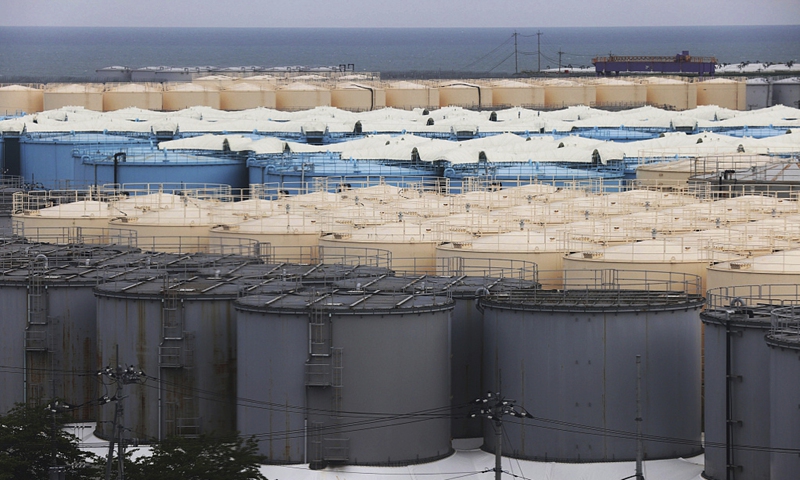
Water tanks near Fukushima Daiichi nuclear power plant in Okuma town of Fukushima prefecture on May 26, 2023 Photo: VCG
Half a year after Japan opened Pandora’s box by dumping nuclear-contaminated wastewater from the crippled Fukushima Daiichi nuclear power plant into the ocean, Japanese media are discussing the possibility of bilateral talks for getting China to revoke its import ban on Japanese marine products, in an apparent attempt to test the waters.
In response, Chinese experts told the Global Times on Sunday that, in the short term, it is unlikely that China will revoke the ban as there are currently no conditions for a withdrawal.
Meanwhile, a Kyodo News survey on Friday showed that most Japanese fishery groups have been affected by the discharge, with many feeling the impact through China’s import ban on Japanese seafood.
The survey found that 29 out of 36 respondents among the members of the National Federation of Fisheries Cooperative Associations said they “had felt” or “had somewhat felt” negative effects, including financial damage due to the contaminated water dumping, overwhelmingly due to the subsequent import ban by China.
Chinese Foreign Ministry spokesperson Mao Ning said at a regular press conference that the precautionary measures taken by China and some other countries in response to Japan’s move are aimed at protecting food safety and people’s health.
“These measures are entirely legitimate, reasonable and necessary,” Mao said.
Chang Yen-chiang, director of the Yellow Sea and Bohai Sea Research Institute of Dalian Maritime University, revealed several main factors why China is less likely to revoke the ban in the short run.
There is no halt in the ocean discharge, that is, the Japanese side has not withdrawn from their erroneous actions, he said.
Currently, half a year has passed since the dumping began, meaning that under the influence of ocean currents, the impact of Japan’s nuclear-contaminated water discharge on East Asia may just be starting, and further impacts need to be assessed, Chang said.
In addition, predatory species higher up in the food chain have a greater chance of experiencing bioaccumulation and biomagnification of radioactive substances. As time goes on and more nuclear-contaminated water is discharged, the negative effects will only increase, Chang said. “Under these circumstances, how could the ban be lifted?” the expert asked.
TEPCO – operator of the Daiichi plant – plans to release a total of about 54,600 tons of nuclear-contaminated water on seven occasions in the 2024 fiscal year, more than double the amount of 2023, according to media reports.
Chang called on Japan to consider solving the Fukushima nuclear power plant issue on a fundamental level, such as focusing on research on how to handle the burnt-out nuclear reactors. Otherwise, radioactive substances will continue to be produced endlessly, and the discharge of nuclear contamination could last for over 100 years, making the situation increasingly worse.
Japanese media have reported on a series of scandals concerning leaks occurring during the contaminated water discharge process, which led to soil contamination around the nuclear power plant.
Most recently, 1.5 metric tons of highly radioactive water escaped in early February during valve checks at a treatment machine designed to remove cesium and strontium from the contaminated water, according to TEPCO.
According to Japanese experts studying the soil, the radiation levels in Fukushima soil are much higher compared to other areas.
“We should be more vigilant toward crops and plants grown in this contaminated soil. China should increase radioactive testing of Japanese agricultural products and cosmetics imports,” Chang stated.
As Japanese industries, including fisheries and cosmetics, have been affected, Japanese media continues to report news about bilateral talks aimed at getting China to revoke its import ban on Japanese marine products, trying to test the reaction from China.
The Asahi Shimbun revealed Friday that nuclear experts from Japan and China started talks in January regarding contaminated water. The report noted that the Chinese side has still shown no signs of ending its import ban.
The Kyodo News reported on Thursday that when Chinese Ambassador to Japan Wu Jianghao met with the leader of the Social Democratic Party, Mizuho Fukushima, in January, China’s import suspension was also discussed, but there were no conditions for lifting the ban at present.
Most Japan fishing groups hit by China import ban in Fukushima row
A Kyodo News survey has found that 80.6% of prefectural fisheries cooperative associations were affected by the discharge of treated radioactive water from the crippled Fukushima No. 1 nuclear plant into the sea, with many feeling the impact through China’s import ban on Japanese marine products. The survey, released Friday, found that 29 out of 36respondents among the members of the National Federation of FisheriesCooperative Associations said they “had felt” or “had somewhat felt”negative effects, including financial damage due to the water release,overwhelmingly due to the subsequent import ban by China
. Japan Times 24th Feb 2024 https://www.japantimes.co.jp/news/2024/02/24/japan/japan-fishing-groups-china-fukushima-ban/
Justice Department Announces Nuclear Materials Trafficking Charges Against Japanese Yakuza Leader
Takeshi Ebisawa, Leader within the Yakuza Transnational Organized Crime Syndicate, Allegedly Trafficked Nuclear Materials, Including Uranium and Weapons-Grade Plutonium
A superseding indictment was unsealed in Manhattan today charging a Japanese national with conspiring with a network of associates to traffic nuclear materials from Burma to other countries.
According to court documents, Takeshi Ebisawa, 60, and co-defendant Somphop Singhasiri, 61, were previously charged in April 2022 with international narcotics trafficking and firearms offenses, and both have been ordered detained.
“The defendant stands accused of conspiring to sell weapons grade nuclear material and lethal narcotics from Burma, and to purchase military weaponry on behalf of an armed insurgent group,” said Assistant Attorney General Matthew G. Olsen of the Justice Department’s National Security Division. “It is chilling to imagine the consequences had these efforts succeeded and the Justice Department will hold accountable those who traffic in these materials and threaten U.S. national security and international stability.”
“As alleged, the defendant brazenly trafficked material containing uranium and weapons-grade plutonium from Burma to other countries,” said U.S. Attorney Damian Williams for the Southern District of New York. “He did so while believing that the material was going to be used in the development of a nuclear weapons program, and while also negotiating for the purchase of deadly weapons. It is impossible to overstate the seriousness of this conduct. I want to thank the career prosecutors of my office and our law enforcement partners for ensuring that the defendant will now face justice in an American court.” …………………………………………………………………………………………………………………………………………………………………………………………………. more https://www.justice.gov/opa/pr/justice-department-announces-nuclear-materials-trafficking-charges-against-japanese-yakuza
Minister urges TEPCO to ensure nuclear safety measures
By Jiang Xueqing in Tokyo 2024-02-22 , https://global.chinadaily.com.cn/a/202402/22/WS65d6a0fca31082fc043b86ea.html
Japan’s industry minister said on Wednesday a recent radioactive water leak at the wrecked Fukushima Daiichi Nuclear Power Plant earlier this month has caused anxiety in Japan and abroad and will hinder the completion of the decommissioning of the plant.
Ken Saito, minister of economy, trade and industry, summoned Tomoaki Kobayakawa, president of the Tokyo Electric Power Company, operator of the Fukushima plant, to his office on Wednesday, urging TEPCO to take the incident as a serious management issue and ensure thorough safety measures.
Furthermore, Saito requested an analysis to identify any common factors contributing to a series of troubles for the purpose of preventing recurrence. He also urged the utilization of digital technology to prevent human errors, Japanese public broadcaster NHK reported.
On Feb 7, TEPCO informed the International Atomic Energy Agency that water containing radioactive materials was found to have leaked from a caesium absorption tower at the plant.
TEPCO calculated that the leakage totaled around 5.5 cubic meters of water containing an estimated 0.022 terabecquerel of radioactive substances, according to the IAEA.
The water was assessed to have leaked from a valve left open during cleaning work at the absorption tower.
On Oct 26 last year, TEPCO announced that two male workers in their 20s and 40s, who were exposed to nuclear-contaminated water while cleaning pipes at the Advanced Liquid Processing System at the Fukushima nuclear power plant, have been hospitalized for decontamination and observation.
The two workers, employees of a partner firm of TEPCO, were engaged in the cleaning process along with three other male workers. During the operation, a hose used to transfer nuclear-contaminated water to a tank went loose, leading to the splashing of approximately 100 milliliters of radioactive water, as reported by The Asahi Shimbun, one of the major daily newspapers in Japan.
In the process of handling the Fukushima nuclear-contaminated water, accidents have occurred repeatedly, fully exposing the chaotic and disorderly internal management of TEPCO, a spokesperson of the Chinese Embassy in Japan said on Feb 8.
The accidents also demonstrate the inadequate and ineffective supervision measures by the Japanese government and once again prove the lack of long-term reliability of the nuclear-contaminated water treatment equipment, highlighting the necessity for international supervision, he said.
Japan has so far dumped approximately 23,400 cubic meters of nuclear-contaminated water from the Fukushima nuclear power plant into the sea since August 2023 in three rounds. The fourth round is scheduled to commence in late February.
The spokesperson of the Chinese Embassy in Japan said the discharge of nuclear-contaminated water from Fukushima into the sea concerns the health of all mankind, the global marine environment and international public interests.
“We once again earnestly urge Japan to take seriously the concerns of neighboring countries and the international community; engage in sincere consultations with relevant stakeholders; fully cooperate in establishing effective international monitoring arrangements with substantive participation from stakeholders; and handle nuclear-contaminated water in a scientific, safe and transparent manner,” he said.
1 This Month



26 September – International Day for the Total Elimination of Nuclear Weapons


PLEASE OPPOSE HR 8255 AND S.3639 – bills would accelerate satellite deployment, with no environmental review or safeguards – https://ncstd5li.quorum.us/campaign/169331/
To see nuclear-related stories in greater depth and intensity – go to https://nuclearinformation.wordpress.com
-
Archives
- September 2026 (219)
- August 2026 (330)
- July 2026 (355)
- June 2026 (287)
- May 2026 (306)
- April 2026 (356)
- March 2026 (251)
- February 2026 (267)
- January 2026 (308)
- December 2025 (358)
- November 2025 (359)
- October 2025 (375)
-
Categories
- 1
- 1 NUCLEAR ISSUES
- business and costs
- climate change
- culture and arts
- ENERGY
- environment
- health
- history
- indigenous issues
- Legal
- marketing of nuclear
- media
- opposition to nuclear
- PERSONAL STORIES
- politics
- politics international
- Religion and ethics
- safety
- secrets,lies and civil liberties
- spinbuster
- technology
- Uranium
- wastes
- weapons and war
- Women
- 2 WORLD
- ACTION
- AFRICA
- Atrocities
- AUSTRALIA
- Christina's notes
- Christina's themes
- culture and arts
- Events
- Fuk 2022
- Fuk 2023
- Fukushima 2017
- Fukushima 2018
- fukushima 2019
- Fukushima 2020
- Fukushima 2021
- general
- global warming
- Humour (God we need it)
- Nuclear
- RARE EARTHS
- Reference
- resources – print
- Resources -audiovicual
- Weekly Newsletter
- World
- World Nuclear
- YouTube
-
RSS
Entries RSS
Comments RSS
 nuclear-news