We care about Japan’s disaster situation and are concerned about nuclear safety:

By Global Times, Jan 03, 2024
As of Tuesday evening, the 7.6-magnitude strong earthquake that occurred in Japan has caused at least 57 deaths, multiple casualties, building collapses, widespread power outages, and fires. The latest development is a collision between a Japan Airlines plane and a Japan Coast Guard aircraft at Tokyo’s Haneda Airport during landing, resulting in at least five deaths among the six crew members of the latter. The Japan Coast Guard aircraft was originally scheduled to transport relief supplies to the earthquake-stricken area in Ishikawa Prefecture. It was preparing for takeoff on the runway when the incident occurred. It’s not difficult to imagine the various chaos that this major earthquake has brought to Japan.
This is the strongest earthquake in Japan since the “3.11” earthquake in 2011. The Japan Meteorological Agency stated on Tuesday that since January 1 local time, there have been 155 earthquakes in Japan, including two strong earthquakes of over magnitude 6. It is uncertain whether there will be continuous aftershocks or even larger earthquakes. Despite Japan’s rich experience in dealing with disasters such as earthquakes and tsunamis, human society remains vulnerable in the face of unexpected natural disasters.
Meanwhile, we also notice that in this earthquake, there is some important information that may not have received enough attention. For example, Tokyo Electric Power Company (TEPCO) announced on the evening of January 1 that the water from the fuel pools at the top floors of the No. 7 and No. 2 reactors at the Kashiwazaki-Kariwa nuclear power plant in Niigata Prefecture spilled over due to strong earthquakes. These waters contain radioactive materials, and the radiation levels are currently being measured. In addition, there was a situation at the Shika Nuclear Power Station in Ishikawa Prefecture where some water had sloshed from a cooling pool for spent fuel rods. Regarding the issues at these two nuclear power stations, the Japanese authorities have promptly concluded that they are “currently safe,” stating that “no damage or leaks were confirmed” and that the fuel cooling at the Shika Nuclear Power Station was “unaffected.”
We certainly hope that this accurately reflects the current situation regarding the nuclear power plants. The information has garnered significant attention from netizens, leading to doubts about whether Japan will experience another catastrophic nuclear accident similar to the Fukushima incident following an earthquake. One reason for this concern is that Japan is one of the countries with the highest concentration of nuclear power plants in the world, coupled with its limited land area. Once a serious nuclear disaster occurs, Japan can hardly cope with it independently. The Fukushima nuclear accident serves as a painful reminder.
More importantly, the Japanese government and TEPCO have a bad track record of mishandling nuclear accidents. To some extent, they have lost credibility. Furthermore, Japan’s stubborn and irresponsible actions regarding the dumping of nuclear-contaminated water from Fukushima have caused great concerns among the Japanese people
Japan needs to take these legitimate concerns seriously. Although the epicenter of this earthquake was in the Noto Peninsula in Ishikawa Prefecture, its impact was widespread, ranging from Hokkaido to Kyushu. The coastal areas of northern Japan, where numerous nuclear facilities and power plants are located, have been affected to varying degrees. The Kashiwazaki-Kariwa nuclear power station, which has witnessed problems, is one of the largest in the world.
It is crucial to assess the condition of these nuclear facilities and the radiation levels in the surrounding sea. Does Japan have a comprehensive monitoring plan in place? Are other nuclear power plants along the coast in a safe state? How does Japan ensure transparency in information disclosure? These issues are directly related to the well-being of the Japanese people and the surrounding countries, and they require a serious response from Japan in the process of dealing with this earthquake………………. https://www.globaltimes.cn/page/202401/1304687.shtml
Operational Ban Lifted on Major Japan Nuclear Plant
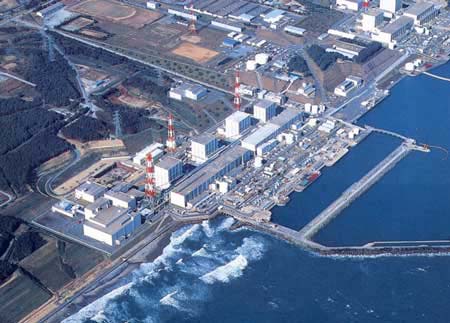
by Sydney Leimbach | Jan 3, 2024
Japan’s nuclear power regulator has lifted its operational ban on Tokyo Electric Power’s (Tepco) Kashiwazaki-Kariwa nuclear plant, the largest nuclear site in the world, after shutting it down about three years ago due to safety concerns.
The plant, which reportedly has a capacity of 8.2 gigawatts, was the only operable atomic power station in the country when it was shut down. It had previously been offline since the 2011 Fukushima disaster caused all nuclear power plants in the country to cease operations.
Tepco was barred from operating the Kashiwazaki-Kariwa plant in 2021 after the Nuclear Regulation Authority reportedly found safety breaches such as failing to protect nuclear materials and finding an unauthorized staff member accessing sensitive areas of the plant.
Last week, Japan’s Nuclear Regulation Authority found that counterterrorism and safety measures had since been improved at the plant after conducting inspections. Before the plant may come back online, however, consent must be achieved from local governments in Niigata, Kashiwazaki city, and Kariwa village, where the plant is located.
“The government will seek the understanding and cooperation of Niigata prefecture and local communities, emphasizing ‘safety-first’,” said Yoshimasa Hayashi, the government’s top spokesperson, in a Reuters report.
The company has compiled a report on the causes of the infractions that led to its ban and how improvements have been made since. Shares in Tepco dramatically increased when the Nuclear Regulation Authority indicated that the ban would be lifted, especially as the country works to revitalize its nuclear power profile, https://www.environmentenergyleader.com/2024/01/operational-ban-lifted-on-major-japan-nuclear-plant/
 | |||
| |||
Following earthquake, Japan’s nuclear reactors escaped serious problems – THIS TIME.
Japan’s nuclear power plants largely undamaged following quake
BY ERIC JOHNSTON, STAFF WRITER, Japan Times, 2 Jan 24
Japan’s nuclear power plants along the Sea of Japan coast escaped serious damage in the New Year’s Day earthquake that struck the Noto Peninsula in Ishikawa Prefecture.
But the 7.6 magnitude quake, which triggered tsunami warnings from Hokkaido to Kyushu and led to evacuations in nine prefectures, could once again spark public concern about the safety of nuclear power in an earthquake-prone country at a time when Prime Minister Fumio Kishida plans to ramp up its usage as part of his “green transformation” policy.
In Ishikawa Prefecture, Hokuriku Electric Power’s Shika nuclear plant saw its electricity system partially disabled following the quake, but no major abnormalities have been reported. The plant’s No. 1 and No. 2 reactors were offline prior to the quake.
The Nuclear Regulation Authority (NRA) reported that Shika plant workers heard what sounded like an explosion, and then smelled something burning near a transformer that received electricity for use in the No. 2 reactor. Staff checking the area discovered the fire extinguishing system had been activated.
No fire was detected but the reactor’s electricity supply was partially disabled. Hokuriku officials believe pressure inside the transformer increased due to the tremor. This triggered a device to release the pressure, causing a loud noise and activation of the fire extinguishing system rather than an actual fire.
Electric power for equipment critical for the plant’s safety was secured through other systems, and cooling pools where spent nuclear fuel is stored continued to operate. Hokuriku Electric officials said Monday they were assessing the damage but that there was no change in the readings of the plant’s monitoring posts, and that no external radiation had been detected. However, of the 101 radiation monitoring posts in the plant’s vicinity, 13 are no longer operational. As of Tuesday, the cause was still unknown.
At Tokyo Electric Power Company Holdings’ Kashiwazaki Kariwa Nuclear Power Station in Niigata Prefecture, home to seven nuclear reactors — all of which were offline before the quake — plant officials confirmed Monday that water from a spent fuel pool spilled over due to the earthquake, but that no abnormalities in operation had been detected………………………………………………..
While the nuclear power plants avoided damage, the New Year’s Day quake and tsunami warnings brought back memories of the devastating Great East Japan Earthquake and triple meltdowns at the Fukushima No. 1 power plant, and could revive doubts about the nuclear industry — especially at a time when the government has plans to use more reactors, many located on the Sea of Japan coast, that have been offline since the quake on March 11, 2011.
Last February, the Kishida Cabinet approved its green transformation policy, which would extend the lifespan of nuclear reactors beyond 60 years and replace those that get scrapped. It was a major reversal of the policies that went into place following the 2011 disaster.
Currently, 12 nuclear power plants have been officially restarted since 2011, while five have received permission to restart and are undergoing final preparations to do so. Another 10 reactors are still undergoing inspections for a possible restart. Nine reactors have not applied for restart, and 24, including 10 Tepco reactors in Fukushima Prefecture, are being decommissioned.
Systems to supply power to nuclear plant in Ishikawa partially unusable
NHK News, Tuesday, Jan. 2, 2024
The operator of the Shika nuclear power plant in quake-hit Ishikawa Prefecture says systems to supply electricity to the facility from outside sources remain partially unusable.
But the utility says electricity continues to be supplied to the plant through other means and that sources of power for important safety equipment are secure.
Hokuriku Electric Power Company held a news conference on Tuesday, one day after a magnitude 7.6 earthquake struck the prefecture.
Both of the No.1 and No.2 reactors at the plant, which are located in the town of Shika, had been taken offline long before the earthquake…………………………..
Hokuriku Electric officials said the pipes of two transformers used for the two reactors to receive electricity from outside have been damaged due to the earthquake, with oil for insulation and cooling leaking out.
The officials said the oil leakage amounts to 3,600 liters at the No.1 reactor and 3,500 liters at the No.2 reactor. They said systems using the two transformers remain unable to receive electricity.
They also said both reactors are receiving electricity from other means, adding that emergency diesel generators have enough fuel to last seven days.
The officials say there are no problems with the systems for cooling spent nuclear fuel. more https://www3.nhk.or.jp/nhkworld/en/news/20240102_33/
Japan Earthquake: Water Levels Rose At Shika Nuclear Plant After Monday’s Tsunami, Says Report

Earlier, it was said that there was no significant change in water levels while monitoring the gauge at Shika nuclear plant.
The water levels rose at Japan nuclear plant— Shika after Monday’s tsunami.
The broadcaster NHK quoting the operator of the nuclear power plant in quake-hit Ishikawa Prefecture said water levels rose by about three meters at the site following tsunami triggered by the magnitude 7.6 earthquake in central Japan.
The plant is located in the prefecture’s Noto region, the report mentioned.
A major tsunami warning was temporarily issued for the area following the quake, which struck around 4:10 p.m. on Monday, the report mentioned.
It also stated the waves later reached multiple locations along the Sea of Japan coast.
Staff at Hokuriku Electric Power Company checked a water level gauge near a seawater intake. They found out the level had been three meters higher than usual between 5:45 p.m. and 6 p.m. on Monday,” it said.
Earlier, it was said that there was no significant change in water levels while monitoring the gauge at the plant.
It was also said a four-meter high seawall installed to protect the No.1 reactor was tilting by several centimeters when its workers took a second look at the plant premises, the report mentioned.
The report mentioned some systems at the plant are not functioning after pipes of transformers used to supply outside electricity to the reactors sustained damage in the earthquake. The rupture led to oil leaks, it said.
The operator says the plant is using other means to supply power to critical equipment, the report said.
The report said the recovery work started on Tuesday and is proceeding quickly. That work includes retrieving the leaked oil, it said.
Both the No.1 and No.2 reactors at the plant were taken offline long before the earthquake, the report said.
Radioactive water spills over after quakes hit Japan
By JIANG XUEQING in Tokyo | China Daily 3 Jan 24
Radioactive water from the fuel pools of two reactors at the Kashiwazaki-Kariwa Nuclear Power Plant in Japan’s Niigata prefecture spilled over after a magnitude 7.6 earthquake and multiple aftershocks rocked the country on New Year’s Day.
However, Tokyo Electric Power Company, which owns and operates the plant, said the reactors were offline before the quake hit and no abnormalities in operation had been detected……………………………………………………………………………………………
TEPCO said that about 10 liters of water containing radioactive materials spilled from the fuel pool of the No 2 reactor and about 4 liters from the fuel pool of the No 7 reactor at around 6:45 pm on Monday.
After the 2011 earthquake triggered a triple meltdown at the Fukushima Daiichi plant, Japan introduced a maximum operating life of 60 years for its nuclear reactors. However, the limit was scrapped in May as the nation shifted its policy to promote nuclear energy, aiming for an early restart of nuclear power plants, The Yomiuri Shimbun reported. https://www.chinadaily.com.cn/a/202401/03/WS65949a3ba3105f21a507a34e.html
Prolonged impact of the Fukushima Nuclear Power Plant Accident on health and society
3rd January 2024, https://www.openaccessgovernment.org/article/prolonged-impact-of-the-fukushima-nuclear-power-plant-accident-on-health-and-society/171684/
Naomi Ito, Research Assistant at the Fukushima Medical University, tells us how the 2011 Fukushima Daiichi Nuclear Power Plant Accident impacted and continues to impact local residents
The health effects on local residents following a nuclear power plant accident are diverse, not only because of radiation exposure but also because of changes in lifestyle and social environment. It has also been indicated that various environmental changes that could emerge during the restoration process may affect residents in various ways over a long time.
What is the Fukushima Daiichi Nuclear Power Plant Accident?
On March 11, 2011, the Great East Japan Earthquake struck Japan with a magnitude of 9.0. Within an hour, a tsunami hit the shore. Three reactors at the Fukushima Daiichi Nuclear Power Plant (FDNPP, operated by Tokyo Electric Power Company) lost power. The reactors could not be cooled, and core meltdowns occurred, which resulted in an explosion due to hydrogen being generated at high temperatures. As a result, radioactive materials were released and scattered northwest from the power plant.
The Japanese Government declared a nuclear emergency and ordered residents within a 30km radius of the reactor to evacuate. In the Fukushima prefecture, more than 160,000 residents were forced to evacuate immediately due to the earthquake, tsunami, and explosion at the Daiichi Nuclear Power Plant. Subsequently, the evacuation order was gradually lifted. While some residents have returned under the national repatriation policy, many others have decided to continue living in the places they evacuated to.
Health Indicators Worsening
It has been reported that in areas where evacuation orders were issued after the nuclear power plant accident, the number of residents who are overweight has increased. Health indicators such as BMI, high blood pressure, and hyperglycaemia have generally deteriorated. Living in an evacuation site involves major changes in the social environment, which worsens various health parameters. At the same time, there was also an extremely high level of depression among residents who continued to evacuate and a sharp increase in the number of people using nursing care. Various health measures have been taken to address these problems.
What is happening in the area after the evacuation order was lifted has been a concern. The evacuation order for most of Katsurao Village, which initially had one thousand four hundred people, was lifted in 2016 (Figure 1). Seven years have passed since then, but the number of people who have returned to the village has yet to reach 30%, and the aging rate of those who have returned to the village is nearly 60%.
Urgent Long-Term Care Issues
Evacuated residents who remain outside the village are more likely to fall under the category of frailty regarding motor function than those who have returned. Early preventive intervention for residents would be important in the event of a disaster where long-term evacuations are expected (Figure 2).
Intention to Return and Health Issues
The number of residents in the village has remained constant at around four hundred for the past few years, and it is unlikely that many more will return. We found that there are a certain number of people who want to go back but are not able to do so. By interviewing them, we learned that they are staying at their evacuation destinations since they need medical treatments and/or nursing care or they started receiving new services there. We believe that intention to return and health issues are closely related. Enhancement of clinics and visiting services in the village, and improved access to medical institutions, are essential for rebuilding the lives of returning residents. (1)
Dual Life After Disaster
After the evacuation order was lifted, a fairly large number of people kept houses in their evacuation destination and the original one in the village, moving back and forth. Unlike natural disasters such as typhoons and tsunamis, this ‘double-base living (or dual life?)’ is considered a unique phenomenon of nuclear disasters, where the original houses remain intact. Still, there is a fear of invisible radiation. Above all, the prolonged evacuation has drastically changed people’s lives. The challenge would be how to respond to the health needs of people living new lifestyles. (2)
References
- Ito, N.; Moriyama, N.; Furuyama, A.; Saito, H.; Sawano, T.; Amir, I.; Sato, M.; Kobashi, Y.; Zhao, T.; Yamamoto, C.; et al. Why Do They Not Come Home? Three Cases of Fukushima Nuclear Accident Evacuees. International journal of environmental research and public health 2023, 20.
- Ito, N.; Amir, I.; Saito, H.; Moriyama, N.; Furuyama, A.; Singh, P.; Montesino, S.; Yamamoto, C.; Sato, M.; Abe, T.; et al. Multisite Lifestyle for Older People after the Fukushima Nuclear Disaster. Geriatrics (Basel, Switzerland) 2023, 8.
In Quake-Scarred Japan, 2011 Fukushima Disaster Still Looms Large
As another major quake struck Japan, the country was still reckoning with the nuclear crisis triggered by the 8.9-magnitude earthquake and a tsunami of 13 years ago.
By Emma Bubola, Jan. 1, 2024, https://www.nytimes.com/2024/01/01/world/asia/japan-fukushima-quake-tsunami.html
As Japan assesses the damage from Monday’s major earthquake, it is still reckoning with the devastating nuclear crisis triggered by an quake nearly 13 years ago, one that placed the name of Fukushima on par with Chernobyl’s and traumatized the nation.
In March 2011, an 8.9-magnitude earthquake and a tsunami devastated the northeast coast of Japan and knocked out cooling systems at three of the Fukushima Daiichi nuclear plant’s reactors, causing a triple meltdown that spewed radioactive fallout over large swaths of land around it.
The quake and tsunami killed more than 19,000 people, and the nuclear calamity, one of history’s worst, raised alarms around the world. Tens of thousands of people were evacuated from towns and farming villages around the plant, and a decade later some still had not returned.
The cleanup of the area around the Fukushima plant is still in an early phase. The government said the treated radioactive wastewater that was used to cool nuclear fuel rods would likely be released over a period of 30 years.
Last summer, the government announced that it would start releasing the treated water into the ocean. The International Atomic Energy Agency declared that the government’s plan had met the agency’s safety standards, but it still raised objections from some scientists, anxiety among fishermen who feared it would hurt their business, and tensions with the Chinese and South Korean governments.
All of Japan’s nuclear reactors were shut after the 2011 crisis, and much of its nuclear power program remains shuttered.
How Japanese earthquake has chilling echoes of 2011 tsunami disaster that killed at least 20,000 and caused nuclear meltdown
Daily Mail, By PERKIN AMALARAJ, 2 January 2024
Japan earthquake LIVE: Four countries now on tsunami ALERT
A devastating earthquake hit central Japan today with a preliminary magnitude of 7.6, prompting mass evacuations – in what will have been a chilling reminder for the country of its tsunami disaster in 2011.
A total of 21 quakes above 4.0 magnitude rang out shortly after 4pm local time (7am UK time) today, and videos shared on social media and broadcast on Japanese TV showed how buildings collapsed in Suzu, a city close to the epicentre of the largest quake, with huge cracks appearing in roads.
Other clips showed terrified shoppers thrown to the ground in department stores and flooding at a train station after water pipes burst, as tsunami waves began lashing the coastlines.
For many, it will have been a painful reminder of when tragedy struck on March 11, 2011…………………………………………………………………………………….
The ensuing meltdown of three of the Fukushima Daiichi nuclear plant’s reactors blanketed nearby areas with radiation, rendering some towns uninhabitable for years and displacing tens of thousands of residents.
Seawater flooded electrical grids in the area, and took out many of the power plant’s backup generators.
This meant there was no energy to cool down the reactors, leading to a catastrophic meltdown.
Heat built up, and hydrogen gas was generated, accumulating in the upper part of the refuelling hall.
Upon ignition, the roof of the refuelling hall exploded, spreading radioactive material everywhere.
Everyone within a 12 mile radius was evacuated, and the tens of thousands of people who left fearing radiation are still displaced. Around two percent of Fukushima remains off-limits.
Most of Japan’s nuclear reactors are still offline, and government plans to revitalise the sector are controversial………………….. https://www.dailymail.co.uk/news/article-12916139/How-Japanese-earthquake-chilling-echoes-2011-tsunami-disaster-killed-20-000-caused-nuclear-meltdown.html
“Forbidden news” Water Containing Radioactive Materials Spills Over atKashiwazaki-Kariwa nuclear power plant.
When you go to these news sites - you get “Forbidden”
Water from the fuel pools at the top floors of the No. 7 and No. 2 reactors at the Kashiwazaki-Kariwa nuclear power plant in Niigata Prefecture spilled over due to strong earthquakes, Tokyo Electric Power Company Holdings, Inc. announced Monday. No damage or leakage out of the buildings was confirmed.
No further details on damage to people or the environment were immediately available
Tsunami Waves Hit Japan After Massive Earthquake: Nuclear Power Plants On Alert; Evacuations Ordered
A massive, 7.6-magnitude earthquake hit Japan on January 1, leading to warnings of huge tsunami waves hitting the island nation. Wajima city in Ishikawa prefecture reported waves as high as 1 metre lashing the coast. Japanese media reports said the waves could go as high as 5 metres, or 16.5 feet. The developments brought back memories of the 2011 quake and tsunami which left 18,500 dead or missing in Japan. Watch the full video for more.
Nuclear concerns as a magnitude-7.6 earthquake hits north central Japan, prompting tsunami warnings
ABC News 1 Dec 24
A powerful earthquake struck central Japan on Monday, killing at least one person, destroying buildings, knocking out power to tens of thousands of homes, and prompting residents in some coastal areas to flee to higher ground.
Key points:
- It was the strongest quake in the region in more than four decades, according to the US Geological Survey
- The quake with a preliminary magnitude of 7.6 triggered waves of about 1 metre along Japan’s west coast
- Russia and North Korea also issued tsunami warnings for some areas
The quake with a preliminary magnitude of 7.6 triggered waves of about 1 metre along Japan’s west coast and neighbouring South Korea, with authorities saying larger waves could follow……………………………………………………………………………………………………………………………
Nuclear concerns
The quake comes at a sensitive time for Japan’s nuclear industry, which has faced fierce opposition from some locals since a 2011 earthquake and tsunami triggered nuclear meltdowns in Fukushima. Nearly 20,000 people were killed and whole towns devastated in the disaster.
Japan last week lifted an operational ban imposed on the world’s biggest nuclear plant, Kashiwazaki-Kariwa, which has been offline since the 2011 tsunami.
Japan’s Nuclear Regulation Authority said no irregularities have been confirmed at nuclear power plants along the Sea of Japan, including five active reactors at Kansai Electric Power’s Ohi and Takahama plants in Fukui Prefecture.
Hokuriku’s Shika plant in Ishikawa, the closest nuclear power station to the epicentre, had already halted its two reactors before the quake for regular inspections and saw no impact from the quake, the agency said……………………… more https://www.abc.net.au/news/2024-01-01/tsunami-warnings-issued-in-japan-after-earthquake/103277706
Tokyo High Court holds Japan government not liable for Fukushima nuclear disaster
Sean Nolan | Southwestern Law School, US, DECEMBER 28, 2023
Tokyo’s High Court found the government of Japan not liable Tuesday for damages related to the 2011 Fukushima nuclear disaster and associated mass evacuations, leaving responsibility solely with plant operator the Tokyo Electric Power Co. (TEPCO).
The ruling also reduced the damages amounts of a previous court order from $414,400 to $165,000 for 44 of 47 petitioners. The decision mirrors a previous ruling in 2022 which found that the government “was highly unlikely to been able to prevent the flooding” that damaged the plant. Ultimately, the court held that more stringent regulatory actions would have been insufficient to prevent the disaster since the size, direction and scale of the tsunami exceeded estimations for such an event. This is the latest in a series of decisions with different outcomes over the last several years including court cases in 2020 and 2017 which litigated the government’s role in failing to prevent the disaster. There is also a 2022 court case that found TEPCO executives personally liable.
Motomitsu Nakagawa, a lawyer, representing the evacuees expressed dismay with the decision and raised the possibility of another appeal calling the decision a “copy and paste” of the previous Supreme Court ruling. The nuclear disaster has already caused $82 billion in damages to victims, decommissioning work and storage for contaminated materials. While TEPCO has been responsible for all the decommissioning, including contaminant storage, it’s financial position has deteriorated over the last few years amid the massive costs associated with the work and multiple postponements due to technological challenges.
Legal fallout has also extended to the cleanup itself with court cases from South Korea fisheries and Japanese fisherman over the release of radioactive wastewater into the Pacific Ocean. The discharge also sparked international concern from neighboring countries and protests from activists who fear pollution and widespread destruction of wildlife and marine ecosystems.
| |||
| |||
Japan Lifts Operational Ban on Fukushima Nuclear Plant Owners
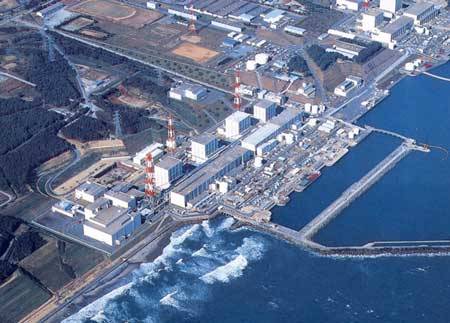
Japanese nuclear safety regulators lifted an operational ban Wednesday imposed on a nuclear plant owned by Tokyo Electric Power Company Holdings, the operator behind the Fukushima plant that ended in disaster, allowing the company to resume preparations for restarting the Kashiwazaki-Kariwa plant after more than 10 years.
At its weekly meeting, the Nuclear Regulation Authority formally lifted the more than two-year ban imposed on the TEPCO’s Kashiwazaki-Kariwa plant over its lax safety measures at the site, saying a series of inspections and meetings with company officials has shown sufficient improvement. The decision removes an order that prohibited TEPCO from transporting new fuel into the plant or placing it into reactors, a necessary step for restarting Kashiwazaki-Kariwa’s reactors.
The plant on Japan’s northern coast of Niigata is TEPCO’s only workable nuclear power plant since the March 2011 earthquake and tsunami destroyed its Fukushima Daiichi plant and caused Fukushima Daini plant to cease operations. For the company now burdened with the growing cost of decommissioning the Fukushima Daiichi plant and compensating disaster-hit residents, restarting the Kashiwazaki-Kariwa reactors soon is key to stabilizing its business.
TEPCO President Tomoaki Kobayakawa told reporters Wednesday that it was too early to comment on the prospect for the restart. He said the company will provide its safety and security measures to gain understanding from the local residents, who must approve a restart…………………………………………………………..
The case raised questions about whether TEPCO learned any lessons from the 2011 Fukushima crisis, which was largely attributed to the utility’s lack of concern about safety.
NRA Chair Shinsuke Yamanaka told Wednesday’s meeting that the lifting of the restrictions is just the beginning, and TEPCO is still required to keep improving its safety precautions………………………………………………………. https://www.voanews.com/a/japan-lifts-operational-ban-on-fukushima-nuclear-plant-owners/7414251.html
Japan allows world’s biggest nuclear plant to restart
DW, 27 Dec 23
The safety ban on TEPCO’s Kashiwazaki-Kariwa plant has been lifted, allowing it to become operational once again. However, the facility still needs permission from local government bodies
Japan’s nuclear regulator announced Wednesday that it has lifted its safety ban on Tokyo Electric Power’s (TEPCO) Kashiwazaki-Kariwa plant, the largest in the world in terms of capacity.
TEPCO has been looking to restart the plant due to high operating costs. It must now seek permission from local bodies in the Niigata prefecture, Kashiwazaki city, and Kariwa village.
Why was the ban imposed?
The Kashiwazaki-Kariwa plant has a capacity of 8,212 megawatts (MW) and was TEPCO’s only operable atomic power station. It has been offline since 2012, after the Fukushima disaster in March 2011 led to the shutdown of all nuclear power plants in Japan……………………
Previously in 2021, the NRA had barred the plant from operating due to safety breaches and insufficient antiterrorism measures. This included a failure to protect nuclear materials and an incident that involved an unauthorized staff member accessing sensitive areas of the plant.
It had then issued an order that prevented TEPCO from transporting new uranium fuel to the plant or loading fuel rods into its reactors……………………….
After the decision, TEPCO said it would continue to work towards gaining the trust of the local community and society at large. On Tuesday, a Tokyo court ruled that TEPCO, the only operator of the tsunami-wrecked Fukushima nuclear power plant, had to pay damages to dozens of evacuees.
Japan has been trying to reactivate all domestic nuclear power plants that comply with the safety network, to reduce its reliance on fossil fuels which need to be imported. But in some cases, there is opposition from locals or other regulatory bodies. https://www.dw.com/en/japan-allows-worlds-biggest-nuclear-plant-to-restart/a-67829687
1 This Month

of the week – Shut Down Drone Warfare!


Tell the Ukrainian Government to Drop Prosecution of Peace Activist Yurii Sheliazhenko

Petition to revoke the licensing of the Near Surface Nuclear Disposal Facility (NSDF) at Chalk River. https://www.ourcommons.ca/petitions/en/Petition/Details?Petition=e-7247
To see nuclear-related stories in greater depth and intensity – go to https://nuclearinformation.wordpress.com
-
Archives
- April 2026 (34)
- March 2026 (251)
- February 2026 (268)
- January 2026 (308)
- December 2025 (358)
- November 2025 (359)
- October 2025 (376)
- September 2025 (257)
- August 2025 (319)
- July 2025 (230)
- June 2025 (348)
- May 2025 (261)
-
Categories
- 1
- 1 NUCLEAR ISSUES
- business and costs
- climate change
- culture and arts
- ENERGY
- environment
- health
- history
- indigenous issues
- Legal
- marketing of nuclear
- media
- opposition to nuclear
- PERSONAL STORIES
- politics
- politics international
- Religion and ethics
- safety
- secrets,lies and civil liberties
- spinbuster
- technology
- Uranium
- wastes
- weapons and war
- Women
- 2 WORLD
- ACTION
- AFRICA
- Atrocities
- AUSTRALIA
- Christina's notes
- Christina's themes
- culture and arts
- Events
- Fuk 2022
- Fuk 2023
- Fukushima 2017
- Fukushima 2018
- fukushima 2019
- Fukushima 2020
- Fukushima 2021
- general
- global warming
- Humour (God we need it)
- Nuclear
- RARE EARTHS
- Reference
- resources – print
- Resources -audiovicual
- Weekly Newsletter
- World
- World Nuclear
- YouTube
-
RSS
Entries RSS
Comments RSS
 nuclear-news