A robot will soon try to remove melted nuclear fuel from destroyed Fukushima reactor
THE ASSOCIATED PRESS, May 29, 2024, https://www.asahi.com/ajw/articles/15284702
The operator of Japan’s destroyed Fukushima No. 1 nuclear power plant demonstrated Tuesday how a remote-controlled robot would retrieve tiny bits of melted fuel debris from one of three damaged reactors later this year for the first time since the 2011 meltdown.
Tokyo Electric Power Company Holdings plans to deploy a “telesco-style” extendable pipe robot into Fukushima No. 2 reactor to test the removal of debris from its primary containment vessel by October.
That work is more than two years behind schedule. The removal of melted fuel was supposed to begin in late 2021 but has been plagued with delays, underscoring the difficulty of recovering from the magnitude 9.0 quake and tsunami in 2011.
During the demonstration at the Mitsubishi Heavy Industries’ shipyard in Kobe, western Japan, where the robot has been developed, a device equipped with tongs slowly descended from the telescopic pipe to a heap of gravel and picked up a granule.
TEPCO plans to remove less than 3 grams (0.1 ounce) of debris in the test at the Fukushima plant.
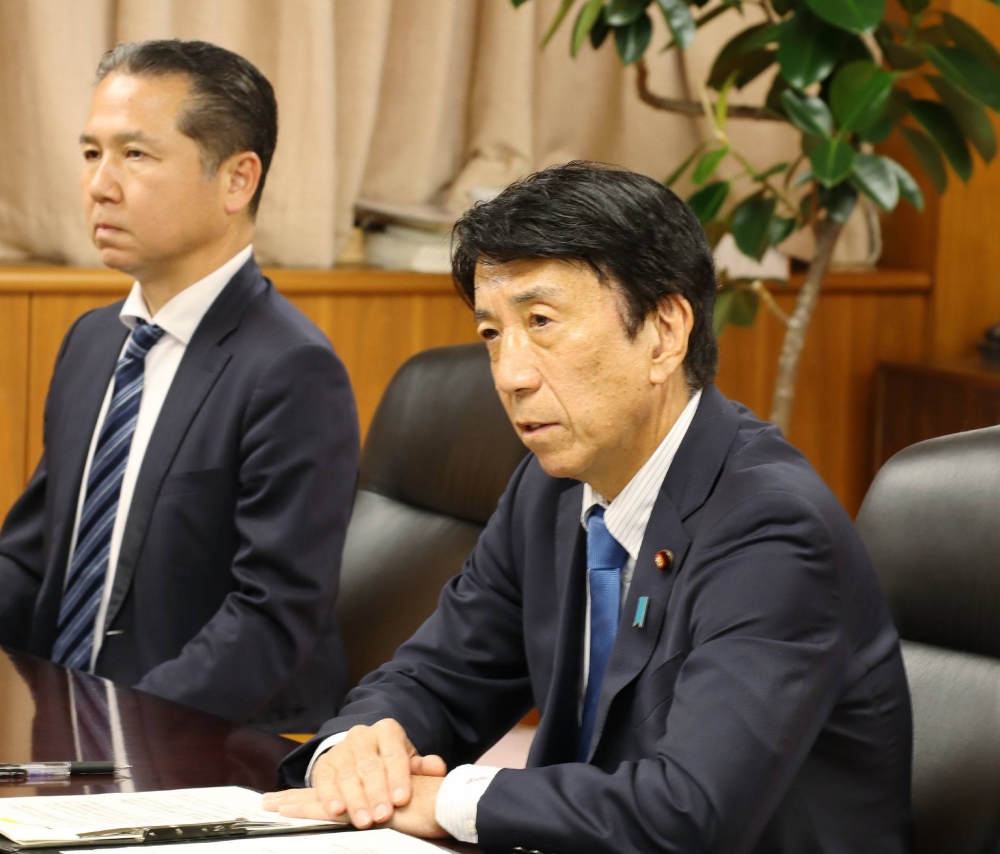
“We believe the upcoming test removal of fuel debris from Unit 2 is an extremely important step to steadily carry out future decommissioning work,” said Yusuke Nakagawa, a TEPCO group manager for the fuel debris retrieval program. “It is important to proceed with the test removal safely and steadily.”
About 880 tons of highly radioactive melted nuclear fuel remain inside the three damaged reactors. Critics say the 30- to 40-year cleanup target set by the government and TEPCO for Fukushima Daiichi is overly optimistic. The damage in each reactor is different, and plans must accommodate their conditions.
Better understanding the melted fuel debris from inside the reactors is key to their decommissioning. TEPCO deployed four mini drones into the No. 1 reactor’s primary containment vessel earlier this year to capture images from the areas where robots had not reached.
Protest continues against Japan’s further discharge of nuke-contaminated water
By Jiang Xueqing in Tokyo https://www.chinadaily.com.cn/a/202405/26/WS66531eb9a31082fc043c9296.html
2024-05-26
Japanese people continued to strongly oppose the discharge of nuclear-contaminated water from the wrecked Fukushima Daiichi nuclear power plant into the ocean during the latest round of radioactive water release.
Tokyo Electric Power Company, the operator of the Fukushima plant, started the sixth round of releasing nuclear-contaminated water into the sea on May 17. The company said it plans to discharge approximately 7,800 metric tons of radioactive water through June 4.
During a rally in front of the Prime Minister of Japan’s office in Tokyo on Friday, Kem Komdo, a 61-year-old Tokyo resident, said the discharge of nuclear-contaminated water into the ocean has no benefits at all, and the main risk is marine pollution.
Although Japanese media is promoting that the water treated through the Advanced Liquid Processing System, or ALPS, only contains tritium, Komdo said that is not true. He emphasized that the radioactive water contains various hidden contaminants that have come into contact with fuel debris, so the actual situation must be made clear.
“The (Japanese) government and TEPCO always tell the media to call it ‘ALPS-treated water’, not nuclear-contaminated water, saying that calling it nuclear-contaminated water causes harmful rumors. But that statement is clearly wrong because this is indeed contaminated water,” Komdo said. “By forcing us to call it ‘ALPS-treated water,’ TEPCO and the government are trying to evade responsibility for the Fukushima nuclear accident.”
The Fukushima Daiichi nuclear power plant suffered a triple meltdown following a major earthquake and subsequent tsunami on March 11, 2011.
Komdo said the Japanese government should change its policy to avoid discharging nuclear-contaminated water into the ocean and immediately switch to land storage as there is still space available.
“Otherwise, the government won’t gain the trust of China and other Pacific island countries, and it will also affect other diplomatic relations,” he said.
Japan starts 6th discharge of Fukushima nuclear-contaminated wastewater

CGTN, 17-May-2024
Japan on Friday started the sixth round of release of nuclear-contaminated wastewater from the crippled Fukushima Daiichi Nuclear Power Plant into the Pacific Ocean.
Despite opposition among local fishermen, residents as well as backlash from the international community, Tokyo Electric Power Company (TEPCO), the plant’s operator, started releasing the radioactive wastewater in the morning, the second round in fiscal 2024.
The same as the previous rounds, about 7,800 tonnes of wastewater are being discharged from about a kilometer off the coast of Fukushima Prefecture via an underwater tunnel until June 4.
According to the TEPCO, the concentrations of all radioactive substances other than tritium in the water stored in the tank scheduled for release were below the national release standards, while the concentration of tritium that cannot be removed will be diluted with seawater.
The Chinese Embassy in Japan expressed firm opposition to this unilateral move of ocean discharge. While safety and reliability have yet to be ensured, Japan’s dumping of nuclear-contaminated water has repeatedly raised risks to neighboring countries and marine ecology, a spokesperson for the embassy said.
The spokesperson called on the Japanese side to attach great importance to the concerns at home and abroad and to fully cooperate in setting up an independent international monitoring arrangement that remains effective in the long haul and has the substantive participation of stakeholders.
………………………….. In fiscal 2024, the TEPCO plans to discharge a total of 54,600 tonnes of contaminated water in seven rounds, which contains approximately 14 trillion becquerels of tritium. https://news.cgtn.com/news/2024-05-17/news-1tFIzr3u9Da/p.html
“Bouncing-back” and other resilience neologisms championed by the state are inherently at odds with the irreversibility of nuclear waste.

Rhetoric of resilience
Recovery of the state or recovery of the people?
Beyond Nuclear International By Mia Winther-Tamaki, 12 May 24
The Japanese people and landscapes still feel the unending impacts of a nuclear catastrophe that occurred a dozen years ago. Thousands of black bags litter the Fukushima exclusion zone enclosing radioactive earth and rubbish with nowhere to go. Japan has begun releasing millions of tons of radioactive wastewater into the sea. The death and destruction of the earthquake and tsunami — a tragedy in itself — was compounded by nuclear calamity…………………….
The Japanese government was responsible for not only creating the circumstance of neglect that caused the nuclear meltdown, but also for exacerbating the impacts of nuclear fallout through a delayed and opaque response that downplayed the severity of the catastrophe…………….
Following the nuclear disaster, Japan shifted to a necessary post-disaster survival and recovery strategy that can be characterized by the term “resilience,” defined by the United Nations Office for Disaster Risk Reduction as the ability to “resist, absorb, accommodate to and recover from the effects of a hazard in a timely and efficient manner, including through…preservation and restoration…”………………………………………………………………………..
“Bouncing-back” and other resilience neologisms championed by the state are inherently at odds with the irreversibility of nuclear waste. The Japanese translation of resilience, “fukkō” (復興), was employed as a catchphrase in building “apparatuses of [capital] capture” out of crisis, according to Sabu Kohso in his 2020 book Radiation and Revolution. In what Kohso calls the “nuclear capitalist nation-state,” the government endeavored to “build back better” and rejuvenate the national economy amidst an unprecedented crisis by implementing a series of fukkō reforms. These reforms included cuts in public spending, tax incentives targeted at international investors and the procurement of construction contracts, all of which ultimately proved advantageous for nuclear corporations and other private actors in the “business of reconstruction.”
The government used the disaster conveniently for profit-making, further transferring the nation’s wealth to the elites, while further immiserating the people. TEPCO exempted itself from responsibility for the nuclear meltdown when it referred to radiation as a “masterless object” (無主物), therefore absolving any self-accountability for cleaning up the radiation emitted from TEPCO’s own nuclear reactors.
Strategic documents such as the government’s 2012 white paper titled, “Toward a Robust and Resilient Society” were published with the intention of “nurturing the dreams and hopes of the people,” ………………………………………………………………….
While enlisting idealistic language and visions of a future, the Japanese state failed to provide basic amenities, housing, resources and support for the Japanese people who had essentially become nuclear refugees. The state divisively categorized evacuees as either “mandatory” or “voluntary,” based on the proximity of their homes to the site of the nuclear meltdown, though it has been shown that deadly levels of radioactivity persisted far outside mandatory zoned areas.
……………………………………………………………..The media ignored the resistance movement, dismissing the public’s widespread anticipation and anxiety about future nuclear accidents, and instead toed the government’s line about nuclear energy as safe.
Community-driven resilience led by activists focused on a diverse range of concerns, including anti-capitalism, feminism and environmentalism. Spearheading this resistance were mothers and those who work to provide everyday needs, tirelessly organizing networks of information-sharing and support. For the sake of their children and loved ones, those in caregiving roles questioned the government’s opaque reports of radiation levels, though they were often denigrated as “hysterical” and “paranoid” by authorities and other family members, according to Kohso. Within the confines of Japan’s patriarchal society, which frequently undermines the value of womens’ knowledge, female activists subverted norms that “freed them from a degree of social control, giving them greater freedom to mobilize.”
Author Nicole Frieiner documents how women mobilized resistance in informal digital spaces, such as a Facebook group named “Fukushima Network for Saving Children from Radiation,” and a blog titled “Connecting Mother’s Blog.” They created safe and accessible spaces that supported alternative points of connection for people across the world. Artists were also crucial to the Fukushima nuclear resistance.
………………………………………………………………… Survivors of Fukushima must live not only with the trauma caused by the earthquake, tsunami and nuclear meltdown, but also that which followed in the ambiguous aftermath — years of a violent lack of acknowledgement, dignity and respect from public authorities………………………………………………………. more https://beyondnuclearinternational.org/2024/05/12/rhetoric-of-resilience/
Government asks Genkai mayor to accept site survey to host nuclear waste
Industry minister Ken Saito has asked the mayor of the town of Genkai in Saga Prefecture to accept a so-called literature survey, as part of the process for selecting a final disposal site for high-level radioactive waste from nuclear plants.
Saito sought understanding from Genkai Mayor Shintaro Wakiyama at a meeting in Tokyo on Tuesday, saying that “the literature survey is not directly connected to the selection.”
Last month, the Genkai town assembly approved a petition submitted by local business groups asking for the literature survey request to be accepted.
“I’m torn between the town assembly’s decision and my thinking,” Wakiyama told reporters after the meeting with Saito. The mayor said that he will make a decision by the end of this month.
A literature survey is the first of three stages in the selection process for disposal sites, and involves the condition of geological strata being examined on paper, based on maps and other data.
So far, a literature survey has been accepted only by the town of Suttsu and the village of Kamoenai, both in Hokkaido.
For a literature survey to be conducted, a local government must apply for or accept a central government request.
Inside abandoned ghost town at Fukushima after nuclear power plant meltdown
Tokyo Matilda from Sheffield is one of the few to visit the nuclear ghost town of Fukushima in Japan
Mirror UK, Cecilia Adamou, 5 May 24
Tokyo Matilda, a 20-year-old from Sheffield, England, embarked on a mission to delve into this deserted ghost town of Fukushima in Japan. The area was subject to disaster when the Fukushima Daiichi Nuclear Power Plant nearby went into meltdown following the 2011 earthquake and subsequent tsunami, leaking toxic nuclear waste into the environment and deeming it uninhabitable due to radiation.
As residents evacuated the town, never to return, it is now frozen in time and has been left subject to the elements for the 13 years since the catastrophe. What remains is an abandoned, apocalyptic wasteland similar to the setting of the Fallout games and TV series. The only people that remain are those trying to bring it back from extinction.
While visiting the disaster site, Tokyo explored a theme park, a school and even a ramen café that have all been empty since 2011. She said: “It reminded me of Fallout as it had such a heavy apocalyptic feeling. The only people who were walking around were the workers who try everyday to get rid of the radiated soil and to make it safe once again.”
The danger of radiation poisoning was a very real risk for Tokyo as she explored the many sights. She explained: “The hospital was the highest radiated place we explored located in the Red Zone. We had the fear of staying too long and having radiation sickness, I have never been as scared as I was in there.”…………………. more https://www.mirror.co.uk/news/weird-news/inside-abandoned-ghost-town-fukushima-32696396
IAEA clears Japanese reactor for 60-year lifetime
Following a review, unit 3 at the Mihama nuclear power plant (NPP) has been deemed fit for further operation.
Alfie Shaw, April 26, 2024
Ateam of experts from the International Atomic Agency (IAEA) has found that Japanese utility Kansai Electric Power Company is implementing timely measures for the safe long-term operation of unit 3 at its Mihama NPP.
Under regulations that came into force in July 2013, Japanese reactors have a nominal operating period of 40 years; 20-year extensions can be granted once, but this is contingent on exacting safety requirements.
Kansai’s Mihama unit 3, a 780MW pressurised water reactor that entered commercial operation in 1976, was granted an extension by Japan’s Nuclear Regulation Authority (NRA) in November 2016, giving the unit a licence to operate until 2036. Unit 3 at Mihama was the third Japanese unit to be granted a licence extension enabling it to operate beyond 40 years under the revised regulations, following Takahama units 1 and 2, which received NRA approval in June 2016.
Following the disaster at the Fukushima Daiichi plant in 2011, Mihama shut down, lying idle until restarting in June 2021. It became the first Japanese reactor to operate beyond 40 years…………………………………………….
Power Technology 26th April 2024 https://www.power-technology.com/news/mihama-nuclear-unit-sees-extension-to-60-year-lifetime/
.
Japan city assembly OKs request for nuclear waste site survey

If the mayor gives the green light, the Saga Prefecture town that hosts Kyushu Electric Power Co.’s four-reactor Genkai Nuclear Power Station will receive up to 2 billion yen ($12.9 million) in state subsidies for allowing the survey,
Three local associations in the construction, restaurant and accommodation sectors submitted separate requests for the survey to the assembly, with some hoping the subsidies and survey activity will prop up the local economy.
April 26, 2024 (Mainichi Japan) https://mainichi.jp/english/articles/20240426/p2g/00m/0na/027000c
SAGA, Japan (Kyodo) — The municipal assembly of Genkai in southwestern Japan gave the go-ahead Friday for the town to request a preliminary survey by the state to gauge its suitability to host an underground disposal site for highly radioactive waste.
The Genkai assembly is the first in the country hosting a nuclear plant to approve such a survey request. Mayor Shintaro Wakiyama said he plans to make the final decision in May regarding whether to request the survey, the first part of a three-stage, 20-year process to select a permanent storage site for waste from nuclear power generation.
If the mayor gives the green light, the Saga Prefecture town that hosts Kyushu Electric Power Co.’s four-reactor Genkai Nuclear Power Station will receive up to 2 billion yen ($12.9 million) in state subsidies for allowing the survey, which will check ground conditions and volcanic activity based on published geological sources.
After the nine-member assembly adopted the request by a majority vote, Wakiyama told reporters the decision “reflects the will of the people. I take it seriously.”
Saga Gov. Yoshinori Yamaguchi, meanwhile, expressed reluctance about locating a waste disposal site in Genkai. With the prefecture already hosting a nuclear plant, he told a press conference, “It would be unbalanced for (Saga) to shoulder such a burden.”
Three local associations in the construction, restaurant and accommodation sectors submitted separate requests for the survey to the assembly, with some hoping the subsidies and survey activity will prop up the local economy.
The associations called on the town, as a host of a nuclear power plant, to proactively cooperate with the central government.
Japan, like other countries, is struggling to find permanent disposal sites for nuclear waste. Only two municipalities — Suttsu and Kamoenai in Hokkaido in northern Japan — have approved preliminary site surveys, which commenced in 2020.
But the surveys have taken longer than the scheduled two years, and it remains unclear whether either process will move to the second stage as local opposition remains strong.
High-level radioactive waste, produced when extracting uranium and plutonium from spent fuel, must be stored in bedrock at least 300 meters underground for tens of thousands of years until radioactivity declines to levels that are not harmful to human health or the environment.
The waste, solidified by mixing with glass, is currently housed in metal containers stored at the Vitrified Waste Storage Center operated by Japan Nuclear Fuel Ltd. in Rokkasho, Aomori Prefecture.
Corrosion found in treated radioactive water tanks at Fukushima plant
Apr. 21 , https://japantoday.com/category/national/corrosion-found-in-treated-radioactive-water-tanks-at-fukushima-plantTOKYO
Corrosion has been found on the inside of tanks used to store treated radioactive water at the crippled Fukushima Daiichi nuclear power plant, its operator has revealed.
Tokyo Electric Power Company Holdings Inc said there are no problems with the strength of the tanks, but added that some of the more than 1,000 containers at the plant were installed over 10 years ago and have aged over time.
A TEPCO official said the operator will continue to inspect the tanks.
The firm began releasing the treated water containing tritium from the plant into the Pacific Ocean in August 2023 despite backlash from local fisheries and China.
In March, corrosion and peeling paint were spotted in three empty tanks that have been in use since 2016 at the plant, which suffered meltdowns following the devastating earthquake and ensuing tsunami in March 2011.
As it is impossible to check the inside of tanks currently containing treated water, other than with the use of underwater robots, TEPCO conducts annual exterior inspections to detect any abnormalities.
Tanks that have been used for more than 10 years also have the thickness of their steel plates measured using ultrasonic waves to assess their strength, TEPCO said.
The Japanese government and TEPCO have said that the treated water released from the Fukushima plant is diluted to reduce the levels of tritium to less than one-40th of the country’s national safety standards.
Japan starts 5th ocean discharge of Fukushima nuclear-tainted wastewater despite opposition

(Xinhua) Web editor: Zhang Kaiwei, Liang Jun, April 19, 2024
TOKYO, April 19 (Xinhua) — Japan on Friday started the fifth-round of release of nuclear-contaminated wastewater from the crippled Fukushima Daiichi Nuclear Power Plant into the Pacific Ocean.
Despite opposition among local fishermen, residents as well as backlash from the international community, Tokyo Electric Power Company (TEPCO), the plant’s operator, started discharging the radioactive wastewater in the morning, the first round in fiscal 2024.
Similar to the previous four rounds, about 7,800 tons of the wastewater, which still contains tritium, a radioactive substance, will be discharged until May 7.
TEPCO analyzed the water stored in the tank scheduled for release, and found that the concentrations of all radioactive substances other than tritium were below the national release standards, while the concentration of tritium that cannot be removed will be diluted with seawater, Japanese newspaper Asahi Shimbun reported.
TEPCO will measure the concentration of radioactive substances such as tritium in the surrounding waters every day during the period to investigate the effects of the release, it added.
The Fukushima nuclear-contaminated water release began in August 2023, and a total of about 31,200 tons of the water was released in four rounds in fiscal 2023, which ended in March.
In fiscal 2024, TEPCO plans to discharge a total of 54,600 tons of contaminated water in seven rounds, which contains approximately 14 trillion becquerels of tritium.
Nuke authorities approve loading fuel at Niigata nuclear plant
THE ASAHI SHIMBUN, April 15, 2024 https://www.asahi.com/ajw/articles/15229991
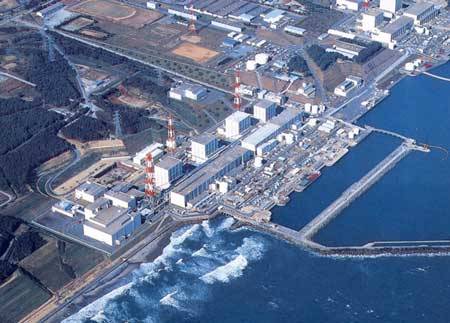
KASHIWAZAKI, Niigata Prefecture–The Nuclear Regulation Authority gave the go-ahead on April 15 to loading nuclear fuel into a reactor at the long-idled Kashiwazaki-Kariwa nuclear power plant here.
The approval is an important step toward restarting the plant, which has remained offline for more than a decade.
Plant operator Tokyo Electric Power Co. will start loading 872 fuel assemblies into the plant’s No. 7 reactor at around 4 p.m. The loading process is expected to take a couple of weeks to complete.
The reactor will then undergo a series of safety inspections before regulatory approval for a restart is granted.
In 2017, the reactor passed new safety regulatory standards mandated following the 2011 nuclear disaster at TEPCO’s Fukushima No. 1 nuclear power plant.
However, regulators suspended the restart process in 2021 due to deficiencies in the plant’s anti-terrorism measures. The NRA eventually approved the plant’s upgraded security measures in December last year.
Despite progress toward restarting the reactor, the governor of Niigata Prefecture has not yet granted his consent. Local communities remain divided, with ongoing debate and concerns regarding the plant.
First Images Inside Fukushima’s Nuclear Reactor Show “Icicle-Like”Structures
First Images Inside Fukushima’s Nuclear Reactor Show “Icicle-Like”
Structures. Many robots have ventured into the ruins of Fukushima, but few
have returned.
A snake-like robot and mini drones have ventured deep inside
the irradiated reactor of the Fukushima Daiichi Nuclear Power Station in
Japan.
As shown in their new images, the clean-up operations still have
some way to go 13 years after the catastrophic nuclear meltdown. In their
latest step to clean up the area, TEPCO sent robotic probes in the bowels
of this reactor to examine the core and its melted nuclear fuel. Their aim
is to learn about the condition of the spent fuel to facilitate its removal
so the plant can be decommissioned. It marks the first time they’ve managed
to return with images from inside the “pedestal” of reactor Unit 1.
IFL Science 9th April 2024
US, Philippines, Japan, and Australia Conduct First Joint Military Exercise in South China Sea
China launched patrols in the South China Sea in response
by Dave DeCamp April 7, 2024
https://news.antiwar.com/2024/04/07/us-philippines-japan-and-australia-conduct-first-joint-military-exercise-in-south-china-sea/
The US, Japan, the Philippines, and Australia conducted joint military exercises in the South China Sea on Sunday in a provocative show of force aimed at China.
According to Japan’s Kyodo News, the drills marked the first “full-scale exercise” between the four nations. The US has been looking to increase military cooperation between its treaty allies in the region as part of its military build-up to prepare for a future war with China.
The four countries released a joint statement that made clear the drills were meant to push back on China’s claims to the South China Sea. “We stand with all nations in safeguarding the international order based on the rule of law that is the foundation for a peaceful and stable Indo-Pacific region,” the statement said.
According to The South China Morning Post, the drills included two Philippine vessels, one American ship, one Australian ship, and a Japanese ship and focused on anti-submarine warfare training, tactical exercises, and photo exercises.
China launched patrols in the South China Sea on the same day in what appeared to be a response to the drill. “The Southern Theatre Command of the People’s Liberation Army will conduct a joint air and sea combat patrol in the South China Sea on April 7,” the Chinese military’s Southern Theater Command said.
The joint drills come as tensions are soaring between China and the Philippines over disputed rocks and reefs in the South China Sea. Chinese and Philippine vessels frequently have tense encounters in the waters, which often end in collision. In the most recent incident, a Chinese vessel fired a water cannon at a Philippine supply boat, injuring several crew members.
The incidents in the South China Sea could potentially spark a major war as the US has repeatedly affirmed that the US-Philippine Mutual Defense Treaty applies to attacks on Philippine vessels in the disputed waters.
President Biden is hosting Philippine President Ferdinand Marcos Jr. and Japanese Prime Minister Fumio Kishida in Washington this Thursday for the first-ever trilateral summit between the three nations. They’re expected to announce the launch of regular joint patrols in the South China Sea.
TEPCO plans new installations at Fukushima nuclear plant, to deal with radioactive leakage
In the wake of recent contaminated water leakage at Japan’s Fukushima
Daiichi Nuclear Power Plant, the plant’s operator Tokyo Electric Power
Company (TEPCO) has announced its plan for new installations as a
preventive measure, local media reported.
TEPCO is expected to install new
piping and ventilation ports designed to guide any spewing liquid to fall
within the building, thereby containing the spread of contamination,
national news agency Kyodo reported, citing the company’s announcement on
Friday. The construction is slated to commence on Monday and is expected to
be completed by the end of the month, according to the operator.
CGTN 6th April 2024
M6.0 earthquake hits coast of Japan’s Fukushima: Japan Meteorological Agency
A magnitude-6.0 earthquake struck off the coast of Fukushima Prefecture in Japan on Thursday noon, said the Japan Meteorological Agency (JMA).
The quake hit at 12:16 local time at a depth of 40 kilometers, the JMA said.
No tsunami warnings have been issued and there’s no immediate information on damage or casualties.
1 This Month

of the week – Shut Down Drone Warfare!


Tell the Ukrainian Government to Drop Prosecution of Peace Activist Yurii Sheliazhenko

Petition to revoke the licensing of the Near Surface Nuclear Disposal Facility (NSDF) at Chalk River. https://www.ourcommons.ca/petitions/en/Petition/Details?Petition=e-7247
To see nuclear-related stories in greater depth and intensity – go to https://nuclearinformation.wordpress.com
-
Archives
- April 2026 (44)
- March 2026 (251)
- February 2026 (268)
- January 2026 (308)
- December 2025 (358)
- November 2025 (359)
- October 2025 (376)
- September 2025 (257)
- August 2025 (319)
- July 2025 (230)
- June 2025 (348)
- May 2025 (261)
-
Categories
- 1
- 1 NUCLEAR ISSUES
- business and costs
- climate change
- culture and arts
- ENERGY
- environment
- health
- history
- indigenous issues
- Legal
- marketing of nuclear
- media
- opposition to nuclear
- PERSONAL STORIES
- politics
- politics international
- Religion and ethics
- safety
- secrets,lies and civil liberties
- spinbuster
- technology
- Uranium
- wastes
- weapons and war
- Women
- 2 WORLD
- ACTION
- AFRICA
- Atrocities
- AUSTRALIA
- Christina's notes
- Christina's themes
- culture and arts
- Events
- Fuk 2022
- Fuk 2023
- Fukushima 2017
- Fukushima 2018
- fukushima 2019
- Fukushima 2020
- Fukushima 2021
- general
- global warming
- Humour (God we need it)
- Nuclear
- RARE EARTHS
- Reference
- resources – print
- Resources -audiovicual
- Weekly Newsletter
- World
- World Nuclear
- YouTube
-
RSS
Entries RSS
Comments RSS
 nuclear-news