Hiroshima inviting Israel to attend nuclear bombing anniversary ‘very unfortunate,’ says scholar
Hope Nagasaki’s refusal to invite Israel to its peace event to mark US bombing of Japan ‘makes some kind of impact on the world,’ Richard Falk tells Anadolu
Riyaz ul Khaliq |05.08.2024, https://www.aa.com.tr/en/asia-pacific/hiroshima-inviting-israel-to-attend-nuclear-bombing-anniversary-very-unfortunate-says-scholar/3296156
An invitation for Israel to attend an annual peace event in Hiroshima to mark the US nuclear bombing of the Japanese city was “very unfortunate,” a leading legal scholar told Anadolu.
“It is very unfortunate that Hiroshima does not grasp the fact it was victimized in a way Palestinian people have been victimized by Israel,” said Richard Falk, an American professor emeritus of international law at Princeton University.
Falk’s comments to Anadolu come as the cities of Hiroshima and Nagasaki will be commemorating 79th anniversary of 1945 atomic bombing by the US this week.
While Nagasaki has refused to invite Tel Aviv, Hiroshima will be hosting Israeli officials on Tuesday.
Nagasaki will be holding a similar event on Friday.
The US dropped nuclear bombs on Hiroshima, the site of the world’s first atomic bombing, on Aug. 6, 1945, and then Nagasaki, resulting in the deaths of at least 140,000 people by the end of that year.
“And what Nagasaki is doing by not inviting Israel to its observance of the bombing in World War II is to make a statement that it does not want to be identified with a government that behaves that way,” Falk said, referring to Israel’s treatment of Palestinians, including its ongoing brutal offensive on the Gaza Strip.
“That is a very important lesson for the world and is a very interesting way of highlighting two ways of relating to Israel” amid the war on Gaza, said Falk, who in past served as UN special rapporteur on occupied Palestinian territory. “I hope it makes some kind of impact on the world.”
Japan has refused to invite Russia and Belarus to similar events as Moscow has been waging war on Ukraine since February 2022.
Hiroshima’s local administration has invited Tel Aviv despite accusations of double standards and activists pressing authorities to backtrack on the move.
Local authorities in Hiroshima have called for an “immediate cease-fire in the Palestinian territory.”
Several demonstrations have been held against Israel’s participation in the program on Tuesday.
Israeli war on Gaza ‘changed discourse in Japan’
Saul Takahashi, professor of human rights and peace studies at Osaka Jogakuin University, told Anadolu that there has been “lot of protests and lots of discussions” in Japan about Hiroshima’s decision to invite Israel.
This event is where all the countries in the world come together and pray for peace.
So “how can it be that a country that has been found by International Court of Justice to plausibly be committing genocide … how can it be we invite them (Israel). This is outrageous,” Takahashi told Anadolu.
He said the genocide in Gaza has “changed discourse in Japan for sure.”
“People are much more mindful, they are much more paying attention to the Palestine question … in particular young people and that is big, really big,” said the academic.
Recalling his pre-Oct. 7 lectures on Palestine, which were mostly attended by older individuals, Takahashi said: “I was concerned about the future of the movement (regarding Palestine in Japan).”
“But it is completely different. You have young people in the streets, every week and not just in Tokyo but also in smaller cities and that is very big.”
Last week, both Iran and Hamas accused Israel of assassinating Ismail Haniyeh, the head of Hamas’ political bureau, in Iran’s capital Tehran, an accusation that Israel has neither confirmed nor denied. However, Israeli Prime Minister Benjamin Netanyahu hinted at Israel’s involvement.
Israel, flouting a UN Security Council resolution demanding an immediate cease-fire, has faced international condemnation amid its continued brutal offensive on Gazasince an attack last October by the Palestinian resistance group Hamas.
Nearly 39,600 Palestinians have since been killed, mostly women and children, and nearly 91,400 injured, according to local health authorities.
Almost 10 months into the Israeli war, vast tracts of Gazalie in ruins amid a crippling blockade of food, clean water and medicine.
Israel stands accused of genocide at the International Court of Justice, which ordered it to immediately halt its military operation in the southern city of Rafah, where more than 1 million Palestinians had sought refuge from the war before it was invaded on May 6.
Japan, U.S. urged to work for nuclear abolition at symposium
By NAOKI NAKAYAMA/ Staff Writer, July 28, 2024
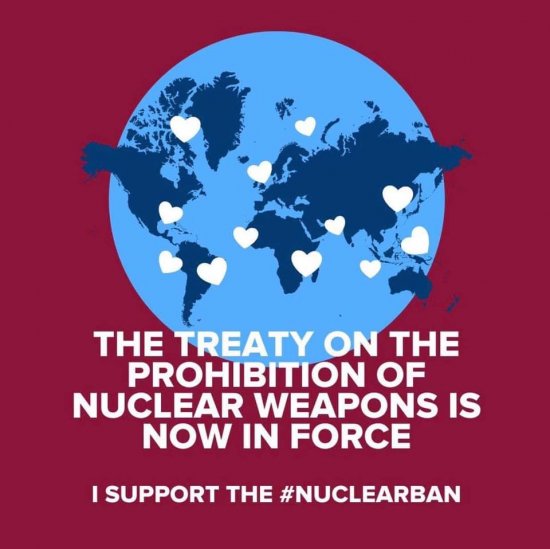
NAGASAKI–Japan and the United States have a “special responsibility” to lead efforts to abolish nuclear weapons, the head of a U.S. nongovernmental organization told a 30th international peace symposium.
Ivana Hughes, president of the Nuclear Age Peace Foundation, was speaking at the “International Symposium for Peace: The Road to Nuclear Weapons Abolition” held at the Nagasaki Atomic Bomb Museum on July 27.
She said damage from radiation is still an issue in the Marshall Islands in the Pacific Ocean 70 years after the largest U.S. hydrogen bomb test at Bikini Atoll.
“After all, although for different reasons, the United States and Japan both have a special responsibility to not only join the Treaty on the Prohibition of Nuclear Weapons, but to lead efforts toward its full and complete implementation and total elimination of nuclear weapons,” Hughes said as she wound up her keynote speech.
Many speakers felt that the global situation surrounding nuclear weapons has deteriorated over the past 30 years, with nuclear disarmament stalled, and expressed concerns about growing international tensions, citing Russia’s war in Ukraine and the Israel-Hamas conflict.
“We should think about nuclear abolition from the perspective of the security of ‘mankind,’ not of nations,” said Mitsuru Kurosawa, an expert on nuclear disarmament and professor emeritus at Osaka University.
Batyrkhan Kurmanseit, minister-counselor at the Kazakhstan Embassy in Japan, said Kazakhstan is the only former Soviet republic that ratified the Treaty on the Prohibition of Nuclear Weapons. He said an international framework for nuclear abolition has never been more needed than right now.
The Asahi Shimbun has been a co-sponsor of the annual symposium, which has alternately been held in Hiroshima and Nagasaki with the municipal governments and local peace organizations every summer since 1995.
Terumi Tanaka, a hibakusha atomic bomb survivor and co-chair of the Japan Federation of A- and H-Bomb Sufferers Organization (Nihon Hidankyo), and Seiko Mimaki, an associate professor at Doshisha University’s graduate school specializing in U.S. politics and diplomacy, also participated in the symposium’s panel discussion.
In a speech, Kan Sang-jung, president of Chinzei Gakuin University in Nagasaki Prefecture, emphasized the importance of listening to hibakusha, saying that many lives have been lost as countries clash over what they believe is just amid the post-Cold War rise of nationalism.
Hibakusha Shizuko Mitamura read a hand-made picture card show that tells the story of what happened to her on Aug. 9, 1945, when the city of Nagasaki was leveled by atomic bombing, and the loss of her daughter to cancer in 2010, when she was 39.
‘True horror’: Japan’s Hiroshima atomic bomb survivor campaigns for a nuclear-free world
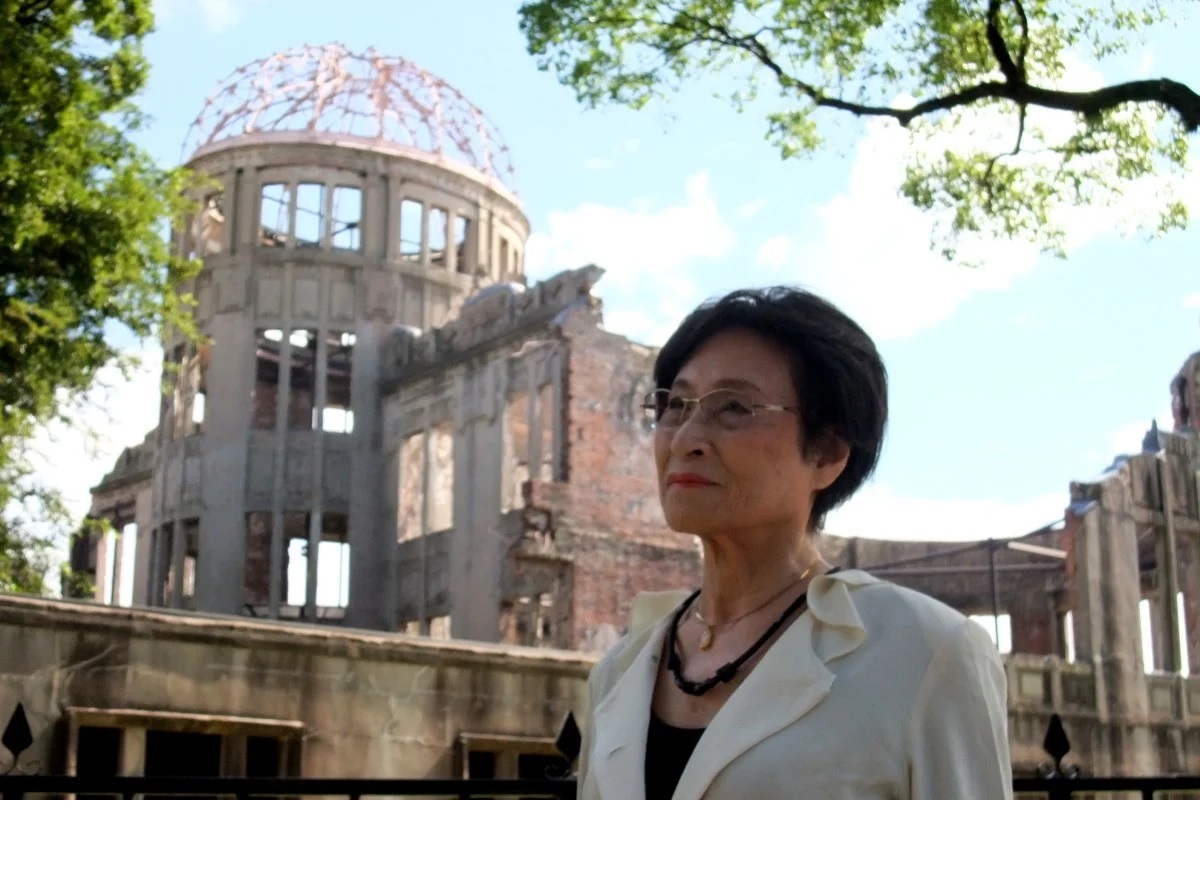
Bun Hashizume, 93, who has written poems about her descent into ‘hell’ after the bombing, has travelled the world to spread her message
Norman Aisbett, SCMP, 3 Aug 24,
What I feel the most about these days is human stupidity,” says 93-year-old Bun Hashizume, from her home in the Japanese temple city of Kamakura.
“I was a victim of the first atomic bomb in human history and I have advocated throughout my life for the abolition of nuclear weapons, but the world leaders still do not understand their true horror.
“Even my poems cannot describe it.”
Rewind to 8.15am on August 6, 1945 in the final throes of World War II.
A US atomic bomb named “Little Boy” was dropped from a B-29 aircraft and exploded at low altitude over the city of Hiroshima. With a blast force equal to 16 kilotons of TNT, it destroyed most buildings and caused mass death and injury.
Then aged 14, Hashizume was a war-mobilised school student working in the four-storey reinforced-concrete Savings Bureau building about 1.5km from the hypocentre of the blast.
Looking back, she recalls a third-floor window being filled “with a sudden flash of light that was so bright I thought the sun had fallen at my feet. A thousand rainbows all at once seemed to explode before my eyes”. And how, after being briefly unconscious and bleeding heavily from a head wound, she staggered downstairs among other workers looking “like a parade of ghosts with wildly dishevelled hair and sooty bodies”.
Once outside the building, it was a regular employee, Tomoyanagi, who “half-carried” her to a nearby Red Cross Hospital, where more shocking scenes and high drama followed.
Hashizume is today the author of The Day the Sun Fell – Memoirs of a Survivor of the Atomic Bomb – translated by Susan Bouterey – which closely details her and her family’s horrific experiences and also explains her present-day opposition to “dangerous” nuclear power plants, which she emphasises during this Australian writer’s long-distance interview with her, via a Japanese interpreter-admirer.
Her drive was such that, at age 70, she began her solo pilgrimages to many countries over 15 years to “become a citizen of the world” and share her anti-nuclear views. With only her aged pension to buy airline tickets and stay in youth hostels, she spoke to anyone or group willing to listen, including schoolchildren. Everywhere, people were also touched by her genuine personal warmth and quiet charm. A small booklet she handed out was entitled, “Fellow Humans! Let Us Foster Love and Wisdom.”
Right now, though, she is homebound due to A-Bomb-related health issues that have plagued her life. She tells of having endured “lifelong” rheumatism, chronic kidney disease, thyroid cancer and more. The past 20 years have also brought numerous breaks of radiation-weakened ribs, collarbones and three compressed fractures of her spine after a fall in Norway in 2003.
She is unable to go outside alone. There are twice-weekly visits to a hospital and three transports per week to a rehabilitation clinic. “Otherwise I’m on my bed reading the newspapers, with care from my eldest son and his family, who live with me.”
Her activist spirit nevertheless endures. She cites recent-times threats of nuclear strikes by North Korea if threatened; by Russia amid the Ukraine war; and an Israeli cabinet minister’s suggestion to nuke Hamas in Gaza The minister was promptly sacked by his embarrassed government which has never admitted that it has nuclear weapons – and subsequent high tensions and conflict between arch-enemies Israel and Iran.
{I believe that nuclear weapons should never be used, stockpiles should be completely abolished, and the Japanese government should join and ratify the Treaty on the Prohibition of Nuclear Weapons as soon as possible,” she says. “It’s no wonder they are being been used as a threat.” She further notes that nine nations have nuclear weapons, but the warheads of only two nations – Russia (5,890) and the US (5,224) – “are enough to destroy all life on Earth several times over”.
A major disappointment for her was the 28th United Nations Climate Change Conference (Cop28) in Dubai when 23 nations including the US and Japan declared they would triple the generation of their nuclear power plants to achieve zero greenhouse gas emissions by 2050.
“It is shocking that Japan joined this dangerous proposal despite the fact that the world’s pervasive emphasis on economic growth, baseless absolute trust in science and technology, and limitless pursuit of energy collapsed in Fukushima in 2011,” she says…………………………………………
After Tomoyanagi left to find her own family, a 16-year-old boy Yoshiaki Iida, who was unknown to Hashizume, helped her outside just before flames engulfed the whole building.
However, she later heard that her brother, Hideo, seven, had died after his back caught fire in an instant when hit from behind by the scorching A-Bomb blast in a school playground. Her other family members survived but with bad injuries and other health problems. Younger sister Shizuko, nine, had been evacuated to a temple when she was struck by the blast wave. Years of radiation sickness caused her suicide at age 19. Older sister Mitsuko, 19, suffered “ghastly” facial wounds at her grandmother’s house.
What does Hashizume remember most after the explosion? She replies: “The complete silence and the smell of burnt corpses that filled the air.”………………………………………………………………………………………………
The Day the Sun Fell – Memoirs of a Survivor of the Atomic Bomb by Bun Hashizume (translated by Susan Bouterey) is published by Austin Macauley Publishers Ltd and also available on Kindle. https://www.scmp.com/week-asia/people/article/3273031/true-horror-japans-hiroshima-atomic-bomb-survivor-campaigns-nuclear-free-world
Nagasaki decides against inviting Israel to commemorate nuclear bombing of Japan amid war on Gaza
In contrast, another US nuclear bomb-hit Hiroshima city has invited Tel Aviv to annual event
Riyaz ul Khaliq 01.08.2024, ISTANBUL https://www.aa.com.tr/en/asia-pacific/nagasaki-decides-against-inviting-israel-to-commemorate-nuclear-bombing-of-japan-amid-war-on-gaza/3290598
The local government in Nagasaki province declared Wednesday it will not invite Israel to its annual conference to commemorate US nuclear bombing of Japan.
Mayor Shiro Suzuki said Israel would “not be invited to the Aug. 9 annual peace ceremony,” Tokyo-based Kyodo News reported.
The decision to not invite Israel to the event comes on a day Israel assassinated Palestinian resistance group Hamas political chief Ismail Haniyeh at his residence in Iranian capital Tehran.
Nagasaki and Hiroshima cities will be commemorating 79th anniversary of 1945 atomic bombing by the US on Japan next month.
Japan has refused to invite Russia and Belarus for similar conference since Moscow waged war on Ukraine in Feb. 2022.
However, local government in Hiroshima has invited Tel Aviv to its event on Aug. 6.
The local authorities in Hiroshima, however, have called for an “immediate cease-fire in the Palestinian territory.”
The Hiroshima government has come under severe criticism for purported double standards and many activists are pressing the authorities to withdraw the invite to Tel Aviv.
Several programs against Israel’s participation have been planned in the run up to Aug. 6.
Japan has witnessed many demonstrations and protests against Israeli war on Palestinian besieged enclave of Gaza, with calls to ceases military relations with Tel Aviv.
Israel, flouting a UN Security Council resolution demanding an immediate cease-fire, has faced international condemnation amid its continued brutal offensive on Gaza since an Oct. 7, 2023 attack by the Palestinian group Hamas.
At least 39,400 Palestinians have since been killed, mostly women and children, and nearly 91,000 injured, according to local health authorities.
Over nine months into the Israeli onslaught, vast tracts of Gaza lie in ruins amid a crippling blockade of food, clean water and medicine.
Israel is accused of genocide at the International Court of Justice, which ordered it to immediately halt its military operation in the southern city of Rafah, where more than 1 million Palestinians had sought refuge from the war before it was invaded on May 6.
Japan continues search for its first nuclear waste disposal site by screening tiny rural town

by undergoing just the first step of screening, the town can receive grants of up to 2 billion yen (US$12.7 million).
Channel Newws Asia Michiyo Ishida, Louisa Tang 31 July 24
Japan has produced more than 19,000 tonnes of nuclear waste since it began generating atomic energy in the 1960s.
GENKAI, Japan: Cattle farmer Hiroshi Nakayama practically grew up with nuclear power in the rural town of Genkai, which has a population of just under 5,000.
The 56-year-old raises 2,000 black-haired wagyu, selling the best as premium and highly sought after Saga beef.
Even though his hometown in southern Kyushu island may one day become Japan’s final destination for nuclear waste, he brushed off concerns that it would affect his business.
Screening began last month to assess if Genkai, which has hosted a nuclear plant for about five decades, is suitable to serve as the country’s first radioactive waste disposal facility.
“Given Japan’s technology, I do not think there will be environmental contamination. Some people say it is dangerous, but no one has died from (the existence of) the nuclear plant,” Mr Nakayama told CNA…………………………
THIRD SITE TO BE SCREENED
Genkai is the third site to undergo screening after two others in Hokkaido which are still being reviewed. It is the only one among them that hosts a nuclear plant.
Japan needs a radioactive waste disposal facility as it has produced more than 19,000 tonnes of nuclear waste since it began generating atomic energy in the 1960s.
This waste will continue to accumulate in interim storage that is dangerous in the long run.
Nuclear waste needs to be stored at least 300 metres underground for about 100,000 years until radioactivity falls to acceptable levels.
Meanwhile, the entire process to select a permanent disposal site will take about 20 years.
Local authorities have the right to pull out at each stage, but by undergoing just the first step of screening, the town can receive grants of up to 2 billion yen (US$12.7 million).
The process begins with the collection of documents describing the town’s geological features. The central government-linked Nuclear Waste Management Organization will then spend two years studying the documents before publishing a report.
Based on that, local leaders will decide whether to move on to the next step.
MAYOR EXPRESSES MISGIVINGS
Some groups in Genkai, including hotel and restaurant associations, had pushed for their town to be screened by submitting petitions. These were approved by the local assembly which represents residents in Genkai.
While the town’s mayor Shintarou Wakiyama gave the green light in May, he said he has misgivings about a disposal site being built there.
One reason he cited was the size of Genkai – just 36 sq km.
“I thought we are too small and not suitable for hosting a final nuclear waste disposal site,” he added……………………………..
By having Genkai undergo screening, he said he hopes other towns will come forward.
He stressed that his decision to approve the screening was not driven by money, noting that the town’s coffers were already in good shape from substantial payouts due to hosting a nuclear plant. https://www.channelnewsasia.com/east-asia/japan-nuclear-radioactive-waste-disposal-site-screening-genkai-town-4513641
Japan nuclear watchdog panel decides against restarting Tsuruga reactor
difficult to determine the safety of the reactor, noting the proximity of a seismic faultline.
The government in Japan, one of the world’s most seismically active countries, does not allow nuclear plants to be situated over active faultlines.
July 27 2024, TOKYO, https://japantoday.com/category/national/japan-nuclear-watchdog-panel-decides-against-restarting-tsuruga-reactor1
A panel of Japan’s nuclear watchdog decided on Friday against restarting a reactor at the Tsuruga nuclear power plant citing seismic risks, paving the way for the regulator to keep the Japan Atomic Power plant shut.
The panel said it was difficult to determine the safety of the reactor, noting the proximity of a seismic faultline. Consequently, it said, the reactor was not deemed compliant with criteria for installation licensing.
“We will conduct an additional investigation. We are not considering decommissioning the plant,” Mamoru Muramatsu, president of Japan Atomic Power, said after the panel meeting, according to Kyodo News Agency.
The government in Japan, one of the world’s most seismically active countries, does not allow nuclear plants to be situated over active faultlines.
The panel is set to report its decision to the Nuclear Regulation Authority (NRA) soon.
If approved, this would be the first case of non-compliance under the stricter safety standards imposed after the 2011 Fukushima nuclear disaster.
The move could hinder the government’s efforts to restart more nuclear power plants to ensure a stable energy supply.
Japan, which had 54 operational reactors before the 2011 disaster, has restarted only 12 of the 33 nuclear reactors it has been considering restarting.
Along with most reactors in Japan, operations at the Tsuruga’s No.2 reactor have been halted since 2011 following triple meltdowns at Tokyo Electric Power’s Fukushima Daiichi nuclear power plant.
On March 11, 2011, Japan’s northeast coast was struck by a magnitude 9 earthquake, the strongest quake in Japan on record, and a massive tsunami, triggering the worst nuclear crisis since Chernobyl a quarter of a century earlier.
US Forces Japan to be upgraded to warfighting command

The shift will move operational control of Japan-based forces east from Hawaii and, officials say, deepen cooperation with the Japanese military.
TOKYO—The Pentagon will upgrade and expand its three-star command in Japan to handle operational control of U.S. forces based there, part of an effort to deepen ties between the U.S. and Japanese militaries and to streamline command and control of joint operations, senior defense officials told reporters traveling with Defense Secretary Lloyd Austin on Friday.
“Secretary Austin plans to announce that the United States intends to reconstitute U.S. Forces Japan as a Joint Force Headquarters, reporting to the commander of U.S. INDOPACOM,” said the senior official. The shift will give USFJ, which is “currently, primarily, an administrative command” more warfighting responsibilities. “They do day-to-day management of the alliance, but not operational command of forces. So it’ll be a significant difference for them.”
The announcement comes as part of the Joint Statement of the Security Consultative Committee (“2+2”) committee meeting taking place in Tokyo between Austin, Secretary of State Anthony Blinken, and their Japanese counterparts.
The command will grow as it adds missions and responsibilities to its current alliance-management functions, the official said, “including some of the planning exercises and commanding of operations, and we’ll be doing those, as I mentioned, side-by-side with Japanese forces like never before.”
Many details of the new headquarters aren’t yet known and officials said that the approach will be phased, with many more discussions about how to implement yet to come. Among the decisions to be made is whether the expanded USFJ will have a command structure that integrates Japanese forces, the way U.S. Joint Forces Korea does for South Korean forces.
“A major part of that phased approach will involve bilateral working groups with the U.S. side, led by INDOPACOM, to work through important implementation factors, including potential resourcing needs, infrastructure, personnel, authorities and ranks,” the official said.
The new Joint Force Headquarters will allow INDOPACOM officers and operators to have daily interactions with Japanese counterparts about how to plan exercises, operations, and how to act on shared intelligence and information, the official said. ……………………..more https://www.defenseone.com/policy/2024/07/us-forces-japan-be-upgraded-warfighting-command/398386/
‘Atomic bomb hell must never be repeated’ say Japan’s last survivors

Atomic People will be broadcast on Wednesday 31 July on BBC Two and BBC iPlaye
Lucy Wallis, BBC News https://www.bbc.com/news/articles/crg5lyd25jno 26 July 24
It was early in the day, but already hot. As she wiped sweat from her brow, Chieko Kiriake searched for some shade. As she did so, there was a blinding light – it was like nothing the 15-year-old had ever experienced. It was 08:15 on 6 August 1945.
“It felt like the sun had fallen – and I grew dizzy,” she recalls.
The United States had just dropped an atomic bomb on Chieko’s home city of Hiroshima – the first time a nuclear weapon had ever been used in warfare. While Germany had surrendered in Europe, allied forces fighting in World War Two were still at war with Japan.
Chieko was a student, but like many older pupils, had been sent out to work in the factories during the war. She staggered to her school, carrying an injured friend on her back. Many of the students had been badly burnt. She rubbed old oil, found in the home economics classroom, onto their wounds.
“That was the only treatment we could give them. They died one after the next,” says Chieko.
“Us older students who survived were instructed by our teachers to dig a hole in the playground and I cremated [my classmates] with my own hands. I felt so awful for them.”
Chieko is now 94 years old. It is almost 80 years since the atomic bombs were dropped on Hiroshima and Nagasaki and time is running out for the surviving victims – known as hibakusha in Japan – to tell their stories.
Many have lived with health problems, lost loved ones and been discriminated against because of the atomic attack. Now, they are sharing their experiences for a BBC Two film, documenting the past so it can act as a warning for the future
After the sorrow, new life started to return to her city, says Chieko.
“People said the grass wouldn’t grow for 75 years,” she says, “but by the spring of the next year, the sparrows returned.”
In her lifetime, Chieko says she has been close to death many times but has come to believe she has been kept alive by the power of something great.
The majority of hibakusha alive today were children at the time of the bombings. As the hibakusha – which translates literally as “bomb-affected-people” – have grown older, global conflicts have intensified. To them, the risk of a nuclear escalation feels more real than ever.
“My body trembles and tears overflow,” says 86-year-old Michiko Kodama when she thinks about conflicts around the world today – such as the Russian invasion of Ukraine and the Israel-Gaza war.
“We must not allow the hell of the atomic bombing to be recreated. I feel a sense of crisis.”
Michiko is a vocal campaigner for nuclear disarmament and says she speaks out so the voices of those who have died can be heard – and the testimonies passed on to the next generations.
“I think it is important to hear first-hand accounts of hibakusha who experienced the direct bombing,” she says.
Michiko had been at school – aged seven – when the bomb was dropped on Hiroshima.
“Through the windows of my classroom, there was an intense light speeding towards us. It was yellow, orange, silver.”
She describes how the windows shattered and splintered across the classroom – the debris spraying everywhere “impaling the walls, desk, chairs”.
“The ceiling came crashing down. So I hid my body under the desk.”
After the blast, Michiko looked around the devastated room. In every direction she could see hands and legs trapped.
“I crawled from the classroom to the corridor and my friends were saying, ‘Help me’.”
When her father came to collect her, he carried her home on his back.
Black rain, “like mud”, fell from the sky, says Michiko. It was a mixture of radioactive material and residue from the explosion.
She has never been able to forget the journey home.
“It was a scene from hell,” says Michiko. “The people who were escaping towards us, most of their clothes had completely burned away and their flesh was melting.”
She recalls seeing one girl – all alone – about the same age as her. She was badly burnt.
“But her eyes were wide open,” says Michiko. “That girl’s eyes, they pierce me still. I can’t forget her. Even though 78 years have passed, she is seared into my mind and soul.”
Michiko wouldn’t be alive today if her family had remained in their old home. It was only 350m (0.21 miles) from the spot where the bomb exploded. About 20 days before, her family had moved house, just a few kilometres away – but that saved her life.
Estimates put the number of lost lives in Hiroshima, by the end of 1945, at about 140,000.
In Nagasaki, which was bombed by the US three days later, at least 74,000 were killed.
Sueichi Kido lived just 2km (1.24 miles) from the epicentre of the Nagasaki blast. Aged five at the time, he suffered burns to part of his face. His mother, who received more serious injuries, had protected him from the full impact of the blast.
“We hibakusha have never given up on our mission of preventing the creation of any more hibakusha,” says Sueichi, who is now 83 and recently travelled to New York to give a speech at the United Nations to warn of the dangers of nuclear weapons.
When he woke up after fainting from the impact of the blast, the first thing he remembers seeing was a red oil can. For years he thought it was that oil can that had caused the explosion and surrounding devastation.
His parents didn’t correct him, choosing to shield him from the fact it had been a nuclear attack – but whenever he mentioned it, they would cry.
Not all injuries were instantly visible. In the weeks and months after the blast, many people in both cities began to show symptoms of radiation poisoning – and there were increased levels of leukaemia and cancer.
For years, survivors have faced discrimination in society, particularly when it came to finding a partner.
“‘We do not want hibakusha blood to enter our family line,’ I was told,” says Michiko.
But later, she did marry and had two children.
She lost her mother, father and brothers to cancer. Her daughter died from the disease in 2011.
“I feel lonely, angry and scared, and I wonder if it may be my turn next,” she says.
Another bomb survivor, Kiyomi Iguro, was 19 when the bomb struck Nagasaki. She describes marrying into a distant relative’s family and having a miscarriage – which her mother-in-law attributed to the atomic bomb.
“‘Your future is scary.’ That’s what she told me.”
Kiyomi says she was instructed not to tell her neighbours that she had experienced the atomic bomb.
Since being interviewed for the documentary, Kiyomi has sadly died.
But, until she was 98, she would visit the Peace Park in Nagasaki and ring the bell at 11:02 – the time the bomb hit the city – to wish for peace.
Sueichi went on to teach Japanese history at university. Knowing he was a hibakusha cast a shadow on his identity, he says. But then he realised he was not a normal human being and felt a duty to speak out to save humankind.
“A sense that I was a special person was born in me,” says Sueichi.
It is something the hibakusha all feel that they share – an enduring determination to ensure the past never becomes the present.
Atomic People will be broadcast on Wednesday 31 July on BBC Two and BBC iPlaye
Will US defend Japan with nukes or turn it into the line of fire?
By Global Times, Jul 22, 2024
The US, which bombed Japan with nuclear weapons, is reportedly about to protect Japan with nuclear weapons. Reports show that Japan and the US will draft their first joint document on expanded deterrence policy, which will include a clause affirming nuclear weapons will be included in US methods to defend Japan. However, it might be premature if Japan feels moved by this.
Japanese newspaper Yomiuri Shimbun, citing sources, reported that the document will specify measures that the US could take in peacetime and emergencies; as well as conditions under which the US could take retaliatory actions against third countries, and what those measures could be, under the backdrop of so-called threats from China and Russia. The foreign and defense ministers of Japan and the US will discuss the details at a meeting in Tokyo later this month, according to the report. …………………………………………..
Both the US and Japan have their own calculations behind the push for this joint document. Japan wants to boost its deterrent capabilities through military alliance with the US. Washington hopes to make Tokyo a thornier pawn in its “Indo-Pacific Strategy.” Claims of “threats” from China and Russia are merely far-fetched excuse – the US simply wishes Japan to be more proactive toward China and Russia under the nuclear umbrella, so as to alleviate US pressure in countering both countries.
The essence of today’s US nuclear umbrella in the Asia-Pacific region is not about protection. Rather, it serves as a platform for the US to disrupt regional stability among major powers through providing excuses to enhance strategic offensive capabilities of US allies.
Japan, a non-nuclear weapon state, would hardly become a primary target for nuclear strikes, if there will be one. Still, the US is now pulling Japan in its “nuclear protection circle” while mulling to deploy nuclear weapons to Japan. In that scenario, Japan could be viewed as a nuclear-weapon state. The US is pushing Japan to be the next battleground. And by promoting the joint document, Japan demonstrates its readiness to be considered a potential nuclear target due to its alliance with the US…………………………………………………………………… more https://www.globaltimes.cn/page/202407/1316500.shtml
Fukushima plant ends 7th round of treated water release into sea

Tokyo Electric Power Co. announced that it has completed the third round of
treated radioactive water discharge from the stricken Fukushima No. 1
nuclear power plant in this fiscal year. About 7,800 tons of filtered water
were released from storage tanks into the Pacific Ocean after being diluted
by a large volume of seawater, the company said on July 16. This was the
seventh batch of treated water dumped into the sea since TEPCO began the
discharge program in August last year. The utility plans four more rounds
of discharge before the current fiscal year ends in March.
Asahi Shimbun 17th July 2024
Japan starts 7th discharge of Fukushima nuclear-contaminated wastewater despite opposition
https://news.cgtn.com/news/2024-06-28/news-1uNrsTbwBm8/p.html
Japan on Friday started the seventh round of release of nuclear-contaminated wastewater from the crippled Fukushima Daiichi Nuclear Power Plant into the Pacific Ocean.
Despite opposition from local fishermen, and residents as well as backlash from the international community, Tokyo Electric Power Company (TEPCO), the plant’s operator, started releasing the radioactive wastewater in the morning, the third round in fiscal 2024.
Just like the previous rounds, about 7,800 tonnes of wastewater will be discharged from about a kilometer off the coast of Fukushima Prefecture via an underwater tunnel until July 16.
According to TEPCO, the company will begin dismantling empty storage tanks after the wastewater has been discharged around January next year.
There are approximately 1,000 storage tanks at the Fukushima plant because of its continued production of wastewater. TEPCO plans to dismantle 21 of these tanks over about one year starting next January, which will free up 2,400 square meters of space.
There is still uncertainty when it comes to the decommissioning schedule of the Fukushima plant and the measures to deal with contaminated wastewater, Masahide Kimura, a member of a Japanese anti-nuclear campaign group, told Xinhua.
The collapse of houses, the destruction of roads and the ground uplift along the coast caused by the recent Noto Peninsula Earthquake have warned us that nuclear power plants should not be operated in Japan, an archipelago prone to earthquakes, Kimura said.
Hit by a 9.0-magnitude earthquake and an ensuing tsunami on March 11, 2011, the Fukushima nuclear plant suffered core meltdowns that released radiation, resulting in a level-7 nuclear accident, the highest on the International Nuclear and Radiological Event Scale.
The plant has been generating a massive amount of water tainted with radioactive substances from cooling down the nuclear fuel in the reactor buildings. The contaminated water is now being stored in tanks at the nuclear plant.
Despite furious opposition both at home and abroad, the ocean discharge of the Fukushima nuclear-contaminated water began in August 2023.
Specialised device tried to recover melted fuel at Fukushima plant
By FUMI YADA/ Staff Writer, June 19, 2024 [includes VIDEO] , Asahi Shimbun
KOBE–A specialized device resembling a fishing rod will be used to “hook” tiny bits of melted nuclear fuel debris from one of three damaged reactors at the stricken Fukushima No. 1 nuclear power plant.
Plant operator Tokyo Electric Power Co. said the work is expected to begin no later than October and will be done on a trial basis.
The equipment was shown to reporters on May 28.
The removal of melted fuel is regarded as the trickiest phase of decommissioning work, because the wrecked facility is still plagued by extremely high levels of radiation.
TEPCO plans to remove a few grams of melted nuclear fuel from the No. 2 reactor because radiation levels there are relatively low.
An extendable pipe to be used for the delicate maneuver was demonstrated at a facility in Kobe operated by Mitsubishi Heavy Industries Ltd.
Designed like a fishing pole, the 22-meter-long device was inserted into a model of the pedestal to support the reactor’s pressure vessel.
The aim was to ascertain whether pebbles representing fuel debris could be grasped with the claw-like arm……………………more https://www.asahi.com/ajw/articles/15288064
China urges long-term supervision over Japan’s radioactive water discharge
08-Jun-2024. CGTN https://news.cgtn.com/news/2024-06-08/China-urges-strict-supervision-over-Japan-radioactive-water-discharge-1ugaDo6lH8I/p.html
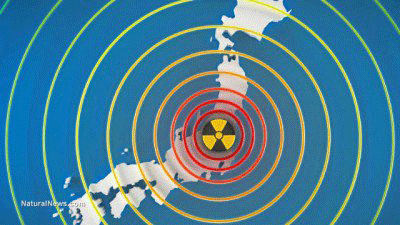
A Chinese envoy on Friday called for strict, independent and effective long-term international supervision over Japan’s discharge of nuclear-contaminated wastewater from the crippled Fukushima Daiichi Nuclear Power Plant into the ocean.
Japan has recently carried out its sixth round of the Fukushima wastewater release. The Chinese envoy stated that the discharge continues to raise deep concerns among the international community, especially among Japan’s neighboring countries.
Li Song, China’s permanent representative to the International Atomic Energy Agency (IAEA), expressed doubts about the long-term reliability of Japan’s wastewater purification equipment, the effectiveness of the current monitoring arrangements, the weak supervision from the Japanese government, and the chaotic management of the Tokyo Electric Power Company, the Fukushima plant’s operator, during a meeting of the agency’s board of governors.
Li stressed the importance and urgency of establishing a long-term international supervision mechanism for nuclear-contaminated wastewater discharge as an addition to the regulation of the Japanese government and monitoring by Japanese nuclear power regulators, rather than replacing them.
He emphasized that only through such an arrangement can Japan dispel the concerns and panic of the people of China and other stakeholder countries. Such an arrangement is also conducive to further strengthening the authority and function of the IAEA in the field of international nuclear security and serves the fundamental interests of Japan and the Japanese people, Li added.
The Chinese envoy also stated that China and Japan have agreed to find an appropriate solution to the issue of the Fukushima wastewater discharge through consultation and negotiation. China hopes that Japan will show sincerity, seriously address the legitimate concerns from home and abroad, earnestly fulfill its responsibilities and obligations, and join hands with China, the IAEA, and the international community to work out more effective supervision measures to ensure that the Fukushima wastewater release will not cause long-term harm to the marine environment and humankind.
‘Offshore wind farms could have averted Fukushima disaster’

A global review led by the University of Surrey reveals that offshore wind farms could have prevented the Fukushima disaster and are now a cheaper energy alternative than nuclear power
Dimitris Mavrokefalidis, 05/30/2024 , https://www.energylivenews.com/2024/05/30/offshore-wind-farms-could-have-averted-fukushima-disaster/
A review conducted by researchers at the University of Surrey has concluded that offshore wind farms could have averted the Fukushima nuclear disaster by maintaining the cooling systems and preventing a meltdown.
The study highlights that wind farms are less vulnerable to earthquakes than nuclear power plants.
Suby Bhattacharya, Professor of Geomechanics at the University of Surrey, emphasised that wind power provides abundant clean energy and can enhance the safety and reliability of other facilities.
The review indicates that wind energy is now more cost-effective due to reduced construction costs and improved methods to minimise environmental impact.
The report finds that new wind farms can produce energy at a significantly lower cost than new nuclear power stations.
In the UK, the lifetime cost of generating wind power has dropped from £160/MWh to £44/MWh, covering all expenses from planning to decommissioning.
Professor Bhattacharya said: “What makes wind so attractive is that the fuel is free, and the cost of building turbines is falling. There is enough of it blowing around the world to power the planet 18 times over.
“Our report shows the industry is ironing out practical challenges and making this green power sustainable, too.”
2
Fukushima nuclear debris removal to begin as early as August

Crucial work at devastated plant has been delayed for three years
AYAKA OTAKA, Nikkei staff writer, May 31, 2024,
TOKYO — Trial removal of melted fuel rods at the tsunami-hit Fukushima Daiichi nuclear plant will begin as early as August, Tokyo Electric Power Co. Holdings announced on Thursday, a critical step in a decommissioning process that is expected to take decades.
Removal of the fuel rods, which is now three years behind schedule, had been slated to start by October, but TEPCO now says it will happen between August and October. Necessary equipment will be set up at the plant in northeastern Japan as early as July.
“We will continue to proceed with the work carefully, with safety as our top priority, so as not to impact the surrounding environment,” said Akira Ono, the TEPCO official in charge of decommissioning efforts.
The radioactive debris consists of fuel and other materials that melted, then cooled and solidified, after the plant lost power in the devastating March 2011 tsunami. An estimated 880 tonnes of debris are in reactor units 1 to 3.
As the melted fuel is highly radioactive, people cannot come near it, and removal must be done in small amounts to prevent leakage during the process.
A device similar to a fishing rod will be used to carry out the work. On Tuesday, a video was released showing the device being tested at a Mitsubishi Heavy Industries shipyard in Kobe, using a full-scale model of a nuclear reactor.
According to TEPCO, a 3- to 4-meter cable with a mechanical claw will be hung from the device down towards the bottom of the reactor. Less than 3 grams can be collected at a time.
Shortening shifts to reducing workers’ exposure to radiation will be necessary. The trial removal is expected to take about two weeks.
Removal was originally to be carried out in 2021. The plan was to use a robot arm to remove the debris, but development of the arm was delayed. A large amount of non-fuel debris blocking access also caused delays………………………………
The government has said that it will take 30 years to 40 years from the 2011 incident to decommission the plant.
The reactor building cannot be dismantled unless the debris is removed. Cooling water, as well as rainwater, that comes in contact with the debris becomes contaminated.
TEPCO began releasing treated wastewater in August 2023, but as long as the debris remains, the cycle of water being contaminated and requiring treatment and release will continue.
Some critics say the government’s decommissioning plan is unrealistic. The process could take more than 100 years, say some scientists in the Atomic Energy Society of Japan. After the Chernobyl nuclear disaster in the former Soviet Union, decommissioning was abandoned, and a shelter structure was built to completely cover the area with radioactive waste.
There is also the issue of how to dispose of soil and rubble contaminated by scattered radioactive materials. The government has promised to transport this waste outside of Fukushima prefecture by 2045, but a destination has not been decided. https://asia.nikkei.com/Spotlight/Environment/Fukushima-nuclear-debris-removal-to-begin-as-early-as-August
1 This Month

of the week – Shut Down Drone Warfare!


Tell the Ukrainian Government to Drop Prosecution of Peace Activist Yurii Sheliazhenko

Petition to revoke the licensing of the Near Surface Nuclear Disposal Facility (NSDF) at Chalk River. https://www.ourcommons.ca/petitions/en/Petition/Details?Petition=e-7247
To see nuclear-related stories in greater depth and intensity – go to https://nuclearinformation.wordpress.com
-
Archives
- April 2026 (44)
- March 2026 (251)
- February 2026 (268)
- January 2026 (308)
- December 2025 (358)
- November 2025 (359)
- October 2025 (376)
- September 2025 (257)
- August 2025 (319)
- July 2025 (230)
- June 2025 (348)
- May 2025 (261)
-
Categories
- 1
- 1 NUCLEAR ISSUES
- business and costs
- climate change
- culture and arts
- ENERGY
- environment
- health
- history
- indigenous issues
- Legal
- marketing of nuclear
- media
- opposition to nuclear
- PERSONAL STORIES
- politics
- politics international
- Religion and ethics
- safety
- secrets,lies and civil liberties
- spinbuster
- technology
- Uranium
- wastes
- weapons and war
- Women
- 2 WORLD
- ACTION
- AFRICA
- Atrocities
- AUSTRALIA
- Christina's notes
- Christina's themes
- culture and arts
- Events
- Fuk 2022
- Fuk 2023
- Fukushima 2017
- Fukushima 2018
- fukushima 2019
- Fukushima 2020
- Fukushima 2021
- general
- global warming
- Humour (God we need it)
- Nuclear
- RARE EARTHS
- Reference
- resources – print
- Resources -audiovicual
- Weekly Newsletter
- World
- World Nuclear
- YouTube
-
RSS
Entries RSS
Comments RSS
 nuclear-news